

TCJ Blog
- Japanese For Executives
- Japanese Manners
- Learn Japanese
- Japan Trivia
- Basic Japanese
- Japanese Culture
- Japanese Beginner
- Japanese Advanced
- Japanese Greetings
- Japanese Phrases
- Online Lesson
- JLPT
- Business & Daily Life Japanese Program
- ビジネス日本語
- Interview
- 日本語上級者
- Japanese tips
- Kanji
- Want to Learn Japanese
- Private Lesson
- Japanese for Expats
- International Student Visa Program
- Job Hunting in Japan
- Japanese Language School
- Email Phrases
- Business Japanese
- Keigo
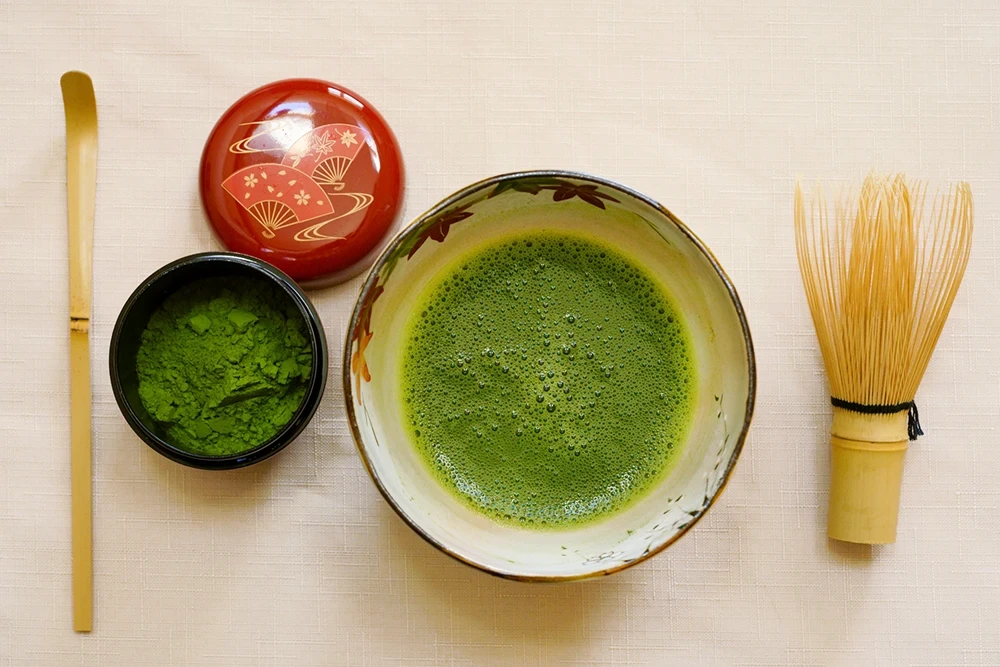
Japan’s Iconic 抹茶(Matcha): Uncovering Myths and Reality
In recent years, matcha has gained popularity worldwide. From matcha lattes and ice cream to matcha chocolate, a variety of matcha-flavored treats have become widely available. Today, it is no longer unusual to find vibrant green matcha desserts in cafés and supermarkets across Europe, the United States, and many Asian countries. One of the key factors behind matcha’s growing popularity was the increasing interest in health and wellness. Matcha contains catechins and theanine, and it became recognized as a healthy beverage that fit well with the global wellness trend, especially in Western countries. Furthermore, when Starbucks, one of the world’s largest coffee chains, introduced matcha lattes to its menus around the world, matcha quickly gained even more recognition. Its beautiful green-and-white color combination also caught the attention of social media users and influencers, who shared visually appealing matcha drinks and desserts online. In this way, matcha has become a worldwide favorite — a stylish and healthy drink from Japan. This global trend has created an image of Japan where people are believed to enjoy matcha every day. Some Japanese learners may still have this impression. However, the reality is quite different. In fact, not many people in Japan drink matcha on a daily basis. So why is matcha, despite its strong connection with Japan, not an everyday beverage for most Japanese people? This article explores the relationship between matcha and Japanese culture, while uncovering the richness of Japan’s tea traditions.

“すみません: Sumimasen”: A Common Japanese Expression for Apologies, Thanks, and More
As Japanese learners, what words do you find yourself using often? Is it “ありがとう: Arigato” or “こんにちは: Konnichiwa”? One of the words Japanese people use most often in daily conversations is probably “すみません: Sumimasen.” Some learners may wonder why the expression “Sumimasen” can convey so many different meanings, as it is used in various situations. For example, it can be used when calling a store employee, thanking someone who has given directions, or apologizing after accidentally bumping into someone. In fact, the phrase “Sumimasen” is not only used for apologies. It carries a deeper sense of consideration for others and the feeling of being sorry. This article explains three main uses of this phrase—apologizing, expressing gratitude, and getting someone’s attention—along with examples.

Popular Lessons and Hobbies in Japan: From Children to Adults
In Japan, people of all ages enjoy taking lessons and pursuing hobbies. These activities offer many benefits, such as gaining new knowledge and skills, maintaining good health, and expanding social connections. Some skills learned through lessons may even develop into lifelong hobbies. Recently, online classes have become increasingly popular, making it possible to explore various fields from the comfort of home. This article introduces popular lessons and hobbies in Japan, focusing separately on those enjoyed by children and adults.

Japanese Trains: Punctuality, Delays, and Real-Time Updates
Japanese trains are known around the world for their punctuality. This article explores the reasons behind that reputation, while also introducing useful tools for checking delays and train locations in real time. Understanding how these systems work can make commuting and everyday travel in Japan much smoother.

Workplace-Appropriate Attire in Japan: Understanding TPO and Business Casual Dress Codes
Each Japanese corporation has its own guidelines regarding workplace attire, depending on the nature of the job and the company culture. Some companies require employees to wear suits, while others allow relatively casual clothing. However, this flexibility does not mean that “you can wear whatever you want.” In Japanese business settings, attire is not simply a matter of fashion—it is recognized as a part of business etiquette. This article provides an easy-to-understand explanation of the basics of workplace attire in Japan, the meanings of the commonly heard terms “TPO” and “office casual”.