


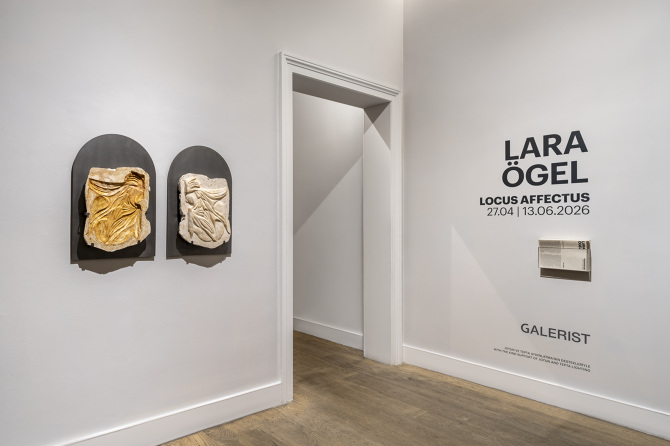
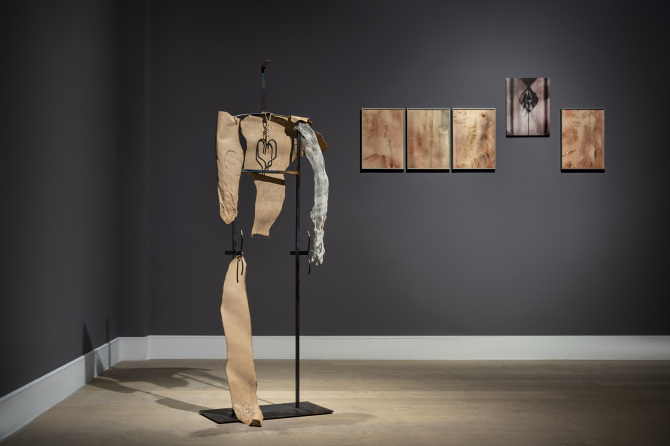
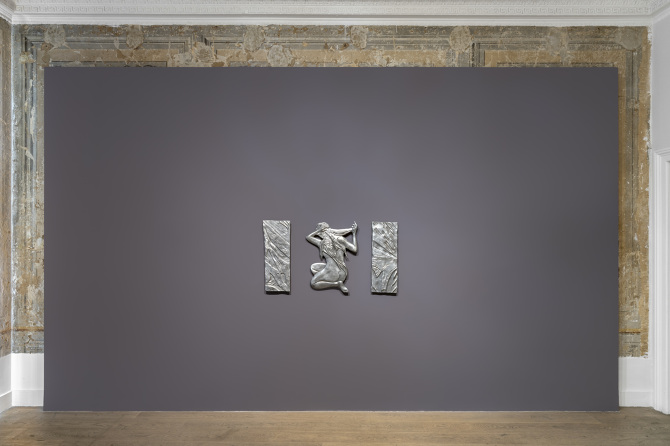
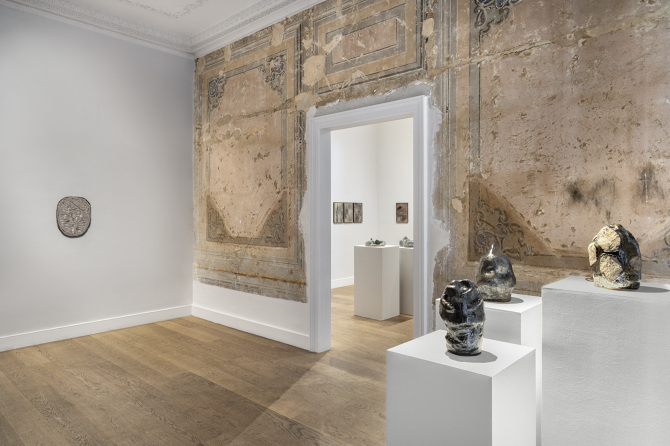
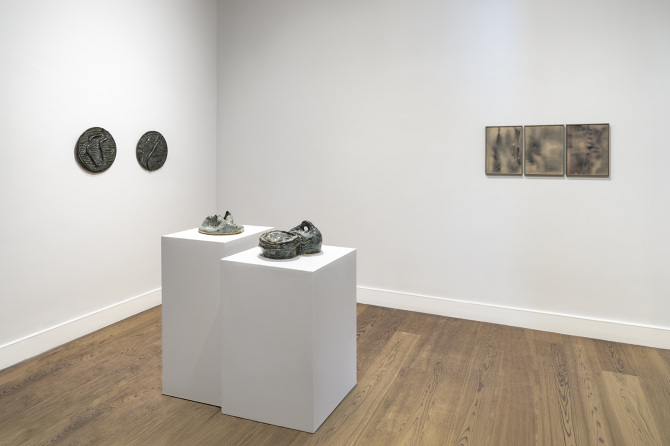
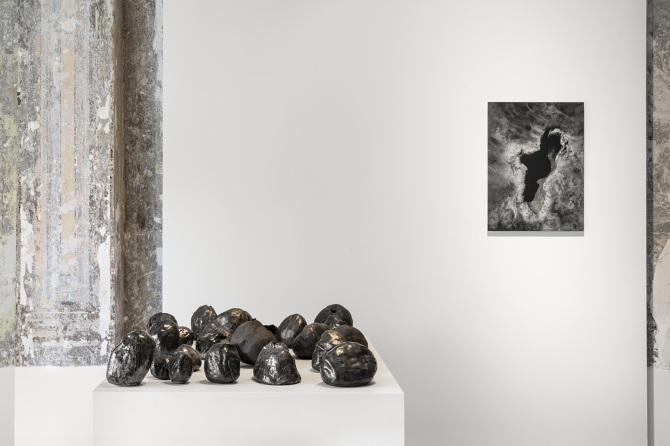
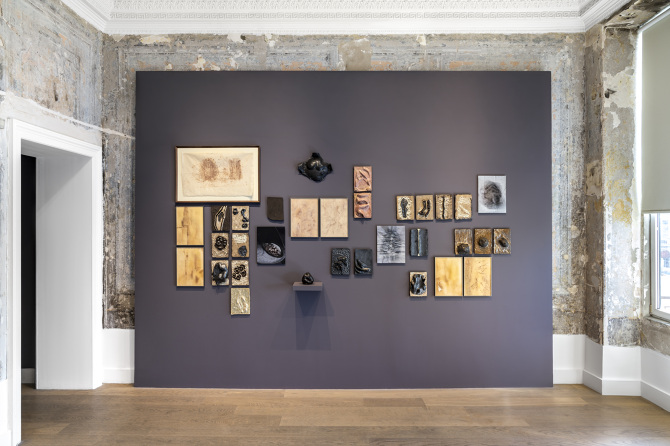
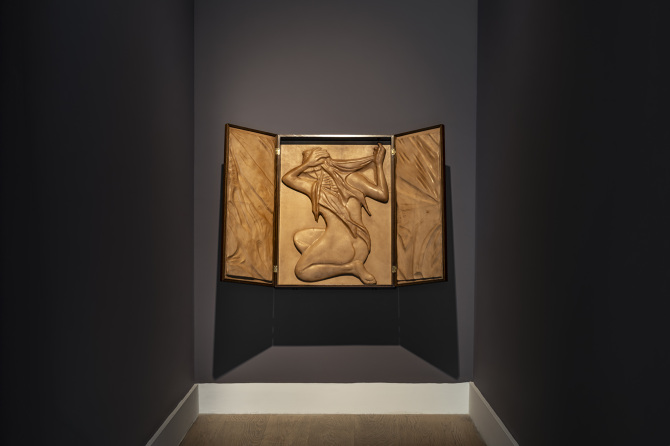
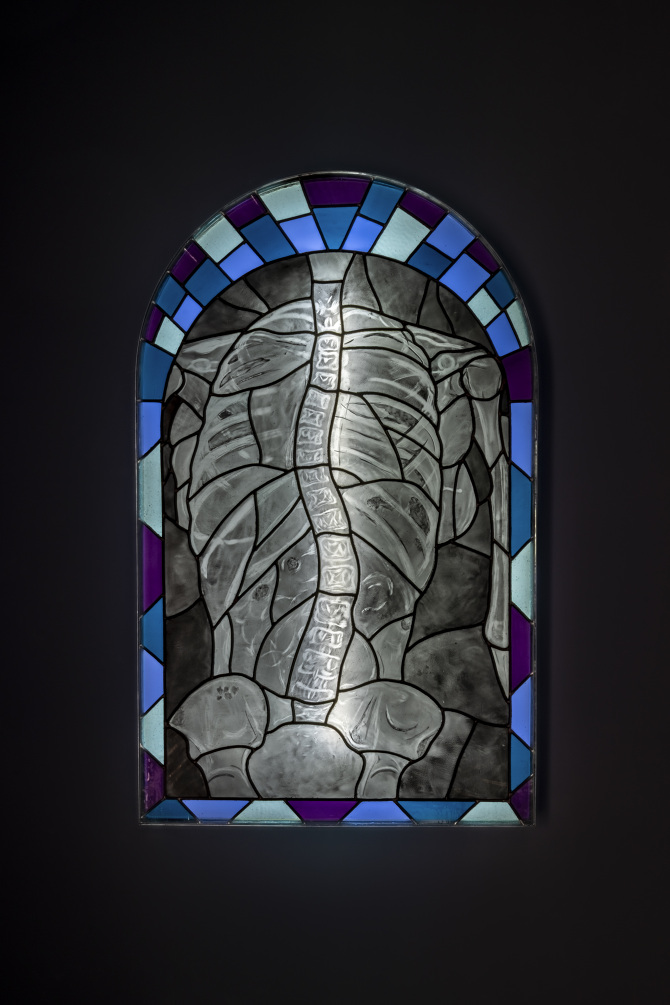
LOCUS AFFECTUS, solo exhibition at Galerist, 2026
installation photographs by Zeynep Fırat
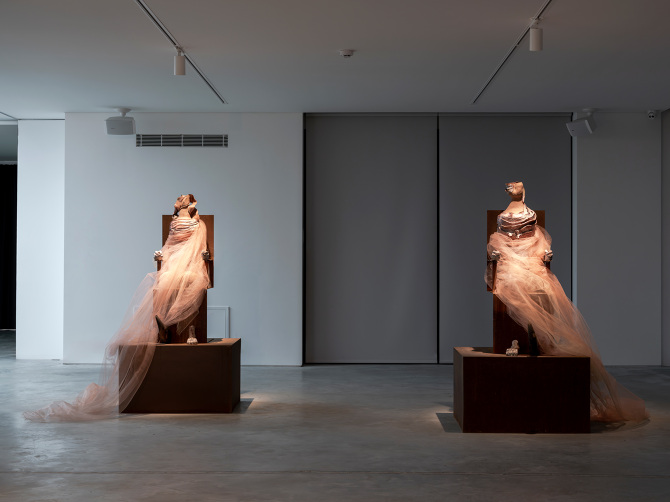
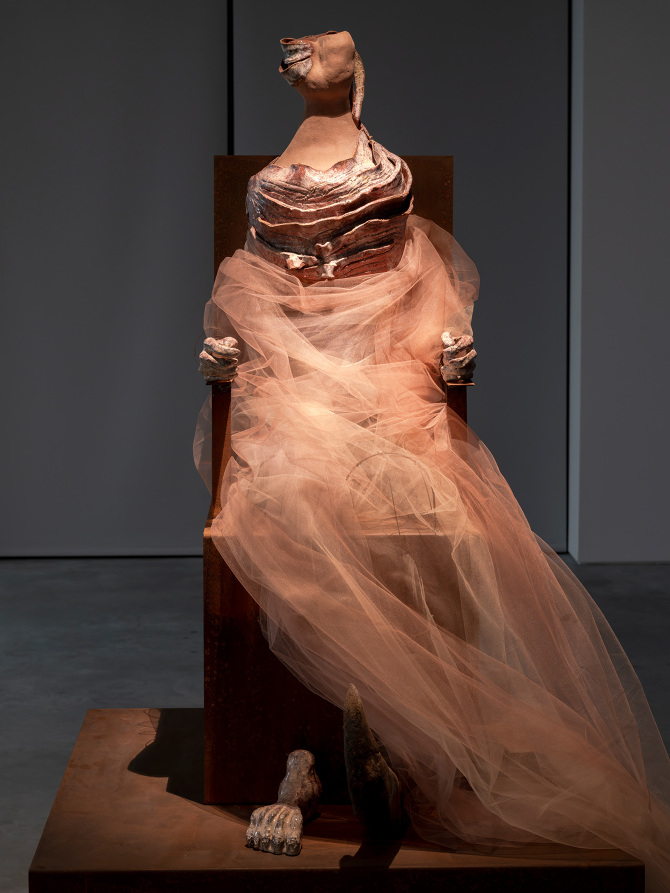
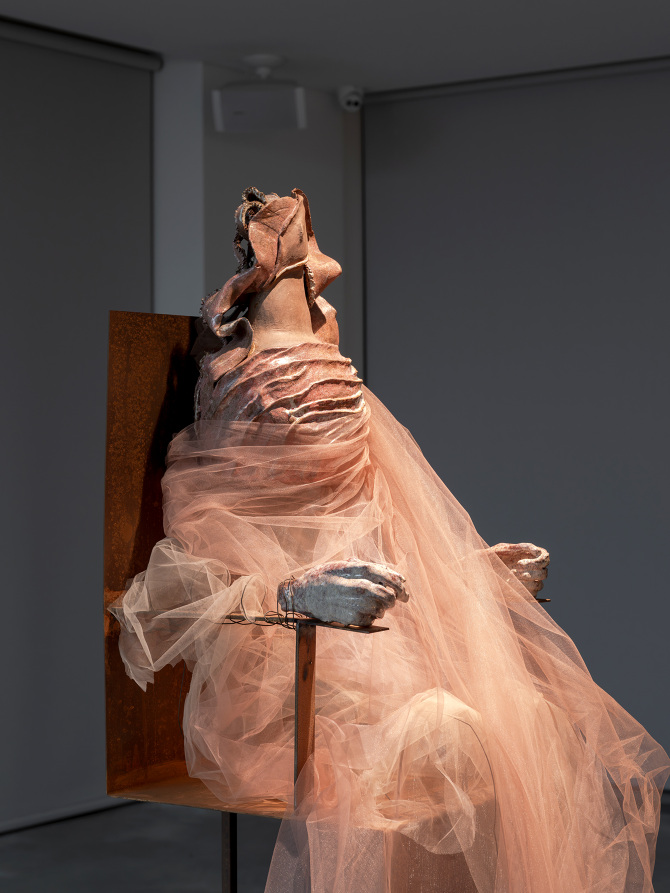
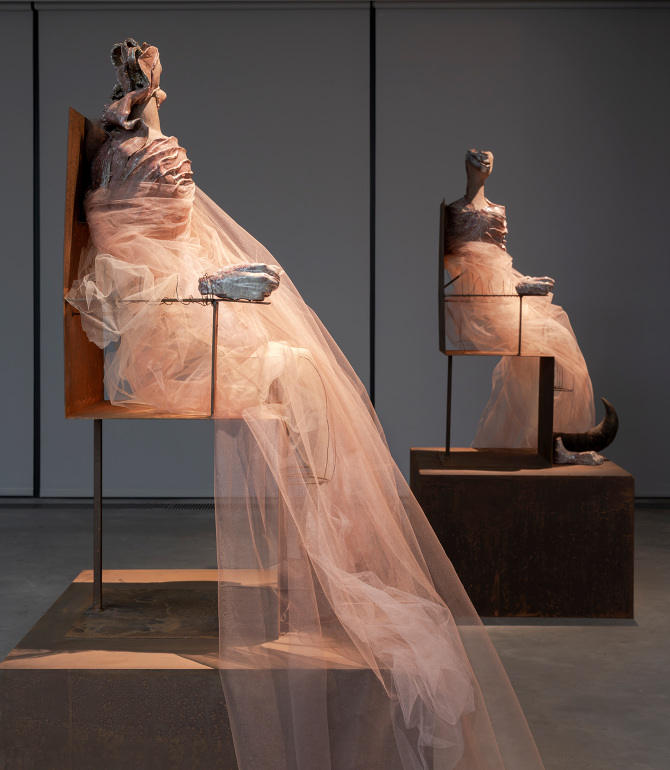
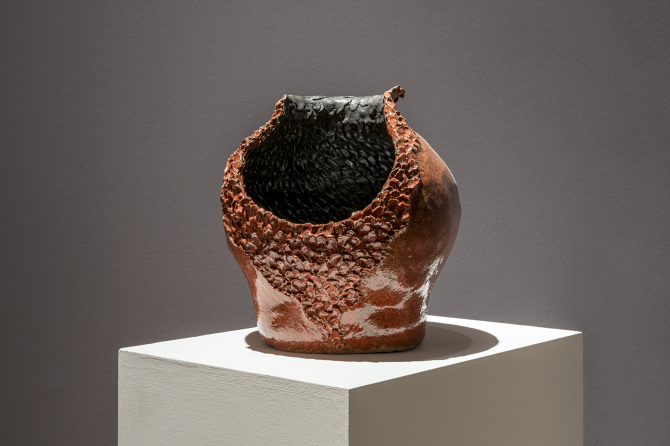
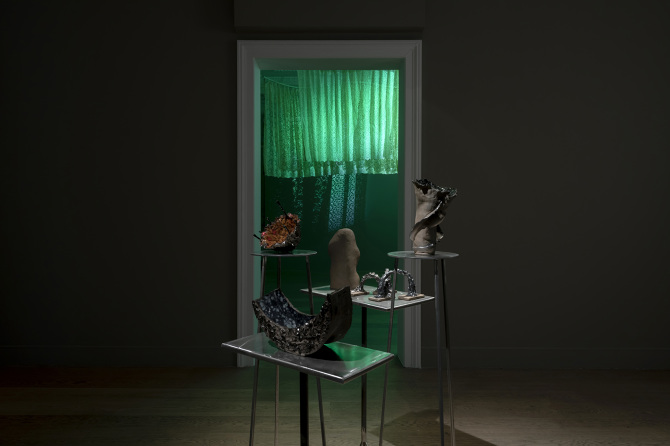
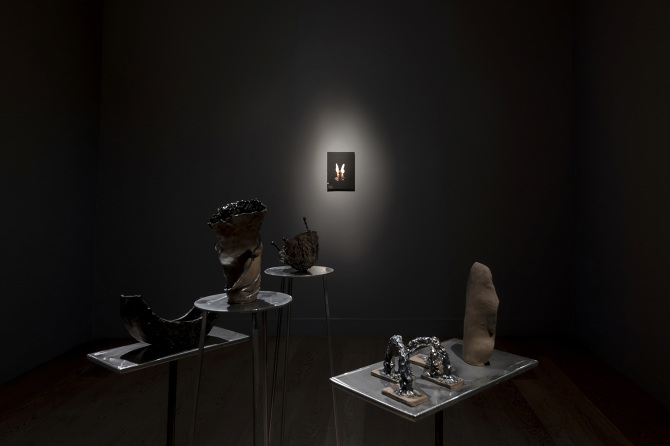
untitled, glazed stoneware, rust, iron, veil, ox horn, 2026
photography by Kayhan Kaygusuz
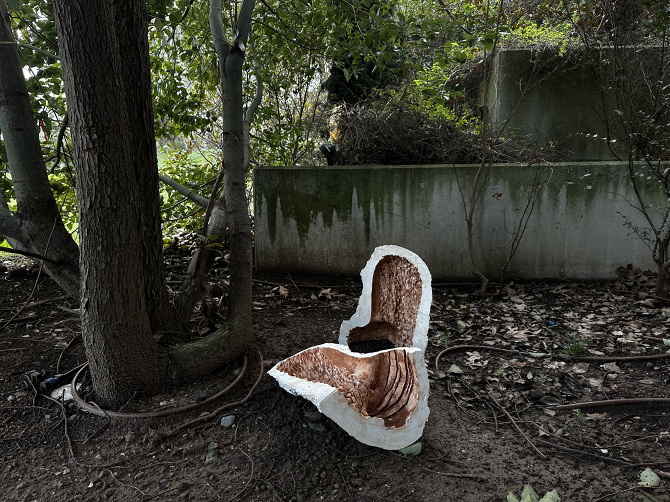
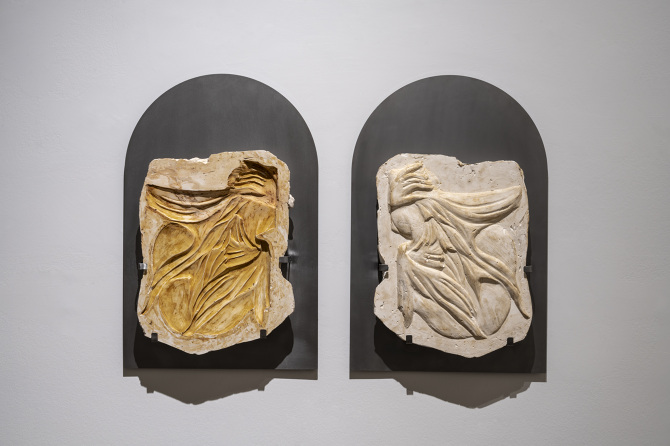
untitled, plaster mould, 2026
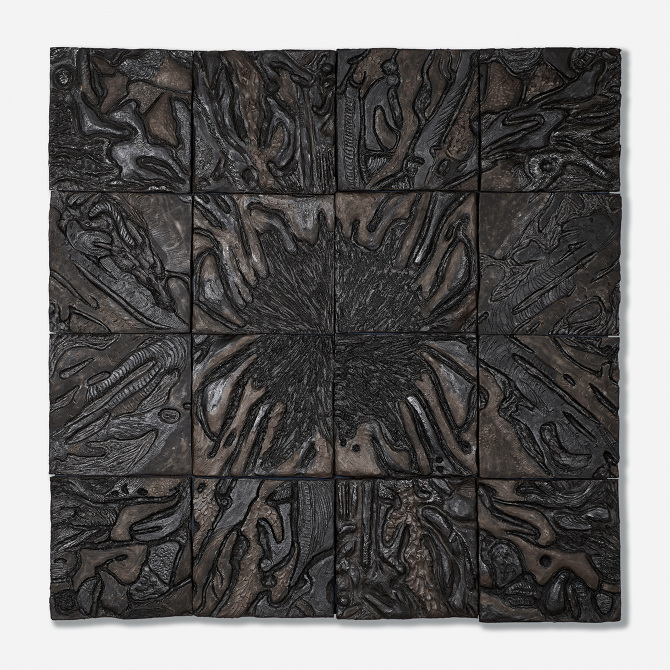
In The Arms of the Abyss, glazed stoneware, 98 x 98 cm, 2025
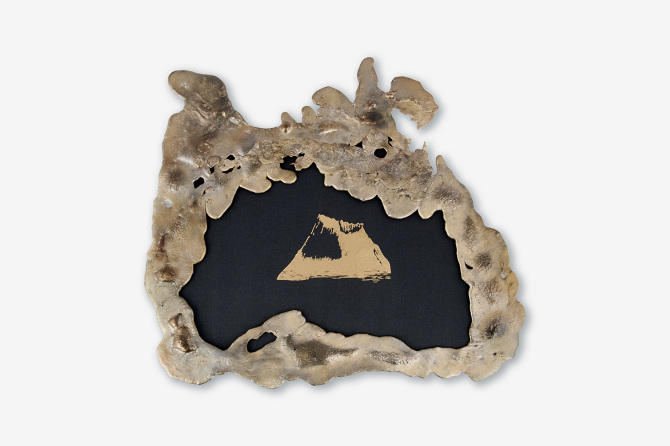
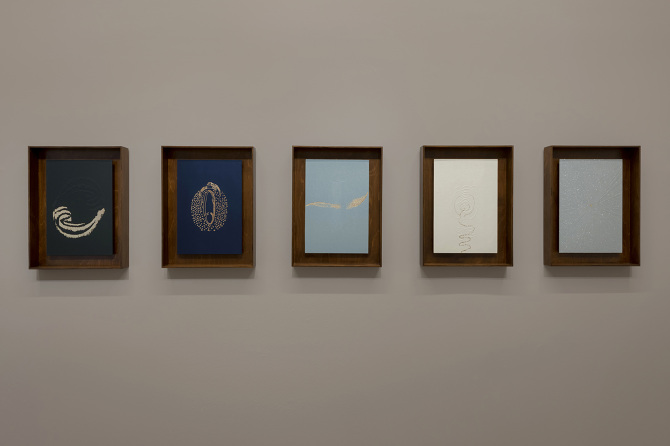
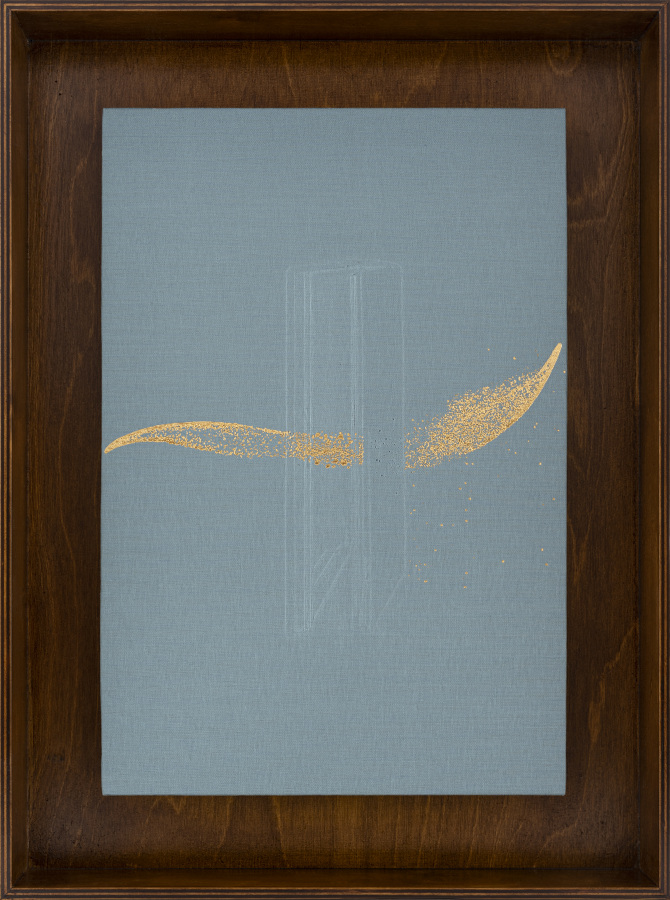
The Molten Word, gold gilded press on linen, brass, 43 x 50 cm, 2025
The Volcano Lover, Galerist, 2025
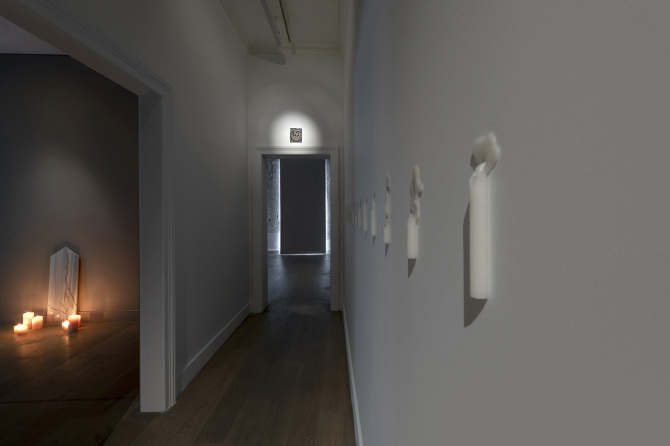
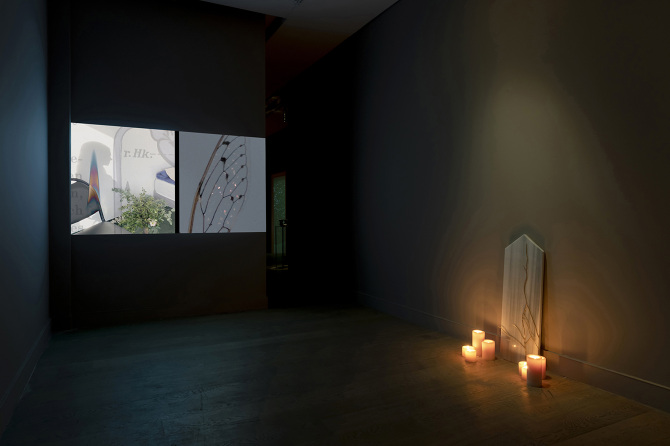
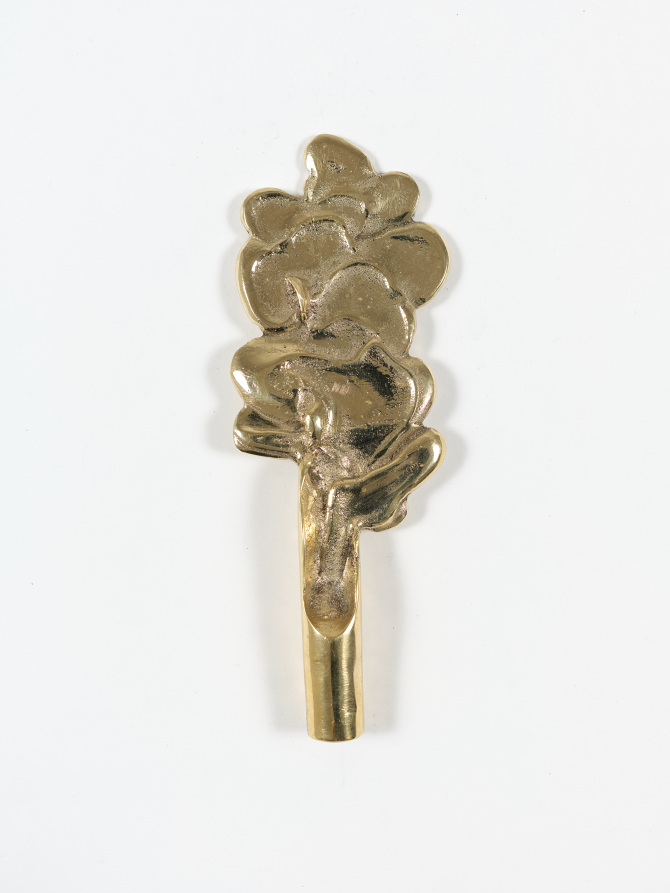 flame of a candle, 2024, 25 x 7 x 2 cm, Brass/Pirinç, Variation of 27 + 3 AP , 3 PP
In a cemetery in Paris, I was struck by a candle left on a grave—its melted remains stretched out like clouds, capturing the presence of someone’s brief visitation. This encounter inspired a ritual, every day I watched candles burn, each leaving unique traces, like personal stories shaped by flame and time. Now, I’m casting them into offerings in brass through sand casting.
Where a candle once reigned, now reigns memory.*
*adapted from the preface of Gaston Bachelard's Flame of A Candle
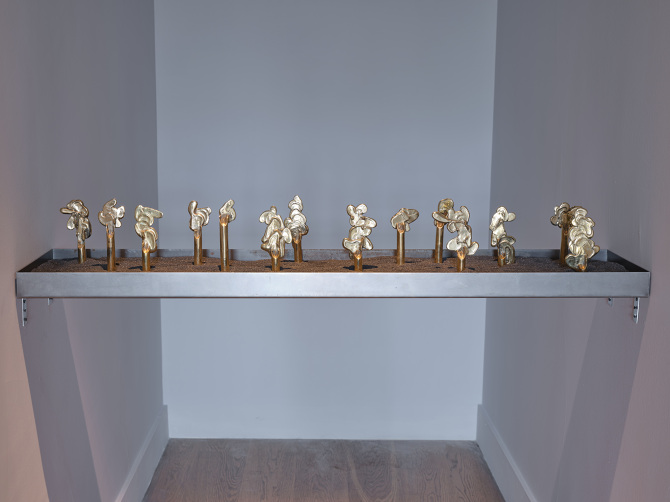
installation views of flame of a candle for border_less editions, Galerist, 2024
All photography by Barış Özçetin
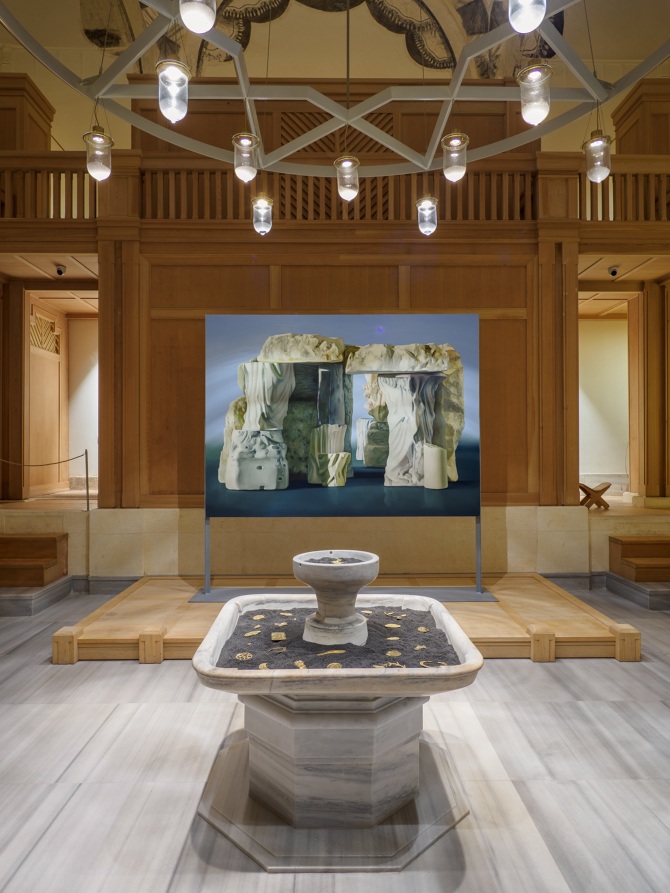
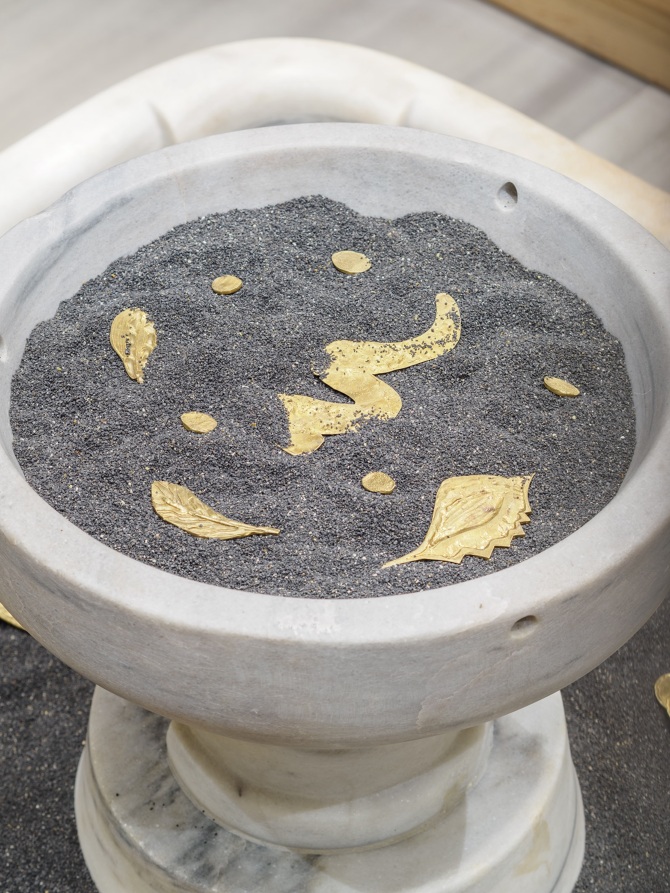
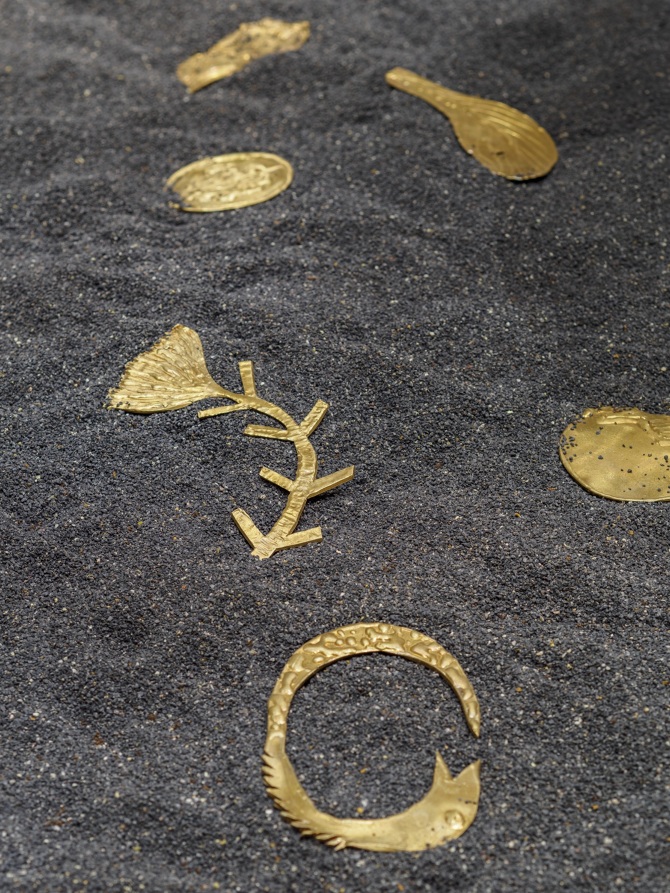 Asaroton, 2022-2023
Installation with brass, bronze and basalt stones
Dimensions variable
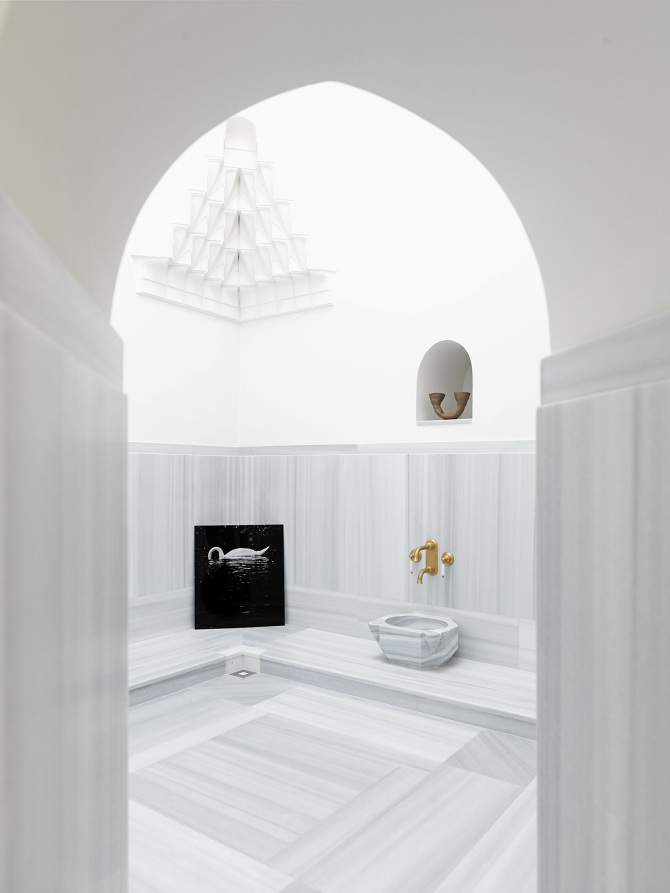 Threshold, 2023
Digital UV print on plexiglass, aluminium
80 x 70 cm
Starry Earth (Two Fold) II, 2023
Glazed ceramic
17 x 31,7 x 12,5 cm
HEALING RUINS curated by Anlam De Coster at Çinili Hamam, Istanbul, 2023
Starry Heavens Above Me and Within Me, solo exhibition at Galerist, 2023
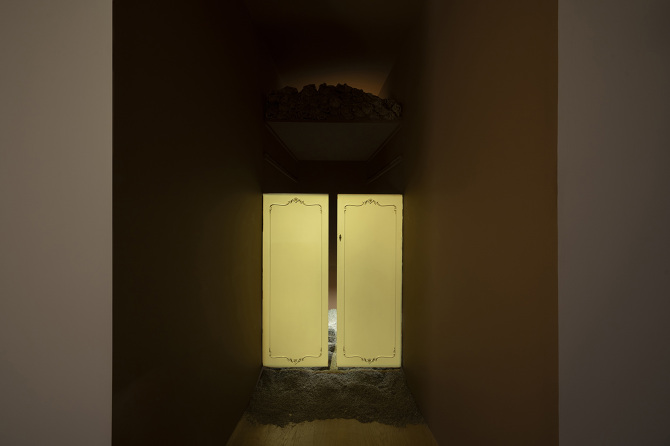
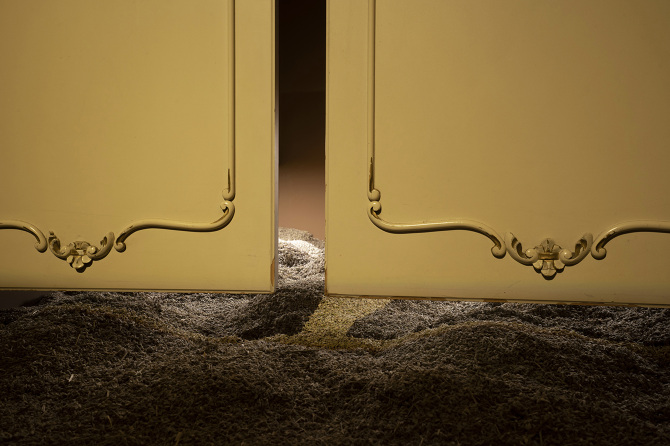
houses were rooms, I had forgotten as part of Rounded by Sleep, curated by Eda Berkmen, Arter, 2022
“Keeping and preserving are often connected with the past. The closet of unsettling dimensions which Lara Ögel installed within the exhibition space delivers a multi-layered interpretation of the distinction between interior and exterior, and individual and collective memory. In her work titled Houses Were Rooms, I Had Forgotten, oblivion and remembrance, matter, frontiers, smells and connotations follow and/or substitute one another. Realised in the form of a closet, the installation both preserves the closet doors that Ögel inherited from her grandmother and allows one to cast a look at a different space which extends perpetually into the past.”
- Eda Berkmen, the curator of ‘ROUNDED BY SLEEP’
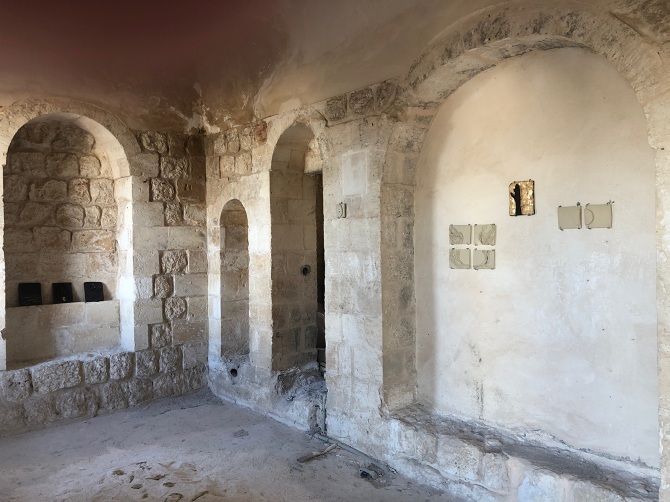
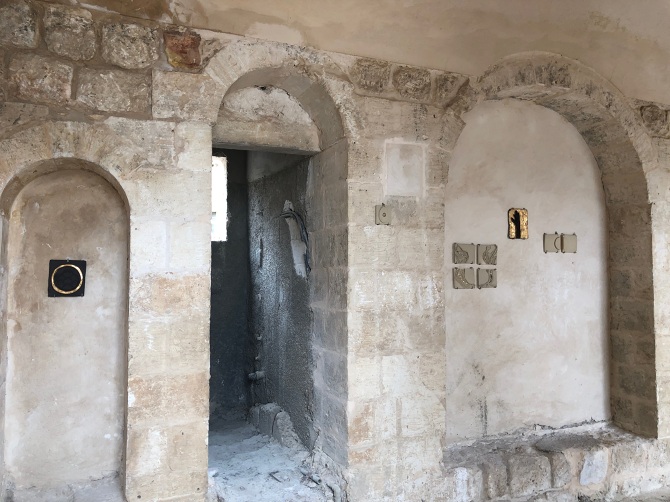
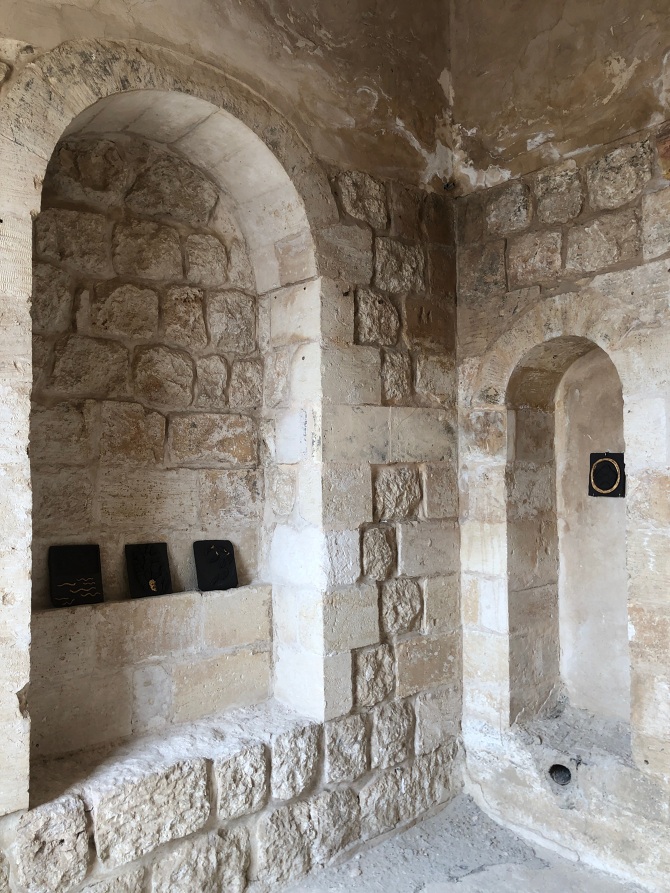
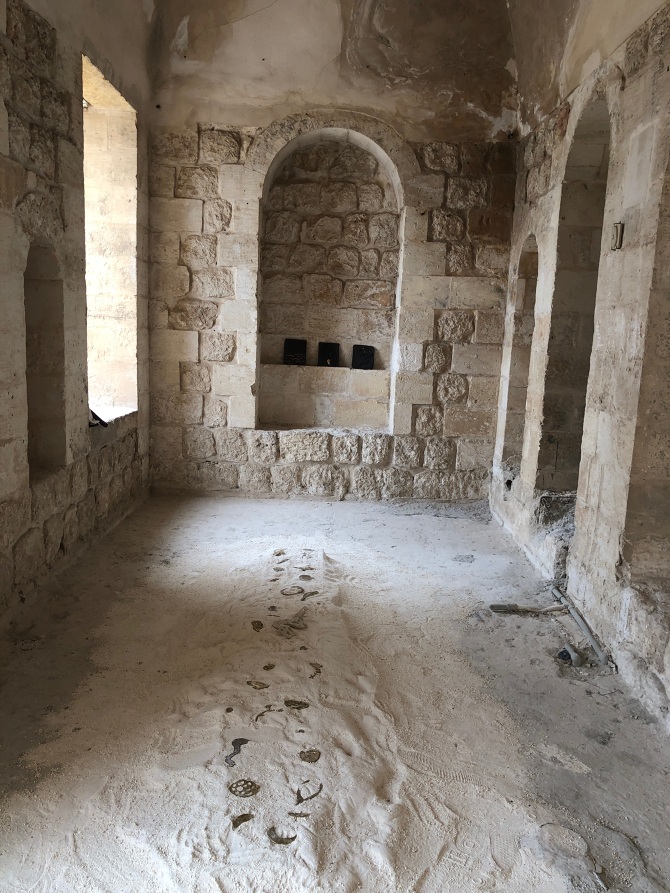
In the Hour of Terra, 2022. Installation with bronze, clay, gold lustre and dirt, variable dimensions.
The installation titled In the Hour of Terra is composed of clay tablets that safekeep dreams of the earth. Each piece contains natural symbols of transformation found in various cosmologies. Half-buried in dust lie glittering pieces of bronze imitating classical asaroton (Greek for unswept floor) mosaics depicting traces of banquets, conceived with the intention of rekindling the plenitude of the hearth. Bronze, clay and gold are all elements borrowed from alchemy, a science that aims to transform matter into gold. In a manner similar to the Swiss psychoanalyst, Carl Jung’s readings of alchemy where gold metaphorises psychological maturity/purity, Ögel’s asaroton pieces become tokens of the subconscious offered to the great alchemical hearth — the earth — to be cooked anew. This is the kind of semiotic kitchen the installation dwells in.
The work’s turn to mythology derives from the current state of the unknown and a perceived urgency to ‘reopen our imaginations,’ to borrow words from the ecofeminist, Anna Tsing. Put otherwise, the belly of the whale signifies to the artist, a space for semiotic cultural reinterpretation. Through the act of witnessing, acknowledging and internalising such images of metamorphosis, the work invites meditations on creative death, where an end of something could bring forth another. The ceremonial return of the pieces fired from the earth marks the paving of the ground for more imaginative symbols to come.
Text by Adwait Singh
Commisioned and Exhibited at the 5th Mardin Biennial The Promise of Grass curator Adwait Singh. May 2022, Mardin, Turkey.
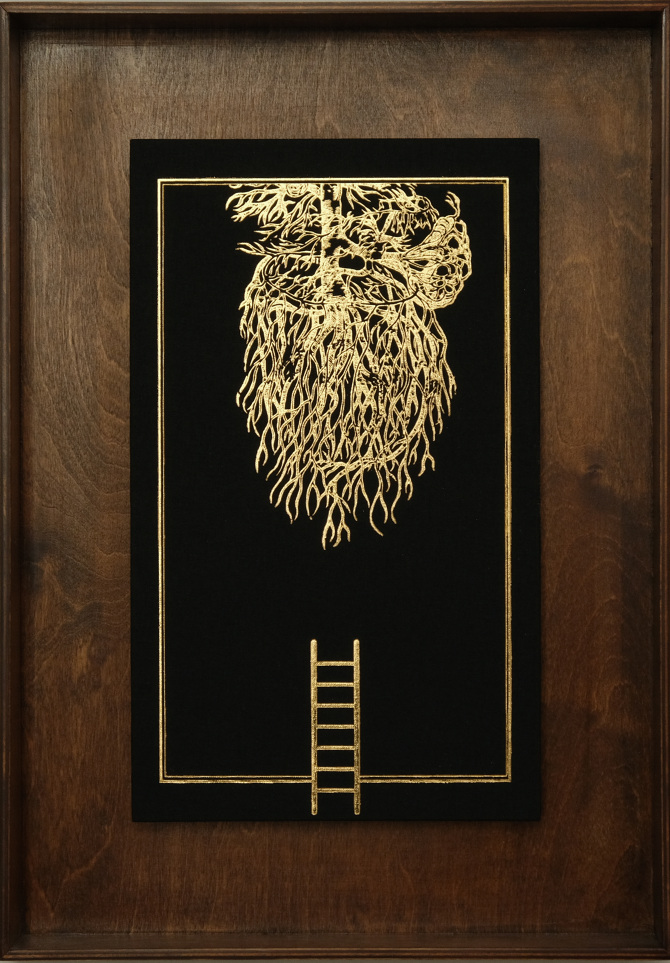
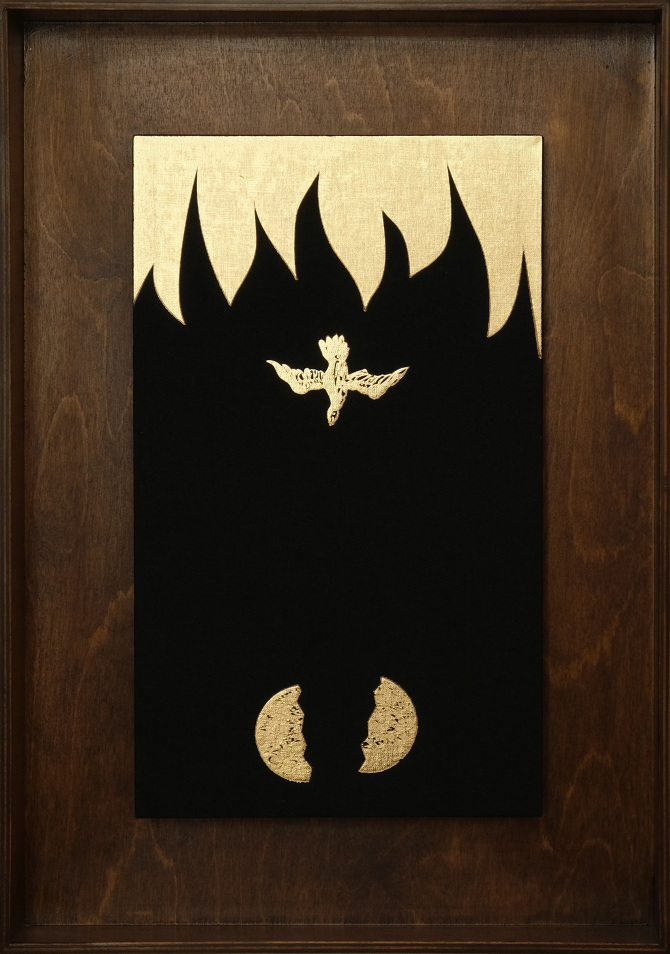
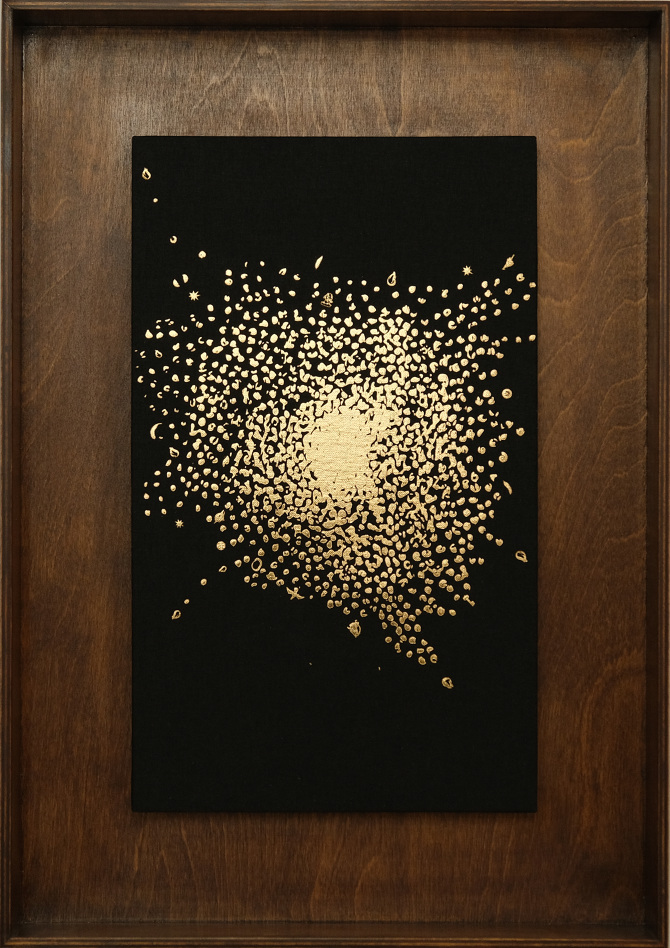
LIBER I, gold gilded press on linen, birch frame, 2021
exhibited at BURASI, Yapı Kredi, Istanbul
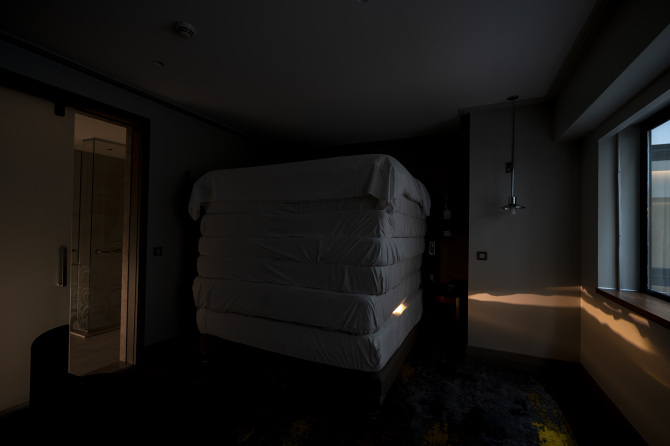
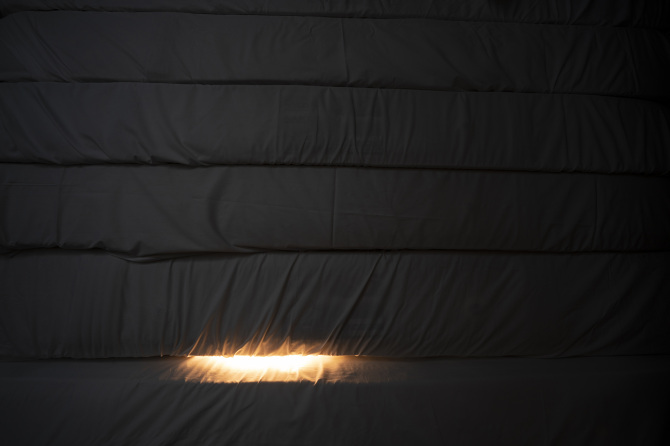
the pea, site-specific installation, 2021
the pea is a site-specific installation inspired by Hans Christian Andersen’s fairy tale The Princess and The Pea. Whereas most of the guest rooms look towards the Bosphorus, the garden etc. the atrium room used in the installation has windows facing the interior of the hotel. The act of looking within recalls the gaze onto the sources and causes of behaviors and attitudes that have surfaced on the facade of a culture. As the fairy tales travel through oral tradition similar to the ways cultural codes are carried on, the pea aims to open new interpretations to both the fairy tale and the theme of the exhibition.
The Princess and The Pea is a tale of a young woman who takes shelter in a palace on a rainy night. In the palace lives a king, a queen and a young prince who has reached the marrying age. The queen, who questions the young girl’s royalty as she claims to be a princess and puts her to a test. The queen makes a bed consisting of ten layers and places underneath a pea. As the young girl awakes with pain in the morning, she has proven with her very sensitive body that she is indeed royalty. At the end of the tale, the young girl marries the prince.
The installation approaches ideas on the delicacy of the women’s body alongside the rich visual world of the tale. For Andersen, the sensitivity of the girl comes from her compassion and susceptibility towards life, that is beyond her royalty. The young girl is not trying to convince or trick those that question her identity. As she sleeps in discomfort , she feels, responds to something that is buried way underneath. Anderson puts himself in place of the young girl, and carries into the aristocracy the sensitivity and susceptibility he nurtures within. As Anderson has observed the problematic of the aristocratic ethics, he criticises through his tale, a feudal cast system imposed onto the young girl’s body.
I liken the pea hidden underneath the bed to a wound. A wound not covered or healed completely but one that emits light… The pea hidden under the beds is exchanged with light, and the test imposed on the young girl is equated to a social wound. The beds are stacked up like a monument, one that hides our wound, a monument that represents accumulations, those that we borrowed and perhaps that do not even belong to us. Despite our efforts shines a light underneath, a guide that will bring us hope. And perhaps a little perspective.
as part of Intervention at the Artisan Istanbul Hotel, 2021
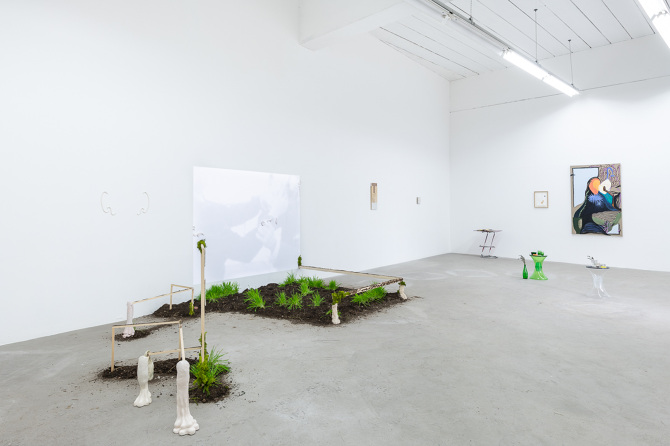
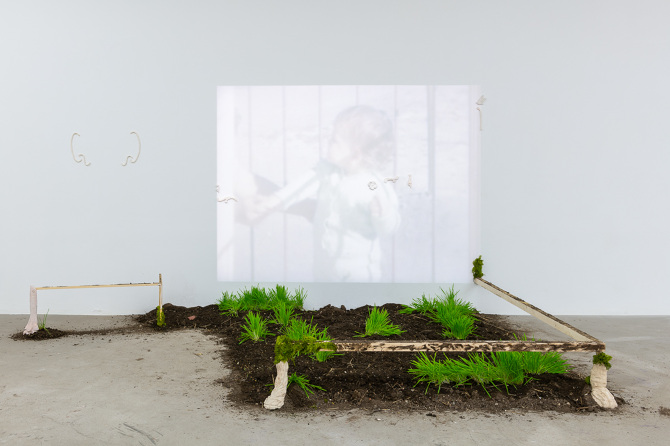
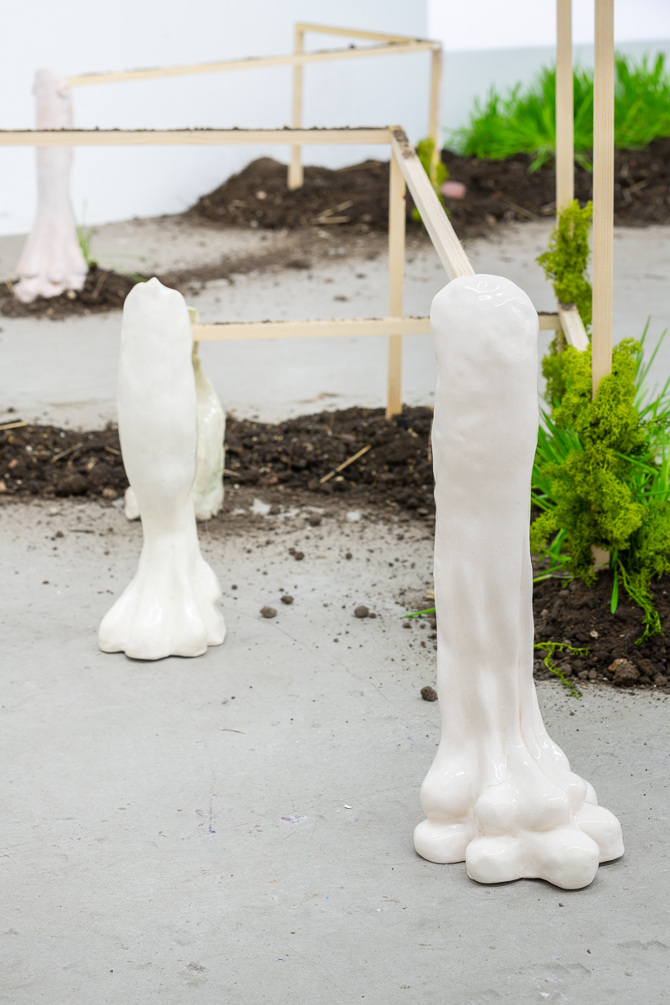
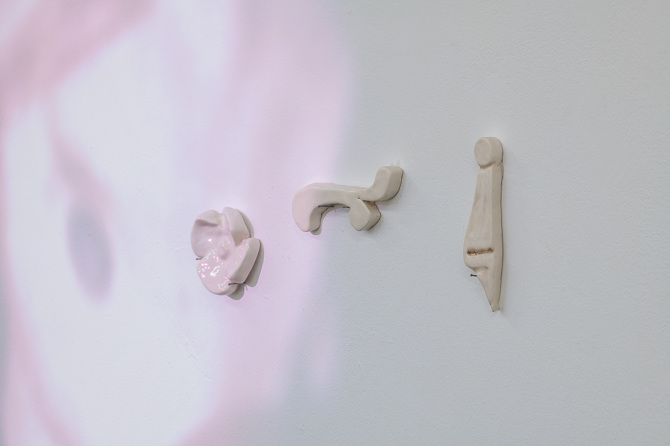
houses were rooms, I had forgotten (variation III), ceramics, soil, grass, wood, seeds, single channel video of digitised 8mm footage 4:3, 2019
Ballon Rouge Collective at Hannah Barry Gallery, London
I remember;
with merve Işeri, Jean Feline, & Lara Ögel
September 25 - November 2, 2019
Opening September 25, 6:30-9:00pm
4 Holly Grove, Peckham
London SE15 4DF, UK
“the places in which we have experienced day-dreaming reconstitute themselves in a new day-dream, and it is because our memories of former dwelling-places are re-lived as day-dreams these dwelling-places of the past remain in us for all time.”
- Gaston Bachelard, The Poetics of Space
I remember; is an exhibition about the day-dream of a place once lived in or imagined. It is about the body in those spaces both actual and imaginary, and it is nostalgic and nihilist about its own nostalgia.
Merve Işeri’s works on canvas are day-dreams encapsulated, representations of half-remembered, embodied and outer body experiences. The sometimes soft outlines are mixed with frames, hard and assured lines. Sometimes there is simply space and there appears to be forms human or otherwise. These forms hover in the ground of the canvas, a ground that may be common to both but in constant movement; the relationship between them, like the daydream itself, is fragile but pulsing with energy.
Jean Feline’s works vary in media from drawing to sculpture and installation. Each work, whether through scale or functionality of the thing represented and re-formed, plays with the idea of personal, cultural and historical memory; and too, plays with ideas surrounding how we live with objects and inhabit spaces and how objects themselves have a memory. A perfect example of the way an object, like a person, can have a day-dream-like memory is the Tam Tam stool designed by Henry Massonnet in 1968 - a chair which features prominently in the body of works Jean presents here.
Lara Ögel’s installation, video, sound, and works on paper also speak to the memory of and in objects as well as the lives lived and living that relate to them. In an installation of a time-worn bedroom, with earth overtaking and grass growing, Lara’s suggestion of a bed is noted only with ceramic paw foundations and wooden bars. Each made by hand and from memory the paws reference both her personal memory of a home once lived-in but also the muscle memory of and in making and remembering itself. The reliance on a day-dream state that takes you to a final form and feels like a memory brought to life.
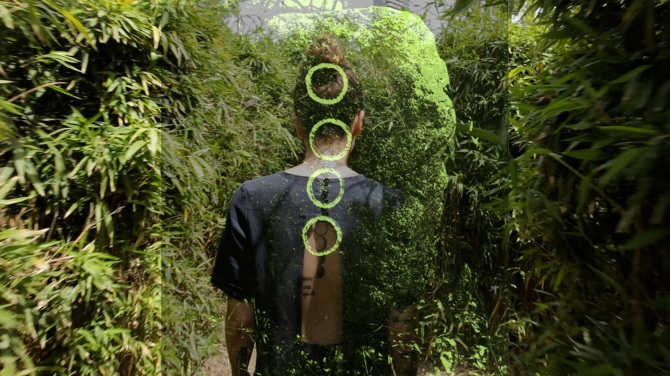
A young woman walks into a labyrinth in a park in the middle of the city of Istanbul. During the journey she encounters a variety of sensory environments where she watches, interacts with and reflects upon. As she spirals towards the center of the labyrinth in a dream state of wandering, the echos of her encounters take her on a journey into her memory.
dream lives of debris (and what has location may be approached), video and sound, 10', 2019
Screenings and exhibitions:
Sanctuary, fused space, San Francisco, 2019
Public Intimacy, açıkekran, Istanbul, 2019
Screenings at Protocinema Screening Tour 2019
Kundura Sinema (Beykoz, Istanbul)
Rampa (Porto Portugal)
Sculpture Center (New York, USA)
sub (Çanakkale, Turkey)
Teatro Union (Honda, Colombia)
Cinémathèque de Tangier (Tangier, Morocco)
Lumbardhi (Prizen, Kosovo)
Onde – Artrum, of 37th Torino Film Festival (Torino, Italy)
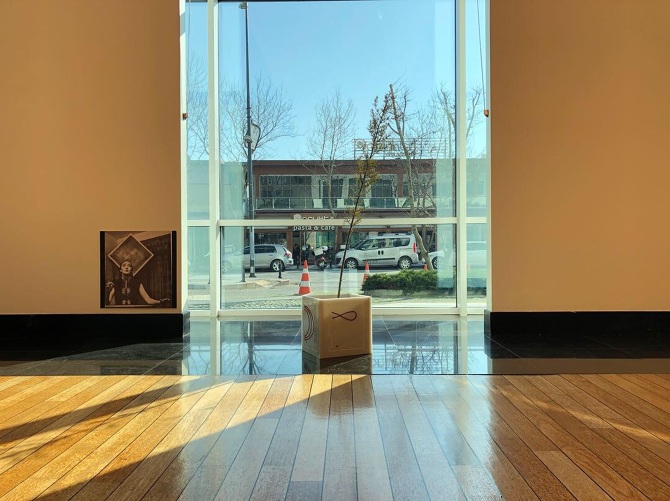
As I leave my cycle at the Anel Building at Galeri 5, I am leaving my collaborator Sena Başöz the piece titled Lone Cypress.
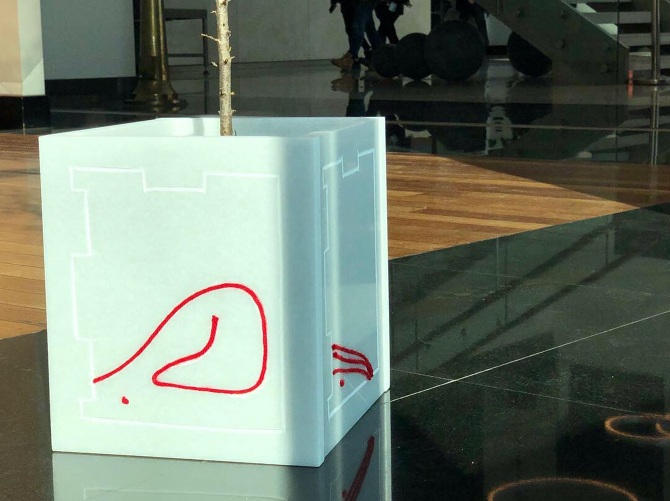
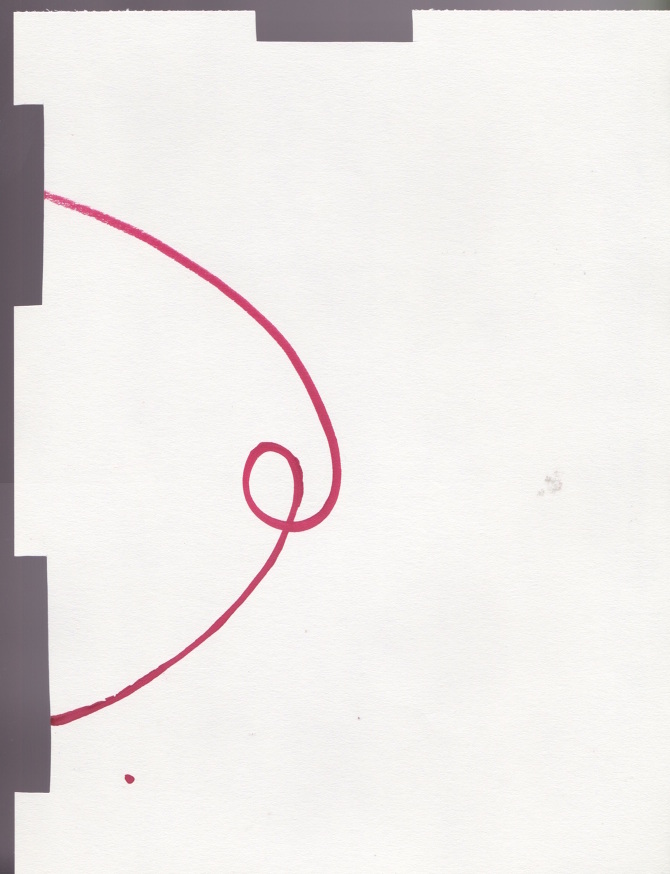
I am watching the work that was left in January by Merve Ünsal, I am watching my own position, I am watching people coming in an out of Anel Building and especially those that choose to come in to Galeri 5. From Merve’s clues, I am drawn to the concept of ‘moving bodies’, of those that come in and out of the gallery space I draw with red marker their traces on the papers I modified as the plan of the gallery.
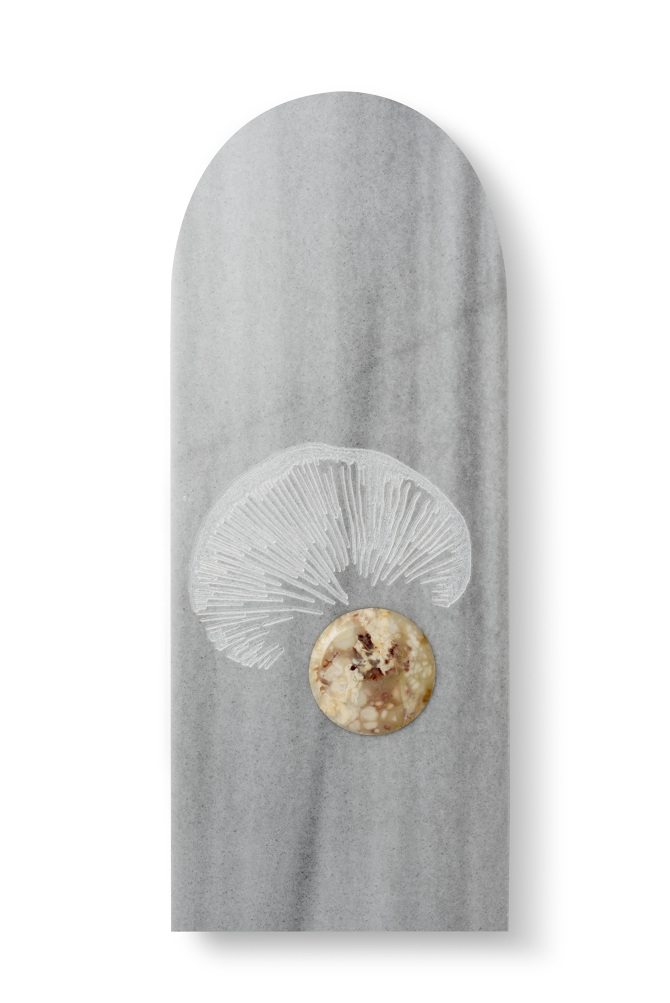
Ümraniye, the location where the corporate building resides was once called Lone Cypress as there was not much but a few cypress trees, graveyards and a few houses in between. I see myself and the people arriving and leaving the gallery as Lone Cypress’. I apply the drawings on white marble used for gravestones and fill the traces of the movements with red yarn. I select four drawings on marble and arrange them together to perform as a vase for the young cypress tree I bring into the gallery space to be further nurtured by the rest of the participants of the exhibition. I rearrange the printed photograph of Clara Rockmore so that she may watch the tree grow.
The word Ümran means prosperity, progress, develop, refined and civilisation. The marble represents the rigid and determined characteristics of the corporate buildings Anel and the others now occupying Ümraniye while contrasting with the organic and soft material of the yarn that represents the bodies and souls that encounter the corporate lifestyle.
as part of Devir, ANEL building, 2019
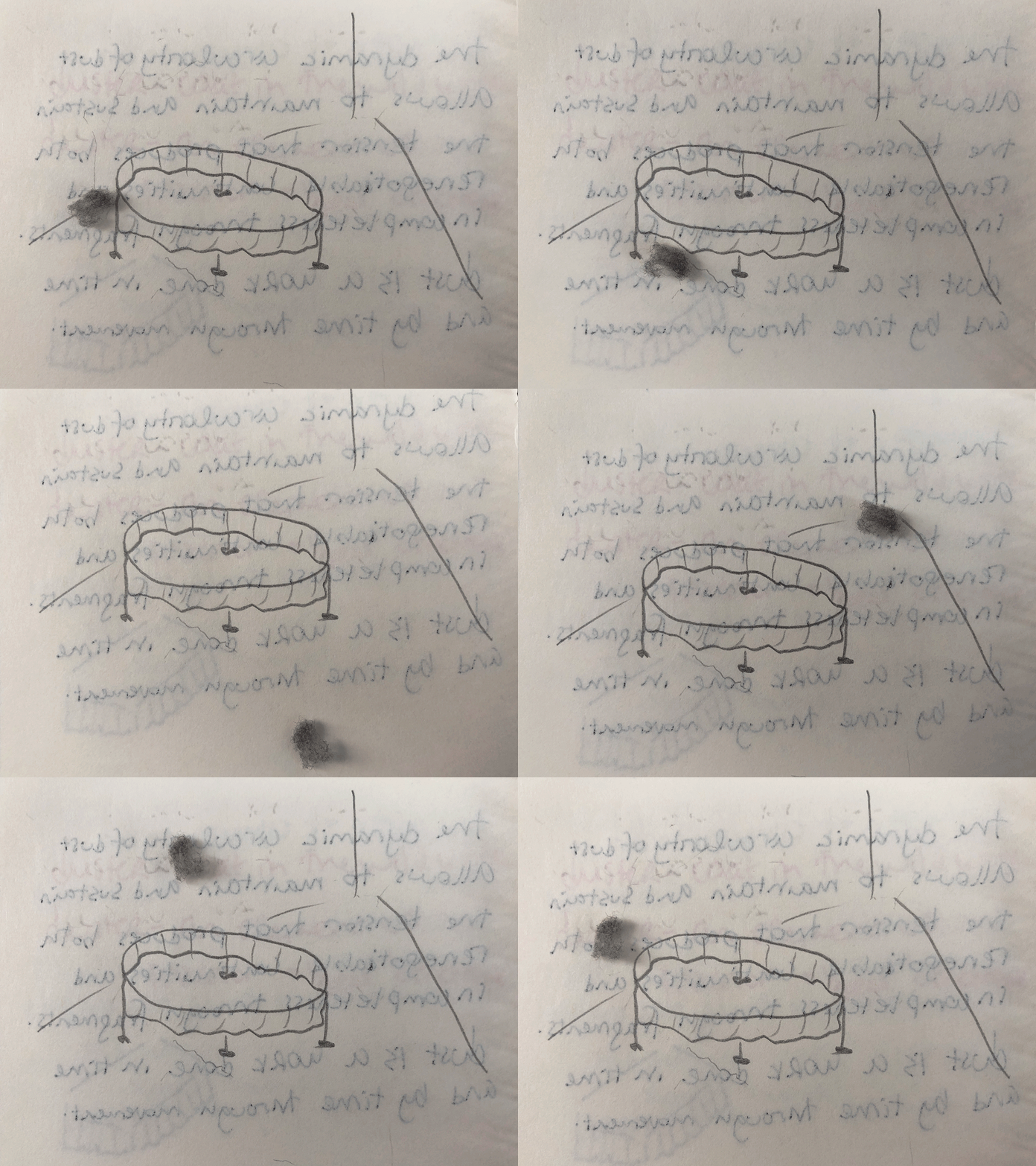
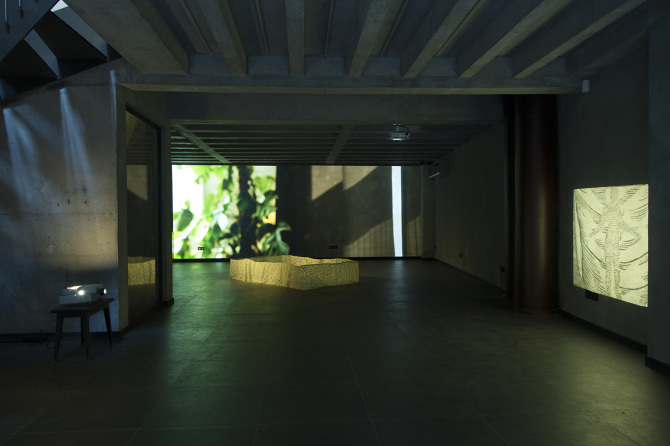
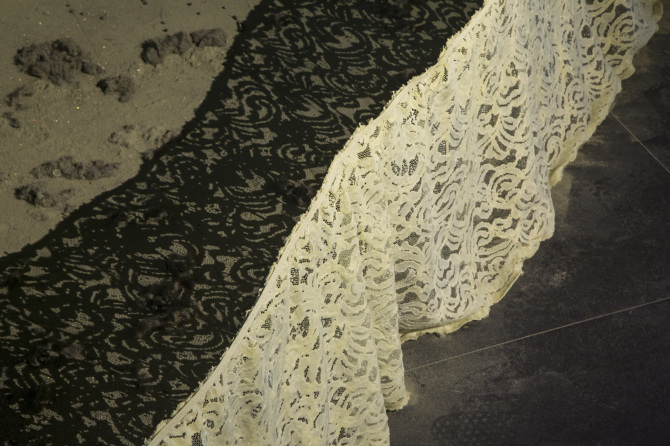
dust is not the homogeneous residue of decay, but an intimate trace, a spatial testimony to the singular journey of each being through time
excerpt from Dust by Michael Marder
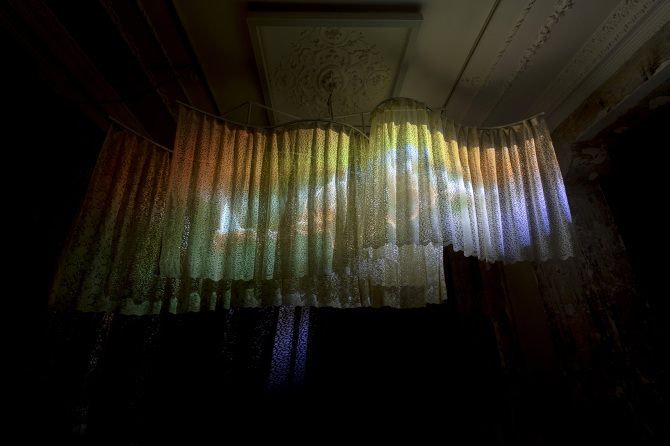
Upon invitation to make a site specific work, I combined my ongoing research on time, space, memory, archives, concepts of home and domesticity into the subterranean exhibition space at riverrun. As the work developed through these phenomena, they all inevitably led me to thoughts on dust and cyclical time. As I worked more on time and space, dust began to breed. Not just as an evidence of time itself but also as a holder of space and the very subject of the installation itself. Mundessa (the name of the dust you swept up in Adriatic Italian dialect) features a two channel video where I capture the floating dust in my living/working space, a frozen bedskirt that traces the edges of a phantom bed, inside a composition of a collection of dust from my home. When the visitors enter the space, they walk through the projected image of The Soul of Man, borrowed from Guttorm Guttormsgaard archive Orbis Sensualium Pictus book, accessed through a residency at PRAKSIS The Collective Subject of History. A depiction of a human figure, made up of freckles of dust.
Installation view of Mundessa
two channel video, lace, elastic band, poliol, household dust, photographic slide
Exhibited at riverrun as part of the group show Large Meadow August 2 - September 29, 2018
Soul of Man image from Guttorm Guttormsgaard archive Orbis Sensualium Pictus book, accessed through a residency at PRAKSIS The Collective Subject of History.
Documentation photography by Barış Gültürk.
Critic's Picks Istanbul review by Kaya Genç on ARTFORUM
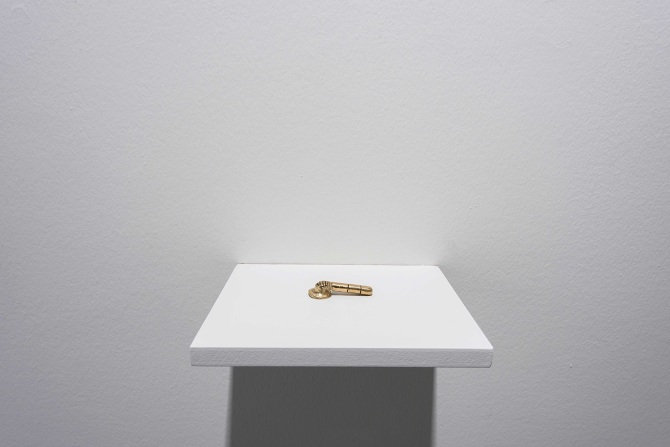
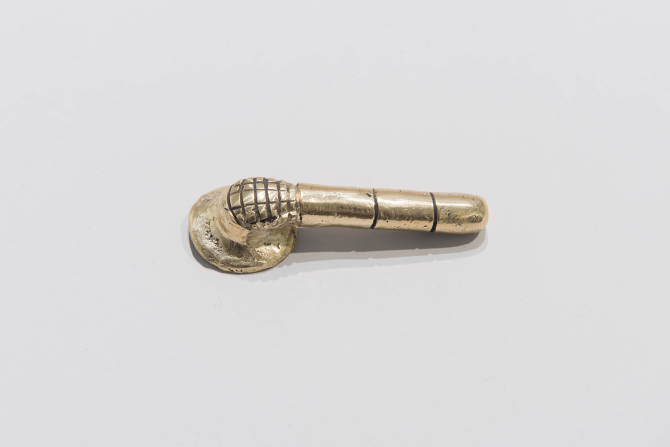
5cm brass sculpture of a bent baba.
Exhibition view from group show Restless Monuments, curated by Bettina Klein and Naz Cuguoğlu, at Zilberman Gallery, Istanbul. 2018.
4th Floor /// Open School Library
Galata Greek School
Galata Greek School is pleased to present Lara Ögel’s exhibition titled ’İmtidâd ‘ at Open School Library initiated as a reading room and project space.
Oh the things that constantly change
In the threshold of time!
This bright game awaits
On the bedside of each dream...
-Gradually Illuminated, Ahmet Hamdi Tanpınar
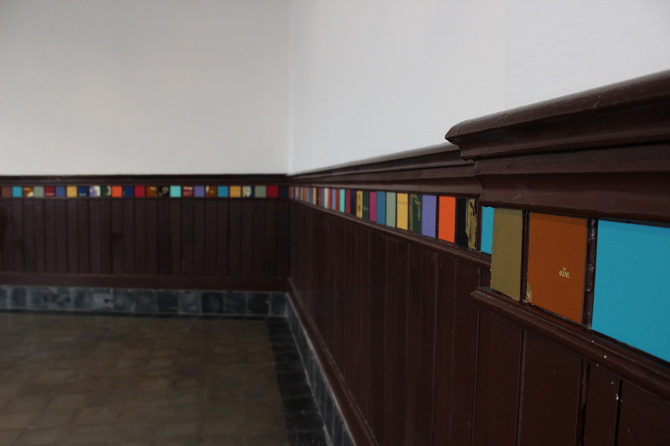
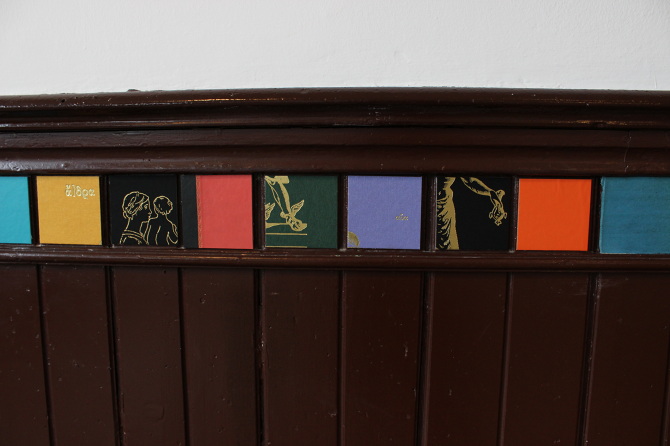
As we climb the steps to reach to the exhibition space, we witness amongst the old dark walls colourful blocks that carry us through. Slowly announcing themselves, these embedded squares seem to have come home from far away lands. The squares become more frequent, asking the viewer to follow them, leading us to an old classroom. Surrounding the entire room, the squares now have shapes, letters, texts written on their surface. We are readings bits from Sappho’s fragments; some, similar to the remains of the poetry of Sappho are not read in full, half completed, or in Anne Carson’s words are breathing. The installation titled dawn, composed of colourful book covers, are subtle hints at the previous condition of the school, when the blocks on the walls were full of colors.
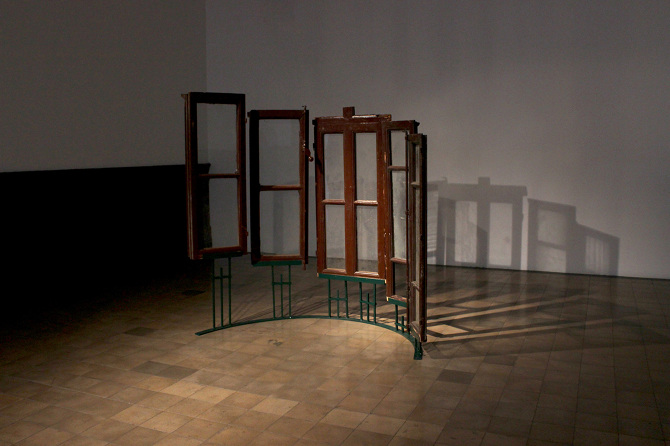
on the stairs of the trees we mount is a sculptural work composed of the old windows from the school and iron construction. Hinting at the characteristics of the school’s staircases, the windows are climbing up a half circular construction. The sculptural work dreams of the students that once filled up the space, looking out towards the unknown, climbing up the reaching steps.
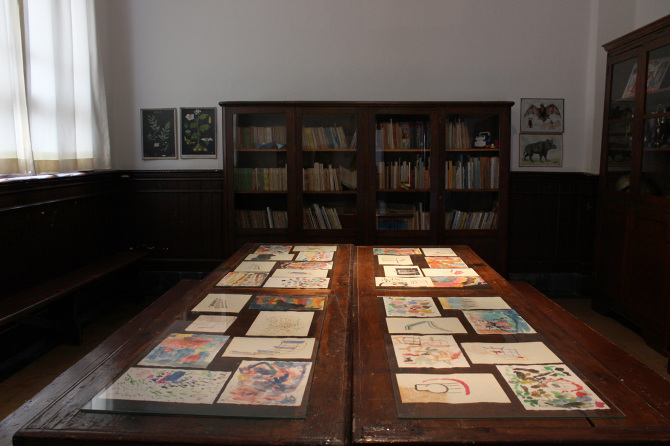
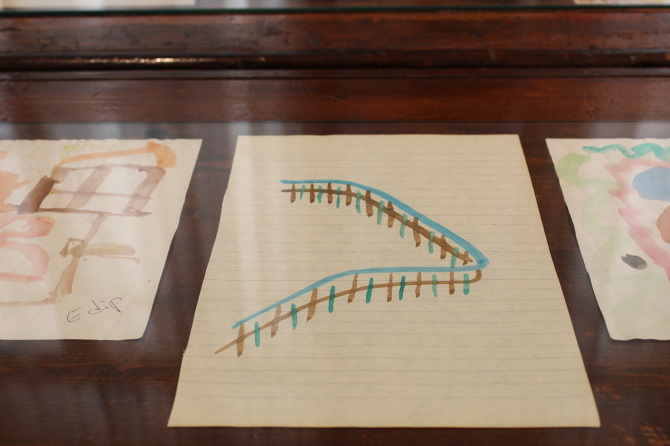
Displayed in the Open School Library are watercolour sketches, drawings and collages by the artist that reveal the process of the exhibition, amongst the abstract watercolour paintings done by the kindergarten students, who are the last students of the Galata Greek School. These abstract paintings are the foundations of the composition and characteristics of the works displayed in the exhibition. The reading sessions that will be held in this space throughout the exhibition display compositions where the abstract watercolour paintings by the students are harmonised with the works on paper taken out of the artist’s sketchbook.
Lara Ögel invites the viewer to an unusual journey amongst the memory of the Galata Greek School, taking steps with the idea of İmtidâd, brought into our culture by Yahya Kemal and defined by his pupil Ahmet Hamdi Tanpınar as “to evolve as you go on and to go on as you evolve”. The school’s evolution throughout the years is highlighted and its spirit reincarnated, blending into today.
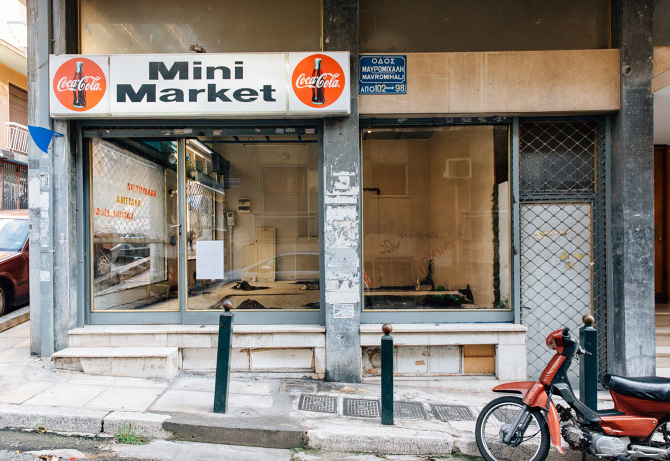
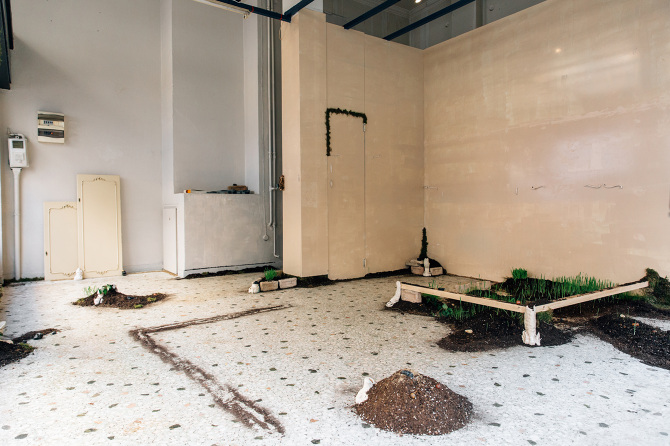
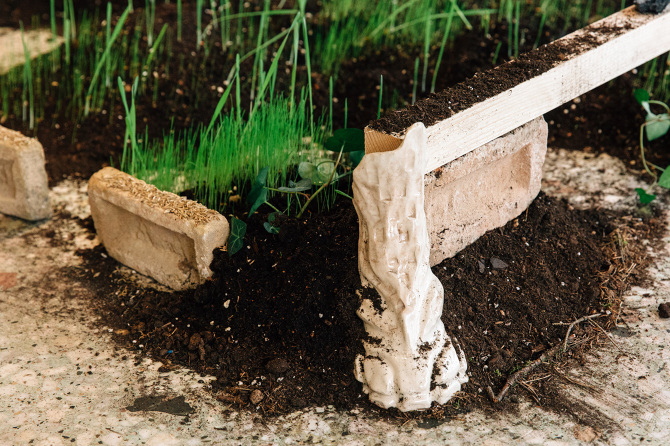
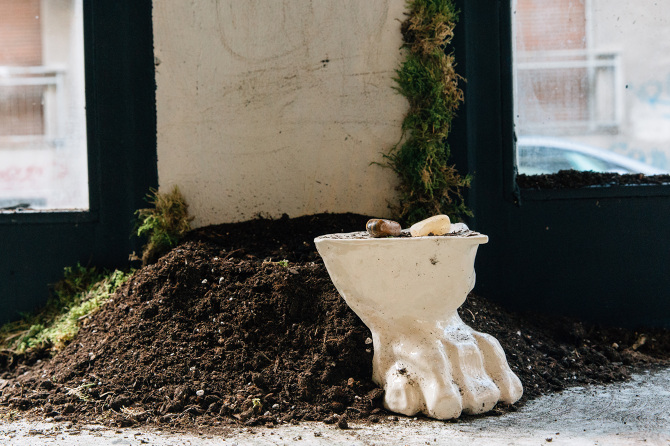
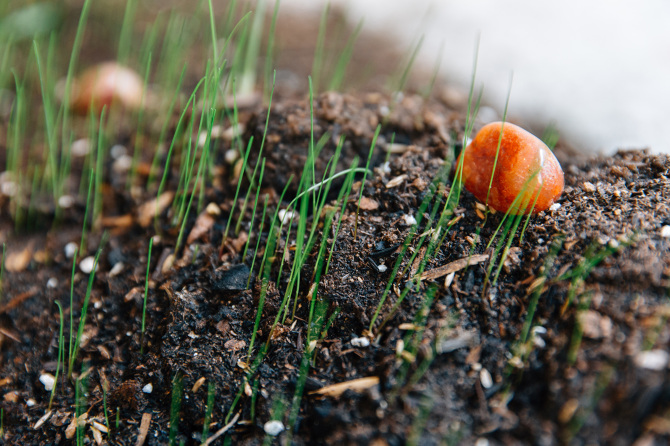
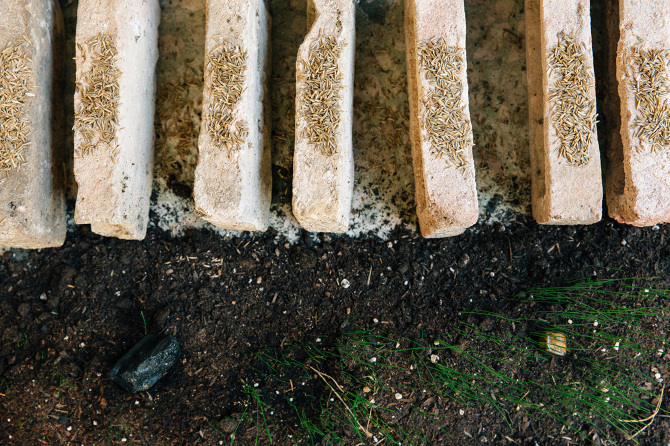
houses were rooms, I had forgotten, site-specific installation with ceramics, soil, grass, crystals, seeds, closet doors and wood, 2017
produced and exhibited on the occasion of the exhibition DRIFTWOOD, OR HOW WE SURFACED THROUGH CURRENTS Athens, Greece.
In an old Athenian mini market, Lara Ögel draws on notions of the home, familiarity and constructing a safe haven in turbulent times. Such as is often the case in Ögel’s site-specific approach, her installation originates from physical elements found in her surroundings, bearing memories of an environment once inhabited. In this case a set of closet doors generously decorated with Italian Baroque motives, as well as the feet of tables and cabinets, hint at her upbringings in Izmir with her grandparents. The journey of the doors accompanying the artist subsequently to Istanbul and now to Athens evokes thoughts on the construction of a home, both physical and imagined. To what extent can migrating bodies - taking into account both forced diaspora’s and nomadic lifestyles - sustain their idea of a home and their sense of belonging in foreign contexts? In what way can we rely on our memories when trying to convey a life once lived elsewhere?
Following the fragments of her childhood, the artist embeds these questions in a site of healing and comfort by drawing further on the physical residues such as the closet doors and found pictures, collected from home.
Patches of grass and organic matter dispersed throughout the space form a common ground for diverse elements to coexist. Ceramic paws move in pairs along this excavation site where personal and collective remembrances, and memories yet to be made intertwine. The fact that they stand as disconnected body parts expresses a certain sense of disruption, hinting at the challenges that migration bring about. Challenges regarding the balance between processes of integration and assimilation, while ceasing to forget one’s origins. houses were rooms, i had forgotten (variation II) is therefore also inhabited by gemstones and archetypal furniture remnants, suggesting recognition and rootedness.
Text by Evelyn Simons, available at the catalogue produced on the occasion of the exhibition Driftwood, or how we surfaced through currents
Documentation photographs by Paris Tavitian.
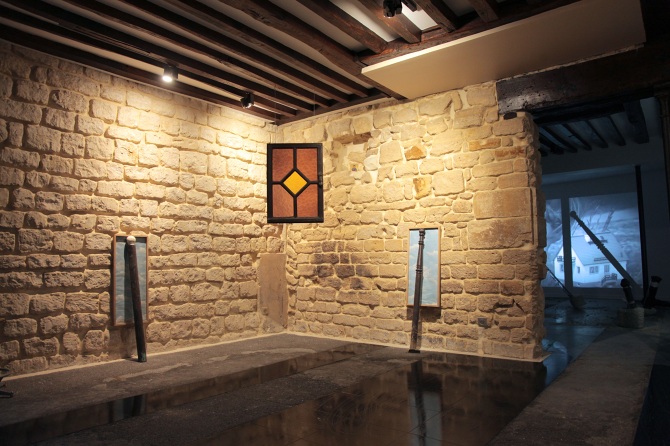
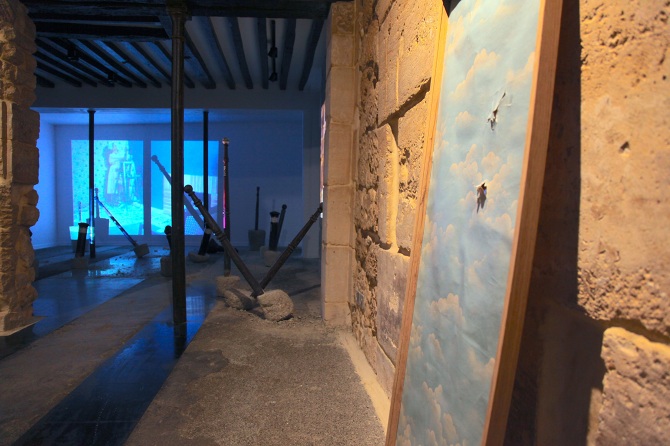
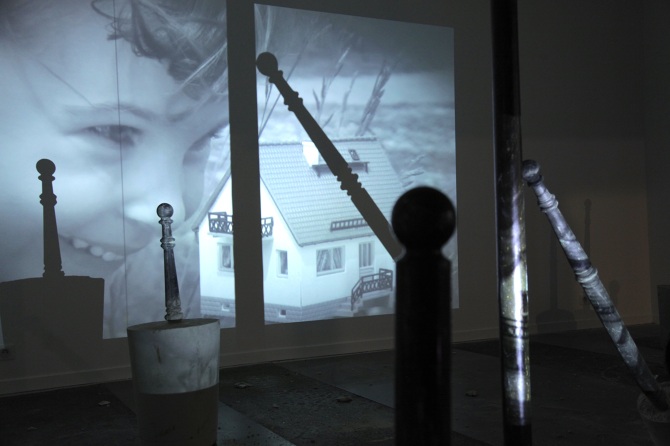
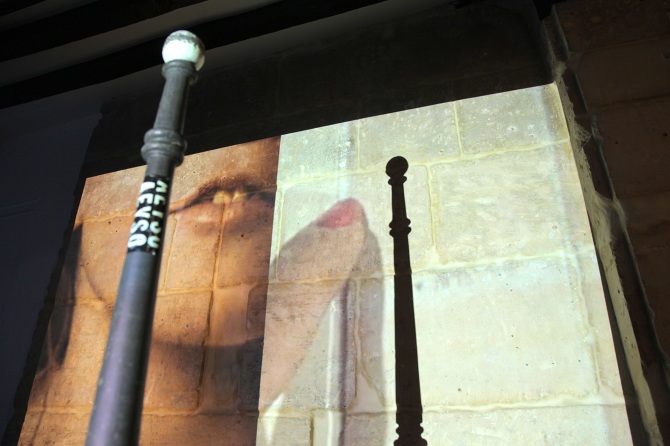
Come Back! All is Forgiven, Protocinema, Paris, 2016