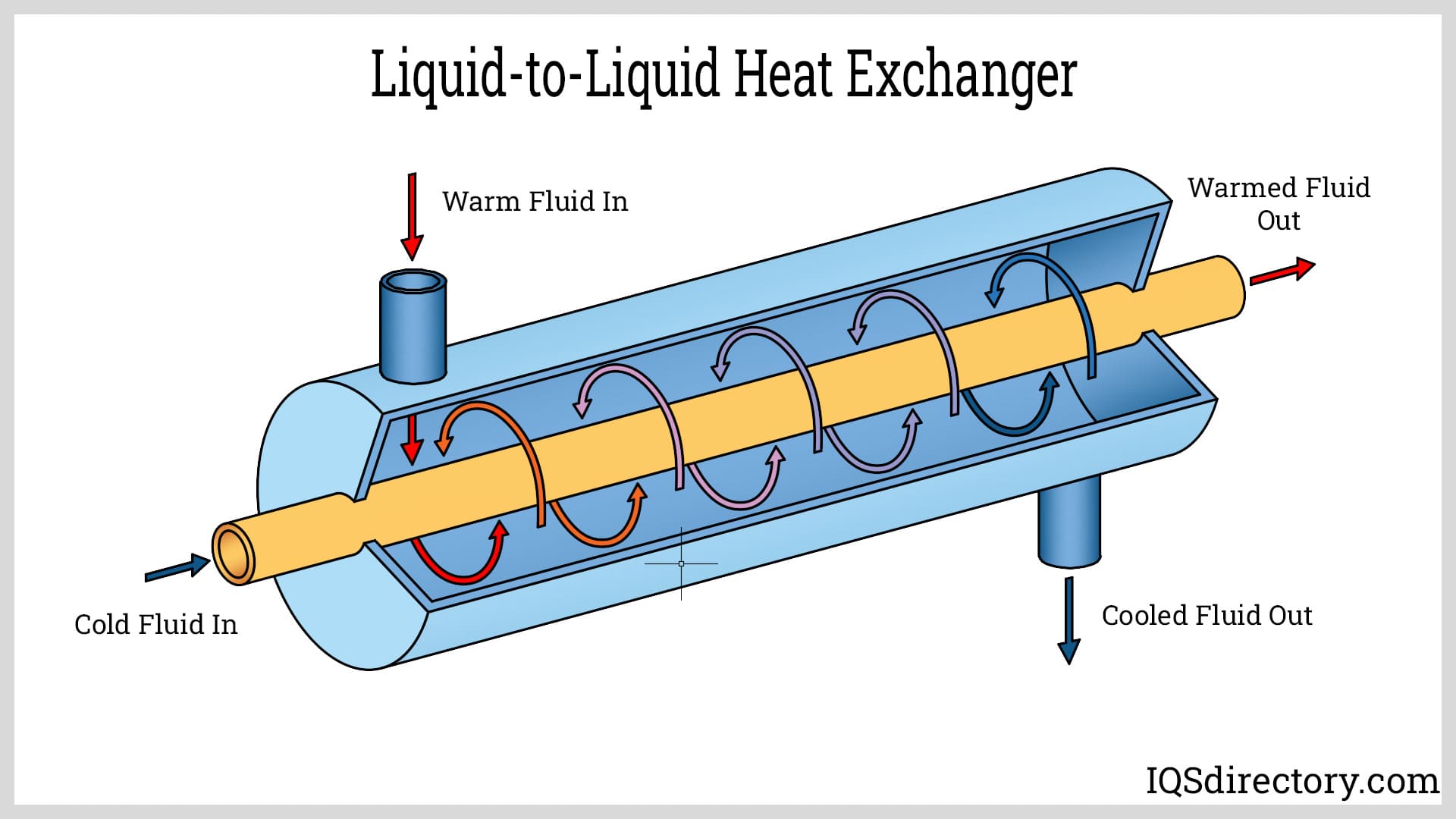
Heat exchangers are defined as devices that transfer heat from one liquid or gaseous substance to another in order to change the temperature of the substance for another process. Heat exchangers are constructed with thermally conducted tubes or plates. Read More…
At Harris Thermal Transfer Products, we specialize in delivering cutting-edge heat exchangers designed to meet the diverse needs of our clients. We excel in producing a wide range of thermal management solutions, from standard models to highly customized systems. Our commitment to innovation and quality ensures that our heat exchangers provide superior performance, reliability, and efficiency.

Since 1947, Perry Products Corporation has been a trusted designer, manufacturer and long term heat exchanger partner for our customers. In addition to custom thermal engineered shell and tube heat exchangers, Perry maintains a line of partially fabricated but still customizable ASME heat exchangers in stock and ready to ship quick. Direct and honest communication and on time delivery is one of...

At Isotherm, Inc., we specialize in the design and manufacture of high-performance heat exchangers engineered to meet demanding thermal management requirements across a wide range of industries. Our company combines advanced engineering expertise with precision fabrication to deliver efficient, reliable solutions that optimize heat transfer, improve system performance, and support long-term...

At Diversified Manufacturing, we provide precision manufacturing solutions with a strong focus on producing high-quality heat exchangers for a wide range of industrial applications. Our company combines experienced craftsmanship with modern manufacturing processes to deliver dependable thermal transfer equipment designed to meet demanding performance requirements.

Since 1953, we have been an industrial heat exchanger and heat transfer systems manufacturer offering shell and tube, marine, plate and frame, brazed plate, welded plate and air cooled heat exchangers and more. To us, service means responsive, knowledgeable support.

At JFD Tube & Coil Products, we manufacture precision heat exchangers designed to provide dependable thermal transfer solutions for demanding industrial and commercial applications. Our company produces a wide variety of custom tube and coil products that support efficient heating, cooling, condensing, and fluid processing across numerous operating environments.


See More Heat Exchanger Manufacturer Listings
Heat Exchanger Supplier Directory Overview
Find and compare heat exchanger manufacturers that supply thermal transfer equipment for industrial, commercial, and process applications. This directory helps buyers browse heat exchanger suppliers, source industrial heat exchanger manufacturers, compare heat exchanger companies, and connect with manufacturers of heat exchangers for heating, cooling, condensation, evaporation, energy recovery, and process temperature control. Suppliers in this category support HVAC systems, chemical processing, food and beverage production, power generation, refrigeration, automotive manufacturing, marine systems, electronics cooling, and oil and gas operations with equipment built for fluid-to-fluid, air-to-air, water-to-air, steam-to-liquid, and oil cooling applications.
Plate Heat Exchanger Applications and Designs
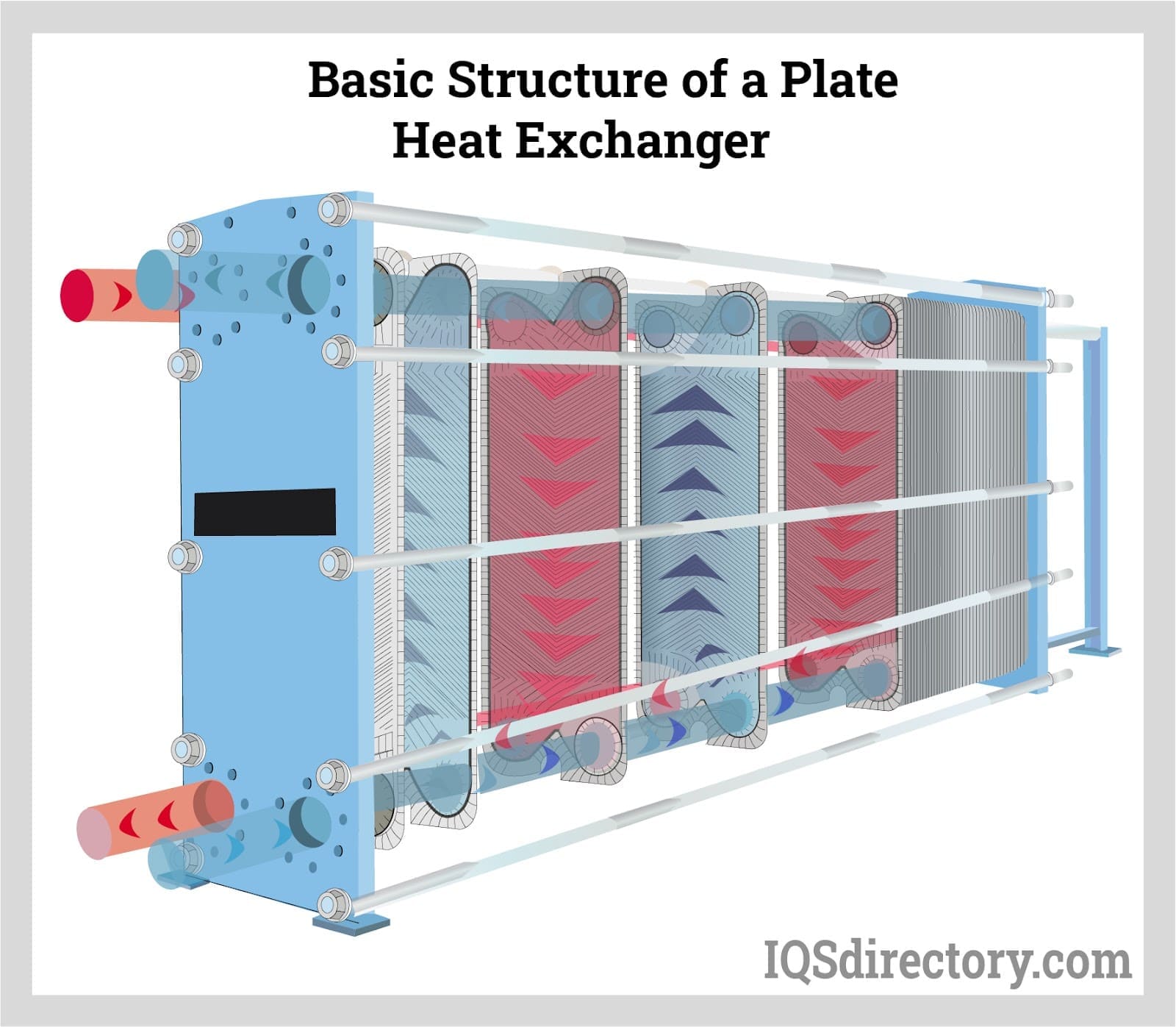
Plate heat exchangers use stacked or corrugated metal plates to transfer heat between fluids while keeping the media separated. Buyers often compare plate heat exchanger manufacturers for compact equipment that supports HVAC loops, food processing, beverage production, pharmaceutical systems, refrigeration, and energy recovery applications. Plate and frame heat exchanger manufacturers supply gasketed, welded, or semi-welded designs that can be opened for cleaning, making them useful when sanitation, inspection access, or frequent maintenance matters. Plate heat exchanger suppliers may also provide brazed, spiral, or plate-fin designs for smaller footprints, higher efficiency, or specialized thermal loads.
Shell and Tube Heat Exchanger Systems
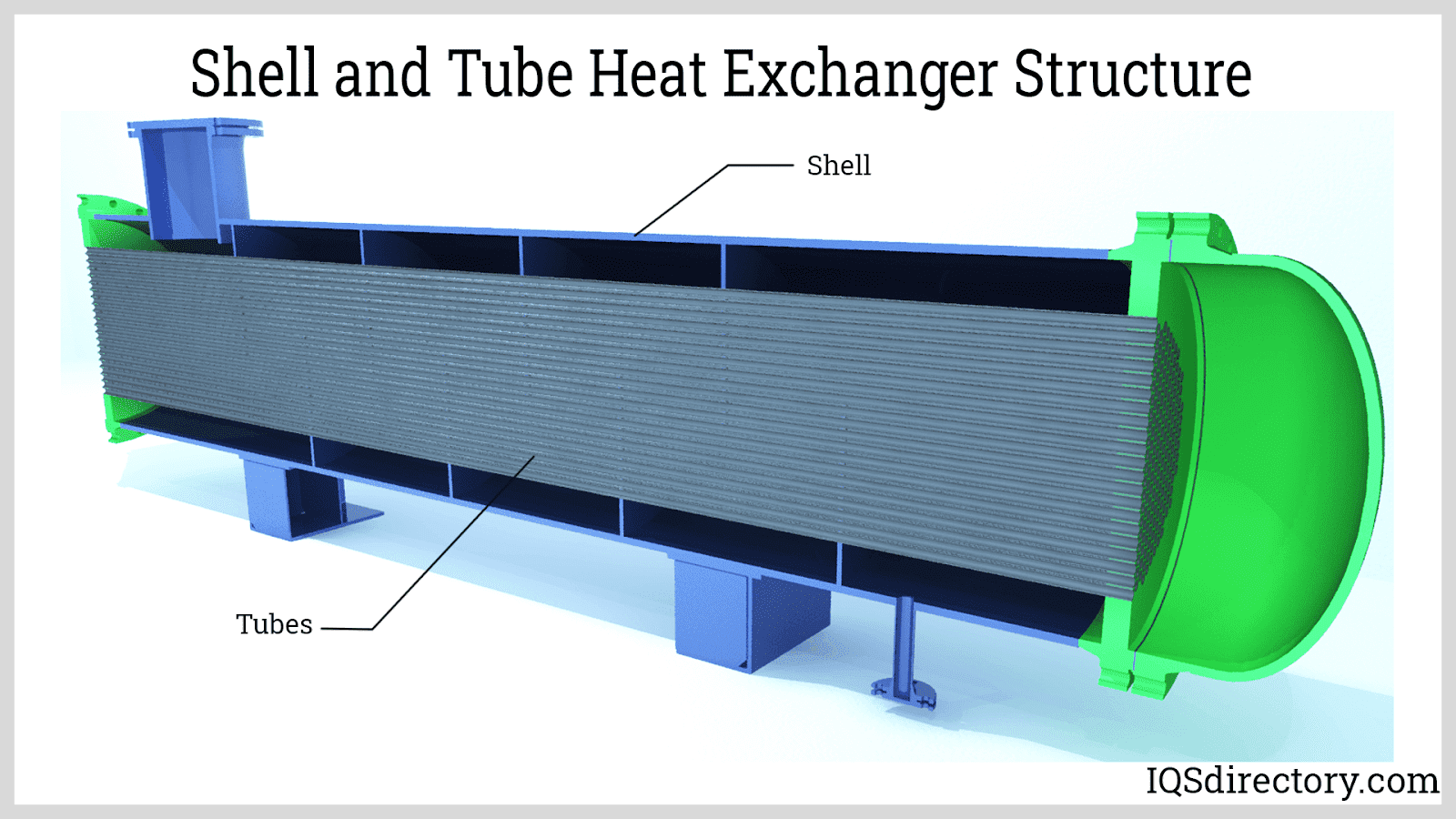
Shell and tube heat exchangers use tube bundles inside a cylindrical shell to manage high temperatures, high pressures, and demanding industrial fluids. Shell and tube heat exchanger manufacturers support power plants, chemical processing lines, oil refineries, marine engines, and heavy equipment systems that require durable heat transfer under continuous operation. Tubular heat exchangers, finned tube units, air-cooled heat exchangers, oil coolers, water-to-water exchangers, and U-tube designs help facilities manage engine cooling, hydraulic oil temperature, steam service, process cooling, and waste heat recovery. Heat exchanger packages may combine the exchanger, frame, controls, valves, instrumentation, and piping connections for easier installation into a larger process line.
Industries That Use Heat Exchangers
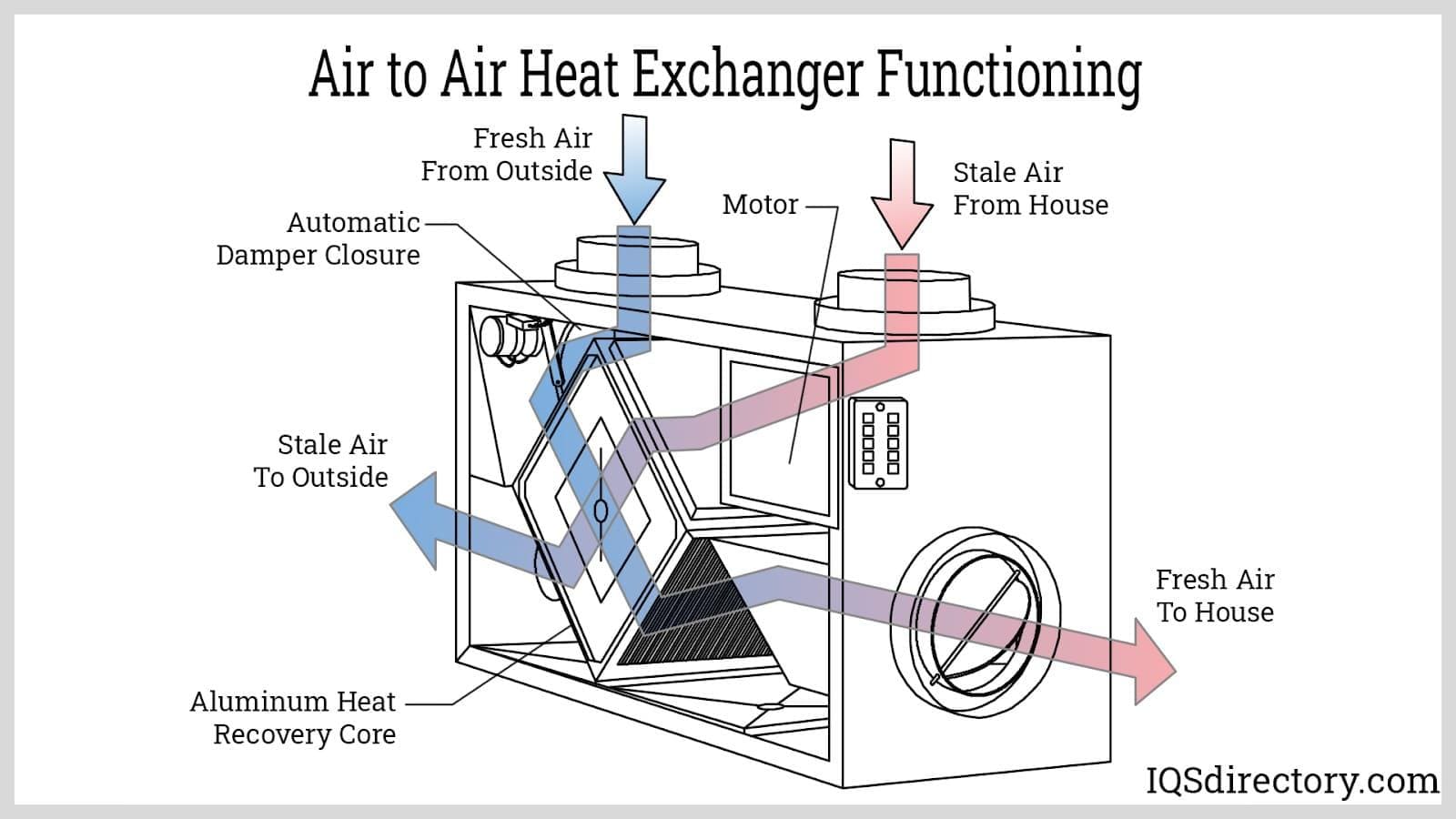
Chemical processing facilities require corrosion-resistant heat exchangers for reactor temperature control, condensation, evaporation, and solvent recovery. Food and beverage plants use sanitary plate and frame heat exchangers for pasteurization, chilling, and cleanable process heating. Power generation facilities rely on shell and tube units, condensers, and waste heat recovery systems to control turbine, generator, and auxiliary equipment temperatures. HVAC and refrigeration contractors source plate, air-to-air, water-to-air, and water-to-water exchangers for climate control and energy recovery. Marine, offshore, automotive, and electronics applications require compact or rugged exchangers for engine cooling, oil cooling, seawater service, and thermal protection for sensitive systems.
Comparing Production Volume and Thermal Duty
When comparing heat exchanger suppliers, start with production volume, duty cycle, and throughput requirements. A small batch process may need a compact plate unit, while a continuous industrial line may require a larger shell and tube design, modular package, or custom heat exchanger manufacturing support.
Process Type and Material Considerations
Process type should guide the equipment search. Corrosive fluids, viscous materials, particulates, steam, oil, seawater, sanitary liquids, or high-pressure media all affect material selection, flow path, gasket choice, tube design, plate geometry, and cleaning access.
Equipment Integration and Installation Requirements
Integration is another key buying factor. Buyers should review available space, pipe orientation, existing pumps, controls, maintenance clearance, pressure drop limits, and whether the heat exchanger package must arrive skid-mounted or ready for line installation.
Inspection, Certification, and Quality Standards
Inspection and certification requirements may include pressure vessel documentation, sanitary construction, weld quality, material traceability, clean-in-place capability, thermal performance testing, and compliance with industry standards. The best heat exchanger company for a project is usually the supplier with proven experience in the buyer’s industry, not simply the lowest quote.
FAQ
How do I find heat exchanger manufacturers for an industrial project?
Start by defining your fluids, temperatures, pressures, flow rates, space limits, and cleaning requirements before contacting suppliers. Use this directory to compare heat exchanger manufacturers by equipment type, industry experience, materials, and customization capabilities. A qualified supplier should be able to discuss thermal duty, pressure drop, fouling risk, installation needs, and documentation requirements.
What is the difference between plate heat exchanger manufacturers and shell and tube heat exchanger manufacturers?
Plate heat exchanger manufacturers typically focus on compact, efficient units made from stacked plates that create high heat transfer surface area in a smaller footprint. Shell and tube heat exchanger manufacturers build tube-based equipment for higher pressures, higher temperatures, and heavy industrial service. The right choice depends on fluid type, operating conditions, maintenance needs, and available installation space.
When should buyers look for heat exchanger packages instead of a single exchanger?
Heat exchanger packages are useful when the equipment must integrate quickly into a larger process system. A package may include the exchanger, skid, piping, valves, controls, sensors, insulation, or related components. Buyers often choose packaged systems to reduce field assembly, simplify installation, and improve compatibility with existing production lines.
What should I compare when choosing heat exchanger suppliers?
Compare suppliers by product range, industry specialization, engineering support, materials, testing capabilities, lead times, and ability to customize equipment. Review whether they support plate, plate and frame, shell and tube, air-cooled, oil cooling, or water-to-water designs. Strong suppliers should help match the exchanger to the process instead of offering a generic unit.
What information should I send to a heat exchanger manufacturer for a quote?
Send the fluid types, inlet and outlet temperatures, flow rates, pressure limits, heat duty, material preferences, connection sizes, cleaning requirements, and any certification needs. Include details about the surrounding process line, available space, and whether the unit must be part of a larger heat exchanger package. Better project data helps suppliers recommend accurate sizing, materials, and configuration.