A QUEST FOR A MAGNETIC STONE
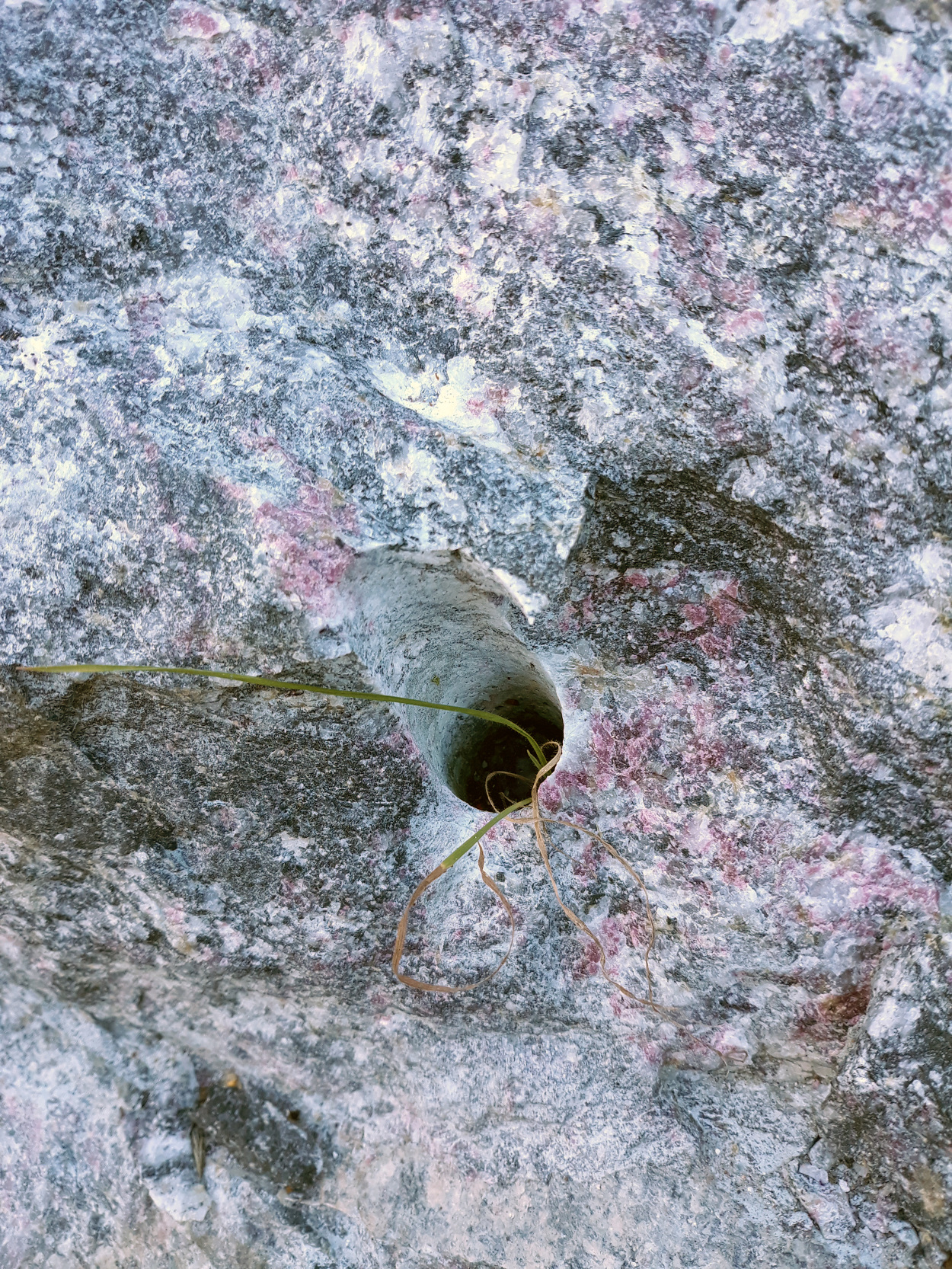
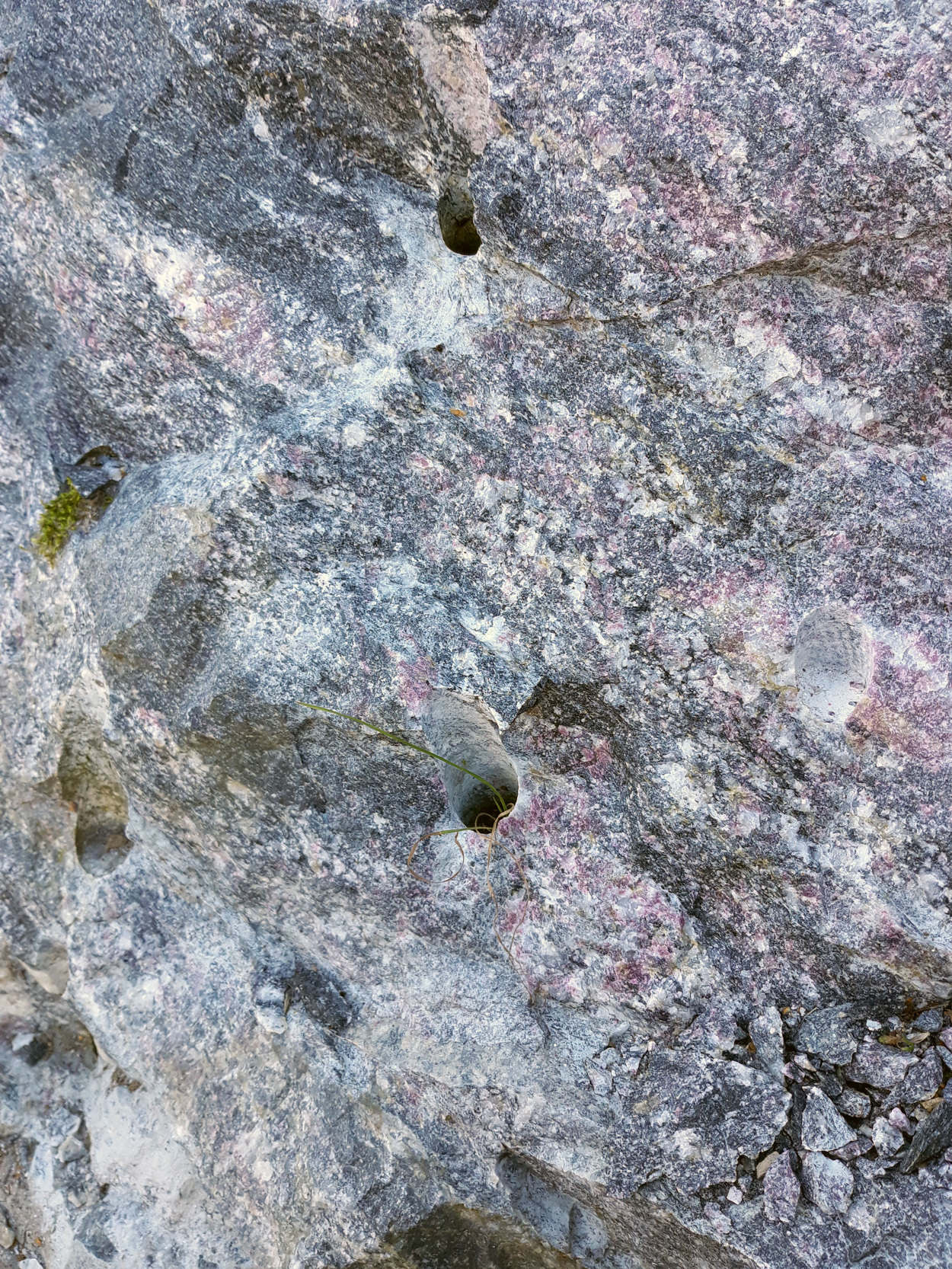
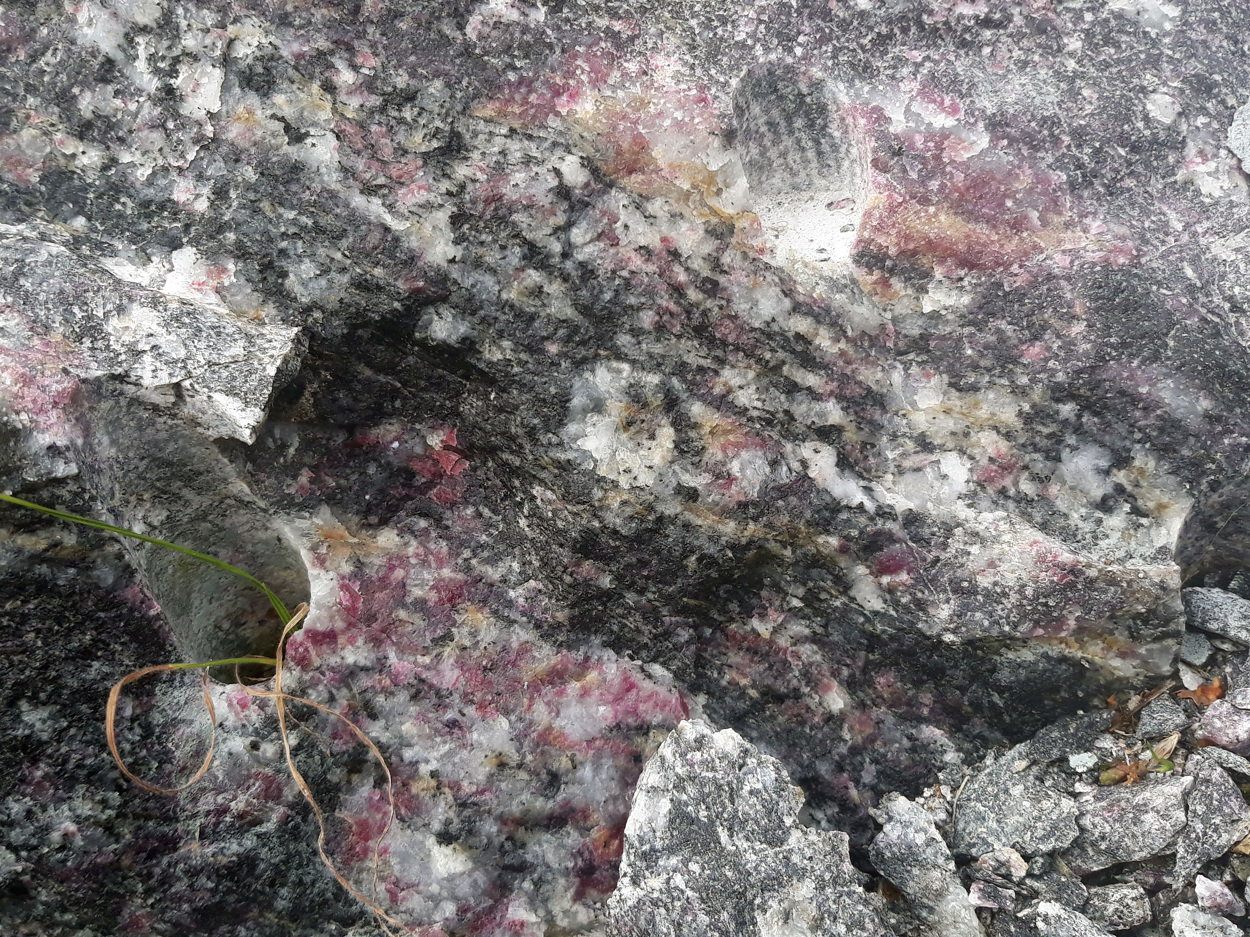
Eudialyte is a pink-red mineral that contains rare earth elements; there is a significant deposit in Sweden, in a place called Norra Kärr.
In July 2017, the quest for a magnetic stone in Greenland led me to the office of a local geologist. I was hoping that he would help me finding stones that I could use for making handmade radios or speakers, such as galena, ferrite or neodymium. He explained to me that neodymium is not a stone, but is part of a larger group of metals called rare earth elements, and extracting them from rocks is a complex and energy intensive process. The problem, he added, is that they are associated with uranium: when extracting neodymium, radioactive compounds get released. He then gave me a yellow rounded paper logo with a red barren radioactive symbol. Neodymium demand is increasing, as part of the essential minerals necessary for the energy transition, digitalization of society and to move toward electric mobility. It has multiple applications, the main one being rare-earths magnet. It's used for electric motors, wind turbines, and also electronic and digital devices such as hard drives, loudspeakers and earphones.
Mining for rare-earth elements in Sweden
In September 2022, my growing interest in rare earth elements and their environmental impact led me to Sweden for a two-month artist residency at Swedish University of Agricultural Sciences (SLU) in Uppsala. Carried out in dialogical exchange with Mistra Environmental Communication Programme (Mistra-EC) associates at the SLU, my residency project aimed to create tools for communication about the impact of electronic consumption on the environment, by investigating the mining and recycling infrastructures used for the production of metals and rare earth minerals. I was particularly interested in a conflict related to a project of rare earth ores mine in a place called Norra Kärr. The project has been ongoing since 2009 and brought a mining company against local inhabitants and environmental activists. They are concerned about the environmental damages linked to mining industry, as it's located nearby the shores of the second largest Swedish lake, Vättern. With the increasing need for critical metals, the European Union has been searching for deposits within its own territory. After decades of outsourcing part of the mining industry from other countries, these new prospects generate fear of environmental pollution and health hazards. However, refusing to relocate mining without decreasing our need for these critical metals and minerals would mean to keep these damages occurring elsewhere. These are important discussions and decisions that shall be done collectively, with a specific effort to integrates the populations that would be impacted. An effort to map out the alternatives seems also essential.
Given this background, my project for the AiR@SLU was taking interest into the topic of mining for rare earth elements in the European Union. After one month of compiling information about my topic and field case study, I felt like the depth of the research was only expanding. I had been reading articles and papers to understand the process of mining rare earth elements and mapping this information. I was also contacting and interviewing knowledgeable individuals and organizations in order to collect different point of views on the project. I went to Norra Kärr, where I was pursuing signs and indices of land-use, collecting visual testimonies about how the conflict is embedded into the site.
The next stage was to decide how to extract my research from the computer and transform it into an artistic reflection to share with others, including the researchers around me. Setting the aisle of the SLU’s Department of Environmental Communication as an exhibition space made the challenge somehow more achievable.
Micro and macro visualizations of scale
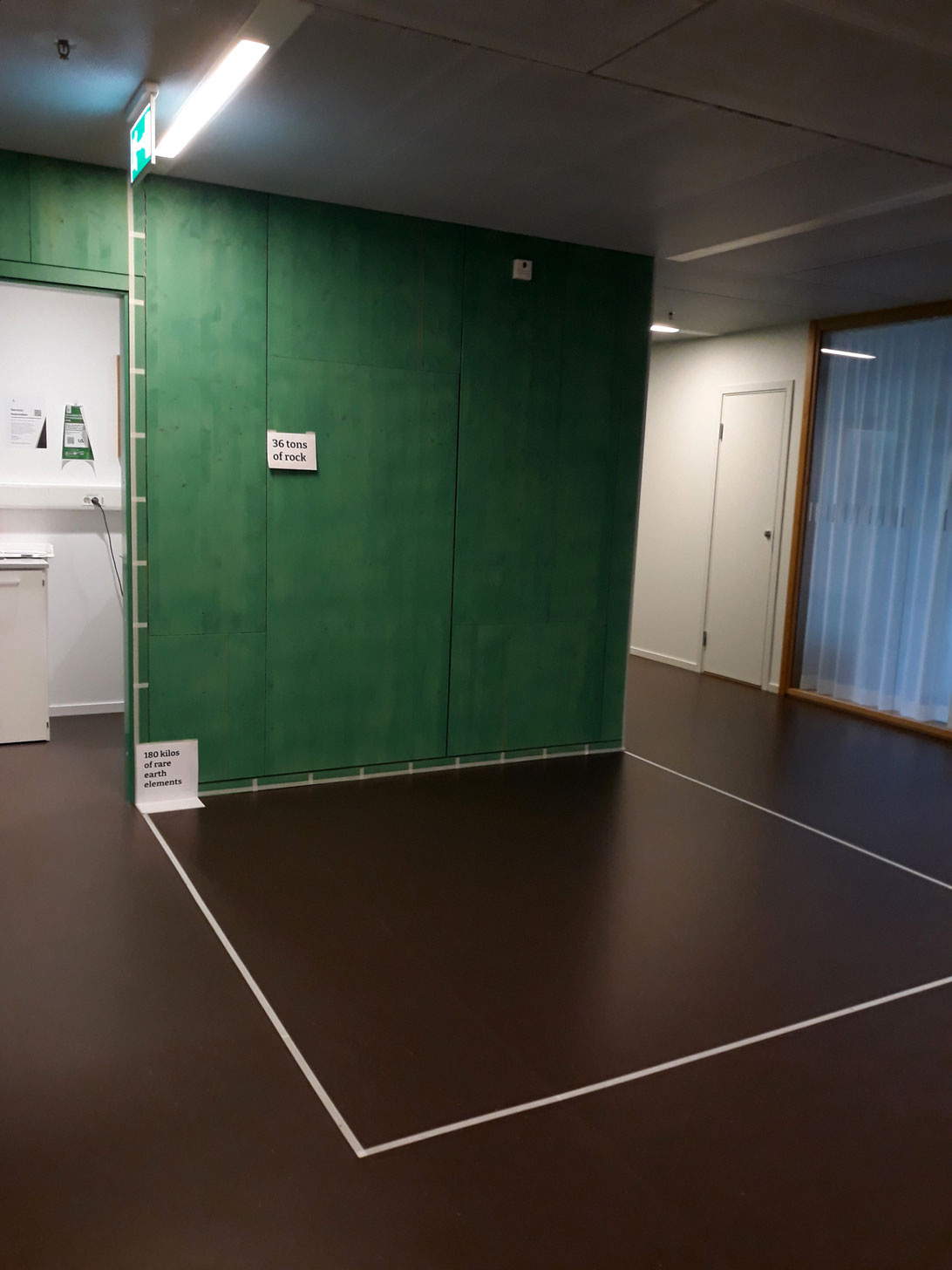
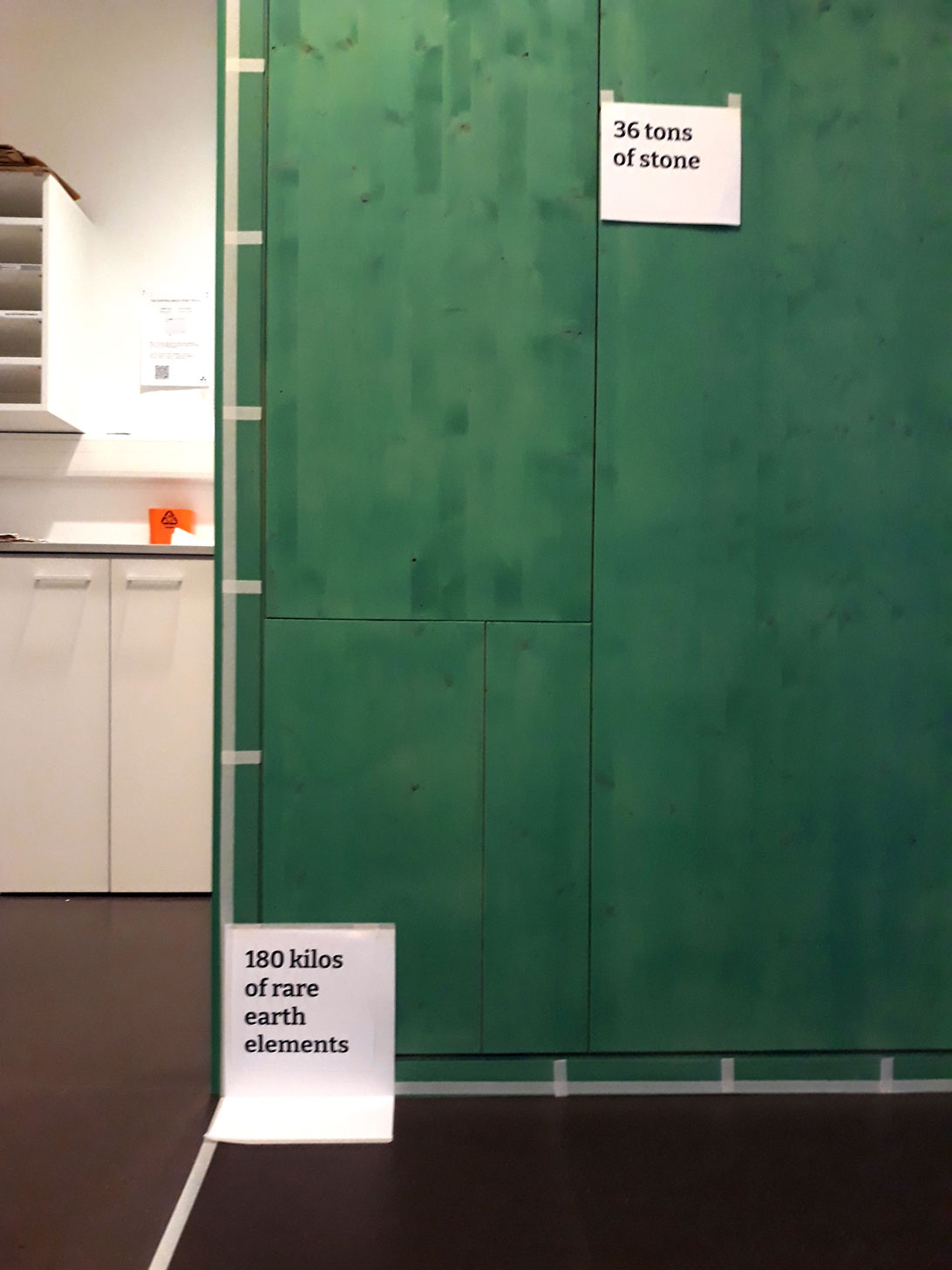
The first installation aimed to give a sense of the scale of extraction necessary to mine rare earth elements. It was a data-visualization of the proportions of rare earth elements in rocks, using the data from Norra Kärr and a calculation based on the size of the wall. I transformed this square wall into a cube of rock weighing 36 tons, using paper tape and signage to assign it a new nature. A subtle gradation suggest how it could be divided into 100 squares, giving a sense of percentage. A folded paper sheet visually creates the outlines of a volume: it represents 180 kilos of rare earth elements or 0.5% of the complete mass. The color of the background wall somehow creates a link with the “green” transition, a narrative that tends to make us forget about the materiality of the renewable energy infrastructures and electric vehicles' production in relation with REE extraction.
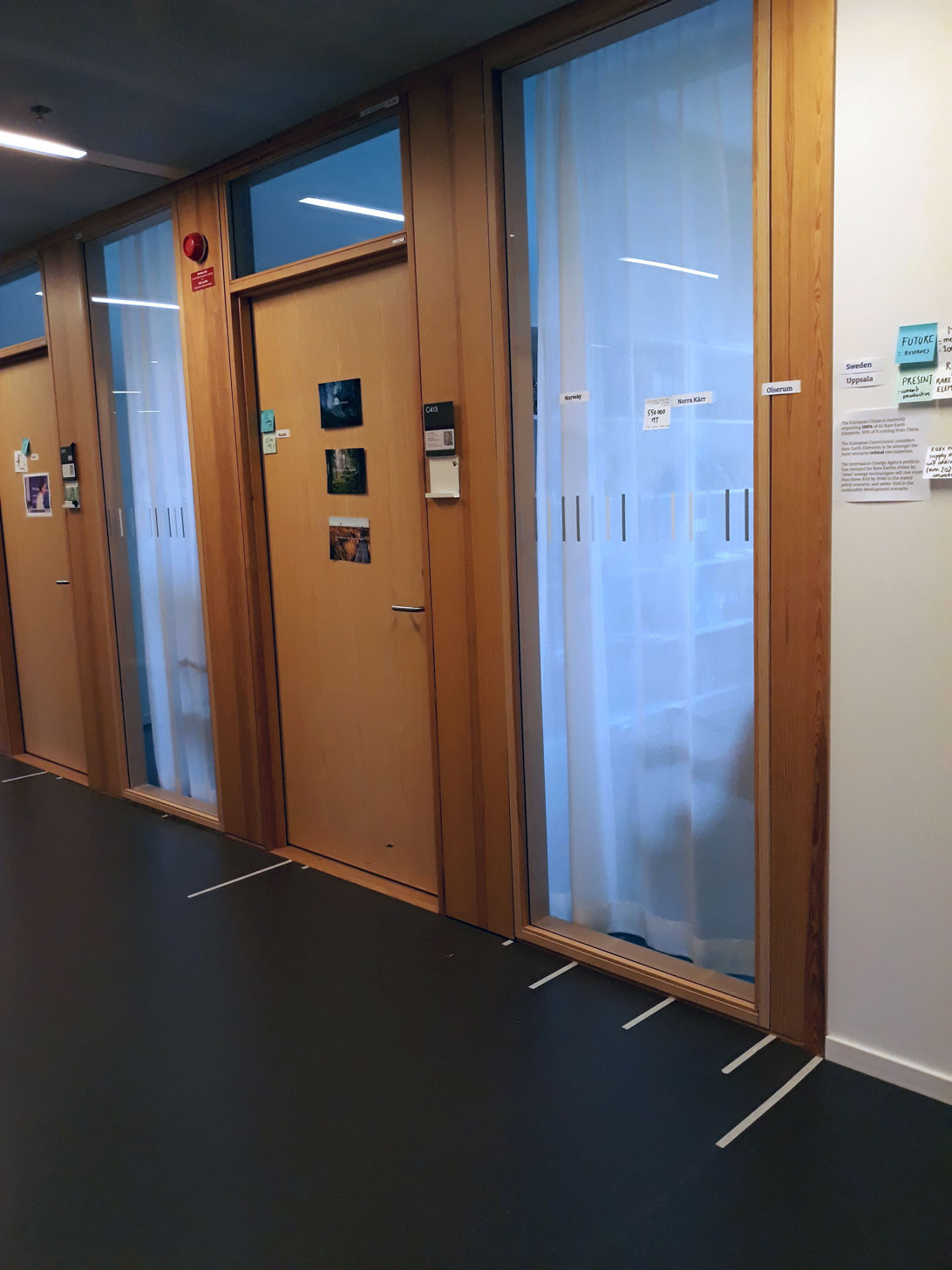
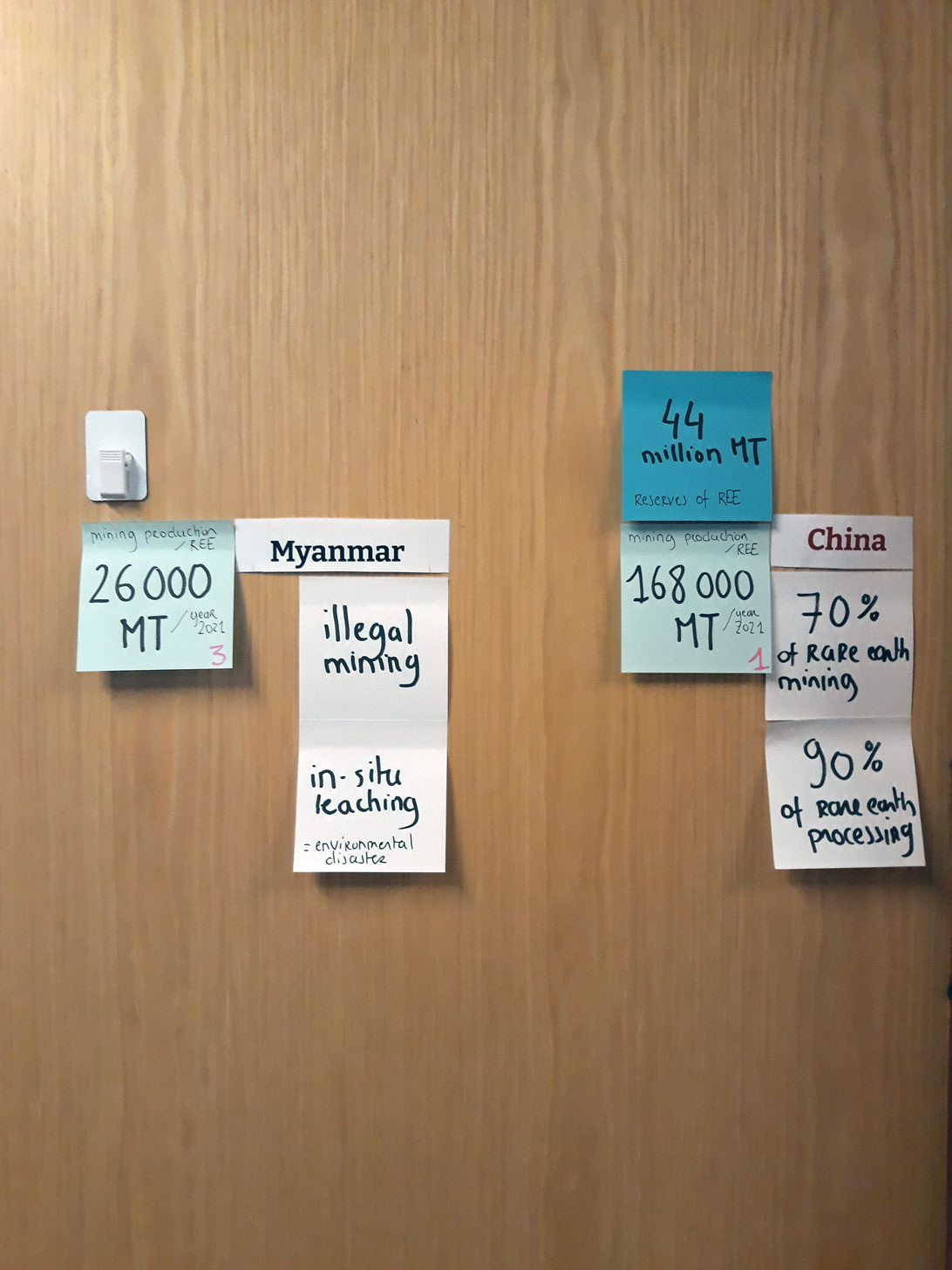
Zooming out from this micro perception of a rock composition, the second installation aimed to show the global scale of the rare earth elements production. Using the university corridor as a giant map-ruler, I placed the most significant mining countries according to their distance from Uppsala. Through walking, the viewer move in space, observing the geographical occurrences of significant rare earths elements deposits, including both current production and potential future mining sites. They feature post-it information that give sense of quantities with production tonnage, with a different color code for current production and deposits. It shows the geopolitical importance of rare-earth trading.
Point of views: at the intersection of scales & perspectives
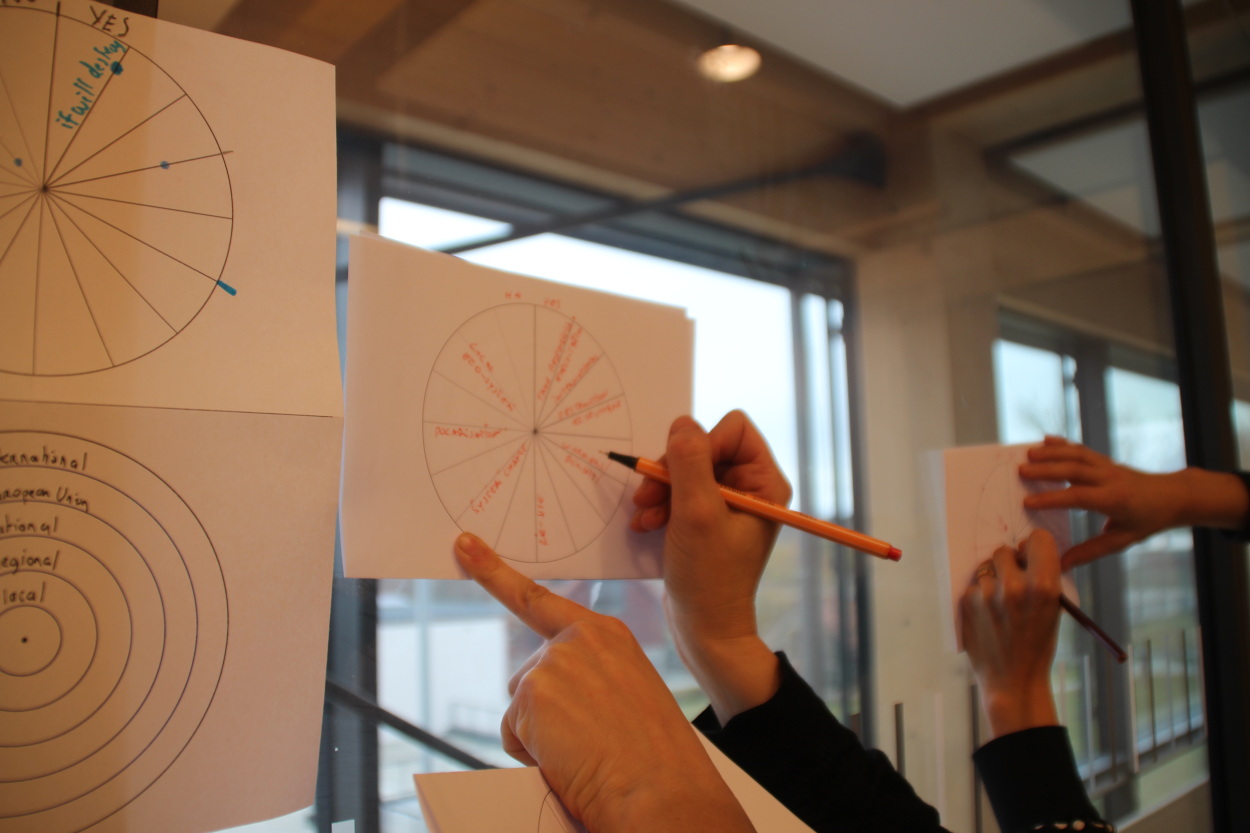
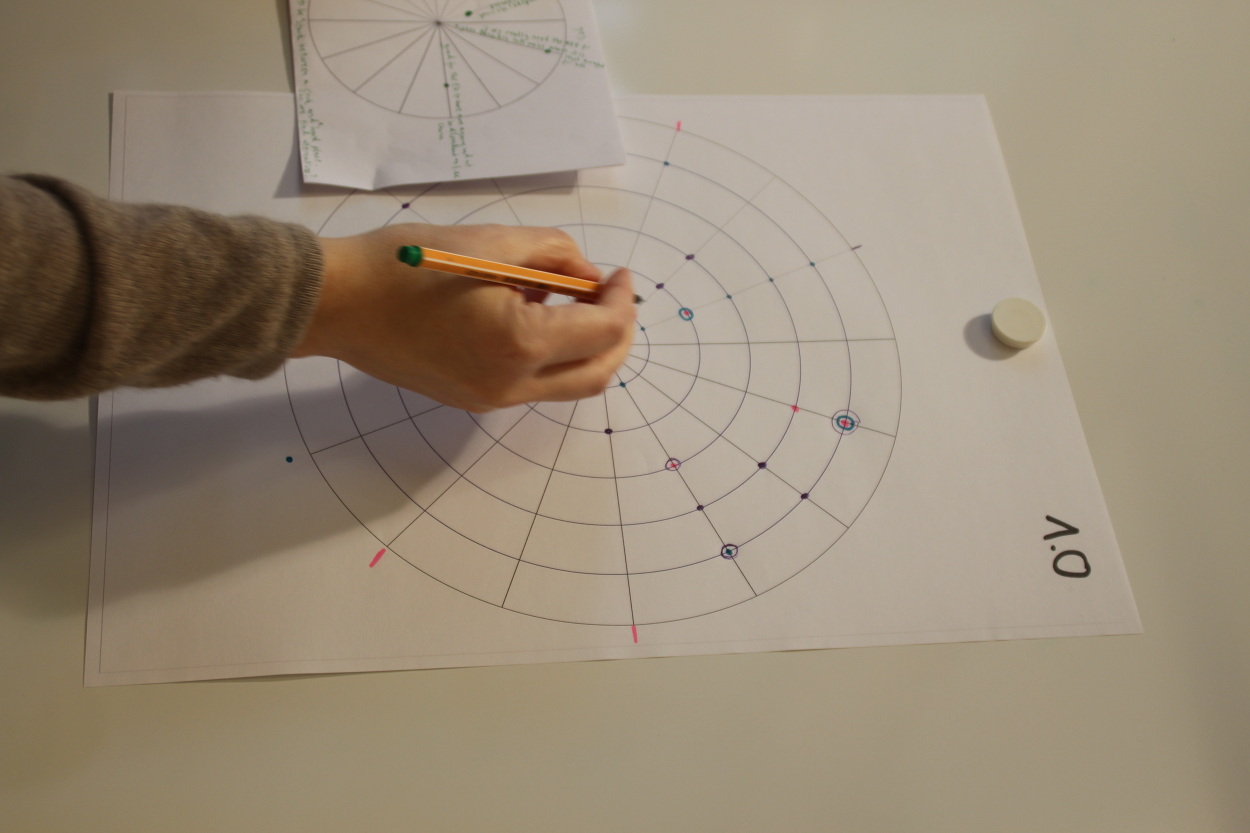
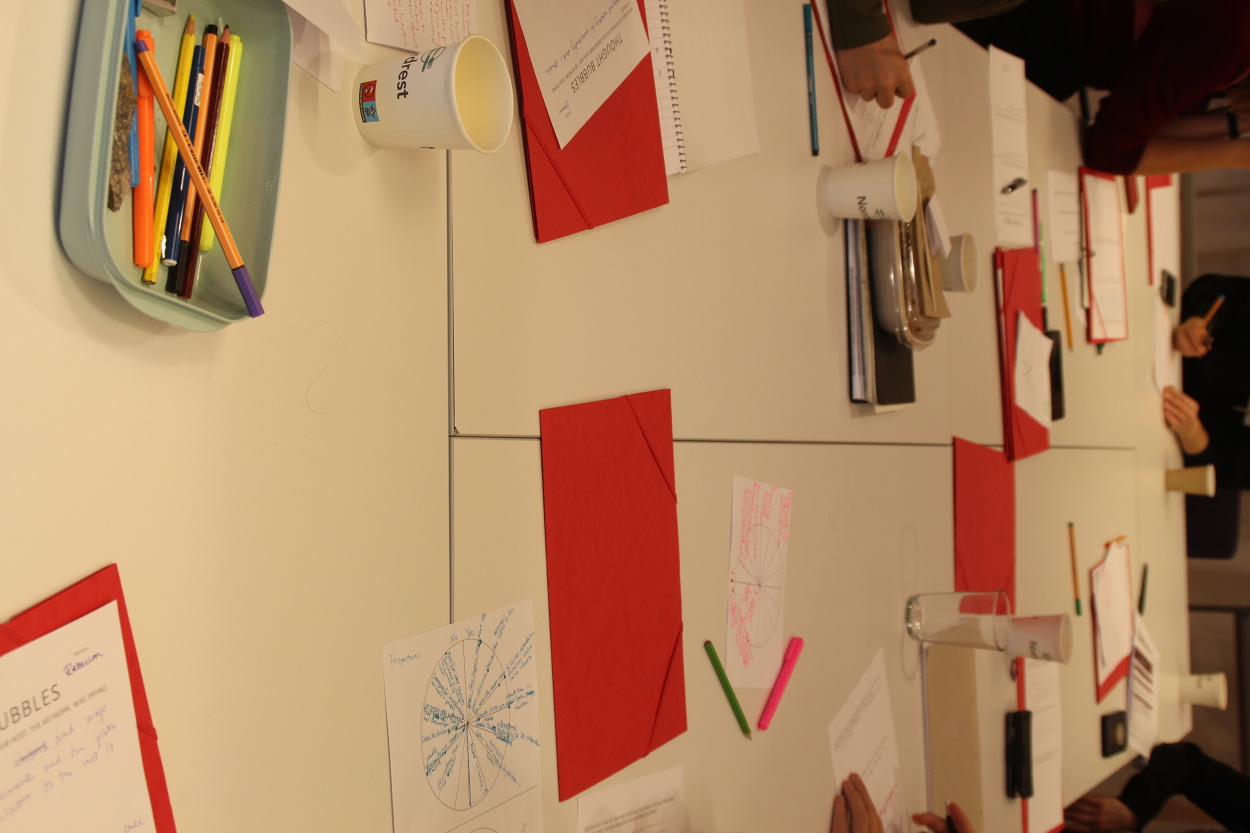
image 1: an example of filled sheet; image 2: all participants reported their intersections of scales and perspectives onto a combined wheel.
The last project is a paper tool to collect and organize different perspectives on the topic of mining for REE in Europe, while connecting them with the perception of scale. I was inspired by volvelles, analog paper calculators that highlight the connections in-between multiple datasets.
I am interested in the intersection of scales and perspectives when considering a systemic problem, so I created one wheels for each concept. Scales is organized centrifugally, with five circles, going from local to global. They represent the different levels of decision-making and the communities depending on them. Perspectives are organized radially with ten lines, with a gradient going from light to dark and from right to left. There are white spaces to write and organize its own different viewpoints across a decision spectrum.
During the workshop, the participants faced a controversial question “do you think that the mining project at Norra Kärr shall happen?”. Workshop participants were given two wheels and asked to fill their perspectives wheels. When folding the paper in two and using a light source, perspective and scale overlap. When the point of view has a relationship with a scale-level, participants can place a dot on the intersection of the circle and straight line. This mean that this point of view is influenced by the perception of scale, a 3-dimensional opinion.
This workshop was a beta-test for the tool, aiming to get first feedbacks.
One outcome was about how it helped realizing that an opinion is made of multiple, sometimes contradicting point of views and participated in generating collective discussions. I see multiple potential uses for this tool: it can help in mediating collective dialogue, and also in collecting and compiling subjective environmental data. I’m considering ways of improving the physical tool as a communication facilitator, and creating a digital tool to collect and display nuanced opinions from larger groups of peoples.
This research project was executed during a two months residency organized by Mistra EC. It was hosted by the department of environmental communication in SLU, the Swedish University of Agricultural Sciences. It's a work in progress. Read more about the residency programme here. A shorter version of this text is also available here.
Thank you to everyone within Mistra EC and SLU for inviting me, and to all the persons that got involved in every possible way.