PRACLAY cooling phase begins in the underground laboratory
Research
Deep disposal
03/11/2025


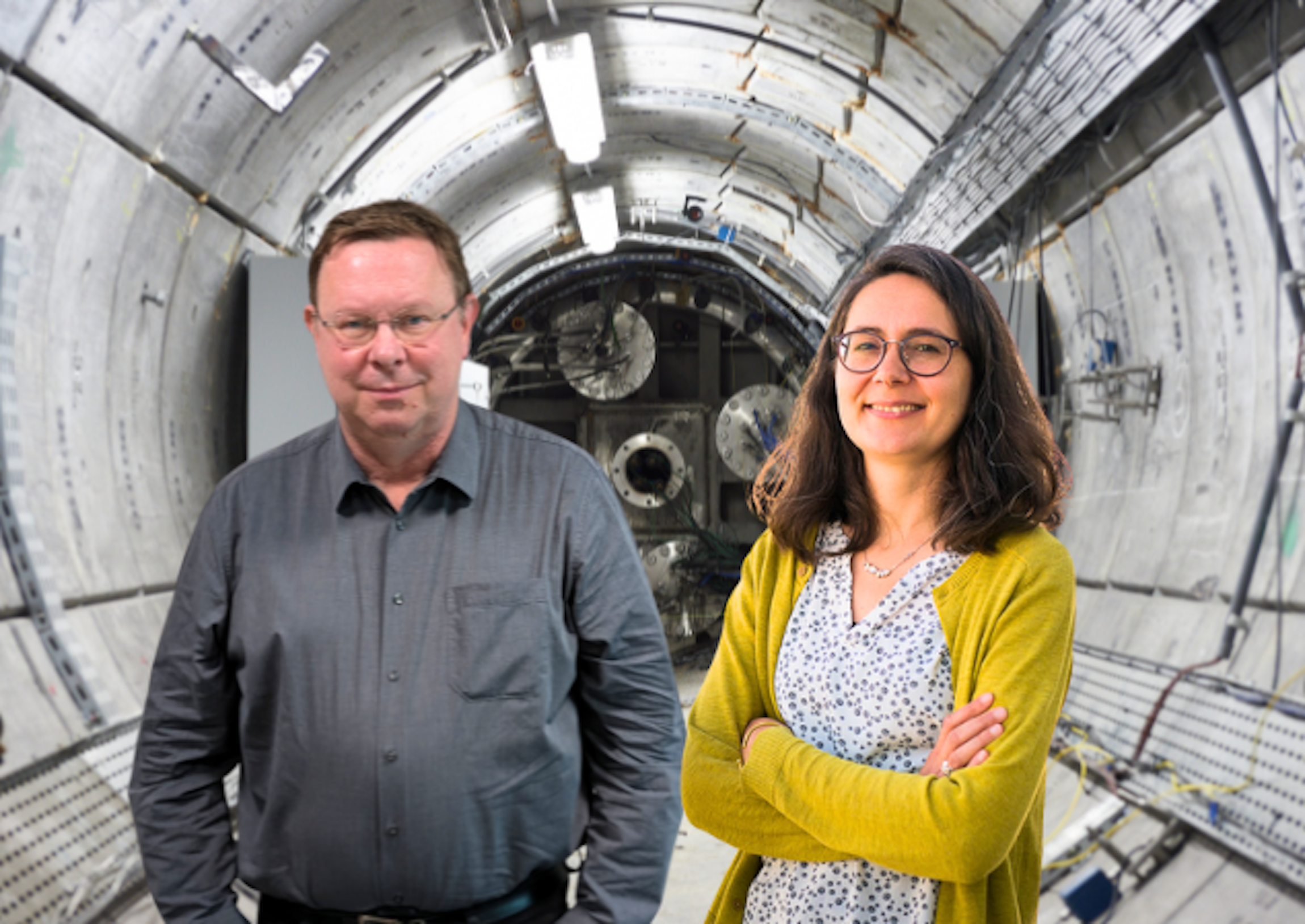
At the HADES underground laboratory in Mol, a large-scale, long-term experiment is enabling researchers to assess the influence of geological disposal of heat-generating high-level waste on a deep clay layer. After a 10-year heating phase, the cooling phase has now begun. Séverine Levasseur and Xavier Sillen look back at the PRACLAY experience and discuss the next steps.
What is the aim of the PRACLAY experiment?
Xavier: “High-level waste releases heat over many years. Although this heat generation decreases over time, it takes several centuries for it to become negligible. The aim of the PRACLAY experiment is to demonstrate that a deep clay layer could withstand the heat generated by the disposal of this type of waste underground. The properties that make clay a suitable host rock for geological disposal must be preserved despite the rise in temperature around the disposal galleries.”
Séverine: “In concrete terms, we are recreating the effects of disposing of heat-emitting waste in a deep layer of clay by heating a 1.9-metre-wide gallery over a length of 30 metres. The experiment is being carried out in HADES, at temperatures comparable to those that would be reached in a geological disposal facility. The size of the heated gallery and the length of the experiment also ensure a realistic representation of this type of disposal. The results obtained are essential for research into geological disposal in poorly indurated clay layers such as Boom Clay or Ieper Clay, two potential host rocks in Belgium.”


The aim of the PRACLAY experiment is to demonstrate that a deep clay layer can withstand the heat generated by high-level waste.
The PRACLAY experiment was also an opportunity to observe the effect of excavations on clay.
Xavier: “Precisely. The construction of the PRACLAY gallery in 2007 has already demonstrated that it is possible to dig galleries perpendicular to a main gallery using industrial techniques. During the excavation work, we monitored changes in the clay layer using measuring instruments that had been installed beforehand. This enabled the team to map the disturbances caused by the digging with great accuracy. We also fitted the concrete lining of the PRACLAY gallery with sensors that continuously record, among other things, the pressure exerted by the clay. This data is extremely useful for designing the disposal facility.”
Heating to up to 80 degrees
A heating system was then installed. Can you tell us more?
Xavier: “We obviously didn't place any waste in the PRACLAY gallery but reproduced the heat it would give off with a double heating system. Electric heating cables were installed on the surface of the gallery's concrete lining. As these cables cannot be replaced during the experiment, a second system, removable and located in the centre of the gallery, has been designed as a back-up solution so that heat generation can be fully ensured if necessary. After installing the heating system, we filled the gallery with water-saturated sand and completely isolated it from the main gallery.”
Séverine: “To recreate the conditions of a geological repository as precisely as possible, it was crucial to separate the heated section of the PRACLAY gallery from the rest of the underground laboratory during the experiment. A waterproof and insulating structure has been installed for this purpose. The metal structure, which also incorporates bentonite (an industrial clay) and thermal insulation materials, was designed and installed with great care, as it had to withstand high temperatures and pressures. Hundreds of cables run through it, connected to the heating system and the various measuring instruments.”


In short, we heated the PRACLAY gallery for ten years to maintain a constant temperature of 80°C in contact with the clay.
The actual heating experiment could then begin. How exactly does it work?
Séverine: “In short, we heated the PRACLAY gallery for ten years to maintain a constant temperature of 80°C in contact with the clay. This is the temperature expected when high-level waste is actually disposed of. We started heating the gallery at the end of 2014 and the power of the heating system was gradually increased until we reached the target temperature of 80°C.”
Xavier: “Initially, the heating system faithfully reproduced the heat that would be emitted by potential waste. We then sped up the process, reaching 80°C in just nine months – a temperature that would not be reached in real storage for around ten years. All the studies show that for geological storage, the period during which the temperature rises is a critical phase. Boom Clay is a material with very fine pores filled with water. When the temperature rises, the water expands faster than the clay, increasing the pressure. We had to make sure that this increase in water pressure wasn't going to damage the clay.”
And what about measuring instruments?
Xavier: “We installed measuring instruments in boreholes several dozen metres deep in the clay, drilled from the underground laboratory. These devices are connected to the laboratory, where the data is recorded and then transmitted to the surface for processing. Thermometric sensors located in the boreholes around the gallery allow the temperature rise in the clay to be measured in minute detail. We also monitor the load of the clay on the coating, as well as the pressure and chemical evolution of the water in the pores.”
Séverine: “The aim is to confirm and refine what we already know about the behaviour of clay. We want to prove that the models established from previous, smaller-scale experiments are still applicable on the scale and under the conditions representative of actual disposal. Studies have shown that an experiment lasting 10 years is sufficient to draw reliable conclusions about the effect of heat on the mechanical stability of clay. Regarding geological disposal, the maximum temperature is reached after approximately ten years, after which it decreases very slowly.”
Confirmation of knowledge acquired


Our measurements confirm the results obtained from experiments carried out on a smaller scale, as well as the knowledge already acquired about the behaviour of clay when subjected to heat.
After ten years, as planned, heating was stopped. What are the next steps?
Séverine: “On 3 November 2025, we stopped heating. As in a real disposal facility, the clay around the PRACLAY gallery will gradually begin to cool. In reality, the heat produced by the waste decreases slowly, and this cooling takes place over several centuries. In the case of PRACLAY, this process will only take a few years. This will enable us to access the gallery and collect new samples of the heated clay to determine whether its favourable properties have been retained. We will also examine the lining to determine whether it has been damaged by the temperatures and pressures to which it has been subjected. This aspect is important for the possibility of recovering waste that has been disposed of in a real facility.”
Has the heating experiment already produced any results or conclusions?
Séverine: “Our measurements confirm the results obtained from experiments carried out on a smaller scale, as well as the knowledge already acquired about the behaviour of clay when subjected to heat. At this stage, we can state that the clay is not damaged when exposed to temperature variations in conditions representative of a disposal facility. In particular, it retains its very low permeability, keeping the water contained in its pores almost immobile. This is essential because this waste will continue to emit heat for years after disposal, and this must not compromise the facility's safety. In addition, no deterioration of the concrete lining of the gallery has been observed to date, which is important for the recovery of waste from a disposal facility.”
Xavier: “PRACLAY was one of the first large-scale demonstrations of this type in clay, and in a layer of poorly indurated clay. Which makes it quite unique. The preparatory studies and their development attracted considerable international interest. In the meantime, similar projects have been set up in France and Switzerland, from which we are also learning. We regularly share the results of the PRACLAY experiment as part of bilateral exchanges with our German, French, Dutch and Swiss counterparts, and also as part of the joint European research programme EURAD, devoted to the long-term management of radioactive waste.”