Just Back from Somalia: Refugees International Warns of a Narrowing Window to Prevent Famine & Mortality
Refugees International President Jeremy Konyndyk and Senior Advocate Abullahi Boru Halakhe are available for media interviews and briefings following their return from Somalia. For media inquiries, please contact Sarah Sheffer at [email protected].
See a video from Jeremy in Somalia here.
Refugees International President Jeremy Konyndyk and Senior Advocate for East and Southern Africa Abdullahi Boru Halakhe have returned from a fact-finding trip to Somalia with a warning: Trump’s sweeping aid cuts risk tipping the country into famine. Families are running out of ways to survive as aid cuts, hunger, displacement, and climate shocks converge. The worst can still be prevented, but there is little time to act.
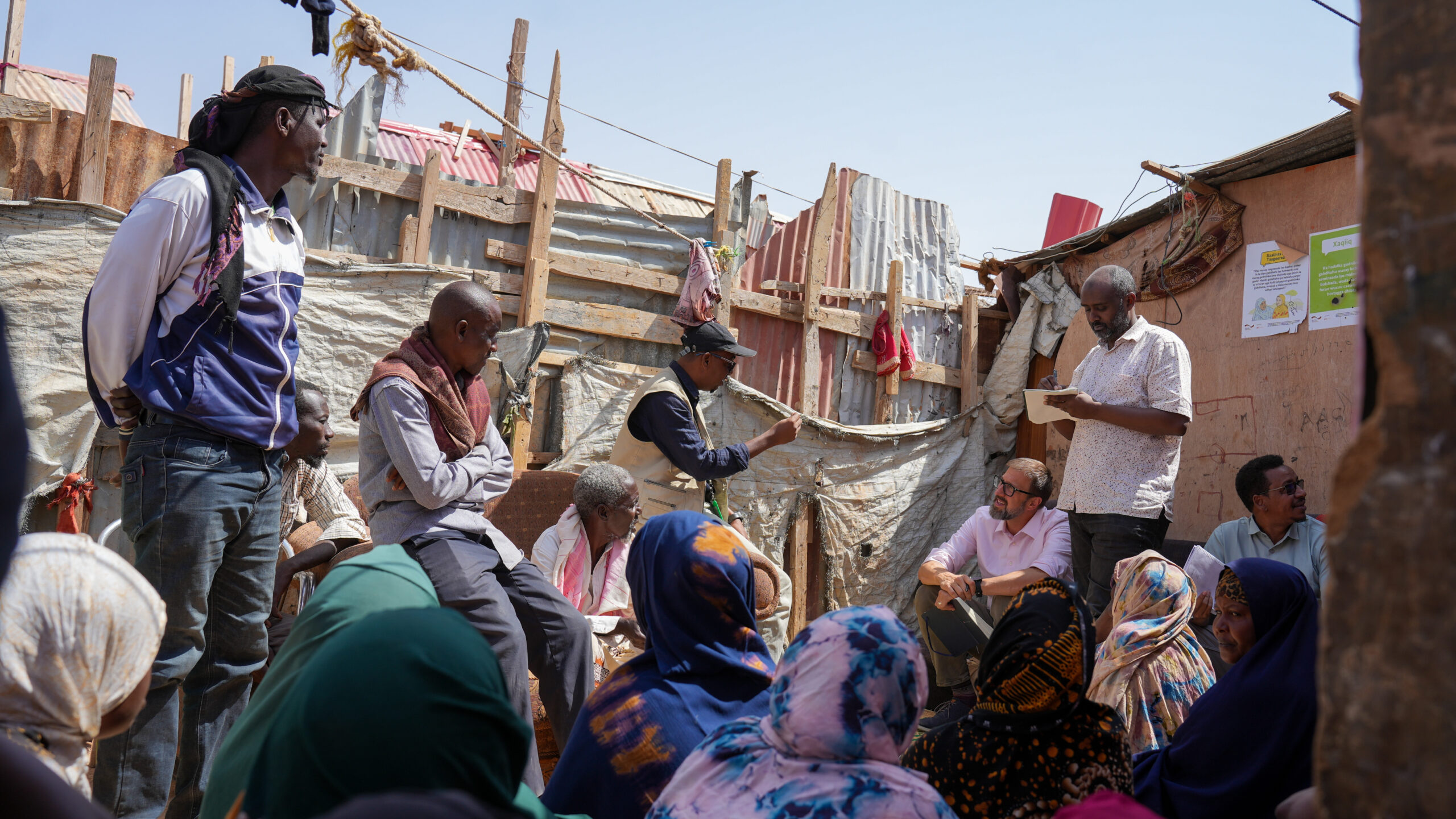
The delegation’s findings were consistent with the latest IPC assessment, which places much of Somalia in Crisis or Emergency levels of food insecurity (IPC Phase 3 or 4), with some areas at risk of famine. Konyndyk and Halakhe consulted with aid agencies, government officials, and Somali civil society leaders, reviewed humanitarian and government data, and visited three displacement settlements outside Garowe, the administrative capital of the autonomous Puntland region in northeastern Somalia.
During the fact-finding trip, Konyndyk and Halakhe met families who exhibited telltale signs of acute pre-famine food insecurity. People reported routinely skipping meals and going days without food. When they could access food, diets consisted only of rice, bread, or pasta. Families described selling their belongings, begging, and relying on neighbors for food. The delegation also heard reports of early marriage among displaced families facing severe food insecurity, with families marrying off teenage girls to reduce household food needs and receive dowry income.
Burhakaba, a town in southern Somalia, offers a warning of what could come next. Refugees International could not visit because of security constraints, but four aid organizations that had recently been there reported severe malnutrition and related child deaths. People were arriving from surrounding al-Shabaab-controlled areas in search of assistance, overwhelming the town’s nutrition stabilization center.
There is still a window to prevent severe hunger from escalating into famine and large-scale mortality.
“Somalia is right on the cusp of something much worse,” said Jeremy Konyndyk, president of Refugees International. “Families have exhausted nearly every coping mechanism at their disposal. We can still prevent the worst, but we need to get aid flowing immediately. If Somalia tips into famine after U.S. aid cuts, this administration will not be able to claim it was unforeseeable. The warning signs are here, and the time to act is now.”
The pressures are compounding. Drought has destroyed livelihoods and driven displacement, just as the withdrawal of humanitarian aid has left Somalia one of only three countries blacklisted from U.S. humanitarian assistance. At the same time, supply chain disruptions linked to the war in Iran are pushing up prices in a country that imports more than 80 percent of its food and is a net importer of fuel. These pressures are converging as Somalia braces for a major El Niño shock, including the risk of severe flooding during the October–December Deyr rainy season.
Another lost planting and harvest cycle could leave families without food or income and force more people from their homes. The months before the Deyr rains offer a critical window to scale up assistance and prepare communities for flooding.
The costs of this aid retreat also have security consequences.
The Trump administration has escalated military operations against al-Shabaab and ISIS-Somalia while pulling back civilian and international support that helps communities withstand the conditions these groups exploit.
Konyndyk and Halakhe heard this directly during their trip. Regional authorities and other interlocutors said economic desperation and the loss of assistance are making people more vulnerable to al-Shabaab and ISIS recruitment. The delegation also learned of a USAID-supported radio initiative intended to counter al-Shabaab recruitment messaging that was halted after the U.S. foreign aid freeze, leaving equipment already delivered to Mogadishu unused.
Uncertainty over support for the African Union Support and Stabilization Mission in Somalia (AUSSOM) adds another risk. AUSSOM and Somali forces have helped keep al-Shabaab from retaking major population centers. Interlocutors warned that losing that international backstop could strengthen al-Shabaab, put the federal government under pressure, and drive further displacement.
“There is a fundamental incoherence in U.S. policy toward Somalia,” said Abdullahi Boru Halakhe, senior advocate for East and Southern Africa at Refugees International. “Washington is escalating its military campaign against al-Shabaab and ISIS-Somalia while cutting support that helps people survive and denies these groups the desperation they exploit. The human consequences come first, but they do not stop there. Humanitarian assistance and security go hand-in-hand.”
Refugees International is calling on the Trump administration, Congress, and international donors to restore humanitarian assistance and fund anticipatory action ahead of the October rains. Food and other lifesaving support need to reach communities now, alongside preparations for flooding and further crop and livelihood losses.
Somalia has not yet tipped into widespread famine and mortality. The United States and other donors still have an opportunity to act.
About Refugees International
Refugees International advocates for lifesaving assistance, human rights, and protection for displaced people and promotes solutions to displacement crises. To ensure the independence and credibility of our work, we do not accept government or UN funding.
Featured Image: President Jeremy Konyndyk and Senior Advocate for East and Southern Africa Abdullahi Halakhe speak with aid workers and refugees at a UN compound in Garowe, Somalia. August 2026.