kai arzheimerparties. elections. political science.2026-07-16T19:26:49+00:00https://www.kai-arzheimer.com/feed/atom/WordPressKai Arzheimerhttps://www.kai-arzheimer.com/<![CDATA[Out in the open: AfD infighting]]>https://www.kai-arzheimer.com/?p=333472026-07-16T21:26:49+02:002026-07-16T16:36:00+02:00
]]>For more than a year or so, we have heard little about quarrels within Alternative for Germany. There was some excitement over the recent national party conference in Erfurt two weeks ago, but a potentially very lively debate about the so-called incompatibility list was postponed, and the national leadership was reconfigured without a hitch. Some of us professional watchers have even come to the conclusion that the party has become professionalised and is cruising towards a series of successes in the East.
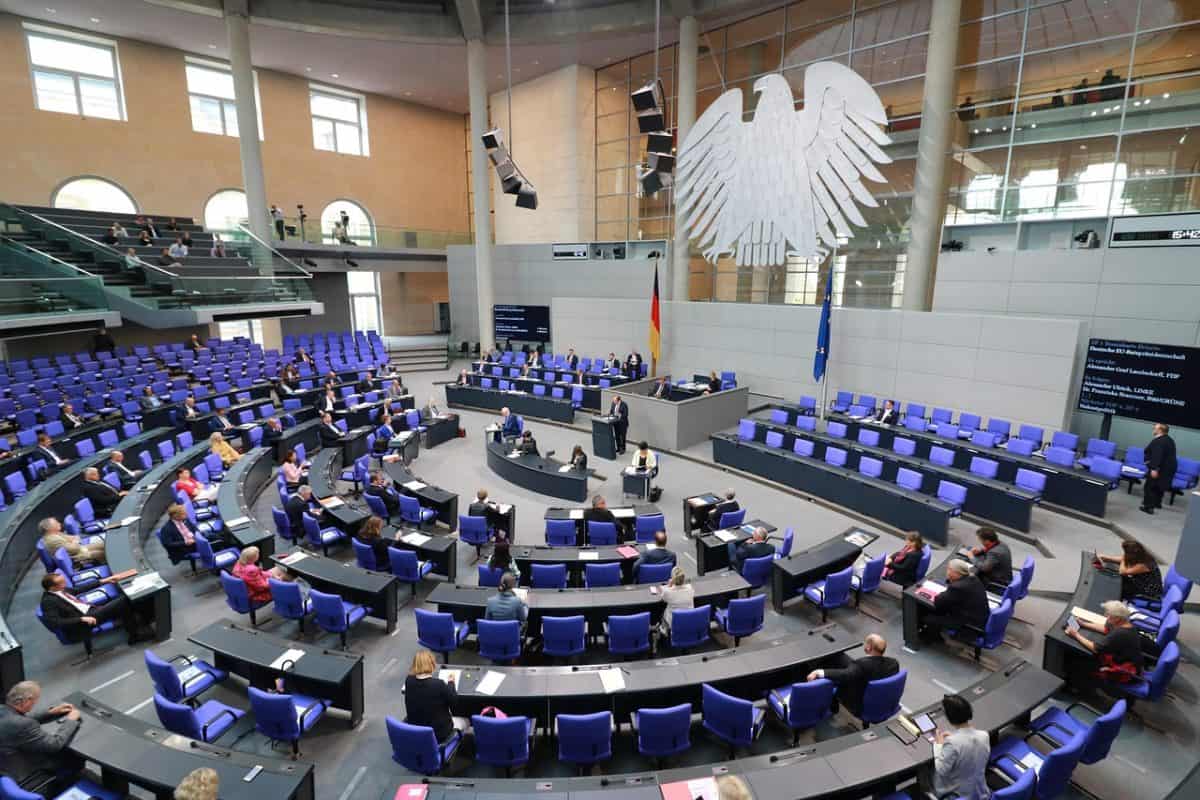
HOWEVER, just a week later, the state party in North Rhine-Westphalia (NRW) held its own conference, which quickly descended into chaos. NRW is home to nearly a quarter of Germany’s population, and accordingly, the state’s AfD chapter represents a sizable chunk of the party’s total membership. It is led by Martin Vincentz, one of the very AfD politicians who still claims to be a “moderate”.
His longstanding opponent is Matthias Helferich, the guy who once famously called himself “the friendly face of National Socialism”. Yes, it’s this obvious.
Because of this attitude, Helferich was expelled from the AfD’s parliamentary party in the previous parliament but was accepted back into the fold in 2025. The state chapter also tried to remove him from the party proper (a difficult thing to do in Germany) but ultimately failed. If media reports can be trusted, about 30-40% of the membership in NRW support him against Vincentz.
At the conference, Helferich tried to get more of his supporters elected on the party list for the upcoming state election to better reflect the internal balance of power. When this failed, his camp effectively staged a filibuster to sabotage the conference (which is wisely scheduled over four (!) consecutive weekends). Rather unexpectedly, Helferich, who looks every bit like an openly right-wing extremist, accused the opposing side of using physical violence against his camp. Conversely, Vincentz said that Helferich’s helpers were employing (wait for it!) Antifa tactics.
To make things slightly more confusing, Weidel, who is still considered the AfD’s more acceptable face and previously fancied herself as an economic liberal who tried to kick Höcke out of the party, has become Helferich’s ally in all this a while ago. Her co-leader Chrupalla, whose base is in Saxony where völkisch nationalism is de rigueur, supports Vincentz. Wait, what?
Is there a point to all this at all? Yes, several, actually.
First, if you had any doubt, personal networks and ambitions trump any ideological differences that may or may not exist within the party. Second, five years after Höhne (2021) and Heinze/Weisskircher (2021), the AfD’s internal democracy is still alive and, yes, allegedly kicking. Third, and most importantly, none of this chaos and incivility has hurt them in the past. The party can say and do the most outrageous things, and their voters do not care one bit. I would be very surprised if this were to change now.
]]>21Kai Arzheimerhttps://www.kai-arzheimer.com/<![CDATA[Pressegespräch: Was passiert beim nächsten Bundesparteitag der AfD?]]>https://www.kai-arzheimer.com/?p=333392026-07-02T20:29:01+02:002026-07-02T20:28:58+02:00
]]>Mit Mirjam Moll habe ich darüber gesprochen, was vom Bundesparteitag der Alternative für Deutschland zu erwarten ist: keine offenen Kämpfe um (wichtige) Posten, sondern vielmehr die Ratifikation des inzwischen ziemlich radikalen status quo. Den Text in voller Länge gibt es hier:
]]>0Kai Arzheimerhttps://www.kai-arzheimer.com/<![CDATA[Hot references summer: the 2026 update of the radical right bibliography is here]]>https://www.kai-arzheimer.com/?p=333072026-06-05T14:39:52+02:002026-06-04T20:30:36+02:00
Over the last three months or so, I have compiled the annual update to the Eclectic, Erratic Bibliography on the Extreme Right (in (Western) Europe). The update contains 130 new titles, which is fewer than the two previous ones but still makes it third-biggest update ever. As always, my colleagues’ creativity inspires me while their productivity puts me to shame. And this is even before the content-related depression kicks in.
When and where was this new research on the radical right published?
More than 60 per cent of the new entries appeared in 2025, while about a fifth of them were only published in 2026, i.e. during the last five months. In other words, the field keeps expanding not exactly exponentially, but still really, really fast. And yet, the numbers are lower than last year, not to mention the absolute bumper year that was 2024. I’m not sure if this is because there is finally some slowdown or because I’m growing lazier (or more selective).
The final 20 per cent of new titles consists of publications that I have missed in the past. Most of them still fairly current (i.e. from 2022-2024), but there is also one from 2014 (!): Stockemer and Lamontagne’s study of variations in FPÖ support across Austrian Länder.
Publication year
n
2025
81
2026
27
2024
8
2023
3
2022
3
2019
3
2021
2
2020
2
2014
1
As in previous years, most new items are journal articles, and like in previous years, the usual suspects crop up, but there are some interesting (if you care about such things) developments. EJPR, historically the most important outlet for this kind of research, has been relegated to the middle of the table. EPSR, which dominated in 2023 and 2024 but suffered a poor 2025, has made quite a comeback. But the very top spot has been taken by a journal that has been somewhat unkindly described as the graveyard of one’s ambitions and Political Science’s equivalent of a freesheet. I suspect that this is yet another fallout from AfD’s rise in the polls.
Journal
n
German Politics
8
European Political Science Review
7
Electoral Studies
5
Journal of European Public Policy
5
West European Politics
5
British Journal of Political Science
4
Party Politics
4
Political Research Exchange
4
Politics and Governance
4
Comparative Political Studies
3
European Journal of Political Research
3
Government and Opposition
3
The International Spectator
3
American Journal of Political Science
2
Environmental Politics
2
European Journal of Politics and Gender
2
European Politics and Society
2
European Union Politics
2
Information, Communication & Society
2
Journal of Contemporary European Studies
2
Political Psychology
2
Political Science Research and Methods
2
Political Studies
2
What are the new topics in radical right research?
Because old dogs/new tricks, I have made yet another word cloud that looks very much like its previous incarnations, reflecting my lasting interest in electoral and party politics. And right between the “r” and the “t” of “party” nestles the one outfit everyone’s going crazy about.
Like last year, I’m wondering why lemmatisation failed to merge “immigrant” / “immigration” and “Germany” / “German”. Will I remember to investigate and fix this for the 2027 edition? It is … a possibility.
In the past, I have tried various text-as-data methods to get a better idea of what the new research is about. One thing that I somehow haven’t done since 2022 is to use unidimensional (Wordfish) scaling on the titles and abstracts (where available), so I remedied this.
Wordfish aims to recover a single dimension of meaning from the frequency of words in a set of documents. The y-axis in the graph shows how frequent a word is across the board (ψ), whereas the β values on the x-axis represent the strength of a word’s association with the underlying dimension. The actual words have changed a bit, but the general structure is somewhat similar to what I found back in 2022 the publications seem to align on a dimension running the gamut from the micro-level on the left to the meso- and even macro-level on the right. As I wrote four years ago: “This fits rather neatly with the two kinds of research that tend to go into the bibliography.”
This second plot orders publications by their estimated position θ on the underlying dimension. Texts on the left deal chiefly with attitudes; authors on the right (mostly) study interactions between parties, the systemic consequences of the far right’s rise, and terminological issues. I rest my case.
Because I had the code still sitting on my disk, I also ran an MDS that tries to project the (Euclidean) differences between the texts (sparse, trimmed) document-feature matrices into a two-dimensional space. For the most part, this is just the academic version of Where’s Wally?, but the graph has one actual use: it shows which publications differ a lot from all the others and are therefore placed towards the margins. The most obvious outlier is Zulianello’s conceptual research note on the use of the far-right label (which, ironically, is placed at the far left of the figure). Similarly removed from the crowd are Kevický’s spatial analysis of radical right support in Slovakia and Czechia, Lorimer et al.’s comparative study of the Dutch and French elections of 2023/24, Böckmann et al.’s article on far-right illiberalism in the EP, and Anduiza and Rico’s treatise on sexism and the radical right gender gap in Spain. It is quite interesting to think about what gets placed next to each other and why, but frankly, I’m not sure how useful this plot actually is, and that’s probably why I haven’t run this code in recent years.
Something else that is not as useful as expected, at least not with this corpus and not in my hands, are topic models. But then again, I have heard people refer to topic models as “classic”, “traditional” or even “legacy” tools for quantitative text analysis, and so turned to the new-ish kids on the block: LLMs, which, for all their faults, are quite good at summarising and pattern spotting. Last year, I pasted the incremental update in a browser window and asked the free version of Perplexity to identify topics, which it did with some plausibility (and relatively little perplexity on my behalf), although I found the output a bit verbose. This year, I wrote a little script to connect to an instance of GPT OSS 120B that my institution hosts on a spare node of their supercomputer and asked the plagiarism machine to give me a short, descriptive label alongside some representative, non-hallucinated references from the 2026 update.
The result is not bad at all for an unsupervised classifier. While there is clearly some overlap between themes 4-6, the labels give you an idea of what the new publications cover, and the examples mostly fit, with the possible exception of, er, Arzheimer (2025c), which is about science communication and hence not necessarily representative.
Who wrote this stuff?
Like in previous years, there are some scholars who put the rest of us to shame. Here is the list of authors who have published three or more titles that ended up in this year’s update.
Author
Titles
Marianna Griffini
6
Luca Manucci
4
Mattia Zulianello
4
Delia Zollinger
3
Luana Russo
3
Manès Weisskircher
3
Markus Wagner
3
As always, if you are aware of research that would be a valuable addition to this bibliography, I would like to hear from you. Please feel free to suggest your own work, too: self-nominations are most welcome.
(Assumed) gender of radical right researchers
People/journals do not use initials and accents consistently, but there appear to be about 227 unique authors in this update. Like in previous years, I have tried to algorithmically infer their gender, which is a notoriously messy business, particularly for non-European names.
114 names are classified as male and 75 as female, amounting to a ratio of 40 per cent, which is slightly better than in the three previous years. Having said that, the perennial Michael is back (bottom right), although this time around, he is outnumbered by the Daniels of this world. As always, I do not account for the number of publications someone is involved in.
As I said, all this gender inference comes with a whole bag of YUGE caveats, but anyway, here’s the latest edition of my trusty trend plot of inferred gender by publication year.
Show us the goods: the latest titles in radical right research
Here is a full list of all that is new in the bibliography. Click here to download/import these new titles into your reference management software.
]]>37Kai Arzheimerhttps://www.kai-arzheimer.com/<![CDATA[Analyse zur Landtagswahl 2026 in Rheinland-Pfalz]]>https://www.kai-arzheimer.com/?p=332882026-05-06T11:42:06+02:002026-05-06T11:42:03+02:00
]]>Für eine Veranstaltung des Studienprogramms Q+ zum Umgang mit der AfD nach den Landtagswahlen habe ich mir das rheinland-pfälzische Ergebnis näher angeschaut, das bei näherer Betrachtung ziemlich widersprüchlich ausfällt. Einerseits gibt es enorme Zugewinne für die AfD, vor allem in Teilen des ländlichen Raumes und den alten Industriestädten, und dramatische Machtverschiebungen innerhalb des Landtages. Andererseits spiegelt selbst das Wahlergebnis von 2026 immer noch die sozio-kulturellen Verwerfungen des 19. Jahrhunderts wider.
Die Arbeit mit der heterogenen Studierendengruppe hat mir viel Spaß gemacht. Meine Folien zur Wahlanalyse kann man sich hier anschauen:
]]>0Kai Arzheimerhttps://www.kai-arzheimer.com/<![CDATA[Der Wal und ich]]>https://www.kai-arzheimer.com/?p=332942026-05-11T10:52:27+02:002026-05-06T10:51:58+02:00
]]>Wal und Wahlforschung: mit der dpa haben diverse Kolleg:innen und ich darüber gesprochen, wie aus dem verirrten Meeressäuger ein Politikum geworden ist und was das für die Zukunft erwarten lässt.
]]>0Kai Arzheimerhttps://www.kai-arzheimer.com/<![CDATA[I’m still going on about the Baden-Württemberg/Rhineland-Palatinate elections, mas desta vez em português.]]>https://www.kai-arzheimer.com/?p=332482026-03-23T09:01:03+01:002026-03-23T09:00:59+01:00
]]>Few people outside Germany would care much about regional elections were it not for the far right. And so, another Portuguese journalist ended up talking at length with some colleagues and me.
]]>0Kai Arzheimerhttps://www.kai-arzheimer.com/<![CDATA[Counter-mobilisation in the village]]>https://www.kai-arzheimer.com/?p=332422026-03-21T11:24:24+01:002026-03-21T11:10:00+01:00
]]>The neighbouring village is essentially a case study for political sociologists. Decades of suburbanisation notwithstanding, it is one of the few places that can still sustain a Catholic amateur orchestra that even attracts young players. Needless to say, the place is a stronghold for the Christian Democrats.
It also features a pro-refugee group that goes back 35 years, and a fair-trade shop run by volunteers that has been operating since the early 1980s. The whole vibe is very much pre-unification Federal Republic.
But the village (or rather an outlying sub-hamlet) is also home to a sitting State MP for the AfD. In his immediate neighbourhood, the party is doing well, and the whole village gets plastered with AfD posters every time there is an election. Yet as a whole, the village and the wider area is not amused. AfD events are regularly protested, posters get vandalised, and the MP in question is excluded from public events where legally feasible.
Does this make a difference?
Whether (local) counter-mobilisation against the far right actually works has turned from an interesting academic question into a real-world problem rather quickly. And as questions go, this is a tough one for at least two reasons. First, to assess the difference that counter-mobilisation makes, we would need to compare our political reality to a situation where it did not happen. Second, mobilisation is not random but obviously contingent on the presence/absence of people who would never support the radical right.
In short, it is very difficult to make credible causal claims about in this situation. There is some research on the effect of counter-mobilisation on far-right voting in France and Italy, but much more needs to be done.
What we do know, however, is that counter-mobilisation is getting under the skin of at least one MP in at least one neighbouring village who would like to win the district seat (Rhineland-Palatinate uses a mixed-member system for state elections). The rather petulant message on the billboard roughly translates as “You can no-platform me. You can fight me. You cannot stop me.” Which is technically correct, as he has a secure spot on the state-wide list, but still smacks of whistling in the dark and seems like a ridiculous use of his campaign resources.
]]>7Kai Arzheimerhttps://www.kai-arzheimer.com/<![CDATA[Law, order, and the far right in Germany]]>https://www.kai-arzheimer.com/?p=332372026-03-16T09:27:05+01:002026-03-16T09:16:00+01:00
]]>Rhineland-Palatinate is going to the polls next weekend, and it’s not a pretty sight. The state AfD came up with a characteristically charming slogan that roughly translates as “Our country, our values. We are going to sort this out.” Charming, as I said, as it is a textbook example of exclusionary nationalism that is not at all menacing.
And they brought this slogan to our commuter village, in the shape of a large billboard hoisted to the top of a truck.
For more than a decade, the AfD underperformed in the village. An odd blend of old-style working-class leftism, imported small-city liberalism, and still-surviving Christian-Democratic networks helped to keep them at bay. This has changed with the 2025 Bundestag election, when local results were more or less identical with the state and national ones. But the village is still not exactly friendly ground. AfD posters tend to get vandalised around here, and sending the truck was clearly meant as a statement.
On the day I spotted it, the truck sat stationary just outside the access road of a large supermarket. The scene was a nice, positively ironic juxtaposition with the whole law-of-the-land shebang for two reasons. First, what you can see here is clearly a parking violation aimed at avoiding any allegations of trespassing on private land. Second, there are rules about when parties may deploy campaign material on public ground, and this stunt happened a few days too early.
So I did what every law-abiding German who has internalised the country’s values would have done in my stead: I called the department of the local council that deals with public-order infractions and lodged a complaint. It’s what Jesus would have done if he had been German.
Another family member who passed the same spot 20 minutes later reported that the truck was gone. Situation sorted, if only for that day. Our country, our values.
]]>15Kai Arzheimerhttps://www.kai-arzheimer.com/<![CDATA[Send me (your) references for the 2026 edition of the radical right bibliography]]>https://www.kai-arzheimer.com/?p=332292026-02-24T16:31:26+01:002026-02-26T10:30:00+01:00Read more
It’s that time of the year again: I’m compiling the 2026 edition of the ever expanding, endlessly eclectic, eminently erudite extreme right bibliography.
And I need your help. If you know of articles, chapters, and books that should be part of the bibliography but are currently missing, please do send the references over to me. Preferably in an email (arzheimer AT politik.uni-mainz.de) with a PDF attached.
If that is not feasible for some reason, just mail/DM me the title/DOI. Obviously there are no guarantees that I will include your references, but I’ll check out each one and I really do appreciate your input.
I’m particularly happy if you point me towards the work of scholars belonging to groups that are disadvantaged in science, because they are still severely underrepresented in the bibliography.
And don’t hesitate to send me your own work. The boys do it all the time.
]]>24Kai Arzheimerhttps://www.kai-arzheimer.com/<![CDATA[Präsentation: Perspektiven der Rechtsradikalismusforschung]]>https://www.kai-arzheimer.com/?p=332242026-02-24T15:43:49+01:002026-02-24T15:43:49+01:00
]]>Vor einigen Wochen durfte ich auf Einladung von Schwuguntia e.V. in der Bar jeder Sicht einige Aspekte meiner Forschung aus den letzten ≈ 25 Jahren vorstellen.
Selten hatte ich ein so aufmerksames, interessiertes und intelligentes Publikum, und das trotz der Uhrzeit (Freitagabend!). Wer es nachlesen möchte: Alle Folien zum Vortrag gibt es hier ↓
]]>0Kai Arzheimerhttps://www.kai-arzheimer.com/<![CDATA[Gespräch mit dem Handelsblatt: Vetternwirtschaft in der AfD]]>https://www.kai-arzheimer.com/?p=332092026-02-20T11:27:30+01:002026-02-20T11:27:24+01:00
]]>Das Handelsblatt berichtet ausführlich über die Reaktion des “Vorfelds” auf den Skandal um die Beschäftigung von Freunden und Verwandten als Mitarbeiter von AfD-Abgeordneten und -Fraktionen. Zur Frage, wie sich das in den kommenden Wahlen auswirken könnte, gibt es ein paar skeptische Einschätzungen von mir.
]]>0Kai Arzheimerhttps://www.kai-arzheimer.com/<![CDATA[The Radical Right Research Bot is leaving Twitter]]>https://www.kai-arzheimer.com/?p=331982026-02-23T23:54:30+01:002026-02-04T20:10:26+01:00
Since February 27, it has posted regularly, apart from some outages caused by changes at Twitter.
This ends today. As the bot has told me repeatedly, it cannot, in good conscience, remain active on this platform, for reasons that should be fairly obvious.
The bot will, however, continue to post on Bluesky and Mastodon, where it has been active for two/three years, respectively, so you might want to follow it there. Onwards and upwards.
For further stuff on Radical Right-Wing parties go to https://www.kai-arzheimer.com/extreme-right-western-europe-bibliography/
]]>23Kai Arzheimerhttps://www.kai-arzheimer.com/<![CDATA[The Grand Total of four decades of research on the New Radical Right in Europe]]>https://www.kai-arzheimer.com/?p=331792026-01-24T16:48:37+01:002026-01-24T16:48:32+01:00
]]>0Kai Arzheimerhttps://www.kai-arzheimer.com/<![CDATA[What a difference 10 years make]]>https://www.kai-arzheimer.com/?p=331582025-12-22T23:28:22+01:002025-12-22T09:40:00+01:00
]]>Going through a folder of potentially useful screenshots, I came across these two gems. Back in 2014, the AfD claimed the US treated Germany like its doormat.
Since 2024, they have been best buddies with the MAGA crowd. Something to reflect on.
]]>7Kai Arzheimerhttps://www.kai-arzheimer.com/<![CDATA[Germany’s far right in ascendancy: normalised, professionalised, and further radicalised]]>https://www.kai-arzheimer.com/?p=331542025-12-14T21:46:28+01:002025-12-14T21:45:41+01:00Read more
]]>Tom Nuttall is a proper Deutschlandvorsteher. We recently had a lengthy chat, because he was given the task to write an ‘unflinching portrait’ of Alternative for Germany for the Economist. Reading the finished product, which was published today, I’d say that the man has delivered the goods. You can see for yourself, as he kindly sent me a gift link that currently bypasses the pay wall.
As is the way with such chats, exactly one thing I said is quoted verbatim in the article. This is fine, because Tom is a much better writer than me. But if you’re interested, much of what I told him about the AfD’s early transformation is freely available here, and so is more about the AfD’s Russian connection than Tom ever wanted to know.
]]>13Kai Arzheimerhttps://www.kai-arzheimer.com/<![CDATA[Weniger Rechtsextremismus in Deutschland?]]>https://www.kai-arzheimer.com/?p=331412025-11-09T21:38:56+01:002025-11-13T21:33:21+01:00
]]>Für den “Systemfragen” Podcast des Deutschlandfunks durfte ich letzte Woche einige der Ergebnisse der jüngsten “Mitte”-Studie einordnen. Die vollen 30 Minuten zum Nachhören gibt es hier
]]>0Kai Arzheimerhttps://www.kai-arzheimer.com/<![CDATA[The Radical Right Research Robot breaks free from Twitter]]>https://www.kai-arzheimer.com/?p=331352025-11-11T21:52:35+01:002025-11-09T19:31:00+01:00Read more
]]>To raise awareness of the large body of research on far-right parties and their voters, the Radical Right Research Robot (RRRR) has been tweeting random references from the Extreme Right Bibliography since February 2018 and hopefully making everyone happy. However, Elon Musk’s takeover of the platform and the subsequent changes to its algorithm and governance have reduced Twitter’s (“X”) value for scientists and science communication.
Following the decline and fragmentation of Science Twitter, the RRRR has therefore branched out to alternative platforms. Since 2022, the bot has had a presence on Mastodon. A year later, it also set up shop on Bluesky. Right now, RRRR still has most of its followers on Twitter (1642), but has also found a small audience on Mastodon (363) and a rather large one (1095) on Bluesky, which seems set to become the new home for many of the communities that were once part of Science Twitter.
But the bot (and I) had a dark secret: its activity on Mastodon and Bluesky depended on its ongoing presence on Twitter. RRRR’s tweets were simply mirrored to the alternative platforms via a self-hosted installation of touitomamout, a cross-poster implemented in NodeJS.
We are so cute, it’s unbearable
While touitomamout works remarkably well, this had two unfortunate consequences. First, the bot remained tied to a platform that has long since descended into a toxic cesspit. Many colleagues, including yours truly, are no longer active on Twitter, and RRRR may want to leave some day, too. But that would have meant pulling the plug completely, across all three social networks.
Second, Musk has deliberately made life difficult for hobbyist projects like RRRR and is almost completely opposed to any form of automated access that cannot be monetised. This has led to several disruptions that have affected RRRR’s posts to Twitter, the cross-posting to Mastodon and Bluesky, or both.
In short, the system was too fragile for my liking. Someone should have upgraded the code so that RRRR could post directly to Mastodon and Bluesky even if the bot’s Twitter parts fell apart, but then again, that someone was me, and I was too lazy/busy/inept to do something about it.
What finally brought and end to my procrastination was that RRRR stopped posting on Bluesky/Mastodon a couple of days ago. The cross-posting requires an (otherwise inactive) Twitter account for accessing RRRR’s tweets, and this account had been flagged up for suspicious behaviour (not spouting extremist nonsense?) and subsequently suspended.
Because today was an extraordinary grey, cold, wet, and depressing day even by German November standards, I bit the bullet and implemented native posting to Mastodon and Bluesky. And because the developers of rtoot and atrrr are awesome, it took all of six lines of code (two of them comments) to end RRRR’s dependence on Twitter. I should have done this a year ago when I first stumbled across atrrr. Also, I will learn nothing from this.
The worst part of it that cost me an additional hour? Installing a package dependency on my server, which uses some slightly dodgy PPAs on top of a geriatric version of its OS. I should have updated the server some time ago. As I said, I will learn nothing from this.
]]>0Kai Arzheimerhttps://www.kai-arzheimer.com/<![CDATA[Interview mit der dpa zum Rheinland-Pfalz Monitor 2025]]>https://www.kai-arzheimer.com/?p=331282025-11-05T10:48:40+01:002025-11-05T10:48:35+01:00
]]>Mit der dpa habe ich ausführlich über die Befunde aus dem aktuellen Demokratiemonitor für Rheinland-Pfalz gesprochen. Unter anderem die Zeit hat den Text in voller Länge und ohne Paywall übernommen.
]]>0Kai Arzheimerhttps://www.kai-arzheimer.com/<![CDATA[Islamophobia, religion, and far-right attitudes in Western Europe]]>https://www.kai-arzheimer.com/?p=331232025-10-23T22:06:38+02:002025-10-23T22:06:38+02:00
Are Christians more likely to be Islamophobic than other citizens? Drawing on a new study of attitudes in France, Germany, the Netherlands and the UK, Kai Arzheimer finds that Islamophobia … Continued
]]>0Kai Arzheimerhttps://www.kai-arzheimer.com/<![CDATA[German conservatives discuss the merit of the cordon sanitaire (Politico)]]>https://www.kai-arzheimer.com/?p=331162025-10-20T09:41:59+02:002025-10-20T09:41:53+02:00
]]>Politico covers German conservatives’ debate about the ‘firewall’ (cordon sanitaire) and the far right’s lure, with a tiny bit of input from my good self.
]]>0Kai Arzheimerhttps://www.kai-arzheimer.com/<![CDATA[The Dukes of York]]>https://www.kai-arzheimer.com/?p=331032025-10-19T20:38:35+02:002025-10-19T17:05:16+02:00
Apropos of absolutely nothing at all: it is a little-known¹ fact that, under common law, vacant noble titles fall to the first claimant who successfully mounts the titular seat.²
² Transparency statement: this picture was taken a long time ago.³ In fact, long before the previous Duke renounced the title, so: definitively first dibs.
¹ Under common law, that is a technical term for ‘completely made up’
⁴ Yes, this is a somewhat unconventional way to arrange footnotes
³ And yes, the photo was taken in Yorkville⁵, Toronto (ON), a place that was named for the Grand Old Duke of York (who had 10,000 men). Which further strengthens the claim.
⁵ The pub sits just west of Avenue Road, traditionally the boundary between Yorkville and the Annex. A mere technicality.
Nah, at the Digital Journal of Science, anyone is welcome to write about anything, including, but presumably not limited to, “The Arts, Environmental Science, Earth Science, Pharmacy, Medicine, Agriculture, Anthropology, Sociology, History, Philosophy, Educational Science, Communication Studies, Commerce, Social Sciences, Management, and Engineering …etc.” Google them, their website is fun.
Will I support them? Will I revert them (see below)? Who knows.
Dear Kai Arzheimer,
I wish you well, as always.
We are in lack of merely one article for the successful release of Volume 2, Issue 8 on or before 22nd October. Can I expect an article from your end?
I hope you can submit at least 2 pages of opinion/mini review article if you are in your busy schedule.
Your support would be greatly appreciated. We look forward to hearing from you soon.
All published articles will be provided with digital object identifier (DOI) issued by Cross ref.
Thanks in advance for your reply.
With gratitude,
Jessica Johnson
Westland Publishers
Digital Journal of Science (DJS)| ISSN: 3066-3822
1106 Bowie drive Lewisville Texas 75077
If you wish to not receive our email, please revert us
]]>0Kai Arzheimerhttps://www.kai-arzheimer.com/<![CDATA[I’m an eminent roboticist now 🤖]]>https://www.kai-arzheimer.com/?p=330402025-09-18T15:02:16+02:002025-09-20T14:39:23+02:00
]]>After I had my fill of medicine & bioscience, I have basically returned to my old twin passion of archaeology and anthropology. But a renaissance man may never rest. And so I’m happy to inform you that less than 48 hours after my research note on my social media bot was published, I’m already one of the world’s foremost roboticists and have the invitation to prove it. See you in Kyoto (or, depending on the price tag, virtually but engaged)!
Dear Dr. Kai Arzheimer,
On behalf of the Organizing Committee, it is my great pleasure to extend a formal invitation for you to serve as a Featured Speaker at the:
Event: 2nd International Conference on Robotics & Automation Dates: August 17–19, 2026 Venue: Tokyo, Japan
Your distinguished research, particularly “ Automating awareness, digitizing dissemination: the radical right research robot as a template for (political) science communication in a fragmented social media landscape”, has been acknowledged by our Scientific Committee as making a significant impact in the field. In view of your expertise and scholarly contributions, we would be honored to include your lecture in the scientific program.
Participation Options:
Deliver your presentation in person in Japan
Present virtually and engage with our international audience online
We kindly request your confirmation of participation at your earliest convenience. Upon confirmation, we will:
Reserve your speaking slot
Provide the detailed program schedule, presentation guidelines, and related information
The conference will bring together eminent scholars, researchers, and practitioners from across the globe to exchange knowledge, foster collaboration, and advance the future of Robotics and Automation. Your contribution would add great value to these discussions.
We sincerely hope that you will be able to join us for this distinguished gathering.
With highest regards, Jenessa Merlin | Program Manager
My paper has won an award less than 12 hours after it was published, albeit only “provisionally”. Must be these nice cardiology people again. I’ll spend the rest of the day feeling eminent.
]]>25Kai Arzheimerhttps://www.kai-arzheimer.com/<![CDATA[Research note on the Radical Right Research Robot]]>https://www.kai-arzheimer.com/?p=330252025-09-16T14:22:30+02:002025-09-16T14:08:00+02:00
]]>Over the last 15 years, social media have become an integral part of science infrastructure. The emergence of “Science Twitter“, the collective of scholars active on the platform now known as “X”, is a particularly prominent example of this trend. Within such communities, automated services (“bots”) can play an important role by raising public and internal awareness of publications in the field, fostering connections amongst researchers, and stimulating serendipitous insights.
Arzheimer, Kai. “Automating awareness, digitizing dissemination: the radical right research robot as a template for (political) science communication in a fragmented social media landscape.” Political Research Exchange 7.1 (2025): 2549079. doi:10.1080/2474736X.2025.2549079 [BibTeX][Abstract][DATA]
Over the last 15 years, social media have become an integral part of the science infrastructure. The emergence of ‘Science Twitter’, the collective of scholars active on the platform now known as ‘X’, is a particularly prominent example of this trend. Within such communities, automated services (‘bots’) can play an important role by raising public and internal awareness of publications in the field, fostering connections amongst researchers, and stimulating serendipitous insights. In this note, I discuss the architecture of one such service: the Radical Right Research Robot (RRRR), written in the R programming language, which posts references and links to contributions from the vast literature on radical right/far-right parties and their voters. I also describe the various R packages and other open source tools on which RRRR relies. This description could serve as a template for similar bots in other fields. Finally, I discuss the challenges resulting from Elon Musk’s takeover of Twitter and the subsequent decline of Science Twitter. RRRR has already branched out to two alternative text-based networks (Mastodon and Bluesky) and may eventually disengage from Twitter. While the technical difficulties involved are relatively easy to solve, fundamental issues related to platform ownership and governance persist.
@Article{arzheimer-2025c,
author = {Kai Arzheimer},
title = {Automating awareness, digitizing dissemination: the radical right
research robot as a template for (political) science communication
in a fragmented social media landscape},
journal = {Political Research Exchange},
year = 2025,
volume = 7,
number = 1,
pages = 2549079,
abstract = {Over the last 15 years, social media have become an integral part
of the science infrastructure. The emergence of ‘Science Twitter’,
the collective of scholars active on the platform now known as ‘X’,
is a particularly prominent example of this trend. Within such
communities, automated services (‘bots’) can play an important role
by raising public and internal awareness of publications in the
field, fostering connections amongst researchers, and stimulating
serendipitous insights. In this note, I discuss the architecture of
one such service: the Radical Right Research Robot (RRRR), written
in the R programming language, which posts references and links to
contributions from the vast literature on radical right/far-right
parties and their voters. I also describe the various R packages
and other open source tools on which RRRR relies. This description
could serve as a template for similar bots in other fields.
Finally, I discuss the challenges resulting from Elon Musk's
takeover of Twitter and the subsequent decline of Science Twitter.
RRRR has already branched out to two alternative text-based
networks (Mastodon and Bluesky) and may eventually disengage from
Twitter. While the technical difficulties involved are relatively
easy to solve, fundamental issues related to platform ownership and
governance persist.},
pdf = {https://www.kai-arzheimer.com/radical-right-research-robot-research-note.pdf},
data = {https://gitlab.rlp.net/arzheim/rrresrobot},
doi = {10.1080/2474736X.2025.2549079}
}
In a new research note, I discuss the architecture of one such service: the Radical Right Research Robot (RRRR). The bot was born back in February 2018 during my state at the Munk School. Since then, it has posted regularly, apart from a few outages caused by the chaos at Twitter.
Finally, I discuss the challenges resulting from Elon Musk’s takeover of Twitter and the subsequent decline of Science Twitter. RRRR has already branched out to two alternative text-based networks: you can follow it on Mastodon, and/or on Bluesky) and may eventually disengage from Twitter. While the technical difficulties involved with migration are relatively easy to solve, fundamental issues related to platform ownership and governance persist.
]]>0Kai Arzheimerhttps://www.kai-arzheimer.com/<![CDATA[4 German far-right links I kind of liked]]>https://www.kai-arzheimer.com/?p=330072025-08-22T17:56:37+02:002025-08-31T17:20:10+02:00
]]>“Liked” is obviously doing a lot of work here, but I found these interesting nonetheless:
1 Over the last two years or so, Germany’s premier far-right party AfD a) has become even more openly extremist and b) has been riding high and sometimes even topping the polls. Do you spot the apparent contradiction? So do the great minds at AfD HQ, who came up with the idea of “moderation” (there are simply not enough scare quotes on my keyboard). The New York Times has a surprisingly good article about what is going on. Should be free to read after registration. If that does not work, try this archived copy.
2 Did I say “more openly extremist”? Yes. Is that, just like my opinion, man? No. The federal party as well as some state chapters have been designated as right-wing extremist organisations by federal and state-level intelligence agencies. Germany being Germany, this is a highly decentralised process, and the AfD has many opportunities to fight these designations through the courts. And now they have just lost another lawsuit.
3 The “Citizens of the Reich” occasionally feature on this blog. Intellectually, I understand why this is a separate category from right-wing extremists. Politically, they are just that. Thankfully, the authorities are taking a harder line with them these days and have now arrested the members of a cell linked to the von Reuß group that plotted to overthrow the constitutional order.
4 Let’s end this with a heart-warming picture: German and Japanese nativists supporting each other. Just like the old days.
]]>5Kai Arzheimerhttps://www.kai-arzheimer.com/<![CDATA[Why are there so many fake news site in the world?]]>https://www.kai-arzheimer.com/?p=329932025-08-22T17:19:44+02:002025-08-22T14:52:40+02:00
]]>Back in May, Cas Mudde wrote a characteristically good op-ed for the Guardian, which asked a very reasonable question: why are politicians, the media and the general public so obsessed with young men’s (alleged) shift to the radical right whilst ignoring young women’s much clearer shift to the (radical) left? In this article, Cas very kindly pointed to an old chapter of mine on the sociology of radical right voters.
What happens in May, stays in May
The Guardian’s online team linked this reference to the free pre-print that is still available here on this website, which in turn sent an absolutely astounding (by my standards) number of visitors this way.
Nice, but I only learned about this when I received a much smaller, but still largish number of pingbacks, which popped up in my moderation queue. Pingbacks are automated comments created when one blogging site links to another. In the Internet’s happier days, they were common. Now, they are a rarity, because they were abused for generating link/comment spam. I still have them enabled (I’m nostalgic like that), but before May, I had not seen one of them in years.
These pingbacks came from websites around the globe, which had published articles that were (often translated and sometimes back-translated) verbatim copies of Cas Mudde’s piece in the Guardian that even included the link to my site, which explains the pingbacks.
On closer inspection, everything on these sites is scraped from elsewhere. Put differently, these are (at least superficially) not sites that spread fake news, but fake news sites. The fact that this happened in parallel and just hours (sometimes minutes) after the original Guardian article went online suggests that these are cheap, automated operations.
To make this even more confusing, the article that they stole from the Guardian disappeared rather quickly in most cases. The links they tried to place on my site as comment spam lead to 404s now.
So what is the point of all this? Is this low-key ad-fraud? Is there Chinese or Russian disinformation lurking within all the stolen content? Are they trying to establish these “sites” as bases for future disinformation operations?
Everything is possible on the Internet, but I don’t think that these sites get any visitors at all. So, once more: What is the point? I have no idea. Do you?
]]>14Kai Arzheimerhttps://www.kai-arzheimer.com/<![CDATA[There is no ‘hard right’, AI slop is actually good but AI is terrible, and why democracies need enemies: 4 links I liked]]>https://www.kai-arzheimer.com/?p=329712025-07-28T19:28:54+02:002025-07-31T19:27:39+02:00
]]>1 Scientists can spend ages quibbling over terminology. Which is actually a good thing, because words have meanings, which should be as clear as possible (most of the time). Which is why I wholeheartedly agree with Tim Bale: We must stop this “hard right” nonsense in its tracks, lest we contribute to the further normalisation of the far right.
2 So-called (generative) AI is making most things worse, and is about to make the Internet completely useless. Here is a radical idea: perhaps, just perhaps, this could be a good thing? Because, after more than two decades of this nonsense, we might be persuaded to read books and talk to actual people? It’s … a thought, and at any rate a pleasant read (hopefully, I have copied the gift link)
3 More on so-called AI: Many people have noticed that the far right loves the stereotypical aesthetics of generative AI. While this is true (and remarkable), this is an actual empirical case study, which shows how so-called AI was used to push racist conspiracy propaganda on social media in the context of the riots that blighted England in 2024.
4 This article argues that democracies need to be clear about their enemies to survive and thrive. All good points, but what’s even worse: many adversaries operate from the inside, and many citizens struggle to understand not only who the enemies are, but also what democracy stands for.
]]>6Kai Arzheimerhttps://www.kai-arzheimer.com/<![CDATA[Podcast Wehrhafte Demokratie]]>https://www.kai-arzheimer.com/?p=329252025-07-15T16:00:44+02:002025-07-22T19:00:00+02:00Read more
Lawrence Meinig Demokratie bedeutet Vielfalt, Offenheit und auch Meinungsverschiedenheit. Doch was passiert, wenn aus Kritik an der Demokratie ein Angriff auf ihre Grundwerte wird? Wenn rechtspopulistische Parolen die politische Debatte verschieben und rechtsextreme Netzwerke gezielt Vertrauen in Institutionen untergraben?
In dieser Folge fragen wir uns, wie wehrhaft ist unsere Demokratie wirklich? Und was muss sie tun oder lassen, sich gegen diejenigen zu schützen, die sie von innen aushöhlen wollen? Wir sprechen über die feinen Linien zwischen Meinung und Menschenfeindlichkeit, über Extremismus, Populismus, Islamismus und darüber, warum Demokratie nicht nur tolerant, sondern manchmal auch entschlossen sein muss. Insbesondere, wenn Grundrechte oder unsere Verfassung missachtet werden.
Mein Gast in dieser Folge ist Professor Kai Arzheimer. Er ist Professor für deutsche Innenpolitik und politische Soziologie am Institut für Politikwissenschaft der JGU. In seiner Forschung beschäftigt er sich vor allem mit Rechtsextremismus und Rechtspopulismus in Deutschland und Westeuropa, Wahl- und Parteienforschung sowie der sogenannten Politikverdrossenheit.
Professor Arzheimer, wir möchten heute anhand Ihrer Forschung herausfinden, wie demokratische Werte geschwächt werden und wie unsere Demokratie darauf reagieren kann oder auch sollte. Würden Sie sagen, dass Demokratie an sich bereits anfällig für solche Angriffe ist, weil ihre Werte so vielseitig sind?
Der Ort des Interviews: Alte Universität Mainz
Kai Arzheimer Ja, das ist eine interessante Frage.
Also Demokratien sind von ihrem Design her, von ihrem Selbstanspruch her natürlich offene Systeme, anders als Autokratien, also Diktaturen, absolute Monarchien. Dort braucht man keine pluralistische Gesellschaft.
In der Demokratie gehört das dazu und das führt natürlich in ein Spannungsfeld hinein, wo eben auch antidemokratische Akteure diese Möglichkeiten und diese Bühne nutzen können und es auch undemokratisch wäre, von vornherein jetzt alle Meinungsäußerungen, die man irgendwie problematisch findet, zu unterdrücken.
LM Also würden Sie auf jeden Fall bejahen.
KA Auf der einen Seite ist sie anfälliger als System, auf der anderen Seite hofft man natürlich, dass die demokratischen Werte bei den Bürgerinnen und Bürgern so fest verankert sind, dass man damit auch umgehen kann.
LM Sie forschen auch zu Einflüssen, die rechtsextreme und populistische Politik begünstigen. Können Sie uns die wichtigsten dieser Einflüsse aufzählen?
KA Ich glaube, ganz am Anfang steht etwas, worüber man gar nicht groß nachdenkt, nämlich das Nachlassen von traditionellen Bindungen an große gesellschaftliche Organisationen wie die Gewerkschaften und die Kirchen und die Parteien, die mit diesen Organisationen über Jahrzehnte zusammengearbeitet haben, also sozialdemokratische, christdemokratische, konservative Parteien.
Dadurch, dass der Einfluss dieser Organisationen in der Gesellschaft schwindet, die Mitgliedszahlen sinken, ist es so, dass das Feld einfach größer wird, in das neue Akteure hineingehen können und manche diese Akteure sind eben, wie Sie es schon angeteasert haben, rechtsradikal, rechtsextrem, rechtspopulistisch, was genau das bedeutet, ist dann nochmal eine andere Geschichte.
Also es gibt einfach strukturell jetzt mehr Möglichkeiten für neue Akteure. Und auf der anderen Seite ist es so, dass wir erheblichen sozialen und politischen Wandel haben in allen europäischen Gesellschaften. Wir haben sehr, sehr große Zuwanderungsbewegungen gehabt in den letzten 40, 50 Jahren. Wir haben aber auch mehr Rechte bekommen für früher marginalisierte Gruppen, außer den Zugewanderten. Dazu gehören zum Beispiel Homosexuelle, aber auch Menschen, die in allen anderen Dimensionen, die man sich so vorstellen kann, vielleicht von der Norm abweichen.
Bernd Höcke. Based on work by Sandro Halank, Wikimedia Commons, CC BY-SA 4.0
Ganz viel von dieser Mobilisierung am rechten Rand, die wir jetzt sehen, kann man verstehen als eine Gegenbewegung gegen diesen gesellschaftlichen Wandel, gegen offene Grenzen, teilweise auch gegen wirtschaftliche Globalisierung vielleicht. Das zusammengenommen erklärt, warum sich eigentlich alle Demokratien in Europa, aber auch in Nordamerika jetzt mit diesen Akteuren auseinandersetzen müssen.
LM Würden Sie sagen, dass die Welt einfach komplexer geworden ist politisch?
KA Ja, also die Welt ist mit Sicherheit komplexer, als sie in der unmittelbaren Nachkriegszeit in den 50er und 60er Jahren war. Wir sehen eigentlich seit Ende der 60er Jahre die sogenannten neuen sozialen Bewegungen, also Friedensbewegungen, Umweltbewegungen, aber auch homosexuellen Bewegungen zum Beispiel, die angefangen haben, unsere Gesellschaften zu verändern, was sich dann niedergeschlagen hat im Parteien-System durch den Aufstieg von Grünen oder manchmal nennt man die auch linkslibertären Parteien in ganz vielen Ländern Europas.
Und mit einer kleinen Zeitversetzung oder -verschiebung seit den 80er, 90er Jahren dann eben diese neuen rechten Parteien, die man verstehen kann, so als nochmal eine Gegenbewegung zu dem, was in den Dekaden vorher passiert ist.
LM Ich habe das oft so empfunden, dass gerne gerade in den Medien dann auch Bezug zur bisherigen Geschichte genommen wird, dass dazu bisherigen politischen Ereignissen Bezug genommen wird. Aber wenn Sie das jetzt so schildern, ist das vielleicht gar nicht so leicht, das mit vergangener Geschichte zu vergleichen, weil wir jetzt eine andere und wie Sie sagen, komplexere Situation haben.
KA Auch das ist eine interessante Frage, ob man es mit der vergangenen Geschichte, der Nachkriegsgeschichte vergleichen kann. Viele von diesen Parteien sind tatsächlich relativ neu. Ich sagte eben schon, die tauchen auf, die alle ersten so in den 80er, 90er Jahren.
Und viele von denen grenzen sich eben ab vom alten Rechtsextremismus, zumindest was Sprache, was Symbole angeht, auch was das Personal angeht. Beispiele, die mir da einfallen, die PVV in den Niederlanden, also die Freiheitspartei, ist gegründet worden, wenn ich es richtig im Kopf habe, Anfang der 2000er Jahre.
Das ist wirklich eine neue Partei und Geert Wilders, der Parteiführer, hat von Anfang an großen Wert darauf gelegt, dass er kein Antisemit ist, was eben ganz typisch gewesen wäre so für die alten Rechtsaußenparteien, legt großen Wert auf seine guten Beziehungen zu Israel. Aber auf der anderen Seite gibt es gerade im deutschen Sprachraum natürlich immer die Frage, wie man sich verhält zum Nationalsozialismus, zum klassischen Rechtsextremismus.
Und sowohl in Deutschland als auch in Österreich finden solche Akteure das schwierig, um es höflich auszudrücken, sich klar abzugrenzen und auch den Zustrom von klassischen Rechtsextremisten in diese Parteien einigermaßen zu regulieren.
KA Also erstmal muss man sagen, der Einfluss ist relativ gering. Es ist nicht so, dass man sagen kann, diese Region ist komplett dominiert von der einen oder anderen politischen Richtung, sondern am Ende des Tages sind es natürlich individuelle Einstellungen und individuelle Wahlentscheidungen. Aber es gibt durchaus regionale Unterschiede.
Wir haben da auch alle bestimmte Bilder im Kopf und wir sehen ja auch bei jeder Wahl dann diese Landkarten, wo man sehen kann, da ist besonders viel Union gewählt worden, da ist besonders viel AfD gewählt worden, da ist vielleicht noch eine SPD Hochburg.
Wenn man verstehen möchte, warum das so ist, ist vielleicht der wichtigste Effekt etwas, woran man nicht unbedingt denkt, nämlich dass sich bestimmte Personengruppen ungleichmäßig verteilen in Deutschland. Das heißt, wir wissen, dass Rechtsaußenparteien stärker von Männern gewählt werden als von Frauen, dass sie vor allen Dingen von Personen, sagen wir mal, aus der unteren Mittelschicht und der Arbeiterschicht gewählt werden, dass sie generell häufiger gewählt werden von Personen mit niedrigen oder mittleren Bildungsabschlüssen und die verteilen sich eben nicht gleichmäßig über Deutschland, sondern es hat gerade nach der Wiedervereinigung große Wanderungsbewegungen gegeben aus dem ländlichen Raum in die Städte und vom Osten nach Westen. Und ein größerer Teil dieser geografischen Muster, die wir sehen auf der Karte und die wir dann auch gefunden haben auf unseren Einstellungskarten, kann man einfach dadurch erklären, dass bestimmte Personen mit bestimmten sozio-demografischen Eigenschaften eher in einer Region wohnen als in der anderen.
Der zweite wichtige Faktor ist, das, was wir in dem Artikel, auf den Sie ansprechen, Place Resentment genannt haben. Also ich weiß gar nicht, ob man das gut übersetzen kann. Es ist eine Emotion, die verbunden ist mit dem eigenen Wohnort und dem Gefühl, dass man da irgendwie abgehängt worden ist, dass die eigene Region nicht das an Ressourcen und vor allen Dingen auch an soziale Anerkennung bekommt, was ihr eigentlich zusteht.
Und auch dieses Place Resentment hängt stark mit individuellen Eigenschaften zusammen, aber natürlich auch damit, dass manche Regionen eben einfach eher am Rand sind. Also teilweise im ganz wirklichen Sinne, wenn Sie jetzt auf Ostdeutschland schauen, das Erzgebirge oder auch Brandenburg, die Grenze zu Polen, das ist buchstäblich der Rand von Deutschland.
Und teilweise ist da eben dann auch das politische Zentrum, aber auch die ganze Infrastruktur weiter weg, als wenn Sie jetzt auf die großen Städte schauen. Also dieses Places Resentment, das spielt da auch noch eine Rolle.
Und was eine relativ geringe Rolle spielt, erstaunlicherweise, sind dann so objektive Deprivationsindikatoren, die haben wir uns auch angeschaut. Die Versorgung zum Beispiel mit öffentlicher Infrastruktur, aber auch so was ganz Handfestes wie die Lebenserwartung. Das hat kleine Effekte auf diese Einstellung, aber es sind eben nur sehr kleine Effekte, weil auch die die Unterschiede, die man irgendwie objektivieren kann in Deutschland, nicht wahnsinnig groß sind, verglichen mit anderen europäischen Ländern.
Wir haben sehr starke Systeme, die die Gleichwertigkeit von Lebensverhältnissen in Deutschland herstellen sollen. Und das funktioniert im Großen und Ganzen auch ziemlich gut. Aber die gefühlte Benachteiligung, das ist eigentlich der entscheidende Faktor.
Polizeiforschung
LM Wir gehen noch mal weiter. Ihr Feld an Forschung ist sehr breit. Sie sind zusätzlich außerdem noch Teil des Konsortiums der Polizeistudie Insider in Rheinland-Pfalz. Dort untersuchen Sie, ob und wie die Polizei demokratische Werte, Prozesse und Institutionen unterstützt. Welche Ergebnisse hatten Sie bisher in dieser Forschung?
KA Unser Hauptergebnis ist tatsächlich, dass die rheinland-pfälzische Polizei schon resilient ist auf der Ebene der Prozesse. Aber wir haben uns natürlich primär Werte angeschaut. Also ich habe das zusammen gemacht mit Kollegen aus der Arbeitspsychologie in Trier und aus der Allgemeinen Soziologie in Trier. Und dann gab es so eine Arbeitsteilung.
Und wir hier in Mainz haben vor allen Dingen auf demokratische Einstellungen geschaut und festgestellt, dass liberale demokratische Einstellungen sehr fest verankert sind in der rheinland-pfälzischen Polizei. Wir haben auch festgestellt, dass es eine sehr starke Ablehnung gibt von klassisch antisemitisch rechtsextremen Aussagen. Das fand man natürlich auch sehr positiv dieses Ergebnis.
Wir haben allerdings auch gesehen, dass es erkennbare Vorbehalte gibt bei vielen Polizeiangehörigen gegenüber Muslimen und Zugewanderten. Und das ist was, wo wir der Polizeiführung und dem Innenminister auch gesagt haben, das ist jetzt so eine Art Hausaufgabe oder eine Empfehlung, würde ich besser sagen, die wir euch mitgeben, dass ihr euch das genauer anschaut und überlegt, mit welchen Maßnahmen man diese Spannung, die es dort gibt, reduzieren kann.
LM Neben Rheinland-Pfalz wurde 2024 auch eine Polizeistudie für ganz Deutschland veröffentlicht, an der alle Bundesländer teilgenommen haben. Hier wurden bundesweit Motivationen, Einstellungen und Gewalterfahrungen im Alltag von Polizeivollzugsbeamtinnen und -beamten untersucht. Bei Befragungen zu Einstellungen zu Demokratie und politischen Systemen haben meist über 75 Prozent der Befragten diese positiv bewertet. Darüber hinaus verortet sich ein Großteil selbst in der politischen Mitte. Mit jeweils unter 3 Prozent positionierte sich ein sehr geringer Anteil der Befragten im extrem rechten oder extrem linken politischen Lager.
Demokratieskeptische und politisch extreme Einstellungen sind demnach nur schwach ausgeprägt, müssen laut der Studie aber genau beobachtet werden. 30 Prozent der Teilnehmenden haben innerhalb eines Jahres rassistische Aussagen von KollegInnen erlebt. Bei sexistischen Aussagen lag dieser Anteil noch höher. Hier waren es 40 Prozent. Eine ambivalente oder ablehnende Haltung gegenüber asylsuchenden Personen äußerten über 70 Prozent der Befragten.
Wie kann ich mir das als Außenstehender vorstellen, wie Sie da dieser Forschung vorgegangen sind, also mit welchen Daten haben Sie da gearbeitet?
KA Also für das politikwissenschaftliche Teilprojekt haben wir eine große standardisierte computergestützte Befragung gemacht.
Das heißt, wir haben ganz klassisch einen Fragebogen programmiert, in dem viele Instrumente drin waren, die wir auch in allgemeinen Bevölkerungsumfragen einsetzen, weil es für uns eben auch interessant war, Polizeiangehörige und Bevölkerung zu vergleichen. Denn wir wollten sicher sein, dass die Polizeiangehörigen auch ihre Meinung äußern können, ohne irgendwie negative Konsequenzen fürchten zu müssen. Das heißt, wir brauchten eine glaubwürdige Anonymitätszusage.
Da sind wir 2022 zum ersten Mal ins Feld gegangen und haben es geschafft in Zusammenarbeit mit der Polizeiführung, aber auch mit den Polizeigewerkschaften, dass tatsächlich ungefähr die Hälfte der Polizeiangehörigen sich beteiligt hat. Und das ist eine wahnsinnig hohe Zahl.
Es gab ja kurz danach die bundesweite Polizeistudie. Die waren bei unter 10 Prozent Teilnehmerquote.
LM Ich denke jetzt gleich daran, wenn das eine Selbstauskunft ist, natürlich auch die Gefahr, dass Menschen da sich nicht ganz offen äußern.
Haben Sie da vielleicht mit Sachen gearbeitet, die tatsächlich passiert sind, sich vielleicht Fälle angesehen, wo der Polizei vorgeworfen wird, dass sie falsch vorgegangen ist?
KA Das ist eine völlig berechtigte Frage. Ich würde es gerne in zwei Teilen beantworten.
Also erstens, Sie haben völlig recht, es haben nicht alle teilgenommen. Man kann sich natürlich vorstellen, dass Leute, die denken, meine Ansichten sind vielleicht nicht populär oder nicht erwünscht von vornherein, sich nicht beteiligt haben. Und man kann sich auch vorstellen, dass in manchen Fällen vielleicht nicht ganz ehrlich geantwortet wurde, weil auch Polizeiangehörige natürlich wissen, es war ja zu Zeiten von George Floyd und solchen Ereignissen, die Polizei steht unter einer gewissen gesellschaftlichen Beobachtung. Das ist das eine.
Das andere ist aber, dass wir anders als viele Bevölkerungsumfragen eben computergestützt befragt haben mit dieser sehr starken Anonymität Zusage. Und wir wissen schon, dass Leute ehrlicher antworten, wenn sie einfach vor einem Bildschirm sitzen, als wenn ihnen eine Interviewerin oder ein Interviewer gegenüber sitzt.
Das Zweite ist. Unser Teilprojekt war also diese standardisierte, quantitative Befragung, aber wir hatten ja noch andere Teilprojekte und in diesen Teilprojekten sind die Kolleginnen und Kollegen stärker qualitativ vorgegangen und vor allen Dingen der Kollege Martin Endress und seine Mitarbeiterin aus der Allgemeinen Soziologie sind bei unglaublich vielen Einsätzen tatsächlich mitgefahren.
Natürlich ist es so, dass das erst einmal Externe sind, aber die Forschungspraxis zeigt eigentlich, dass das nach einer halben Stunde, einer dreiviertel Stunde vergessen ist, dass die beiden, die hinten mit im Streifenwagen sitzen, eigentlich keine Uniform tragen, nicht direkt zur Polizei gehören.
Und die waren auch bei großen Einsatzlagen dabei, also bei Fußballspielen, aber auch bei Nachtstreifen an ganz vielen verschiedenen Orten in Rheinland-Pfalz und haben versucht, die Mentalität zu verstehen, die in der Polizei vorherrscht. Und das ist, glaube ich, eine sehr gute Ergänzung zu den Daten, die wir erhoben haben. Weitergehend wollte ich jetzt noch darauf zu sprechen kommen, es gibt ja mehrere Strömungen, die demokratische Werte untergraben können.
Andere Gefahren für die Demokratie: Linksextremismus, Islamismus, Reichsbürgerbewegung
LM Neben Ihrem Forschungsschwerpunkt, dem Rechtsextremismus und Populismus, gibt es ja auch Linksextremismus, es gibt Islamismus oder auch die Reichsbürgerbewegung. Was hebt gerade den Rechtsextremismus so stark hervor?
KA Der Rechtsextremismus oder auch Rechtsradikalismus, also ich glaube, man muss wirklich genau hinschauen.
Extremismus würde man eher sagen, ist offen antidemokratisch, möchte Demokratie ersetzen durch ein nicht-demokratisches System und gibt das auch zu. Rechtsradikalismus richtet sich gegen Teilelemente der liberalen Demokratie, also vor allen Dingen Minderheitenschutz, aber auch alles, was so unter Deliberation gefasst wird, Gerichte, Parlamente und so. Das ist schlimm genug.
Aber der Rechtsextremismus und der Rechtsradikalismus generieren einfach mehr Unterstützung als andere Formen politischen Denkens, die sich gegen die Demokratie richten in unserer Gesellschaft. Das muss man klar sagen. Es ist eher ein Massenphänomen. Es hat auch politische Repräsentanz durch entsprechende Parteien. Und das macht es so, so schwierig und auch so gefährlich, denke ich.
Weil Sie die Reichsbürger ansprechen, ist ganz interessant, die werden momentan von den Verfassungsschutzbehörden noch als eigener politischer Phänomenbereich betrachtet. Aber die Überschneidungen mit dem Rechtsextremismus sind natürlich enorm groß.Also es ist ein bisschen zisilisiert, dass man sagt, das ist jetzt eine ganz andere Weltanschauung als klassischer Rechtsextremismus. Auf der einen Seite stimmt es, wenn man sich das ganz genau anschaut, aber die Strukturen sind sehr ähnlich. Die personellen Überschneidungen sind sehr groß. Und auch die politischen Ziele sind da ganz ähnlich, sodass ich sagen würde, Reichsbürgerszene, Rechtsextremismus, Rechtsradikalismus zusammengenommen sind einfach aktuell die größten Gefahren für die Demokratie in Deutschland.
LM Gerade in der Vergangenheit war die Angst vor Islamismus ja extrem groß. Warum ist der dann weniger gefährlich vielleicht als Rechtsextremismus?
KA Also ich könnte das ganz platt sagen und könnte sagen, es sitzt keine islamistische Partei im Parlament. Es hat keine islamistische Partei in den Talkshows dieser Republik, irgendetwas zum Besten zu geben.
Das heißt nicht, dass Islamismus irgendwie unproblematisch oder ungefährlich ist. Aber es hat nicht diese enorme Resonanz, die der Rechtsextremismus in der Gesellschaft hat. Auf der anderen Seite muss man natürlich aufpassen, dass man da keine blinden Flecken entwickelt.
Und natürlich steht unter öffentlicher Beobachtung momentan vor allen Dingen der Rechtsextremismus und Rechtsradikalismus und die Reichsbürger, was nicht bedeuten kann, dass man sich eben andere Formen des Extremismus nicht genau betrachten müsste, jetzt auch aus dem journalistischen Bereich, auch aus den öffentlichen Debatten heraus.
LM Einer Ihrer ganz wichtigen Forschungsschwerpunkte ist ja, wie wir schon erwähnt haben, die wehrhafte Demokratie. Müssen wir uns kollektiv vielleicht bestimmte Grundsätze mehr zu Herzen nehmen, um eine wehrhafte Demokratie zu schaffen?
KA Ja, auf jeden Fall. Also es gibt in der Bevölkerung, aber auch in Teilen der Politik ja die Vorstellung, Demokratie heißt, jeder darf alles sagen, darf mit jedem Programm antreten, und solange es dafür irgendwie Mehrheiten gibt, ist das auch demokratisch. Und das ist eine sehr verkürzte Vorstellung von Demokratie.
Also klar, Mehrheitsentscheidungen sind zentral für Demokratien, aber zumindest in der Vorstellung des Grundgesetzes und eigentlich aller westlichen Demokratien, sag ich mal, gehört noch mehr dazu.
Das ist die Rechtsstaatlichkeit, die Menschenwürde, der Schutz von Minderheitenrechten, auch so was ganz Banales wie, dass man eben prozedural vorgeht. Also dass nicht eine Person, egal mit welcher Mehrheit die gewählt ist, einfach beschließen kann, das und das wird jetzt gemacht, sondern dass es eine Gewaltenteilung gibt, dass es Parlamente gibt, dass es Gerichte gibt, die auch politische Entscheidungen überprüfen können nach dem Maßstab der Gesetze und der Verfassung.
Und diese Idee noch stärker in die Bevölkerung zu tragen, das wäre, glaube ich, schon mal das eine, was wirklich wichtig wäre. Und zum anderen kann man dann natürlich auch spezifisch mal daran erinnern, was es eben an Instrumenten der wehrhaften Demokratie im Grundgesetz gibt. Und das ist eben mehr als das Parteienverbot. Das ist ganz, ganz banal, auch die Rechtsstaatlichkeit, die mir als Bürgerin, als Bürger garantiert, dass ich nicht diskriminiert werden darf, dass es auch keine Hetzjagden auch im Internet geben darf auf Einzelpersonen, auf individuelle Bürgerinnen und Bürger, weil auch das schon undemokratisch ist, wenn Einzelne zum Opfer von solchen politischen Kampagnen werden.
LM Bei meiner Recherche ist mir aufgefallen, dass Sie auch ein Zitat gerne verwenden bei diesem Thema: “Der freiheitliche säkularisierte Staat lebt von Voraussetzungen, die er selbst nicht garantieren kann.”
KA Das ist das berühmte Böckenförde-Diktum. Der frühere Verfassungsrichter hat das, ich weiß gar nicht vor wie vielen Jahrzehnten, muss man inzwischen sagen, geschrieben. Er dachte dabei, glaube ich, spezifisch an die Bedeutung der Kirchen, auch im säkularen Staat, aber man kann das viel weiter fassen.
Und so verstehe ich das auch, nämlich dass Demokratie ohne Zivilgesellschaft eigentlich nicht funktionieren kann. Also klar bei Demokratie denken wir alle an demokratische Institutionen. Wir denken vielleicht auch an individuelle Bürgerinnen und Bürger.
Aber es ist auch ganz wichtig, sich daran zu erinnern, dass eben demokratische Werte, demokratische Praxis eingeübt wird, auch in Vereinen, in allen möglichen anderen Zusammenschlüssen und dass diese Zusammenschlüsse auch jenseits der Parteien, an die man vielleicht noch denkt, enorm wichtig sind in jeder pluralistischen Demokratie, weil das eigentlich das Blut der Demokratie ist, um es bisschen pathetisch auszudrücken, das da durch den politischen Körper strömt.
LM Würden Sie dann auch sagen, wie man das ja so kennt, diesen Ausdruck von Demokratie ist nicht einfach da, Demokratie müssen wir gemeinsam erbauen und erkämpfen.
KA Ja, das würde ich sofort unterschreiben, wobei ich immer sagen würde, das klingt jetzt so, wie Sie es gerade formuliert haben, so nach Sonntagsreden und vor allen Dingen auch so, als ob das was unglaublich Mühsames wäre, jetzt so eine Pflicht, die wir erfüllen müssen. Und ich glaube, wir sind in Deutschland auch immer gerne so ein bisschen sehr ernsthaft.
Es macht ja auch Spaß. Also auch die Zivilgesellschaft, die lebt ja davon, dass Leute da gerne hingehen. Nicht nur weil sie denken, das ist jetzt mal eine demokratische Pflicht und es gehört zum Bild der guten Bürgerin oder des guten Bürgers, dass man sich irgendwie engagiert.
Also oft hat man ja auch tatsächlich Freude dran, geht da vielleicht auch mit Freundinnen und Freunden hin und muss vielleicht auch gar nicht drüber nachdenken, dass man da jetzt was Wichtiges für die Demokratie tut.
LM Zum Ende interessiert mich jetzt noch Ihre eigene Einstellung zu dem Thema, denn es ist ein sehr wichtiger Lebensinhalt von Ihnen, sich mit diesen Fragen auseinanderzusetzen, immer wieder sich damit zu konfrontieren. Da interessiert mich natürlich, haben Sie selbst den Eindruck, dass Ihre Forschung einen positiven Beitrag zu den politischen Entwicklungen in unserem Land leistet?
KA Ich würde ein bisschen anders anfangen, glaube ich, als ich angefangen habe, mich mit diesen Themen zu beschäftigen in den 90er Jahren, war auch in der deutschen Politik nicht alles unkompliziert, aber diese Rechtsaußenparteien waren schon ein Randphänomen. Man hatte damals eher ein Problem mit rechter Straßengewalt, so bewegungsförmiger Rechte, aber im Parteien-System spielte das jetzt nicht so eine große Rolle und das erklärt auch so ein bisschen, dass ich angefangen habe mich für andere Länder in Europa zu interessieren. Also Italien, Frankreich zum Beispiel, wo diese Entwicklungen einfach schon weiter fortgeschritten waren.
In den letzten 20 Jahren, 15 Jahren habe ich erlebt, dass meine Forschung für mich persönlich zumindest auch in Deutschland relevanter geworden ist, das war für mich nicht unbedingt eine positive Erfahrung. Also ich hätte mich gerne eher mit Spartenphänomenen als mit Dingen beschäftigt, die jeden Tag in der Tagesschau auftauchen. Das ist so das eine.
Von daher würde ich sagen, ja, es ist relevanter geworden, aber ich habe ein ambivalentes Gefühl dabei. Und es ist auch nicht so, dass die Erkenntnisse, die wir in der Forschung produzieren, jetzt unbedingt mit offenen Armen in der Politik aufgenommen werden. Also ganz viele Menschen in dem Bereich, in dem ich arbeite, machen in der einen oder anderen Form Politikberatungen.
Wir gehen zu öffentlichen Veranstaltungen, aber wir gehen auch zu Veranstaltungen, die von Parteien organisiert werden, wo man sich das alles anhört, was wir zu sagen haben. Aber trotzdem habe ich manchmal den Eindruck, in Deutschland muss jede Partei ihre eigenen Fehler machen, die lernen nicht aus dem, was im Ausland passiert ist.
Ich hatte ja vorhin schon mal kurz über Frankreich gesprochen und das Verschwinden im Grunde genommen der Mitte-Rechtsparteien, aber auch der Sozialisten, Sozialdemokraten. Das können Sie deutschen Politikern erzählen. Sie können versuchen, denen die Mechanismen dahinter zu erklären. Die lächeln Sie an und sagen, wir müssen die AfD politisch stellen.
LM Professor Arzheimer, vielen Dank für Ihre spannenden Antworten und dass Sie uns an Ihrer Forschung teilhaben lassen.
KA Sehr gerne, vielen Dank für die Einladung.
LM Das war mein Gespräch mit Professor Kai Arzheimer. Ich wollte herausfinden, was eine wehrhafte Demokratie ausmacht und wie wir hier in Deutschland diesbezüglich dastehen. Im internationalen Vergleich haben wir eine gute Position. Einerseits durch unser diverses politisches System, in dem verschiedene Haltungen abgebildet werden. Andererseits durch politische Institutionen, welche die Macht im Staat verteilen und sich selbst überprüfen.
Die Polizeistudie Insider, die Professor Arzheimer mitgestaltet hat, ist ein gutes Beispiel für weitere Institutionen wie der Wissenschaft und dem Journalismus, die den Staat überprüfen und ihre Ergebnisse öffentlich machen können.
Wie uns Professor Arzheimer eindrücklich erklärt hat, muss dieses System aber auch durch jeden einzelnen von uns getragen und unterstützt werden. Eine wehrhafte Demokratie kann nicht allein durch den Staat garantiert werden, sie ist das Produkt einer ganzen Gesellschaft und jedes einzelnen.
]]>26Kai Arzheimerhttps://www.kai-arzheimer.com/<![CDATA[Misogynistic manifestos, wolves not voting for the AfD, Meta is evil, and the hidden costs of “purity”: four links I liked]]>https://www.kai-arzheimer.com/?p=329162025-07-19T20:27:47+02:002025-07-18T20:04:59+02:00Read more
]]>Karmvir Padda is a sociologist at the University of Waterloo. For her PhD research, she has analysed numerous manifestos written by men who perpetrated violent attacks motivated by their political or religious views. A large chunk of them rationalise violence that is explicitly directed against women.
Back in 2022, two colleagues published a research paper that triggered a media frenzy because they claimed that there was a positive causal effect of wolf attacks on voting for the radical right AfD in Germany. Some people found that hard to believe, many more shook their heads and moved on, but one person persisted and wrote the most beautiful refutation that I could imagine.
Incidentally, this article also does a great job explaining the promises and perils of spatial panel analysis (even if I have already forgotten most of the details).
Even before Zuckerberg began courting Trump, everybody knew that you cannot trust Meta, yet billions of us (including me) keep using their software and become, as the old saying goes, their product.
This article is interesting for a number of reasons. First, the technological chicanery is quite fascinating. If I understand this correctly (not a given), they are using spyware techniques to conceal breaches of data protection rules which they claim to comply with. Second, the regulation of digital products by the EU and the enforcement of these rules have become (geo-)politicised. It will be interesting to see how this unfolds. In other news, my ancient Samsung phone does not allow me to remove the Facebook app.
Speaking of Meta: Evangelicals are receiving a lot of international attention at the moment for obvious reasons. Much of the coverage rightly focuses on the damage that is done to women and women’s rights, whereas this excellent but disturbing article is interested in a somewhat neglected question: how does growing up in a high-control religious affect men?
But what is the link to Meta? Facebook inflicted a penalty on me when I shared the link, as the illustration violates Meta’s community standards. You couldn’t make this up.
]]>5Kai Arzheimerhttps://www.kai-arzheimer.com/<![CDATA[Islamophobia in Western Europe is linked to far right Attitudes, not religiosity: new research]]>https://www.kai-arzheimer.com/?p=328982025-07-30T13:27:33+02:002025-07-11T10:34:25+02:00
Islamophobia is everywhere. In the 21st century, Muslims have become the most significant “outgroup” in Western Europe, with the far-right seemingly embracing Christianity. Unlike in the US, however, the majority of far right actors in Western Europe have secular, anti-clerical, or even neo-pagan roots, in one of the most rapidly secularising regions in the world.
One prominent explanation for this apparent paradox is that Western European far right actors have developed a rhetorical strategy (“Christianism”) which uses Christianity primarily as a cultural marker that is largely devoid of religiosity but facilitates the “othering” of Muslims. In secular Western Europe, Christianism appears to be an attractive discursive and communication strategy for far right actors.
However, surprisingly little is known about the connection between religiosity, Islamophobia, and populist far-right ideology within Western Europe’s mass belief systems. Existing studies primarily focus on two narrow aspects:
Using Structural Equation Modelling (SEM), I uncover these key findings:
Religiosity is mostly unrelated to Islamophobia, nativism, right-wing authoritarianism, and populism.
Islamophobia overlaps with both nativism and authoritarianism and, to a lesser degree, with populism.
Put differently, individuals who fear immigration/immigrants and advocate for strict laws/harsh enforcement also tend to reject Islam – but not for religious reasons.
Data and replication
The data come from four large online surveys that were carried out in the context of national elections at the tail end of the so-called refugee crisis. Participants were recruited from large access panels. Respondents from Germany’s eastern states were oversampled so that their data can be analysed separately to provide additional contextual variation. Sample sizes vary from 4,031 (Eastern Germany) to 14,399 (Western Germany).
At the same time, state-church relations and far right traditions vary considerably, yet the results are very similar across contexts. They should therefore generalise well to other West European countries.
The study’s results on mass belief systems in Western Europe are consistent with a “Christianist” strategy employed by radical right parties. Christianism is useful for “othering” Muslims. At the same time, it is devoid of genuine religiosity and any inconvenient appeals to love one’s neighbour.
The absence of a link between religiosity and Islamophobia also helps explain the absence of a genuine, electorally relevant religious far right in Western Europe.
The far right’s relationship with religion has become a major focus of current research. Even in Western Europe, one of the most rapidly secularising areas of the world, far right actors claim to defend Christian values against the alleged threat of Islam and Muslim immigrants, a rhetorical strategy known as ‘Christianism’. Yet, little is known about how religiosity, Islamophobia, and populist far-right ideology are connected at the level of mass belief systems in Western Europe. Most of the literature is focused either on religiosity’s effect on voting or on the connection between religiosity and ethnic prejudice, without considering religiosity’s relationships with the wider spectrum of far-right ideology. The present article fills this gap by analysing survey data from Britain, France, Germany, and the Netherlands. It uses SEM to uncover the relationships between Christian religiosity on the one hand and Islamophobia and far-right attitudes on the other. The results are broadly similar across different contexts: religiosity is mostly unrelated to Islamophobia, nativism, right-wing authoritarianism, and populism. Conversely, Islamophobia overlaps considerably with both nativism and authoritarianism: people who perceive immigration as a threat and favour strict laws and harsh enforcement also tend to reject Islam, but not for religious reasons. This pattern is compatible with the strategy of Christianism, which is largely devoid of religiosity, yet facilitates the “othering” of Muslims as a cultural out-group. It also helps to explain why there is no genuine, electorally relevant religious far right in Western Europe.
@Article{arzheimer-2025b,
author = {Kai Arzheimer},
title = {Islamophobia in Western Europe is unrelated to religiosity but
highly correlated with far right attitudes},
journal = {Research \& Politics},
year = 2025,
volume = 12,
number = 3,
pages = {online first},
html = {https://journals.sagepub.com/doi/10.1177/20531680251351895},
abstract = {The far right's relationship with religion has become a major focus
of current research. Even in Western Europe, one of the most
rapidly secularising areas of the world, far right actors claim to
defend Christian values against the alleged threat of Islam and
Muslim immigrants, a rhetorical strategy known as 'Christianism'.
Yet, little is known about how religiosity, Islamophobia, and
populist far-right ideology are connected at the level of mass
belief systems in Western Europe. Most of the literature is focused
either on religiosity's effect on voting or on the connection
between religiosity and ethnic prejudice, without considering
religiosity's relationships with the wider spectrum of far-right
ideology. The present article fills this gap by analysing survey
data from Britain, France, Germany, and the Netherlands. It uses
SEM to uncover the relationships between Christian religiosity on
the one hand and Islamophobia and far-right attitudes on the other.
The results are broadly similar across different contexts:
religiosity is mostly unrelated to Islamophobia, nativism,
right-wing authoritarianism, and populism. Conversely, Islamophobia
overlaps considerably with both nativism and authoritarianism:
people who perceive immigration as a threat and favour strict laws
and harsh enforcement also tend to reject Islam, but not for
religious reasons. This pattern is compatible with the strategy of
Christianism, which is largely devoid of religiosity, yet
facilitates the "othering" of Muslims as a cultural out-group. It
also helps to explain why there is no genuine, electorally relevant
religious far right in Western Europe.},
url = {https://journals.sagepub.com/doi/reader/10.1177/20531680251351895},
doi = {10.1177/20531680251351895}
}
]]>0Kai Arzheimerhttps://www.kai-arzheimer.com/<![CDATA[The machine is still stupid, most of the time]]>https://www.kai-arzheimer.com/?p=328902025-07-12T10:01:17+02:002025-07-07T11:01:23+02:00Read more
a) This is reassuring, because our algorithmic overlords are still mostly quite stupid, or b) they are lulling us into a false sense of security until it is too late?
I lean towards b), because this was shown to me on RG, a site that makes it its actual business to know exactly what I write about and in which outlets I publish.
]]>11Kai Arzheimerhttps://www.kai-arzheimer.com/<![CDATA[Interview with Kathimerini on Merkel’s legacy]]>https://www.kai-arzheimer.com/?p=328672025-07-02T11:54:23+02:002025-07-02T11:53:03+02:00Read more
]]>Believe it or not, today, Angela Merkel is travelling to Athens again, and this time, she will be discussing …. her autobiography, which has been translated into Greek. Over at Kathimerini (organising the event), Xenia Kounalaki kindly asked for my opinion on various matters connected in one way or another to Merkel’s tenure. We had a very long chat, and most of it made it into this article.
]]>0Kai Arzheimerhttps://www.kai-arzheimer.com/<![CDATA[nlcom and the Delta Method in Stata]]>http://www.kai-arzheimer.com/?p=124772025-06-28T18:11:51+02:002025-06-28T17:24:30+02:00
I have used the delta method occasionally for years without really understanding what is going on under the hood. An encounter with an inquisitive reviewer has changed that. As it turned out, the delta method is even more useful than sliced bread, and much healthier.
The delta method, whose foundations were laid in the 1940s by Cramér (Oehlert 1992), approximates the expectation (or higher moments) of some function of a random variable by relying on a (truncated) Taylor series expansion. More specifically, Agresti (2002: 578) shows that (under weak conditions) for some parameter that has an approximately normal sampling distribution with variance , the sampling distribution of is also approximately normal with variance , since is approximately linear in the neighbourhood of . The delta method can be generalised to the case of a multivariate normal random vector (Agresti 2002: 579) such as the joint sampling distribution of some set of parameter estimates.
In plain words, that means that one can use the delta method to calculate confidence intervals and perform hypothesis tests on just about every linear or nonlinear transformation of a vector of parameter estimates. If you are interested in the ratio of two coefficients and need a confidence interval, use the delta method. If, for some reason, you need to know if with some probability, the delta method is your friend. Have I already mentioned sliced bread?
The Delta Method in Stata: nlcom
Stata’s procedure nlcom is a particularly versatile and powerful implementation of the delta method. As a post-estimation command, nlcom accepts symbolic references to model parameters and computes sampling variances for their linear and non-linear combinations and transformations. If you can write down the formula of the transformation, nlcom will spit out the result, standard error and confidence interval, and will even store the full variance-covariance matrix of the estimates. That, in turn, means that, amongst other things, you can abuse Stata’s built-in procedures to implement your own estimators.
What’s not to like? Well, for one thing, Stata gives no indication of how well the approximation works. It’s always worth checking that the results look reasonable, and in particularly complex circumstances, one should use simulation/bootstrapping for double-checking. And that’s about the only complaint. Basically, nlcom is great fun.
References
Agresti, Alan. 2002. Categorical Data Analysis. 2 ed. Hoboken: John Wiley.
]]>0Kai Arzheimerhttps://www.kai-arzheimer.com/<![CDATA[ME at the Margins: Average Marginal Effects, Marginal Effects at the Mean, and margins in Stata]]>http://www.kai-arzheimer.com/blog/?p=7932025-06-28T22:58:27+02:002025-06-28T16:37:38+02:00Read more
Stata’s margins is a postestimation command which does all sorts of amazing things. Margins is incredibly powerful, and the accompanying marginsplot command nearly always does just the right thing.
Margins and marginsplot have almost singlehandedly changed the way people interpret the way model estimates (particularly estimates from nonlinear and/or interactive models) for the better. “Almost”, because before margins there were similar commands (most notably Long & Freese’s original SPost), but margins is way better.
And yet, it seems that my students and I are not the only ones who are occasionally baffled by margins.
Stata Corp. provides excellent documentation for margins and marginsplot, but at a little over 60 pages (not counting the remarks on margins post-estimation), the manual entry on margins alone is a little overwhelming. And there are just too many options, which contributes to the general bafflement. More specifically, there are two separate issues that seem to confuse a lot of people (see this discussion on statalist on the then-new margins command).
Stata’s margins and marginsplot command are perfectly suited for understanding interactions (Source: Arzheimer/Bernemann 2024)
Marginal Effects at the Mean vs Average Marginal Effects
The first is that in the (ever more distant) past, when studying the implications from nonlinear (e.g. logit) models, many people including me used to analyse “marginal effects at the mean“. In short, this boils down to holding most independent variables constant at their grand means/modes while plugging a range of hopefully relevant values for one or two focal variables into the equation. This approach, which was pioneered by J. Scott Long, is easier to understand than to explain and greatly aids the interpretation of non-linear models.
Marginscan (amongst many other things) estimate marginal effects at the mean. But unfortunately, this often results in very unrealistic scenarios if your independent variables are highly correlated (think of holding age constant at its mean whilst simultaneously varying pensioner/non-pensioner status).
Another problem with understanding what margins (the thing) and margins (the command) are about is that the terminology varies wildly within and across disciplines. In this respect, I find Williams’ definitions and explanations particularly helpful.
Dubious Confidence Intervals
But one problem remains: margins uses a normal approximation for calculating confidence intervals. As a result, after estimating a model for categorical dependent variables, you might end up with a CI for your margins that includes zero, which obviously does not make much sense. Roger Newson seems to know how to get around this issue. So far, I haven’t used his approach, but it looks plausible enough.
Summary
Margins and the marginsplot command are incredibly powerful tools. My students have been conditioned (geddit? geddit?) to resort to margins whenever we encounter interactions and nonlinearities. If you want to get an idea what margins can do for you, there are a lot of tutorials on the internet to work through. The Stata blog has a lot of interesting material, but the posts are probably not the best point to start. Instead, one could try this presentation by Richard Williams, which is based on the article mentioned above, or the even shorter intro to margins and marginsplot at UCLA’s always useful resource page. And Nari Yoo has another short intro to margins, with additional links.
And if you would rather use R than Stata, margins and marginsplot have been partially ported to R, but I do not know if these packages are as good as the original. See Will’s extensive comment below – again, this looks very interesting.
]]>56Kai Arzheimerhttps://www.kai-arzheimer.com/<![CDATA[More from the manosphere, Christian weirdos, more biopolitics, and why Middle England should care about the climate crisis: four links I liked]]>https://www.kai-arzheimer.com/?p=328162025-06-22T19:54:05+02:002025-06-24T19:30:57+02:00Read more
]]>I read this the way it was intended: with gory fascination. It’s almost as if capitalism was part of the problem.
Interesting that there is now a book about this. Even more interesting that this should be the only book. Blaming America’s religious beginnings for America ‘s weirdness has been a reasonably popular folk theory in Europe for ages.
Biopolitics (or rather the obsession with biopolitics) is endlessly fascinating. But “Trump baby bump” is really a very unfortunate turn of phrase. I don’t need this image in my head, at all.
Ladies and Gentlemen: the exact framing needed to get the British right to support Net Zero.
]]>2Kai Arzheimerhttps://www.kai-arzheimer.com/<![CDATA[Germany’s 2025 election and its aftermath]]>https://www.kai-arzheimer.com/?p=328022025-06-19T16:59:50+02:002025-06-19T16:59:44+02:00
]]>The collapse of Germany’s progressive ‘traffic light coalition’ in November 2024 triggered a snap election on February 23rd, 2025. Its outcome was a shock, but no surprise. The far-right Alternative for Germany (AfD) doubled its vote share to 21%, and the far-left Linke party also experienced a surge in support. Conversely, the Social Democrats (SPD) and the Christian Democrats (CDU/CSU), Germany’s (former) mainstream parties, achieved their worst and second-worst post-war results respectively, creating considerable challenges for forming a stable government.
Talking about German Politics in Athens
Given the ongoing economic and geopolitical pressures facing Europe, Germany’s traditional role as a pillar of stability has been called into question by the election. Understandably, this worries folks across the continent. And so the good people at Panteion and National universities in Athens, the Friedrich Ebert Foundation’s office in Greece and the Hellenic Political Science Association decided to organise an event focusing on the mess in Germany and were kind enough to invite me as a speaker.
Evdomos is a fantastic space above the roofs of Athens. Even if the topic was hardly uplifting, discussing democracy and demagogues right under the Acropolis is unforgettable.
What did I tell them? You can see for yourself. Here are my slides (PDF):
Slides for my talk about the 2025 election in Germany. Opens in a new tab.
In the end, it was a slightly exhausting (think Athens in summer) but wonderful evening.
]]>9Kai Arzheimerhttps://www.kai-arzheimer.com/<![CDATA[May is the new April: the Spring 2025 update of the radical right bibliography]]>https://www.kai-arzheimer.com/?p=327782025-05-30T10:12:59+02:002025-05-15T21:10:00+02:00Read more
]]>Life is full of unforeseen, yet entirely predictable obstacles: over-committing, over-optimism, and yes, occasionally, over-indulgence. As a result, this year’s spring edition of the Eclectic, Erratic Bibliography on the Extreme Right (in (Western) Europe) is late, but here it comes. With 180 new titles, this is the second-biggest update ever, which just goes to show that the field, like its subject, keeps growing.
When and where was this new research on the radical right published?
Roughly half of the new stuff was published in 2024, while about a quarter of it was only published in 2025, i.e. during the last four months. This is in line with what we saw last year and, like last year, a second clear departure from the long-term trend. The field is expanding rapidly, and this is reflected in the data.
The final quarter is made up by publications that I have missed in previous years — most of them still fairly current, but also two from 2010 (!): Chryssogelos’ article on the Radical Right’s cosy relationship with Russia and Peter Davies excellent review of the Front National/Rassemblement National’s Catholic roots.
Publication year
n
2024
88
2025
42
2023
18
2021
11
2020
4
2018
4
2022
3
2019
2
2010
2
2017
1
166 of the 180 new entries are journal articles. Government and Opposition has lost its top spot to long-run champions West European Politics, Party Politics and European Journal of Political Research. European Political Science Review, which had two excellent years near the top, has dropped ten places. Go figure.
Journal
n
West European Politics
12
Party Politics
10
European Journal of Political Research
8
British Journal of Political Science
7
Government and Opposition
6
Political Studies
6
Comparative Political Studies
5
Electoral Studies
5
German Politics
5
Journal of European Public Policy
5
American Political Science Review
4
European Politics and Society
4
Political Behavior
4
Comparative European Politics
3
European Political Science Review
3
International Sociology
3
Journal of Contemporary European Studies
3
Journal of Elections, Public Opinion and Parties
3
Perspectives on Politics
3
Political Science Research and Methods
3
Scandinavian Political Studies
3
South European Society and Politics
3
Acta Politica
2
Perhaps the most interesting development is that the British Journal of Political Science, one of the discipline’s top general journals, sits in fourth place with seven articles in this edition of the bibliography. This is a third of the total number of BJPS articles in the bibliography (20). Make of that what you want.
What are the new topics in radical right research?
Like in past years, I have made word cloud (yes, I know) from the titles and abstracts. “party” is just as dominant as in previous years. So are “Europe/European”. “Support” is even more prominent than last year, and so is “Germany”. Sigh. Conversely, “Covid” and the pandemic have disappeared now.
Because everyone is now using LLMs (aka the plagiarism machine) to analyse text, I gave it a shot, uploaded the update to perplexity, and asked it to identify the most important themes. The list it came up with is entirely plausible:
1) Economic Insecurity and Radical Right Support
Multiple studies link economic anxieties — such as rising rents, labour market changes, and regional economic decline — to support for radical right parties. For instance Abou-Chadi, Cohen, and Kurer (2024) show that rental market volatility in Germany correlates with increased radical right voting among lower-income urban residents. Three articles discuss the role of emigration, which seems to be linked to democratic erosion and rising nativism.
2) Cultural Backlash and Identity Politics
This never gets old, no?
3) Leadership and Party Strategy
Older folks may remember the 1990s obsession with allegedly charismatic leaders. Thankfully, this is over, but there seems to be a renewed interest in how supply-side factors including the perceived traits of radical right may influence voter preferences. Other studies examine how parties use rhetoric to appeal to specific demographics.
4) Subnational Variation
I have a long-standing interest in subnational factors linked to radical right success, so I’m happy to see that this mini-trend is still going strong.
Who wrote this stuff?
While most authors have contributed just one or two works to the new release, a dirty dozen (many of them household names) stand out for their notably higher level of activity.
Author
Titles
Duncan McDonnell
7
Annika Werner
4
Mattia Zulianello
4
Andrea L. P. Pirro
3
Gilles Ivaldi
3
Kai Arzheimer
3
Luca Carrieri
3
Manès Weisskircher
3
Natasza Styczyńska
3
Philip Rathgeb
3
Reinhard Heinisch
3
Sara B. Hobolt
3
However, these numbers fluctuate quite a bit from year to year, not least because I sometimes come across an edited volume or a collection of articles a year or two after which it was published. Which brings me to a more general point: If you are aware of research that would be a valuable addition to this bibliography, I would be very interested to hear from you. Please feel free to suggest your own work as well-self-nominations are most welcome.
(Assumed) gender of radical right researchers
Because people do sometimes not use initials consistently (and because I am a lousy programmer) the figure may not be completely accurate, but there seem to be 291 unique authors in this update. Like in previous years, I have tried to algorithmically infer their gender, which is a notoriously messy business, particularly for non-European names.
201 names are classified as male, and 90 as female, which amounts to a ratio that is even worse than in the two previous years (34 and 37 per cent). This does not account for the number of publications someone is involved in, but either way, the overall picture is not good. But at least the perennial Michael seems to be gone.
Show us the latest titles in radical right research
Here is a full list of all that is new in the bibliography. Click here to download/import these new titles into your reference management software.
]]>I get a lot of Academic Spam. I mean, like a lot. Dodgy conference invites, pay-to-publish in fields far removed from any expertise I may or may not have: you name it. But this missive is confusing, because of mixed signals.
So a) it’s a journal that I have never heard of, b) with a title that I would not associate with political science/social science content. Also, c) it is indexed in Food Science and Technology Abstracts and d) ‘highest-quality publication’ is a surefire low-quality indicator.
But e) the topic of the manuscript is not entirely removed from the realm of stuff that I could reasonably review. And f) (and it pains me to admit that this is the strongest signal of them all), it is published by Springer, and the email came from a genuine Springer address, which is literally the only thing that stopped me / my mail filters from deleting it right away. Obviously, I clicked on the ‘decline’ link instead.
]]>19Kai Arzheimerhttps://www.kai-arzheimer.com/<![CDATA[Seymour Martin Lipset wrote about the Radical Right – in 1955]]>https://www.kai-arzheimer.com/?p=327592025-05-08T16:53:47+02:002025-05-10T13:41:00+02:00Read more
]]>In this house, every day is S.M. Lipset Appreciation Day. Most of what we do and think today is not much more than an elaboration of the old stuff, plus some new data and fancy methods.
And still, I took some sort of mental double take when I stumbled across this article. Somewhat depressingly, he wrote (or at least published) these words almost exactly 70 years ago, in June 1955.
]]>40Kai Arzheimerhttps://www.kai-arzheimer.com/<![CDATA[Interview mit Deutschlandfunk Kultur zur Kanzlerwahl von Friedrich Merz]]>https://www.kai-arzheimer.com/?p=327542025-07-03T16:02:40+02:002025-05-06T23:18:40+02:00
]]>Die Ereignisse im Bundestag heute waren spannend, aber was sagen sie über die Erfolgsaussichten der neuen Regierung aus? Ich glaube: nicht allzu viel
]]>0Kai Arzheimerhttps://www.kai-arzheimer.com/<![CDATA[What should we expect from Germany’s incoming not-so-grand coalition?]]>https://www.kai-arzheimer.com/?p=327252025-04-22T20:20:11+02:002025-04-22T10:29:45+02:00
]]>Not too much, probably. Still, I talked at length with Linda Mannheim about the fallout from the latest German election. Here is the result. In other news, I love it when journalists ask me to keep in mind that they are writing for an American audience.
]]>0Kai Arzheimerhttps://www.kai-arzheimer.com/<![CDATA[Behold a 1970s social networking site]]>https://www.kai-arzheimer.com/?p=327152025-04-20T19:34:30+02:002025-04-20T19:34:25+02:00Read more
]]>This, my young friends, is a (West German) coin-operated payphone. Like cigarette and bubble gum vending machines, they were ubiquitous during my youth. Now, this is literally a museum piece, which I spotted in Frankfurt a couple of days ago.
Very rarely, people forgot to collect the coins that remained when they ended their call. Out of a decade-old habit, I had to check the solid metal flap. There was nothing behind it, of course, but I was rewarded with a very familiar and satisfying clunk when I let it go.
Payphones were typically installed in bright yellow boxes that stood at street corners. I can still remember the old-paper smell the phone books gave off during the summer months. Occasionally, there would be worse smells.
]]>7Kai Arzheimerhttps://www.kai-arzheimer.com/<![CDATA[Gastkommentar im Handelsblatt: Was Deutschland in Sachen AfD von anderen Ländern lernen könnte]]>https://www.kai-arzheimer.com/?p=326982025-03-06T12:22:34+01:002025-03-06T12:21:40+01:00
]]>0Kai Arzheimerhttps://www.kai-arzheimer.com/<![CDATA[What Germany can learn from others in dealing with the AfD]]>https://www.kai-arzheimer.com/?p=326882025-03-06T11:37:27+01:002025-03-06T11:37:22+01:00
]]>In the federal election on 23 February, the AfD was able to double its share of second votes with a significant increase in voter turnout. The results in the east are particularly spectacular. The party achieved more than 30 per cent of the second votes in all eastern German states. In Saxony, Saxony-Anhalt and Thuringia, the respective state average was between 37 and almost 39 per cent and in the absolute strongholds even between 43 and 47 per cent of voters voted for the AfD.
Nevertheless, the electoral maps, on which the former GDR appears in blue and the old Federal Republic including Berlin essentially in black and red, are misleading in several respects. Firstly, although the five eastern German states are large, they are sparsely populated and their populations are shrinking. Only one sixth of the electorate currently lives there. This does not change the fact that the AfD has achieved a hegemonic position in large parts of the former GDR, but it does mean that only roughly a quarter of AfD votes come from there.
Secondly, the east’s share of the AfD result has actually shrunk (from a third in the 2021 election) because the party has made proportionally greater gains in the old west, coming from a much lower starting level. In all western German federal states, the AfD was able to double its 2021 result at least; in 15 western German constituencies, it now achieves results of more than 24.6%, the best eastern German state result (Saxony) of 2021. And thirdly, the shares are in some cases even significantly higher, especially in smaller western German municipalities. The AfD’s success in 2025 is therefore by no means a purely eastern German phenomenon.
This is a machine translation of an op-ed I wrote about the electionfor a German newspaper (Handelsblatt). The original article is here (but often paywalled):
According to initial analyses, it was also possible because the party was able to mobilise former non-voters on a large scale and also win numerous votes from the CDU/CSU, FDP and SPD across Germany. The gains among young and first-time voters, a group in which the AfD has performed rather poorly in the past, are also noteworthy. It is now achieving at least average results there. It is striking that the party is particularly popular among young men, while it is clearly rejected by young women. However, this is largely in line with the picture in the population as a whole: as in the past, there are roughly two AfD voters for every female AfD voter. The election result therefore not only shows an east-west divide, but also one between the genders and one between those who are satisfied and those who feel left behind.
This is because nothing has changed in the other socio-structural profile (more middle to low education, more members of the working or lower middle class) and the world view of AfD voters (migration as a threat, major concerns about the future). The strong gains can therefore be explained above all by the fact that, unlike in 2021, the issue of migration is once again relatively high on the agenda and was framed exclusively as a problem of internal security in the election campaign, right up to the left of the political spectrum. The CDU/CSU and FDP in particular have also helped to further normalise the AfD by adopting AfD demands and formulations and, most recently, by voting together in the Bundestag, thus making it more electable for more people.
So, is Germany simply catching up with a development that began decades ago in our neighbouring countries (including Austria and the Netherlands)? Right-wing radical parties that oppose everything ‘foreign’, but also liberal institutions such as the protection of minorities, the pluralistic media system or independent courts, have been able to celebrate success there since the 1990s. Unlike openly extremist right-wing actors, they are not calling for the complete abolition of democracy. Their long-term goal is not a classic dictatorship, but Victor Orbán’s ‘illiberal democracy’: a system in which they have undermined democratic institutions to such an extent that they can rule permanently.
This is problematic enough in itself, but the AfD differs significantly from its sister parties abroad. The latter are increasingly endeavouring to adopt a more moderate stance in order to be electable for broader sections of the population and, for the same reason, shy away from overly obvious points of contact with right-wing extremism.
The AfD, on the other hand, is moving in the opposite direction. The völkisch-nationalist faction led by Björn Höcke has dominated the party since 2017 at the latest. It is considered to be definitely right-wing extremist, and the party as a whole is a right-wing extremist ‘suspected case’ – an assessment that has been confirmed by the courts several times. The AfD has even become too extreme for other far-right parties in the European Parliament. When plans for the ‘remigration’ of insufficiently ‘assimilated’ citizens became known a year ago and the lead candidate trivialised the Waffen SS at the end of the election campaign, they excluded the AfD from their parliamentary group. Such ideas are unacceptable even for Marine Le Pen and the other members of the ‘Patriots’ group in the EP.
So how should the democratic parties in Germany react to the AfD’s electoral success? In neighbouring countries, the strategy of moving closer to the right-wing extremists in terms of words and content has made them the strongest force, and the bourgeois right has withered away. We can learn from these mistakes. Around three quarters of eligible voters still see the AfD as an extreme right-wing party that is unelectable for them. Germany’s democratic parties still have the opportunity to put their own issues – economic, social and environmental policy – back on the agenda instead of letting themselves be driven by the AfD into a competition for the most shrill slogans that they cannot win. The opportunity is there, but it must be seized now.
]]>76Kai Arzheimerhttps://www.kai-arzheimer.com/<![CDATA[Friday Fun]]>https://www.kai-arzheimer.com/?p=326772025-02-28T21:31:55+01:002025-02-28T21:03:35+01:00Read more
]]>I have the rare privilege of a job with very flexible working conditions, and I always loved working from home. Pre-pandemic and post-nursery, I wouldn’t normally come in on more than three, maybe four days per week.
However, the pandemic had a lasting effect on my working habits. I developed a strange longing for my office on campus. This isn’t (just) about seeing more of my colleagues; rather, my ability to work from home somehow suffered. There are just too many distractions, which was never a problem in the almost 30 years before.
And so, I developed the strange habit of coming in on Fridays, when nearly everyone else is working from home, particularly during the break. Having the whole department to myself on a Friday afternoon is an eerie luxury. It is very calming. Also, it reminds me of my PhD student days. As in playing Doom, naturally.
It gets a little scary after dark
When I posted this on Mastodon, Paul Drye sent me back this image. Made me chuckle, but I also locked my door.
]]>18Kai Arzheimerhttps://www.kai-arzheimer.com/<![CDATA[Was ist los in Kaiserslautern?]]>https://www.kai-arzheimer.com/?p=326632025-02-26T23:44:31+01:002025-02-26T23:44:26+01:00Read more
]]>Zunächst mit dem SWR und dann mit dem Deutschlandfunk habe ich über das relativ gute Abschneiden der AfD im Wahlkreis Kaiserslautern gesprochen.
Der Artikel beim SWR hat mir die bislang originellste Beleidigung meiner Karriere eingebacht: meine Uni sei so schlecht, dass sie demnächst komplett aus dem Ranking fallen werde. Womit ich das verdient habe, kann man hier nachlesen:
Das Gespräch mit dem Deutschlandfunk lässt sich hier nachhören:
]]>0Kai Arzheimerhttps://www.kai-arzheimer.com/<![CDATA[I’m still going on about the bloody election (pero esta vez en español)]]>https://www.kai-arzheimer.com/?p=326422025-02-27T07:51:09+01:002025-02-26T17:31:40+01:00Read more
]]>The internet is a strange place that can bring together people who never meet in real life. Case in point: me & Iberian journalists who want to talk about the election and (you guessed that right) the AfD. This time around, it was Marta Rey from Spanish public broadcaster RTVE, who wrote not one, not two, no: three articles at the day of and after the election, all quite good (thank you, Google Translate).
A few days earlier, I had spoken with Adrián Romero (also at RTVE) about Scholz, Merz, Ukraine, and the AfD’s and BSW’s love for Russia. Here is his article:
And because that is not nearly enough Spanish for three days, I also talked to Icíar Gutierrez, who wrote a long story for El Diario about her encounters in AfD land. Somewhat surprisingly, a lot of what Paulina Fröhlich (of Das Progressive Zentrum fame) and I told her made it into the final piece, which is again, quite good in my book.

 . The update contains 130 new titles, which is fewer than the two previous ones but still makes it third-biggest update ever. As always, my colleagues’ creativity inspires me while their productivity puts me to shame. And this is even before the content-related depression kicks in.







 of a random variable
 by relying on a (truncated) Taylor series expansion. More specifically, Agresti (2002: 578) shows that (under weak conditions) for some parameter
 that has an approximately normal sampling distribution with variance
 , the sampling distribution of
 is also approximately normal with variance
 , since
 with some probability, the delta method is your friend. Have I already mentioned sliced bread?