





The blue whale between Scylla and Charybdis

70th International Whaling Commission
Press release n°3
In 2026, the Scientific Committee of the IWC completed an in-depth assessment of blue whale populations in the Antarctic. The abundance of the species prior to industrial whaling is estimated at around 200,000 individuals. In 1973, the year of the last official catch report, the population was estimated at 418 individuals. By 2024, it had recovered to around 4,000 individuals. According to the Scientific Committee’s base model, blue whales in the Antarctic are expected to reach 60 per cent of their pre-whaling abundance – that is, 120,000 individuals – by… 2102. The two new threats facing blue whales will undoubtedly further delay this already distant deadline.
Tomb-beaches

70th International Whaling Commission
Press release n°2
The United Kingdom and Ireland, on behalf of the countries of the European Union, are submitting a draft resolution on “cetacean strandings as a cross-cutting priority of the International Whaling Commission”. The stranding of dead or live whales is a source of emotion and controversy for the populations of coastal countries, making them realise that there are still whales in the high seas. According to the terms of the resolution, the sharing of information could harmonise and improve rescue protocols and facilitate the understanding and reduction of all old and news threats to the daily lives of whales, such as food shortages, pollution, litter, disease, collisions, noise pollution and entanglement in fishing gear.
Whales at the service of oceans

70th International Whaling Commission
Press release n°1
Today, the 70th plenary meeting of the International Whaling Commission (IWC) opened in Hobart, Tasmania (Australia). Within the animal kingdom, whales have the exclusive privilege of benefiting from a global convention, which demonstrates their biological, economic, social, and cultural importance.


“On the Trail” n°49, the defaunation bulletin

Issue 49 of “On the Trail”, 3 hours’ reading
Poaching and smuggling worldwide of animal species that are threatened with
extinction or are likely to become so.
1,690 events between November 1, 2025 and January 31, 2026
371 photos and 6 maps
1,192 sources, 256 pages, 8.6 Mo


Cracking the Moon

The upper stage of the Falcon 9 rocket, launched by SpaceX in collaboration with NASA on 15 January 2025 from the Kennedy Space Center in Florida, crashed at 8,690 km/h in the northern hemisphere of the Moon Wednesday 5 August 2026 in the morning. This assault on the celestial body, caused by an error or negligence in the command of the Blue Ghost 1 commercial mission, carved out a crater and sent up a huge clood of lunar geological dust and toxic dust from the splitting of the rocket’s upper stage (15 to 20 metres long, 3.9 tonnes) and the harmful substances and materials on board.




Russian influence

Leaving Dunkirk on Saturday November 15, the Mikhail Dudin, carrying about 10 containers of reprocessed uranium containing traces of plutonium and other fission products, arrived in the Russian port of Ust-Luga on Wednesday November 26. It takes about 5 days for parcels from Ust-Luga to arrive by rail at Tomsk-7, the secret city in Siberia now known by the euphemism of Seversk.


Gaza, mon amour

The warquake caused by the friction between the territorial plates of Israel and Palestine are centering around and dragging on in a territory that was once a paradise. The Gaza Strip covers 365 km² on the eastern Mediterranean coast, the same area as Saintes-Maries-de-la-Mer on the western Mediterranean coast.
White flag on nuclear sites – 2

4:45 p.m
A few days after Russia’s attempted invasion of Ukraine, the NGO Robin des Bois (Robin Hood) was the first, or among the first, to stress the urgent need to impose the inviolability of nuclear sites in war zones that international diplomacy has been unable to prevent (1).


Shell abuse
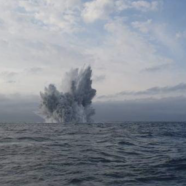
On the 80th commemoration of the Normandy landings, Robin des Bois publishes its 9th inventory of discoveries and blasting of unexploded ordnance after the wars.
Nuclear Confusion
The meeting of the HCTISN (High Committee for Transparency and Information on Nuclear Safety) on March 28, 2024 was enlightening.
According to Jimmy Energy’s management heard at the meeting, an agreement in principle will be announced on April 22 with a food processing plant in the Grand Est region of France, for the construction of a 20-megawatt high-temperature nuclear reactor whose stated utility will be to supply carbon-free industrial heat. The mayors of the siting town and four neighboring towns have already been informed, and are respecting a confidentiality clause contrary to their basic obligations to inform the municipal councils and their citizens. According to Robin des Bois’ information, this pioneering industrial site is the Cristal Union/Cristanol complex at Bazancourt in the Marne department, which includes a sugar refinery and France’s largest bioethanol production plant. The Cristanol distillery is subject to the Seveso high threshold directive and co-produces animal feed and alcohols for the cosmetics industry.
Russia/Ukraine
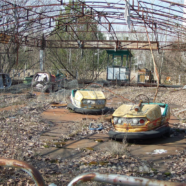
Nuclear, gas, forest fires, maritime safety…
Publications of Robin des Bois on the war in Ukraine and the French-Russian nuclear issue:
“Ukraine : Robin des Bois keeps a close watch on grain”, August 2, 2022
“La guerre du nucléaire”, 8 juin 2022 (Only in French)
“Le gaz russe avance masqué – suite”, April 26, 2022 (Only in French)
“Ukraine/Russie. Exclusif : les cargos et les marins otages de la guerre”, April 20, 2022 (Only in French)
“L’Union fait la farce”, April 14, 2022 (Only in French)
“Les roublards” (Gaz et Nucléaire), April 7, 2022 (Only in French)
“Arrivée du Clean Planet au terminal gazier de Dunkerque”, March 30, 2022 (Only in French)
“Le virus russe”, March 25, 2022 (Only in French)
“Russian gas is covering up”, March 18, 2022
“Despite the tensions, the current flows”, March 7, 2022
“Russian gas on the trail”, March 4, 2022
“White flag on nuclear sites”, February 28, 2022
“The Atom of Discord”, February 25, 2022
“Sanctions against Russia: will they dare?”, February 24, 2022




Donate

Join
Direct access to pictures
Direct access to videos
Robin des Bois was founded in France in 1985 by pioneers of environmental protection. The NGO’s orientation is decided on by a board elected by the member’s General Assembly and carried out by 8 full-time staff members with multidisciplinary skills. Robin des Bois’ objective is the protection of Man and the Environment by means of all forms of research and non-violent action. Words are our only weapon. On ground investigations, bibliographic synthesis, publishing reports, press releases, letters to authorities, regular participation to a dozen institutional consulting groups and international conventions: we are at work with our grey matter, solid boots and a good dose of flair. We put forward technical, historical, geographical, sometimes philosophical arguments, with a strong will to remain concrete and constructive.
Robin des Bois is supported by a national and international network of supporters and professionals in areas such as the maritime community, anti-environmental criminality, risk management, waste and polluted sites. The NGO is not affiliated to any political party. Our campaigns require perseverance and are to be carried out over the long term. Robin des Bois also takes legal action and part took in the success of the historical law suit concerning the Erika oil spill, and such without the help of a lawyer. The NGO is in France accredited for the protection of the environment.

Echoppe


® ROBIN DES BOIS | | Mentions Légales