1<!DOCTYPE html><html lang="en"><head><meta charSet="utf-8"/><meta name="viewport" content="width=device-width, initial-scale=1"/><meta name="google-site-verification" content="-3dJYzX_hxZDPgZlo7__mxN0YQIpaP7iMVgTHwBmhSs"/><title> <!-- -->About Us | CodeNomad</title><meta name="description" content="CodeNomad is a web development and design agency based in Mohali. We create exceptional digital experiences by combining creativity, technology, and expertise."/><link rel="canonical" href="https://codenomad.net/about-us/"/><meta name="next-head-count" content="6"/><link rel="icon" type="image/png" href="/favicon.png"/><link rel="icon" type="image/x-icon" href="/favicon.ico"/><link rel="apple-touch-icon" href="/apple-touch-icon.png"/><link data-next-font="size-adjust" rel="preconnect" href="/" crossorigin="anonymous"/><link rel="preload" href="/_next/static/css/795724066cbf88bf.css" as="style"/><link rel="stylesheet" href="/_next/static/css/795724066cbf88bf.css" data-n-g=""/><link rel="preload" href="/_next/static/css/589886709ef50710.css" as="style"/><link rel="stylesheet" href="/_next/static/css/589886709ef50710.css" data-n-p=""/><link rel="preload" href="/_next/static/css/503591c2223e5b1a.css" as="style"/><link rel="stylesheet" href="/_next/static/css/503591c2223e5b1a.css" data-n-p=""/><noscript data-n-css=""></noscript>
1<script defer="" nomodule="" src="/_next/static/chunks/polyfills-78c92fac7aa8fdd8.js"></script>
1<script src="/_next/static/chunks/webpack-1a44e7a589d87c2a.js" defer=""></script>
1<script src="/_next/static/chunks/framework-0e8d27528ba61906.js" defer=""></script>
1<script src="/_next/static/chunks/main-a4f7161cc552dd98.js" defer=""></script>
1<script src="/_next/static/chunks/pages/_app-b024fd4b60472211.js" defer=""></script>
1<script src="/_next/static/chunks/6529-16b0ffd58081c430.js" defer=""></script>
1<script src="/_next/static/chunks/385-9170524865d96a60.js" defer=""></script>
1<script src="/_next/static/chunks/9332-084c60ea6e2df50a.js" defer=""></script>
1<script src="/_next/static/chunks/1289-907e5f7172753271.js" defer=""></script>
1<script src="/_next/static/chunks/6582-d9e991987ef41c9d.js" defer=""></script>
1<script src="/_next/static/chunks/4442-9f931a93add4171b.js" defer=""></script>
1<script src="/_next/static/chunks/pages/about-us-934f5248e24a083e.js" defer=""></script>
1<script src="/_next/static/3CMS-P8XAoKV9BzQw8x7R/_buildManifest.js" defer=""></script>
1<script src="/_next/static/3CMS-P8XAoKV9BzQw8x7R/_ssgManifest.js" defer=""></script>
1</head><body><div id="__next"><div class="navbar_fixed_contact__HpWLP"><div class="navbar_floating_icon__zpJa_"><img src="/image/float-contactus.png" alt="phone"/></div></div><div style="transform:translateX(-100%)" class="navbar_floating_form__ZfQJ8"><button type="button" class="navbar_close_float_btn__Sl2s_" aria-label="Close"></button><div class=" d-flex contact_contact_bg_outer__VYulM"><h1 class="contact_sec2_title__xteS4"></h1><div class="px-5 contact_contact_bg_padding__ShgOD"><form novalidate=""><div class="row"><div class="contact_contact_bg__90px1 contact_contact_bg_no_padding__cvnqo"><div class="col-md-12 my-2"><div class="contact_input_card__2yduK"><label class="contact_label__fkiZc">Full Name <span>*</span></label><input class="contact_input__mykbS" name="full_name" placeholder="" autoComplete="off" value=""/></div></div><div class="row my-4"><div class="col-md-12"><div class="contact_input_card__2yduK undefined"><label class="contact_label__fkiZc">Your Email <span>*</span></label><input class="contact_input__mykbS" name="your_email" placeholder="" autoComplete="off" value=""/></div></div></div><div class="row my-4"><div class="col-md-12"><div class="contact_input_card__2yduK undefined"><label class="contact_label__fkiZc">Mobile Number <span></span></label><div class=" react-tel-input contact_input_card__2yduK contact_float_input_card__u18iG"><div class="special-label">Phone</div><input class="form-control " placeholder="Enter phone number" type="tel" value="+1"/><div class="flag-dropdown "><div class="selected-flag" title="United States: + 1" tabindex="0" role="button" aria-haspopup="listbox"><div class="flag us"><div class="arrow"></div></div></div></div></div></div></div></div><div class="col-md-12 my-2"><div class="contact_text_card__LWB3r"><label class="contact_label__fkiZc">Message <span>*</span></label><textarea class="contact_input__mykbS" name="message" placeholder="Type Here ..." rows="2" autoComplete="off"></textarea></div></div><div class="col-md-12 my-2"><div class="d-flex"><input class="contact_checboxinput__haq1B" name="accecptMail" type="checkbox" value="true"/><label class="contact_label__fkiZc"><span> I agree to receive promotional and marketing material</span> </label></div></div><div class="d-flex col-md-12 justify-content-between align-items-center mt-4"><div class="d-flex align-items-center"><label class="contact_label_sum__FkCYr">0<!-- --> + <!-- -->0<!-- --> =</label><input type="text" placeholder="" class="mx-3 contact_sum_input__WgLit" value=""/></div><button type="submit" class="contact_get_started___IfxL">Get Started</button></div></div></div></form></div></div></div><div class="navbar_header_outer__JvH3r "><div class="navbar_nav_brand__BWw_v"><a href="/" class="navbar-brand"><img src="/newhome/logo.png" alt="CodeNomad logo"/></a></div><div class="undefined Sidebarmenu_desktopnav__biNB1 nav"><div class="undefined undefined nav-item dropdown"><a id="nomad-ai-dropdown" aria-expanded="false" role="button" class="dropdown-toggle nav-link" tabindex="0" href="#">Nomad AI Suite</a></div><a data-rr-ui-event-key="/about-us" class="undefined nav-link" href="/about-us/">About Us</a><div class="undefined undefined nav-item dropdown"><a id="collasible-nav-dropdown" aria-expanded="false" role="button" class="dropdown-toggle nav-link" tabindex="0" href="#">Our Services</a></div><div class="undefined undefined nav-item dropdown"><a id="basic-nav-dropdown" aria-expanded="false" role="button" class="dropdown-toggle nav-link" tabindex="0" href="#">Industry</a></div><div class="undefined undefined nav-item dropdown"><a id="basic-nav-dropdown" aria-expanded="false" role="button" class="dropdown-toggle nav-link" tabindex="0" href="#">Hire Us</a></div><a data-rr-ui-event-key="/portfolio" class="undefined nav-link" href="/portfolio/">Portfolio</a><a data-rr-ui-event-key="/blog" class="undefined nav-link" href="/blog/">Blog</a><a data-rr-ui-event-key="/careers" class="undefined nav-link" href="/careers/">Career</a></div><div><div class="bm-overlay" style="position:fixed;z-index:1000;width:100%;height:100%;background:rgba(0, 0, 0, 0.3);opacity:0;-moz-transform:translate3d(100%, 0, 0);-ms-transform:translate3d(100%, 0, 0);-o-transform:translate3d(100%, 0, 0);-webkit-transform:translate3d(100%, 0, 0);transform:translate3d(100%, 0, 0);transition:opacity 0.3s, transform 0s 0.3s"></div><div><div class="bm-burger-button" style="z-index:1000">
1<button type="button" id="react-burger-menu-btn" style="position:absolute;left:0;top:0;z-index:1;width:100%;height:100%;margin:0;padding:0;border:none;font-size:0;background:transparent;cursor:pointer">Open Menu</button><span><span class="bm-burger-bars" style="position:absolute;height:20%;left:0;right:0;top:0%;opacity:1"></span><span class="bm-burger-bars" style="position:absolute;height:20%;left:0;right:0;top:40%;opacity:1"></span><span class="bm-burger-bars" style="position:absolute;height:20%;left:0;right:0;top:80%;opacity:1"></span></span></div></div><div id="" class="bm-menu-wrap" style="position:fixed;right:0;z-index:1100;width:300px;height:100%;-moz-transform:translate3d(100%, 0, 0);-ms-transform:translate3d(100%, 0, 0);-o-transform:translate3d(100%, 0, 0);-webkit-transform:translate3d(100%, 0, 0);transform:translate3d(100%, 0, 0);transition:all 0.5s" aria-hidden="true"><div class="bm-menu" style="height:100%;box-sizing:border-box;overflow:auto"><nav class="bm-item-list" style="height:100%"><div class="bm-item me-auto undefined Sidebarmenu_mobile_menus__qO8Hi mt-4 nav" style="display:block" tabindex="-1"><a data-rr-ui-event-key="/" class=" undefined nav-link" href="/">Home</a><a data-rr-ui-event-key="/about-us/" class="undefined nav-link" href="/about-us/">About Us</a><div class="undefined undefined nav-item dropdown"><a id="basic-nav-dropdown" aria-expanded="false" role="button" class="dropdown-toggle nav-link" tabindex="0" href="#">Nomad AI Suite</a></div><div class="undefined undefined nav-item dropdown"><a id="basic-nav-dropdown" aria-expanded="false" role="button" class="dropdown-toggle nav-link" tabindex="0" href="#">Our Services</a></div><div class="undefined undefined nav-item dropdown"><a id="basic-nav-dropdown" aria-expanded="false" role="button" class="dropdown-toggle nav-link" tabindex="0" href="#">Industry</a></div><div class="undefined undefined nav-item dropdown"><a id="basic-nav-dropdown" aria-expanded="false" role="button" class="dropdown-toggle nav-link" tabindex="0" href="#">Hire Us</a></div><a data-rr-ui-event-key="/portfolio/" class="undefined nav-link" href="/portfolio/">Portfolio</a><a data-rr-ui-event-key="/blog/" class="undefined nav-link" href="/blog/">Blog</a><a data-rr-ui-event-key="/careers/" class="undefined nav-link" href="/careers/">Career</a><a data-rr-ui-event-key="/contact-us/" class="undefined nav-link" href="/contact-us/">Contact Us</a></div></nav></div><div><div class="bm-cross-button" style="position:absolute;width:24px;height:24px;right:8px;top:8px"><button type="button" id="react-burger-cross-btn" style="position:absolute;left:0;top:0;z-index:1;width:100%;height:100%;margin:0;padding:0;border:none;font-size:0;background:transparent;cursor:pointer" tabindex="-1">Close Menu</button><span style="position:absolute;top:6px;right:14px"><span class="bm-cross" style="position:absolute;width:3px;height:14px;transform:rotate(45deg)"></span><span class="bm-cross" style="position:absolute;width:3px;height:14px;transform:rotate(-45deg)"></span></span></div></div></div></div><div class="navbar_last_Menu__0T3PG navbar_desktopnav__v2rH8 "><a class="nav-link" href="/contact-us/">Contact Us</a></div></div><div class="Toastify"></div><div><div class="about_background__s5WN5"><div class="row top-banner"><div class="col-md-6 p-5 about_sec1_col__WmNq4"><div class="m-4"><h1 class="about_main_heading__rUOeI">About<span> Company</span></h1><h3 class="about_sub_desc__GI4L1">Weâre Your Digital <br/>Technological<br/> Partners</h3><p class="about_desc_sec1__yXYBf">We a of skillful visionaries who provide a single-stop solution 2across various digital domains for your business to generate endless possibilities.</p></div></div><div class="col-md-6 p-5 about_sec1_col__WmNq4 about_mobile_sec1_col__Ai2ph"><div><div class="blog_contact_contact_bg_padding__qBf38 blog_contact_contact_bg_color__TvhL1"><form novalidate=""><h4 class="blog_contact_dream_title__xO_Ck">Get In Touch <span>With Us</span></h4><div class="row"><div class="blog_contact_contact_bg__zpXQ1"><div class="col-md-12 my-2"><div class="blog_contact_input_card__1N8dU"><label class="blog_contact_label__9gKvn">Full Name <span>*</span></label><input class="blog_contact_input__vEap1" name="full_name" placeholder="" autoComplete="off" value=""/></div></div><div class="row my-4"><div class="col-md-12"><div class="blog_contact_input_card__1N8dU blog_contact_mobile_input_card__3uUnd"><label class="blog_contact_label__9gKvn">Your Email <span>*</span></label><input class="blog_contact_input__vEap1" name="your_email" placeholder="" autoComplete="off" value=""/></div></div></div><div class="row my-4"><div class="col-md-12"><div class="blog_contact_input_card__1N8dU blog_contact_mobile_input_card__3uUnd"><label class="blog_contact_label__9gKvn">Mobile Number <span></span></label><div class=" react-tel-input blog_contact_input_card__1N8dU"><div class="special-label">Phone</div><input class="form-control " placeholder="Enter phone number" type="tel" value="+1"/><div class="flag-dropdown "><div class="selected-flag" title="United States: + 1" tabindex="0" role="button" aria-haspopup="listbox"><div class="flag us"><div class="arrow"></div></div></div></div></div></div></div></div><div class="col-md-12 my-2"><div class="blog_contact_text_card__hueyC"><label class="blog_contact_label__9gKvn">Message <span>*</span></label><textarea class="blog_contact_input__vEap1" name="message" placeholder="Type Here ..." rows="2" autoComplete="off"></textarea></div></div><div class="d-flex col-md-12 justify-content-between align-items-center"><div class="d-flex align-items-center"><label class="blog_contact_label_sum__qV1H5">0<!-- --> + <!-- -->0<!-- --> =</label><input type="text" class="mx-3 blog_contact_sum_input__3_Wme" value=""/></div><button type="submit" class="blog_contact_get_started__iyrud">Get Started</button></div></div></div></form></div></div></div></div></div><section class="about_section2__1zl3u"><div class="about_title_sec__9toHj"><h1 class="about_sec2_title__23gnw">What We Do</h1><p class="about_sec2_desc__vzM6v">At Code Nomad, we're passionate about empowering our clients to succeed in the digital age. We offer a wide range of services to help businesses and individuals stay ahead of the curve, including custom softw
2are development, web development, and more.</p></div><div class="row about_counters__WQj6_"><div class="col-md-3 about_card_count__EDVqq"><div class="about_card_sec__2wf2v"><div class="d-flex"><span class="about_counter__1k71X"></span><h1 class="about_counter__1k71X">+</h1></div><p>Happy Clients</p></div></div><div class="col-md-3 about_card_count__EDVqq"><div class="about_card_sec__2wf2v"><div class="d-flex"><span class="about_counter__1k71X"></span><h1 class="about_counter__1k71X">+</h1></div><p>Completed Projects</p></div></div><div class="col-md-3 about_card_count__EDVqq"><div class="about_card_sec__2wf2v"><div class="d-flex"><span class="about_counter__1k71X"></span><h1 class="about_counter__1k71X">+</h1></div><p>Years Of Experience</p></div></div></div><div class="about_description__Yug1T"><p class="about_desc_team__EOTvg">Our team of experienced developers and designers work closely with clients to understand their unique needs and develop solutions that meet those needs effectively. Whether you need a custom application to streamline your business processes or a responsive website to engage with your audience, we have the expertise to deliver results. Contact us today to learn more about how we can help you achieve your goals.
3</p></div></section><section class="about_section3__uzJjW"><div class="row about_flex_row__hdnG4"><div class="col-md-5"><div><h1 class="about_mission_title__Hpe4o">Our Mission</h1><img src="https://api.codenomad.net/uploads/image_56_2_70c78dfead.png" data-src="actual-image.jpg" loading="lazy" alt=""/></div></div><div class="col-md-7 px-5 about_hide_padding__ZCsZk"><div><p class="about_desc_mission__hbbXF">At Code Nomad, our mission is to help individuals and businesses navigate the fast-changing
4world of technology by providing them with the tools, expertise, and guidance they need to
5succeed. We believe that everyone should have access to the latest technology, and we're committed to making that happen by delivering high-quality software development, web development, and other digital services at an affordable price.<br/>
6<br/>
7Our goal is to empower our clients to thrive in the digital age and achieve their full potential, whether they're just starting out or looking to grow their existing business.
8</p></div><div class="about_images_sec__Goe2_"><img src="https://api.codenomad.net/uploads/image_56_4_ba74339011.png" class="mx-2" data-src="actual-image.jpg" loading="lazy" alt=""/><img src="https://api.codenomad.net/uploads/image_56_3_a99750ee0f.png" class="mx-2" data-src="actual-image.jpg" loading="lazy" alt=""/></div></div></div></section><section class="about_section4__Q7oPA"><h2 class="about_story_title__HYUv3">Our Journey</h2><div class="journey_journeytabs__760v7"><div class="journey_yearNav__SWEWd"><div class="journey_yearNavTrack__FraH9" aria-hidden="true"><span class="journey_yearNavFill__27cXK" style="width:0%"></span></div><ul class="journey_yearNavList__KPJeZ" role="tablist" aria-label="Company journey years"><li class="journey_yearNavItem__DGHX4"><button type="button" role="tab" class="journey_yearNavButton__WgrRI journey_yearNavButtonActive__Ghr9M " aria-selected="true" aria-label="Show 2015 journey"><span class="journey_yearNavDot__fC9eG"></span><span class="journey_yearNavYear__SoYPP">2015</span></button></li><li class="journey_yearNavItem__DGHX4"><button type="button" role="tab" class="journey_yearNavButton__WgrRI  " aria-selected="false" aria-label="Show 2016 journey"><span class="journey_yearNavDot__fC9eG"></span><span class="journey_yearNavYear__SoYPP">2016</span></button></li><li class="journey_yearNavItem__DGHX4"><button type="button" role="tab" class="journey_yearNavButton__WgrRI  " aria-selected="false" aria-label="Show 2017 journey"><span class="journey_yearNavDot__fC9eG"></span><span class="journey_yearNavYear__SoYPP">2017</span></button></li><li class="journey_yearNavItem__DGHX4"><button type="button" role="tab" class="journey_yearNavButton__WgrRI  " aria-selected="false" aria-label="Show 2018 journey"><span class="journey_yearNavDot__fC9eG"></span><span class="journey_yearNavYear__SoYPP">2018</span></button></li><li class="journey_yearNavItem__DGHX4"><button type="button" role="tab" class="journey_yearNavButton__WgrRI  " aria-selected="false" aria-label="Show 2019 journey"><span class="journey_yearNavDot__fC9eG"></span><span class="journey_yearNavYear__SoYPP">
82019</span></button></li><li class="journey_yearNavItem__DGHX4"><button type="button" role="tab" class="journey_yearNavButton__WgrRI " aria-selected="false" aria-label="Show 2020 journey"><span class="journey_yearNavDot__fC9eG"></span><span class="journey_yearNavYear__SoYPP">2020</span></button></li><li class="journey_yearNavItem__DGHX4"><button type="button" role="tab" class="journey_yearNavButton__WgrRI " aria-selected="false" aria-label="Show 2021 journey"><span class="journey_yearNavDot__fC9eG"></span><span class="journey_yearNavYear__SoYPP">2021</span></button></li><li class="journey_yearNavItem__DGHX4"><button type="button" role="tab" class="journey_yearNavButton__WgrRI " aria-selected="false" aria-label="Show 2022 journey"><span class="journey_yearNavDot__fC9eG"></span><span class="journey_yearNavYear__SoYPP">2022</span></button></li><li class="journey_yearNavItem__DGHX4"><button type="button" role="tab" class="journey_yearNavButton__WgrRI " aria-selected="false" aria-label="Show 2023 journey"><span class="journey_yearNavDot__fC9eG"></span><span class="journey_yearNavYear__SoYPP">2023</span></button></li><li class="journey_yearNavItem__DGHX4"><button type="button" role="tab" class="journey_yearNavButton__WgrRI " aria-selected="false" aria-label="Show 2024 journey"><span class="journey_yearNavDot__fC9eG"></span><span class="journey_yearNavYear__SoYPP">2024</span></button></li></ul></div><div class="carousel slide carousel-fade"><div class="carousel-inner"></div><a class="carousel-control-prev" role="button" tabindex="0" href="#"><span class="visually-hidden">Previous</span></a><a class="carousel-control-next" role="button" tabindex="0" href="#"><span class="visually-hidden">Next</span></a></div></div></section><section class="about_section6__BEIPX"><div class="about_title_sec__9toHj"><h1 class="about_sec2_title__23gnw">Our Team</h1><p class="about_sec2_desc__vzM6v">Weâre A Growing Team Of Innovative Minds, 9Passionate About Your Success</p></div><div><div><div class="react-multi-carousel-list carousel-container-with-scrollbar " dir="ltr"><ul class="react-multi-carousel-track " style="transition:none;overflow:unset;transform:translate3d(0px,0,0)"></ul></div></div></div></section><section class="about_section7__QLYrj"><div class="about_title_sec7__Y9pkw"><h1 class="about_sec7_title__poSD4">Our D&I commitments</h1><p class="about_sec7_desc__kdnYP">At Codenomad, we prioritize holistic well-being, ensuring our team thrives both at work and beyond. Inclusivity fuels our creativity and success. Weâre dedicated to crafting a workplace where all voices are valued, fostering a sense of belonging. Our commitment to anti-racism actively shapes our culture. Together, we build a representative team, amplifying unique perspectives for creative excellence.</p></div><div class="about_about_main__Rk4kG"><img class="about_desktop_team__mdmNj" src="https://api.codenomad.net/uploads/Frame_70_2_1_4d5c1184be.png" data-src="actual-image.jpg" loading="lazy" alt="" width="100%"/><img class="about_mobile_team__czI2k" src="/image/about/mobile-team.png" data-src="actual-image.jpg" loading="lazy" alt="" width="100%"/></div></section><section class="about_section8__keUpd"><div><section class="blog_blog_section__dOq_x"><div class="blog_blog_head__lNzsP"><h1 class="blog_blog_title__n_XAr">Blogs</h1></div><div class="row"><div class="col-md-6 blog_blog_post__Vml1Z"><h2>Featured</h2><div class="col-md-12 undefined blog_featured_fullwidth_col__6PznG"><div class="blog_blog_bg__cem3g"><a class="blog_blog_link__M9U0L" href="/blog/guide-to-making-5000-month-online-as-a-side-hustle-in-2024/"><div class="blog_equal_height_image__3Eqcc"><img src="https://api.codenomad.net/uploads/Untitled_design_48_864b50ea6e.png" data-src="actual-image.jpg" loading="lazy" alt=""/></div><ul class="blog_category_ul__zQvox"><li style="background:#D4F0B3;color:#315307" class="blog_category___GHvv">Web Development</li></ul><h4 class="blog_blog_card_title__LLRgR">Guide to Making $5000/Month Online as a Side Hustle in 2024</h4></a><div class="blog_blog_card_desc__YUkU_"><p>Welcome to the world of online side hustles! Today, the internet isn't just for connecting with friendsâit's a huge marketplace full of opportunities. If you've been wanting to earn extra cash, improve your finances, or explore new ways to make money, you're in the right place.</p> 10<p>In this blog, we're going to explore how you can make $5000 a month online. Whether you're working full-time, studying,</p></div><a class="blog_blog_link_button__Pb4GM" href="/blog/guide-to-making-5000-month-online-as-a-side-hustle-in-2024/">Read More</a><div class="blog_footer_sec__SfHbP"><div class="blog_card_footer__dl3HL"><img src="https://api.codenomad.net/uploads/Group_1171275070_7aaad06b17.svg" data-src="actual-image.jpg" loading="lazy" alt=""/><div class="blog_card_footer_date__3LmCS"><p class="blog_description__99v2l">Ankush Gumber</p><p class="blog_date__xpgoT">February 26, 2024</p></div></div></div></div></div></div><div class="col-md-6 blog_blog_post__Vml1Z"><h2>Latest</h2><div class="row"><div class="col-md-6 undefined"><div class="blog_blog_bg__cem3g"><a class="blog_blog_link__M9U0L" href="/blog/how-much-does-it-cost-to-build-an-app-in-2026/"><div class="blog_equal_height_image__3Eqcc"><img src="https://api.codenomad.net/uploads/App_Development_Cost_Guide_2026_1_f8fb97b366.png" data-src="actual-image.jpg" loading="lazy" alt=""/></div><ul class="blog_category_ul__zQvox"><li style="background:#E4DAFB;color:#4E299E" class="blog_category___GHvv">Mobile App Development</li></ul><h4 class="blog_blog_card_title__LLRgR">
10How Much Does It Cost to Build an App in 2026?</h4><div class="blog_footer_sec__SfHbP"><div class="blog_card_footer__dl3HL"><img src="https://api.codenomad.net/uploads/Group_1171275070_7aaad06b17.svg" data-src="actual-image.jpg" loading="lazy" alt=""/><div class="blog_card_footer_date__3LmCS"><p class="blog_description__99v2l">Ankush Gumber</p><p class="blog_date__xpgoT">October 6, 2026</p></div></div></div></a></div></div><div class="col-md-6 undefined"><div class="blog_blog_bg__cem3g"><a class="blog_blog_link__M9U0L" href="/blog/how-real-time-data-systems-help-businesses-make-faster-decisions/"><div class="blog_equal_height_image__3Eqcc"><img src="https://api.codenomad.net/uploads/unnamed_4_95545839d1.png" data-src="actual-image.jpg" loading="lazy" alt=""/></div><ul class="blog_category_ul__zQvox"><li style="background:#D4F0B3;color:#315307" class="blog_category___GHvv">Web Development</li></ul><h4 class="blog_blog_card_title__LLRgR">How Real-Time Data Systems Help Businesses Make Faster Decisions</h4><div class="blog_footer_sec__SfHbP"><div class="blog_card_footer__dl3HL"><img src="https://api.codenomad.net/uploads/Group_1171275070_7aaad06b17.svg" data-src="actual-image.jpg" loading="lazy" alt=""/><div class="blog_card_footer_date__3LmCS"><p class="blog_description__99v2l">Ankush Gumber</p><p class="blog_date__xpgoT">September 29, 2026</p></div></div></div></a></div></div><div class="col-md-6 undefined"><div class="blog_blog_bg__cem3g"><a class="blog_blog_link__M9U0L" href="/blog/custom-remittance-solutions-vs-off-the-shelf-software/"><div class="blog_equal_height_image__3Eqcc"><img src="https://api.codenomad.net/uploads/Chat_GPT_Image_Jan_30_2026_06_13_08_PM_ce578fa4fc.png" data-src="actual-image.jpg" loading="lazy" alt=""/></div><ul class="blog_category_ul__zQvox"><li style="background:#E067FF;color:#750D99" class="blog_category___GHvv">Fintech</li><li style="background:#D4F0B3;color:#315307" class="blog_category___GHvv">Web Development</li></ul><h4 class="blog_blog_card_title__LLRgR">Custom Remittance Solutions vs Off-the-Shelf Software: Whatâs Better for Fintechs?</h4><div class="blog_footer_sec__SfHbP"><div class="blog_card_footer__dl3HL"><img src="https://api.codenomad.net/uploads/Group_1171275070_7aaad06b17.svg" data-src="actual-image.jpg" loading="lazy" alt=""/><div class="blog_card_footer_date__3LmCS"><p class="blog_description__99v2l">Ankush Gumber</p><p class="blog_date__xpgoT">January 30, 2026</p></div></div></div></a></div></div><div class="col-md-6 undefined"><div class="blog_blog_bg__cem3g"><a class="blog_blog_link__M9U0L" href="/blog/the-new-era-of-automation/"><div class="blog_equal_height_image__3Eqcc"><img src="https://api.codenomad.net/uploads/Chat_GPT_Image_Nov_21_2025_05_04_56_PM_e327078e34.png" data-src="actual-image.jpg" loading="lazy" alt=""/></div><ul class="blog_category_ul__zQvox"><li style="background:#D4F0B3;color:#315307" class="blog_category___GHvv">Web Development</li></ul><h4 class="blog_blog_card_title__LLRgR">The New Era of Automation: How Agentic Automation Is Rewriting the Playbook</h4><div class="blog_footer_sec__SfHbP"><div class="blog_card_footer__dl3HL"><img src="https://api.codenomad.net/uploads/Group_1171275070_7aaad06b17.svg" data-src="actual-image.jpg" loading="lazy" alt=""/><div class="blog_card_footer_date__3LmCS"><p class="blog_description__99v2l">Ankush Gumber</p><p class="blog_date__xpgoT"></p></div></div></div></a></div></div></div></div></div></section></div><div class="row mt-4 mb-5"><div class="btn_sec"><a href="/blog/"><button>View All</button></a></div></div></section></div><div></div><footer class="footer_footer_sec__UjVyr"><div class="footer_footer_outer__s9ilK"><div class="row"><div class="col-md-2 footer_footer_col__yCsf4"><div><h4 class="footer_list_heading__8fbSu">What We Do</h4><ul><a class="footer_list_link__1kkiS" href="/services/app-development/"><li>App Development</li></a><a class="footer_list_link__1kkiS" href="/services/web-development/"><li>Web Development</li></a><a class="footer_list_link__1kkiS" href="/services/ui-ux-research/"><li>UI/UX Research</li></a><a class="footer_list_link__1kkiS" href="/services/digital-marketing/"><li>Digital Marketing</li></a><a class="footer_list_link__1kkiS" href="/services/ecommerce/"><li>E-commerce</li></a></ul></div></div><div class="col-md-2 footer_footer_col__yCsf4"><div><h4 class="footer_list_heading__8fbSu">Company</h4><ul><a class="footer_list_link__1kkiS" href="/about-us/"><li>About Us</li></a><a class="footer_list_link__1kkiS" href="/portfolio/"><li>Portfolio</li></a><a class="footer_list_link__1kkiS" href="/careers/"><li>Career</li></a><a class="footer_list_link__1kkiS" href="/blog/"><li>Blog</li></a><a class="footer_list_link__1kkiS" href="/privacy-policy/"><li>Privacy Policy</li></a></ul></div></div><div class="col-md-3 footer_footer_col__yCsf4"><div><h4 class="footer_list_heading__8fbSu">Contact</h4><ul><a class="footer_list_link__1kkiS" target="_blank" href="mailto:[email protected]"><li>General Inquires</li></a><a class="footer_list_link__1kkiS" target="_blank" href="mailto:sales@
10codenomad.net"><li>Sales Inquires</li></a><a class="footer_list_link__1kkiS" target="_blank" href="mailto:[email protected]"><li>HR Inquires</li></a><a class="footer_list_link__1kkiS" target="_blank" href="https://wa.me/7973726246"><li>WhatsApp</li></a></ul></div></div><div class="col-md-5 footer_footer_col__yCsf4"><div><h4 class="footer_subscribe_heading__i685F">Subscribe</h4><form novalidate=""><div class="footer_newsletterinput__fKSRf"><input class="footer_emails__tn4Vq" name="email" placeholder="Enter your Email" value=""/><button type="submit" class="footer_contacts__QLtcE">Subscribe</button></div></form><p class="footer_sub_desc__bLTmR">Subscribe to our newsletter and stay in the loop with the latest news, updates, and promotions from our company.</p></div></div></div><div class="mt-4 footer_footer_block_outer__3CbRH"><div class="footer_footer_logo_social_icons__RAWcY"><div class="footer_footer_block__t60wx"><img src="/newhome/logo.png" alt="logo"/></div><div class="footer_footer_block__t60wx footer_footer_block_second__pIdMx"><a class="mx-5 footer_footer_block_margin__mO9Bu" style="text-decoration:none" target="_blank" href="mailto:[email protected]"><img src="/footer/email.svg" alt="email" class="footer_footer_sales_icon__VHTKH"/><p class="footer_contact_detail__xKDA_">[email protected]</p></a><a class="mx-5 footer_footer_block_margin__mO9Bu" style="text-decoration:none" target="_blank" href="https://wa.me/7973832810"><img src="/footer/whatsapp.svg" alt="whatsapp"/><p class="footer_contact_detail__xKDA_">+91 79-73832810</p></a></div></div><div class="footer_footer_block__t60wx"><a href="https://www.facebook.com/Codenomad.CNM/" target="_blank"><img src="/footer/facebook.svg" alt="whatsapp" class="mx-1"/></a><a href="https://www.youtube.com/channel/UC61IYgprhlv1O28jQ_W225g" target="_blank"><img src="/footer/youtube.svg" alt="whatsapp" class="mx-1"/></a><a href="https://dribbble.com/codenomad-cnm" target="_blank"><img src="/footer/dribble.svg" alt="whatsapp" class="mx-1"/></a><a href="https://www.figma.com/file/Y1phaBlnLEnlpIwOcqif9z/Codenomad-Website-Pages?type=design&node-id=0-1&mode=design&t=Qwm94HdIQypYM0uH-0" target="_blank"><img src="/footer/figma.svg" alt="whatsapp" class="mx-1"/></a><a href="https://twitter.com/codenomad_CNM" target="_blank"><img src="/footer/twitter.svg" alt="whatsapp" class="mx-1"/></a><a href="https://in.linkedin.com/company/codenomad510" target="_blank"><img src="/footer/linkedin.svg" alt="whatsapp" class="mx-1"/></a><div class="mt-4 text-center footer_mobile_copyright_content__1g5g1"><p class="footer_peragraph__63L15 footer_peragraph_new__AC5Vn">Copyright © <!-- -->2026<!-- --> Codenomad</p></div></div></div><div class="mt-4 text-center footer_desktop_copyright_content__sj2oE"><p class="footer_peragraph__63L15 footer_peragraph_new__AC5Vn">Copyright © <!-- -->2026<!-- --> Codenomad</p></div></div></footer></div>
10<script id="__NEXT_DATA__" type="application/json">{"props":{"pageProps":{"data":[{"id":26,"__component":"main.main","title":"Weâre Your Digital \u003cbr/\u003eTechnological\u003cbr/\u003e Partners","description":"We a of skillful visionaries who provide a single-stop solution\nacross various digital domains for your business to generate endless possibilities.","button":null,"link":null,"category":"About\u003cspan\u003e Company\u003c/span\u003e","list":null,"title2":null,"description2":null,"image":{"data":{"id":2229,"attributes":{"name":"Frame 71 (1).png","alternativeText":null,"caption":null,"width":1920,"height":768,"formats":{"large":{"ext":".png","url":"/uploads/large_Frame_71_1_9f632f6667.png","hash":"large_Frame_71_1_9f632f6667","mime":"image/png","name":"large_Frame 71 (1).png","path":null,"size":550.98,"width":1000,"height":400},"small":{"ext":".png","url":"/uploads/small_Frame_71_1_9f632f6667.png","hash":"small_Frame_71_1_9f632f6667","mime":"image/png","name":"small_Frame 71 (1).png","path":null,"size":154.91,"width":500,"height":200},"medium":{"ext":".png","url":"/uploads/medium_Frame_71_1_9f632f6667.png","hash":"medium_Frame_71_1_9f632f6667","mime":"image/png","name":"medium_Frame 71 (1).png","path":null,"size":325.68,"width":750,"height":300},"thumbnail":{"ext":".png","url":"/uploads/thumbnail_Frame_71_1_9f632f6667.png","hash":"thumbnail_Frame_71_1_9f632f6667","mime":"image/png","name":"thumbnail_Frame 71 (1).png","path":null,"size":41.8,"width":245,"height":98}},"hash":"Frame_71_1_9f632f6667","ext":".png","mime":"image/png","size":393.17,"url":"/uploads/Frame_71_1_9f632f6667.png","previewUrl":null,"provider":"local","provider_metadata":null,"createdAt":"2026-09-22T10:48:09.673Z","updatedAt":"2026-09-22T10:48:09.673Z"}}},"image2":{"data":null},"image3":{"data":null},"image4":{"data":null},"image5":{"data":null},"image6":{"data":null}},{"id":30,"__component":"cards.card-group","title":"What We Do","description":"At Code Nomad, we're passionate about empowering our clients to succeed in the digital age. We offer a wide range of services to help businesses and individuals stay ahead of the curve, including custom software development, web development, and more.","button":null,"link":null,"description2":"Our team of experienced developers and designers work closely with clients to understand their unique needs and develop solutions that meet those needs effectively. Whether you need a custom application to streamline your business processes or a responsive website to engage with your audience, we have the expertise to deliver results. Contact us today to learn more about how we can help you achieve your goals.\n","title2":null,"card":[{"id":135,"category":"183","title":"Happy Clients","description":null,"background_color":"#D9D9D9","button":null,"accords":null,"detail_description":null,"tab":null,"url":null,"metaTitle":null,"metaDescription":null,"name":null,"Date":null,"nameDropdown":null,"blogsCategory":null,"blogsCategorybackgroundColor":null,"blogsCategoryColor":null,"image2":{"data":null},"image":{"data":null}},{"id":136,"category":"315","title":"Completed Projects","description":null,"background_color":"#D9D9D9","button":null,"accords":null,"detail_description":null,"tab":null,"url":null,"metaTitle":null,"metaDescription":null,"name":null,"Date":null,"nameDropdown":null,"blogsCategory":null,"blogsCategorybackgroundColor":null,"blogsCategoryColor":null,"image2":{"data":null},"image":{"data":null}},{"id":137,"category":"10","title":"Years Of Experience","description":null,"background_color":"#D9D9D9","button":null,"accords":null,"detail_description":null,"tab":null,"url":null,"metaTitle":null,"metaDescription":null,"name":null,"Date":null,"nameDropdown":null,"blogsCategory":null,"blogsCategorybackgroundColor":null,"blogsCategoryColor":null,"image2":{"data":null},"image":{"data":null}}]},{"id":27,"__component":"main.main","title":"Our Mission","description":"At Code Nomad, our mission is to help individuals and businesses navigate the fast-changing\nworld of technology by providing them with the tools, expertise, and guidance they need to\nsucceed. We believe that everyone should have access to the latest te
10chnology, and we're committed to making that happen by delivering high-quality software development, web development, and other digital services at an affordable price.\u003cbr/\u003e\n\u003cbr/\u003e\nOur goal is to empower our clients to thrive in the digital age and achieve their full potential, whether they're just starting out or looking to grow their existing business.\n","button":null,"link":null,"category":null,"list":null,"title2":null,"description2":null,"image":{"data":{"id":971,"attributes":{"name":"image 56 (2).png","alternativeText":null,"caption":null,"width":497,"height":435,"formats":{"thumbnail":{"ext":".png","url":"/uploads/thumbnail_image_56_2_70c78dfead.png","hash":"thumbnail_image_56_2_70c78dfead","mime":"image/png","name":"thumbnail_image 56 (2).png","path":null,"size":60.77,"width":178,"height":156}},"hash":"image_56_2_70c78dfead","ext":".png","mime":"image/png","size":96.59,"url":"/uploads/image_56_2_70c78dfead.png","previewUrl":null,"provider":"local","provider_metadata":null,"createdAt":"2024-02-22T11:32:46.833Z","updatedAt":"2024-02-22T11:32:46.833Z"}}},"image2":{"data":{"id":975,"attributes":{"name":"image 56 (4).png","alternativeText":null,"caption":null,"width":497,"height":435,"formats":{"thumbnail":{"ext":".png","url":"/uploads/thumbnail_image_56_4_ba74339011.png","hash":"thumbnail_image_56_4_ba74339011","mime":"image/png","name":"thumbnail_image 56 (4).png","path":null,"size":77.01,"width":178,"height":156}},"hash":"image_56_4_ba74339011","ext":".png","mime":"image/png","size":121.35,"url":"/uploads/image_56_4_ba74339011.png","previewUrl":null,"provider":"local","provider_metadata":null,"createdAt":"2024-02-22T11:41:27.908Z","updatedAt":"2024-02-22T11:41:27.908Z"}}},"image3":{"data":{"id":974,"attributes":{"name":"image 56 (3).png","alternativeText":null,"caption":null,"width":497,"height":435,"formats":{"thumbnail":{"ext":".png","url":"/uploads/thumbnail_image_56_3_a99750ee0f.png","hash":"thumbnail_image_56_3_a99750ee0f","mime":"image/png","name":"thumbnail_image 56 (3).png","path":null,"size":63.51,"width":178,"height":156}},"hash":"image_56_3_a99750ee0f","ext":".png","mime":"image/png","size":91.5,"url":"/uploads/image_56_3_a99750ee0f.png","previewUrl":null,"provider":"local","provider_metadata":null,"createdAt":"2024-02-22T11:40:49.299Z","updatedAt":"2024-02-22T11:40:49.299Z"}}},"image4":{"data":null},"image5":{"data":null},"image6":{"data":null}},{"id":31,"__component":"cards.card-group","title":"Testimonials","description":null,"button":null,"link":null,"description2":null,"title2":null,"card":[{"id":138,"category":null,"title":"Cora Smith","description":"\nI cannot thank CodeNomad enough for the amazing work they did on my ecommerce website. They delivered on all of my requirements, creating a fast and secure website that exceeded my expectations. The team was always available to answer my questions and provide updates throughout the process. Thanks to their expertise and dedication, my business is now thriving online.","background_color":null,"button":null,"accords":null,"detail_description":null,"tab":null,"url":null,"metaTitle":null,"metaDescription":null,"name":null,"Date":null,"nameDropdown":null,"blogsCategory":null,"blogsCategorybackgroundColor":null,"blogsCategoryColor":null,"image2":{"data":null},"image":{"data":{"id":589,"attributes":{"name":"Group 1171275103.png","alternativeText":null,"caption":null,"width":70,"height":70,"formats":null,"hash":"Group_1171275103_14300955a9","ext":".png","mime":"image/png","size":1.85,"url":"/uploads/Group_1171275103_14300955a9.png","previewUrl":null,"provider":"local","provider_metadata":null,"createdAt":"2024-01-23T07:23:51.297Z","updatedAt":"2024-01-23T07:23:51.297Z"}}}},{"id":139,"category":null,"title":"Craig","description":"\nI am truly impressed with the work done by CodeNomad on my mobile app. They were able to translate my ideas into a functional and user-friendly app that perfectly meets the needs of my financial business. The team was highly professional, communicative and attentive to detail, making the entire development process smooth and stress-free. I appreciate their efforts and commitment to delivering a top-quality product.","background_color":null,"button":null,"accords":null,"detail_description":null,"tab":null,"url":null,"metaTitle":null,"metaDescription":null,"name":null,"Date":null,"nameDropdown":null,"blogsCategory":null,"blogsCategorybackgroundColor":null,"blogsCategoryColor":null,"image2":{"data":null},"image":{"data":{"id":501,"attributes":{"name":"Craig Hunt.png","alternativeText":null,"caption":null,"width":70,"height":70,"formats":null,"hash":"Craig_Hunt_42b0612c9d","ext":".png","mime":"image/png","size":2.49,"url":"/uploads/Craig_Hunt_42b0612c9d.png","previewUrl":null,"provider":"local","provider_metadata":null,"createdAt":"2024-01-20T06:58:35.573Z","updatedAt":"2024-01-20T06:58:35.573Z"}}}},{"id":230,"category":null,"title":"James","description":"\nCodeNomad exceeded my expectations with their exceptional Laravel website development services. Their team was professional, skilled and provided valuable insights throughout the entire project. The end result was a fast, secure and visually stunning website that truly represents my business. I highly recommend their services.","background_color":null,"button":null,"accords":null,"detail_description":null,"tab":null,"url":null,"metaTitle":null,"metaDescription":null,"name":null,"Date":null,"nameDropdown":null,"blogsCategory":null,"blogsCategorybackgroundColor":null,"blogsCategoryColor":null,"image2":{"data":null},"image":{"data":{"id":500,"attributes":{"name":"Mask group (1).png","alternativeText":null,"caption":null,"width":70,"height":70,"formats":null,"hash":"Mask_group_1_94ef128f7c","ext":".png","mime":"image/png","size":1.16,"url":"/uploads/Mask_group_1_94ef128f7c.png","previewUrl":null,"provider":"local","provider_metadata":null,"createdAt":"2024-01-20T06:58:11.881Z","updatedAt":"2024-01-20T06:58:11.881Z"}}}}]},{"id":32,"__component":"cards.card-group","title":"Our Team","description":"Weâre A Growing Team Of Innovative Minds,\nPassionate About Your Success","button":null,"link":null,"description2":null,"title2":null,"card":[{"id":270,"category":"Abhishek Saini","title":"Founder \u0026 CEO","description":"https://www.linkedin.com/in/cnm-abhishek-saini/","background_color":null,"button":null,"accords":null,"detail_description":null,"tab":null,"url":null,"metaTitle":null,"metaDescription":null,"name":null,"Date":null,"nameDropdown":null,"blogsCategory":null,"blogsCategorybackgroundColor":null,"blogsCategoryColor":null,"image2":{"data":null},"image":{"data":{"id":2235,"attributes":{"name":"Frame 1000004362.png","alternativeText":null,"caption":null,"width":312,"height":344,"formats":{"thumbnail":{"ext":".png","url":"/uploads/thumbnail_Frame_1000004362_2dda1ac2a6.png","hash":"thumbnail_Frame_1000004362_2dda1ac2a6","mime":"image/png","name":"thumbnail_Frame 1000004362.png","path":null,"size":30.87,"width":141,"height":156}},"hash":"Frame_1000004362_2dda1ac2a6","ext":".png","mime":"image/png","size":38.51,"url":"/uploads/Frame_1000004362_2dda1ac2a6.png","previewUrl":null,"provider":"local","provider_metadata":null,"createdAt":"2026-09-22T14:24:09.019Z","updatedAt":"2026-09-22T14:24:09.019Z"}}}},{"id":271,"category":"Ankush Gumber","title":"Project Manager","description":"https://www.linkedin.com/in/ankush-gumber-3456627
107/","background_color":null,"button":null,"accords":null,"detail_description":null,"tab":null,"url":null,"metaTitle":null,"metaDescription":null,"name":null,"Date":null,"nameDropdown":null,"blogsCategory":null,"blogsCategorybackgroundColor":null,"blogsCategoryColor":null,"image2":{"data":null},"image":{"data":{"id":605,"attributes":{"name":"LS20240123145205 1.png","alternativeText":null,"caption":null,"width":299,"height":330,"formats":{"thumbnail":{"ext":".png","url":"/uploads/thumbnail_LS_20240123145205_1_fc5b183f98.png","hash":"thumbnail_LS_20240123145205_1_fc5b183f98","mime":"image/png","name":"thumbnail_LS20240123145205 1.png","path":null,"size":31.53,"width":141,"height":156}},"hash":"LS_20240123145205_1_fc5b183f98","ext":".png","mime":"image/png","size":36.09,"url":"/uploads/LS_20240123145205_1_fc5b183f98.png","previewUrl":null,"provider":"local","provider_metadata":null,"createdAt":"2024-01-23T09:27:13.619Z","updatedAt":"2024-01-23T09:27:13.619Z"}}}},{"id":276,"category":"Apurva Sharma","title":"HR Manager","description":"https://www.linkedin.com/in/theapurvasharma/","background_color":null,"button":null,"accords":null,"detail_description":null,"tab":null,"url":null,"metaTitle":null,"metaDescription":null,"name":null,"Date":null,"nameDropdown":null,"blogsCategory":null,"blogsCategorybackgroundColor":null,"blogsCategoryColor":null,"image2":{"data":null},"image":{"data":{"id":603,"attributes":{"name":"apoorva mam.png","alternativeText":null,"caption":null,"width":299,"height":330,"formats":{"thumbnail":{"ext":".png","url":"/uploads/thumbnail_apoorva_mam_9d1c98e799.png","hash":"thumbnail_apoorva_mam_9d1c98e799","mime":"image/png","name":"thumbnail_apoorva mam.png","path":null,"size":41.8,"width":141,"height":156}},"hash":"apoorva_mam_9d1c98e799","ext":".png","mime":"image/png","size":41.7,"url":"/uploads/apoorva_mam_9d1c98e799.png","previewUrl":null,"provider":"local","provider_metadata":null,"createdAt":"2024-01-23T07:38:33.294Z","updatedAt":"2024-01-23T07:38:33.294Z"}}}},{"id":2308,"category":"Manpreet Kaur","title":"Operation Manager","description":null,"background_color":null,"button":null,"accords":null,"detail_description":null,"tab":null,"url":null,"metaTitle":null,"metaDescription":null,"name":null,"Date":null,"nameDropdown":null,"blogsCategory":null,"blogsCategorybackgroundColor":null,"blogsCategoryColor":null,"image2":{"data":null},"image":{"data":{"id":1599,"attributes":{"name":"IMG-20250103-WA0000 1.png","alternativeText":null,"caption":null,"width":299,"height":330,"formats":{"thumbnail":{"ext":".png","url":"/uploads/thumbnail_IMG_20250103_WA_0000_1_43c5ac0a0b.png","hash":"thumbnail_IMG_20250103_WA_0000_1_43c5ac0a0b","mime":"image/png","name":"thumbnail_IMG-20250103-WA0000 1.png","path":null,"size":31.5,"width":141,"height":156}},"hash":"IMG_20250103_WA_0000_1_43c5ac0a0b","ext":".png","mime":"image/png","size":40.49,"url":"/uploads/IMG_20250103_WA_0000_1_43c5ac0a0b.png","previewUrl":null,"provider":"local","provider_metadata":null,"createdAt":"2025-01-03T07:22:53.587Z","updatedAt":"2025-01-03T07:22:53.587Z"}}}},{"id":145,"category":"Sandeep Kumar","title":" Development Lead","description":" https://www.linkedin.com/in/sandeepkumar510/","background_color":null,"button":null,"accords":null,"detail_description":null,"tab":null,"url":null,"metaTitle":null,"metaDescription":null,"name":null,"Date":null,"nameDropdown":null,"blogsCategory":null,"blogsCategorybackgroundColor":null,"blogsCategoryColor":null,"image2":{"data":null},"image":{"data":{"id":593,"attributes":{"name":"sandeep sir.png","alternativeText":null,"caption":null,"width":299,"height":330,"formats":{"thumbnail":{"ext":".png","url":"/uploads/thumbnail_sandeep_sir_15ce08576d.png","hash":"thumbnail_sandeep_sir_15ce08576d","mime":"image/png","name":"thumbnail_sandeep sir.png","path":null,"size":35.5,"width":141,"height":156}},"hash":"sandeep_sir_15ce08576d","ext":".png","mime":"image/png","size":42.51,"url":"/uploads/sandeep_sir_15ce08576d.png","previewUrl":null,"provider":"local","provider_metadata":null,"createdAt":"2024-01-23T07:31:04.157Z","updatedAt":"2024-01-23T07:31:04.157Z"}}}},{"id":141,"category":"Ankush pagrotra","title":" Senior Developer","description":" https://www.linkedin.com/in/ankush-pagrotra-14732a128/","background_color":null,"button":null,"accords":null,"detail_description":null,"tab":null,"url":null,"metaTitle":null,"metaDescription":null,"name":null,"Date":null,"nameDropdown":null,"blogsCategory":null,"blogsCategorybackgroundColor":null,"blogsCategoryColor":null,"image2":{"data":null},"image":{"data":{"id":594,"attributes":{"name":"ankush sir (1).png","alternativeText":null,"caption":null,"width":299,"height":330,"formats":{"thumbnail":{"ext":".png","url":"/uploads/thumbnail_ankush_sir_1_b08259cad7.png","hash":"thumbnail_ankush_sir_1_b08259cad7","mime":"image/png","name":"thumbnail_ankush sir (1).png","path":null,"size":25.52,"width":141,"height":156}},"hash":"ankush_sir_1_b08259cad7","ext":".png","mime":"image/png","size":24.68,"url":"/uploads/ankush_sir_1_b08259cad7.png","previewUrl":null,"provider":"local","provider_metadata":null,"createdAt":"2024-01-23T07:31:34.928Z","updatedAt":"2024-01-23T07:31:34.928Z"}}}},{"id":143,"category":"Sumit Kohal","title":"Web Designer","description":"https://www.linkedin.com/in/sumit-kohal","background_color":null,"button":null,"accords":null,"detail_description":null,"tab":null,"url":null,"metaTitle":null,"metaDescription":null,"name":null,"Date":null,"nameDropdown":null,"blogsCategory":null,"blogsCategorybackgroundColor":null,"blogsCategoryColor":null,"image2":{"data":null},"image":{"data":{"id":1549,"attributes":{"name":"Image_20241205_095651_786 1 (1) 1.png","alternativeText":null,"caption":null,"width":299,"height":330,"formats":{"thumbnail":{"ext":".png","url":"/uploads/thumbnail_Image_20241205_095651_786_1_1_1_8dd11a22f9.png","hash":"thumbnail_Image_20241205_095651_786_1_1_1_8dd11a22f9","mime":"image/png","name":"thumbnail_Image_20241205_095651_786 1 (1) 1.png","path":null,"size":29.36,"width":141,"height":156}},"hash":"Image_20241205_095651_786_1_1_1_8dd11a22f9","ext":".png","mime":"image/png","size":34.61,"url":"/uploads/Image_20241205_095651_786_1_1_1_8dd11a22f9.png","previewUrl":null,"provider":"local","provider_metadata":null,"createdAt":"2024-12-09T05:38:01.515Z","updatedAt":"2024-12-09T05:38:01.515Z"}}}},{"id":144,"category":"Pankaj Kumar","title":" UI/UX Designer","description":"https://www.linkedin.com/in/pankaj-kumar-9a8215127/","background_color":null,"button":null,"accords":null,"detail_description":null,"tab":null,"url":null,"metaTitle":null,"metaDescription":null,"name":null,"Date":null,"nameDropdown":null,"blogsCategory":null,"blogsCategorybackgroundColor":null,"blogsCategoryColor":null,"image2":{"data":null},"image":{"data":{"id":609,"attributes":{"name":"LS20240123163732 1.png","alternativeText":null,"caption":null,"width":299,"height":330,"formats":{"thumbnail":{"ext":".png","url":"/uploads/thumbnail_LS_20240123163732_1_fdb9745e56.png","hash":"thumbnail_LS_20240123163732_1_fdb9745e56","mime":"image/png","name":"thumbnail_LS20240123163732 1.png","path":null,"size":41.22,"width":141,"height":156}},"hash":"LS_20240123163732_1_fdb9745e56","ext":".png","mime":"image/png","size":43.26,"url":"/uploads/LS_20240123163732_1_fdb9745e56.png","previewUrl":null,"provider":"local","provider_metadata":null,"createdAt":"2024-01-23T11:12:42.989Z","updatedAt":"2024-01-23T11:12:42.989Z"}}}},{"id":142,"category":"Anjali Singh","title":"Odoo Specialist","description":"https://www.linkedin.com/in/anjali-singh-b90278131/","background_color":null,"button":null,"accords":null,"detail_description":null,"tab":null,"url":null,"metaTitle":null,"metaDescription":null,"name":null,"Date":null,"nameDropdown":null,"blogsCategory":null,"blogsCategorybackgroundColor":null,"blogsCategoryColor":null,"image2":{"data":null},"image":{"data":{"id":597,"attributes":{"name":"anjali mam.png","alternativeText":null,"caption":null,"width":299,"height":330,"formats":{"thumbnail":{"ext":".png","url":"/uploads/thumbnail_anjali_mam_7629812bbb.png","hash":"thumbnail_anjali_mam_7629812bbb","mime":"image/png","name":"thumbnail_anjali mam.png","path":null,"size":38.68,"width":141,"height":156}},"hash":"anjali_mam_7629812bbb","ext":".png","mime":"image/png","size":44.23,"url":"/uploads/anjali_mam_7629812bbb.png","previewUrl":null,"provider":"local","provider_metadata":null,"createdAt":"2024-01-23T07:33:13.563Z","updatedAt":"2024-01-23T07:33:13.563Z"}}}}
10,{"id":272,"category":"Keshav Sharma","title":"QA Lead","description":"https://www.linkedin.com/in/keshav-sharma-5b778516a/","background_color":null,"button":null,"accords":null,"detail_description":null,"tab":null,"url":null,"metaTitle":null,"metaDescription":null,"name":null,"Date":null,"nameDropdown":null,"blogsCategory":null,"blogsCategorybackgroundColor":null,"blogsCategoryColor":null,"image2":{"data":null},"image":{"data":{"id":599,"attributes":{"name":"keshav sir.png","alternativeText":null,"caption":null,"width":299,"height":330,"formats":{"thumbnail":{"ext":".png","url":"/uploads/thumbnail_keshav_sir_4c5402f676.png","hash":"thumbnail_keshav_sir_4c5402f676","mime":"image/png","name":"thumbnail_keshav sir.png","path":null,"size":30.95,"width":141,"height":156}},"hash":"keshav_sir_4c5402f676","ext":".png","mime":"image/png","size":32.94,"url":"/uploads/keshav_sir_4c5402f676.png","previewUrl":null,"provider":"local","provider_metadata":null,"createdAt":"2024-01-23T07:34:22.591Z","updatedAt":"2024-01-23T07:34:22.591Z"}}}},{"id":273,"category":"Amit Tandon","title":"Web Developer","description":" https://www.linkedin.com/in/amit-tondon-55172a186/","background_color":null,"button":null,"accords":null,"detail_description":null,"tab":null,"url":null,"metaTitle":null,"metaDescription":null,"name":null,"Date":null,"nameDropdown":null,"blogsCategory":null,"blogsCategorybackgroundColor":null,"blogsCategoryColor":null,"image2":{"data":null},"image":{"data":{"id":600,"attributes":{"name":"amit tondon sir.png","alternativeText":null,"caption":null,"width":299,"height":330,"formats":{"thumbnail":{"ext":".png","url":"/uploads/thumbnail_amit_tondon_sir_14b67517a7.png","hash":"thumbnail_amit_tondon_sir_14b67517a7","mime":"image/png","name":"thumbnail_amit tondon sir.png","path":null,"size":33.13,"width":141,"height":156}},"hash":"amit_tondon_sir_14b67517a7","ext":".png","mime":"image/png","size":43.14,"url":"/uploads/amit_tondon_sir_14b67517a7.png","previewUrl":null,"provider":"local","provider_metadata":null,"createdAt":"2024-01-23T07:34:59.450Z","updatedAt":"2024-01-23T07:34:59.450Z"}}}},{"id":275,"category":"Virender Singh","title":"Team Leader","description":" https://www.linkedin.com/in/virender-singh-rana-152a99157","background_color":null,"button":"Certified Google Analytics Expert","accords":null,"detail_description":null,"tab":null,"url":null,"metaTitle":null,"metaDescription":null,"name":null,"Date":null,"nameDropdown":null,"blogsCategory":null,"blogsCategorybackgroundColor":null,"blogsCategoryColor":null,"image2":{"data":null},"image":{"data":{"id":1593,"attributes":{"name":"Group 1171276244.png","alternativeText":null,"caption":null,"width":299,"height":340,"formats":{"thumbnail":{"ext":".png","url":"/uploads/thumbnail_Group_1171276244_5053d746f3.png","hash":"thumbnail_Group_1171276244_5053d746f3","mime":"image/png","name":"thumbnail_Group 1171276244.png","path":null,"size":32.15,"width":137,"height":156}},"hash":"Group_1171276244_5053d746f3","ext":".png","mime":"image/png","size":35.9,"url":"/uploads/Group_1171276244_5053d746f3.png","previewUrl":null,"provider":"local","provider_metadata":null,"createdAt":"2024-12-30T10:49:52.025Z","updatedAt":"2024-12-30T12:22:16.166Z"}}}},{"id":277,"category":"Jatinder Singh","title":"Business Manager","description":"\nhttps://www.linkedin.com/in/jatinder-singh-saini/","background_color":null,"button":null,"accords":null,"detail_description":null,"tab":null,"url":null,"metaTitle":null,"metaDescription":null,"name":null,"Date":null,"nameDropdown":null,"blogsCategory":null,"blogsCategorybackgroundColor":null,"blogsCategoryColor":null,"image2":{"data":null},"image":{"data":{"id":604,"attributes":{"name":"jatinder sir.png","alternativeText":null,"caption":null,"width":298,"height":330,"formats":{"thumbnail":{"ext":".png","url":"/uploads/thumbnail_jatinder_sir_5c454ec6b5.png","hash":"thumbnail_jatinder_sir_5c454ec6b5","mime":"image/png","name":"thumbnail_jatinder sir.png","path":null,"size":42.92,"width":141,"height":156}},"hash":"jatinder_sir_5c454ec6b5","ext":".png","mime":"image/png","size":46.98,"url":"/uploads/jatinder_sir_5c454ec6b5.png","previewUrl":null,"provider":"local","provider_metadata":null,"createdAt":"2024-01-23T07:39:55.218Z","updatedAt":"2024-01-23T07:39:55.218Z"}}}},{"id":2311,"category":"Vijay Pratap Singh","title":"Senior Full Stack Developer","description":"https://www.linkedin.com/in/vijay-rana-36572a186/","background_color":null,"button":null,"accords":null,"detail_description":null,"tab":null,"url":null,"metaTitle":null,"metaDescription":null,"name":null,"Date":null,"nameDropdown":null,"blogsCategory":null,"blogsCategorybackgroundColor":null,"blogsCategoryColor":null,"image2":{"data":null},"image":{"data":{"id":1602,"attributes":{"name":"F1 1.png","alternativeText":null,"caption":null,"width":299,"height":330,"formats":{"thumbnail":{"ext":".png","url":"/uploads/thumbnail_F1_1_d7444cfc89.png","hash":"thumbnail_F1_1_d7444cfc89","mime":"image/png","name":"thumbnail_F1 1.png","path":null,"size":38.32,"width":141,"height":156}},"hash":"F1_1_d7444cfc89","ext":".png","mime":"image/png","size":36.63,"url":"/uploads/F1_1_d7444cfc89.png","previewUrl":null,"provider":"local","provider_metadata":null,"createdAt":"2025-01-09T06:46:19.483Z","updatedAt":"2025-01-09T06:46:19.483Z"}}}},{"id":2260,"category":"Gurpreet Kaur","title":"Mobile Developer","description":"https://www.linkedin.com/in/gurpreet-kaur-38683914b\n","background_color":null,"button":null,"accords":null,"detail_description":null,"tab":null,"url":null,"metaTitle":null,"metaDescription":null,"name":null,"Date":null,"nameDropdown":null,"blogsCategory":null,"blogsCategorybackgroundColor":null,"blogsCategoryColor":null,"image2":{"data":null},"image":{"data":{"id":1550,"attributes":{"name":"Profile (1) 1.png","alternativeText":null,"caption":null,"width":299,"height":330,"formats":{"thumbnail":{"ext":".png","url":"/uploads/thumbnail_Profile_1_1_b8f354f46a.png","hash":"thumbnail_Profile_1_1_b8f354f46a","mime":"image/png","name":"thumbnail_Profile (1) 1.png","path":null,"size":37.9,"width":141,"height":156}},"hash":"Profile_1_1_b8f354f46a","ext":".png","mime":"image/png","size":41.18,"url":"/uploads/Profile_1_1_b8f354f46a.png","previewUrl":null,"provider":"local","provider_metadata":null,"createdAt":"2024-12-09T05:43:51.115Z","updatedAt":"2024-12-09T05:43:51.115Z"}}}},{"id":2302,"category":"Sheena Dhir","title":"Senior Digital Marketing","description":null,"background_color":null,"button":"Certified Google Ads Expert","accords":null,"detail_description":null,"tab":null,"url":null,"metaTitle":null,"metaDescription":null,"name":null,"Date":null,"nameDropdown":null,"blogsCategory":null,"blogsCategorybackgroundColor":null,"blogsCategoryColor":null,"image2":{"data":null},"image":{"data":{"id":1594,"attributes":{"name":"Group 1171276249 (3).png","alternativeText":null,"caption":null,"width":299,"height":340,"formats":{"thumbnail":{"ext":".png","url":"/uploads/thumbnail_Group_1171276249_3_dfaf267084.png","hash":"thumbnail_Group_1171276249_3_dfaf267084","mime":"image/png","name":"thumbnail_Group 1171276249 (3).png","path":null,"size":39.41,"width":137,"height":156}},"hash":"Group_1171276249_3_dfaf267084","ext":".png","mime":"image/png","size":44.47,"url":"/uploads/Group_1171276249_3_dfaf267084.png","previewUrl":null,"provider":"local","provider_metadata":null,"createdAt":"2024-12-30T11:44:23.922Z","updatedAt":"2024-12-30T11:44:23.922Z"}}}}]},{"id":28,"__component":"main.main","title":"Our D\u0026I commitments","description":"At Codenomad, we prioritize holistic well-being, ensuring our team thrives both at work and beyond. Inclusivity fuels our creativity and success. Weâre dedicated to crafting a workplace where all voices are valued, fostering a sense of belonging. Our commitment to anti-racism actively shapes our culture. Together, we build a representative team, amplifying unique perspectives for creative excellence.","button":null,"link":null,"category":null,"list":null,"title2":null,"description2":null,"image":{"data":{"id":2245,"attributes":{"name":"Frame 70 (2) (1).png","alternativeText":null,"caption":null,"width":1444,"height":945,"formats":{"large":{"ext":".png","url":"/uploads/large_Frame_70_2_1_4d5c1184be.png","hash":"large_Frame_70_2_1_4d5c1184be","mime":"image/png","name":"large_Frame 70 (2) (1).png","path":null,"size":1188.61,"width":1000,"height":654},"small":{"ext":".png","url":"/uploads/small_Frame_70_2_1_4d5c1184be.png","hash":"small_Frame_70_2_1_4d5c1184be","mime":"image/png","name":"small_Frame 70 (2) (1).png","path":null,"size":319.12,"width":500,"height":327},"medium":{"ext":".png","url":"/uploads/medium_Frame_70_2_1_4d5c1184be.png","hash":"medium_Frame_70_2_1_4d5c1184be","mime":"image/png","name":"medium_Frame 70 (2) (1).png","path":null,"size":691.08,"width":750,"height":491},"thumbnail":{"ext":".png","url":"/uploads/thumbnail_Frame_70_2_1_4d5c1184be.png","hash":"thumbnail_Frame_70_2_1_4d5c1184be","mime":"image/png","name":"thumbnail_Frame 70 (2) (1).png","path":null,"size":80.34,"width":238,"height":156}},"hash":"Frame_70_2_1_4d5c1184be","ext":".png","mime":"image/png","size":471.23,"url":"/uploads/Frame_70_2_1_4d5c1184be.png","previewUrl":null,"provider":"local","provider_metadata":null,"createdAt":"2026-09-28T06:39:50.625Z","updatedAt":"2026-09-28T06:39:50.625Z"}}},"image2":{"data":{"id":1365,"attributes":{"name":"Mob.png","alternativeText":null,"caption":null,"width":825,"height":890,"formats":{"small":{"ext":".png","url":"/uploads/small_Mob_0f5bb9095c.png","hash":"small_Mob_0f5bb9095c","mime":"image/png","name":"small_Mob.png","path":null,"size":480.21,"width":463,"height":500},"medium":{"ext":".png","url":"/uploads/medium_Mob_0f5bb9095c.png","hash":"medium_Mob_0f5bb9095c","mime":"image/png","name":"medium_Mob.png","path":null,"size":1024.71,"width":695,"height":750},"thumbnail":{"ext":".png","url":"/uploads/thumbnail_Mob_0f5bb9095c.png","hash":"thumbnail_Mob_0f5bb9095c","mime":"image/png","name":"thumbnail_Mob.png","path":null,"size":55.16,"width":145,"height":156}},"hash":"Mob_0f5bb9095c","ext":".png","mime":"image/png","size":290.85,"url":"/uploads/Mob_0f5bb9095c.png","previewUrl":null,"provider":"local","provider_metadata":null,"createdAt":"2024-05-23T07:30:39.842Z","updatedAt":"2024-05-23T07:30:39.842Z"}}},"image3":{"data":null},"image4":{"data":null},"image5":{"data":null},"image6":{"data":null}},{"id":2,"__component":"feautres-group.feautres","title":"The Story \u0026 Value Behind Our Company","description":"\u003cbutton\u003eLetâs Work Together\u003c/button\u003e","accordion":[{"id":4,"title":null,"subsection":[{"id":13,"heading":"Innovation","summary":"Innovation drives us forward. At Code Nomad, we're always exploring new ideas and technologies to bring our clients the best solutions."},{"id":14,"heading":"Team Work","summary":"Teamwork is at the heart of our success. At Code Nomad, we collaborate closely to deliver outstanding results for our clients."},{"id":15,"heading":"Excellence","summary":"Excellence is our standard. At Code Nomad, we strive to exceed expectations and deliver exceptional qual
10ity in everything we do."},{"id":16,"heading":"Responsibility","summary":"Responsibility is key to our values. At Code Nomad, we take ownership of our work and prioritize ethical and sustainable practices."}],"image":{"data":null}}]},{"id":1,"__component":"shared.seo","metaTitle":"About Us | CodeNomad","metaDescription":"CodeNomad is a web development and design agency based in Mohali. We create exceptional digital experiences by combining creativity, technology, and expertise.","keywords":null,"metaRobots":null,"structuredData":null,"metaViewport":null,"canonicalURL":null,"metaImage":{"data":null},"metaSocial":[]},{"id":213,"__component":"cards.card-group","title":"Our Journey","description":null,"button":null,"link":null,"description2":null,"title2":null,"card":[{"id":1318,"category":"2015","title":null,"description":"\nDerived from the fusion of \"Code\" and \"Nomad,\" CodeNomad signifies the journey of code that travels the world. With a vision to leave a global impact through their coding skills, Mr. Abhishek Saini embarked on an inspiring journey on February 3, 2015. They were joined by a team of five enthusiastic believers who shared their dream. That year, filled with a mix of emotions, limitless energy, and ambitious dreams, laid the foundation for CodeNomad's remarkable journey.","background_color":null,"button":null,"accords":null,"detail_description":"Derived from the fusion of \"Code\" and \"Nomad,\" CodeNomad signifies the journey of **code that travels the worldz**. With a vision to leave a global impact through their coding skills, **Mr. Abhishek Saini** and **Nikhil Garg** embarked on an inspiring journey on **February 3, 2015**. They were joined by a team of five enthusiastic believers who shared their dream. That year, filled with a mix of emotions, limitless energy, and ambitious dreams, laid the foundation for CodeNomad's remarkable journey.\n","tab":null,"url":null,"metaTitle":null,"metaDescription":null,"name":null,"Date":null,"nameDropdown":null,"blogsCategory":null,"blogsCategorybackgroundColor":null,"blogsCategoryColor":null,"image2":{"data":null},"image":{"data":{"id":2228,"attributes":{"name":"Frame 21 (1).png","alternativeText":null,"caption":null,"width":1234,"height":824,"formats":{"large":{"ext":".png","url":"/uploads/large_Frame_21_1_ca59eb3ad4.png","hash":"large_Frame_21_1_ca59eb3ad4","mime":"image/png","name":"large_Frame 21 (1).png","path":null,"size":506.65,"width":1000,"height":668},"small":{"ext":".png","url":"/uploads/small_Frame_21_1_ca59eb3ad4.png","hash":"small_Frame_21_1_ca59eb3ad4","mime":"image/png","name":"small_Frame 21 (1).png","path":null,"size":134.22,"width":500,"height":334},"medium":{"ext":".png","url":"/uploads/medium_Frame_21_1_ca59eb3ad4.png","hash":"medium_Frame_21_1_ca59eb3ad4","mime":"image/png","name":"medium_Frame 21 (1).png","path":null,"size":289.13,"width":750,"height":501},"thumbnail":{"ext":".png","url":"/uploads/thumbnail_Frame_21_1_ca59eb3ad4.png","hash":"thumbnail_Frame_21_1_ca59eb3ad4","mime":"image/png","name":"thumbnail_Frame 21 (1).png","path":null,"size":34.03,"width":234,"height":156}},"hash":"Frame_21_1_ca59eb3ad4","ext":".png","mime":"image/png","size":214.21,"url":"/uploads/Frame_21_1_ca59eb3ad4.png","previewUrl":null,"provider":"local","provider_metadata":null,"createdAt":"2026-09-17T13:55:17.678Z","updatedAt":"2026-09-17T13:55:17.678Z"}}}},{"id":1319,"category":"2016","title":null,"description":"In a dynamic and vibrant work environment, our team thrived, delivering numerous projects with exceptional quality. Engaging with clients from around the globe felt like a thrilling roller coaster ride. But the true magic lay in \"The Team\"âa dedicated group that blurred the lines between day and night, immersing themselves in their work. Their passion and commitment ensured high-quality deliveries, often ahead of schedule. Happy clients became the cornerstone of our success, leading to a flourishing business and an even happier team.\n","background_color":null,"button":null,"accords":null,"detail_description":"\nIn a dynamic and vibrant work environment, our team thrived, delivering numerous projects with exceptional qual
10ity. Engaging with clients from around the globe felt like a thrilling roller coaster ride. But the **true magic lay in \"The Team\"**âa dedicated group that blurred the lines between day and night, immersing themselves in their work. Their passion and commitment ensured high-quality deliveries, often ahead of schedule. **Happy clients became the cornerstone of our success, leading to a flourishing business and an even happier team.**\n","tab":null,"url":null,"metaTitle":null,"metaDescription":null,"name":null,"Date":null,"nameDropdown":null,"blogsCategory":null,"blogsCategorybackgroundColor":null,"blogsCategoryColor":null,"image2":{"data":null},"image":{"data":{"id":1353,"attributes":{"name":"2016.png","alternativeText":null,"caption":null,"width":1278,"height":854,"formats":{"large":{"ext":".png","url":"/uploads/large_2016_a3b97d2b43.png","hash":"large_2016_a3b97d2b43","mime":"image/png","name":"large_2016.png","path":null,"size":1211.92,"width":1000,"height":668},"small":{"ext":".png","url":"/uploads/small_2016_a3b97d2b43.png","hash":"small_2016_a3b97d2b43","mime":"image/png","name":"small_2016.png","path":null,"size":343.44,"width":500,"height":334},"medium":{"ext":".png","url":"/uploads/medium_2016_a3b97d2b43.png","hash":"medium_2016_a3b97d2b43","mime":"image/png","name":"medium_2016.png","path":null,"size":720.09,"width":750,"height":501},"thumbnail":{"ext":".png","url":"/uploads/thumbnail_2016_a3b97d2b43.png","hash":"thumbnail_2016_a3b97d2b43","mime":"image/png","name":"thumbnail_2016.png","path":null,"size":85.81,"width":233,"height":156}},"hash":"2016_a3b97d2b43","ext":".png","mime":"image/png","size":407.73,"url":"/uploads/2016_a3b97d2b43.png","previewUrl":null,"provider":"local","provider_metadata":null,"createdAt":"2024-05-23T04:40:27.534Z","updatedAt":"2024-05-23T04:40:27.534Z"}}}},{"id":1320,"category":"2017","title":null,"description":"As our reputation grew, we embarked on a significant journey with Jacana Warranty, our first step into the warranty sector. This pivotal project opened new doors and paved the way for many fresh opportunities. Our team has grown from 5 members to 30 employees, and our office expanded from 250 sq ft to 500 sq ft. Our diverse team, hailing from different cultures and skill sets, united on the common ground of âCoding with Fun.â This transformative phase saw us bond, grow, innovate, and achieve common goals.\n","background_color":null,"button":null,"accords":null,"detail_description":"As our reputation grew, we embarked on a significant journey with **Jacana Warranty, our first step into the warranty sector.** This pivotal project opened new doors and paved the way for many fresh opportunities. Our team has **grown from 5 members to 30 employees,** and our office expanded from 250 sq ft to 500 sq ft. Our diverse team, hailing from different cultures and skill sets, united on the common ground of **âCoding with Fun.â** This transformative phase saw us bond, grow, innovate, and achieve common goals.\n","tab":null,"url":null,"metaTitle":null,"metaDescription":null,"name":null,"Date":null,"nameDropdown":null,"blogsCategory":null,"blogsCategorybackgroundColor":null,"blogsCategoryColor":null,"image2":{"data":null},"image":{"data":{"id":2222,"attributes":{"name":"about.jpg","alternativeText":null,"caption":null,"width":512,"height":235,"formats":{"small":{"ext":".jpg","url":"/uploads/small_about_d50014fbd0.jpg","hash":"small_about_d50014fbd0","mime":"image/jpeg","name":"small_about.jpg","path":null,"size":35.19,"width":500,"height":229},"thumbnail":{"ext":".jpg","url":"/uploads/thumbnail_about_d50014fbd0.jpg","hash":"thumbnail_about_d50014fbd0","mime":"image/jpeg","name":"thumbnail_about.jpg","path":null,"size":11.44,"width":245,"height":112}},"hash":"about_d50014fbd0","ext":".jpg","mime":"image/jpeg","size":36.53,"url":"/uploads/about_d50014fbd0.jpg","previewUrl":null,"provider":"local","provider_metadata":null,"createdAt":"2026-09-16T12:24:05.087Z","updatedAt":"2026-09-16T12:24:05.087Z"}}}},{"id":1321,"category":"2018","title":null,"description":"This year marked the celebration of three wonderful years and a move to a new office. The new energy and environment filled us with power and excitement. Throughout the year, we worked on various projects, learning new technologies and training employees for new challenges.\
10nA highlight of the year was launching our new venture, \"Wingding Planning,\" an online platform that simplifies event planning by bringing all vendors together in one place. This initiative aims to make event planning hassle-free with just one click.\n","background_color":null,"button":null,"accords":null,"detail_description":"This year marked the celebration of three wonderful years and a move to a new office. The new energy and environment filled us with power and excitement. Throughout the year, we worked on various projects, learning new technologies and training employees for new challenges.\nA highlight of the year was launching our **new venture, \"Wingding Planning,\"** an online platform that simplifies event planning by bringing all vendors together in one place. **This initiative aims to make event planning hassle-free with just one click.**\n","tab":null,"url":null,"metaTitle":null,"metaDescription":null,"name":null,"Date":null,"nameDropdown":null,"blogsCategory":null,"blogsCategorybackgroundColor":null,"blogsCategoryColor":null,"image2":{"data":null},"image":{"data":{"id":2223,"attributes":{"name":"about1.webp","alternativeText":null,"caption":null,"width":960,"height":720,"formats":{"small":{"ext":".webp","url":"/uploads/small_about1_e7a0222f0f.webp","hash":"small_about1_e7a0222f0f","mime":"image/webp","name":"small_about1.webp","path":null,"size":36.72,"width":500,"height":375},"medium":{"ext":".webp","url":"/uploads/medium_about1_e7a0222f0f.webp","hash":"medium_about1_e7a0222f0f","mime":"image/webp","name":"medium_about1.webp","path":null,"size":60.37,"width":750,"height":562},"thumbnail":{"ext":".webp","url":"/uploads/thumbnail_about1_e7a0222f0f.webp","hash":"thumbnail_about1_e7a0222f0f","mime":"image/webp","name":"thumbnail_about1.webp","path":null,"size":10.5,"width":208,"height":156}},"hash":"about1_e7a0222f0f","ext":".webp","mime":"image/webp","size":88.08,"url":"/uploads/about1_e7a0222f0f.webp","previewUrl":null,"provider":"local","provider_metadata":null,"createdAt":"2026-09-16T12:25:05.972Z","updatedAt":"2026-09-16T12:25:05.972Z"}}}},{"id":1322,"category":"2019","title":null,"description":"Experiencing remarkable year-on-year growth, we invested heavily in human capital. Our team grew to over 60 employees, and we expanded into new technologies, moving into a 1000 sq.m. office. Last year's training programs were invaluable, helping our team, which included freshers and mid-level professionals, to excel.\nWorking with young talent inspired us to explore new areas by understanding Gen Z thinking. This year, we worked on various travel applications and taxi services, leveraging fresh perspectives and innovative ideas.\n","background_color":null,"button":null,"accords":null,"detail_description":"\nExperiencing remarkable year-on-year growth, we invested heavily in human capital. Our **team grew to over 60 employees,** and we expanded into new technologies, **moving into a 1000 sq.m. office.** Last year's training programs were invaluable, helping our team, which included freshers and mid-level professionals, to excel.\nWorking with young talent inspired us to explore new areas by understanding Gen Z thinking. This year, we worked on various travel applications and taxi services, leveraging **fresh perspectives and innovative ideas.**\n\n","tab":null,"url":null,"metaTitle":null,"metaDescription":null,"name":null,"Date":null,"nameDropdown":null,"blogsCategory":null,"blogsCategorybackgroundColor":null,"blogsCategoryColor":null,"image2":{"data":null},"image":{"data":{"id":1356,"attributes":{"name":"2019.png","alternativeText":null,"caption":null,"width":1278,"height":854,"formats":{"large":{"ext":".png","url":"/uploads/large_2019_9a9ef0b2d9.png","hash":"large_2019_9a9ef0b2d9","mime":"image/png","name":"large_2019.png","path":null,"size":1438.23,"width":1000,"height":668},"small":{"ext":".png","url":"/uploads/small_2019_9a9ef0b2d9.png","hash":"small_2019_9a9ef0b2d9","mime":"image/png","name":"small_2019.png","path":null,"size":390.25,"width":500,"height":334},"medium":{"ext":".png","url":"/uploads/medium_2019_9a9ef0b2d9.png","hash":"medium_2019_9a9ef0b2d9","mime":"image/png","name":"medium_2019.png","path":null,"size":834.93,"width":750,"height":501},"thumbnail":{"ext":".png","url":"/uploads/thumbnail_2019_9a9ef0b2d9.png","hash":"thumbnail_2019_9a9ef0b2d9","mime":"image/png","name":"thumbnail_2019.png","path":null,"size":95.64,"width":233,"height":156}},"hash":"2019_9a9ef0b2d9","ext":".png","mime":"image/png","size":459.96,"url":"/uploads/2019_9a9ef0b2d9.png","previewUrl":null,"provider":"local","provider_metadata":null,"createdAt":"2024-05-23T04:48:06.063Z","updatedAt":"2024-05-23T04:48:06.063Z"}}}},{"id":1323,"category":"2020","title":null,"description":"The year began on a high
10note with our Annual Day celebration, but soon the lockdown hit. Despite significant challenges, we kept a positive attitude. We quickly launched our internal Time Tracker, a CRM designed to manage employees' working hours, crucial for our work-from-home setup.\nRemarkably, we achieved a significant milestone: \"No Layoffs, No Salary Deductions.\" This experience taught us resilience and innovation, helping us navigate unprecedented times while maintaining our commitment to our team.\n","background_color":null,"button":null,"accords":null,"detail_description":"The year began on a high note with **our Annual Day celebration, but soon the lockdown hit.** Despite significant challenges, we kept a positive attitude. We quickly launched our **internal Time Tracker,** a CRM designed to manage employees' working hours, crucial for our work-from-home setup.\n**Remarkably, we achieved a significant milestone: \"No Layoffs, No Salary Deductions.**\"This experience taught us resilience and innovation, helping us navigate unprecedented times while maintaining our commitment to our team.\n","tab":null,"url":null,"metaTitle":null,"metaDescription":null,"name":null,"Date":null,"nameDropdown":null,"blogsCategory":null,"blogsCategorybackgroundColor":null,"blogsCategoryColor":null,"image2":{"data":null},"image":{"data":{"id":1357,"attributes":{"name":"2020.png","alternativeText":null,"caption":null,"width":1278,"height":854,"formats":{"large":{"ext":".png","url":"/uploads/large_2020_8a97761771.png","hash":"large_2020_8a97761771","mime":"image/png","name":"large_2020.png","path":null,"size":1692.64,"width":1000,"height":668},"small":{"ext":".png","url":"/uploads/small_2020_8a97761771.png","hash":"small_2020_8a97761771","mime":"image/png","name":"small_2020.png","path":null,"size":450.36,"width":500,"height":334},"medium":{"ext":".png","url":"/uploads/medium_2020_8a97761771.png","hash":"medium_2020_8a97761771","mime":"image/png","name":"medium_2020.png","path":null,"size":976.63,"width":750,"height":501},"thumbnail":{"ext":".png","url":"/uploads/thumbnail_2020_8a97761771.png","hash":"thumbnail_2020_8a97761771","mime":"image/png","name":"thumbnail_2020.png","path":null,"size":104.48,"width":233,"height":156}},"hash":"2020_8a97761771","ext":".png","mime":"image/png","size":500.27,"url":"/uploads/2020_8a97761771.png","previewUrl":null,"provider":"local","provider_metadata":null,"createdAt":"2024-05-23T04:49:21.471Z","updatedAt":"2024-05-23T04:49:21.471Z"}}}},{"id":1324,"category":"2021","title":null,"description":"Having a success rate of 95%, we have reached a certain level. The clients were more than happy but the team needed an update. This year on our 6th foundation day, we launched different teams with dedicated Team Leaders. To smooth out the team process we took dedicated 15 days to make everything clear with the team from top to bottom. Towards the end of the year the team were given different awards with work we enjoyed different team activities, team outings, and much more. \n","background_color":null,"button":null,"accords":null,"detail_description":"Having a success rate of 95%, we have reached a certain level. The clients were more than happy but the team needed an update. This year on our 6th foundation day, we launched different teams with dedicated Team Leaders. To smooth out the team process we took dedicated 15 days to make everything clear with the team from top to bottom. **Towards the end of the year the team were given different awards with work we enjoyed different team activities, team outings, and much more.** \n","tab":null,"url":null,"metaTitle":null,"metaDescription":null,"name":null,"Date":null,"nameDropdown":null,"blogsCategory":null,"blogsCategorybackgroundColor":null,"blogsCategoryColor":null,"image2":{"data":null},"image":{"data":{"id":1358,"attributes":{"name":"2021.png","alternativeText":null,"caption":null,"width":1278,"height":854,"formats":{"large":{"ext":".png","url":"/uploads/large_2021_79922def61.png","hash":"large_2021_79922def61","mime":"image/png","name":"large_2021.png","path":null,"size":1578.59,"width":1000,"height":668},"small":{"ext":".png","url":"/uploads/small_2021_79922def61.png","hash":"small_2021_79922def61","mime":"image/png","name":"small_2021.png","path":null,"size":427.35,"width":500,"height":334},"medium":{"ext":".png","url":"/uploads/medium_2021_79922def61.png","hash":"medium_2021_79922def61","mime":"image/png","name":"medium_2021.png","path":null,"size":918.15,"width":750,"height":501},"thumbnail":{"ext":".png","url":"/uploads/thumbnail_2021_79922def61.png","hash":"thumbnail_2021_79922def61","mime":"image/png","name":"thumbnail_2021.png","path":null,"size":100.88,"width":233,"height":156}},"hash":"2021_79922def61","ext":".png","mime":"image/png","size":472.28,"url":"/uploads/2021_79922def61.png","previewUrl":null,"provider":"local","provider_metadata":null,"createdAt":"2024-05-23T04:50:26.624Z","updatedAt":"2024-05-23T04:50:26.624Z"}}}},{"id":1325,"category":"2022","title":null,"description":"We hosted a highly successful WordPress seminar, drawing enthusiasts and professionals to share insights on website development. A highlight was Avamboo's Instock Notifier, our first Public Shopify App, bringing substantial profit and client appreciation. Executed by our top-performing team, \"The Achievers,\" this project showcased our expertise. Additionally, we appointed two new project managers to enhance project management. The event and project successes reflect our commitment to innovation and excellence in serving our clients, driving us to continually improve and deliver exceptional results.\n","background_color":null,"button":null,"accords":null,"detail_description":"We hosted a highly successful WordPress seminar, drawing enthusiasts and professionals to share insights on website development. A highlight was Avamboo's Instock Notifier, our first Public Shopify App, bringing substantial profit and client appreciation. **Executed by our top-performing team, \"The Achievers,\" this project showcased our expertise.** Additionally, we appointed two new project managers to enhance project management. The event and project successes reflect our commitment to innovation and excellence in serving our clients, driving us to continually improve and deliver exceptional results.\n","tab":null,"url":null,"metaTitle":null,"metaDescription":null,"name":null,"Date":null,"nameDropdown":null,"blogsCategory":null,"blogsCategorybackgroundColor":null,"blogsCategoryColor":null,"image2":{"data":null},"image":{"data":{"id":2248,"attributes":{"name":"212a8b58-8ef6-4999-9a26-2fb3999bc1ef.jpeg","alternativeText":null,"caption":null,"width":1024,"height":768,"formats":{"large":{"ext":".jpeg","url":"/uploads/large_212a8b58_8ef6_4999_9a26_2fb3999bc1ef_110dadb47f.jpeg","hash":"large_212a8b58_8ef6_4999_9a26_2fb3999bc1ef_110dadb47f","mime":"image/jpeg","name":"large_212a8b58-8ef6-4999-9a26-2fb3999bc1ef.jpeg","path":null,"size":192.03,"width":1000,"height":750},"small":{"ext":".jpeg","url":"/uploads/small_212a8b58_8ef6_4999_9a26_2fb3999bc1ef_110dadb47f.jpeg","hash":"small_212a8b58_8ef6_4999_9a26_2fb3999bc1ef_110dadb47f","mime":"image/jpeg","name":"small_212a8b58-8ef6-4999-9a26-2fb3999bc1ef.jpeg","path":null,"size":57.51,"width":500,"height":375},"medium":{"ext":".jpeg","url":"/uploads/medium_212a8b58_8ef6_4999_9a26_2fb3999bc1ef_110dadb47f.jpeg","hash":"medium_212a8b58_8ef6_4999_9a26_2fb3999bc1ef_110dadb47f","mime":"image/jpeg","name":"medium_212a8b58-8ef6-4999-9a26-2fb3999bc1ef.jpeg","path":null,"size":119.1,"width":750,"height":563},"thumbnail":{"ext":".jpeg","url":"/uploads/thumbnail_212a8b58_8ef6_4999_9a26_2fb3999bc1ef_110dadb47f.jpeg","hash":"thumbnail_212a8b58_8ef6_4999_9a26_2fb3999bc1ef_110dadb47f","mime":"image/jpeg","name":"thumbnail_212a8b58-8ef6-4999-9a26-2fb3999bc1ef.jpeg","path":null,"size":12.29,"width":208,"height":156}},"hash":"212a8b58_8ef6_4999_9a26_2fb3999bc1ef_110dadb47f","ext":".jpeg","mime":"image/jpeg","size":197.42,"url":"/uploads/212a8b58_8ef6_4999_9a26_2fb3999bc1ef_110dadb47f.jpeg","previewUrl":null,"provider":"local","provider_metadata":null,"createdAt":"2026-09-29T07:55:52.833Z","updatedAt":"2026-09-29T07:55:52.833Z"}}}},{"id":1326,"category":"2023","title":null,"description":"We're excited to share that this year, we had the pleasure of hosting one of our potential clients at our office. To immer
10se them in our culture, we organized various events tailored to their interests. A standout moment was our meeting with \"Itay Mannor\" from Israel. Spending the entire day with our team, Itay shared his insightful experiences from his India tour and discussed his vision for CodeNomad.It was a memorable occasion filled with learning and fellowship, as our team forged lasting connections and cherished moments together.\n","background_color":null,"button":null,"accords":null,"detail_description":"We're excited to share that this year, we had the pleasure of hosting one of our potential clients at our office. To immerse them in our culture, we organized various events tailored to their interests.**A standout moment was our meeting with \"Itay Mannor\" from Israel.** Spending the entire day with our team, Itay shared his insightful experiences from his India tour and discussed his vision for CodeNomad.It was a memorable occasion filled with learning and fellowship, as our team forged lasting connections and cherished moments together.\n","tab":null,"url":null,"metaTitle":null,"metaDescription":null,"name":null,"Date":null,"nameDropdown":null,"blogsCategory":null,"blogsCategorybackgroundColor":null,"blogsCategoryColor":null,"image2":{"data":null},"image":{"data":{"id":2250,"attributes":{"name":"image 636.png","alternativeText":null,"caption":null,"width":1278,"height":854,"formats":{"large":{"ext":".png","url":"/uploads/large_image_636_6098e0557f.png","hash":"large_image_636_6098e0557f","mime":"image/png","name":"large_image 636.png","path":null,"size":1618.78,"width":1000,"height":668},"small":{"ext":".png","url":"/uploads/small_image_636_6098e0557f.png","hash":"small_image_636_6098e0557f","mime":"image/png","name":"small_image 636.png","path":null,"size":429.74,"width":500,"height":334},"medium":{"ext":".png","url":"/uploads/medium_image_636_6098e0557f.png","hash":"medium_image_636_6098e0557f","mime":"image/png","name":"medium_image 636.png","path":null,"size":937.12,"width":750,"height":501},"thumbnail":{"ext":".png","url":"/uploads/thumbnail_image_636_6098e0557f.png","hash":"thumbnail_image_636_6098e0557f","mime":"image/png","name":"thumbnail_image 636.png","path":null,"size":98.8,"width":233,"height":156}},"hash":"image_636_6098e0557f","ext":".png","mime":"image/png","size":519.67,"url":"/uploads/image_636_6098e0557f.png","previewUrl":null,"provider":"local","provider_metadata":null,"createdAt":"2026-09-29T08:35:12.872Z","updatedAt":"2026-09-29T08:35:12.872Z"}}}},{"id":1327,"category":"2024","title":null,"description":"It's been over 9 years, and we are proud to have completed hundreds of projects in various technologies. Yet, there is still so much to explore, and our aspirations are high. We are moving at our own pace, working on a new milestone with a partner who has opened doors to the insurance industry. We are excited to explore this new venture and the opportunities it brings.\nCheers to a wonderful year ahead!\n","background_color":null,"button":null,"accords":null,"detail_description":"It's been over 9 years, and we are proud to have completed hundreds of projects in various technologies. Yet, there is still so much to explore, and our aspirations are high. We are moving at our own pace, working on a new milestone with a partner who has opened doors to the insurance industry. **We are excited to explore this new venture and the opportunities it brings.**\nCheers to a wonderful year ahead!\n","tab":null,"url":null,"metaTitle":null,"metaDescription":null,"name":null,"Date":null,"nameDropdown":null,"blogsCategory":null,"blogsCategorybackgroundColor":null,"blogsCategoryColor":null,"image2":{"data":null},"image":{"data":{"id":1363,"attributes":{"name":"2024 (1).png","alternativeText":null,"caption":null,"width":1278,"height":854,"formats":{"large":{"ext":".png","url":"/uploads/large_2024_1_1b0810e5d6.png","hash":"large_2024_1_1b0810e5d6","mime":"image/png","name":"large_2024 (1).png","path":null,"size":1172.96,"width":1000,"height":668},"small":{"ext":".png","url":"/uploads/small_2024_1_1b0810e5d6.png","hash":"small_2024_1_1b0810e5d6","mime":"image/png","name":"small_2024 (1).png","path":null,"size":299.13,"width":500,"height":334},"medium":{"ext":".png","url":"/uploads/medium_2024_1_1b0810e5d6.png","hash":"medium_2024_1_1b0810e5d6","mime":"image/png","name":"medium_2024 (1).png","path":null,"size":66
105.48,"width":750,"height":501},"thumbnail":{"ext":".png","url":"/uploads/thumbnail_2024_1_1b0810e5d6.png","hash":"thumbnail_2024_1_1b0810e5d6","mime":"image/png","name":"thumbnail_2024 (1).png","path":null,"size":70.77,"width":233,"height":156}},"hash":"2024_1_1b0810e5d6","ext":".png","mime":"image/png","size":458.96,"url":"/uploads/2024_1_1b0810e5d6.png","previewUrl":null,"provider":"local","provider_metadata":null,"createdAt":"2024-05-23T06:46:37.175Z","updatedAt":"2024-05-23T06:46:37.175Z"}}}},{"id":2524,"category":"2025","title":null,"description":null,"background_color":null,"button":null,"accords":null,"detail_description":null,"tab":null,"url":null,"metaTitle":null,"metaDescription":null,"name":null,"Date":null,"nameDropdown":null,"blogsCategory":null,"blogsCategorybackgroundColor":null,"blogsCategoryColor":null,"image2":{"data":null},"image":{"data":null}}]}],"staticblogs":[{"id":1314,"category":"Startup","title":"Guide to Making $5000/Month Online as a Side Hustle in 2024","description":null,"background_color":null,"button":null,"accords":null,"detail_description":"Welcome to the world of online side hustles! Today, the internet isn't just for connecting with friendsâit's a huge marketplace full of opportunities. If you've been wanting to earn extra cash, improve your finances, or explore new ways to make money, you're in the right place.\n\nIn this blog, we're going to explore how you can make $5000 a month online. Whether you're working full-time, studying, or just busy, online work offers flexibility. We'll cover everything from freelancing and selling stuff online to making content and marketing digitally. There's something for everyone, no matter your skills or background.\n\nBut it's not just about money. It's about having control over your life, doing what you love, and getting closer to your dreams.\n\n**So, if you're ready to start this exciting journey toward financial freedom, grab a drink and let's dive in!**\n\n## Specific Website Ideas for Tools:\n\n**Let's continue exploring specific website ideas for tools:**\n\n### Online Course Platform\n\nWith the rise of e-learning, creating a platform where users can access courses on various subjects can be highly profitable. You can offer courses on anything from programming and digital marketing to cooking or photography. Platforms like Teachable or Thinkific allow you to create and sell your courses easily.\n\n**Example:** \"[SkillMastery.com](https://portal.vahvafitness.com/skill-master/) - A platform offering courses in coding, digital marketing, and graphic design taught by industry experts. Users can learn at their own pace and earn certificates upon completion.\n\n### Job Board Website\n\nJob boards catered to specific industries or niches are in demand. You can create a platform where employers post job listings and job seekers can search and apply for positions. Sites like Indeed or Glassdoor offer APIs that can be integrated to pull in job listings.\n\n**Example:** [https://indeed.com/](https://indeed.com/) - A job board catering specifically to tech professionals, featuring listings from top tech companies worldwide. Job seekers can find positions ranging from software engineering to cybersecurity.\n\n\n\n### Project Management Tool\n\nAs remote work becomes more prevalent, there's a growing need for efficient project management tools. You can develop a platform that helps teams collaborate, manage tasks, and track progress on projects. Tools like Trello or Asana can serve as inspiration for features and functionality.\n\n**Example:** \"[TaskFlow.io](https://taskflow.io/) - A project management tool designed for remote teams, offering features like Kanban boards, Gantt charts, and time tracking. Stay organized and productive, no matter where your team is located.\n\n\n\n### Language Learning App\n\nWith globalization, the demand for language learning apps is on the rise. You can create an app that offers interactive lessons, quizzes, and progress tracking for users looking to learn a new language. Duolingo and Babbel are excellent examples in this space.\n\n**Example:** \"[LingoLeap](https://lingoleap.ai/) - An interactive language learning app with lessons in Spanish, French, Mandarin, and more. Practice speaking with native speakers and track y
10our progress as you become fluent in a new language.\n\n\n\n### Budgeting and Finance Tool\n\nMany people struggle with managing their finances. You can develop a tool that helps users track expenses, create budgets, and set financial goals. Integrating features like bill reminders and investment tracking can add value. Mint and YNAB (You Need A Budget) are popular choices for inspiration.\n\n**Example:** \"[FinancePal](https://www.financepal.com/) - A comprehensive finance tool that helps users create budgets, track expenses, and save money effortlessly. Get insights into your spending habits and take control of your finances today.\"\n\n\n\n### Health and Fitness App\n\nHealth and fitness are perennially hot topics. Developing an app that offers workout plans, nutrition tracking, and progress monitoring can attract health-conscious users. Features like personalized workout routines and integration with wearable devices can set your app apart. Apps like MyFitnessPal and Nike Training Club can provide inspiration.\n\n**Example:** \"[FitTrack](https://getfittrack.com/) - Your personal fitness companion, offering tailored workout plans, meal tracking, and progress analytics. Achieve your fitness goals and live a healthier life with FitTrack.\"\n\n\n\n### Event Planning Platform\n\nPlanning events can be daunting, whether it's a wedding, corporate conference, or birthday party. Creating a platform that helps users plan and organize events, from sending invitations to managing RSVPs and seating arrangements, can be invaluable. Eventbrite and Evite are good examples to draw inspiration from.\n\n**Example:** \"[EventPro](https://www.eventpro.net/) - The ultimate event planning platform for weddings, corporate events, and parties. From venue selection to guest management, EventPro streamlines the entire planning process, ensuring a seamless event every time.\"\n\n\n\n## Reliable and Easy Website Setup\n\nSetting up a website is the first step towards establishing your online presence, but it can often feel daunting, especially for beginners. Fortunately, there are several reliable and user-friendly platforms that streamline the website creation process, allowing you to bring your ideas to life with ease.\n\n### WordPress.org\n\n**Example:** \"[TechInsightsDaily.com](https://www.techinsightsdaily.com/) - **TechInsightsDaily.com** is a hub for tech enthusiasts, offering in-depth analysis, reviews, and tutorials on the latest gadgets and innovations. Built on **WordPress.org**, its user-friendly interface and vast array of themes and plugins enable seamless navigation and content discovery. Whether exploring cutting-edge technologies or seeking practical advice, TechInsightsDaily.com harnesses the power of WordPress.org to deliver valuable insights to its audience.\"\n\n\n\n**WordPress.org** remains a powerhouse in the realm of website creation, providing unparalleled flexibility and customization options. With its intuitive interface and extensive library of themes and plugins, WordPress.org empowers bloggers, entrepreneurs, and businesses to establish a robust online presence. Whether crafting a personal blog, launching an e-commerce venture, or sharing industry insights, WordPress.org equips users with the tools and resources needed to bring their visions to life effortlessly.\n\n**[Hire Our Wordpress Developers](https://codenomad.net/hire/hire-wordpress-developer/)**\n\n### Wix:\n\n**Example:** \"[RoeeBy.com](https://www.roeeby.com/) - RoeeBy.com is an online platform showcasing the creative works of Roee, an accomplished artist and designer. Featuring a diverse range of artworks, including paintings, illustrations, and digital designs, RoeeBy.com offers visitors a visually engaging experience. Powered by Wix's intuitive platform, this website provides Roee with a seamless way to showcase his portfolio and connect with art enthusiasts worldwide.\"\n\n\n\nWix remains a popular choice for individuals and businesses seeking to establish a vibrant online presence without the complexities of coding. With its user-friendly drag-and-drop editor, customizable templates, and robust e-commerce functionality, Wix empowers users to create visually appealing websites that effectively showcase their products and services. Whether you're an established artisan looking to expand your reach or a newcomer to the craft scene, Wix offers the flexibility and functionality needed to bring your vision to life.\n\n[**Hire Our Wix Developers**](https://codenomad.net/hire/hire-wix-developer/)\n\n### Shopify:\n\n**Example:** \"[GoodFair.com](https://goodfair.com/) - GoodFair.com is an e-commerce platform dedicated to sustainable fashion, offering a wide range of ethically sourced and environmentally friendly clothing. With a commitment to transparency and fair trade practices, GoodFair.com provides customers with high-quality garments that align with their values. Powered by Shopify's robust e-commerce platform, this website offers a seamless shopping experience, allowing customers to browse, purchase, and track their orders with ease.\n\n\n\nShopify is a leading e-commerce platform that enables entrepreneurs to create, customize, and manage their online stores with ease. From product listings and inventory management to payment processing and order fulfillment, Shopify offers a comprehensive suite of tools and resources to streamline the e-commerce experience. Whether you're a budding entrepreneur or an established business owner, Shopify provides the flexibility and scalability to grow your online store and reach customers around the globe.\n\n[**Hire Our Shopify Developers**](https://codenomad.net/hire/hire-shopify-developer/)\n\n### Squarespace:\n\n**Example:** \"[FatChoyNYC.com](https://www.fatchoynyc.com/) - **FatChoyNYC.com** is a restaurant website built on Squarespace, showcasing the eclectic menu and vibrant atmosphere of Fat Choy, a popular dining spot in New York City. With its sleek design and user-friendly layout, FatChoyNYC.com offers visitors an immersive experience, complete with mouthwatering food photography and detailed descriptions of each dish. Powered by Squarespace's intuitive platform, this website provides Fat Choy
10with a seamless way to showcase its offerings, attract new customers, and drive reservations.\"\n\n\n\n**Squarespace** is a website builder known for its elegant design templates and user-friendly interface. Whether you're a blogger, artist, or small business owner, Squarespace offers the tools and features you need to create a professional-looking website with ease. From customizable layouts and responsive design to built-in analytics and SEO optimization, Squarespace empowers you to build and grow your online presence without any technical expertise.\n\n[**Hire Our Squarespace Developers**](https://codenomad.net/hire/hire-squarespace-developer/)\n\nThese website building platforms offer a seamless and hassle-free way to create and manage your website, allowing you to focus on what matters mostâbuilding your brand and connecting with your audience. Whether you're a blogger, entrepreneur, or small business owner, finding the right website builder can make all the difference in bringing your vision to life online. \n\n## Growth Strategies to Reach Your Audience\n\nOnce your website is up and running, the next crucial step is to reach your target audience and grow your online presence. Here are some effective growth strategies to help you expand your reach and attract more visitors to your website:\n\n### 1. Search Engine Optimization (SEO):\n\nOptimizing your website for search engines is essential for improving its visibility in search engine results pages (SERPs). Conduct keyword research to identify relevant search terms related to your niche, and optimize your website's meta tags, headings, and content accordingly. Building quality backlinks from reputable websites can also improve your website's authority and visibility in search results.\n\n### 2. Content Marketing:\n\nCreate and share valuable content that resonates with your target audience. Whether it's blog posts, videos, podcasts, or infographics, consistently producing high-quality content not only engages your audience but also positions you as an expert in your field. Share your content on social media, guest blog on relevant websites, and participate in online communities to expand your reach further.\n\n### 3. Social Media Marketing:\n\nLeverage popular social media platforms such as Facebook, Instagram, Twitter, and LinkedIn to connect with your audience and drive traffic to your website. Develop a social media strategy tailored to your target audience and industry, create engaging content, and interact with your followers regularly. Utilize paid advertising options to reach a broader audience and promote your website effectively.\n\n### 4. Email Marketing:\n\nBuild and nurture an email list by offering incentives such as lead magnets or exclusive content. Segment your subscribers based on their interests and preferences, and deliver personalized and relevant content that encourages them to visit your website regularly. Use email marketing to share updates, promotions, and valuable resources with your audience, driving traffic and engagement.\n\n### 5. Collaborations and Partnerships:\n\nCollaborate with like-minded brands, influencers, or bloggers to expand your reach and attract new visitors to your website. Look for opportunities to guest post on other websites, participate in joint promotional campaigns, or co-create content with influencers in your niche. Collaborations and partnerships can expose your website to a broader audience and drive traffic from their followers to yours.\n\n### 6. Analyze and Optimize:\n\nRegularly monitor and analyze your website's performance metrics to identify areas for improvement. Use tools like Google Analytics to track key metrics such as traffic sources, user engagement, and conversion rates. Use this data to make informed decisions and continually refine your growth strategies to maximize your website's effectiveness.\n\nImplementing these growth strategies will help you expand your online reach, attract more visitors to your website, and ultimately achieve your business goals. By combining various tactics and staying agile in your approach, you can establish a strong online presence and connect with your target audience effectively.\n\n## Monetization Methods to Generate Passive Income\n\nOnce you've established a steady flow of traffic to your website, it's time to explore monetization methods to turn your audience into revenue. Here are some effective strategies to generate passive income from your website:\n\n###
101. Affiliate Marketing\n\nAffiliate marketing involves promoting products or services from other companies and earning a commission for every sale or referral made through your unique affiliate link. Identify relevant products or services that align with your website's niche and audience, and join affiliate programs offered by reputable companies. Incorporate affiliate links into your content, such as product reviews, recommendations, or tutorials, and encourage your audience to make purchases using your affiliate links. As your audience grows and engages with your content, you can earn passive income from affiliate commissions.\n\n### 2. Display Advertising\n\nDisplay advertising involves placing ads on your website, typically in the form of banners, images, or text ads, and earning revenue based on the number of ad impressions or clicks generated by your audience. Join ad networks such as Google AdSense, Media.net, or AdThrive to monetize your website traffic through display advertising. Optimize your ad placements and formats to maximize visibility and engagement without compromising the user experience. As your website traffic grows, you can generate passive income from ad revenue without requiring active involvement.\n\n### 3. Sponsored Content\n\nSponsored content involves collaborating with brands or advertisers to create and publish promotional content on your website in exchange for a fee or compensation. Identify brands or companies that resonate with your audience and offer sponsored content opportunities that align with your website's niche and values. Create engaging and authentic sponsored content, such as sponsored posts, product reviews, or sponsored videos, that provides value to your audience while promoting the advertiser's products or services. Sponsored content can generate passive income while enhancing your website's credibility and authority within your niche.\n\n### 4. Digital Products\n\nCreate and sell digital products, such as e-books, online courses, templates, or digital downloads, to monetize your expertise and provide additional value to your audience. Identify topics or subjects that are relevant to your audience's interests and create high-quality digital products that address their needs or pain points. Promote your digital products through your website, email marketing, social media, and other channels to attract potential buyers. Once created, digital products can be sold repeatedly without requiring ongoing production or fulfillment, allowing you to generate passive income over time.\n\n### 5. Membership or Subscription\n\nOffer membership or subscription-based services on your website to provide exclusive content, resources, or perks to your most dedicated audience members in exchange for a recurring fee. Create a membership program or subscription service that offers premium content, community access, member-only discounts, or other benefits to incentivize sign-ups and retention. Use membership plugins or subscription platforms to manage user accounts, payments, and access levels, and continuously deliver value to your members to retain their loyalty and generate passive income through recurring subscriptions.\n\n### 6. Online Courses and Coaching\n\nDevelop and sell online courses or coaching services on topics or subjects that you're knowledgeable and passionate about, leveraging your expertise to provide valuable education and guidance to your audience. Create comprehensive online courses or coaching programs that address specific challenges, skills, or interests within your niche and offer them for sale on your website. Market your online courses or coaching services through your website, email marketing, social media, and other channels to attract potential students or clients. Once created, online courses and coaching services can generate passive income from enrollments or bookings while empowering your audience to achieve their goals.\n\nImplementing these monetization methods can help you generate passive income from your website while providing value to your audience and growing your online presence. Experiment with different strategies, optimize your approach based on audie
10nce feedback and analytics, and continually refine your monetization strategy to maximize your earnings potential over time.\n\n## Real Examples of Successful Tools Websites\n\nHere are some real examples of successful tools websites:\n\n### Canva:\n\n\n\nCanva is an online graphic design platform that offers a wide range of tools and templates for creating graphics, presentations, posters, and more. With its user-friendly interface and extensive library of design elements, **[Canva](https://www.canva.com/)** has become a go-to tool for individuals and businesses looking to create professional-quality designs quickly and easily.\n\n### Grammarly:\n\n\n\nGrammarly is a writing assistant tool that helps users improve their writing by identifying grammar, punctuation, and spelling errors, as well as offering suggestions for clarity and conciseness. With its browser extension, desktop app, and mobile keyboard, [**Grammarly**](https://www.grammarly.com/) has become an indispensable tool for writers, students, professionals, and anyone else looking to enhance their writing skills.\n\n### Trello:\n\n\n\nTrello is a project management tool that uses boards, lists, and cards to help users organize and prioritize tasks, collaborate with team members, and track project progress. With its intuitive interface and customizable features, [**Trello**](https://trello.com/) has gained popularity among individuals and teams across various industries for managing projects of all sizes.\n\n### Mailchimp:\n\n\n\nMailchimp is an email marketing platform that offers tools for creating, sending, and analyzing email campaigns, as well as managing subscriber lists and automating marketing workflows. With its user-friendly interface, customizable templates, and robust analytics, [**Mailchimp**](https://mailchimp.com/) has become a favorite tool for businesses, marketers, and entrepreneurs looking to engage with their audience and drive results through email marketing.\n\n### Hootsuite:\n\n\n\nHootsuite is a social media management platform that allows users to schedule posts, monitor social media activity, track performance metrics, and engage with their audience across multiple social media channels from one dashboard. With its comprehensive suite of features and integrations, [**Hootsuite**](https://www.hootsuite.com/) is trusted by businesses, agencies, and social media professionals to streamline their social media marketing efforts and drive growth.\n\n### Zoom:\n\n\n\nZoom is a video conferencing and communication platform that enables users to host virtual meetings, webinars, and online events with ease. With its high-quality video and audio, screen sharing, and collaboration features, [**Zoom**](https://zoom.us/) has become an essential tool for remote teams, educators, and individuals looking to connect and communicate effectively in today's digital world.\n\nThese examples demonstrate how successful tools websites have identified a need or pain point within their target audience and developed solutions that are user-friendly, reliable, and effective. By providing valuable tools and resources that address specific challenges or tasks, these websites have built loyal user bases and achieved success in their respective industries.\n\n## Conclusion\n\nIn conclusion, the success stories of these tools websites exemplify the power of innovation and user-centric design in addressing the evolving needs of online audiences. From graphic design and writing assistance to project management and social media marketing, these platforms have revolutionized how individuals and businesses approach various tasks and challenges.\
10n\nWhat sets these tools websites apart is their commitment to providing intuitive interfaces, robust features, and unparalleled value to their users. By prioritizing user experience and continuously refining their offerings based on feedback and market trends, these websites have cultivated loyal user bases and achieved widespread recognition as indispensable resources in their respective domains.\n\nAs the digital landscape continues to evolve, the demand for effective tools and solutions will only continue to grow. By studying the success stories of these tools websites and embracing principles of innovation, adaptability, and user-centricity, aspiring entrepreneurs and developers can unlock new opportunities to create impactful tools that resonate with audiences and drive meaningful results.\n\nIn the ever-changing world of technology and digital innovation, the potential for tools websites to make a significant impact is limitless. By staying ahead of the curve, embracing emerging trends, and remaining laser-focused on delivering value to users, the next generation of tools websites has the opportunity to shape the future of digital productivity and empowerment.","tab":null,"url":"guide-to-making-5000-month-online-as-a-side-hustle-in-2024","metaTitle":"Guide to Making $5000/Month Online as a Side Hustle in 2024","metaDescription":"Earn $5000/month online! This guide explores website ideas for tools, successful examples \u0026 strategies to grow \u0026 monetize them. Build your online empire!","name":"Ankush Gumber","Date":"February 26, 2024","nameDropdown":"Ankush Gumber","blogsCategory":["Web Development"],"blogsCategorybackgroundColor":["#D4F0B3"],"blogsCategoryColor":[" #315307"],"video":{"data":null},"image2":{"data":{"id":552,"attributes":{"name":"Group 1171275070.svg","alternativeText":null,"caption":null,"width":54,"height":54,"formats":{},"hash":"Group_1171275070_7aaad06b17","ext":".svg","mime":"image/svg+xml","size":6.84,"url":"/uploads/Group_1171275070_7aaad06b17.svg","previewUrl":null,"provider":"local","provider_metadata":null,"createdAt":"2024-01-22T10:37:40.954Z","updatedAt":"2026-09-29T05:53:43.122Z"}}},"image":{"data":{"id":977,"attributes":{"name":"Untitled design (48).png","alternativeText":null,"caption":null,"width":1150,"height":450,"formats":{"large":{"ext":".png","url":"/uploads/large_Untitled_design_48_864b50ea6e.png","hash":"large_Untitled_design_48_864b50ea6e","mime":"image/png","name":"large_Untitled design (48).png","path":null,"size":768.2,"width":1000,"height":391},"small":{"ext":".png","url":"/uploads/small_Untitled_design_48_864b50ea6e.png","hash":"small_Untitled_design_48_864b50ea6e","mime":"image/png","name":"small_Untitled design (48).png","path":null,"size":219.66,"width":500,"height":196},"medium":{"ext":".png","url":"/uploads/medium_Untitled_design_48_864b50ea6e.png","hash":"medium_Untitled_design_48_864b50ea6e","mime":"image/png","name":"medium_Untitled design (48).png","path":null,"size":459.08,"width":750,"height":293},"thumbnail":{"ext":".png","url":"/uploads/thumbnail_Untitled_design_48_864b50ea6e.png","hash":"thumbnail_Untitled_design_48_864b50ea6e","mime":"image/png","name":"thumbnail_Untitled design (48).png","path":null,"size":58.85,"width":245,"height":96}},"hash":"Untitled_design_48_864b50ea6e","ext":".png","mime":"image/png","size":244.82,"url":"/uploads/Untitled_design_48_864b50ea6e.png","previewUrl":null,"provider":"local","provider_metadata":null,"createdAt":"2024-02-26T12:46:45.398Z","updatedAt":"2024-02-26T12:46:45.398Z"}}}}],"latest_blogs":[{"id":2525,"category":null,"title":"How Much Does It Cost to Build an App in 2026?","description":null,"background_color":null,"button":null,"accords":null,"detail_description":"**How much does it cost to build an app in 2026?** It is one of the first questions businesses, startups, and entrepreneurs ask before turning an app idea into a real product.\n\nThe short answer is: **there is no fixed price**.\n\nA simple mobile app can cost significantly less than a marketplace, fintech platform, healthcare application, or real-time delivery app. The final **mobile app development cost** depends on the number of features, platforms, design complexity, integrations, backend requirements, security, and development approach.\n\nFor 2026, a realistic starting budget for a professionally developed mobile application can range from **a few thousand dollars for a focused MVP to tens or hundreds of thousands of dollars for complex applications**. Current market guides also show substantial variation because different c
10ompanies include very different levels of design, backend development, testing, deployment, and support in their estimates.\n\nIn this guide, we'll break down the major factors that determine **app development cost in 2026** and explain how to plan your budget.\n\n## Average Mobile App Development Cost in 2026\n\nA useful way to estimate your budget is to divide apps into four categories:\n\n| App Type | Estimated Cost | Typical Timeline |\n| --------------------- | ------------------: | ---------------: |\n| Simple/MVP App | $5,000 â $15,000+ | 4â10 weeks |\n| Medium-Complexity App | $20,000 â $30,000+ | 10â20 weeks |\n| Complex App | $35,000 â $100,000+ | 5â12+ months |\n| Enterprise Platform | $150,000+ | 8â18+ months |\n\nThese are **indicative ranges rather than fixed quotations**. A two-sided marketplace with payments, chat, maps, real-time tracking, and an admin panel can require dramatically more development work than a five-screen informational app.\n\nFor example, current 2026 market estimates for production-grade apps built for both iOS and Android can extend from roughly $20,000 to $70,000 through an Indian agency, while larger enterprise applications can go substantially higher.\n\n## What Determines the C
10ost of Building an App?\n\nSeveral factors influence your final **mobile app development cost**.\n\n### 1. Number of Features\n\nFeatures are one of the biggest cost drivers.\n\nA basic app may only require:\n\n* User registration\n* Login\n* Profile\n* Dashboard\n* Basic content\n* Contact or enquiry functionality\n\nA more advanced application may require:\n\n* Online payments\n* Push notifications\n* Live location tracking\n* In-app chat\n* Subscription management\n* Social login\n* AI functionality\n* Advanced search\n* Booking systems\n* Real-time updates\n* Multiple user roles\n\nThe more functionality your application needs, the more development and testing time is required.\n\n## 2. iOS, Android or Both?\n\nYour target platforms also affect the budget.\n\nYou can build:\n\n**iOS only** â Suitable when your audience primarily uses Apple devices.\n\n**Android only** â Useful when Android is your primary target market.\n\n**iOS + Android** â Best when you want to reach both audiences.\n\nYou also need to decide whether to use **native development or cross-platform development**.\n\nNative applications use technologies such as Swift for iOS and Kotlin for Android. Cross-platform frameworks such as **Flutter and React Native** allow developers to build applications for multiple platforms from a shared codebase.\n\nFor many business applications, cross-platform development can reduce duplicated development effort, although the right choice depends on the application's technical requirements. Current 2026 market guides commonly position Flutter and React Native as cost-effective options for many iOS-and-Android projects.\n\n## 3. UI/UX Design\n\nProfessional app design is another important part of the budget.\n\nA simple application may require only a small number of screens, while a large application can have dozens of screens and multiple user journeys.\n\nUI/UX development can include:\n\n* User journey planning\n* Wireframes\n* Prototypes\n* Custom interface design\n* Design systems\n* Animations\n* Responsive layouts\n* Usability testing\n\nInvesting in UX early can help reduce expensive redesigns during development.\n\n## 4. Backend and API Development\n\nThe mobile application is often only one part of the overall product.\n\nIf your application requires accounts, transactions, orders, bookings, dashboards, notifications, or real-time information, you'll probably need a backend system.\n\nBackend development may include:\n\n* REST or GraphQL APIs\n* Database architecture\n* Authentication\n* User management\n* Admin panel\n* Cloud infrastructure\n* File storage\n* Payment processing\n* Notifications\n* Security\n* Analytics\n\nFor example, a simple business app may require a relatively small backend, while an Uber-like application may require separate customer and driver systems, location services, trip management, payments, notifications, and administrative controls.\n\n## 5. Third-Party Integrations\n\nIntegrations can significantly affect **app development cost**.\n\nCommon integrations include:\n\n* Stripe or other payment gateways\n* Google Maps\n* Apple Maps\n* Firebase\n* Social login\n* Twilio\n* Email services\n* Analytics platforms\n* CRM systems\n* ERP platforms\n* AI APIs\n* Shipping providers\n\nThe complexity isn't simply determined by the number of integrations. An integration that requires complex data synchronization, webhooks, security, or custom business logic can require substantially more engineering work.\n\n# App Development Cost in India in 2026\n\nIndia remains a popular development destination because companies can access experienced engineering teams at different price points.\n\nHowever, there is **no single \"India app development price.\"**\n\nCurrent 2026 market guides show estimates ranging from relatively low-cost MVPs to â¹25 lakh, â¹40 lakh, or significantly more for complex applications. The large variation comes from differences in scope, team experience, technology, design quality, backend requirements, and project complexity.\n\nA practical planning framework is:\n\n* **Basic MVP:** â¹2â6 lakh+\n* **Business application:** â¹6â15 lakh+\n* **Marketplace/eCommerce application:** â¹12â30 lakh+\n* **Complex real-time or fintech platform:** â¹25 lakh+\n* **Enterprise application:** â¹40 lakh+ depending on requirements\n\nThese figures should be treated as **budgeting guidelines, not fixed quotes**.\n\n# Hidden Costs You Should Consider\n\nThe initial development quote isn't always the complete cost of owning an application.\n\nYou may also need to budget for:\n\n### App Store and Play Store\
10n\nPublishing your application requires developer accounts and compliance with platform requirements.\n\n### Cloud Hosting\n\nYour backend may require AWS, Google Cloud, Azure, or another hosting provider.\n\n### Maintenance\n\nApplications require updates for operating-system changes, security fixes, dependencies, and new features.\n\n### Third-Party Services\n\nMaps, payment gateways, SMS, email, analytics, AI APIs, and other services may charge separately.\n\n### Marketing\n\nBuilding the application is only the beginning. User acquisition, ASO, SEO, advertising, and content marketing can become significant parts of your overall budget.\n\n# How to Reduce App Development Costs\n\nYou don't necessarily need to build every feature on day one.\n\nA better approach is to start with an **MVP â Minimum Viable Product**.\n\nFocus your initial version on:\n\n1. The core problem you're solving\n2. Your primary users\n3. Essential features\n4. A simple user journey\n5. Reliable performance\n6. A scalable technical foundation\n\nOnce the application is launched and you understand user behavior, additional features can be introduced based on actual demand.\n\nUsing Flutter or React Native can also be worth considering when your requirements are suitable for cross-platform development.\n\n# How Long Does It Take to Build an App?\n\nDevelopment time depends heavily on scope.\n\nA simple MVP may take **4â10 weeks**, while a medium-complexity application can take **3â5 months**.\n\nComplex applications involving payments, real-time tracking, multiple user roles, AI, advanced integrations, or regulatory requirements can take **6â12 months or longer**.\n\nThe fastest project isn't necessarily the best project. Proper planning, testing, security, and architecture can prevent expensive problems after launch.\n\n# How to Get an Accurate App Development Quote\n\nInstead of asking a development company, **\"How much does an app cost?\"**, provide a clear project scope.\n\nInclude:\n\n* Target audience\n* iOS, Android, or both\n* Required features\n* Number of user roles\n* UI/UX requirements\n* Backend requirements\n* Third-party integrations\n* Payment requirements\n* Admin dashboard\n* Real-time functionality\n* Expected launch date\n\nThe more clearly the project is defined, the more accurately a development team can estimate the cost.\n\n# Final Thoughts\n\nSo, **how much does it cost to build an app in 2026?**\n\nFor a professional application, the answer can range from **a few thousand dollars for a focused MVP to $100,000+ for complex platforms**, with enterprise applications potentially requiring much larger investments.\n\nThe important thing is not to choose a development team based solely on the lowest price.\n\nInstead, evaluate:\n\n* Technical expertise\n* Previous applications\n* Development methodology\n* UI/UX quality\n* Security practices\n* Backend architecture\n* Testing process\n* Communication\n* Post-launch support\n\nAt **CodeNomad**, we help businesses turn app ideas into scalable digital products, covering **UI/UX, iOS and Android development, APIs, backend systems, third-party integrations, testing, deployment, and ongoing support**.\n\nWhether you're planning an MVP, eCommerce app, booking platform, marketplace, fintech solution, on-demand application, or custom business app, defining the scope first is the best way to control your **mobile app development cost** and build a product that can grow with your business.\n","tab":null,"url":"how-much-does-it-cost-to-build-an-app-in-2026","metaTitle":"How Much Does It Cost to Build an App in 2026?","metaDescription":"How much does it cost to build an app in 2026? Explore mobile app development costs, pricing in India, timelines, key features, and ways to reduce development expenses.","name":null,"Date":"October 6, 2026","nameDropdown":"Ankush Gumber","blogsCategory":["Mobile App Development"],"blogsCategorybackgroundColor":["#E4DAFB"],"blogsCategoryColor":["#4E299E"],"video":{"data":null},"image2":{"data":{"id":552,"attributes":{"name":"Group 1171275070.svg","alternativeText":null,"caption":null,"width":54,"height":54,"formats":{},"hash":"Group_1171275070_7aaad06b17","ext":".svg","mime":"image/svg+xml","size":6.84,"url":"/uploads/Group_1171275070_7aaad06b17.svg","previewUrl":null,"provider":"local","provider_metadata":null,"createdAt":"2024-01-22T10:37:40.954Z","updatedAt":"2026-09-29T05:53:43.122Z"}}},"image":{"data":{"id":2251,"attributes":{"name":"App Development Cost Guide 2026 (1).png","alternativeText":null,"caption":null,"width":1672,"height":941,"formats":{"large":{"ext":".png","url":"/uploads/large_App_Development_Cost_Guide_2026_1_f8fb97b366.png","hash":"large_App_Development_Cost_Guide_2026_1_f8fb97b366","mime":"image/png","name":"large_App Development Cost Guide 2026 (1).png","path":null,"size":1008.78,"width":1000,"height":563},"small":{"ext":".png","url":"/uploads/small_App_Development_Cost_Guide_2026_1_f8fb97b366.png","hash":"small_App_Development_Cost_Guide_2026_1_f8fb97b366","mime":"image/png","name":"small_App Development Cost Guide 2026 (1).png","path":null,"size":286.33,"width":500,"height":281},"medium":{"ext":".png","url":"/uploads/medium_App_Development_Cost_Guide_2026_1_f8fb97b366.png","hash":"medium_App_Development_Cost_Guide_2026_1_f8fb97b366","mime":"image/png","name":"medium_App Development Cost Guide 2026 (1).png","path":null,"size":594.26,"width":750,"height":422},"thumbnail":{"ext":".png","url":"/uploads/thumbnail_App_Development_Cost_Guide_2026_1_f8fb97b366.png","hash":"thumbnail_App_Development_Cost_Guide_2026_1_f8fb97b366","mime":"image/png","name":"thumbnail_App Development Cost Guide 2026 (1).png","path":null,"size":81.32,"width":245,"height":138}},"hash":"App_Development_Cost_Guide_2026_1_f8fb97b366","ext":".png","mime":"image/png","size":563.31,"url":"/uploads/App_Development_Cost_Guide_2026_1_f8fb97b366.png","previewUrl":null,"provider":"local","provider_metadata":null,"createdAt":"2026-10-06T05:04:23.481Z","updatedAt":"2026-10-06T05:04:23.481Z"}}}},{"id":2523,"category":null,"title":"How Real-Time Data Systems Help Businesses Make Faster Decisions","description":null,"background_color":null,"button":null,"accords":null,"detail_description":"Businesses today generate data from almost every interaction. Customers browse websites, submit forms, make purchases, use mobile applications, contact support teams, and interact with digital services. At the same time, businesses generate operational data through CRM, ERP, payment, inventory, marketing, and internal systems.\
10n\nThe challenge is no longer simply **collecting data**. The real challenge is turning that data into useful information quickly enough to support business decisions.\n\nThis is where **real-time data systems** are becoming increasingly important.\n\n## What Are Real-Time Data Systems?\n\nA real-time data system is designed to collect, process, analyze, and deliver information with very little delay.\n\nTraditional data processing often works in batches. Data may be collected throughout the day and processed every few hours or overnight. This approach remains useful for historical reporting and long-term analysis, but it can be limiting when businesses need to respond immediately.\n\nWith **real-time data processing**, information can move through systems as events occur.\n\nFor example:\n\n**Customer places an order â Payment is processed â Inventory is updated â CRM is updated â Fulfillment is notified â Customer receives confirmation.**\n\nInstead of waiting for a scheduled data update, connected systems can respond almost immediately.\n\n## Why Real-Time Data Matters for Businesses\n\n###
101. Faster Business Decisions\n\nAccess to current information gives decision-makers better visibility into what is happening across the business.\n\nA sales team can see new leads as they arrive. Operations teams can monitor orders and inventory. Marketing teams can track campaign activity. Management can monitor important business metrics without waiting for the next reporting cycle.\n\nThis supports faster, data-driven decision-making.\n\n### 2. Better Customer Experiences\n\nCustomers increasingly expect businesses to respond quickly.\n\nReal-time data can support features such as:\n\n* Live order tracking\n* Instant notifications\n* Personalized recommendations\n* Real-time customer support\n* Immediate account updates\n* Dynamic pricing and availability\n\nWhen customer information is synchronized across systems, businesses can provide a more consistent digital experience.\n\n### 3. Smarter Business Automation\n\nReal-time data is also a foundation for modern automation.\n\nConsider a lead-generation workflow:\n\n**New lead â Lead qualification â CRM update â Sales notification â Automated follow-up**\n\nWhen these actions happen automatically, teams spend less time moving information manually between systems.\n\nReal-time events can trigger workflows across CRM, ERP, marketing, communication, and internal business applications.\n\n### 4. Improved Operational Visibility\n\nMany businesses operate with information distributed across multiple applications.\n\nA company might use separate platforms for:\n\n* CRM\n* ERP\n* Accounting\n* Inventory\n* Marketing\n* Customer support\n* E-commerce\n\nIf these systems are disconnected, teams may work with outdated or incomplete information.\n\nReal-time integrations can help create a more connected technology environment where important information flows between systems automatically.\n\n## Real-Time Data and AI\n\nThe growth of artificial intelligence makes real-time data even more valuable.\n\nAI applications often need access to current and relevant business information to provide useful results.\n\nFor example, an AI-powered customer service system may need current information about:\n\n* Customer accounts\n* Orders\n* Product availability\n* Previous interactions\n* Support tickets\n\nSimilarly, AI-driven business applications can use real-time events to identify patterns, recommend actions, or initiate automated workflows.\n\nThis creates a powerful technology cycle:\n\n**Data â Processing â Intelligence â Action**\n\nInstead of simply storing information for future reporting, businesses can use it to support decisions and actions as they happen.\n\n## What Does a Real-Time Data Architecture Include?\n\nThere is no single architecture suitable for every organization. A real-time data platform is usually built from several connected components.\n\nThese may include:\n\n* APIs\n* Databases\n* Event streams\n* Message queues\n* Data processing services\n* Cloud infrastructure\n* Data warehouses\n* Analytics platforms\n* AI systems\n* Business applications\n\nThe architecture should be designed around the organization's data volume, security requirements, latency expectations, existing technology stack, and future scalability needs.\n\nA small business may only need real-time API integrations between a few applications, while a large enterprise may require a distributed event-driven architecture.\n\n## Does Every Business Need Real-Time Data?\n\nNot necessarily.\n\nReal-time processing makes the most sense when delays can directly affect business performance.\n\nExamples include:\n\n* Online transactions\n* Fraud detection\n* Inventory synchronization\n* Logistics tracking\n* Customer communication\n* Lead management\n* IoT monitoring\n* Digital advertising\n* AI applications\n* Live operational dashboards\n\nOther workloads, such as monthly financial reporting or historical analysis, may not require real-time processing.\n\nThe goal should not be to make every system real-time.\n\nThe goal should be to identify **where faster information can create meaningful business value**.\n\n## Challenges of Real-Time Data Engineering\n\nBuilding a real-time data environment also requires careful engineering.\n\n### Data Quality\n\nIncorrect or incomplete data can result in incorrect decisions. Businesses need processes that validate, clean, and monitor incoming information.\n\n### Scalability\n\nData volume can grow quickly, so systems must be able to handle increasing workloads without negatively affecting performance.\n\n### Security\n\nReal-time platforms may process sensitive customer and business information. Appropriate authentication, authorization, encryption, and monitoring are essential.\n\n### Reliability\n\nData pipelines need monitoring, error handling, retry mechanisms, and recovery processes to ensure that important information is not lost.\n\n### Cost\n\nReal-time processing can require additional infrastru
10cture and computing resources. Businesses should prioritize the workflows that provide the greatest value from faster processing.\n\nA well-designed architecture balances **performance, reliability, security, scalability, and cost**.\n\n## How Businesses Can Get Started\n\nBusinesses don't have to replace their entire technology infrastructure to start using real-time data.\n\nA practical approach is to begin with one high-value business process.\n\nFirst, identify an event that requires a fast responseâfor example, a new lead, customer purchase, payment, or inventory update.\n\nNext, identify where that information currently lives and which systems need access to it.\n\nFrom there, businesses can design an integration or event-driven workflow and gradually expand the architecture.\n\nThis approach reduces unnecessary complexity while creating measurable business value.\n\n## The Future of Real-Time Data Engineering\n\nAs businesses adopt AI, automation, cloud platforms, and connected applications, the importance of real-time data will continue to grow.\n\nOrganizations will increasingly move from simply **storing and analyzing data** toward systems that can continuously process information and take action.\n\nThe competitive advantage won't necessarily come from having the largest amount of data.\n\nIt will come from being able to **turn the right data into the right action at the right time**.\n\n## How CodeNomad Can Help\n\nAt **CodeNomad**, we help businesses design and develop technology solutions that connect applications, data, automation, and intelligent systems.\n\nOur capabilities include:\n\n* Real-time data systems\n* Data engineering\n* API development and integration\n* Cloud architecture\n* Enterprise software\n* AI and automation\n* Event-driven systems\n* CRM and ERP integrations\n* Custom business applications\n\nWe focus on building technology around real business requirements rather than adding unnecessary complexity.\n\nIf your business is dealing with disconnected systems, delayed reporting, manual data movement, or growing data volumes, a well-designed real-time data architecture can help create a faster and more connected operation.\n\n**Ready to turn your business data into actionable intelligence? Talk to CodeNomad about your data engineering and real-time technology requirements.**\n\n## Frequently Asked Questions\n\n### What is a real-time data system?\n\nA real-time data system collects, processes, and delivers information with minimal delay, allowing businesses and applications to respond to events as they happen.\n\n### How does real-time data improve business decisions?\n\nReal-time data provides current information, helping teams identify changes faster and respond to business events without relying entirely on delayed reports.\n\n### What is real-time data processing?\n\nReal-time data processing is the continuous processing of incoming information instead of waiting for data to accumulate for a scheduled batch process.\n\n### Can real-time data support AI applications?\n\nYes. Real-time data can provide AI applications with current business information, enabling more responsive recommendations, automation, analysis, and decision-making.\n\n### Does every business need a real-time data platform?\n\nNo. Businesses should use real-time processing where speed provides meaningful value. Some reporting and historical analytics workloads can continue to use batch processing.\n\n### What is the role of data engineering in real-time systems?\n\nData engineering connects and processes information from different sources while ensuring that data pipelines are reliable, scalable, secure, and suitable for business applications.\n\nThis version is structured cleanly for **Strapi**, with no unnecessary HTML styling or Word-specific formatting.\nAbsolutely â I can convert this into a **Strapi-ready blog post**, with clean headings, paragraphs, lists, bold text, and formatting that you can paste directly into a Strapi Rich Text/Markdown field.\n\n# Real-Time Data Systems: How Businesses Can Turn Data Into Actionable Intelligence\n\nBusinesses today generate data from almost every interaction. Customers browse websites, submit forms, make purchases, use mobile applications, contact support teams, and interact with digital services. At the same time, businesses generate operational data through CRM, ERP, payment, inventory, marketing, and internal systems.\
10n\nThe challenge is no longer simply **collecting data**. The real challenge is turning that data into useful information quickly enough to support business decisions.\n\nThis is where **real-time data systems** are becoming increasingly important.\n\n## What Are Real-Time Data Systems?\n\nA real-time data system is designed to collect, process, analyze, and deliver information with very little delay.\n\nTraditional data processing often works in batches. Data may be collected throughout the day and processed every few hours or overnight. This approach remains useful for historical reporting and long-term analysis, but it can be limiting when businesses need to respond immediately.\n\nWith **real-time data processing**, information can move through systems as events occur.\n\nFor example:\n\n**Customer places an order â Payment is processed â Inventory is updated â CRM is updated â Fulfillment is notified â Customer receives confirmation.**\n\nInstead of waiting for a scheduled data update, connected systems can respond almost immediately.\n\n## Why Real-Time Data Matters for Businesses\n\n###
101. Faster Business Decisions\n\nAccess to current information gives decision-makers better visibility into what is happening across the business.\n\nA sales team can see new leads as they arrive. Operations teams can monitor orders and inventory. Marketing teams can track campaign activity. Management can monitor important business metrics without waiting for the next reporting cycle.\n\nThis supports faster, data-driven decision-making.\n\n### 2. Better Customer Experiences\n\nCustomers increasingly expect businesses to respond quickly.\n\nReal-time data can support features such as:\n\n* Live order tracking\n* Instant notifications\n* Personalized recommendations\n* Real-time customer support\n* Immediate account updates\n* Dynamic pricing and availability\n\nWhen customer information is synchronized across systems, businesses can provide a more consistent digital experience.\n\n### 3. Smarter Business Automation\n\nReal-time data is also a foundation for modern automation.\n\nConsider a lead-generation workflow:\n\n**New lead â Lead qualification â CRM update â Sales notification â Automated follow-up**\n\nWhen these actions happen automatically, teams spend less time moving information manually between systems.\n\nReal-time events can trigger workflows across CRM, ERP, marketing, communication, and internal business applications.\n\n### 4. Improved Operational Visibility\n\nMany businesses operate with information distributed across multiple applications.\n\nA company might use separate platforms for:\n\n* CRM\n* ERP\n* Accounting\n* Inventory\n* Marketing\n* Customer support\n* E-commerce\n\nIf these systems are disconnected, teams may work with outdated or incomplete information.\n\nReal-time integrations can help create a more connected technology environment where important information flows between systems automatically.\n\n## Real-Time Data and AI\n\nThe growth of artificial intelligence makes real-time data even more valuable.\n\nAI applications often need access to current and relevant business information to provide useful results.\n\nFor example, an AI-powered customer service system may need current information about:\n\n* Customer accounts\n* Orders\n* Product availability\n* Previous interactions\n* Support tickets\n\nSimilarly, AI-driven business applications can use real-time events to identify patterns, recommend actions, or initiate automated workflows.\n\nThis creates a powerful technology cycle:\n\n**Data â Processing â Intelligence â Action**\n\nInstead of simply storing information for future reporting, businesses can use it to support decisions and actions as they happen.\n\n## What Does a Real-Time Data Architecture Include?\n\nThere is no single architecture suitable for every organization. A real-time data platform is usually built from several connected components.\n\nThese may include:\n\n* APIs\n* Databases\n* Event streams\n* Message queues\n* Data processing services\n* Cloud infrastructure\n* Data warehouses\n* Analytics platforms\n* AI systems\n* Business applications\n\nThe architecture should be designed around the organization's data volume, security requirements, latency expectations, existing technology stack, and future scalability needs.\n\nA small business may only need real-time API integrations between a few applications, while a large enterprise may require a distributed event-driven architecture.\n\n## Does Every Business Need Real-Time Data?\n\nNot necessarily.\n\nReal-time processing makes the most sense when delays can directly affect business performance.\n\nExamples include:\n\n* Online transactions\n* Fraud detection\n* Inventory synchronization\n* Logistics tracking\n* Customer communication\n* Lead management\n* IoT monitoring\n* Digital advertising\n* AI applications\n* Live operational dashboards\n\nOther workloads, such as monthly financial reporting or historical analysis, may not require real-time processing.\n\nThe goal should not be to make every system real-time.\n\nThe goal should be to identify **where faster information can create meaningful business value**.\n\n## Challenges of Real-Time Data Engineering\n\nBuilding a real-time data environment also requires careful engineering.\n\n### Data Quality\n\nIncorrect or incomplete data can result in incorrect decisions. Businesses need processes that validate, clean, and monitor incoming information.\n\n### Scalability\n\nData volume can grow quickly, so systems must be able to handle increasing workloads without negatively affecting performance.\n\n### Security\n\nReal-time platforms may process sensitive customer and business information. Appropriate authentication, authorization, encryption, and monitoring are essential.\n\n### Reliability\n\nData pipelines need monitoring, error handling, retry mechanisms, and recovery processes to ensure that important information is not lost.\n\n### Cost\n\nReal-time processing can require additional infrastru
10cture and computing resources. Businesses should prioritize the workflows that provide the greatest value from faster processing.\n\nA well-designed architecture balances **performance, reliability, security, scalability, and cost**.\n\n## How Businesses Can Get Started\n\nBusinesses don't have to replace their entire technology infrastructure to start using real-time data.\n\nA practical approach is to begin with one high-value business process.\n\nFirst, identify an event that requires a fast responseâfor example, a new lead, customer purchase, payment, or inventory update.\n\nNext, identify where that information currently lives and which systems need access to it.\n\nFrom there, businesses can design an integration or event-driven workflow and gradually expand the architecture.\n\nThis approach reduces unnecessary complexity while creating measurable business value.\n\n## The Future of Real-Time Data Engineering\n\nAs businesses adopt AI, automation, cloud platforms, and connected applications, the importance of real-time data will continue to grow.\n\nOrganizations will increasingly move from simply **storing and analyzing data** toward systems that can continuously process information and take action.\n\nThe competitive advantage won't necessarily come from having the largest amount of data.\n\nIt will come from being able to **turn the right data into the right action at the right time**.\n\n## How CodeNomad Can Help\n\nAt **CodeNomad**, we help businesses design and develop technology solutions that connect applications, data, automation, and intelligent systems.\n\nOur capabilities include:\n\n* Real-time data systems\n* Data engineering\n* API development and integration\n* Cloud architecture\n* Enterprise software\n* AI and automation\n* Event-driven systems\n* CRM and ERP integrations\n* Custom business applications\n\nWe focus on building technology around real business requirements rather than adding unnecessary complexity.\n\nIf your business is dealing with disconnected systems, delayed reporting, manual data movement, or growing data volumes, a well-designed real-time data architecture can help create a faster and more connected operation.\n\n**Ready to turn your business data into actionable intelligence? Talk to CodeNomad about your data engineering and real-time technology requirements.**\n\n## Frequently Asked Questions\n\n### What is a real-time data system?\n\nA real-time data system collects, processes, and delivers information with minimal delay, allowing businesses and applications to respond to events as they happen.\n\n### How does real-time data improve business decisions?\n\nReal-time data provides current information, helping teams identify changes faster and respond to business events without relying entirely on delayed reports.\n\n### What is real-time data processing?\n\nReal-time data processing is the continuous processing of incoming information instead of waiting for data to accumulate for a scheduled batch process.\n\n### Can real-time data support AI applications?\n\nYes. Real-time data can provide AI applications with current business information, enabling more responsive recommendations, automation, analysis, and decision-making.\n\n### Does every business need a real-time data platform?\n\nNo. Businesses should use real-time processing where speed provides meaningful value. Some reporting and historical analytics workloads can continue to use batch processing.\n\n### What is the role of data engineering in real-time systems?\n\nData engineering connects and processes information from different sources while ensuring that data pipelines are reliable, scalable, secure, and suitable for business applications.","tab":null,"url":"how-real-time-data-systems-help-businesses-make-faster-decisions","metaTitle":"How Real-Time Data Systems Help Businesses Make Faster Decisions","metaDescription":"Learn how real-time data systems help businesses make faster decisions, improve operations, automate workflows, and create better customer experiences.","name":null,"Date":"September 29, 2026","nameDropdown":"Ankush Gumber","blogsCategory":["Web Development"],"blogsCategorybackgroundColor":["#D4F0B3"],"blogsCategoryColor":[" #315307"],"video":{"data":null},"image2":{"data":{"id":552,"attributes":{"name":"Group 1171275070.svg","alternativeText":null,"caption":null,"width":54,"height":54,"formats":{},"hash":"Group_1171275070_7aaad06b17","ext":".svg","mime":"image/svg+xml","size":6.84,"url":"/uploads/Group_1171275070_7aaad06b17.svg","previewUrl":null,"provider":"local","provider_metadata":null,"createdAt":"2024-01-22T10:37:40.954Z","updatedAt":"2026-09-29T05:53:43.122Z"}}},"image":{"data":{"id":2246,"attributes":{"name":"unnamed (4).png","alternativeText":null,"caption":null,"width":1672,"height":941,"formats":{"large":{"ext":".png","url":"/uploads/large_unnamed_4_95545839d1.png","hash":"large_unnamed_4_95545839d1","mime":"image/png","name":"large_unnamed (4).png","path":null,"size":868.88,"width":1000,"height":563},"small":{"ext":".png","url":"/uploads/small_unnamed_4_95545839d1.png","hash":"small_unnamed_4_95545839d1","mime":"image/png","name":"small_unnamed (4).png","path":null,"size":244.29,"width":500,"height":281},"medium":{"ext":".png","url":"/uploads/medium_unnamed_4_95545839d1.png","hash":"medium_unnamed_4_95545839d1","mime":"image/png","name":"medium_unnamed (4).png","path":null,"size":512.31,"width":750,"height":422},"thumbnail":{"ext":".png","url":"/uploads/thumbnail_unnamed_4_95545839d1.png","hash":"thumbnail_unnamed_4_95545839d1","mime":"image/png","name":"thumbnail_unnamed (4).png","path":null,"size":67.97,"width":245,"height":138}},"hash":"unnamed_4_95545839d1","ext":".png","mime":"image/png","size":495.13,"url":"/uploads/unnamed_4_95545839d1.png","previewUrl":null,"provider":"local","provider_metadata":null,"createdAt":"2026-09-28T13:11:10.608Z","updatedAt":"2026-09-28T13:11:10.608Z"}}}},{"id":2518,"category":null,"title":"Custom Remittance Solutions vs Off-the-Shelf Software: Whatâs Better for Fintechs?","description":null,"background_color":null,"button":null,"accords":null,"detail_description":"In todayâs fast-evolving financial landscape, remittance services are no longer just transactional tools â theyâre gateways to global financial inclusion, real-time digital experiences, and competitive differentiation. As fintech startups and enterprises look to build or upgrade their remittance platforms, the critical question arises:\n\n\u003e **Should you choose a custom remittance solution tailored to your business, or adopt an off-the-shelf remittance softw
10are?**\n\nThis article breaks down both approaches, compares their pros and cons, and guides you to the best choice for your fintech venture.\n\nBefore we dive in, if youâre exploring a wide range of fintech development insights, Codenomadâs Fintech industry hub has valuable resources and expert guidance: \n\n## **Understanding the Two Options**\n\n### **1. Off-the-Shelf Remittance Software**\n\nOff-the-shelf solutions are ready-made software products designed to serve mainstream remittance use cases. These SaaS-based or packaged systems can be deployed quickly and often come with standard compliance, reporting, and payment features.\n\n**Typical features include:**\n\n* Multi-currency support\n* Basic reporting \u0026 analytics\n* Standard compliance modules\n* Pre-configured payment provider integrations\n\n### **2. Custom Remittance Solutions**\n\nCustom remittance software is built from scratch or configured extensively to match the exact business requirements of a fintech company. It is tailored to target markets, unique workflows, branding, compliance preferences, and scaling needs.\n\n## **Pros of Off-the-Shelf Remittance Software**\n\n### **1. Quick Time to Market**\n\nFor startups needing immediate solutions, off-the-shelf software can launch remittance services in weeks rather than months, enabling early revenue and rapid testing.\n\n### **2. Lower Initial Cost**\n\nThese solutions typically have predictable subscription pricing and eliminate the high upfront development costs associated with custom builds.\n\n### **3. Built-in Compliance**\n\nPre-made platforms usually include basic compliance features like KYC (Know Your Customer) and AML (Anti-Money Laundering) checks â reducing the burden on new fintechs.\n\n### **4. Stable \u0026 Tested Environment**\n\nSince these products serve many clients, bugs and performance issues tend to be identified and fixed quickly by dedicated vendor teams.\n\n## **Cons of Off-the-Shelf Software**\n\n### **1. Limited Customization**\n\nThese systems meet *generic* requirements but may fall short when a fintech needs unique workflows, niche regulatory compliance, or innovative features.\n\n### **2. Restrictive Scaling**\n\nMany off-the-shelf products perform well at lower transaction volumes but falter when scaling to millions of users or complex multi-region operations.\n\n### **3. Restricted Integrations**\n\nYou may find yourself constrained by the integrations the vendor supports â gating your choice of partners, payment providers, or local banking systems.\n\n## **Pros of Custom Remittance Solutions**\n\n### **1. Tailored to Your Business Model**\n\nCustom software is built to match your fintechâs vision â whether thatâs social remittance features, split payments, dynamic FX pricing, or mobile-first experiences.\n\nThis flexibility aligns with trends seen across other fintech domains, such as wealth management targeting younger demographics. For instance, companies building platforms for **Gen Z and Millennials** focus on highly personalized user experiences â a lesson many remittance providers can learn from: \n\n### **2. Competitive Advantage**\n\nWhen you own unique features and workflows, you stand out in a crowded fintech market. This can drive user acquisition, loyalty, and long-term growth.\n\n### **3. Full Ownership \u0026 Control**\n\nWith custom development, your fintech owns its source code and intellectual property. You control updates, security hardening, and strategic pivots â a key advantage for long-term scalability.\n\n### **4. Seamless Integration with Partners**\n\nCustom solutions can be built to integrate with a wide range of payment gateways, core banking systems, wallets, compliance providers, and local banking rails across geographies.\n\n## **Cons of Custom Remittance Solutions**\n\n### **1. Higher Upfront Investment**\n\nBuilding custom software requires more planning, design, engineering, testing, and QA â resulting in higher initial spend compared to ready-made products.\n\n### **2. Longer Deployment Timeline**\n\nDepending on complexity, delivery can take several months or more. However, with modern agile development practices and MVP (Minimum Viable Product) strategies, the timeline can be optimized.\n\n### **3. Requires Strong Technical Leadership**\n\nCustom development demands skilled product owners, architects, developers, and DevOps resources â or a trusted technology partner.\n\n## **Which Should Your Fintech Choose?**\n\nThe best choice depends on **your business goals, technical maturity, budget, and long-term vision**:\n\n### **
10Best for Quick Start \u0026 Low Budget**\n\nIf youâre testing the market or launching a pilot with limited funds, off-the-shelf remittance software gives you speed and reduced complexity.\n\n**Ideal when:**\n\n* You want to validate demand before scaling\n* Your product uses standard remittance features\n* You donât require deep personalization or integrations\n\n### **Best for Innovation \u0026 Long-Term Scale**\n\nIf your fintech is targeting rapid growth, expanding globally, or building unique financial experiences â custom remittance development is often the superior choice.\n\n**Ideal when:**\n\n* You need flexible workflows and custom reporting\n* You plan to integrate with multiple financial partners\n* Scalability, security, and ownership matter\n* Your product differentiates on user experience\n\n## **Case Study Snapshot (Hypothetical)**\n\nImagine two fintech startups:\n\n### **Alpha Transfers**\n\n* Uses an off-the-shelf platform\n* Deploys within 30 days\n* Serves standard remittance corridors\n* Struggles to differentiate and pivot when market trends change\n\n### **GlobalX Remit**\n\n* Invests in custom remittance software\n* Launches within 90â120 days with MVP\n* Integrates local payout partners in Africa and Asia\n* Offers AI-driven FX pricing and real-time compliance checks\n\n**Outcome:**\nAlpha wins early traction but sees competitor fatigue. GlobalX builds user trust and expands into multiple markets, eventually attracting major investment.\n\n\nIn many cases, custom solutions catch up in ROI after the first year of operation due to reduced dependency on licensing fees and vendor constraints.\n\n## **Security \u0026 Compliance â Critical for Remittance**\n\nBoth approaches must meet stringent global regulations such as:\n\n* KYC / AML compliance\n* GDPR / data privacy standards\n* PCI DSS for payment security\n\nCustom development provides **deeper control** on security architecture and compliance adaptation. However, it also requires expert security engineering â which is why partnering with experienced fintech developers matters.\n\n## **How to Build the Right Remittance Solution**\n\nHere are practical steps fintechs should follow:\n\n### **1. Define Clear Product Requirements**\n\nEstablish your target markets, compliance needs, user personas, and feature priorities.\n\n### **2. Choose a Technology Partner**\n\nIf you go custom, choose a partner with proven fintech and remittance development experience.\n\n### **3. Start with an MVP**\n\nBuild a Minimum Viable Product to test core remittance workflows before scaling.\n\n### **4. Integrate Compliance Early**\n\nEmbed KYC/AML, fraud monitoring, and reporting from the start â donât retrofit later.\n\n### **5. Design for Scalability**\n\nUse microservices, cloud infrastructure, APIs, and modular architecture for future growth.\n\n## **The Final Verdict**\n\nThereâs no universal right or wrong choice â only the one that fits your fintechâs strategy:\n\nâ
**Off-the-shelf solutions** are great for **rapid, low-cost deployment** and early market tests.\nâ
**Custom remittance solutions** offer **control, flexibility, and long-term scalability** â essential for innovators and high-growth fintechs.\n\nIf your business roadmap aims to disrupt global payments or serve diverse international corridors with unique features, **custom remittance development is likely your best bet.**\n\n## **Looking to Build a Custom Remittance Platform?**\n\nCodenomad specializes in [**custom fintech development**](https://codenomad.net/industry/fintech/), helping startups and enterprises architect secure, scalable, and compliant remittance systems from ideation to launch â backed by expert engineering and industry insights.\n","tab":null,"url":"custom-remittance-solutions-vs-off-the-shelf-software","metaTitle":"Custom Remittance Solutions vs Off-the-Shelf Software | Fintech Guide","metaDescription":"Compare custom remittance solutions and off-the-shelf software for fintechs. Learn costs, scalability, compliance, and which option fits your business goals.","name":null,"Date":"January 30, 2026","nameDropdown":"Ankush Gumber","blogsCategory":["Fintech","Web Development"],"blogsCategorybackgroundColor":["#E067FF","#D4F0B3"],"blogsCategoryColor":["#750D99 "," #315307"],"video":{"data":null},"image2":{"data":{"id":552,"attributes":{"name":"Group 1171275070.svg","alternativeText":null,"caption":null,"width":54,"height":54,"formats":{},"hash":"Group_1171275070_7aaad06b17","ext":".svg","mime":"image/svg+xml","size":6.84,"url":"/uploads/Group_1171275070_7aaad06b17.svg","previewUrl":null,"provider":"local","provider_metadata":null,"createdAt":"2024-01-22T10:37:40.954Z","updatedAt":"2026-09-29T05:53:43.122Z"}}},"image":{"data":{"id":2090,"attributes":{"name":"ChatGPT Image Jan 30, 2026, 06_13_08 PM.png","alternativeText":null,"caption":null,"width":1536,"height":1024,"formats":{"large":{"ext":".png","url":"/uploads/large_Chat_GPT_Image_Jan_30_2026_06_13_08_PM_ce578fa4fc.png","hash":"large_Chat_GPT_Image_Jan_30_2026_06_13_08_PM_ce578fa4fc","mime":"image/png","name":"large_ChatGPT Image Jan 30, 2026, 06_13_08 PM.png","path":null,"size":1112.63,"width":1000,"height":667},"small":{"ext":".png","url":"/uploads/small_Chat_GPT_Image_Jan_30_2026_06_13_08_PM_ce578fa4fc.png","hash":"small_Chat_GPT_Image_Jan_30_2026_06_13_08_PM_ce578fa4fc","mime":"image/png","name":"small_ChatGPT Image Jan 30, 2026, 06_13_08 PM.png","path":null,"size":289.29,"width":500,"height":333},"medium":{"ext":".png","url":"/uploads/medium_Chat_GPT_Image_Jan_30_2026_06_13_08_PM_ce578fa4fc.png","hash":"medium_Chat_GPT_Image_Jan_30_2026_06_13_08_PM_ce578fa4fc","mime":"image/png","name":"medium_ChatGPT Image Jan 30, 2026, 06_13_08 PM.png","path":null,"size":632.46,"width":750,"height":500},"thumbnail":{"ext":".png","url":"/uploads/thumbnail_Chat_GPT_Image_Jan_30_2026_06_13_08_PM_ce578fa4fc.png","hash":"thumbnail_Chat_GPT_Image_Jan_30_2026_06_13_08_PM_ce578fa4fc","mime":"image/png","name":"thumbnail_ChatGPT Image Jan 30, 2026, 06_13_08 PM.png","path":null,"size":74.9,"width":234,"height":156}},"hash":"Chat_GPT_Image_Jan_30_2026_06_13_08_PM_ce578fa4fc","ext":".png","mime":"image/png","size":660.79,"url":"/uploads/Chat_GPT_Image_Jan_30_2026_06_13_08_PM_ce578fa4fc.png","previewUrl":null,"provider":"local","provider_metadata":null,"createdAt":"2026-01-30T12:43:37.604Z","updatedAt":"2026-01-30T12:43:37.604Z"}}}},{"id":2481,"category":null,"title":"The New Era of Automation: How Agentic Automation Is Rewriting the Playbook","description":null,"background_color":null,"button":null,"accords":null,"detail_description":"For decades, automation has followed a predictable trajectoryâsteady, step-by-step progress that made businesses more efficient. From robotic process automation (RPA) to intelligent document processing (IDP), every advancement pushed productivity forward without fundamentally changing how organizations operate.\n\nThat era is ending.\n\nA new paradigmâ**agentic automation**âis breaking the pattern of incremental improvement and opening the door to end-to-e
10nd workflow transformation. Instead of automating isolated tasks, agentic automation orchestrates entire processes, powered by autonomous AI agents capable of interpreting context, adjusting to surprises, and making decisions in real time.\n\nThis shift was the focus of the recent webcast *Codenomad Live: The Path to Agentic Automation*, where AI researchers, automation leaders, and enterprise innovators discussed how this technology is reshaping the future of work.\n\nThe truth is simple: while most leaders recognize automationâs value, very few understand the scale of whatâs coming. Those who do are positioning themselves to leap ahead of the competition.\n\n---\n\n## **Three Ways Agentic Automation Is Transforming Workflows**\n\nAgentic automation isnât replacing traditional automationâitâs expanding what automation can handle. The breakthroughs are most apparent in three key areas:\n\n---\n\n## **1. Moving Beyond Rules Toward Real Reasoning**\n\nMost organizations deal with chaotic, inconsistent, unstructured data on a daily basis. Traditional automations depend on predictable inputs, forcing humans to step in whenever the data is incomplete, messy, or formatted differently.\n\nAI agents eliminate this bottleneck.\n\nUnlike rule-based bots, agents can interpret ambiguous information, fill gaps, and choose the best approach to achieving a defined outcomeâeven when data arrives in varied or imperfect forms.\n\n**Example:**\nA global fintech company handling millions of healthcare claims faced delays when handwritten notes, scanned forms, or incomplete submissions didnât fit the structured templates traditional RPA relied on. Now, AI agents extract key data, validate compliance requirements, and escalate only genuinely complex casesâsignificantly reducing turnaround time and operational strain.\n\nThis ability to function in uncertainty is a defining strength of agentic automation.\n\n---\n\n## **2. From Task Automation to End-to-End Process Reinvention**\n\nHighly complex processes often contain endless exceptions, conditional branches, and unpredictable scenarios. Mapping every variation manually is time-consuming and often impossible. Thatâs why many enterprise workflows have historically resisted automation.\n\nAgentic automation changes the game.\n\nAI agents donât need rigid scriptsâthey evaluate context, understand goals, and dynamically determine the best sequence of actions. They also collaborate within a larger ecosystem, distributing responsibilities:\n\n* RPA bots perform structured, repetitive steps\n* APIs retrieve real-time data\n* Humans handle nuanced exceptions\n* AI agents orchestrate and optimize the entire flow\n\nThis blended approach is especially valuable in high-complexity environments.\n\n**Example:**\nFinancial institutions face enormous volumes of false-positive alerts in anti-money-laundering (AML) monitoring. Traditional systems often flag up to 90% of cases incorrectly. AI agents analyze structured and unstructured data, identify real patterns of risk, and drastically reduce false positivesâallowing compliance teams to focus on genuine threats, not noise.\n\n---\n\n## **3. From Coding Expertise to Natural Collaboration**\n\nLarge language models promised to democratize AI, but they still require technical intuition. For non-programmers, interpreting or validating the outputsâespecially codeâis challenging.\n\nAgentic automation removes that barrier.\n\nEmployees can describe their goals conversationally. The agent breaks the request into steps, coordinates the right tools, and executes autonomously, allowing teams to shift from *programming automations* to *directing outcomes*.\n\n**Real-world impact:**\nBusiness teams no longer need to translate requirements into detailed logic flows. They simply define the intended result, and the agent orchestrates the workflow. This creates stronger collaboration between business and technical teams while accelerating solution delivery.\n\n---\n\n# **Can AI Agents Be Trusted? Managing Safety in an Autonomous System**\n\nThe autonomy of AI agents raises understandable concerns. However, modern governance frameworks ensure they operate securely, predictably, and within controlled boundaries.\n\n### **1. Humans Remain in the Loop**\n\nFor the foreseeable future, major decisions and workflow-changing actions will require human approval. Agents support and proposeâthey donât replace oversight.\n\n### **2. Real-Time Monitoring and Transparency**\n\nOrganizations must be able to observe how agents behave, how they make decisions, and how their actions evolve. Continuous monitoring during development and deployment ensures safety and alignment.\n\n### **3. Combining Autonomy With Determinism**\n\nRPA bots bring structure and consistency; AI agents bring flexibility and reasoning. Together, they form a stable, controllable automation ecosystem.\n\n### **4. Leverage Trusted Technology Partners**\n\nEnterprises that already use Codenomadâs automation solutions can scale agentic automation more quickly and safely. When AI agents are introduced on top of a strong automation foundation, they seamlessly expand capabilities rather than disrupt existing operations.\n\n---\n\n# **Building the Future: Codenomadâs Approach to Agentic Automation**\n\nTo fully unlock the potential of agentic automation, organizations need reliable tools to design, deploy, manage, and govern AI agents at scale.\n**Codenomad Agent Builder** provides that frameworkâenabling businesses to create intelligent agents tailored to their unique workflows while ensuring transparency, accountability, and performance.\n\nAgentic automation isnât just another milestoneâit marks the beginning of a new era where digital systems think, adapt, collaborate, and elevate enterprise operations beyond what traditional automation ever allowed.\n\nEarly adopters wonât just gain an advantageâtheyâll redefine what efficiency and innovation look like for the entire industry.","tab":null,"url":"the-new-era-of-automation","metaTitle":"The New Era of Automation: How Agentic Automation Is Rewriting the Playbook","metaDescription":"Discover how Codenomadâs advanced automation solutions outperform traditional tools, offering faster workflows, improved accuracy, and scalable digital transformation for modern businesses","name":null,"Date":null,"nameDropdown":"Ankush Gumber","blogsCategory":["Web Development"],"blogsCategorybackgroundColor":["#D4F0B3"],"blogsCategoryColor":[" #315307"],"video":{"data":null},"image2":{"data":{"id":552,"attributes":{"name":"Group 1171275070.svg","alternativeText":null,"caption":null,"width":54,"height":54,"formats":{},"hash":"Group_1171275070_7aaad06b17","ext":".svg","mime":"image/svg+xml","size":6.84,"url":"/uploads/Group_1171275070_7aaad06b17.svg","previewUrl":null,"provider":"local","provider_metadata":null,"createdAt":"2024-01-22T10:37:40.954Z","updatedAt":"2026-09-29T05:53:43.122Z"}}},"image":{"data":{"id":2014,"attributes":{"name":"ChatGPT Image Nov 21, 2025, 05_04_56 PM.png","alternativeText":null,"caption":null,"width":1024,"height":1536,"formats":{"large":{"ext":".png","url":"/uploads/large_Chat_GPT_Image_Nov_21_2025_05_04_56_PM_e327078e34.png","hash":"large_Chat_GPT_Image_Nov_21_2025_05_04_56_PM_e327078e34","mime":"image/png","name":"large_ChatGPT Image Nov 21, 2025, 05_04_56 PM.png","path":null,"size":693.85,"width":667,"he
10ight":1000},"small":{"ext":".png","url":"/uploads/small_Chat_GPT_Image_Nov_21_2025_05_04_56_PM_e327078e34.png","hash":"small_Chat_GPT_Image_Nov_21_2025_05_04_56_PM_e327078e34","mime":"image/png","name":"small_ChatGPT Image Nov 21, 2025, 05_04_56 PM.png","path":null,"size":178.09,"width":333,"height":500},"medium":{"ext":".png","url":"/uploads/medium_Chat_GPT_Image_Nov_21_2025_05_04_56_PM_e327078e34.png","hash":"medium_Chat_GPT_Image_Nov_21_2025_05_04_56_PM_e327078e34","mime":"image/png","name":"medium_ChatGPT Image Nov 21, 2025, 05_04_56 PM.png","path":null,"size":389.9,"width":500,"height":750},"thumbnail":{"ext":".png","url":"/uploads/thumbnail_Chat_GPT_Image_Nov_21_2025_05_04_56_PM_e327078e34.png","hash":"thumbnail_Chat_GPT_Image_Nov_21_2025_05_04_56_PM_e327078e34","mime":"image/png","name":"thumbnail_ChatGPT Image Nov 21, 2025, 05_04_56 PM.png","path":null,"size":24.88,"width":104,"height":156}},"hash":"Chat_GPT_Image_Nov_21_2025_05_04_56_PM_e327078e34","ext":".png","mime":"image/png","size":449.75,"url":"/uploads/Chat_GPT_Image_Nov_21_2025_05_04_56_PM_e327078e34.png","previewUrl":null,"provider":"local","provider_metadata":null,"createdAt":"2025-11-21T11:35:20.014Z","updatedAt":"2025-11-21T11:35:20.014Z"}}}},{"id":2426,"category":null,"title":"How AI Can Enhance Performance and ROI of Businesses","description":null,"background_color":null,"button":null,"accords":null,"detail_description":"\n\nArtificial Intelligence (AI) has quickly moved beyond being just a buzzword to becoming an indispensable business tool. From predictive analytics to customer engagement, automation, and advanced decision-making, AI is fundamentally transforming how companies operate and grow. For business leaders, the most pressing question is not **âShould we adopt AI?â**, but **âHow can we leverage AI to maximize performance and return on investment (ROI)?â**\n\nIn this blog, weâll explore how AI enhances business performance, improves efficiency, reduces costs, and maximizes ROI. Weâll also look at real-world applications, challenges, and future possibilities.\n\n## Understanding AI in the Business Context\n\nArtificial Intelligence refers to the ability of machines to mimic human intelligence â learning, reasoning, analyzing, and making decisions. In business, AI takes many forms:\n\n* **Machine Learning (ML):** Algorithms that analyze data and improve performance over time.\n* **Natural Language Processing (NLP):** Enabling machines to understand, interpret, and respond to human language (e.g., chatbots, voice assistants).\n* **Predictive Analytics:** Using historical data to forecast future outcomes.\n* **Robotic Process Automation (RPA):** Automating repetitive, rule-based tasks.\n* **Computer Vision:** Recognizing and analyzing visual information (useful in retail, manufacturing, and healthcare).\n\nThe real value of AI lies in its ability to turn **data into actionable insights** and **processes into automated workflows**, directly impacting a companyâs efficiency and profitability.\n\n## How AI Enhances Business Performance\n\n### 1. Improved Decision-Making Through Data Insights\n\nAI helps businesses harness the power of big data. Traditional analytics provides descriptive insights (âwhat happenedâ), but AI-driven analytics goes further by offering predictive (âwhat will happenâ) and prescriptive insights (âwhat should we doâ).\n\n**Example:** Retailers like Amazon use AI to predict buying behavior, optimize inventory, and personalize customer recommendations. This leads to better decision-making across supply chains and marketing campaigns.\n\n**ROI Impact:** Faster, data-driven decisions reduce errors, lower costs, and increase revenue through smarter strategies.\n\n### 2. Automating Repetitive Tasks and Processes\n\nAI-powered automation reduces the burden of repetitive, time-consuming tasks. From managing invoices to handling customer queries, AI tools streamline operations.\n\n**Example:** Banks use AI chatbots to resolve basic customer issues instantly, freeing up human agents for complex cases.\n\n**ROI Impact:** Automation lowers operational costs, increases efficie
10ncy, and allows businesses to scale without proportionally increasing manpower expenses.\n\n### 3. Enhancing Customer Experience\n\nCustomer experience is a critical driver of performance and revenue growth. AI helps in delivering **personalized, real-time interactions**.\n\n* AI chatbots provide 24/7 support.\n* Recommendation engines suggest products based on user preferences.\n* Sentiment analysis helps businesses understand customer emotions.\n\n**Example:** Netflix uses AI algorithms to suggest movies and series, driving user engagement and retention.\n\n**ROI Impact:** Enhanced customer satisfaction leads to higher loyalty, repeat purchases, and reduced churn.\n\n### 4. Increasing Marketing Efficiency\n\nAI-powered marketing tools analyze customer data, segment audiences, and deliver personalized campaigns. Businesses can target the right customers at the right time with the right message.\n\n* AI automates ad bidding strategies on platforms like Google Ads.\n* Predictive analytics forecasts customer lifetime value (CLV).\n* Tools like HubSpot and Salesforce Einstein optimize lead scoring and nurturing.\n\n**ROI Impact:** Optimized ad spend, higher conversion rates, and stronger customer acquisition at lower costs.\n\n### 5. Optimizing Supply Chain and Operations\n\nAI is revolutionizing supply chain management by predicting demand, optimizing logistics, and preventing disruptions.\n\n**Example:** Companies like UPS use AI-powered route optimization to save millions of gallons of fuel and reduce delivery times.\n\n**ROI Impact:** Lower operational costs, reduced wastage, faster delivery, and better customer satisfaction.\n\n### 6. Boosting Employee Productivity\n\nAI tools enhance employee performance by taking over mundane tasks and offering intelligent support. Employees spend more time on **creative and strategic work** instead of repetitive tasks.\n\n* AI-powered HR tools screen resumes quickly.\n* Virtual assistants schedule meetings, draft emails, and manage workflows.\n* AI learning platforms upskill employees with personalized recommendations.\n\n**ROI Impact:** Higher employee productivity and morale, translating to increased overall business efficiency.\n\n### 7. Risk Management and Fraud Detection\n\nAI plays a crucial role in detecting fraud, preventing cyber threats, and ensuring compliance.\n\n**Example:** Financial institutions use AI to detect anomalies in transactions and flag fraudulent activities in real time.\n\n**ROI Impact:** Preventing fraud and ensuring compliance saves millions in potential losses and penalties.\n\n### 8. Product Innovation and Development\n\nAI analyzes customer needs, market trends, and competitor activity, enabling businesses to innovate faster.\n\n**Example:** Automotive companies use AI in product design, simulations, and testing, reducing time-to-market.\n\n**ROI Impact:** Faster innovation cycles mean companies can launch new products quicker and capture market share earlier.\n\n## Real-World Case Studies of AI Delivering ROI\n\n1. **Coca-Cola:** Uses AI to analyze customer preferences and create new flavors. Their AI-driven marketing campaigns have significantly boosted engagement and sales.\n2. **H\\\u0026M:** Uses AI for inventory management, ensuring the right products are in the right stores, reducing excess stock.\n3. **IBM Watson in Healthcare:** Helps doctors analyze patient data and suggest treatments, improving healthcare outcomes and reducing costs.\n4. **Amazon Go:** AI-powered cashier-less stores reduce staffing costs and enhance shopping experiences.\n\nThese examples showcase AIâs ability to directly impact bottom lines across industries.\n\n## Key Business Areas Where AI Drives ROI\n\n* **Sales:** Automated lead scoring, pipeline forecasting, and personalization.\n* **Marketing:** Customer segmentation, targeted campaigns, and performance analytics.\n* **Operations:** Workflow automation, predictive maintenance, and resource optimization.\n* **Finance:** Fraud detection, risk analysis, and automated reporting.\n* **Human Resources:** Talent acquisition, employee engagement, and performance tracking.\n* **Customer Support:** AI-driven chatbots, sentiment analysis, and knowledge management.\n\n## Measuring ROI from AI Investments\n\nTo ensure businesses maximize AI adoption, itâs crucial to measure ROI effectively. Key performance indicators (KPIs) include:\n\n* **Cost savings** from automation.\n* **Revenue growth** from personalization and improved targeting.\n* **Customer retention rates** after AI-driven engagement.\n* **Operational efficiency gains** (time saved, error reduction).\n* **Employee productivity improvements.**\n\nBy linking AI initiatives to measurable outcomes, businesses can justify investments and refine strategies.\n\n\n## Challenges in AI Adoption\n\nWhile AI offers tremendous potential, businesses often face challenges:\n\n1. **High Initial Investment:** Implementing AI systems can be costly.\n2. **Data Privacy Concerns:** AI requires large volumes of data, raising security issues.\n3. **Integration with Legacy Systems:** Many companies struggle to integrate AI with existing infrastru
10cture.\n4. **Talent Shortages:** Lack of skilled AI professionals can slow down adoption.\n5. **Change Management:** Employees may resist AI-driven changes fearing job loss.\n\nBusinesses must address these challenges strategically to unlock the full potential of AI.\n\n\n## Future of AI in Business ROI\n\nThe future of AI in businesses is promising, with several emerging trends set to redefine ROI:\n\n* **Generative AI** for content creation, design, and code development.\n* **AI in Cybersecurity** for real-time threat detection and defense.\n* **AI-powered Predictive Maintenance** in manufacturing, reducing downtime.\n* **Voice and Conversational AI** for customer interactions.\n* **AI-driven Sustainability Initiatives** optimizing energy usage and reducing carbon footprints.\n\nCompanies that invest in AI now are setting the foundation for long-term competitiveness.\n\n\n## Best Practices for Businesses to Maximize ROI from AI\n\n1. **Start Small, Scale Fast:** Begin with pilot projects before expanding.\n2. **Focus on High-Impact Areas:** Prioritize areas where AI can generate measurable returns.\n3. **Ensure Data Quality:** AI is only as good as the data it processes.\n4. **Invest in Training:** Upskill employees to work alongside AI tools.\n5. **Monitor and Measure:** Continuously track KPIs and refine AI models.\n\n## Conclusion\n\nArtificial Intelligence is not just a futuristic conceptâit is a **practical, ROI-driven business tool** reshaping industries today. By leveraging AI for decision-making, customer engagement, process automation, and innovation, businesses can significantly enhance performance while maximizing returns.\n\nThe companies that succeed will be those that embrace AI strategically, address challenges proactively, and focus on measurable outcomes. In a rapidly evolving digital economy, **AI is not just an advantageâit is a necessity for sustainable growth and profitability.**\n","tab":null,"url":"how-ai-can-enhance-performance-and-roi-of-businesses","metaTitle":"How AI Can Enhance Performance and ROI of Businesses","metaDescription":"How AI Can Enhance Performance and ROI of Businesses","name":null,"Date":"August 26, 2025","nameDropdown":"Ankush Gumber","blogsCategory":["Web Development","Digital Marketing"],"blogsCategorybackgroundColor":["#D4F0B3","#FFEFCA"],"blogsCategoryColor":[" #315307","#7B3400"],"video":{"data":null},"image2":{"data":{"id":552,"attributes":{"name":"Group 1171275070.svg","alternativeText":null,"caption":null,"width":54,"height":54,"formats":{},"hash":"Group_1171275070_7aaad06b17","ext":".svg","mime":"image/svg+xml","size":6.84,"url":"/uploads/Group_1171275070_7aaad06b17.svg","previewUrl":null,"provider":"local","provider_metadata":null,"createdAt":"2024-01-22T10:37:40.954Z","updatedAt":"2026-09-29T05:53:43.122Z"}}},"image":{"data":{"id":1893,"attributes":{"name":"ChatGPT Image Aug 26, 2025, 06_35_47 PM.png","alternativeText":null,"caption":null,"width":1024,"height":1536,"formats":{"large":{"ext":".png","url":"/uploads/large_Chat_GPT_Image_Aug_26_2025_06_35_47_PM_3637298a89.png","hash":"large_Chat_GPT_Image_Aug_26_2025_06_35_47_PM_3637298a89","mime":"image/png","name":"large_ChatGPT Image Aug 26, 2025, 06_35_47 PM.png","path":null,"size":618.02,"width":667,"height":1000},"small":{"ext":".png","url":"/uploads/small_Chat_GPT_Image_Aug_26_2025_06_35_47_PM_3637298a89.png","hash":"small_Chat_GPT_Image_Aug_26_2025_06_35_47_PM_3637298a89","mime":"image/png","name":"small_ChatGPT Image Aug 26, 2025, 06_35_47 PM.png","path":null,"size":179.8,"width":333,"height":500},"medium":{"ext":".png","url":"/uploads/medium_Chat_GPT_Image_Aug_26_2025_06_35_47_PM_3637298a89.png","hash":"medium_Chat_GPT_Image_Aug_26_2025_06_35_47_PM_3637298a89","mime":"image/png","name":"medium_ChatGPT Image Aug 26, 2025, 06_35_47 PM.png","path":null,"size":366.42,"width":500,"height":750},"thumbnail":{"ext":".png","url":"/uploads/thumbnail_Chat_GPT_Image_Aug_26_2025_06_35_47_PM_3637298a89.png","hash":"thumbnail_Chat_GPT_Image_Aug_26_2025_06_35_47_PM_3637298a89","mime":"image/png","name":"thumbnail_ChatGPT Image Aug 26, 2025, 06_35_47 PM.png","path":null,"size":27.65,"width":104,"height":156}},"hash":"Chat_GPT_Image_Aug_26_2025_06_35_47_PM_3637298a89","ext":".png","mime":"image/png","size":385.42,"url":"/uploads/Chat_GPT_Image_Aug_26_2025_06_35_47_PM_3637298a89.png","previewUrl":null,"provider":"local","provider_metadata":null,"createdAt":"2025-08-26T13:06:30.031Z","updatedAt":"2025-08-26T13:06:45.354Z"}}}},{"id":2425,"category":null,"title":"Quantum AI: How Quantum Computing is Revolutionizing Artificial Intelligence","description":null,"background_color":null,"button":null,"accords":null,"detail_description":"In the realm of advanced computing, two transformative technologies stand out â **Artificial Intelligence (AI)** and **Quantum Computing**. Each of these has already begun reshaping industries on its own. However, when combined, the fusion â often referred to as **Quantum AI** â promises a revolution unlike any seen before in the fields of science, finance, healthcare, and beyond.\n\nIn this detailed blog, weâll explore what happens when **quantum computing meets AI**, how it works, where we are today, and where this powerful alliance is heading.\n\n## **Understanding the Basics**\n\n### What Is Artificial Intelligence (AI)?\n\nArtificial Intelligence refers to machines' ability to simulate human intelligence and perform tasks such as learning, reasoning, problem-solving, perception, and language understanding. At the heart of AI lie **algorithms** and **data**, trained through classical computers to make predictions and decisions.\n\n### What Is Quantum Computing?\n\nQuantum computing leverages the principles of **quantum mechanics**, the foundational theory in physics that describes the behavior of matter and energy on atomic and subatomic levels. Unlike classical bits, **quantum bits (qubits)** can represent both 0 and 1 simultaneously through a phenomenon called **superposition**. Combined with **entanglement** and **quantum tunneling**, quantum computers can perform computations exponentially faster than todayâs most powerful supercomputers.\n\n## The Promise of Quantum AI\n\nQuantum AI represents the application of quantum computing to enhance machine learning and AI algorithms. While classical computers struggle with the growing complexity of AI models, quantum computers can handle enormous datasets, high-dimensional vectors, and massive probability distributions â in theory â **faster and more efficiently
10**.\n\n## **Key Benefits of Quantum Computing in AI**\n\n### 1. **Faster Data Processing**\n\nTraining AI models, particularly deep neural networks, requires tremendous computational power. Quantum computers, using quantum parallelism, can **accelerate matrix algebra and optimization** at speeds that are impossible for classical systems.\n\n### 2. **Improved Optimization**\n\nMany AI problems â from training models to planning logistics â are fundamentally optimization problems. Quantum annealing and gate-based quantum algorithms like **Quantum Approximate Optimization Algorithm (QAOA)** offer new approaches to solving them more efficiently.\n\n### 3. **Efficient Feature Selection**\n\nQuantum computing could significantly improve feature selection in machine learning by exploring a vast number of possible feature combinations at once, a task that is typically exhaustive and slow for classical machines.\n\n### 4. **Enhanced Pattern Recognition**\n\nQuantum AI could outperform classical systems in recognizing complex patterns in high-dimensional datasets, which is useful in fields like **fraud detection**, **biometric authentication**, and **genomic analysis**.\n\n## Use Cases: Quantum AI in Action\n\n### 1. **Drug Discovery and Healthcare**\n\nAI can model how a drug molecule will interact with a target protein, but this often requires simulating quantum systems â something classical computers are inherently bad at. Quantum computing allows accurate simulations of molecular structures, thus **accelerating drug discovery** when integrated with AI.\n\n### 2. **Financial Forecasting**\n\nQuantum AI can revolutionize finance by enabling real-time market simulations, dynamic risk assessments, and optimized investment strategies using **quantum-enhanced machine learning**.\n\n### 3. **Cybersecurity**\n\nAI can detect threats based on learned behavior. Quantum computing, with its ability to break or defend against traditional encryption, when combined with AI, provides **next-generation security systems**.\n\n### 4. **Climate Modeling**\n\nAI helps model climate patterns, but the sheer complexity of environmental variables limits its accuracy. Quantum computing can support more precise simulations, allowing AI to better predict long-term environmental changes.\n\n## Key Algorithms and Frameworks\n\n### 1. **Quantum Support Vector Machines (QSVM)**\n\nA quantum version of classical SVMs, QSVMs can classify large datasets in high-dimensional spaces more efficiently.\n\n### 2. **Quantum Neural Networks (QNN)**\n\nThese models use quantum circuits to simulate neurons and synapses. While still in experimental stages, QNNs could process inputs with higher complexity and lower latency.\n\n### 3. **Variational Quantum Circuits**\n\nThese are hybrid models where part of the computation is classical and part quantum. Theyâre useful in optimizing parameters for quantum machine learning models.\n\n### 4. **Quantum Boltzmann Machines**\n\nThese models could simulate and learn probability distributions faster than classical counterparts and could be foundational in unsupervised learning.\n\n##Tools \u0026 Platforms Leading Quantum AI Innovation\n\n### 1. **IBM Qiskit**\n\nIBMâs open-source SDK for quantum programming is at the forefront of quantum AI. It includes libraries like **Qiskit Machine Learning** to build hybrid quantum-classical models.\n\n### 2. **Google Cirq**\n\nUsed to run experiments on Googleâs quantum processors, Cirq provides a framework for building quantum algorithms that integrate with AI workflows.\n\n### 3. **Microsoft Azure Quantum**\n\nAzure Quantum is a platform that integrates quantum services with classical cloud computing and AI capabilities, allowing developers to explore hybrid solutions.\n\n### 4. **D-Wave Leap**\n\nFocused on quantum annealing, D-Wave provides APIs and tools to develop quantum-enhanced AI solutions â particularly for optimization problems.\n\n### 5. **Amazon Braket**\n\nThis service lets users build, test, and run quantum algorithms, and also allows integration with AI services on AWS.\n\n## Current Limitations\n\nDespite its promise, Quantum AI is still in its early stages. Here are a few challenges:\n\n###
101. **Hardware Constraints**\n\nMost quantum computers today have limited qubit counts and suffer from **noise, decoherence, and error rates**. Quantum supremacy in practical tasks is still a work in progress.\n\n### 2. **Algorithm Maturity**\n\nQuantum AI algorithms are still under development. Many are in experimental phases and lack real-world deployment at scale.\n\n### 3. **Integration Complexity**\n\nMerging AI pipelines with quantum circuits requires **new programming paradigms, hybrid infrastructure**, and skilled quantum developers.\n\n### 4. **Data Transfer Bottlenecks**\n\nTransferring classical data to quantum systems for training or inference is currently a time-consuming and error-prone process.\n\n## Ethics and Security Considerations\n\nWith the combination of quantum power and AI intelligence, comes great responsibility:\n\n* **Data Privacy**: Quantum decryption capabilities could compromise current cryptographic methods.\n* **Bias in Algorithms**: Speed and scale do not eliminate the bias that exists in AI models. Ethical frameworks are critical.\n* **Weaponization Risks**: Autonomous systems powered by quantum AI could pose threats if not regulated properly.\n\nEstablishing governance frameworks and **quantum ethics standards** will be essential as the field matures.\n\n\n## The Road Ahead: What the Future Holds\n\n### 1. **Quantum Advantage in AI**\n\nBy 2030, experts predict we may see **quantum advantage** in specific AI workloads, where quantum systems consistently outperform classical alternatives in speed or accuracy.\n\n### 2. **AI-Assisted Quantum Discovery**\n\nJust as quantum boosts AI, AI is now being used to **design better quantum algorithms** and **automate qubit architecture research**.\n\n### 3. **Edge AI Meets Quantum**\n\nEventually, **quantum-enhanced AI** may be miniaturized and deployed at the edge, enabling near-instant decision-making in autonomous vehicles, robotics, and IoT.\n\n### 4. **Quantum-AI Education**\n\nA new generation of hybrid professionals â trained in both AI and quantum physics â will emerge, and educational institutions are already offering **Quantum Machine Learning (QML)** courses and degrees.\n\n## Final Thoughts\n\nQuantum Computing with AI is no longer just a theoretical concept. It is a **powerful, evolving fusion** poised to reshape the way
10we solve problems, make decisions, and understand the world. While the technology is still developing, the potential it holds is vast and transformative.\n\nFor developers, researchers, and business leaders, now is the time to **start experimenting, learning, and innovating** at this intersection. Whether itâs optimizing machine learning models, discovering new drugs, or securing digital infrastructure â **Quantum AI is the next frontier.**","tab":null,"url":"how-quantum-computing-is-revolutionizing-artificial-intelligence","metaTitle":"Quantum AI: How Quantum Computing is Revolutionizing Artificial Intelligence","metaDescription":"Explore how quantum computing is transforming AI with faster processing, smarter algorithms, and groundbreaking applications across industries.","name":null,"Date":"July 08, 2025","nameDropdown":"Ankush Gumber","blogsCategory":["Web Development"],"blogsCategorybackgroundColor":["#D4F0B3"],"blogsCategoryColor":[" #315307"],"video":{"data":null},"image2":{"data":{"id":552,"attributes":{"name":"Group 1171275070.svg","alternativeText":null,"caption":null,"width":54,"height":54,"formats":{},"hash":"Group_1171275070_7aaad06b17","ext":".svg","mime":"image/svg+xml","size":6.84,"url":"/uploads/Group_1171275070_7aaad06b17.svg","previewUrl":null,"provider":"local","provider_metadata":null,"createdAt":"2024-01-22T10:37:40.954Z","updatedAt":"2026-09-29T05:53:43.122Z"}}},"image":{"data":{"id":1876,"attributes":{"name":"ChatGPT Image Jul 8, 2025, 03_52_57 PM.png","alternativeText":null,"caption":null,"width":1024,"height":1024,"formats":{"large":{"ext":".png","url":"/uploads/large_Chat_GPT_Image_Jul_8_2025_03_52_57_PM_4e2da2cbff.png","hash":"large_Chat_GPT_Image_Jul_8_2025_03_52_57_PM_4e2da2cbff","mime":"image/png","name":"large_ChatGPT Image Jul 8, 2025, 03_52_57 PM.png","path":null,"size":687.04,"width":1000,"height":1000},"small":{"ext":".png","url":"/uploads/small_Chat_GPT_Image_Jul_8_2025_03_52_57_PM_4e2da2cbff.png","hash":"small_Chat_GPT_Image_Jul_8_2025_03_52_57_PM_4e2da2cbff","mime":"image/png","name":"small_ChatGPT Image Jul 8, 2025, 03_52_57 PM.png","path":null,"size":193.95,"width":500,"height":500},"medium":{"ext":".png","url":"/uploads/medium_Chat_GPT_Image_Jul_8_2025_03_52_57_PM_4e2da2cbff.png","hash":"medium_Chat_GPT_Image_Jul_8_2025_03_52_57_PM_4e2da2cbff","mime":"image/png","name":"medium_ChatGPT Image Jul 8, 2025, 03_52_57 PM.png","path":null,"size":427.59,"width":750,"height":750},"thumbnail":{"ext":".png","url":"/uploads/thumbnail_Chat_GPT_Image_Jul_8_2025_03_52_57_PM_4e2da2cbff.png","hash":"thumbnail_Chat_GPT_Image_Jul_8_2025_03_52_57_PM_4e2da2cbff","mime":"image/png","name":"thumbnail_ChatGPT Image Jul 8, 2025, 03_52_57 PM.png","path":null,"size":27.39,"width":156,"height":156}},"hash":"Chat_GPT_Image_Jul_8_2025_03_52_57_PM_4e2da2cbff","ext":".png","mime":"image/png","size":295.06,"url":"/uploads/Chat_GPT_Image_Jul_8_2025_03_52_57_PM_4e2da2cbff.png","previewUrl":null,"provider":"local","provider_metadata":null,"createdAt":"2025-07-08T10:25:48.048Z","updatedAt":"2025-07-08T10:25:48.048Z"}}}},{"id":2424,"category":null,"title":"What's New in Generative AI: Trends and Tools to Watch in 2025","description":null,"background_color":null,"button":null,"accords":null,"detail_description":"\n\nGenerative AI has evolved from a futuristic concept into a mainstream technology reshaping industries, redefining productivity, and reimagining creativity. From advanced language models to autonomous agents and multimodal systems, the year **2025** brings with it a fresh wave of innovation that developers, businesses, and enthusiasts canât afford to miss.\n\nIn this blog, we explore the **top trends, breakthrough tools, and emerging use cases** that are setting the pace for generative AI in 2025.\n\n---\n\n## The State of Generative AI in 2025\n\nGenerative AI refers to systems that can create text, images, audio, video, code, and even synthetic data. Leading models like **GPT-4, Gemini 1.5, Claude 3, and Mistral** have ushered in new capabilities, but the momentum hasnât stopped there. The focus in 2025 is shifting from large, monolithic models to more **efficient, context-aware, and specialized systems**.\n\n---\n\n## Top Generative AI Trends to Watch in 2025\n\n###
101. **Multimodal Models Go Mainstream**\n\n2024 was the year multimodal AI models started gaining attention, but **2025 is when they take center stage**. Models like **OpenAIâs GPT-4o, Google Gemini, and Metaâs LLaVA** can now process and generate content across **text, image, audio, and video**âseamlessly.\n\n#### Key use cases:\n\n* AI that reads and interprets PDFs with embedded images.\n* Voice assistants that understand gestures or visual cues.\n* Virtual designers that turn text prompts into interactive 3D mockups.\n\n### 2. **Small Language Models (SLMs) on the Rise**\n\nWhile large models remain powerful, **SLMs are gaining popularity** due to their efficiency and affordability. Organizations are using **domain-specific models** trained on targeted data for **healthcare, finance, legal, and education sectors**.\n\n#### Benefits of SLMs:\n\n* Lower inference cost.\n* Easier on-device deployment.\n* Greater data privacy and fine-tuning potential.\n\nPopular SLMs in 2025 include **Phi-3, TinyLlama, and Mistral 7B**.\n\n### 3. **AI Agents and Autonomous Workflows**\n\n2025 is witnessing a shift from chatbots to **fully autonomous AI agents**. These agents can:\n\n* Browse the web.\n* Execute multi-step workflows.\n* Connect with APIs and tools like CRMs or databases.\n* Make context-aware decisions.\n\nFrameworks like **AutoGPT, LangChain, CrewAI, and OpenAgents** are being integrated into enterprise solutions to **automate business tasks** like report generation, customer support, and market research.\n\n---\n\n### 4. **Synthetic Data Generation for Model Training**\n\nTo reduce reliance on real-world sensitive data, companies are turning to **synthetic data generated by AI** for:\n\n* Model training.\n* Testing AI in edge cases.\n* Data augmentation in computer vision and NLP.\n\nStartups and tools like **MOSTLY AI**, **Gretel.ai**, and **Synthesis AI** are leading the charge in this domain.\n\n---\n\n### 5. **Open-Source AI Models Competing with Big Tech**\n\nWhile companies like OpenAI and Google still dominate, **open-source models are closing the gap** quickly. Hugging Face, Stability AI, and Mistral are actively democratizing AI by providing access to **free, fine-tunable, and customizable** models.\n\n#### Examples:\n\n* **LLaMA 3** (Meta)\n* **Mistral 7B/8x22B**\n* **Mixtral**, a mixture-of-experts model.\n* **Falcon 180B** by TII.\n\nThese models allow businesses to **host, modify, and deploy** their own generative AI apps **without depending on commercial APIs**.\n\n---\n\n## Top Generative AI Tools in 2025\n\nHere's a look at some **powerful tools and platforms** enabling generative AI development this year:\n\n### 1. **ChatGPT (OpenAI) + GPT-4o**\n\nThe new GPT-4o (o = âomniâ) supports **real-time voice conversations, image generation, and document analysis**. Itâs integrated directly into ChatGPT, making it the most versatile AI assistant for developers, educators, and marketers alike.\n\n### 2. **Gemini (Google)**\n\nGoogleâs Gemini models have become deeply integrated into Google Workspace and Android, supporting **multi-turn reasoning, real-time document generation**, and **image-based queries**.\n\n### 3. **Hugging Face Transformers + Inference Endpoints**\n\nOpen-source developers continue to rely on Hugging Face for **model training, fine-tuning, and deployment**. With Transformers v5 and integration with tools like DeepSpeed and ONNX, itâs easier than ever to build generative AI apps.\n\n### 4. **LangChain \u0026 CrewAI**\n\nLangChain remains the go-to framework for building **multi-agent LLM applications**. With CrewAI, users can assign roles, memory, and tasks to different agents and watch them collaborate toward a common goal.\n\n### 5. **Runway \u0026 Pika Labs (for Generative Video)**\n\nVideo generation is the next frontier, and tools like **Runway ML and Pika Labs** allow creators to turn **text into cinematic videos** with stunning accuracy. Expect massive adoption in advertising, gaming, and education.\n\n---\n\n## Real-World Applications in 2025\n\nHereâs how generative AI is **being applied across sectors**:\n\n* **Healthcare**: Generative AI creates patient summaries, predicts treatment outcomes, and generates synthetic medical images for training.\n* **Finance**: AI agents monitor markets, generate insights, and even build investment strategies in real-time.\n* **E-commerce**: Product descriptions, customer reviews, and visual ads are now generated and A/B tested using AI.\n* **Gaming**: Entire environments, characters, and quests are procedurally generated using AI tools.\n* **Education**: Interactive AI tutors and auto-generated curriculum plans personalize learning at scale.\n\n---\n\n## Ethical Concerns and Regulations\n\nWith great power comes great responsibility. In 2025, there is a stronger push toward:\n\n* **Transparent AI outputs** (watermarking synthetic content).\n* **Model red-teaming** for safety and bias audits.\n* **Regional compliance** (e.g., EU AI Act, Indiaâs Digital Personal Data Protection Act).\n\nCompanies are also investing in **Responsible AI frameworks** to ensure AI is used ethically, especially in sensitive fields like finance, hiring, and healthcare.\n\n---\n\n## Whatâs Next?\n\nLooking ahead, **the convergence of quantum computing, neuromorphic hardware, and generative AI** could reshape how fast and efficie
10ntly these models perform. As AI continues to integrate deeper into our lives, the focus in 2025 and beyond will be on:\n\n* **Contextual personalization**\n* **Secure local inference (Edge AI)**\n* **Real-time collaboration with AI agents**\n\n---\n\n## Final Thoughts\n\nGenerative AI in 2025 is **faster, smarter, and more collaborative** than ever. With the emergence of powerful tools, open-source alternatives, and real-world applications, we're seeing AI evolve from assistant to co-creator and, in some cases, autonomous agent.\n\nWhether you're a developer, business leader, or AI enthusiast, staying updated on these trends and tools will help you **unlock the full potential** of generative AI in your field.","tab":null,"url":"what-new-in-generative-ai","metaTitle":"What's New in Generative AI: Trends and Tools to Watch in 2025","metaDescription":"Explore the latest trends and tools in Generative AI for 2025, from multimodal models to AI agents transforming industries and development workflows.","name":null,"Date":"July 02, 2025","nameDropdown":"Ankush Gumber","blogsCategory":["Web Development"],"blogsCategorybackgroundColor":["#D4F0B3"],"blogsCategoryColor":[" #315307"],"video":{"data":null},"image2":{"data":{"id":552,"attributes":{"name":"Group 1171275070.svg","alternativeText":null,"caption":null,"width":54,"height":54,"formats":{},"hash":"Group_1171275070_7aaad06b17","ext":".svg","mime":"image/svg+xml","size":6.84,"url":"/uploads/Group_1171275070_7aaad06b17.svg","previewUrl":null,"provider":"local","provider_metadata":null,"createdAt":"2024-01-22T10:37:40.954Z","updatedAt":"2026-09-29T05:53:43.122Z"}}},"image":{"data":{"id":1866,"attributes":{"name":"What's New in Generative AI: Trends and Tools to Watch in 2025","alternativeText":"What's New in Generative AI: Trends and Tools to Watch in 2025","caption":null,"width":1024,"height":1024,"formats":{"large":{"ext":".png","url":"/uploads/large_What_s_New_in_Generative_AI_Trends_and_Tools_to_Watch_in_2025_b1db4bfb77.png","hash":"large_What_s_New_in_Generative_AI_Trends_and_Tools_to_Watch_in_2025_b1db4bfb77","mime":"image/png","name":"large_What's New in Generative AI: Trends and Tools to Watch in 2025","path":null,"size":761.2,"width":1000,"height":1000},"small":{"ext":".png","url":"/uploads/small_What_s_New_in_Generative_AI_Trends_and_Tools_to_Watch_in_2025_b1db4bfb77.png","hash":"small_What_s_New_in_Generative_AI_Trends_and_Tools_to_Watch_in_2025_b1db4bfb77","mime":"image/png","name":"small_What's New in Generative AI: Trends and Tools to Watch in 2025","path":null,"size":202.74,"width":500,"height":500},"medium":{"ext":".png","url":"/uploads/medium_What_s_New_in_Generative_AI_Trends_and_Tools_to_Watch_in_2025_b1db4bfb77.png","hash":"medium_What_s_New_in_Generative_AI_Trends_and_Tools_to_Watch_in_2025_b1db4bfb77","mime":"image/png","name":"medium_What's New in Generative AI: Trends and Tools to Watch in 2025","path":null,"size":451.54,"width":750,"height":750},"thumbnail":{"ext":".png","url":"/uploads/thumbnail_What_s_New_in_Generative_AI_Trends_and_Tools_to_Watch_in_2025_b1db4bfb77.png","hash":"thumbnail_What_s_New_in_Generative_AI_Trends_and_Tools_to_Watch_in_2025_b1db4bfb77","mime":"image/png","name":"thumbnail_What's New in Generative AI: Trends and Tools to Watch in 2025","path":null,"size":25.07,"width":156,"height":156}},"hash":"What_s_New_in_Generative_AI_Trends_and_Tools_to_Watch_in_2025_b1db4bfb77","ext":".png","mime":"image/png","size":291.31,"url":"/uploads/What_s_New_in_Generative_AI_Trends_and_Tools_to_Watch_in_2025_b1db4bfb77.png","previewUrl":null,"provider":"local","provider_metadata":null,"createdAt":"2025-07-02T05:42:28.958Z","updatedAt":"2025-07-02T05:42:28.958Z"}}}},{"id":2394,"category":null,"title":"InsurTech Transformation: How IoT, Telematics, and AI Are Revolutionizing Insurance in 2025","description":null,"background_color":null,"button":null,"accords":null,"detail_description":"The insurance industry, long characterized by rigid policies, manual processes, and reactive claims management, is undergoing a seismic shift. Driven by **InsurTech**âthe fusion of insurance and technologyâcarriers are leveraging **IoT (Internet of Things)**, **telematics**, and **artificial intelligence (AI)** to create dynamic, customer-centric solutions. From **usage-based insurance (UBI)** to **parametric claims automation**, these innovations are dismantling traditional models, reducing costs, and enhancing customer satisfaction. In 2025, insurers that fail to adopt these technologies risk obsolescence. Hereâs how IoT, telematics, and AI are reshaping the insurance landscape and what it means for the future. \n\n### **The Rise of Usage-Based Insurance (UBI)** \n\n**Usage-based insurance (UBI)** is redefining risk assessment by tailoring premiums to individual behavior rather than broad demographic data. Enabled by IoT and telematics, UBI rewards safer, more responsible customers with lower costs while incentivizing risk mitigation. \n\n#### **How It Works**: \n- **Auto Insurance**: Telematics devices or smartphone apps track driving behavior (speed, braking, mileage). Safe drivers earn discounts of up to 30%. \n- **Home Insurance**: Smart sensors monitor hazards like water leaks, fire risks, or burglaries. Homeowners receive real-time alerts and premium adju
10stments. \n- **Health Insurance**: Wearables (e.g., Fitbit, Apple Watch) track fitness activity, enabling discounts for healthy lifestyles. \n\n**Impact**: \n- Progressiveâs **Snapshot** program reduced claims by 20% among participants, proving UBIâs effectiveness. \n- Deloitte reports that **40% of auto insurers** now offer UBI, with adoption growing 25% annually. \n\n### **Parametric Insurance: Claims Automation at Scale** \n\nTraditional insurance claims involve lengthy assessments, disputes, and delays. **Parametric insurance** disrupts this by automating payouts based on predefined triggers (e.g., rainfall levels, earthquake magnitude). \n\n#### **Key Features**: \n- **Objective Triggers**: Claims are tied to verifiable data (e.g., NOAA weather data for flood insurance). \n- **Instant Payouts**: Eliminate adjuster evaluationsâpolicyholders receive funds within hours of a qualifying event. \n- **Transparency**: Blockchain ensures tamper-proof recording of trigger conditions and payouts. \n\n**Use Cases**: \n- **Agriculture**: Farmers receive automatic payouts if rainfall drops below a threshold, preventing crop failure. \n- **Travel**: Airlines compensate passengers for delays exceeding 3 hours, verified by flight tracking APIs. \n\n**Growth**: The parametric insurance market is projected to reach **$29.3 billion by 2027** (Allied Market Research), driven by climate change and demand for rapid liquidity. \n\n### **AIâs Role in Modernizing Insurance** \n\nAI is the backbone of InsurTech, powering everything from underwriting to fraud detection. \n\n#### **1. AI-Powered Underwriting** \n- **Risk Prediction**: Machine learning models analyze historical data, social media, and IoT inputs to assess risk more accurately. \n- **Dynamic Pricing**: Premiums adjust in real time based on behavior (e.g., a driverâs night-time mileage). \n\n#### **2. Fraud Detection** \n- **Anomaly Detection**: AI flags suspicious claims (e.g., exaggerated injury reports) by comparing them to historical patterns. \n- **Image Recognition**: Tools like Tractable analyze accident photos to detect staged collisions or doctored images. \n\n#### **3. Claims Automation** \n- **Chatbots**: Handle routine claims inquiries, freeing human agents for complex cases. \n- **Straight-Through Processing (STP)**: AI validates documents and approves claims without human intervention, cutting processing time from days to minutes. \n\n**Impact**: \n- McKinsey estimates AI reduces claims processing costs by **30â50%** while improving accuracy. \n\n### **IoT \u0026 Telematics: The Data Goldmine** \n\nIoT devices and telematics systems generate real-time data that fuels UBI and parametric models. \n\n#### **Auto Telematics**: \n- **Real-Time Feedback**: Drivers receive alerts for harsh braking or speeding, encouraging safer habits. \n- **Theft Recovery**: GPS-enabled devices help locate stolen vehicles, lowering insurer losses. \n\n#### **Smart Home Sensors**: \n- **Leak Detection**: Devices like Honeywellâs Lyric alert homeowners to water leaks, preventing costly damage. \n- **Risk Prevention**: Insurers partner with IoT providers to offer discounted smart security systems. \n\n#### **Wearables in Health Insurance**: \n- **Preventive Care**: Insurers like Vitality reward users for meeting fitness goals tracked by wearables. \n- **Chronic Disease Management**: IoT glucose monitors help diabetic patients avoid complications, reducing claims. \n\n### **Challenges in InsurTech Adoption** \n\nDespite its promise, InsurTech faces hurdles: \n\n#### **1. Data Privacy Concerns** \n- IoT devices collect sensitive data (location, health metrics), raising GDPR and CCPA compliance risks. \n- **Solution**: Insurers must adopt **encryption** and **zero-trust architectures** to protect user data. \n\n#### **2. Regulatory Complexity** \n- Parametric insurance lacks standardized regulations globally, creating compliance challenges. \n- **Solution**: Collaborate with regulators to shape frameworks (e.g., NAICâs Innovation Offices in the U.S.). \n\n#### **3. Customer Trust** \n- Policyholders may resist sharing behavioral data due to privacy fears. \n- **Solution**: Transparent data policies and incentives (e.g., discounts) boost adoption. \n\n### **Case Study: Lemonadeâs AI-Driven Home Insurance** \n\nLemonade, a digital-first insurer, leverages AI and IoT to disrupt traditional home insurance: \n- **AI Underwriting**: Applicants answer questions via chatbot, with AI approving policies in seconds. \n- **IoT Integration**: Partners with Nest for smart home discounts. \n- **Claims Automation**: AI handles 30% of claims instantly, including a record **3-second payout** for a stolen phone. \n\n**Results**: \n- **50% lower operational costs** than legacy carriers. \n- **NPS of 70** (industry average: 30). \n\n### **The Future of InsurTech** \n\n1. **AI-Powered Personalization**: \n Policies will adapt in real time to life events (e.g., auto insurance adjusting rates when a teen driver joins the policy). \n\n2. **Climate Risk Analytics*
10*: \n AI will model climate impacts (floods, wildfires) to optimize parametric triggers and pricing. \n\n3. **Blockchain for Transparency**: \n Smart contracts will automate claims across parametric policies, reducing disputes. \n\n4. **Expansion into New Verticals**: \n Pet insurance using activity trackers, or cyber insurance with real-time threat monitoring. \n\n### **Conclusion: Embrace InsurTech or Fall Behind** \n\nThe insurance industryâs future lies in **IoT**, **telematics**, and **AI**. These technologies enable proactive risk management, hyper-personalized products, and frictionless customer experiences. While challenges like data privacy and regulation persist, early adopters like Lemonade and Progressive are already reaping rewards through cost savings and customer loyalty. \n\nFor insurers, the message is clear: Partner with [**InsurTech developers**](https://codenomad.net/industry/warranty/) to integrate these tools, or risk losing market share to agile competitors. For consumers, the era of one-size-fits-all policies is overâwelcome to a world where your behavior and data work in your favor. \n","tab":null,"url":"insurtech-transformation","metaTitle":"InsurTech Transformation: How IoT, Telematics, and AI Are Revolutionizing Insurance in 2025","metaDescription":"Discover how IoT, telematics, and AI are revolutionizing insurance with usage-based policies and parametric claims. Learn how InsurTech is cutting costs and boosting customer loyalty in 2025","name":null,"Date":"February 25, 2025","nameDropdown":"Ankush Gumber","blogsCategory":["Warranty"],"blogsCategorybackgroundColor":["#FFD2A9"],"blogsCategoryColor":[" #B56B28 "],"video":{"data":null},"image2":{"data":{"id":552,"attributes":{"name":"Group 1171275070.svg","alternativeText":null,"caption":null,"width":54,"height":54,"formats":{},"hash":"Group_1171275070_7aaad06b17","ext":".svg","mime":"image/svg+xml","size":6.84,"url":"/uploads/Group_1171275070_7aaad06b17.svg","previewUrl":null,"provider":"local","provider_metadata":null,"createdAt":"2024-01-22T10:37:40.954Z","updatedAt":"2026-09-29T05:53:43.122Z"}}},"image":{"data":{"id":1700,"attributes":{"name":"InsurTech Transformation: How IoT, Telematics, and AI Are Revolutionizing Insurance in 2025","alternativeText":"InsurTech Transformation: How IoT, Telematics, and AI Are Revolutionizing Insurance in 2025","caption":null,"width":1024,"height":1024,"formats":{"large":{"ext":".webp","url":"/uploads/large_Insur_Tech_Transformation_How_Io_T_Telematics_and_AI_Are_Revolutionizing_Insurance_in_2025_327cb04b67.webp","hash":"large_Insur_Tech_Transformation_How_Io_T_Telematics_and_AI_Are_Revolutionizing_Insurance_in_2025_327cb04b67","mime":"image/webp","name":"large_InsurTech Transformation: How IoT, Telematics, and AI Are Revolutionizing Insurance in 2025","path":null,"size":175.86,"width":1000,"height":1000},"small":{"ext":".webp","url":"/uploads/small_Insur_Tech_Transformation_How_Io_T_Telematics_and_AI_Are_Revolutionizing_Insurance_in_2025_327cb04b67.webp","hash":"small_Insur_Tech_Transformation_How_Io_T_Telematics_and_AI_Are_Revolutionizing_Insurance_in_2025_327cb04b67","mime":"image/webp","name":"small_InsurTech Transformation: How IoT, Telematics, and AI Are Revolutionizing Insurance in 2025","path":null,"size":60.12,"width":500,"height":500},"medium":{"ext":".webp","url":"/uploads/medium_Insur_Tech_Transformation_How_Io_T_Telematics_and_AI_Are_Revolutionizing_Insurance_in_2025_327cb04b67.webp","hash":"medium_Insur_Tech_Transformation_How_Io_T_Telematics_and_AI_Are_Revolutionizing_Insurance_in_2025_327cb04b67","mime":"image/webp","name":"medium_InsurTech Transformation: How IoT, Telematics, and AI Are Revolutionizing Insurance in 2025","path":null,"size":114.2,"width":750,"height":750},"thumbnail":{"ext":".webp","url":"/uploads/thumbnail_Insur_Tech_Transformation_How_Io_T_Telematics_and_AI_Are_Revolutionizing_Insurance_in_2025_327cb04b67.webp","hash":"thumbnail_Insur_Tech_Transformation_How_Io_T_Telematics_and_AI_Are_Revolutionizing_Insurance_in_2025_327cb04b67","mime":"image/webp","name":"thumbnail_InsurTech Transformation: How IoT, Telematics, and AI Are Revolutionizing Insurance in 2025","path":null,"size":8.67,"width":156,"height":156}},"hash":"Insur_Tech_Transformation_How_Io_T_Telematics_and_AI_Are_Revolutionizing_Insurance_in_2025_327cb04b67","ext":".webp","mime":"image/webp","size":227.56,"url":"/uploads/Insur_Tech_Transformation_How_Io_T_Telematics_and_AI_Are_Revolutionizing_Insurance_in_2025_327cb04b67.webp","previewUrl":null,"provider":"local","provider_metadata":null,"createdAt":"2025-03-01T07:18:52.490Z","updatedAt":"2025-03-01T07:18:52.490Z"}}}},{"id":2393,"category":null,"title":"AI/ML Integration in Odoo: How an Odoo Development Company Future-Proofs Your Business","description":null,"background_color":null,"button":null,"accords":null,"detail_description":"In 2024, businesses no longer view ERP systems like Odoo as mere tools for managing workflowsâtheyâre strategic assets for driving innovation. At the heart of this transformation lies [**Artificial Intelligence (AI)**](https://codenomad.net/services/ai-development/) and **Machine Learning (ML)**, technologies that are redefining how companies forecast demand, engage customers, and optimize operations. For enterprises leveraging Odoo, integrating AI/ML isnât just a tech upgradeâitâs a competitive necessity. But how do you bridge the gap between Odooâs robust framework and the limitless potential of AI? The answer lies in partnering with an **Odoo Development Company** that specializes in building intelligent, data-driven solutions. \n\nThis blog explores how **AI/ML integration in Odoo** is revolutionizing ERP capabilities, key use cases, and why collaborating with an **Odoo Development Company** is critical to unlocking these advancements. \n\n### **Why AI/ML Integration is Essential for Odoo Users** \n\nOdooâs modular architecture makes it a ver
10satile ERP solution, but out-of-the-box setups often lack the predictive power and automation required in todayâs fast-paced markets. Hereâs where **AI/ML integration** becomes a game-changer: \n\n1. **Data-Driven Decision-Making**: \n AI analyzes historical and real-time data to uncover patterns humans might miss. For instance, predicting inventory shortages before they occur. \n2. **Automated Workflows**: \n ML models automate repetitive tasks like invoice processing or lead scoring, freeing teams to focus on strategy. \n3. **Enhanced Customer Experiences**: \n AI-powered chatbots and personalized recommendations boost engagement and retention. \n\nAccording to McKinsey, companies adopting AI in operations see a **25â50% increase in efficiency**. However, integrating AI/ML into Odoo requires technical expertiseâa gap a specialized **Odoo Development Company** is uniquely positioned to fill. \n\n### **5 Transformative AI/ML Use Cases for Odoo** \n\n#### **1. Predictive Inventory Management** \n**Challenge**: Overstocking and stockouts cost retailers $1.1 trillion annually (IHL Group). \n**AI/ML Solution**: \n- An **Odoo Development Company** can integrate ML algorithms with Odooâs Inventory app to: \n - Forecast demand using historical sales, seasonality, and market trends. \n - Automatically reorder stock when levels dip below thresholds. \n - Flag slow-moving items for promotions. \n\n**Example**: A retail chain reduced excess inventory by 30% after implementing an AI-driven Odoo module that adjusts orders based on weather data and social media trends. \n\n#### **2. Intelligent CRM \u0026 Lead Scoring** \n**Challenge**: Sales teams waste hours prioritizing unqualified leads. \n**AI/ML Solution**: \n- **Odoo Development** experts can enhance Odoo CRM with AI to: \n - Score leads based on demographics, engagement history, and buying intent. \n - Predict conversion likelihood using ML models. \n - Automatically assign high-potential leads to sales reps. \n\n**Example**: A B2B SaaS company boosted conversions by 40% after deploying an AI-powered lead scoring system in Odoo. \n\n#### **3. Automated Invoice Processing** \n**Challenge**: Manual data entry errors delay payments and strain vendor relationships. \n**AI/ML Solution**: \n- An **Odoo Development Company** can integrate Optical Character Recognition (OCR) and NLP tools to: \n - Extract data from paper/PDF invoices. \n - Match invoices with purchase orders and GRNs. \n - Auto-populate fields in Odoo Accounting. \n\n**Example**: A manufacturing firm cut invoice processing time from 15 days to 2 by automating data capture with AI. \n\n#### **4. AI-Powered Chatbots for Support** \n**Challenge**: Overwhelmed support teams struggle with ticket backlogs. \n**AI/ML Solution**: \n- Developers can build ChatGPT-like chatbots within Odoo that: \n - Resolve common queries (e.g., order status, return policies). \n - Escalate complex issues to human agents. \n - Analyze sentiment to prioritize urgent cases. \n\n**Example**: An e-commerce brand reduced support costs by 50% using an Odoo-integrated chatbot handling 80% of routine inquiries. \n\n#### **5. Fraud Detection \u0026 Risk Management** \n**Challenge**: Payment fraud costs businesses $38 billion annually (AFP). \n**AI/ML Solution**: \n- An [**Odoo Development Company**](https://codenomad.net/services/odoo/) can deploy ML models to: \n - Detect anomalies in real-time transactions (e.g., unusual vendor payments). \n - Flag high-risk customers during onboarding. \n - Generate audit trails for compliance. \n\n**Example**: A financial services provider reduced fraudulent transactions by 65% using AI-driven risk scoring in Odoo. \n\n### **Why Partner with an Odoo Development Company?** \n\nWhile Odooâs app store offers basic AI plugins, custom solutions tailored to your workflows deliver far greater ROI. Hereâs how an **Odoo Development Company** adds value: \n\n#### **1. Expertise in Python \u0026 Odoo Framework** \nAI/ML integration requires deep knowledge of Python (Odooâs core language) and libraries like TensorFlow, PyTorch, or scikit-learn. Experienced developers ensure seamless compatibility with Odooâs ORM and API layers. \n\n#### **2. Custom Model Training** \nOff-the-shelf AI tools often fail to address industry-specific challenges. A specialized **Odoo Development Company** trains ML models on your proprietary data, ensuring accuracy and relevance. \n\n#### **3. End-to-End Integration** \nFrom data pipeline setup (Apache Kafka, AWS S3) to UI/UX design for AI dashboards, developers handle the entire lifecycle. \n\n#### **4. Compliance \u0026 Security** \nExperts implement GDPR/CCPA-compliant data handling and encrypt AI models to protect sensitive business logic. \n\n#### **5. Ongoing Support** \nAI models require continuous fine-tuning. Development partners offer maintenance plans to ensure peak performance as data evolves. \n\n### **Case Study: How an Odoo Development Company Transformed a Retail Business** \n\n**Client**: A mid-sized fashion retailer struggling with stockouts and stagnant sales. \n**Solution**: An **Odoo Development Company** built a custom AI module integrating: \n- **Demand Forecasting**: ML algorithms analyzing sales data, social trends, and local events. \n- **Dynamic Pricing**: Auto-adjusting prices based on demand and competitor rates. \n- **Personalized Marketing**: AI segmenting customers and generating tailored email campaigns. \n\n**Results**: \n- **20% increase** in sales. \n- **35% reduction** in excess inventory. \n- **50% faster** campaign execution. \n\n\n### **Choosing the Right Odoo Development Partner** \n\n1. **Portfolio**: Look for experience in AI/ML projects, not just Odoo customization. \n2. **Data Proficiency**: Ensure they can handle data cleaning, labeling, and model training. \n3. **Scalability**: Verify cloud integration skills (AWS, Azure) for scaling AI workloads. \n4. **Transparency**: Demand clear timelines, milestones, and post-launch support. \n\n### **The Future of AI in Odoo** \n\n1. **Generative AI for Content Creation**: \n Automatically draft product descriptions, blog posts, or marketing emails within Odoo. \n2. **Predictive Maintenance**: \n IoT + ML models to forecast equipment failures in manufacturing. \n3. **Voice Commerce**: \n Voice-activated order placement and inventory checks via Odoo mobile apps. \n\n### **Conclusion: Lead the AI Revolution with Expert Odoo Development** \n\nIntegrating AI/ML into Odoo isnât about chasing trendsâitâs about future-proofing your business in an era where data is the ultimate currency. While the technical complexities are daunting, partnering with a skilled [**Odoo Development Company**](https://codenomad.net/services/odoo/) simplifies the journey, delivering tailored solutions that align with your goals. \n\nFrom predictive analytics to intelligent automation, AI transforms Odoo from a reactive ERP into a proactive growth engine. The question isnât *if* you should integrate AIâitâs *how soon*. \n\nReady to unlock AIâs potential? Collaborate with an [**Odoo Development Company**](https://codenomad.net/services/odoo/) and turn data into your most strategic asset. ","tab":null,"url":"ai-ml-integration-in-odoo","metaTitle":"AI/ML Integration in Odoo: How an Odoo Development Company Future-Proofs Your Business","metaDescription":"Discover how an Odoo Development Company integrates AI/ML to transform inventory, CRM, and fraud detection. Future-proof your ERP with intelligent automation!","name":null,"Date":"February 21, 2025","nameDropdown":"Sumit Kohal","blogsCategory":["Odoo"],"blogsCategorybackgroundColor":["#63C7FF"],"blogsCategoryColor":["#105B86"],"video":{"data":null},"image2":{"data":{"id":540,"attributes":{"name":"sumitsir.png","alternativeText":null,"caption":null,"width":54,"height":54,"formats":null,"hash":"sumitsir_fe8ecd5742","ext":".png","mime":"image/png","size":1.81,"url":"/uploads/sumitsir_fe8ecd5742.png","previewUrl":null,"provider":"local","provider_metadata":null,"createdAt":"2024-01-22T05:52:00.402Z","updatedAt":"2024-01-30T09:44:07.697Z"}}},"image":{"data":{"id":1694,"attributes":{"name":"AI/ML Integration in Odoo: How an Odoo Development Company Future-Proofs Your Business","alternativeText":"AI/ML Integration in Odoo: How an Odoo Development Company Future-Proofs Your Business","caption":null,"width":1024,"height":1024,"formats":{"large":{"ext":".webp","url":"/uploads/large_ML_Integration_in_Odoo_How_an_Odoo_Development_Company_Future_Proofs_Your_Business_5a3f4bcc32.webp","hash":"large_ML_Integration_in_Odoo_How_an_Odoo_Development_Company_Future_Proofs_Your_Business_5a3f4bcc32","mime":"image/webp","name":"large_AI/ML Integration in Odoo: How an Odoo Development Company Future-Proofs Your Business","path":null,"size":96.32,"width":1000,"height":1000},"small":{"ext":".webp","url":"/uploads/small_ML_Integration_in_Odoo_How_an_Odoo_Development_Company_Future_Proofs_Your_Business_5a3f4bcc32.webp","hash":"small_ML_Integration_in_Odoo_How_an_Odoo_Development_Company_Future_Proofs_Your_Business_5a3f4bcc32","mime":"image/webp","name":"small_AI/ML Integration in Odoo: How an Odoo Development Company Future-Proofs Your Business","path":null,"size":39.84,"width":500,"height":500},"medium":{"ext":".webp","url":"/uploads/medium_ML_Integration_in_Odoo_How_an_Odoo_Development_Company_Future_Proofs_Your_Business_5a3f4bcc32.webp","hash":"medium_ML_Integration_in_Odoo_How_an_Odoo_Development_Company_Future_Proofs_Your_Business_5a3f4bcc32","mime":"image/webp","name":"medium_AI/ML Integration in Odoo: How an Odoo Development Company Future-Proofs Your Business","path":null,"size":68.93,"width":750,"height":750},"thumbnail":{"ext":".webp","url":"/uploads/thumbnail_ML_Integration_in_Odoo_How_an_Odoo_Development_Company_Future_Proofs_Your_Business_5a3f4bcc32.webp","hash":"thumbnail_ML_Integration_in_Odoo_How_an_Odoo_Development_Company_Future_Proofs_Your_Business_5a3f4bcc32","mime":"image/webp","name":"thumbnail_AI/ML Integration in Odoo: How an Odoo Development Company Future-Proofs Your Business","path":null,"size":6.73,"width":156,"height":156}},"hash":"ML_Integration_in_Odoo_How_an_Odoo_Development_Company_Future_Proofs_Your_Business_5a3f4bcc32","ext":".webp","mime":"image/webp","size":119.92,"url":"/uploads/ML_Integration_in_Odoo_How_an_Odoo_Development_Company_Future_Proofs_Your_Business_5a3f4bcc32.webp","previewUrl":null,"provider":"local","provider_metadata":null,"createdAt":"2025-02-24T13:48:20.638Z","updatedAt":"2025-02-24T13:48:20.638Z"}}}},{"id":2392,"category":null,"title":"Banking Cloud Strategy: A Comprehensive Guide to Digital Transformation in 2025","description":null,"background_color":null,"button":null,"accords":null,"detail_description":"In the rapidly evolving financial landscape of 5, **cloud computing** has become indispensable for banks aiming to enhance operational efficiency, reduce costs, and deliver superior customer experiences. Developing a robust **banking cloud strategy** is no longer optional but essential for financial institutions striving to remain competitive and secure in this digital age.\n\n**Understanding Cloud Computing in Banking**\n\n**Cloud computing** in banking involves utilizing internet-based computing resourcesâsuch as data storage, applications, and processing powerârather than relying solely on on-premises data centers. This shift enables banks to integrate business departments more effectively, lower operational costs, and bolster data security. Moreover, cloud technology offers the flexibility to process large volumes of data rapidly and respond swiftly to customer needs, facilitating the delivery of digital banking services like mobile applications and online platforms.\n\n**Key Drivers for Cloud Adoption in Banking**\n\nSeveral factors propel the adoption of **cloud computing** in the banking sector:\n\n- **Cost Efficiency**: Cloud computing reduces the need for physical infrastru
10cture and maintenance, operating on a pay-as-you-go model that lowers both fixed and variable expenses.\n\n- **Operational Agility**: The cloud allows banks to scale resources during peak times without significant upfront investments, ensuring seamless customer experiences.\n\n- **Advanced Technology Access**: Cloud platforms provide banks with cutting-edge tools and services, enabling rapid deployment of new products and services, and enhancing real-time customer interactions.\n\n**Choosing the Right Cloud Service Models**\n\nSelecting the appropriate **cloud service model** is crucial for banks to maximize the benefits of cloud computing. The primary models include:\n\n- **Software as a Service (SaaS)**: Delivers ready-to-use applications over the internet, reducing the need for in-house software maintenance.\n\n- **Platform as a Service (PaaS)**: Offers a platform allowing banks to develop, run, and manage applications without dealing with underlying infrastructure complexities.\n\n- **Infrastructure as a Service (IaaS)**: Provides virtualized computing resources over the internet, enabling banks to manage operating systems, storage, and deployed applications.\n\nThe choice among these models depends on the bank's specific needs, existing infrastructure, and strategic objectives.\n\n**Evaluating Cloud Deployment Models**\n\nUnderstanding different [**cloud deployment models**](https://codenomad.net/services/cloud-services/) helps banks determine the most suitable environment for their operations:\n\n- **Public Cloud**: Services offered over the public internet and shared across multiple organizations.\n\n- **Private Cloud**: Exclusive cloud environment dedicated to a single organization, offering enhanced security and control.\n\n- **Hybrid Cloud**: Combines public and private clouds, allowing data and applications to be shared between them for greater flexibility.\n\n- **Multi-Cloud**: Utilizes services from multiple cloud providers to avoid vendor lock-in and optimize performance.\n\nEach model presents unique advantages and challenges; thus, banks must assess their regulatory requirements, security concerns, and scalability needs when selecting a deployment model.\n\n**Crafting a Comprehensive Cloud Security Strategy**\n\nSecurity remains a paramount concern in cloud adoption. A robust **cloud security strategy** should encompass:\n\n- **Data Encryption**: Ensuring that data is encrypted both at rest and in transit to protect sensitive information.\n\n- **Access Controls**: Implementing strict identity and access management policies to restrict unauthorized access.\n\n- **Regular Audits and Compliance Checks**: Conducting frequent security audits and ensuring compliance with relevant regulations and standards.\n\n- **Incident Response Planning**: Establishing clear protocols for responding to security breaches or other incidents.\n\n**Ensuring Regulatory Compliance**\n\nBanks operate in a highly regulated environment, making compliance a critical aspect of any cloud strategy. Engaging with legal and compliance teams during the planning phase ensures that all regulatory requirements are met. This includes understanding data residency laws, ensuring proper data handling practices, and maintaining transparency with regulatory bodies.\n\n**Common Cloud Adoption Challenges**\n\nWhile the benefits are substantial, banks may face challenges during cloud adoption, such as:\n\n- **Data Security Concerns**: Protecting sensitive financial data in a cloud environment requires stringent security measures.\n\n- **Legacy System Integration**: Integrating existing legacy systems with new cloud solutions can be complex and resource-intensive.\n\n- **Skill Gaps**: Ensuring that staff have the necessary skills to manage and operate cloud-based systems may require training and development.\n\n- **Vendor Lock-In**: Relying heavily on a single cloud provider can pose risks; adopting a multi-cloud strategy can mitigate this.\n\n**Advanced Analytics and AI in the Cloud**\n\nLeveraging cloud platforms enables banks to utilize advanced analytics and [**artificial intelligence (AI)**](https://codenomad.net/services/ai-development/) tools. These technologies can enhance decision-making, improve customer service through personalized experiences, and detect fraudulent activities more effectively. The scalability of cloud resources allows banks to process large datasets efficie
10ntly, driving innovation and competitiveness.\n\n**Case Studies of Successful Cloud Transformations**\n\nSeveral financial institutions have successfully transitioned to cloud-based operations:\n\n- **Capital One**: Embraced a cloud-first strategy, migrating significant workloads to the cloud, resulting in increased agility and innovation.\n\n- **MONETA Money Bank**: Transitioned to a secure cloud-based infrastructure, setting the stage for sustainable growth and improved customer service.\n\n- **Commerzbank**: Built security into the foundations of its cloud operations, automating tasks to reduce years of work to mere milliseconds while enhancing resilience.\n\n**Cloud Migration Best Practices**\n\nTo ensure a smooth transition to the cloud, banks should consider the following best practices:\n\n1. **Comprehensive Assessment**: Evaluate existing infrastructure, applications, and processes to determine cloud readiness.\n\n2. **Clear Roadmap Development**: Establish a detailed migration plan with defined timelines, milestones, and responsibilities.\n\n3. **Stakeholder Engagement**: Involve all relevant stakeholders, including IT, compliance, and business units, to ensure alignment and address concerns.\n\n4. **Pilot Testing**: Begin with non-critical applications to test the migration process and make necessary adjustments before full-scale implementation.\n\n **Conclusion: Embrace the Cloud or Risk Obsolescence**\n\nA well-executed banking cloud strategy is the cornerstone of digital transformation. By prioritizing scalability, security, and innovation, banks can future-proof their operations and deliver unmatched customer experiences. Partnering with cloud experts and adopting a phased approach will ensure a smooth transition in this rapidly evolving landscape.","tab":null,"url":"banking-cloud-strategy","metaTitle":"Banking Cloud Strategy: A Comprehensive Guide to Digital Transformation in 2025","metaDescription":"Discover how to build a winning banking cloud strategy in 2025. Learn key benefits, challenges, and steps to accelerate innovation, cut costs, and ensure compliance.","name":null,"Date":"February 17, 2025","nameDropdown":"Ankush Gumber","blogsCategory":["Fintech"],"blogsCategorybackgroundColor":["#E067FF"],"blogsCategoryColor":["#750D99 "],"video":{"data":null},"image2":{"data":{"id":552,"attributes":{"name":"Group 1171275070.svg","alternativeText":null,"caption":null,"width":54,"height":54,"formats":{},"hash":"Group_1171275070_7aaad06b17","ext":".svg","mime":"image/svg+xml","size":6.84,"url":"/uploads/Group_1171275070_7aaad06b17.svg","previewUrl":null,"provider":"local","provider_metadata":null,"createdAt":"2024-01-22T10:37:40.954Z","updatedAt":"2026-09-29T05:53:43.122Z"}}},"image":{"data":{"id":1685,"attributes":{"name":"Banking Cloud Strategy: A Comprehensive Guide to Digital Transformation in 2025","alternativeText":"Banking Cloud Strategy: A Comprehensive Guide to Digital Transformation in 2025","caption":null,"width":1024,"height":1024,"formats":{"large":{"ext":".webp","url":"/uploads/large_Banking_Cloud_Strategy_A_Comprehensive_Guide_to_Digital_Transformation_in_2025_a5566d5066.webp","hash":"large_Banking_Cloud_Strategy_A_Comprehensive_Guide_to_Digital_Transformation_in_2025_a5566d5066","mime":"image/webp","name":"large_Banking Cloud Strategy: A Comprehensive Guide to Digital Transformation in 2025","path":null,"size":143.97,"width":1000,"height":1000},"small":{"ext":".webp","url":"/uploads/small_Banking_Cloud_Strategy_A_Comprehensive_Guide_to_Digital_Transformation_in_2025_a5566d5066.webp","hash":"small_Banking_Cloud_Strategy_A_Comprehensive_Guide_to_Digital_Transformation_in_2025_a5566d5066","mime":"image/webp","name":"small_Banking Cloud Strategy: A Comprehensive Guide to Digital Transformation in 2025","path":null,"size":51.25,"width":500,"height":500},"medium":{"ext":".webp","url":"/uploads/medium_Banking_Cloud_Strategy_A_Comprehensive_Guide_to_Digital_Transformation_in_2025_a5566d5066.webp","hash":"medium_Banking_Cloud_Strategy_A_Comprehensive_Guide_to_Digital_Transformation_in_2025_a5566d5066","mime":"image/webp","name":"medium_Banking Cloud Strategy: A Comprehensive Guide to Digital Transformation in 2025","path":null,"size":96.28,"width":750,"height":750},"thumbnail":{"ext":".webp","url":"/uploads/thumbnail_Banking_Cloud_Strategy_A_Comprehensive_Guide_to_Digital_Transformation_in_2025_a5566d5066.webp","hash":"thumbnail_Banking_Cloud_Strategy_A_Comprehensive_Guide_to_Digital_Transformation_in_2025_a5566d5066","mime":"image/webp","name":"thumbnail_Banking Cloud Strategy: A Comprehensive Guide to Digital Transformation in 2025","path":null,"size":7.26,"width":156,"height":156}},"hash":"Banking_Cloud_Strategy_A_Comprehensive_Guide_to_Digital_Transformation_in_2025_a5566d5066","ext":".webp","mime":"image/webp","size":183.12,"url":"/uploads/Banking_Cloud_Strategy_A_Comprehensive_Guide_to_Digital_Transformation_in_2025_a5566d5066.webp","previewUrl":null,"provider":"local","provider_metadata":null,"createdAt":"2025-02-19T13:36:53.576Z","updatedAt":"2025-02-19T13:36:53.576Z"}}}},{"id":2348,"category":null,"title":"Harnessing the Power of Cloud Computing for the Future of Banking","description":null,"background_color":null,"button":null,"accords":null,"detail_description":"In the rapidly evolving financial landscape of 2025, cloud computing has become a cornerstone for banks aiming to enhance operational efficiency, reduce costs, and deliver superior customer experiences. Developing a robust cloud strategy is no longer optional but essential for financial institutions striving to remain competitive and secure in this digital age.\n\n### Understanding Cloud Computing in Banking\n\nCloud computing in banking involves utilizing internet-based computing resourcesâsuch as data storage, applications, and processing powerârather than relying solely on on-premises data centers. This shift enables banks to integrate business departments more effectively, lower operational costs, and bolster data security. Moreover, cloud technology offers the flexibility to process large volumes of data rapidly and respond swiftly to customer needs, facilitating the delivery of digital banking services like mobile applications and online platforms.\n\n### Key Drivers for Cloud Adoption in Banking\n\nSeveral factors propel the adoption of cloud computing in the banking sector:\n\n- **Cost Efficiency**: Cloud computing reduces the need for physical infrastru
10cture and maintenance, operating on a pay-as-you-go model that lowers both fixed and variable expenses.\n \n- **Operational Agility**: The cloud allows banks to scale resources during peak times without significant upfront investments, ensuring seamless customer experiences.\n \n- **Advanced Technology Access**: Cloud platforms provide banks with cutting-edge tools and services, enabling rapid deployment of new products and services, and enhancing real-time customer interactions.\n\n### Choosing the Right Cloud Service Models\n\nSelecting the appropriate cloud service model is crucial for banks to maximize the benefits of cloud computing. The primary models include:\n\n- **Software as a Service (SaaS)**: Delivers ready-to-use applications over the internet, reducing the need for in-house software maintenance.\n \n- **Platform as a Service (PaaS)**: Offers a platform allowing banks to develop, run, and manage applications without dealing with underlying infrastructure complexities.\n \n- **Infrastructure as a Service (IaaS)**: Provides virtualized computing resources over the internet, enabling banks to manage operating systems, storage, and deployed applications.\n\nThe choice among these models depends on the bank's specific needs, existing infrastructure, and strategic objectives.\n\n### Evaluating Cloud Deployment Models\n\nUnderstanding different cloud deployment models helps banks determine the most suitable environment for their operations:\n\n- **Public Cloud**: Services offered over the public internet and shared across multiple organizations.\n \n- **Private Cloud**: Exclusive cloud environment dedicated to a single organization, offering enhanced security and control.\n \n- **Hybrid Cloud**: Combines public and private clouds, allowing data and applications to be shared between them for greater flexibility.\n \n- **Multi-Cloud**: Utilizes services from multiple cloud providers to avoid vendor lock-in and optimize performance.\n\nEach model presents unique advantages and challenges; thus, banks must assess their regulatory requirements, security concerns, and scalability needs when selecting a deployment model.\n\n### Crafting a Comprehensive Cloud Security Strategy\n\nSecurity remains a paramount concern in cloud adoption. A robust cloud security strategy should encompass:\n\n- **Data Encryption**: Ensuring that data is encrypted both at rest and in transit to protect sensitive information.\n \n- **Access Controls**: Implementing strict identity and access management policies to restrict unauthorized access.\n \n- **Regular Audits and Compliance Checks**: Conducting frequent security audits and ensuring compliance with relevant regulations and standards.\n \n- **Incident Response Planning**: Establishing clear protocols for responding to security breaches or other incidents.\n\n### Ensuring Regulatory Compliance\n\nBanks operate in a highly regulated environment, making compliance a critical aspect of any cloud strategy. Engaging with legal and compliance teams during the planning phase ensures that all regulatory requirements are met. This includes understanding data residency laws, ensuring proper data handling practices, and maintaining transparency with regulatory bodies.\n\n### Common Cloud Adoption Challenges\n\nWhile the benefits are substantial, banks may face challenges during cloud adoption, such as:\n\n- **Data Security Concerns**: Protecting sensitive financial data in a cloud environment requires stringent security measures.\n \n- **Legacy System Integration**: Integrating existing legacy systems with new cloud solutions can be complex and resource-intensive.\n \n- **Skill Gaps**: Ensuring that staff have the necessary skills to manage and operate cloud-based systems may require training and development.\n \n- **Vendor Lock-In**: Relying heavily on a single cloud provider can pose risks; adopting a multi-cloud strategy can mitigate this.\n\n### Advanced Analytics and AI in the Cloud\n\nLeveraging cloud platforms enables banks to utilize advanced analytics and artificial intelligence (AI) tools. These technologies can enhance decision-making, improve customer service through personalized experiences, and detect fraudulent activities more effectively. The scalability of cloud resources allows banks to process large datasets efficie
10ntly, driving innovation and competitiveness.\n\n### Case Studies of Successful Cloud Transformations\n\nSeveral financial institutions have successfully transitioned to cloud-based operations:\n\n- **Capital One**: Embraced a cloud-first strategy, migrating significant workloads to the cloud, resulting in increased agility and innovation.\n \n- **BBVA**: Implemented cloud solutions to enhance customer experiences and streamline operations, leading to improved efficiency.\n \n- **ING Group**: Adopted a hybrid cloud approach, balancing security and flexibility to meet diverse customer needs.\n\n### Cloud Migration Best Practices\n\nTo ensure a smooth transition to the cloud, banks should consider the following best practices:\n\n- **Comprehensive Assessment**: Evaluate existing infrastructure, applications, and processes to determine cloud readiness.\n \n- **Clear Roadmap Development**: Establish a detailed migration plan with defined timelines, milestones, and responsibilities.\n \n- **Stakeholder Engagement**: Involve all relevant stakeholders, including IT, compliance, and business units, to ensure alignment and address concerns.\n \n- **Pilot Testing**: Start with pilot projects to identify potential issues and refine strategies before full-scale implementation.\n \n- **Continuous Monitoring and Optimization**: Regularly monitor performance and make necessary adjustments to optimize cloud operations.\n\n### Future Outlook for Cloud Computing in Banking\n\nThe future of cloud computing in banking looks promising, as the technology continues to evolve and mature. With advancements in [**artificial intelligence (AI)**](https://codenomad.net/services/ai-development/), machine learning (ML), and blockchain, the cloud will play a pivotal role in driving innovation within the sector. Banks will increasingly rely on cloud-based solutions to offer smarter, more personalized services while improving operational efficiency and customer satisfaction.\n\nFurthermore, as financial institutions embrace digital transformation, the demand for cloud-native applications and services will rise, enabling faster deployment of new offerings. Cloud computing will also be central to enhancing financial inclusion by providing access to banking services in underserved regions through mobile and online platforms.\n\nIn conclusion, cloud computing has become a game-changer in the banking industry, providing a pathway to innovation, cost reduction, and enhanced security. By choosing the right cloud models, securing their infrastructure, and embracing advanced technologies, banks can remain competitive in an ever-evolving digital landscape, delivering exceptional experiences to their customers while managing their operations efficiently.","tab":null,"url":"cloud-computing-for-the-future-of-banking","metaTitle":"Harnessing the Power of Cloud Computing for the Future of Banking","metaDescription":"Cloud computing has become a game-changer in the banking industry, providing a pathway to innovation, cost reduction, and enhanced security. ","name":null,"Date":"February 14, 2025","nameDropdown":"Ankush Gumber","blogsCategory":["Fintech"],"blogsCategorybackgroundColor":["#E067FF"],"blogsCategoryColor":["#750D99 "],"video":{"data":null},"image2":{"data":{"id":552,"attributes":{"name":"Group 1171275070.svg","alternativeText":null,"caption":null,"width":54,"height":54,"formats":{},"hash":"Group_1171275070_7aaad06b17","ext":".svg","mime":"image/svg+xml","size":6.84,"url":"/uploads/Group_1171275070_7aaad06b17.svg","previewUrl":null,"provider":"local","provider_metadata":null,"createdAt":"2024-01-22T10:37:40.954Z","updatedAt":"2026-09-29T05:53:43.122Z"}}},"image":{"data":{"id":1646,"attributes":{"name":"Harnessing the Power of Cloud Computing for the Future of Banking","alternativeText":"Harnessing the Power of Cloud Computing for the Future of Banking","caption":null,"width":1024,"height":1024,"formats":{"large":{"ext":".webp","url":"/uploads/large_Harnessing_the_Power_of_Cloud_Computing_for_the_Future_of_Banking_dc0a895258.webp","hash":"large_Harnessing_the_Power_of_Cloud_Computing_for_the_Future_of_Banking_dc0a895258","mime":"image/webp","name":"large_Harnessing the Power of Cloud Computing for the Future of Banking","path":null,"size":72.08,"width":1000,"height":1000},"small":{"ext":".webp","url":"/uploads/small_Harnessing_the_Power_of_Cloud_Computing_for_the_Future_of_Banking_dc0a895258.webp","hash":"small_Harnessing_the_Power_of_Cloud_Computing_for_the_Future_of_Banking_dc0a895258","mime":"image/webp","name":"small_Harnessing the Power of Cloud Computing for the Future of Banking","path":null,"size":32.94,"width":500,"height":500},"medium":{"ext":".webp","url":"/uploads/medium_Harnessing_the_Power_of_Cloud_Computing_for_the_Future_of_Banking_dc0a895258.webp","hash":"medium_Harnessing_the_Power_of_Cloud_Computing_for_the_Future_of_Banking_dc0a895258","mime":"image/webp","name":"medium_Harnessing the Power of Cloud Computing for the Future of Banking","path":null,"size":52.98,"width":750,"height":750},"thumbnail":{"ext":".webp","url":"/uploads/thumbnail_Harnessing_the_Power_of_Cloud_Computing_for_the_Future_of_Banking_dc0a895258.webp","hash":"thumbnail_Harnessing_the_Power_of_Cloud_Computing_for_the_Future_of_Banking_dc0a895258","mime":"image/webp","name":"thumbnail_Harnessing the Power of Cloud Computing for the Future of Banking","path":null,"size":6.44,"width":156,"height":156}},"hash":"Harnessing_the_Power_of_Cloud_Computing_for_the_Future_of_Banking_dc0a895258","ext":".webp","mime":"image/webp","size":84.59,"url":"/uploads/Harnessing_the_Power_of_Cloud_Computing_for_the_Future_of_Banking_dc0a895258.webp","previewUrl":null,"provider":"local","provider_metadata":null,"createdAt":"2025-02-17T11:59:39.074Z","updatedAt":"2025-02-17T11:59:39.074Z"}}}},{"id":2347,"category":null,"title":"Securing Hybrid Cloud Banking: Implementing Zero-Trust and AI-Driven Threat Detection","description":null,"background_color":null,"button":null,"accords":null,"detail_description":"In the dynamic realm of financial technology, hybrid cloud architectures have become the cornerstone for many **fintech development companies**. These architectures offer unparalleled scalability and flexibility, enabling firms to deliver innovative services efficie
10ntly. However, the integration of multiple cloud environments introduces complex cybersecurity challenges. To address these, the adoption of zero-trust frameworks and AI-driven threat detection has become imperative. Moreover, compliance with stringent regulations, such as the New York Department of Financial Services (NYDFS) Cybersecurity Regulation (23 NYCRR 500), is essential to maintain operational integrity and customer trust.\n\n**Understanding Hybrid Cloud Banking**\n\nHybrid cloud banking involves the seamless integration of on-premises infrastructure with public and private cloud services. This model allows [**fintech development companies**](https://codenomad.net/industry/fintech/) to optimize workloads, enhance data processing capabilities, and accelerate service delivery. However, the distributed nature of hybrid clouds can create vulnerabilities, making robust cybersecurity measures crucial.\n\n**The Imperative of Zero-Trust Frameworks**\n\nA zero-trust security model operates on the principle of \"never trust, always verify.\" In hybrid cloud environments, this approach ensures that every access request, whether internal or external, is authenticated, authorized, and encrypted. Key components include:\n\n- **Micro-Segmentation**: Dividing networks into isolated segments to prevent lateral movement of threats.\n\n- **Least Privilege Access**: Granting users and applications only the permissions necessary for their functions.\n\n- **Continuous Monitoring**: Employing real-time analytics to detect and respond to anomalies.\n\nImplementing a zero-trust framework helps **fintech development companies** protect sensitive financial data across diverse cloud platforms.\n\n**AI-Driven Threat Detection**\n\nArtificial Intelligence (AI) enhances cybersecurity by enabling proactive threat detection and response. AI systems can analyze vast amounts of data to identify patterns indicative of potential security breaches. Benefits include:\n\n- **Behavioral Analytics**: Monitoring user behavior to detect deviations from established patterns, which may signal compromised accounts.\n\n- **Predictive Analysis**: Anticipating potential threats based on historical data and emerging threat intelligence.\n\n- **Automated Response**: Initiating immediate actions to contain and mitigate identified threats without human intervention.\n\nFor instance, Mastercard's acquisition of Recorded Future, a cybersecurity firm specializing in AI-driven threat intelligence, underscores the industry's commitment to integrating AI for enhanced security measures. îciteîturn0news22î\n\n**Compliance with NYDFS Cybersecurity Regulation (23 NYCRR 500)**\n\nThe NYDFS Cybersecurity Regulation mandates comprehensive cybersecurity requirements for financial services companies operating in New York. The regulation emphasizes several critical areas:\n\n- **Enhanced Governance**: Boards of directors or senior governing bodies must oversee cybersecurity programs, ensuring adequate resources and expertise are allocated. îciteîturn0search3î\n\n- **Regular Risk Assessments**: Entities are required to conduct annual risk assessments and update their cybersecurity programs accordingly.\n\n- **Incident Response Planning**: Developing and maintaining robust incident response and business continuity plans to address potential cybersecurity events.\n\n- **Third-Party Service Provider Oversight**: Ensuring that third-party providers adhere to stringent cybersecurity standards to prevent supply chain vulnerabilities.\n\nNon-compliance can result in significant penalties, as evidenced by recent fines imposed on companies for inadequate cybersecurity measures. îciteîturn0search3î\n\n**Strategies for Implementation**\n\nTo effectively secure hybrid cloud environments, **fintech development companies** should consider the following strategies:\n\n1. **Adopt a Zero-Trust Architecture**: Implement strict access controls, continuous monitoring, and network segmentation to minimize potential attack surfaces.\n\n2. **Integrate AI Solutions**: Utilize AI-driven tools for real-time threat detection, behavioral analysis, and automated incident response to enhance security posture.\n\n3. **Ensure Regulatory Compliance**: Stay abreast of evolving regulations like 23 NYCRR 500, conducting regular audits and updating policies to align with current standards.\n\n4. **Enhance Third-Party Risk Management**: Establish rigorous vetting processes and continuous monitoring of third-party service providers to safeguard against external vulnerabilities.\n\n5. **Invest in Employee Training**: Regularly educate staff on cybersecurity best practices, emerging threats, and their roles in maintaining security to foster a culture of vigilance.\n\n**Conclusion**\n\nAs hybrid cloud architectures become integral to the operations of [**fintech development companies**](https://codenomad.net/industry/fintech/), addressing the associated cybersecurity challenges is paramount. Implementing zero-trust frameworks and leveraging AI-driven threat detection are critical steps in safeguarding sensitive financial data. Simultaneously, adherence to regulations such as the NYDFS Cybersecurity Regulation (23 NYCRR 500) ensures not only compliance but also reinforces customer trust in an increasingly complex digital landscape. ","tab":null,"url":"securing-hybrid-cloud-banking","metaTitle":"Securing Hybrid Cloud Banking: Implementing Zero-Trust and AI-Driven Threat Detection","metaDescription":"Implementing zero-trust security and AI-driven threat detection is essential for fintech development companies to secure hybrid cloud banking and comply with NYDFS 23 NYCRR 500 regulations.","name":null,"Date":"February 12, 2025","nameDropdown":"Ankush Gumber","blogsCategory":["Fintech"],"blogsCategorybackgroundColor":["#E067FF"],"blogsCategoryColor":["#750D99 "],"video":{"data":null},"image2":{"data":{"id":552,"attributes":{"name":"Group 1171275070.svg","alternativeText":null,"caption":null,"width":54,"height":54,"formats":{},"hash":"Group_1171275070_7aaad06b17","ext":".svg","mime":"image/svg+xml","size":6.84,"url":"/uploads/Group_1171275070_7aaad06b17.svg","previewUrl":null,"provider":"local","provider_metadata":null,"createdAt":"2024-01-22T10:37:40.954Z","updatedAt":"2026-09-29T05:53:43.122Z"}}},"image":{"data":{"id":1645,"attributes":{"name":"Implementing zero-trust security and AI-driven threat detection is essential for fintech development companies to secure hybrid cloud banking and comply with NYDFS 23 NYCRR 500 regulations.","alternativeText":"Implementing zero-trust security and AI-driven threat detection is essential for fintech development companies to secure hybrid cloud banking and comply with NYDFS 23 NYCRR 500 regulations.","caption":null,"width":1024,"height":1024,"formats":{"large":{"ext":".webp","url":"/uploads/large_Implementing_zero_trust_security_and_AI_driven_threat_detection_is_essential_for_fintech_development_companies_to_secure_hybrid_cloud_banking_and_comply_with_NYDFS_23_NYCRR_500_regulations_e9b44d3b19.webp","hash":"large_Implementing_zero_trust_security_and_AI_driven_threat_detection_is_essential_for_fintech_development_companies_to_secure_hybrid_cloud_banking_and_comply_with_NYDFS_23_NYCRR_500_regulations_e9b44d3b19","mime":"image/webp","name":"large_Implementing zero-trust security and AI-driven threat detection is essential for fintech development companies to secure hybrid cloud banking and comply with NYDFS 23 NYCRR 500 regulations.","path":null,"size":140.06,"width":1000,"height":1000},"small":{"ext":".webp","url":"/uploads/small_Implementing_zero_trust_security_and_AI_driven_threat_detection_is_essential_for_fintech_development_companies_to_secure_hybrid_cloud_banking_and_comply_with_NYDFS_23_NYCRR_500_regulations_e9b44d3b19.webp","hash":"small_Implementing_zero_trust_security_and_AI_driven_threat_detection_is_essential_for_fintech_development_companies_to_secure_hybrid_cloud_banking_and_comply_with_NYDFS_23_NYCRR_500_regulations_e9b44d3b19","mime":"image/webp","name":"small_Implementing zero-trust security and AI-driven threat detection is essential for fintech development companies to secure hybrid cloud banking and comply with NYDFS 23 NYCRR 500 regulations.","path":null,"size":46.24,"width":500,"height":500},"medium":{"ext":".webp","url":"/uploads/medium_Implementing_zero_trust_security_and_AI_driven_threat_detection_is_essential_for_fintech_development_companies_to_secure_hybrid_cloud_banking_and_comply_with_NYDFS_23_NYCRR_500_regulations_e9b44d3b19.webp","hash":"medium_Implementing_zero_trust_security_and_AI_driven_threat_detection_is_essential_for_fintech_development_companies_to_secure_hybrid_cloud_banking_and_comply_with_NYDFS_23_NYCRR_500_regulations_e9b44d3b19","mime":"image/webp","name":"medium_Implementing zero-trust security and AI-driven threat detection is essential for fintech development companies to secure hybrid cloud banking and comply with NYDFS 23 NYCRR 500 regulations.","path":null,"size":90.86,"width":750,"height":750},"thumbnail":{"ext":".webp","url":"/uploads/thumbnail_Implementing_zero_trust_security_and_AI_driven_threat_detection_is_essential_for_fintech_development_companies_to_secure_hybrid_cloud_banking_and_comply_with_NYDFS_23_NYCRR_500_regulations_e9b44d3b19.webp","hash":"thumbnail_Implementing_zero_trust_security_and_AI_driven_threat_detection_is_essential_for_fintech_development_companies_to_secure_hybrid_cloud_banking_and_comply_with_NYDFS_23_NYCRR_500_regulations_e9b44d3b19","mime":"image/webp","name":"thumbnail_Implementing zero-trust security and AI-driven threat detection is essential for fintech development companies to secure hybrid cloud banking and comply with NYDFS 23 NYCRR 500 regulations.","path":null,"size":6.41,"width":156,"height":156}},"hash":"Implementing_zero_trust_security_and_AI_driven_threat_detection_is_essential_for_fintech_development_companies_to_secure_hybrid_cloud_banking_and_comply_with_NYDFS_23_NYCRR_500_regulations_e9b44d3b19","ext":".webp","mime":"image/webp","size":173.26,"url":"/uploads/Implementing_zero_trust_security_and_AI_driven_threat_detection_is_essential_for_fintech_development_companies_to_secure_hybrid_cloud_banking_and_comply_with_NYDFS_23_NYCRR_500_regulations_e9b44d3b19.webp","previewUrl":null,"provider":"local","provider_metadata":null,"createdAt":"2025-02-17T11:28:06.101Z","updatedAt":"2025-02-17T11:28:06.101Z"}}}}
10,{"id":2346,"category":null,"title":"NFT-Gated Experiences \u0026 Loyalty Programs: The Future of Customer Engagement in 2025","description":null,"background_color":null,"button":null,"accords":null,"detail_description":"In 2025, customer loyalty transcends points and discountsâit's about **exclusivity**, **community**, and **immersive experiences**. **NFT-gated experiences and loyalty programs** represent a revolutionary approach, merging **Web3 technology** with traditional customer retention strategies. This blog explores how these experiences are redefining customer engagement and why brands can't afford to ignore this trend. \n\n### **What Are NFT-Gated Experiences \u0026 Loyalty Programs?** \n\n**NFT-gated experiences** are exclusive perks, content, or events accessible only to customers who hold a specific **NFT (Non-Fungible Token)**. These digital tokens, built on **blockchain technology**, act as âkeysâ to unlock benefits like: \n- **VIP access** to product launches or concerts. \n- **Members-only communities** (e.g., Discord channels). \n- **Physical/digital hybrid rewards** (e.g., limited-edition merchandise + virtual collectibles). \n\n**NFT loyalty programs** take this further by tokenizing rewards, enabling customers to earn, trade, or redeem **NFTs** for unique experiences. For example, a coffee brand might issue **NFTs** that grant holders a free drink every month or voting rights on new flavors. \n\n### **Why NFT-Gated Loyalty Matters in 2025** \n\n#### **1. Rising Demand for Exclusivity** \nMillennials and Gen Z crave exclusivityâ**73%** are willing to pay more for brands offering unique experiences (2025 McKinsey report). **NFT-gated programs** satisfy this by creating digital âmembers-onlyâ clubs. \n\n#### **2. Ownership \u0026 Scarcity Drive Loyalty** \nUnlike traditional points, **NFTs** are owned by the customer and can appreciate in value. This transforms loyalty programs from transactional to emotional investments. \n\n#### **3. Cross-Platform Utility** \n**NFTs** can be used across ecosystems. A fashion brandâs **NFT** might grant discounts on Shopify, exclusive content on Instagram, and virtual wearables in Roblox. \n\n#### **4. Data-Rich Customer Insights** \n**Blockchain analytics** provide granular data on customer behavior, enabling hyper-personalized marketing. \n\n### **How Shopify Is Powering NFT-Gated Loyalty in 2025** \n\nShopify has embraced **Web3**, rolling out tools to simplify **NFT integration** for merchants: \n\n#### **1. NFT App Store** \nShopifyâs **NFT App Store** offers plugins for minting, selling, and managing **NFTs** without coding. \n\n#### **2. Tokenized Discounts** \nShopifyâs native **NFT Loyalty app** lets brands issue **NFTs** that unlock dynamic discounts. \n\n#### **3. Metaverse Commerce** \nShopifyâs partnership with **Decentraland** and **The Sandbox** enables brands to create virtual stores where **NFT holders** get exclusive access. \n\n#### **4. Cross-Chain Compatibility** \nShopify supports **NFTs** on **Ethereum**, **Polygon**, and **Solana**, reducing gas fees and environmental concerns. \n\n### **Case Study: How a Luxury Skincare Brand Used NFTs** \n\nA premium skincare brand launched an **NFT-gated loyalty program**: \n\n1. **NFT Membership Passes**: \n - **NFTs** were minted, offering tiered benefits like early access to sales, free products, and personalized consultations. \n\n2. **Community Building**: \n - A private **Discord server** w
10as created for **NFT holders**. \n\n3. **Hybrid Rewards**: \n - Platinum holders received a limited-edition serum and a matching **NFT artwork**. \n\n4. **Results**: \n - The program saw a significant increase in repeat purchases. \n - Secondary **NFT sales** generated royalties. \n - A reduction in customer acquisition costs. \n\n### **5 Steps to Launch an NFT-Gated Loyalty Program in 2025** \n\n#### **1. Define Your Goals \u0026 Audience** \n- Target **Web3-savvy demographics**. \n\n#### **2. Choose the Right Blockchain** \n- Consider factors like transaction fees and environmental impact. \n\n#### **3. Design Compelling NFT Utilities** \n- Offer **exclusive access**, **monetary rewards**, or **governance rights**. \n\n#### **4. Integrate with Shopify** \n- Use apps to sell **NFTs** directly on your store and connect them to discounts. \n\n#### **5. Promote Across Channels** \n- Tease **NFT drops** and collaborate with **Web3 influencers**. \n\n### **Challenges \u0026 Solutions** \n\n#### **1. Environmental Concerns** \n- Use eco-friendly blockchains. \n\n#### **2. Wallet Complexity** \n- Offer â**NFT onboarding kits**.â \n\n#### **3. Regulatory Uncertainty** \n- Partner with legal experts. \n\n### **The Future of NFT Loyalty Beyond 2025** \n\n1. **AI-Generated NFTs**: \n Customers design unique **NFTs**. \n\n2. **Dynamic NFTs**: \n Tokens that evolve based on user interactions. \n\n3. **DeFi Integration**: \n Stake **NFTs** to earn interest. \n\n4. **Phygital Dominance**: \n Physical products ship with digital **NFT twins**. \n\n### **Why Partner with Shopify Developers?** \n\n**Shopify developers** offer expertise in **NFT-gated loyalty programs**: \n- **Strategic Planning**: Aligning **Web3 initiatives** with business goals. \n- **Smart Contract Development**: Secure code for minting and managing **NFTs**. \n- **Omnichannel Marketing**: Promoting **NFTs** across various platforms. \n- **Analytics \u0026 Optimization**: Tracking on-chain data. \n\n### **Conclusion: Lead the Web3 Loyalty Revolution** \n\nIn 2025, **NFT-gated experiences and loyalty programs** are a proven strategy. Brands that embrace this shift will thrive. By partnering with experienced [**Shopify developers**](https://codenomad.net/hire/hire-shopify-developer/), your brand can seamlessly integrate **NFTs** into your Shopify store, creating a cutting-edge loyalty ecosystem. The future of customer engagement is **decentralized**, **immersive**, and **exclusive**. ","tab":null,"url":"nft-gated-experiences-and-loyalty-programs","metaTitle":"NFT-Gated Experiences \u0026 Loyalty Programs: The Future of Customer Engagement in 2025","metaDescription":"Discover how NFT-gated experiences \u0026 loyalty programs are transforming customer engagement in 2025.","name":null,"Date":"February 10, 2025","nameDropdown":"Sumit Kohal","blogsCategory":["E-Commerce"],"blogsCategorybackgroundColor":["#D9E8FF"],"blogsCategoryColor":["#223C81"],"video":{"data":null},"image2":{"data":{"id":540,"attributes":{"name":"sumitsir.png","alternativeText":null,"caption":null,"width":54,"height":54,"formats":null,"hash":"sumitsir_fe8ecd5742","ext":".png","mime":"image/png","size":1.81,"url":"/uploads/sumitsir_fe8ecd5742.png","previewUrl":null,"provider":"local","provider_metadata":null,"createdAt":"2024-01-22T05:52:00.402Z","updatedAt":"2024-01-30T09:44:07.697Z"}}},"image":{"data":{"id":1644,"attributes":{"name":"NFT-Gated Experiences \u0026 Loyalty Programs: The Future of Customer Engagement in 2025","alternativeText":"NFT-Gated Experiences \u0026 Loyalty Programs: The Future of Customer Engagement in 2025","caption":null,"width":1024,"height":1024,"formats":{"large":{"ext":".webp","url":"/uploads/large_NFT_Gated_Experiences_and_Loyalty_Programs_The_Future_of_Customer_Engagement_in_2025_4f5622097b.webp","hash":"large_NFT_Gated_Experiences_and_Loyalty_Programs_The_Future_of_Customer_Engagement_in_2025_4f5622097b","mime":"image/webp","name":"large_NFT-Gated Experiences \u0026 Loyalty Programs: The Future of Customer Engagement in 2025","path":null,"size":131.88,"width":1000,"height":1000},"small":{"ext":".webp","url":"/uploads/small_NFT_Gated_Experiences_and_Loyalty_Programs_The_Future_of_Customer_Engagement_in_2025_4f5622097b.webp","hash":"small_NFT_Gated_Experiences_and_Loyalty_Programs_The_Future_of_Customer_Engagement_in_2025_4f5622097b","mime":"image/webp","name":"small_NFT-Gated Experiences \u0026 Loyalty Programs: The Future of Customer Engagement in 2025","path":null,"size":52.98,"width":500,"height":500},"medium":{"ext":".webp","url":"/uploads/medium_NFT_Gated_Experiences_and_Loyalty_Programs_The_Future_of_Customer_Engagement_in_2025_4f5622097b.webp","hash":"medium_NFT_Gated_Experiences_and_Loyalty_Programs_The_Future_of_Customer_Engagement_in_2025_4f5622097b","mime":"image/webp","name":"medium_NFT-Gated Experiences \u0026 Loyalty Programs: The Future of Customer Engagement in 2025","path":null,"size":92.42,"width":750,"height":750},"thumbnail":{"ext":".webp","url":"/uploads/thumbnail_NFT_Gated_Experiences_and_Loyalty_Programs_The_Future_of_Customer_Engagement_in_2025_4f5622097b.webp","hash":"thumbnail_NFT_Gated_Experiences_and_Loyalty_Programs_The_Future_of_Customer_Engagement_in_2025_4f5622097b","mime":"image/webp","name":"thumbnail_NFT-Gated Experiences \u0026 Loyalty Programs: The Future of Customer Engagement in 2025","path":null,"size":8.81,"width":156,"height":156}},"hash":"NFT_Gated_Experiences_and_Loyalty_Programs_The_Future_of_Customer_Engagement_in_2025_4f5622097b","ext":".webp","mime":"image/webp","size":164.96,"url":"/uploads/NFT_Gated_Experiences_and_Loyalty_Programs_The_Future_of_Customer_Engagement_in_2025_4f5622097b.webp","previewUrl":null,"provider":"local","provider_metadata":null,"createdAt":"2025-02-10T13:14:58.314Z","updatedAt":"2025-02-10T13:14:58.314Z"}}}},{"id":2345,"category":null,"title":"3D \u0026 AR Product Modeling Innovations: Revolutionizing E-Commerce in 2025","description":null,"background_color":null,"button":null,"accords":null,"detail_description":"In the fast-evolving world of e-commerce, staying ahead means embracing technologies that blur the lines between digital and physical shopping experiences. By 2025, **3D and Augmented Reality (AR) product modeling** have become indispensable tools for brands aiming to captivate customers, reduce returns, and drive sales. As a **Shopify Official Partner**, [CodeNomad](https://codenomad.net/) has been instrumental in integrating these innovations into Shopify stores, empowering merchants to deliver immersive, interactive experiences. Letâs explore how **3D and AR product modeling** are reshaping e-commerce in 2025 and why theyâre critical for brands competing in a hyper-digital marketplace. \n\n### **What Are 3D \u0026 AR Product Models?** \n\n#### **3D Product Models**: \nThese are interactive, three-dimensional digital replicas of physical products. Unlike static images, 3D models allow customers to rotate, zoom, and explore products in detail, mimicking an in-store experience. \n\n#### **Augmented Reality (AR)**: \nAR overlays digital content onto the real world through smartphones, tablets, or AR glasses. For example, customers can visualize how a rug fits their living room or âtry onâ sunglasses using their deviceâs camera. \n\nTogether, these technologies bridge the gap between online shopping and real-world interaction, fostering confidence and reducing purchase hesitation. \n\n### **Why 3D \u0026 AR Are Essential for E-Commerce in 2025** \n\n#### **1. Hyper-Personalized Shopping Experiences** \nIn 2025, c
10onsumers demand personalization. **3D and AR** enable tailored experiences, such as: \n- **Virtual try-ons**: Beauty brands like *Sephora* use AR to let customers test makeup shades in real time. \n- **Customizable products**: Shoe brands allow buyers to adjust colors and materials in 3D before purchasing. \n\nA 2025 Shopify report reveals that stores using **3D/AR** see a **112% higher conversion rate** compared to those relying on traditional imagery. \n\n#### **2. Drastic Reduction in Returns** \nReturns cost retailers over $1 trillion globally in 2025, driven by mismatched expectations. **3D and AR** mitigate this by: \n- Providing accurate size, scale, and texture visualization (e.g., furniture, apparel). \n- Enabling virtual âtest drivesâ for electronics and appliances. \n\nFor example, *Wayfair* reduced returns by **35%** after implementing AR room placement tools. \n\n#### **3. Competitive Edge in a Saturated Market** \nWith 75% of Shopify stores now offering **3D or AR features**, early adopters are no longer the exceptionâtheyâre the norm. Brands that lag risk losing customers to tech-savvy competitors. \n\n#### **4. Enhanced Brand Loyalty** \nImmersive experiences foster emotional connections. A 2025 McKinsey study found that **68% of consumers** are more likely to repurchase from brands offering AR/3D tools. \n\n### **Shopifyâs 2025 Innovations in 3D \u0026 AR** \n\nShopify continues to lead the charge in democratizing **3D and AR** for merchants: \n\n#### **1. AI-Generated 3D Models** \nShopifyâs **Magic Media** tool now uses generative AI to create 3D models from 2D product images in minutes, slashing costs and production time. \n\n#### **2. AR-Enabled Live Shopping** \nShopifyâs collaboration with TikTok and Instagram allows real-time AR product demos during live streams, merging social commerce with immersive tech. \n\n#### **3. WebAR for Instant Access** \nShopifyâs **WebAR** eliminates the need for app downloads. Customers access AR experiences directly through browsers, boosting engagement by **50%**. \n\n#### **4. Metaverse Integration** \nShopify stores can now embed 3D products into virtual worlds (e.g., Decentraland), enabling cross-platform shopping experiences. \n\n### **Case Study: How CodeNomad Transformed a 2025 Shopify Store** \n\nAs a **Shopify Official Partner**, [CodeNomad](https://codenomad.net/) helped *LuxeWatches*, a luxury timepiece brand, leverage **3D and AR** to dominate its niche: \n\n1. **3D Configurator**: \n - Customers customize watch faces, straps, and engravings in 3D. \n - Real-time pricing updates based on selections. \n\n2. **AR Virtual Try-On**: \n - Users visualize watches on their wrists via smartphone cameras. \n - Integrated with Apple Vision Pro for ultra-realistic detail. \n\n3. **Results**: \n - **55% increase in conversions**. \n - **28% fewer returns**. \n - **40% higher average order value** from customized designs. \n\nThis success underscores the value of partnering with experts like [CodeNomad](https://codenomad.net/) to implement cutting-edge tech.\n\n### **5 Steps to Implement 3D \u0026 AR in Your 2025 Shopify Store** \n\n#### **1. Audit Your Product Catalog** \nPrioritize products that benefit most from 3D/AR (e.g., furniture, apparel, electronics). \n\n#### **2. Leverage AI Tools** \nUse Shopifyâs **Magic Media** or third-party platforms like **Kaedim** to generate 3D models from existing photos. \n\n#### **3. Integrate AR Features** \nEmbed Shopifyâs native AR tools or partner with apps like **Zakeke** for no-code solutions. \n\n#### **4. Optimize for Mobile \u0026 Wearables** \nEnsure models load quickly on mobile devices and AR glasses like **Ray-Ban Meta**. \n\n#### **5. Promote Across Channels** \nHighlight 3D/AR in email campaigns, social media, and paid ads. Example: \n- âSee how this sofa fits your spaceâno measuring tape needed!â \n\n### **The Future of 3D \u0026 AR Beyond 2025** \n\n1. **Holographic Displays**: \n Project life-sized 3D models in customersâ homes using devices like *Looking Glass*. \n\n2. **AI-Powered Personal Shoppers**: \n AR avatars recommend products based on body type, style, and past purchases. \n\n3. **Blockchain-Verified Authenticity**: \n NFTs linked to 3D models prove product provenance, critical for luxury goods. \n\n4. **Sensory AR**: \n Haptic feedback and scent simulation to enhance virtual interactions. \n\n### **Why Partner with [CodeNomad](https://codenomad.net/)?** \n\nAs a **Shopify Official Partner**, [CodeNomad](https://codenomad.net/) offers unparalleled expertise in **3D and AR integration**: \n- **End-to-End
10Solutions**: From AI-generated 3D models to AR app development. \n- **Future-Ready Strategies**: Preparing stores for metaverse and Web3 trends. \n- **Scalable Workflows**: Ensuring seamless performance during traffic spikes.\n\n### **Conclusion: Lead the 2025 E-Commerce Revolution** \n\n**3D and AR product modeling** are no longer optionalâtheyâre the cornerstone of modern e-commerce. Brands that adopt these tools in 2025 will enjoy higher engagement, loyalty, and profitability, while those that delay risk obsolescence. \n\nPartnering with [CodeNomad](https://codenomad.net/) ensures your Shopify store stays ahead of the curve. Whether youâre a startup or an enterprise, their expertise in **3D and AR** will future-proof your business in an increasingly immersive digital world. \n\nThe future of shopping is here. Will your brand be part of it? ","tab":null,"url":"3d-and-ar-product-modeling-innovations","metaTitle":"3D \u0026 AR Product Modeling Innovations: Revolutionizing E-Commerce in 2025","metaDescription":null,"name":null,"Date":"February 06, 2025","nameDropdown":"Sumit Kohal","blogsCategory":["E-Commerce","Shopify"],"blogsCategorybackgroundColor":["#D9E8FF","#63FF7C"],"blogsCategoryColor":["#223C81","#02570F"],"video":{"data":null},"image2":{"data":{"id":540,"attributes":{"name":"sumitsir.png","alternativeText":null,"caption":null,"width":54,"height":54,"formats":null,"hash":"sumitsir_fe8ecd5742","ext":".png","mime":"image/png","size":1.81,"url":"/uploads/sumitsir_fe8ecd5742.png","previewUrl":null,"provider":"local","provider_metadata":null,"createdAt":"2024-01-22T05:52:00.402Z","updatedAt":"2024-01-30T09:44:07.697Z"}}},"image":{"data":{"id":1643,"attributes":{"name":"3D \u0026 AR Product Modeling Innovations: Revolutionizing E-Commerce in 2025","alternativeText":"3D \u0026 AR Product Modeling Innovations: Revolutionizing E-Commerce in 2025","caption":null,"width":1024,"height":1024,"formats":{"large":{"ext":".webp","url":"/uploads/large_3_D_and_AR_Product_Modeling_Innovations_Revolutionizing_E_Commerce_in_2025_2c54bf8258.webp","hash":"large_3_D_and_AR_Product_Modeling_Innovations_Revolutionizing_E_Commerce_in_2025_2c54bf8258","mime":"image/webp","name":"large_3D \u0026 AR Product Modeling Innovations: Revolutionizing E-Commerce in 2025","path":null,"size":114.23,"width":1000,"height":1000},"small":{"ext":".webp","url":"/uploads/small_3_D_and_AR_Product_Modeling_Innovations_Revolutionizing_E_Commerce_in_2025_2c54bf8258.webp","hash":"small_3_D_and_AR_Product_Modeling_Innovations_Revolutionizing_E_Commerce_in_2025_2c54bf8258","mime":"image/webp","name":"small_3D \u0026 AR Product Modeling Innovations: Revolutionizing E-Commerce in 2025","path":null,"size":45.97,"width":500,"height":500},"medium":{"ext":".webp","url":"/uploads/medium_3_D_and_AR_Product_Modeling_Innovations_Revolutionizing_E_Commerce_in_2025_2c54bf8258.webp","hash":"medium_3_D_and_AR_Product_Modeling_Innovations_Revolutionizing_E_Commerce_in_2025_2c54bf8258","mime":"image/webp","name":"medium_3D \u0026 AR Product Modeling Innovations: Revolutionizing E-Commerce in 2025","path":null,"size":80.37,"width":750,"height":750},"thumbnail":{"ext":".webp","url":"/uploads/thumbnail_3_D_and_AR_Product_Modeling_Innovations_Revolutionizing_E_Commerce_in_2025_2c54bf8258.webp","hash":"thumbnail_3_D_and_AR_Product_Modeling_Innovations_Revolutionizing_E_Commerce_in_2025_2c54bf8258","mime":"image/webp","name":"thumbnail_3D \u0026 AR Product Modeling Innovations: Revolutionizing E-Commerce in 2025","path":null,"size":7.78,"width":156,"height":156}},"hash":"3_D_and_AR_Product_Modeling_Innovations_Revolutionizing_E_Commerce_in_2025_2c54bf8258","ext":".webp","mime":"image/webp","size":142.98,"url":"/uploads/3_D_and_AR_Product_Modeling_Innovations_Revolutionizing_E_Commerce_in_2025_2c54bf8258.webp","previewUrl":null,"provider":"local","provider_metadata":null,"createdAt":"2025-02-07T11:38:53.311Z","updatedAt":"2025-02-07T11:38:53.311Z"}}}},{"id":2344,"category":null,"title":"The Future of Financial Apps: 5 Emerging Trends for 2025","description":null,"background_color":null,"button":null,"accords":null,"detail_description":"The financial app landscape is evolving at breakneck speed. By 2025, the global **financial app development** market is projected to exceed $12 billion, driven by advancements in AI, blockchain, and quantum computing. As consumer expectations rise and technology becomes more sophisticated, **financial apps** are no longer just tools for managing moneyâtheyâre becoming intelligent, personalized, and seamlessly integrated into our daily lives. Here are **5 emerging trends** that will define the future of **financial app development** in 2025 and beyond.\n\n### **1. AI-Powered Hyper-Personalization** \n\nArtificial Intelligence (AI) is no longer a buzzwordâitâs the backbone of modern [**financial app development**](https://codenomad.net/industry/fintech/). In 2025, AI will enable apps to deliver hyper-personalized experiences tailored to individual users. \n\n#### **How It Works**: \n- **Behavioral Analysis**: AI analyzes spending habits, income patterns, and life events to offer tailored advice. For example, an app might suggest saving for a wedding after detecting frequent searches for venues. \n- **Predictive Insights**: Apps like **Cleo** and **Rocket Money** use AI to predict cash flow shortages and recommend adjustments. \n- **Voice-Activated Assistants**: AI-powered chatbots like **Erica** (Bank of America) and **Cora** (Royal Bank of Scotland) provide real-time financial coaching via voice commands. \n\n#### **Why It Matters**: \nPersonalization builds trust and engagement. A 2025 Deloitte report found that 78% of users are more likely to stick with apps that offer tailored recommendations. \n\nFor businesses, partnering with a **financial app development company** like [CodeNomad](https://codenomad.net/industry/fintech/) ensures they can integrate cutting-edge AI capabilities into their apps. \n\n### **2. Decentralized Finance (DeFi) Integration** \n\nDecentralized Finance (DeFi) is reshaping how we think about money. By 2025, **financial apps** will seamlessly integrate DeFi protocols, enabling users to access decentralized lending, staking, and trading without leaving the app. \n\n#### **How It Works**: \n- **Crypto Wallets**: Apps like **Coinbase** and **MetaMask** allow users to store, send, and receive cryptocurrencies. \n- **Yield Farming**: Users can earn interest on crypto holdings through DeFi platforms like **Aave** and **Compound**. \n- **Tokenized Assets**: Apps enable fractional ownership of real estate, art, and other high-value assets via blockchain. \n\n#### **Why It Matters**: \nDeFi democratizes access to financial services, particularly for the unbanked. However, it also introduces risks like smart contract vulnerabilities and regulatory uncertainty. \n\n**Financial app development** firms like [CodeNomad](https://codenomad.net/industry/fintech/) specialize in building secure, compliant DeFi integrations, ensuring users can explore this new frontier safely. \n\n### **3. Quantum-Safe Security** \n\nAs quantum computing advances, traditional encryption methods are becoming obsolete. By 2025, **financial apps** will adopt **quantum-safe encryption** to protect sensitive data from quantum threats. \n\n#### **How It Works**: \n- **Post-Quantum Algorithms**: Apps will use encryption methods like lattice-based cryptography, which are resistant to quantum attacks. \n- **Decentralized Identity**: Blockchain-based i
10dentity systems ensure users control their data without exposing credentials. \n- **Real-Time Threat Detection**: AI monitors transactions for anomalies, flagging potential breaches instantly. \n\n#### **Why It Matters**: \nA single quantum-powered attack could compromise millions of accounts. Proactively adopting **quantum-safe security** ensures apps remain resilient in the face of emerging threats. \n\nFor businesses, investing in **financial app development** with a focus on quantum security is no longer optionalâitâs essential.\n\n### **4. Embedded Finance Everywhere** \n\nEmbedded finance is the integration of financial services into non-financial platforms. By 2025, it will be everywhereâfrom e-commerce sites to social media apps. \n\n#### **How It Works**: \n- **Buy Now, Pay Later (BNPL)**: Retailers like **Shopify** and **Amazon** offer instant financing at checkout. \n- **Embedded Insurance**: Apps like **Tesla** provide real-time insurance quotes based on driving behavior. \n- **Payroll Advance**: Gig economy platforms like **Uber** and **DoorDash** let workers access earnings instantly. \n\n#### **Why It Matters**: \nEmbedded finance simplifies transactions, boosting customer loyalty and revenue. A 2025 McKinsey report estimates that embedded finance will generate $230 billion in revenue by 2025. \n\n**Financial app development** companies like [CodeNomad](https://codenomad.net/industry/fintech/) help businesses embed financial services seamlessly into their platforms, creating a frictionless user experience. \n\n### **5. Voice-Activated Financial Management** \n\nVoice technology is transforming how we interact with apps. By 2025, **financial apps** will leverage voice commands for everything from checking balances to initiating payments. \n\n#### **How It Works**: \n- **Voice-Activated Payments**: Apps like **Venmo** and **PayPal** allow users to send money via voice commands. \n- **Financial Coaching**: AI assistants like **Alexa** and **Google Assistant** provide real-time advice on budgeting and investing. \n- **Biometric Authentication**: Voice recognition ensures secure access to accounts. \n\n#### **Why It Matters**: \nVoice technology makes financial management more accessible, particularly for older adults and people with disabilities. It also enhances convenience, allowing users to manage finances hands-free. \n\nFor **financial app development** teams, integrating voice technology requires expertise in natural language processing (NLP) and user experience designâareas where [CodeNomad](https://codenomad.net/industry/fintech/) excels. \n\n### **The Role of Financial App Development Companies** \n\nAs these trends reshape the industry, businesses must partner with experienced **financial app development** firms to stay competitive. Companies like [CodeNomad](https://codenomad.net/industry/fintech/) offer: \n- **Custom Solutions**: Tailored apps that meet unique business needs. \n- **Regulatory Compliance**: Expertise in navigating complex financial regulations. \n- **Cutting-Edge Technology**: Integration of AI, blockchain, and quantum-safe encryption. \n\nWhether youâre building a neobank, a DeFi platform, or an embedded finance solution, partnering with a trusted **financial app development** company ensures your app is future-proof.\n\n### **Conclusion: The Future Is Here** \n\nThe financial app landscape in 2025 will be defined by **hyper-personalization**, **DeFi integration**, **quantum-safe security**, **embedded finance**, and **voice-activated management**. These trends arenât just shaping the futureâtheyâre redefining how we interact with money. \n\nFor businesses, the message is clear: Embrace innovation or risk obsolescence. By partnering with a **financial app development** expert like [CodeNomad](https://codenomad.net/industry/fintech/), you can build apps that not only meet todayâs demands but also anticipate tomorrowâs challenges. \n\nThe future of finance is intelligent, inclusive, and interconnected. Are you ready to be part of it?","tab":null,"url":"the-future-of-financial-apps","metaTitle":"The Future of Financial Apps: 5 Emerging Trends for 2025","metaDescription":"Discover the 5 emerging trends shaping financial app development in 2025, from AI-powered personalization to quantum-safe security. ","name":null,"Date":"February 05, 2025","nameDropdown":"Ankush Gumber","blogsCategory":["Fintech"],"blogsCategorybackgroundColor":["#E067FF"],"blogsCategoryColor":["#750D99 "],"video":{"data":null},"image2":{"data":{"id":552,"attributes":{"name":"Group 1171275070.svg","alternativeText":null,"caption":null,"width":54,"height":54,"formats":{},"hash":"Group_1171275070_7aaad06b17","ext":".svg","mime":"image/svg+xml","size":6.84,"url":"/uploads/Group_1171275070_7aaad06b17.svg","previewUrl":null,"provider":"local","provider_metadata":null,"createdAt":"2024-01-22T10:37:40.954Z","updatedAt":"2026-09-29T05:53:43.122Z"}}},"image":{"data":{"id":1642,"attributes":{"name":"The Future of Financial Apps: 5 Emerging Trends for 2025","alternativeText":"The Future of Financial Apps: 5 Emerging Trends for 2025","caption":null,"width":1024,"height":1024,"formats":{"large":{"ext":".webp","url":"/uploads/large_The_Future_of_Financial_Apps_5_Emerging_Trends_for_2025_986017978f.webp","hash":"large_The_Future_of_Financial_Apps_5_Emerging_Trends_for_2025_986017978f","mime":"image/webp","name":"large_The Future of Financial Apps: 5 Emerging Trends for 2025","path":null,"size":112.61,"width":1000,"height":1000},"small":{"ext":".webp","url":"/uploads/small_The_Future_of_Financial_Apps_5_Emerging_Trends_for_2025_986017978f.webp","hash":"small_The_Future_of_Financial_Apps_5_Emerging_Trends_for_2025_986017978f","mime":"image/webp","name":"small_The Future of Financial Apps: 5 Emerging Trends for 2025","path":null,"size":44.48,"width":500,"height":500},"medium":{"ext":".webp","url":"/uploads/medium_The_Future_of_Financial_Apps_5_Emerging_Trends_for_2025_986017978f.webp","hash":"medium_The_Future_of_Financial_Apps_5_Emerging_Trends_for_2025_986017978f","mime":"image/webp","name":"medium_The Future of Financial Apps: 5 Emerging Trends for 2025","path":null,"size":79.52,"width":750,"height":750},"thumbnail":{"ext":".webp","url":"/uploads/thumbnail_The_Future_of_Financial_Apps_5_Emerging_Trends_for_2025_986017978f.webp","hash":"thumbnail_The_Future_of_Financial_Apps_5_Emerging_Trends_for_2025_986017978f","mime":"image/webp","name":"thumbnail_The Future of Financial Apps: 5 Emerging Trends for 2025","path":null,"size":7.57,"width":156,"height":156}},"hash":"The_Future_of_Financial_Apps_5_Emerging_Trends_for_2025_986017978f","ext":".webp","mime":"image/webp","size":138.39,"url":"/uploads/The_Future_of_Financial_Apps_5_Emerging_Trends_for_2025_986017978f.webp","previewUrl":null,"provider":"local","provider_metadata":null,"createdAt":"2025-02-06T09:06:41.454Z","updatedAt":"2025-02-06T09:06:41.454Z"}}}},{"id":2343,"category":null,"title":"Open Banking Apps in 2025: How APIs Are Redefining Financial Data Sharing","description":null,"background_color":null,"button":null,"accords":null,"detail_description":"The financial landscape in 2025 is unrecognizable from just a few years ago. **Open Banking**, powered by **APIs (Application Programming Interfaces)**, has become the backbone of a new era of financial innovation. From hyper-personalized budgeting tools to real-time cross-border payments, **Open Banking apps** are transforming how we manage, spend, and invest money. With over **75% of global banks** now offering **API-driven services**, the ecosystem is thriving, and consumers are reaping the benefits. Letâs dive into how **Open Banking** is reshaping finance in 2025, the latest trends, and whatâs next for this revolutionary framework. \n\n---\n\n### **What Is Open Banking in 2025?** \n\n**Open Banking** refers to the practice of securely sharing financial dataâwith user consentâbetween banks and third-party providers via **APIs**. In 2025, this framework has evolved beyond its initial scope, driven by: \n- **Global Regulations**: The EUâs **PSD3**, the U.S. **CFPBâs Personal Financial Data Rights Act**, and Indiaâs **Account Aggregator Framework** have standardized data sharing across borders. \n- **Consumer Demand**: 68% of users now prefer apps that consolidate their financial lives, according to a 2025 McKinsey report. \
10n- **Technological Advancements**: **Quantum-safe encryption** and **decentralized identity systems** ensure data security and privacy. \n\nThe result? A seamless, interconnected financial ecosystem where users control their data and access innovative services tailored to their needs. \n\n---\n\n### **The Role of APIs in 2025âs Open Banking Ecosystem** \n\n**APIs** remain the cornerstone of **Open Banking**, enabling secure, real-time communication between financial institutions and third-party apps. In 2025, **APIs** have become more sophisticated, offering: \n- **Real-Time Data Syncing**: Instant updates on account balances, transactions, and investments. \n- **AI-Driven Insights**: Apps analyze data to provide personalized recommendations (e.g., âSwitch to a cheaper energy provider and save $200/yearâ). \n- **Cross-Platform Integration**: Users can link bank accounts, crypto wallets, and even loyalty programs in one app. \n\nFor example, a budgeting app like **Emma** uses **APIs** to pull data from multiple banks, credit cards, and investment platforms, offering a unified view of the userâs finances. \n\n---\n\n### **Case Study 1: Plaid â The API Powerhouse in 2025** \n\n**Plaid**, now valued at over $20 billion, continues to dominate the **Open Banking** space. In 2025, its **APIs** power over 15,000 apps, including **Venmo**, **Coinbase**, and **Chime**. Key innovations include: \n- **Quantum-Safe Encryption**: Protecting user data from quantum computing threats. \n- **Decentralized Identity**: Allowing users to share data without exposing credentials. \n- **Global Expansion**: **Plaidâs APIs** now support over 200 countries, enabling seamless cross-border financial services. \n\nDespite its success, **Plaid** faces competition from startups like **Truelayer** and **Finicity**, pushing the company to innovate further. \n\n---\n\n### **Case Study 2: Tink â Europeâs Open Banking Leader in 2025** \n\n**Tink**, acquired by Visa in 2022, has become a global leader in **Open Banking**. In 2025, its **APIs** enable: \n- **Account Aggregation**: Apps like **Revolut** use **Tink** to unify usersâ bank accounts across 50+ countries. \n- **Payment Initiation**: Merchants embed **Tinkâs API** to let customers pay directly from their bank accounts, bypassing cards. \n- **Risk Assessment**: Lenders analyze cash flow data to offer personalized loan terms in seconds. \n\n**Tinkâs** success highlights the growing demand for **API-driven financial solutions** in 2025. \n\n---\n\n### **4 Ways Open Banking Apps Are Transforming Finance in 2025** \n\n#### **1. Hyper-Personalized Financial Management** \nApps like **Emma** and **Yolt** use **APIs** to aggregate data from banks, credit cards, and investment accounts. They provide: \n- **AI-Driven Insights**: âYou spent 30% more on dining this month.â \n- **Automated Budgeting**: Allocate funds to goals based on real-time income. \n- **Net Worth Tracking**: Unified dashboards showing assets vs. liabilities. \n\n#### **2. Faster, Fairer Lending** \nTraditional loan applications rely on credit scores, which exclude millions of âcredit invisibleâ individuals. **Open Banking apps** like **Koyo** and **Upstart** use **APIs** to analyze bank transactions, proving creditworthiness for thin-file borrowers. Results: \n- 25% lower default rates (vs. traditional models). \n- 90-second loan approvals. \n\n#### **3. Enhanced Fraud Detection** \n**APIs** enable real-time monitoring across accounts. For example: \n- **TrueLayer** flags suspicious transactions by cross-referencing location data and spending patterns. \n- **Banks** instantly revoke access to stolen tokens via **APIs**, minimizing breach impacts. \n\n#### **4. Seamless Cross-Border Payments** \n**Open Banking** bypasses SWIFTâs fees and delays. Startups like **Wise** and **Revolut** use **APIs** to: \n- Pull funds directly from a userâs bank account. \n- Convert currencies at mid-market rates. \n- Settle transactions in seconds. \n\n---\n\n### **Challenges in Open Banking Adoption in 2025** \n\nDespite its promise, **Open Banking** faces hurdles: \n- **Data Privacy Concerns**: 52% of users fear third-party apps could misuse their data. \n- **API Standardization**: Inconsistent **API** formats across banks complicate integration. \n- **Regulatory Fragmentation**: Rules vary by region (e.g., **PSD3** in the EU vs. voluntary frameworks in the U.S.). \n\nTo address these, industry groups like the **Financial Data Exchange (FDX)** are pushing for global **API** standards. \n\n---\n\n### **The Future of Open Banking Apps in 2025** \n\n1. **Decentralized Identity Systems** \n Blockchain-based solutions like **Spruce ID** will let users share data without exposing credentials, enhancing security. \n\n2. **AI-Powered Financial Coaches** \n Apps will use **APIs** and **generative AI** to offer hyper-personalized advice, like negotiating bills or optimizing tax with
10holdings. \n\n3. **Quantum-Safe Encryption** \n As quantum computing threatens current encryption, **APIs** will adopt quantum-resistant algorithms to protect data. \n\n4. **Embedded Insurance** \n **Open Banking** will enable apps to offer real-time insurance quotes based on spending habits (e.g., travel insurance triggered by flight bookings). \n\n---\n\n### **Conclusion: Open Banking Is Just the Beginning** \n\n**Open Banking apps** are dismantling data silos, fostering competition, and empowering consumersâbut this is only Phase 1. As **APIs** evolve and regulations mature, weâll see a future where **financial data sharing** isnât just open but *intelligent*. Imagine apps that negotiate bills on your behalf, prevent fraud before it happens, or seamlessly merge crypto and fiat portfoliosâall powered by **APIs**. \n\nFor businesses, the message is clear: Embrace **Open Banking** or risk irrelevance. For consumers, itâs a wake-up call: Your data is a currency. Choose apps that prioritize security, transparency, and value. \n\nThe walls around financial data have fallen. What we build next could redefine money itself. ","tab":null,"url":"open-banking-apps-in-2025","metaTitle":"Open Banking Apps in 2025: How APIs Are Redefining Financial Data Sharing","metaDescription":"Discover how Open Banking apps in 2025 use APIs to revolutionize financial data sharing, featuring case studies on Plaid and Tink. Explore benefits like AI-driven insights and real-time payments!","name":null,"Date":"February 03, 2025","nameDropdown":"Ankush Gumber","blogsCategory":["Fintech"],"blogsCategorybackgroundColor":["#E067FF"],"blogsCategoryColor":["#750D99 "],"video":{"data":null},"image2":{"data":{"id":552,"attributes":{"name":"Group 1171275070.svg","alternativeText":null,"caption":null,"width":54,"height":54,"formats":{},"hash":"Group_1171275070_7aaad06b17","ext":".svg","mime":"image/svg+xml","size":6.84,"url":"/uploads/Group_1171275070_7aaad06b17.svg","previewUrl":null,"provider":"local","provider_metadata":null,"createdAt":"2024-01-22T10:37:40.954Z","updatedAt":"2026-09-29T05:53:43.122Z"}}},"image":{"data":{"id":1641,"attributes":{"name":"Open Banking Apps in 2025: How APIs Are Redefining Financial Data Sharing","alternativeText":"Open Banking Apps in 2025: How APIs Are Redefining Financial Data Sharing","caption":null,"width":1024,"height":1024,"formats":{"large":{"ext":".webp","url":"/uploads/large_Open_Banking_Apps_in_2025_How_AP_Is_Are_Redefining_Financial_Data_Sharing_411aec8ba4.webp","hash":"large_Open_Banking_Apps_in_2025_How_AP_Is_Are_Redefining_Financial_Data_Sharing_411aec8ba4","mime":"image/webp","name":"large_Open Banking Apps in 2025: How APIs Are Redefining Financial Data Sharing","path":null,"size":153.03,"width":1000,"height":1000},"small":{"ext":".webp","url":"/uploads/small_Open_Banking_Apps_in_2025_How_AP_Is_Are_Redefining_Financial_Data_Sharing_411aec8ba4.webp","hash":"small_Open_Banking_Apps_in_2025_How_AP_Is_Are_Redefining_Financial_Data_Sharing_411aec8ba4","mime":"image/webp","name":"small_Open Banking Apps in 2025: How APIs Are Redefining Financial Data Sharing","path":null,"size":63.27,"width":500,"height":500},"medium":{"ext":".webp","url":"/uploads/medium_Open_Banking_Apps_in_2025_How_AP_Is_Are_Redefining_Financial_Data_Sharing_411aec8ba4.webp","hash":"medium_Open_Banking_Apps_in_2025_How_AP_Is_Are_Redefining_Financial_Data_Sharing_411aec8ba4","mime":"image/webp","name":"medium_Open Banking Apps in 2025: How APIs Are Redefining Financial Data Sharing","path":null,"size":108.64,"width":750,"height":750},"thumbnail":{"ext":".webp","url":"/uploads/thumbnail_Open_Banking_Apps_in_2025_How_AP_Is_Are_Redefining_Financial_Data_Sharing_411aec8ba4.webp","hash":"thumbnail_Open_Banking_Apps_in_2025_How_AP_Is_Are_Redefining_Financial_Data_Sharing_411aec8ba4","mime":"image/webp","name":"thumbnail_Open Banking Apps in 2025: How APIs Are Redefining Financial Data Sharing","path":null,"size":9.75,"width":156,"height":156}},"hash":"Open_Banking_Apps_in_2025_How_AP_Is_Are_Redefining_Financial_Data_Sharing_411aec8ba4","ext":".webp","mime":"image/webp","size":188.7,"url":"/uploads/Open_Banking_Apps_in_2025_How_AP_Is_Are_Redefining_Financial_Data_Sharing_411aec8ba4.webp","previewUrl":null,"provider":"local","provider_metadata":null,"createdAt":"2025-02-06T06:50:24.974Z","updatedAt":"2025-02-06T06:50:24.974Z"}}}},{"id":2342,"category":null,"title":"AI-Powered Fraud Prevention: How Machine Learning Is Outsmarting Financial Crime","description":null,"background_color":null,"button":null,"accords":null,"detail_description":"**AI-Powered Fraud Prevention: How Machine Learning Is Outsmarting Financial Crime** \n\nFinancial fraud is evolving faster than ever. From hyper-realistic **deepfake scams** to **synthetic identity theft**, criminals are leveraging advanced technology to exploit vulnerabilities in traditional security systems. In 2024, global fraud losses are projected to exceed $48 billion, forcing banks, fintechs, and businesses to fight fire with fire. Enter **AI-powered fraud prevention**âa game-changing suite of tools that combines machine learning, behavioral biometrics, and quantum-resistant encryption to stay ahead of threats. Hereâs how artificial intelligence is reshaping the battle against financial crime.\n\n### **The Fraud Epidemic: Why Legacy Systems Are Failing** \n\nTraditional fraud detection methodsârule-based systems, manual reviews, and static authenticationâare no match for modern attacks. Consider these alarming trends: \n- **Synthetic identity fraud** has surged by 46% since 2022, with criminals combining real and fake data to create âFrankensteinâ identities. \n- **Deepfake voice scams** have robbed victims of $11 million in 2023 alone, mimicking CEOs or family members to authorize fraudulent transfers. \n- **Quantum computing threats** loom, with experts warning that todayâs encryption could be cracked within a decade. \
10n\nLegacy systems rely on historical patterns, but AI thrives in ambiguity. By analyzing millions of data points in real time, **AI-powered fraud prevention** detects anomalies human analysts might miss. \n\n### **How AI-Powered Fraud Prevention Works** \n\n#### **1. Machine Learning \u0026 Anomaly Detection** \n**Machine learning (ML)** models are trained on vast datasets of legitimate and fraudulent transactions. Unlike rigid rules, ML adapts to new patterns. For example: \n- A credit card transaction in Paris followed by a purchase in Mumbai 30 minutes later triggers an alert. \n- Unusual login times, device changes, or transaction amounts are flagged as risks. \n\nCompanies like **Mastercard** use ML to reduce false positives by 50%, ensuring genuine transactions arenât needlessly blocked. \n\n#### **2. Behavioral Biometrics** \n**Behavioral biometrics** analyze how users interact with devices: \n- **Keystroke dynamics**: Typing speed, pressure, and rhythm. \n- **Mouse movements**: Scroll patterns and click accuracy. \n- **Gait analysis** (for mobile): How someone walks while using their phone. \n\nIf a fraudster steals your password, theyâll struggle to mimic your unique behavioral traits. Banks like **HSBC** have cut account takeover fraud by 70% using this tech. \n\n#### **3. Deepfake Detection** \nGenerative AI tools like ChatGPT can clone voices and create realistic videos. **AI-powered fraud prevention** fights back with: \n- **Lip-sync analysis**: Detecting mismatches between audio and video. \n- **Micro-expression tracking**: Identifying unnatural facial movements. \n- **Metadata forensics**: Checking for AI-generated artifacts in files. \n\nPayPalâs deepfake detection tool, for instance, analyzes 1,000+ facial markers to verify user identities during video KYC. \n\n#### **4. Synthetic Identity Busting** \n**Synthetic identities**âbuilt using stolen SSNs and fake addressesâare hard to spot. AI counters this by: \n- Cross-referencing data across databases (e.g., utility bills, social media). \n- Flagging âFrankensteinâ profiles with mismatched age, location, or credit history. \n- Using graph analytics to map relationships between suspicious accounts. \n\nFintech **Feedzai** reduced synthetic fraud losses by 35% by linking seemingly unrelated identities to a single fraud ring. \n\n#### **5. Explainable AI (XAI) for Compliance** \nRegulators demand transparency in fraud detection. **Explainable AI** provides clear reasoning for alerts, such as: \n- âTransaction denied due to mismatched IP and GPS data.â \n- âUserâs typing rhythm deviates by 82% from historical patterns.â \n\nThis helps institutions comply with regulations like the EUâs GDPR and avoid bias accusations.\n\n### **The Quantum Threat: Preparing for Tomorrowâs Fraud** \n\nQuantum computers could soon crack RSA encryption, exposing sensitive financial data. **AI-powered fraud prevention** is tackling this with: \n- **Quantum-resistant algorithms**: Developing encryption methods (e.g., lattice-based cryptography) immune to quantum attacks. \n- **AI-driven key management**: Dynamically rotating encryption keys to minimize exposure. \n- **Post-quantum blockchain**: Updating distributed ledgers to quantum-safe protocols. \n\nCompanies like **IBM** and **Google** are already testing quantum-safe encryption for banking systems.\n\n### **Challenges in AI-Powered Fraud Prevention** \n\nWhile powerful, AI isnât a silver bullet: \n- **Data Privacy Concerns**: Collecting behavioral biometrics risks backlash if users feel over-monitored. \n- **Bias in Algorithms**: Poorly trained models may disproportionately flag marginalized groups. \n- **Adversarial AI**: Hackers using AI to bypass detection (e.g., generating ânormal-lookingâ fraudulent transactions). \n\nTo mitigate risks, firms are adopting **Federated Learning** (training AI on decentralized data) and third-party audits for bias. \n\n### **Case Study: How JPMorgan Chase Stopped a $100M Deepfake Scam** \n\nIn 2023, JPMorganâs AI systems thwarted a sophisticated deepfake attack targeting a corporate client. The scam involved a cloned voice of the CFO authorizing a $100 million wire transfer. Hereâs how AI intervened: \n1. **Voice Analysis**: The AI detected a 0.2-second audio glitch indicative of deepfake tech. \n2. **Behavioral Context**: The CFO had never initiated transfers from a New Zealand IP address. \n3. **Cross-Channel Verification**: The system automatically requested confirmation via the companyâs secure mobile app. \n\nThe attack was neutralized within 12 seconds, showcasing AIâs real-time prowess. \n\n### **The Future of AI in Fraud Prevention** \n\n1. **AI Collaboration Networks**: Banks and fintechs will pool threat data (anonymously) to train stronger models. \n2. **Emotion Recognition**: Analyzing vocal stress or facial micro-expressions during transactions. \n3. **Self-Learning Systems**: AI that evolves without human intervention, adapting to never-before-seen fraud tactics.\n\n### **Conclusion: Staying Ahead in the AI Arms Race** \n\n**AI-powered fraud prevention** isnât just about stopping crimeâitâs about restoring trust in digital finance. By leveraging [**machine learning**](https://codenomad.net/services/ai-development/), **behavioral biometrics**, and **quantum-resistant encryption**, institutions can protect users while enabling seamless experiences. However, success requires balancing innovation with ethics, transparency, and collaboration. As fraudsters ramp up their tech arsenal, the financial sector must stay one algorithm ahead. \n\nThe message is clear: In the fight against financial crime, AI is the ultimate allyâbut only if we wield it wisely. ","tab":null,"url":"ai-powered-fraud-prevention","metaTitle":"AI-Powered Fraud Prevention: How Machine Learning Is Outsmarting Financial Crime","metaDescription":"Discover how AI-powered fraud prevention uses machine learning, behavioral biometrics, and quantum-resistant encryption to combat deepfake scams and synthetic identity fraud. ","name":null,"Date":" February 01, 2025","nameDropdown":"Ankush Gumber","blogsCategory":["Fintech"],"blogsCategorybackgroundColor":["#E067FF"],"blogsCategoryColor":["#750D99 "],"video":{"data":null},"image2":{"data":{"id":552,"attributes":{"name":"Group 1171275070.svg","alternativeText":null,"caption":null,"width":54,"height":54,"formats":{},"hash":"Group_1171275070_7aaad06b17","ext":".svg","mime":"image/svg+xml","size":6.84,"url":"/uploads/Group_1171275070_7aaad06b17.svg","previewUrl":null,"provider":"local","provider_metadata":null,"createdAt":"2024-01-22T10:37:40.954Z","updatedAt":"2026-09-29T05:53:43.122Z"}}},"image":{"data":{"id":1640,"attributes":{"name":"AI-Powered Fraud Prevention- How Machine Learning Is Outsmarting Financial Crime","alternativeText":"AI-Powered Fraud Prevention: How Machine Learning Is Outsmarting Financial Crime","caption":null,"width":1024,"height":1024,"formats":{"large":{"ext":".webp","url":"/uploads/large_AI_Powered_Fraud_Prevention_How_Machine_Learning_Is_Outsmarting_Financial_Crime_5cdbab7bf6.webp","hash":"large_AI_Powered_Fraud_Prevention_How_Machine_Learning_Is_Outsmarting_Financial_Crime_5cdbab7bf6","mime":"image/webp","name":"large_AI-Powered Fraud Prevention- How Machine Learning Is Outsmarting Financial Crime","path":null,"size":168.52,"width":1000,"height":1000},"small":{"ext":".webp","url":"/uploads/small_AI_Powered_Fraud_Prevention_How_Machine_Learning_Is_Outsmarting_Financial_Crime_5cdbab7bf6.webp","hash":"small_AI_Powered_Fraud_Prevention_How_Machine_Learning_Is_Outsmarting_Financial_Crime_5cdbab7bf6","mime":"image/webp","name":"small_AI-Powered Fraud Prevention- How Machine Learning Is Outsmarting Financial Crime","path":null,"size":59.01,"width":500,"height":500},"medium":{"ext":".webp","url":"/uploads/medium_AI_Powered_Fraud_Prevention_How_Machine_Learning_Is_Outsmarting_Financial_Crime_5cdbab7bf6.webp","hash":"medium_AI_Powered_Fraud_Prevention_How_Machine_Learning_Is_Outsmarting_Financial_Crime_5cdbab7bf6","mime":"image/webp","name":"medium_AI-Powered Fraud Prevention- How Machine Learning Is Outsmarting Financial Crime","path":null,"size":112.84,"width":750,"height":750},"thumbnail":{"ext":".webp","url":"/uploads/thumbnail_AI_Powered_Fraud_Prevention_How_Machine_Learning_Is_Outsmarting_Financial_Crime_5cdbab7bf6.webp","hash":"thumbnail_AI_Powered_Fraud_Prevention_How_Machine_Learning_Is_Outsmarting_Financial_Crime_5cdbab7bf6","mime":"image/webp","name":"thumbnail_AI-Powered Fraud Prevention- How Machine Learning Is Outsmarting Financial Crime","path":null,"size":8.6,"width":156,"height":156}},"hash":"AI_Powered_Fraud_Prevention_How_Machine_Learning_Is_Outsmarting_Financial_Crime_5cdbab7bf6","ext":".webp","mime":"image/webp","size":210.75,"url":"/uploads/AI_Powered_Fraud_Prevention_How_Machine_Learning_Is_Outsmarting_Financial_Crime_5cdbab7bf6.webp","previewUrl":null,"provider":"local","provider_metadata":null,"createdAt":"2025-02-03T06:22:26.040Z","updatedAt":"2025-02-03T06:22:26.040Z"}}}},{"id":2341,"category":null,"title":"WealthTech for Gen Z \u0026 Millennials: How Digital Tools Are Democratizing Financial Power","description":null,"background_color":null,"button":null,"accords":null,"detail_description":"Gen Z and Millennials are rewriting the rules of personal finance. Burdened by student debt, skeptical of traditional institutions, and fluent in digital-first solutions, these generations demand financial tools that align with their values: accessibility, transparency, and social responsibility. Enter **WealthTech**âa fusion of finance and technology thatâs empowering younger investors to build wealth on their own terms. From **fractional investing** to **AI-driven robo-advisors**, hereâs how **WealthTech** is reshaping money management for Gen Z and Millennialsâand why itâs more than just a trend. \n\n### **Why Traditional Finance Fails Younger Generations** \n\nMillennials (born 1981â1996) and Gen Z (born 1997â2012) face unique financial challenges: \n- **Student debt**: 45% of Millennials have student loans, averaging $40,000. \n- **Gig economy instability**: 44% of Gen Z workers rely on side hustles. \n- **Distrust in banks**: Only 34% of Millennials trust traditional financial institutions. \n\nTraditional wealth managementâwith high fees, opaque processes, and high entry barriersâdoesnât resonate. **WealthTech** bridges this gap with solutions that are **mobile-first**, **low-cost**, and tailored to younger investorsâ lifestyles. \n\n### **5 Key WealthTech Trends Reshaping Gen Z \u0026 Millennial Finance** \n\n#### **1. Fractional Investing \u0026 Micro-Investing** \n**Fractional investing** allows users to buy slices of stocks, ETFs, or even alternative assets like real estate and fine art for as little as $1. Platforms like **Robinhood**, **Public**, and **Yieldstreet** democratize access to markets once reserved for the wealthy. \n\nFor example: \n- A Gen Z investor can own a piece of Tesla stock with $5. \n- A Millennial can diversify into commercial real estate through a $100 fractional REIT. \n\n**WealthTech for Gen Z \u0026 Millennials: How Digital Tools Are Democratizing Financial Power** \n\nGen Z and Millennials are rewriting the rules of personal finance. Burdened by student debt, skeptical of traditional institutions, and fluent in digital-first solutions, these generations demand financial tools that align with their values: accessibility, transparency, and social responsibility. Enter **WealthTech**âa fusion of finance and technology thatâs empowering younger investors to build wealth on their own terms. From **fractional investing** to **AI-driven robo-advisors**, hereâs how **WealthTech** is reshaping money management for Gen Z and Millennialsâand why itâs more than just a trend. \n\n---\n\n### **Why Traditional Finance Fails Younger Generations** \n\nMillennials (born 1981â1996) and Gen Z (born 1997â2012) face unique financial challenges: \n- **Student debt**: 45% of Millennials have student loans, averaging $40,000. \n- **Gig economy instability**: 44% of Gen Z workers rely on side hustles. \n- **Distrust in banks**: Only 34% of Millennials trust traditional financial institutions. \n\nTraditional wealth managementâwith high fees, opaque processes, and high entry barriersâdoesnât resonate. **WealthTech** bridges this gap with solutions that are **mobile-first**, **low-cost**, and tailored to younger investorsâ lifestyles. \n\n---\n\n### **5 Key WealthTech Trends Reshaping Gen Z \u0026 Millennial Finance** \n\n#### **1. Fractional Investing \u0026 Micro-Investing** \n**Fractional investing** allows users to buy slices of stocks, ETFs, or even alternative assets like real estate and fine art for as little as $1. Platforms like **Robinhood**, **Public**, and **Yieldstreet** democratize access to markets once reserved for the wealthy. For example: \n- A Gen Z investor can own a piece of Tesla stock with $5. \n- A Millennial can diversify into commercial real estate through a $100 fractional REIT. \n\n**Micro-investing** apps like **Acorns** round up everyday purchases to invest spare change automatically, turning coffee runs into portfolio growth. \n\n#### **2. AI-Powered Robo-Advisors** \n**AI-driven robo-advisors** like **Betterment** and **Wealthfront** use algorithms to create and manage portfolios based on risk tolerance and goals. They offer: \n- **Low fees**: 0.25% annually vs. 1â2% for human advisors. \n- **Tax optimization**: Automated tax-loss harvesting to minimize liabilities. \n- **Goal-based planning**: Tools to save for a home, retirement, or travel. \n\nMillennials, who prioritize convenience, are 2x more likely than Boomers to use robo-advisors. \n\n#### **3. Socially Responsible Investing (SRI) \u0026 ESG Integration** \nGen Z and Millennials are 2x more likely to invest in companies aligned with their values. **WealthTech** platforms like **Ellevest** (focused on gender equity) and **Ethic** (ESG analytics) make it easy to build portfolios that prioritize: \n- **Environmental impact** (e.g., renewable energy stocks). \n- **Social governance** (e.g., fair labor practices). \n- **Ethical leadership** (e.g., board diversity). \n\nEven crypto platforms like **EarthFund** let users donate to DAOs (decentralized organizations) tackling climate change or mental health. \n\n#### **4. Gamification \u0026 Financial Education** \n**Gamified apps** like **Step** (for teens) and **Greenlight** turn budgeting and investing into engaging experiences. Features include: \n- **Challenges**: âSave $100 in 30 daysâ to earn badges. \n- **Virtual stock trading**: Practice with fake money on **eToro**. \n- **Interactive learning**: **Zogo** rewards users with gift cards for c
10ompleting financial literacy modules. \n\nFor a generation raised on TikTok and Fortnite, **gamification** drives engagement and builds healthy money habits. \n\n#### **5. Crypto \u0026 DeFi Adoption** \nNearly 40% of Millennials own crypto, and Gen Z is even more bullish. **WealthTech** platforms are integrating crypto seamlessly: \n- **Coinbase** offers âLearn \u0026 Earnâ programs to educate users. \n- **Robinhood Crypto** enables commission-free trading. \n- **DeFi platforms** like **Compound** let users earn interest on crypto holdings without banks. \n\nWhile volatile, crypto appeals to younger investors seeking decentralization and high-growth opportunities. \n\n---\n\n### **Challenges Facing WealthTech Adoption** \n\nDespite its promise, **WealthTech** faces hurdles: \n- **Information overload**: Too many apps confuse new investors. \n- **Security concerns**: 60% of Gen Z worries about data breaches in fintech apps. \n- **Regulatory gaps**: Crypto and DeFi operate in a legal gray area. \n\nPlatforms that prioritize **user education**, **bank-level security**, and **regulatory compliance** will earn long-term trust. \n\n---\n\n### **The Future of WealthTech for Younger Generations** \n\nEmerging trends to watch: \n1. **Hyper-Personalization**: AI will analyze spending habits, social media activity, and life events to offer tailored advice (e.g., âYouâre saving for a wedding? Hereâs how to adjust your portfolioâ). \n2. **Community-Driven Investing**: Platforms like **Discord** and **Reddit** are becoming hubs for crowdsourced investment strategies (think meme stocks, but more structured). \n3. **AI Financial Coaches**: Chatbots like **Cleo** and **Wally** will evolve into full-service advisors, offering real-time guidance via text or voice. \n\n---\n\n### **Case Study: How Stash Captured Millennial Investors** \n**Stash**, a **WealthTech** app, combines **micro-investing**, **financial education**, and **personalized portfolios**. Key strategies: \n- **Low minimums**: Start investing with $5. \n- **Thematic portfolios**: Options like âClean \u0026 Greenâ or âRobots Rising.â \n- **Bite-sized learning**: Daily articles explaining market trends. \n\nResult: 6 million users and a $1.4 billion valuation. \n\n---\n\n### **Conclusion: WealthTech Is the New Normal** \n\nFor Gen Z and Millennials, **WealthTech** isnât just a toolâitâs a movement. By dismantling barriers to entry, prioritizing ethical investing, and leveraging **AI** and **blockchain**, these platforms are empowering a generation to take control of their financial futures. The winners will be those who blend innovation with empathy, helping users navigate markets without sacrificing their values. \n\nThe message is clear: Adapt or get left behind. Traditional finance may have built the system, but **WealthTech** is handing the keys to the next generation. \n\n--- ","tab":null,"url":"wealthtech-for-gen-z-and-millennials","metaTitle":"WealthTech for Gen Z \u0026 Millennials: How Digital Tools Are Democratizing Financial Power","metaDescription":"Discover how WealthTech is empowering Gen Z \u0026 Millennials with fractional investing, AI robo-advisors, and ESG portfolios. Democratize finance today!","name":null,"Date":"January 30, 2025","nameDropdown":"Ankush Gumber","blogsCategory":["Fintech"],"blogsCategorybackgroundColor":["#E067FF"],"blogsCategoryColor":["#750D99 "],"video":{"data":null},"image2":{"data":{"id":552,"attributes":{"name":"Group 1171275070.svg","alternativeText":null,"caption":null,"width":54,"height":54,"formats":{},"hash":"Group_1171275070_7aaad06b17","ext":".svg","mime":"image/svg+xml","size":6.84,"url":"/uploads/Group_1171275070_7aaad06b17.svg","previewUrl":null,"provider":"local","provider_metadata":null,"createdAt":"2024-01-22T10:37:40.954Z","updatedAt":"2026-09-29T05:53:43.122Z"}}},"image":{"data":{"id":1638,"attributes":{"name":"WealthTech for Gen Z \u0026 Millennials","alternativeText":"WealthTech for Gen Z \u0026 Millennials","caption":null,"width":1024,"height":1024,"formats":{"large":{"ext":".webp","url":"/uploads/large_Wealth_Tech_for_Gen_Z_and_Millennials_cc97fb40ee.webp","hash":"large_Wealth_Tech_for_Gen_Z_and_Millennials_cc97fb40ee","mime":"image/webp","name":"large_WealthTech for Gen Z \u0026 Millennials","path":null,"size":113.81,"width":1000,"height":1000},"small":{"ext":".webp","url":"/uploads/small_Wealth_Tech_for_Gen_Z_and_Millennials_cc97fb40ee.webp","hash":"small_Wealth_Tech_for_Gen_Z_and_Millennials_cc97fb40ee","mime":"image/webp","name":"small_WealthTech for Gen Z \u0026 Millennials","path":null,"size":44.25,"width":500,"height":500},"medium":{"ext":".webp","url":"/uploads/medium_Wealth_Tech_for_Gen_Z_and_Millennials_cc97fb40ee.webp","hash":"medium_Wealth_Tech_for_Gen_Z_and_Millennials_cc97fb40ee","mime":"image/webp","name":"medium_WealthTech for Gen Z \u0026 Millennials","path":null,"size":79.43,"width":750,"height":750},"thumbnail":{"ext":".webp","url":"/uploads/thumbnail_Wealth_Tech_for_Gen_Z_and_Millennials_cc97fb40ee.webp","hash":"thumbnail_Wealth_Tech_for_Gen_Z_and_Millennials_cc97fb40ee","mime":"image/webp","name":"thumbnail_WealthTech for Gen Z \u0026 Millennials","path":null,"size":7.76,"width":156,"height":156}},"hash":"Wealth_Tech_for_Gen_Z_and_Millennials_cc97fb40ee","ext":".webp","mime":"image/webp","size":144.93,"url":"/uploads/Wealth_Tech_for_Gen_Z_and_Millennials_cc97fb40ee.webp","previewUrl":null,"provider":"local","provider_metadata":null,"createdAt":"2025-01-30T10:32:57.574Z","updatedAt":"2025-01-30T10:32:57.574Z"}}}},{"id":2337,"category":null,"title":"Industrial IoT (IIoT) Platforms for Smart Factories: Revolutionizing Modern Manufacturing","description":null,"background_color":null,"button":null,"accords":null,"detail_description":"The Fourth Industrial Revolution, or Industry 4.0, is reshaping manufacturing through digital transformation. At its core lies **Industrial IoT (IIoT) platforms**, which connect machines, systems, and people to create **smart factories** capable of self-optimization, predictive insights, and seamless collaboration. These platforms are not just a trendâtheyâre a necessity for manufacturers aiming to stay competitive in an era of rising costs, global supply chain disruptions, and sustainability mandates. Letâs explore how **IIoT platforms** are transforming manufacturing, the
10ir key components, and why theyâre critical for building the factories of the future. \n\n### **What Are IIoT Platforms?** \n\n**Industrial IoT (IIoT) platforms** are software frameworks that integrate **industrial sensors**, machinery, cloud systems, and analytics tools to collect, process, and act on real-time data from the factory floor. Unlike traditional automation, which operates in silos, **IIoT platforms** enable a unified ecosystem where machines âcommunicateâ with each other and with human operators. For example, a sensor on a conveyor belt can alert a maintenance team about wear-and-tear before a breakdown occurs, while a **machine learning** algorithm adjusts production schedules based on energy consumption patterns. \n\nKey pillars of **IIoT platforms** include: \n1. **Edge Computing**: Processing data locally (at the âedgeâ of the network) to reduce latency and bandwidth costs. \n2. **Cloud Integration**: Storing and analyzing vast datasets in the cloud for long-term insights. \n3. **Data Analytics**: Using AI and **machine learning** to turn raw data into actionable intelligence. \n\n### **Core Components of IIoT Platforms** \n\n#### **1. Industrial Sensors and Connectivity** \n**Industrial sensors** are the eyes and ears of **smart factories**, capturing metrics like temperature, vibration, pressure, and humidity. These sensors feed data into **IIoT platforms** via wired or wireless networks (e.g., 5G, Wi-Fi 6, or LPWAN). For instance, vibration sensors on a CNC machine can detect anomalies that signal impending mechanical failure, enabling **predictive maintenance**. \n\n#### **2. Edge-to-Cloud Architecture** \n**Edge computing** devices process time-sensitive data on-site, such as emergency shutdown commands, while non-critical data is sent to the cloud for deeper analysis. This hybrid approach ensures **real-time monitoring** without overwhelming central systems. \n\n#### **3. Machine Learning and AI** \n**Machine learning** algorithms analyze historical and real-time data to optimize processes. For example, AI can predict demand fluctuations and adjust production schedules automatically, reducing waste and improving **supply chain optimization**. \n\n#### **4. Cybersecurity Protocols** \nWith increased connectivity comes heightened risks. Robust **cybersecurity** measures, such as encrypted communication and zero-trust architectures, are essential to protect **IIoT platforms** from breaches that could halt production. \n\n#### **5. Digital Twin Technology** \n**Digital twins**âvirtual replicas of physical assetsâallow manufacturers to simulate scenarios like machine upgrades or workflow changes before implementing them in the real world. \n\n### **5 Transformative Benefits of IIoT Platforms** \n\n#### **1. Predictive Maintenance** \nUnplanned downtime costs manufacturers an estimated $50 billion annually. **IIoT platforms** enable **predictive maintenance** by analyzing equipment data to forecast failures. For example, a steel plant using vibration and thermal sensors reduced downtime by 25% by replacing parts just before they failed. \n\n#### **2. Real-Time Monitoring and Quality Control** \n**Real-time monitoring** ensures consistent product quality. Cameras and sensors on assembly lines can detect defects (e.g., misaligned components) instantly, reducing scrap rates. Pharmaceutical companies use **IIoT platforms** to monitor humidity and temperature during drug production, ensuring compliance with strict regulatory standards. \n\n#### **3. Energy Efficiency and Sustainability** \n**IIoT platforms** track energy consumption patterns across machines, identifying inefficiencies. A textile manufacturer cut energy costs by 18% by using AI to optimize HVAC and lighting systems based on occupancy and production schedules. \n\n#### **4. Supply Chain Optimization** \nFrom raw material tracking to logistics, **IIoT platforms** provide end-to-end visibility. For example, RFID tags on components enable **real-time monitoring** of inventory levels, while GPS-enabled IoT devices streamline delivery routes. \n\n#### **5. Enhanced Worker Safety** \nWearable IoT devices (e.g., smart helmets) monitor workersâ vital signs and environmental hazards. In chemical plants, gas sensors connected to **IIoT platforms** trigger alarms if toxic fumes exceed safe levels. \n\n### **Challenges in Implementing IIoT Platforms** \n\nWhile the benefits are clear, manufacturers face hurdles in adoption: \n- **Cybersecurity Risks**: Connected devices expand attack surfaces. A 2023 IBM report found that 47% of manufacturers experienced a cyberattack targeting IoT devices. \n- **Legacy System Integration**: Many factories still rely on **legacy systems** (e.g., decades-old SCADA systems) that lack modern connectivity. Bridging these gaps requires middleware solutions. \n- **Data Overload**: **IIoT platforms** generate terabytes of data daily. Without robust **data analytics*
10* tools, companies risk âanalysis paralysis.â \n- **Workforce Training**: Employees need upskilling to operate **IIoT platforms** effectively. \n\n### **The Future of IIoT in Smart Factories** \n\nEmerging trends will further accelerate IIoT adoption: \n1. **5G Connectivity**: Ultra-low latency and high bandwidth of **5G connectivity** will enable real-time control of autonomous robots and augmented reality (AR) tools. \n2. **AI-Driven Autonomy**: Factories will transition from predictive to prescriptive maintenance, where systems automatically order replacement parts or recalibrate machines. \n3. **Circular Manufacturing**: **IIoT platforms** will support sustainability by tracking materials for recycling and remanufacturing. \n\n### **Conclusion** \n\n**Industrial IoT (IIoT) platforms** are the backbone of **smart factories**, offering unparalleled efficiency, agility, and innovation. By harnessing **real-time monitoring**, **predictive maintenance**, and [**machine learning**](https://codenomad.net/services/ai-development/), manufacturers can reduce costs, improve sustainability, and respond dynamically to market demands. However, success requires addressing **cybersecurity** threats, modernizing **legacy systems**, and investing in **workforce training**. As Industry 4.0 evolves, companies that embrace **IIoT platforms** today will lead the charge toward tomorrowâs autonomous, self-optimizing factories. \n\nThe future of manufacturing isnât just connectedâitâs intelligent.","tab":null,"url":"iiot-platforms-for-smart-factories","metaTitle":"Industrial IoT (IIoT) Platforms for Smart Factories: Revolutionizing Modern Manufacturing","metaDescription":"Discover how Industrial IoT (IIoT) platforms are transforming smart factories with predictive maintenance, real-time monitoring, and machine learning. Revolutionize manufacturing today!","name":null,"Date":"January 29, 2025","nameDropdown":"Sumit Kohal","blogsCategory":["Manufacturing"],"blogsCategorybackgroundColor":["#B3F0CF"],"blogsCategoryColor":["# 00A34B"],"video":{"data":null},"image2":{"data":{"id":540,"attributes":{"name":"sumitsir.png","alternativeText":null,"caption":null,"width":54,"height":54,"formats":null,"hash":"sumitsir_fe8ecd5742","ext":".png","mime":"image/png","size":1.81,"url":"/uploads/sumitsir_fe8ecd5742.png","previewUrl":null,"provider":"local","provider_metadata":null,"createdAt":"2024-01-22T05:52:00.402Z","updatedAt":"2024-01-30T09:44:07.697Z"}}},"image":{"data":{"id":1635,"attributes":{"name":"Industrial IoT (IIoT) Platforms for Smart Factories Revolutionizing Modern Manufacturing.webp","alternativeText":"Industrial IoT (IIoT) Platforms for Smart Factories Revolutionizing Modern Manufacturing.webp","caption":null,"width":1024,"height":1024,"formats":{"large":{"ext":".webp","url":"/uploads/large_Industrial_Io_T_I_Io_T_Platforms_for_Smart_Factories_Revolutionizing_Modern_Manufacturing_759035deda.webp","hash":"large_Industrial_Io_T_I_Io_T_Platforms_for_Smart_Factories_Revolutionizing_Modern_Manufacturing_759035deda","mime":"image/webp","name":"large_Industrial IoT (IIoT) Platforms for Smart Factories Revolutionizing Modern Manufacturing.webp","path":null,"size":159.16,"width":1000,"height":1000},"small":{"ext":".webp","url":"/uploads/small_Industrial_Io_T_I_Io_T_Platforms_for_Smart_Factories_Revolutionizing_Modern_Manufacturing_759035deda.webp","hash":"small_Industrial_Io_T_I_Io_T_Platforms_for_Smart_Factories_Revolutionizing_Modern_Manufacturing_759035deda","mime":"image/webp","name":"small_Industrial IoT (IIoT) Platforms for Smart Factories Revolutionizing Modern Manufacturing.webp","path":null,"size":57.52,"width":500,"height":500},"medium":{"ext":".webp","url":"/uploads/medium_Industrial_Io_T_I_Io_T_Platforms_for_Smart_Factories_Revolutionizing_Modern_Manufacturing_759035deda.webp","hash":"medium_Industrial_Io_T_I_Io_T_Platforms_for_Smart_Factories_Revolutionizing_Modern_Manufacturing_759035deda","mime":"image/webp","name":"medium_Industrial IoT (IIoT) Platforms for Smart Factories Revolutionizing Modern Manufacturing.webp","path":null,"size":104.58,"width":750,"height":750},"thumbnail":{"ext":".webp","url":"/uploads/thumbnail_Industrial_Io_T_I_Io_T_Platforms_for_Smart_Factories_Revolutionizing_Modern_Manufacturing_759035deda.webp","hash":"thumbnail_Industrial_Io_T_I_Io_T_Platforms_for_Smart_Factories_Revolutionizing_Modern_Manufacturing_759035deda","mime":"image/webp","name":"thumbnail_Industrial IoT (IIoT) Platforms for Smart Factories Revolutionizing Modern Manufacturing.webp","path":null,"size":8.98,"width":156,"height":156}},"hash":"Industrial_Io_T_I_Io_T_Platforms_for_Smart_Factories_Revolutionizing_Modern_Manufacturing_759035deda","ext":".webp","mime":"image/webp","size":219.71,"url":"/uploads/Industrial_Io_T_I_Io_T_Platforms_for_Smart_Factories_Revolutionizing_Modern_Manufacturing_759035deda.webp","previewUrl":null,"provider":"local","provider_metadata":null,"createdAt":"2025-01-29T06:53:45.394Z","updatedAt":"2025-01-29T06:53:45.394Z"}}}},{"id":2336,"category":null,"title":"The FedNow Revolution: How Real-Time Payments Are Reshaping U.S. Fintech Development","description":null,"background_color":null,"button":null,"accords":null,"detail_description":"The U.S. financial landscape is undergoing a seismic shift with the launch of the Federal Reserveâs [**FedNow Service**](https://www.frbservices.org/financial-services/fednow), a real-time payment system that promises to accelerate transactions from days to seconds. For [**fintech development companies**](https://codenomad.net/industry/fintech/), this innovation isnât just a technical upgradeâitâs a catalyst for reimagining how businesses and consumers interact with money. As the demand for instant, seamless financial experiences grows, FedNow is poised to disrupt traditional banking models, fuel embedded finance solutions, and create new opportunities for agile innovators. Hereâs how this real-time payments revolution is unfolding and why **fintech development companies** are at the heart of this transformation. \n\n### **What Is FedNow and Why Does It Matter?** \n\nLaunched in July 2023, FedNow is a 24/7/365 instant payment infrastru
10cture developed by the Federal Reserve. Unlike legacy systems like ACH, which process transactions in batches and take 1â3 business days to settle, FedNow enables funds to move between accounts in seconds. This leap forward addresses critical pain points for both businesses and consumers: \n- **Cash flow bottlenecks**: Small businesses no longer need to wait days to access funds from sales or invoices. \n- **Payroll flexibility**: Employers can disburse wages instantly, a game-changer for gig workers and hourly employees. \n- **Emergency payments**: Consumers can send or receive money instantly during crises, reducing reliance on high-cost payday loans. \n\nFor **fintech development companies**, FedNowâs infrastructure unlocks opportunities to build niche solutions that leverage speed and accessibility. Startups can now design apps for instant B2B payments, dynamic subscription billing, or real-time insurance claim payoutsâall powered by FedNowâs backbone. \n\n### **FedNow vs. Private Sector Rivalry: The Battle for Real-Time Dominance** \n\nFedNow isnât the first real-time payment system in the U.S. The Clearing House (TCH), a consortium of large banks, launched its Real-Time Payments (RTP) network in 2017. While RTP processes over $1 trillion annually, its adoption has been limited to larger financial institutions. FedNow, by contrast, is designed to democratize access by allowing even community banks and credit unions to participate. \n\nThis competition between FedNow and RTP creates both challenges and opportunities: \n- **Interoperability gaps**: Banks using RTP and FedNow must ensure systems can âtalkâ to each other. **Fintech development companies** are stepping in to bridge these gaps with APIs that unify payment rails. \n- **Pricing wars**: FedNowâs low transaction fees (as little as $0.045 per transfer) pressure RTP and legacy providers to reduce costs, benefiting end-users. \n- **Cross-border potential**: While both systems currently focus on domestic transfers, **fintech development companies** are exploring partnerships to link FedNow/RTP with global instant payment systems like Indiaâs UPI or the EUâs TIPS. \n\nThe real winner here is the market itself. Competition drives innovation, and **fintech development companies** are uniquely positioned to leverage both networks to create hybrid solutions. \n\n### **4 Opportunities for Fintech Development Companies** \n\n1. **Embedded Finance Integrations** \n Businesses outside the financial sectorâthink e-commerce platforms, SaaS tools, or logistics providersâare eager to embed instant payment capabilities into their workflows. A [**fintech development company**](https://codenomad.net/industry/fintech/) could partner with a retailer to offer âinstant refundsâ via FedNow, boosting customer loyalty, or enable contractors to receive payments upon project completion through smart contracts. \n\n2. **Cash Flow Management Tools** \n Small businesses often struggle with unpredictable revenue cycles. Fintechs can build AI-powered platforms that use FedNowâs real-time data to predict cash flow shortages, automate invoice reconciliation, or suggest optimal payment times. For example, a tool could alert a bakery that its flour supplier accepts instant payments with a 2% discount for settling invoices within an hour. \n\n3. **Financial Inclusion Solutions** \n Over 16% of U.S. adults are underbanked, relying on costly check-cashing services or money orders. **Fintech development companies** can use FedNow to offer low-cost alternatives, such as: \n - Prepaid debit cards reloaded instantly via FedNow. \n - Microloan platforms that disbur
10se funds in seconds to cover emergency expenses. \n - Rent payment apps that eliminate late fees with guaranteed instant transfers. \n\n4. **Fraud Prevention Ecosystems** \n Real-time payments require real-time security. Fintechs are combining FedNowâs transaction data with AI and biometrics to detect anomalies. For instance, if a userâs account suddenly sends $5,000 to an unrecognized recipient via FedNow, the system could trigger a facial recognition check or SMS verification. \n \n### **Challenges Ahead for Fintech Innovators** \n\nWhile FedNowâs potential is vast, **fintech development companies** must navigate several hurdles: \n- **Regulatory compliance**: The CFPB and OCC are scrutinizing real-time payment risks, such as irrevocability of transactions. Fintechs must design systems with built-in consumer protections, like reversible payments for fraud disputes. \n- **Legacy system integration**: Many banks still rely on COBOL-based infrastructure. Fintechs offering middleware solutions to connect FedNow with older systems will have a competitive edge. \n- **Consumer education**: A 2023 JD Power survey found that 61% of Americans know little about real-time payments. Fintechs must prioritize user-friendly interfaces and educational campaigns to drive adoption. \n\n### **The Future of Real-Time Payments** \n\nFedNow is still in its infancy, with 700+ financial institutions onboard as of early 2024. However, the Federal Reserve aims to onboard all 9,000+ U.S. banks and credit unions by 2025. As adoption grows, expect **fintech development companies** to lead the charge in: \n- **AI-driven personalization**: Using real-time spending data to offer hyper-personalized financial advice. \n- **Decentralized finance (DeFi) bridges**: Linking FedNow with blockchain networks for hybrid centralized/decentralized liquidity pools. \n- **Government use cases**: Instant tax refunds, disaster relief payments, or Social Security disbursements via FedNow. \n\n### **Conclusion** \n\nThe FedNow Service isnât just a faster payment railâitâs the foundation for a new era of financial innovation. For [**fintech development companies**](https://codenomad.net/industry/fintech/), the key to success lies in leveraging this infrastructure to solve real-world problems, from cash flow volatility to systemic exclusion. As real-time payments become the norm, the winners will be those who blend speed with empathy, technology with trust, and ambition with regulatory savvy. The race to redefine money movement has begun, and the clock is tickingâin real time.","tab":null,"url":"the-fednow-revolution-real-time-payments","metaTitle":"The FedNow Revolution: How Real-Time Payments Are Reshaping U.S. Fintech Development","metaDescription":"Discover how the FedNow Service is revolutionizing real-time payments in the U.S. and creating opportunities for fintech development companies to innovate.","name":null,"Date":"January 28, 2025","nameDropdown":"Ankush Gumber","blogsCategory":["Fintech","Web Development"],"blogsCategorybackgroundColor":["#E067FF","#D4F0B3"],"blogsCategoryColor":["#750D99 "," #315307"],"video":{"data":null},"image2":{"data":{"id":552,"attributes":{"name":"Group 1171275070.svg","alternativeText":null,"caption":null,"width":54,"height":54,"formats":{},"hash":"Group_1171275070_7aaad06b17","ext":".svg","mime":"image/svg+xml","size":6.84,"url":"/uploads/Group_1171275070_7aaad06b17.svg","previewUrl":null,"provider":"local","provider_metadata":null,"createdAt":"2024-01-22T10:37:40.954Z","updatedAt":"2026-09-29T05:53:43.122Z"}}},"image":{"data":{"id":1634,"attributes":{"name":"The FedNow Revolution How Real-Time Payments Are Reshaping U.S. Fintech Development.webp","alternativeText":"The FedNow Revolution How Real-Time Payments Are Reshaping U.S. Fintech Development","caption":null,"width":1024,"height":1024,"formats":{"large":{"ext":".webp","url":"/uploads/large_The_Fed_Now_Revolution_How_Real_Time_Payments_Are_Reshaping_U_S_Fintech_Development_5bd57e4317.webp","hash":"large_The_Fed_Now_Revolution_How_Real_Time_Payments_Are_Reshaping_U_S_Fintech_Development_5bd
1057e4317","mime":"image/webp","name":"large_The FedNow Revolution How Real-Time Payments Are Reshaping U.S. Fintech Development.webp","path":null,"size":101.95,"width":1000,"height":1000},"small":{"ext":".webp","url":"/uploads/small_The_Fed_Now_Revolution_How_Real_Time_Payments_Are_Reshaping_U_S_Fintech_Development_5bd57e4317.webp","hash":"small_The_Fed_Now_Revolution_How_Real_Time_Payments_Are_Reshaping_U_S_Fintech_Development_5bd57e4317","mime":"image/webp","name":"small_The FedNow Revolution How Real-Time Payments Are Reshaping U.S. Fintech Development.webp","path":null,"size":39.62,"width":500,"height":500},"medium":{"ext":".webp","url":"/uploads/medium_The_Fed_Now_Revolution_How_Real_Time_Payments_Are_Reshaping_U_S_Fintech_Development_5bd57e4317.webp","hash":"medium_The_Fed_Now_Revolution_How_Real_Time_Payments_Are_Reshaping_U_S_Fintech_Development_5bd57e4317","mime":"image/webp","name":"medium_The FedNow Revolution How Real-Time Payments Are Reshaping U.S. Fintech Development.webp","path":null,"size":70.48,"width":750,"height":750},"thumbnail":{"ext":".webp","url":"/uploads/thumbnail_The_Fed_Now_Revolution_How_Real_Time_Payments_Are_Reshaping_U_S_Fintech_Development_5bd57e4317.webp","hash":"thumbnail_The_Fed_Now_Revolution_How_Real_Time_Payments_Are_Reshaping_U_S_Fintech_Development_5bd57e4317","mime":"image/webp","name":"thumbnail_The FedNow Revolution How Real-Time Payments Are Reshaping U.S. Fintech Development.webp","path":null,"size":6.29,"width":156,"height":156}},"hash":"The_Fed_Now_Revolution_How_Real_Time_Payments_Are_Reshaping_U_S_Fintech_Development_5bd57e4317","ext":".webp","mime":"image/webp","size":125.01,"url":"/uploads/The_Fed_Now_Revolution_How_Real_Time_Payments_Are_Reshaping_U_S_Fintech_Development_5bd57e4317.webp","previewUrl":null,"provider":"local","provider_metadata":null,"createdAt":"2025-01-29T05:40:12.107Z","updatedAt":"2025-01-29T05:40:12.107Z"}}}},{"id":2318,"category":null,"title":"Healthcare App Development: Features Patients Expect in 2025","description":null,"background_color":null,"button":null,"accords":null,"detail_description":"The healthcare industry is undergoing a massive transformation, driven by technological advancements and evolving patient expectations. As we move into 2025, [**healthcare app development**](https://codenomad.net/industry/healthcare/) is set to focus on providing more personalized, efficient, and secure solutions. Patients are demanding more than just appointment scheduling and prescription reminders; they want comprehensive, intuitive, and user-friendly healthcare experiences.\n\nHere are the key features that patients will expect in healthcare apps in 2025:\n\n## 1. Telemedicine and Virtual Consultations\n\nWith the increasing demand for remote healthcare services, telemedicine features are no longer optional. Patients expect seamless video consultations, secure messaging with healthcare providers, and the ability to receive medical advice from the comfort of their homes. Healthcare apps in 2025 must integrate high-quality video and audio capabilities, ensuring smooth interactions between patients and doctors.\n\n## 2. AI-Powered Chatbots and Virtual Assistants\n\nArtificial intelligence is playing a crucial role in healthcare by offering 24/7 support through chatbots and virtual assistants. Patients expect instant answers to their queries, symptom checking, medication reminders, and appointment scheduling without human intervention. AI-driven features can enhance patient engagement and provide preliminary assessments, improving the overall healthcare experience.\n\n## 3. Personalized Health Insights\n\nHealthcare apps should offer personalized insights based on patient data, medical history, and health goals. With the help of AI and machine learning algorithms, apps can provide tailored recommendations, track vital signs, and suggest lifestyle changes. This proactive approach helps patients manage chronic conditions and maintain better overall health.\n\n## 4. Seamless Integration with Wearable Devices\n\nWearable technology such as smartwatches and fitness trackers are becoming an integral part of healthcare monitoring. In 2025, patients will expect healthcare apps to sync with their wearables, collecting real-time data on heart rate, physical activity, sleep patterns, and more. This integration enables healthcare providers to offer personalized treatment plans based on accurate and continuous data.\n\n## 5. Enhanced Data Security and Privacy\n\nAs healthcare apps handle sensitive medical information, patients are increasingly concerned about data security and privacy. In 2025, healthcare apps must comply with stringent regulations such as HIPAA and GDPR, ensuring end-to-e
10nd encryption, secure authentication methods, and data anonymization. Building trust with patients through robust security measures will be a top priority.\n\n## 6. Multi-Language Support and Accessibility\n\nHealthcare apps must cater to diverse populations with different languages and accessibility needs. Patients expect multi-language support and features such as voice commands, screen readers, and adaptive user interfaces for individuals with disabilities. Providing an inclusive experience ensures that everyone can benefit from digital healthcare services.\n\n## 7. Integration with Electronic Health Records (EHR)\n\nPatients want their healthcare providers to have quick access to their medical records without redundant paperwork. Healthcare apps in 2025 should seamlessly integrate with EHR systems, allowing doctors to access patient history, test results, and treatment plans in real time. This integration enhances care coordination and reduces errors.\n\n## 8. Appointment Scheduling and Prescription Management\n\nAn intuitive scheduling system that allows patients to book, reschedule, and cancel appointments is a must-have feature. Patients also expect automated prescription management, including reminders to take medication, request refills, and track adherence. These features improve medication compliance and streamline healthcare processes.\n\n## 9. Mental Health Support\n\nThe demand for mental health services has significantly increased, and patients expect healthcare apps to offer mental health support. Features such as guided meditation, cognitive behavioral therapy (CBT) tools, and access to licensed therapists through the app will be highly valued in 2025.\n\n## 10. Gamification for Patient Engagement\n\nTo encourage healthier behaviors, healthcare apps can incorporate gamification elements such as rewards, challenges, and progress tracking. Patients are more likely to stay engaged with their health goals when they receive positive reinforcement and incentives through the app.\n\n## 11. Blockchain for Secure Health Data Management\n\nBlockchain technology is expected to play a significant role in healthcare data security. Patients will expect transparency in how their data is stored and shared, ensuring no unauthorized access or tampering. Blockchain-powered healthcare apps can provide decentralized and immutable health records.\n\n## 12. Real-Time Health Monitoring and Alerts\n\nWith the rise of chronic diseases, patients want real-time monitoring of their health conditions with instant alerts. Healthcare apps must provide instant notifications for abnormal vital signs, appointment reminders, and emergency contacts, ensuring timely interventions.\n\n## 13. Community and Support Groups\n\nPatients often seek support and guidance from others who share similar health conditions. Healthcare apps should include community features such as discussion forums, support groups, and peer counseling to provide emotional support and practical advice.\n\n## Conclusion\n\nAs we move into 2025, the [**healthcare app development**](https://codenomad.net/industry/healthcare/) landscape is evolving rapidly to meet patient expectations. From telemedicine to AI-driven solutions and enhanced security, healthcare apps must offer a holistic, patient-centric experience. Developers should prioritize user-friendly design, accessibility, and personalization to ensure that healthcare remains efficient, effective, and accessible to all.\n\nBy embracing these trends and features, healthcare providers can build long-term relationships with their patients and deliver better health outcomes through technology. ","tab":null,"url":"healthcare-app-development-features-patients-expect-in-2025","metaTitle":"Healthcare App Development: Features Patients Expect in 2025","metaDescription":"Discover key features patients expect in healthcare apps by 2025, including telemedicine, AI assistants, data security, and seamless integration with wearables.","name":null,"Date":"January 25, 2025","nameDropdown":"Ankur Sabharwal ","blogsCategory":["Healthcare"],"blogsCategorybackgroundColor":["#FFCDDF"],"blogsCategoryColor":["#AF144B"],"video":{"data":null},"image2":{"data":{"id":1461,"attributes":{"name":"Group 1171276149.png","alternativeText":null,"caption":null,"width":38,"height":38,"formats":null,"hash":"Group_1171276149_443d0173b4","ext":".png","mime":"image/png","size":1.28,"url":"/uploads/Group_1171276149_443d0173b4.png","previewUrl":null,"provider":"local","provider_metadata":null,"createdAt":"2024-0
107-12T10:18:27.054Z","updatedAt":"2024-07-12T10:18:27.054Z"}}},"image":{"data":{"id":1610,"attributes":{"name":"Healthcare App Development: Features Patients Expect in 2025","alternativeText":"Healthcare App Development: Features Patients Expect in 2025","caption":null,"width":1024,"height":1024,"formats":{"large":{"ext":".webp","url":"/uploads/large_Healthcare_App_Development_Features_Patients_Expect_in_2025_16427f24ac.webp","hash":"large_Healthcare_App_Development_Features_Patients_Expect_in_2025_16427f24ac","mime":"image/webp","name":"large_Healthcare App Development: Features Patients Expect in 2025","path":null,"size":96.09,"width":1000,"height":1000},"small":{"ext":".webp","url":"/uploads/small_Healthcare_App_Development_Features_Patients_Expect_in_2025_16427f24ac.webp","hash":"small_Healthcare_App_Development_Features_Patients_Expect_in_2025_16427f24ac","mime":"image/webp","name":"small_Healthcare App Development: Features Patients Expect in 2025","path":null,"size":40.09,"width":500,"height":500},"medium":{"ext":".webp","url":"/uploads/medium_Healthcare_App_Development_Features_Patients_Expect_in_2025_16427f24ac.webp","hash":"medium_Healthcare_App_Development_Features_Patients_Expect_in_2025_16427f24ac","mime":"image/webp","name":"medium_Healthcare App Development: Features Patients Expect in 2025","path":null,"size":69.13,"width":750,"height":750},"thumbnail":{"ext":".webp","url":"/uploads/thumbnail_Healthcare_App_Development_Features_Patients_Expect_in_2025_16427f24ac.webp","hash":"thumbnail_Healthcare_App_Development_Features_Patients_Expect_in_2025_16427f24ac","mime":"image/webp","name":"thumbnail_Healthcare App Development: Features Patients Expect in 2025","path":null,"size":6.77,"width":156,"height":156}},"hash":"Healthcare_App_Development_Features_Patients_Expect_in_2025_16427f24ac","ext":".webp","mime":"image/webp","size":120.29,"url":"/uploads/Healthcare_App_Development_Features_Patients_Expect_in_2025_16427f24ac.webp","previewUrl":null,"provider":"local","provider_metadata":null,"createdAt":"2025-01-27T09:22:54.953Z","updatedAt":"2025-01-27T09:22:54.953Z"}}}},{"id":2317,"category":null,"title":"Why Codenomad is Our Go-To Development Partner: A Customer's Perspective by Plago and CEO Dan Flora","description":null,"background_color":null,"button":null,"accords":null,"detail_description":"When it comes to software development, finding a reliable partner that consistently delivers high-quality results and maintains a strong relationship is rare. However, our experience with **Codenomad**, based in Chandigarh, India, has been nothing short of exceptional. Having worked with them for years, we consider them more than just a service providerâthey're our friends.\n\n\u003ciframe width=\"560\" height=\"315\" src=\"https://www.youtube.com/embed/xQI4HVhqRLU?si=OmDHsYXP0LPpwU1U\" title=\"YouTube video player\" frameborder=\"0\" allow=\"accelerometer; autoplay; clipboard-write; encrypted-media; gyroscope; picture-in-picture; web-share\" referrerpolicy=\"strict-origin-when-cross-origin\" allowfullscreen\u003e\u003c/iframe\u003e\n\nWe, at **Plago**, led by CEO Dan Flora, have collaborated with Codenomad on two major projects:\n\n1. **A Recreation Hosting, Posting, and Sharing Platform** \n They built this project for us from scratch, transforming our concept into a fully functional platform.\n \n2. **A Contact Tracing Functionality Program** \n During the pandemic, Codenomad developed a solution where users could share QR codes and track interactions while ensuring privacy and confidentiality. Unfortunately, despite its success, larger tech companies dominated the market, but our solution worked flawlessly.\n\nHere are the **five C's** that best describe our experience with Codenomad:\n\n## 1. Competence \u0026 Capability\nCodenomad has demonstrated deep technical expertise and functionality across various domains. Whether it's enterprise solutions or creative projects, they have shown an outstanding ability to handle complex tasks and deliver high-quality results.\n\n## 2. Communication\nDespite the geographical distance between usâthem in Chandigarh and us in the United Statesâcommunication was never an issue. They were always available via Zoom at any time of the day or night, ensuring seamless collaboration and project progress.\n\n## 3. Caring\nBeyond their technical skills, the team at Codenomad has shown a genuine commitment to our success. Their willingness to go the extra mile sets them apart. When we launched our recreation site, they celebrated
10with a pizza party, demonstrating how much they valued our partnership.\n\n## 4. Connection\nCodenomad stays ahead of the curve by staying deeply connected to the industry. They proactively brought new ideas and suggestions to us, rather than waiting for instructions. Their proactive approach helped us stay competitive and innovative.\n\n## 5. Creativity\nFrom UI/UX design to project management and even financial planning, Codenomad brings creative solutions to the table. Their ability to think outside the box has helped us optimize our processes and achieve our business goals efficiently.\n\n## Conclusion\nFor anyone seeking a reliable and innovative technology partner, we at **Plago**, under the leadership of CEO Dan Flora, cannot recommend **Codenomad** enough. Their competence, communication, care, connection, and creativity make them an outstanding choice for businesses looking to turn ideas into reality.\n\nCheck them out at **[codenomad.net](https://codenomad.net)** and experience excellence firsthand!","tab":null,"url":"why-codenomad-is-our-go-to-development-partner-a-customer-perspective-by-plago-and-ceo-dan-flora","metaTitle":"Why Codenomad is Our Go-To Development Partner: A Customer's Perspective by Plago and CEO Dan Flora","metaDescription":"Discover why Plago and CEO Dan Flora trust Codenomad for reliable, innovative software solutions with top-notch communication and creativity.","name":null,"Date":"January 23, 2025","nameDropdown":"Ankush Gumber","blogsCategory":["Web Development"],"blogsCategorybackgroundColor":["#D4F0B3"],"blogsCategoryColor":[" #315307"],"video":{"data":null},"image2":{"data":{"id":552,"attributes":{"name":"Group 1171275070.svg","alternativeText":null,"caption":null,"width":54,"height":54,"formats":{},"hash":"Group_1171275070_7aaad06b17","ext":".svg","mime":"image/svg+xml","size":6.84,"url":"/uploads/Group_1171275070_7aaad06b17.svg","previewUrl":null,"provider":"local","provider_metadata":null,"createdAt":"2024-01-22T10:37:40.954Z","updatedAt":"2026-09-29T05:53:43.122Z"}}},"image":{"data":{"id":1609,"attributes":{"name":"Screenshot_2.png","alternativeText":null,"caption":null,"width":655,"height":604,"formats":{"small":{"ext":".png","url":"/uploads/small_Screenshot_2_68de583640.png","hash":"small_Screenshot_2_68de583640","mime":"image/png","name":"small_Screenshot_2.png","path":null,"size":148.13,"width":500,"height":461},"thumbnail":{"ext":".png","url":"/uploads/thumbnail_Screenshot_2_68de583640.png","hash":"thumbnail_Screenshot_2_68de583640","mime":"image/png","name":"thumbnail_Screenshot_2.png","path":null,"size":25.98,"width":169,"height":156}},"hash":"Screenshot_2_68de583640","ext":".png","mime":"image/png","size":58.14,"url":"/uploads/Screenshot_2_68de583640.png","previewUrl":null,"provider":"local","provider_metadata":null,"createdAt":"2025-01-27T09:06:25.307Z","updatedAt":"2025-01-27T09:06:25.307Z"}}}},{"id":2316,"category":null,"title":"WooCommerce vs Shopify â What To Choose In 2025?","description":null,"background_color":null,"button":null,"accords":null,"detail_description":"When it comes to launching an online store, two of the most popular platforms businesses consider are WooCommerce and Shopify. As eCommerce continues to evolve in 2025, choosing the right platform can significantly impact your business success. Each platform offers unique advantages, making it essential to analyze your business needs and technical capabilities before making a decision.\n\n### WooCommerce: Flexibility and Control\n\nWooCommerce is an open-source WordPress plugin that allows businesses to convert their existing websites into fully functional eCommerce stores. It is ideal for those who value customization and complete control over their online operations.\n\n#### Benefits of WooCommerce:\n\n1. **Customization Freedom:**\n - With WooCommerce, you have unlimited customization options thanks to its open-source nature. Developers can modify every aspect of the store to fit specific business requirements.\n\n2. **Cost-Effective Solution:**\n - WooCommerce is free to install, and businesses can choose cost-effective hosting and plugins, making it an affordable option for startups and small enterprises.\n\n3. **Extensive Plugin Library:**\n - With thousands of plugins available, businesses can enhance their store's functionality with ease, adding features such as SEO tools, analytics, and advanced payment options.\n\n4. **SEO-Friendly:**\n - Since WooCommerce runs on WordPress, it offers powerful SEO capabilities that help improve search engine rankings.\n\nTo make the most of WooCommerce's potential, businesses can [hire WooCommerce developers](https://codenomad.net/hire/hire-woocommerce-developer/) to create a tailored eCommerce experience.\n\n### Shopify: Simplicity and Scalability\n\nShopify, on the other hand, is a fully hosted eCommerce platform that provides an all-in-one solution for businesses looking for an easy and quick way to set up their online stores. It offers simplicity, reliability, and scalability, making it a popular choice for entrepreneurs and growing brands.\n\n#### Benefits of Shopify:\n\n1. **Ease of Use:**\n - Shopify's user-friendly interface allows business owners to set up their stores with minimal technical knowledge, making it ideal for beginners.\n\n2. **24/7 Customer Support:**\n - With dedicated support, Shopify provides assistance to store owners at any time, ensuring smooth operations.\n\n3. **Built-In Security and Hosting:**\n - Shopify takes care of security, backups, and hosting, allowing businesses to focus on sales and marketing without worrying about technical maintenance.\n\n4. **Extensive App Store:**\n - Shopify's app marketplace offers a range of tools for marketing, analytics, and sales automation to enhance business efficie
10ncy.\n\nBusinesses can optimize their Shopify experience by choosing to [hire Shopify developers](https://codenomad.net/hire/hire-shopify-developer/) who can implement custom themes and features to enhance store functionality.\n\n### Key Differences Between WooCommerce and Shopify\n\n| Features | WooCommerce | Shopify |\n|----------------|------------------------------------|------------------------------------|\n| Ease of Use | Requires technical knowledge | Beginner-friendly |\n| Customization | Highly customizable | Limited to available themes |\n| Cost | Flexible, pay for what you need | Subscription-based pricing |\n| Security | Requires manual implementation | Built-in security features |\n| Scalability | Flexible with hosting upgrades | Easily scalable with Shopify Plus |\n\n### Which Platform Should You Choose in 2025?\n\nThe choice between WooCommerce and Shopify depends on your business goals, technical expertise, and budget.\n\n- **Choose WooCommerce if:**\n - You want complete control over customization and scalability.\n - You already have a WordPress website.\n - You prefer a cost-effective solution with no recurring fees.\n\n- **Choose Shopify if:**\n - You want an easy-to-use, all-in-one platform.\n - You prefer to focus on business operations rather than technical aspects.\n - You need reliable support and built-in security.\n\n### Conclusion\n\nBoth WooCommerce and Shopify offer compelling features for eCommerce businesses in 2025. Understanding your needs and consulting experts can help you make the right decision. Whether you need to [hire WooCommerce developers](https://codenomad.net/hire/hire-woocommerce-developer/) for a customized solution or [hire Shopify developers](https://codenomad.net/hire/hire-shopify-developer/) for a hassle-free setup, choosing the right platform is key to your success.\n\n","tab":null,"url":"woocommerce-vs-shopify-what-to-choose-in-2025","metaTitle":"WooCommerce vs Shopify â What To Choose In 2025?","metaDescription":"Compare WooCommerce vs. Shopify for 2025 eCommerce success. Explore key features, benefits, and differences to choose the best platform for your business.","name":null,"Date":"January 21, 2025","nameDropdown":"Sumit Kohal","blogsCategory":["Shopify","E-Commerce"],"blogsCategorybackgroundColor":["#63FF7C","#D9E8FF"],"blogsCategoryColor":["#02570F","#223C81"],"video":{"data":null},"image2":{"data":{"id":540,"attributes":{"name":"sumitsir.png","alternativeText":null,"caption":null,"width":54,"height":54,"formats":null,"hash":"sumitsir_fe8ecd5742","ext":".png","mime":"image/png","size":1.81,"url":"/uploads/sumitsir_fe8ecd5742.png","previewUrl":null,"provider":"local","provider_metadata":null,"createdAt":"2024-01-22T05:52:00.402Z","updatedAt":"2024-01-30T09:44:07.697Z"}}},"image":{"data":{"id":1607,"attributes":{"name":"WooCommerce vs Shopify â What To Choose In 2025","alternativeText":"WooCommerce vs Shopify â What To Choose In 2025","caption":null,"width":1024,"height":1024,"formats":{"large":{"ext":".webp","url":"/uploads/large_Woo_Commerce_vs_Shopify_What_To_Choose_In_2025_1662234134.webp","hash":"large_Woo_Commerce_vs_Shopify_What_To_Choose_In_2025_1662234134","mime":"image/webp","name":"large_WooCommerce vs Shopify â What To Choose In 2025","path":null,"size":93.22,"width":1000,"height":1000},"small":{"ext":".webp","url":"/uploads/small_Woo_Commerce_vs_Shopify_What_To_Choose_In_2025_1662234134.webp","hash":"small_Woo_Commerce_vs_Shopify_What_To_Choose_In_2025_1662234134","mime":"image/webp","name":"small_WooCommerce vs Shopify â What To Choose In 2025","path":null,"size":42.8,"width":500,"height":500},"medium":{"ext":".webp","url":"/uploads/medium_Woo_Commerce_vs_Shopify_What_To_Choose_In_2025_1662234134.webp","hash":"medium_Woo_Commerce_vs_Shopify_What_To_Choose_In_2025_1662234134","mime":"image/webp","name":"medium_WooCommerce vs Shopify â What To Choose In 2025","path":null,"size":69.1,"width":750,"height":750},"thumbnail":{"ext":".webp","url":"/uploads/thumbnail_Woo_Commerce_vs_Shopify_What_To_Choose_In_2025_1662234134.webp","hash":"thumbnail_Woo_Commerce_vs_Shopify_What_To_Choose_In_2025_1662234134","mime":"image/webp","name":"thumbnail_WooCommerce vs Shopify â What To Choose In 2025","path":null,"size":8.01,"width":156,"height":156}},"hash":"Woo_Commerce_vs_Shopify_What_To_Choose_In_2025_1662234134","ext":".webp","mime":"image/webp","size":112.41,"url":"/uploads/Woo_Commerce_vs_Shopify_What_To_Choose_In_2025_1662234134.webp","previewUrl":null,"provider":"local","provider_metadata":null,"createdAt":"2025-01-20T13:36:12.938Z","updatedAt":"2025-01-20T13:36:12.938Z"}}}},{"id":2315,"category":null,"title":"Two Key Factors for a Successful Fintech Integration","description":null,"background_color":null,"button":null,"accords":null,"detail_description":"## Two Key Factors for a Successful Fintech Integration\n\nThe financial technology (fintech) landscape is evolving rapidly, with businesses striving to integrate innovative solutions to enhance efficiency, security, and customer experience. A successful fintech integration can empower organizations to stay competitive and meet ever-changing market demands. However, achieving a seamless integration requires a strategic approach. Two critical factors that contribute to the success of fintech integration are **technological compatibility** and **regulatory compliance**.\n\n### 1. Technological Compatibility\n\nOne of the most significant factors in ensuring a smooth fintech integration is technological compatibility. Fintech solutions often need to work in tandem with existing legacy systems, third-party applications, and various digital platforms. A lack of compatibility can lead to operational inefficiencies, data silos, and increased costs. To address this challenge, businesses should focus on:\n\n#### System Interoperability\nIntegrating fintech solutions with existing infrastru
10cture requires seamless communication between different systems. Ensuring interoperability through APIs (Application Programming Interfaces) allows data to flow smoothly and enhances collaboration between financial applications. A well-planned API strategy can help connect modern fintech applications with legacy systems without disrupting operations.\n\n#### Scalability and Flexibility\nA robust fintech solution should be scalable and flexible to accommodate future growth and technological advancements. As businesses expand and customer expectations evolve, the fintech integration should support new features, additional functionalities, and increased transaction volumes without compromising performance.\n\n#### Cybersecurity Measures\nWith the rise of digital transactions, cybersecurity has become a top priority. Ensuring that fintech integrations are secure and compliant with industry standards is critical to protecting sensitive customer information. Businesses should leverage advanced encryption methods, multi-factor authentication, and real-time monitoring tools to safeguard their financial systems. Learn more about the importance of cybersecurity in fintech development in our detailed blog [here](https://codenomad.net/blog/the-importance-of-cybersecurity-in-fintech-development/).\n\n### 2. Regulatory Compliance\n\nCompliance with financial regulations and industry standards is a crucial aspect of fintech integration. Regulatory requirements vary across regions and industries, and non-compliance can result in hefty fines, reputational damage, and operational disruptions. Businesses should prioritize the following to ensure compliance:\n\n#### Understanding Regulatory Frameworks\nBefore implementing a fintech solution, businesses must have a clear understanding of regulatory frameworks such as GDPR (General Data Protection Regulation), PSD2 (Revised Payment Services Directive), and AML (Anti-Money Laundering) regulations. Compliance with these frameworks ensures data privacy, transaction security, and legal adherence.\n\n#### Continuous Monitoring and Reporting\nRegulatory compliance is not a one-time effort; it requires continuous monitoring and reporting to adapt to evolving regulations. Implementing automated compliance tools can help track regulatory changes and ensure that the fintech integration aligns with the latest requirements.\n\n#### Partnering with Experts\nCollaborating with a trusted **fintech development company** that understands regulatory challenges can simplify compliance processes. Experienced fintech partners offer insights into industry best practices and help businesses navigate the complexities of compliance seamlessly.\n\nTo explore how fintech integration aligns with core banking modernization strategies, check out our in-depth guide on [mainframe and core banking modernization](https://codenomad.net/blog/key-strategies-and-pproaches-for-Mainframe-and-core-banking-modernization/).\n\n### The Future of Fintech Integration\n\nThe future of fintech integration looks promising, with advancements in artificial intelligence, blockchain, and cloud computing shaping the industry. Businesses that prioritize technological compatibility and regulatory compliance will be better positioned to leverage these innovations effectively.\n\nAs we move forward, payment innovations will continue to redefine the financial ecosystem. Learn about the emerging trends and what to expect in our blog on [the future of payments in 2025](https://codenomad.net/blog/the-future-of-payments-in-2025/).\n\n### Conclusion\n\nSuccessful fintech integration hinges on two key factors: technological compatibility and regulatory compliance. By focusing on system interoperability, scalability, and stringent regulatory adherence, businesses can unlock the full potential of fintech solutions. Partnering with a reliable [**fintech development company**](https://codenomad.net/industry/fintech/) can further streamline the integration process and ensure long-term success.\n\nEmbrace fintech innovations today and stay ahead in the dynamic financial landscape.","tab":null,"url":"two-key-factors-for-a-successful-fintech-integration","metaTitle":"Two Key Factors for a Successful Fintech Integration","metaDescription":"Learn two key factors for successful fintech integration: technological compatibility and regulatory compliance. Stay competitive with the right strategy.","name":null,"Date":"January 20, 2025","nameDropdown":"Ankush Gumber","blogsCategory":["Fintech"],"blogsCategorybackgroundColor":["#E067FF"],"blogsCategoryColor":["#750D99 "],"video":{"data":null},"image2":{"data":{"id":552,"attributes":{"name":"Group 1171275070.svg","alternativeText":null,"caption":null,"width":54,"height":54,"formats":{},"hash":"Group_1171275070_7aaad06b17","ext":".svg","mime":"image/svg+xml","size":6.84,"url":"/uploads/Group_1171275070_7aaad06b17.svg","previewUrl":null,"provider":"local","provider_metadata":null,"createdAt":"2024-01-22T10:37:40.954Z","updatedAt":"2026-09-29T05:53:43.122Z"}}},"image":{"data":{"id":1606,"attributes":{"name":"Two Key Factors for a Successful Fintech Integration","alternativeText":"Two Key Factors for a Successful Fintech Integration","caption":null,"width":1024,"height":1024,"formats":{"large":{"ext":".webp","url":"/uploads/large_Two_Key_Factors_for_a_Successful_Fintech_Integration_510352afa9.webp","hash":"large_Two_Key_Factors_for_a_Successful_Fintech_Integration_510352afa9","mime":"image/webp","name":"large_Two Key Factors for a Successful Fintech Integration","path":null,"size":87.87,"width":1000,"height":1000},"small":{"ext":".webp","url":"/uploads/small_Two_Key_Factors_for_a_Successful_Fintech_Integration_510352afa9.webp","hash":"small_Two_Key_Factors_for_a_Successful_Fintech_Integration_510352afa9","mime":"image/webp","name":"small_Two Key Factors for a Successful Fintech Integration","path":null,"size":38.05,"width":500,"height":500},"medium":{"ext":".webp","url":"/uploads/medium_Two_Key_Factors_for_a_Successful_Fintech_Integration_510352afa9.webp","hash":"medium_Two_Key_Factors_for_a_Successful_Fintech_Integration_510352afa9","mime":"image/webp","name":"medium_Two Key Factors for a Successful Fintech Integration","path":null,"size":63.18,"width":750,"height":750},"thumbnail":{"ext":".webp","url":"/uploads/thumbnail_Two_Key_Factors_for_a_Successful_Fintech_Integration_510352afa9.webp","hash":"thumbnail_Two_Key_Factors_for_a_Successful_Fintech_Integration_510352afa9","mime":"image/webp","name":"thumbnail_Two Key Factors for a Successful Fintech Integration","path":null,"size":7.23,"width":156,"height":156}},"hash":"Two_Key_Factors_for_a_Successful_Fintech_Integration_510352afa9","ext":".webp","mime":"image/webp","size":103.61,"url":"/uploads/Two_Key_Factors_for_a_Successful_Fintech_Integration_510352afa9.webp","previewUrl":null,"provider":"local","provider_metadata":null,"createdAt":"2025-01-20T13:25:36.999Z","updatedAt":"2025-01-20T13:25:36.999Z"}}}},{"id":2314,"category":null,"title":"3 Ways Manufacturers Can Optimize Cash Flow","description":null,"background_color":null,"button":null,"accords":null,"detail_description":"Cash flow optimization is critical for manufacturers to ensure smooth operations, sustain growth, and navigate financial challenges. Effective cash flow management enables businesses to handle unex
10pected expenses, invest in new opportunities, and maintain a competitive edge. Here are three proven strategies manufacturers can adopt to optimize their cash flow. \n\n### **1. Improve Accounts Receivable and Payable Processes** \n\nManaging accounts receivable (AR) and accounts payable (AP) efficiently is crucial for maintaining a healthy cash flow. Delayed payments from customers or inefficient payment schedules can create financial strain. Manufacturers can address these challenges by: \n\n- **Implementing Clear Payment Terms:** Establish transparent payment policies with customers and suppliers to ensure predictable cash inflows and outflows. \n- **Encouraging Early Payments:** Offering incentives such as small discounts for early payments can accelerate cash collection. \n- **Automating Financial Workflows with Tools Like Odoo:** Automating invoicing and payment reminders with **Odoo** reduces manual errors and helps track payments more effectively. \n\nBy taking control of AR and AP, manufacturers can reduce financial bottlenecks and ensure consistent cash availability. \n\n### **2. Optimize Inventory Management** \n\nInventory plays a significant role in a manufacturerâs cash flow. Excess stock ties up capital that could be used elsewhere, while insufficient stock can result in lost sales. Effective inventory management includes: \n\n- **Demand Forecasting:** Use historical data and market trends to predict demand accurately and maintain optimal inventory levels. \n- **Just-in-Time (JIT) Inventory Practices with Odoo:** Implementing JIT practices and leveraging **Odoo** tools helps minimize excess inventory while meeting production and customer needs. \n- **Regular Inventory Audits:** Conduct periodic checks to identify slow-moving or obsolete inventory and make necessary adjustments. \n\nEfficient inventory management ensures that resources are utilized effectively, improving cash flow and profitability. \n\n### **3. Reduce Operating Costs** \n\nCutting unnecessary expenses can significantly improve cash flow. Manufacturers should evaluate their operations to identify areas where costs can be reduced without compromising quality or productivity. Key steps include: \n\n- **Energy Efficiency Measures:** Invest in energy-saving technologies, such as LED lighting and efficient machinery, to reduce utility bills. \n- **Streamline Processes with Odoo:** Adopt lean manufacturing techniques and use [**Odoo**](https://codenomad.net/services/odoo/) to eliminate waste, reduce cycle times, and improve efficiency. \n- **Review Overhead Costs:** Regularly assess overhead expenses such as rent, utilities, and administrative costs to identify savings opportunities. \n\nSmall, consistent reductions in operational expenses can lead to substantial cash flow improvements over time. \n\n### **Integrated Solutions for Enhanced Financial Management** \n\nFor manufacturers aiming to optimize cash flow, leveraging integrated tools like **Odoo** that combine financial, operational, and inventory management is a smart choice. **Odoo** provides real-time insights into financial health and helps streamline processes, ultimately improving cash flow. \n\n### **Conclusion** \n\nManufacturers can significantly enhance their cash flow by focusing on key areas like accounts receivable and payable, inventory management, and operational costs. By adopting a strategic approach to these elements and utilizing tools like [**Odoo**](https://codenomad.net/services/odoo/), businesses can maintain financial stability, invest in growth opportunities, and ensure long-term success. \n\nOptimize your cash flow today by evaluating your financial practices and embracing efficient management strategies that drive results. ","tab":null,"url":"3-ways-manufacturers-can-optimize-cash-flow","metaTitle":"3 Ways Manufacturers Can Optimize Cash Flow","metaDescription":"Discover 3 strategies for manufacturers to optimize cash flow: improve accounts receivable, manage inventory, and reduce operating costs for financial stability.","name":null,"Date":"January 15, 2025","nameDropdown":"Sumit Kohal","blogsCategory":["Manufacturing","Odoo"],"blogsCategorybackgroundColor":["#B3F0CF","#63C7FF"],"blogsCategoryColor":["# 00A34B","#105B86"],"video":{"data":null},"image2":{"data":{"id":540,"attributes":{"name":"sumitsir.png","alternativeText":null,"caption":null,"width":54,"height":54,"formats":null,"hash":"sumitsir_fe8ecd5742","ext":".png","mime":"image/png","size":1.81,"url":"/uploads/sumitsir_fe8ecd5742.png","previewUrl":null,"provider":"local","provider_metadata":null,"createdAt":"2024-01-22T05:52:00.402Z","updatedAt":"2024-01-30T09:44:07.697Z"}}},"image":{"data":{"id":1605,"attributes":{"name":"3 Ways Manufacturers Can Optimize Cash Flow","alternativeText":"3 Ways Manufacturers Can Optimize Cash Flow","caption":null,"width":1024,"height":1024,"formats":{"large":{"ext":".webp","url":"/uploads/large_3_Ways_Manufacturers_Can_Optimize_Cash_Flow_c02a24f3df.webp","hash":"large_3_Ways_Manufacturers_Can_Optimize_Cash_Flow_c02a24f3df","mime":"image/webp","name":"large_3 Ways Manufacturers Can Optimize Cash Flow","path":null,"size":71.84,"width":1000,"height":1000},"small":{"ext":".webp","url":"/uploads/small_3_Ways_Manufacturers_Can_Optimize_Cash_Flow_c02a24f3df.webp","hash":"small_3_Ways_Manufacturers_Can_Optimize_Cash_Flow_c02a24f3df","mime":"image/webp","name":"small_3 Ways Manufacturers Can Optimize Cash Flow","path":null,"size":35.19,"width":500,"height":500},"medium":{"ext":".webp","url":"/uploads/medium_3_Ways_Manufacturers_Can_Optimize_Cash_Flow_c02a24f3df.webp","hash":"medium_3_Ways_Manufacturers_Can_Optimize_Cash_Flow_c02a24f3df","mime":"image/webp","name":"medium_3 Ways Manufacturers Can Optimize Cash Flow","path":null,"size":54.42,"width":750,"height":750},"thumbnail":{"ext":".webp","url":"/uploads/thumbnail_3_Ways_Manufacturers_Can_Optimize_Cash_Flow_c02a24f3df.webp","hash":"thumbnail_3_Ways_Manufacturers_Can_Optimize_Cash_Flow_c02a24f3df","mime":"image/webp","name":"thumbnail_3 Ways Manufacturers Can Optimize Cash Flow","path":null,"size":7.4,"width":156,"height":156}},"hash":"3_Ways_Manufacturers_Can_Optimize_Cash_Flow_c02a24f3df","ext":".webp","mime":"image/webp","size":81.13,"url":"/uploads/3_Ways_Manufacturers_Can_Optimize_Cash_Flow_c02a24f3df.webp","previewUrl":null,"provider":"local","provider_metadata":null,"createdAt":"2025-01-15T13:52:30.021Z","updatedAt":"2025-01-15T13:52:30.021Z"}}}},{"id":2313,"category":null,"title":"Key Strategies and Approaches for Mainframe and Core Banking Modernization","description":null,"background_color":null,"button":null,"accords":null,"detail_description":"In the rapidly evolving financial landscape, traditional mainframe and core banking systems are increasingly struggling to meet the demands of modern banking. With the rise of digital-first services, customer expectations, and advanced technologies like artificial intelligence, cloud computing, and blockchain, modernization has become imperative for financial institutions. This blog explores key strategies and approaches to modernizing mainframe and core banking systems, ensuring operational efficiency, scalability, and enhanced customer experiences.\n\n### **Why Modernize Mainframe and Core Banking Systems?**\n\nLegacy banking systems, while reliable, were not designed to handle the complexities of today's financial ecosystem. Here are some of the reasons modernization is essential:\n\n- **Customer Expectations:** Customers demand seamless, real-time banking experiences, which legacy systems often fail to provide.\n- **Operational Efficiency:** Outdated systems are costly to maintain and lack the flexibility needed to adapt to market changes.\n- **Regulatory Compliance:** New regulations require robust data processing and reporting capabilities.\n- **Innovation:** Legacy systems limit the integration of emerging technologies, which are vital for staying competitive.\n\n### **Key Strategies for Modernization**\n\n#### 1. **Assess the Current System**\n\nBefore embarking on a modernization journey, conduct a thorough asse
10ssment of your existing mainframe and core banking infrastructure. This includes:\n\n- Identifying bottlenecks and limitations.\n- Evaluating current and future business requirements.\n- Determining cost implications and potential risks.\n\n#### 2. **Adopt a Phased Approach**\n\nModernization does not have to be a one-time overhaul. A phased approach allows organizations to gradually transition without disrupting operations:\n\n- **Rehosting:** Migrate legacy applications to modern platforms with minimal changes.\n- **Refactoring:** Re-engineer core functionalities for improved performance and scalability.\n- **Replacing:** Replace outdated components with modern solutions.\n\n#### 3. **Leverage Cloud Computing**\n\nCloud platforms offer unparalleled scalability, cost-efficiency, and flexibility. By migrating core banking systems to the cloud, financial institutions can:\n\n- Reduce infrastructure costs.\n- Enable real-time data access and processing.\n- Enhance disaster recovery capabilities.\n\n#### 4. **Implement APIs and Microservices**\n\nTransitioning from monolithic architectures to microservices and APIs facilitates seamless integration with third-party services and accelerates innovation. Benefits include:\n\n- Faster time-to-market for new features.\n- Improved scalability and fault isolation.\n- Simplified integration with fintech and payment solutions.\n\nLearn more about the impact of digital technologies on payments in [The Future of Payments in 2025](https://codenomad.net/blog/the-future-of-payments-in-2025/).\n\n#### 5. **Embrace Artificial Intelligence and Machine Learning**\n\nAI and ML can revolutionize core banking systems by enhancing customer service, fraud detection, and decision-making processes. Key use cases include:\n\n- Predictive analytics for personalized banking experiences.\n- Automated credit scoring and risk assessment.\n- Real-time fraud prevention and anomaly detection.\n\n#### 6. **Adopt DevOps Practices**\n\nDevOps ensures continuous integration and delivery (CI/CD), allowing for rapid deployment of updates and new features. Benefits include:\n\n- Reduced time-to-market.\n- Improved collaboration between development and operations teams.\n- Enhanced system reliability and performance.\n\n#### 7. **Prioritize Security and Compliance**\n\nModernization must address security vulnerabilities and ensure compliance with regulatory standards. Strategies include:\n\n- Implementing advanced encryption and authentication protocols.\n- Ensuring real-time monitoring and threat detection.\n- Maintaining audit trails for regulatory reporting.\n\n### **Challenges in Modernization**\n\nDespite its benefits, modernization comes with its challenges:\n\n1. **High Initial Costs:**\n The upfront investment required for modernization can be significant.\n\n2. **Complexity:**\n Transitioning from legacy systems to modern platforms involves intricate processes.\n\n3. **Downtime Risks:**\n Migrating core banking systems can disrupt services if not executed carefully.\n\n4. **Resistance to Change:**\n Employees and stakeholders may resist new technologies due to unfamiliarity or fear of disruption.\n\n### **Overcoming Modernization Challenges**\n\n#### 1. **Develop a Clear Roadmap**\n\nDefine clear goals, timelines, and milestones to ensure a structured approach to modernization.\n\n#### 2. **Engage Stakeholders Early**\n\nInvolve stakeholders from the beginning to align expectations and address concerns.\n\n#### 3. **Choose the Right Technology Partner**\n\nPartnering with experienced providers ensures access to best practices and reduces risks. Collaborating with a trusted [Fintech development company](https://codenomad.net/industry/fintech/) can streamline the modernization process.\n\n#### 4. **Invest in Training**\n\nEquip employees with the necessary skills to operate and manage new systems effectively.\n\n### **Case Studies: Successful Modernization**\n\n#### **Case 1: Migrating to the Cloud**\n\nA mid-sized bank transitioned its core banking system to a cloud-based platform. The result? A 40% reduction in operational costs and the ability to launch digital services in record time.\n\n#### **Case 2: API-Driven Innovation**\n\nA leading financial institution adopted an API-first strategy, enabling seamless integration with fintech partners. This boosted customer satisfaction and increased revenue by 25%.\n\n### **Conclusion**\n\nModernizing mainframe and core banking systems is no longer optional for financial institutions aiming to stay competitive. By adopting a ph
10ased approach, leveraging cloud technologies, integrating APIs, and embracing AI, banks can unlock new opportunities while overcoming the challenges of legacy systems. To remain ahead in the digital era, financial institutions must act decisively and strategically.\n\nExplore how technological advancements are shaping the future of financial services in [The Future of Payments in 2025](https://codenomad.net/blog/the-future-of-payments-in-2025/). For comprehensive solutions and expert guidance, partner with a reliable [Fintech development company](https://codenomad.net/industry/fintech/). Ready to embark on your modernization journey? Start today and secure your place in the future of banking!\n\n","tab":null,"url":"key-strategies-and-pproaches-for-Mainframe-and-core-banking-modernization","metaTitle":"Key Strategies and Approaches for Mainframe and Core Banking Modernization","metaDescription":"Explore key strategies for mainframe and core banking modernization, including cloud, APIs, AI, and security, to enhance scalability and customer experience.","name":null,"Date":"January 13, 2025","nameDropdown":"Ankush Gumber","blogsCategory":["Fintech"],"blogsCategorybackgroundColor":["#E067FF"],"blogsCategoryColor":["#750D99 "],"video":{"data":null},"image2":{"data":{"id":552,"attributes":{"name":"Group 1171275070.svg","alternativeText":null,"caption":null,"width":54,"height":54,"formats":{},"hash":"Group_1171275070_7aaad06b17","ext":".svg","mime":"image/svg+xml","size":6.84,"url":"/uploads/Group_1171275070_7aaad06b17.svg","previewUrl":null,"provider":"local","provider_metadata":null,"createdAt":"2024-01-22T10:37:40.954Z","updatedAt":"2026-09-29T05:53:43.122Z"}}},"image":{"data":{"id":1604,"attributes":{"name":"Key Strategies and Approaches for Mainframe and Core Banking Modernization","alternativeText":"Key Strategies and Approaches for Mainframe and Core Banking Modernization","caption":null,"width":1024,"height":1024,"formats":{"large":{"ext":".webp","url":"/uploads/large_Key_Strategies_and_Approaches_for_Mainframe_and_Core_Banking_Modernization_d97eaad187.webp","hash":"large_Key_Strategies_and_Approaches_for_Mainframe_and_Core_Banking_Modernization_d97eaad187","mime":"image/webp","name":"large_Key Strategies and Approaches for Mainframe and Core Banking Modernization","path":null,"size":95.49,"width":1000,"height":1000},"small":{"ext":".webp","url":"/uploads/small_Key_Strategies_and_Approaches_for_Mainframe_and_Core_Banking_Modernization_d97eaad187.webp","hash":"small_Key_Strategies_and_Approaches_for_Mainframe_and_Core_Banking_Modernization_d97eaad187","mime":"image/webp","name":"small_Key Strategies and Approaches for Mainframe and Core Banking Modernization","path":null,"size":37.6,"width":500,"height":500},"medium":{"ext":".webp","url":"/uploads/medium_Key_Strategies_and_Approaches_for_Mainframe_and_Core_Banking_Modernization_d97eaad187.webp","hash":"medium_Key_Strategies_and_Approaches_for_Mainframe_and_Core_Banking_Modernization_d97eaad187","mime":"image/webp","name":"medium_Key Strategies and Approaches for Mainframe and Core Banking Modernization","path":null,"size":66.64,"width":750,"height":750},"thumbnail":{"ext":".webp","url":"/uploads/thumbnail_Key_Strategies_and_Approaches_for_Mainframe_and_Core_Banking_Modernization_d97eaad187.webp","hash":"thumbnail_Key_Strategies_and_Approaches_for_Mainframe_and_Core_Banking_Modernization_d97eaad187","mime":"image/webp","name":"thumbnail_Key Strategies and Approaches for Mainframe and Core Banking Modernization","path":null,"size":6.01,"width":156,"height":156}},"hash":"Key_Strategies_and_Approaches_for_Mainframe_and_Core_Banking_Modernization_d97eaad187","ext":".webp","mime":"image/webp","size":117.88,"url":"/uploads/Key_Strategies_and_Approaches_for_Mainframe_and_Core_Banking_Modernization_d97eaad187.webp","previewUrl":null,"provider":"local","provider_metadata":null,"createdAt":"2025-01-15T13:23:50.300Z","updatedAt":"2025-01-15T13:23:50.300Z"}}}},{"id":2312,"category":null,"title":"How Much Does It Cost to Hire Dedicated Odoo Developers?","description":null,"background_color":null,"button":null,"accords":null,"detail_description":"In todayâs competitive business landscape, enterprise resource planning (ERP) systems like Odoo have become vital tools for managing operations efficie
10ntly. Whether you need inventory tracking, sales management, or streamlined HR functions, Odoo offers a versatile platform that caters to diverse business needs. But how much does it cost to hire dedicated Odoo developers, and what factors influence these costs? Letâs break it down in detail.\n\n### **Understanding the Role of Odoo Developers**\n\nOdoo developers specialize in customizing and implementing the Odoo ERP system to meet specific business requirements. Their responsibilities may include:\n\n- **Module Development:** Creating custom modules to extend Odooâs functionality.\n- **Integration:** Connecting Odoo with third-party tools and APIs.\n- **Customization:** Tailoring existing Odoo features to fit your unique workflows.\n- **Support and Maintenance:** Ensuring the system operates smoothly post-deployment.\n- **Migration:** Upgrading older systems to the latest Odoo version.\n\nBy hiring a dedicated Odoo developer, businesses can maximize the platformâs potential while saving time and resources.\n\n### **Factors Affecting the Cost of Hiring Odoo Developers**\n\n1. **Experience Level:**\n\n - **Junior Developers:** With 1-2 years of experience, these developers cost less but may require supervision.\n - **Mid-Level Developers:** With 3-5 years of experience, they offer a balance between affordability and expertise.\n - **Senior Developers:** With over 5 years of experience, they specialize in complex projects and command higher rates.\n\n2. **Geographical Location:**\n Rates vary significantly based on the developerâs location:\n\n - **North America/Western Europe:** \\$50-\\$150 per hour.\n - **Eastern Europe/Asia:** \\$20-\\$60 per hour.\n - **India and South Asia:** \\$15-\\$50 per hour.\n\n3. **Project Complexity:**\n Simple module customization may cost less compared to intricate integrations or large-scale migrations.\n\n4. **Hiring Model:**\n\n - **Freelancers:** Ideal for short-term projects; costs range from \\$20 to \\$100 per hour.\n - **In-House Developers:** Suitable for long-term needs but include added expenses like salaries, benefits, and infrastructure.\n - **Outsourcing to an Agency:** A cost-effective option for end-to-end solutions; agencies often offer a pool of skilled developers.\n\n5. **Duration of Engagement:**\n Short-term projects are typically charged on an hourly or fixed-price basis, while long-term engagements often come with discounted rates.\n\n### **Average Costs to Hire Odoo Developers**\n\n- **Hourly Rate:** \\$20 to \\$100, depending on the factors above.\n- **Monthly Rate:** \\$3,000 to \\$12,000 for full-time engagement.\n- **Project-Based Pricing:** Varies widely based on scope but typically ranges from \\$5,000 to \\$50,000.\n\n### **Why Choose Dedicated Odoo Developers?**\n\n1. **Tailored Solutions:** Dedicated developers focu
10s solely on your project, ensuring a customized approach.\n2. **Improved Efficiency:** With in-depth knowledge of Odoo, they deliver faster, high-quality results.\n3. **Cost-Effectiveness:** Avoid the overhead costs of hiring full-time employees by opting for flexible hiring models.\n4. **Scalability:** Scale resources up or down based on your projectâs demands.\n\n### **Steps to Hire the Right Odoo Developer**\n\n1. **Define Your Requirements:**\n Clearly outline your project goals, budget, and timeline. Identify the specific Odoo modules or features you need assistance with.\n\n2. **Choose the Right Hiring Model:**\n Decide whether you need a freelancer, in-house developer, or agency. For reliable long-term support, consider an experienced [Odoo Development company](https://codenomad.net/services/odoo/).\n\n3. **Evaluate Expertise:**\n Assess candidatesâ skills, experience, and portfolio. Look for certifications, client testimonials, or case studies.\n\n4. **Conduct Interviews:**\n Test technical knowledge with scenario-based questions. Evaluate problem-solving skills and familiarity with Odooâs architecture.\n\n5. **Set Clear Terms:**\n Draft a comprehensive contract detailing payment structure, deliverables, and deadlines.\n\n### **Benefits of Hiring from a Professional Odoo Development Company**\n\nPartnering with an agency offers several advantages:\n\n- **Access to Skilled Teams:** Agencies provide a pool of certified developers with expertise across various industries.\n- **End-to-End Services:** From planning to deployment and support, agencies handle all aspects of Odoo implementation.\n- **Reliability:** Agencies ensure timely delivery and adherence to project milestones.\n- **Scalable Solutions:** Easily adjust resources as your business grows.\n\nFor reliable and efficient results, [hire Odoo Developer](https://codenomad.net/hire/hire-odoo-developer/) from a trusted partner like Codenomad.\n\n### **Real-World Use Cases of Odoo Development**\n\n1. **E-Commerce Integration:**\n An online retailer needed seamless integration between their e-commerce platform and Odooâs inventory management system. A dedicated Odoo developer created a custom API, enabling real-time stock updates and order tracking.\n\n2. **Custom Reporting:**\n A manufacturing company required detailed production reports. The developer designed a custom dashboard in Odoo, providing actionable insights for decision-making.\n\n3. **Migration to Odoo:**\n A logistics firm upgraded from an outdated ERP to Odoo. The developer ensured a smooth migration of data and minimal downtime.\n\n### **Common Challenges in Odoo Development**\n\n1. **Data Migration:**\n Transferring large volumes of data can be time-consuming. Experienced developers use tools and scripts to streamline this process.\n\n2. **Customization Overload:**\n Over-customizing can lead to maintenance issues. Skilled developers balance customization with system stability.\n\n3. **Integration Complexity:**\n Connecting multiple third-party systems requires deep technical expertise.\n\n### **How to Optimize Costs While Hiring Odoo Developers**\n\n1. **Start Small:**\n Begin with a minimum viable product (MVP) to test the waters before scaling.\n\n2. **Leverage Open-Source Features:**\n Utilize Odooâs free modules before opting for paid customizations.\n\n3. **Hire Remotely:**\n Consider hiring developers from regions with lower labor costs without compromising on quality.\n\n4. **Outsource to Experts:**\n Agencies often provide cost-effective packages tailored to your needs.\n\n### **Conclusion**\n\nHiring dedicated Odoo developers is an investment that pays off in the form of streamlined operations and improved efficiency. While costs vary based on experience, location, and project scope, understanding your specific needs will help you find the right talent at the right price. For hassle-free and high-quality solutions, partner with an experienced [Odoo Development company](https://codenomad.net/services/odoo/) like Codenomad. Ready to take your business to the next level? [Hire Odoo Developer](https://codenomad.net/hire/hire-odoo-developer/) today and unlock the full potential of your ERP system!","tab":null,"url":"ho-much-does-it-cost-to-hire-odoo-developers","metaTitle":"How Much Does It Cost to Hire Dedicated Odoo Developers?","metaDescription":"Discover the cost to hire dedicated Odoo developers for tailored ERP solutions. Explore factors, benefits, and tips for optimized Odoo development!","name":null,"Date":"January 09, 2025","nameDropdown":"Sumit Kohal","blogsCategory":["Odoo"],"blogsCategorybackgroundColor":["#63C7FF"],"blogsCategoryColor":["#105B86"],"video":{"data":null},"image2":{"data":{"id":540,"attributes":{"name":"sumitsir.png","alternativeText":null,"caption":null,"width":54,"height":54,"formats":null,"hash":"sumitsir_fe8ecd5742","ext":".png","mime":"image/png","size":1.81,"url":"/uploads/sumitsir_fe8ecd5742.png","previewUrl":null,"provider":"local","provider_metadata":null,"createdAt":"2024-01-22T05:52:00.402Z","updatedAt":"2024-01-30T09:44:07.697Z"}}},"image":{"data":{"id":1603,"attributes":{"name":"How Much Does It Cost to Hire Dedicated Odoo Developers?","alternativeText":"How Much Does It Cost to Hire Dedicated Odoo Developers?","caption":null,"width":1024,"height":1024,"formats":{"large":{"ext":".webp","url":"/uploads/large_How_Much_Does_It_Cost_to_Hire_Dedicated_Odoo_Developers_ce6982cdd3.webp","hash":"large_How_Much_Does_It_Cost_to_Hire_Dedicated_Odoo_Developers_ce6982cdd3","mime":"image/webp","name":"large_How Much Does It Cost to Hire Dedicated Odoo Developers?","path":null,"size":99.14,"width":1000,"height":1000},"small":{"ext":".webp","url":"/uploads/small_How_Much_Does_It_Cost_to_Hire_Dedicated_Odoo_Developers_ce6982cdd3.webp","hash":"small_How_Much_Does_It_Cost_to_Hire_Dedicated_Odoo_Developers_ce6982cdd3","mime":"image/webp","name":"small_How Much Does It Cost to Hire Dedicated Odoo Developers?","path":null,"size":40.98,"width":500,"height":500},"medium":{"ext":".webp","url":"/uploads/medium_How_Much_Does_It_Cost_to_Hire_Dedicated_Odoo_Developers_ce6982cdd3.webp","hash":"medium_How_Much_Does_It_Cost_to_Hire_Dedicated_Odoo_Developers_ce6982cdd3","mime":"image/webp","name":"medium_How Much Does It Cost to Hire Dedicated Odoo Developers?","path":null,"size":70.75,"width":750,"height":750},"thumbnail":{"ext":".webp","url":"/uploads/thumbnail_How_Much_Does_It_Cost_to_Hire_Dedicated_Odoo_Developers_ce6982cdd3.webp","hash":"thumbnail_How_Much_Does_It_Cost_to_Hire_Dedicated_Odoo_Developers_ce6982cdd3","mime":"image/webp","name":"thumbnail_How Much Does It Cost to Hire Dedicated Odoo Developers?","path":null,"size":7.22,"width":156,"height":156}},"hash":"How_Much_Does_It_Cost_to_Hire_Dedicated_Odoo_Developers_ce6982cdd3","ext":".webp","mime":"image/webp","size":128.5,"url":"/uploads/How_Much_Does_It_Cost_to_Hire_Dedicated_Odoo_Developers_ce6982cdd3.webp","previewUrl":null,"provider":"local","provider_metadata":null,"createdAt":"2025-01-09T12:49:34.507Z","updatedAt":"2025-01-09T12:49:34.507Z"}}}},{"id":2310,"category":null,"title":"The Future of Payments in 2025: Trends, Insights, and Innovations","description":null,"background_color":null,"button":null,"accords":null,"detail_description":"The payments landscape in 2025 is at a pivotal juncture, blending technology, regulation, and consumer expectations into a dynamic and rapidly evolving ecosystem. Payment methods are transforming at an unprecedented pace, driven by digital innovation, regulatory frameworks, and a desire for seamless financial transactions. Letâs delve into the key trends and insights shaping the future of payments this year. \n\n### **Simpler Interfaces, Complex Realities** \nIn a report presented at SIBOS, McKinsey encapsulates the 2025 payments landscape as âsimpler interfaces, complex reality.â This phrase reflects how user-facing payment interfaces are becoming more intuitive, while the underlying systems grow increasingly intricate. \n\nMcKinsey outlines six key trends shaping payments: \n1. **Cash Decline Continues Unevenly**: Cash usage is plummeting globally, though at different rates across regions. \n2. **Instant Payments on the Rise**: Real-time payments are replacing slower traditional methods. \n3. **Adoption of Digital Public Infrastru
10cture**: Governments are driving digital payment adoption with robust infrastructures. \n4. **Intermediaries Gaining Ground**: New entrants are fragmenting the payments value chain. \n5. **Consumer Experiences in Transaction Banking**: Banks are mimicking the seamlessness of retail payments. \n6. **CBDCs as the Digital Currency Standard**: Central Bank Digital Currencies (CBDCs) are setting benchmarks for digital money. \n\nWhile revolutionary concepts like \"pay-by-ass\" (introduced humorously by Money20/20) may remain in the realm of speculative innovation, these trends signal profound structural shifts. \n\n### **Embedded Finance: Evolution or Collapse?** \nOpinions on embedded finance remain divided. Money20/20âs Scarlett Sieber highlights a slow yet steady integration by banks, suggesting that major shifts will unfold incrementally. \n\nConversely, Micky Tesfaye of Money20/20 Europe argues that embedded finance, in its current form, is âdead,â citing the collapse of companies like Synapse and Evolve. However, Tesfaye envisions a new wave of **Embedded Finance 2.0**, powered by AI. By 2025, predictive, proactive, and adaptive financial services are expected to redefine the space, integrating payments, investments, and insurance into a unified ecosystem. \n\n### **The Role of Regulation: PSD3 and PSR** \nRegulatory developments like the EUâs Payment Services Directive 3 (PSD3) and Payment Services Regulation (PSR) are set to reshape the payments industry. These frameworks aim to enhance security, streamline open banking, and provide consumers with greater control over their data. Key highlights include: \n- **Stronger Authentication**: Enhanced Strong Customer Authentication (SCA) for safer transactions. \n- **Improved Consumer Rights**: Stricter rules for protecting customer information and payment data. \n- **Permission Dashboards**: Users can manage open banking permissions effortlessly. \n- **Fraud Prevention**: Measures to combat Authorised Push Payment (APP) fraud. \n\nThis regulatory clarity is expected to bolster innovation while ensuring trust in digital payments. \n\n### **Wearable Payment Innovations** \nWearable technology is revolutionizing contactless payments. Devices such as payment-enabled rings, smart bands, and watches provide unparalleled convenience. According to Tom Lenihan of MuchBetter, wearables have transformed the payments landscape in 2025, offering consumers stylish and secure ways to transact on the go. \n\nThese innovations eliminate the need for traditional payment methods like wallets or smartphones, creating a seamless experience in retail, public transport, and beyond. \n\n### **Biometric Authentication and Security Enhancements** \nSecurity remains a top priority in payments. Edvards Margevics of Concryt predicts rapid growth in advanced technologies like tokenization and biometric authentication, including fingerprint, facial, and iris recognition. These advancements aim to bolster consumer confidence by mitigating fraud risks. \n\nProjections suggest that mobile payment revenue will hit **$12.06 trillion by 2027**, driven by such innovations. \n\n### **Payment Orchestration and Reconciliation** \n\nThe rise of orchestration platforms is empowering merchants to customize their payment ecosystems. According to Thomas Gillan of BR-DGE, merchants now demand flexibility, opting for tailored solutions over one-size-fits-all models. \n\nAdditionally, reconciliation processes are undergoing a transformation. Aaron Holmes of Kani Payments highlights the inefficiencies of manual reconciliation, with many businesses still relying on spreadsheets. Advanced reconciliation tools are expected to save time, improve accuracy, and enable scalable growth. \n\n### **AI-Powered Payment Experiences** \nArtificial Intelligence (AI) is driving predictive, adaptive payment systems. These AI-powered agents can manage cash flow, overdrafts, and even make automated transactions. By embedding intelligence into payments, businesses and consumers alike are experiencing unprecedented efficie
10ncy and personalization. \n\n### **Open Banking and Financial Inclusion** \nOpen banking remains a cornerstone of digital payment transformation, despite its slow adoption. By 2025, open finance is expected to integrate payments, insurance, and investments into a cohesive framework. \n\nSimultaneously, financial inclusion efforts are expanding. From mobile payment apps to micro-financing solutions, underserved populations are gaining access to digital financial tools, bridging economic disparities. \n\n### **CBDCs and Cryptocurrencies** \nCentral Bank Digital Currencies (CBDCs) are gaining traction as a stable alternative to cryptocurrencies. Countries like China and Sweden are leading the way in CBDC deployment. \n\nMeanwhile, cryptocurrencies are finding mainstream acceptance in retail, driven by platforms like PayPal and Mastercard. The advent of decentralized stablecoins addresses volatility concerns, further legitimizing crypto payments. \n\n### **The Future of Payments Beyond 2025** \nThe payments ecosystem in 2025 sets the stage for future innovations. Concepts like quantum computing for encryption, self-sovereign identity systems, and IoT-enabled payments promise to redefine the industry. \n\nAs technology advances, consumer-centric solutions will continue to dominate, prioritizing simplicity, security, and accessibility. The next decade promises a payments landscape that is as exciting as it is unpredictable. \n\n**Final Thoughts** \nThe payments industry in 2025 is navigating a complex web of technological, regulatory, and consumer-driven changes. From AI-powered systems and wearables to robust regulations and financial inclusion initiatives, the future of payments is brimming with possibilities. \n\nWhether through incremental advancements or groundbreaking innovations, one thing is clear: payments in 2025 are more dynamic and inclusive than ever before. \n\nFor more insights on payments and fintech trends, visit [McKinseyâs SIBOS Report](https://www.mckinsey.com), [Money20/20âs Analysis](https://www.money2020.com), **For fintech development needs: [Codenomad](https://codenomad.net).**\n\n","tab":null,"url":"the-future-of-payments-in-2025","metaTitle":"The Future of Payments in 2025: Trends, Insights, and Innovations","metaDescription":"Explore the future of payments in 2025: trends like instant payments, wearable tech, AI-powered solutions, and CBDCs shaping a seamless digital ecosystem.","name":null,"Date":"January 08, 2025","nameDropdown":"Ankush Gumber","blogsCategory":["Fintech"],"blogsCategorybackgroundColor":["#E067FF"],"blogsCategoryColor":["#750D99 "],"video":{"data":null},"image2":{"data":{"id":552,"attributes":{"name":"Group 1171275070.svg","alternativeText":null,"caption":null,"width":54,"height":54,"formats":{},"hash":"Group_1171275070_7aaad06b17","ext":".svg","mime":"image/svg+xml","size":6.84,"url":"/uploads/Group_1171275070_7aaad06b17.svg","previewUrl":null,"provider":"local","provider_metadata":null,"createdAt":"2024-01-22T10:37:40.954Z","updatedAt":"2026-09-29T05:53:43.122Z"}}},"image":{"data":{"id":1601,"attributes":{"name":"The Future of Payments in 2025: Trends, Insights, and Innovations","alternativeText":"The Future of Payments in 2025: Trends, Insights, and Innovations","caption":null,"width":1024,"height":1024,"formats":{"large":{"ext":".webp","url":"/uploads/large_The_Future_of_Payments_in_2025_Trends_Insights_and_Innovations_ed12a61092.webp","hash":"large_The_Future_of_Payments_in_2025_Trends_Insights_and_Innovations_ed12a61092","mime":"image/webp","name":"large_The Future of Payments in 2025: Trends, Insights, and Innovations","path":null,"size":46.15,"width":1000,"height":1000},"small":{"ext":".webp","url":"/uploads/small_The_Future_of_Payments_in_2025_Trends_Insights_and_Innovations_ed12a61092.webp","hash":"small_The_Future_of_Payments_in_2025_Trends_Insights_and_Innovations_ed12a61092","mime":"image/webp","name":"small_The Future of Payments in 2025: Trends, Insights, and Innovations","path":null,"size":18.83,"width":500,"height":500},"medium":{"ext":".webp","url":"/uploads/medium_The_Future_of_Payments_in_2025_Trends_Insights_and_Innovations_ed12a61092.webp","hash":"medium_The_Future_of_Payments_in_2025_Trends_Insights_and_Innovations_ed12a61092","mime":"image/webp","name":"medium_The Future of Payments in 2025: Trends, Insights, and Innovations","path":null,"size":33.04,"width":750,"height":750},"thumbnail":{"ext":".webp","url":"/uploads/thumbnail_The_Future_of_Payments_in_2025_Trends_Insights_and_Innovations_ed12a61092.webp","hash":"thumbnail_The_Future_of_Payments_in_2025_Trends_Insights_and_Innovations_ed12a61092","mime":"image/webp","name":"thumbnail_The Future of Payments in 2025: Trends, Insights, and Innovations","path":null,"size":2.89,"width":156,"height":156}},"hash":"The_Future_of_Payments_in_2025_Trends_Insights_and_Innovations_ed12a61092","ext":".webp","mime":"image/webp","size":57.6,"url":"/uploads/The_Future_of_Payments_in_2025_Trends_Insights_and_Innovations_ed12a61092.webp","previewUrl":null,"provider":"local","provider_metadata":null,"createdAt":"2025-01-08T13:29:55.459Z","updatedAt":"2025-01-08T13:29:55.459Z"}}}},{"id":2309,"category":null,"title":"ERP eCommerce: A Comprehensive Guide to ERPs in eCommerce and 14 eCommerce ERP Systems to Consider ","description":null,"background_color":null,"button":null,"accords":null,"detail_description":"In the competitive world of **eCommerce**, managing operations efficie
10ntly is critical to staying ahead. One of the most effective ways to streamline your business is by implementing an **Enterprise Resource Planning (ERP)** system. An ERP system integrates various business processes, such as inventory management, order fulfillment, and customer relationship management (CRM), into a unified platform, making it an indispensable tool for eCommerce businesses. \n\n**This guide will explore the significance of ERPs in eCommerce, their benefits, and the top 14 eCommerce ERP systems you should consider.**\n\n### What Is an ERP System in eCommerce? \n\nAn ERP system for eCommerce is a software solution that consolidates critical business functions into one platform. It connects your online store to backend processes, enabling seamless data flow and operational efficiency. \n\nFor instance, an ERP system can integrate your **inventory management**, **financial accounting**, **customer service**, and **shipping processes**. This integration ensures that all departments work in sync, reducing errors, improving customer satisfaction, and increasing profitability. \n\n### Why Use an ERP System for eCommerce? \n\nHere are some reasons why an ERP system is essential for your eCommerce business: \n\n1. **Enhanced Efficiency:** Automates repetitive tasks like inventory updates, order processing, and invoicing. \n2. **Improved Data Accuracy:** Minimizes manual data entry, reducing the chances of errors. \n3. **Real-Time Insights:** Provides real-time data on sales, inventory levels, and customer preferences. \n4. **Scalability:** Supports business growth by handling increasing transactions and product listings. \n5. **Customer Satisfaction:** Ensures timely order fulfillment and accurate information on stock availability. \n\n### Key Features to Look for in an eCommerce ERP System \n\nWhen choosing an ERP for your eCommerce business, consider these key features: \n\n1. **Inventory Management:** Track stock levels in real-time and prevent overstocking or stockouts. \n2. **Order Management:** Streamline the entire order cycle from purchase to delivery. \n3. **Integration Capabilities:** Ensure seamless integration with your eCommerce platform (e.g., Shopify, WooCommerce). \n4. **Financial Management:** Automate accounting tasks, including invoicing, payroll, and tax compliance. \n5. **Scalability:** Adaptable to the growth of your business and increasing customer demands. \n6. **Customer Relationship Management (CRM):** Manage customer interactions and track preferences. \n7. **Analytics and Reporting:** Provide insights to optimize operations and improve decision-making. \n\n### 14 eCommerce ERP Systems to Consider \n\n#### 1. **NetSuite ERP** \nNetSuite is a cloud-based ERP system that offers robust features like inventory management, financial planning, and CRM. It's ideal for scaling businesses and provides seamless integration with popular eCommerce platforms. \n\n#### 2. **SAP Business One** \nSAP Business One is designed for small to mid-sized businesses. It provides tools for inventory management, accounting, and analytics, ensuring end-to-end visibility of operations. \n\n#### 3. **Odoo ERP** \nOdoo is an open-source ERP solution that offers flexibility and customization. It includes modules for inventory, sales, accounting, and marketing automation, making it a favorite among startups. \n\n#### 4. **Microsoft Dynamics 365** \nMicrosoft Dynamics 365 integrates ERP and CRM functionalities, offering a comprehensive solution for eCommerce businesses. It supports automation, scalability, and real-time analytics. \n\n#### 5. **Acumatica** \nAcumatica is a cloud-based ERP that excels in financial management, order processing, and customer management. Itâs designed for fast-growing businesses with complex needs. \n\n#### 6. **Oracle ERP Cloud** \nOracle ERP Cloud is a powerful tool for large enterprises. It provides advanced features for inventory tracking, demand forecasting, and financial planning. \n\n#### 7. **Zoho ERP** \nZoho ERP offers an affordable solution for small businesses. Its modules cover inventory, sales, and CRM, and it integrates seamlessly with other Zoho tools. \n\n#### 8. **Brightpearl** \nBrightpearl is tailored for retail and eCommerce businesses. It simplifies inventory management, order processing, and financial reporting, helping businesses focus on growth. \n\n#### 9. **Epicor ERP** \nEpicor is a scalable ERP solution for mid-sized and large businesses. It supports eCommerce operations with features like inventory tracking, shipping management, and financial analytics. \n\n#### 10. **Infor CloudSuite** \nInfor CloudSuite offers industry-specific ERP solutions. For eCommerce, it provides tools for inventory optimization, order management, and customer engagement. \n\n#### 11. **Fishbowl Inventory** \nFishbowl Inventory is an ERP solution that integrates seamlessly with platforms like Shopify and WooCommerce. It specializes in inventory and warehouse management. \n\n#### 12. **Syspro** \nSys
10pro is an ERP solution focused on manufacturing and distribution. Its eCommerce tools include inventory control, order management, and financial tracking. \n\n#### 13. **Kechie ERP** \nKechie is a cloud-based ERP designed for simplicity and efficiency. It integrates inventory management, order tracking, and accounting into a unified platform. \n#### 14. **Deltek ERP** \nDeltek ERP is ideal for project-based businesses. It provides tools for managing finances, inventory, and customer relationships, making it suitable for niche eCommerce ventures. \n\n### How to Choose the Right ERP System for Your Business \n\nChoosing the right ERP system depends on your business needs and goals. Consider the following factors: \n\n1. **Business Size:** Small businesses may prefer lightweight ERPs like Zoho, while larger enterprises might opt for robust systems like Oracle or SAP. \n2. **Budget:** Choose a solution that fits your budget without compromising essential features. \n3. **Integration Requirements:** Ensure compatibility with your existing eCommerce platform and tools. \n4. **User-Friendliness:** Select a system that is easy to implement and use by your team. \n5. **Customization:** Opt for a solution that can adapt to your specific workflows. \n\n### Benefits of Integrating ERP with Your eCommerce Platform \n\nIntegrating an ERP system with your eCommerce platform can unlock several advantages: \n\n- **Streamlined Operations:** Automates manual processes, reducing workload and errors. \n- **Improved Customer Experience:** Ensures accurate stock levels and timely delivery. \n- **Real-Time Data:** Offers insights into sales trends, helping you make informed decisions. \n- **Cost Efficiency:** Reduces operational costs by optimizing resource allocation. \n- **Scalability:** Prepares your business for growth by handling increased transactions and product listings. \n\n### Conclusion \n\nImplementing an [**ERP management system**](https://codenomad.net/hire/hire-odoo-developer/) in your eCommerce business is not just a luxury but a necessity in todayâs fast-paced digital marketplace. From streamlining operations to improving customer satisfaction, ERPs offer a wide range of benefits. \n\nWhen choosing an ERP system, evaluate your business size, budget, and integration requirements. The 14 ERP systems mentioned above provide excellent starting points to find a solution tailored to your needs. With the right ERP system in place, your [**eCommerce business**](https://codenomad.net/services/ecommerce/) can achieve new levels of efficiency and profitability.","tab":null,"url":"erp-ecommerce-comprehensive-guide","metaTitle":"ERP eCommerce: A Comprehensive Guide to ERPs in eCommerce and 14 eCommerce ERP Systems to Consider","metaDescription":"Explore ERP eCommerce solutions with our guide to 14 top ERP systems. Streamline operations, improve efficiency, and boost your eCommerce success.","name":null,"Date":"January 04, 2025","nameDropdown":"Sumit Kohal","blogsCategory":["E-Commerce","Odoo"],"blogsCategorybackgroundColor":["#D9E8FF","#63C7FF"],"blogsCategoryColor":["#223C81","#105B86"],"video":{"data":null},"image2":{"data":{"id":540,"attributes":{"name":"sumitsir.png","alternativeText":null,"caption":null,"width":54,"height":54,"formats":null,"hash":"sumitsir_fe8ecd5742","ext":".png","mime":"image/png","size":1.81,"url":"/uploads/sumitsir_fe8ecd5742.png","previewUrl":null,"provider":"local","provider_metadata":null,"createdAt":"2024-01-22T05:52:00.402Z","updatedAt":"2024-01-30T09:44:07.697Z"}}},"image":{"data":{"id":1600,"attributes":{"name":"ERP systems in eCommerce.jpg","alternativeText":"ERP systems in eCommerce","caption":null,"width":1024,"height":1024,"formats":{"large":{"ext":".jpg","url":"/uploads/large_ERP_systems_in_e_Commerce_ca1ba7d247.jpg","hash":"large_ERP_systems_in_e_Commerce_ca1ba7d247","mime":"image/jpeg","name":"large_ERP systems in eCommerce.jpg","path":null,"size":127.16,"width":1000,"height":1000},"small":{"ext":".jpg","url":"/uploads/small_ERP_systems_in_e_Commerce_ca1ba7d247.jpg","hash":"small_ERP_systems_in_e_Commerce_ca1ba7d247","mime":"image/jpeg","name":"small_ERP systems in eCommerce.jpg","path":null,"size":46.8,"width":500,"height":500},"medium":{"ext":".jpg","url":"/uploads/medium_ERP_systems_in_e_Commerce_ca1ba7d247.jpg","hash":"medium_ERP_systems_in_e_Commerce_ca1ba7d247","mime":"image/jpeg","name":"medium_ERP systems in eCommerce.jpg","path":null,"size":84.45,"width":750,"height":750},"thumbnail":{"ext":".jpg","url":"/uploads/thumbnail_ERP_systems_in_e_Commerce_ca1ba7d247.jpg","hash":"thumbnail_ERP_systems_in_e_Commerce_ca1ba7d247","mime":"image/jpeg","name":"thumbnail_ERP systems in eCommerce.jpg","path":null,"size":8.2,"width":156,"height":156}},"hash":"ERP_systems_in_e_Commerce_ca1ba7d247","ext":".jpg","mime":"image/jpeg","size":130.64,"url":"/uploads/ERP_systems_in_e_Commerce_ca1ba7d247.jpg","previewUrl":null,"provider":"local","provider_metadata":null,"createdAt":"2025-01-04T06:33:59.947Z","updatedAt":"2025-01-04T06:33:59.947Z"}}}},{"id":2307,"category":null,"title":"What's Next for Email \u0026 SMS in 2025","description":null,"background_color":null,"button":null,"accords":null,"detail_description":"Email and SMS have been staples of communication for decades, evolving alongside technology to remain vital tools for businesses and individuals. As we enter 2025, the landscape of email and SMS continues to transform, driven by [**advancements in artificial intelligence**](https://codenomad.net/services/ai-development/), personalization, and security. This blog will explore the trends and innovations shaping the future of these communication channels, focusing on their applications in marketing, customer engagement, and beyond.\n\n---\n\n### The State of Email and SMS in 2025\n\n**Email:** \nDespite being one of the oldest **digital communication tools**, email remains an essential part of our daily lives. With over 4.5 billion email users globally, its relevance in personal and professional spheres is unquestionable. However, the rise of spam and oversaturation has made it more challenging for businesses to cut through the noise.\n\n**SMS:** \nSMS, though older than email, has seen a resurgence due to its direct and immediate nature. With open rates as high as 98% and an average response time of 90 seconds, SMS is a powerful tool for urgent and personalized communication.\n\n---\n\n### Emerging Trends in Email Marketing\n\n1. **Hyper-Personalization Through AI** \nPersonalization has been a buzzword for years, but 2025 brings a new level of customization. **AI-powered tools** anal
10yze user behavior, preferences, and interactions to craft highly targeted email campaigns. Dynamic content adapts in real time to recipient needs, ensuring relevance and boosting engagement.\n\n2. **Interactive Emails** \nInteractive elements like embedded forms, surveys, and even shopping carts are making emails more engaging. Recipients can now complete tasks directly within the email, reducing friction and enhancing user experience.\n\n3. **Dark Mode Optimization** \nWith dark mode becoming a standard feature across devices, optimizing email designs for this setting is no longer optional. Dark mode-friendly emails not only improve readability but also align with user preferences.\n\n4. **AI-Generated Content** \nAI tools like [**ChatGPT**](https://chatgpt.com/) and others are enabling marketers to create compelling email copy, subject lines, and even design suggestions. These tools reduce workload while maintaining a high level of creativity and effectiveness.\n\n5. **Focus on Accessibility** \nInclusive design is gaining traction, ensuring emails are accessible to users with disabilities. Features like alt text for images, proper heading structures, and high-contrast designs are becoming standard practices.\n\n---\n\n### Innovations in SMS Marketing\n\n1. **Rich Communication Services (RCS)** \nRCS is transforming SMS by enabling multimedia messages, interactive buttons, and chat-like experiences. Businesses can use RCS to send branded, visually appealing messages that go beyond plain text.\n\n2. **AI-Powered Chatbots** \nAI-driven SMS chatbots are enhancing customer support and engagement. These bots handle queries, provide personalized recommendations, and even assist in transactions, making SMS a more dynamic channel.\n\n3. **Two-Way Communication** \nBusinesses are moving away from one-way SMS blasts to two-way conversations. Engaging directly with customers via SMS fosters trust and improves brand loyalty.\n\n4. **Integration with Other Channels** \nSMS is becoming part of **omnichannel marketing strategies**, seamlessly integrating with email, social media, and mobile apps. This ensures consistent messaging and better customer experiences.\n\n5. **Enhanced Security with SMS** \nAs phishing attacks increase, SMS-based two-factor authentication (2FA) remains a critical security measure. In 2025, businesses are exploring even more secure SMS authentication methods to protect user data.\n\n---\n\n### The Role of Automation\n\nAutomation is a game-changer for both **email and SMS marketing**. It allows businesses to scale their efforts without compromising on personalization. In 2025, automation tools are becoming more intuitive, enabling businesses to: \n\n- **Segment Audiences:** AI-driven algorithms analyze user data to create precise audience segments. \n- **Trigger Campaigns:** Automated triggers based on user actions or milestones ensure timely communication. \n- **A/B Testing:** Real-time testing and optimization of campaigns improve performance metrics. \n\n---\n\n### Privacy and Data Security: The Double-Edged Sword\n\nWith increased reliance on data comes the challenge of maintaining privacy and security. Stricter regulations like GDPR and CCPA have already set the stage for responsible data usage. In 2025, businesses must prioritize: \n\n- **Consent Management:** Transparent opt-in processes for email and SMS subscriptions. \n- **Data Encryption:** Ensuring all communication is secure from potential breaches. \n- **User Control:** Allowing users to customize their preferences and opt-out easily. \n\n---\n\n### Predictions for the Future of Email and SMS\n\n1. **AI as the Backbone** \nFrom predictive analytics to content creation, AI will continue to revolutionize how businesses use email and SMS. By 2025, AI is expected to power most campaign strategies. \n\n2. **Increased Integration with IoT Devices** \nImagine receiving SMS alerts from your refrigerator when youâre out of milk. [**Integration with Internet of Things (IoT)**](https://codenomad.net/blog/the-internet-of-things-iot-is-transforming-ecommerce-and-retail-a-complete-guide/) devices will make SMS and email more relevant in daily life. \n\n3. **Sustainability Focus** \nWith growing environmental concerns, businesses will adopt practices to reduce digital carbon footprints, such as limiting unnecessary emails and optimizing email sizes. \n\n4. **Voice Integration** \nVoice assistants are playing a bigger role in communication. Emails and SMS that are optimized for voice interactions will become more prevalent. \n\n5. **Personalized Video Messaging** \nVideo content will make its way
10into email and SMS campaigns, allowing brands to deliver highly engaging and personalized messages. \n\n---\n\n### Key Takeaways for Businesses \n\n1. **Invest in AI and Automation:** These technologies are no longer optional but essential for staying competitive. \n2. **Focus on Accessibility:** Make sure your communication is inclusive and user-friendly. \n3. **Adopt Omnichannel Strategies:** Email and SMS should complement other channels for a seamless experience. \n4. **Prioritize Privacy:** Ensure compliance with regulations and build trust with your audience. \n5. **Stay Ahead of Trends:** Experiment with new formats like interactive emails and RCS to stand out. \n\n---\n\n### Conclusion \n\nEmail and SMS are far from outdated; they are evolving into more sophisticated, **personalized, and secure tools**. By embracing the latest trends and technologies, businesses can maximize the potential of these channels in 2025 and beyond. Whether it's through **AI-driven personalization**, enhanced interactivity, or robust privacy measures, the future of email and SMS holds immense opportunities for growth and innovation. \n\nAs we navigate this digital era, one thing is clear: staying adaptable and customer-focused will be the key to success.","tab":null,"url":"whats-next-for-email-and-sms-in-2025","metaTitle":"What's Next for Email \u0026 SMS in 2025","metaDescription":"Explore the future of Email \u0026 SMS in 2025 with trends like AI, personalization, automation, and security transforming communication and marketing.","name":null,"Date":"January 01, 2025","nameDropdown":"Virender Singh","blogsCategory":["Digital Marketing"],"blogsCategorybackgroundColor":["#FFEFCA"],"blogsCategoryColor":["#7B3400"],"video":{"data":null},"image2":{"data":{"id":538,"attributes":{"name":"virendarsir.png","alternativeText":null,"caption":null,"width":54,"height":55,"formats":null,"hash":"virendarsir_0b2105123a","ext":".png","mime":"image/png","size":1.69,"url":"/uploads/virendarsir_0b2105123a.png","previewUrl":null,"provider":"local","provider_metadata":null,"createdAt":"2024-01-22T05:49:57.677Z","updatedAt":"2024-01-22T05:49:57.677Z"}}},"image":{"data":{"id":1597,"attributes":{"name":"What's Next for Email \u0026 SMS in 2025","alternativeText":"What's Next for Email \u0026 SMS in 2025","caption":null,"width":1024,"height":1024,"formats":{"large":{"ext":".webp","url":"/uploads/large_What_s_Next_for_Email_and_SMS_in_2025_7ba50b2f38.webp","hash":"large_What_s_Next_for_Email_and_SMS_in_2025_7ba50b2f38","mime":"image/webp","name":"large_What's Next for Email \u0026 SMS in 2025","path":null,"size":80.85,"width":1000,"height":1000},"small":{"ext":".webp","url":"/uploads/small_What_s_Next_for_Email_and_SMS_in_2025_7ba50b2f38.webp","hash":"small_What_s_Next_for_Email_and_SMS_in_2025_7ba50b2f38","mime":"image/webp","name":"small_What's Next for Email \u0026 SMS in 2025","path":null,"size":33.76,"width":500,"height":500},"medium":{"ext":".webp","url":"/uploads/medium_What_s_Next_for_Email_and_SMS_in_2025_7ba50b2f38.webp","hash":"medium_What_s_Next_for_Email_and_SMS_in_2025_7ba50b2f38","mime":"image/webp","name":"medium_What's Next for Email \u0026 SMS in 2025","path":null,"size":57.89,"width":750,"height":750},"thumbnail":{"ext":".webp","url":"/uploads/thumbnail_What_s_Next_for_Email_and_SMS_in_2025_7ba50b2f38.webp","hash":"thumbnail_What_s_Next_for_Email_and_SMS_in_2025_7ba50b2f38","mime":"image/webp","name":"thumbnail_What's Next for Email \u0026 SMS in 2025","path":null,"size":5.71,"width":156,"height":156}},"hash":"What_s_Next_for_Email_and_SMS_in_2025_7ba50b2f38","ext":".webp","mime":"image/webp","size":96.84,"url":"/uploads/What_s_Next_for_Email_and_SMS_in_2025_7ba50b2f38.webp","previewUrl":null,"provider":"local","provider_metadata":null,"createdAt":"2025-01-01T10:30:27.394Z","updatedAt":"2025-01-01T10:30:27.394Z"}}}},{"id":2301,"category":null,"title":"Catalog Management Tips for eCommerce Success ","description":null,"background_color":null,"button":null,"accords":null,"detail_description":"Effective **catalog management** is a cornerstone of **eCommerce success**. A well-structured and updated catalog ensures customers can easily find what theyâre looking for, leading to better user experiences and increased sales. Whether you're running a small online store or managing a large marketplace, implementing smart **catalog management strategies** can set your business apart. \n\n#### 1. Organize Your Product Categories \nA clear and logical structure for **product categories** is essential. Customers should be able to navigate your site intuitively without confusion. \n\n- **Define Clear Categories**: Use broad categories that make sense for your product range. For instance, if you sell clothing, organize by gender, type, and season (e.g., Women \u003e Dresses \u003e Summer). \n- **Subcategorize Effectively**: Break down broader categories into smaller, more specific subcategories to refine navigation. \n- **Limit Overlapping Categories**: Avoid placing products in multiple unrelated categories, which can confuse customers. \n\n#### 2. Standardize Product Information \nConsistent **product descriptions**, specifications, and images make your catalog appear professional and trustworthy. Ensure: \n\n- **Uniform Descriptions**: Use a standardized format for product titles and descriptions, e.g., brand, model, size, and color. \n- **Detailed Specifications**: Provide key details like dimensions, materials, and compatibility for technical or specialized products. \n- **High-Quality Images**: Dis
10play clear, well-lit, and accurate images. Multiple angles or **360-degree views** can enhance user confidence. \n\n#### 3. Regularly Update Your Inventory \nOutdated inventory information can lead to **customer frustration** and lost sales. Maintain real-time updates by: \n\n- **Integrating Inventory Systems**: Sync your **eCommerce platform** with inventory management tools to reflect accurate stock levels. \n- **Setting Low Stock Alerts**: Receive notifications when stock is running low to avoid overselling. \n- **Removing Discontinued Items**: Ensure products that are no longer available are promptly removed or marked as out of stock. \n\n#### 4. Optimize Product Listings for SEO \n**Search engine optimization (SEO)** is crucial to drive organic traffic to your online store. Follow these practices: \n\n- **Incorporate Keywords**: Use relevant keywords in **product titles**, descriptions, and metadata (e.g., \"Menâs Running Shoes with Arch Support\"). \n- **Write Unique Content**: Avoid copying descriptions from manufacturers. **Original content** improves [**SEO**](https://codenomad.net/services/digital-marketing/) ranking. \n- **Add Alt Text for Images**: Include descriptive alt text for product images to enhance accessibility and SEO. \n\n#### 5. Use Advanced Filtering Options \nCustomers value tools that simplify product discovery. Implement advanced **filters** such as: \n\n- **Price Range**: Allow users to filter products within a specific budget. \n- **Attributes**: Include filters for size, color, brand, or other relevant characteristics. \n- **Ratings and Reviews**: Enable filtering based on customer reviews and ratings. \n\n#### 6. Incorporate Product Recommendations \nCross-selling and upselling through **product recommendations** can significantly boost revenue. Use: \n\n- **Related Products**: Display items commonly bought together or complementary to the selected product. \n- **Popular Items**: Highlight trending products to capture customer interest. \n- **Personalized Suggestions**: Utilize customer browsing history and preferences to tailor recommendations. \n\n#### 7. Leverage Data Analytics \nUnderstand **customer behavior** and improve your catalog using analytics tools. Key metrics include: \n\n- **Top-Selling Products**: Identify and prioritize popular items in your catalog. \n- **Search Queries**: Analyze what customers are searching for to refine product offerings. \n- **Cart Abandonment**: Investigate why certain items are abandoned and optimize their listings. \n\n#### 8. Enhance Mobile Usability \nWith a growing number of shoppers using **mobile devices**, your catalog must be mobile-friendly. Ensure: \n\n- **Responsive Design**: Optimize your website layout for mobile devices. \n- **Fast Loading Times**: Compress images and streamline pages to enhance loading speed. \n- **Easy Navigation**: Simplify menu options and ensure filters work seamlessly on mobile. \n\n#### 9. Ensure Accurate Pricing \nPricing errors can erode **customer trust** and lead to lost sales. Implement: \n\n- **Dynamic Pricing**: Use tools to adjust prices based on demand, competition, or seasonality. \n- **Promotional Tags**: Clearly display discounts, offers, or special deals. \n- **Consistency Across Channels**: Maintain uniform pricing if selling on multiple platforms. \n\n#### 10. Provide Detailed Product Reviews \n**Customer reviews** build trust and influence purchasing decisions. Encourage reviews by: \n\n- **Requesting Feedback**: Send follow-up emails post-purchase asking for reviews. \n- **Highlighting Positive Reviews**: Showcase testimonials to build credibility. \n- **Responding to Feedback**: Engage with customers by responding to reviews, whether positive or negative. \n\n#### 11. Implement a Robust Search Functionality \nA powerful **search tool** helps customers quickly locate products. Features to include: \n\n- **Autocomplete Suggestions**: Offer predictive text as users type. \n- **Error Tolerance**: Recognize typos or alternate spellings in searches. \n- **Search History**: Allow customers to revisit previous search queries. \n\n#### 12. Focus on Security and Scalability \nYour **catalog management system** should be secure and scalable to handle growth. Ensure: \n\n- **Data Protection**: Protect customer data and prevent unauthorized access. \n- **Scalable Solutions**: Use platforms that can accommodate more products and traffic as your business grows. \n- **Backup Systems**: Regularly back up catalog data to avoid losses. \n\n#### 13. Integrate Customer Feedback \nUse **customer feedback** to continuously improve your catalog. Key actions include: \n\n- **Analyzing Reviews**: Identify recurring themes in customer feedback to refine product offerings. \n- **Conducting Surveys**: Ask customers about their shopping experience and preferred features. \n- **Testing Changes**: Roll out updates based on feedback and measure their impact. \n\n#### 14. Automate Repetitive Tasks \n**Automation** can save time and reduce errors. Examples include: \n\n- **Bulk Uploads**: Use tools to upload or update multiple products simultaneously. \n- **Price Adjustments**: Automatically update prices during sales or based on predefined rules. \n- **Inventory Syncing**: Automate stock level updates across different sales channels. \n\n#### 15. Maintain a Clean Catalog \nOver time, your catalog may accumulate irrelevant or duplicate listings. Regular maintenance involves: \n\n- **Removing Duplicate Entries**: Eliminate multiple listings for the same product. \n- **Archiving Seasonal Products**: Temporarily hide items only available during specific times of the year. \n- **Fixing Broken Links**: Ensure all internal and external links are functional. \n\n### Conclusion \nEffective **catalog management** is about more than just listing products; itâs about creating an organized, user-friendly, and dynamic shopping experience. By implementing these tips, you can enhance customer satisfaction, streamline operations, and drive your [**eCommerce success**](https://codenomad.net/blog/odoo-ecommerce-review-transforming-online-business-success/). Regularly assess and refine your strategies to stay competitive in the ever-evolving digital marketplace.","tab":null,"url":"catalog-management-tips-for-ecommerce-success","metaTitle":"Catalog Management Tips for eCommerce Success ","metaDescription":"Boost eCommerce success with effective catalog management tips. Organize categories, optimize listings, and enhance user experience to increase sales.","name":null,"Date":"December 24, 2024","nameDropdown":"Sumit Kohal","blogsCategory":["E-Commerce"],"blogsCategorybackgroundColor":["#D9E8FF"],"blogsCategoryColor":["#223C81"],"video":{"data":null},"image2":{"data":{"id":540,"attributes":{"name":"sumitsir.png","alternativeText":null,"caption":null,"width":54,"height":54,"formats":null,"hash":"sumitsir_fe8ecd5742","ext":".png","mime":"image/png","size":1.81,"url":"/uploads/sumitsir_fe8ecd5742.png","previewUrl":null,"provider":"local","provider_metadata":null,"createdAt":"2024-01-22T05:52:00.402Z","updatedAt":"2024-01-30T09:44:07.697Z"}}},"image":{"data":{"id":1588,"attributes":{"name":"Catalog Management Tips for eCommerce Success ","alternativeText":"Catalog Management Tips for eCommerce Success ","caption":null,"width":1024,"height":1024,"formats":{"large":{"ext":".webp","url":"/uploads/large_Catalog_Management_Tips_for_e_Commerce_Success_1bf32f3724.webp","hash":"large_Catalog_Management_Tips_for_e_Commerce_Success_1bf32f3724","mime":"image/webp","name":"large_Catalog Management Tips for eCommerce Success ","path":null,"size":85.77,"width":1000,"height":1000},"small":{"ext":".webp","url":"/uploads/small_Catalog_Management_Tips_for_e_Commerce_Success_1bf32f3724.webp","hash":"small_Catalog_Management_Tips_for_e_Commerce_Success_1bf32f3724","mime":"image/webp","name":"small_Catalog Management Tips for eCommerce Success ","path":null,"size":34.29,"width":500,"height":500},"medium":{"ext":".webp","url":"/uploads/medium_Catalog_Management_Tips_for_e_Commerce_Success_1bf32f3724.webp","hash":"medium_Catalog_Management_Tips_for_e_Commerce_Success_1bf32f3724","mime":"image/webp","name":"medium_Catalog Management Tips for eCommerce Success ","path":null,"size":60.04,"width":750,"height":750},"thumbnail":{"ext":".webp","url":"/uploads/thumbnail_Catalog_Management_Tips_for_e_Commerce_Success_1bf32f3724.webp","hash":"thumbnail_Catalog_Management_Tips_for_e_Commerce_Success_1bf32f3724","mime":"image/webp","name":"thumbnail_Catalog Management Tips for eCommerce Success ","path":null,"size":5.98,"width":156,"height":156}},"hash":"Catalog_Management_Tips_for_e_Commerce_Success_1bf32f3724","ext":".webp","mime":"image/webp","size":104.12,"url":"/uploads/Catalog_Management_Tips_for_e_Commerce_Success_1bf32f3724.webp","previewUrl":null,"provider":"local","provider_metadata":null,"createdAt":"2024-12-24T09:19:24.391Z","updatedAt":"2024-12-24T09:19:24.391Z"}}}},{"id":2300,"category":null,"title":"The Internet of Things (IoT) is Transforming eCommerce and Retail: A Complete Guide","description":null,"background_color":null,"button":null,"accords":null,"detail_description":"The Internet of Things (IoT) is reshaping industries, including eCommerce and retail. By interconnecting devices and systems, IoT boosts operational efficiency, enhances customer experiences, and drives significant business growth. This guide explores how IoT transforms these industries and how your business can benefit. \n\n### **What is IoT?** \n\nThe Internet of Things (IoT) is a network of connected devices that can communicate and exchange data in real-time. These devices include sensors, smart shelves, and connected point-of-sale (POS) systems. IoT enables seamless automation, real-time data sharing, and informed decision-making. It has become a cornerstone for businesses aiming to streamline operations and deliver better customer experiences. \n\n### **How IoT is Transforming eCommerce and Retail** \n\n#### **1. Enhanced Inventory Management** \nIoT devices like RFID tags and smart shelves offer real-time updates on inventory levels. By automating inventory tracking and replenishment processes, businesses can reduce stockouts, overstocking, and inefficiencies. Shopify development agencies and providers of eCommerce development services can leverage IoT to integrate advanced inventory solutions into their platforms, ensuring efficient stock management for online and offline retailers. \n\n#### **2. Personalized Customer Experiences** \nIoT allows retailers to collect data on customer preferences and behaviors. Smart devices like beacons can send personalized offers or product recommendations when a customer is nearby, improving engagement and driving sales. Businesses specializing in [eCommerce development](https://codenomad.net/services/ecommerce/) can utilize IoT data to create tailored client experiences, fostering long-term customer loyalty. \n\n#### **3. Improved Supply Chain Operations** \nIoT sensors monitor shipments and environmental conditions, ensuring products are delivered on time and in optimal condition. This transparency reduces costs and builds customer trust, a key consideration for companies offering [eCommerce development services](https://codenomad.net/services/ecommerce/). Real-time tracking ensures businesses can quickly address potential issues, minimizing delays and maintaining high customer satisfaction levels. \n\n#### **4. Smart Stores** \nBrick-and-mortar retailers use IoT for bright lighting, temperature control, and automated checkouts. These innovations enhance customer convenience and reduce operational expenses. Shopify development agencies can integrate IoT solutions to bridge the gap between online and offline retail experiences, creating unified customer shopping experiences. \n\n#### **5. Predictive Analytics*
10* \nIoT devices collect vast amounts of data, enabling businesses to predict trends and consumer demand. This data-driven approach allows better planning and tailored marketing strategies crucial for [eCommerce app development](https://codenomad.net/services/ecommerce/). Retailers can also use predictive analytics to identify patterns in customer behavior, helping them anticipate needs and stay ahead of market trends. \n\n### **Benefits of IoT in eCommerce and Retail** \n\n- **Increased Efficiency**: Automating repetitive tasks saves time and resources, allowing businesses to focus on growth and innovation. \n- **Enhanced Customer Satisfaction**: Tailored experiences boost loyalty and retention, helping businesses maintain a competitive edge. \n- **Cost Savings**: Optimized supply chains and energy use reduce operational costs, increasing profitability. \n- **Data-Driven Insights**: Real-time analytics support informed decision-making, enabling businesses to respond swiftly to market demands. \n- **Sustainability**: IoT solutions promote eco-friendly practices, such as reducing waste and optimizing energy consumption in stores and warehouses. \n\n### **Challenges of Implementing IoT** \n\n#### **1. Data Security and Privacy** \nHandling vast amounts of sensitive customer information demands strong cybersecurity protocols. Retailers must prioritize robust data encryption and secure networks to safeguard information and build customer trust. \n\n#### **2. High Initial Investment** \nSetting up IoT infrastructure can involve significant upfront costs, but the long-term benefits, such as increased efficiency and improved customer experiences, often outweigh the initial investment. Businesses should consider scalable solutions that can grow with their needs, ensuring a return on investment. \n\n#### **3. Integration with Existing Systems** \nBusinesses must ensure IoT solutions seamlessly integrate with their current technologies, such as platforms developed by Shopify development agencies. Proper planning and collaboration with experts are crucial to avoid disruptions. \n\n#### **4. Skill Gaps** \nEmployees may require training to use and manage IoT systems efficiently. Investing in employee education ensures the technology is used to its fullest potential. \n\n### **Key IoT Applications in eCommerce and Retail** \n\n#### **1. Smart Shelves** \nEquipped with sensors, smart shelves track inventory levels and alert staff when restocking is needed. These innovations can be integrated into systems by providers of eCommerce development services, ensuring better inventory management and reduced stockouts. \n\n#### **2. Beacons** \nThese small devices communicate with customersâ smartphones, delivering personalized deals and navigation assistance within stores. Businesses focusing on **eCommerce app development** can enhance apps with beacon compatibility, creating unique and engaging shopping experiences. \n\n#### **3. Connected POS Systems** \nIoT-enabled POS systems streamline transactions and gather data for personalized recommendations. These systems are pivotal in enhancing customer satisfaction and driving repeat business. \n\n#### **4. Wearable Devices** \nSmartwatches and other wearables enable seamless shopping experiences, such as cashless payments and personalized notifications. Retailers can leverage these devices to stay connected with their customers. \n\n#### **5. Automated Checkout Systems** \nIoT solutions like Amazon Goâs \"Just Walk Out\" technology eliminate the need for traditional checkouts. These systems provide a hassle-free shopping experience, reducing wait times and increasing customer satisfaction. \n\n### **What Are the Steps to Get Started with IoT in Your Business?** \n\n1. **Identify Your Goals**: Determine what you want to achieve with IoT, whether itâs enhancing customer experiences, optimizing operations, or improving supply chain efficiency. \n2. **Choose the Right Technology**: Select IoT devices and platforms that align with your business needs, considering factors such as scalability, cost, and compatibility. \n3. **Partner with Experts**: Collaborate with IoT providers or eCommerce development services to ensure seamless implementation and ongoing support. \n4. **Invest in Training**: Equip
10your team with the skills to manage and utilize IoT systems, ensuring the technology is effectively integrated into your operations. \n5. **Ensure Security**: Prioritize data protection to build trust and comply with regulations. Implementing robust cybersecurity measures is essential to safeguard sensitive information. \n\n### **Future Trends in IoT for eCommerce and Retail** \n\n- **AI-Powered IoT**: Combining AI with IoT for more intelligent decision-making and personalized customer interactions. \n- **Voice Commerce**: Leveraging IoT-enabled voice assistants for seamless shopping experiences, such as ordering through smart speakers. \n- **Sustainability**: IoT solutions promoting eco-friendly practices, such as energy-efficient stores and reduced waste. \n- **5G Connectivity**: Faster and more reliable connections enhance IoT performance, enabling real-time data processing and advanced automation. \n- **Blockchain Integration**: Using blockchain technology for secure and transparent supply chain management, ensuring product authenticity and reducing fraud. \n\n### **Conclusion** \n\nIoT is a game-changer for eCommerce and retail, offering numerous opportunities to enhance operations, improve customer satisfaction, and stay ahead of the competition. Adopting IoT solutions enables your business to unlock its full potential and thrive in a rapidly evolving digital landscape. Partnering with Shopify development agencies or investing in e-commerce app development can provide the tools needed to leverage IoT effectively. \n\n**Start your IoT journey today and transform your business for the future!**","tab":null,"url":"the-internet-of-things-iot-is-transforming-ecommerce-and-retail-a-complete-guide","metaTitle":"How IoT is Transforming eCommerce and Retail: A Complete Guide","metaDescription":"Discover how IoT is transforming eCommerce and retail with enhanced inventory management, personalized experiences, and smarter operations to drive growth and efficiency.","name":null,"Date":"December 23, 2024","nameDropdown":"Sumit Kohal","blogsCategory":["E-Commerce"],"blogsCategorybackgroundColor":["#D9E8FF"],"blogsCategoryColor":["#223C81"],"video":{"data":null},"image2":{"data":{"id":540,"attributes":{"name":"sumitsir.png","alternativeText":null,"caption":null,"width":54,"height":54,"formats":null,"hash":"sumitsir_fe8ecd5742","ext":".png","mime":"image/png","size":1.81,"url":"/uploads/sumitsir_fe8ecd5742.png","previewUrl":null,"provider":"local","provider_metadata":null,"createdAt":"2024-01-22T05:52:00.402Z","updatedAt":"2024-01-30T09:44:07.697Z"}}},"image":{"data":{"id":1583,"attributes":{"name":"The Internet of Things (IoT) is Transforming eCommerce and Retail: A Complete Guide","alternativeText":"The Internet of Things (IoT) is Transforming eCommerce and Retail: A Complete Guide","caption":null,"width":1024,"height":1024,"formats":{"large":{"ext":".webp","url":"/uploads/large_The_Internet_of_Things_Io_T_is_Transforming_e_Commerce_and_Retail_A_Complete_Guide_72bbcde1d0.webp","hash":"large_The_Internet_of_Things_Io_T_is_Transforming_e_Commerce_and_Retail_A_Complete_Guide_72bbcde1d0","mime":"image/webp","name":"large_The Internet of Things (IoT) is Transforming eCommerce and Retail: A Complete Guide","path":null,"size":111.51,"width":1000,"height":1000},"small":{"ext":".webp","url":"/uploads/small_The_Internet_of_Things_Io_T_is_Transforming_e_Commerce_and_Retail_A_Complete_Guide_72bbcde1d0.webp","hash":"small_The_Internet_of_Things_Io_T_is_Transforming_e_Commerce_and_Retail_A_Complete_Guide_72bbcde1d0","mime":"image/webp","name":"small_The Internet of Things (IoT) is Transforming eCommerce and Retail: A Complete Guide","path":null,"size":46.99,"width":500,"height":500},"medium":{"ext":".webp","url":"/uploads/medium_The_Internet_of_Things_Io_T_is_Transforming_e_Commerce_and_Retail_A_Complete_Guide_72bbcde1d0.webp","hash":"medium_The_Internet_of_Things_Io_T_is_Transforming_e_Commerce_and_Retail_A_Complete_Guide_72bbcde1d0","mime":"image/webp","name":"medium_The Internet of Things (IoT) is Transforming eCommerce and Retail: A Complete Guide","path":null,"size":79.18,"width":750,"height":750},"thumbnail":{"ext":".webp","url":"/uploads/thumbnail_The_Internet_of_Things_Io_T_is_Transforming_e_Commerce_and_Retail_A_Complete_Guide_72bbcde1d0.webp","hash":"thumbnail_The_Internet_of_Things_Io_T_is_Transforming_e_Commerce_and_Retail_A_Complete_Guide_72bbcde1d0","mime":"image/webp","name":"thumbnail_The Internet of Things (IoT) is Transforming eCommerce and Retail: A Complete Guide","path":null,"size":8.29,"width":156,"height":156}},"hash":"The_Internet_of_Things_Io_T_is_Transforming_e_Commerce_and_Retail_A_Complete_Guide_72bbcde1d0","ext":".webp","mime":"image/webp","size":134.52,"url":"/uploads/The_Internet_of_Things_Io_T_is_Transforming_e_Commerce_and_Retail_A_Complete_Guide_72bbcde1d0.webp","previewUrl":null,"provider":"local","provider_metadata":null,"createdAt":"2024-12-23T10:59:55.674Z","updatedAt":"2024-12-23T10:59:55.674Z"}}}},{"id":2263,"category":null,"title":"Odoo vs Magento (Adobe Commerce): Which is the Top Ecommerce Platform in 2024?","description":null,"background_color":null,"button":null,"accords":null,"detail_description":"**In todayâs fast-paced digital world**, selecting the right e-commerce platform is a make-or-break for your online business. With so many options, two platforms stand out: **Odoo and Adobe Commerce**. Whether youâre a startup looking to scale or an enterprise needing advanced features, both have their strengths. \nBut which one suits your business best? Letâs compare **Odoo vs Adobe Commerce in 2024**, comparing their key features, performance, and unique advantages.\n\n### **Whatâs Odoo All About?** \nOdoo is more than just an e-commerce platform; itâs a full-fledged business management solution. Think of it as an all-in-one toolkit for running everything from your online store to your sales, accounting, and CRM. \nWith its modular structure, you can choose the tools that fit your business, making it a flexible choice for growing businesses. Odoo isnât just for e-commerceâitâs a broader enterprise resource planning (ERP) system that can scale alongside your company.\n\n### **Why Adobe Commerce Still Rules the E-commerce World** \nAdobe Commerce, on the other hand, is a powerhouse specifically built for ecommerce. With its deep feature set and open-source nature, Adobe Commerce is all about flexibility. Itâs not for the faint-heartedâAdobe Commerce is often the platform of choice for large businesses with complex needs. \nBut its adaptability, scalability, and robust functionalities have earned it a loyal following among serious online retailers. Plus, with Adobeâs backing, Adobe Commerce continues to push the boundaries of what an e-commerce platform can do.\
10n\n### **Key Features: Odoo vs Adobe Commerce**\n\n#### **1. User-Friendliness** \n**Odoo**: If youâre a non-techie, Odoo has a user-friendly interface that wonât require a degree in coding. The drag-and-drop functionality makes it easy to set up your store, and itâs great for businesses looking to integrate e-commerce with other business functions like CRM and accounting. You can even automate processes, saving time on tasks like inventory management. \n**Adobe Commerce**: It provides exceptional flexibility but has a steeper learning curve. Setting up a store can be complex, and you'll likely need [**e-commerce developers**](https://codenomad.net/services/ecommerce/) to make the most of it. Adobe Commerceâs steep learning curve means it's best suited for businesses with dedicated IT teams or those that need particular features from their store.\n\n#### **2. Customization and Flexibility** \n**Odoo**: Odooâs modular approach is a game-changer. You can tailor your e-commerce setup by adding modules to suit your business needs. But it doesnât end with e-commerceâOdoo can integrate everything from HR to manufacturing, giving you a fully unified platform. Customizations are possible but might require some technical know-how. \n**Adobe Commerce**: This is where Adobe Commerce shines. As an open-source platform, it allows for deep customization, meaning e-commerce developers can tweak almost every aspect of your online store. From unique product pages to custom checkout flows, Adobe Commerce lets you build a truly one-of-a-kind store. But remember, heavy customization can become costly, especially if you [**hire an e-commerce development agency**](https://codenomad.net/services/ecommerce/).\n\n#### **3. Scalability: Growth Without Limits** \n**Odoo**: Odoo is great for growing businesses because it allows you to scale quickly. Add new modules as your needs expand. Whether youâre adding more products or increasing your customer base, Odoo can keep up without skipping a beat. Itâs especially perfect if you want a single platform for everythingâfrom your e-commerce to your backend operations. \n**Adobe Commerce**: If youâre planning for serious growth, Adobe Commerce is designed for heavy traffic and large catalogs. Brands like Nike and Coca-Cola use Adobe Commerce because it easily handles massive product inventories and high traffic loads. \nBut scalability comes with a priceâAdobe Commerceâs performance optimization and server requirements can get technical and expensive as you scale. Thatâs where an e-commerce app development agency might be necessary to ensure your platform remains optimized as your business expands.\n\n#### **4. Cost: Whatâs Your Budget?** \n**Odoo**: Odoo offers both a free community version and a paid enterprise version based on a subscription model. The community version is a great way to test the platform if youâre on a budget, but it lacks features like advanced reporting and customer support. The enterprise version provides a more polished experience for growing businesses, though itâs still generally cheaper than Adobe Commerce. \n**Adobe Commerce**: The Adobe Commerce Open Source version is free, but youâll need to invest in hosting, security, and development. For businesses that want premium features, Adobe Commerce (the paid version) can cost a pretty penny, depending on your business size. Adobe Commerceâs total cost of ownership can be high, especially if youâre looking for top-tier features and dedicated support.\n\n#### **5. Performance \u0026 Security** \n**Odoo**: Performance is solid with Odoo, and since it offers cloud hosting options, updates, and security patches are automatically handled. While it might not have Adobe Commerce's heavy-duty performance capabilities, Odooâs cloud-hosted solution is reliable enough for most small to medium-sized businesses. \n**Adobe Commerce**: Adobe Commerce is a beast when it comes to performance. It can easily handle thousands of products, high-volume transactions, and enterprise-level traffic. Adobe Commerce also excels in security, with regular updates and the ability to integrate with third-party security solutions. However, youâll need to manage your hosting environment actively to ensure peak performance.\n\n#### **6. SEO \u0026 Marketing Features** \n**Odoo**: Odooâs SEO tools include customizable URLs, meta tags, and Google Analytics integration, making it easier to optimize your e-commerce site for search engines. Additionally, you can launch email marketing campaigns directly from the platform, which is a plus for business owners looking to handle everything in one place. \n**Adobe Commerce**: Adobe Commerceâs SEO features are incredibly robust. You get complete control over your metadata, sitemaps, and URL structure, which is essential for ranking on Google. Additionally, Adobe Commerce integrates with marketing tools such as Mailchimp and Google Ads. Adobe Commerce can easily integrate third-party apps for affiliate marketing, referral programs, and loyalty schemes if you need advanced marketing features.\n\n#### **7. Support \u0026 Community** \n**Odoo**: Odooâs community is vast and helpful. You can find plenty of forums, guides, and video tutorials to help you get started. If you opt for the enterprise version, youâll also get access to Odooâs premium support, with a dedicated team available to assist you with technical issues. \n**Adobe Commerce**: Adobe Commerce has a massive developer community and plenty of resources to help you solve problems. If you go for the Adobe Commerce Commerce version, youâll get access to dedicated support from Adobe, which is excellent for businesses that need high-touch service. However, community support can be hit or miss with the open-source version.\n\n### **Odoo vs Adobe Commerce: Which Platform Should You Choose?** \n**Choose Odoo if:** \n- You need an all-in-one platform to manage e-commerce and other business functions like inventory, accounting, and CRM. \n- Youâre a small-to-medium business looking for a cost-effective, flexible platform thatâs easy to scale as you grow. \n- You prefer an intuitive interface with minimal coding required, and
10you're looking for automatic updates and cloud-based hosting. \n\n**Choose Adobe Commerce if:** \n- Youâre running a large business or enterprise that needs a highly customizable and scalable platform with deep features. \n- You want complete control over your e-commerce siteâs design and functionality, with the ability to customize virtually every aspect. \n- Your business requires handling high-traffic volumes and complex product catalogs, and youâre ready to invest in development and hosting with the support of an e-commerce development agency.\n\n### **Final Thoughts** \nBoth **Odoo** and **Adobe Commerce** are exceptional platforms that cater to different needs. Odoo is perfect for growing businesses looking for a unified, user-friendly solution. At the same time, Adobe Commerce is the go-to choice for companies that need a powerful, customizable e-commerce platform capable of scaling with their growth. The best choice depends on your budget, technical expertise, and specific business needs. \nEvaluate your long-term goals and select the platform that will help you succeed in the ever-evolving e-commerce landscape, possibly with the help of a skilled [**e-commerce design and development team**](https://codenomad.net/services/ecommerce/) to ensure your platform is optimized for success.","tab":null,"url":"odoo-vs-magento-adobe-commerce","metaTitle":"Odoo vs Magento (Adobe Commerce): Which is the Top Ecommerce Platform in 2024?","metaDescription":"\nCompare Odoo vs Adobe Commerce in 2024: Discover key features, scalability, costs, and performance to choose the right e-commerce platform for your business.","name":null,"Date":"December 19, 2024","nameDropdown":"Sumit Kohal","blogsCategory":["Odoo","E-Commerce"],"blogsCategorybackgroundColor":["#63C7FF","#D9E8FF"],"blogsCategoryColor":["#105B86","#223C81"],"video":{"data":null},"image2":{"data":{"id":540,"attributes":{"name":"sumitsir.png","alternativeText":null,"caption":null,"width":54,"height":54,"formats":null,"hash":"sumitsir_fe8ecd5742","ext":".png","mime":"image/png","size":1.81,"url":"/uploads/sumitsir_fe8ecd5742.png","previewUrl":null,"provider":"local","provider_metadata":null,"createdAt":"2024-01-22T05:52:00.402Z","updatedAt":"2024-01-30T09:44:07.697Z"}}},"image":{"data":{"id":1554,"attributes":{"name":"Odoo vs Magento (Adobe Commerce): Which is the Top Ecommerce Platform in 2024?","alternativeText":"Odoo vs Magento (Adobe Commerce): Which is the Top Ecommerce Platform in 2024?","caption":null,"width":1024,"height":1024,"formats":{"large":{"ext":".webp","url":"/uploads/large_Odoo_vs_Magento_Adobe_Commerce_Which_is_the_Top_Ecommerce_Platform_in_2024_35a65230c8.webp","hash":"large_Odoo_vs_Magento_Adobe_Commerce_Which_is_the_Top_Ecommerce_Platform_in_2024_35a65230c8","mime":"image/webp","name":"large_Odoo vs Magento (Adobe Commerce): Which is the Top Ecommerce Platform in 2024?","path":null,"size":71.66,"width":1000,"height":1000},"small":{"ext":".webp","url":"/uploads/small_Odoo_vs_Magento_Adobe_Commerce_Which_is_the_Top_Ecommerce_Platform_in_2024_35a65230c8.webp","hash":"small_Odoo_vs_Magento_Adobe_Commerce_Which_is_the_Top_Ecommerce_Platform_in_2024_35a65230c8","mime":"image/webp","name":"small_Odoo vs Magento (Adobe Commerce): Which is the Top Ecommerce Platform in 2024?","path":null,"size":32.93,"width":500,"height":500},"medium":{"ext":".webp","url":"/uploads/medium_Odoo_vs_Magento_Adobe_Commerce_Which_is_the_Top_Ecommerce_Platform_in_2024_35a65230c8.webp","hash":"medium_Odoo_vs_Magento_Adobe_Commerce_Which_is_the_Top_Ecommerce_Platform_in_2024_35a65230c8","mime":"image/webp","name":"medium_Odoo vs Magento (Adobe Commerce): Which is the Top Ecommerce Platform in 2024?","path":null,"size":52.91,"width":750,"height":750},"thumbnail":{"ext":".webp","url":"/uploads/thumbnail_Odoo_vs_Magento_Adobe_Commerce_Which_is_the_Top_Ecommerce_Platform_in_2024_35a65230c8.webp","hash":"thumbnail_Odoo_vs_Magento_Adobe_Commerce_Which_is_the_Top_Ecommerce_Platform_in_2024_35a65230c8","mime":"image/webp","name":"thumbnail_Odoo vs Magento (Adobe Commerce): Which is the Top Ecommerce Platform in 2024?","path":null,"size":6.43,"width":156,"height":156}},"hash":"Odoo_vs_Magento_Adobe_Commerce_Which_is_the_Top_Ecommerce_Platform_in_2024_35a65230c8","ext":".webp","mime":"image/webp","size":83.16,"url":"/uploads/Odoo_vs_Magento_Adobe_Commerce_Which_is_the_Top_Ecommerce_Platform_in_2024_35a65230c8.webp","previewUrl":null,"provider":"local","provider_metadata":null,"createdAt":"2024-12-19T04:47:51.271Z","updatedAt":"2024-12-19T04:48:06.963Z"}}}},{"id":2262,"category":null,"title":"On-Site Search: How to Convert High-Intent Visitors Into Paying Customers","description":null,"background_color":null,"button":null,"accords":null,"detail_description":"In todayâs competitive eCommerce landscape, driving traffic to your site is only half the battle. The real challenge lies in convert
10ing those visitors into paying customers. For high-intent visitorsâthose actively looking for specific products or solutionsâ**on-site search** can be the ultimate conversion tool. A smooth, fast, and accurate search experience not only helps customers find what theyâre looking for but also ensures they complete their purchases. \n\nThis blog will explore the importance of optimizing on-site search and share actionable strategies to turn your high-intent visitors into loyal, paying customers. \n\n## **What Are High-Intent Visitors?** \n\nHigh-intent visitors are users who visit your website with a clear goal or purchasing intent. They are already in the decision-making phase of their buying journey. \n- Examples include visitors searching for specific product names, SKUs, or keywords like âbuyâ and âbest price.â \n- **Fact**: According to a study by Forrester, visitors who use on-site search are **2-3 times more likely** to convert compared to those who do not. \n\nBy catering to these visitorsâ needs with an optimized on-site search experience, you can drive higher conversions, lower bounce rates, and improve customer satisfaction. \n\n## **Why On-Site Search Matters for Conversions** \n\nWhen high-intent visitors land on your site, they expect to find their desired products or content quickly. If your on-site search fails, you risk losing potential revenue. \n\n**Key Benefits of an Effective On-Site Search**: \n1. **Faster Navigation**: Visitors find what theyâre looking for without clicking through multiple categories. \n2. **Higher Conversions**: A seamless search experience encourages customers to complete purchases. \n3. **Reduced Bounce Rates**: Users stay longer on your site when search results match their intent. \n4. **Valuable Insights**: On-site search data can help you understand what your customers want. \n\n## **Strategies to Convert High-Intent Visitors Through On-Site Search** \n\n### 1. **Place Search Prominently on Your Website** \n\nYour search bar should be: \n- **Highly Visible**: Place it in a prominent position on the homepage and product pages. \n- **Accessible**: Ensure itâs easy to find on both desktop and mobile devices. \n- **User-Friendly**: Use a simple magnifying glass icon and include text prompts like âSearch for products, categories, or brands.â \n\n**Example**: Amazonâs search bar is front and center, enabling users to search instantly without distractions. \n\n### 2. **Enable Autocomplete and Predictive Suggestions** \n\nAutocomplete makes search faster by predicting queries as users type. Predictive search helps high-intent visitors discover products they didnât even know they needed. \n\n**Best Practices**: \n- Show relevant products, categories, and popular searches in your autocomplete dropdown. \n- Include thumbnails, product prices, and quick links in predictive suggestions. \n**Example**: A user searching for ârunning shoesâ might see options like âMenâs Running Shoes,â âWomenâs Running Shoes,â or brands like Nike and Adidas, complete with images and prices. \n\n### 3. **Optimize Search Accuracy with Smart Algorithms** \n\nSearch accuracy can make or break conversions. If your search engine delivers irrelevant or zero results, high-intent visitors will leave. \n\n**Key Tips**: \n- **Support Synonyms**: Ensure your search engine understands synonyms (e.g., âjacketâ = âcoatâ). \n- **Handle Misspellings**: Use algorithms to correct typos and show relevant results. \n- **Prioritize Relevance**: Rank search results based on factors like popularity, inventory availability, and search intent. \n\n**Example**: If a user types âbluetooth hedphones,â the search engine should auto-correct to âBluetooth headphonesâ and display relevant products. \n\n### 4. **Leverage Filters and Sorting Options** \n\nHigh-intent visitors often have specific criteria in mind. Filters and sorting tools allow users to narrow down search results quickly. \n\n**Must-Have Filters**: \n- Price range \n- Product category \n- Size and color options \n- Customer ratings \n\n**Tip**: Include a âSort Byâ feature that allows users to arrange products by relevance, price (low-to-high or high-to-low), popularity, or newest arrivals. \n\n### 5. **Per
10sonalize Search Results Based on User Behavior** \n\nPersonalization enhances the shopping experience for high-intent visitors. By analyzing past behavior, you can tailor search results to individual preferences. \n\n**Personalization Examples**: \n- Recommend previously viewed products. \n- Prioritize brands or categories based on browsing history. \n- Highlight products based on past purchases. \n\n**Example**: A user searching for âgaming laptopsâ who previously browsed ASUS products might see ASUS laptops at the top of the search results.\n\n### 6. **Implement Visual Search** \n\nVisual search technology allows users to upload images and find similar products instantly. This feature is particularly useful for fashion, home decor, and lifestyle brands. \n\n**How It Works**: \n- Users upload a photo of a product they like. \n- The search engine identifies and displays matching or similar products. \n\n**Example**: Platforms like Pinterest and IKEA have successfully implemented visual search to cater to visual shoppers. \n\n### 7. **Display Search Results Clearly and Intuitively** \n\nOnce a user submits a search query, the results page must be clean, organized, and visually appealing. \n\n**Best Practices**: \n- Use grid or list layouts with clear product images, descriptions, and prices. \n- Highlight search keywords within the results. \n- Allow users to compare products or add items to their cart directly from the search page. \n\n**Tip**: Include a âDid You Mean?â feature for queries that donât match any product listings. \n\n### 8. **Track and Analyze Search Data** \n\nUnderstanding search behavior helps you improve site performance and meet customer demands. \n\n**What to Track**: \n- Popular search queries \n- Keywords with âno resultsâ \n- Products frequently searched together \n- Conversion rates for search users \n\n**How to Use This Data**: \n- Optimize product listings for commonly searched terms. \n- Add missing products that users frequently search for. \n- Adjust your search algorithm based on user trends. \n\n## **Common Mistakes to Avoid in On-Site Search** \n\n1. **Delivering âNo Resultsâ Pages**: Always provide alternatives, such as related products or popular items, even if an exact match isnât available. \n2. **Overcomplicating the Search Bar**: Keep it simple and intuitiveâdonât clutter it with unnecessary features. \n3. **Neglecting Mobile Optimization**: A poor mobile search experience drives away high-intent shoppers. \n4. **Ignoring Search Data**: Failing to analyze search queries means missing opportunities to improve your offerings. \n\n## **The Impact of On-Site Search on ROI** \n\nInvesting in a robust on-site search tool directly impacts your bottom line. Hereâs how: \n- **Improved User Experience**: Customers find what they want faster, leading to a smoother shopping journey. \n- **Higher Average Order Value (AOV)**: Features like personalized suggestions and filters encourage users to buy more. \n- **Increased Customer Retention**: A great search experience builds trust and encourages repeat purchases.\n\n**Conclusion** \n\nOn-site search is a powerful tool for converting high-intent visitors into paying customers. By optimizing search functionality with features like autocomplete, filters, personalization, and visual search, you can deliver a seamless experience that meets usersâ expectations and drives sales. \n\nAs an [**eCommerce store owner or builder**](https://codenomad.net/services/ecommerce/), prioritize on-site search as part of your strategy to improve conversions, boost revenue, and stay ahead of the competition. \n\n**Call to Action** \nReady to optimize your on-site search and maximize conversions? Get in touch with our team to build a powerful eCommerce experience today!","tab":null,"url":"on-site-search-how-to-convert-high-intent-visitors-into-paying-customers","metaTitle":"On-Site Search: How to Convert High-Intent Visitors Into Paying Customers","metaDescription":"\"Learn how to optimize on-site search to convert high-intent visitors into paying customers. Boost conversions with strategies for a seamless eCommerce experience.","name":null,"Date":"December 13, 2024","nameDropdown":"Sumit Kohal","blogsCategory":["E-Commerce","Digital Marketing"],"blogsCategorybackgroundColor":["#D9E8FF","#FFEFCA"],"blogsCategoryColor":["#223C81","#7B3400"],"video":{"data":null},"image2":{"data":{"id":540,"attributes":{"name":"sumitsir.png","alternativeText":null,"caption":null,"width":54,"height":54,"formats":null,"hash":"sumitsir_fe8ecd5742","ext":".png","mime":"image/png","size":1.81,"url":"/uploads/sumitsir_fe8ecd5742.png","previewUrl":null,"provider":"local","provider_metadata":null,"createdAt":"2024-01-22T05:52:00.402Z","updatedAt":"2024-01-30T09:44:07.697Z"}}},"image":{"data":{"id":1553,"attributes":{"name":"On-Site Search How to Convert High-Intent Visitors Into Paying Customers.jpg","alternativeText":null,"caption":null,"width":1024,"height":1024,"formats":{"large":{"ext":".jpg","url":"/uploads/large_On_Site_Search_How_to_Convert_High_Intent_Visitors_Into_Paying_Customers_ba2703a082.jpg","hash":"large_On_Site_Search_How_to_Convert_High_Intent_Visitors_Into_Paying_Customers_ba2703a082","mime":"image/jpeg","name":"large_On-Site Search How to Convert High-Intent Visitors Into Paying Customers.jpg","path":null,"size":176.09,"width":1000,"height":1000},"small":{"ext":".jpg","url":"/uploads/small_On_Site_Search_How_to_Convert_High_Intent_Visitors_Into_Paying_Customers_ba2703a082.jpg","hash":"small_On_Site_Search_How_to_Convert_High_Intent_Visitors_Into_Paying_Customers_ba2703a082","mime":"image/jpeg","name":"small_On-Site Search How to Convert High-Intent Visitors Into Paying Customers.jpg","path":null,"size":57.86,"width":500,"height":500},"medium":{"ext":".jpg","url":"/uploads/medium_On_Site_Search_How_to_Convert_High_Intent_Visitors_Into_Paying_Customers_ba2703a082.jpg","hash":"medium_On_Site_Search_How_to_Convert_High_Intent_Visitors_Into_Paying_Customers_ba2703a082","mime":"image/jpeg","name":"medium_On-Site Search How to Convert High-Intent Visitors Into Paying Customers.jpg","path":null,"size":111.09,"width":750,"height":750},"thumbnail":{"ext":".jpg","url":"/uploads/thumbnail_On_Site_Search_How_to_Convert_High_Intent_Visitors_Into_Paying_Customers_ba2703a082.jpg","hash":"thumbnail_On_Site_Search_How_to_Convert_High_Intent_Visitors_Into_Paying_Customers_ba2703a082","mime":"image/jpeg","name":"thumbnail_On-Site Search How to Convert High-Intent Visitors Into Paying Customers.jpg","path":null,"size":8.39,"width":156,"height":156}},"hash":"On_Site_Search_How_to_Convert_High_Intent_Visitors_Into_Paying_Customers_ba2703a082","ext":".jpg","mime":"image/jpeg","size":183.27,"url":"/uploads/On_Site_Search_How_to_Convert_High_Intent_Visitors_Into_Paying_Customers_ba2703a082.jpg","previewUrl":null,"provider":"local","provider_metadata":null,"createdAt":"2024-12-13T04:18:39.150Z","updatedAt":"2024-12-13T04:18:39.150Z"}}}},{"id":2261,"category":null,"title":"Odoo Ecommerce Review: Transforming O
10nline Business Success","description":null,"background_color":null,"button":null,"accords":null,"detail_description":"In the ever-evolving digital landscape, a robust eCommerce platform has become indispensable for businesses aiming to succeed online. Whether you are an aspiring entrepreneur or a seasoned retailer, selecting the right platform can significantly influence your eCommerce journey. \nAmong the plethora of available solutions, [**Odoo Ecommerce**](https://codenomad.net/hire/hire-odoo-developer/) stands out as a comprehensive, scalable, and user-friendly option. This review explores how Odoo can unlock your online business potential by delivering an all-in-one solution for your eCommerce needs. \n\n### **What Is Odoo Ecommerce?** \n**Odoo Ecommerce** is a part of the larger Odoo ERP (Enterprise Resource Planning) ecosystem, which is an open-source software suite designed to meet the diverse needs of businesses. Unlike standalone platforms such as **Shopify** or WooCommerce, Odoo Ecommerce seamlessly integrates with other Odoo modules like inventory, accounting, **CRM**, and marketing automation. \nThis integration ensures a unified workflow, minimizing the need for third-party tools. For businesses working with ecommerce developers or partnering with an ecommerce development agency, Odoo provides the flexibility and customization needed to craft a tailored online store. \n\n### **Key Features of Odoo Ecommerce** \n1. **Customizable Website Builder** \n Odooâs drag-and-drop website builder allows businesses to create stunning and fully functional eCommerce websites without requiring advanced coding skills. It offers customizable templates, intuitive tools, and a responsive design, ensuring your site looks great on all devices. \n\n2. **Integrated Inventory Management** \n One of the standout features of Odoo Ecommerce is its fully integrated **inventory management system**. With real-time stock updates and automated reordering, businesses can efficiently manage their supply chain and avoid stockouts or overstocking. \n\n3. **Payment and Shipping Options** \n Odoo supports multiple **payment gateways**, including PayPal, Stripe, and Authorize. It also integrates seamlessly with major shipping carriers like FedEx, UPS, and DHL, enabling businesses to offer customers flexible delivery options. \n\n4. **SEO and Marketing Tools** \n To help businesses attract and retain customers, Odoo Ecommerce includes built-in **SEO tools**, email marketing, and promotional campaign management. Features like abandoned cart recovery and upselling widgets further enhance the platform's marketing capabilities. \n\n5. **Multi-language and Multi-currency Support** \n For businesses aiming to go global, Odoo Ecommerce offers multi-language and multi-currency support. This feature ensures you can cater to a diverse audience, improving user experience and conversion rates. \n\n6. **Advanced Analytics and Reporting** \n Analyzing customer behavior and sales trends is crucial for fostering growth. **Odoo** provides comprehensive analytics and reporting tools that allow businesses to make data-driven decisions, optimize their strategies, and boost ROI. \n\n### **Advantages of Using Odoo Ecommerce** \n1. **Unified Platform** \n Odooâs strength lies in its ability to act as a **unified platform**. Integrating with other Odoo modules removes the complexity of managing multiple software solutions. For example, you can seamlessly sync your eCommerce store with your accounting software or automate email campaigns using Odooâs marketing tools. \n\n2. **Scalability** \n Odoo Ecommerce adapts to your business, whether you're operating a small boutique or overseeing a large-scale enterprise. Its modular approach allows you to start small and add features as your business expands. Partnering with an ecommerce app development agency ensures your platform is equipped to handle this growth efficiently. \n\n3. **Cost-Effective** \n Compared to other eCommerce platforms, Odoo is highly **cost-effective**, especially for businesses already using its ERP solutions. Its open-source nature also allows for greater flexibility and customization at a lower cost. \n\n4. **User-Friendly Interface** \n Odoo Ecommerce offers an intuitive interface and simple navigation, making it user-friendly for both technical and n
10on-technical users. This lowers the learning curve and ensures a smooth onboarding process. \n\n### **Potential Drawbacks of Odoo Ecommerce** \n1. **Learning Curve for Advanced Features** \n While the basic setup is user-friendly, leveraging Odooâs full potential might require some technical expertise, particularly for businesses unfamiliar with ERP systems. \n\n2. **Limited Plug-and-Play Extensions** \n Unlike platforms like Shopify, which boasts a vast library of third-party apps, Odoo relies on its own modules. While this ensures seamless integration, it might limit options for niche functionalities. \n\n3. **Hosting Requirements** \n Odoo offers both cloud-hosted and on-premise solutions. For the latter, businesses need to manage their own servers, which may require additional IT resources. \n\n### **Who Is Odoo Ecommerce Best For?** \nOdoo Ecommerce is ideal for: \n- Businesses already using the Odoo ecosystem who want seamless integration. \n- **SMEs** looking for a cost-effective yet comprehensive solution. \n- Enterprises aiming for scalability and robust customization options. \n\nHowever, for startups or businesses requiring extensive third-party integrations, other platforms like **Shopify** or BigCommerce might be more suitable. \n\n### **How Odoo Ecommerce Compares to Competitors** \n1. **Odoo vs. Shopify** \n While Shopify is known for its ease of use and extensive app marketplace, Odoo excels in providing a unified platform for end-to-end business management. Shopify might be better for quick setups, but Odoo is the superior choice for businesses seeking integration and scalability. \n\n2. **Odoo vs. WooCommerce** \n WooCommerce is a WordPress plugin that offers great flexibility for content-heavy websites. However, it doesn't offer the seamless integration that Odoo's modules provide. Odoo is a better choice for businesses prioritizing automation and streamlined operations. \n\n3. **Odoo vs. Magento** \n Magento is a powerful platform for large-scale enterprises but comes with high development and maintenance costs. Odoo, on the other hand, provides a more affordable and user-friendly solution with comparable features. \n\n### **Final Verdict** \nOdoo Ecommerce is a game-changing solution for businesses aiming to maximize their online potential. Its integration with the [**Odoo ERP suite**](https://codenomad.net/hire/hire-odoo-developer/), scalability, and comprehensive features make it a formidable choice for SMEs and enterprises alike. While it may require some technical know-how for advanced customization, the benefits far outweigh the drawbacks. \n\nIf you're seeking a **cost-effective**, all-in-one, and scalable [**eCommerce solution**](https://codenomad.net/services/ecommerce/), Odoo Ecommerce is definitely worth considering. Its ability to streamline operations, enhance customer experience, and drive growth sets it apart in the competitive eCommerce landscape. Collaborating with an ecommerce design and development team can further enhance the potential of Odoo for your business. \n\n**Ready to elevate your online business?** Give **Odoo Ecommerce** a try and witness the transformation firsthand! ","tab":null,"url":"odoo-ecommerce-review-transforming-online-business-success","metaTitle":"Odoo Ecommerce Review: Transforming Online Business Success","metaDescription":"Unlock your online business potential with Odoo Ecommerce. Explore its seamless integration, customizable features, and scalability for SMEs and enterprises.","name":null,"Date":"December 11, 2024","nameDropdown":"Sumit Kohal","blogsCategory":["Odoo","E-Commerce"],"blogsCategorybackgroundColor":["#63C7FF","#D9E8FF"],"blogsCategoryColor":["#105B86","#223C81"],"video":{"data":null},"image2":{"data":{"id":540,"attributes":{"name":"sumitsir.png","alternativeText":null,"caption":null,"width":54,"height":54,"formats":null,"hash":"sumitsir_fe8ecd5742","ext":".png","mime":"image/png","size":1.81,"url":"/uploads/sumitsir_fe8ecd5742.png","previewUrl":null,"provider":"local","provider_metadata":null,"createdAt":"2024-01-22T05:52:00.402Z","updatedAt":"2024-01-30T09:44:07.697Z"}}},"image":{"data":{"id":1552,"attributes":{"name":"Odoo Ecommerce Review Transforming O
10nline Business Success.jpg","alternativeText":"Odoo Ecommerce Review Transforming Online Business Success","caption":null,"width":1024,"height":1024,"formats":{"large":{"ext":".jpg","url":"/uploads/large_Odoo_Ecommerce_Review_Transforming_Online_Business_Success_aca5f70084.jpg","hash":"large_Odoo_Ecommerce_Review_Transforming_Online_Business_Success_aca5f70084","mime":"image/jpeg","name":"large_Odoo Ecommerce Review Transforming Online Business Success.jpg","path":null,"size":123.11,"width":1000,"height":1000},"small":{"ext":".jpg","url":"/uploads/small_Odoo_Ecommerce_Review_Transforming_Online_Business_Success_aca5f70084.jpg","hash":"small_Odoo_Ecommerce_Review_Transforming_Online_Business_Success_aca5f70084","mime":"image/jpeg","name":"small_Odoo Ecommerce Review Transforming Online Business Success.jpg","path":null,"size":42.75,"width":500,"height":500},"medium":{"ext":".jpg","url":"/uploads/medium_Odoo_Ecommerce_Review_Transforming_Online_Business_Success_aca5f70084.jpg","hash":"medium_Odoo_Ecommerce_Review_Transforming_Online_Business_Success_aca5f70084","mime":"image/jpeg","name":"medium_Odoo Ecommerce Review Transforming Online Business Success.jpg","path":null,"size":79.55,"width":750,"height":750},"thumbnail":{"ext":".jpg","url":"/uploads/thumbnail_Odoo_Ecommerce_Review_Transforming_Online_Business_Success_aca5f70084.jpg","hash":"thumbnail_Odoo_Ecommerce_Review_Transforming_Online_Business_Success_aca5f70084","mime":"image/jpeg","name":"thumbnail_Odoo Ecommerce Review Transforming Online Business Success.jpg","path":null,"size":6.63,"width":156,"height":156}},"hash":"Odoo_Ecommerce_Review_Transforming_Online_Business_Success_aca5f70084","ext":".jpg","mime":"image/jpeg","size":126.04,"url":"/uploads/Odoo_Ecommerce_Review_Transforming_Online_Business_Success_aca5f70084.jpg","previewUrl":null,"provider":"local","provider_metadata":null,"createdAt":"2024-12-12T09:13:30.546Z","updatedAt":"2024-12-12T09:13:30.546Z"}}}},{"id":2259,"category":null,"title":"Consumer Behavior Stats 2024: The Post-Pandemic Shift in Online Shopping Habits","description":null,"background_color":null,"button":null,"accords":null,"detail_description":"**Introduction** \n\nThe post-pandemic world has transformed how consumers shop online. With new technologies, rising expectations, and changing priorities, businesses must adapt to these shifts. According to recent consumer behavior stats for 2024, online shopping is no longer just about convenienceâitâs about personalization, experience, and trust. For those looking to build an eCommerce store, understanding these trends is key to succeeding in the competitive digital marketplace. \n\nThis blog dives into the essential stats and emerging behaviors that define online shopping habits in 2024, offering insights that can help you create an eCommerce store tailored to modern consumersâ needs. \n\n---\n\n## **1. The Rise of Mobile Shopping** \n\nMobile commerce, or m-commerce, continues to dominate the online shopping landscape. \n- **Stat Insight**: By 2024, mobile shopping is expected to account for **43% of all eCommerce sales** globally. \n- **What This Means**: Consumers are increasingly using their smartphones for shopping, from browsing to payment. \n\n### Key Takeaway for eCommerce Builders \nIf youâre planning to [**build an eCommerce store**](https://codenomad.net/industry/e-commerce/), ensure itâs optimized for mobile devices. A **mobile-first design** with fast loading times, intuitive navigation, and seamless checkout processes will encourage more sales. Incorporate mobile payment options like **Apple Pay, Google Pay, and PayPal** to reduce cart abandonment rates. \n\n---\n\n## **2. Personalization is Non-Negotiable** \n\nModern consumers expect tailored shopping experiences. Generic marketing no longer appeals to todayâs shoppers. \n- **Stat Insight**: Over **71% of consumers** expect brands to provide personalized interactions, while 76% get frustrated when this expectation is unmet. \n\n### Key Takeaway for eCommerce Builders \nLeverage data and AI tools to create personalized experiences for your customers. Key features to include in your eCommerce store: \n- **Product Recommendations**: Use AI algorithms to recommend products based on browsing and purchase history. \n- **Targeted Offers**: Send personalized discounts via email or SMS. \n- **Dynamic Content**: Tailor your homepage, banners, and promotions based on the shopperâs preferences. \n\n---\n\n## **3. Social Commerce is Accelerating** \n\nSocial media platforms are evolving into powerful eCommerce channels. Platforms like Instagram, TikTok, and Facebook allow users to discover and purchase products without leaving the app. \n- **Stat Insight**: In 2024, **social commerce sales** are projected to reach **$2.9 trillion**, with Gen Z and Millennials leading the trend. \n\n### Key Takeaway for eCommerce Builders \nIf you want to capitalize on this trend, integrate your store with social platforms. Strategies include: \n- Setting up **shoppable Instagram and Facebook stores**. \n- Partnering with influencers to showcase products through social proof. \n- Leveraging TikTok ads and short-form videos to connect with younger audiences. \n\n---\n\n## **4. Sustainability is a Priority** \n\nConsumers are becoming increasingly conscious of the environmental impact of their purchases. \n- **Stat Insight**: **65% of global consumers** say they prefer buying from brands that are sustainable or eco-friendly. \n- **Trend Alert**: The younger generations, particularly Gen Z, drive the demand for sustainable shopping options. \n\n### Key Takeaway for eCommerce Builders \nHighlight sustainability in your eCommerce store. \n- Offer eco-friendly products or packaging. \n- Include detailed information about your brandâs sustainability initiatives. \n- Partner with carbon-neutral shipping providers to minimize environmental impact. \n\nBy showcasing your commitment to sustainability, you not only attract ethical shoppers but also build long-term brand loyalty. \n\n---\n\n## **5. The Growth of Buy Now, Pay Later (BNPL)** \n\nFlexible payment solutions have become a game-changer in eCommerce. Buy Now, Pay Later (BNPL) services, like Afterpay and Klarna, allow customers to
10split their payments into interest-free installments. \n- **Stat Insight**: By 2024, **50% of online shoppers** are expected to use BNPL services. \n\n### Key Takeaway for eCommerce Builders \nAdding BNPL options to your store increases purchasing power for customers, leading to higher order values and conversions. Ensure your payment gateway supports BNPL solutions to cater to this growing demand. \n\n---\n\n## **6. The Role of Artificial Intelligence (AI) in Customer Support** \n\nAI-powered tools like chatbots and virtual assistants are revolutionizing customer service. Consumers expect quick resolutions to their issues, and AI offers 24/7 assistance. \n- **Stat Insight**: By 2024, **85% of customer interactions** will be handled without human intervention. \n\n### Key Takeaway for eCommerce Builders \nInvest in AI tools that improve customer support, such as: \n- **AI Chatbots**: Provide instant answers to FAQs and assist shoppers with product queries. \n- **Virtual Assistants**: Enhance post-purchase support and order tracking. \n\nAI-driven customer support improves satisfaction while reducing response times and operational costs. \n\n---\n\n## **7. Faster Shipping and Fulfillment Expectations** \n\nAmazon has set a benchmark for fast delivery, and consumers now expect the same from other eCommerce stores. \n- **Stat Insight**: **72% of online shoppers** say they are more likely to buy from brands that offer same-day or next-day delivery. \n\n### Key Takeaway for eCommerce Builders \nTo meet these expectations: \n- Partner with reliable logistics providers to ensure speedy deliveries. \n- Offer options like **express delivery** or **pickup points**. \n- Keep your supply chain optimized to avoid delays. \n\nFast and hassle-free fulfillment will enhance customer satisfaction and increase repeat purchases. \n\n---\n\n## **8. Trust and Security are Top Priorities** \n\nOnline shoppers are more cautious than ever about where they spend their money. Concerns about data privacy, payment security, and fraud can drive consumers away. \n- **Stat Insight**: **81% of shoppers** say that trust is a key factor when choosing where to shop online. \n\n### Key Takeaway for eCommerce Builders \nFocus on building trust through: \n- **Secure Payment Gateways**: Use trusted providers like Stripe or PayPal. \n- **Trust Badges**: Display SSL certificates and verified security seals on your site. \n- **Clear Return Policies**: Offer easy and transparent refund processes to boost buyer confidence. \n\n---\n\n## **9. Subscription Models Are Gaining Popularity** \n\nSubscription-based eCommerce is gaining momentum, with consumers preferring convenience and recurring deliveries. \n- **Stat Insight**: By 2024, the **subscription economy** is projected to reach **$904 billion**. \n\n### Key Takeaway for eCommerce Builders \nIncorporate subscription services into your business model. Examples include: \n- Recurring deliveries for consumable products (e.g., skincare, groceries). \n- Membership models offering exclusive discounts or early access. \n\nSubscription-based options improve customer retention and create a steady revenue stream. \n\n---\n\n## **10. Augmented Reality (AR) Enhances Shopping Experiences** \n\nAugmented Reality is transforming online shopping by bridging the gap between physical and digital experiences. \n- **Stat Insight**: By 2024, **60% of online retailers** will use AR tools to enhance product visualization. \n\n### Key Takeaway for eCommerce Builders \nIncorporate AR features like: \n- Virtual try-ons for fashion or eyewear products. \n- 3D product views for furniture or home decor. \n- AR filters to engage consumers interactively. \n\nThese immersive tools improve purchasing decisions and reduce return rates. \n\n---\n\n## **Conclusion: Building a Future-Ready eCommerce Store** \n\nThe post-pandemic shift in consumer behavior has redefined the eCommerce landscape. From mobile optimization and personalization to sustainability and advanced technologies, staying ahead of these trends is crucial for success in 2024. \n\nIf youâre looking to [**build an eCommerce store**](https://codenomad.net/industry/e-commerce/), focus on delivering a seamless, secure, and customer-centric shopping experience. Understanding these stats and trends will give you a competitive edge, allowing you to meet evolving customer demands while growing your business effectively. \n\n**Are you ready to embrace the future of eCommerce? Start building your store with these insights today!**","tab":null,"url":"consumer-behavior-stats-2024-the-post-pandemic-shift-in-online-shopping-habits","metaTitle":"Consumer Behavior Stats 2024: The Post-Pandemic Shift in Online Shopping Habits","metaDescription":"Discover the 2024 shift in online shopping habits post-pandemic. Learn key trends like mobile shopping, personalization, social commerce, and sustainability.","name":null,"Date":"December 09, 2024","nameDropdown":"Sumit Kohal","blogsCategory":["E-Commerce"],"blogsCategorybackgroundColor":["#D9E8FF"],"blogsCategoryColor":["#223C81"],"video":{"data":null},"image2":{"data":{"id":540,"attributes":{"name":"sumitsir.png","alternativeText":null,"caption":null,"width":54,"height":54,"formats":null,"hash":"sumitsir_fe8ecd5742","ext":".png","mime":"image/png","size":1.81,"url":"/uploads/sumitsir_fe8ecd5742.png","previewUrl":null,"provider":"local","provider_metadata":null,"createdAt":"2024-01-22T05:52:00.402Z","updatedAt":"2024-01-30T09:44:07.697Z"}}},"image":{"data":{"id":1548,"attributes":{"name":"Consumer Behavior Stats 2024 The Post-Pandemic Shift in Online Shopping Habits.jpg","alternativeText":null,"caption":null,"width":1024,"height":1024,"formats":{"large":{"ext":".jpg","url":"/uploads/large_Consumer_Behavior_Stats_2024_The_Post_Pandemic_Shift_in_Online_Shopping_Habits_dea780aa93.jpg","hash":"large_Consumer_Behavior_Stats_2024_The_Post_Pandemic_Shift_in_Online_Shopping_Habits_dea780aa93","mime":"image/jpeg","name":"large_Consumer Behavior Stats 2024 The Post-Pandemic Shift in Online Shopping Habits.jpg","path":null,"size":153.21,"width":1000,"height":1000},"small":{"ext":".jpg","url":"/uploads/small_Consumer_Behavior_Stats_2024_The_Post_Pandemic_Shift_in_Online_Shopping_Habits_dea780aa93.jpg","hash":"small_Consumer_Behavior_Stats_2024_The_Post_Pandemic_Shift_in_Online_Shopping_Habits_dea780aa93","mime":"image/jpeg","name":"small_Consumer Behavior Stats 2024 The Post-Pandemic Shift in Online Shopping Habits.jpg","path":null,"size":52.25,"width":500,"height":500},"medium":{"ext":".jpg","url":"/uploads/medium_Consumer_Behavior_Stats_2024_The_Post_Pandemic_Shift_in_Online_Shopping_Habits_dea780aa93.jpg","hash":"medium_Consumer_Behavior_Stats_2024_The_Post_Pandemic_Shift_in_Online_Shopping_Habits_dea780aa93","mime":"image/jpeg","name":"medium_Consumer Behavior Stats 2024 The Post-Pandemic Shift in Online Shopping Habits.jpg","path":null,"size":98.18,"width":750,"height":750},"thumbnail":{"ext":".jpg","url":"/uploads/thumbnail_Consumer_Behavior_Stats_2024_The_Post_Pandemic_Shift_in_Online_Shopping_Habits_dea780aa93.jpg","hash":"thumbnail_Consumer_Behavior_Stats_2024_The_Post_Pandemic_Shift_in_Online_Shopping_Habits_dea780aa93","mime":"image/jpeg","name":"thumbnail_Consumer Behavior Stats 2024 The Post-Pandemic Shift in Online Shopping Habits.jpg","path":null,"size":7.59,"width":156,"height":156}},"hash":"Consumer_Behavior_Stats_2024_The_Post_Pandemic_Shift_in_Online_Shopping_Habits_dea780aa93","ext":".jpg","mime":"image/jpeg","size":158.17,"url":"/uploads/Consumer_Behavior_Stats_2024_The_Post_Pandemic_Shift_in_Online_Shopping_Habits_dea780aa93.jpg","previewUrl":null,"provider":"local","provider_metadata":null,"createdAt":"2024-12-09T04:40:37.434Z","updatedAt":"2024-12-09T04:40:37.434Z"}}}},{"id":2258,"category":null,"title":"10 Reasons Why Digital Asset Management is a Game Changer for eCommerce","description":null,"background_color":null,"button":null,"accords":null,"detail_description":"In todayâs fast-paced digital landscape, eCommerce businesses need to stay organized and efficie
10nt to remain competitive. One of the most powerful tools to streamline operations is **Digital Asset Management (DAM)**. In this blog, weâll explore the importance of DAM, its various types, key benefits, and how it can be used effectively in eCommerce. \n\n## What is a Digital Asset and Why Is It Essential for eCommerce? \n\nA **digital asset** is any electronically stored content that holds value for a business. This includes images, videos, graphics, audio files, documents, and other multimedia content that brands use in their online marketing, product listings, and communications. \n\nFor eCommerce businesses, **DAM is essential** because it helps organize, store, and easily retrieve digital assets. It allows businesses to maintain consistency in branding, improve content delivery, and create an optimized customer experience. Without an effective DAM system, managing vast amounts of media across multiple sales channels becomes cumbersome, leading to inefficiencies and missed opportunities. \n\nEffective [**eCommerce website developers**](https://codenomad.net/services/ecommerce/) use DAM to ensure streamlined content management, supporting the dynamic needs of online stores. This ultimately helps businesses provide a smooth and enjoyable shopping experience for their customers. \n\n## Types of Digital Asset Management Systems \n\nThere are several types of DAM systems designed to meet the unique requirements of different businesses. The two main types include: \n\n### 1. **On-Premise DAM Systems** \nThese are traditional systems where all assets are stored on the company's internal servers. They offer high security but require significant maintenance and IT support. \n\n### 2. **Cloud-Based DAM Systems** \nThese allow businesses to store and manage assets remotely. Cloud systems are scalable, accessible from anywhere, and often come with integration features for other business systems, making them ideal for growing eCommerce brands. \n\nFor eCommerce businesses, choosing a **cloud-based DAM system** offers the flexibility needed to manage assets across various digital platforms, which is especially important for eCommerce store development. \n\n## Key Benefits of Digital Asset Management in eCommerce \n\n### 1. **Improved Organization and Accessibility** \nDAM systems centralize all digital assets, making it easier for teams to find and use the right content quickly. With well-organized tagging, categorization, and search functionality, employees can easily access product images, marketing materials, and videos, reducing time spent searching for files. \n\n### 2. **Enhanced Collaboration** \nMultiple team members, from content creators to marketers, can work seamlessly using a centralized system. DAM allows for real-time collaboration on assets, reducing errors and speeding up the approval process. \n\n### 3. **Consistency in Branding** \nDAM ensures that all digital assets, such as logos, product images, and videos, are standardized across all platforms. This helps eCommerce businesses maintain consistent branding and messaging, building trust and recognition with customers. \n\n### 4. **Faster Content Delivery** \nTime is money in eCommerce. With DAM, companies can instantly retrieve and deliver the correct assets for marketing campaigns, product updates, or customer communications. This improves time-to-market and responsiveness. \n\n### 5. **Cost Savings** \nBy reducing redundancies and eliminating the need for recreating assets, DAM helps businesses save money. It also decreases the costs associated with licensing fees, as assets can be reused across various campaigns and platforms. \n\n### 6. **Improved SEO** \nA DAM system makes it easier to manage [**SEO**](https://codenomad.net/services/digital-marketing/) propertie such as metadata (descriptions, keywords, tags) for digital assets. Proper metadata optimization improves search engine rankings, making it easier for customers to find products or services through search engines. \n\n### 7. **Scalability** \nAs eCommerce businesses expand, their demand for content increases. DAM systems can scale to handle large volumes of digital assets, making it easier for companies to manage an increasing number of product images, videos, and promotional materials. \n\n### 8. **Version Control** \nIn eCommerce, assets often go through several iterations (such as updated product images or videos). DAM systems offer version control, guaranteeing that the latest version of any asset is always available and in use. \n\n### 9. **Security and Rights Management** \nDAM systems provide robust security features, including user access controls and permissions. They also help manage intellectual property by ensuring that only authorized users can modify, share, or download assets. \n\n### 10. **Analytics and Reporting** \nModern DAM systems include analytics tools that allow eCommerce businesses to track how assets are being used, how they perform in marketing campaigns, and identify opportunities for optimization. \n\n## How Digital Asset Management Powers eCommerce Success \n\n### 1. **Product Image Management** \neCommerce sites rely heavily on high-quality product images. DAM ensures that all product images are stored, categorized, and easily accessible for product listings. It also facilitates quick updates to product images, keeping online stores up-to-date. \n\n### 2. **Video Content for Product Demos and Marketing** \nProduct videos and promotional content play a significant role in eC
10ommerce. With DAM, these videos can be efficiently stored, retrieved, and distributed across various channels without compromising on quality or consistency. \n\n### 3. **Marketing Campaigns** \nDAM systems allow for quick and easy access to marketing assets such as banners, emails, and social media content, ensuring that campaigns are launched on time and with consistent branding across platforms. \n\n### 4. **E-commerce Website Management** \nA DAM system supports various eCommerce website functions by storing and managing images, product descriptions, and even promotional videos, ensuring that everything runs smoothly across the platform. \n\n### 5. **Omnichannel Marketing** \nFor eCommerce brands engaging in omnichannel marketing, DAM helps manage content across multiple platforms like online stores, social media, email marketing, and more, ensuring all assets are consistent and up-to-date. \n\n## The Role of DAM in Enhancing eCommerce Operations \n\nWhen choosing a DAM system for your eCommerce business, ensure it offers the following features: \n- **Advanced Search and Filtering** \n- **Customizable Metadata Fields** \n- **Cloud Storage and Backup** \n- **Collaboration Tools** \n- **Security and User Access Control** \n- **Integration with eCommerce and CMS Platforms** \n- **Mobile Accessibility** \n- **Analytics and Reporting Tools** \n\n### Why Trust Codenomad for Your eCommerce Digital Asset Management? \n\n[**Codenomad**](https://codenomad.net/) offers a comprehensive suite of solutions tailored to meet the unique needs of eCommerce businesses. Hereâs why they stand out: \n\n1. **Expertise in eCommerce Development** \n - Codenomad specializes in building custom eCommerce websites that align with your brand and business goals. \n - Their team ensures seamless integration of features like DAM systems to enhance website functionality. \n\n2. **Streamlined Content Management** \n - With a focus on DAM, Codenomad helps centralize and organize all digital assets, making content easily accessible and manageable. \n - This improves efficiency in handling high-quality images, videos, and promotional materials. \n\n3. **Improved Customer Experience** \n - By optimizing digital assets, Codenomad ensures consistent branding and faster content delivery, leading to a better user experience. \n - They enable quick updates for product listings and marketing campaigns to keep your store dynamic and appealing. \n\n4. **Cloud-Based DAM Solutions** \n - Codenomad offers scalable, cloud-based DAM systems that provide remote access to your assets. \n - These systems come with advanced features such as metadata management, version control, and analytics. \n\n5. **Integration with eCommerce Platforms** \n - Their solutions are designed to integrate seamlessly with popular eCommerce platforms and content management systems (CMS). \n - This ensures smooth operations and omnichannel marketing for your business. \n\n6. **Scalable Solutions for Growing Businesses** \n - Whether youâre a startup or an enterprise, Codenomadâs DAM and [**eCommerce solutions**](https://codenomad.net/services/ecommerce/) grow with your business needs. \n - They provide tools to handle increasing volumes of digital assets as your eCommerce operations expand. \n\n7. **Focus on Security and Compliance** \n - Codenomadâs DAM systems prioritize security with features like user access controls and backup solutions. \n - They help businesses maintain compliance with intellectual property and data management regulations. \n\n8. **Proven Track Record** \n - With years of experience, Codenomad has successfully implemented DAM and eCommerce solutions for a diverse clientele. \n - Their commitment to quality ensures tailored solutions that deliver measurable results. \n\n## Conclusion \n\n**Digital Asset Management** is a crucial tool for eCommerce businesses looking to improve organization, collaboration, and customer experience. By implementing a DAM system, businesses can enhance their marketing efforts, ensure consistent branding, and save time and money. \n\nWhether you're a small business or a large enterprise, investing in the right DAM solution will help you manage your digital assets more effectively, enabling you to focus on growing your **eCommerce store development**.","tab":null,"url":"10-reasons-why-digital-asset-management-is-a-game-changer-for-ecommerce","metaTitle":"10 Reasons Why Digital Asset Management is a Game Changer for eCommerce","metaDescription":"Streamline your eCommerce operations with Digital Asset Management (DAM). Discover its benefits, types, and how it enhances branding, SEO, and collaboration.","name":null,"Date":"December 06, 2024","nameDropdown":"Sumit Kohal","blogsCategory":["E-Commerce","Web Development"],"blogsCategorybackgroundColor":["#D9E8FF","#D4F0B3"],"blogsCategoryColor":["#223C81"," #315307"],"video":{"data":null},"image2":{"data":{"id":540,"attributes":{"name":"sumitsir.png","alternativeText":null,"caption":null,"width":54,"height":54,"formats":null,"hash":"sumitsir_fe8ecd5742","ext":".png","mime":"image/png","size":1.81,"url":"/uploads/sumitsir_fe8ecd5742.png","previewUrl":null,"provider":"local","provider_metadata":null,"createdAt":"2024-01-22T05:52:00.402Z","updatedAt":"2024-01-30T09:44:07.697Z"}}},"image":{"data":{"id":1547,"attributes":{"name":"10 Reasons Why Digital Asset Management is a Game Changer for eCommerce.jpg","alternativeText":null,"caption":null,"width":1792,"height":1024,"formats":{"large":{"ext":".jpg","url":"/uploads/large_10_Reasons_Why_Digital_Asset_Management_is_a_Game_Changer_for_e_Commerce_0165b66dd3.jpg","hash":"large_10_Reasons_Why_Digital_Asset_Management_is_a_Game_Changer_for_e_Commerce_0165b66dd3","mime":"image/jpeg","name":"large_10 Reasons Why Digital Asset Management is a Game Changer for eCommerce.jpg","path":null,"size":131.79,"width":1000,"height":571},"small":{"ext":".jpg","url":"/uploads/small_10_Reasons_Why_Digital_Asset_Management_is_a_Game_Changer_for_e_Commerce_0165b66dd3.jpg","hash":"small_10_Reasons_Why_Digital_Asset_Management_is_a_Game_Changer_for_e_Commerce_0165b66dd3","mime":"image/jpeg","name":"small_10 Reasons Why Digital Asset Management is a Game Changer for eCommerce.jpg","path":null,"size":39.22,"width":500,"height":286},"medium":{"ext":".jpg","url":"/uploads/medium_10_Reasons_Why_Digital_Asset_Management_is_a_Game_Changer_for_e_Commerce_0165b66dd3.jpg","hash":"medium_10_Reasons_Why_Digital_Asset_Management_is_a_Game_Changer_for_e_Commerce_0165b66dd3","mime":"image/jpeg","name":"medium_10 Reasons Why Digital Asset Management is a Game Changer for eCommerce.jpg","path":null,"size":81.49,"width":750,"height":429},"thumbnail":{"ext":".jpg","url":"/uploads/thumbnail_10_Reasons_Why_Digital_Asset_Management_is_a_Game_Changer_for_e_Commerce_0165b66dd3.jpg","hash":"thumbnail_10_Reasons_Why_Digital_Asset_Management_is_a_Game_Changer_for_e_Commerce_0165b66dd3","mime":"image/jpeg","name":"thumbnail_10 Reasons Why Digital Asset Management is a Game Changer for eCommerce.jpg","path":null,"size":10.62,"width":245,"height":140}},"hash":"10_Reasons_Why_Digital_Asset_Management_is_a_Game_Changer_for_e_Commerce_0165b66dd3","ext":".jpg","mime":"image/jpeg","size":328.31,"url":"/uploads/10_Reasons_Why_Digital_Asset_Management_is_a_Game_Changer_for_e_Commerce_0165b66dd3.jpg","previewUrl":null,"provider":"local","provider_metadata":null,"createdAt":"2024-12-06T10:57:02.251Z","updatedAt":"2024-12-06T10:57:02.251Z"}}}},{"id":2257,"category":null,"title":"Cloud Kitchens and Their Impact on Restaurant App Development","description":null,"background_color":null,"button":null,"accords":null,"detail_description":"Over the years, the restaurant sector has experienced notable changes, mainly attributed to new inventions and the changing tastes of people. One of the most notable developments in the industry is the rise of **cloud kitchens**. This trend is poised to continue into the future, bringing significant changes in how food is delivered and restaurant applications are designed. Another emerging trend is the development of automated order-taking processes using restaurant technologies like **televisions**.\n\nIn this blog, weâll explore how **cloud kitchens** have affected [**restaurant app development**](https://codenomad.net/industry/restaurant/), new trends in the market, and how application developers are targeting this rapidly expanding niche.\n\n## What is a Cloud Kitchen?\n\nA **cloud kitchen** refers to a restaurant that does not have the standard brick-and-mortar premises or seating for customers. Rather than catering to sit-in clients, these restaurants prepare meals for customers who place orders via delivery platforms. To reach customers, most **cloud kitchens** either collaborate with delivery apps or operate their own apps.\n\nThe growth of **cloud kitchens** has been significant, driven by the increased demand for food delivery, especially after the COVID-19 pandemic, which made on-site dining less appealing. This shift necessitated quick, practical digital food ordering solutions.\n\nThis business model is sustainable, minimizes overhead costs like rent and staffing, and allows restaurants to concentrate on improving their delivery services.\n\nHowever, this change in operations has led to the necessity for [**restaurant app development**](https://codenomad.net/industry/restaurant/) to meet the specific needs of **cloud kitchens**. Typical restaurant applications now face additional challenges and expectations that come with this new business model.\n\n## Core Elements of Apps Focused on Cloud Kitchens\n\n### Seamless Integration of Online Order and Payment Services\n\n**Cloud kitchens** depen
10d on quick and effective food delivery services. Since customer interaction happens mainly through mobile applications, itâs crucial to offer a seamless ordering experience. A **restaurant app** must integrate an intuitive and user-friendly interface that allows customers to browse menus, create orders, make payments, and track their orders effortlessly.\n\nFor **cloud kitchens**, mobile applications should connect with various payment gateways, including credit cards, mobile wallets, and cryptocurrencies. Moreover, customers should be able to track their orders in real-time, enhancing the overall experience.\n\n### Advanced Delivery Tracking Systems\n\nSince **cloud kitchens** focus solely on delivery, apps must include an operational delivery tracking system. The app needs to integrate with third-party delivery agencies, or the restaurant may establish its own delivery network. Features like driver location, ETA, and GPS must be embedded to ensure timely and accurate meal delivery.\n\nTo further improve operational efficiency, delivery optimization tools should be included in the app to handle multiple orders, optimize driver routes, and enhance delivery speed.\n\n### Menu Customization and Order Management\n\nOne advantage of **cloud kitchens** is the ability to quickly adapt and change menus based on current trends and demand. As such, **restaurant apps** for **cloud kitchens** should allow for easy menu updates, including adding new items, modifying ingredients, and launching promotions in real time.\n\nAdditionally, **cloud kitchens** may manage multiple brands from a single location. An app should support multiple menus, allowing users to switch between different virtual brands, creating a personalized user experience and enabling more effective marketing campaigns.\n\n### Data-Driven Insights and Personalization\n\n**Cloud kitchens** rely heavily on data to optimize their operations and understand customer preferences. **Restaurant apps** can provide built-in analytics that track customer behavior, ordering trends, and other data-driven insights.\n\nWith this information, **cloud kitchens** can create personalized promotions, offers, and marketing campaigns. For instance, an app could send push notifications to repeat customers, offering discounts on their favorite meals or promoting new items based on their order history. \n\n## Challenges in Restaurant App Development for Cloud Kitchens\n\n### High Competition in the Delivery Space\n\n**Cloud kitchens** operate in a highly competitive space, often relying on third-party delivery services like UberEats, DoorDash, and Grubhub to reach customers. This makes it crucial for **cloud kitchens** to differentiate themselves through their apps by offering superior customer engagement, such as app-only rewards, referral options, and exclusive promotions.\n\n### Integration Across Multiple Platforms\n\nMany **cloud kitchens** list their menus on multiple delivery platforms, making it challenging to manage overlapping orders. To mitigate this, restaurant apps must integrate with various platforms, allowing **cloud kitchens** to synchronize inventories, track orders, and manage deliveries more efficiently.\n\n### Maintaining Brand Consistency\n\nSince **cloud kitchens** donât have physical storefronts, maintaining brand identity through their apps is essential. Developers must ensure that the app reflects the brandâs design, colors, and tone of voice. Additionally, **cloud kitchens** often operate several virtual brands, so the app must support these multiple identities while providing a seamless user experience.\n\n## Emerging Technologies Shaping Restaurant App Development for Cloud Kitchens\n\n### Artificial Intelligence (AI) and Machine Learning\n\nAI-based systems can predict demand, optimize inventory management, and personalize customer experiences. AI can also recommend food based on past orders, optimize delivery routes, and adjust prices dynamically based on real-time demand. \n\n### Cloud-Based Solutions\n\nCloud-based platforms enable **cloud kitchens** to manage multiple brands, track deliveries, and analyze data in real-time, all through a single app. Cloud technologies are scalable, allowing **cloud kitchens** to expand into new markets seamlessly.\n\n### Blockchain Technology\n\nBlockchain enhances security in transactions involving customer data and payments. **Cloud kitchens** can use blockchain for transparent, secure payments, building trust with customers.\n\n## Conclusion: The Future of Cloud Kitchens and Restaurant App Development\n\nThe rise of **cloud kitchens** has opened new avenues for innovation in the restaurant industry, particularly in **restaurant app development**. As these virtual kitchens grow in popularity, app developers must integrate features that cater to their unique needs, such as **seamless online ordering**, advanced **delivery tracking systems**, and **data-driven personalization**.\n\nEmerging technologies like **AI**, **machine learning**, and **blockchain** will continue to shape the future of **cloud kitchen** apps, offering more opportunities for innovation. By embracing these trends and focusing on user-centric, data-driven development, **cloud kitchens** can continue to thrive in a digital-first world.\n\nFor more insights into how technology is revolutionizing industries, including the food sector, check out **[Codenomad's blog](https://codenomad.net/blog/)**.","tab":null,"url":"cloud-kitchens-and-their-impact-on-restaurant-app-development","metaTitle":"Cloud Kitchens and Their Impact on Restaurant App Development","metaDescription":"\nDiscover how cloud kitchens and restaurant app development are revolutionizing the food industry with seamless online ordering, delivery, and customization.","name":null,"Date":"October 23, 2024","nameDropdown":"Anjali Singh","blogsCategory":["Restaurant","Mobile App Development"],"blogsCategorybackgroundColor":["#F3FF63","#E4DAFB"],"blogsCategoryColor":["#AE631E","#4E299E"],"video":{"data":null},"image2":{"data":{"id":1469,"attributes":{"name":"Anjli Singh.png","alternativeText":null,"caption":null,"width":54,"height":54,"formats":null,"hash":"Anjli_Singh_30ba902b56","ext":".png","mime":"image/png","size":2.38,"url":"/uploads/Anjli_Singh_30ba902b56.png","previewUrl":null,"provider":"local","provider_metadata":null,"createdAt":"2024-0
107-18T07:24:41.949Z","updatedAt":"2024-07-26T05:37:58.534Z"}}},"image":{"data":{"id":1546,"attributes":{"name":"Cloud Kitchens and Their Impact on Restaurant App Development.webp","alternativeText":null,"caption":null,"width":1024,"height":1024,"formats":{"large":{"ext":".webp","url":"/uploads/large_Cloud_Kitchens_and_Their_Impact_on_Restaurant_App_Development_694ffe029b.webp","hash":"large_Cloud_Kitchens_and_Their_Impact_on_Restaurant_App_Development_694ffe029b","mime":"image/webp","name":"large_Cloud Kitchens and Their Impact on Restaurant App Development.webp","path":null,"size":65.14,"width":1000,"height":1000},"small":{"ext":".webp","url":"/uploads/small_Cloud_Kitchens_and_Their_Impact_on_Restaurant_App_Development_694ffe029b.webp","hash":"small_Cloud_Kitchens_and_Their_Impact_on_Restaurant_App_Development_694ffe029b","mime":"image/webp","name":"small_Cloud Kitchens and Their Impact on Restaurant App Development.webp","path":null,"size":31.57,"width":500,"height":500},"medium":{"ext":".webp","url":"/uploads/medium_Cloud_Kitchens_and_Their_Impact_on_Restaurant_App_Development_694ffe029b.webp","hash":"medium_Cloud_Kitchens_and_Their_Impact_on_Restaurant_App_Development_694ffe029b","mime":"image/webp","name":"medium_Cloud Kitchens and Their Impact on Restaurant App Development.webp","path":null,"size":48.95,"width":750,"height":750},"thumbnail":{"ext":".webp","url":"/uploads/thumbnail_Cloud_Kitchens_and_Their_Impact_on_Restaurant_App_Development_694ffe029b.webp","hash":"thumbnail_Cloud_Kitchens_and_Their_Impact_on_Restaurant_App_Development_694ffe029b","mime":"image/webp","name":"thumbnail_Cloud Kitchens and Their Impact on Restaurant App Development.webp","path":null,"size":6.85,"width":156,"height":156}},"hash":"Cloud_Kitchens_and_Their_Impact_on_Restaurant_App_Development_694ffe029b","ext":".webp","mime":"image/webp","size":74.63,"url":"/uploads/Cloud_Kitchens_and_Their_Impact_on_Restaurant_App_Development_694ffe029b.webp","previewUrl":null,"provider":"local","provider_metadata":null,"createdAt":"2024-10-24T04:57:36.213Z","updatedAt":"2024-10-24T04:57:36.213Z"}}}},{"id":2256,"category":null,"title":"Enhancing Patient Experience Through UX-Centric Healthcare App Design","description":null,"background_color":null,"button":null,"accords":null,"detail_description":"**Enhancing Patient Experience Through UX-Centric Healthcare App Design**\n\nIn terms of health apps, it has become clear that they have ceased being tools for professionals only; instead, they are essential tools that act as an interface between patients and the healthcare delivery system. This has been the case due to the rise of a patient-dominated culture. With this shift towards patients and their thoughts, it has become extremely important to create a **healthcare app** that is not only easy to use but also provides a high-quality experience in all stages of the design process. By adopting a **UX-centered approach**, healthcare systems are assured that the healthcare apps developed will not only be user-friendly but also cater to the distinctive undertones of the patientsâ experiences. This blog paper argues that concentrating on **User Experience (UX)** in the design of **healthcare apps** elevates the existing level of patient care. It will demonstrate how essential it is for healthcare providers and developers.\n\n### **User Experience in the Design of Healthcare Applications**\n\nWhen designing **healthcare applications**, there are sensitive issues to deal with. These include the consequences and risks that the applications pose to patients if they were to reach the market. With any **healthcare application**, timing, accuracy, and clearly defined usability are critical to its successful reception. On the contrary, any poorly designed app may leave the user confused or may cause mistakes or delays that can affect the outcome of the treatment. Quite the opposite, a well-designed application could give patients so much power over their healthcare journeys.\n\nIn the course of creating [**healthcare mobile applications**](https://codenomad.net/industry/healthcare/), the usability specialistâs approach enables usersâpatients, caregivers, or healthcare professionalsâto understand and operate the application easily. This is notably the case with patients who may not be tech-savvy or patients who are under the care of sophisticated doctors. Developing the application in such a way that is simple and straightforward makes it possible for people to seek the attention they require without any additional pressure.\n\n### **Key Elements of a UX-Centric Healthcare App Design**\n\n#### **Simplicity and Ease of Use**\n\nOf all the principles that go into [**UX design**](https://codenomad.net/services/ui-ux-research/), the most important is probably the KISS principle â Keep it simple, stupid. Worrying about a procedure to be followed and performed over an app is the least priority of a patient who is already distressed. It is critical that the interface is designed to lead the user intuitively from one point in the process to the next. Buttons should be labeled, menus should not take time to look for, and pages should follow a logical format line.\n\nFor example, letâs say a patient wants to schedule an appointment with a doctor. If a patient is using an app, they should manage to do so in just a few clicks. The process can also be made simpler by removing irrelevant fields or not requesting unnecessary information. By doing this, the creators of the **healthcare application** can allow a larger audience of people, particularly older people and those with limited computer skills, to use it effectively.\n\n#### **Personalization**\n\nEvery patient is different, and so should be the applications. There should be customization in the patient experience. **Personalization** in this context c
10an be as broad as modifying an appâs graphic interface to fit a specific category of users up to providing specific and tailored health information relevant to the userâs data. For instance, a diabetic patient will receive a nudge to check blood sugar, while another user will receive a prompt reminding them of a prenatal care appointment.\n\nPatients develop trust in the application as a result of these **personalization** efforts. Patients are more likely to interact with the application on a frequent basis, especially when the app is tailored to their specific needs. A better patient experience can be achieved by adding features like customizable dashboards, user-specific reminders, and personalized health tips.\n\n#### **Accessibility**\n\nInclusivity should also be considered in the development of any **healthcare application** so that people of all abilities can use it. This includes individuals who are blind, hard of hearing, or have motor function limitations. Features such as voice commands, screen reader options, and enlarging font sizes may ease usability concerns for these patients.\n\nFor example, an app designed for elderly patients may include larger text options, simple navigation, and voice activation features for users with vision impairments or those with limited mobility. Such provisions should not only be seen as mandatoryâthey also ensure that people can seek care without barriers. Making these **healthcare apps** accessible to people with various conditions will ensure that no patient is left behind.\n\n#### **Data Security and Privacy**\n\nData security and privacy concerns regarding **healthcare applications** must be prioritized. Patients need to be assured that their private healthcare information is secure. A **UX-centered application** should not only be secure but should also let users know about its security features. This involves providing clear information on the types of data collected, the extent of that data, and the measures taken to protect it.\n\nMoreover, the app should offer biometric login options such as fingerprint or face recognition, two-factor authentication, and encryption of sensitive data. A well-designed interface should enable patients to manage their privacy settings and understand why their data is needed. Integrating security features into the app rather than treating them as add-ons will help earn the trust of users, which is crucial in the healthcare industry.\n\n#### **Real-Time Communication and Support**\n\nOne of the significant benefits of using [**healthcare apps**](https://codenomad.net/services/ui-ux-research/) is the real-time communication they facilitate between patients and healthcare providers. However, this feature is only effective if itâs easy to use and reliable. Patients should be able to access support or contact their doctors through the app without facing technical difficulties.\n\nFor instance, an app might offer a live chat feature where patients can ask questions about their medication or symptoms and receive prompt responses. Another option is to provide in-app video consultations, allowing patients to consult with doctors remotely. Additionally, incorporating AI-powered features like chatbots can provide patients with quick responses to common questions or direct them to the appropriate support channels.\n\n#### **User Feedback and Continuous Improvement**\n\nA mobile app tailored to the healthcare system with good **UX design** should evolve based on user feedback. Providing simple features within the app for users to share their insights can help developers understand any pain points better.\n\nAfter significant actions, such as booking an appointment or receiving test results, a brief feedback form can offer valuable insights into whatâs working and what needs improvement. Regular updates and improvements to the app, based on user feedback, will ensure it continues to meet the needs of patients and healthcare providers.\n\n### **Case Study: Successful UX-Centric Healthcare Apps**\n\nSome **healthcare apps** have successfully implemented UX-centric designs and offer excellent examples for others.\n\n#### **MyChart**\n\nMyChart is among the leading **healthcare apps**, known for its ease of use and comprehensive functionality. Patients can view their medical records, schedule appointments, check test results, and communicate with healthcare providers. Its clean interface, active reminders, and seamless integration with healthcare systems make it a model for UX-centric healthcare app design.\n\n#### **HealthTap**\n\nHealthTap connects patients with doctors for virtual consultations and provides a wide range of health information. Its user-friendly design allows patients to quickly find the information they need or book a consultation. HealthTapâs emphasis on real-time communication and simple accessibility makes it a great example of a [**UX-focused healthcare app**](https://codenomad.net/services/ui-ux-research/).\n\n### **The Future of UX in Healthcare App Design**\n\nThe future of healthcare is rapidly evolving, and the importance of **UX design** in app development will only increase. Emerging technologies like artificial intelligence (AI), machine learning (ML), and augmented reality (AR) will provide new opportunities to enhance the patient experience. However, the core principles of **UX design**âsimplicity, personalization, accessibility, and securityâwill remain key.\n\nIn the coming years, we can expect **healthcare apps** to become more personalized and interactive, offering patients real-time insights and s
10olutions. Developers who focus on **UX** will not only improve patient outcomes but also foster greater engagement and loyalty from users.\n\n### **Conclusion**\n\nHealthcare app development cannot ignore the concerns of **UX design**. As healthcare systems continue to advance, innovative **UX solutions** will play a crucial role in improving patient care. The digital transformation of healthcare is here to stay, and **healthcare apps** designed with a focus on **UX** will be key to delivering patient-friendly, effective care.","tab":null,"url":"enhancing-patient-experience-through-ux-centric-healthcare-app-design","metaTitle":"Enhancing Patient Experience Through UX-Centric Healthcare App Design","metaDescription":"Discover the importance of UX in healthcare app design, focusing on simplicity, personalization, security, and real-time communication for better patient care.","name":null,"Date":"October 16, 2024","nameDropdown":"Ankur Sabharwal ","blogsCategory":["Healthcare"],"blogsCategorybackgroundColor":["#FFCDDF"],"blogsCategoryColor":["#AF144B"],"video":{"data":null},"image2":{"data":{"id":1461,"attributes":{"name":"Group 1171276149.png","alternativeText":null,"caption":null,"width":38,"height":38,"formats":null,"hash":"Group_1171276149_443d0173b4","ext":".png","mime":"image/png","size":1.28,"url":"/uploads/Group_1171276149_443d0173b4.png","previewUrl":null,"provider":"local","provider_metadata":null,"createdAt":"2024-07-12T10:18:27.054Z","updatedAt":"2024-07-12T10:18:27.054Z"}}},"image":{"data":{"id":1545,"attributes":{"name":"Enhancing Patient Experience Through UX-Centric Healthcare App Design","alternativeText":"Enhancing Patient Experience Through UX-Centric Healthcare App Design","caption":null,"width":1024,"height":1024,"formats":{"large":{"ext":".webp","url":"/uploads/large_Enhancing_Patient_Experience_Through_UX_Centric_Healthcare_App_Design_d6f8f6c77a.webp","hash":"large_Enhancing_Patient_Experience_Through_UX_Centric_Healthcare_App_Design_d6f8f6c77a","mime":"image/webp","name":"large_Enhancing Patient Experience Through UX-Centric Healthcare App Design","path":null,"size":60.39,"width":1000,"height":1000},"small":{"ext":".webp","url":"/uploads/small_Enhancing_Patient_Experience_Through_UX_Centric_Healthcare_App_Design_d6f8f6c77a.webp","hash":"small_Enhancing_Patient_Experience_Through_UX_Centric_Healthcare_App_Design_d6f8f6c77a","mime":"image/webp","name":"small_Enhancing Patient Experience Through UX-Centric Healthcare App Design","path":null,"size":28.7,"width":500,"height":500},"medium":{"ext":".webp","url":"/uploads/medium_Enhancing_Patient_Experience_Through_UX_Centric_Healthcare_App_Design_d6f8f6c77a.webp","hash":"medium_Enhancing_Patient_Experience_Through_UX_Centric_Healthcare_App_Design_d6f8f6c77a","mime":"image/webp","name":"medium_Enhancing Patient Experience Through UX-Centric Healthcare App Design","path":null,"size":44.91,"width":750,"height":750},"thumbnail":{"ext":".webp","url":"/uploads/thumbnail_Enhancing_Patient_Experience_Through_UX_Centric_Healthcare_App_Design_d6f8f6c77a.webp","hash":"thumbnail_Enhancing_Patient_Experience_Through_UX_Centric_Healthcare_App_Design_d6f8f6c77a","mime":"image/webp","name":"thumbnail_Enhancing Patient Experience Through UX-Centric Healthcare App Design","path":null,"size":5.6,"width":156,"height":156}},"hash":"Enhancing_Patient_Experience_Through_UX_Centric_Healthcare_App_Design_d6f8f6c77a","ext":".webp","mime":"image/webp","size":71.14,"url":"/uploads/Enhancing_Patient_Experience_Through_UX_Centric_Healthcare_App_Design_d6f8f6c77a.webp","previewUrl":null,"provider":"local","provider_metadata":null,"createdAt":"2024-10-21T05:08:50.239Z","updatedAt":"2024-10-21T05:08:50.239Z"}}}},{"id":2255,"category":null,"title":"The Importance of Cybersecurity in Fintech Development","description":null,"background_color":null,"button":null,"accords":null,"detail_description":"The **financial technology sector** has experienced tremendous growth over the last decade and altered the manner in which money transactions are performed by businesses and consumers. With the emergence of **fintech solutions** like mobile banking applications, blockchain technology, or p2p payment systems, the spotlight on the development of **cybersecurity** in fintech has never been more persuasive. Because of the sensitive nature of financial information, theoretically, it's only a matter of time before each company implements protection against all possible cyberattacks.\n\nThis blog will highlight the relevance of **cybersecurity in fintech**, the threats faced by such a sector, the appropriate measures for [**fintech developers**](https://codenomad.net/industry/fintech/), and how effective measures against **cyber threats** can enhance the confidence of customers in the business and thus, drive it to enviable heights.\n\n### This Is Why **Fintech Companies** Need **Cybersecurity**\n\nBy definition, it can be seen that **fintech** is all about dealing with the monetary aspect, dealing with finances and even their data. Such people may al
10so be referred to as thieves with a highly skilled attribute and such focus on the data and application relating to fintech. Such breaches may in turn result in severe repercussions that would lead to financial losses, loss of identity, fines from regulatory authorities, and a tarnished public image. It is imperative therefore that measures to guard the advancement of analytics and **fraud monitoring** in financial systems be taken if preventive actions against **data loss** are to be effective.\n\nThere are several reasons why **cybersecurity** has been positioned as one of the key aspects of the growth of **fintech**.\n\n1. **Protection of Sensitive Data**: **Fintech companies** possess and process a great volume of commercially and non-commercially exploitable **PDI** (Personal Data Information), such as personal information, bank accounts, and transaction history records. If a **security lapse** occurs, such records easily fall into the hands of criminals or illegal organizations, leading to impersonation, theft, and other financial crimes.\n\n2. **Regulatory Compliance**: All jurisdictions and their corresponding financial institutions have set up various regulations to protect customers within the **fintech ecosystem**. If such regulations are ignored, such as **GDPR** in the European Union or **PCI DSS** for credit card information, the consequences are costlyâheavy fines and even criminal charges may follow.\n\n3. **Reputation and Customer Trust**: Trust is the backbone of the financial industry. Customers trust **fintech platforms** with their money and information. When a system is breached, customers no longer want to engage with the company, leading to loss of business and a decrease in public trust.\n\n4. **Financial Stability**: A **cyberattack** on a **financial technology firm** can disrupt the entire financial system. Customers may lose their funds, services could be interrupted, and institutions might suffer severe losses, potentially leading to a financial market crisis.\n\n### Common Cybersecurity Threats Facing **Fintech**\n\nThe **fintech environment** is prone to various **cybersecurity threats** that increase in complexity with technological advancements. Some of the most prominent threats include:\n\n1. **Data Breaches**: Data breaches occur when information is accessed by unauthorized individuals. Weak **user authentication**, platform vulnerabilities, or malicious **phishing** attacks can lead to breaches. [**Fintech companies**](https://codenomad.net/industry/fintech/) are prime targets for such attacks due to the volume of sensitive data they manage.\n\n2. **Phishing and Social Engineering**: **Phishing** and **social engineering** tactics are commonly used to deceive users into sharing sensitive information, such as passwords. Social engineering manipulates individuals to bypass security measures, posing a significant threat to **fintech systems**.\n\n3. **Ransomware Attacks**: **Ransomware** locks users out of systems or data, demanding a ransom for access. Targeting the **fintech industry** with ransomware can lead to disruptions in services and prevent users from accessing essential databases.\n\n4. **DDoS Attacks**: **Distributed Denial of Service (DDoS)** attacks overwhelm a **fintech firmâs network** with excessive traffic, causing system downtime. While these attacks may not steal data, they disrupt services, leading to financial loss and customer dissatisfaction.\n\n5. **Insider Threats**: Not all threats come from external hackers. Employees with access to sensitive information can intentionally or unintentionally compromise security. **Insider threats** can be difficult to detect as they often come from trusted individuals.\n\n6. **Weak API Security**: Many **fintech applications** rely on **APIs (Application Programming Interfaces)** to interact with other financial services. If APIs are not secured, attackers can exploit vulnerabilities, access sensitive data, or inject malicious code.\n\n### Fintech Software Development and Cybersecurity Measures to Be Employed\n\nAs **cyber threats** in **fintech development** continue to rise, companies must implement **cybersecurity** measures throughout the development lifecycle. Key strategies that **fintech developers** should implement include:\n\n1. **Data Encryption**: Sensitive data should be encrypted both during transmission and at rest. This ensures that if the data is intercepted, it remains unreadable. **Advanced Encryption Standard (AES)** should be used for robust security.\n\n2. **Multi-factor Authentication (MFA)**: Using **multi-factor authentication** adds layers of security by requiring users to provide two or more verification methods, making it harder for attackers to access accounts.\n\n3. **Regular Security Audits**: Conducting regular **security audits** helps identify vulnerabilities in **fintech systems**. **Penetration testing**, where ethical hackers attempt to breach the system, can help uncover weaknesses.\n\n4. **Secure Software Development Lifecycle (SDLC)**: Security should be a priority in every phase of the softw
10are development process. This includes secure coding, **code reviews**, and **security testing** during development, deployment, and maintenance.\n\n5. **API Security**: To secure **APIs**, developers should use authentication mechanisms like **OAuth**, validate data inputs, and implement rate-limiting to prevent abuse.\n\n6. **Employee Training**: Employees should be regularly trained on **security best practices**, including recognizing phishing attempts, protecting sensitive data, and using **secure authentication protocols**.\n\n7. **Compliance with Industry Standards**: **Fintech companies** must comply with regulations like **GDPR**, **PCI DSS**, and **SOC 2** to protect sensitive data and build customer trust.\n\n8. **Zero Trust Architecture**: A **Zero Trust Security Model** assumes that every user or system is a potential threat. **Fintech companies** should implement strict **access controls**, continuous monitoring, and multi-factor authentication for all users.\n\n### The Impact of **Cybersecurity** in Building Customer Trust\n\nIn the **fintech industry**, customer trust is a valuable asset. **Cybersecurity** plays a critical role in maintaining that trust. By ensuring customer data is secure and financial transactions are protected, **fintech companies** can position themselves as reliable and trustworthy partners.\n\nWhen customers perceive a **fintech platform** as secure, they are more likely to adopt its services and recommend them to others. Conversely, a single data breach or security incident can erode that trust, leading to customer churn and negative publicity.\n\n### Conclusion\n\nAs the **fintech industry** continues to grow, **cybersecurity** must remain a top priority. Implementing **best practices** like **data encryption**, **multi-factor authentication**, secure software development, and regular audits can help [**fintech companies**](https://codenomad.net/industry/fintech/) defend against cyber threats.\n\nInvesting in **cybersecurity** not only protects businesses from financial losses but also helps foster customer trust and build brand loyalty. As **fintech** continues to reshape the financial landscape, businesses that prioritize cybersecurity will be best positioned for long-term success.","tab":null,"url":"the-importance-of-cybersecurity-in-fintech-development","metaTitle":"The Importance of Cybersecurity in Fintech Development","metaDescription":"Explore the critical role of cybersecurity in fintech, the common threats faced, and measures to protect sensitive data and build customer trust","name":null,"Date":"October 10, 2024","nameDropdown":"Ankush Gumber","blogsCategory":["Fintech"],"blogsCategorybackgroundColor":["#E067FF"],"blogsCategoryColor":["#750D99 "],"video":{"data":null},"image2":{"data":{"id":552,"attributes":{"name":"Group 1171275070.svg","alternativeText":null,"caption":null,"width":54,"height":54,"formats":{},"hash":"Group_1171275070_7aaad06b17","ext":".svg","mime":"image/svg+xml","size":6.84,"url":"/uploads/Group_1171275070_7aaad06b17.svg","previewUrl":null,"provider":"local","provider_metadata":null,"createdAt":"2024-01-22T10:37:40.954Z","updatedAt":"2026-09-29T05:53:43.122Z"}}},"image":{"data":{"id":1543,"attributes":{"name":"The Importance of Cybersecurity in Fintech Development","alternativeText":"The Importance of Cybersecurity in Fintech Development","caption":null,"width":1024,"height":1024,"formats":{"large":{"ext":".webp","url":"/uploads/large_The_Importance_of_Cybersecurity_in_Fintech_Development_92c6e905cd.webp","hash":"large_The_Importance_of_Cybersecurity_in_Fintech_Development_92c6e905cd","mime":"image/webp","name":"large_The Importance of Cybersecurity in Fintech Development","path":null,"size":120.05,"width":1000,"height":1000},"small":{"ext":".webp","url":"/uploads/small_The_Importance_of_Cybersecurity_in_Fintech_Development_92c6e905cd.webp","hash":"small_The_Importance_of_Cybersecurity_in_Fintech_Development_92c6e905cd","mime":"image/webp","name":"small_The Importance of Cybersecurity in Fintech Development","path":null,"size":46.47,"width":500,"height":500},"medium":{"ext":".webp","url":"/uploads/medium_The_Importance_of_Cybersecurity_in_Fintech_Development_92c6e905cd.webp","hash":"medium_The_Importance_of_Cybersecurity_in_Fintech_Development_92c6e905cd","mime":"image/webp","name":"medium_The Importance of Cybersecurity in Fintech Development","path":null,"size":83.26,"width":750,"height":750},"thumbnail":{"ext":".webp","url":"/uploads/thumbnail_The_Importance_of_Cybersecurity_in_Fintech_Development_92c6e905cd.webp","hash":"thumbnail_The_Importance_of_Cybersecurity_in_Fintech_Development_92c6e905cd","mime":"image/webp","name":"thumbnail_The Importance of Cybersecurity in Fintech Development","path":null,"size":7.36,"width":156,"height":156}},"hash":"The_Importance_of_Cybersecurity_in_Fintech_Development_92c6e905cd","ext":".webp","mime":"image/webp","size":147.89,"url":"/uploads/The_Importance_of_Cybersecurity_in_Fintech_Development_92c6e905cd.webp","previewUrl":null,"provider":"local","provider_metadata":null,"createdAt":"2024-10-14T07:20:32.485Z","updatedAt":"2024-10-14T07:45:07.346Z"}}}},{"id":2254,"category":null,"title":"How AI and Machine Learning Are Revolutionizing Warranty Management","description":null,"background_color":null,"button":null,"accords":null,"detail_description":"In the last few years, there have been drastic changes in the management of warranty provisions. First, the traditional processes of warranty administration involved a cumbersome amount of documentation, long processing cycles in manual systems, and scarce transparency both at the consumersâ and companiesâ levels. The warranty business has already progressed with the introduction of digital tools into operations. Nonetheless, the real paradigm shift in this sector is seen with the use of [**AI**](https://codenomad.net/services/ai-development/) and **ML**. These technologies are not only automating the processes of filing warranty claims but also providing companies with a smooth understanding of product performance, customer behavior, and the likelihood of fraud.\n\nThis blog outlines some illustrative examples where **Artificial Intelligence** as well as **Machine Learning** foster the efficiency of warranty processes through **process automation**, advanced **fraud detection**, **predictive maintenance**, and enhanced **customer experiences**.\n\n### **What is Artificial Intelligence and Machine Learning in the Context of Warranty Management?**\n\nBefore going into specific use cases, it will be helpful to outline the role of **AI** and **ML** in the context of [**warranty management**](https://codenomad.net/industry/warranty/). The term âAIâ refers to the ability of machines to imitate human cognitive functions, including problem-solving, reasoning, and language comprehension. **Machine Learning** (ML), a field within AI, provides systems the capability to interpret data, identify patterns, and generate predictions without having each operation directly programmed.\n\nWithin the context of **warranty management**, these technologies help companies accomplish repetitive jobs, sift through huge amounts of information, and create forecasts, thereby improving decision-making processes.\n\n\n### **Major Additions to the Warranty Management Process Thanks to AI and Machine Learning Technology**\n\n#### **Provi
10des a Warranty Claims Processing Solution**\n\nProcessing warranty claims on paper can be tedious, error-prone, and labor-intensive. **AI** and **ML** reduce this challenge to the minimum by simplifying the whole process.\n\n- **NLP and Other AI Tools**: **Natural Language Processing (NLP)** is an example of an AI tool that focuses on analyzing the context and specifics of warranty claims lodged by customers. These tools can process claims quickly, classify issues, and check policy limits.\n- **AI Implementation**: Apart from analyzing customer-submitted documents, AI can be used to assess pictures uploaded by the customer to verify product damage. For instance, an AI system can scan images of mobile phones or car parts to spot physical damage and process claims instantly.\n- **Approvals/Denials Criteria**: **Machine learning algorithms** that learn from past claims can automatically approve or deny claims based on predefined criteria. These systems improve as they learn from historical data.\n\nBy leveraging **AI** for claim approvals, organizations can cut down on claim processing time, improve accuracy, and reduce operational costs.\n\n#### **Fraud Detection**\n\nOrganizations suffer enormous financial losses each year due to **warranty fraud**. **AI** and **ML** techniques have proven effective in identifying and managing fraudulent activities.\n\n- **Anomaly Detection**: AI can analyze past claims data and flag unusual patterns indicative of fraud, such as excessive claims from a single customer or dealer within a short period.\n- **Pattern Recognition**: **ML models** can be trained to recognize patterns associated with fraudulent claims, including duplicate claims, false repairs, or altered customer details.\n- **Predictive Analytics**: AI tools can predict the likelihood of future fraud based on customer behavior and claim patterns, enabling companies to focus on high-risk cases.\n\nThanks to **AI-powered fraud detection**, companies can mitigate fraud losses while ensuring that genuine claims are processed efficiently.\n\n#### **Predictive Maintenance**\n\nOne of the most valuable applications of **AI** and **ML** in **warranty management** is the ability to predict when a product might fail, allowing companies to address issues proactively.\n\n- **IoT Integration**: **IoT-connected devices** like cars or smart appliances generate real-time performance data. AI can analyze this data to predict when a component might fail, allowing for timely maintenance.\n- **Preventing Downtime**: **Predictive maintenance** is crucial for industries like automotive and manufacturing, where downtime is costly. AI can alert companies when a product needs repair, preventing disruptions.\n- **Reducing Warranty Claims**: By predicting and fixing issues before failure, **AI** helps reduce the volume of warranty claims, improving customer satisfaction and cutting repair costs.\n\n**Predictive maintenance** shifts **warranty management** from a reactive process to a proactive one, saving money and enhancing product reliability.\n\n#### **Enhanced Customer Experience**\n\nAt the heart of **warranty management** is the customer. **AI** systems significantly improve customer experience by making the warranty process more user-friendly, efficient, and transparent.\n\n- **Chatbots and Virtual Assistants**: AI-powered chatbots can provide instant support, answer warranty-related questions, guide customers through the claims process, and assist with product troubleshooting, available 24/7.\n- **Personalized Communication**: **ML algorithms** can personalize customer communication, such as sending reminders when a warranty is about to expire.\n- **Faster Resolutions**: **AI** speeds up claim resolutions by prioritizing urgent claims and routing them to the appropriate teams, improving response times.\n\nThese improvements not only enhance customer satisfaction but also build **brand loyalty** by making the **warranty process** more transparent and efficient.\n\n### **The Role of Data in AI-Driven Warranty Management**\n\nData is the lifeblood of **AI** and **ML**. In the context of **warranty management**, data comes from various sources:\n\n- Customer claims data\n- Product performance metrics\n- IoT-generated data from smart devices\n- Customer service interactions\n\nBy analyzing this data, **AI systems** can create actionable insights that help companies make informed decisions. For example, AI can detect trends in warranty claims for a particular product, prompting manufacturers to improve design or recall faulty batches.\n\nAdditionally, the use of **Big Data** and **AI** enables companies to optimize warranty offerings and customize service packages.\n\n### **Real-World Examples of AI in Warranty Management**\n\nSeveral companies across various industries have embraced **AI** to enhance their **warranty management** systems.\
10n\n- **Automotive Industry**: Companies like **BMW** and **Tesla** use **AI** to predict component failures and offer **predictive maintenance**, reducing warranty costs and detecting fraudulent claims.\n- **Consumer Electronics**: Brands like **Samsung** and **Apple** leverage **ML** to process warranty claims efficiently. **Samsung**, for instance, has developed **AI algorithms** that assess claims based on customer data and product usage.\n- **Appliance Manufacturers**: **GE Appliances** uses **IoT** and **AI** to analyze product data, minimize warranty claims, and offer timely maintenance services.\n\nThese real-world applications highlight how **AI** is transforming the **warranty management** process.\n\n### **Conclusion**\n\nThe integration of **AI** and **Machine Learning** into **warranty management** is revolutionizing the way companies handle post-sale services. From automating claims processing to detecting fraud and offering predictive maintenance, **AI-driven systems** are enhancing operational efficiency, reducing costs, and improving customer satisfaction.\n\nAs **AI** and **ML** technologies continue to evolve, the future promises even more sophisticated applications that will further refine the [**warranty management**](https://codenomad.net/industry/warranty/) process. For businesses looking to stay competitive, embracing **AI** and **ML** in their **warranty management systems** is no longer an optionâitâs a necessity.\n\nBy doing so, they can offer faster, smarter, and more efficient warranty solutions, ultimately improving both their bottom line and customer relationships.","tab":null,"url":"how-ai and-machine-learning-are-revolutionizing-warranty-management","metaTitle":"How AI and Machine Learning Are Revolutionizing Warranty Management","metaDescription":"Discover how AI and machine learning are transforming warranty management with predictive maintenance, fraud detection, and enhanced customer experiences.","name":null,"Date":"October 04, 2024","nameDropdown":"Ankush Gumber","blogsCategory":["Warranty"],"blogsCategorybackgroundColor":["#FFD2A9"],"blogsCategoryColor":[" #B56B28 "],"video":{"data":null},"image2":{"data":{"id":552,"attributes":{"name":"Group 1171275070.svg","alternativeText":null,"caption":null,"width":54,"height":54,"formats":{},"hash":"Group_1171275070_7aaad06b17","ext":".svg","mime":"image/svg+xml","size":6.84,"url":"/uploads/Group_1171275070_7aaad06b17.svg","previewUrl":null,"provider":"local","provider_metadata":null,"createdAt":"2024-01-22T10:37:40.954Z","updatedAt":"2026-09-29T05:53:43.122Z"}}},"image":{"data":{"id":1542,"attributes":{"name":"How AI and Machine Learning Are Revolutionizing Warranty Management","alternativeText":"How AI and Machine Learning Are Revolutionizing Warranty Management","caption":null,"width":1792,"height":1024,"formats":{"large":{"ext":".webp","url":"/uploads/large_How_AI_and_Machine_Learning_Are_Revolutionizing_Warranty_Management_fec05af9c9.webp","hash":"large_How_AI_and_Machine_Learning_Are_Revolutionizing_Warranty_Management_fec05af9c9","mime":"image/webp","name":"large_How AI and Machine Learning Are Revolutionizing Warranty Management","path":null,"size":57.64,"width":1000,"height":571},"small":{"ext":".webp","url":"/uploads/small_How_AI_and_Machine_Learning_Are_Revolutionizing_Warranty_Management_fec05af9c9.webp","hash":"small_How_AI_and_Machine_Learning_Are_Revolutionizing_Warranty_Management_fec05af9c9","mime":"image/webp","name":"small_How AI and Machine Learning Are Revolutionizing Warranty Management","path":null,"size":21.78,"width":500,"height":286},"medium":{"ext":".webp","url":"/uploads/medium_How_AI_and_Machine_Learning_Are_Revolutionizing_Warranty_Management_fec05af9c9.webp","hash":"medium_How_AI_and_Machine_Learning_Are_Revolutionizing_Warranty_Management_fec05af9c9","mime":"image/webp","name":"medium_How AI and Machine Learning Are Revolutionizing Warranty Management","path":null,"size":39.07,"width":750,"height":429},"thumbnail":{"ext":".webp","url":"/uploads/thumbnail_How_AI_and_Machine_Learning_Are_Revolutionizing_Warranty_Management_fec05
10af9c9.webp","hash":"thumbnail_How_AI_and_Machine_Learning_Are_Revolutionizing_Warranty_Management_fec05af9c9","mime":"image/webp","name":"thumbnail_How AI and Machine Learning Are Revolutionizing Warranty Management","path":null,"size":6.88,"width":245,"height":140}},"hash":"How_AI_and_Machine_Learning_Are_Revolutionizing_Warranty_Management_fec05af9c9","ext":".webp","mime":"image/webp","size":130.07,"url":"/uploads/How_AI_and_Machine_Learning_Are_Revolutionizing_Warranty_Management_fec05af9c9.webp","previewUrl":null,"provider":"local","provider_metadata":null,"createdAt":"2024-10-14T06:26:44.936Z","updatedAt":"2024-10-14T06:26:44.936Z"}}}},{"id":2253,"category":null,"title":"How Wearable Devices Are Transforming Preventative Healthcare","description":null,"background_color":null,"button":null,"accords":null,"detail_description":"In recent times, we have seen the birth of wearable devices that have revolutionized the healthcare system. These have evolved from being mere sports-oriented devices to including smartwatches that check heart rates and pedometers. One of the ways they make a difference is that they encourage **preventative healthcare**. Meaning that all parties (individuals and practitioners) play an active role in keeping diseases at bay.\n\nWearable devices collect and deliver data instantaneously, manage important indicators of health conditions, and, when combined with [**healthcare app development**](https://codenomad.net/industry/healthcare/), offer a full range of options for monitoring patientsâ health and preventing illnesses. This blog will shed light on the role of wearable devices in the field of **preventative healthcare** and the prospects of their development in clinical practice.\n\n### The Growth of the Use of Wearable Devices in the Medical Field\n\nThe past decade has seen a remarkable expansion in the already significant market of wearable technology, spurred by the rising appetite for self-monitored health. Reports by Statista suggest that by 2027, the worldwide market for wearable health devices is expected to surpass $60 billion in market growth. The need for wearables arose to satisfy the demand for continuous health monitoring, regardless of whether the patient is within or outside the medical care setting.\n\nThe Apple Watch, Fitbit, and similar fitness trackers were originally designed as activity monitors. But over the years, they now incorporate features where they can track heart rate, sleep quality, blood oxygen levels, and other vital signs. These metrics, collected in real time, contribute to understanding an individual's health and enable early detection of potential problems.\n\n### Wearables and Preventative Healthcare\n\nPreventative healthcare focuses on preventing illnesses rather than treating them once they've already manifested. This area has greatly benefited from the rise of wearable devices because they provide crucial information aimed at preventing time-consuming and expensive conditions like diabetes, heart disease, and even some mental health issues. Here's how wearables are changing the healthcare system:\n\n#### **Continuous Monitoring for Early Recognition**\n\nThe most promising feature of wearable devices is their ability to provide round-the-clock surveillance of specific health parameters. For example, a smartwatch can track heart rate, physical activity, and sleep patterns. Some sophisticated wearable gadgets can even monitor blood glucose levels or detect abnormal heart rhythms.\n\nHeart disease remains one of the leading causes of death globally. Wearable devices embedded with ECG (electrocardiogram) technology enable users to monitor heart rate and detect abnormalities such as atrial fibrillation, which significantly increases the risk of stroke. Early detection through these devices allows individuals to seek medical attention before symptoms worsen, potentially saving lives.\n\nThese features, when integrated with **healthcare app development**, enable users or their caregivers to receive real-time alerts, prompting early clinical action.\n\n#### **Encouraging Healthier Choices**\n\nAnother way in which wearables contribute to **preventative healthcare** is by encouraging healthier lifestyle habits. Many devices feature components that promote physical activity, proper sleep, and better diet management. For example, fitness bands track user inactivity and remind them to move, while sleep bands monitor sleep patterns and suggest ways to improve rest.\n\nThese gadgets reduce the uncertainty surrounding behavioral changes by providing daily updates that guide users on decisions related to their health. When paired with applications, they facilitate interactions that empower users to set objectives, monitor progress, and receive recommendations for improving their health.\n\nBased on this functionality, [**healthcare app development**](https://codenomad.net/industry/healthcare/) is actively engaged in providing platforms where users can effectively manage their own health data. For instance, instead of tracking a single wearable device, healthcare apps can aggregate data from multiple devices and create powerful dashboards for patients. This integration encourages users to take a more active role in their overall well-being.\n\n#### **Chronic Disease Management**\n\nWearable devices have been particularly useful in managing chronic illnesses like diabetes, hypertension, and asthma. Devices like continuous glucose monitors (CGMs) and smart blood pressure monitors allow individuals to manage their conditions more effectively and prevent potential complications.\n\nFor example, a CGM tracks blood glucose levels in diabetic patients throughout the day, showing how diet, medication, and physical activity affect blood sugar. With real-time data available via a mobile app, patients can make immediate adjustments to avoid dangerous spikes or drops in glucose levels.\n\nAdditionally, patients can send their wearable data directly to healthcare providers via applications, allowing doctors to monitor patient progress remotely and adjust treatment plans as needed. This reduces the need for frequent clinic visits.\n\nFor more insights on managing chronic diseases through healthcare apps, check out this [blog](https://codenomad.net/blog/the-role-of-healthcare-apps-in-managing-chronic-diseases/).\n\n### Integration of Wearables with Healthcare App Development\n\nThe real power of wearable devices is realized when they are integrated
10with **healthcare app development**. By syncing data from wearables to mobile or cloud-based applications, healthcare providers and patients gain access to comprehensive health records in real time.\n\n#### **Real-time Data Analysis**\n\nApps linked to wearable devices can analyze large amounts of health data in real time. They apply algorithms to detect patterns and flag potential risks. For example, if a fitness tracker detects a spike in heart rate while a user is at rest, the app could alert them to seek medical advice. Healthcare apps also enable users to set and track health goals and provide personalized recommendations based on health data.\n\nFor more on how to develop a healthcare app that utilizes wearables effectively, read this [guide](https://codenomad.net/blog/guide-on-how-to-develop-a-healthcare-app/).\n\n#### **Personalized Healthcare Solutions**\n\nWith advancements in **healthcare app development**, wearable data can be customized to suit individual needs. Whether it's diet plans, workout regimens, or stress-relieving activities, healthcare apps offer tailored advice. This personalized approach can make a significant difference in promoting better health and preventing illnesses.\n\nHealthcare apps also offer a more effective way to manage conditions, offering features that suggest stress-relieving exercises during periods of discomfort or recommend follow-up care after completing a treatment plan.\n\nLearn about the **essential features** to include in a healthcare app in this [blog](https://codenomad.net/blog/essential-features-for-a-successful-healthcare-app/).\n\n#### **Remote Patient Monitoring**\n\nRemote patient monitoring (RPM) is another critical aspect of **healthcare app development**. Wearable devices connected to healthcare apps allow doctors to monitor patientsâ health remotely without the need for in-person visits. This is particularly valuable for elderly patients or those with chronic conditions.\n\nRPM enables healthcare providers to intervene early if the data indicates potential health issues, offering a more proactive approach to patient care. This evolution in healthcare ensures that patients receive timely treatment without having to visit healthcare facilities regularly.\n\n### The Future of Wearable Devices in Preventative Healthcare\n\nThe future of wearable devices in healthcare is bright. These devices will continue to evolve, offering even more advanced features, such as monitoring respiratory conditions, detecting neurological disease precursors, and diagnosing illnesses using continuous biometric tracking.\n\nIn addition, trends in **healthcare app development** will focus on enhancing integration with wearable devices, further improving patient care by creating seamless connections between various virtual health systems.\n\n### Conclusion\n\nWearable devices, coupled with [**healthcare app development**](https://codenomad.net/industry/healthcare/), are transforming the way we approach healthcare. These devices provide real-time health data, empowering users to take control of their health. By promoting healthier habits, enabling early detection of illnesses, and supporting chronic disease management, wearables are paving the way for a more data-driven and patient-centered healthcare system.\n\nThe healthcare of tomorrow will be more predictive, proactive, and personalized. Wearable technology will play a critical role in this transformation, making **preventative healthcare** more accessible and effective for everyone.","tab":null,"url":"how-wearable-devices-are-transforming-preventative-healthcare","metaTitle":"How Wearable Devices Are Transforming Preventative Healthcare","metaDescription":"Wearable devices and healthcare apps revolutionize preventative care with real-time data, early detection, and personalized health solutions for better well-being.","name":null,"Date":"September 24, 2024","nameDropdown":"Ankur Sabharwal ","blogsCategory":["Healthcare","Mobile App Development"],"blogsCategorybackgroundColor":["#FFCDDF","#E4DAFB"],"blogsCategoryColor":["#AF144B","#4E299E"],"video":{"data":null},"image2":{"data":{"id":1461,"attributes":{"name":"Group 1171276149.png","alternativeText":null,"caption":null,"width":38,"height":38,"formats":null,"hash":"Group_1171276149_443d0173b4","ext":".png","mime":"image/png","size":1.28,"url":"/uploads/Group_1171276149_443d0173b4.png","previewUrl":null,"provider":"local","provider_metadata":null,"createdAt":"2024-0
107-12T10:18:27.054Z","updatedAt":"2024-07-12T10:18:27.054Z"}}},"image":{"data":{"id":1534,"attributes":{"name":"How Wearable Devices Are Transforming Preventative Healthcare.jpg","alternativeText":null,"caption":null,"width":1024,"height":1024,"formats":{"large":{"ext":".jpg","url":"/uploads/large_How_Wearable_Devices_Are_Transforming_Preventative_Healthcare_b87be18833.jpg","hash":"large_How_Wearable_Devices_Are_Transforming_Preventative_Healthcare_b87be18833","mime":"image/jpeg","name":"large_How Wearable Devices Are Transforming Preventative Healthcare.jpg","path":null,"size":135.61,"width":1000,"height":1000},"small":{"ext":".jpg","url":"/uploads/small_How_Wearable_Devices_Are_Transforming_Preventative_Healthcare_b87be18833.jpg","hash":"small_How_Wearable_Devices_Are_Transforming_Preventative_Healthcare_b87be18833","mime":"image/jpeg","name":"small_How Wearable Devices Are Transforming Preventative Healthcare.jpg","path":null,"size":43.25,"width":500,"height":500},"medium":{"ext":".jpg","url":"/uploads/medium_How_Wearable_Devices_Are_Transforming_Preventative_Healthcare_b87be18833.jpg","hash":"medium_How_Wearable_Devices_Are_Transforming_Preventative_Healthcare_b87be18833","mime":"image/jpeg","name":"medium_How Wearable Devices Are Transforming Preventative Healthcare.jpg","path":null,"size":85.03,"width":750,"height":750},"thumbnail":{"ext":".jpg","url":"/uploads/thumbnail_How_Wearable_Devices_Are_Transforming_Preventative_Healthcare_b87be18833.jpg","hash":"thumbnail_How_Wearable_Devices_Are_Transforming_Preventative_Healthcare_b87be18833","mime":"image/jpeg","name":"thumbnail_How Wearable Devices Are Transforming Preventative Healthcare.jpg","path":null,"size":6.05,"width":156,"height":156}},"hash":"How_Wearable_Devices_Are_Transforming_Preventative_Healthcare_b87be18833","ext":".jpg","mime":"image/jpeg","size":140.14,"url":"/uploads/How_Wearable_Devices_Are_Transforming_Preventative_Healthcare_b87be18833.jpg","previewUrl":null,"provider":"local","provider_metadata":null,"createdAt":"2024-09-26T11:22:47.834Z","updatedAt":"2024-09-26T11:22:47.834Z"}}}},{"id":2227,"category":null,"title":"How AI and Machine Learning Are Driving Innovation in Manufacturing","description":null,"background_color":null,"button":null,"accords":null,"detail_description":"### How AI and Machine Learning Are Driving Innovation in Manufacturing\n\nThe manufacturing sector has seen **turnaround changes** within the last couple of decades, whereby **[IT solutions for manufacturing](https://codenomad.net/industry/manufacturing/)** have been a key driver of such change. High on the agenda has been the advent of **Artificial Intelligence (AI)** and **Machine Learning (ML)** as new technological solutions that have revolutionized factories and their various operations. This blog will examine, in particular, how **AI** and **ML** technologies are evolving the manufacturing industry and the effectiveness of the production processes, as well as managing supply chains.\n\n### AI and Machine Learning in Manufacturing: An Overview\n\n[**AI solutions in manufacturing**](https://codenomad.net/industry/manufacturing/) involve creating computer systems that possess machine intelligence, with functions like human decision-making, problem-solving, and active learning. Machine learning, a subdivision of AI, is quite specific about the ability it gives a system through algorithm access, whereby the system corrects itself with available data without the aid of explicit computer programming.\n\nFewer manufacturers saw the potential in the early stages, but today's manufacturers increasingly seek to apply such technologies to manage their production processesâboth business-wise and factory-wise. These technologies emphasize **information economic techniques** and **real-time operations**. To highlight its most revolutionary feature, one of the core areas of investment in the manufacturing sphere, **Central Approximation**, is rapidly improving.\n\n### Enhancing Production Efficiency with AI and Machine Learning\n\nHowever, it is essential to understand the costs and challenges associated with implementing **AI solutions in manufacturing**. AI-powered systems are responsible for the surveillance of equipment and production lines, recognizing inefficiencies, bottlenecks, or breakdowns in real time. For example, sensors operated by AI can compile data on machine eff
10iciency, production speed, and material consumption, allowing manufacturers to respond immediately and implement changes to eliminate waste and downtime.\n\n**Machine learning in manufacturing** also assists in **predictive maintenance**, which is critical in reducing downtime and improving productivity. For example, traditional maintenance schedules often rely on fixed intervals or reactive responses to breakdowns. However, **AI solutions in manufacturing** allow for predictive maintenance by analyzing historical data and predicting future equipment failures. This technique guards against expensive breakdowns, extends the lifespan of machinery, and reduces unexpected idle time.\n\n### AI in Quality Control and Inspection\n\nAn increase in quality is a priority for every manufacturer, and **AI solutions in manufacturing** have significantly improved quality management processes. Machine recognition systems can detect product defects, analyze them, and eliminate malfunctions faster than human inspectors. AI-driven systems use sensors and cameras to inspect products during the production process, detecting even the smallest flaws that human inspectors might miss.\n\nThe enhanced precision of these **AI-powered inspection systems** helps manufacturers reduce waste, prevent costly recalls, and ensure that products meet consistent quality standards. The integration of **IT solutions for manufacturing** into quality control processes has proven invaluable, making it easier to detect defects in real-time and optimize production efficiency.\n\n### Improving Supply Chains Using AI and Machine Learning Technologies\n\nSupply chain management is a critical function in manufacturing, and **AI solutions in manufacturing** assist companies in optimizing this complex process. **Machine learning models** can analyze historical data to forecast demand, optimize stock levels, and plan ideal delivery schedules. This ensures manufacturers have the right quantities of raw materials and finished goods, avoiding overstocking and understocking scenarios.\n\nAI also improves vendor selection and risk management. Manufacturers use **AI solutions in manufacturing** to evaluate supplier performance, delivery times, and cost-effectiveness. In addition, **machine learning models** can predict potential supply chain disruptions, such as delays in raw material deliveries or changes in market conditions, allowing manufacturers to take proactive steps to minimize the impact of these disruptions.\n\n### AI, Automation, and Robotics in Manufacturing Processes\n\nFor many years, manufacturing has embraced robotics and automation, but the addition of **AI solutions in manufacturing** and **machine learning** has taken these technologies to new heights. The integration of AI has made robots more intelligent, adaptable, and capable of performing a wider range of tasks.\n\nTraditionally, robots in manufacturing were programmed to perform repetitive tasks, such as welding or assembling parts. With **AI solutions in manufacturing**, robots can now learn from their environment and adjust to changes in real-time. This enables robots not only to carry out more complex tasks but also to work collaboratively with human workers.\n\nMachine learning also enables continuous improvement in robotic performance. A robot equipped with **machine learning in manufacturing** can analyze performance data, identify inefficiencies, and adjust its actions to become more efficient. The adaptability and learning capabilities of AI-powered robots make them indispensable in modern manufacturing environments.\n\n### Using AI and Machine Learning for Customer-Oriented Production\n\nIn recent decades, mass production has dominated manufacturing. However, with the increasing application of **AI solutions in manufacturing**, the production of customized or personalized goods has become more feasible. **Machine learning algorithms** can analyze customer preferences, market trends, and historical sales data to help manufacturers design products tailored to individual needs.\n\nFor instance, **AI-powered systems** can adjust production methods to switch between different product types without significant retooling costs. **IT solutions for manufacturing** now make it possible for even large-scale manufacturers to offer personalized products at competitive prices.\n\n### Energy Consumption and Environmental Impacts\n\nSustainability is becoming an increasingly important consideration for manufacturers, and **AI solutions in manufacturing** are helping reduce energy consumption and minimize environmental impact. **Machine learning algorithms** can analyze energy usage patterns and optimize production processes to reduce waste and energy costs.\n\nAI can also be used in industrial settings to optimize heating, ventilation, and air conditioning (HVAC) systems, ensuring energy is used efficie
10ntly. Additionally, **machine learning models** can identify energy-intensive processes and recommend more sustainable alternatives. By minimizing energy consumption and resource waste, manufacturers can achieve their sustainability goals while reducing operational costs.\n\n### Digitized AI and Workforce Management in Manufacturing\n\nAlthough much of the focus on **AI solutions in manufacturing** revolves around automation and process optimization, AI is also transforming workforce management. **Machine learning algorithms** can analyze employee performance data to optimize staffing levels, identify training needs, and improve overall productivity.\n\nFor instance, **AI-enabled scheduling systems** can predict peak demand periods for certain skills and assign the right employees to corresponding tasks. **Machine learning models** can also identify areas where additional training or support may be needed, helping manufacturers build a more skilled and efficient workforce.\n\n### Conclusion\n\nThe adoption of [**AI solutions in manufacturing**](https://codenomad.net/industry/manufacturing/) has transformed the industry in ways that were unimaginable just a few years ago. From improving production efficiency and quality control to optimizing supply chains and reducing environmental impact, AI is driving innovation across every facet of the industry.\n\nManufacturers that embrace these technologies will become more competitive, agile, and responsive to changing market demands. As **IT solutions for manufacturing** continue to advance, companies that adopt AI and **machine learning** technologies will be well-positioned to thrive in the evolving global market.\n\nBy integrating **AI and machine learning** into their operations, manufacturers can create smarter, more efficient systems that not only meet today's challenges but also anticipate the demands of the future.","tab":null,"url":"how-ai-and-machine-learning-are-driving-innovation-in-manufacturing","metaTitle":"How AI and Machine Learning Are Driving Innovation in Manufacturing","metaDescription":"Discover how AI and machine learning are transforming manufacturing, boosting efficiency, improving quality control, and optimizing supply chains.","name":null,"Date":"September 16, 2024","nameDropdown":"Sumit Kohal","blogsCategory":["Manufacturing","Web Development"],"blogsCategorybackgroundColor":["#B3F0CF","#D4F0B3"],"blogsCategoryColor":["# 00A34B"," #315307"],"video":{"data":null},"image2":{"data":{"id":540,"attributes":{"name":"sumitsir.png","alternativeText":null,"caption":null,"width":54,"height":54,"formats":null,"hash":"sumitsir_fe8ecd5742","ext":".png","mime":"image/png","size":1.81,"url":"/uploads/sumitsir_fe8ecd5742.png","previewUrl":null,"provider":"local","provider_metadata":null,"createdAt":"2024-01-22T05:52:00.402Z","updatedAt":"2024-01-30T09:44:07.697Z"}}},"image":{"data":{"id":1511,"attributes":{"name":"How AI and Machine Learning Are Driving Innovation in Manufacturing","alternativeText":"How AI and Machine Learning Are Driving Innovation in Manufacturing","caption":null,"width":912,"height":1144,"formats":{"large":{"ext":".png","url":"/uploads/large_How_AI_and_Machine_Learning_Are_Driving_Innovation_in_Manufacturing_c389ce9cf9.png","hash":"large_How_AI_and_Machine_Learning_Are_Driving_Innovation_in_Manufacturing_c389ce9cf9","mime":"image/png","name":"large_How AI and Machine Learning Are Driving Innovation in Manufacturing","path":null,"size":89.23,"width":797,"height":1000},"small":{"ext":".png","url":"/uploads/small_How_AI_and_Machine_Learning_Are_Driving_Innovation_in_Manufacturing_c389ce9cf9.png","hash":"small_How_AI_and_Machine_Learning_Are_Driving_Innovation_in_Manufacturing_c389ce9cf9","mime":"image/png","name":"small_How AI and Machine Learning Are Driving Innovation in Manufacturing","path":null,"size":34.45,"width":399,"height":500},"medium":{"ext":".png","url":"/uploads/medium_How_AI_and_Machine_Learning_Are_Driving_Innovation_in_Manufacturing_c389ce9cf9.png","hash":"medium_How_AI_and_Machine_Learning_Are_Driving_Innovation_in_Manufacturing_c389ce9cf9","mime":"image/png","name":"medium_How AI and Machine Learning Are Driving Innovation in Manufacturing","path":null,"size":61.17,"width":598,"height":750},"thumbnail":{"ext":".png","url":"/uploads/thumbnail_How_AI_and_Machine_Learning_Are_Driving_Innovation_in_Manufacturing_c389ce9cf9.png","hash":"thumbnail_How_AI_and_Machine_Learning_Are_Driving_Innovation_in_Manufacturing_c389ce9cf9","mime":"image/png","name":"thumbnail_How AI and Machine Learning Are Driving Innovation in Manufacturing","path":null,"size":6.71,"width":124,"height":156}},"hash":"How_AI_and_Machine_Learning_Are_Driving_Innovation_in_Manufacturing_c389ce9cf9","ext":".png","mime":"image/png","size":105.47,"url":"/uploads/How_AI_and_Machine_Learning_Are_Driving_Innovation_in_Manufacturing_c389ce9cf9.png","previewUrl":null,"provider":"local","provider_metadata":null,"createdAt":"2024-09-18T06:25:02.728Z","updatedAt":"2024-09-18T06:25:02.728Z"}}}},{"id":2226,"category":null,"title":"The Role of Tailored Fintech Solutions in Fostering Financial Innovations","description":null,"background_color":null,"button":null,"accords":null,"detail_description":"In the context of rapid digitalization, no financial institutions are exception, as they have to reinvent themselves from time to time in line with their customersâ needs and in order withstand the stiff competition from other players in the market. The development of [**custom fintech companies**](https://codenomad.net/industry/fintech/) is one of the major reasons as to this advancement, as they create solutions that are meant for specific problems. It is these custom solutions that are expected to define the next generation of the finance industry by facilitating innovation, improving operational processes and providing good customer service level in the industry.\n\n**The Upward Trend of Custom Fintech Development Need**\n\nMost of the challenges and ambitions that has been occurring over the last few years have been in the middle of technology, consumer behaviour and policies changes, this is known as the growth of startup within the fintech industry. Neobanks, payment gateways, peer to peer lending companies, and such new entrants are giving undue competition to traditional financial institutions. As a result, many seek help from **custom fintech development companies** as they are able to provide them with what they lack.\n\nThese may include simple mobile banking applications, integrated payment systems, and other tools for client engagement with the outlet; all geared towards enhancing the customer experience, improving operational efficiency and increasing security. With **custom fintech solutions**, companies gain greater flexibility to meet upcoming challenges arising from changes in market conditions, introduction of new regulations and developments in technology.\n\n**Customization As A Tool For Innovation**\n\nTogether with what has been said, the other side of the **custom fintech solutions** is their innovative approach.\n\nAll enterprises and businesses regardless of the existing market gaps or competition will be able to meet and serve the clients' needs with complete off-the-shelf solutions. This is because these came as replacements in the presence of an adequately existing system. Letâs examine a few points where **custom fintech development** encourages revolution in finance:\n\n**Customizing the Financial Services**\n\nA major advantage of **custom fintech development** is the possibility of extending financial services on a unique level. The modern customer is better and requires more than simple banking services. Customers of the company are concerned with how to avail them of its services. With the availability of such integrated software products, such as a bank's new client on-boarding professional know-how, investment recommendations or new loan and deposit offers to each customer based on his profile, and past activities, and relations with the bank would become essential to companies. These solutions take advantage of data analysis and machine intelligence to gather finance-related information in real-time and control what is to be funded to the users.\n\nFor instance, a **customized fintech development company** can come up solutions such as freedom to spend which aims at helping individuals manage their money hence controlling their budget usage through social tools. In this way, companies can improve their relationships with clients integrating additional services and enhancing customer loyalty towards the company.\n\n**Advancing Payment Systems**\n\n**Custom fintech solutions** further aids in transformation of payment systems. Most of the traditional payment modes tend to be ar
10chaic, time wasting and frustratingly pricey.\n\nIn the past, a company was unable to deliver a pleasing buying experience to its customers as there were some technological limitations on how online payment could be processed.\n\nThis is notably the case for businesses that target the global marketplace. Cross border trade and remittances have always been associated with congestion and expensive fees for as long as one can remember. However, [**custom fintech solutions**](https://codenomad.net/industry/fintech/) have enabled companies to streamline these processes and lower costs considerably. Creation of custom platforms allows the use of blockchain systems making it easier and quicker to execute international transfers.\n\nFor more on the impact of fintech in cross-border payments, check out [The Role of Fintech in Cross-Border Payment and Remittance](https://codenomad.net/blog/the-role-of-fintech-in-cross-border-payments-and-remittances/).\n\n**Upgrades, Security, and Compliance**\n\nIn any industry, especially in financial services, security and regulatory compliance is a big factor. **Custom fintech solutions** enable financial service providers to improve on their security measures and customer data as well as financial assets protection. Through the help of these **custom fintech development companies**, businesses have been able to add some options like multi-factor authentication, biometrics, and encryption.\n\nAlso, there are several laws and regulations applicable within the financial industry that keep evolving. **Custom fintech solutions** enable rapid response to such changes.\n\nWhether it is about implementing anti-money laundering (AML) measures or implementing compliance with data privacy requirements such as GDPR, stakeholders can work on a customized solution as per the regulatory requirements of a business.\n\n**Encouraging Small and Medium Enterprises (SMEs)**\n\nFintech companies became a successful helper for small and medium enterprises (SMEs) allowing them to use the possibility to grow up on a greater market. **Custom fintech solutions** are of great help to SMEs because they help in providing financial services at lower costs which most small businesses find high when they go to the traditional financial institutions.\n\nFor example, they canât manage their cash flow properly and many of them have a problem getting loans from banks. Such users can benefit from a variety of alternative financing solutions which include peerto-peer lending, invoice factoring, and microloans, which have more attractive terms and quicker approvals. These solutions enable flexibility to SMEs by allowing them to expand and be creative without the financial constraints that are common with some financial institutions.\n\nFor specific examples and explanations of the effects of FinTech on Small and Medium Enterprises, read [Impact of Fintech on Small and Medium Enterprises](https://codenomad.net/blog/impact-of-fintech-on-small-and-medium-enterprises/).\n\n**Understanding the Contribution of AI and ML in the Advancement of Fintech Solutions**\n\nArtificial intelligence (AI) and machine learning (ML) are two of the technologies that transformed the finance sector by allowing more advanced development of financial products and services.\n\nThese technologies are intended to produce new and unique solutions, especially in the [**custom fintech development companies**](https://codenomad.net/industry/fintech/). Artificial intelligence and machine learning often serve as the driver in these development efforts.\n\nPredictive analytics provide engaging users with AI and machine learning applications through clouds to combat concerns like fraud, audience interaction and even help in questions through chatbots and virtual colleagues. In doing so, now mining out data is the only way to get the high-level skills and insight built up by man in a shorter time, far over any human. **Fintech solutions** are some custom software development that harnesses the power of AI and machine learning to reduce the cost of doing business while increasing operational productivity and improving customer satisfaction further.\n\nTaking an instance, a GPT trained Chatbot in a banking mobile application-with its 24 hours functioning capability- guards the usersâ common questions and more importantly solves them without having a human operator being involved in any problem or an answer at all at the time. This also does not help reduce costs, as some dominance allows for this operation but adds satisfaction to the users by improving support.\n\n**Blockchain: A Game-Changer for Fintech**\n\nBlockchain is also another element which causes change within the financial sector. Since it is a distributed ledger technology, it is revolutionary for the provision of financial services because it mitigates risks, equalizes challenges and adds velocity to transactions. Various [**custom fintech development companies**](https://codenomad.net/industry/fintech/) have also turn to blockchain as a means of building, new patterns in the provision of services such as decentralized finances, safe and reliable contracts and digital assets solutions.\n\nIn other words, it cuts out middlemen in the financial process, explaining the reason why procedures become quicker and safer.\n\nFor instance, smart contracts, which are simply automated contracts in software code where the conditions of the contract are inserted, can help to make complex financial processes such as loans and insurance claim disbursement much easier in execution.\n\nThrough custom blockchain powered **fintech solutions**, businesses are able to compete by providing quicker and more secured services to their clients.\n\n**Conclusion**\n\nIn the current world of finance that is highly competitive as well as very regulated, a necessity of being one step in front of the competition is the reason for the need to innovate. It is not an extended Fintech that enhances performance of a company but rather a focused tailor made **Fintech solution** that is designed for particular business challenges.\
10n\n[**Custom Fintech Solutions**](https://codenomad.net/industry/fintech/) allow businesses to tap into new potential markets, enhance productivity and distinguish themselves through improved customer engagement. All these a customized approach even from the core professional business texts consumer potential is unleashed there is a bright no. The future of financial originality will depend on the people who are open towards custom designed answers.","tab":null,"url":"how-custom-fintech-solutions-can-drive-financial-innovation","metaTitle":"How Custom Fintech Solutions Can Drive Financial Innovation","metaDescription":"Custom fintech development drives financial innovation by providing tailored solutions, enhancing customer experience, and improving operational efficiency.","name":null,"Date":"September 11, 2024","nameDropdown":"Ankush Gumber","blogsCategory":["Fintech","Web Development"],"blogsCategorybackgroundColor":["#E067FF","#D4F0B3"],"blogsCategoryColor":["#750D99 "," #315307"],"video":{"data":null},"image2":{"data":{"id":552,"attributes":{"name":"Group 1171275070.svg","alternativeText":null,"caption":null,"width":54,"height":54,"formats":{},"hash":"Group_1171275070_7aaad06b17","ext":".svg","mime":"image/svg+xml","size":6.84,"url":"/uploads/Group_1171275070_7aaad06b17.svg","previewUrl":null,"provider":"local","provider_metadata":null,"createdAt":"2024-01-22T10:37:40.954Z","updatedAt":"2026-09-29T05:53:43.122Z"}}},"image":{"data":{"id":1510,"attributes":{"name":"The Role of Tailored Fintech Solutions in Fostering Financial Innovations","alternativeText":"The Role of Tailored Fintech Solutions in Fostering Financial Innovations","caption":null,"width":1024,"height":1024,"formats":{"large":{"ext":".webp","url":"/uploads/large_The_Role_of_Tailored_Fintech_Solutions_in_Fostering_Financial_Innovations_ccca519dff.webp","hash":"large_The_Role_of_Tailored_Fintech_Solutions_in_Fostering_Financial_Innovations_ccca519dff","mime":"image/webp","name":"large_The Role of Tailored Fintech Solutions in Fostering Financial Innovations","path":null,"size":72.9,"width":1000,"height":1000},"small":{"ext":".webp","url":"/uploads/small_The_Role_of_Tailored_Fintech_Solutions_in_Fostering_Financial_Innovations_ccca519dff.webp","hash":"small_The_Role_of_Tailored_Fintech_Solutions_in_Fostering_Financial_Innovations_ccca519dff","mime":"image/webp","name":"small_The Role of Tailored Fintech Solutions in Fostering Financial Innovations","path":null,"size":34.34,"width":500,"height":500},"medium":{"ext":".webp","url":"/uploads/medium_The_Role_of_Tailored_Fintech_Solutions_in_Fostering_Financial_Innovations_ccca519dff.webp","hash":"medium_The_Role_of_Tailored_Fintech_Solutions_in_Fostering_Financial_Innovations_ccca519dff","mime":"image/webp","name":"medium_The Role of Tailored Fintech Solutions in Fostering Financial Innovations","path":null,"size":54.25,"width":750,"height":750},"thumbnail":{"ext":".webp","url":"/uploads/thumbnail_The_Role_of_Tailored_Fintech_Solutions_in_Fostering_Financial_Innovations_ccca519dff.webp","hash":"thumbnail_The_Role_of_Tailored_Fintech_Solutions_in_Fostering_Financial_Innovations_ccca519dff","mime":"image/webp","name":"thumbnail_The Role of Tailored Fintech Solutions in Fostering Financial Innovations","path":null,"size":6.83,"width":156,"height":156}},"hash":"The_Role_of_Tailored_Fintech_Solutions_in_Fostering_Financial_Innovations_ccca519dff","ext":".webp","mime":"image/webp","size":83.15,"url":"/uploads/The_Role_of_Tailored_Fintech_Solutions_in_Fostering_Financial_Innovations_ccca519dff.webp","previewUrl":null,"provider":"local","provider_metadata":null,"createdAt":"2024-09-13T05:28:13.878Z","updatedAt":"2024-09-13T05:28:13.878Z"}}}},{"id":2225,"category":null,"title":"How Cloud-Based Warranty Solutions Can Benefit Your Business","description":null,"background_color":null,"button":null,"accords":null,"detail_description":"To avoid falling behind in the current rapidly changing and highly competitive business environment, companies have to focus on internal processes in a more effective way. **[Warranty management solutions](https://codenomad.net/industry/warranty/)** is one of the areas that can greatly influence operational effectiveness. For many years, many companies have utilized the conventional paper-based warranty processes, which often result in inefficiency, high costs, and customer dissatisfaction. However, cloud-based solutions are revolutionizing the management of warranties by providing better features, flexibility, and scalability.\n\nThis blog gives an overview of **[cloud-based warranty management solutions](https://codenomad.net/industry/warranty/)** and their use in business enterprises today. For any manufacturer, retailer, or service provider, migrating onto a **[warranty management solution](https://codenomad.net/industry/warranty/)** in the cloud can bring significant value-ad
10ded benefits.\n\n### What is a Cloud-Based Warranty Management Solution?\n\nA **[warranty management solution](https://codenomad.net/industry/warranty/)** deployed in the cloud is a dynamic web-based system where multiple users can log in to submit and track product warranty claims, registrations, or customer details. Traditional approaches to warranty management often lack transparency, and many of the processes remain inefficient. A **[cloud-based warranty management solution](https://codenomad.net/industry/warranty/)** helps businesses streamline most of their warranty processes, from claim submission to settlement, resulting in faster resolutions and improved customer relationships.\n\nIt eliminates manual errors, making full use of online **[warranty management solutions](https://codenomad.net/industry/warranty/)**.\n\n### Benefits of Cloud-Based Warranty Solutions\n\n#### 1. Increased Access and Flexibility\n\nOne of the key benefits of a cloud-based **[warranty management solution](https://codenomad.net/industry/warranty/)** is the ability to access it from anywhere. Since all information is stored in the cloud, teams can retrieve and use essential data from any location and at any time, provided there is an internet connection. This is especially useful for businesses with multiple locations or remote teams.\n\nFlexibility is another major advantage. Whether you are managing 100 or 10,000 warranty cases, a cloud-based system can easily scale to meet your needs without requiring significant infrastructure upgrades or new hardware.\n\n#### 2. Enhanced Customer Experience\n\nCustomers expect fast and efficient service when dealing with warranties. A cloud-based **[warranty management solution](https://codenomad.net/industry/warranty/)** speeds up the warranty claim process by automating tasks such as claim verification and resolution. This results in faster claim processing times and fewer delays.\n\nMany cloud-based solutions also offer customer-facing portals that allow clients to submit warranty claims online and track their status in real time. This convenience enhances customer satisfaction and loyalty.\n\n#### 3. Efficient Cost Management\n\nTraditional **[warranty management solutions](https://codenomad.net/industry/warranty/)** often involve manual processes, paperwork, and even physical storage, which can be time-consuming and expensive. Cloud-based **[warranty management solutions](https://codenomad.net/industry/warranty/)** reduce overhead costs by automating these processes and eliminating the need for physical storage and paperwork.\n\nCloud services typically operate on a subscription model, meaning you only pay for what you use, reducing upfront costs. Additionally, cloud-based automation reduces labor costs associated with manual claim processing and approval.\n\n#### 4. Data Security and Compliance\n\nData security is a major concern for businesses moving to the cloud. However, most cloud-based **[warranty management solutions](https://codenomad.net/industry/warranty/)** come with robust security features, such as encryption, access controls, and regular backups, ensuring that your data is safe and secure.\n\nMany industries also require strict compliance with regulations regarding data handling, especially customer data. Cloud-based solutions often come with built-in compliance features that help your business meet these regulatory requirements, reducing the risk of fines or penalties.\n\n#### 5. Real-Time Data and Analytics\n\nA cloud-based **[warranty management solution](https://codenomad.net/industry/warranty/)** provides real-time data and analytics, giving businesses valuable insights into warranty claims, product performance, and customer behavior. This data can be used to identify trends, improve product quality, and make informed business decisions.\n\nFor example, if there is a sudden increase in warranty claims for a particular product, the system can alert your team to investigate and address the issue before it affects more customers. Additionally, data analytics can help you identify common reasons for claim rejections, enabling you to adjust your policies and reduce customer dissatisfaction.\n\n#### 6. Streamlined Collaboration Across Teams\n\nWith a cloud-based **[warranty management solution](https://codenomad.net/industry/warranty/)**, different departments within your organization, such as sales, customer service, and technical support, can access real-time data, improving collaboration and communication. This ensures that everyone is on the same page when it comes to warranty claims, reducing the likelihood of miscommunication.\n\n
10Improved collaboration also speeds up the resolution of warranty claims, resulting in a better customer experience. Role-based access control ensures that only authorized personnel can access sensitive information while still enabling team collaboration.\n\n#### 7. Scalability to Support Business Growth\n\nAs businesses grow, so does the volume of warranty claims. Traditional systems often require significant investments in infrastructure and staff to handle increased workloads. A cloud-based **[warranty management solution](https://codenomad.net/industry/warranty/)** allows businesses to scale without the need for expensive upgrades or additional IT resources.\n\nAs your business grows and your customer base expands, the cloud system can accommodate more warranty claims and customer data, ensuring that your **[warranty management solution](https://codenomad.net/industry/warranty/)** remains efficient, no matter the size of your business.\n\n#### 8. Automating Workflows for Efficiency Gains\n\nManual processes are often slow and error-prone. A cloud-based **[warranty management solution](https://codenomad.net/industry/warranty/)** automates many workflows, such as claim submission, verification, and approval, resulting in faster processing times and fewer errors.\n\nFor instance, when a customer submits a warranty claim, the system can automatically verify the claim, notify the relevant team members, and update the customer on the claim's status. This level of automation improves efficiency and allows employees to focus on more critical tasks.\n\n#### 9. Environmental Sustainability\n\nSwitching to a cloud-based **[warranty management solution](https://codenomad.net/industry/warranty/)** reduces the need for paper and physical storage, helping businesses reduce their carbon footprint. Cloud service providers typically use energy-efficient data centers and employ environmentally friendly practices, further reducing the environmental impact.\n\n### Conclusion\n\nIn today's competitive business environment, leveraging technology to improve operations is essential. A cloud-based **[warranty management solution](https://codenomad.net/industry/warranty/)** offers numerous benefits, including increased accessibility, cost savings, improved customer satisfaction, and real-time data analytics. With automated workflows and the ability to scale with your business, cloud-based systems streamline your warranty processes, making them more efficient and effective.\n\nIf you're looking to reduce operational costs, enhance customer loyalty, and future-proof your business, transitioning to a cloud-based **[warranty management solution](https://codenomad.net/industry/warranty/)** is the right choice. \n","tab":null,"url":"how-cloud-based-warranty-solutions-can-benefit-your-business","metaTitle":"How Cloud-Based Warranty Solutions Can Benefit Your Business","metaDescription":"Discover how cloud-based warranty management solutions enhance efficiency, reduce costs, and improve customer satisfaction with modern, scalable technology.","name":null,"Date":"September 03, 2024","nameDropdown":"Ankush Gumber","blogsCategory":["Warranty"],"blogsCategorybackgroundColor":["#FFD2A9"],"blogsCategoryColor":[" #B56B28 "],"video":{"data":null},"image2":{"data":{"id":552,"attributes":{"name":"Group 1171275070.svg","alternativeText":null,"caption":null,"width":54,"height":54,"formats":{},"hash":"Group_1171275070_7aaad06b17","ext":".svg","mime":"image/svg+xml","size":6.84,"url":"/uploads/Group_1171275070_7aaad06b17.svg","previewUrl":null,"provider":"local","provider_metadata":null,"createdAt":"2024-01-22T10:37:40.954Z","updatedAt":"2026-09-29T05:53:43.122Z"}}},"image":{"data":{"id":1509,"attributes":{"name":"DALL·E 2024-09-06 16.15.20 - A simplified banner image for a blog on cloud-based warranty management solutions. The image should include a cloud icon in the background with abstra.webp","alternativeText":null,"caption":null,"width":1792,"height":1024,"formats":{"large":{"ext":".webp","url":"/uploads/large_DALL_E_2024_09_06_16_15_20_A_simplified_banner_image_for_a_blog_on_cloud_based_warranty_management_solutions_The_image_should_include_a_cloud_icon_in_the_background_with_abstra_a406f2dd55.webp","hash":"large_DALL_E_2024_09_06_16_15_20_A_simplified_banner_image_for_a_blog_on_cloud_based_warranty_management_solutions_The_image_should_include_a_cloud_icon_in_the_background_with_abstra_a406f2dd55","mime":"image/webp","name":"large_DALL·E 2024-09-06 16.15.20 - A simplified banner image for a blog on cloud-based warranty management solutions. The image should include a cloud icon in the background with abstra.webp","path":null,"size":50.88,"width":1000,"height":571},"small":{"ext":".webp","url":"/uploads/small_DALL_E_2024_09_06_16_15_20_A_simplified_banner_image_for_a_blog_on_cloud_based_warranty_management_solutions_The_image_should_include_a_cloud_icon_in_the_background_with_abstra_a406f2dd55.webp","hash":"small_DALL_E_2024_09_06_16_15_20_A_simplified_banner_image_for_a_blog_on_cloud_based_warranty_management_solutions_The_image_should_include_a_cloud_icon_in_the_background_with_abstra_a406f2dd55","mime":"image/webp","name":"small_DALL·E 2024-09-06 16.15.20 - A simplified banner image for a blog on cloud-based warranty management solutions. The image should include a cloud icon in the background with abstra.webp","path":null,"size":18.44,"width":500,"height":286},"medium":{"ext":".webp","url":"/uploads/medium_DALL_E_2024_09_06_16_15_20_A_simplified_banner_image_for_a_blog_on_cloud_based_warranty_management_solutions_The_image_should_include_a_cloud_icon_in_the_background_with_abstra_a406f2dd55.webp","hash":"medium_DALL_E_2024_09_06_16_15_20_A_simplified_banner_image_for_a_blog_on_cloud_based_warranty_management_solutions_The_image_should_include_a_cloud_icon_in_the_background_with_abstra_a406f2dd55","mime":"image/webp","name":"medium_DALL·E 2024-09-06 16.15.20 - A simplified banner image for a blog on cloud-based warranty management solutions. The image should include a cloud icon in the background with abstra.webp","path":null,"size":34.36,"width":750,"height":429},"thumbnail":{"ext":".webp","url":"/uploads/thumbnail_DALL_E_2024_09_06_16_15_20_A_simplified_banner_image_for_a_blog_on_cloud_based_warranty_management_solutions_The_image_should_include_a_cloud_icon_in_the_background_with_abstra_a406f2dd55.webp","hash":"thumbnail_DALL_E_2024_09_06_16_15_20_A_simplified_banner_image_for_a_blog_on_cloud_based_warranty_management_solutions_The_image_should_include_a_cloud_icon_in_the_background_with_abstra_a406f2dd55","mime":"image/webp","name":"thumbnail_DALL·E 2024-09-06 16.15.20 - A simplified banner image for a blog on cloud-based warranty management solutions. The image should include a cloud icon in the background with abstra.webp","path":null,"size":5.78,"width":245,"height":140}}
10,"hash":"DALL_E_2024_09_06_16_15_20_A_simplified_banner_image_for_a_blog_on_cloud_based_warranty_management_solutions_The_image_should_include_a_cloud_icon_in_the_background_with_abstra_a406f2dd55","ext":".webp","mime":"image/webp","size":127.01,"url":"/uploads/DALL_E_2024_09_06_16_15_20_A_simplified_banner_image_for_a_blog_on_cloud_based_warranty_management_solutions_The_image_should_include_a_cloud_icon_in_the_background_with_abstra_a406f2dd55.webp","previewUrl":null,"provider":"local","provider_metadata":null,"createdAt":"2024-09-06T10:45:41.245Z","updatedAt":"2024-09-06T10:45:41.245Z"}}}},{"id":2224,"category":null,"title":"How CRM Analytics Can Drive Manufacturing Growth and Innovation","description":null,"background_color":null,"button":null,"accords":null,"detail_description":"### How CRM Analytics Can Drive Manufacturing Growth and Innovation\n\n**Manufacturing** is very competitive and demands processes and products alone and debates on staying operable. The knowledge of how to utilize data and convert it to useful information is fast becoming a booster of growth and development. This is where the use of **Customer Relationship Management** and specifically **CRM analytics tools** fit in the entire manufacturing spectrum. In manufacturing, **CRM analytics** help in understanding the customer intelligence, optimizing the processes, and even encouraging the sources and culture of innovation.\n\n### What CRM Analytics in Manufacturing Means\n\n**CRM analytics** is an analytical approach whereby quantitative or qualitative methods are used to mine customer information accessible via the CRM system. Such data is also very important because it is broad in scope as it includes everything from how customers interact with the company, sales data, up to data about the supply chain and how products are performing in the market. Manufacturers use such information analytically to understand how best to increase customer satisfaction and at the same time enhance productivity and innovation within the organization.\n\n### Necessary Components of CRM Analytics That Foster Growth and Innovation\n\n**Increased Insights to the Customers and Typical Customers Challenges**\n\nImproved **CRM analytics** is one of the key advantages of having **CRM** in place as it enables businesses to know their customers better.\n\nExamining the facts, manufacturers are able to query in regards to, what would attract the specific customer specifics, financial status, and want more efficient buying routine of the customers. With such extensive customer segmentation, the marketers are better positioned to structure marketing, produce the desired goods, and offer services that are typical for each customer market segment.\n\nFor instance, a supplier of commercial machinery would apply **CRM analytics** to know what customer divisions are more likely to spend more on emerging technology or ones that need repair and maintenance services. The supplier shifts its attention to those divisions which in turn has the effect of boosting sales and on the other hand customer sleeve loyalty which in turn boosts growth.\n\n### Optimizing Sales and Marketing Strategies\n\nThe use of **CRM analytics** is indispensable in the development of optimized sales and marketing strategies. Manufacturers normally examine their past sales records and analyses to pinpoint any trends or patterns that show which products obtained strong acceptance and which modes of marketing produced favorable results. Such strategies empower manufacturers by freeing more resources for other productive endeavors focusing on high-potential customers with specific adverts.\n\nIn addition, **CRM analytics** can be used by manufacturers for purposes of predicting sales for them which will inform the decision-making process of how much to produce and when to expect. This will not only eliminate overproduction, underproduction, and stockouts but will also ensure that customers do not have to wait for excess periods to get their orders.\n\n### Streamlining Supply Chain Management\n\nThe supply chain is the backbone of the organization which is being manufactured and applications of **CRM analytics*
10* can greatly improve the smooth running of the supply chain.\n\nIntegrating customer-specific data and supply chain management systems provide manufacturers with visibility over and within the supply chain processes efficiently and in real-time. Such integration enables them to track supplier activities and inventory levels together with locations of in-progress and already completed production processes.\n\nIn many cases, if for example **CRM analytics** show that certain suppliers are always non-compliant in providing material in time or that certain materials are in short supply locally too often, manufacturers can take actions to lessen the effects of these situations. These may include sourcing new possible suppliers or raising stock levels so there is enough materials, hence, avoiding interruptions in production in turn efficiency is enhanced.\n\n### Enabling Product Development\n\nIn the competitive landscape of manufacturing, it is important for businesses to innovate continuously. **CRM analytics** offer organizations feedback from the customers, information regarding product usage, and tracking of the emerging trends in the market. In this regard therefore, the processes a manufacturing product development or market expansion may submit to the business systems the demands of enhancement.\n\nFor instance, in the same example of specific inquiry, a **CRM data** may reveal that consumers often search for the specific change in the manufacturerâs product. The manufacturers can design their product improvement processes based on such findings since such requests represent gaps in the market where they can innovate.\n\nMore importantly, this kind of innovation is customer-centric and it guarantees that new products will not only be technologically superior but also have a market share thereby coming up with more potential successes.\n\n### Improving Customer Service and Support\n\n**Customer service** within manufacturing is a very crucial ethnographic dimension, particularly in maintaining good relations. The impact of **CRM analytics** is if the lagging into opportunities to serve customers to the satisfaction is reduced.\n\nManufacturers are able to settle customer service issues through service analysis and identification of patterns of complaints from customers. For instance, if customers are always complaining about delayed responses when technical assistance is required, the manufacturer can decide to train more technical personnel or find alternatives that will help in speeding the process of solving the problem.\n\nMoreover, it **CRM modeling** is also possible to estimate about when assistance will be required by the customer and extend help before the need has even arisen. This contributes to enhanced customer experience and also loss of resources spent in customer services efforts.\n\n### Nature of Technology Used in the CRM Analytics\n\n**CRM analytics** and their impact on the growth and advancement of innovative ways in manufacturing mostly depend on the tools used in the data collection, analysis, and interpretation processes.\n\nAdvanced **CRM tools** in manufacturing are also embedded with highly developed **analytic tools** that enable manufacturers to handle a great proportion of data in a swift and efficient manner. These tools typically consist of how the data is depicted, making projections, and the use of computer algorithms that deepen the understanding of issues and enhances the degree of precision in forecasts.\n\nFor instance, forecasting cuts off the lag in forecasting by informing the manufacturers of what is likely to happen in the future and to what extent the client may engage with the product. Further, many times the machine learning algorithms can spot trends in the data which the typical data analyst may not notice and they instead broaden the prospects for development.\n\n### Incorporating CRM Analytics in Manufacturing\n\nIn the process of **Manufacturing**, the introduction of **CRM analytics** has to be well thought out so that it turns out effective in the intended environment. Here, it implies that manufacturers need to do the following:\n\n**Set SMART Goals**: Knowing the goals that **CRM analytics*
10* is to achieve in a lawful order of tasks before they are introduced completion. In case more satisfaction of customers is intended, Vale does not include its improvement of sales in initiatives, fostering a single-headed analytical premise.\n\n**Data Sources Integration**: In order to come up with the full picture, it is a must that **Manufacturers** make use of multiple data sources that are available within their organizations such as sales, marketing, customer service, and supply chain systems. This combination increases the understanding of the business thus more accurate investigations.\n\n**Select Suitable Technologies**: When it comes to solution selection for **manufacturing CRM** or any other software it is vital.\n\nOrganizations that make such products need to find **CRM** that has strong analytical tools like the ability to analyze data in real time, customizable dashboards, and enhanced report generation capabilities.\n\n**Employee Development**: Training on the use of **CRM analytic tools** is critical for all employees across the organization. This training is not purely technical; general training on available information and procedures on how to fit the data into oneâs position is also provided.\n\n**Evaluate and Improve**: **Analytics in CRM** is a one-time affair. Manufacturers will need to review the status of their analytical efforts forever and find ways of improving them. This process ensures that the analytics remain relevant to the business targets thereby retaining the relevance of the business in the market.\n\n### Summary\n\n**Analytics in CRM** is a vital area that can enhance the growth and development of the **manufacturing sector**. **Manufacturers** can use this data to study patterns in customer interactions, streamline processes, and improve designs and functionalities of products; thereby improving competitiveness and meeting the changing needs of the market. However, as advancements will worsen, the scope of **CRM outlay** to shape a manufacturing framework will also be accentuated making a manufacturer plan incorporating essays of providing or acquiring mechanisms for implementing changes unnecessary.\n\n---\n\nFor more insights on CRM and ERP integration, and their impact on manufacturing, check out these related articles:\n\n- [CRM and ERP Integration: A Game-Changer for Manufacturing Efficiency](https://codenomad.net/blog/crm-and-erp-integration-a-game-changer-for-manufacturing-efficiency/)\n- [How Odoo CRM Simplifies Sales Pipeline Management](https://codenomad.net/blog/how-odoo-crm-simplifies-sales-pipeline-management/)\n- [The Importance of ERP Systems in Manufacturing](https://codenomad.net/blog/the-importance-of-erp-systems-in-manufacturing/)\n- [Streamline Ecommerce Shipping with Odoo 17](https://codenomad.net/blog/streamline-ecommerce-shipping-with-odoo-17/)","tab":null,"url":"how-crm-analytics-can-drive-manufacturing-growth-and-innovation","metaTitle":"How CRM Analytics Can Drive Manufacturing Growth and Innovation","metaDescription":"Explore how CRM analytics drive manufacturing growth and innovation by optimizing processes, enhancing customer insights, and streamlining supply chain management.","name":null,"Date":"August 29, 2024","nameDropdown":"Sumit Kohal","blogsCategory":["Manufacturing"],"blogsCategorybackgroundColor":["#B3F0CF"],"blogsCategoryColor":["# 00A34B"],"video":{"data":null},"image2":{"data":{"id":540,"attributes":{"name":"sumitsir.png","alternativeText":null,"caption":null,"width":54,"height":54,"formats":null,"hash":"sumitsir_fe8ecd5742","ext":".png","mime":"image/png","size":1.81,"url":"/uploads/sumitsir_fe8ecd5742.png","previewUrl":null,"provider":"local","provider_metadata":null,"createdAt":"2024-01-22T05:52:00.402Z","updatedAt":"2024-01-30T09:44:07.697Z"}}},"image":{"data":{"id":1507,"attributes":{"name":"CRM_analytics_in_manufacturing_resized_1000x500.png","alternativeText":null,"caption":null,"width":1000,"height":500,"formats":{"small":{"ext":".png","url":"/uploads/small_CRM_analytics_in_manufacturing_resized_1000x500_c3f45468f7.png","hash":"small_CRM_anal
10ytics_in_manufacturing_resized_1000x500_c3f45468f7","mime":"image/png","name":"small_CRM_analytics_in_manufacturing_resized_1000x500.png","path":null,"size":327.81,"width":500,"height":250},"medium":{"ext":".png","url":"/uploads/medium_CRM_analytics_in_manufacturing_resized_1000x500_c3f45468f7.png","hash":"medium_CRM_analytics_in_manufacturing_resized_1000x500_c3f45468f7","mime":"image/png","name":"medium_CRM_analytics_in_manufacturing_resized_1000x500.png","path":null,"size":717.37,"width":750,"height":375},"thumbnail":{"ext":".png","url":"/uploads/thumbnail_CRM_analytics_in_manufacturing_resized_1000x500_c3f45468f7.png","hash":"thumbnail_CRM_analytics_in_manufacturing_resized_1000x500_c3f45468f7","mime":"image/png","name":"thumbnail_CRM_analytics_in_manufacturing_resized_1000x500.png","path":null,"size":83.25,"width":245,"height":123}},"hash":"CRM_analytics_in_manufacturing_resized_1000x500_c3f45468f7","ext":".png","mime":"image/png","size":299.26,"url":"/uploads/CRM_analytics_in_manufacturing_resized_1000x500_c3f45468f7.png","previewUrl":null,"provider":"local","provider_metadata":null,"createdAt":"2024-08-29T06:39:57.188Z","updatedAt":"2024-08-29T06:39:57.188Z"}}}},{"id":2223,"category":null,"title":"The Role of Fintech in Cross-Border Payments and Remittances","description":null,"background_color":null,"button":null,"accords":null,"detail_description":"Over the past few years, the **financial technology (fintech)** sector has transformed such areas of finance as cross-border payments and remittances which are the most impacted. In most cases, the conventional modes of transferring money to other countries have always been tedious, costly, and time-consuming because of too many middlemen. Nonetheless, [**fintech development companies**](https://codenomad.net/industry/fintech/) are at the forefront of advancing such services as remittances by making them simpler, quicker, and cheaper.\n\nThis blog assesses how fintech is changing the cross-border payment and remittance industry, including the scope of innovation, the challenges faced, and the trends that will be observed in that sector.\n\n### The Historical Cross-Border Payment System\n\nTo appreciate the fintech occurrences, it is important to first commence with the traditional cross-border payment system. Traditionally, transferring money to another country began as an end-to-end process through a series of banks, intermediaries using the foreign exchange market and others, payment gateways, and processors. It was common for a person transferring money to a country to involve several third parties in each transaction, each of which took its fee leading to a high cost to the person sending the money and lowering the money the beneficiary actually received.\n\nFurthermore, it was well-known that the classical multicurrency cross-border money transfer process was one of the slowest. The business operations were rather dominated by manual processing for the interrogation of all parties involved, reconciling balances with currency, and conforming to the laws within the transacting jurisdiction, thus defeating the purpose of seamless electronic funds transfer. Such sluggishness was particularly cumbersome to members of society who were remitting funds to relatives in other nations where rapidity and minimized costs are of the essence.\n\n### Disruption of Cross-Border Payment Systems by Fintech\n\n**Fintech development companies** have filled the gap by exploiting the technology in developing faster, cheaper, and easier solutions. Notably, fintech was instrumental in revolutionizing:\n\n1. **Transaction Expenses Elimination**\n\nFor instance, it is noteworthy that fintech has impacted positively on the cost of transactions during cross-border payments. Fees in traditional banks and money transfer companies are said to be exorbitant and the rates of exchange very low, which bears hefty costs to service reclaimers. But, this is different with most such fintech platforms that have comparatively lesser operating expenses hence enabling them to provide even lower rates and improved exchange rates.\n\nFor instance, companies such as TransferWise (now Wise) and Revolut have border and n
10on-border remittance service systems introduced marketplace approaches in remittance services. The main aim of the companies that appeared on the market is to provide clear pricing and guarantee real-time exchange rates. These platforms effectively utilized peer-to-peer and electronic banking systems to cut out the requirements of using the normal banking system for international money transfers.\n\n2. **Speeding Up Transactions**\n\nIn addition to reduced charges, fintech innovations have also decreased the time taken to transfer funds, especially for cross-border payments, to very short periods. A few days were normally the timeline for clearing cross-border payments in the old-fashioned way. However, fintech advancement has made it possible to transfer money within a few hours at most. The exchanges can occur in real-time or within several module capabilities thanks to tremendous advances in distributed networks, the use of blockchain technology, and real-time payment systems.\n\nFor example, the payment protocol of Ripple has abetted the gross real-time settlement of transactions at commercial levels and hence, shortened the international money transfer processing period to less than five minutes. The same goes for services like PayPal or Venmo which permit the swift transfer of peopleâs funds across national borders and help yet again reduce the hassle of remittance.\n\n3. **Improving Accessibility**\n\n Fintech has also contributed much in the inclusiveness and facilitation of cross-border payments, especially to the poorer sections of society. The physical presence of banks in rural areas is not common in most developing countries. But the emergence of mobile money and online wallets has opened rooms for unbanked people in these countries to engage in monetary activities.\n\nTo illustrate, M-Pesa which is an East African mobile money service has changed the dynamics of money transfer among East Africans. Mobile phones have enabled users to transfer money, pay for services and access microfinance services without necessarily having a bank account. Such a degree of convenience has most likely increased the rate of financial inclusion especially for the foreign workers who send remittances to their families.\n\n4. **Enhancing Security and Compliance**\n\nIn cross-border payment processing where money moves across different borders, rules of different jurisdictions are practiced especially in security and compliance issues. [**Fintech development companies**](https://codenomad.net/industry/fintech/) have greatly advanced the security of such transactions through advanced encryption, multi-factor authentication, and machine learning algorithms that have the ability to sift out illicit activities and prevent them before they happen.\n\nAdditionally, fintech solutions are increasingly being augmented with automatic compliance systems that perform the necessary checks to enforce adherence to anti-money laundering and know your customer rules. However, this improves security but also consequently minimizes the lead and labor costs associated with manual compliance.\n\n### Fintech Payments Support\n\nRemittances, defined as funds sent by individuals working abroad to their families in their home countries, account for a sizable amount of cross-border payments. The World Bank estimates that the total remittances to various regions of the world reached $540 billion in 2020, the US being one of the famous donors of these resources. [**Fintech development companies**](https://codenomad.net/industry/fintech/) have played a significant role in the evolution of the remittance sector since they have enabled migrants to transfer money back home faster, cheaper, and safely.\n\n### Reducing the Cost of Remittances\n\nHigh cost has been a problem for the remittance market for a long time, especially for low-wage migrants who transfer these funds for the benefit of their families. For some traditional money transfer operators, the likes of Western Union and MoneyGram charge huge fees, a cost that is a burden to the senders. Reciprocal money transfer, however, has focused on building a cost-efficient alternative to current ways of money transfer and taking fuller advantage of technology. Online and person-to-person transfer systems generally minimize the cost of third-party service and hence distortions of prices to users are very minimal. The likes of Remitly, WorldRemit, and Azimo have very fair prices which increase the chances of being affordable to send money by the migrants.\n\n2. **Increase Reach and Addressability**\n\nFintech has also broadened the scope of remittance services thus allowing for the easier remittance of funds to persons situated in far or underprivileged locations. In particular, mobile money systems have proved to be revolutionary in places where there are poor or no banking services available. This means that even in those locations where there is no bank to go to, the recipients can use their mobile phones to receive their money instantly.\n\nMoreover, fintech startups are also more and more eager to cooperate with local players such as financial institutions and mobile network operators in order to further scale their solutions. As a case in point, Remitly has worked with some mobile wallet providers in African and Asian countries and helped make money transfers from abroad that land directly onto the mobile phones of millions of unbanked people.\n\n3. **Enhancing the level of Secrecy and Reliability**\n\nOne of the considerations that need to be taken into account when dealing with remittances is the transparency in the services whether there are hidden fees or where some unfair exch
10ange rate is used which eats into the actual money that was sent in. Such concerns have been mitigated by offering explanatory pricing and dynamic exchange rates by native currency services offered by Finterra. Such transparency helps build trust among the customers since the users will have sufficient information on the extent of money that their recipients will receive.\n\nSenders can also track their transactions as they happen because fintech companies usually include such features, a contemporary disruption in the space. This additional layer of assurance helps clients understand that their money will be sent and received safely and quickly.\n\n4. **Pushing for Financial Inclusion**\n\nImprovement of financial inclusion is another goal of many remittance software development companies conceptualizing and implementing fintech solutions. A good number of such organizations are aiding in extending the outreach of the banking services literally to the people. In developing countries, this is very critical for many households as remittances are a protective cord.\n\nFor instance, to remittance senders, increasingly, fintech frameworks will provide more financial products including savings accounts, microloans, and insurance. By extending access to such services, fintech companies help people create and retain their financial security in a more effective way.\n\n### The Obstacles Existing in Fintech For Cross-Border Payments and Remittances\n\nDespite the advancement of fintech in the area of cross-border payments and remittances there are indeed issues to be faced. **Fintech development companies** in these aspects will have to adapt to such issues in order to maintain growth and explore new territories.\n\n1. **Barriers to Compliance Regulation Policies**\n\nGenerally speaking, one of the most significant drawbacks for most fintech players targeting cross-border payments is compliance with regulations. Each jurisdiction has its regulation for activities including money transfer such as anti-money laundering and due diligence. This can be particularly daunting for any startup whose budgets are quite constrained.\n\nMore, the absence of a global regulatory approach may as well restrict the opportunities for any yet-to-be-registered financial technology alliance shoulder wishing to go to foreign markets. Towards this end, the financial technology companies should grow comprehensive compliance policies and work together with the regulators to avoid encumbering the growth of the business.\n\n2. **Cyber Security Issues**\n\nAs a result, being firms that process and maintain massive volumes of sensitive financial-related data, fintech companies are a major target for cyberattacks. Protecting transactions in cross-border payments is one of the most important aspects of preserving the confidence of the clients and shielding the company against any kind of monetary losses. On the other hand, new technologies lead to new types of cyber threats, thus making it necessary for fintech companies to adopt many more efficient strategies of protection.\n\nAdditionally, the rising adoption of blockchain and decentralized systems in cross-border payments raises new cybersecurity risks as well.\n\nThere is quite a level of assurance that blockchain itself is a secure system, however, this is a huge misconception, more so when considering the vulnerabilities present at the level of smart contracts and digital wallets.\n\n3. **Competition and Market Saturation**\n\nThe level of competition in the fintech sector is quite alarming with a long list of such players battling to gain a piece of this cross-border payments and remittances pie. Long-established companies such as PayPal, Western Union, and TransferWise are looking over their shoulders as more and more startups and challenger banks come up with alternative propositions.\n\nAs such, to compete within this market, **fintech development companies** have to fine-tune their strategies by prioritizing seamless user experiences as well as continuously improving their products and even broadening their scope of services. Also, enhancing partnerships with banks, financial institutions, and with other fintech companies may lead to higher market growth and increase their presence in the market.\n\n4. **Consumer Adoption and Trust**\n\nDespite the benefits that these fintech solutions present, the challenge of consumer adoption exists especially in regions where the traditional form of bank services is a way of life. It will take some trust by these users before companies dealing with cross-border payments can be able to establish their wirings and profitability.\n\nCustomer education and customer outreach have to be done by fintech firms in order to expose the new offerings and how safe and risk-free itâs possible for such services to be. Besides that, the usersâ interfaces must be simple, there must be value for money where the prices are made clear and efficie
10nt customer care should encourage the users to adopt the services.\n\n### The Future of Fintech in Cross-Border Payments and Remittances\n\nThe future of cross-border payments and remittances is certainly linked to the constant development and growth of the fintech sector. Certain trends are bound to influence the future of this terrain:\n\n1. **Blockchain and Cryptocurrency Use on the Rise**\n\nBlockchain and associated cryptocurrencies are expected to play a more integral role in cross-border payments. There is less risk because blockchain payment systems are faster, cheaper, and more secure. At the same time, ease of use by consumers may lead to two more facilitators of international payments- the challenges pertaining to employable currency and the currency exchange rates. Though the political and economic factors have barred most of the large-scale use of these systems, finance-oriented organizations are trying to include blockchain and cryptocurrencies to cut costs and streamline cross-border processes.\n\n2. **Real-Time Payment Networks Expansion**\n\nReal-time payment networks are expected to emerge making cross-border payments much easier, such as near real-time money transfers. Such companies are now using these networks and also venturing into even more efficient ones through API integration and advanced distributed ledger technologies that allow real-time payments. As more remittances move into these existing real-time payment networks, one of the primary benefits is how quickly the remittance transactions will be performed. With such networks, a fast, cheap, and reliable means of transferring money across borders will soon become a reality.\n\n3. **The Increasing Demand for Financial Inclusion**\n\nIt is necessary that financial inclusiveness is one of the key elements of development for the fintech companies working in the cross-border payments and remittance industry. They can provide the disadvantaged people especially those in third-world countries with digital financial services.\n\nGoing forward, it is also anticipated that more such fintech solutions aimed at providing credits, savings, and insurance services to the unbanked and underbanked will be rolled out. This will allow users to gain financial self-determination and help enrich the local economy.\n\n4. **Partnership Between Fintech and Financial Service Providers**\n\nThere will also be an uptick in collaboration between or among fintech developers and conventional financial enterprises because both parties will appreciate the advantages associated with such partnerships. In this way, they can interact with a larger customer segment and appreciate the regulatory framework involved. In such instances, the banks gain an opportunity to access advanced technologies through joint ventures formed with the financial technology specialists.\n\nAs such collaborations keep on growing, the expectation is that an integrated solution will be achieved to provide the convenience of both fintech and traditional financial institutions to consumers.\n\n### Conclusion\n\nFintech, therefore, is a key player in cross-border payment and remittance since it enhances the speed, cost, and availability of services to consumers and businesses respectively.\n\n**Fintech development companies** lead the way, using technology against traditional financial services and developing new, user-friendly systems.\n\nWe have seen the [development of fintech solutions](https://codenomad.net/industry/fintech/) and we expect the further development of cross-border payments and remittances. Everything from blockchain technology, real-time payment processing, inclusive finance, or working with conventional organizations in itself paints an overwhelmingly positive future for this market. Society, companies, and all nations of the world stand to gain from possibilities brought by the new technologies in fintech for easier, safer, and cheaper cross-border payments and remittances.","tab":null,"url":"the-role-of-fintech-in-cross-border-payments-and-remittances","metaTitle":"The Role of Fintech in Cross-Border Payments and Remittances","metaDescription":"Discover how fintech development companies are revolutionizing cross-border payments and remittances with faster, cheaper, and more secure solutions.","name":null,"Date":"August 26, 2024","nameDropdown":"Ankush Gumber","blogsCategory":["Fintech","Web Development"],"blogsCategorybackgroundColor":["#E067FF","#D4F0B3"],"blogsCategoryColor":["#750D99 "," #315307"],"video":{"data":null},"image2":{"data":{"id":552,"attributes":{"name":"Group 1171275070.svg","alternativeText":null,"caption":null,"width":54,"height":54,"formats":{},"hash":"Group_1171275070_7aaad06b17","ext":".svg","mime":"image/svg+xml","size":6.84,"url":"/uploads/Group_1171275070_7aaad06b17.svg","previewUrl":null,"provider":"local","provider_metadata":null,"createdAt":"2024-01-22T10:37:40.954Z","updatedAt":"2026-09-29T05:53:43.122Z"}}},"image":{"data":{"id":1506,"attributes":{"name":"The Role of Fintech in Cross-Border Payments and Remittances","alternativeText":"The Role of Fintech in Cross-Border Payments and Remittances","caption":null,"width":1024,"height":1024,"formats":{"large":{"ext":".webp","url":"/uploads/large_The_Role_of_Fintech_in_Cross_Border_Payments_and_Remittances_6a8b3ae6c0.webp","hash":"large_The_Role_of_Fintech_in_Cross_Border_Payments_and_Remittances_6a8b3ae6c0","mime":"image/webp","name":"large_The Role of Fintech in Cross-Border Payments and Remittances","path":null,"size":116.22,"width":1000,"height":1000},"small":{"ext":".webp","url":"/uploads/small_The_Role_of_Fintech_in_Cross_Border_Payments_and_Remittances_6a8b3ae6c0.webp","hash":"small_The_Role_of_Fintech_in_Cross_Border_Payments_and_Remittances_6a8b3ae6c0","mime":"image/webp","name":"small_The Role of Fintech in Cross-Border Payments and Remittances","path":null,"size":43.88,"width":500,"height":500},"medium":{"ext":".webp","url":"/uploads/medium_The_Role_of_Fintech_in_Cross_Border_Payments_and_Remittances_6a8b3ae6c0.webp","hash":"medium_The_Role_of_Fintech_in_Cross_Border_Payments_and_Remittances_6a8b3ae6c0","mime":"image/webp","name":"medium_The Role of Fintech in Cross-Border Payments and Remittances","path":null,"size":79.48,"width":750,"height":750},"thumbnail":{"ext":".webp","url":"/uploads/thumbnail_The_Role_of_Fintech_in_Cross_Border_Payments_and_Remittances_6a8b3ae6c0.webp","hash":"thumbnail_The_Role_of_Fintech_in_Cross_Border_Payments_and_Remittances_6a8b3ae6c0","mime":"image/webp","name":"thumbnail_The Role of Fintech in Cross-Border Payments and Remittances","path":null,"size":7.25,"width":156,"height":156}},"hash":"The_Role_of_Fintech_in_Cross_Border_Payments_and_Remittances_6a8b3ae6c0","ext":".webp","mime":"image/webp","size":145.44,"url":"/uploads/The_Role_of_Fintech_in_Cross_Border_Payments_and_Remittances_6a8b3ae6c0.webp","previewUrl":null,"provider":"local","provider_metadata":null,"createdAt":"2024-08-28T09:55:28.588Z","updatedAt":"2024-08-28T09:55:28.588Z"}}}},{"id":2222,"category":null,"title":" CRM and ERP Integration: A Game-Changer for Manufacturing Efficiency","description":null,"background_color":null,"button":null,"accords":null,"detail_description":"Efficiency and streamlined processes are necessary to remain competitive in today's ever-changing manufacturing world. With increasing complexities in production, supply chain management, and customer interactions, it has become essential for businesses to integrate their **CRM management solutions** with **ERP management systems** as a
10strategy. Odoo is an example of such platforms that offer seamless connections between CRM and ERP systems which leads to significant improvements in manufacturing efficiency.\n\n#### Understanding CRM and ERP Systems\n\nBefore discussing the benefits of integration, it is important first to understand what **CRM management solutions** do within the manufacturing industry as well as what roles they play alongside other **enterprise resource planning (ERP)** tools.\n\n**Customer Relationship Management (CRM):** This software helps companies keep track of all their interactions with both existing clients/prospects; it also facilitates sales pipeline management while giving visibility into client behavior among other things. In manufacturing, this ensures that customer expectations are met leading to higher levels of satisfaction which in turn fosters loyalty thus improving profitability.\n\n**Enterprise Resource Planning (ERP):** These systems provide companies with comprehensive modules for managing various business activities like accounting, procurement, or project management among others. An effective **ERP management solution** should be able to integrate these different functions so they can work together under one system thereby offering managers a holistic view about how different parts interrelate within the organization hence aiding better decision-making processes through informed choices being made based on accurate data available at any given time.\n\nThese two systems are very critical in ensuring success but if they operate independently from each other then inefficiencies may occur. This is where integration becomes key.\n\n#### The Power of Integration: CRM and ERP Working Together\n\nBy integrating **CRM management solutions** with **ERP management systems**, manufacturers can link front-end activities related to customers such as sales orders or inquiries received through call centers or websites, with back-end processes like order fulfillment involving warehouse operations, invoicing through the finance department, etc. Such connectivity gives organizations 360-degree visibility into their operations which enables them to respond faster to customer needs, cut down on waste while making informed choices based on accurate information.\n\n#### Enhanced Data Visibility and Accuracy\n\nWhen CRM is integrated with an **ERP system**, data can flow freely between the two platforms. This means that customer data, order history, inventory levels, and financial records will always be up-to-date and accurate at any given time across all systems involved. For example, once a sales order is placed through the CRM, it should automatically trigger a stock check in the warehouse which should then inform the production planning department when to start working on that particular product, hence reducing errors associated with manual double entry of orders into different systems.\n\n**Improved Customer Experience**\n\nAnother advantage brought about by integrating **[CRM management solutions](https://codenomad.net/industry/manufacturing/)** with **ERP management systems** has to do with an improved overall customer experience. With an integrated setup, sales team members are able to access real-time information about stock availability or production schedules while dealing directly with clients over the phone or email, thus giving more precise delivery date estimates. Similarly, support staff get full historical details about past complaints along with other relevant order-specific details so they can offer immediate resolutions, leading to higher levels of satisfaction among customers served, thereby attracting repeat business from such individuals who feel valued due to timely service delivery and proper problem handling.\n\nFor a detailed understanding of how CRM can simplify sales pipeline management, refer to [this article](https://codenomad.net/blog/how-odoo-crm-simplifies-sales-pipeline-management/).\n\n**Making Things Simpler and Working Faster**\n\nProduction activities are complicated, with lots of processes such as purchase, manufacture, stock control, and delivery that depend on each other. These functions can be optimized by combining **[CRM management solutions](https://codenomad.net/industry/manufacturing/)** with **ERP management solutions**. For instance, a sales order entered in the CRM system can automatically initiate production processes in the ERP system. This minimizes manual interventions, hastens order fulfillment, and mitigates against choke points.\
10n\nIn terms of connecting CRM and ERP systems, no other software does it better than Odoo because it has strong integration capabilities which ensure smooth operations within an organization. Manufacturers can automate repetitive tasks, cut down lead times, and optimize resource utilization if they leverage this integrated platform provided by Odoo.\n\n**More Accurate Demand Forecasting \u0026 Inventory Control**\n\nDemand prediction is among the key areas of concern for any manufacturing industry since it directly affects production planning, stock-keeping levels (inventory), as well as supply chain management across different sectors like pharmaceuticals or retailing among others. When CRM works hand in glove with ERP through integration; sales data obtained from **[customer relationship management](https://codenomad.net/industry/manufacturing/)** software can be used to forecast demand more precisely than ever before possible, then relayed into the **[enterprise resource planning](https://codenomad.net/industry/manufacturing/)** system which will adjust its schedules around this information, thus ensuring the right products are available at required times, thereby enhancing overall supply chain efficiency, not only by reducing excess stock but also lowering holding costs thereof.\n\n**Knowledge-Driven Decision Making Through Complete Insights**\n\nThe ability to get comprehensive insights is one big reason why you should integrate **CRM software** with an **ERP solution** as whole business information will be centrally located, hence enabling manufacturers to generate detailed reports coupled with analytics that give them a view of everything happening within their entity.\n\nFor instance, sales trends discovered via **[customer relationship management](https://codenomad.net/industry/manufacturing/)** tools may be cross-referenced against production records found within **[enterprise resource planning](https://codenomad.net/industry/manufacturing/)** packages to identify areas where improvements could be made based on data collected from these two disparate systems, thus enabling organizations to make rational choices supported by figures while also streamlining operations in response to market dynamics.\n\nTo learn more about why ERP is important for manufacturing businesses, check out [this post](https://codenomad.net/blog/the-importance-of-erp-systems-in-manufacturing/).\n\n**Reducing Costs \u0026 Increasing Profits**\n\nWhen companies merge their **[CRM and ERP systems](https://codenomad.net/industry/manufacturing/)**, they create an opportunity for efficiency improvement which leads to massive cost cuts. Secondly, through streamlining data flow between these two modules, manufacturers are able to reduce operational expenses that come with manual entry errors or delays, as well as improving demand planning, therefore lowering inventory holding costs due to over-stocking without enough goods sell off (stockouts).\n\nThe savings achieved can then be invested back into the business, especially when coupled with enhanced customer satisfaction gained from smoother running activities, thus boosting the organizationâs profitability levels further still. Such benefits should not be limited only to proper resource allocation but also to pricing strategies optimization, all aimed at driving up revenues realized by a firm over time.\n\n**Scalability and Flexibility**\n\nManufacturing enterprises need scalable and flexible solutions as they grow larger over time; this is possible if an integrated CRM-ERP system like Odoo is used. A good example of scalability would be when opening new branches in different countries or regions where one may want additional functionalities such as multi-currency support, etc., so that everything remains intact even after expanding into international markets since it will not require much reconfiguration work on the part of developers.\n\nFurthermore, the modular design offered by Odoo ensures that organizations pick only those modules which suit their specific requirements, whether itâs **[CRM, inventory management, supply chain optimization](https://codenomad.net/industry/manufacturing/)** among others, thereby making sure that software caters to current needs hence facilitating growth within any given enterprise.\n\n**Compliance and Risk Management**\n\nThere are many rules that must be followed in the manufacturing business; these include environmental protection laws and quality control measures among others. Manufacturers can remain compliant by integrating **[CRM management solutions](https://codenomad.net/industry/manufacturing/)** with **ERP management solutions**, which provide extensive record-keeping functions together with tracking capabilities. To illustrate, the traceability features of an **ERP system** may be connected with customer information stored in a **CRM system** so as to ensure that goods meet set regulations while also facilitating prompt detection and resolution of any arising problems.\n\nMoreover, the integration of systems supports risk management through offering supply chain visibility on a real-time basis, thus enabling early identification of potential disruptions by producers who can then take necessary corrective actions.\n\n**More Effe
10ctive Collaboration Between Departments**\n\nEnsuring that different departments work together is one of the problems in manufacturing. Sales, production, procurement, and finance teams should be aligned with each other for the achievement of organizational objectives. To achieve this, **[CRM](https://codenomad.net/industry/manufacturing/)** can be integrated with **ERP systems** which provides a common platform where all departments can get access to necessary information.\n\nFor instance, sales representatives can have real-time visibility into production schedules and inventory levels while the finance team tracks order status and invoicing. This level of collaboration reduces miscommunication between staff members from different departments, thereby ensuring everyone works towards the same goals.\n\n**Making Your Manufacturing Business Ready for the Future**\n\nThe need for integrated systems will grow even further as our industry continues its transformation over time. By adopting an inclusive CRM-ERP like Odoo, manufacturers can make their businesses future-proof. This positions them to embrace new technologies quicker than any other competitor; react faster to market trends or changes brought about by consumer demands among other things through these interconnections of such kind(s) with these system(s).\n\nTo keep up with this ever-changing world where everything is digitized and interconnected, Odoo's continuous updates ensure that they remain relevant at all times, thus equipping manufacturers with the necessary tools needed to survive within such environments otherwise considered hostile or non-conducive, especially when it comes to staying competitive against others who may also be using similar services but never bother updating them since theyâre already working.\n\n### Conclusion\n\nWithout a doubt, integrating **[CRM management solutions](https://codenomad.net/industry/manufacturing/)** with **[ERP management solutions](https://codenomad.net/industry/manufacturing/)** will revolutionize how efficiently things are done in manufacturing industries. When customer-facing processes are brought together under one roof alongside backend tasks too, then what follows? Manufacturers attain better data visibility throughout their establishments, which leads to improved experiences for customers served plus streamlining various operational aspects besides facilitating sound decision-making processes across boardrooms sitting top executives alone. Platforms such as Odoo come equipped not only with powerful functionality but also offer robust integration capabilities allowing organizations to tap into the full potential of their **[CRM and ERP systems](https://codenomad.net/industry/manufacturing/)** at once without having to switch from one interface to another, thus saving time which could have been wasted trying to figure out how best to combine these two software together into a single united package capable of handling everything.\n\nAs new opportunities arise within the manufacturing industry, it will be important for businesses to invest in integrated solutions. By integrating **[CRMs with ERPs](https://codenomad.net/industry/manufacturing/)**, manufacturers can streamline processes and reduce costs while positioning themselves for sustainable growth and profitability.","tab":null,"url":"crm-and-erp-integration-a-game-changer-for-manufacturing-efficiency","metaTitle":"CRM and ERP Integration: A Game-Changer for Manufacturing Efficiency","metaDescription":"Explore how integrating CRM and ERP systems like Odoo boosts manufacturing efficiency, enhances customer experience, and streamlines operations for growth.","name":null,"Date":"August 20, 2024","nameDropdown":"Sumit Kohal","blogsCategory":["Manufacturing"],"blogsCategorybackgroundColor":["#B3F0CF"],"blogsCategoryColor":["# 00A34B"],"video":{"data":null},"image2":{"data":{"id":540,"attributes":{"name":"sumitsir.png","alternativeText":null,"caption":null,"width":54,"height":54,"formats":null,"hash":"sumitsir_fe8ecd5742","ext":".png","mime":"image/png","size":1.81,"url":"/uploads/sumitsir_fe8ecd5742.png","previewUrl":null,"provider":"local","provider_metadata":null,"createdAt":"2024-01-22T05:52:00.402Z","updatedAt":"2024-01-30T09:44:07.697Z"}}},"image":{"data":{"id":1504,"attributes":{"name":"CRM and ERP Integration.webp","alternativeText":null,"caption":null,"width":1200,"height":600,"formats":{"large":{"ext":".webp","url":"/uploads/large_CRM_and_ERP_Integration_dde7c5a01f.webp","hash":"large_CRM_and_ERP_Integration_dde7c5a01f","mime":"image/webp","name":"large_CRM and ERP Integration.webp","path":null,"size":19.76,"width":1000,"height":500},"small":{"ext":".webp","url":"/uploads/small_CRM_and_ERP_Integration_dde7c5a01f.webp","hash":"small_CRM_and_ERP_Integration_dde7c5a01f","mime":"image/webp","name":"small_CRM and ERP Integration.webp","path":null,"size":10.38,"width":500,"height":250},"medium":{"ext":".webp","url":"/uploads/medium_CRM_and_ERP_Integration_dde7c5a01f.webp","hash":"medium_CRM_and_ERP_Integration_dde7c5a01f","mime":"image/webp","name":"medium_CRM and ERP Integration.webp","path":null,"size":15.65,"width":750,"height":375},"thumbnail":{"ext":".webp","url":"/uploads/thumbnail_CRM_and_ERP_Integration_dde7c5a01f.webp","hash":"thumbnail_CRM_and_ERP_Integration_dde7c5a01f","mime":"image/webp","name":"thumbnail_CRM and ERP Integration.webp","path":null,"size":4.38,"width":245,"height":122}},"hash":"CRM_and_ERP_Integration_dde7c5a01f","ext":".webp","mime":"image/webp","size":25.45,"url":"/uploads/CRM_and_ERP_Integration_dde7c5a01f.webp","previewUrl":null,"provider":"local","provider_metadata":null,"createdAt":"2024-08-21T07:44:36.658Z","updatedAt":"2024-08-21T07:44:36.658Z"}}}},{"id":2221,"category":null,"title":"How to Design a User-Friendly Restaurant App Interface","description":null,"background_color":null,"button":null,"accords":null,"detail_description":"In todayâs world, convenience is everything. Thatâs why a [**restaurant app**](https://codenomad.net/industry/restaurant/) is no longer a luxury â itâs a necessity. Customers expect to be able to order food, book a table, or check the daily specials from their smartphones. But the success of an app isnât just about what it can do â itâs about how
10it feels. User experience (UX) design principles are key here. In this blog, weâll look at some best practices for creating **restaurant apps** that not only meet customer expectations but exceed them too.\n\n#### Know the User Journey\n\nThe first step to any great app design is understanding your user â and in this case, their journey with your restaurant. Some typical touchpoints include browsing the menu, placing an order, making a reservation, and checking loyalty rewards. What you want to do is map these out so you know how people move from one action to another.\n\n**Considerations:**\n- **For first-time users:** Make sure onboarding is simple and intuitive â use guided tutorials or tooltips where necessary.\n- **For returning users:** Prioritize speed and ease of access by implementing saved preferences or past orders; if possible, allow one-click actions.\n\nBy focusing on the user journey, you can identify potential pain points early on and design around them for a smoother overall experience.\n\n#### Keep It Simple and Clear\n\nOne common mistake with any kind of [**app design**](https://codenomad.net/industry/restaurant/) is trying to cram too much into one place â simplicity should always trump complexity here! The idea is that even someone who has never used your [**restaurant app**](https://codenomad.net/industry/restaurant/) before should be able to figure out what each button does just by looking at it once.\n\n**Tips:**\n- **Minimalist interfaces:** Use clean lines, plenty of space between elements, and flat colors where possible so as not to overwhelm users visually or cognitively.\n- **Consistent layout:** Stick with the same fonts, colors, sizes, etc., throughout your entire app â this will help create that sense of unity between different screens
10which makes everything feel more coherent.\n- **Easy navigation:** Use icons where appropriate but make sure theyâre easily recognizable; label everything clearly so thereâs no ambiguity about where certain features are located.\n\nFor example, when someone wants to place an order, they should be able to do so within three taps â any more than that and you risk losing them! So always bear in mind how quickly people can achieve their goals through your [**restaurant app**](https://codenomad.net/industry/restaurant/).\n\n#### Speed Is Key\n\nNobody likes waiting around for things to happen on their phone â especially if itâs something as simple as loading a menu or processing an order. Slow performance can be one of the most frustrating aspects of using an app, which often leads users to abandon their task altogether.\n\n**Best Practices:**\n- **Optimize code:** Make sure your appâs backend is built with efficiency in mind â even on slower connections, pages should still load near-instantly.\n- **Compress images:** Use lossless compression techniques wherever possible, e.g., jpegtran, optipng, etc. (but donât go overboard!).\n- **Responsive design:** Ensure that all elements adapt smoothly across different devices and screen sizes, without distorting proportions or causing any other kind of visual weirdness.\n\nRemember â the faster people can get in and out of your [**restaurant app**](https://codenomad.net/industry/restaurant/), the happier they tend to be!\n\n#### Donât Make People Think Too Hard\n\nNavigation is arguably the single most important part of any user interface, period. Great [**restaurant apps**](https://codenomad.net/industry/restaurant/) allow users to find what they want without having to consider which button might get them there. A well-thought-out navigation system makes moving through your entire app effortless and enjoyable.\n\n**Key Elements of Intuitive Navigation:**\n- **Clear Menu Structure:** Use a well-organized menu that categorizes options logically, such as âMenu,â âOrder Now,â âReservations,â and âLoyalty Program.â\n- **Breadcrumbs and Search:** Include breadcrumbs and a search function to help users easily retrace their steps or find specific items.\n- **Sticky Navigation Bar:** Implement a sticky navigation bar that remains visible as users scroll, providing quick access to essential features.\n\nFor example, a user who wants to browse the menu and then place an order should be able to do so without backtracking or getting lost in complex menus.\n\n#### Emphasize Visual Appeal\n\nWhile functionality is crucial, the visual appeal of your [**restaurant app**](https://codenomad.net/industry/restaurant/) should not be overlooked. Aesthetics play a significant role in how users perceive your brand. The app should reflect the restaurantâs ambiance and cuisine style, creating a cohesive brand experience.\n\n**Design Elements to Focus On:**\n- **Color Scheme:** Choose a color scheme that aligns with your restaurantâs brand identity and creates a pleasant visual experience.\n- **High-Quality Images:** Use high-quality images of dishes to entice users and make the app visually appealing.\n- **Typography:** Select fonts that are easy to read while also reflecting the restaurantâs personality.\n\nA visually appealing [**restaurant app**](https://codenomad.net/industry/restaurant/) not only attracts users but also enhances their overall experience, making them more likely to return.\n\n#### Incorporate User Feedback Loops\n\nYour [**restaurant app**](https://codenomad.net/industry/restaurant/) should evolve based on user feedback. Incorporating a feedback loop within the app allows users to share their experiences, suggest improvements, and report issues directly.\n\n**Methods for Gathering Feedback:**\n- **In-App Surveys:** Use short in-app surveys to gather feedback on specific features or overall experience.\n- **Ratings and Reviews:** Allow users to rate their experience and leave reviews, which can be analyzed to identify areas for improvement.\n- **User Analytics:** Implement analytics that track user behavior patterns, which would show potential problems or opportunities.\n\nListening and continuously improving the [**restaurant app**](https://codenomad.net/industry/restaurant/) based on your users' feedback will ensure that it remains user-friendly and relevant.\n\n#### Enhancing Accessibility\n\nAccessibility is often overlooked in **restaurant app design**, however, it is an important aspect that ensures everyone can use your app, including people with disabilities. Designing for accessibility not only widens the audience of your app but also improves the user experience for all.\n\n**Accessibility Features to Consider:**\n- **Voice Commands:** Integrate voice command features for users who may have difficulty using touchscreens.\n- **Text-to-Speech:** Implement text-to-speech functionality for visually impaired users.\n- **Contrast and Text Size Options:** Provide options to adjust contrast and text size to accommodate users with visual impairments.\n\nBy making your [**restaurant app**](https://codenomad.net/industry/restaurant/) inclusive through prioritizing accessibility, you are ensuring that all users can enjoy a seamless experience.\n\n#### Seamless Integration with Existing Systems\n\nA [**restaurant app**](https://codenomad.net/industry/restaurant/) should work hand in hand with your existing systems, such as Point of Sale (POS) system, customer relationship management (CRM), and inventory management, among others. This is because when these aspects are integrated
10well, everything runs smoothly both for staff members and customers.\n\n**Integration Points to Consider:**\n- **POS System:** Integrate real-time order processing capability into your POS system as well as inventory management features.\n- **CRM:** Personalize the app experience by syncing customer data with CRM to build loyalty among them.\n- **Payment Gateways:** Ensure secure, diverse payment options by having multiple payment gateway integrations involved.\n\nIf these systems function in harmony with each other, the [**restaurant app**](https://codenomad.net/industry/restaurant/) has the ability to offer immediate information about order status and loyalty points, among other things, thus heightening user experience.\n\n#### Personalization and Customization\n\nTo make users feel valued and connected to your brand, you must personalize everything. This can be achieved by utilizing user data, which will enable you to give a personalized experience, thereby increasing customer loyalty as well as satisfaction.\n\n**Features of Personalization Include:**\n- **User Profiles:** Where users can create accounts that store their past orders or favorite dishes, among others.\n- **Tailored Recommendations:** Suggesting meals or offers using artificial intelligence based on what has been ordered before by the user or any other person with similar preferences.\n- **Customizable Interface:** Giving users the chance to change how the app looks in terms of colors, layouts, etc., so that it suits individual needs better.\n\nBy making the [**restaurant app**](https://codenomad.net/industry/restaurant/) more personal, you foster stronger relationships with customers, making them want to come back again and interact with your brand further.\n\n#### Security \u0026 Privacy Considerations\n\nPeople are concerned about their safety when using technology today; thus, security should never be compromised in any system design process, especially one meant for restaurants where money is transacted digitally most times. Ensuring that this application is secure and protecting client information becomes vital if we want these people to trust us enough not just once but repeatedly, thus building credibility around our establishments.\n\n**Security Best Practices May Involve:**\n- **Data Encryption:** Making sure strong methods are used throughout transmission or storage phases while handling customer data.\n- **Two-Factor Authentication (2FA):** Offering two different ways through which users can verify themselves during the login process, such as entering a password followed by a unique code sent via SMS or email address.\n- **Privacy Policy:** Having clear statements about what\n\n information is collected from users during the sign-up stage and what measures are taken to protect it against unauthorized access.\n\nNot only does a secure [**restaurant app**](https://codenomad.net/industry/restaurant/) safeguard clients, but it also improves restaurantsâ reputation as reliable brands within the hospitality industry, thus attracting more customers in return.\n\n#### Testing \u0026 Iteration\n\nTesting is crucial before launching any digital product; thus, there can never be enough tests carried out prior to releasing an app into the wild. It helps identify bugs or vulnerabilities that could compromise security features perhaps being overlooked during previous stages while at the same time ensuring smooth user experience throughout different touchpoints users may interact with.\n\n**Different Phases of Testing Include:**\n- **Usability Testing:** Real people using various devices under different environments to simulate how well the application responds to their actions, besides collecting feedback about its design simplicity and learnability.\n- **Performance Testing:** Involves running the same set of tasks on multiple platforms, such as desktop computers running Windows versus laptops with Mac OS X, and seeing which one performs better under specific conditions like network connectivity speed. Results obtained should guide decision-makers on areas needing improvement before the initial release.\n- **A/B Testing:** Comparing two or more versions of the app, each having slightly altered designs, against a control group to determine the overall impact made by these changes in terms of conversion rates and other objectives. This allows for c
10ontinuous iteration based on real-world performance data.\n\nBy ensuring thorough testing and iteration, you can refine the [**restaurant app**](https://codenomad.net/industry/restaurant/) to meet user expectations and deliver a superior experience.\n\n### Conclusion\n\nWhen it comes to designing an easy-to-use **restaurant app interface**, there are many factors to consider during the development process, such as simplicity, speed, intuitive navigation, visual appeal, and security. By following these guidelines, you can create an app that not only meets all user needs but also enhances their dining experience. Therefore, do everything possible to ensure that this software becomes so much fun to use that customers keep coming back for more every time they feel hungry while away from home or work.\n\nFor further insights into the importance of custom apps for restaurants and businesses alike, check out our blog posts [Why Every Small Restaurant Needs a Custom Mobile App](https://codenomad.net/blog/why-every-small-restaurant-needs-a-custom-mobile-app/) and [Why Your Restaurant Needs a Custom App](https://codenomad.net/blog/why-your-restaurant-needs-a-customapp/).\n\nBy implementing these best practices, whether youâre working with a [**restaurant app development company**](https://codenomad.net/industry/restaurant/) or designing the app in-house, youâll be on the path to creating a successful [**restaurant app development**](https://codenomad.net/industry/restaurant/) project that stands out in the competitive market.","tab":null,"url":"how-to-design-a-user-friendly-restaurant-app-interface","metaTitle":"How to Design a User-Friendly Restaurant App Interface","metaDescription":"Discover key tips for designing a user-friendly restaurant app interface. Learn how to optimize simplicity, speed, navigation, and more for an exceptional experience.","name":null,"Date":"August 12, 2024","nameDropdown":"Anjali Singh","blogsCategory":["Restaurant"],"blogsCategorybackgroundColor":["#F3FF63"],"blogsCategoryColor":["#AE631E"],"video":{"data":null},"image2":{"data":{"id":1469,"attributes":{"name":"Anjli Singh.png","alternativeText":null,"caption":null,"width":54,"height":54,"formats":null,"hash":"Anjli_Singh_30ba902b56","ext":".png","mime":"image/png","size":2.38,"url":"/uploads/Anjli_Singh_30ba902b56.png","previewUrl":null,"provider":"local","provider_metadata":null,"createdAt":"2024-07-18T07:24:41.949Z","updatedAt":"2024-07-26T05:37:58.534Z"}}},"image":{"data":{"id":1503,"attributes":{"name":"How to Design a User-Friendly Restaurant App Interface.jpg","alternativeText":null,"caption":null,"width":1024,"height":683,"formats":{"large":{"ext":".jpg","url":"/uploads/large_How_to_Design_a_User_Friendly_Restaurant_App_Interface_c5b49ba56d.jpg","hash":"large_How_to_Design_a_User_Friendly_Restaurant_App_Interface_c5b49ba56d","mime":"image/jpeg","name":"large_How to Design a User-Friendly Restaurant App Interface.jpg","path":null,"size":88.33,"width":1000,"height":667},"small":{"ext":".jpg","url":"/uploads/small_How_to_Design_a_User_Friendly_Restaurant_App_Interface_c5b49ba56d.jpg","hash":"small_How_to_Design_a_User_Friendly_Restaurant_App_Interface_c5b49ba56d","mime":"image/jpeg","name":"small_How to Design a User-Friendly Restaurant App Interface.jpg","path":null,"size":30.03,"width":500,"height":333},"medium":{"ext":".jpg","url":"/uploads/medium_How_to_Design_a_User_Friendly_Restaurant_App_Interface_c5b49ba56d.jpg","hash":"medium_How_to_Design_a_User_Friendly_Restaurant_App_Interface_c5b49ba56d","mime":"image/jpeg","name":"medium_How to Design a User-Friendly Restaurant App Interface.jpg","path":null,"size":58.35,"width":750,"height":500},"thumbnail":{"ext":".jpg","url":"/uploads/thumbnail_How_to_Design_a_User_Friendly_Restaurant_App_Interface_c5b49ba56d.jpg","hash":"thumbnail_How_to_Design_a_User_Friendly_Restaurant_App_Interface_c5b49ba56d","mime":"image/jpeg","name":"thumbnail_How to Design a User-Friendly Restaurant App Interface.jpg","path":null,"size":8.99,"width":234,"height":156}},"hash":"How_to_Design_a_User_Friendly_Restaurant_App_Interface_c5b49ba56d","ext":".jpg","mime":"image/jpeg","size":93.54,"url":"/uploads/How_to_Design_a_User_Friendly_Restaurant_App_Interface_c5b49ba56d.jpg","previewUrl":null,"provider":"local","provider_metadata":null,"createdAt":"2024-08-19T06:20:39.789Z","updatedAt":"2024-08-19T06:20:39.789Z"}}}},{"id":2220,"category":null,"title":"How ODOO CRM Simplifies Sales Pipeline Management ","description":null,"background_color":null,"button":null,"accords":null,"detail_description":"### **How ODOO CRM Simplifies Sales Pipeline Management for Manufacturing Professionals**\n\nIn the current **fast-changing manufacturing sector**, **sales pipeline management** is more important than ever before. Typically, **sales processes** in this field are intricate; they involve many touchpoints and have long cycles that need to be tracked and controlled closely. Manufacturers must optimize their **sales activities** as competition becomes stiffer while improving relations with clients and ensuring sustainable growth. **ODOO CRM** provides a powerful solution for meeting these challenges through its wide range of tools designed for streamlining and simplifying **sales pipeline management**.\n\nThe aim of this blog post is to highlight how the **integration of ODOO CRM with an ERP system** can revolutionize the way manufacturing companies handle their **sales pipelines**. We will look at some key features of this software, unique benefits it presents to professionals in the **manufacturing sector**, as well as why partnering with an **ODOO ERP development company** is necessary for maximizing such advantages.\n\n### **Complexities Associated With Sales Pipeline Management In Manufacturing**\n\nBefore we get into details about **ODOO CRM**, let us first understand what makes managing **sales pipelines** difficult for manufacturing firms. Unlike many other industries where transactions are simple, production involves several intricate stages which go beyond mere buying and selling. The typical **sales process** includes:\n\n- **Lead Generation And Qualification**: Identifying leads that can eventually become long-term customers is very crucial. However, within the **manufacturing industry**, this can be more complex due to the technicality of products or services provided.\n- **Customization Requirements**: Oftentimes there is a need for custom-made solutions in production according to specific clientâs needs, thu
10s making it not just about selling a product but also knowing what your client wants, which adds another layer of complexity.\n- **Long Sales Cycles**: It takes a longer time before closing deals within manufacturing than in any other sector. This could be because negotiations may take weeks, even months, depending on various factors like product demonstrations, among others, hence requiring comprehensive documentation throughout every stage until the deal is sealed.\n- **Coordination Across Departments**: Successful **sales** within production necessitate close linking between the sales team, production department, inventory control, and sometimes logistics. Failure to communicate or have visibility across these units leads to delays in delivery, mistakes being made, as well as missed opportunities.\n- **High-Stakes Deals**: The majority of agreements made in **manufacturing** are usually high-value, involving large quantities or long-duration contracts. Losing such a deal can be financially devastating, therefore effective management of **sales pipelines** becomes critical.\n\nGiven these complexities, people who work in this field need a powerful tool that can handle all this effortlessly, and that is where **ODOO CRM** comes into play.\n\n### **Centralized Lead Management With ODOO CRM**\n\nLead management is one of the many functions performed by every **customer relationship management system**. However, when dealing with the **manufacturing industry**, where leads come from different sources at various stages of the **sales cycle**, having them under a single platform becomes inevitable.\n\n#### **ODOO CRMâs Centralized Dashboard**\n\nWith the centralized dashboard provided by **ODOO CRM**, itâs possible to manage all leads from one location. This feature proves quite useful, especially for those organizations operating within the **production sector** with huge numbers of diverse leads requiring different levels of attention. Through the dashboard, you can do the following:\n\n- **Track Lead Status**: It allows easy monitoring of each lead's status, whether new, qualified, negotiating, or closed. This ensures no lead goes unattended and follow-up is done appropriately on each.\n- **Leads Assignment To Team Members**: In case you have a team that works on different areas within the company, then through this system, they can be allocated specific staff based on their skills and workload, among other factors. This ensures that each lead is handled by the right person, which increases the chances of conversion.\n- **Automate Lead Scoring**: **ODOO CRM solutions** provide automated lead scoring to help prioritize leads based on their likelihood to convert. This feature is particularly useful in **manufacturing**, where the complexity of products or services may mean all leads are not equally valuable.\n\n**Case Study: Improving Lead Conversion Rates**\n\nTake a mid-sized manufacturing company specializing in custom machinery, for example. Before they implemented **ODOO CRM**, this organization had problems with managing its leads efficiently. They were tracking them manually using spreadsheets, which resulted in missing follow-ups and a low conversion rate. But after adopting **ODOO CRM software**, the company centralized the lead management process, automated follow-ups, and assigned leads more effectively among its staff members. Consequently, within six months, there was a witnessed twenty percent increase in conversion rates.\n\n### **Automated Workflows: Enhancing Efficiency in Sales Processes**\n\nEfficiency is key in the **manufacturing industry** because streamlining processes can have a significant impact on profitability. Thus, **ODOO CRM** provides automated workflows that enable businesses involved in production activities to enhance efficiency within their **sales processes**.\n\n#### **Automation in Follow-Ups and Communication**\n\nOne of the most time-consuming aspects of **sales pipeline management** involves regular follow-up with prospects. Typically, this includes sending emails, making phone calls, scheduling meetings, etc. However, many such tasks are repetitive and could be automated without necessarily abandoning personal touch points with clients at different stages throughout the cycle. For instance:\n\n- **Automated Emails**: With **ODOO CRM**, you can set up automatic email campaigns triggered by specific actions, such as moving a lead to another stage in the pipeline, to keep them engaged throughout the process in a timely manner.\n- **Meeting Reminders**: The system automates scheduling meetings and sending reminders both to your sales team and the client, thus reducing the risk of missed appointments while keeping the continuity smooth within the **sales process**.\n\n#### **Workflow Automation In Manufacturing**\n\nBesides follow-ups, there are other areas within the **sales process** that **ODOO CRM** can automate, for example:\n\n- **Quote Generation**: **Manufacturing** often involves complex pricing models based on custom specifications. Therefore, automating quote generation speeds up client inquiries' response time as well as the **sales cycle**.\n- **Order Processing**: Once a deal is closed, relevant information should be passed over to the production and inventory management departments promptly, hence order processing workflows need to be automated by **ODOO CRM** without any delay.\n\n#### **Efficiency Gains**\n\nAutomation not only saves time but also reduces error rates attributable to human beings. Even small mistakes in the **manufacturing sector** can lead to costly delays; therefore, the ability to automate workflows becomes a necessary step that must be embraced wholeheartedly if at all one wants to succeed in such environments. This implies that adopting **ODOO CRM solutions** ensures both efficie
10ncy and error-freeness within your **sales processes**, thus increasing customer satisfaction levels coupled with profitability.\n\n### **Real-Time Insights \u0026 Analytics: Making Informed Decisions**\n\nIn todayâs data-driven world, real-time insights availability plays a major role when it comes to making informed decisions; hence the provision of robust analytical tools by **ODOO CRM** for monitoring and optimizing **sales pipelines** among manufacturing practitioners.\n\n#### **Real-Time Dashboards**\n\nCustomizable dashboards with key performance indicators (KPIs) like **conversion rates**, tracking the number of leads converting into customers at each stage of the pipeline, are offered through **ODOO CRM**.\n\n- **Sales Cycle Duration**: Track how long it typically takes for a lead to move through your pipeline.\n- **Lead Response Times**: Make sure your sales team is responding to leads in a timely manner.\n\nBy giving you live updates, it lets you find patterns, detect possible problems, and choose what changes need to be made with your **sales strategies** by basing them on facts.\n\n#### **Advanced Reporting**\n\n**ODOO CRM** has advanced reporting abilities that enable **sales data evaluation**. Below are some of the reports you can generate:\n\n- **Sales Performance by Team Member**: This report shows the stars in your team and those who may require more support or training.\n- **Pipeline Health**: It tells you how healthy your **sales pipeline** is by giving you information about the number of leads at each stage, potential revenue, and any bottlenecks that could slow down progress.\n- **Customer Segmentation**: This report can be used to analyze your customer base to identify patterns and trends, which will, in turn, inform your marketing as well as **sales strategies**.\n\n### **Better Decisions through Information**\n\nWith the ability to access **real-time insights** plus having better **analytics capabilities** than ever before, manufacturing professionals have what it takes now when making decisions on which direction they should take with their **sales strategies**. The resources might get moved around; pricing models could change or even lead qualification criteria refined â all these decisions need data, and **ODOO CRM** provides them with this through seamless integration with **ODOO ERP** systems, thus optimizing management processes involved in managing **sales pipelines**.\n\n### **Seamless Integration with ODOO ERP: A Unified Approach**\n\n#### **Data Synchronization**\n\nThis happens by integrating **ODOO CRM** with **ODOO ERP**, where information from one department can be shared across other departments within an organization, thus everyone knows what is happening elsewhere too. In the **manufacturing industry**, for example; inventory levels must be known by sales representatives who should also know production schedules along delivery timelines so that accurate quotations are given out, promising customers timely deliveries.\n\n#### **Improved Collaboration**\n\nCollaboration improvements among workers themselves, besides just departments coming together, are brought about by different modules integration in **ODOO** such as Sales Management App \u0026 Production Planning App because:\n\n- Sales staff can easily check whether promised delivery dates are realistic by looking at production plans, thereby minimizing over-promising scenarios likely to dent client relationships.\n- Real-time visibility into stock levels helps\n\n salespeople avoid selling products that are not available, thus reducing the chances of late deliveries that may disappoint customers.\n- This integration also benefits **financial reporting** as it allows tracking more details about income earned through **sales activities** vis-Ã -vis profit margins realized, among other key financial aspects necessary for overall business health understanding.\n\n### **Customized Solutions Offered By ODOO ERP Development Company**\n\nAlthough **ODOO CRM** and **ERP systems** come with a lot of features, they may not be fit for all manufacturing enterprises. He
10nce, these apps should be customized to meet specific organizational needs. A good **ODOO ERP development company** will help in tailoring software programs based on different business processes, thus ensuring maximum ROI realization.\n\n### **Conclusion: Revolutionizing Sales Pipeline Management in Manufacturing**\n\nManaging **sales pipelines** within the **manufacturing sector** can be quite challenging due to elongated cycles, customization demands, and interdepartmental coordination needs. However, such challenges can still be tackled effectively if appropriate resources are provided.\n\n**ODOO CRM** is highly recommended for **manufacturing experts** who want to simplify their **sales pipeline management**. This is because it has all the necessary tools needed to handle this process centrally. It automates lead management and generates up-to-date information by providing **real-time visibility** across different parts of an enterprise through seamless integration with other modules of **ODOO ERP**, thus enabling businesses to streamline these critical functions that drive up revenues.\n\nWhether you need help with increasing lead conversion rates, streamlining processes, or data-driven decision-making; **ODOO CRM solutions** are designed to help you achieve your goals. You can also read more about how **ODOO ERP** and **CRM** can transform **manufacturing operations** on these blogs:\n\n- **[ERP Systems in Manufacturing Industry and Their Importance](https://codenomad.net/blog/the-importance-of-erp-systems-in-manufacturing/)**\n- **[Simplify E-commerce Shipping With ODOO 17](https://codenomad.net/blog/streamline-ecommerce-shipping-with-odoo-17/)**\n\nTake advantage of what **ODOO CRM** offers in terms of **sales pipeline management optimization** for the **manufacturing industry**, as well as its capability to move your business into higher levels with **ERP functionality** offered by the same system.","tab":null,"url":"how-odoo-crm-simplifies-sales-pipeline-management","metaTitle":"How ODOO CRM Simplifies Sales Pipeline Management ","metaDescription":"Optimize manufacturing sales with ODOO CRM. Streamline pipelines, automate workflows, and enhance decision-making with integrated ERP solutions.","name":null,"Date":"August 09, 2024","nameDropdown":"Sumit Kohal","blogsCategory":["Odoo","Manufacturing"],"blogsCategorybackgroundColor":["#63C7FF","#B3F0CF"],"blogsCategoryColor":["#105B86","# 00A34B"],"video":{"data":null},"image2":{"data":{"id":540,"attributes":{"name":"sumitsir.png","alternativeText":null,"caption":null,"width":54,"height":54,"formats":null,"hash":"sumitsir_fe8ecd5742","ext":".png","mime":"image/png","size":1.81,"url":"/uploads/sumitsir_fe8ecd5742.png","previewUrl":null,"provider":"local","provider_metadata":null,"createdAt":"2024-01-22T05:52:00.402Z","updatedAt":"2024-01-30T09:44:07.697Z"}}},"image":{"data":{"id":1502,"attributes":{"name":"unete-a-la-gestion-de-clientes-simplificada-con-odoo-crm.jpg","alternativeText":null,"caption":null,"width":1134,"height":656,"formats":{"large":{"ext":".jpg","url":"/uploads/large_unete_a_la_gestion_de_clientes_simplificada_con_odoo_crm_6fa4de7b20.jpg","hash":"large_unete_a_la_gestion_de_clientes_simplificada_con_odoo_crm_6fa4de7b20","mime":"image/jpeg","name":"large_unete-a-la-gestion-de-clientes-simplificada-con-odoo-crm.jpg","path":null,"size":57.76,"width":1000,"height":578},"small":{"ext":".jpg","url":"/uploads/small_unete_a_la_gestion_de_clientes_simplificada_con_odoo_crm_6fa4de7b20.jpg","hash":"small_unete_a_la_gestion_de_clientes_simplificada_con_odoo_crm_6fa4de7b20","mime":"image/jpeg","name":"small_unete-a-la-gestion-de-clientes-simplificada-con-odoo-crm.jpg","path":null,"size":22.62,"width":500,"height":289},"medium":{"ext":".jpg","url":"/uploads/medium_unete_a_la_gestion_de_clientes_simplificada_con_odoo_crm_6fa4de7b20.jpg","hash":"medium_unete_a_la_gestion_de_clientes_simplificada_con_odoo_crm_6fa4de7b20","mime":"image/jpeg","name":"medium_unete-a-la-gestion-de-clientes-simplificada-con-odoo-crm.jpg","path":null,"size":39.51,"width":750,"height":434},"thumbnail":{"ext":".jpg","url":"/uploads/thumbnail_unete_a_la_gestion_de_clientes_simplificada_con_odoo_crm_6fa4de7b20.jpg","hash":"thumbnail_unete_a_la_gestion_de_clientes_simplificada_con_odoo_crm_6fa4de7b20","mime":"image/jpeg","name":"thumbnail_unete-a-la-gestion-de-clientes-simplificada-con-odoo-crm.jpg","path":null,"size":7.73,"width":245,"height":142}},"hash":"unete_a_la_gestion_de_clientes_simplificada_con_odoo_crm_6fa4de7b20","ext":".jpg","mime":"image/jpeg","size":68.36,"url":"/uploads/unete_a_la_gestion_de_clientes_simplificada_con_odoo_crm_6fa4de7b20.jpg","previewUrl":null,"provider":"local","provider_metadata":null,"createdAt":"2024-08-09T11:56:38.727Z","updatedAt":"2024-08-09T11:56:38.727Z"}}}},{"id":2219,"category":null,"title":"Essential Features for a Successful Healthcare App","description":null,"background_color":null,"button":null,"accords":null,"detail_description":"**In the ever-changing digital health arena**, there is a need for an in-depth comprehension of unique industry requirements and challenges when creating a viable **healthcare app**. **Care delivery and management** are increasingly reliant on technology as **health care providers**, patients, and administrators seek to enhance them. Thus, it is important to ensure that your **healthcare app** is equipped with
10necessary features. Hereâs our complete guide on what sets apart a successful **healthcare app** in this competitive environment.\n\n### **User-Friendly Interface**\n\nIt should be seamless and intuitive for users. **Healthcare applications** need to cater for different groups such as old patients, medical practitioners, or even supporting staff. Therefore, they should be designed in a way that can easily be navigated through with clear instructions given along the process so as not to confuse anyone using them with diverse language skills which may include non-English speakers among others too.\n\n#### **Intuitive Navigation:**\nMake sure the layout of your **app** makes sense logically and is easy to understand. A user should be able to find whatever they are looking for very quickly without any troubles whatsoever.\n\n#### **Accessible Design:**\nIncorporate things like larger text sizes, voice commands, etc., so that people who have disabilities can also use it.\n\n#### **Multilingual Support:**\nIntroduce language options which will help those people who do not speak English understand what the application says better thus making its use wider too.\n\n### **Secure User Authentication**\n\n**Healthcare data** being sensitive in nature requires strong security measures around it hence robustness cannot be overlooked when dealing with this subject matter. Implementing **secure user authentication** methods like two-factor biometric verification or even encryption protocols among others guarantees safety against unauthorized access into such systems where personal information may reside depending on how one chooses their settings while accessing these apps at times.\n\n### **Electronic Health Records (EHR) Integration**\n\nIntegrating **EHR systems** with your **healthcare app** streamlines data sharing between patients and healthcare providers. This feature allows for real-time access to medical histories, lab results, and treatment plans, facilitating better-informed decisions and continuity of care.\n\n### **Telemedicine Capabilities**\n\nThe rise of **telemedicine** has revolutionized patient care by enabling remote consultations and follow-ups. Incorporating video conferencing, secure messaging, and virtual appointment scheduling within your **healthcare app** allows patients to access **healthcare services** from the comfort of their homes, reducing travel time and enhancing convenience.\n\n### **Appointment Scheduling and Reminders**\n\nEfficient **appointment scheduling systems** that sync with **healthcare providers'** calendars and send automated reminders to patients can minimize no-shows and streamline administrative workflows. This feature should offer flexibility for rescheduling and cancellations to accommodate users' dynamic schedules.\n\n### **Medication Tracking and Reminders**\n\nYour **healthcare app** needs to have features that facilitate the setting of medication reminders, tracking dosages, and providing information on potential side effects as well as interactions.\n\n#### **Reminders on Taking Medicine:**\nUsers should be able to set their own prompts for taking medications with this feature.\n\n#### **Dose Tracking:**\nAssist patients in keeping track of their intake and dosage schedules for different drugs.\n\n#### **Drug Information:**\nThis will give a detailed account about each drug including its likely side effects when used alone or together with other drugs which may cause an adverse reaction.\n\n### **Integration with Wearable Devices**\n\nContinuous monitoring of health can be achieved by integrating **wearable devices** such as fitness trackers and smartwatches into the system. This allows users to keep an eye on vital signs, physical activities among others thus generating useful data for proactive management of health conditions by both individuals and caregivers alike.\n\n#### **Fitness Tracking:**\nSyncing with these gadgets helps one monitor things like heart rate, number steps taken per day, etc.\n\n#### **Vital Signs Monitoring:**\nThere should also be provision where an individual can track his or her blood pressure readings over time or even glucose levels if need be plus oxygen saturation levels would also fall under this category too.\n\n#### **Sleep Analysis:**\nEnable individuals to understand how their sleep pattern is so that they can make informed choices regarding their sleep health at large.\n\n### **In-App Payment and Insurance Management Facilities**\n\n**In-app billing** coupled with [**insurance management**](https://codenomad.net/industry/warranty/) aspects simplifies the payment process thereby enhancing user experience. It enables them to pay through various methods while still viewing all details within the same platform without having to open different applications separately which could end up making everything look complicated.\n\n#### **In-App Billing:**\nThis should allow payment for services directly from the **app** using different methods of payment.\n\n#### **Insurance Integration:**\nUsers must be able to easily manage their **insurance information** and submit claims within the application itself thereby reducing paperwork and time wastage involved in visiting office
10s physically or sending documents through postal services which can at times take longer than expected due to unforeseeable circumstances like strikes.\n\n#### **Cost Transparency:**\nIn order to avoid any surprises related to pricing, there should always be a clear breakdown of costs as well as coverage offered by various insurance providers.\n\n### **Data Analytics and Reporting**\n\nOne way through which this can be achieved is by incorporating certain **data analytics tools** into **healthcare apps**. These will help in coming up with useful insights about user behavior towards health trends vis-Ã -vis treatment effectiveness among others that could guide medical practitioners on how best they should handle such cases based on available resources so as to ensure optimal service delivery levels are attained across the board within a given period while taking into consideration individual needs where necessary.\n\n### **Provider Compliance with Regulatory Standards**\n\nIt is important for developers behind **healthcare applications** to not only adhere but also demonstrate conformity to existing laws governing this field throughout the world, including the USAâs HIPAA, GDPR (Europe), alongside other relevant legislations touching on privacy protection in general as well as security associated with handling personal identifiable information (PII). Regular audits need to be carried out frequently thus ensuring the highest possible standards are upheld concerning data protection against unauthorized access or use thereof.\n\n### **Real-World Uses and Advantages**\n\nTo better comprehend the consequences of these capabilities, letâs look at some real-world applications and benefits:\n\n#### **Better Patient Involvement:**\n\n**Healthcare apps** can greatly boost patient engagement by giving them tools for keeping track of their medication, scheduling appointments, and doing telemedicine. If people are made able to reach their health records easily or communicate with medical professionals any time they want everything goes well according to plan.\n\n#### **More Successful Results of Treatment:**\n\nContinuous monitoring of health through **wearable device integration** along with **data analytics** can help in early detection of possible problems. This approach could save lives because it prevents complications that would lead to hospital readmissions thus improving health outcomes besides reducing costs incurred on **healthcare provision**.\n\n#### **Streamlined Operations:**\n\nPayments within an **app**, [**insurance management**](https://codenomad.net/blog/how-insurtech-is-revolutionizing-the-insurance-industry/) systems as well as **electronic health record (EHR) integration** among other features makes administrative tasks easier for medics. Medics are able to attend more patients since paperwork consumes less time now when they donât have a lot.\n\n#### **Data-Based Insights:**\n\n**Analytical tools** provide useful insights that can be used to enhance the quality of care given and efficiency in service delivery. For instance, understanding trends about patient behavior towards certain ailments could aid development targeted interventions while also facilitating personalized treatment plans.\n\n### **Challenges And Considerations**\n\nWhile it is important to include these key functions, there are still obstacles which may come up during the creation process. Therefore, one must take note:\n\n#### **Data Privacy \u0026 Security:**\n\nProtecting client information should always remain a top priority. All necessary precautions ought to be taken by [**app designers**](https://codenomad.net/services/ui-ux-research/) so as not to put patientsâ personal details at risk. They need to stay updated with the latest security measures while carrying out regular audits aimed at safeguarding against breaches which might occur due to noncompliance with regulatory frameworks set out in this sector.\n\n#### **Interoperability:**\n\nIt may be difficult integrating different **EHR systems** alongside other healthcare technologies smoothly without facing challenges somewhere along the line, but developers should work towards ensuring seamless data flow between them where necessary.\n\n#### **User Adoption:**\n\nGetting old people or even just some users to embrace new technology can prove quite challenging. However, having user-friendly design features plus accessibility options could make them change their minds. Also, conducting extensive training for users may help overcome resistance against using such apps by older folks who are less tech-savvy compared with younger generations.\n\n#### **Regulatory Compliance:**\n\nThere is a need to plan well in advance because navigating through complex **healthcare laws** calls for carefulness at every stage. Trust will only be built within an environment where all involved parties adhere to recognized standards like **HIPAA** and **GDPR**, hence avoiding getting into legal tussles later on.\n\n### **Future Trends In Healthcare App Development**\n\nHere are a few upcoming directions likely to shape future **health app** building processes as technology continues advancing:\n\n#### **Artificial Intelligence (AI) \u0026 Machine Learning (ML):**\n\n**Predictive analytics*
10* become possible thanks to **AI and ML** which also enable personalized medicine besides automating administrative tasks within medical software packages. These two things improve accuracy during diagnosis while helping doctors come up with more effective treatment plans thereby benefiting patients greatly.\n\n#### **Blockchain Technology:**\n\nIt provides a secure way of storing health records that cannot be tampered with easily, thus ensuring privacy remains intact throughout the storage period. The same technology can also foster sharing among different providers since it guarantees safety against unauthorized access which might lead to a breach of the confidentiality agreement made between patient and doctor.\n\n#### **Augmented Reality (AR) \u0026 Virtual Reality (VR):**\n\nThey have found various uses mainly in areas like training students about certain diseases, but they can still be used to create patient-specific treatment plans too if need be. This creates immersive experiences for learners thereby enhancing the knowledge acquisition process as well as improving involvement levels among sick persons during therapy sessions conducted via internet connection from home or any\n\n other convenient location without necessarily visiting the hospital physically.\n\n#### **Internet of Medical Things (IoMT):**\n\nConnected devices improve the capability of those dealing with wellness matters through applications meant for smartphones or tablets. These gadgets monitor vital signs continuously sending reports directly to doctorsâ computers. This data helps in making quick interventions since real-time information is received, thus enhancing accuracy as well as efficiency in the healthcare delivery system.\n\n### **Conclusion**\n\nDeveloping successful **health apps** is a difficult but fulfilling task. This can be done by concentrating on the core features that have been discussed in this article so far. Such functionalities do not only make it easier for people to use such applications, but they also enhance care provision as well as operational efficiency within the system.\n\nAs **healthcare** continues going digital, it will be necessary to invest heavily in advanced development solutions for **health apps**. Developers should keep themselves informed about the latest trends and technologies in order to ensure that their apps remain relevant and effective in this fast-changing industry.\n\nIn essence, [**healthcare application development**](https://codenomad.net/industry/healthcare/) aims at creating systems which empower patients while supporting healthcare providers towards achieving better outcomes in health. In light of this fact, therefore, user needs ought to be given priority; robust security has to be ensured and innovative technologies must be embraced by developers if they are to realize their full potentiality thus impacting positively on the sector altogether.","tab":null,"url":"essential-features-for-a-successful-healthcare-app","metaTitle":"Essential Features for a Successful Healthcare App","metaDescription":"Explore key features of successful healthcare apps: user-friendly design, secure data, EHR integration, telemedicine, wearables, and future trends in development.","name":null,"Date":"August 07, 2024","nameDropdown":"Ankur Sabharwal ","blogsCategory":["Healthcare","Mobile App Development"],"blogsCategorybackgroundColor":["#FFCDDF","#E4DAFB"],"blogsCategoryColor":["#4E299E","#AF144B"],"video":{"data":null},"image2":{"data":{"id":1460,"attributes":{"name":"Group 1171276149.png","alternativeText":null,"caption":null,"width":38,"height":38,"formats":null,"hash":"Group_1171276149_b7bc11db25","ext":".png","mime":"image/png","size":1.28,"url":"/uploads/Group_1171276149_b7bc11db25.png","previewUrl":null,"provider":"local","provider_metadata":null,"createdAt":"2024-07-12T09:26:15.113Z","updatedAt":"2024-07-12T09:26:15.113Z"}}},"image":{"data":{"id":1501,"attributes":{"name":"Health-app-.png","alternativeText":null,"caption":null,"width":1440,"height":501,"formats":{"large":{"ext":".png","url":"/uploads/large_Health_app_a14b6d73f1.png","hash":"large_Health_app_a14b6d73f1","mime":"image/png","name":"large_Health-app-.png","path":null,"size":187.52,"width":1000,"height":348},"small":{"ext":".png","url":"/uploads/small_Health_app_a14b6d73f1.png","hash":"small_Health_app_a14b6d73f1","mime":"image/png","name":"small_Health-app-.png","path":null,"size":63.1,"width":500,"height":174},"medium":{"ext":".png","url":"/uploads/medium_Health_app_a14b6d73f1.png","hash":"medium_Health_app_a14b6d73f1","mime":"image/png","name":"medium_Health-app-.png","path":null,"size":118.6,"width":750,"height":261},"thumbnail":{"ext":".png","url":"/uploads/thumbnail_Health_app_a14b6d73f1.png","hash":"thumbnail_Health_app_a14b6d73f1","mime":"image/png","name":"thumbnail_Health-app-.png","path":null,"size":20.61,"width":245,"height":85}},"hash":"Health_app_a14b6d73f1","ext":".png","mime":"image/png","size":73.71,"url":"/uploads/Health_app_a14b6d73f1.png","previewUrl":null,"provider":"local","provider_metadata":null,"createdAt":"2024-08-07T10:29:17.360Z","updatedAt":"2024-08-07T10:29:17.360Z"}}}},{"id":2196,"category":null,"title":"The Importance of ERP Systems in Manufacturing","description":null,"background_color":null,"button":null,"accords":null,"detail_description":"As one of the most important industries in a country, **manufacturing** drives innovation, creates jobs, and contributes to economic growth. But this sector also faces many challenges that include unstable demand, complex supply chains, strict regulations, and the need for continuous creativity. Manufacturers are increasingly relying on **Enterprise Resource Planning (ERP)** systems to address these issues and stay competitive. **This article examines the critical role played by ERP systems in manufacturing while providing insights into their advantages, key features as well as how to choose and implement an appropriate solution.**\n\n## Understanding ERP Systems\n\n**Enterprise Resource Planning (ERP)** is a comprehensive software solution designed to integrate all core business processes such as finance, human resources, production, or service delivery among others within one system. By bringing together different functions into a single platform, ERP enables smooth data flow across departments which enhances efficie
10ncy throughout the organization.\n\n### Evolution of ERP Systems\n\nThe concept behind ERP has evolved significantly over time starting from simple inventory management systems developed in the 1960s until now where they have become sophisticated platforms capable of managing multiple business functions at once. Todayâs ERPs use advanced technologies like artificial intelligence (AI), machine learning, and cloud computing for real-time insights predictive analytics improved scalability among others.\n\n## Benefits Of Manufacturing With An ERP System\n\n### Streamlined Operations\n\nOne major benefit offered by ERPs is streamlined operations in manufacturing environments. In order to do so, they integrate various processes into one platform thereby eliminating data silos ensuring seamless information flow across departments which leads to better coordination, reduced duplicated efforts, and increased overall efficiency.\n\n**Key elements involved in streamlining operations include:**\n\n- **Automated Workflows:** Automatic routine task execution reduces manual intervention necessity thus minimizing errors occurrence.\n\n- **Real-Time Monitoring:** Instantaneous oversight of production processes allows quick identification and resolution of problems.\n\n- **Resource Optimization:** Raw materials machinery labor optimization through ERP usage costs savings productivity improvements can be achieved.\n\n### Enhanced Decision Making\n\nFor any manufacturing company decision making must be effective if it wishes to succeed. By consolidating different functionsâ data, ERP provides managers with a single source of truth allowing them to make informed decisions based on accurate up-to-date information. **Therefore, key benefits include:**\n\n- **Data-Driven Insights:** Advanced analytics reporting tools available within ERPs offer actionable insights regarding operational performance, financial health, market trends, etc.\n\n- **Predictive Analytics:** Future trend outcomes prediction capabilities using AI machine learning provided by modern-day ERPs helps businesses proactively deal with challenges seize opportunities ahead of time.\n\n- **Improved Forecasting:** Accurate demand forecasting inventory management are crucial aspects when it comes down to successful manufacturing practices. Better forecasts reducing chances of overproduction stockouts are enabled by ERPs.\n\n### Better Supply Chain Management\n\nSourcing supplies efficiently should be done optimally else meeting customer needs will not happen leading to an unprofitable situation. **There are several ways through which supply chain management can be enhanced using an enterprise resource planning system:**\n\n- **End-to-End Visibility:** A full view supply chain from suppliers customers provided visibility enables tracking movement goods.\n\n- **Supplier Management:** Communication negotiation contract administration between parties dealing suppliers made easy through an ERP system.\n\n- **Inventory Optimization:** Real-time access levels held stocks reduces carrying costs minimizes risk shortage situations.\n\n### Improved Customer Service\n\nCustomer satisfaction drives business success. **ERP systems play an important role in improving customer service by:**\n\n- **Better Order Management:** The order-to-cash process is made more efficient by ERP systems, which reduces lead times and guarantees on-time delivery of products.\n\n- **Reliable Customer Data:** By bringing together customer information, ERP systems allow for custom service and more effective CRM.\n\n- **Rapid Issue Resolution:** Customer service teams can resolve issues faster and better with real-time access to customer data and transaction history.\n\n### Compliance and Risk Management\n\nManufacturers operate under strict regulations that require compliance with safety, quality, and environmental standards. **ERP systems help manage compliance while mitigating risks through:**\n\n- **Regulatory Compliance:** By ensuring manufacturing processes are compliant with industry standards, ERP systems minimize the likelihood of non-compliance.\n\n- **Quality Control:** Integrated quality management modules facilitate product quality maintenance as well as regular audits performance.\n\n- **Risk Mitigation:** Operational risk identification tools such as supply chain disruptions mitigation provisions are offered by ERP systems.\
10n\n## Key Features of Manufacturing ERP Systems\n\nManufacturers need solutions tailored specifically to their unique needs if they want to fully exploit the advantages offered by ERPs. **Here are some essential features you should look out for in a manufacturing ERP system:**\n\n### Inventory Control\n\nFor minimizing costs and ensuring timely production, efficient inventory management is critical. **Here are key aspects of an ERPâs inventory management feature:**\n\n- **Real-Time Inventory Tracking:** Real-time monitoring across multiple locations is possible when it comes to stock levels.\n\n- **Automated Replenishment:** When stock levels fall below certain set thresholds automatically generate purchase orders.\n\n- **Lot \u0026 Serial Number Tracking:** Ensure traceability \u0026 compliance by tracking goods through lots or serial numbers.\n\n### Production Planning And Control\n\nERP software provides strong planning \u0026 control tools related to production processes like:\n\n- **Production Scheduling:** Creation \u0026 management of production schedules aimed at optimizing resource utilization whilst meeting delivery deadlines can be done using this tool.\n\n- **Bill Of Materials (BOM) Management:** To ensure accurate assembly BOMs must be defined \u0026 managed properly.\n\n- **Shop Floor Control:** Work orders, machine usage, labor productivity, etc., should all be monitored from one place with shop floor control features provided within ERPs.\n\n### Quality Management\n\nMaintaining high product quality is essential for customer satisfaction and compliance. **Key features of ERP quality management include:**\n\n- **Quality Inspections:** Conduct inspections at various stages of production to ensure product \nquality.\n\n- **Non-Conformance Management:** Track and manage non-conformances to identify and address quality issues.\n\n- **Corrective and Preventive Actions (CAPA):** Implement CAPA processes to prevent recurrence of quality issues.\n\n### Financial Management\n\nERP systems integrate financial management functions to provide a comprehensive view of the companyâs financial health. **Key features include:**\n\n- **General Ledger:** Manage financial transactions and maintain accurate financial records.\n\n- **Accounts Payable And Receivable:** Streamline payment collection processes.\n\n- **Financial Reporting Capability:** Generate reports/statements that will aid in decision making.\n\n### Human Resources Management\n\nHR plays a crucial role in manufacturing operations therefore here are some key features found in HR management modules within ERPs:\n\n- **Employee Records Keeping:** Detailed records about employeesâ skills/certificates attained during training sessions held should always be kept updated.\n\n- **Payroll Processing Automation:** Ensure labor law compliance when automating payroll processing.\n\n- **Training Programs For Employees Skills Enhancement Productivity Improvement:** These can also be managed through these platforms.\n\n### Sales And Customer Relationship Management (CRM)\n\nIntegrated CRM capabilities drive sales growth through effective relationship building between customers \u0026 businesses. **The following attributes make up such systems:**\n\n- **Sales Orders Processing:** Streamlining order entry till invoicing stages.\n\n- **Personalized Service Support:** Centralized Database Maintenance concerning client info.\n\n- **Sales Analytics:** Find trends, opportunities, and areas for improvement by looking into sales data.\n\n## Overview of ODOO ERP\n\nODOO is a comprehensive and versatile ERP solution that caters to the diverse needs of manufacturing businesses. With its modular structure, ODOO offers a wide range of applications that can be tailored to specific business processes. As an open-source platform, ODOO provides flexibility, scalability, and a cost-effective solution for manufacturers seeking to enhance their operations.\n\n### Key Features of Manufacturing ODOO ERP\n\nManufacturers face unique challenges, and [**ODOO ERP solutions**](https://codenomad.net/hire/hire-odoo-developer/) are built to meet them. Some of the key features include:\n\n- **Manufacturing Management:** The tools for managing work orders, routing, and production scheduling help streamline production processes.\n\n- **Inventory and Warehouse Management:** Real-time tracking as well as automated replenishment can be used to optimize inventory levels and warehouse operations.\n\n- **Quality Control:** Ins
10pections and non-conformance tracking are integrated quality management tools that ensure product quality.\n\n- **MRP (Material Requirements Planning):** Plan material requirements to ensure timely production while managing procurement.\n\n- **PLM (Product Lifecycle Management):** Design, develop, produce and maintain products in their entire lifecycle.\n\n### Benefits of ODOO ERP in Manufacturing\n\nThere are multiple advantages when it comes to implementing an ODOO ERP for manufacturing businesses:\n\n- **Improved Efficiency:** By minimizing manual tasks across its integrated modules, ODOO streamlines operations leading to increased productivity levels.\n\n- **Cost Savings:** Wastage reduction together with better resource utilization optimization by the company leads to significant cost savings for manufacturers using the platform.\n\n- **Scalability:** As businesses grow, they can add new functionalities through modular structures which ensure long-term scalability on behalf of those companies that use this system i.e., ODOO.\n\n- **Customization:** A tailored solution is provided by Open Source Platforms like ODOO because each business has different needs thus requiring customization specific towards them only.\n\n- **Enhanced Visibility:** Manufacturers gain actionable insights from real-time data analytics thereby making informed decisions that will improve their performance.\n\n## Case Studies: Transforming Manufacturing with ERP Systems\n\n### Case Study 1: Optimizing Production Efficiency\n\nA mid-sized manufacturing firm was experiencing inefficiencies due to poor management over production processes leading to higher costs. The implementation of an Enterprise Resource Planning (ERP) brought about drastic changes resulting in improved efficiencies within productions. Some key outcomes were:\n\n- **Reduced Lead Times:** Automated scheduling cut down lead times by twenty percent.\n\n- **Improved Resource Utilization:** The use of machinery monitoring in real-time led to a 15% increase in labor resources utilization.\n\n- **Enhanced Quality Control:** Integrated quality management tools reduced product defects by thirty percent.\n\n### Case Study 2: Enhancing Supply Chain Visibility\n\nA large manufacturer experienced stockouts and delayed deliveries due to supply chain visibility issues. **However, the implementation of an ERP system revolutionized their supply chain management resulting in benefits such as:**\n\n- **End-to-End Visibility:** This is achieved through providing real-time visibility into all suppliersâ customers along the entire supply chain.\n- **Inventory Optimization:** Improved inventory management reduced stockouts by 25% while carrying costs decreased by 15%.\n- **Supplier Collaboration:** Enhanced supplier administration instruments improved communication between sellers leading better terms \u0026 faster delivery timeframes.\n\n## Selecting A Suitable ERP System\n\nChoosing appropriate enterprise resource planning software could make or break success for any manufacturing company. **In order to select suitable software here are some considerations you need to keep in mind:**\n\n### Key Considerations\n\nBusiness Requirements: Identify your businessâ specific needs then prioritize them based on importance.\n\n- **Scalability:** Check if it can accommodate future growth within your organization.\nIntegration Capabilities:** Determine how well this integrates with current systems used now?\n\n- **User-Friendliness:** Is it easy enough for staff members at all levels?\n\n- **Vendor Reputation:** Look up reviews online about various vendors before settling down one particular vendor who stands out among others.\n\n### Evaluating Vendors\nWhen evaluating potential candidates consider these points below:\n\n- **Experience And Expertise:** Choose someone who has been working around similar industries before.\n\n- **Support And Training:** Ask what kind of support/training packages they have available post-deployment stage?\n\n- **Customization Options:** Find out whether thereâs room flexibility to build additional customizations later on if needed?\n\n## Codenomad and ERP Selection and Implementation\n\nManufacturing companies are offered [**Codenomad**](https://codenomad.net/) tailored ERP solutions as it is a prominent provider of **ERP management systems** and an office partner for ODOO. [**Codenomad**](https://codenomad.net/) helps businesses choose, deploy, and optimize their ERP systems to achieve operational excellence and promote growth thanks to its extensive knowledge of the manufacturing industry as well as expertise in ERP systems.\
10n\n### Best Practices for Implementing ERP Systems\n\nCareful planning and execution are key to successful enterprise resource planning (ERP) implementation. Use these best practices to ensure your ERP implementation is smooth:\n\n#### Pre-Implementation Planning\n\n- **Define Objectives:** Define clearly what you want from the new system.\n\n- **Develop a Project Plan:** Outline your project plan with detailed information about when tasks should be completed by including milestones within it.\n\n- **Assemble a Project Team:** Create a team from different departments that will work on this project together.\n\n#### Training And Change Management\n\n- **Employee Training:** Make sure employees receive adequate training so they feel comfortable using the new system after its introduction into their work environment.\n\n- **Communication:** Throughout all stages of development keep open lines between yourself \u0026 other stakeholders involved in order to maintain transparency throughout the process.\n\n#### Continuous Improvement And Support\n\n- **Monitor Performance:** Continuously check how well things are working out with regards to ERP's performance level which would help identify areas requiring improvement efforts directed at those areas specifically where needed most urgently etceteraâ¦\n\n## Conclusion\n\nManufacturing companies have started realizing how helpful these tools can be since they enhance efficiency, decision making, supply chain management, customer service among others thereby ensuring compliance too! To streamline operations, reduce costs, drive growth, integrate various business functions into one unified platform called **Enterprise Resource Planning Software (ERP)**.\n\nFor manufacturers who wish to select, implement, or optimize an Enterprise Resource Planning solution, [**Codenomad**](https://codenomad.net/) serves as both **an office partner for ODOO** and a provider of **Custom ERP solutions**. With industry experience and personalized services, manufacturers can rest assured that they will get optimal value from their investment in these powerful tools which promote operational excellence while keeping them competitive within ever-changing environments around us today!\n\nInvesting in such strategic decisions not only transforms production processes but also ensures sustainable success. In order for factories to overcome obstacles presented by competition, they must follow selection guidelines during implementation phases involving best practices applicable across different contexts worldwide where similar situations exist alike elsewhere globally now too soon enough later down the road ahead sometime soon thereafter eventually finally ultimately at last!","tab":null,"url":"the-importance-of-erp-systems-in-manufacturing","metaTitle":"The Importance of ERP Systems in Manufacturing","metaDescription":"Investing in such strategic decisions not only transforms production processes but also ensures sustainable success.","name":null,"Date":"August 02, 2024","nameDropdown":"Sumit Kohal","blogsCategory":["Odoo","Manufacturing"],"blogsCategorybackgroundColor":["#63C7FF","#B3F0CF"],"blogsCategoryColor":["#105B86","# 00A34B"],"video":{"data":null},"image2":{"data":{"id":540,"attributes":{"name":"sumitsir.png","alternativeText":null,"caption":null,"width":54,"height":54,"formats":null,"hash":"sumitsir_fe8ecd5742","ext":".png","mime":"image/png","size":1.81,"url":"/uploads/sumitsir_fe8ecd5742.png","previewUrl":null,"provider":"local","provider_metadata":null,"createdAt":"2024-01-22T05:52:00.402Z","updatedAt":"2024-01-30T09:44:07.697Z"}}},"image":{"data":{"id":1482,"attributes":{"name":"ERP-Article-1.webp","alternativeText":null,"caption":null,"width":768,"height":439,"formats":{"small":{"ext":".webp","url":"/uploads/small_ERP_Article_1_eb59e9a12d.webp","hash":"small_ERP_Article_1_eb59e9a12d","mime":"image/webp","name":"small_ERP-Article-1.webp","path":null,"size":17.64,"width":500,"height":286},"medium":{"ext":".webp","url":"/uploads/medium_ERP_Article_1_eb59e9a12d.webp","hash":"medium_ERP_Article_1_eb59e9a12d","mime":"image/webp","name":"medium_ERP-Article-1.webp","path":null,"size":26.76,"width":750,"height":429},"thumbnail":{"ext":".webp","url":"/uploads/thumbnail_ERP_Article_1_eb59e9a12d.webp","hash":"thumbnail_ERP_Article_1_eb59e9a12d","mime":"image/webp","name":"thumbnail_ERP-Article-1.webp","path":null,"size":7.32,"width":245,"height":140}},"hash":"ERP_Article_1_eb59e9a12d","ext":".webp","mime":"image/webp","size":31.42,"url":"/uploads/ERP_Article_1_eb59e9a12d.webp","previewUrl":null,"provider":"local","provider_metadata":null,"createdAt":"2024-08-03T09:55:10.740Z","updatedAt":"2024-08-03T09:55:10.740Z"}}}},{"id":2195,"category":null,"title":"The Role of Healthcare Apps in Managing Chronic Diseases","description":null,"background_color":null,"button":null,"accords":null,"detail_description":"**Managing chronic** diseases effectively is one of the most pressing difficulties in healthcare today. Conditions such as **diabetes, hypertension,** and **asthma** require continual monitoring, constant patient education, and frequent contact between patients and healthcare providers. The rise of digital health solutions like health apps provides new ways to tackle these challenges. In this blog post, we explore how healthcare apps are changing the face of long-term illness management, what benef
10its they bring for patient outcomes, and how they can help in making healthcare more efficient.\n\n## Understanding Chronic Diseases\n\n**Chronic diseases** are long-term illnesses that can usually be controlled but not cured. Examples include **diabetes, hypertension, asthma,** or **heart disease**. These conditions significantly affect patients' quality of life and put a heavy burden on healthcare systems. The management of chronic diseases involves regular monitoring, adapting lifestyles, taking medication consistently, and continuous patient education among others. However, traditional methods often fail to provide consistent personalized care required for managing chronic diseases.\n\n## The Evolution of Healthcare Apps\n\n[**Healthcare apps**](https://codenomad.net/industry/healthcare/) have revolutionized medicine enormously. Health applications have come a long way since simple fitness trackers were introduced into the market; now we have comprehensive **telemedicine** platforms too! They have evolved over time to meet different needs that both patients and doctors may have. For example, some apps monitor vital signs like blood pressure while others track medication adherence rates, etc., all aimed at helping people manage their long-term health conditions better.\n\n## Benefits of Healthcare Apps in Chronic Disease Management\n\n**Enhanced Monitoring and Data Collection:** The biggest advantage offered by health apps is real-time monitoring ability; users can keep track of their own health states anytime anywhere through smartphones, thus saving energy and cost unlike going to hospitals for checkups which could be far from home. Moreover, it allows individuals to integrate wearable gadgets, hence getting full details about the body like vital signs such as blood glucose levels, blood pressure, etc., continuously, thus sharing them with doctors instantly so that they can intervene promptly where necessary leading to more effective care plans.\n\n**Improved Patient Education and Engagement:** Another benefit brought about by these applications is that they provide knowledge on patients' illnesses. With this software, one can have access to an array of educational materials tailored according to their specific health condition along with personalized health tips and reminders for medication taking or appointment keeping, among others. This information availability keeps reminding people about the importance of being actively involved in managing their own health status, which eventually leads to better outcomes. Awareness levels concerning chronic diseases often remain low due to lack of appropriate channels through which such could be disseminated, hence making them easily accessible via mobile platforms would greatly contribute towards increased understanding.\n\n**Facilitating Communication and Support:** In chronic disease management, good communication between a patient and healthcare provider plays a critical role. Health apps enable direct communication through secure messaging, video calls, or teleconsultations, which are easy, fast, and reliable, thus cutting down unnecessary visits to hospitals when they may not be needed most, e.g., minor queries requiring simple clarifications. Additionally, quick medical advice can be sought where need arises so that any worries do not grow into bigger problems. Also, some apps offer communities where users can share their experiences and get more insights from other people living with the same conditions as them, thereby creating a sense of belongingness and motivation towards self-care.\n\n**Cost Effectiveness and Efficiency:** Another advantage associated with these apps is cost-effectiveness. Healthcare costs are reduced greatly as there will no longer be required readmissions or frequent hospital visits among others. Appropriate use of resources achieved by streamlining monitoring management processes allows patients to perform many routine checks at home while providers monitor progress remotely, saving more time and money which could have been spent traveling for checkups. Besides this, it enhances general service delivery efficie
10ncy within the industry.\n\n## Key Features of Effective Chronic Disease Management Apps\n\n**User Interface Design:** When [**developing a successful health application**](https://codenomad.net/industry/healthcare/), one should take into account its user-friendliness; it ought to be intuitive enough where anyone, regardless of age group or technical know-how level, can navigate without much difficulty. Instructions need to be clear and simple, design should be basic, and all features need to be easily accessible to patients so that they can use the app as intended.\n\n**Storage of Secure Data and Privacy Features:** [**Healthcare apps**](https://codenomad.net/industry/healthcare/) have to put data security first. These apps are required by law to be **HIPAA compliant** in order for patient information to remain safe. Patient trust and confidence are only maintained through strong safety measures such as encryption, secure login, or routine security updates.\n\n**Continuously Refreshing and Making the App Better:** The healthcare industry is a fast-changing space, and healthcare apps must change with it. It is important to update them regularly so as to accommodate new features, address user feedback, and ensure compatibility with the latest devices as well as operating systems. Also, continuous cooperation with medical professionals can help identify areas that need improvement or innovation.\n\n## Future Trends in Healthcare Apps for Chronic Disease Management\n\n**AI and Machine Learning Advancements:** Artificial intelligence (AI) and machine learning (ML) are set to completely transform healthcare apps. Predictive analytics have the potential of flagging up health problems before they become critical, thus enabling proactive care. Personalized treatment recommendations based on individual patient data can be improved by machine learning algorithms, hence enhancing the management of chronic diseases.\n\n**Increased Integration with Telemedicine Platforms:** The seamless integration between telemedicine platforms and healthcare apps will provide comprehensive remote care solutions. Virtual consultations will offer convenience to patients while monitoring and managing chronic conditions will be done more effectively by health workers. [**Read more about telemedicine innovations and trends.**](https://codenomad.net/blog/the-future-of-telemedicine-innovations-and-trends/)\n\n**Predictive Analytics for Proactive Care:** Predictive analytics are going to play a huge role in chronic disease management. By analyzing historical data, healthcare apps can detect patterns that indicate potential health risks and suggest preventive measures accordingly. This approach could lower complication rates significantly besides increasing patient outcomes.\n\n**Expanding Role of Wearable Technology:** Advanced wearables are still going to have a major impact on how we manage chronic diseases even in future years. Among other things, these devices can monitor heart rate, activity level, sleep pattern, stress levels, etc. Integrating such devices with healthcare apps will give doctors a complete view of their patientsâ health, thereby allowing for more accurate interventions when necessary or timely ones where possible. [**Learn more about how technology is changing lives for the better.**](https://codenomad.net/blog/smart-hospitals-leveraging-technology-for-better-patient-outcomes/
10)\n\n## Conclusion\n\nHealthcare applications have become essential tools for managing chronic illnesses today. They come with many advantages including but not limited to better supervision, increased knowledge among patients, easier communication, and cost-friendliness. As technology advances further, so does the potentiality of health-related apps revolutionizing chronic diseases treatment methods forever, thus it would only be wise for healthcare providers to embrace them in order to improve patient outcomes as well as streamline their operations within this sector. Our team at [**Codenomad**](https://codenomad.net/) stands ready to assist healthcare providers in creating custom apps tailored towards specific requirements for more efficient diagnosis and treatment processes involving long-term ailment cases. With our knowledge, you can change lives through better care.\n\nFor any medical professional who wants to implement these solutions into their practice, they should consult with [**Codenomad**](https://codenomad.net/) because we have the technical expertise needed alongside creative solutions that will ensure the development of effective and secure health application systems. Let's join hands together in transforming chronic illness management using the latest technological advancements which seek not only to save lives but also to improve the quality thereof, hence promoting overall welfare among individuals infected or affected by such ailments.\n\n","tab":null,"url":"the-role-of-healthcare-apps-in-managing-chronic-diseases","metaTitle":"The Role of Healthcare Apps in Managing Chronic Diseases","metaDescription":"Discover how healthcare apps revolutionize chronic disease management, improve patient outcomes, and enhance healthcare efficiency with Codenomad.","name":null,"Date":"July 31, 2024","nameDropdown":"Ankur Sabharwal ","blogsCategory":["Healthcare","Mobile App Development"],"blogsCategorybackgroundColor":["#FFCDDF","#E4DAFB"],"blogsCategoryColor":["#4E299E","#AF144B"],"video":{"data":null},"image2":{"data":{"id":1461,"attributes":{"name":"Group 1171276149.png","alternativeText":null,"caption":null,"width":38,"height":38,"formats":null,"hash":"Group_1171276149_443d0173b4","ext":".png","mime":"image/png","size":1.28,"url":"/uploads/Group_1171276149_443d0173b4.png","previewUrl":null,"provider":"local","provider_metadata":null,"createdAt":"2024-07-12T10:18:27.054Z","updatedAt":"2024-07-12T10:18:27.054Z"}}},"image":{"data":{"id":1481,"attributes":{"name":"Healthcare.jpeg","alternativeText":null,"caption":null,"width":950,"height":475,"formats":{"small":{"ext":".jpeg","url":"/uploads/small_Healthcare_dba98c639e.jpeg","hash":"small_Healthcare_dba98c639e","mime":"image/jpeg","name":"small_Healthcare.jpeg","path":null,"size":16.16,"width":500,"height":250},"medium":{"ext":".jpeg","url":"/uploads/medium_Healthcare_dba98c639e.jpeg","hash":"medium_Healthcare_dba98c639e","mime":"image/jpeg","name":"medium_Healthcare.jpeg","path":null,"size":28.46,"width":750,"height":375},"thumbnail":{"ext":".jpeg","url":"/uploads/thumbnail_Healthcare_dba98c639e.jpeg","hash":"thumbnail_Healthcare_dba98c639e","mime":"image/jpeg","name":"thumbnail_Healthcare.jpeg","path":null,"size":5.75,"width":245,"height":122}},"hash":"Healthcare_dba98c639e","ext":".jpeg","mime":"image/jpeg","size":38.99,"url":"/uploads/Healthcare_dba98c639e.jpeg","previewUrl":null,"provider":"local","provider_metadata":null,"createdAt":"2024-07-31T07:03:59.165Z","updatedAt":"2024-07-31T07:03:59.165Z"}}}},{"id":2194,"category":null,"title":"Why Every Small Restaurant Needs a Custom Mobile App","description":null,"background_color":null,"button":null,"accords":null,"detail_description":"In todayâs digital era, businesses have had to change how they do things due to the fast-paced nature of the world we live in. For instance, **restaurants** which have traditionally thrived off foot traffic and word-of-mouth alone are now using technology to better serve their **customers** and **streamline operations**. **However, for small restaurants, this is not just another trend; it is a matter of life or death in an overcrowded market.**\n\nA **mobile app** designed specifically for **small restaurants** is among the best tools of this transition. Hereâs why every small restaurant needs its own mobile app:\n\n## The Restaurant Industryâs Digital Makeover\n\nThe **restaurant industry** has seen a lot of changes over the past few years â **smartphones and apps** have completely changed how people find out about places to eat at, interact with them, or order from them. **Here are some of those reasons:**\n\n- **Changed Consumer Habits:** Modern people are tech-savvy individuals who want convenience everywhere, including when dining out. Hence, they would rather scroll through menus or **book reservations** using their phones.\n\n- **Increased Competition:** Small players must offer unique, convenient experiences that attract and **retain customers** lest they be overshadowed by new entrants who are also vying for attention within already crowded markets.\n\n- **Efficiency of Operations:** **Mobile applications** allow restaurants to optimize various operational processes, starting from order-taking all the way down to inventory management, especially now that most startups lack enough funds needed in running these systems effectively.\n\n## Benefits of a Custom Mobile App for Small Restaurants\n\nUsing such **apps** gives lots of advantages to eateries regardless of size since they help increase **customer involvement levels** besides making tasks easier, leading to increased profits too. **Let us look into each benefit individually here below:**\n\n### Better Customer Interaction\n\nA **mobile app** provides a direct communication channel between restaurant owners and customers. Owners should take advantage of this opportunity to communicate via **push notifications**, informing guests about special offers, discounts, and events, thereby keeping them engaged and promoting loyalty. Additionally, many **apps** have built-in **loyalty programs** that reward clients who frequent the restaurant more often.\n\n### Online Ordering Convenience\n\nOne of the most significant benefits of a [**custom mobile app for small restaurants**](https://codenomad.net/industry/restaurant/) is that it allows customers to **order food online** conveniently. This feature is particularly important in todayâs world where the majority prefers having their meals delivered or picking them up themselves from nearby joints. **Key advantages are as follows:**\n\n- **Simplicity:** Users can browse menu items, customize their orders, and pay for everything right there within a few taps. This saves time by removing friction, thus leading to higher frequency.\n\n- **Accuracy:** When people use applications to place an order, there are fewer chances of mistakes because all options are clear with minimal input required, which makes customers happier and reduces complaints.\n\n### Quick Reservations + Better Table Management\n\nFor **small restaurants** with limited seating capacity, managing reservations efficie
10ntly is crucial. **A custom mobile app can simplify this process:**\n\n- **Online Reservations:** Customers can make reservations directly through the app, eliminating the need for phone calls and reducing the risk of overbooking.\n\n- **Real-Time Availability:** The app can tell you how many tables are available in real-time so that you can plan your visit.\n\n- **Waitlist Management:** When a restaurant doesnât take reservations, a **mobile app** can handle the waitlist and let people know when their table is ready.\n\n### Improved Client Retention\n\nFor **small restaurants** with limited seating capacity, managing **reservations** efficiently is crucial. A [**custom mobile app**](https://codenomad.net/services/app-development/) can simplify this process:\n\n- **Online Reservations:** Customers can make reservations directly through the app, eliminating the need for phone calls and reducing the risk of overbooking.\n\n- **Real-Time Availability:** The app can tell you how many tables are available in real-time so that you can plan your visit.\n\n- **Waitlist Management:** When a restaurant doesnât take reservations, a mobile app can handle the waitlist and let people know when their table is ready.\n\n### Improved Client Retention\n\nItâs cheaper to keep an existing **customer** than to find a new one. And nothing helps with **customer retention** quite like a **personalized mobile application**. **Hereâs why:**\n\n- **Exclusive Offers:** Restaurants can use apps to offer discounts or special deals that only go out to app subscribers â which rewards **loyal customers** and also drives repeat business.\n\n- **Feedback \u0026 Reviews:** Apps like this give customers an easy way to leave feedback about their experience at your restaurant, or write a review for other people who might be on the fence about whether they want to eat there or not. This is valuable information because it allows management to make necessary adjustments within its service delivery system to not only meet but exceed all customer expectations.\n\n- **Regular Communication:** By keeping establishments updated on whatâs happening around the eatery, such as new menu items, events, among others, through this channel will not only attract them back again and again but also ensure they do not miss anything going on around.\n\n## Better Marketing and Promotions Strategies\n\nFor **small restaurants**, having your own app is like taking out another ad except itâs much more cost-effective because it allows for targeted marketing hence higher conversions:\n\n- **Targeted Campaigns:** Segment by preference; order history and demographics like age group or even gender, then send different messages accordingly.\n\n- **Social Media Integration:** Most of such applications connect with several social media platforms where users can share what they are happy about. If shared widely enough among friends, it could end up being free advertisement, leading to organic growth through word-of-mouth referrals.\n\n- **Event Promotion:** These software also have features that allow for setting up special events like themed nights, live music performances, or even seasonal menus to attract more people within the area, creating higher traffic especially over weekends.\n\n## Building a Custom Mobile App: Key Considerations\n\n[**Developing a custom mobile app for a small restaurant**](https://codenomad.net/industry/restaurant/) requires careful planning and consideration. **Here are some key factors to keep in mind:**\n\n###
101. Define Your Goals and Objectives\n\nBefore embarking on the **app development** journey, it's essential to define clear goals and objectives. Consider what you want to achieve with the app, such as increasing online orders, improving customer engagement, or streamlining reservations. Having well-defined goals will guide the development process and ensure the app meets your specific needs.\n\n### 2. Choose the Right Development Partner\n\nSelecting the right [**app development company**](https://codenomad.net/services/app-development/) is crucial for the success of your app. Look for a development company with experience in creating restaurant apps and a proven track record of delivering high-quality solutions. **Consider factors such as their portfolio, client reviews, and ability to understand your unique requirements.**\n\n### 3. Focus on User Experience\n\nUser experience (UX) is paramount in [**mobile app development**](https://codenomad.net/services/app-development/). A user-friendly and intuitive app will enhance customer satisfaction and encourage repeat usage. Pay attention to design elements, navigation, and ease of use. Conduct usability testing to identify and address any potential issues before launch.\n\n### 4. Prioritize Essential Features\n\nWhile it's tempting to include a wide range of features in your app, it's essential to prioritize the most critical ones based on your goals and customer needs. **Some must-have features for a restaurant app include:**\n\n- **Menu Browsing:** Provide a comprehensive and visually appealing menu with detailed descriptions and images.\n\n- **Online Ordering:** Enable customers to place orders for delivery or pickup seamlessly.\n\n- **Reservations:** Allow customers to make reservations and manage their bookings.\n\n- **Loyalty Program:** Implement a loyalty program to reward repeat customers.\n\n- **Push Notifications:** Use push notifications to keep customers informed about special offers and events.\n\n- **Payment Integration:** Ensure secure and convenient payment options.\n\n### 5. Ensure Security and Compliance\n\nSecurity is a top priority when **developing a mobile app**, especially when handling sensitive customer information and payment data. Implement robust security measures to protect user data and ensure compliance with relevant regulations, such as GDPR or CCPA. Use secure payment gateways and encryption protocols to safeguard transactions.\n\n### 6. Plan for Ongoing Maintenance and Updates\n\nA **mobile app** requires ongoing maintenance and updates to ensure it continues to function smoothly and meet evolving customer needs. Plan for regular updates to fix bugs, improve performance, and add new features. Gather feedback from users and use it to make continuous improvements to the app.\n\n## Conclusion: \n\nIn this digital age, having a [**custom mobile app for small restaurants**](https://codenomad.net/industry/restaurant/) is no longer considered a luxury but a necessity. This does not only mean that they are able to engage more customers but also the convenience of online ordering and streamlined reservations. Other benefits include customer retention improvement, marketing efficiency increase as well as gaining valuable data insights. By investing in this type of **software development solution** therefore, small restaurant owners can remain competitive, attract and retain clients leading them towards achieving their long-term success.\n\nFor more details around why your restaurant should have its own app read through this blog post on [**Why Your Restaurant Needs a Custom App**](https://codenomad.net/blog/why-your-restaurant-needs-a-customapp/).\n\nAs technology continues transforming the dining out experience and with it customer expectations too; adopting such innovations becomes inevitable for any player in the **food service industry** looking forward to staying relevant amidst these changes. The truth is that there are so many mobile applications out there designed specifically for restaurants but if you want your business to succeed against all odds then creating one from scratch might just be what sets you apart from everyone else.","tab":null,"url":"why-every-small-restaurant-needs-a-custom-mobile-app","metaTitle":"Why Every Small Restaurant Needs a Custom Mobile App","metaDescription":"Discover why a custom mobile app is essential for small restaurants, enhancing customer engagement, online ordering, and overall efficiency.","name":null,"Date":"July 26, 2024","nameDropdown":"Anjali Singh","blogsCategory":["Restaurant","Mobile App Development"],"blogsCategorybackgroundColor":["#F3FF63","#E4DAFB"],"blogsCategoryColor":["#AE631E","#4E299E"],"video":{"data":null},"image2":{"data":{"id":1469,"attributes":{"name":"Anjli Singh.png","alternativeText":null,"caption":null,"width":54,"height":54,"formats":null,"hash":"Anjli_Singh_30ba902b56","ext":".png","mime":"image/png","size":2.38,"url":"/uploads/Anjli_Singh_30ba902b56.png","previewUrl":null,"provider":"local","provider_metadata":null,"createdAt":"2024-0
107-18T07:24:41.949Z","updatedAt":"2024-07-26T05:37:58.534Z"}}},"image":{"data":{"id":1480,"attributes":{"name":"On-demand-Food-Delivery-App-4.webp","alternativeText":null,"caption":null,"width":803,"height":402,"formats":{"small":{"ext":".webp","url":"/uploads/small_On_demand_Food_Delivery_App_4_d49f5a817b.webp","hash":"small_On_demand_Food_Delivery_App_4_d49f5a817b","mime":"image/webp","name":"small_On-demand-Food-Delivery-App-4.webp","path":null,"size":24.56,"width":500,"height":250},"medium":{"ext":".webp","url":"/uploads/medium_On_demand_Food_Delivery_App_4_d49f5a817b.webp","hash":"medium_On_demand_Food_Delivery_App_4_d49f5a817b","mime":"image/webp","name":"medium_On-demand-Food-Delivery-App-4.webp","path":null,"size":39.97,"width":750,"height":375},"thumbnail":{"ext":".webp","url":"/uploads/thumbnail_On_demand_Food_Delivery_App_4_d49f5a817b.webp","hash":"thumbnail_On_demand_Food_Delivery_App_4_d49f5a817b","mime":"image/webp","name":"thumbnail_On-demand-Food-Delivery-App-4.webp","path":null,"size":9.05,"width":245,"height":123}},"hash":"On_demand_Food_Delivery_App_4_d49f5a817b","ext":".webp","mime":"image/webp","size":51.37,"url":"/uploads/On_demand_Food_Delivery_App_4_d49f5a817b.webp","previewUrl":null,"provider":"local","provider_metadata":null,"createdAt":"2024-07-26T05:37:38.786Z","updatedAt":"2024-07-26T05:37:38.786Z"}}}},{"id":2193,"category":null,"title":"The Future of Telemedicine: Innovations and Trends","description":null,"background_color":null,"button":null,"accords":null,"detail_description":"Telemedicine has emerged as one of the most transformative **developments in healthcare**, especially in recent years. As technology continues to evolve, the scope and effectiveness of telemedicine are expanding, promising a future where healthcare delivery is more accessible, efficient, and personalized. In this comprehensive blog, we will explore the latest innovations and trends in telemedicine, delving into the technical aspects and highlighting the role of companies like [**Codenomad**](https://codenomad.net/) in driving these advancements as a leading [**custom healthcare application development company**](https://codenomad.net/industry/healthcare/).\n\n## Introduction\n\nTelemedicine refers to the remote delivery of healthcare services using telecommunications technology. It enables patients to consult with healthcare providers from the comfort of their homes, reducing the need for physical visits and making healthcare more accessible. The COVID-19 pandemic significantly accelerated the adoption of telemedicine, demonstrating its potential to revolutionize healthcare delivery. **As we look to the future, several key innovations and trends are set to shape the landscape of telemedicine.**\n\n## Key Innovations in Telemedicine\n\n### 1. Advanced Telehealth Platforms\n\nTelehealth platforms are the backbone of telemedicine, providing the necessary infrastructure for virtual consultations, remote monitoring, and patient management. Modern telehealth platforms are equipped with advanced features such as:\n\n- **High-Definition Video Conferencing:** Ensuring clear and uninterrupted communication between patients and healthcare providers.\n- **Integrated Electronic Health Records (EHRs):** Seamlessly integrating patient records for comprehensive care.\n- **AI-Powered Chatbots:** Assisting with initial patient triage, scheduling, and basic inquiries.\n- **Secure Data Encryption:** Ensuring patient data privacy and compliance with regulations like HIPAA.\n\nA [**custom healthcare application development company**](https://codenomad.net/industry/healthcare/), specialize in developing robust telehealth platforms tailored to the specific needs of healthcare providers, enhancing the overall telemedicine experience.\n\n### 2. Artificial Intelligence and Machine Learning\n\nArtificial Intelligence (AI) and Machine Learning (ML) are playing pivotal roles in advancing telemedicine. **These technologies enable:**\n\n- **Predictive Analytics:** Analyzing patient data to predict potential health issues and recommend preventive measures.\n- **Virtual Health Assistants:** AI-powered assistants that provide 24/7 support, answer queries, and assist with medication management.\n- **Diagnostic Support:** AI algorithms that assist doctors in diagnosing conditions by anal
10yzing medical images, lab results, and patient histories.\n- **Personalized Treatment Plans:** Using AI to tailor treatment plans based on individual patient data, improving outcomes.\n\n### 3. Remote Patient Monitoring (RPM)\n\nRemote Patient Monitoring involves the use of connected devices to collect and transmit patient data to healthcare providers in real time. Innovations in RPM include:\n\n- **Wearable Devices:** Smartwatches and fitness trackers that monitor vital signs such as heart rate, blood pressure, and oxygen levels.\n- **Connected Medical Devices:** Devices like glucometers, ECG monitors, and spirometers that send data directly to healthcare providers.\n- **Telemonitoring Systems:** Comprehensive systems that integrate multiple devices and provide a holistic view of patient health.\n\nRPM enables continuous monitoring of chronic conditions, early detection of health issues, and timely interventions, significantly improving patient outcomes.\n\n### 4. Virtual Reality (VR) and Augmented Reality (AR)\n\nVR and AR technologies are being integrated into telemedicine to enhance both patient care and medical training. **Applications include:**\n\n- **Virtual Consultations:** VR environments where patients and doctors can interact in a more immersive setting.\n- **Rehabilitation Programs:** VR-based rehabilitation programs that guide patients through physical therapy exercises.\n- **Medical Training:** AR simulations that provide medical professionals with hands-on training in a virtual environment, improving their skills and knowledge.\n\n### 5. Blockchain Technology\n\nBlockchain technology is being leveraged to enhance the security and interoperability of telemedicine systems. **Key benefits include:**\n\n- **Secure Data Exchange:** Ensuring secure and transparent sharing of patient data across different healthcare providers.\n- **Immutable Patient Records:** Maintaining an unalterable record of patient data, reducing the risk of data tampering.\n- **Smart Contracts:** Automating processes such as insurance claims and billing through self-executing contracts.\n\n### 6. Mobile Health (mHealth) Applications\n\nmHealth applications are transforming smartphones and tablets into powerful healthcare tools. **Innovations in mHealth include:**\n\n- **Symptom Checkers:** Apps that help patients assess their symptoms and determine the need for medical attention.\n- **Medication Reminders:** Apps that remind patients to take their medications on time.\n- **Health Tracking:** Apps that monitor various health parameters and provide insights into lifestyle changes.\n- **Teleconsultation:** Enabling patients to book and conduct virtual consultations with healthcare providers.\n\n## Emerging Trends in Telemedicine\n\n### 1. Integration with Wearable Technology\n\nThe integration of wearable technology with telemedicine platforms is becoming increasingly prevalent. Wearable devices provide continuous, real-time health data that can be monitored remotely. This trend is driving proactive healthcare, where potential health issues can be detected and addressed before they become serious.\n\n### 2. Expansion of Telepsychiatry\n\nTelepsychiatry, the remote delivery of psychiatric services, is gaining traction. It addresses the growing demand for mental health services and provides patients with convenient access to mental health professionals. Telepsychiatry is particularly beneficial for individuals in rural or underserved areas.\n\n### 3. Growth of Asynchronous Telemedicine\n\nAsynchronous telemedicine involves the exchange of medical information between patients and healthcare providers without real-time interaction. Examples include email consultations, recorded video messages, and online patient portals. This trend allows healthcare providers to manage their time more effectively and patients to receive care at their convenience.\n\n### 4. Focus on Chronic Disease Management\n\nTelemedicine is increasingly being used for the management of chronic diseases such as diabetes, hypertension, and COPD. Remote monitoring, virtual consultations, and personalized care plans enable continuous management of these conditions, reducing hospital
10izations and improving patient outcomes.\n\n### 5. Integration with Electronic Health Records (EHRs)\n\nIntegrating telemedicine platforms with EHR systems streamlines the flow of patient information, ensuring that healthcare providers have access to comprehensive and up-to-date patient records. This integration enhances care coordination and decision-making.\n\n### 6. Enhanced Data Security Measures\n\nWith the increasing reliance on telemedicine, ensuring the security of patient data is paramount. The trend towards enhanced data security measures includes advanced encryption, multi-factor authentication, and compliance with stringent regulatory standards.\n\n### 7. Expansion of Telemedicine to Specialized Fields\n\nTelemedicine is expanding beyond general practice to specialized fields such as dermatology, cardiology, and oncology. Specialized telemedicine services enable patients to receive expert care without the need for travel, improving access to specialized healthcare.\n\n## The Role of Codenomad in Telemedicine Development\n\n[**Codenomad**](https://codenomad.net/) is at the forefront of [**healthcare technology development**](https://codenomad.net/industry/healthcare/), specializing in the creation of innovative telemedicine solutions. Their expertise spans various aspects of telemedicine, including platform development, integration of advanced technologies, and ensuring regulatory compliance.\n\n### 1. Custom Telehealth Platforms\n\nCodenomad develops custom telehealth platforms tailored to the specific needs of healthcare providers. These platforms are designed to be user-friendly, scalable, and secure, offering a seamless experience for both patients and healthcare providers.\n\n### 2. AI and Machine Learning Integration\n\nLeveraging their expertise in AI and machine learning, [**Codenomad**](https://codenomad.net/) integrates intelligent features into telemedicine platforms. This includes predictive analytics, virtual health assistants, and diagnostic support tools, enhancing the capabilities of telemedicine services.\n\n### 3. Remote Patient Monitoring Solutions\n\n**Codenomad **offers comprehensive RPM solutions that include wearable devices, connected medical devices, and telemonitoring systems. These solutions enable continuous monitoring and management of patient health, improving outcomes and reducing healthcare costs.\n\n### 4. Data Security and Compliance\n\nEnsuring the security and privacy of patient data is a top priority for Codenomad. They implement advanced data encryption, secure data exchange protocols, and compliance with regulatory standards such as HIPAA, ensuring that telemedicine platforms meet the highest security standards.\n\n### 5. Blockchain Integration\n\nCodenomad explores the potential of blockchain technology in telemedicine, developing solutions that enhance data security, interoperability, and automation through smart contracts.\n\n### 6. mHealth Application Development\n\nCodenomad develops innovative mHealth applications that empower patients to manage their health more effectively. These apps include features such as symptom checkers, medication reminders, health tracking, and teleconsultation capabilities.\n\n## Technical Aspects of Telemedicine Development\n\nDeveloping effective telemedicine solutions involves addressing several technical challenges and considerations. **Here are some key technical aspects:**\n\n###
101. Scalability\n\nTelemedicine platforms must be scalable to accommodate a growing number of users and healthcare providers. This requires robust infrastructure, efficient data management, and the ability to handle high volumes of concurrent users.\n\n### 2. Interoperability\n\nEnsuring interoperability with existing healthcare systems, such as EHRs and laboratory information systems, is crucial for seamless data exchange and comprehensive patient care. Standards such as HL7 and FHIR are often used to achieve interoperability.\n\n### 3. User Experience (UX) Design\n\nA user-friendly interface is essential for the adoption and effectiveness of telemedicine platforms. UX design should prioritize ease of use, intuitive navigation, and accessibility for patients of all ages and technical abilities.\n\n### 4. Real-Time Communication\n\nHigh-quality, real-time communication is fundamental to telemedicine. This involves ensuring low-latency video and audio streaming, robust network infrastructure, and the ability to handle varying internet speeds.\n\n### 5. Data Security and Privacy\n\nTelemedicine platforms must implement stringent data security measures to protect patient information. This includes end-to-end encryption, secure data storage, and compliance with privacy regulations. Regular security audits and vulnerability assessments are also essential.\n\n### 6. Integration of Advanced Technologies\n\nIntegrating advanced technologies such as AI, machine learning, and blockchain requires expertise in these fields. AI algorithms need to be trained on large datasets, machine learning models must be continually updated, and blockchain solutions must be carefully designed to ensure scalability and security.\n\n### 7. Compliance with Regulatory Standards\n\nTelemedicine platforms must comply with regulatory standards such as HIPAA in the United States, GDPR in Europe, and other local regulations. This involves implementing necessary security measures, maintaining audit trails, and ensuring patient consent and data rights.\n\n### 8. Continuous Monitoring and Maintenance\n\nTelemedicine platforms require continuous monitoring and maintenance to ensure optimal performance, security, and compliance. This includes regular updates, security patches, and monitoring for any issues or anomalies.\n\n## Conclusion\n\nThe future of telemedicine is incredibly promising, with numerous innovations and trends shaping the way healthcare is delivered. From advanced telehealth platforms and AI integration to remote patient monitoring and blockchain technology, telemedicine is set to revolutionize patient care.\n\nCodenomad are at the forefront of this transformation, developing cutting-edge **telemedicine solutions** that enhance accessibility, efficiency, and patient outcomes. As technology continues to evolve, telemedicine will play an increasingly vital role in healthcare, ensuring that patients receive timely, personalized, and high-quality care.\n\nBy addressing the technical challenges and leveraging the latest innovations, the future of telemedicine holds the potential to create a more connected, efficient, and patient-centric healthcare system. As a [**custom healthcare application development company**](https://codenomad.net/industry/healthcare/), [**Codenomad**](https://codenomad.net/) is poised to lead the charge in creating innovative solutions that meet the evolving needs of the healthcare industry.\n\n\n","tab":null,"url":"the-future-of-telemedicine-innovations-and-trends","metaTitle":"The Future of Telemedicine: Innovations and Trends","metaDescription":"Discover the future of telemedicine with insights on innovations and trends. Learn how Codenomad leads in custom healthcare application development.","name":null,"Date":"July 24, 2024","nameDropdown":"Ankur Sabharwal ","blogsCategory":["Healthcare","Mobile App Development"],"blogsCategorybackgroundColor":["#FFCDDF","#E4DAFB"],"blogsCategoryColor":["#AF144B","#4E299E"],"video":{"data":null},"image2":{"data":{"id":1461,"attributes":{"name":"Group 1171276149.png","alternativeText":null,"caption":null,"width":38,"height":38,"formats":null,"hash":"Group_1171276149_443d0173b4","ext":".png","mime":"image/png","size":1.28,"url":"/uploads/Group_1171276149_443d0173b4.png","previewUrl":null,"provider":"local","provider_metadata":null,"createdAt":"2024-0
107-12T10:18:27.054Z","updatedAt":"2024-07-12T10:18:27.054Z"}}},"image":{"data":{"id":1479,"attributes":{"name":"telemedicine-psychotherapy-session-from-bed-1296x728-header.webp","alternativeText":null,"caption":null,"width":1155,"height":648,"formats":{"large":{"ext":".webp","url":"/uploads/large_telemedicine_psychotherapy_session_from_bed_1296x728_header_b4b659a081.webp","hash":"large_telemedicine_psychotherapy_session_from_bed_1296x728_header_b4b659a081","mime":"image/webp","name":"large_telemedicine-psychotherapy-session-from-bed-1296x728-header.webp","path":null,"size":37.01,"width":1000,"height":561},"small":{"ext":".webp","url":"/uploads/small_telemedicine_psychotherapy_session_from_bed_1296x728_header_b4b659a081.webp","hash":"small_telemedicine_psychotherapy_session_from_bed_1296x728_header_b4b659a081","mime":"image/webp","name":"small_telemedicine-psychotherapy-session-from-bed-1296x728-header.webp","path":null,"size":15.4,"width":500,"height":281},"medium":{"ext":".webp","url":"/uploads/medium_telemedicine_psychotherapy_session_from_bed_1296x728_header_b4b659a081.webp","hash":"medium_telemedicine_psychotherapy_session_from_bed_1296x728_header_b4b659a081","mime":"image/webp","name":"medium_telemedicine-psychotherapy-session-from-bed-1296x728-header.webp","path":null,"size":26.11,"width":750,"height":421},"thumbnail":{"ext":".webp","url":"/uploads/thumbnail_telemedicine_psychotherapy_session_from_bed_1296x728_header_b4b659a081.webp","hash":"thumbnail_telemedicine_psychotherapy_session_from_bed_1296x728_header_b4b659a081","mime":"image/webp","name":"thumbnail_telemedicine-psychotherapy-session-from-bed-1296x728-header.webp","path":null,"size":5.53,"width":245,"height":137}},"hash":"telemedicine_psychotherapy_session_from_bed_1296x728_header_b4b659a081","ext":".webp","mime":"image/webp","size":51.44,"url":"/uploads/telemedicine_psychotherapy_session_from_bed_1296x728_header_b4b659a081.webp","previewUrl":null,"provider":"local","provider_metadata":null,"createdAt":"2024-07-24T11:08:46.111Z","updatedAt":"2024-07-24T11:08:46.111Z"}}}},{"id":2178,"category":null,"title":"Why Your Restaurant Needs a Custom App","description":null,"background_color":null,"button":null,"accords":null,"detail_description":"Today technology has had an impact on various industries around the globe and one of those sectors is the restaurant industry. With peopleâs dining habits changing and customers using mobile devices more often than ever for day-to-day tasks, having a [**custom restaurant app**](https://codenomad.net/industry/restaurant/) is now a must-have for any modern eatery. In this post we will talk about why your restaurant needs its own application and provide insights from one leading company in the space.\n\n## The Demand for Restaurant Apps Is Growing\n\nCustomer expectations are evolving along with technology advancements, which means thereâs a growing need for digital solutions in restaurants. Recent statistics show that many individuals prefer to use mobile apps when ordering food or finding out about different eateries through making reservations etcetera . This shift isnât just another fad; it points towards where the industry is headed.\n\nA [**custom restaurant app**](https://codenomad.net/services/app-development/) can change everything about how you run your establishment â and deal with your customers too; bringing convenience closer, foster greater customer engagement besides ensuring smooth dining experience among others. When online ordering systems, reservation systems and loyalty programs are included; a **restaurant app** becomes an indispensable tool for attracting new business as well retaining existing ones.\n\n## Must-Have Features of a Custom Restaurant App\n\nAn ideal restaurant application should cater to both the customerâs needs as well those running such establishments themselves. It should have various features including:\n\nAn ideal restaurant application should cater to both the customerâs needs as well those running such establishments themselves. It should have various features including:\n\n- **Online Ordering \u0026 Delivery Integration:** Customers should be able to place orders directly through the app which should also integrate with delivery services thus saving time.\n\n- **Reservation Systems:** Enable advance table booking so as to reduce wait times hence improving customer satisfaction.\n\n- **Loyalty Programs \u0026 Promotions:** Give rewards such as points, discounts or even special offers to loyal clients thus encouraging repeat business.\n\n- **Menu Management \u0026 Updates:** Provide an up-to-date menu with detailed descriptions together with prices plus availability on demand basis.\n\n- **Push Notifications for Special Offers and Events:** Use this feature to inform customers about promotions, new items on the menu or even events happening at their favorite joints.\n\n- **Customer Feedback and Reviews:** Collect feedback from different customers then dis
10play them publicly as this will contribute towards building trust and enhancing service delivery.\n\n- **Payment Processing \u0026 Security Features:** Have secure payment options within the app which should also be user-friendly.\n\n## Benefits of Working with a Restaurant App Development Company\n\nCreating a [**custom restaurant app**](https://codenomad.net/industry/restaurant/) is not something that anyone can do; it requires certain skills and knowledge in this particular field. **There are several benefits you will get by [**hiring professional developers**](https://codenomad.net/) like:**\n\n- **Well-Informed Personnel:** The people working for these companies have an idea about what works best when designing apps specifically for restaurants hence they will give personalized solutions.\n\n- **Tailor-Made Applications:** You can expect nothing less than having an application that truly represents your brand while meeting each and every one of its requirements since such firms only deal with such kind of software programs .\n\n- **Continuous Support and Maintenance:** For things to work throughout life-time if not longer during continuous support and maintenance period ; skilled personnel should frequently update once business has own mobile application.\n\n- **Success Stories and Case Studies:** Stablished development organizations have completed many projects successfully over time which shows their ability to always deliver good quality work consistently .\n\n## Effect on Various Customer Experiences\n\nWhen building a good app, it is important to have personalization, convenience and better service in mind. However, a personalized restaurant app takes customer experience many levels higher than this. Customers can simply look through menus before ordering regardless of where they are or book tables via the same app. In addition to that they get push notifications about special offers or events happening around them straight into their devices while also accumulating more loyalty points every time they visit the same place over again. Eventually establishments themselves build stronger relationships with frequent customers through well-designed applications.\n\n## Operational Efficiency \u0026 Cost Savings\n\nTo put it simply; having a custom app integrated into your restaurant operations does most of the work for you hence making everything easier. For instance, automation saves time and resources used in processing orders, managing reservations as well as collecting feedback from customers hence reducing errors too. On top of that digital marketing through an app is cheaper than traditional methods so businesses can reach wider audiences with minimum expense required on this front alone.\n\n## Choosing The Right Company For Restaurant App Development\n\nThe success of any application largely depends on [**finding the right development partner**](https://codenomad.net/) which is no different when it comes to restaurant apps Below are some things to consider when choosing a restaurant app development company:\n\n- **Experience and Expertise:** Go for one that has had many successful projects handling apps designed for use within restaurants.\n\n- **Customization Capabilities:** Ensure what is created fits well with your brand identity but also caters for various requirements in any establishment where itâs supposed to be used at.\n\n- **Support \u0026 Maintenance:** Make sure there will always be ongoing support services available from any member within their team even after finishing up this particular project.\n\n- **Reviews and Testimonials:** What are others saying about them? Look at previous clientâs feedback about reliability or quality of work done during past contracts executed by these people â does everything seem above board here?\n\n- **Portfolio:** Do they have something similar already developed? So far through the presented portfolio look at examples shown as an indication that another successful venture might be achieved sooner rather than later!\n\n## Trends in Future Restaurant App Development\n\nThe restaurant industry is not afraid of embracing new technological advances taking place around us each day and therefore it should be no surprise that over time apps have also become more user-friendly! **Some expected trends include:**\n\n- **AI \u0026 Machine Learning:** Chatbots for customer service plus machine-learned data based personalized recommendations.\n\n- **AR (Augmented Reality):** Virtual menu previews among other things like interactive tours within establishments themselves.\n\n- **Voice Recognition Software:** Instead of typing out each order individually, place them via voice commands.\n\n- **Blockchain Technology:** Used among many other yet to be realized purposes to
10secure transactions performed over the internet!\n\nHealthcare for instance has greatly benefited from software development; if you want to learn more about these advancements then read [**Healthcare Software Product Development For 2024 guide**](https://codenomad.net/blog/healthcare-software-product-development-guide-for-2024/).\n\n## To wrap it up\n\nThere are various advantages of investing in** custom restaurant applications**. This includes improving customer engagement and simplifying operations leading to cost reduction among others. For this reason, one must engage only **professional app development companies** who will deliver high-quality personalized solutions that meet individual needs while keeping such enterprises competitive within their industry segment. With almost every business turning digital, any entrepreneur considering creating an application for use in his/her own establishment(s) should do so now because not only will they gain competitive edge but also give customers expectation during dine-outs outstanding experience.\n\nIf you want more information on website design trends then have a look at my blog post entitled [**Top Frontend Frameworks for Web Development in 2024**](https://codenomad.net/blog/top-frontend-frameworks-for-web-development-in-2024/).","tab":null,"url":"why-your-restaurant-needs-a-customapp","metaTitle":"Why Your Restaurant Needs a Custom App:","metaDescription":"Learn why custom restaurant apps are vital for modern eateries. Explore benefits, features, and trends from a top restaurant app development company.","name":null,"Date":"July 18, 2024","nameDropdown":"Anjali Singh","blogsCategory":["Restaurant","Mobile App Development"],"blogsCategorybackgroundColor":["#F3FF63","#E4DAFB"],"blogsCategoryColor":["#AE631E","#4E299E"],"video":{"data":null},"image2":{"data":{"id":1469,"attributes":{"name":"Anjli Singh.png","alternativeText":null,"caption":null,"width":54,"height":54,"formats":null,"hash":"Anjli_Singh_30ba902b56","ext":".png","mime":"image/png","size":2.38,"url":"/uploads/Anjli_Singh_30ba902b56.png","previewUrl":null,"provider":"local","provider_metadata":null,"createdAt":"2024-07-18T07:24:41.949Z","updatedAt":"2024-07-26T05:37:58.534Z"}}},"image":{"data":{"id":1468,"attributes":{"name":"successful-restaurant-loyalty-apps.png","alternativeText":null,"caption":null,"width":1500,"height":1000,"formats":{"large":{"ext":".png","url":"/uploads/large_successful_restaurant_loyalty_apps_94d3c9da29.png","hash":"large_successful_restaurant_loyalty_apps_94d3c9da29","mime":"image/png","name":"large_successful-restaurant-loyalty-apps.png","path":null,"size":1510.02,"width":1000,"height":667},"small":{"ext":".png","url":"/uploads/small_successful_restaurant_loyalty_apps_94d3c9da29.png","hash":"small_successful_restaurant_loyalty_apps_94d3c9da29","mime":"image/png","name":"small_successful-restaurant-loyalty-apps.png","path":null,"size":396.7,"width":500,"height":333},"medium":{"ext":".png","url":"/uploads/medium_successful_restaurant_loyalty_apps_94d3c9da29.png","hash":"medium_successful_restaurant_loyalty_apps_94d3c9da29","mime":"image/png","name":"medium_successful-restaurant-loyalty-apps.png","path":null,"size":863.54,"width":750,"height":500},"thumbnail":{"ext":".png","url":"/uploads/thumbnail_successful_restaurant_loyalty_apps_94d3c9da29.png","hash":"thumbnail_successful_restaurant_loyalty_apps_94d3c9da29","mime":"image/png","name":"thumbnail_successful-restaurant-loyalty-apps.png","path":null,"size":97.59,"width":234,"height":156}},"hash":"successful_restaurant_loyalty_apps_94d3c9da29","ext":".png","mime":"image/png","size":533.86,"url":"/uploads/successful_restaurant_loyalty_apps_94d3c9da29.png","previewUrl":null,"provider":"local","provider_metadata":null,"createdAt":"2024-07-18T07:02:55.749Z","updatedAt":"2024-07-18T07:02:55.749Z"}}}},{"id":2177,"category":null,"title":"Smart Hospitals: Leveraging Technology for Better Patient Outcomes","description":null,"background_color":null,"button":null,"accords":null,"detail_description":"The healthcare industry keeps changing a lot, mainly due to new tech. Smart hospitals are one of these cool ideas. They use all modern technologies to care for patients and improve operations and outcomes. [**Codenomad**](https://codenomad.net/) leads in [**custom healthcare development solutions**](https://codenomad.net/industry/healthcare/) \u0026 is playing a key role in these advanced hospital settings. This detailed blog will talk about what smart hospitals, their features, how technology is driving them, and the benefits they provide to patients, health workers, and the whole healthcare.\n\n## What is a Smart Hospital?\n\nA smart hospital uses the latest te
10ch to create an intelligent ecosystem that improves health services. These hospitals use things like the **Internet of Things** (IoT), **artificial intelligence (AI)**, **big data analytics**, and **cloud computing**. These tools help enhance patient care, make operations more efficient \u0026 improve communication across different departments.\n\n## Key Features of Smart Hospitals\n\n- **Integrated IoT Devices:** Smart hospitals use IoT devices to keep real-time tabs on patients. These devices include wearable health monitors, smart beds, and connected medical equipment that regularly send data to healthcare providers for timely action.\n- **AI-Powered Diagnostic Tools:** AI algorithms help with diagnosing diseases by analyzing medical images, lab reports, and patient historiesâenabling quicker \u0026 more accurate results.\n- **State-of-the-Art Electronic Health Record Systems:** These systems in smart hospitals are accessible via many platforms. They keep a detailed patient history ensuring every department has the info needed for personalized treatment.\n- **Automated Workflow Management:** This manages administrative tasks like inventory, billing, and scheduling appointments automatically. It lets healthcare professionals focus more on patient care.\n- **Capabilities of Telemedicine:** Includes video consultations and remote monitoring which is especially useful for patients from far-off places.\nPredictive Analytics: Analyzes large data sets predicting trends and patient outcomesâidentifying potential health issues early.\n- **Cybersecurity:** Given how sensitive healthcare data is, smart hospitals have strong security protocols to protect against breaches and cyber-attacks.\n\n## Technologies That Build Smart Hospitals\n\n- **Internet of Things:** IoT devices collect real-time data \u0026 track patients smoothly. Examples include smart beds that prevent bedsores or wearable devices monitoring vital signs like heart rate \u0026 oxygen levels.\n- **Artificial Intelligence:** AI transforms healthcare by analyzing medical data to give insights \u0026 make predictions. It supports precise diagnostics using image recognition software \u0026 helps create custom treatment plans considering patient history.\n- **Cloud Computing:** Allows storing and sharing large amounts of medical data. Facilitates telemedicine services by enabling virtual consultations \u0026 remote patient monitoring.\n- **Blockchain Technology in Healthcare:** Ensures secure and transparent data management involving patients' information using an immutable ledgerâenhancing interoperability among different health systems while maintaining security.\n\n## Advantages of Smart Hospitals\n\n- **Improved Patient Outcomes:** With real-time monitoring \u0026 AI-based diagnostics, health issues are detected earlyâleading to timely interventions. Personalized treatments make recovery faster \u0026 reduce hospital readmissions.\n- **Enhanced Operational Efficiency:** Automation handles appointments, billing \u0026 inventory ensuring healthcare professionals focus on careânot admin work.\n- **Resource Planning:** Predictive analytics anticipate resource needs making hospitals ready for patient influxes.\n- **Better Patient Experience:** Smart Hospitals offer personalized care with efficient service accessâincluding seamless telemedicine without visiting physically. IoT gadgets monitor patient comfort \u0026 adjust accordingly.\n- **Cost Savings:** Efficient resource management reduces costs by minimizing unnecessary purchases \u0026 optimizing staff duties.\n- **Improved Data Security:** Advanced cybersecurity measures protect patient information fostering trust between patients \u0026 providersâencouraging digital health service adoption.\n\n## Case Studies in Success\n\n- **Johns Hopkins Hospital:** Embraced multiple technologies becoming a leader in AI-based diagnostics and predictive analyticsâimproving patient outcomes significantly.\n- **Cleveland Clinic:** Installed IoT devices to track patients providing remote monitoring extending effective care to remote areas.\n- **Mayo Clinic:** Applied big data analytics customizing treatments improving the overall quality of care based on patient health trends.\n\n## Implementation Issues\n\nDespite benefits, some challenges include:\n\n- **High Initial Investment:** Implementing new technologies needs substantial upfront costs including infrastru
10cture changes and staff training.\n- **Data Privacy Concerns:** Integrating advanced tech demands robust cybersecurity systems to protect sensitive information.\n- **Interoperability Challenges:** Different systems must work together seamlessly which can be tricky needing standardized formats.\n- **Resistance to Change:** Healthcare professionals might resist new methods preferring traditional practices requiring comprehensive training and change management strategies.\n\n## Future of Smart Hospitals\n\nAs technology advances, smart hospitals will continuously improve with trends like:\n\n1. Enhanced AI capabilities diagnosing complex conditions accurately providing personalized treatment plans.\n2. Increased Telemedicine Use expanding routine healthcare delivery including mental health support \u0026 chronic disease management.\n3. Emphasis on Preventive Care identifying health problems before they become serious through predictive analytics.\n4. Integration of Genomic Data into EHR systems creating highly tailored treatment plans.\n5. New generation smart medical devices offering real-time feedback adjusting automatically based on patient data.\n\n## Conclusion:\n\nSmart hospitals promise numerous advantages due to their integration with advanced technologies like **IoT, AI, big data analytics \u0026 cloud computing** providing improved patient outcomes alongside operational efficiency enhancements making them both smart \u0026 patient-centric institutions. At [**Codenomad**](https://codenomad.net/) we're committed to **developing tailored healthcare solutions** aiming at transforming hospitals into these advanced setupsâweâre excited about contributing towards this promising future of healthcare excellence!\n\nFor those willing to develop in-depth healthcare software, especially in the context of [**custom healthcare app development**](https://codenomad.net/industry/healthcare/), we invite you to view our detailed [**guide on developing a healthcare app**](https://codenomad.net/blog/guide-on-how-to-develop-a-healthcare-app/). It will share insights and best practices regarding building tailored healthcare applications that will meet the specific needs of your patients and providers.","tab":null,"url":"smart-hospitals-leveraging-technology-for-better-patient-outcomes","metaTitle":"Smart Hospitals: Leveraging Technology for Better Patient Outcomes","metaDescription":"Explore smart hospitals, integrating IoT, AI, and more for better patient outcomes and efficiency. Discover the future of healthcare with Codenomad.","name":null,"Date":"July 17, 2024","nameDropdown":"Ankur Sabharwal ","blogsCategory":["Healthcare"],"blogsCategorybackgroundColor":["#FFCDDF"],"blogsCategoryColor":["#AF144B"],"video":{"data":null},"image2":{"data":{"id":1461,"attributes":{"name":"Group 1171276149.png","alternativeText":null,"caption":null,"width":38,"height":38,"formats":null,"hash":"Group_1171276149_443d0173b4","ext":".png","mime":"image/png","size":1.28,"url":"/uploads/Group_1171276149_443d0173b4.png","previewUrl":null,"provider":"local","provider_metadata":null,"createdAt":"2024-07-12T10:18:27.054Z","updatedAt":"2024-07-12T10:18:27.054Z"}}},"image":{"data":{"id":1467,"attributes":{"name":"hospitales_inteligentes_pic03_20231102_tedisel_medical-1170x656.jpg","alternativeText":null,"caption":null,"width":1170,"height":656,"formats":{"large":{"ext":".jpg","url":"/uploads/large_hospitales_inteligentes_pic03_20231102_tedisel_medical_1170x656_62446184ba.jpg","hash":"large_hospitales_inteligentes_pic03_20231102_tedisel_medical_1170x656_62446184ba","mime":"image/jpeg","name":"large_hospitales_inteligentes_pic03_20231102_tedisel_medical-1170x656.jpg","path":null,"size":102.75,"width":1000,"height":561},"small":{"ext":".jpg","url":"/uploads/small_hospitales_inteligentes_pic03_20231102_tedisel_medical_1170x656_62446184ba.jpg","hash":"small_hospitales_inteligentes_pic03_20231102_tedisel_medical_1170x656_62446184ba","mime":"image/jpeg","name":"small_hospitales_inteligentes_pic03_20231102_tedisel_medical-1170x656.jpg","path":null,"size":33.88,"width":500,"height":280},"medium":{"ext":".jpg","url":"/uploads/medium_hospitales_inteligentes_pic03_20231102_tedisel_medical_1170x656_62446184ba.jpg","hash":"medium_hospitales_inteligentes_pic03_20231102_tedisel_medical_1170x656_62446184ba","mime":"image/jpeg","name":"medium_hospitales_inteligentes_pic03_20231102_tedisel_medical-1170x656.jpg","path":null,"size":65.03,"width":750,"height":421},"thumbnail":{"ext":".jpg","url":"/uploads/thumbnail_hospitales_inteligentes_pic03_20231102_tedisel_medical_1170x656_62446184ba.jpg","hash":"thumbnail_hospitales_inteligentes_pic03_20231102_tedisel_medical_1170x656_62446184ba","mime":"image/jpeg","name":"thumbnail_hospitales_inteligentes_pic03_20231102_tedisel_medical-1170x656.jpg","path":null,"size":10.18,"width":245,"height":137}},"hash":"hospitales_inteligentes_pic03_20231102_tedisel_medical_1170x656_62446184ba","ext":".jpg","mime":"image/jpeg","size":132.11,"url":"/uploads/hospitales_inteligentes_pic03_20231102_tedisel_medical_1170x656_62446184ba.jpg","previewUrl":null,"provider":"local","provider_metadata":null,"createdAt":"2024-0
107-17T06:03:06.469Z","updatedAt":"2024-07-17T06:03:06.469Z"}}}},{"id":2134,"category":null,"title":"The Impact of Fintech on Small and Medium Enterprises (SMEs)","description":null,"background_color":null,"button":null,"accords":null,"detail_description":"In today's rapidly evolving financial landscape, Fintech, or financial technology, has emerged as a game-changer, particularly for Small and Medium Enterprises (SMEs). Fintech encompasses a range of technological innovations designed to enhance and automate financial services, offering SMEs new opportunities for growth and efficiency. Among the many branches of Fintech, Insurtechâtechnology-driven innovations in insuranceâis gaining traction. Companies like [**Codenomad**](https://codenomad.net/) are at the forefront of this revolution, developing tailored Insurtech solutions that meet the unique needs of SMEs.\n\n## 1. The Evolution of Fintech and SMEs\n\nFintech has dramatically transformed how **financial services** are delivered, bridging gaps left by traditional banking. Historically, SMEs often faced challenges accessing credit and managing financial operations due to stringent banking requirements and limited resources. Fintech has democratized financial services, providing SMEs with alternative funding options, streamlined financial management tools, and innovative payment solutions.\n\n**Key drivers of Fintech adoption among SMEs include:**\n\n- **Accessibility:** Fintech platforms are often more accessible and user-friendly than traditional banking systems.\n- **Cost Efficiency:** Reduced transaction fees and operational costs.\n- **Speed:** Faster transaction processing and funding approvals.\n- **Customization:** Solutions tailored to the specific needs of SMEs.\n\n**Examples of Fintech innovations impacting SMEs:**\n\n- **Peer-to-Peer (P2P) Lending:** Platforms like LendingClub provide alternative funding sources.\n- **Mobile Payments:** Solutions like Square enable SMEs to process payments on the go.\n- **Automated Accounting:** Tools like QuickBooks simplify financial management.\n\n## 2. Key Benefits of Fintech for SMEs\n\nFintech offers numerous benefits that are pivotal for the growth and sustainability of SMEs:\n\n- **Improved Access to Funding:** Fintech platforms provide alternative financing options such as crowdfunding and P2P lending, making it easier for SMEs to secure capital.\n- **Enhanced Payment Processing and Transaction Efficiency:** Fintech solutions offer faster, more secure payment processing, reducing transaction times and costs.\n- **Streamlined Financial Management and Accounting:** Automated tools help SMEs manage their finances more efficiently, reducing the burden of manual accounting and bookkeeping.\n\n## 3. The Rise of Insurtech and Its Impact on SMEs\n\nInsurtech, a subset of Fintech, focuses on innovating the insurance industry through technology. For SMEs, Insurtech offers tailored [**insurance solutions**](https://codenomad.net/industry/warranty/) that are more flexible, affordable, and accessible compared to traditional insurance products.\n\n**How Insurtech is Transforming Insurance for SMEs:**\n\n- **Customized Policies:** Insurtech enables the creation of insurance policies that are specifically designed to meet the unique needs of SMEs.\n- **On-Demand Insurance:** SMEs can purchase insurance coverage as needed, reducing unnecessary costs.\n- **Enhanced Risk Management:** Advanced analytics and AI help SMEs better understand and manage risks.\n\n**Specific Insurtech Solutions for SMEs:**\n\n- **Microinsurance:** Affordable and flexible coverage options for small businesses.\n- **Usage-Based Insurance:** Premiums based on actual usage, providing cost savings for SMEs.\n[**Codenomad**](https://codenomad.net/) plays a pivotal role in this transformation, developing cutting-edge [**Insurtech solutions**](https://codenomad.net/industry/warranty/) that empower SMEs to manage their risks more effectively and efficiently.\n\n## 4. Challenges SMEs Face in Adopting Fintech and Insurtech Solutions\n\nDespite the numerous benefits, SMEs face several challenges in adopting Fintech and Insurtech solutions:\n\n- **Technological Barriers:** Limited access to advanced technology and the expertise needed to implement [**Fintech solutions**](https://codenomad.net/industry/fintech/).\n- **Cybersecurity Concerns:** Increased reliance on digital platforms raises the risk of cyberattacks.\n- **Regulatory Challenges:** Navigating complex regulatory environments can be daunting for SMEs.\n- **Resistance to Change:** Many SMEs are hesitant to adopt new technologies due to a lack of understanding and fear of the unknown.\n\n**Strategies to Overcome These Challenges:**\n\n- **Education and Training:** Providing SMEs with the necessary knowledge and skills to leverage Fintech solutions.\n- **Partnerships with Fintech Providers:** Collaborating with Fintech companies like [**Codenomad**](https://codenomad.net/) to access tailored solutions and support.\n- **Regulatory Compliance:** Staying informed about regulatory changes and ensuring compliance.\n\n## 5. Future Trends in Fintech and Insurtech for SMEs\n\n[**The future of Fintech and Insurtech**](https://codenomad.net/blog/fintech-startups-2024-growth-risks-and-solutions/) holds exciting possibilities for SMEs. Emerging technologies such as blockchain, artificial intelligence, and machine learning are set to revolutionize financial services further.\n\n**Predictions for the Next Decade:**\n\n- **Increased Automation:** AI-driven automation will streamline financial processes, reducing manual effort and errors.\n- **Blockchain Adoption:** Enhanced security and transparency in financial transactions through blockchain technology.\n- **Personalized Financial Services:** More customized solutions tailored to the specific needs of individual SMEs.\n\nTo prepare for these advancements, SMEs should stay informed about emerging trends, invest in technology, and partner with innovative Fintech companies.\n\n**Codenomad's Vision and Contributions:** [**Codenomad**](https://codenomad.net/) is dedicated to driving innovation in the Insurtech space, developing solutions that empower SMEs to thrive in a digital-first world. Their expertise in creating customized, scalable Insurtech products positions them as a leader in the industry.\n\n## Conclusion\n\nIn conclusion, the impact of Fintech and Insurtech on SMEs is profou
10nd, offering unprecedented opportunities for growth, efficiency, and risk management. While challenges remain, the benefits far outweigh the drawbacks, making it imperative for SMEs to embrace these technologies. Companies like [**Codenomad**](https://codenomad.net/) are at the forefront of this revolution, providing the tools and solutions necessary for SMEs to succeed in an increasingly digital economy. SMEs are encouraged to explore Fintech and **Insurtech solutions** to stay competitive and drive their business forward.","tab":null,"url":"impact-of-fintech-on-small-and-medium-enterprises","metaTitle":"The Impact of Fintech on Small and Medium Enterprises (SMEs)","metaDescription":"Discover how Fintech and Insurtech innovations, led by companies like Codenomad, empower SMEs with funding, efficiency, and tailored insurance solutions.","name":null,"Date":"July 12, 2024","nameDropdown":"Ankush Gumber","blogsCategory":["Fintech","Web Development"],"blogsCategorybackgroundColor":["#E067FF","#D4F0B3"],"blogsCategoryColor":["#750D99 "," #315307"],"video":{"data":null},"image2":{"data":{"id":552,"attributes":{"name":"Group 1171275070.svg","alternativeText":null,"caption":null,"width":54,"height":54,"formats":{},"hash":"Group_1171275070_7aaad06b17","ext":".svg","mime":"image/svg+xml","size":6.84,"url":"/uploads/Group_1171275070_7aaad06b17.svg","previewUrl":null,"provider":"local","provider_metadata":null,"createdAt":"2024-01-22T10:37:40.954Z","updatedAt":"2026-09-29T05:53:43.122Z"}}},"image":{"data":{"id":1462,"attributes":{"name":"5fd6b21f2f63e87f187a2fe8_435.jpg","alternativeText":null,"caption":null,"width":6000,"height":3375,"formats":{"large":{"ext":".jpg","url":"/uploads/large_5fd6b21f2f63e87f187a2fe8_435_46c4730079.jpg","hash":"large_5fd6b21f2f63e87f187a2fe8_435_46c4730079","mime":"image/jpeg","name":"large_5fd6b21f2f63e87f187a2fe8_435.jpg","path":null,"size":43.01,"width":1000,"height":562},"small":{"ext":".jpg","url":"/uploads/small_5fd6b21f2f63e87f187a2fe8_435_46c4730079.jpg","hash":"small_5fd6b21f2f63e87f187a2fe8_435_46c4730079","mime":"image/jpeg","name":"small_5fd6b21f2f63e87f187a2fe8_435.jpg","path":null,"size":16.31,"width":500,"height":281},"medium":{"ext":".jpg","url":"/uploads/medium_5fd6b21f2f63e87f187a2fe8_435_46c4730079.jpg","hash":"medium_5fd6b21f2f63e87f187a2fe8_435_46c4730079","mime":"image/jpeg","name":"medium_5fd6b21f2f63e87f187a2fe8_435.jpg","path":null,"size":28.76,"width":750,"height":422},"thumbnail":{"ext":".jpg","url":"/uploads/thumbnail_5fd6b21f2f63e87f187a2fe8_435_46c4730079.jpg","hash":"thumbnail_5fd6b21f2f63e87f187a2fe8_435_46c4730079","mime":"image/jpeg","name":"thumbnail_5fd6b21f2f63e87f187a2fe8_435.jpg","path":null,"size":5.58,"width":245,"height":138}},"hash":"5fd6b21f2f63e87f187a2fe8_435_46c4730079","ext":".jpg","mime":"image/jpeg","size":451.42,"url":"/uploads/5fd6b21f2f63e87f187a2fe8_435_46c4730079.jpg","previewUrl":null,"provider":"local","provider_metadata":null,"createdAt":"2024-07-12T10:54:54.039Z","updatedAt":"2024-07-12T10:54:54.039Z"}}}},{"id":2133,"category":null,"title":"How Insurtech is Revolutionizing the Insurance Industry","description":null,"background_color":null,"button":null,"accords":null,"detail_description":"The insurance industry, often regarded as a bastion of stability and tradition, is experiencing a profou
10nd transformation due to the advent of insurtech. Short for **\"insurance technology,\"** insurtech encompasses a range of innovations that leverage advanced technologies to overhaul conventional insurance processes. This revolution is not merely about digitizing existing operations; itâs about re-imagining the entire insurance value chain to create more efficient, customer-centric, and data-driven solutions.\n\nThe rise of insurtech is driven by the convergence of several powerful technological trends, including **artificial intelligence (AI)**, **big data analytics**, **blockchain**, and the **Internet of Things (IoT)**. These technologies are enabling insurers to assess risk more accurately, streamline claims processing, enhance customer engagement, and develop new distribution channels. In essence, insurtech is democratizing insurance by making it more accessible, transparent, and responsive to the needs of modern consumers.\n\n## Understanding Insurtech\n\n### Definition and Scope\n\nInsurtech refers to the use of technology innovations designed to squeeze out savings and efficiency from the current insurance industry model. The scope of insurtech is vast, encompassing everything from mobile apps that enhance customer interactions to sophisticated algorithms that predict risk more accurately than traditional methods.\n\n### Evolution of Insurtech\n\nThe concept of insurtech emerged alongside the broader fintech movement. Initially, it focused on customer-facing solutions like mobile applications and online platforms. However, the evolution of big data, AI, blockchain, and IoT has expanded insurtech's capabilities, allowing it to disrupt core insurance functions such as underwriting, claims processing, and risk management.\n\n## Key Technologies Driving Insurtech\n\n### Artificial Intelligence (AI)\n\nAI is at the forefront of the insurtech revolution. Machine learning algorithms are being used to analyze vast amounts of data to predict risks, detect fraud, and personalize insurance products. AI-powered chatbots and virtual assistants are improving customer service by providing instant support and handling routine queries.\n\n### Big Data and Analytics\n\nThe insurance industry thrives on data. Big data technologies enable insurers to process and analyze enormous datasets from various sources, leading to better risk assessment and more accurate pricing models. Predictive analytics helps in identifying trends and patterns that were previously undetectable, thus enhancing decision-making.\n\n### Blockchain\n\nBlockchain technology offers unparalleled security and transparency, which are crucial in the insurance industry. Smart contracts on blockchain can automate claims processing, reducing the need for intermediaries and significantly speeding up the settlement process. Additionally, blockchain's immutable ledger helps in preventing fraud and ensuring data integrity.\n\n### Internet of Things (IoT)\n\nIoT devices are generating new streams of data that insurers can use to assess risks more accurately. For example, telematics devices in vehicles track driving behavior, which can be used to offer personalized auto insurance policies. Similarly, wearable health devices can monitor an individual's health metrics, providing data for customized health insurance plans.\n\n## Impact on the Insurance Value Chain\n\n### Underwriting and Risk Assessment\n\nInsurtech is revolutionizing underwriting by using AI and big data to create more precise risk profiles. Traditional underwriting relied heavily on historical data and manual processes. Now, real-time data from IoT devices and advanced analytics are providing a more dynamic and accurate assessment of risk.\n\n### Claims Processing\n\nThe claims process has traditionally been time-consuming and prone to fraud. Insurtech solutions like automated claims processing and blockchain-based smart contracts are reducing the time and cost associated with claims. AI algorithms can quickly verify claims and detect fraudulent activities, ensuring faster and more accurate settlements.\n\n### Customer Engagement and Experience\n\nInsurtech is enhancing customer experience by offering personalized services and seamless interactions. Mobile apps and online platforms provide customers with easy access to their policies, claims status, and other services. AI-powered chatbots offer 24/7 customer support, improving engagement and satisfaction.\n\n### Distribution Channels\n\nThe distribution of insurance products is becoming more digital and customer-centric. Insurtech platforms are enabling direct-to-consumer models, bypassing traditional brokers and agents. This not only reduces costs but also allows insurers to reach a broader audience and tailor products to individual needs.\n\n## Case Studies of Insurtech Innovations\n\n### Telematics in Auto Insurance\n\nTelematics technology uses data from devices installed in vehicles to monitor driving behavior. Insurers use this data to offer usage-based insurance (UBI) policies, where premiums are based on actual driving patterns rather than traditional risk factors. This approach rewards safe drivers with lower premiums and encourages better driving habits.\n\n### Health Insurance and Wearable Technology\n\nWearable devices like fitness trackers and smartwatches provide real-time health data that insurers can use to offer personalized health insurance plans. These devices monitor physical activity, heart rate, sleep patterns, and other health metrics. Insurers can use this data to incentivize healthy behavior and offer discounts on premiums.\n\n### Peer-to-Peer Insurance Models\n\nPeer-to-peer (P2P) insurance leverages s
10ocial networks to create groups of policyholders who pool their premiums to insure against a specific risk. This model reduces the cost of insurance by eliminating intermediaries and distributing any excess premiums back to the group if there are no claims. P2P insurance is particularly appealing to millennials and digital natives who prefer collaborative and transparent financial services.\n\n## The Role of [Codenomad](https://codenomad.net/) in Insurtech Development\n\n### Overview of [Codenomad](https://codenomad.net/)\n\n[Codenomad](https://codenomad.net/) is a leading [**insurtech development company**](https://codenomad.net/industry/warranty/) that specializes in creating innovative solutions for the insurance industry. With a focus on leveraging the latest technologies, [Codenomad](https://codenomad.net/) helps insurers streamline their operations, enhance customer experiences, and develop new business models.\n\n### Key Projects and Innovations\n\n[Codenomad](https://codenomad.net/) has been at the forefront of several groundbreaking projects in the insurtech space. These include developing AI-driven underwriting platforms, blockchain-based claims processing systems, and IoT-enabled risk assessment tools. Each project aims to address specific pain points in the insurance value chain, driving efficiency and reducing costs.\n\n### Future Directions\n\nLooking ahead, [Codenomad](https://codenomad.net/) plans to continue its focus on AI, blockchain, and IoT innovations. The company is also exploring new areas like quantum computing and augmented reality, which have the potential to further disrupt the insurance industry. By staying ahead of technological trends, [Codenomad](https://codenomad.net/) aims to remain a key player in the insurtech revolution.\n\n## Challenges and Future of Insurtech\n\n### Regulatory and Compliance Issues\n\nThe rapid pace of insurtech innovation often outstrips regulatory frameworks. Insurtech companies must navigate complex regulations and ensure compliance with industry standards. Collaborating with regulators and participating in regulatory sandboxes can help insurtech firms balance innovation with compliance.\n\n### Data Privacy and Security\n\nWith the increasing reliance on data, ensuring its privacy and security is paramount. Insurtech companies must implement robust cybersecurity measures to protect sensitive customer information. Blockchain technology offers promising solutions for data security, but its adoption must be carefully managed to mitigate risks.\n\n### Market Adoption and Trust\n\nWhile insurtech is gaining traction, widespread adoption remains a challenge. Building trust among consumers and traditional insurers is crucial. Demonstrating the tangible benefits of insurtech solutions and ensuring a seamless transition from traditional models can help overcome resistance to change.\n\n## Conclusion\n\n### Summary of Key Points\n\nInsurtech is revolutionizing the insurance industry by leveraging AI, big data, blockchain, and IoT to enhance every aspect of the insurance value chain. From underwriting and claims processing to customer engagement and distribution, insurtech is driving efficiency, reducing costs, and improving customer experiences.\n\n### The Future Outlook for Insurtech\n\nThe future of insurtech is bright, with continued advancements in technology promising even greater disruptions. Companies like [Codenomad](https://codenomad.net/) are leading the charge, **developing innovative solutions** that address industry pain points and pave the way for a more efficient and customer-centric insurance landscape. As the industry continues to evolve, the collaboration between insurtech firms, traditional insurers, and regulators will be key to unlocking the full potential of this revolution.","tab":null,"url":"how-insurtech-is-revolutionizing-the-insurance-industry","metaTitle":"How Insurtech is Revolutionizing the Insurance Industry","metaDescription":"Explore how insurtech is revolutionizing insurance with AI, big data, blockchain, and IoT, enhancing efficiency, customer experience, and risk assessment.","name":null,"Date":"July 10, 2024","nameDropdown":"Ankush Gumber","blogsCategory":["Warranty","Web Development","Mobile App Development"],"blogsCategorybackgroundColor":["#FFD2A9","#D4F0B3","#E4DAFB"],"blogsCategoryColor":[" #B56B28 "," #315307","#4E299E"],"video":{"data":null},"image2":{"data":{"id":552,"attributes":{"name":"Group 1171275070.svg","alternativeText":null,"caption":null,"width":54,"height":54,"formats":{},"hash":"Group_1171275070_7aaad06b17","ext":".svg","mime":"image/svg+xml","size":6.84,"url":"/uploads/Group_1171275070_7aaad06b17.svg","previewUrl":null,"provider":"local","provider_metadata":null,"createdAt":"2024-01-22T10:37:40.954Z","updatedAt":"2026-09-29T05:53:43.122Z"}}},"image":{"data":{"id":1458,"attributes":{"name":"Image9fqh-1585552197386.webp","alternativeText":null,"caption":null,"width":3840,"height":2160,"formats":{"large":{"ext":".webp","url":"/uploads/large_Image9fqh_1585552197386_8c7884300f.
10webp","hash":"large_Image9fqh_1585552197386_8c7884300f","mime":"image/webp","name":"large_Image9fqh-1585552197386.webp","path":null,"size":29.87,"width":1000,"height":562},"small":{"ext":".webp","url":"/uploads/small_Image9fqh_1585552197386_8c7884300f.webp","hash":"small_Image9fqh_1585552197386_8c7884300f","mime":"image/webp","name":"small_Image9fqh-1585552197386.webp","path":null,"size":12.97,"width":500,"height":281},"medium":{"ext":".webp","url":"/uploads/medium_Image9fqh_1585552197386_8c7884300f.webp","hash":"medium_Image9fqh_1585552197386_8c7884300f","mime":"image/webp","name":"medium_Image9fqh-1585552197386.webp","path":null,"size":21.12,"width":750,"height":422},"thumbnail":{"ext":".webp","url":"/uploads/thumbnail_Image9fqh_1585552197386_8c7884300f.webp","hash":"thumbnail_Image9fqh_1585552197386_8c7884300f","mime":"image/webp","name":"thumbnail_Image9fqh-1585552197386.webp","path":null,"size":4.95,"width":245,"height":138}},"hash":"Image9fqh_1585552197386_8c7884300f","ext":".webp","mime":"image/webp","size":134.72,"url":"/uploads/Image9fqh_1585552197386_8c7884300f.webp","previewUrl":null,"provider":"local","provider_metadata":null,"createdAt":"2024-07-10T05:09:34.603Z","updatedAt":"2024-07-10T05:09:34.603Z"}}}},{"id":2132,"category":null,"title":"Role Of APIs in Fintech (Financial Services)","description":null,"background_color":null,"button":null,"accords":null,"detail_description":"The financial technology (fintech) industry has experienced unprecedented growth over the past decade, transforming the landscape of financial services worldwide. From mobile banking to digital wallets, fintech innovations have revolutionized how individuals and businesses manage their finances. Central to these advancements are Application Programming Interfaces (APIs), which serve as the connective tissue enabling various technologies to communicate and work together seamlessly. APIs are not just tools but the backbone of [**modern fintech solutions**](https://codenomad.net/industry/fintech/), driving innovation, enhancing security, and ensuring compliance. **This article delves into the pivotal role of APIs in the fintech sector, exploring how they enhance financial services, facilitate seamless integration, boost security, and drive innovation.**\n\n## Enhancing Financial Services\n\nAPIs have fundamentally transformed the delivery of banking services, making them more accessible, efficient, and user-friendly. Through APIs, financial institutions can offer a wide range of services, such as open banking and mobile banking apps, which allow customers to manage their finances on-the-go.\n\n## API-Driven Innovations\n\n- **Open Banking:** Open banking is one of the most significant API-driven innovations in the financial sector. By allowing third-party developers to build applications and services around the financial institution, APIs enable a more integrated and customer-centric banking experience. **For example,** banks can provide access to customer data to authorized third parties, enabling innovative financial products and services.\n\n- **Mobile Banking Apps:** APIs enable mobile banking apps to provide real-time access to account information, facilitate seamless transactions, and offer personalized financial advice. These apps integrate various [**financial services**](https://codenomad.net/blog/a-comprehensive-guide-to-efficient-fintech-software-development-for-your-trading-app/) into a single platform, enhancing user convenience and engagement.\n\n## Case Study: Open Banking in Europe\n\nThe European Union's Revised Payment Services Directive (PSD2) mandates that banks open their payment services and customer data to third-party providers through APIs. This regulation has spurred innovation, leading to the [**development of numerous fintech solutions**](https://codenomad.net/portfolio/) that offer enhanced **financial services**. For instance, budgeting apps like Yolt and Emma aggregate financial data from multiple accounts, providing users with a comprehensive view of their finances and personalized spending insights.\n\n## Benefits for Consumers and Financial Institutions\n\nFor consumers, APIs translate into greater convenience and personalized services. They can use budgeting apps that integrate with their bank accounts, access loan offers tailored to their financial profiles, and enjoy seamless payment experiences. Financial institutions, on the other hand, benefit from increased customer engagement, improved service delivery, and the ability to innovate rapidly in a competitive market. By leveraging APIs, banks can partner with [**fintech startups**](https://codenomad.net/blog/fintech-startups-2024-growth-risks-and-solutions/) to offer niche services, expand their product offerings, and enhance customer satisfaction.\n\n## Facilitating Seamless Integration\n\nThe ability of APIs to integrate various financial services and platforms is a game-changer for the fintech industry. APIs facilitate the connection between different systems, allowing for the smooth transfer of data and functionalities. This integration is essential for creating cohesive financial ecosystems where banks, payment processors, and other financial entities can work together seamlessly.\n\n## Popular API Integrations\n\n- **Payment Gateways:*
10* Payment gateways powered by APIs can process transactions in real-time, providing a secure and efficient payment experience for users. APIs facilitate the integration of multiple payment methods, such as credit cards, digital wallets, and bank transfers, into a single platform.\n\n- **Credit Scoring Systems:** APIs enable instant loan approvals by accessing and analyzing credit data quickly. By integrating with credit bureaus and financial institutions, fintech companies can offer personalized loan products based on real-time credit assessments.\n\n## Case Study: Stripe's API Integration\n\nStripe, a leading payment processing platform, has built its success on robust API integrations. Stripe's APIs allow businesses to accept payments online and in-person, manage subscriptions, and handle complex financial workflows. By providing comprehensive documentation and developer-friendly tools, Stripe enables seamless integration with various [**e-commerce platforms**](https://codenomad.net/blog/mastering-e-commerce-a-comprehensive-guide-to-developing-website-similar-amazon/), **mobile apps**, and **financial systems**. This ease of integration has made Stripe a preferred choice for startups and established businesses alike.\n\n## Impact on Operational Efficiency and User Experience\n\nAPI integrations streamline operations, reduce manual processes, and enhance the overall user experience. For instance, payment gateways powered by APIs can process transactions in real-time, reducing the risk of errors and delays. Similarly, credit scoring APIs enable instant loan approvals, improving customer satisfaction and operational efficiency. By automating routine tasks and enabling real-time data exchange, APIs help **financial institutions** and **fintech companies** focus on delivering superior value to their customers.\n\n## Boosting Security and Compliance\n\nSecurity is paramount in the fintech industry, where sensitive financial data is constantly at risk. APIs play a vital role in enhancing security measures by enabling secure authentication, data encryption, and robust access controls. They ensure that only authorized parties can access financial information and perform transactions, thereby reducing the risk of fraud and data breaches.\n\n## API Security Protocols and Standards\n\n- **OAuth:** OAuth is a widely used protocol for secure authorization. It allows users to grant third-party applications limited access to their resources without sharing their credentials. By using OAuth, fintech companies can ensure that sensitive data is accessed only by authorized parties, minimizing the risk of unauthorized access.\n\n- **TLS/SSL Encryption:** Transport Layer Security (TLS) and Secure Sockets Layer (SSL) are protocols that encrypt data transmitted between clients and servers. APIs that implement TLS/SSL encryption protect sensitive financial data from eavesdropping and tampering during transmission.\n\n- **API Gateways:** API gateways act as intermediaries between clients and backend services, providing an additional layer of security. They enforce access controls, rate limiting, and traffic monitoring, helping to prevent denial-of-service attacks and other security threats.\n\n## Case Study: Plaid's Security Measures\n\nPlaid, a leading fintech API provider, prioritizes security by implementing robust security protocols and standards. Plaid uses OAuth for secure authentication, TLS encryption for data transmission, and strict access controls to protect sensitive financial information. Additionally, Plaid conducts regular security audits and vulnerability assessments to ensure the integrity of its API platform. These measures have helped Plaid gain the trust of major financial institutions and **fintech startups**.\n\n## Role of APIs in Ensuring Regulatory Compliance\n\nRegulatory compliance is a critical aspect of the **fintech industry**. APIs help financial institutions comply with regulatory requirements by providing transparent and auditable processes. Regulatory bodies often mandate specific security standards and reporting mechanisms, which can be efficiently implemented through APIs. For example, APIs can facilitate the reporting of transaction data to regulatory authorities in real-time, ensuring compliance with anti-money laundering (AML) and know-your-customer (KYC) regulations.\n\n## Case Study: GDPR Compliance\n\nThe General Data Protection Regulation (GDPR) in Europe imposes stringent requirements on the handling of personal data. APIs can help fintech companies comply with GDPR by providing mechanisms for data access, correction, and deletion. For instance, APIs can enable customers to request access to their personal data, update their information, and exercise their right to be forgotten. By ensuring transparency and control over personal data, APIs help **fintech companies** build trust with their customers and regulators.\n\n## Driving Innovation and Growth\n\nAPIs are catalysts for innovation in the fintech sector, enabling the **development of cutting-edge solutions** that transform financial services. From robo-advisors that provide automated investment advice to blockchain technologies that offer decentralized financial services, APIs are at the forefront of fintech innovation. They provide the flexibility and scalability needed to experiment with new ideas and bring them to market quickly.\n\n- **Robo-Advisors:** Robo-advisors are automated investment platforms that use algorithms to provide financial advice and manage investment portfolios. APIs enable robo-advisors to access market data, execute trades, and monitor portfolio performance in real-time. By leveraging APIs, robo-advisors can offer personalized investment strategies and lower costs compared to traditional financial advisors.\n\n- **Blockchain Technology:** Blockchain technology is revolutionizing the financial industry by offering decentralized and transparent financial services. APIs facilitate the integration of blockchain platforms with existing financial systems, enabling secure and efficie
10nt transactions. For example, APIs can be used to create smart contracts, which are self-executing agreements with the terms of the contract directly written into code. These smart contracts can automate various financial processes, such as payment settlements and identity verification.\n\n## Case Study: Remitassure API Integration\n\n**Remitassure**, a leading money transfer service platform, uses APIs to integrate with various financial data providers and trading platforms. This integration enables Remit assure to offer a comprehensive suite of financial services, including money transfer, risk management, and personalized financial planning. By leveraging APIs, Remitassure can deliver a seamless and efficient user experience, attracting a growing number of customers seeking automated money transfer solutions.\n\n## Future Prospects and Trends\n\nThe future of fintech is likely to see even greater reliance on APIs as new technologies emerge and customer expectations evolve. APIs will continue to drive growth by enabling seamless integration of advanced technologies, enhancing security, and supporting regulatory compliance. **Some of the key trends to watch include:**\n\n- **Artificial Intelligence (AI) and Machine Learning (ML):** APIs will play a crucial role in integrating AI and ML technologies into fintech solutions. For example, APIs can enable real-time data analysis and predictive modeling, helping financial institutions make informed decisions and offer personalized services.\n\n- **Internet of Things (IoT):** The integration of IoT devices with financial services will open new possibilities for fintech innovation. APIs can enable secure and efficient communication between IoT devices and financial systems, facilitating applications such as contactless payments and real-time asset tracking.\n\n- **Decentralized Finance (DeFi):** DeFi is an emerging trend that aims to recreate traditional financial systems using blockchain technology. APIs will be essential for integrating DeFi platforms with existing financial infrastructure, enabling seamless and secure transactions.\n\n## Conclusion\n\nIn **summary**, APIs are indispensable to the fintech industry, playing a crucial role in enhancing **financial services**, facilitating integration, boosting security, and driving innovation. They provide the foundational infrastructure that allows fintech companies to offer superior services and remain competitive in a rapidly evolving market. For fintech companies looking to leverage the full potential of APIs, partnering with an experienced [**API development agency**](https://codenomad.net/services/app-development/) like [**Codenomad**](https://codenomad.net/) can be a game-changer. [**Codenomad**](https://codenomad.net/) specializes in [**custom API development**](https://codenomad.net/services/app-development/), helping fintech firms create tailored solutions that meet their unique needs and drive their growth. With a deep understanding of the fintech landscape and a commitment to delivering high-quality solutions, [**Codenomad**](https://codenomad.net/) is the ideal partner for any fintech company seeking to innovate and excel in the digital age.","tab":null,"url":"role-of-apis-in-fintech","metaTitle":"Role Of APIs in Fintech (Financial Services)","metaDescription":"Discover how APIs revolutionize fintech by enhancing services, boosting security, and driving innovation. Learn why APIs are crucial for fintech growth.","name":null,"Date":"July 05, 2024","nameDropdown":"Ankush Gumber","blogsCategory":["Fintech","Mobile App Development"],"blogsCategorybackgroundColor":["#E067FF","#E4DAFB"],"blogsCategoryColor":["#750D99 ","#4E299E"],"video":{"data":null},"image2":{"data":{"id":552,"attributes":{"name":"Group 1171275070.svg","alternativeText":null,"caption":null,"width":54,"height":54,"formats":{},"hash":"Group_1171275070_7aaad06b17","ext":".svg","mime":"image/svg+xml","size":6.84,"url":"/uploads/Group_1171275070_7aaad06b17.svg","previewUrl":null,"provider":"local","provider_metadata":null,"createdAt":"2024-01-22T10:37:40.954Z","updatedAt":"2026-09-29T05:53:43.122Z"}}},"image":{"data":{"id":1454,"attributes":{"name":"02-09-Rise-of-API.png","alternativeText":null,"caption":null,"width":2000,"height":1334,"formats":{"large":{"ext":".png","url":"/uploads/large_02_09_Rise_of_API_0ab5906f94.png","hash":"large_02_09_Rise_of_API_0ab5906f94","mime":"image/png","name":"large_02-09-Rise-of-API.png","path":null,"size":1128.03,"width":1000,"height":667},"small":{"ext":".png","url":"/uploads/small_02_09_Rise_of_API_0ab5906f94.png","hash":"small_02_09_Rise_of_API_0ab5906f94","mime":"image/png","name":"small_02-09-Rise-of-API.png","path":null,"size":325.49,"width":500,"height":334},"medium":{"ext":".png","url":"/uploads/medium_02_09_Rise_of_API_0ab5906f94.png","hash":"medium_02_09_Rise_of_API_0ab5906f94","mime":"image/png","name":"medium_02-09-Rise-of-API.png","path":null,"size":672.71,"width":750,"height":500},"thumbnail":{"ext":".png","url":"/uploads/thumbnail_02_09_Rise_of_API_0ab5906f94.png","hash":"thumbnail_02_09_Rise_of_API_0ab5906f94","mime":"image/png","name":"thumbnail_02-09-Rise-of-API.png","path":null,"size":82.58,"width":234,"height":156}},"hash":"02_09_Rise_of_API_0ab5906f94","ext":".png","mime":"image/png","size":854.18,"url":"/uploads/02_09_Rise_of_API_0ab5906f94.png","previewUrl":null,"provider":"local","provider_metadata":null,"createdAt":"2024-0
107-05T09:14:53.315Z","updatedAt":"2024-07-05T09:14:53.315Z"}}}},{"id":2131,"category":null,"title":"Step-by-Step Guide on How to Develop a Healthcare App","description":null,"background_color":null,"button":null,"accords":null,"detail_description":"The digital era is transforming healthcare, with applications playing a central role in empowering both patients and professionals. From scheduling appointments and managing health records to enabling remote monitoring and telehealth consultations, these apps are revolutionizing how we approach well-being. However, [**healthcare app development**](https://codenomad.net/industry/healthcare/) is a specialized field demanding not only technical expertise but also a deep understanding of healthcare regulations.\n\nThis blog serves as your guide to navigating this exciting yet intricate landscape. We'll delve into the crucial role of well-crafted healthcare applications in today's technological surge. Furthermore, you'll discover practical steps to building a successful healthcare app solution, ensuring it meets the high standards and compliance requirements of the industry. So, whether you're a healthcare provider seeking to enhance patient engagement or an entrepreneur with a vision to improve healthcare delivery, **this guide equips you with the knowledge to translate your idea into a reality that shapes the future of healthcare.**\n\n## Understanding the Healthcare App Landscape\n\nHealthcare apps encompass a diverse range of functionalities, catering to the needs of both patients and healthcare providers. **Here's a glimpse into some of the most common app categories:**\n\n### Patient-Centric Apps:\n\n**1. Fitness Apps:** These apps help users track workouts, monitor progress towards fitness goals, and integrate with wearable devices for real-time data collection.\n\n**2. Dieting Apps:** These apps provide tools for calorie counting, recipe management, and personalized meal plans to support healthy eating habits.\n\n**3. Wellness Apps:** These apps promote holistic well-being by offering features like sleep tracking, stress management tools, meditation guidance, and mindfulness exercises.\n\n**4. Telemedicine Apps:** These apps enable remote consultations with healthcare providers through video conferencing, improving access to care and reducing geographic barriers.\n\n**5. Mental Health Apps:** These apps can provide mood tracking tools, journaling features, therapist directories, and secure chat functionalities to support mental health management.\n\n**6. Chronic Disease Management Apps:** These apps connect with wearable devices to collect data, offer medication reminders, and facilitate communication with care teams, empowering patients with chronic conditions to manage their health more effectively.\n\n### Provider-Centric Apps:\n\n**1. Database Apps or Electronic Health Records (EHRs):** These apps serve as digital repositories for patient medical records, streamlining data management and improving care coordination.\n\n**2. Medical Networking Apps:** These apps facilitate secure communication and collaboration between healthcare professionals, fostering knowledge sharing and improved patient outcomes.\n\n**3. Billing Apps:** These apps streamline medical billing and insurance processing, reducing administrative burdens and improving revenue collection for healthcare providers.\n\n**4. ePrescription Apps:** These apps enable secure electronic prescriptions, enhancing efficiency and reducing medication errors.\n\n**5. Appointment Scheduling Apps:** These apps simplify appointment scheduling for both patients and providers, minimizing no-shows and optimizing clinic workflow.\n\n**6. Patient Education Apps:** These apps provide patients with educational resources and instructions tailored to their specific conditions, promoting informed decision-making and medication adherence.\n\n## The Power of Healthcare Apps: Benefits for Patients and Providers\n\nThe integration of healthcare apps into the medical ecosystem offers a multitude of benefits for both patients and healthcare providers:\n\n### Benefits for Patients:\n\n**1. Enhanced A
10ccessibility and Convenience:** Patients can manage health information, schedule appointments, and access support services from anywhere, at any time.\n\n**2. Empowerment through Information:** Apps provide patients with the tools and knowledge they need to take a more active role in their health and well-being. This can lead to improved self-management of chronic conditions and preventive care practices.\n\n**3. Streamlined Communication:** Secure messaging and telehealth consultations within apps facilitate better communication with healthcare providers, fostering a more collaborative patient-provider relationship.\n\n**4. Increased Efficiency and Time Savings:** Features like appointment reminders and online prescription refills can save patients valuable time and reduce in-person visits.\n\n**5. Reduced Costs:** By promoting preventive care, remote monitoring, and medication adherence, healthcare apps have the potential to reduce overall healthcare costs.\n\n### Benefits for Healthcare Providers:\n\n**1. Improved Patient Management:** Healthcare apps streamline data management, appointment scheduling, and communication with patients, leading to increased efficiency and improved care delivery.\n\n**2. Enhanced Patient Engagement:** Apps provide new avenues for patient education, medication reminders, and self-management support, fostering a more engaged patient population.\n\n**3. Time and Cost Savings:** By automating administrative tasks and reducing appointment no-shows, healthcare apps can free up valuable time for providers to focus on patient care.\n\n**4. Access to Real-Time Data:** Data collected through apps provides valuable insights into patient health trends, enabling data-driven decision-making and improved care plans.\n\n**5. Continuing Medical Education:** Some healthcare apps integrate educational resources and training materials, allowing providers to stay updated on the latest advancements in their field.\n\n## Building a Robust Healthcare App: A Step-by-Step Guide\n\nDeveloping a successful **healthcare app** demands a well-defined process that considers various aspects. Here's a breakdown of the key steps involved:\n\n**1. Requirement Analysis:** This initial phase involves identifying the target audience, the app's purpose, and the functionalities it will offer. Conduct thorough market research to understand existing solutions, identify gaps, and assess the competitive landscape. Furthermore, collaborate with healthcare professionals to ensure the app aligns with best practices and addresses real-world needs. \n\n**2. Design Architecture:** Once the requirements are defined, it's crucial to plan the app's architecture. This includes [**designing the user interface (UI)**](https://codenomad.net/blog/choosing-the-right-user-research-method/) for an intuitive and user-friendly experience, as well as the back-end architecture that will handle data storage, processing, and security. Wireframing and prototyping can be helpful tools to visualize the app's flow and functionality before development begins.\n\n**3. Choose Technology Stack:** The selection of the right programming languages and frameworks depends on the app's complexity, features, and target platforms (iOS, Android, or web-based). Popular choices for [**healthcare app development**](https://codenomad.net/industry/healthcare/) include [**Swift**](https://codenomad.net/hire/hire-swift-developer/) or [**Kotlin**](https://codenomad.net/hire/hire-kotlin-developer/) for **native mobile development**, **React Native** or **Flutter** for cross-platform development, and secure frameworks for building robust back-end systems.\n\n**4. Develop Backend and Frontend:** This stage involves building the core functionalities of the app. The [**back-end development**](https://codenomad.net/blog/python-vs-php-comprehensive-guide-for-developers-in-2024/) focuses on server-side logic, data management, and API integrations. The **front-end development** deals with crafting the user interface for a seamless and visually appealing user experience.\n\n**5. Integrate APIs:** Many healthcare apps leverage Application Programming Interfaces (APIs) to connect with external services. For instance, appointment scheduling apps might integrate with booking platforms, while telemedicine apps might require video conferencing APIs. Ensuring secure and reliable API integrations is crucial for optimal app functionality.\n\n**6. Implement Security Measures:** Security is paramount in healthcare apps, as they handle sensitive patient data. Strong encryption protocols, secure authentication methods, and regular security audits are essential to safeguard user information and prevent data breaches. Compliance with relevant healthcare data privacy regulations like HIPAA (US) or GDPR (EU) is mandatory.\n\n**7. Testing and Quality Assurance:** Rigorous testing throughout the development process is vital to identify and fix bugs before launch. This includes [**functionality testing**](https://codenomad.net/hire/hire-quality-analyst/), performance testing, and security testing. Usability testing with target users can reveal issues with the user interface and ensure a smooth user experience.\n\n**8. Deployment and Monitoring:** Once the app is thoroughly tested and refined, it's ready for deployment on relevant app stores (iOS App Store and Google Play Store) or launch on its designated web platform. App analytics tools should be implemented to monitor performance, user behavior, and identify areas for improvement.\n\n**9. Continuous Improvement:** A successful healthcare app is not a static product. Gather user feedback through surveys, app reviews, and analytics data. Continuously iterate on the app's features, functionalities, and user interface based on user needs and emerging trends in the healthcare technology landscape.\n\n## The Cost of Healthcare App Development\n\nThe cost of developing a healthcare app can vary significantly depending on several factors, including:\n\n**- App Complexity and Features:** The more complex the app's functionalities and features, the higher the development cost. Simple apps with basic features will naturally cost less than feature-rich apps with integrations and advanced functionalities.\n\n**- Platform Development:** Developing for multiple platforms (iOS, Android, and web) will incur higher costs compared to developing for a single platform.\n\n**- Development Team Location:** The location of your development team can impact costs. Generally, development teams in North America and Western Europe command higher rates compared to teams in Asia or Eastern Europe.\n\n**- Security and Compliance Requirements:** Healthcare apps dealing with sensitive patient data require robust security measures and compliance with data privacy regulations, which can contribute to development costs.\n\n**Here's a general breakdown of development costs for different healthcare app types:**\n\n**- Fitness App Development:** $15,000 - $50,000+ (depending on features like workout tracking, social integration)\n\n**- Dieting App Development:** $30,000 - $60,000+ (may include recipe integration, calorie tracking, personalized meal plans)\n\n**- Wellness App Development:** $40,000 - $100,000+ (can encompass features like sleep tracking, stress management tools, meditation guidance)\n\n**- Telemedicine App Development:** $50,000 - $200,000+ (varies based on complexity of video conferencing, appointment scheduling, integration with EHR)\n\n**- Mental Health App Development:** $60,000 - $150,000+ (may include mood tracking, journaling features, therapist directory, secure chat functionality)\n\n**- Chronic Disease Management App Development:** $75,000 - $200,000+ (can involve integration with wearable devices for data collection, medication reminders, communication with care teams)\n\n## Meet Your Unique Healthcare Needs with Healthcare Softw
10are Development\n\n**- Database Apps or Electronic Health Records (EHRs):** $150,000 - $300,000+ (depends on integration with existing systems, security measures)\n\n**- Medical Networking App:** $30,000 - $60,000+ (facilitates communication between healthcare professionals)\n\n**- Billing App:** $40,000 - $90,000+ (streamlines medical billing and insurance processing)\n\n**- ePrescription App:** $40,000 - $80,000+ (ensures secure electronic prescriptions)\n\n**- Appointment Scheduling App:** $20,000 - $50,000+ (improves appointment management and reduces no-shows)\n\n**- Patient Education App:** $50,000 - $100,000+ (provides patients with educational resources and instructions)\n\n## Emerging Trends in Healthcare App Development\n\nThe landscape of **healthcare app development** is constantly evolving, driven by advancements in technology and the ever-changing needs of the healthcare ecosystem. **Here are some key trends to watch:**\n\n**- Telemedicine:** The growing acceptance and demand for remote consultations will continue to fuel innovation in telemedicine features and functionalities. Expect to see enhanced video conferencing capabilities, integration with remote monitoring devices, and the rise of asynchronous communication options like secure messaging.\n\n**- Internet of Medical Things (IoMT):** The proliferation of wearable devices and medical sensors is generating a wealth of patient health data. Healthcare apps will increasingly leverage IoMT to integrate with these devices, allowing for real-time data collection, personalized health insights, and improved chronic disease management.\n\n**- Cloud Computing:** Cloud-based solutions offer numerous advantages for healthcare apps, including scalability, security, and accessibility. Cloud platforms will play a central role in data storage, processing, and facilitating remote access to healthcare applications.\n\n**- Healthcare Cybersecurity:** As healthcare data becomes an increasingly valuable target for cyberattacks, robust security measures will be paramount. Expect to see advancements in data encryption, secure authentication protocols, and ongoing vigilance against evolving cyber threats.\n\n**- Artificial Intelligence and Machine Learning (AI/ML):** AI and ML have the potential to revolutionize healthcare through tasks like symptom analysis, personalized medicine recommendations, and chatbots for patient support. The integration of AI/ML will play a significant role in enhancing data-driven decision-making and improving patient outcomes.\n\n**- Blockchain:** While still in its nascent stages within healthcare, blockchain technology holds promise for improving data security, privacy, and interoperability within healthcare systems. Blockchain's potential to create secure and tamper-proof records could transform data sharing between healthcare providers and empower patients with greater control over their health information.\n\n## Best Practices for Successful Healthcare App Development\n\nDeveloping a successful healthcare app goes beyond technical expertise. **Here are some best practices to keep in mind throughout the development process:**\n\n**- Focus on User Experience (UX):** The app's design should be intuitive, user-friendly, and accessible to users with varying levels of technical experience. Prioritize clear navigation, easy-to-understand functionalities, and a visually appealing interface.\n\n**- Prioritize Data Security:** As mentioned earlier, robust security measures are essential to protect sensitive patient information. Implement strong encryption protocols, secure authentication methods, and regular security audits to safeguard user data.\n\n**- Comply with Regulations:** Ensure your app adheres to all relevant healthcare data privacy regulations in your target market. Familiarize yourself with regulations like HIPAA (US), GDPR (EU), and any other regional or national data privacy laws that may apply.\n\n**- Partner with Healthcare Professionals:** Involving medical experts in the development process is crucial for ensuring the app's accuracy, relevance, and alignment with best practices. Seek guidance from doctors, nurses, or other healthcare professionals throughout the design, development, and testing phases.\n\n**- Gather User Feedback:** Don't be afraid to gather feedback from potential users through surveys, usability testing, and app store reviews. Continuously iterate on the app's features and functionalities based on user needs to ensure it remains relevant and valuable in the ever-evolving healthcare landscape.\n\nBy following these guidelines and staying up-to-date on the latest trends, you can develop a healthcare app that makes a positive impact on the lives of patients and healthcare providers alike. The potential of healthcare apps to improve accessibility, empower patients, and optimize healthcare delivery is immense. With a well-defined plan, a commitment to user experience and security, and a focus on innovation, you can contribute to shaping the future of healthcare through the power of **mobile applications**.\n\n## Conclusion: The Future of Healthcare is Mobile\n\nThe rise of **healthcare apps** is transforming the way
10we approach health and well-being. From empowering patients to manage their health conditions to streamlining communication between patients and providers, these mobile applications offer a glimpse into the future of healthcare â a future that is more accessible, convenient, and data-driven. If you're passionate about improving healthcare delivery and leveraging technology to empower individuals, [**developing a healthcare app**](https://codenomad.net/) might be a rewarding and impactful venture. By following the steps outlined in this comprehensive guide, you can turn your vision into reality and contribute to shaping the exciting future of mobile healthcare.","tab":null,"url":"guide-on-how-to-develop-a-healthcare-app","metaTitle":"Step-by-Step Guide on How to Develop a Healthcare App","metaDescription":"From scheduling appointments and managing health records to enabling remote monitoring and telehealth consultations, these apps are revolutionizing how we approach well-being.","name":null,"Date":"July 03, 2024","nameDropdown":"Ankur Sabharwal ","blogsCategory":["Healthcare","Mobile App Development"],"blogsCategorybackgroundColor":["#FFCDDF","#E4DAFB"],"blogsCategoryColor":["#AF144B","#4E299E"],"video":{"data":null},"image2":{"data":{"id":1461,"attributes":{"name":"Group 1171276149.png","alternativeText":null,"caption":null,"width":38,"height":38,"formats":null,"hash":"Group_1171276149_443d0173b4","ext":".png","mime":"image/png","size":1.28,"url":"/uploads/Group_1171276149_443d0173b4.png","previewUrl":null,"provider":"local","provider_metadata":null,"createdAt":"2024-07-12T10:18:27.054Z","updatedAt":"2024-07-12T10:18:27.054Z"}}},"image":{"data":{"id":1453,"attributes":{"name":"Untitled design (93).png","alternativeText":null,"caption":null,"width":940,"height":499,"formats":{"small":{"ext":".png","url":"/uploads/small_Untitled_design_93_1847497112.png","hash":"small_Untitled_design_93_1847497112","mime":"image/png","name":"small_Untitled design (93).png","path":null,"size":147.21,"width":500,"height":265},"medium":{"ext":".png","url":"/uploads/medium_Untitled_design_93_1847497112.png","hash":"medium_Untitled_design_93_1847497112","mime":"image/png","name":"medium_Untitled design (93).png","path":null,"size":303.91,"width":750,"height":398},"thumbnail":{"ext":".png","url":"/uploads/thumbnail_Untitled_design_93_1847497112.png","hash":"thumbnail_Untitled_design_93_1847497112","mime":"image/png","name":"thumbnail_Untitled design (93).png","path":null,"size":41.54,"width":245,"height":130}},"hash":"Untitled_design_93_1847497112","ext":".png","mime":"image/png","size":138.04,"url":"/uploads/Untitled_design_93_1847497112.png","previewUrl":null,"provider":"local","provider_metadata":null,"createdAt":"2024-07-04T03:56:19.549Z","updatedAt":"2024-07-04T03:56:19.549Z"}}}},{"id":2102,"category":null,"title":"Fintech startups 2024: Growth, Risks and Solutions","description":null,"background_color":null,"button":null,"accords":null,"detail_description":"In the ever-changing world of financial technology, achieving success goes beyond just being innovative. It also involves avoiding the common mistakes that often cause startups to fail. As we are in 2024, a pressing concern arises: How can you ensure the success of your fintech startup? \n\nIt's interesting to note that a significant number of [fintech app development](https://codenomad.net/industry/fintech/) startups have faced challenges leading to failure. These challenges often stem from a lack of market fit and ineffective partnerships. Fortunately, there are specific approaches that can help ensure the success and growth of your fintech venture.\n\nIn 2024, the Global Fintech Market is valued at USD 228.24 billion. By 2029, the projected value is set to reach a substantial USD 397.24 billion, with a notable compound annual growth rate (CAGR) of 11.72%. Indeed, the numbers are quite impressive, which makes it surprising that a significant number of fintech startups still struggle to succeed.\n\n
10In this article, we will share effective strategies to help strengthen your fintech startup and avoid common challenges. **First, let's explore the reasons behind the failure of numerous fintech startups.**\n\n## Why do fintech startups Fail?\n\nFirstly, it's important to note that the failure rate of fintech startups for venture capital-backed businesses stands at a staggering 75%. Many fintech startups unfortunately face challenges after receiving funding from VCs because they overlook compliance requirements. Now, let's delve into a few more reasons: \n\n### Audience Needs Misalignment\n\nDeveloping a fintech app can be quite expensive, and unfortunately, many startups struggle to effectively manage their resources. It is essential to comprehend your target audience and customize your solutions to meet their specific requirements. If there is a misalignment between the product and the market, it can result in becoming irrelevant and eventually failing. \n\nStartups should prioritize conducting comprehensive market research, analyzing consumer behavior, and continuously refining their offerings based on feedback to ensure a seamless fit. It is crucial for fintech companies to prioritize the experience of their customers. It can be challenging to keep up with consumer demands when adopting new technology.\n\n### Finance Timing\n\nThe financial rhythm is crucial for the success of any startup. Underestimating the challenges of securing funding can have serious consequences. Occasionally, it can take several months to a year before the investor ultimately provides you with the funds. \n\nDecisions that are not aligned with market dynamics can lead to the improper allocation of resources and financial instability. Fintech entrepreneurs should prioritize risk management by anticipating possible funding delays and developing a financial strategy that can adapt to these uncertainties. \n\n### Incompetent Collaborations\n\nSelecting the appropriate partners is crucial in the fintech industry. Choosing the right partnerships is crucial for the success of your startup, as the wrong ones can have a negative impact. It is crucial to partner with a well-established fintech app development company that offers a high level of technical proficiency. Building strong partnerships is crucial for the success of your fintech venture, from the initial development phase to the final market launch.\n\nIf you want to achieve success, consider hiring fintech app developers who have the necessary expertise to assist you in creating highly successful fintech apps. \n\n### Incomplete understanding of federal laws\n\nUnderstanding and navigating the complex rules of federal regulations that govern the financial sector is essential. Not fully understanding or disregarding federal laws can put your startup at risk of legal issues, which can impede growth and even result in closure.\n\n[Hire expert app developers](https://codenomad.net/hire/hire-dedicated-developer/) with a strong understanding of financial regulations to ensure compliance from the beginning. It's important to note that regulations apply to both the operational and development aspects. Developers of fintech apps need to adhere to legal practices in order to successfully achieve the business objectives of the finance app. It involves following both local and international privacy and data laws. \n\n**Before proceeding with fintech app development, it is crucial to be aware of three important laws that require careful consideration:**\n\n**Understanding Anti-Money Laundering:** The objective is to hinder criminals from exploiting lawful financial systems to launder unlawfully acquired funds. Failure to comply can lead to financial penalties and potential criminal charges.\n\n**Know Your Customer (KYC):** An app's Know Your Customer guidelines ensure that it collects and verifies enough information about its customers to comprehend their identity, source of funds, and intended use of the app.\n\n**Explanation of the Payments Service Directive:** PSD2, also referred to as the Payment Services Directive 2, is an important European Union law that governs payment services in the single euro payments area (SEPA).\n\n### Disregarding the Economic Cycle\n\nBefore partnering with a fintech software development company and beginning the development process, it's important to take into account the economic cycle of the target country. It is important to consider the national economic policy of the country in order to avoid any conflicts. \n\nIt is crucial for your startups to adopt digitized solutions in order to thrive in the long term. Understanding these challenges is the initial step in strengthening your fintech startup to avoid failure. \n\nExplore this detailed guide on fintech app development to navigate a path towards long-term success. Now, let's explore the rationale for investing in fintech in 2024. \n\n## What makes 2024 a great time to consider investing in fintech app development?\n\nThe growth of the global fintech marketplace shows no signs of slowing down. In the year 2024, there are a total of 26,300 fintech startups worldwide. It's worth noting that the success rate of these startups stands at 25%. **Several factors play a role in determining the right time for fintech investment:**\n\n### Promoting financial inclusion\n\nCurrently, there are still millions of people worldwide who do not have access to banking services due to factors such as location limitations or expensive fees. Here is where fintech application development becomes a valuable tool for promoting financial inclusion initiatives. \n\nMobile phones are now widely used, particularly in developing areas, providing access to various financial opportunities. Fintech apps can take advantage of the widespread accessibility of technology to provide important services such as microloans, mobile payments, and buy now, pay later (BNPL) services. \n\nIn addition to offering essential services, fintech mobile app development can also tackle specific challenges. For instance, apps can provide budgeting tools and personalized financial advice, encouraging responsible financial choices and promoting long-term financial stability. \n\n### Digital Tech Utilization\n\nThe pandemic has sped up the move towards digital solutions, making fintech more important than ever. As of 2023, China and India are leading the way in fintech adoption. The public in these two countries has embraced this at a rate of 87%. In 2023, the global fintech adoption rate stood at an average of 64%. \n\nPeople are increasingly adopting digital transactions, online banking, and contactless payments, which has created a favorable environment for the growth of fintech startups. Startups can benefit from investing in finance mobile app development, as it allows them to reach a larger audience of tech-savvy customers who are seeking convenient and user-friendly financial tools. \n\n### Abundance of APIs\n\nBuilding everything from scratch is a thing of the past. Nowadays, there is a thriving ecosystem of fintech APIs that provide pre-built, reusable code blocks. These code blocks enable fintech app developers to create powerful and innovative financial apps quickly and easily. \n\nThere are numerous APIs available that can be incredibly valuable for investors who want to get started in the market. You can easily connect to APIs that manage identity verification, payment processing, or even fraud detection. By implementing this solution, you can save a significant amount of time and money in the development process. This will enable you to launch your fintech app more quickly and efficie
10ntly, using fewer resources.\n\n### Regulatory Compliance Support\n\nAlthough regulatory frameworks are often seen as obstacles, they can actually serve as catalysts for innovative solutions in the development of fintech apps. One fascinating aspect is exploring how cybersecurity in fintech can boost users' trust by enhancing its capabilities. \n\nMore and more governments and financial authorities are realizing the potential of fintech and taking steps to create programs that provide support. Having financial backing is extremely important for early-stage startups as it greatly enhances your chances of securing funding and expanding your operations.\n\n### Committed Team\n\nDigitization in the finance industry encompasses more than just technology and regulations; it also revolves around individuals. In this game, a highly skilled and motivated workforce is the driving force behind the upcoming wave of financial innovation. Invest in skilled fintech app developers and witness your app rise to prominence in the financial revolution.\n\n## Tips for Ensuring the Success of Your Fintech Startup\n\nTo create a successful fintech startup, it is important to have a comprehensive understanding of the marketplace. By adopting the appropriate strategy, you can transform your creative concepts into tangible outcomes that have a meaningful influence. **Here are some important factors that contribute to the success of a fintech startup:**\n\n### Establishing Confidence\n\nIn a field where security breaches and data theft are major concerns, it is crucial to establish credibility and transparency. First and foremost, it is crucial to prioritize the implementation of strong security measures in order to safeguard your users' sensitive information. \n\nBy incorporating state-of-the-art encryption technologies and regularly performing security audits, you can instill confidence in your customers that their data is secure with your organization. Additionally, it is crucial to ensure compliance with regulatory standards. Keeping yourself informed about the most recent regulations and following industry standards will not only prevent legal issues but also showcase your dedication to operating ethically.\n\n### Embrace the latest advancements in technology\n\nChange is a constant in the ever-evolving fintech landscape. In order to maintain a competitive edge, it is essential to adopt and incorporate new technologies for business expansion. Artificial intelligence (AI) is a highly promising technology that is fueling innovation in the fintech industry. \n\nIntegrating AI in fintech can streamline repetitive tasks, enhance fraud detection, and elevate the overall customer experience. Blockchain technology is a fascinating field worth exploring. Integrating blockchain into your fintech startup has the potential to revolutionize traditional financial processes, including cross-border payments and smart contracts.\n\n### Establish a strong connection with your customers\n\nIt is important to prioritize customer-centricity as the foundation of your fintech startup. Developing solid connections with your customers is crucial for fostering trust and loyalty, which in turn propels your business towards success. Use data analytics to understand how your customers behave and what they prefer. \n\nBy gaining a deeper understanding of your customers' needs, you can provide a range of services that cater to their expectations. These services include mobile banking, instant payment transfers, developing a user-friendly digital mobile wallet app, and offering online lending options. Collecting feedback from customers through surveys and reviews is a great way to gain valuable insights for enhancing your services.\n\n### Deciding on the Ideal Technology Partner\n\nChoosing the right company can have a significant impact on the success of your **fintech startup**. Seek out a partner with a strong track record in the fintech industry who can provide solutions that are in line with your long-term objectives. Choosing the right **fintech app developers** will ensure that you have the expertise needed to overcome any unique challenges that may arise. \n\nFurthermore, it is important to ensure that your partner for [**fintech app development**](https://codenomad.net/industry/fintech/) provides a reliable and flexible infrastru
10cture that prioritizes security. To make a well-informed decision, it's important to conduct thorough research, read reviews, and engage in discussions with potential partners.\n\n## Codenomad: How Can We Help You Build Fintech Apps?\n\nCodenomad provides comprehensive assistance in developing fintech applications. Our team of experts simplifies the technical aspects, making it easy for you to understand and navigate through the development process. We ensure that you receive the necessary support and guidance to create a successful fintech app, like **Remit Assurance**, a **fintech app developed by Codenomad**.\n\nAchieving success in the fintech industry necessitates a systematic approach. It's important to recognize that failure is a natural part of the journey towards success, as long as you take the opportunity to learn from it. Codenomad is a top [**Fintech web development company**](https://codenomad.net/industry/fintech/) with a team of top tech enthusiasts who are dedicated to transforming your vision into a long-term success. \n\nCodenomad has successfully assisted fintech startups in securing significant funding. We can help you develop a highly successful fintech app using industry-leading techniques.\n\n","tab":null,"url":"fintech-startups-2024-growth-risks-and-solutions","metaTitle":"Fintech Startups 2024: Growth, Risks and Solutions","metaDescription":"Want to launch a successful fintech startup in 2024? This guide explores common pitfalls \u0026 winning strategies. Learn how to build trust, leverage tech.","name":null,"Date":"June 28, 2024","nameDropdown":"Ankush Gumber","blogsCategory":["Fintech","Web Development"],"blogsCategorybackgroundColor":["#E067FF","#D4F0B3"],"blogsCategoryColor":["#750D99 "," #315307"],"video":{"data":null},"image2":{"data":{"id":552,"attributes":{"name":"Group 1171275070.svg","alternativeText":null,"caption":null,"width":54,"height":54,"formats":{},"hash":"Group_1171275070_7aaad06b17","ext":".svg","mime":"image/svg+xml","size":6.84,"url":"/uploads/Group_1171275070_7aaad06b17.svg","previewUrl":null,"provider":"local","provider_metadata":null,"createdAt":"2024-01-22T10:37:40.954Z","updatedAt":"2026-09-29T05:53:43.122Z"}}},"image":{"data":{"id":1436,"attributes":{"name":"FinTech-680x510.jpg","alternativeText":null,"caption":null,"width":680,"height":510,"formats":{"small":{"ext":".jpg","url":"/uploads/small_Fin_Tech_680x510_2dc768172e.jpg","hash":"small_Fin_Tech_680x510_2dc768172e","mime":"image/jpeg","name":"small_FinTech-680x510.jpg","path":null,"size":30.49,"width":500,"height":375},"thumbnail":{"ext":".jpg","url":"/uploads/thumbnail_Fin_Tech_680x510_2dc768172e.jpg","hash":"thumbnail_Fin_Tech_680x510_2dc768172e","mime":"image/jpeg","name":"thumbnail_FinTech-680x510.jpg","path":null,"size":7.55,"width":208,"height":156}},"hash":"Fin_Tech_680x510_2dc768172e","ext":".jpg","mime":"image/jpeg","size":47.52,"url":"/uploads/Fin_Tech_680x510_2dc768172e.jpg","previewUrl":null,"provider":"local","provider_metadata":null,"createdAt":"2024-06-28T04:39:40.562Z","updatedAt":"2024-06-28T04:39:40.562Z"}}}},{"id":2101,"category":null,"title":"Streamline Ecommerce Shipping with Odoo 17","description":null,"background_color":null,"button":null,"accords":null,"detail_description":"In today's competitive ecommerce landscape, a smooth and efficient shipping experience is no longer a luxury â it's a necessity. Customers expect fast, reliable, and transparent delivery options, and failing to meet these expectations can result in cart abandonment and lost sales.\nThis is where Odoo 17, a powerful open-source [**ERP (Enterprise Resource Planning)**](https://codenomad.net/blog/odoo-advantage-and-features/) system, comes in. Odoo offers a robust suite of ecommerce features, including functionalities specifically designed to streamline your shipping operations.\nThis comprehensive guide delves into the world of Odoo 17 shipping and explores how you can leverage its features to optimize your ecommerce fulfillment process.\n\n## Understanding Odoo 17 Shipping Features\n\n\n\nOdoo 17 provides a centralized platform to manage all aspects of your ecommerce shipping. **Here's a breakdown of some key features:**\n\n- **Shipping Methods:** Define various shipping methods with different c
10osts, delivery times, and weight/size limitations. You can integrate real-time shipping rates from major carriers like UPS, FedEx, USPS, and DHL, offering customers a selection based on their needs and budget.\n\n- **Packaging Management:** Configure different packaging options based on product size and weight. Odoo automatically calculates shipping costs based on the chosen packaging and product dimensions.\n\n- **Delivery Rules:** Set up automated rules to assign shipping methods based on factors like order value, customer location, or product category. This eliminates manual intervention and ensures accurate shipping selection.\nLabel Printing: Generate shipping labels directly within Odoo, saving you time and streamlining your fulfillment process.\n\n- **Inventory Management:** Odoo integrates seamlessly with your inventory system, automatically reserving stock upon order placement and updating stock levels after shipment. This ensures accurate order fulfillment and prevents overselling.\n\n- **Tracking and Traceability:** Offer customers real-time shipment tracking through a dedicated portal. This transparency builds trust and reduces customer inquiries.\n\n- **Returns Management:** Simplify returns by allowing customers to initiate return requests through the ecommerce platform. Odoo can track and manage return shipments, streamlining the process for both customers and your team.\n\n## Benefits of Streamlining Ecommerce Shipping with Odoo 17\n\nBy leveraging Odoo 17's shipping features, you can reap several benefits for your ecommerce business:\n\n- **Reduced Costs:** Automatic shipping rate calculations and efficient packaging management can lead to cost savings.\n- **Increased Efficiency:** Streamlined workflows free up your team's time for other crucial tasks.\n- **Improved Customer Satisfaction:** Transparent shipping options, real-time tracking, and simplified returns enhance customer experience.\n- **Reduced Errors:** Automated processes minimize human error in order fulfillment and shipping.\n- **Scalability:** Odoo can grow with your business, accommodating increasing order volumes and shipping complexity.\n\n## Implementation Steps for Streamlining ecommerce Shipping with Odoo 17\n\n\n\n**Here's a step-by-step guide to get you started with Odoo 17 shipping:**\n\n- **Installation and Configuration:** Install the Odoo ecommerce module and configure your settings. This includes defining shipping zones, weight and size limitations, and enabling real-time shipping rate integration with preferred carriers.\n\n- **Define Shipping Methods:** Set up various shipping methods with clear descriptions, estimated delivery times, and cost calculations based on weight, distance, or other factors.\n\n- **Configure Packaging Options:** Define different packaging types with dimensions and weight capacities to ensure accurate shipping cost calculation.\n\n- **Set Up Delivery Rules:** Automate shipping method selection by creating rules based on criteria like order value, customer location, or product category.\n\n- **Integrate Shipping Carriers:** Connect Odoo with your preferred shipping carriers to enable real-time rate calculations and label generation.\n\n- **Configure Email Templates:** Design and configure email templates for shipment confirmation, tracking information, and return notifications.\n\n## Additional Tips for Optimizing ecommerce Shipping with Odoo 17\n\n- **Utilize Multi-Warehouse Management:** If you operate from multiple warehouses, Odoo allows you to manage inventory levels across locations and optimize order fulfillment based on proximity to customers.\n\n- **Explore Advanced Shipping Features:** Odoo offers advanced functionalities like split shipments for large orders, dropshipping management for integrating with suppliers, and click and collect options for in-store pickup.\n\n- **Leverage Third-Party Integrations:** Odoo integrates with various shipping and logistics apps, allowing you to extend functionality and automate tasks like route optimization or shipment insurance.\n\n- **Stay Updated:** Odoo releases regular updates with new features and improvements. Stay informed and update your system to benefit from the latest functionalities.\n\n## Beyond the Basics: Advanced Odoo 17 Shipping Strategies\n\nFor businesses looking to further optimize their ecommerce shipping, **Odoo 17 offers advanced strategies:**\n\n- **Automated Shipping Label Generation:** Eliminate manual label printing b
10y configuring automatic label generation based on order confirmation.\n\n- **Pick \u0026 Pack Optimization:** Utilize barcode scanning and other functionalities within the Odoo mobile app to streamline picking and packing processes in your warehouse.\n\n- **Integrated Returns Management:** Implement a seamless returns process with Odoo. Customers can initiate returns through the ecommerce platform, and the system can track and manage return shipments with ease.\n\n- **Real-Time Inventory Visibility:** Ensure accurate inventory levels and prevent overselling by utilizing Odoo's real-time inventory management features. This provides transparency throughout the fulfillment process.\n\n## Building a Successful ecommerce Shipping Strategy with Odoo 17\n\nBy implementing the strategies outlined above, you can leverage Odoo 17 to build a robust and efficient ecommerce shipping strategy. **Here are some additional considerations:**\n\n- **Analyze Customer Needs:** Understand your target audience's expectations regarding shipping options, delivery times, and costs.\n\n- **Optimize Packaging:** Invest in high-quality, right-sized packaging to minimize shipping costs and prevent damage during transit.\n\n- **Communicate Effectively:** Provide clear and transparent communication to customers about shipping options, estimated delivery times, and return policies.\n\n- **Continuously Improve:** Regularly monitor your shipping performance and identify areas for improvement. Be open to adapting your strategy based on data and customer feedback.\n\n## Conclusion\n\nOdoo 17 offers a powerful and customizable solution for streamlining ecommerce shipping operations. By leveraging its features, businesses can achieve greater efficiency, reduce costs, and enhance customer satisfaction, ultimately driving ecommerce success. Whether you're a small startup or a growing business, Odoo 17 can adapt to your specific needs and empower you to deliver a seamless shipping experience that sets you apart from the competition.\n\nReady to take control of your ecommerce shipping? Consider exploring Odoo 17 and its robust shipping functionalities. With its user-friendly interface, scalability, and open-source nature, Odoo can be a valuable asset for your [**ecommerce development**](https://codenomad.net/services/ecommerce/) journey.\n\nHowever, implementing and customizing Odoo 17 to perfectly align with your unique shipping needs might require the expertise of [**experienced Odoo developers**](https://codenomad.net/hire/hire-odoo-developer/). These specialists can help you configure shipping methods, integrate with carriers, automate workflows, and optimize your overall shipping strategy within the Odoo platform.\n\nBy partnering with a skilled **Odoo development team**, you can unlock the full potential of Odoo 17's shipping capabilities and ensure a smooth, efficient, and cost-effective fulfillment process for your e-commerce business.","tab":null,"url":"streamline-ecommerce-shipping-with-odoo-17","metaTitle":"Streamline Ecommerce Shipping with Odoo 17","metaDescription":"Odoo 17 fixes slow e-commerce shipping! Learn features \u0026 tips to boost sales. Hire devs to unlock full power.","name":null,"Date":"June 26, 2024","nameDropdown":"Sumit Kohal","blogsCategory":["E-Commerce","Odoo"],"blogsCategorybackgroundColor":["#D9E8FF","#63C7FF"],"blogsCategoryColor":["#223C81","#105B86"],"video":{"data":null},"image2":{"data":{"id":540,"attributes":{"name":"sumitsir.png","alternativeText":null,"caption":null,"width":54,"height":54,"formats":null,"hash":"sumitsir_fe8ecd5742","ext":".png","mime":"image/png","size":1.81,"url":"/uploads/sumitsir_fe8ecd5742.png","previewUrl":null,"provider":"local","provider_metadata":null,"createdAt":"2024-01-22T05:52:00.402Z","updatedAt":"2024-01-30T09:44:07.697Z"}}},"image":{"data":{"id":1433,"attributes":{"name":"1696402478117.jpg","alternativeText":"Hire Odoo Developers","caption":null,"width":1103,"height":720,"formats":{"large":{"ext":".jpg","url":"/uploads/large_1696402478117_31bef88357.jpg","hash":"large_1696402478117_31bef88357","mime":"image/jpeg","name":"large_1696402478117.jpg","path":null,"size":51.76,"width":1000,"height":653},"small":{"ext":".jpg","url":"/uploads/small_1696402478117_31bef88357.jpg","hash":"small_1696402478117_31bef88357","mime":"image/jpeg","name":"small_1696402478117.jpg","path":null,"size":20.18,"
10width":500,"height":326},"medium":{"ext":".jpg","url":"/uploads/medium_1696402478117_31bef88357.jpg","hash":"medium_1696402478117_31bef88357","mime":"image/jpeg","name":"medium_1696402478117.jpg","path":null,"size":33.9,"width":750,"height":490},"thumbnail":{"ext":".jpg","url":"/uploads/thumbnail_1696402478117_31bef88357.jpg","hash":"thumbnail_1696402478117_31bef88357","mime":"image/jpeg","name":"thumbnail_1696402478117.jpg","path":null,"size":7.12,"width":239,"height":156}},"hash":"1696402478117_31bef88357","ext":".jpg","mime":"image/jpeg","size":56.98,"url":"/uploads/1696402478117_31bef88357.jpg","previewUrl":null,"provider":"local","provider_metadata":null,"createdAt":"2024-06-26T09:05:13.008Z","updatedAt":"2024-06-26T09:05:37.079Z"}}}},{"id":2100,"category":null,"title":"The Ultimate Guide to Mobile App Development: Native vs. Hybrid vs. Web","description":null,"background_color":null,"button":null,"accords":null,"detail_description":"Deciding on the most suitable mobile app to develop can be a complex task. In the end, it boils down to your objectives and what you aim to achieve with the app. Native apps can be easily accessed through your smartphone's app store or directly from your phone's home screen. \n\nOn the other hand, web apps are conveniently accessible through your internet browser. Hybrid apps offer a balance between the features of both types of apps, making them a suitable choice for users who want the best of both worlds.\n\nThis blogpost provides a comprehensive breakdown of different types of apps, enabling you to make an informed decision that aligns with your requirements and the preferences of your customers.\n\n## What exactly are Native Applications?\n\nWhen you think of an app, you probably imagine a small, recognizable icon on your smartphone's screen. Actually, mobile apps from an app store are just one category of apps. These are referred to as native mobile apps. Android native apps are written in Java and Kotlin, while iOS native apps are written in Swift (although some older iOS apps may be written in Objective-C). \n\n- Native mobile apps are known for their superior performance and reliability compared to hybrid or web apps. [**Hire react native developers**](https://codenomad.net/hire/hire-reactnative-developer/) who can provide seamless and enjoyable user experience (UX). These apps also allow you to interact with a device's application programming interface (API) and internal hardware, giving your company's app the ability to access features such as:\n\n1. Cameras\n2. Contact lists for users\n3. The microphone of the device\n4. Tracking the location of a device\n\nMany companies choose to develop native mobile applications because they want to be able to easily interact with a device's operating system. On the other hand, implementing native features can be more expensive initially, which may pose a challenge for organizations with limited budgets. \n\nIf you want your application to be available on multiple devices, you will need to create two separate mobile apps: one for Apple's App Store and another for Android's Google Play Store. This can result in higher development costs for your business.\n\n## Benefits of Native Applications\n\nCompanies often prefer native apps because of their high performance and wide range of features. There are several reasons why native apps are attractive in various scenarios:\n\n- ### Highly efficient and effective performance\nNative applications have a tendency to run smoothly, even when dealing with more demanding graphics.\n\n- ### Features specific to each platform\nDeveloping your app for iOS or Android allows your business to leverage unique features of each platform.\n\n- ### Intuitive and user-friendly interface\nNative applications generally perform better than hybrid and web applications because they are designed to meet the specific performance standards of each platform.\n\n- ### Increasing the visibility of your app in the app store\nNative apps have a distinct advantage over web apps and hybrid apps when it comes to visibility. This is because native apps are prominently featured on app stores, making them more easily discoverable for your business. This simplifies the process for potential new users to find your brand.\n\n- ### Enhance the user experience\nThese products have been optimized for their respective platforms, resulting in improved ae
10sthetics and performance.\n\n## Drawbacks of Native Applications\n\nGiven the numerous advantages, one might wonder why not everyone opts for developing a native app. In simple terms, getting started can be challenging. **There are a few drawbacks that you might encounter during the development of a native app:**\n\n- ### Higher initial expenses\n\nThe costs associated with native apps can be higher compared to hybrid and web apps, particularly if your business plans to launch the app on multiple platforms. You may need to consider hiring two development teams for this. If you're planning to create an app for the Apple App Store, it's important to [**hire a dedicated swift developer**](https://codenomad.net/hire/hire-swift-developer/). In order to have your app available on the Android App Store, it is essential to [**hire a Java developer**](https://codenomad.net/hire/hire-java-developer/) who has a good understanding of Java programming language. \n\n- ### Challenges of Independent development\n\nYour team may consider building the app independently, but it is important to note that there is a significant learning curve associated with these programming languages. It is worth mentioning that the resulting app may not possess the same level of polish and robustness as one developed by a professional.\n\n- ### Alternative platforms\n\nIf you're looking to create and release an app on multiple platforms, you'll need to approach it from both a design and development standpoint for each platform.\n\n- ## Web Applications\n\nA web application is similar to a website, but it has a design and functionality that resembles a mobile application. Web apps have the advantage of being compatible with different internet browsers such as Chrome or Safari. They are developed using JavaScript or HTML/CSS, making them accessible and easy to use. Web apps are more accessible and cost-effective to develop compared to native apps because of their simplicity. Web apps, on the other hand, may have a drawback of being slower and having less user-friendly designs for their user interface (UI). \n\nFurthermore, web apps cannot be featured on Apple and Android app stores, which is a limitation to consider. As a result, your application might experience reduced visibility in search results. However, web apps may not be easily found, but they are highly accessible. Although web apps cannot be found on app stores, they can be easily accessed from any mobile device using a web browser. Nowadays, web browser functionality is available on a wide range of devices, including smartwatches and smart TVs.\n\n## Benefits of Web Applications\n\nA lot of users find web apps appealing because they are straightforward to create and keep up. There are several factors that contribute to the decision of developing web applications:\n\n- ### Simplified upkeep\n\nWeb apps have the advantage of using a shared code base across various platforms, unlike native apps. If there is an issue with the application, you only need to address it once for both Android and iOS apps.\n\n- ### Simple and convenient access\n\nYour web application can be accessed by users without the need to download anything to their devices, as long as they are using the compatible browser.\n\n- ### Affordable\n\nDeveloping web apps is more cost-effective compared to native apps. They are also simpler to create.\n\n - ### Requires minimal user maintenance\n\nUsers usually need to manually update native apps through the app store. Additionally, web apps provide the convenience of seamless app updates without any effort required from the user.â\n\n - ### No need for app marketplace approval\n\nWeb apps are not subject to the app marketplace approval process, making them easily accessible to the public. You have the flexibility to release the app at your convenience and in any desired format.\n\n## Drawbacks of Web Applications\n\nWeb applications are generally more user-friendly and require less effort to create and manage. However, it is important to note that they may not be the ideal solution for every situation. **There are a few drawbacks to consider when developing or running an app for web browsers:**\n\n- ### More focused area\n\nAlthough web apps are easier to create, they do not have the same built-in functionalities as native apps. For example, users are unable to utilize device features such as location tracking or push notifications.\n\n- ### Simpler user experience\n\nWeb applications can only be accessed through web browsers. Although this enhances accessibility, it also adds complexity to the user experience as it requires additional steps to access your application.\n\n- ### Shift the attention away from your application\n\nA native app occupies the entire screen of your users, minimizing the chances of distractions and preventing them from exiting the app easily. This feature is missing in web applications.â\n\n- ### Reduced velocity\n\nNative apps generally outperform web apps in terms of speed, responsiveness, and interactivity.\n\n## Hybrid Mobile Apps\n\nHybrid mobile apps bring together the best of both web apps and native apps. Hybrid mobile apps have the advantage of being able to be installed on the device and run on a web browser. This makes them a convenient middle ground between native apps and web apps.\n\n## The Apps are constructed
10in two components:\n\nThe native shell (which allows for easy download on app stores)\nProgressive web apps (PWA) share similarities with hybrid apps. Both types of apps have elements of both native and web apps, but they also have some significant distinctions.\n\nFirstly, PWAs cannot be found on app stores, but users can still easily create an app icon for the PWA on their smartphone. In addition, these apps are more cost-effective to develop, highly adaptable, and generally provide faster performance compared to hybrid apps in regions with limited internet connectivity.\n\n## Benefits of Hybrid Applications\n\nHybrid apps are widely favored by businesses and organizations. Developing a hybrid app comes with several benefits:\n\n - ### Increasing efficiency for expert ios app developers\n\nHybrid apps can be developed using widely-used web technologies for both the front and back end, which helps [**expert iOS app developers**](https://codenomad.net/hire/hire-ios-developer/) to streamline the development process and save time.\n\n - ### Cost-effective with improved visibility\n\nHybrid apps offer a more straightforward and cost-effective alternative to native apps, while still being eligible for app store features.\n\n - ### Accessing the internal API\n\nHybrid apps have the advantage of utilizing device features such as location tracking and push notifications, which is not possible with web apps.â\n\n - ### Accessible on multiple platforms\n\nHybrid apps are developed using a shared codebase, allowing them to be compatible with both Android and iOS devices.\n\n## Drawbacks of Hybrid Applications\n\nHybrid apps offer numerous advantages, although it is important to be aware of their limitations as well. **There are a few challenges that you might encounter when developing a hybrid app:**\n\n- ### Uneven user experience\n\nThe performance of hybrid apps is influenced by the speed of the user's internet connection, which can result in inconsistent user experience for these applications.\n\n- ### Simple to grasp\n\nHybrid apps are not solely constructed using JavaScript or CSS. These frameworks, such as React Native, Flutter, Ionic, and Cordova, need to be integrated with hybrid app development. \n\n- ### Leveraging hybrid app framework\n\nIt's important to note that all of these frameworks have a learning curve. Cordova is a commonly used tool for connecting hybrid apps to native software development kits (SDKs), enabling them to utilize specific native features.\n\n## Hybrid App vs. Web App\n\nIf you find web apps convenient but also want the functionality of a native app, this solution may be of interest to you. Hybrid apps share similarities with web apps, although they are not exactly the same. **There are several important distinctions:**\n\n- ### Enhancing the visibility\n\nHybrid apps have the advantage of being able to run in a web browser, while also being available for download on the app store. This frequently provides them with more visibility compared to web applications.\n\n- ### Accessing the API \n\nHybrid apps have the advantage of being able to utilize push notifications and location tracking on a device, which is not possible with web apps.\n\n- ### Development made simple\n\nDeveloping hybrid apps involves using additional development frameworks alongside JavaScript and CSS, which can add complexity to the process.\n\n- ### Velocity\n\nMobile web apps can be slower and less responsive compared to native apps. Hybrid apps can provide improved performance, but the app's functionality is heavily influenced by the user's internet speed.\n\n## Native App vs. Hybrid App\n\nDeveloping native apps can be a challenging task, despite their appealing features. If you're looking for a cost-effective and time-efficient option, a hybrid app could be a suitable choice. Similar to native apps, hybrid apps are readily available in the app store and offer API access for features like location tracking and push notifications. However, it's important to note that native and hybrid apps may provide different user experiences. **There may be variations in appearance among the different options, such as:**\n\n- ### Interface for users\n\nThe user interface on native apps tends to be more consistent compared to hybrid apps.\n\n- ### Creating software applications\n\nHybrid apps utilize familiar web technologies, which simplifies the development process for mobile app teams without extensive experience or expertise in building native apps.\n\n- ### Features specific to each platform\n\nHybrid apps can be used on both iOS and Android devices. Unlike native apps, it is not possible to incorporate platform-specific features into your app.\n\n## Important considerations when deciding between a native, hybrid, or web app\n\nNow that you have a better understanding of the various types of apps, take some time to think about which option would be most suitable for your needs. **Here are some additional questions to consider when evaluating the advantages and disadvantages:**\n\n- **When do you require the mobile app?**\n\nNative apps typically require more development effort, which can result in longer development times compared to web or hybrid apps.\n\n- **Could you please provide information about the budget you have allocated for the app development project?**\n\nA web or hybrid app is typically more cost-effective compared to a native app.\n\n- **Which features would you like to incorporate into your app?**\n\nNative apps often provide a wider range of functions and introduce new features. It is crucial to determine the specific features you wish to incorporate.\n\n- **How will the app align with your business priorities? What result do you aim to accomplish by providing an app to your customers?** \n\nThe type of app you build may be influenced by this.\n\n- **Do you have a target platform in mind? Are you looking to develop a product that works on all operating systems, or are you targeting iPhone or Android users specifically?**\n\n- **What type of user experience are you aiming for?** Providing a seamless user experience can greatly enhance the growth of your app. Web apps can deliver a robust user experience, but native apps often offer a more streamlined approach.\n\n- Offline connectivity is a crucial aspect to consider. Users are unable to access a web app if they do not have an internet connection.\n\n- **How frequently can users expect updates to be released? When you choose to develop a native or hybrid app, it is necessary for users to go to the app store in order to install the latest version.**\n\n- **Are you interested in creating your own web, hybrid, or native mobile app?** Consider an app developer who can help you with your software development needs.\n\n- By utilizing our services, you can bypass the arduous task of web development and still achieve a top-notch app that will delight your customers.\n\n## What kind of application would be best for your business to invest in and have a developer team create?\n\nAt this point, you should have a solid grasp of hybrid apps, native apps, web apps, and how they differ from each other. For businesses with a larger budget, a native app is often the preferred option. These apps offer excellent performance and ensure a seamless user experience. A web application can be a cost-effective choice for startups or small businesses operating on a limited budget. If your business falls in the middle, a hybrid app might be the right choice for you. It allows you to have visibility on the app marketplace without the need to build separate applications for iOS and Android.Regardless of the path you choose, strive to provide an exceptional user experience. Otherwise, if your app is not user-friendly, all the effort and resources you put into developing it will be futile as your users will not have a pleasant experience.","tab":null,"url":"native-vs-hybrid-vs-web","metaTitle":"Guide to Mobile App Development: Native vs. Hybrid vs. Web","metaDescription":"This blog post explores the pros and cons of native, hybrid, and web apps to help you decide which type of mobile app best suits your business needs and target audience.","name":null,"Date":"June 21, 2024","nameDropdown":"Sudheer Thakur","blogsCategory":["Mobile App Development"],"blogsCategorybackgroundColor":["#E4DAFB"],"blogsCategoryColor":["#4E299E"],"video":{"data":null},"image2":{"data":{"id":541,"attributes":{"name":"sudheersir.png","alternativeText":null,"caption":null,"width":54,"height":54,"formats":null,"hash":"sudheersir_ca43c5d723","ext":".png","mime":"image/png","size":1.55,"url":"/uploads/sud
10heersir_ca43c5d723.png","previewUrl":null,"provider":"local","provider_metadata":null,"createdAt":"2024-01-22T05:54:00.510Z","updatedAt":"2024-01-22T05:54:00.510Z"}}},"image":{"data":{"id":1432,"attributes":{"name":"unnamed (29).png","alternativeText":null,"caption":null,"width":512,"height":268,"formats":{"small":{"ext":".png","url":"/uploads/small_unnamed_29_56c8620651.png","hash":"small_unnamed_29_56c8620651","mime":"image/png","name":"small_unnamed (29).png","path":null,"size":102.88,"width":500,"height":262},"thumbnail":{"ext":".png","url":"/uploads/thumbnail_unnamed_29_56c8620651.png","hash":"thumbnail_unnamed_29_56c8620651","mime":"image/png","name":"thumbnail_unnamed (29).png","path":null,"size":35.87,"width":245,"height":128}},"hash":"unnamed_29_56c8620651","ext":".png","mime":"image/png","size":30.43,"url":"/uploads/unnamed_29_56c8620651.png","previewUrl":null,"provider":"local","provider_metadata":null,"createdAt":"2024-06-21T05:28:43.606Z","updatedAt":"2024-06-21T05:28:43.606Z"}}}},{"id":2099,"category":null,"title":"Warranty Solutions: Building the Perfect Fit - Salesforce vs. Custom Development","description":null,"background_color":null,"button":null,"accords":null,"detail_description":"In today's competitive landscape, robust warranty management is no longer a luxury, it's a strategic imperative. Businesses offering guaranteed products rely on efficient warranty solutions to streamline claim processing, improve customer satisfaction, and gain valuable insights to optimize their warranty programs. \n\nHowever, choosing the right technology solution presents a crucial decision: off-the-shelf platforms like **Salesforce or custom-built applications**? Both offer functionalities, but which reigns supreme for building your perfect warranty solution?\n\nThis comprehensive blog delves into the pros and cons of **Salesforce** and [**custom development for warranty management**](https://codenomad.net/industry/warranty/), equipping you with the knowledge to make an informed decision. We'll explore factors like customization, scalability, **cost-effectiveness**, data security, and future-proofing, ensuring you select the solution that best aligns with your unique business requirements.\n\n## Salesforce: A Pre-Built Powerhouse\n\n\n\nSalesforce has carved its niche as a leading cloud-based **CRM (Customer Relationship Management)** platform. While not exclusively designed for warranties, it offers pre-configured features that can be adapted for **warranty management**.\n\n## Pros of Salesforce:\n\n- **User Friendly Interface:** Salesforce boasts a user-friendly interface and pre-configured case management features that can be adapted for warranty claims. This allows for easy implementation compared to **custom development**, making it potentially beneficial for businesses needing a user friendly solution.\n\n- **Scalability:** Salesforce's cloud-based architecture ensures smooth scalability as your business grows and warranty claims increase. You won't have to worry about infrastructure limitations or frequent upgrades.\n\n- **Cost-Effectiveness (Upfront):** The initial setup fee for Salesforce might be lower than **custom development**, making it a potentially attractive option for smaller businesses or those with limited budgets. There's no need for a heavy upfront investment in development resources.\n\n- **Large Community and Support:** Salesforce benefits from a vast and active community of users and developers. This translates to readily available online resources, tutorials, and support when needed. Users can access forums, knowledge bases, and even connect with other businesses utilizing **Salesforce for warranty management**.\n\n## Cons of Salesforce:\n\n- **Limited Customization:** Salesforce's case management features might not perfectly align with your unique warranty processes. Adapting workflows to fit the platform can hinder efficiency and limit functionalities crucial for warranty management, such as specific product configuration options or automated claim validation based on warranty terms.\n\n- **Limited Field Controls:** Salesforce's pre-defined fields might not offer the granular control you need for capturing specific warranty data. Critical details like seri
10al numbers, warranty start dates, or specific product configurations might not be captured effectively, hindering warranty analysis and proactive service initiatives.\n\n- **Vendor Lock-In:** Salesforce enforces a subscription model, potentially locking you into their ecosystem. This can make switching platforms later difficult and expensive, especially if you become heavily reliant on **custom configurations and integrations within Salesforce**.\n\n- **Hidden Costs:** While the upfront cost might seem lower, ongoing **subscription fees for Salesforce** and additional functionalities can lead to higher overall expenses compared to **custom development** in the long run. These ongoing costs can add up significantly over time.\n\n## Custom Development: Building Your Perfect Warranty Solution\n\nCustom development offers a diametrically opposed approach to **warranty management**. Instead of relying on a pre-built platform, **custom development** allows you to build a solution from scratch, tailored to your specific warranty processes, data needs, and desired functionalities.\n\n## Pros of Custom Development:\n\n- **Unparalleled Customization:** Custom development empowers you to [**design a warranty solution**](https://codenomad.net/services/ui-ux-research/) that flawlessly integrates with your existing systems and perfectly aligns with your unique warranty processes. Every aspect of the system, from data fields and claim workflows to reporting dashboards and automated notifications, can be tailored to your specific requirements. This ensures optimal efficiency in claim processing, data capture, and overall warranty management.\n\n- **Enhanced Field Controls:** With **custom development**, you define the specific data fields needed for your warranty program. This allows for granular control over the data you collect, capturing everything from product details and serial numbers to warranty start/end dates and service history. This rich data provides valuable insights for optimizing your warranty program, identifying potential product defects, and improving customer service.\n\n- **Improved Data Security:** A [**custom warranty application**](https://codenomad.net/blog/how-insurance-app-development-can-unlock-billions/) resides on your own servers or a chosen cloud provider of your choice. This offers greater control over data security and access compared to relying on a third-party platform. You can implement security protocols that meet your specific compliance requirements and ensure your sensitive warranty data remains protected.\n\n- **Long-Term Cost-Effectiveness:** While the initial investment in **custom development** might be higher than Salesforce, it can be more cost-effective in the long run, especially for businesses with specific warranty requirements that Salesforce might not fully address. Without ongoing subscription fees, **custom development** offers greater cost control over time. Additionally, a well-designed custom solution can streamline workflows, automate tasks, and improve efficiency, leading to potential cost savings in warranty administration.\n\n- **Integration with Existing Systems:** Many businesses have existing systems that house valuable data relevant to warranties, such as product information in an **ERP (Enterprise Resource Planning)** system or customer data in a CRM. **Custom development** ensures seamless integration with these systems, creating a unified data flow and eliminating the need for manual data entry or complex workarounds. This improves data accuracy and streamlines warranty claim processing.\n\n- **Automated Workflows:** Custom development empowers you to automate repetitive tasks associated with **warranty management**. This can include automated claim routing based on product type, automated email notifications for customers and service personnel, or even automated warranty expiration alerts. These automations boost efficiency, reduce administrative burdens, and ensure timely communication throughout the warranty claim process.\n\n- **Improved Customer Experience:** A user-friendly custom warranty portal allows customers to easily submit claims, track their status online, access warranty information, and download relevant documents. This self-service functionality empowers customers and fosters a more positive customer experience. Additionally, warranty data captured through the portal provides valuable insights into customer behavior and product performance, allowing you to identify areas for improvement and enhance customer satisfaction.\n\n- **Future-Proofing:** A custom warranty solution can be adapted and scaled to accommodate future growth and evolving business requirements. As your warranty program expands, the custom solution can be easily modified to accommodate new product lines, changing warranty terms, or integration with future technologies. This ensures your [**warranty management system**](https://codenomad.net/industry/warranty/) remains a valuable asset for years to come.\n\n## Cons of Custom Development:\n\n- **Development Time:** Custom development typically takes longer to implement compared to deploying Salesforce. This is because the solution needs to be built from the ground up, requiring careful planning, design, and development cycles. There's an investment of time upfront before you can reap the benefits of the **custom warranty solution**.\n\n- **Maintenance Needs:** Custom solutions require ongoing maintenance and updates to ensure compatibility with evolving technologies and security threats. This necessitates having a [**dedicated development team**](https://codenomad.net/hire/hire-dedicated-developer/) or partnering with a reliable maintenance provider to keep your warranty system secure and functioning optimally.\n\n- **Finding the Right Development Partner:** Selecting a skilled and experienced custom development partner is crucial for project success. Look for a development team with a proven track record in [**building warranty management solutions**](https://codenomad.net/industry/warranty/) and a deep understanding of your industry's specific warranty practices. Carefully evaluate their experience, expertise, and communication style to ensure a successful collaboration.\n\n- **Project Management:** Custom development projects require effective project management to stay on schedule and within budget. Clear communication between your team and the development partner is essential to ensure the final product meets your expectations.\n\n## The Right Fit for Your Business\n\nChoosing between **Salesforce and custom development** hinges on a comprehensive understanding of your specific business needs and warranty program requirements. Consider the following factors to guide your decision:\n\n- **Warranty Program Complexity:** If your warranty program is complex, with multiple product lines, varying warranty terms, or specific data capture requirements, a custom solution might be necessary for optimal management.\n\n- **Integration Needs:** If your warranty management system needs to integrate seamlessly with existing **CRM, ERP**, or **inventory management systems**, a custom solution can ensure a more unified data flow.\n\n- **Data Security Requirements:** For businesses with strict data security requirements, the enhanced control offered by **custom development** over data storage and access might be a deciding factor.\n\n- **Budget and Timeline:** While the upfront [**cost of custom development**](https://codenomad.net/blog/on-demand-insurance-app-development-cost/) might be higher, consider the long-term cost-effectiveness and the potential for ongoing savings through automation and streamlined workflows. If you require a rapid solution, Salesforce might be a viable option, but be mindful of potential limitations and future costs.\n\n## Codenomad: Your Trusted Partner in Custom Warranty Solutions\n\nAt [**Codenomad**](https://codenomad.net/), we understand that a one-size-fits-all approach doesn't work for **warranty management**. Our team of skilled and **experienced developers** is dedicated to collaborating with you to design and **build a custom warranty solution** that perfectly aligns with your unique business goals and warranty program requirements.\n\n### Here's what sets [**Codenomad**](https://codenomad.net/) apart:\n\nWarranty Management Expertise: Our team boasts extensive experience in building robust and scalable warranty management solutions across various industries.\n\n- **Agile Development Methodology:** We employ agile development methodologies to ensure clear communication, iterative development cycles, and a solution that perfectly meets your needs.\n\n- **Focus on Security and Compliance:** Data security is paramount. We implement industry-best practices and adhere to relevant compliance regulations to ensure your warranty data remains secure.\n\n- **Ongoing Support and Maintenance:** Our [**dedicated support team**](https://codenomad.net/hire/hire-dedicated-developer/) is available to provide ongoing maintenance, updates, and assistance as your business evolves and your warranty program requirements change.\n\n- **Scalability and Future-Proofing:** We design [**custom warranty solutions**](https://codenomad.net/industry/warranty/) with scalability in mind. As your business grows and your warranty program expands, the solution can be easily adapted to accommodate new product lines, increased claim volume, or integration with future technologies.\n\n**Contact Codenomad Today** and embark on your journey towards a custom warranty solution that empowers your business to:\n\n- **Streamline Warranty Management:** Reduce administrative burdens, automate repetitive tasks, and gain real-time visibility into warranty claims.\n\n- **Gain Valuable Insights:** Leverage warranty data to i
10dentify product trends, improve warranty program effectiveness, and optimize service strategies.\n\n- **Enhance Customer Satisfaction:** Empower customers with self-service capabilities and ensure a positive experience throughout the warranty claim process.\n\n- **Reduce Warranty Costs:** Optimize warranty program efficiency, potentially leading to cost savings in claim processing and administration.\n\nInvest in a **custom warranty solution** built for your business, and unlock the full potential of your warranty program. Contact [**Codenomad**](https://codenomad.net/) today for a free consultation and let's discuss how we can help you build a warranty solution that delivers exceptional value and a competitive edge.","tab":null,"url":"salesforce-vs-custom-development","metaTitle":"Warranty Solutions: Salesforce vs. Custom Development","metaDescription":"Invest in a custom warranty solution built for your business, and unlock the full potential of your warranty program. ","name":null,"Date":"June 13, 2024","nameDropdown":"Ankush Gumber","blogsCategory":["Warranty","Web Development"],"blogsCategorybackgroundColor":["#FFD2A9","#D4F0B3"],"blogsCategoryColor":[" #B56B28 "," #315307"],"video":{"data":null},"image2":{"data":{"id":552,"attributes":{"name":"Group 1171275070.svg","alternativeText":null,"caption":null,"width":54,"height":54,"formats":{},"hash":"Group_1171275070_7aaad06b17","ext":".svg","mime":"image/svg+xml","size":6.84,"url":"/uploads/Group_1171275070_7aaad06b17.svg","previewUrl":null,"provider":"local","provider_metadata":null,"createdAt":"2024-01-22T10:37:40.954Z","updatedAt":"2026-09-29T05:53:43.122Z"}}},"image":{"data":{"id":1430,"attributes":{"name":"MicrosoftTeams-image-160-1024x576.png","alternativeText":null,"caption":null,"width":1024,"height":535,"formats":{"large":{"ext":".png","url":"/uploads/large_Microsoft_Teams_image_160_1024x576_77f12d259f.png","hash":"large_Microsoft_Teams_image_160_1024x576_77f12d259f","mime":"image/png","name":"large_MicrosoftTeams-image-160-1024x576.png","path":null,"size":838.74,"width":1000,"height":522},"small":{"ext":".png","url":"/uploads/small_Microsoft_Teams_image_160_1024x576_77f12d259f.png","hash":"small_Microsoft_Teams_image_160_1024x576_77f12d259f","mime":"image/png","name":"small_MicrosoftTeams-image-160-1024x576.png","path":null,"size":252.72,"width":500,"height":261},"medium":{"ext":".png","url":"/uploads/medium_Microsoft_Teams_image_160_1024x576_77f12d259f.png","hash":"medium_Microsoft_Teams_image_160_1024x576_77f12d259f","mime":"image/png","name":"medium_MicrosoftTeams-image-160-1024x576.png","path":null,"size":526.7,"width":750,"height":392},"thumbnail":{"ext":".png","url":"/uploads/thumbnail_Microsoft_Teams_image_160_1024x576_77f12d259f.png","hash":"thumbnail_Microsoft_Teams_image_160_1024x576_77f12d259f","mime":"image/png","name":"thumbnail_MicrosoftTeams-image-160-1024x576.png","path":null,"size":72.55,"width":245,"height":128}},"hash":"Microsoft_Teams_image_160_1024x576_77f12d259f","ext":".png","mime":"image/png","size":201.8,"url":"/uploads/Microsoft_Teams_image_160_1024x576_77f12d259f.png","previewUrl":null,"provider":"local","provider_metadata":null,"createdAt":"2024-06-13T05:34:11.746Z","updatedAt":"2024-06-13T05:34:11.746Z"}}}},{"id":2097,"category":null,"title":"How Much Does On-Demand Insurance App Development Cost?","description":null,"background_color":null,"button":null,"accords":null,"detail_description":"The on-demand economy has taken the world by storm, disrupting traditional industries and offering unprecedented convenience to consumers. One sector ripe for this transformation is insurance. **On-demand insurance apps** are revolutionizing the way people access and manage their insurance needs, offering a more flexible and personalized approach.\n\nBut for companies looking to capitalize on this trend, a crucial question arises: **how much does it cost to develop an on-demand insurance app?**\n\nThe answer, unfortunately, isn't a simple one-size-fits-all figure. The cost of your [**on-demand insurance app development**](https://codenomad.net/blog/how-insurance-app-development-can-unlock-billions/) project depends on several factors, which we'll explore in detail throughout this blog post. **However, to set the stage, let's look at some statistics that highlight the growing demand for on-demand insurance solutions:**\n\n- A study found that 71% of millennials would be interested in on-demand insurance products.\n- The global on-demand insurance market is projected to reach a staggering USD 18.4 billion by 2027.\n\nThese figures paint a clear picture: **on-demand insurance** is the future, and the market is primed for innovative solutions. So, if you're ready to join the revolution, let's delve into the cost considerations for building your on-demand insurance app.\n\n## Power Players in the On-Demand Insurance Arena\n\nThe on-demand insurance market is teeming with innovation, driven by established players and enterprising startups alike. The
10se apps act as a bridge between customers and insurance providers, offering a convenient and personalized experience. Here's a glimpse at some of the leading forces shaping this dynamic industry:\n\n- **Jacana Warranty:** US-based company offering digital warranty services for individuals and businesses.\n\n- **Get Cover USA:** GetCover isn't your typical insurance provider. This European InsurTech leader, now active in the US, is revolutionizing the industry by offering a one-stop shop for insurance and warranty solutions. \n\n- **MHHC Enterprises:** MHHC Enterprises isn't just about selling warranties. They're a growth catalyst, fostering new business ventures and forging strong partnerships.\n\n- **Everything Breaks:** Everything Breaks boasts 20 years of experience in the protection plan industry. But unlike traditional warranty providers, their team understands that one-size-fits-all solutions often fall short for consumers.\n\nIt's important to note that this is not an exhaustive list, and the on-demand insurance market is constantly evolving. **However, these examples showcase the diverse range of companies offering innovative solutions within this exciting space.**\n\n## Issues That On-Demand Insurance Apps Like Jacana Warranty Have Solved\n\nTraditional insurance often falls short in today's dynamic world. **Here's how on-demand insurance apps like âJacana Warranty Appâ address some key pain points:**\n\n###
101. Insurance for Multiple Things:\n\n- **Problem:** Traditional insurance policies typically cover a single category of items, like your car or home. Owning various valuables can mean juggling multiple policies, leading to confusion and potentially gaps in coverage.\n\n- **Solution:** On-demand insurance apps allow users to insure individual items on an as-needed basis. This provides greater flexibility, allowing you to insure your camera while on vacation or your bike for a weekend ride.\n\n### 2. Short-Term Insurance:\n\n- Problem: Traditional insurance often requires long-term commitments with annual or multi-year contracts. This may not be ideal for situations where you only need coverage for a short period.\n\n- Solution: On-demand insurance offers the ability to purchase temporary coverage for specific durations. For instance, you can activate insurance for your rental equipment during a weekend project or briefly insure borrowed items like a friend's surfboard.\n\n## Features to Consider for Your On-Demand Insurance App\n\nWhen developing your [**on-demand insurance app**](https://codenomad.net/blog/the-magic-of-personalized-insurance-app-development-at-your-fingertips/), incorporating the right features is crucial for creating a user-friendly and successful platform. **Here are some key features to consider:**\n\n### 1. Pick a Category:\n\n**Focus \u0026 Specialization:** Don't try to be everything to everyone. Choose a specific niche within on-demand insurance, like gadget insurance, rental property coverage, or event-based insurance. This allows you to tailor your features and marketing strategy to a well-defined target audience.\n\n### 2. Secure Transactions and Payment Reminders:\n\n**Security \u0026 Trust:** User trust is paramount. Ensure your app incorporates secure payment gateways and robust encryption to protect user data and financial information. Additionally, offer features like payment reminders to prevent missed payments and policy lapses.\n\n### 3. Customized Insurance Policy:\n\n**Flexibility \u0026 Choice:** Empower users to personalize their coverage. Allow them to easily select the specific items or activities they want to insure, choose coverage duration, and define policy limits. This level of customization caters to individual needs and promotes user satisfaction.\n\n### 4. In-App Chat:\n\n**Seamless Communication:** Integrate an in-app chat function to facilitate direct communication between users and customer support. This allows users to get real-time answers to questions, resolve issues efficiently, and receive personalized guidance.\n\n### 5. QR Code Scanner (Optional):\n\n**Streamlined Claim Processing:** Consider incorporating a QR code scanner for faster claim processing. Users can scan a QR code on their insured item to initiate a claim, potentially pre-populating relevant details and streamlining the process.\n\n### 6. Currency Conversion (Optional):\n**Global Appeal:** If your target audience extends beyond a single country, including a currency conversion feature enhances user experience. This allows users to view insurance quotes and pay premiums in their preferred currency, fostering a more global and inclusive platform.\n\n## UX/UI Takeaways of On-Demand Insurance Apps: Simplifying Insurance with Design\n\n**On-demand insurance apps** are disrupting the traditional insurance landscape by offering a more convenient and user-friendly experience. But what design elements are key to their success? **Here are some UX/UI takeaways that can be applied to your own on-demand insurance app development:**\n\n### 1. Simple and Easy Sign-up Process:\n- **Minimize Barriers:** Ditch lengthy registration forms. Leverage social media logins or require only essential information to get users started quickly. Allow them to complete detailed profiles later.\n\n- **Clear Communication:** Use concise and easy-to-understand language throughout the signup process. Explain what information is required and why it's needed.\n\n### 2. Hassle-free Search Functionality:\n\n- **Intuitive Navigation:** Design a user interface that allows users to easily search for the specific insurance they need. Use clear categories, filters, and search bars to streamline the process.\n\n- **Instant Quotes:** Provide users with immediate or near-instant quotes based on their selections. This transparency and convenience are crucial for on-demand insurance.\n\n### 3. Card Design Layout:\n\n**Information at a Glance:** Utilize a card-based layout to present insurance options. This provides bite-sized pieces of information about each policy, allowing users to quickly compare and choose the best fit.\n\n**Visual Hierarchy:** Employ clear visuals and typography to highlight
10key details like coverage type, duration, and cost. Prioritize information that users need to make informed decisions quickly.\n\n## Building Your On-Demand Insurance App: The Essential Tech Stack\n\nThe tech stack you choose for [**developing your on-demand insurance app**](https://codenomad.net/blog/the-magic-of-personalized-insurance-app-development-at-your-fingertips/) is crucial for functionality, scalability, and security. **Here's a breakdown of the key components to consider:**\n\n### 1. Front-End Development:\n\n- **Native vs. Cross-Platform:** Decide whether to **build a native app (iOS and Android)** or a cross-platform app (works on both platforms with a single codebase). Native apps offer a more tailored user experience, while cross-platform development can be faster and more cost-effective.\n\n- **Popular Frameworks:** For [**native development**](https://codenomad.net/hire/hire-reactnative-developer/), consider frameworks like [**Swift (iOS)**](https://codenomad.net/hire/hire-swift-developer/) and [**Kotlin (Android)**](https://codenomad.net/hire/hire-kotlin-developer/). For cross-platform development, [**React Native**](https://codenomad.net/hire/hire-reactnative-developer/) and [**Flutter**](https://codenomad.net/hire/hire-flutter-developer/) are popular choices due to their efficiency and performance.\n\n### 2. Back-End Development:\n\n- **Robust Server-Side Technology:** Your back-end serves as the engine of your app, handling data storage, processing, and communication. Choose a reliable and scalable server solution.\n\n- **Databases:** Select a database solution that can efficiently handle user data, policy information, and claim processing. Popular options include MySQL, PostgreSQL, or NoSQL databases like MongoDB for flexibility.\n\n### 3. Other Essential Technologies:\n\n- **Payment Gateway Integration:** Securely process user payments through a reliable payment gateway like Stripe, Braintree, or PayPal.\n\n- **API Integration:** Integrate APIs from third-party providers for functionalities like location services, fraud detection, or credit checks (if applicable).\n\n- **Security Features:** Prioritize robust security measures. Implement data encryption, user authentication, and secure coding practices to protect user information and financial data.\n\n\nChoosing the right tech stack depends on your specific needs, budget, and app complexity. [Consulting with experienced developers](https://codenomad.net/hire/hire-dedicated-developer/) will help you determine the optimal combination of technologies to build a secure, scalable, and user-friendly on-demand insurance app.\n\n## Business and Development Challenges of Building a TrÅv-like On-Demand Insurance App\n\nWhile on-demand insurance apps offer a compelling user experience and address a growing market need, there are challenges to consider when developing a Jacana Warranty Like platform. **Here are three key obstacles to be aware of:**\n\n### 1. Insurance Frauds:\n- Challenge: The on-demand and flexible nature of these apps can make them vulnerable to fraudulent activity. Users might misrepresent the value or condition of insured items, or file false claims.\n\n- Solutions: Implement robust anti-fraud measures like user verification, item verification procedures (photos, receipts), claim verification processes, and potentially integrating with fraud detection services.\n\n### 2. Data Breach Threat:\n\n- **Challenge:** On-demand insurance apps require sensitive user data like financial information and potentially details about valuable possessions. A data breach could be catastrophic for user trust and regulatory compliance.\n\n- **Solutions:** Prioritize data security by employing robust encryption methods, secure coding practices, and regular vulnerability assessments. Additionally, ensure compliance with relevant data privacy regulations like GDPR and CCPA.\n\n### 3. Lower Revenue Generation:\n\n- **Challenge:** Traditional insurance models often rely on long-term contracts and recurring premiums. On-demand insurance, with its shorter coverage periods and potentially lower premiums, can lead to lower overall revenue per user.\n\n- **Solutions:** Focus on customer acquisition and retention strategies. This could include offering referral programs, tiered membership options with additional benefits, or exploring strategic partnerships with complementary businesses. Additionally, you might consider offering value-ad
10ded services beyond insurance, such as risk assessment tools or repair recommendations.\n\n## Unveiling the Cost of Your On-Demand Insurance App: A Breakdown by Complexity\n\nThe price tag for your on-demand insurance app development journey isn't one-size-fits-all. Several factors influence the final cost, but a general understanding of the investment involved based on complexity is crucial. **Here's a breakdown of estimated cost ranges for developing on-demand insurance apps with varying functionalities:**\n\n- **Simple On-Demand Insurance Applications ($30,000 - $75,000 USD):** Think basic features like user signup, limited insurance categories (e.g., gadgets, electronics), and short-term coverage options. Development might involve a single platform (iOS or Android) and utilize pre-built components for a faster turnaround.\n\n- **Medium Complexity On-Demand Applications ($75,000 - $200,000 USD):** Here, you'll find a wider range of insurance categories, potentially including rental property coverage, event-based insurance, or customized policy options. Development might encompass both iOS and Android platforms and incorporate features like in-app chat, claim processing workflows, and basic analytics.\n\n- **Complex On-Demand Insurance Applications ($200,000+ USD):** These apps cater to a more demanding market with advanced features like real-time risk assessment, integration with wearables or smart devices, complex claims management systems, and potential industry regulation compliance. Expect a dedicated team of experienced developers for both iOS and Android platforms, along with robust back-end infrastructure and potentially blockchain integration for enhanced security.\n\n**Remember, these are ballpark figures.** The true **cost of your on-demand insurance app development** project can be influenced by various aspects, including:\n\n- **Features and Functionality:** Complexity and number of features directly impact development time and cost.\n- **Development Team Location:** Hiring developers in regions with lower hourly rates can affect the overall cost.\n- **Tech Stack:** The specific technologies chosen for development can impact the cost.\n- **UI/UX Design:** A custom and user-friendly design adds value but also requires additional investment.\n- **Project Management and Maintenance:** Ongoing project management and maintenance costs should be factored in.\n\n### Getting an Accurate Quote:\n\nFor a more precise estimate tailored to your specific needs, reach out to **experienced app development companies**. They can assess your project requirements, features, and desired level of complexity to provide a cost quote that reflects your unique vision.\n\n### Monetizing Innovation: Business and Revenue Models for On-demand Insurance Apps\n\n**On-demand insurance apps** disrupt the traditional insurance landscape by offering a more flexible and user-centric approach. But how do these apps translate this innovation into revenue? **Here, we explore three prominent business and revenue models for on-demand insurance apps:**\n\n### 1. Advertising Model:\n\n- **Concept:** Partner with relevant businesses to display targeted ads within your app. This could include companies offering complementary services like security systems for homes covered by your insurance or repair services for insured electronics.\n- **Pros:** Provides an additional revenue stream without directly impacting user costs.\n- **Cons:** Can clutter the user experience and requires a large user base to attract advertisers.\n\n### 2. Subscription Model:\n\n- **Concept:** Offer tiered subscription plans with varying coverage options, features, and potentially lower per-use insurance costs. This could include premium plans with faster claim processing or additional coverage categories.\n- **Pros:** Provides a predictable recurring revenue stream and fosters user loyalty by offering value-added features in premium plans.\n- **Cons:** Requires careful design of subscription tiers to differentiate value and entice users to upgrade.\n\n### 3. Referral Marketing:\n- **Concept:** Incentivize existing users to refer new users through referral programs. This could involve offering discounts or rewards for successful referrals.\n- **Pros:** Leverages your existing user base for customer acquisition and can be a cost-effective way to grow your platform.\n- **Cons:*
10* Requires a strong user experience and referral program design to encourage participation.\n\n## How Can Codenomad Help You With On-Demand Insurance App Development?\n\n[**Codenomad**](https://codenomad.net/) empowers you to build a successful **on-demand insurance app**. We combine deep industry knowledge with custom feature development to craft a user-centric experience. Our secure, scalable app development ensures regulatory compliance and protects user data. \n\nWe've partnered with [**Jacana Warranty**](https://www.jacanawarranty.com/), [**Get Cover US**](https://getcoverusa.com/), and [**MHHC Enterprise**](https://www.mhhcco.com/) to develop cost-effective app solutions, saving them thousands of dollars yearly.\n\nOur expertise goes beyond development. We combine industry knowledge with a user-centric approach to craft an app that aligns perfectly with your target market and business goals. [**Partner with Codenomad**](https://codenomad.net/contact-us/) to streamline operations, reduce development costs, and gain a competitive edge. [**Contact us today for a free consultation**](https://codenomad.net/contact-us/) and turn your on-demand insurance vision into reality.\n","tab":null,"url":"on-demand-insurance-app-development-cost","metaTitle":"How Much Does On-Demand Insurance App Development Cost?","metaDescription":"The on-demand economy has taken the world by storm, disrupting traditional industries and offering unprecedented convenience to consumers. ","name":null,"Date":"June 10, 2024","nameDropdown":"Ankush Gumber","blogsCategory":["Warranty","Mobile App Development"],"blogsCategorybackgroundColor":["#FFD2A9","#E4DAFB"],"blogsCategoryColor":[" #B56B28 ","#4E299E"],"video":{"data":null},"image2":{"data":{"id":552,"attributes":{"name":"Group 1171275070.svg","alternativeText":null,"caption":null,"width":54,"height":54,"formats":{},"hash":"Group_1171275070_7aaad06b17","ext":".svg","mime":"image/svg+xml","size":6.84,"url":"/uploads/Group_1171275070_7aaad06b17.svg","previewUrl":null,"provider":"local","provider_metadata":null,"createdAt":"2024-01-22T10:37:40.954Z","updatedAt":"2026-09-29T05:53:43.122Z"}}},"image":{"data":{"id":1419,"attributes":{"name":"How-Much-Does-Insurance-App-Development-Costs.png","alternativeText":null,"caption":null,"width":1017,"height":690,"formats":{"large":{"ext":".png","url":"/uploads/large_How_Much_Does_Insurance_App_Development_Costs_a57b7c43c1.png","hash":"large_How_Much_Does_Insurance_App_Development_Costs_a57b7c43c1","mime":"image/png","name":"large_How-Much-Does-Insurance-App-Development-Costs.png","path":null,"size":490.07,"width":1000,"height":678},"small":{"ext":".png","url":"/uploads/small_How_Much_Does_Insurance_App_Development_Costs_a57b7c43c1.png","hash":"small_How_Much_Does_Insurance_App_Development_Costs_a57b7c43c1","mime":"image/png","name":"small_How-Much-Does-Insurance-App-Development-Costs.png","path":null,"size":146.15,"width":500,"height":339},"medium":{"ext":".png","url":"/uploads/medium_How_Much_Does_Insurance_App_Development_Costs_a57b7c43c1.png","hash":"medium_How_Much_Does_Insurance_App_Development_Costs_a57b7c43c1","mime":"image/png","name":"medium_How-Much-Does-Insurance-App-Development-Costs.png","path":null,"size":301.17,"width":750,"height":509},"thumbnail":{"ext":".png","url":"/uploads/thumbnail_How_Much_Does_Insurance_App_Development_Costs_a57b7c43c1.png","hash":"thumbnail_How_Much_Does_Insurance_App_Development_Costs_a57b7c43c1","mime":"image/png","name":"thumbnail_How-Much-Does-Insurance-App-Development-Costs.png","path":null,"size":38.05,"width":230,"height":156}},"hash":"How_Much_Does_Insurance_App_Development_Costs_a57b7c43c1","ext":".png","mime":"image/png","size":148.74,"url":"/uploads/How_Much_Does_Insurance_App_Development_Costs_a57b7c43c1.png","previewUrl":null,"provider":"local","provider_metadata":null,"createdAt":"2024-06-07T09:44:11.178Z","updatedAt":"2024-06-07T09:44:11.178Z"}}}},{"id":2070,"category":null,"title":"React vs. Angular vs. Vue vs. Svelte: Choosing the Best Framework for Your Needs in 2024","description":null,"background_color":null,"button":null,"accords":null,"detail_description":"The world of **[web development](https://codenomad.net/services/web-development/)** is brimming with frontend frameworks, each promising to simplify the creation of dynamic and interactive user interfaces. But with so many options available, choosing the right one can feel overwhelming. In this comprehensive guide, we'll delve into four of the most popular frameworks â **[React](https://codenomad.net/hire/hire-react-developer/)**, **[Angular](https://codenomad.net/hire/hire-angular-developer/)**, **[Vue](https://codenomad.net/hire/hire-vue-developer/)**, and Svelte â dissecting their pros, cons, real-world applications, and ideal use cases. **By the end, you'll be equipped to make an informed decision that aligns perfectly with your project's requirements.**\n\n## React: The Component-Based King\n\nReact has become a dominant force in the **frontend development** landscape. It embraces a component-based architecture, where complex UIs are built by composing reusable building blocks. This approach fosters modularity, maintainability, and promotes code reusability.\n\n### Pros of React:\n\n- **Declarative:** React focuses on describing the desired UI state, leaving the how of rendering to the framework. This declarative style simplifies development and debugging.\n- **Component-Based Architecture:** Building interfaces from reusable components promotes code organization and maintainability.\n- **JSX Syntax:** JSX, an extension of JavaScript, allows writing UI logic directly within the code, enhancing readability.\n- **Virtual DOM:** React employs a virtual DOM, a lightweight representation of the real DOM, to optimize performance by only updating necessary parts of the real DOM.\n- **Large
10Community \u0026 Ecosystem:** React boasts a massive and active community, resulting in a wealth of learning resources, libraries, and tools.\n\n### Cons of React:\n\n- **Steeper Learning Curve:** Compared to Vue or Svelte, React requires a deeper understanding of JavaScript concepts and patterns.\n- **Emphasis on External Libraries:** Many common functionalities in React rely on external libraries, which can add complexity for beginners.\n- **Focus on View Layer:** React primarily handles the view layer, requiring additional tools for state management and routing.\n\n### Real-Life Examples of React Apps:\n- **Facebook:** [https://www.facebook.com/](https://www.facebook.com/)\n- **Instagram:** [https://www.instagram.com/](https://www.instagram.com/)\n- **Netflix:** [https://www.netflix.com/](https://www.netflix.com/)\n- **Airbnb:** [https://www.airbnb.com/](https://www.airbnb.com/)\n- **Khan Academy:** [https://www.khanacademy.org/](https://www.khanacademy.org/)\n\n### When to Use React:\n\n- Complex, Single-Page Applications (SPAs)\n- Interactive Web Applications\n- Projects Requiring Frequent Updates \u0026 Collaboration\n- Situations where a Large Community \u0026 Ecosystem is Beneficial\n\n### When Not to Use React:\n\n- Simple Static Websites\n- Small-Scale Projects with Limited Budgets \u0026 Resources\n- Projects Requiring a Highly Structured Approach (e.g., Enterprise Applications)\n\n## Angular: The Structured Champion\n\n**Developed by Google**, Angular takes a more opinionated approach compared to React. It follows the Model-View-Controller (MVC) architecture, providing a structured framework for building complex and scalable web applications.\n\n### Pros of Angular:\n\n- **Structured Approach:** The MVC architecture promotes code organization, maintainability, and testability.\n- **TypeScript Support:** Angular offers built-in support for TypeScript, a superset of **[JavaScript](https://codenomad.net/hire/hire-javascript-developer/)**, enabling strong typing and improved code quality.\n- **Dependency Injection:** Dependency injection simplifies component interactions and fosters loose coupling.\n- **Comprehensive Feature Set:** Angular includes built-in features for routing, forms, HTTP requests, and more, reducing the need for external libraries.\n- **Large Community \u0026 Ecosystem:** Similar to React, Angular enjoys a vast and active community, offering extensive documentation and support.\n\n### Cons of Angular:\n\n- **Steeper Learning Curve:** Angular's structured approach requires a deeper understanding of concepts like MVC and TypeScript.\n- **Opinionated Architecture:** The MVC structure might feel rigid for smaller projects or developers preferring more flexibility.\n- **Larger Bundle Size:** Angular's comprehensive feature set can lead to larger bundle sizes compared to some frameworks.\n\n### Real-Life Examples of Angular Apps:\n- **Gmail:** [https://mail.google.com/](https://mail.google.com/)\n- **YouTube:** [https://www.youtube.com/](https://www.youtube.com/)\n- **Upwork:** [https://www.upwork.com/](https://www.upwork.com/)\n- **Forbes:** [https://www.forbes.com/](https://www.forbes.com/)\n- **The Guardian:** [https://www.theguardian.com/us](https://www.theguardian.com/us)\n\n### When to Use Angular:\n\n- Large-Scale Enterprise Applications\n- Projects Requiring a Structured \u0026 Scalable Approach\n- Web Applications with Complex Features and Data Flow\n- Situations where Strong Typing and Code Maintainability are Crucial\n\n### When Not to Use Angular:\n\n- Simple Static Websites or Landing Pages\n- Small Projects with Tight Deadlines and Limited Resources\n- Projects Requiring Maximum Flexibility and Customization\n\n### Vue.js: The Pragmatic Choice\n\nVue.js strikes a balance between the flexibility of React and the structure of Angular. It offers a lightweight core with optional features, allowing developers to choose the complexity that suits their needs.\n\n### Pros of Vue.js:\n\n- **Ease of Learning:** Vue boasts a gentle learning curve, making it ideal for beginners or projects requiring a quick turnaround.\n- **Flexibility:** Vue can be used for building both small, single-file components and large-scale SPAs.\n- **Two-Way Data Binding:** Vue offers two-way data binding, simplifying data flow management between the UI and underlying data.\n- **Large
10Community \u0026 Ecosystem:** Vue has a rapidly growing and supportive community, providing resources and tools.\n- **Performance:** Vue offers excellent performance due to its lightweight nature and virtual DOM implementation.\n\n### Cons of Vue.js:\n\n- **Smaller Community Compared to React \u0026 Angular:** While growing, Vue's community might have fewer resources available.\n- **Maturity:** Compared to React and Angular, Vue is a relatively younger framework, with a slightly smaller ecosystem of libraries.\n- **Potential for Code Complexity:** Extensive use of options and plugins can introduce complexity in larger projects.\n\n### Real-Life Examples of Vue.js Apps:\n- **Alibaba:** [https://www.alibaba.com/](https://www.alibaba.com)\n- **GitLab:** [https://about.gitlab.com/](https://about.gitlab.com/)\n- **Xiaomi:** [https://www.xiaomi.com/](https://www.xiaomi.com/)\n- **Behance:** [https://www.behance.net/](https://www.behance.net/)\n- **Reuters:** [https://www.reuters.com/](https://www.reuters.com/)\n\n### When to Use Vue.js:\n\n- Small to Medium-Sized Web Applications\n- Prototyping and Proof-of-Concept Projects\n- Single-Page Applications with a Focus on User Experience\n- Projects Requiring a Balance Between Flexibility and Structure\n\n### When Not to Use Vue.js:\n\n- Large-Scale Enterprise Applications with Complex Requirements\n- Projects Needing a Rigidly Structured Development Process\n- Situations Requiring a Massive Ecosystem of Third-Party Libraries\n\n## Svelte: The Compiler\n\nSvelte takes a unique approach to frontend development. Unlike React and Vue, which rely on a virtual DOM, Svelte compiles your code into highly optimized JavaScript during the build process. This results in extremely performant and lightweight applications.\n\n### Pros of Svelte:\n\n- **Exceptional Performance:** Svelte's compile-time approach minimizes runtime overhead, leading to blazing-fast applications.\n- **Small Bundle Size:** Compiled Svelte code translates to smaller bundle sizes, improving initial page load times.\n- **Improved Developer Experience:** Svelte's reactive system eliminates the need for manual DOM manipulation, simplifying development.\n- **Modern JavaScript Features:** Leverages modern JavaScript features like ES modules for a cleaner and more maintainable codebase.\n- **Rising Popularity:** While newer, Svelte is gaining significant traction due to its performance benefits.\n\n### Cons of Svelte:\n\n- **Steeper Learning Curve:** Svelte's unique approach requires a different mindset compared to traditional virtual DOM frameworks\n- **Smaller Community \u0026 Ecosystem:** As a younger framework, Svelte's community and ecosystem of libraries are still under development.\n- **Limited Server-Side Rendering Support:** While improving, Svelte's server-side rendering capabilities are not yet as mature as those of React or Angular.\n\n### Real-Life Examples of Svelte Apps:\n\n- **The New York Times:** [https://www.nytco.com/ ](https://www.nytco.com/ )\n- **Let's Go:** [https://www.letsgo.com/](https://www.letsgo.com/)\n\n### When to Use Svelte:\n\n- Performance-Critical Web Applications\n- Mobile Applications Requiring Fast Load Times\n- Small to Medium-Sized SPAs with a Focus on User Experience\n- Projects Benefiting from a Clean and Modern Development Experience\n\n### When Not to Use Svelte:\n\n- Large Enterprise Applications with Complex Requirements (limited community support)\n- Projects Requiring Extensive Server-Side Rendering Functionality\n- Situations Demanding a Vast Ecosystem of Third-Party Libraries\n\n## Choosing the Right Framework: It's All About Your Needs\n\nThe ideal frontend framework for your project hinges on several factors, including:\n\n- **Project Size \u0026 Complexity:** For large-scale applications, Angular's structure might be ideal, while Vue or Svelte could excel for smaller projects.\n- **Performance Requirements:** Prioritizing blazing-fast performance pushes Svelte to the forefront.\n- **Development Team Expertise:** If your team is familiar with React or Angular, the learning curve for those frameworks might be lower.\n- **Project Timeline:** For rapid prototyping or quick turnaround projects, Vue's ease of learning might be advantageous.\n- **Desired Level of Flexibility:** React offers maximum flexibility, while Angular provides a more structured approach.\n\nBy carefully considering these factors and the strengths and weaknesses of each framework, you can make an informed decision that empowers your team to **build exceptional web applications.**\n\nUltimately, the best way to choose is to experiment with each framework and see which one resonates most with you and your team. Remember, there's no single \"best\" **framework** â the perfect choice depends on your specific project requirements and **[development](https://codenomad.net/services/web-development/)** preferences.\n\nThis comprehensive guide should equip you with the knowledge necessary to navigate the world of frontend frameworks and select the champion that best suits your next project's needs. **Happy coding!**\n\n\n\n","tab":null,"url":"best-framework-for-your-needs-in-2024","metaTitle":"React vs. Angular vs. Vue vs. Svelte: Choosing Best Framework for Your Needs in 2024","metaDescription":"This blog explores React, Angular, Vue \u0026 Svelte - popular frontend frameworks \u0026 guides you to choose the right one for your web development project.","name":null,"Date":"May 28, 2024","nameDropdown":"Pankaj Kumar","blogsCategory":["Web Development"],"blogsCategorybackgroundColor":["#D4F0B3"],"blogsCategoryColor":[" #315307"],"video":{"data":null},"image2":{"data":{"id":539,"attributes":{"name":"pankajsir.svg","alternativeText":null,"caption":null,"width":54,"height":54,"formats":null,"hash":"pankajsir_9346d153d8","ext":".svg","mime":"image/svg+xml","size":266.41,"url":"/uploads/pankajsir_9346d153d8.svg","previewUrl":null,"provider":"local","provider_metadata":null,"createdAt":"2024-01-22T05:50:52.844Z","updatedAt":"2024-01-22T05:50:52.844Z"}}},"image":{"data":{"id":1383,"attributes":{"name":"1_wC4nDyvf5jbb6FJT6EEafg.png","alternativeText":null,"caption":null,"width":1200,"height":677,"formats":{"large":{"ext":".png","url":"/uploads/large_1_w_C4n_Dyvf5jbb6_FJT_6_E_Eafg_d0ba1038ab.png","hash":"large_1_w_C4n_Dyvf5jbb6_FJT_6_E_Eafg_d0ba1038ab","mime":"image/png","name":"large_1_wC4nDyvf5jbb6FJT6EEafg.png","path":null,"size":79.07,"width":1000,"height":564},"small":{"ext":".png","url":"/uploads/small_1_w_C4n_Dyvf5jbb6_FJT_6_E_Eafg_d0ba1038ab.png","hash":"small_1_w_C4n_Dyvf5jbb6_FJT_6_E_Eafg_d0ba1038ab","mime":"image/png","name":"small_1_wC4nDyvf5jbb6FJT6EEafg.png","path":null,"size":28.96,"width":500,"height":282},"medium":{"ext":".png","url":"/uploads/medium_1_w_C4n_Dyvf5jbb6_FJT_6_E_Eafg_d0ba1038ab.png","hash":"medium_1_w_C4n_Dyvf5jbb6_FJT_6_E_Eafg_d0ba1038ab","mime":"image/png","name":"medium_1_wC4nDyvf5jbb6FJT6EEafg.png","path":null,"size":50.48,"width":750,"height":423},"thumbnail":{"ext":".png","url":"/uploads/thumbnail_1_w_C4n_Dyvf5jbb6_FJT_6_E_Eafg_d0ba1038ab.png","hash":"thumbnail_1_w_C4n_Dyvf5jbb6_FJT_6_E_Eafg_d0ba1038ab","mime":"image/png","name":"thumbnail_1_wC4nDyvf5jbb6FJT6EEafg.png","path":null,"size":11.42,"width":245,"height":138}},"hash":"1_w_C4n_Dyvf5jbb6_FJT_6_E_Eafg_d0ba1038ab","ext":".png","mime":"image/png","size":20.35,"url":"/uploads/1_w_C4n_Dyvf5jbb6_FJT_6_E_Eafg_d0ba1038ab.png","previewUrl":null,"provider":"local","provider_metadata":null,"createdAt":"2024-05-28T09:14:45.786Z","updatedAt":"2024-05-28T09:14:45.786Z"}}}},{"id":2068,"category":null,"title":"PHP vs. Python: A Comprehensive Guide for Developers in 2024","description":null,"background_color":null,"button":null,"accords":null,"detail_description":"The world of **[web development](https://codenomad.net/services/web-development/)** is brimming with languages, each boasting unique strengths and carving its own niche. Two of the most prominent contenders in this arena are **[PHP](https://codenomad.net/hire/hire-php-developer/)** and **[Python](https://codenomad.net/hire/hire-python-developer/)**. Both have established themselves as powerful tools for building dynamic websites and applications. But for **[developers](https://codenomad.net/hire/hire-dedicated-developer/)**, especially those new to the game, choosing between PHP and Python can be a daunting task.\n\nThis comprehensive guide delves into the core aspects of PHP and Python, providing a clear comparison to help you make an informed decision. We'll explore their strengths, weaknesses, use cases, and how they cater to different project requirements. By the end of this exploration, you'll be equipped to confidently choose the language that best aligns with your project goals and skillset.\n\nSo, buckle up, developers! **Let's embark on a journey to understand the intricacies of PHP and Python, and discover which reigns supreme for your next project.**\n\n## PHP vs Python: What Are They?\n\nIn the heart of every dynamic website and application lies the backend, the unseen engine that orchestrates data, logic, and functionality. Here, two powerful languages reign supreme: PHP and Python. But what exactly are they, and how do they contribute to the **[web development](https://codenomad.net/services/web-development/)** landscape?\n\n### What is PHP?\n\nStanding for Hypertext Preprocessor, PHP is a veteran open-source scripting language that has dominated backend web development since the mid-1990s. Its syntax draws inspiration from C, making it familiar to programmers with that background.\n\n**Features:**\n\nPHP boasts a feature set that caters specifically to the needs of backend development:\n\n- **Server-Side Scripting:** PHP scripts execute on the web server, generating dynamic content that's personalized for each user before being sent to their browser. This allows for real-time interaction and a more engaging user experience.\n\n- **Database Integration:** PHP seamlessly connects with popular databases like MySQL and PostgreSQL. This enables efficie
10nt storage, manipulation, and retrieval of data, which is crucial for most web applications.\n\n- **Content Management Systems (CMS) Champion:** Many prominent CMS platforms, including **[WordPress](https://codenomad.net/hire/hire-wordpress-developer/)**, Drupal, and Magento, are built upon PHP's foundation. This highlights its suitability for creating dynamic and content-driven websites.\n\n- **Open Source and Easy to Learn:** As an open-source language, PHP is free to use and modify. Its syntax is relatively simple and well-organized, making it easier to learn compared to many other scripting languages.\n\n### What is it Used For?\n\nPHP's versatility extends beyond simply generating web pages. **Here are some of its key applications:**\n\n- **Dynamic Web Pages:** PHP excels at creating dynamic web pages that can adapt to user input and display personalized content. Imagine a news website where the content displayed on the homepage changes based on your location or browsing history. This is the power of dynamic web pages.\n\n- **Ecommerce Applications:** Many ecommerce platforms like Magento and PrestaShop leverage PHP's capabilities to manage product information, shopping carts, and secure transactions. From adding items to your cart to securely processing your payment information, PHP plays a critical role in the smooth operation of e-commerce stores.\n\n- **Web Applications:** PHP can be used to build a wide variety of web applications, from social networking platforms like Facebook (in its early days) to online forums and content management systems like WordPress. The possibilities are vast, and PHP's ability to interact with databases and generate dynamic content makes it a powerful tool for building interactive web applications.\n\n- **Form Processing:** PHP scripts can handle form submissions, collect user data, perform validation (ensuring the data is in the correct format), and interact with databases to store or process the information. For example, when you fill out a contact form on a website, a PHP script might be used to collect your name, email address, and message, and then send that information to the website owner.\n\n## What is Python?\n\nPython, introduced in 1991, is a high-level, interpreted, object-oriented programming language that has emerged as a formidable force in recent years, particularly within **backend development**. Its clear and concise syntax, with a focus on readability, makes it a favorite among developers, especially beginners.\n\n### Features:\n\nPython's features contribute to its effectiveness in building robust backend systems:\n\n- **Scalability:** Python applications can be easily scaled to accommodate growing user bases and complex functionalities. This is crucial for projects with ambitious goals, ensuring the application can handle increasing traffic and data demands.\n\n- **Frameworks:** Python boasts a rich ecosystem of web development frameworks like **[Django](https://codenomad.net/hire/hire-django-developer/)** and **[Flask](https://codenomad.net/hire/hire-flask-developer/)**. These frameworks provide pre-built components and structures, streamlining the development process and saving time. Imagine having pre-made building blocks for common backend functionalities instead of starting from scratch every time.\n\n- **Data Science and Machine Learning:** Python's power extends beyond traditional web development. Its robust libraries like NumPy and Pandas make it a go-to language for data analysis and machine learning tasks. This allows you to integrate these capabilities into your web applications. For instance, a recommendation system on an **[ecommerce website](https://codenomad.net/services/ecommerce/)** or a spam filter in an email application could leverage Python's data science capabilities.\n\n- **Interpreted Language:** Python codes are executed line-by-line, similar to Java or C++. This eliminates the need for compilation, a separate step that can slow down development. The lack of compilation also makes debugging easier, as you can see the results of your code
10changes immediately.\n\n- **Cross-Platform Compatibility:** Python code can run on various operating systems, including Windows, Mac, Linux, and Unix, without needing modifications. This flexibility simplifies deployment and maintenance.\n\n## What is it Used For?\n\nPython's versatility shines in several backend development applications:\n\n- **Web Applications:** Python excels at building dynamic and scalable web applications. From social networking platforms to content management systems, its capabilities cater to a wide range of project needs.\n- **Data-Driven Applications:** Python's prowess in data analysis and machine learning makes it well-suited for applications that rely heavily on data processing and insights. For example, web analytics tools or stock market prediction applications could leverage Python's data science libraries.\n- **APIs (Application Programming Interfaces):** Python is a popular choice for building APIs, which are essentially software intermediaries that allow different applications to communicate with each other. These APIs can be used to expose data or functionality from one application to another.\n- **Scientific Computing:** Python's ability to handle complex numerical computations makes it valuable in scientific computing applications. From simulations to data analysis in various scientific fields, Python's capabilities are well-suited for these tasks.\n\n## PHP vs Python: In-depth Comparison\n\nChoosing the right backend language for your project is crucial. While both PHP and Python are powerhouses, their strengths and weaknesses differ. **Let's delve into a comprehensive comparison with explanations to guide your decision:**\n\n### Which Is Easier to Learn?\n\n**PHP:** With a syntax similar to C, PHP has a slightly steeper learning curve for beginners with no prior programming experience. Think of it like learning a new language with some familiar vocabulary (from C) but a different grammar structure. However, its well-organized structure and extensive online resources make it approachable. There are many tutorials, courses, and communities dedicated to learning PHP.\n\n\n**Python:** Python's clear and concise syntax, with a focus on readability, is generally considered easier to learn, especially for those new to programming. Imagine instructions written in plain English instead of code-speak. This clarity makes Python a great starting point for beginners.\n\n\n### Ease of Installation\n\n**PHP:** PHP installation is typically straightforward, often integrated with web server software like Apache. Many hosting providers offer one-click PHP installation. Think of it like plugging in a pre-configured device â it's quick and easy.\n\n**Python:** Python installation might require a few more steps compared to PHP, especially if you're not familiar with the command line. However, its package manager (pip) simplifies installing additional libraries you might need for your project. Imagine having a dedicated app store (pip) to download and install extra features (libraries) for Python.\n\n### Performance and Speed\n\n**PHP:** PHP can be quite performant, especially for simpler tasks like generating web pages with basic content. However, for highly complex applications involving a lot of data processing, Python's garbage collection mechanism might offer a slight edge. PHP relies on the programmer to manage memory usage, while Python automatically handles it, potentially leading to a bit faster execution in complex scenarios.\n\n**Python:** Python's interpreted nature can sometimes lead to slightly slower execution compared to compiled languages like PHP. This is because Python code is translated line by line during runtime, whereas compiled languages like PHP create a machine-readable version beforehand. The difference in speed is often negligible for most web applications, but it's something to consider for highly performance-critical tasks.\n\n### Library Support\n\n**PHP:** PHP boasts a vast ecosystem of libraries for various functionalities, including database interaction (like PDO for connecting to MySQL), image manipulation (like GD Library), and security (like password hashing functions). These libraries provide pre-written code modules that you can incorporate into your project, saving you time and effort.\n\n**Python:** Python's library support is equally impressive, with robust libraries like Django and Flask for web development, NumPy and Pandas for data science (numerical computing and data analysis), and many more. The Python Package Index (PyPI) is a vast repository of libraries similar to PHP's ecosystem.\n\n### Web Framework Options\n\n**PHP:** Popular PHP frameworks include **[Laravel](https://codenomad.net/hire/hire-laravel-developer/)**, **[CodeIgniter](https://codenomad.net/hire/hire-codeigniter-developer/)**, and Symfony. These frameworks provide pre-built components and structures, accelerating development by offering a foundation of reusable code. Imagine having a pre-made skeleton for your building (web application) instead of starting from scratch with individual bricks.\n\n**Python:** Django and Flask are prominent **[Python
10web development](https://codenomad.net/hire/hire-python-developer/)** frameworks. They offer similar benefits to PHP frameworks in terms of streamlining development and providing a structured approach. These frameworks can help you build web applications faster and more efficiently.\n\n### Environment Management\n\n**PHP:** While tools exist for PHP environment management (like Composer for managing dependencies), it's not as extensively used as in **[Python development](https://codenomad.net/hire/hire-python-developer/)**. This means you might need to manage project dependencies (required libraries) manually to some extent.\n\n**Python:** Python's virtual environment tools (like venv) are widely used to isolate project dependencies and streamline development processes. These tools create specific environments for each project, ensuring you have the correct versions of libraries without conflicts between different projects.\n\n### Flexibility, Scalability, and Versatility\n\n**PHP:** PHP is a versatile language well-suited for building simple to complex web applications. Its scalability might require more effort compared to Python for very large applications with a massive user base. While PHP can handle scaling, it might require more optimization techniques to maintain performance as the application grows.\n\n**Python:** Python's design prioritizes scalability, making it a strong choice for applications that anticipate significant growth. Its garbage collection mechanism and focus on clean code contribute to better handling of complex applications. Python's versatility extends beyond **[web development](https://codenomad.net/services/web-development/)** to data science and machine learning, making it a more general-purpose language.\n\n### Security\n\n**PHP:** Security is a crucial aspect of any web application, regardless of the language. Following best practices and using secure coding techniques (like proper input validation and escaping mechanisms) are essential with both PHP and Python. However, PHP's dynamic typing nature (variables can hold different data types) can introduce potential security vulnerabilities if not handled carefully.\n\n**Python:** Python's inherent type safety (variables have a defined data type) can potentially offer some security advantages compared to PHP's dynamic typing. With type safety, the language can help identify potential type mismatches that could lead to security issues. However, it's important to remember that good security practices are still essential in both languages.\n\n### Debugging\n\n**PHP:** Debugging tools are readily available for PHP (like Xdebug). However, its dynamic typing nature can sometimes make debugging slightly more complex, as the data type of a variable might not be immediately clear.\n\n**Python:** Python's clear syntax and emphasis on readability contribute to easier debugging. Its type hints (optional but recommended) can further enhance debugging capabilities by providing additional information about the expected data types for variables. These type hints can help catch potential errors early in the development process.\n\n### Documentation\n\n**PHP:** PHP offers extensive official and community-driven documentation, making it easier to find solutions and learn new concepts. The official PHP documentation is a valuable resource, and many online communities and forums provide support and tutorials for PHP developers.\n\n**Python:** Python's documentation is renowned for its clarity and comprehensiveness. The official Python documentation is considered exceptional, and a vast amount of community-created documentation is also available online. This wealth of documentation makes it easier to learn Python and find solutions to problems.\n\n### How They Work With WordPress\n\n**PHP:** WordPress is built upon PHP. This makes PHP the natural choice for developing custom themes and plugins for WordPress. Since WordPress core is written in PHP, extending its functionality with custom code requires knowledge of PHP.\n\n**Python:** While not natively supported, Python can be integrated
10with WordPress through custom plugins or headless WordPress implementations. Headless WordPress refers to using the WordPress content management system as a back-end for data management, while the front-end is built with a different technology like Python. This approach requires more development effort but offers greater flexibility.\n\n### How They Work With MySQL\n\n**PHP:** PHP provides seamless integration with MySQL databases. Numerous libraries like PDO (PHP Data Objects) simplify database interactions and data manipulation. PDO offers a standardized way to connect to various database systems, including MySQL.\n\n**Python:** Python also offers robust libraries like SQLAlchemy for connecting to and interacting with MySQL databases. SQLAlchemy provides a powerful object-relational mapper (ORM) that simplifies database interactions by bridging the gap between Python objects and database tables.\n\n### For Web and Application Development\n\n**PHP:** PHP excels at content-driven websites, e-commerce applications, and simpler web applications. Its ease of use and extensive libraries for common web development tasks make it \na good choice for these types of projects.\n\n**Python:** Python is a strong choice for complex web applications, data-driven applications, and projects requiring machine learning integration. Its scalability, powerful libraries, and focus on clean code make it well-suited for these more demanding projects.\n\n### Developer Community and Support\n\n**PHP:** PHP has a large and active developer community, offering ample support and resources. This large community means you're more likely to find help and solutions to problems online.\n\n**Python:** Python's community is rapidly growing and boasts a wealth of resources and support available online. While not as large as PHP's community yet, Python's community is active and provides excellent support for developers.\n\n### Similarities\n\n- Both PHP and Python are open-source languages with free access and modification rights. This means you can use and modify them without paying any licensing fees.\n\n- They are both general-purpose languages, although PHP is more web-development focused, while Python has broader applications.\n\n- Both have a mature ecosystem of libraries and frameworks, making development faster and more efficient.\n\n## Differences\n- **Syntax:** PHP's syntax is similar to C, while Python is known for its clear and concise readability.\n- **Typing:** PHP is dynamically typed, while Python is statically typed (or optionally uses type hints).\n- **Performance:** PHP can be slightly faster for simpler tasks, while Python might have an edge in complex scenarios due to garbage collection.\n- **Scalability:** Python is generally considered more scalable for very large applications.\n- **Focus:** PHP is primarily used for web development, while Python has applications in data science, machine learning, and other areas.\n\n## Choosing Between PHP and Python\n\n- The ideal language for your project hinges on its specific requirements. **Here's a breakdown to guide your decision:**\n\n- **For Simple, Content-Driven Websites:** PHP is a solid choice due to its ease of use, extensive libraries for common web development tasks, and large community for support.\n\n- **For Complex, Scalable Web Applications:** Python might be a better fit with its focus on scalability, robust libraries like Django and Flask, and ability to handle complex data processing efficiently.\n\n- **For Projects Requiring Data Science or Machine Learning Integration:** Python reigns supreme. Its powerful libraries like NumPy, Pandas, and TensorFlow seamlessly integrate these capabilities into your web applications.\n\n- **For Beginners:** Python's clear syntax and focus on readability make it easier to learn, especially for those new to programming.\n\n## Conclusion\n\nBoth PHP and Python are powerful backend languages. By understanding their strengths, weaknesses, and ideal use cases, you can make an informed decision that aligns perfectly with your project's requirements and your team's skill set. Remember, the best language is the one that empowers you to build a successful and performant web application.","tab":null,"url":"python-vs-php-comprehe
10nsive-guide-for-developers-in-2024","metaTitle":"PHP vs. Python: A Comprehensive Guide for Developers in 2024","metaDescription":"Dive into the world of PHP vs Python! Explore strengths, weaknesses, use cases \u0026 which language is best for your next project.","name":null,"Date":"May 24, 2024","nameDropdown":"Ankush Gumber","blogsCategory":["Web Development"],"blogsCategorybackgroundColor":["#D4F0B3"],"blogsCategoryColor":[" #315307"],"video":{"data":null},"image2":{"data":{"id":552,"attributes":{"name":"Group 1171275070.svg","alternativeText":null,"caption":null,"width":54,"height":54,"formats":{},"hash":"Group_1171275070_7aaad06b17","ext":".svg","mime":"image/svg+xml","size":6.84,"url":"/uploads/Group_1171275070_7aaad06b17.svg","previewUrl":null,"provider":"local","provider_metadata":null,"createdAt":"2024-01-22T10:37:40.954Z","updatedAt":"2026-09-29T05:53:43.122Z"}}},"image":{"data":{"id":1370,"attributes":{"name":"Python-vs-PHP.webp","alternativeText":null,"caption":null,"width":1266,"height":647,"formats":{"large":{"ext":".webp","url":"/uploads/large_Python_vs_PHP_8a4d086aa7.webp","hash":"large_Python_vs_PHP_8a4d086aa7","mime":"image/webp","name":"large_Python-vs-PHP.webp","path":null,"size":10.41,"width":1000,"height":511},"small":{"ext":".webp","url":"/uploads/small_Python_vs_PHP_8a4d086aa7.webp","hash":"small_Python_vs_PHP_8a4d086aa7","mime":"image/webp","name":"small_Python-vs-PHP.webp","path":null,"size":5.07,"width":500,"height":256},"medium":{"ext":".webp","url":"/uploads/medium_Python_vs_PHP_8a4d086aa7.webp","hash":"medium_Python_vs_PHP_8a4d086aa7","mime":"image/webp","name":"medium_Python-vs-PHP.webp","path":null,"size":7.72,"width":750,"height":383},"thumbnail":{"ext":".webp","url":"/uploads/thumbnail_Python_vs_PHP_8a4d086aa7.webp","hash":"thumbnail_Python_vs_PHP_8a4d086aa7","mime":"image/webp","name":"thumbnail_Python-vs-PHP.webp","path":null,"size":2.42,"width":245,"height":125}},"hash":"Python_vs_PHP_8a4d086aa7","ext":".webp","mime":"image/webp","size":14.43,"url":"/uploads/Python_vs_PHP_8a4d086aa7.webp","previewUrl":null,"provider":"local","provider_metadata":null,"createdAt":"2024-05-24T04:24:27.616Z","updatedAt":"2024-05-24T04:24:27.616Z"}}}},{"id":2036,"category":null,"title":"Odoo: The Comprehensive Guide to Your All-in-One Business Management Solution","description":null,"background_color":null,"button":null,"accords":[{"type":"paragraph","children":[{"bold":true,"text":"","type":"text"}]},{"type":"paragraph","children":[{"text":"","type":"text"}]}],"detail_description":"In today's competitive business landscape, efficiency is paramount. Juggling a multitude of software programs to manage various aspects of your business can be a time-consuming and cumbersome task. Enter [Odoo](https://www.odoo.com/), a revolutionary open-source ERP (Enterprise Resource Planning) solution that empowers businesses of all sizes to streamline operations, centralize data, and ultimately achieve their full potential. **This comprehensive guide will delve into the world of Odoo, exploring its features, advantages, and how it can transform your business into a well-oiled machine.**\n\n## Understanding Odoo: An Open-Source Powerhouse\n\nOdoo, formerly known as OpenERP, is a web-based ERP software that boasts a modular design. This means that Odoo offers a core set of functionalities, with additional modules available to cater to specific industry needs. This flexibility allows businesses to tailor their Odoo experience to their unique requirements, avoiding the burden of unnecessary features.\n\nOne of the most significant advantages of Odoo is its open-source nature. Unlike traditional ERP software that can be expensive and rigid, Odoo provides access to its source code. This allows for customization, fosters a vibrant developer community, and ensures continuous improvement. Additionally, Odoo offers a free Community edition, making it an attractive option for startups and businesses with budget constraints.\n\n## Unveiling the Feature Arsenal: What Does Odoo Offer?\n\nOdoo's strength lies in its comprehensive suite of integrated features, eliminating the need for multiple software programs and fostering seamless data flow across various departments. **Let's delve into some of the core functionalities offered by Odoo:**\n\n- **Sales \u0026 CRM:** Manage your sales pipeline with ease. Odoo allows you to create and track sales opportunities, automate workflows (e.g., sending follow-up emails), and generate insightful reports to optimize your sales strategies. The integrated CRM functionality enables you to centralize customer information, track interactions, and nurture relationships, ultimately enhancing customer satisfaction and loyalty.\n\n- **Inventory Management:** Gain real-time visibility into your inventory levels. Odoo simplifies stock management by allowing you to track product quantities, set reorder points, and generate purchase orders automatically. This ensures you have the right amount of stock available to fulfill customer demands while minimizing the risk of overstocking.\n\n- **Accounting \u0026 Finance:** Automate routine accounting tasks and gain valuable financial insights. Odoo enables you to create and manage invoices, streamline bookkeeping processes like accounts payable and receivable, and generate comprehensive financial reports. This empowers you to make data-driven decisions regarding budgeting, cash flow management, and overall financial health.\n\n- **Project Management:** Collaborate effectively and meet deadlines with confidence. Odoo provides tools to manage projects, assign tasks to team members, track progress, and monitor resource allocation. Communication features like internal
10chats and discussion boards further enhance collaboration within your team.\n\n- **Website Builder:** Craft a professional online presence without needing coding knowledge. **[Odoo's website builder](https://codenomad.net/hire/hire-odoo-developer/)** offers drag-and-drop functionality, allowing you to create a visually appealing website showcasing your brand, products or services, and contact information. This empowers you to build a strong online presence even without a dedicated web development team.\n\n- **Marketing Automation:** Design targeted marketing campaigns and nurture leads to boost conversions. Odoo's marketing automation features allow you to create **email campaigns**, segment your audience based on specific criteria, and automate follow-up messages. This streamlines your marketing efforts and helps you convert leads into loyal customers.\n\n**Beyond the Core:** Don't forget the vast array of additional modules available in the Odoo ecosystem. **These modules cater to specific industry needs, such as:**\n\n- **Manufacturing:** Manage production processes, track materials, and optimize supply chains.\n- **Human Resource Management:** Streamline employee onboarding, manage payroll, and track performance.\n- **Ecommerce:** **[Build an online store](https://codenomad.net/services/ecommerce/)**, manage product listings, and process customer orders seamlessly.\n\nWith such a diverse range of features and functionalities, Odoo can be a powerful tool for businesses across various industries.\n\n## The Benefits of Embracing Odoo: Why Should Your Business Use It?\n\nOdoo offers a compelling value proposition for businesses of all sizes. **Here's how Odoo can benefit your business:**\n\n- **Enhanced Efficiency:** Odoo eliminates data silos and manual data entry, streamlining workflows and freeing up valuable time for your team to focus on more strategic initiatives.\n\n- Improved Decision-Making: Gain valuable data insights from real-time reports and dashboards across various departments. This empowers you to make informed decisions based on accurate data, fostering business growth.\n\n- **Strengthened Customer Relationships:** The integrated CRM functionality allows you to build stronger customer relationships. Odoo centralizes customer information, track interactions, and personalize communication, leading to enhanced customer satisfaction and loyalty.\n\n- **Reduced Costs:** Consolidate your software needs into one platform with [Odoo](https://www.odoo.com/), potentially saving on licensing fees for multiple software programs. Additionally, the open-source nature of Odoo eliminates vendor lock-in, offering greater flexibility and control over your software infrastructure.\n\n- **Scalability:** Odoo is designed to grow with your business. Start with the core modules that address your most pressing needs, and easily add additional functionalities as your business expands and your requirements evolve. This allows you to scale your software solution efficiently without having to migrate to a completely new system.\n\n- **Increased Collaboration:** Odoo fosters improved collaboration within your team. Shared features like project management tools, internal chat, and discussion boards facilitate communication and information sharing, ensuring everyone is on the same page.\n\n- **Improved Data Security:** Odoo takes data security seriously. The platform utilizes robust security measures to protect your business-critical information, ensuring compliance with relevant data privacy regulations.\n\n- **Enhanced Mobility:** Access your business data and manage operations on the go. Odoo offers a **[mobile app](https://codenomad.net/services/app-development/)** that allows you to stay connected and manage your business from any device with an internet connection.\n\n## Considering Odoo? Here's What You Need to Know\n\nWhile Odoo offers significant advantages, **there are a few factors to consider before implementing it in your business:**\n\n- **Learning Curve:** While Odoo boasts a user-friendly interface, there is still a learning curve associated with any new software. Training your team on how to use Odoo effectively is crucial for maximizing its benefits.\n\n- **Customization Costs:** The free Community edition offers a solid foundation, but extensive customization might require additional development resources. Consider the cost of customization, whether through in-
10house development or **[hiring external Odoo consultants](https://codenomad.net/hire/hire-odoo-developer/)**, like **[Codenomad](https://codenomad.net/)** to ensure it aligns with your budget.\n\n- **Implementation Time:** The implementation timeline for Odoo can vary depending on the complexity of your business processes and the number of modules you choose to implement. Be prepared to allocate sufficient time for data migration, configuration, and user training.\n\n## Getting Started with Odoo: Charting Your Course to Success\n\nIf you're convinced that Odoo can be the right fit for your business, **here are some steps to get started:**\n\n- **Identify Your Needs:** Carefully analyze your current business processes and identify areas where Odoo can streamline operations and improve efficiency.\n\n- **Explore the Features:** Take advantage of Odoo's comprehensive documentation and online resources to gain a thorough understanding of the features and modules offered.\n\n- **Choose the Right Edition:** Odoo offers a free Community edition and various paid Enterprise editions with additional functionalities and support options. Choose the edition that best aligns with your business needs and budget.\n\n- **Find an Implementation Partner:** Consider partnering with an **[Odoo implementation specialist](https://codenomad.net/hire/hire-odoo-developer/)** who can guide you through the setup process, offer customization solutions, and ensure a smooth transition to your new system.\n\n## Beyond Odoo: Exploring Alternatives in the ERP Landscape\n\nWhile Odoo is a powerful solution, it's essential to be aware of alternative ERP options in the market. Here are some popular alternatives to consider:\n\n- **ERPNext:** An open-source ERP solution similar to Odoo, but with a stronger focus on manufacturing and distribution.\n- **Acumatica:** A cloud-based ERP solution known for its scalability and robust functionalities, ideal for mid-sized to large businesses.\n- **SAP Business One:** A comprehensive ERP solution from a leading industry player, ideal for larger businesses seeking a well-established and feature-rich system.\n\nUltimately, the **[best ERP solution](https://www.odoo.com/)** for your business depends on your specific requirements, budget, and industry needs. Carefully evaluate your options and conduct a thorough needs assessment before making a decision.\n\n## Conclusion: Odoo - Your Pathway to Business Transformation\n\nOdoo presents a compelling solution for businesses seeking to streamline operations, centralize data, and achieve operational excellence. Its modular design, open-source nature, and comprehensive suite of features make it a versatile option for businesses of all sizes. By leveraging the power of **[Odoo](https://www.odoo.com/)** and partnering with a trusted **Odoo implementation specialist** like **[Codenomad](https://codenomad.net/)**, you can empower your team, enhance customer relationships, gain valuable insights to drive informed business decisions, and ultimately transform your business into a well-oiled machine. So, if you're ready to embrace a more efficient and data-driven future for your business, consider exploring the possibilities that Odoo offers.\n\n\n\n","tab":null,"url":"odoo-advantage-and-features","metaTitle":"Odoo: Guide to Your All-in-One Business Management Solution","metaDescription":"Is Odoo the right ERP for your business? Learn about its features, benefits, drawbacks, how to get started \u0026 explore Odoo alternatives.","name":null,"Date":"May 18, 2024","nameDropdown":"Sumit Kohal","blogsCategory":["E-Commerce","Odoo"],"blogsCategorybackgroundColor":["#D9E8FF","#63C7FF"],"blogsCategoryColor":["#223C81","#105B86"],"video":{"data":null},"image2":{"data":{"id":540,"attributes":{"name":"sumitsir.png","alternativeText":null,"caption":null,"width":54,"height":54,"formats":null,"hash":"sumitsir_fe8ecd5742","ext":".png","mime":"image/png","size":1.81,"url":"/uploads/sumitsir_fe8ecd5742.png","previewUrl":null,"provider":"local","provider_metadata":null,"createdAt":"2024-01-22T05:52:00.402Z","updatedAt":"2024-01-30T09:44:07.697Z"}}},"image":{"data":{"id":1318,"attributes":{"name":"430118714_827407776093971_494192233898760340_n.jpg","alternativeText":null,"caption":null,"width":960,"height":355,"formats":{"small":{"ext":".jpg","url":"/uploads/small_430118714_827407776093971_494192233898760340_n_459a8b28d0.jpg","hash":"small_430118714_827407776093971_494192233898760340_n_459a8b28d0","mime":"image/jpeg","name":"small_430118714_827407776093971_494192233898760340_n.jpg","path":null,"size":11.65,"width":500,"height":185},"medium":{"ext":".jpg","url":"/uploads/medium_430118714_827407776093971_494192233898760340_n_459a8b28d0.jpg","hash":"medium_430118714_827407776093971_494192233898760340_n_459a8b28d0","mime":"image/jpeg","name":"medium_430118714_827407776093971_494192233898760340_n.jpg","path":null,"size":20.41,"width":750,"height":277},"thumbnail":{"ext":".jpg","url":"/uploads/thumbnail_430118714_827407776093971_494192233898760340_n_459a8b28d0.jpg","hash":"thumbnail_430118714_827407776093971_494192233898760340_n_459a8b28d0","mime":"image/jpeg","name":"thumbnail_430118714_827407776093971_494192233898760340_n.jpg","path":null,"size":4.2,"width":245,"height":90}},"hash":"430118714_827407776093971_494192233898760340_n_459a8b28d0","ext":".jpg","mime":"image/jpeg","size":27.81,"url":"/uploads/430118714_827407776093971_494192233898760340_n_459a8b28d0.jpg","previewUrl":null,"provider":"local","provider_metadata":null,"createdAt":"2024-05-18T09:43:09.742Z","updatedAt":"2024-05-18T10:28:48.255Z"}}}},{"id":2001,"category":null,"title":"How Insurance / Warranty App Development Can Unlock Billions","description":null,"background_color":null,"button":null,"accords":null,"detail_description":"The insurance industry, long known for its mountains of paperwork and slow turnaround times, is undergoing a digital revolution. Fueled by the ever-present smartphone, mobile apps are shaking up the way insurance companies operate and how customers interact with their policies. These user-friendly apps are streamlining processes, boosting customer satisfaction, and opening doors to entirely new markets. \n\nIn this blog post, we'll delve into the reasons why **[insurance/warranty app development](https://codenomad.net/industry/warranty/)** is a critical step for c
10ompanies looking to capitalize on the multi-billion dollar InsurTech market.\n\n### Why Does the Insurance/Warranty Industry Need Mobile Apps?\n\nThe traditional insurance landscape is riddled with inefficiencies that leave both companies and customers frustrated. **Here's why mobile apps are becoming an essential tool for the industry:**\n\n- **Enhanced Customer Engagement:** Mobile apps provide a constant connection between insurers and their customers. This 24/7 accessibility fosters stronger relationships, allowing for instant communication, policy updates, and personalized recommendations.\n\n- **Streamlined Processes:** Paperwork reduction is a major advantage. Apps can automate tasks like policy renewals, claims filing, and payment processing, saving both companies and customers valuable time.\n\n- **Improved Customer Experience:** Mobile apps empower customers with control and convenience. They can easily access policy details, track claims progress, and even get quotes for additional coverage, all from their smartphones.\n\n- **Increased Efficiency:** Automating workflows and simplifying processes through apps leads to significant operational cost savings for insurance companies.\n\n- **Data-Driven Insights:** Mobile apps can collect valuable data on customer behavior and preferences. This data can be used to personalize offerings, develop targeted marketing campaigns, and ultimately improve risk assessment.\n\n- **Reaching New Markets:** The mobile app serves as a gateway to new customer segments, particularly younger demographics who prefer digital interactions. This broadens the reach of insurance companies and fosters industry growth.\n\nThese are just some of the compelling reasons why the insurance industry needs mobile apps. By embracing this technology, companies can revolutionize the customer experience, streamline operations, and unlock the full potential of the InsurTech market.\n\n### What Type of Insurance Applications Can You Build?\n\n\n\nThe beauty of mobile app development lies in its versatility. The InsurTech market offers a vast landscape for insurance apps, catering to various needs and functionalities. **Here are some prominent examples:**\n\n- **Life Insurance Apps:** These apps streamline life insurance management, allowing users to view policy details, pay premiums, and even designate beneficiaries directly from their phones. Some apps may integrate financial planning tools or offer educational resources.\n\n- **Health Insurance Apps:** Health insurance apps empower users to manage their health plans on the go. They can search for in-network providers, track deductibles and out-of-pocket costs, and even submit claims with photo documentation. Integration with wearable devices for health data tracking is also becoming increasingly popular.\n\n- **Car Warranty Apps:** These apps are a must-have for any modern driver. They provide features like accessing proof of insurance documents, roadside assistance requests, and even accident reporting with photo and video capabilities. Some car insurance apps even offer telematics programs that track driving habits and reward safe drivers with discounts.\n\n- **Property \u0026 Home Warranty Apps:** These apps help homeowners and renters manage their property warranty policies. They can track coverage details, file claims for damage, and even get quotes for additional coverage like flood or earthquake insurance. Some apps offer features like home inventory management and safety tips.\n\n- **Travel Insurance Apps:** For frequent travelers, travel insurance apps offer peace of mind. Users can purchase travel insurance plans directly through the app, file claims for trip cancellations or medical emergencies, and access customer support while abroad.\n\n- **Extended Warranty Apps:** These apps can be beneficial for managing extended warranties on various products, from appliances to electronics. Users can store product information, track coverage details, and easily initiate claims. Some apps might offer features like repair service scheduling or troubleshooting guides.\n\nThis is not an exhaustive list, and the possibilities for **[insurance app development](https://codenomad.net/industry/warranty/)** continue to expand. We can even envision niche apps catering to specific needs, like pet insurance management or cyber-security coverage for businesses.\n\nThe key takeaway is that insurance apps can be tailored to address a wide range of customer needs and insurance products. By understanding your target audience and their pain points, you can develop a mobile app that revolutionizes the way they interact with insurance.\n\n### How Does an Insurance/Warranty Application Work?\n\n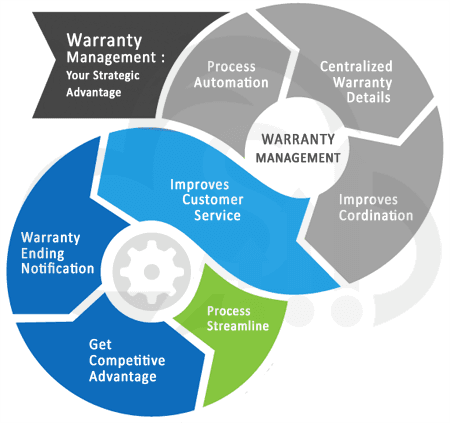\n\nInsurance applications function as a bridge between insurance companies and their customers, offering a convenient and user-friendly platform for managing policies, submitting claims, and accessing essential information. **Here's a breakdown of the core functionalities:**\n\n- **User Authentication \u0026 Onboarding:** Users can create accounts securely and link their existing insurance policies to the app.\n\n- **Policy Management:** Users can access and view detailed information about their insurance policies, including coverage details, deductibles, and expiry dates.\n\n- **Claims Processing:** The app streamlines the claims filing process, allowing users to submit claims electronically, upload supporting documents (photos, receipts), and track the claim status in real-time.\n\n- **Premium Payments:** Users can conveniently pay their insurance premiums directly through the app using secure payment gateways.\n\n- **Customer Support:** The app provides access to customer support channels like live chat, email, or phone for users to ask questions and get assistance.\n\nThese core functionalities form the foundation of any insurance application. However, the specific features can be further customized depending on the type of insurance offered.\n\n### General Features of an Insurance/Warranty Application:\n\n- **Push Notifications:** Keep users informed about policy updates, claim statuses, upcoming renewals, and promotional offers.\n- **Document Management:** Allow users to securely store and access important documents related to their policies.\n- **Geolocation Services:** Utilize location data for features like finding nearby in-network providers (health insurance) or requesting roadside assistance (car insurance).\n- **Security \u0026 Privacy:** Ensure robust security measures to protect user data and comply with relevant data privacy regulations.\n\n### Feature List for Admin Panel (Example-Based):\n\nThe admin panel empowers insurance companies to manage user accounts, policies, claims, and app functionalities. Here's how the features might differ based on the type of insurance:\n\n**1. Car Warranty:**\n- Manage driver profiles and vehicle information.\n- Process accident reports and claims.\n- Analyze driving data (if using telematics programs).\n- Offer roadside assistance dispatch services.\n\n**2. Health Insurance:**\n- Manage provider networks and access to healthcare facilities.\n- Process health insurance claims for various medical services.\n- Analyze health data trends (if integrated
10with wearable devices).\n- Provide customer support for medical billing inquiries.\n\n**3. Life Insurance:**\n- Manage beneficiary information and policy payouts.\n- Offer tools for financial planning and estate management.\n- Analyze mortality data and risk assessment.\n- Manage communication with beneficiaries in case of a claim.\n\n**4. Extended Electronics Warranty:**\n- Manage product information and coverage details for various electronics.\n- Submit and track warranty claims for repairs or replacements.\n- Schedule repair services or access troubleshooting guides (if offered).\n- Provide contact information for warranty providers and customer support.\n\nThese are just a few examples, and the specific features of the admin panel will vary depending on the insurance company's needs and the type of coverage offered.\n\nBy incorporating these functionalities, insurance applications can revolutionize the way customers interact with their policies, ultimately leading to a smoother and more efficient experience for all parties involved.\n\n### Digital Transformation, Warranty Mobile Apps, and InsurTech: Understanding the Nuances\n\n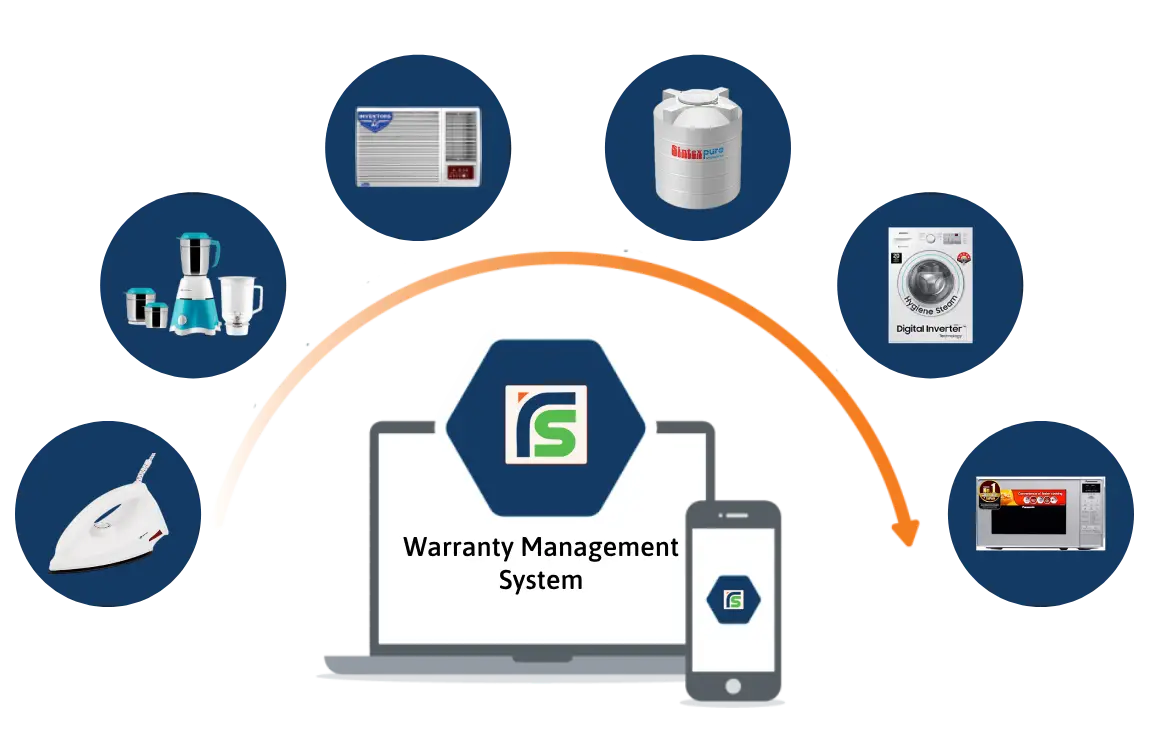\n\nThese terms are all interconnected within the insurance industry, but they represent distinct concepts:\n\n- **Digital Transformation:** This is a broad term encompassing the overall shift from traditional, analog business practices to leveraging digital technologies. In the context of insurance, this could involve everything from automating back-office processes to implementing online policy management systems. Insurance mobile apps are a key component of this digital transformation, providing a user-friendly platform for customer interaction.\n\n- **Warranty Mobile App:** This is a specific software application designed for smartphones and tablets. It allows insurance companies to connect with their customers on a mobile platform, offering features like policy management, claims filing, and premium payments. Insurance mobile apps are a product of digital transformation efforts and play a crucial role in improving customer experience and streamlining processes.\n\n- **InsurTech:** This term is a combination of \"insurance\" and \"technology.\" It refers to the entire ecosystem of companies and startups that are leveraging technology to innovate and disrupt the traditional insurance industry. InsurTech companies develop a wide range of solutions, including insurance mobile apps, data analytics tools for risk assessment, and even entirely new insurance products tailored to the digital age.\n\n### Cutting-Edge Technologies to Gain a Competitive Edge in Insurance/Warranty Technology (InsurTech)\n\nThe InsurTech landscape is brimming with innovation. While insurance mobile apps are a foundational element, companies that truly want to stand out need to explore the potential of cutting-edge technologies. Here are some key areas that can give you a competitive edge:\n\n**1. Artificial Intelligence (AI) \u0026 Machine Learning (ML):** AI and machine learning algorithms can be harnessed for a variety of purposes, including:\n\n- **Automated Underwriting:** Analyze vast amounts of data to streamline risk assessment and personalize insurance premiums for each customer.\n- **Fraud Detection:** Identify and prevent fraudulent claims with greater accuracy using AI's pattern recognition capabilities.\n- **Chatbots \u0026 Virtual Assistants:** Offer 24/7 customer support through AI-powered chatbots that can answer questions and resolve simple issues.\n\n**2. Internet of Things (IoT) \u0026 Telematics:** By integrating data from connected devices like wearables or smart home sensors, insurers can:\n\n- **Personalized Risk Assessment:** Analyze driving habits (telematics) or health data (wearables) to offer discounts to safe drivers or healthy individuals.\n- **Usage-Based Insurance (UBI):** Tailor premiums based on actual usage (e.g., pay-per-mile car insurance).\n- **Preventative Maintenance:** Use smart home sensors to detect potential risks like water leaks and offer preventative maintenance recommendations to policyholders.\n\n**3. Blockchain Technology:** This secure, distributed ledger system can revolutionize several aspects of insurance:\n\n- **Smart Contracts:** Automate claim processing and payouts, streamlining the process and reducing administrative costs.\n- **Improved Data Security:** Enhance data security and transparency within the insurance ecosystem.\n- **Fraud Prevention:**
10Utilize blockchain's immutability to create a tamper-proof record of claims history, making fraud more difficult.\n\n**4. Big Data \u0026 Data Analytics:** Leveraging vast datasets allows insurers to:\n\n- **Targeted Marketing \u0026 Customer Segmentation:** Develop personalized insurance products and marketing campaigns based on customer data and risk profiles.\n- **Predictive Analytics:** Anticipate potential risks and proactively offer preventative measures to policyholders.\n- **Improved Pricing Models:** Analyze historical data to develop more accurate and competitive insurance pricing.\n\nBy embracing these cutting-edge technologies, InsurTech companies can gain a significant competitive edge. They can offer a more personalized and efficient customer experience, reduce costs, and ultimately revolutionize the way insurance works for everyone.\n\n### What Technology Stack to Use to Build an Insurance App?\n\nChoosing the right technology stack is crucial for building a secure, scalable, and user-friendly insurance app. **Here's a breakdown of the key components to consider:**\n\n### 1. Front-End Development:\n\n**a. Programming Languages:**\n- **Native Development:** For a truly native experience on specific platforms (iOS/Android), consider using platform-specific languages like [Swift (iOS)](https://codenomad.net/hire/hire-swift-developer/) or [Kotlin (Android)](https://codenomad.net/hire/hire-kotlin-developer/). This offers optimal performance and access to all device functionalities.\n- **Cross-Platform Development:** If you want to reach a wider audience with a single codebase, frameworks like [React Native](https://codenomad.net/hire/hire-reactnative-developer/) or [Flutter](https://codenomad.net/hire/hire-flutter-developer/) can be a good choice. They allow for building apps that work seamlessly on both iOS and Android while maintaining a native feel.\n\n**b. UI Frameworks:** Libraries like React or Flutter (for cross-platform) or UIKit (iOS) and Jetpack Compose (Android) can help you build user interfaces that are visually appealing and user-friendly.\n\n### Back-End Development:\n\n**a. Programming Languages:**\n- **Scalable \u0026 Secure Languages:** Languages like [Java](https://codenomad.net/hire/hire-java-developer/), [Python](https://codenomad.net/hire/hire-python-developer/), or [Node.js](https://codenomad.net/hire/hire-node-developer/) are popular choices due to their scalability, security features, and large developer communities.\n\n**b. Back-End Frameworks:** Frameworks like Spring Boot (Java) or [Django](https://codenomad.net/hire/hire-django-developer/) (Python) can streamline back-end development by providing pre-built functionalities for common tasks like database access and API creation.\n\n**c. Databases:** Secure and reliable databases are essential for storing user data, policy information, and claims history. Popular options include SQL databases like MySQL or PostgreSQL, or NoSQL databases like MongoDB for specific needs.\n\n### Additional Considerations:\n\n- **APIs (Application Programming Interfaces):** These will allow your app to integrate with various external services, such as payment gateways, fraud detection tools, or third-party data providers.\n- **Security:** Robust security measures are paramount in the insurance industry. Implement strong encryption protocols, user authentication methods, and regular security audits to protect sensitive user data.\n- **Cloud Platforms:** Cloud platforms like Google Cloud Platform (GCP), Amazon Web Services (AWS), or Microsoft Azure offer scalable and cost-effective solutions for hosting your insurance app and managing its infrastructure.\n\n### Choosing the Right Tech Stack:\n\nThe optimal technology stack for your insurance app depends on several factors, including:\n\n- **Project Scope \u0026 Complexity:** Simple apps might require a less complex stack, while feature-rich apps may benefit from a more robust foundation.\n- **Target Platforms:** Are you building a native app for iOS or Android, or aiming for a cross-platform solution?\n- **Development Team Expertise:** Consider the skills and experience of your development team when choosing technologies.\n- **Budgetary Constraints:** The cost of development can vary depending on the chosen technologies and development approach.\n\nBy carefully considering these factors, you can select a technology stack that empowers you to build a secure, scalable, and user-friendly insurance app that meets your specific needs and drives success in the competitive InsurTech market.\n\n## The Insurance App Development Process: From Concept to Launch\n\nDeveloping a successful insurance app requires careful planning, execution, and ongoing optimization. Here's a breakdown of the key stages involved in the process:\n\n###
101. Discovery \u0026 Planning:\n\n- **Market Research \u0026 Competitive Analysis:** Start by thoroughly researching your target audience, understanding their needs and pain points. Analyze existing insurance apps to identify best practices and potential gaps in the market.\n\n- **Define App Concept \u0026 Functionality:** Clearly define the purpose and functionalities of your insurance app. What specific problems will it solve for users? What features will differentiate it from competitors?\n\n- **Develop User Personas \u0026 User Stories:** Create user personas to represent your target audience and user stories outlining their interactions with the app. This helps ensure the app caters to user needs and is intuitive to navigate.\n\n- **Project Scope \u0026 Timeline Estimation:** Define the development scope, outlining the features to be included in the initial version and potential future iterations. Create a realistic timeline and budget for the entire development process.\n\n### 2. Design \u0026 Prototyping:\n\n- **Information Architecture (IA) \u0026 User Interface (UI) Design:** Develop a user-friendly information architecture that organizes content logically and facilitates easy navigation. Design a visually appealing and intuitive user interface that prioritizes usability and a positive user experience.\n\n- **User Interface (UI) Prototyping:** Create interactive prototypes that simulate the app's functionality and user flow. This allows for user testing and feedback before investing significant resources in development.\n\n### 3. Development \u0026 Testing:\n\n- **Back-End Development:** Build the core functionalities of the app, including secure data storage, user authentication, API integrations, and any necessary server-side logic.\n\n- **Front-End Development:** Develop the user interface based on the approved designs, ensuring it functions seamlessly across chosen platforms (iOS/Android or cross-platform).\n\n- **Quality Assurance (QA) Testing:** Conduct rigorous testing throughout the development process to identify and fix bugs, ensuring the app functions as intended on all targeted devices.\n\n### 4. Launch \u0026 Deployment:\n\n- **App Store Optimization (ASO):** Optimize your app listing for relevant keywords in the App Store (iOS) or Google Play Store (Android) to improve discoverability.\n\n- **App Launch \u0026 Marketing:** Develop a comprehensive marketing strategy to reach your target audience and generate excitement for your app's launch.\n\n- **Analytics \u0026 Monitoring:** Continuously monitor app performance through analytics tools to identify areas for improvement and gather user feedback for future updates.\n\n### 5. Maintenance \u0026 Updates:\n\n- **Bug Fixes \u0026 Security Updates:** Proactively address any bugs or security vulnerabilities reported by users. Regular security updates are crucial to maintain user trust and data protection.\n\n- **New Feature Development:** Based on user feedback and market trends, consider developing new features to enhance functionality and user experience.\n\n- **App Version Updates:** Regularly release app updates that address bugs, incorporate new features, and optimize performance for the latest devices and operating systems.\n\nBy following a structured development process and prioritizing user experience, you can create a successful insurance app that empowers your business to thrive in the dynamic InsurTech landscape.\n\n## The Cost of Developing an Insurance Mobile Application\n\nThe cost of developing an insurance mobile application can vary significantly depending on several factors. **Here's a breakdown of the key elements that influence the overall budget:**\n\n- **App Complexity \u0026 Features:** Simple apps with basic functionalities like policy management and claims filing will naturally cost less compared to feature-rich apps with functionalities like AI-powered chatbots, telematics integration, or real-time claim processing.\n\n- **Development Approach**:\n\n**a. Native App Development:** Building separate native apps for iOS and Android will typically be more expensive due to the need for two development teams with platform-specific expertise.\n\n**b. Cross-Platform Development:** Utilizing frameworks like React Native or Flutter can be a cost-effective option, allowing you to build a single codebase that functions on both iOS and Android. However, this approach might have limitations in terms of accessing all native device functionalities.\n\n- **Development Team Location \u0026 Rates:** The hourly rates of developers can vary depending on their location and experience. Hiring a team in a region with lower development costs can be a budget-conscious approach, but it might be crucial to consider factors like communication and time zone differences.\n\n- **Security \u0026 Compliance:** The insurance industry has strict data security and privacy regulations. Implementing robust security measures and ensuring compliance with relevant regulations can add to the development cost.\n\n- **UI/UX Design:** A user-friendly and visually appealing design is essential for any successful app. The complexity of the design and the experience level of the design team will influence the design costs.\n\n- **Back-End Infrastru
10cture:** The cost of hosting your app's back-end infrastructure, including servers and databases, needs to be factored in. Cloud platforms like Google Cloud Platform (GCP) or Amazon Web Services (AWS) offer scalable and cost-effective solutions.\n\n## Cost Estimates:\n\nIt's difficult to provide a one-size-fits-all answer to the cost of developing an insurance app. **However, here's a general range to give you a starting point:**\n\n- **Simple App:** $30,000 - $60,000\n- **Moderately Complex App:** $70,000 - $165,000\n- **Highly Complex App:** $170,000 - $250,000+\n\n**Remember, these are just estimates. The actual cost of your app can be higher or lower depending on the factors mentioned above.**\n\n**Here are some additional tips for managing your insurance app development budget:**\n\n- **Start with a Minimum Viable Product (MVP):** Develop a core version of your app with essential features and gradually add functionalities based on user feedback and market response. This allows you to test your concept and validate your market fit before investing heavily in a full-fledged app.\n\n- **Compare Quotes from Different Development Teams:** Get quotes from several mobile app development companies to compare rates and expertise.\n\n- **Clearly Define Your Project Scope:** The clearer your vision for the app's functionalities and features, the more accurate estimations you can receive from developers.\n\nBy carefully considering these factors and planning your budget strategically, you can develop a successful **[insurance mobile application](https://codenomad.net/services/app-development/)** that meets your business goals without breaking the bank.\n\n## Conclusion\n\nIn conclusion, the insurance industry is undergoing a digital revolution fueled by the ubiquitous mobile app. By embracing **[insurance app development](https://codenomad.net/industry/warranty/)**, companies can unlock a wealth of benefits, from streamlining operations and enhancing customer experience to reaching new markets and capitalizing on the multi-billion dollar InsurTech opportunity.\n\nThis blog post has explored the key drivers behind this trend, delving into the various **types of insurance apps**, their functionalities, and the technologies that power them. We've also outlined the development process, from initial concept to launch, and provided insights into budgeting for your insurance app project.\n\nThe future of insurance lies in mobility and innovation. By harnessing the power of cutting-edge technologies like AI, big data, and blockchain, insurance companies can develop intelligent and **[personalized insurance apps](https://codenomad.net/blog/the-magic-of-personalized-insurance-app-development-at-your-fingertips/)** that redefine customer interactions and propel the industry forward. Are you ready to take your insurance business mobile? With careful planning, the right technology stack, and a focus on user experience, you can develop a successful insurance app that stands out in the InsurTech marketplace.\n\n\n\n\n\n\n","tab":null,"url":"how-insurance-app-development-can-unlock-billions","metaTitle":"How Insurance / Warranty App Development Can Unlock Billions","metaDescription":"why insurance / warranty app development is a critical step for companies looking to capitalize on the multi-billion dollar InsurTech market?","name":null,"Date":"May 08, 2024","nameDropdown":"Ankush Gumber","blogsCategory":["Warranty","Web Development","Mobile App Development"],"blogsCategorybackgroundColor":["#FFD2A9","#D4F0B3","#E4DAFB"],"blogsCategoryColor":[" #B56B28 "," #315307","#4E299E"],"video":{"data":null},"image2":{"data":{"id":552,"attributes":{"name":"Group 1171275070.svg","alternativeText":null,"caption":null,"width":54,"height":54,"formats":{},"hash":"Group_1171275070_7aaad06b17","ext":".svg","mime":"image/svg+xml","size":6.84,"url":"/uploads/Group_1171275070_7aaad06b17.svg","previewUrl":null,"provider":"local","provider_metadata":null,"createdAt":"2024-01-22T10:37:40.954Z","updatedAt":"2026-09-29T05:53:43.122Z"}}},"image":{"data":{"id":1273,"attributes":{"name":"Mobile-app-development-guide-for-the-insurance-industry-01.png","alternativeText":null,"caption":null,"width":870,"height":550,"formats":{"small":{"ext":".png","url":"/uploads/small_Mobile_app_development_guide_for_the_insurance_industry_01_2a92d6dc0c.png","hash":"small_Mobile_app_development_guide_for_the_insurance_industry_01_2a92d6dc0c","mime":"image/png","name":"small_Mobile-app-development-guide-for-the-insurance-industry-01.png","path":null,"size":50.23,"width":500,"height":316},"medium":{"ext":".png","url":"/uploads/medium_Mobile_app_development_guide_for_the_insurance_industry_01_2a92d6dc0c.png","hash":"medium_Mobile_app_development_guide_for_the_insurance_industry_01_2a92d6dc0c","mime":"image/png","name":"medium_Mobile-app-development-guide-for-the-insurance-industry-01.png","path":null,"size":87.5,"width":750,"height":474},"thumbnail":{"ext":".png","url":"/uploads/thumbnail_Mobile_app_development_guide_for_the_insurance_industry_01_2a92d6dc0c.png","hash":"thumbnail_Mobile_app_development_guide_for_the_insurance_industry_01_2a92d6dc0c","mime":"image/png","name":"thumbnail_Mobile-app-development-guide-for-the-insurance-industry-01.png","path":null,"size":20.49,"width":245,"height":155}},"hash":"Mobile_app_development_guide_for_the_insurance_industry_01_2a92d6dc0c","ext":".png","mime":"image/png","size":17.51,"url":"/uploads/Mobile_app_development_guide_for_the_insurance_industry_01_2a92d6dc0c.png","previewUrl":null,"provider":"local","provider_metadata":null,"createdAt":"2024-05-08T05:07:42.993Z","updatedAt":"2024-05-08T05:07:42.993Z"}}}},{"id":2000,"category":null,"title":"Low Code VS Traditional Development: Which is Best for You?","description":null,"background_color":null,"button":null,"accords":null,"detail_description":"The world of software development is constantly evolving, with new tools and approaches emerging all the time. Two prominent options businesses face today are low-code development and traditional development. But which one is right for your project?\n\nIn this blog post, we'll delve into the key differences between low-code and traditional development, exploring their strengths and weaknesses. We'll help you understand which approach aligns best with your specific needs and resources, empowering you to make an informed decision for your next project.\n\n## How An App is Created?\n\nSo you have a fantastic app idea! But how does that concept transform into the sleek software running on your phone? The journey from a spark of inspiration to a fully functional app is surprisingly intricate, involving a blend of creativity, technical expertise, and rigorous testing. \n\n### Traditional Development Way\n\nHere's a breakdown of the traditional development process, transforming your app idea into a reality:\n\n###
101. Figure out the Need for Your App:\n\nIt all starts with a spark â a problem you want to solve or a need you want to fulfill. Market research is crucial at this stage. By understanding your target audience and existing competitor apps, you can refine your concept and ensure it fills a genuine gap in the market. Statistics show that 50% of apps fail due to a lack of market demand. Solid market research helps you avoid this pitfall.\n\n### 2. Market Research \u0026 Competitor Analysis:\n\nDive deep into the app market related to your concept. What similar apps exist? What are their strengths and weaknesses? How can your app offer a unique value proposition and stand out from the crowd? By thoroughly analyzing the competition, you can identify opportunities for innovation and ensure your app resonates with your target audience.\n\n### 3. Pick Your Development Path:\n\nThis is where you decide on the technical approach. Will you build a native app for a specific platform (iOS or Android) or a cross-platform app that works on both? Native apps offer superior performance and access to device features, while cross-platform apps are generally faster and cheaper to develop. Weigh the pros and cons based on your app's needs and resources.\n\n### 4. Start Creating Your App:\n\nNow the development magic begins! The process unfolds in several stages:\n\n- **Design \u0026 Prototyping:** Skilled designers create mockups and wireframes to visualize the app's interface and user flow. Early user feedback helps refine the design for optimal usability.\n- **Development:** Programmers translate the designs into functional code, building the app's front-end (what users see) and back-end (the engine that powers the app).\n- **Testing \u0026 Refinement:** Rigorous testing uncovers and eliminates bugs, ensuring a smooth user experience. Real-world testing with target users provides valuable feedback for further refinement.\n\n### 5. App Monetization:\n\nWith your app launched, it's time to consider how you'll generate revenue. Several monetization models exist:\n\n- **Freemium:** Offer a basic app for free and charge for premium features.\n- **Paid Downloads:** Users pay a one-time fee to download the app.\n- **In-App Purchases:** Users can purchase additional features or content within the app.\n- **Subscription Model:** Users pay a recurring fee for ongoing access to premium features.\n\nThe best model depends on your app's functionality, target audience, and overall business strategy.\n\n## Low-Code vs. Traditional Development: Quick Overview\n\n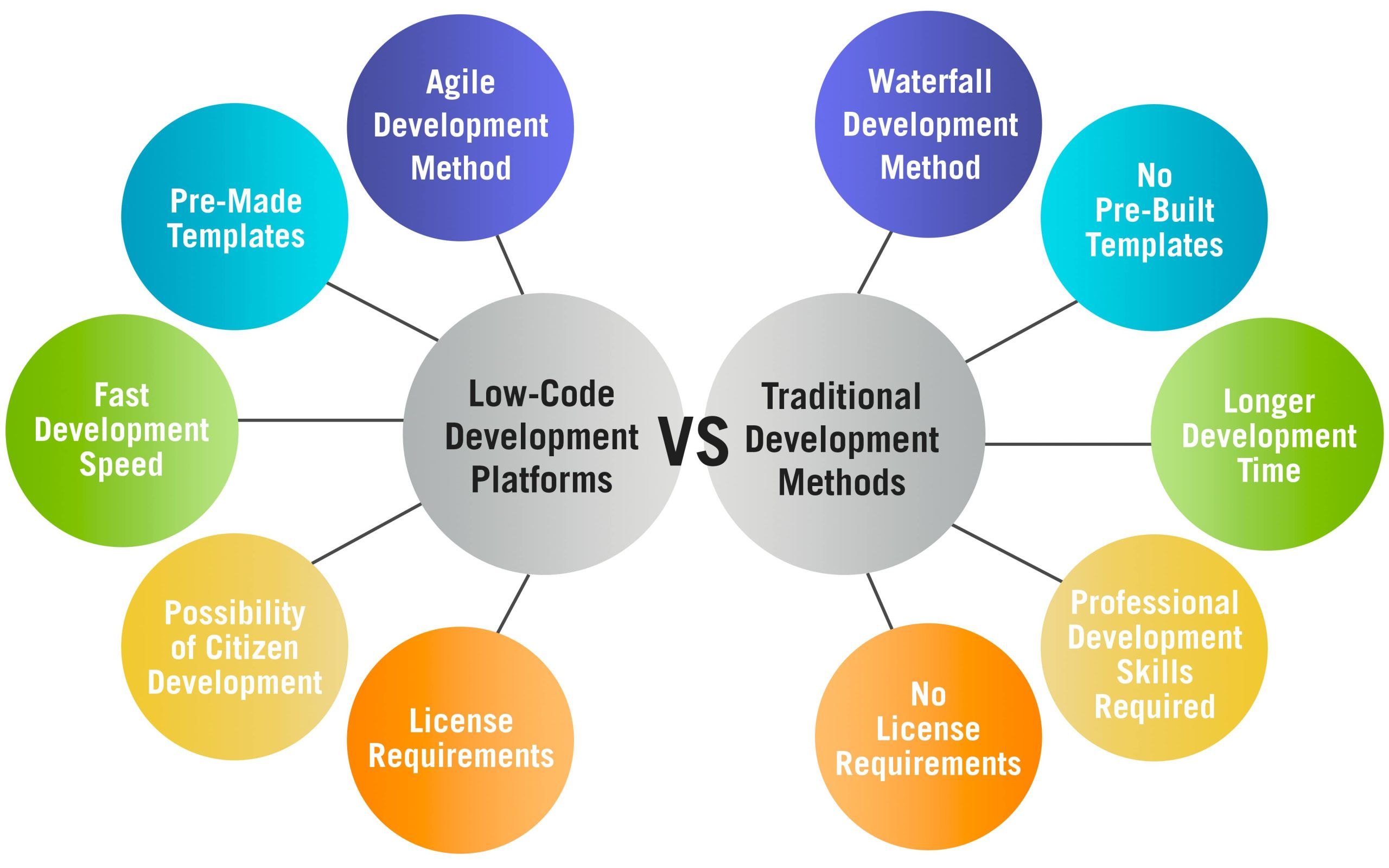\n\nNow that we've explored the traditional development process, let's compare it to another popular approach: low-code development.\n\n## Low-Code Mobile App Development\n\nLow-code development platforms offer a visual, drag-and-drop approach to building apps. This method streamlines development by providing pre-built components and functionalities, allowing users with less coding experience to create basic to moderately complex apps.\n\n**Features of Low-Code App Development**\n\n- **Visual Interface:** Low-code platforms prioritize a user-friendly interface with drag-and-drop functionality and pre-built components. This reduces reliance on extensive coding knowledge.\n- **Integration Capabilities:** Many platforms offer built-in integration features for connecting your app to external data sources and services.\n- **Scalability:** Low-code platforms often offer built-in scalability features, allowing your app to adapt to growing user bases. However, complex scalability needs might require additional development effort.\n- **Security \u0026 Compliance:** Security features vary depending on the platform. It's crucial to choose a platform that prioritizes security and offers features that comply with relevant regulations for your target market.\n- **Automated Testing:** Some low-code platforms offer automated testing tools to streamline the process of identifying and fixing bugs.\n- **Cross-Platform Deployment:** Certain platforms allow for deploying your app across multiple platforms (iOS, Android) with minimal additional effort.\n\n### Traditional Development or Customized S
10olutions\n\nWhile low-code offers a faster and more accessible approach, traditional development remains the go-to choice for complex apps requiring a high degree of customization.\n\n**Features of Traditional Development**\n\n**Key features of traditional development include:**\n\n- **In-Depth Coding:** Developers have complete control over the codebase, allowing for maximum customization and optimization.\n- **Flexibility:** Traditional development offers unmatched flexibility to build apps with unique functionalities and features that cater to specific needs.\n- **Custom Data Structures:** Developers can create custom data structures to manage complex data models not readily available in low-code platforms.\n- **Resource Intensive:** Traditional development typically requires a team of skilled developers, testers, and designers, making it a more resource-intensive approach.\n- **Full Control and Customization:** Developers have complete control over every aspect of the app, ensuring it aligns perfectly with your vision and specific requirements.\n- **Expertise Requirement:** Traditional development necessitates a team with strong programming skills and experience in building mobile applications.\n\n### Choosing the Right Path\n\nThe best development approach depends on your specific needs and resources. **Here's a quick comparison to help you decide:**\n\n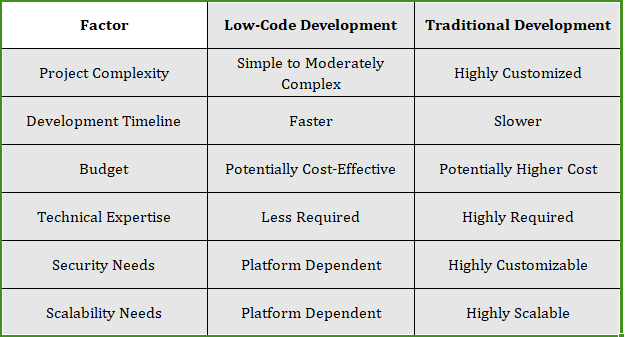\n### Low-Code vs. Traditional Development: Deep Comparison\n\nNow that you have a grasp of both development approaches, let's delve deeper and compare them across key factors to help you choose the optimal path for your next app project.\n\n### 1. Coding Experience:\n\n- **Low-Code:** Requires minimal to moderate coding knowledge. Low-code platforms prioritize visual interfaces with pre-built components, allowing citizen developers with limited coding experience to contribute to the development process.\n- **Traditional:** Requires strong coding skills. Developers need expertise in programming languages specific to the target platform (iOS, Android) to build and customize the app.\n\n### 2. Defining System Requirements:\n\n- **Low-Code:** May have limitations in defining intricate system requirements. While low-code platforms offer flexibility, complex functionalities might require additional coding beyond the platform's capabilities.\n- **Traditional:** Offers complete control over defining system requirements. Developers can tailor the app's architecture to meet even the most specific needs.\n\n### 3. Speed of Development:\n- **Low-Code:** Generally faster development process. Drag-and-drop functionality and pre-built components significantly reduce development time compared to traditional coding.\n- **Traditional:** Slower development process. Building an app from scratch with custom code takes more time and resources.\n\n### 4. Accessibility:\n\n- **Low-Code:** More accessible to a wider range of users. The visual interface and reduced reliance on coding make it easier for citizen developers to participate in app creation.\n- **Traditional:** Requires a team of skilled developers. The technical expertise needed for traditional development limits accessibility.\n\n### 5. Deployment:\n- **Low-Code:** Deployment process can be streamlined depending on the platform. Some platforms offer one-click deployment to app stores.\n- **Traditional:** Deployment process can be more complex. Depending on the platform and app complexity, additional steps might be involved for deployment.\n\n### 6. Agility:\n- **Low-Code:** Promotes agile development. The ability to quickly iterate and make changes within the platform facilitates a more agile development process.\n- **Traditional:** Agility can be hampered by coding requirements. Changes in traditional development often involve modifying code, which can be time-consuming.\n\n### 7. Integration:\n- **Low-Code:** May have limitations in integration capabilities. While some platforms offer built-in integrations, complex integrations might require additional development effort.\n- **Traditional:** Offers greater flexibility for integration. Developers have more control over integrating with external data sources and services.\n\n### 8. Level of Customization:\n- **Low-Code:** Limited customization options. Pre-built components and functionalities restrict the level of customization achievable.\n- **Traditional:** Extensive customization possibilities. Developers have complete control over the codebase, enabling them to tailor the app to meet specific needs and branding requirements.\n\n### 9. Flexibility:\n\n- **Low-Code:** Less flexible for unique functionalities. Low-code platforms are designed for building apps within a defined framework, limiting flexibility for highly customized features.\n- **Traditional:** Highly flexible for unique functionalities. Traditional development allows developers to build apps with features and functionalities that cater to specific industry needs or user requirements.\n\n### 10. Security:\n\n- **Low-Code:** Security features vary depending on the platform. It's crucial to choose a low-code platform with robust security features and ensure they comply with relevant data security regulations.\n- **Traditional:** Offers greater control over security. Developers can implement custom security measures and encryption protocols to meet specific security requirements.\n\n### 11. Support \u0026 Maintenance:\n\n- **Low-Code:** Support typically provided by the platform vendor. Low-code platforms often offer built-in supp
10ort resources and communities for troubleshooting and maintenance.\n- **Traditional:** Requires in-house expertise or ongoing support contracts. Maintaining a traditionally developed app may necessitate hiring additional developers or relying on external support contracts.\n\n### 12. Scalability:\n\n- **Low-Code:** Scalability features vary depending on the platform. Some platforms offer built-in scalability features, but complex scaling needs might require additional development work.\n- **Traditional:** Highly scalable. Developers can architect the app to handle growing user bases and data volumes with more control.\n\n## Low-Code vs. Traditional Development: Pros and Cons\n\nChoosing the right development approach for your app can make all the difference in its success. Here's a breakdown of the pros and cons of low-code and traditional development to help you navigate this crucial decision.\n\n### Low-Code Development: A Faster, More Accessible Approach\n\n**Pros:**\n\n- **Speed to Market:** Low-code platforms leverage pre-built components and drag-and-drop functionality, significantly accelerating development compared to traditional coding. This allows you to get your app in users' hands quicker, capitalize on fleeting trends, and stay ahead of the competition.\n\n- **Ease of Use:** Low-code platforms prioritize a user-friendly experience with visual interfaces and minimal coding requirements. This opens the door to citizen developers â those within your organization with business expertise but limited coding knowledge â to contribute to the app creation process.\n\n- **Potentially Lower Costs:** While platform licensing fees exist, the faster development speed and reduced reliance on a large development team can translate to lower overall development costs. This makes low-code a good option for startups or businesses with limited budgets.\n\n- **Citizen Developer Participation:** Low-code platforms empower citizen developers to contribute valuable insights and domain expertise to the app creation process. This can streamline development and ensure the app caters to the specific needs of your target audience.\n\n**Cons:**\n\n- **Limited Customization:** Low-code platforms rely on pre-built components and functionalities, which can restrict the level of customization achievable. If your app requires a highly unique user interface or complex features, low-code might not be the best fit.\n\n- **Less Flexibility for Unique Needs:** These platforms are designed for building apps within a defined framework. If your app caters to a very specific industry or has highly specialized functionalities, traditional development might offer greater flexibility to tailor the app to those needs.\n\n- **Reliance on Platform Capabilities:** You're ultimately limited by the features and functionalities offered by the chosen low-code platform. Ensure the platform you select has the capabilities to meet your app's current and future needs.\n\n- **Security Concerns (depending on platform):** Security features can vary greatly between low-code platforms. It's crucial to choose a platform with a strong track record of security and ensure it adheres to relevant data security regulations for your target market.\n\n### Traditional Development: Tailored Solutions and Complete Control\n\n**Pros:**\n\n- **Highly Customizable:** Traditional development offers complete control over the codebase. This allows developers to tailor the app's architecture, user interface, and features to meet your specific needs, branding requirements, and create a truly unique user experience.\n\n- **Complete Control Over Functionality:** You have full control over the features and functionalities of your app. This is ideal for complex apps requiring features not readily available in low-code platforms or those that need to seamlessly integrate with existing enterprise systems.\n\n- **Highly Scalable:** Traditional development allows developers to design the app's architecture to handle massive user bases and data volumes. This is crucial for apps anticipating significant growth or those that manage large amounts of data.\n\n- **Robust Security (with proper development practices):** Traditional development allows for implementing custom security measures and encryption protocols to meet the most stringent security requirements. This is essential for apps handling sensitive data or operating in highly regulated industries.\n\n**Cons:**\n\n- **Slower Development:** Building an app from scratch with custom code takes more time and resources compared to using pre-built components in a low-code platform. This can delay your time to market and impact your ability to capitalize on emerging trends.\n\n- **Requires Coding Expertise:** Traditional development necessitates a team of skilled developers with experience in programming languages specific to the target platform (iOS, Android). This can be a challenge for businesses with limited in-house development resources and may necessitate hiring additional developers.\n\n- **Higher Development Costs (Potentially):** The need for a skilled development team and the longer development timeframe can translate to higher overall development costs. This can be a barrier for startups or businesses with limited budgets.\n\n- **Less Accessible:** The technical expertise required limits accessibility compared to low-code platforms. Citizen developers with limited coding experience cannot readily participate in the development process using traditional methods.\n\n### Choosing the Right Path\nThe optimal development approach depen
10ds on the specific needs and resources of your project. **Here are some key factors to consider:**\n- **Project Complexity:** For simpler apps with basic functionalities, low-code might be sufficient. Complex apps with unique features or extensive customization needs might require traditional development.\n- **Development Timeline:** If a fast time-to-market is crucial, low-code's faster development speed might be advantageous. Traditional development is better suited for projects with flexible timelines.\n- **Budget:** Low-code development can be cost-effective, especially for smaller projects.\n\n## Low-Code vs. Traditional Development: Targeting the Right Use Case\n\nChoosing between low-code and traditional development hinges on the specific needs of your project. Here's a breakdown of ideal use cases for each approach:\n\n**Low-Code Development: Streamlining App Creation**\n\n- **Rapid Prototyping:** Need to validate your app concept quickly? Low-code's visual tools and pre-built components allow for rapid development of functional prototypes to gather user feedback and iterate efficiently.\n- **Simple to Moderately Complex Apps:** Building apps with basic functionalities like data collection, reporting, or internal workflows can be accomplished efficiently using low-code platforms.\n- **Citizen Developer Involvement:** Empower business users with domain expertise but limited coding experience to contribute to the development process.\n- **Limited Development Resources:** For projects with smaller budgets or limited in-house development resources, low-code's faster development speed and potentially smaller teams can be cost-effective.\n\n**Examples:**\n- **Internal CRM System:** A sales team can build a simple customer relationship management (CRM) system to track leads and manage customer interactions.\n- **Data Collection App:** A research team can create an app to collect survey data from participants in the field.\n- **Employee Onboarding App:** A human resources department can develop an app to streamline the onboarding process for new employees.\n- **Content Management System:** A marketing team can use a low-code platform to build a content management system for a company blog or website.\n\n### Traditional Development: When Customization Reigns Supreme\n\nWhile low-code offers advantages in speed and accessibility, traditional development remains the go-to choice for specific situations:\n\n- **Highly Customized Apps:** Envision an app with a unique user interface, complex features, or intricate integrations with existing systems. Traditional development offers complete control over the codebase to tailor the app to your exact specifications.\n- **Highly Scalable Apps:** When anticipating massive user bases or handling large data volumes, traditional development allows for designing an app architecture that scales effectively to meet future demands.\n- **Security-Critical Applications:** For apps handling sensitive data or operating in highly regulated industries, traditional development provides the flexibility to implement robust security measures and encryption protocols.\n- **Performance-Critical Applications:** If low latency and peak performance are paramount, traditional development allows for fine-tuning the code for optimal speed and efficiency.\n\n**Examples:**\n\n- **FinTech App:** A financial services company might require a custom-built trading platform with complex algorithms and robust security features.\n- **Social Networking App:** For a large-scale social networking platform, traditional development is necessary to handle massive user bases and ensure scalability.\n- **IoT (Internet of Things) App:** An app controlling a network of connected devices might require intricate communication protocols and real-time data processing, best achieved through traditional development.\n- **High-Frequency Trading Platform:** For a trading platform requiring lightning-fast execution and minimal latency, traditional development offers the most control over code optimization.\n\n## Low code vs Traditional Development: Essential Checklist While Choosing the Right Approach\n\nSelecting the right development approach for your app is crucial for success. This checklist will guide you through key factors to consider when deciding between low-code and traditional development:\n\n### Project Complexity:\n\n- **Low-Code:** Ideal for simple to moderately complex apps with basic functionalities like data collection, reporting, or internal workflows.\n- **Traditional:** Best suited for highly customized apps with unique UIs, complex features, or intricate integrations with existing systems.\
10n\n### Development Timeline:\n- **Low-Code:** Offers faster development speed due to pre-built components and visual tools, allowing for quicker time-to-market.\n- **Traditional:** Development takes longer due to custom code writing, potentially delaying your launch date.\n\n### Budget:\n- **Low-Code:** Can be a cost-effective solution, especially for smaller projects, with potentially smaller development teams and faster development cycles.\n- **Traditional:** May require a larger budget due to the need for a skilled development team and longer development timeframe.\n\n### Technical Expertise:\n- **Low-Code:** Requires less coding experience, allowing citizen developers with domain expertise to contribute to the process.\n- **Traditional:** Necessitates a team of skilled developers with experience in specific programming languages for the target platform.\n\n### Security Needs:\n\n- **Low-Code:** Security features can vary between platforms. Choose one with a strong track record and ensure it adheres to relevant data security regulations.\n- **Traditional:** Offers greater flexibility for implementing custom security measures and encryption protocols to meet stringent requirements.\n\n### Scalability Needs:\n\n- **Low-Code:** Scalability features may vary. Evaluate the platform's capabilities to handle potential future growth.\n- **Traditional:** Allows for designing app architecture to scale effectively to accommodate massive user bases and data volumes.\n\nHere's a handy table to summarize the key considerations:\n\n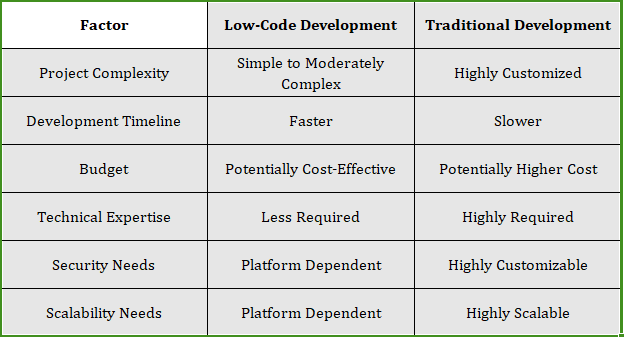\n\n## Low-Code vs. Traditional Development: The Final Verdict\n\nThe battle between low-code and traditional development isn't a zero-sum game. Both approaches have their strengths and weaknesses. As a business owner, the key to success lies in choosing the right tool for the job.\n\n### Codename: Flexibility\n\nThe ideal development approach depends on your project's specific needs. **Here's a cheat sheet to empower you:**\n- **Need a simple app quickly and cost-effectively?** Low-code, with its drag-and-drop functionality and pre-built components, is your champion.\n- **Envisioning a highly customized app with unique features or complex integrations?** Traditional development offers the flexibility and control to tailor the app to your exact specifications.\n\n**The Low-Code Advantage: Citizen Developers Take the Field**\n\nLow-code platforms democratize [**app development**](https://codenomad.net/services/app-development/) by allowing citizen developers â those within your organization with business expertise but limited coding knowledge â to contribute to the process. This can be a game-changer for businesses with limited development resources or those seeking to bridge the gap between business needs and technical execution.\n\n**Traditional Development: The Power of Customization**\n\nHowever, traditional development remains the go-to choice for situations demanding the utmost control and customization. When security, scalability, or peak performance are paramount, traditional development empowers developers to craft solutions that perfectly align with your vision.\n\n**The Final Word: Choose Wisely**\n\nBy carefully considering the factors outlined in this guide, you can make an informed decision between low-code and traditional development. Remember, there's no single \"best\" approach. The ideal path hinges on your project's complexity, budget, timeline, and the level of customization required.\n\nSo, business owners, don't be limited by technical jargon. Use this knowledge to confidently navigate the [**app development**](https://codenomad.net/services/app-development/) landscape and choose the approach that propels your business goals forward!","tab":null,"url":"low-code-vs-traditional-development","metaTitle":"Low Code VS Traditional Development: Which is Best for You?","metaDescription":"In this blog post, we'll delve into the key differences between low-code and traditional development, exploring their strengths and weaknesses.","name":null,"Date":"May 03, 2024","nameDropdown":"Sudheer Thakur","blogsCategory":["Mobile App Development"],"blogsCategorybackgroundColor":["#E4DAFB"],"blogsCategoryColor":["#4E299E"],"video":{"data":null},"image2":{"data":{"id":541,"attributes":{"name":"sudheersir.png","alternativeText":null,"caption":null,"width":54,"height":54,"formats":null,"hash":"sudheersir_ca43c5d723","ext":".png","mime":"image/png","size":1.55,"url":"/uploads/sud
10heersir_ca43c5d723.png","previewUrl":null,"provider":"local","provider_metadata":null,"createdAt":"2024-01-22T05:54:00.510Z","updatedAt":"2024-01-22T05:54:00.510Z"}}},"image":{"data":{"id":1269,"attributes":{"name":"Low-Code-Software-Development-vs-Traditional-Software-Development-silo.jpg","alternativeText":null,"caption":null,"width":760,"height":440,"formats":{"small":{"ext":".jpg","url":"/uploads/small_Low_Code_Software_Development_vs_Traditional_Software_Development_silo_b9270c554e.jpg","hash":"small_Low_Code_Software_Development_vs_Traditional_Software_Development_silo_b9270c554e","mime":"image/jpeg","name":"small_Low-Code-Software-Development-vs-Traditional-Software-Development-silo.jpg","path":null,"size":29.8,"width":500,"height":289},"medium":{"ext":".jpg","url":"/uploads/medium_Low_Code_Software_Development_vs_Traditional_Software_Development_silo_b9270c554e.jpg","hash":"medium_Low_Code_Software_Development_vs_Traditional_Software_Development_silo_b9270c554e","mime":"image/jpeg","name":"medium_Low-Code-Software-Development-vs-Traditional-Software-Development-silo.jpg","path":null,"size":55.92,"width":750,"height":434},"thumbnail":{"ext":".jpg","url":"/uploads/thumbnail_Low_Code_Software_Development_vs_Traditional_Software_Development_silo_b9270c554e.jpg","hash":"thumbnail_Low_Code_Software_Development_vs_Traditional_Software_Development_silo_b9270c554e","mime":"image/jpeg","name":"thumbnail_Low-Code-Software-Development-vs-Traditional-Software-Development-silo.jpg","path":null,"size":9.54,"width":245,"height":142}},"hash":"Low_Code_Software_Development_vs_Traditional_Software_Development_silo_b9270c554e","ext":".jpg","mime":"image/jpeg","size":57.38,"url":"/uploads/Low_Code_Software_Development_vs_Traditional_Software_Development_silo_b9270c554e.jpg","previewUrl":null,"provider":"local","provider_metadata":null,"createdAt":"2024-05-03T10:18:33.536Z","updatedAt":"2024-05-03T10:18:33.536Z"}}}},{"id":1999,"category":null,"title":"Shopify GA4 Integration: Essential Setup \u0026 Troubleshooting Guide","description":null,"background_color":null,"button":null,"accords":null,"detail_description":"Running a successful Shopify store hinges on understanding your customers. But in today's dynamic e-commerce landscape, traditional website analytics just don't cut it anymore. This is where **Google Analytics 4 (GA4)** comes in, a game-changer for **Shopify businesses**.\n\nGA4 empowers you to see the bigger picture - how customers interact with your store across devices and platforms. It goes beyond website visits to track the entire customer journey, from initial touchpoint to that all-important conversion. Imagine predicting customer behavior, [**optimizing marketing campaigns**](https://codenomad.net/services/digital-marketing/) with laser precision, and future-proofing your data with a platform that learns and evolves alongside your business.\n\nThis comprehensive guide will equip you with the knowledge to seamlessly integrate GA4 into your Shopify store. We'll walk you through the essential setup steps, troubleshoot common hurdles, and unlock the full potential of **GA4 for your e-commerce** success. So, buckle up and get ready to harness the power of data-driven insights for your Shopify store!\n\n\n\n## Why Use a Google Analytics 4 Shopify Integration?\n\nWhile traditional analytics offered a glimpse into website traffic, GA4 for Shopify provides a panoramic view of your customer journey. Here are the top three ways GA4 can revolutionize your understanding of your audience and propel your business forward:\n\n### 1. Advanced User Tracking:\n\n- **Cross-Platform Insights:** GA4 shatters data silos. It tracks user behavior seamlessly across devices, desktops, and mobile apps. You'll see the complete customer journey, from browsing on their phone to completing a purchase on their laptop. This holistic view empowers you to personalize the shopping experience and optimize marketing campaigns across all channels.\n\n- **Enhanced Customer Behavior Analysis:** Go beyond basic website metrics. GA4 dives deeper, capturing user interactions like product views, add-to-carts, and checkout behavior. This granular data unveils valuable patterns and trends in customer behavior, allowing you to identify areas for improvement and optimize your sales funnel.\n\n### 2. Predictive Analytics:\n\n- **Forecasting Customer Needs:** GA4 utilizes machine learning to predict future customer actions. Imagine identifying customers most likely to convert or anticipating potential churn. This foresight allows you to proactively engage with high-value customers, personalized product recommendations, and tailor marketing efforts for maximum impact.\n\n### 3. Future-Proofing:\n\n- **Evolving with Customer Behavior:** GA4 is built for the ever-changing digital landscape. Unlike its predecessor, it's not reliant on cookies, which are becoming increasingly unreliable. GA4 prioritizes user privacy while still providing the robust data you need to make informed decisions.\n\n- **Investment for the Long Haul:** With GA4, you're investing in a future-proof analytics solution. It adapts and evolves alongside your business, ensuring you have the tools to stay ahead of the curve in the ever-evolving world of e-commerce.\n\n## How to Add Google Analytics 4 to Shopify\n\nNow that you've grasped the power of GA4, let's get it up and running on your Shopify store! **Here's a step-by-step guide to navigate the seamless integration process:**\n\n###
101. Accessing Google Analytics:\n\nIf you haven't already, head over to [https://analytics.google.com/analytics/academy/course/6](https://analytics.google.com/analytics/academy/course/6) and create a free Google Analytics account. This will be your central hub for tracking and analyzing all your website data.\n\n### 2. Shopify GA4 Setup for Properties:\n\nWithin your Google Analytics account, you'll need to create a property specifically for your Shopify store. Think of a property as a container that holds all your website's data. Here's how to set it up:\n\n- Navigate to the Admin section of your Google Analytics account.\n- Click on \"Account\" and then select \"All properties.\"\n- Click the \"+\" button to create a new property.\n- Choose \"E-commerce\" as your industry category (this unlocks powerful e-commerce specific features).\n- Give your property a clear and recognizable name (e.g., \"YourShopifyStore GA4\").\n- Review and accept the Google Analytics Terms of Service and click \"Create.\"\n\n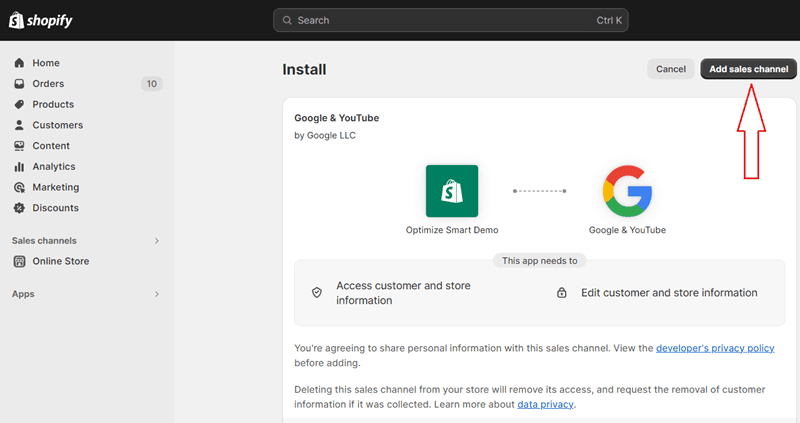\n\n### 3. Install GA4 on Shopify:\n\nThere are two main ways to integrate GA4 with your Shopify store:\n\n**Using the Google \u0026 YouTube App (Recommended):** This is the easiest and most user-friendly method. **Here's how:**\n\n- In your Shopify admin panel, navigate to \"Online Store\" and then \"Preferences.\"\n- Scroll down to the \"Google Analytics\" section.\n- Click \"Manage pixel here.\" If the Google \u0026 YouTube app isn't already installed, you'll be prompted to add it. Grant the necessary permissions and follow the on-screen instructions to connect.\n- Select the GA4 property you created in step 2 and click \"Connect.\"\n\n**Manual Installation:** If you prefer more technical control, you can manually add the GA4 tracking code to your Shopify theme. We'll cover this method in a later section for those comfortable with code editing.\n\n**We recommend you to [hire shopify developer](https://codenomad.net/hire/hire-shopify-developer/), so that you can track all events without any errors.**\n\n### 4. Testing and Verification:\n\nOnce you've completed the integration, it's crucial to verify that GA4 is tracking data correctly. **Here's how:**\n\n- Visit your Shopify store from a new browser window (to avoid any existing cookies interfering).\n- Browse through your products, add something to your cart, and initiate the checkout process (without completing the purchase).\n- Go back to your Google Analytics account and navigate to the Real-time reports section. You should see your test activity reflected within a few minutes.\n\n## The Power of Google Analytics 4 Shopify\n\nThe power of GA4 for your Shopify store is undeniable. It unlocks a treasure trove of customer insights, allowing you to craft personalized marketing campaigns, optimize your sales funnel, measure marketing impact, and gain a competitive edge. With GA4, data-driven decisions become the cornerstone of your e-commerce growth strategy, propelling your Shopify store towards long-term success. Now, let's tackle some common troubleshooting steps and explore advanced GA4 settings to help you fully harness this powerful analytics platform.\n\n## Troubleshooting: Tips and Common Issues\n\nEven the smoothest integrations can encounter occasional hiccups. Here, we'll address some common challenges you might face with GA4 on your Shopify store:\n\n**1. Data Discrepancies:** You may notice discrepancies between GA4 data and other analytics platforms. This could be due to factors like different data collection methods or attribution models. Here's what to do:\n\n- **Double-check your setup:** Ensure your GA4 property is correctly linked to your Shopify store.\n- **Review data filters:** Verify that no filters are unintentionally skewing your data.\n- **Understand data processing delays:** Real-time data may have a slight delay. Allow some time for discrepancies to resolve.\n\n**2. Transaction Tracking Issues:** If your transactions aren't registering correctly, there could be a problem with the data sent from Shopify to GA4. Here's how to troubleshoot:\n\n- **Review your GA4 settings:** Confirm that Enhanced Ecommerce tracking is enabled for your GA4 property.\n- **Check for errors in your Shopify theme code:** If you manually installed the GA4 tracking code, ensure there are no typos or errors in the implementation.\n\n**3. Missing Events:** Not seeing all the events you expect? This could indicate a problem with event tracking configuration. Here's what to investigate:\n\n- **Verify event triggers:** Make sure your events are set up to trigger correctly based on user actions.\n- **Test your events:** Use Google Tag Manager's preview mode to test your event tracking and identify any issues.\n\n## Data Management: Best Practices\n\nData management is key to maximizing the value of GA4. Here, we'll explore best practices like setting data retention periods, defining internal traffic filters, and leveraging custom events to capture the specific actions most relevant to your business. This ensures your data stays clean, organized, and tells the story you need to make informed decisions and optimize your Shopify store for long-term success.\n\n## Compliance and Privacy\n\nWith the growing focus on data privacy, it's crucial to ensure your GA4 implementation complies with all relevant regulations. Here's what you need to consider:\n\n- **General Data Protection Regulation (GDPR):** If your target audience includes residents of the European Economic Area (EEA), you must comply with GDPR regulations. This includes obtaining user consent for data collection and ensuring user data is processed securely.\n\n- **California Consumer Privacy Act (CCPA):** Similar to GDPR, CCPA applies to businesses that collect data from California residents. It grants users the right to access, delete, and opt-out of the sale of their personal information.\n\nBy familiarizing yourself with these regulations and implementing appropriate data governance practices, you can ensure your GA4 usage is compliant and builds trust with your customers.\n\n## Uncover the Top Shopify Apps\n\nWhile GA4 is a powerful tool, it can be further enhanced with the help of complementary Shopify apps. **Here are a few popular options to consider:**\n- **Hotjar:** Gain a deeper understanding of user behavior through heatmaps, recordings, and surveys.\n- **Klaviyo:** Leverage customer data to create personalized email marketing campaigns and drive sales.\n- **LoyaltyLion:** Implement a loyalty program to reward repeat customers and boost customer lifetime value.\n- **Customizable Product Badges:** Showcase product promotions, discounts, and new arrivals to grab customer attention.\n\nBy
10integrating these apps with GA4, you can create a robust analytics ecosystem that provides a holistic view of your customer journey and empowers you to make data-driven decisions for long-term success.\n\nI hope this comprehensive guide has equipped you with the knowledge to confidently **integrate GA4 into your Shopify store**, troubleshoot common hurdles, and unlock the full potential of this next-generation analytics platform. Remember, data is the lifeblood of e-commerce success. By harnessing the power of GA4, you'll gain the insights you need to **optimize your store**, personalize the customer experience, and propel your business towards long-term growth.\n","tab":null,"url":"shopify-ga4-integration","metaTitle":"Shopify GA4 Integration: Essential Setup \u0026 Troubleshooting Guide ","metaDescription":"Running a successful Shopify store hinges on understanding your customers. Ecommerce landscape, traditional website analytics just don't cut it anymore.","name":null,"Date":"May 01, 2024","nameDropdown":"Sumit Kohal","blogsCategory":["E-Commerce","Digital Marketing","Shopify"],"blogsCategorybackgroundColor":["#D9E8FF","#FFEFCA","#63FF7C"],"blogsCategoryColor":["#223C81","#7B3400","#02570F"],"video":{"data":null},"image2":{"data":{"id":540,"attributes":{"name":"sumitsir.png","alternativeText":null,"caption":null,"width":54,"height":54,"formats":null,"hash":"sumitsir_fe8ecd5742","ext":".png","mime":"image/png","size":1.81,"url":"/uploads/sumitsir_fe8ecd5742.png","previewUrl":null,"provider":"local","provider_metadata":null,"createdAt":"2024-01-22T05:52:00.402Z","updatedAt":"2024-01-30T09:44:07.697Z"}}},"image":{"data":{"id":1268,"attributes":{"name":"1647998260293.jpeg","alternativeText":null,"caption":null,"width":1226,"height":670,"formats":{"large":{"ext":".jpeg","url":"/uploads/large_1647998260293_7945700170.jpeg","hash":"large_1647998260293_7945700170","mime":"image/jpeg","name":"large_1647998260293.jpeg","path":null,"size":60.56,"width":1000,"height":546},"small":{"ext":".jpeg","url":"/uploads/small_1647998260293_7945700170.jpeg","hash":"small_1647998260293_7945700170","mime":"image/jpeg","name":"small_1647998260293.jpeg","path":null,"size":21.01,"width":500,"height":273},"medium":{"ext":".jpeg","url":"/uploads/medium_1647998260293_7945700170.jpeg","hash":"medium_1647998260293_7945700170","mime":"image/jpeg","name":"medium_1647998260293.jpeg","path":null,"size":38.91,"width":750,"height":410},"thumbnail":{"ext":".jpeg","url":"/uploads/thumbnail_1647998260293_7945700170.jpeg","hash":"thumbnail_1647998260293_7945700170","mime":"image/jpeg","name":"thumbnail_1647998260293.jpeg","path":null,"size":6.54,"width":245,"height":134}},"hash":"1647998260293_7945700170","ext":".jpeg","mime":"image/jpeg","size":80.76,"url":"/uploads/1647998260293_7945700170.jpeg","previewUrl":null,"provider":"local","provider_metadata":null,"createdAt":"2024-05-01T07:11:23.526Z","updatedAt":"2024-05-01T07:11:23.526Z"}}}},{"id":1965,"category":null,"title":"Introducing Angular Version 17: Enhanced Features and Performance Unleash the Power of Your Web Applications","description":null,"background_color":null,"button":null,"accords":null,"detail_description":"Angular 17, released in late 2022, marked a pivotal moment in the framework's evolution. This update wasn't just about adding new features; it was a deliberate step towards a faster, more developer-friendly, and future-proof Angular experience. Whether you're a seasoned **[Angular developer](https://codenomad.net/hire/hire-angular-developer/)** or just starting your journey, understanding the core improvements in Angular 17 is crucial for building exceptional web applications.\n\n## Performance on Steroids: Deferrable Views and Beyond\n\nOne of the most significant advancements in Angular 17 is the introduction of deferrable views. This innovative concept empowers developers to prioritize the loading and rendering of critical UI elements. Imagine a complex application with numerous sections â news feeds, sidebars, and comment sections. Traditionally, everything loads at once, potentially leading to a sluggish initial experience. With deferrable views, you can mark specific sections (like comment sections) as deferrable. These sections won't be rendered until the user interacts with them, resulting in a noticeably faster initial load time. This translates to a smoother user experience, improved [SEO](https://codenomad.net/services/digital-marketing/) (perceived loading speed), and potentially reduced bounce rates.\n\n**Let's see how deferrable views work in action:**\n\nTypeScript\n\nimport { Component } from '@angular/core';\n\n@Component({\n\n selector: 'app-my-component',\n \ntemplate: `\n\n template: `\n \n \u003cdiv\u003eCritical Content (Loads Immediately)\u003c/div\u003e\n \n \u003cbutton (click)=\"showDeferrableView()\"\u003eShow Comments (
10Deferrable)\u003c/button\u003e\n \n \u003cdiv *ngIf=\"showComments\"\u003e\n \n Deferrable Comments Section (Loads on Button Click)\n \n \u003c/div\u003e\n \n `,\n \n})\n\nexport class MyComponent {\n\n showComments = false;\n \n\n showDeferrableView() {\n \n this.showComments = true;\n \n }\n \n}\n\n\n**Use code with caution.**\n\nIn this example, the \"Critical Content\" will be displayed immediately, while the \"Deferrable Comments Section\" will only be rendered when the user clicks the button. This prioritizes the core content and enhances the initial load experience.\nBut the performance improvements in Angular 17 extend beyond deferrable views. The framework utilizes optimizations in the compilation process, leading to significantly faster build times. This translates to a more efficient development workflow, allowing you to iterate faster and deliver applications quicker.\n\n## Developer Experience Redefined: Streamlined Workflows and Modern Features\n\nAngular 17 isn't just about raw performance; it also focuses on making developers' lives easier. The introduction of custom element integration is a prime example. This functionality allows you to seamlessly integrate existing web components or custom functionalities developed outside the Angular ecosystem. This promotes code reusability, fosters a more modular development approach, and empowers you to leverage the vast landscape of web development tools and libraries.\n\n**Here's a code snippet demonstrating custom element integration:**\n\nTypeScript\n\nimport { Component, ViewChild, ElementRef } from '@angular/core';\n\n\n@Component({\n\n selector: 'app-custom-element',\n \n template: `\n \n \u003cmy-custom-element #customElement\u003e\n \u003c/my-custom-element\u003e\n \n `,\n \n})\n\nexport class MyComponent {\n\n @ViewChild('customElement', { static: true }) customElementRef: ElementRef;\n \n\n callCustomMethod() {\n \n this.customElementRef.nativeElement.myCustomMethod();\n \n }\n \n}\n\n**Use code with caution.**\n\nThis code showcases a **my-custom-element** that can be interacted with using the **customElementRef**. You can leverage this approach to integrate functionalities like charting libraries, video players, or any custom web component developed using vanilla JavaScript or other frameworks.\nFurthermore, Angular 17 enhances the process of creating applications for a global audience. Improved message formatting and extraction tools simplify internationalization (i18n) efforts. This ensures a seamless user experience for diverse users by making it easier to manage translations and tailor the application to specific regions.\n\n## Beyond the Headlines: Additional Features Worth Exploring\n\nWhile deferrable views, custom element integration, and i18n improvements take center stage, Angular 17 introduces several other noteworthy features:\n\n- **Stricter NgSwitch Comparison:** By default, NgSwitch now employs a stricter comparison (===) for matching cases, preventing unintended behavior. This can be adjusted if necessary but enforces a more predictable outcome.\n- **Improved Accessibility:** Accessibility remains a core focus in Angular 17. The framework offers better support for assistive technologies, ensuring your applications are inclusive for users with disabilities.\n\n## Upgrade Considerations: A Smooth Transition to Angular 17\n\nUpgrading to Angular 17 is a straightforward process using the Angular CLI. However, it's essential to be aware of potential breaking changes, such as the stricter NgSwitch comparison and the deprecation of legacy Angular.\n\n**[Hire Angular Developers](https://codenomad.net/hire/hire-angular-developer/)**\n\nIf you encounter challenges during the upgrade process, the vast Angular community is a valuable resource. Online forums, Stack Overflow threads, and the official Angular GitHub repository are excellent places to seek help and guidance. Additionally, IT Service providers like [Codenomad](https://codenomad.net/) can provide expert assistance with the upgrade process. **Codenomad** offers a network of experienced Angular developers who can help you navigate the intricacies of the upgrade, address any roadblocks, and ensure a smooth transition to Angular 17. Their expertise can save you valuable time and effort, allowing you to focus on leveraging the new features and building exceptional web applications.","tab":null,"url":"introducing-angular-version-17","metaTitle":"Introducing Angular Version 17: Enhanced Features and Performance","metaDescription":"Angular 17, released in late 2022, marked a pivotal moment in the framework's evolution. This update wasn't just about adding new features;","name":null,"Date":"April 25, 2024","nameDropdown":"Pankaj Kumar","blogsCategory":["Web Development"],"blogsCategorybackgroundColor":["#D4F0B3"],"blogsCategoryColor":[" #315307"],"video":{"data":null},"image2":{"data":{"id":539,"attributes":{"name":"pankajsir.svg","alternativeText":null,"caption":null,"width":54,"height":54,"formats":null,"hash":"pankajsir_9346d153d8","ext":".svg","mime":"image/svg+xml","size":266.41,"url":"/uploads/pankajsir_9346d153d8.svg","previewUrl":null,"provider":"local","provider_metadata":null,"createdAt":"2024-01-22T05:50:52.844Z","updatedAt":"2024-01-22T05:50:52.844Z"}}},"image":{"data":{"id":1220,"attributes":{"name":"Untitled design (79).png","alternativeText":null,"caption":null,"width":450,"height":250,"formats":{"thumbnail":{"ext":".png","url":"/uploads/thumbnail_Untitled_design_79_9560d9468e.png","hash":"thumbnail_Untitled_design_79_9560d9468e","mime":"image/png","name":"thumbnail_Untitled design (79).png","path":null,"size":13.68,"width":245,"height":136}},"hash":"Untitled_design_79_9560d9468e","ext":".png","mime":"image/png","size":9.25,"url":"/uploads/Untitled_design_79_9560d9468e.png","previewUrl":null,"provider":"local","provider_metadata":null,"createdAt":"2024-04-25T06:09:40.503Z","updatedAt":"2024-04-25T06:09:40.503Z"}}}}
10,{"id":1964,"category":null,"title":"Healthcare Software Product Development Guide for 2024","description":null,"background_color":null,"button":null,"accords":null,"detail_description":"The healthcare industry is undergoing a digital revolution unlike ever before. Fueled by a surge in data, advancements in artificial intelligence (AI), and the ever-growing demand for patient-centric care, healthcare software adoption has skyrocketed in recent years. According to a source on** healthcare software market size**: the global healthcare IT market reached a value of USD 418.2 billion in 2023, and is projected to grow at a Compound Annual Growth Rate (CAGR) of 9.5% to reach a staggering USD 760.5 billion by 2030. This explosive growth underscores the critical role software now plays in modern healthcare.\n\nAs we move through 2024, this trend is only expected to accelerate, creating a dynamic and exciting environment for healthcare software product development. This guide serves as a roadmap for navigating the current landscape and developing successful healthcare software products in 2024. We'll delve into key considerations, emerging trends, and best practices to equip you with the knowledge needed to create impactful solutions that benefit both healthcare professionals and patients.\n\n## The Role of Healthcare Software Products in Improving Patient Care\n\n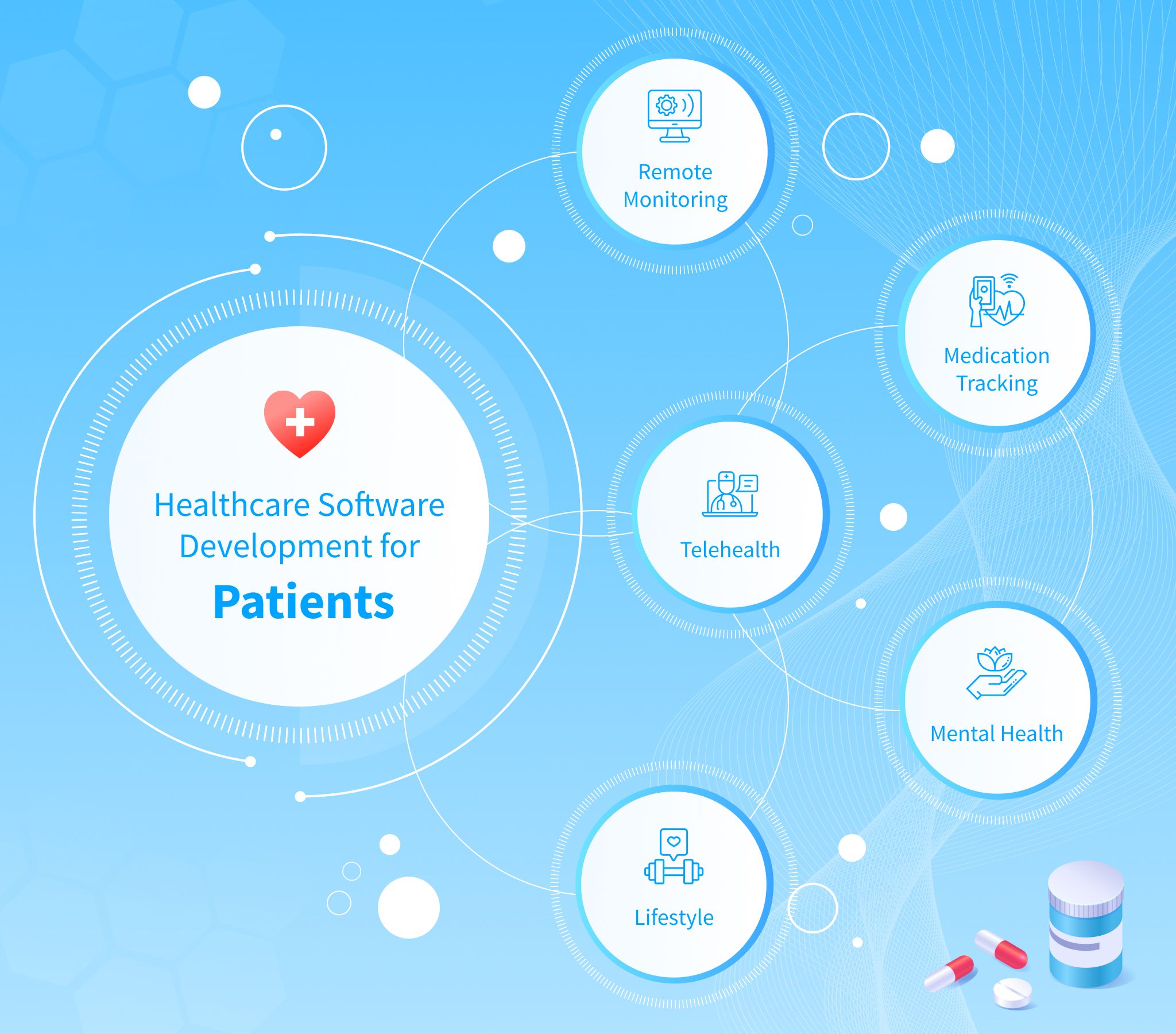\n\nHealthcare software products are playing a transformative role in revolutionizing patient care. These innovative solutions offer a multitude of benefits that enhance the overall patient experience and contribute to better health outcomes. **Here are some key areas where healthcare software shines:**\n\n- **Enhanced Communication and Engagement:** Software solutions like patient portals and telehealth platforms facilitate seamless communication between patients and providers. This empowers patients to take a more active role in their health management, fostering better engagement and adherence to treatment plans.\n\n- **Improved Data Management and Analytics:** Healthcare software enables efficient collection, storage, and analysis of vast amounts of patient data. This data can be used to personalize treatment plans, identify potential health risks early on, and optimize healthcare resource allocation.\n\n- **Increased Efficiency and Streamlined Workflows:** From electronic health records (EHRs) to appointment scheduling software, various solutions streamline administrative tasks and workflows for healthcare professionals. This allows them to dedicate more time to patient care, leading to improved quality of care.\n\n- **Diagnostic Support and Precision Medicine:** Advanced software applications, powered by AI and machine learning, are revolutionizing diagnostics. These tools can analyze medical images, identify patterns in patient data, and assist healthcare professionals in making more accurate diagnoses and tailoring treatments to individual patients.\n\n- **Remote Monitoring and Chronic Disease Management:** Telehealth and remote monitoring solutions enable healthcare professionals to track patients' health remotely, particularly those with chronic conditions. This allows for early intervention in case of potential complications and improved overall management of chronic illnesses.\n\n## Tailored Solutions: Features of Custom Healthcare Software Products\n\n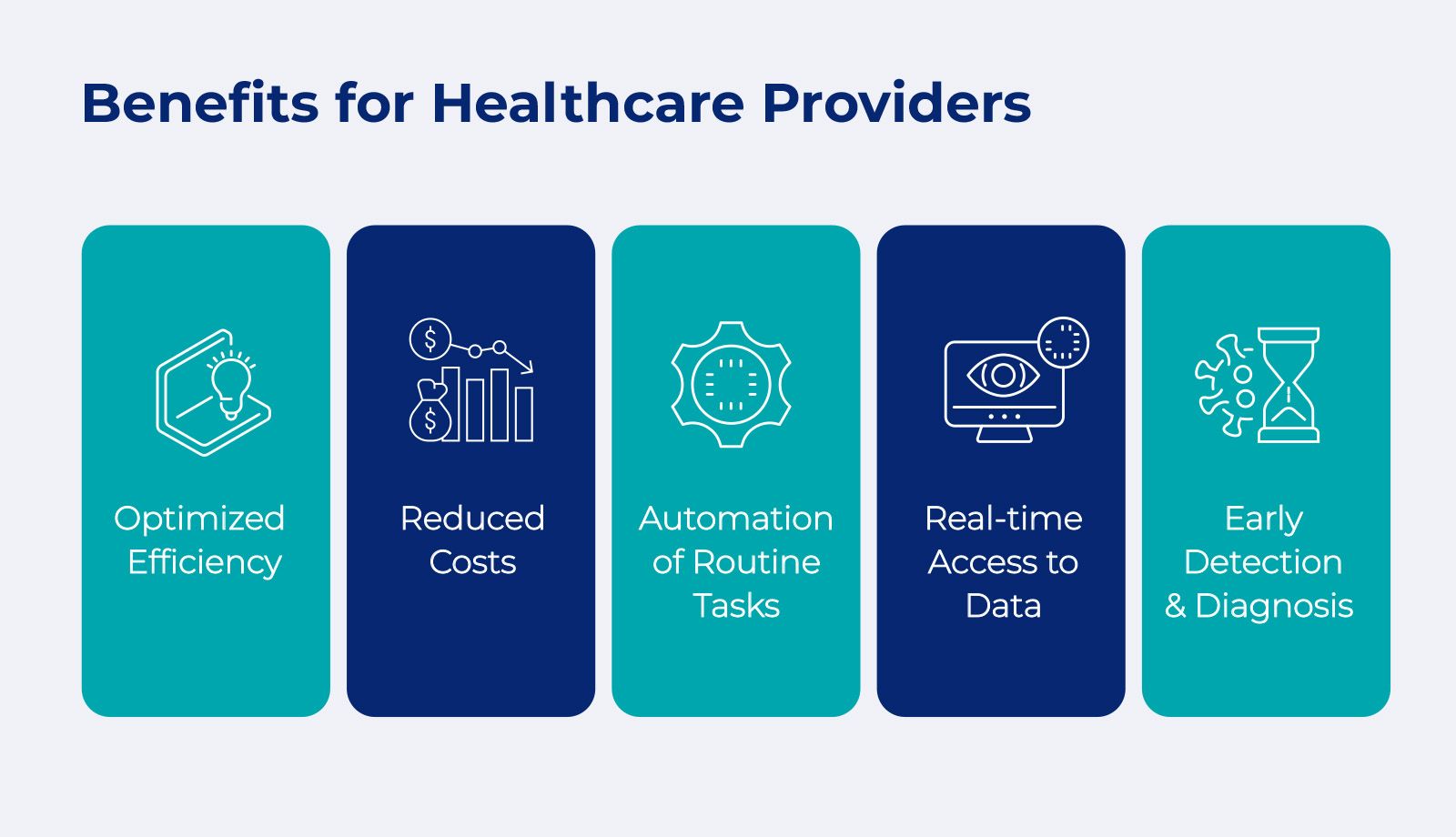\n\nWhile off-the-shelf software offers a baseline level of functionality, the true power lies in custom healthcare software development. These bespoke solutions are meticulously crafted to address the specific needs and challenges faced by your unique healthcare organization. **Here's a breakdown of key features that can be incorporated into your custom healthcare software product:**\n\n- **Electronic Health Records (EHR) Management:** A robust EHR system forms the backbone of any healthcare software solution. Custom development allows for seamless integration with existing systems and ensures your EHR caters to your specific data collection and management requirements.\n- **Telehealth and Virtual Care Features:** Integrate functionalities for secure video conferencing, remote patient monitoring, and online appointment scheduling, empowering healthcare professionals to deliver care virtually and enhance patient accessibility.\n- **Clinical Decision Support Systems (CDSS):** Leverage AI-powered CDSS tools to provide evidence-based recommendations during patient diagnosis and treatment planning. This can improve the accuracy and efficie
10ncy of clinical decision-making.\n- **Patient Engagement Tools:** Build features like patient portals, medication reminders, and secure messaging functionalities to foster better patient-provider communication and encourage patient self-care management.\n- **Advanced Analytics and Reporting:** Customizable dashboards and reporting tools allow healthcare professionals to glean valuable insights from patient data. This data can be used to identify trends, optimize operations, and track progress towards quality improvement goals.\n- **Security and Compliance:** Healthcare software handles sensitive patient data. Custom development allows for robust security protocols and ensures compliance with HIPAA regulations and other relevant data privacy standards.\n- **Integration Capabilities:** Seamless integration with existing hospital information systems, labs, and pharmacies eliminates data silos and streamlines workflows.\nScalability and Flexibility: Custom software can be designed to adapt and grow with your organization's needs. This ensures your software solution remains relevant and effective as your healthcare practice evolves.\n\n## Navigating the Landscape: Different Types of Healthcare Software\n\n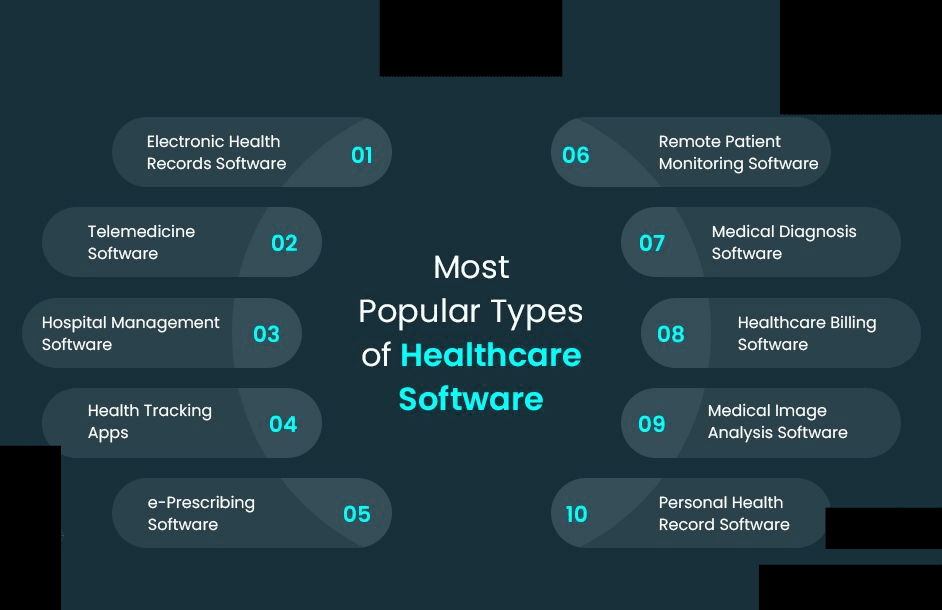\n\nThe healthcare software landscape is vast and encompasses a wide range of solutions designed to address diverse needs. Understanding these different types is crucial for determining the best fit for your organization. **Here's an overview of some of the most common categories:**\n\n- **Electronic Health Records (EHR) Systems:** EHRs serve as the digital foundation for patient data management. They allow healthcare professionals to electronically document a patient's medical history, medications, allergies, and treatment plans. EHR systems can be standalone solutions or integrated with broader healthcare software suites.\n- **Practice Management Software (PMS):** PMS solutions streamline administrative tasks within a healthcare practice. They typically handle functionalities like appointment scheduling, billing and coding, claims submission, and electronic communication with patients and insurance companies.\n- **Telehealth and Virtual Care Platforms:** These solutions enable healthcare professionals to deliver care remotely through video conferencing, online consultations, and remote patient monitoring. This allows for greater patient accessibility and facilitates convenient care delivery.\n- **Hospital Management Systems (HMS):** HMS are comprehensive software suites designed to manage various aspects of hospital operations. These systems typically encompass functionalities like patient registration, lab and radiology results management, pharmacy management, and resource scheduling.\n- **Medical Imaging Software:** This software allows healthcare professionals to capture, view, analyze, and store medical images like X-rays, MRIs, and CT scans. Advanced functionalities include image manipulation tools, 3D reconstruction capabilities, and AI-powered analysis for faster and more accurate diagnoses.\n- **Laboratory Information Management Systems (LIMS):** LIMS solutions manage laboratory workflows, from sample collection and testing procedures to result generation and reporting. These systems automate tasks, ensure data integrity, and streamline lab operations.\n- **Pharmacy Management Software:** These solutions assist pharmacists in managing medication inventory, dispensing prescriptions, and tracking patient medication adherence. Advanced functionalities may include integration with electronic health records and features for medication reconciliation.\n- **Clinical Decision Support Systems (CDSS):** CDSS software utilizes AI and machine learning to provide healthcare professionals with real-time evidence-based recommendations during patient care. These tools can improve diagnostic accuracy, suggest appropriate treatment options, and help to reduce medication errors.\n- **Patient Engagement Tools:** This category encompasses software solutions designed to promote better patient-provider communication and self-care management. Examples include patient portals, secure messaging functionalities, medication reminder apps, and online appointment scheduling tools.\n- **Healthcare Analytics Software:** These solutions collect and analyze vast amounts of healthcare data to i
10dentify trends, optimize resource allocation, measure quality of care, and support data-driven decision making within healthcare organizations.\n\n## Step-by-Step Process of Healthcare Software Product Development\n\nDeveloping successful healthcare software requires careful planning, meticulous execution, and a deep understanding of the healthcare industry's unique regulations and requirements. **Here's a step-by-step process to guide you through the journey:**\n\n### 1. Identifying Needs and Defining Requirements:\n\nThe foundation of any successful software development project lies in a clear understanding of the problem you're trying to solve. **This initial phase involves:**\n\n- **Needs Assessment:** Conduct thorough research to identify the specific challenges and opportunities within your healthcare organization. Gather input from various stakeholders, including healthcare professionals, patients, and administrative staff.\n- **Competitive Analysis:** Analyze existing healthcare software solutions in the market to understand their functionalities, strengths, and weaknesses. This will help identify potential gaps you can address with your custom product.\n- **Feature Prioritization:** Based on the needs assessment and competitive analysis, prioritize the features that will deliver the most significant value to your organization and patients.\n\n### 2. Planning and Design:\n\nWith a clear understanding of your requirements, it's time to translate them into a concrete plan and design:\n\n- **Software Development Life Cycle (SDLC) Selection:** Choose a suitable SDLC methodology (e.g., Agile, Waterfall) that aligns with your project scope and team structure. An Agile approach is often preferred in healthcare software development for its adaptability and iterative development cycles.\n- **System Architecture Design:** Define the software's overall architecture, including hardware, software components, and data flow. Consider factors like scalability, security, and compliance with healthcare data privacy regulations.\n- **User Interface (UI) and User Experience (UX) Design:** Design user-friendly interfaces that cater to the specific needs of healthcare professionals (clinicians, administrators) and patients. Prioritize intuitive navigation, clear information hierarchy, and data visualization to ensure a seamless user experience.\n\n### 3. Development and Testing:\n\nFollowing a well-defined plan, development begins:\n\n- **Software Development:** Your development team will use appropriate programming languages and frameworks to bring your software to life. Security best practices and adherence to HIPAA regulations are paramount throughout the development process.\n- **Testing and Quality Assurance (QA):** Rigorous testing is crucial to ensure the software functions flawlessly, delivers accurate results, and meets all compliance requirements. Testing should encompass unit testing, integration testing, system testing, and user acceptance testing (UAT).\n\n### 4. Deployment and Maintenance\n\nOnce the software is thoroughly tested and validated, it's time to deploy it:\n\n- **Implementation and Training:** Deploy the software within your healthcare organization and provide comprehensive training to healthcare professionals and staff on how to effectively use the new system.\n- **Ongoing Support and Maintenance:** To ensure continued optimal performance and address any potential issues, provide ongoing support and maintenance services. This may include bug fixes, feature updates, and security patches.\n\n### 5. Continuous Improvement:\n\nIn the ever-evolving healthcare landscape, successful software evolves alongside it:\n\n- **Feedback and Monitoring:** Continuously gather feedback from users and monitor the software's performance to identify areas for improvement.\n- **New Feature Development:** Based on user feedback and industry trends, consider developing new features and functionalities to enhance the software's capabilities and user experience.\n\n## Ensuring Safety and Regulatory Requirements of Building Healthcare Softw
10are Products\n\nDeveloping healthcare software comes with a significant responsibility â ensuring the safety and well-being of patients. Regulatory compliance is paramount, as these solutions handle sensitive patient data and directly impact healthcare delivery. **Here's how to prioritize safety and navigate regulatory requirements during the development process:**\n\n### 1. Security Best Practices:\n- **Data Encryption:** Implement robust data encryption protocols at rest and in transit to safeguard sensitive patient information.\n- **Access Control:** Enforce strict access controls to ensure only authorized personnel can access patient data based on their roles and responsibilities.\n- **Regular Security Audits:** Conduct regular security audits and penetration testing to identify and address potential vulnerabilities.\n\n### 2. HIPAA Compliance:\n\n- **HIPAA (Health Insurance Portability and Accountability Act)** regulations govern the privacy and security of protected health information (PHI) in the United States. Adherence to HIPAA is essential for any healthcare software product that handles patient data.\n- **HIPAA Security Rule:** This rule mandates specific administrative, physical, and technical safeguards to protect electronic PHI (ePHI). Ensure your software development process adheres to these safeguards, such as conducting risk assessments, implementing security measures, and maintaining audit trails.\n### 3. Additional Regulatory Considerations:\n\n- **FDA Regulations:** Depending on the intended use of your healthcare software, it may be classified as a medical device by the US Food and Drug Administration (FDA). This classification determines the level of regulatory scrutiny required for pre-market approval.\n- **International Standards:** If your software is intended for use in other countries, be mindful of their specific healthcare data privacy regulations and adapt your development process accordingly.\n\n### 4. Focus on Patient Safety:\n\n- **Rigorous Testing:** Implement a comprehensive testing strategy that goes beyond functionality to ensure patient safety. This includes testing for potential errors, data integrity, and system failures that could compromise patient care.\n- **Fail-Safe Mechanisms:** Design fail-safe mechanisms to minimize the risk of errors and ensure the software behaves predictably in case of unexpected system issues.\n- **User Training:** Provide proper training to healthcare professionals on how to utilize the software safely and effectively to avoid potential misuse or misinterpretations of data.\n\n## Use-Cases of Healthcare Software Product Development\n\nThe applications of healthcare software development are vast and constantly evolving. **Here are some compelling use cases that showcase the transformative potential of these solutions:**\n\n- **Improved Patient Engagement:** Custom patient portals empower patients to take a more active role in their health management. These portals allow patients to access their medical records, schedule appointments, communicate with healthcare providers securely, and manage medications.\n- **Telehealth and Remote Monitoring:** Telehealth platforms enable virtual consultations, remote patient monitoring, and chronic disease management. This allows for increased patient accessibility, improved care delivery in rural areas, and timely intervention for potential health concerns.\n- **Clinical Decision Support Systems (CDSS):** AI-powered CDSS tools support healthcare professionals by providing real-time evidence-based recommendations during diagnoses and treatment planning. This can potentially improve diagnostic accuracy, reduce medication errors, and optimize treatment regimens.\n- **Precision Medicine and Personalized Care:** Advanced healthcare software facilitates the analysis of vast amounts of patient data, including genetic information. This paves the way for personalized medicine approaches, tailoring treatments to individual patient needs and genetic profiles.\n- **Streamlined Hospital Operations:** Hospital Management Systems (HMS) integrate various functionalities like patient registration, lab results management, pharmacy management, and resource scheduling. This streamlines workflows, improves efficie
10ncy, and allows healthcare professionals to dedicate more time to patient care.\n- **Enhanced Medical Research:** Healthcare software solutions facilitate data collection, analysis, and collaboration in medical research. This can lead to faster breakthroughs in drug discovery, development of personalized treatment options, and improved preventative care strategies.\n\n## Conclusion: Empowering Healthcare with Innovation\n\nThe healthcare software landscape is brimming with potential to revolutionize patient care, optimize operations, and drive positive outcomes for healthcare providers and patients alike. By understanding the development process, prioritizing safety and compliance, and focusing on relevant use cases, you can leverage the power of healthcare software to create innovative solutions that make a real difference in the healthcare industry.\n\n[**Codenomad**](https://codenomad.net/), a leading **healthcare software development company**, is here to partner with you on your journey. Our team of experienced developers and healthcare specialists understands the unique challenges and opportunities within the healthcare sector. We leverage cutting-edge technologies and prioritize patient safety and regulatory compliance to craft custom healthcare software solutions that empower your organization and deliver exceptional value.\n\n[**Contact Codenomad today**](https://codenomad.net/contact-us/) to discuss your specific needs and explore how **custom healthcare software development** can transform your organization and elevate the quality of care you provide.","tab":null,"url":"healthcare-software-product-development-guide-for-2024","metaTitle":"Healthcare Software Product Development Guide for 2024","metaDescription":"Lets delve into key considerations, emerging trends, and best practices to equip you with the knowledge needed to create impact health care solutions. ","name":null,"Date":"April 23, 2024","nameDropdown":"Ankur Sabharwal ","blogsCategory":["Healthcare","Web Development"],"blogsCategorybackgroundColor":["#FFCDDF","#D4F0B3"],"blogsCategoryColor":["#AF144B"," #315307"],"video":{"data":null},"image2":{"data":{"id":1460,"attributes":{"name":"Group 1171276149.png","alternativeText":null,"caption":null,"width":38,"height":38,"formats":null,"hash":"Group_1171276149_b7bc11db25","ext":".png","mime":"image/png","size":1.28,"url":"/uploads/Group_1171276149_b7bc11db25.png","previewUrl":null,"provider":"local","provider_metadata":null,"createdAt":"2024-07-12T09:26:15.113Z","updatedAt":"2024-07-12T09:26:15.113Z"}}},"image":{"data":{"id":1214,"attributes":{"name":"healthcare-software-developer-services.webp","alternativeText":null,"caption":null,"width":1200,"height":750,"formats":{"large":{"ext":".webp","url":"/uploads/large_healthcare_software_developer_services_6c3186b3bb.webp","hash":"large_healthcare_software_developer_services_6c3186b3bb","mime":"image/webp","name":"large_healthcare-software-developer-services.webp","path":null,"size":40.48,"width":1000,"height":625},"small":{"ext":".webp","url":"/uploads/small_healthcare_software_developer_services_6c3186b3bb.webp","hash":"small_healthcare_software_developer_services_6c3186b3bb","mime":"image/webp","name":"small_healthcare-software-developer-services.webp","path":null,"size":18.05,"width":500,"height":312},"medium":{"ext":".webp","url":"/uploads/medium_healthcare_software_developer_services_6c3186b3bb.webp","hash":"medium_healthcare_software_developer_services_6c3186b3bb","mime":"image/webp","name":"medium_healthcare-software-developer-services.webp","path":null,"size":30.32,"width":750,"height":469},"thumbnail":{"ext":".webp","url":"/uploads/thumbnail_healthcare_software_developer_services_6c3186b3bb.webp","hash":"thumbnail_healthcare_software_developer_services_6c3186b3bb","mime":"image/webp","name":"thumbnail_healthcare-software-developer-services.webp","path":null,"size":7.29,"width":245,"height":153}},"hash":"healthcare_software_developer_services_6c3186b3bb","ext":".webp","mime":"image/webp","size":55.89,"url":"/uploads/healthcare_software_developer_services_6c3186b3bb.webp","previewUrl":null,"provider":"local","provider_metadata":null,"createdAt":"2024-04-23T09:11:10.509Z","updatedAt":"2024-04-23T09:11:10.509Z"}}}},{"id":1954,"category":null,"title":"Software Testing: Getting Started with Software Testing Types","description":null,"background_color":null,"button":null,"accords":null,"detail_description":"Software testing is a crucial process in the development lifecycle, aimed at identifying bugs, errors, and issues in software applications. By
10systematically examining various aspects of a program, testers can ensure its functionality, reliability, and performance. Understanding different types of [software testing](https://codenomad.net/hire/hire-quality-analyst/) is essential for crafting effective testing strategies. In this guide, we'll explore the fundamentals of software testing types, providing a foundational understanding for those new to the field. Whether you're a developer, tester, or simply curious about software quality assurance, this primer will help you embark on your testing journey with confidence.\n\n## What is Software Testing?\n\nSoftware testing is a fundamental aspect of software development, encompassing the systematic examination and evaluation of a software application to ensure that it meets specified requirements and functions as intended. It involves executing the software with the intent of uncovering defects, errors, and vulnerabilities that could potentially impact its usability, functionality, and performance. By subjecting the software to various test scenarios and conditions, testers aim to identify and rectify issues before the application is deployed to end-users. Ultimately, software testing plays a critical role in validating the quality, reliability, and effectiveness of software products in meeting user needs and expectations.\n\n## How does it work?\n\nSoftware testing operates by systematically evaluating the functionality, performance, and behavior of a software application to uncover defects or errors in the code. Beginning with requirement analysis, testers design test cases aligned with the software's expected behavior. During test execution, they run the software, applying various inputs to simulate user interactions and usage scenarios. Any encountered defects are documented and reported for resolution by developers, who then collaborate with testers to verify fixes. Regression testing ensures stability post-fixes, and finally, test closure activities summarize results and document lessons learned. This iterative process ensures the software meets quality standards, contributing to project success and user satisfaction.\n\n## Here are some benefits of software testing:\n\n\n\n### Identifying Bugs and Errors:\n\nSoftware testing helps in identifying bugs, errors, and defects present in the software code. By systematically running tests and analyzing the results, testers can pinpoint areas of the application that require improvement or correction, ensuring a higher level of software quality.\n\n### Enhancing Product Quality:\n\nBy uncovering and addressing issues early in the development process, software testing contributes to improving the overall quality of the software product. Through thorough testing, developers can ensure that the application meets user requirements, functions reliably, and delivers a positive user experience.\n\n### Ensuring Reliability and Stability:\n\nRigorous testing helps in verifying the reliability and stability of the software application. By subjecting the software to various test scenarios and conditions, testers can assess its performance under different circumstances and ensure that it operates consistently without unexpected crashes or failures.\n\n### Mitigating Risks:\n\nSoftware testing helps in mitigating risks associated with software defects and failures. By identifying and addressing issues early in the development lifecycle, testing reduces the likelihood of critical errors occurring in the production environment, minimizing the potential impact on users and stakeholders.\n\n### Improving Customer Satisfaction:\n\nThrough thorough testing and validation, software products are more likely to meet customer expectations and requirements. By delivering high-quality, reliable, and bug-free applications, organizations can enhance customer satisfaction, build trust, and foster long-term relationships with their user base.\n\n### Cost Savings:\n\nInvesting in software testing upfront can lead to significant cost savings in the long run. By identifying and fixing issues early in the development process, organizations can avoid costly rework, downtime, and potential losses associated with software defects discovered post-deployment.\n\n### Compliance and Regulatory Requirements:\n\nSoftware testing helps in ensuring compliance with industry standards, regulations, and best practices. By conducting thorough testing and validation, organizations can demonstrate adherence to legal and regulatory requirements, reducing the risk of non-compliance and potential legal consequences.\n\n## Black Box vs. White Box Testing\n\n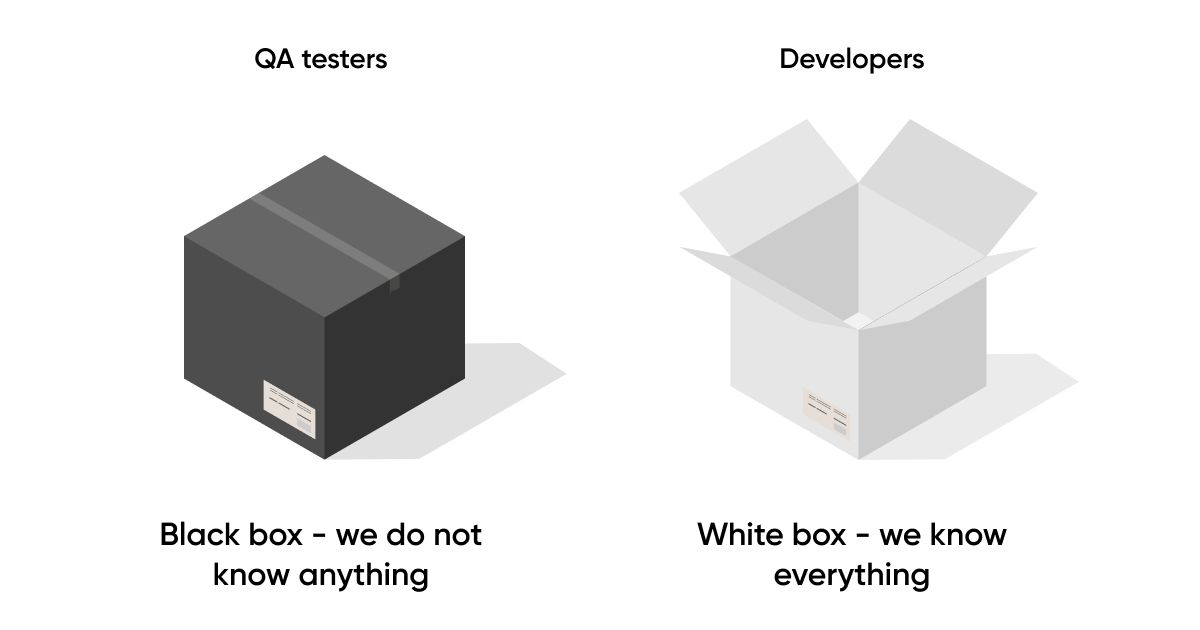\n\nBlack box testing and white box testing are two distinct approaches to software testing, each with its own techniques, advantages, and limitations. **Here's a comparison between the two:**\n\n###
101. Purpose:\n\n- **Black Box Testing:** Focuses on assessing the functionality of the software without considering its internal structure or implementation details. Testers treat the software as a \"black box,\" interacting with it solely based on inputs and observing outputs.\n- **White Box Testing:** Involves examining the internal structure, design, and implementation of the software. Testers have access to the code and use this knowledge to design tests that target specific paths, branches, and conditions within the code.\n\n### 2. Knowledge Requirement:\n\n- **Black Box Testing:** Testers do not require knowledge of the internal workings of the software. They base their tests solely on the software's specifications and external behavior.\n- **White Box Testing:** Testers need a deep understanding of the software's architecture, codebase, and implementation details to design effective tests. They analyze the code to identify potential areas of weakness and devise tests to address them.\n\n### 3. Test Design:\n- **Black Box Testing:** Test cases are designed based on requirements, specifications, and user expectations. Testers focus on scenarios that exercise the software's functionality from an end-user perspective.\n- **White Box Testing:** Test cases are designed based on the code structure, control flow, and logic paths within the software. Testers target specific code segments, conditions, and branches to ensure thorough coverage.\n\n### 4. Scope:\n\n- **Black Box Testing:** Suitable for validating external behavior, user interfaces, and system interactions. It assesses whether the software meets user requirements and performs as expected from a user's standpoint.\n- **White Box Testing:** Suitable for assessing internal logic, algorithms, and error handling mechanisms. It delves deep into the software's implementation to uncover hidden defects and vulnerabilities.\n\n### 5. Applicability:\n\n- **Black Box Testing:** Widely used for functional testing, acceptance testing, and system testing. It is effective in validating high-level requirements and ensuring that the software meets user needs.\n- **White Box Testing:** Commonly used for unit testing, integration testing, and code-level verification. It is effective in uncovering logic errors, boundary cases, and performance bottlenecks within the codebase.\n\n### 6. Testing Techniques:\n\n- **Black Box Testing:** Includes techniques such as equivalence partitioning, boundary value analysis, and use case testing. Testers focus on input-output relationships and user interactions to derive test cases.\n- **White Box Testing:** Includes techniques such as statement coverage, branch coverage, and path coverage. Testers aim to achieve high code coverage by exercising different paths and conditions within the code.\n\n## Manual Testing vs. Automation\n\n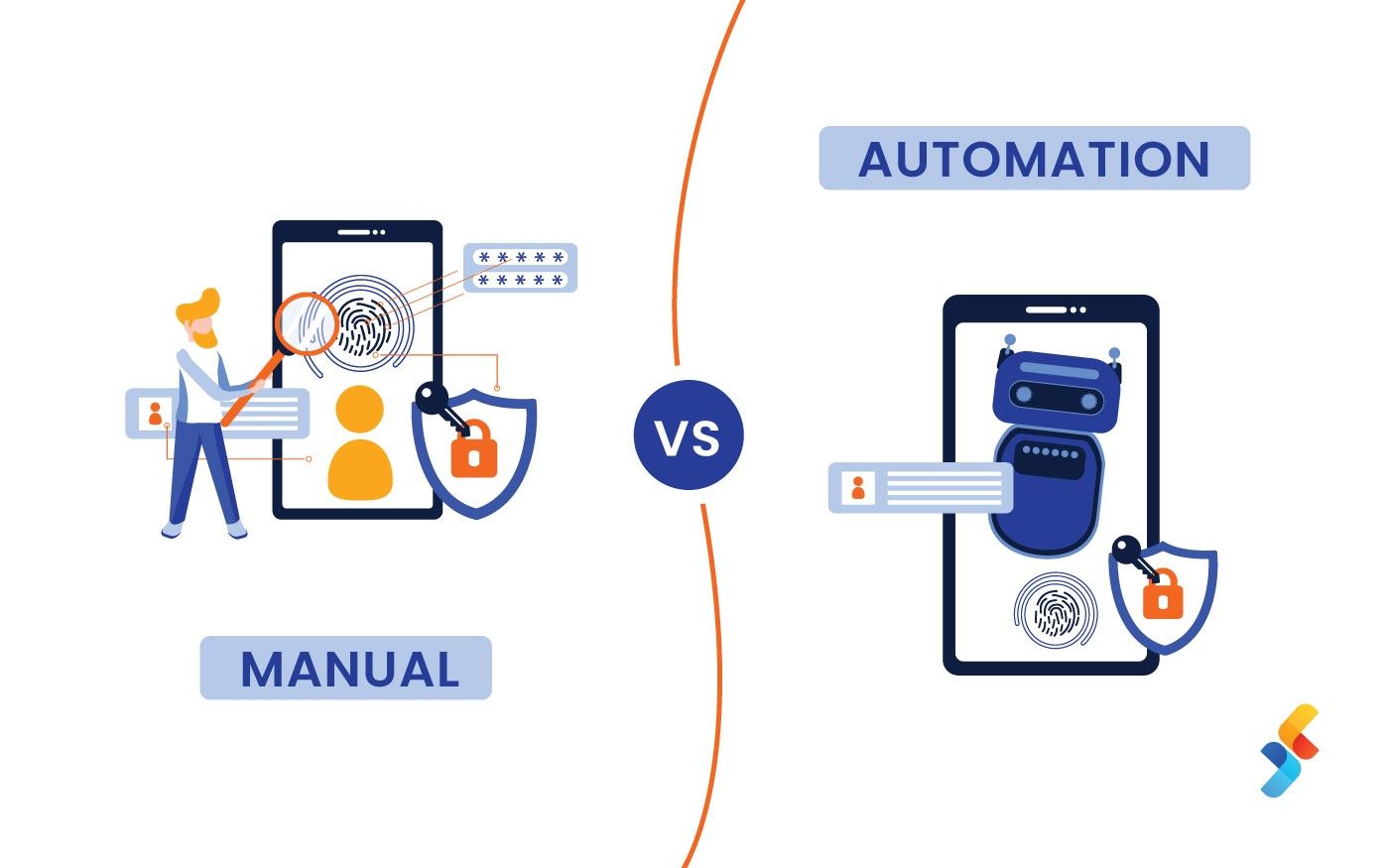\n\nManual testing and automation testing are two distinct approaches to software testing, each with its own advantages, limitations, and use cases. **Here's a comparison between the two:**\n\n###
101. Process:\n\n- **Manual Testing:** Involves the manual execution of test cases by human testers without the use of automated tools. Testers interact with the software application as end-users, exploring different features, inputs, and scenarios to identify defects.\n- **Automation Testing:** Involves the use of automated testing tools and scripts to execute test cases. Testers write scripts to automate repetitive tasks, such as data entry, navigation, and validation, and use these scripts to run tests repeatedly.\n\n### 2. Speed and Efficiency:\n\n- **Manual Testing:** Relies on human testers to execute tests, which can be time-consuming and labor-intensive, especially for large and complex applications. Test execution speed depends on the testers' expertise, attention to detail, and familiarity with the application.\n- **Automation Testing:** Offers faster and more efficient test execution compared to manual testing. Once automated test scripts are created, they can be executed repeatedly and consistently, allowing for rapid feedback on application changes and improvements in test coverage.\n\n### 3. Repeatability and Consistency:\n\n- **Manual Testing:** Prone to human error and variability in test execution. Testers may overlook certain test cases or perform tests inconsistently across different testing cycles, leading to discrepancies in test results.\n- **Automation Testing:** Ensures repeatability and consistency in test execution. Automated test scripts execute tests precisely as defined, eliminating human errors and ensuring that tests are performed consistently across multiple iterations.\n\n### 4. Test Coverage:\n\n- **Manual Testing:** Limited by the time and resources available for testing. Testers may not be able to execute all test cases comprehensively, leading to gaps in test coverage and potentially missing critical defects.\n- **Automation Testing:** Offers broader test coverage compared to manual testing. Automated test scripts can execute a large number of test cases across different scenarios, data sets, and environments, providing more thorough validation of the software application.\n\n### 5. Suitability for Repetitive Tasks:\n\n- **Manual Testing:** Well-suited for exploratory testing, ad-hoc testing, and usability testing, where human judgment, creativity, and intuition are required. It is also suitable for testing scenarios where test cases change frequently or are difficult to automate.\n\n- **Automation Testing:** Ideal for repetitive and predictable testing tasks, such as regression testing, performance testing, and load testing. Automation is particularly effective for validating stable features and functionalities that remain unchanged over multiple releases.\n\n### 6. Initial Investment and Maintenance:\n\n- **Manual Testing:** Requires minimal initial investment in terms of tools and infrastructure. However, manual testing can become costly and resource-intensive over time, especially for long-term projects or projects with frequent updates.\n- **Automation Testing:** Involves higher initial investment in setting up automation frameworks, tools, and infrastructure. However, once established, automation testing can lead to significant cost savings and efficiency gains in the long run, particularly for projects with a high volume of repetitive tests.\n\n## Functional Testing Methodologies:\n\nFunctional testing methodologies encompass various approaches and techniques aimed at verifying that a software application's functions operate correctly according to specified requirements. These methodologies focus on assessing the application's behavior and functionality under different conditions to ensure that it meets user expectations and business objectives. **Here are some top functional testing methodologies:**\n\n### Unit Testing:\n\nUnit testing involves testing individual units or components of the software application in isolation. Developers write test cases to validate the functionality of specific code units, such as functions, methods, or classes. Unit testing helps in identifying defects early in the development process and ensures that each unit of the softw
10are performs as expected.\n\n### Integration Testing:\n\nIntegration testing verifies the interactions and interfaces between different modules or components of the software application. Test cases are designed to validate the integration points, data flows, and communication between modules, ensuring that they work together seamlessly as a cohesive system. Integration testing helps in detecting integration issues and compatibility issues early in the development lifecycle.\n\n### System Testing:\n\nSystem testing evaluates the overall functionality and behavior of the software application as a whole. It involves testing the integrated system against the requirements and specifications to ensure that it meets user needs and business objectives. System testing encompasses various functional tests, including regression testing, user acceptance testing, and end-to-end testing, to validate the application's behavior under real-world scenarios.\n\n### Acceptance Testing:\n\nAcceptance testing assesses whether the software application meets the acceptance criteria and requirements defined by stakeholders. It involves testing the application from the end-user's perspective to ensure that it fulfills business requirements and delivers the expected value. Acceptance testing may include alpha testing, beta testing, and user acceptance testing (UAT) to validate the application's functionality, usability, and performance.\n\n### Smoke Testing:\n\nSmoke testing, also known as build verification testing, is a preliminary test performed on each build of the software application to ensure that critical functionalities work correctly and the build is stable enough for further testing. Smoke tests are designed to identify major defects or issues that could prevent further testing and development activities.\n\n### Regression Testing:\n\nRegression testing ensures that recent code changes or modifications do not adversely affect existing functionalities or introduce new defects into the software application. It involves retesting previously tested functionalities to validate that they still work as expected after code changes, bug fixes, or enhancements. Regression testing helps in maintaining the stability and reliability of the software across multiple iterations.\n\n### User Interface (UI) Testing:\n\nUI testing focuses on testing the graphical user interface (GUI) of the software application to ensure that it is intuitive, user-friendly, and visually appealing. UI tests validate elements such as layout, navigation, usability, and accessibility to ensure a positive user experience. UI testing may involve manual testing or automated testing using tools designed for GUI testing.\n\n## Common Functional Testing Process:\n\nCommon functional testing processes include unit testing, integration testing, system testing, and acceptance testing. Unit testing verifies individual units or components of the software application, ensuring they function correctly in isolation. Integration testing validates the interaction and communication between different modules or components. System testing evaluates the overall functionality and behavior of the integrated system. Acceptance testing assesses whether the software meets user requirements and business objectives. These processes collectively ensure the quality and reliability of the software application before deployment. **Here's an explanation of the common functional testing processes:**\n\n### Unit Testing:\n\nUnit testing is the process of testing individual units or components of the software application in isolation. In unit testing, developers write test cases to verify the functionality of specific code units, such as functions, methods, or classes. Each unit test focuses on a small, atomic piece of code and validates its behavior against expected outcomes. Unit testing helps in identifying defects early in the development process, ensuring that each unit of the software performs as expected. It is typically performed by developers using testing frameworks such as JUnit, NUnit, or pytest.\n\n### Integration Testing:\n\nIntegration testing verifies the interactions and interfaces between different modules or components of the softw
10are application. In integration testing, test cases are designed to validate the integration points, data flows, and communication between modules, ensuring that they work together seamlessly as a cohesive system. Integration testing helps in detecting integration issues and compatibility issues early in the development lifecycle. It ensures that the software components integrate correctly and function as intended when combined. Integration testing can be performed manually or using automated testing tools.\n\n### System Testing:\n\nSystem testing evaluates the overall functionality and behavior of the software application as a whole. It involves testing the integrated system against the requirements and specifications to ensure that it meets user needs and business objectives. System testing encompasses various functional tests, including regression testing, user acceptance testing, and end-to-end testing, to validate the application's behavior under real-world scenarios. System testing verifies that the software functions correctly in its intended environment and meets all specified requirements.\n\n### Acceptance Testing:\n\nAcceptance testing assesses whether the software application meets the acceptance criteria and requirements defined by stakeholders. It involves testing the application from the end-user's perspective to ensure that it fulfills business requirements and delivers the expected value. Acceptance testing may include alpha testing, beta testing, and user acceptance testing (UAT) to validate the application's functionality, usability, and performance. Acceptance testing verifies that the software meets the needs and expectations of stakeholders and is ready for deployment.\n\n## Specialized Functional Methodologies\n\nSpecialized functional methodologies include regression testing and smoke testing, **which serve distinct purposes in ensuring software quality:**\n\n### Regression Testing:\n\nRegression testing involves retesting previously tested functionalities to ensure that recent code changes or modifications do not adversely affect existing functionalities or introduce new defects into the software application. It verifies that the software continues to function as expected after modifications, bug fixes, or enhancements. Regression testing helps maintain the stability and reliability of the software across multiple iterations, ensuring that no unintended side effects occur due to changes in the codebase.\n\n### Smoke Testing:\n\nSmoke testing, also known as build verification testing, is a preliminary test performed on each build of the software application to ensure that critical functionalities work correctly and the build is stable enough for further testing. Smoke tests are designed to identify major defects or issues that could prevent further testing and development activities. Smoke testing provides a quick assessment of the overall health of the software build, allowing testers to determine whether it is ready for more extensive testing. It helps in identifying showstopper issues early in the development process, ensuring that subsequent testing efforts are focused on stable builds.\n\n## Non-functional Testing Methods:\n\nNon-functional testing methods focus on evaluating aspects of a software application beyond its functionality, such as performance, security, usability, reliability, and scalability. **Here are some top non-functional testing methodologies:**\n\n### Performance Testing:\n\nPerformance testing assesses how well a software application performs under various conditions, such as load, stress, and concurrency. It aims to measure response times, throughput, resource utilization, and scalability to ensure that the application meets performance requirements and can handle expected user loads without degradation.\n\n### Security Testing:\n\nSecurity testing evaluates the security features and controls implemented in a software application to identify vulnerabilities, weaknesses, and security threats. It involves assessing aspects such as authentication, authorization, data integrity, encryption, and compliance with security standards to ensure that the application is resistant to malicious attacks and unauthorized access.\n\n### Usability Testing:\n\nUsability testing focuses on assessing the user-friendliness and intuitiveness of a software application from the end-user's perspective. It involves evaluating aspects such as navigation, layout, accessibility, and user interactions to ensure that the application is easy to use, understand, and navigate. Usability testing helps in identifying usability issues and improving the overall user experience.\n\n### Reliability Testing:\n\nReliability testing examines the softw
10are application's ability to perform consistently and reliably under normal and abnormal conditions. It involves testing for fault tolerance, error handling, recovery mechanisms, and system stability to ensure that the application remains available and functional even in the event of failures or disruptions.\n\n### Scalability Testing:\n\nScalability testing evaluates the software application's ability to handle increasing workloads, data volumes, and user interactions without performance degradation or system failure. It involves testing for scalability limits, resource utilization, and system bottlenecks to ensure that the application can scale seamlessly to meet growing demands.\n\n### Compatibility Testing:\n\nCompatibility testing assesses the software application's compatibility with different hardware, operating systems, browsers, and devices. It ensures that the application functions correctly and displays consistent behavior across various platforms and configurations, minimizing compatibility issues and ensuring a seamless user experience.\n\n### Load Testing:\n\nLoad testing evaluates the software application's performance under expected and peak loads to determine its capacity and scalability. It involves simulating realistic user loads and monitoring system response times, throughput, and resource utilization to identify performance bottlenecks and optimize system performance.\n\n## Software Testing Life-cycle:\n\n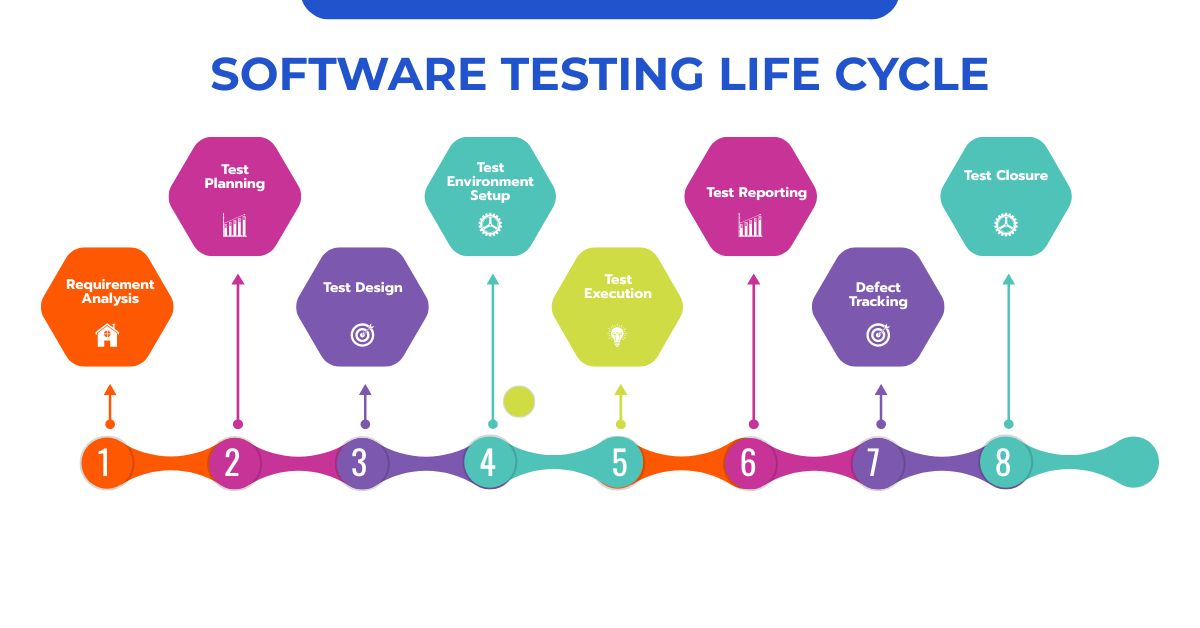\n\nThe software testing life cycle (STLC) is a systematic process that ensures the quality and reliability of software applications. It comprises several phases, including requirement analysis, test planning, test case development, test environment setup, test execution, and test closure. Eac
10h phase is crucial for identifying defects, validating functionality, and ensuring that the software meets user expectations. By following the STLC, organizations can systematically conduct testing activities, leading to improved software quality and enhanced user satisfaction.\n\n**Let's delve deeper into each step of the software testing life cycle:\n**\n\n### Requirement Analysis:\n\nRequirement analysis is the initial phase of the software testing life cycle, where testers collaborate with stakeholders to understand the project requirements, objectives, and user expectations. Testers analyze the software specifications, functional requirements, and acceptance criteria to define the scope and objectives of testing. They identify testable features, use cases, and scenarios to ensure comprehensive test coverage. Requirement analysis lays the foundation for creating test plans, strategies, and test cases aligned with project goals.\n\n### Test Planning:\n\nTest planning involves developing a detailed test plan that outlines the approach, resources, timelines, and deliverables for the testing effort. Testers define the testing scope, objectives, and priorities based on the project requirements and constraints. They identify testing environments, tools, and methodologies to be used, and allocate resources such as testers, test data, and infrastructure. Test planning also includes defining test metrics, success criteria, and risk mitigation strategies to ensure the effectiveness and efficiency of the testing process.\n\n### Test Case Development:\n\nTest case development involves creating detailed test cases and test scenarios based on the project requirements and specifications. Testers design test cases to validate various aspects of the software application, including functionality, performance, usability, and security. Each test case outlines the test steps, expected outcomes, and acceptance criteria for a specific test scenario. Testers prioritize test cases based on their criticality and impact on the software's quality, ensuring thorough test coverage across different features and functionalities.\n\n### Test Environment Setup:\n\nTest environment setup involves configuring and preparing the testing environment to replicate the production environment as closely as possible. Testers install and configure the necessary hardware, software, and infrastructure components required for testing. They deploy the application under test (AUT) and set up test data, databases, and dependencies to simulate real-world conditions. Test environment setup ensures that testing activities can be conducted effectively and accurately, enabling testers to validate the software in a controlled and consistent environment.\n\n### Test Execution:\n\nTest execution is the phase where testers execute the prepared test cases and scenarios against the software application. Testers follow the test plan and execute test cases according to the prioritization and sequencing defined during test planning. They input test data, interact with the application, and observe the actual outcomes to compare them with expected results. Test execution includes functional testing, regression testing, performance testing, and other types of testing as per the project requirements. Testers document test results, log defects, and communicate issues to stakeholders for resolution.\n\n### Test Closure:\n\nTest closure marks the end of the testing phase and involves evaluating the testing activities, documenting outcomes, and preparing test closure reports. Testers review test results, analyze test metrics, and assess the overall quality and readiness of the software for release. They compile test documentation, including test plans, test cases, test scripts, and defect reports, for future reference and audit purposes. Test closure also includes conducting lessons learned sessions to identify areas for improvement and best practices to be adopted in future testing efforts.\n\n## Conclusion:\n\nThe software testing life cycle (STLC) is an essential process that ensures the quality, reliability, and effectiveness of software applications. By
10systematically following the phases of requirement analysis, test planning, test case development, test environment setup, test execution, and test closure, organizations can identify defects early, validate functionality, and meet user expectations. The STLC helps in mitigating risks, improving software quality, and delivering high-quality products that satisfy customer needs. By embracing a structured approach to testing, organizations can enhance their [software development](https://codenomad.net/services/app-development/) process, build customer trust, and achieve long-term success in the competitive market landscape.\n","tab":null,"url":"software-testing-getting-started-with-software-testing-types","metaTitle":"Software Testing: Getting Started with Software Testing Types","metaDescription":"Software testing is a crucial process in the development lifecycle, aimed at identifying bugs, errors, and issues in software applications.","name":null,"Date":"April 19, 2024","nameDropdown":"Keshav Sharma","blogsCategory":["Quality Analysis"],"blogsCategorybackgroundColor":["#FF79A9"],"blogsCategoryColor":["#AF144B"],"video":{"data":null},"image2":{"data":{"id":1463,"attributes":{"name":"Keshav Sharma.png","alternativeText":null,"caption":null,"width":54,"height":54,"formats":null,"hash":"Keshav_Sharma_b9cc7a8694","ext":".png","mime":"image/png","size":2.22,"url":"/uploads/Keshav_Sharma_b9cc7a8694.png","previewUrl":null,"provider":"local","provider_metadata":null,"createdAt":"2024-07-15T10:06:01.615Z","updatedAt":"2024-07-15T10:06:01.615Z"}}},"image":{"data":{"id":1176,"attributes":{"name":"Untitled design (70).png","alternativeText":null,"caption":null,"width":700,"height":400,"formats":{"small":{"ext":".png","url":"/uploads/small_Untitled_design_70_2e37193677.png","hash":"small_Untitled_design_70_2e37193677","mime":"image/png","name":"small_Untitled design (70).png","path":null,"size":224.66,"width":500,"height":286},"thumbnail":{"ext":".png","url":"/uploads/thumbnail_Untitled_design_70_2e37193677.png","hash":"thumbnail_Untitled_design_70_2e37193677","mime":"image/png","name":"thumbnail_Untitled design (70).png","path":null,"size":65.36,"width":245,"height":140}},"hash":"Untitled_design_70_2e37193677","ext":".png","mime":"image/png","size":119.59,"url":"/uploads/Untitled_design_70_2e37193677.png","previewUrl":null,"provider":"local","provider_metadata":null,"createdAt":"2024-04-19T04:53:06.457Z","updatedAt":"2024-04-19T04:53:06.457Z"}}}},{"id":1909,"category":null,"title":"The Top Frontend Frameworks for Web Development in 2024","description":null,"background_color":null,"button":null,"accords":null,"detail_description":"As we venture into the heart of 2024, the landscape of web development continues to evolve, propelled by innovations and advancements in frontend frameworks. These frameworks serve as the backbone of modern web applications, empowering developers to create seamless, interactive, and visually stunning digital experiences. In this rapidly changing environment, staying abreast of the latest trends and technologies is crucial for developers striving to deliver cutting-edge solutions.\n\nThe year 2024 heralds a new era in frontend development, characterized by a diverse array of frameworks, each offering unique strengths and capabilities. From established giants to up-and-coming contenders, the frontend ecosystem is teeming with options, presenting developers with an exciting array of choices.\n\nAt the forefront of this dynamic landscape stands React.js, a powerhouse developed by Facebook. Renowned for its component-based architecture and efficient virtual DOM rendering, React.js continues to dominate the frontend scene, powering some of the most prominent web applications across the globe. With its extensive ecosystem of libraries and tools, React.js remains a go-to choice for developers seeking flexibility, scalability, and performance.\nVue.js emerges as another compelling force in the frontend realm, celebrated for its simplicity, speed, and versatility. Embracing a progressive framework philosophy, Vue.js offers developers a smooth learning curve and seamless integration into existing projects. Its intuitive syntax and vibrant community make it an attractive option for developers seeking a balance between power and ease of use.\n\nAs we embark on this journey through the top frontend frameworks of 2024, we'll explore their features, strengths, and applications, equipping developers with the knowledge they need to navigate the ever-changing landscape of web development. Join us as we unravel the intricacies of these frameworks and discover the tools that will shape the digital experiences of tomorrow.\n\n## The key reasons for using front-end frameworks include\n\n\n\n### Modularity\n\nFrontend frameworks offer a modular approach to web development, allowing developers to break down complex applications into smaller, manageable components. This modular architecture promotes code reusability, making it easier to maintain and scale projects over time. By dividing the user interface into reusable components, developers can streamline development workflows, collaborate more effectively, and achieve greater consistency across their applications. Modularity also facilitates code organization and enhances code readability, leading to more maintainable and robust codebase
10s.\n\n### Efficiency\n\nOne of the primary reasons for using frontend frameworks is the efficiency they bring to the development process. These frameworks provide developers with a set of pre-built tools, libraries, and conventions that streamline common tasks and accelerate development cycles. By leveraging these ready-made components and patterns, developers can focus more on implementing application logic and user interactions, rather than reinventing the wheel. This results in faster development times, reduced development costs, and ultimately, quicker time-to-market for web applications.\n\n### Responsive Design\n\nIn today's multi-device world, responsive design is essential for ensuring that web applications look and perform seamlessly across a variety of devices and screen sizes. Frontend frameworks often come with built-in features and utilities for creating responsive layouts and components, such as grid systems, media queries, and responsive typography. By adopting a frontend framework with robust support for responsive design, developers can create adaptive and user-friendly interfaces that deliver a consistent experience across desktops, tablets, and smartphones.\n\n### Community Support and Documentation\n\nFrontend frameworks thrive on vibrant and active communities of developers who contribute code, share knowledge, and provide support to fellow developers. These communities often maintain extensive documentation, tutorials, and forums where developers can find answers to their questions, learn best practices, and troubleshoot issues. By choosing a frontend framework with strong community support, developers can tap into a wealth of resources and expertise, accelerating their learning curve and overcoming obstacles more effectively. Additionally, community-driven frameworks tend to evolve rapidly, incorporating feedback and improvements from a diverse range of contributors, ensuring that developers have access to cutting-edge features and updates.\
10n\n## Key Factors to Consider in A Front-end Framework In 2024\n\n### Project Requirements\n\nChoosing the right frontend framework starts with understanding the specific needs and requirements of your project. Consider factors such as the complexity of the application, the size of the development team, the expected traffic volume, and any unique features or functionalities required. Selecting a framework that aligns closely with your project's requirements will ensure smoother development and better outcomes.\n\n### Productivity and Efficiency\n\nFrontend frameworks vary in their approaches to development and the tools they provide to developers. Evaluate the productivity features offered by each framework, such as code generation, hot module replacement, and developer-friendly APIs. A framework that boosts developer productivity and streamlines common tasks can significantly accelerate the development process and improve overall efficiency.\n\n\n\n\n### Scalability and Performance\n\nAs web applications grow in complexity and user base, scalability and performance become critical considerations. Assess the scalability features of frontend frameworks, including support for code splitting, lazy loading, and server-side rendering. Additionally, evaluate performance benchmarks and real-world performance metrics to ensure that the chosen framework can handle the expected workload without compromising user experience.\n\n### Community Support and Updates\n\nFrontend frameworks thrive on active and engaged communities of developers who contribute to their evolution and provide support to fellow developers. Prioritize frameworks with strong community support, regular updates, and a vibrant ecosystem of plugins and extensions. A robust community ensures that the framework remains relevant, secure, and well-maintained over time.\n\n### Cost and Resource Efficiency\n\nConsider the cost implications of adopting a frontend framework, including licensing fees, development resources, and ongoing maintenance costs. While some frameworks may have upfront costs associated with them, others are open-source and free to use. Evaluate the total cost of ownership and weigh it against the benefits and features offered by each framework to make an informed decision.\n\n### Ease of Integration\n\nIntegration with existing tools, libraries, and technologies is crucial for seamless development workflows. Assess the compatibility and integration capabilities of frontend frameworks with backend technologies, third-party APIs, and development tools. A framework that integrates smoothly with your existing tech stack will minimize friction and enable faster development cycles.\n\n### Mobile Development Support\n\nWith the increasing prevalence of mobile devices, mobile development support is essential for reaching a broader audience and delivering a consistent user experience across platforms. Evaluate the mobile development capabilities of frontend frameworks, including support for responsive design, mobile-specific optimizations, and frameworks for building native mobile applications.\n\n### Popularity\n\nWhile popularity alone shouldn't dictate your choice of frontend framework, it can serve as an indicator of community adoption and industry trends. Popular frameworks often have extensive documentation, a large talent pool of developers, and a mature ecosystem of plugins and tools. However, popularity should be balanced with other factors such as project requirements and technical fit.\n\n\n## Top 7 frontend frameworks for web development in 2024\n\n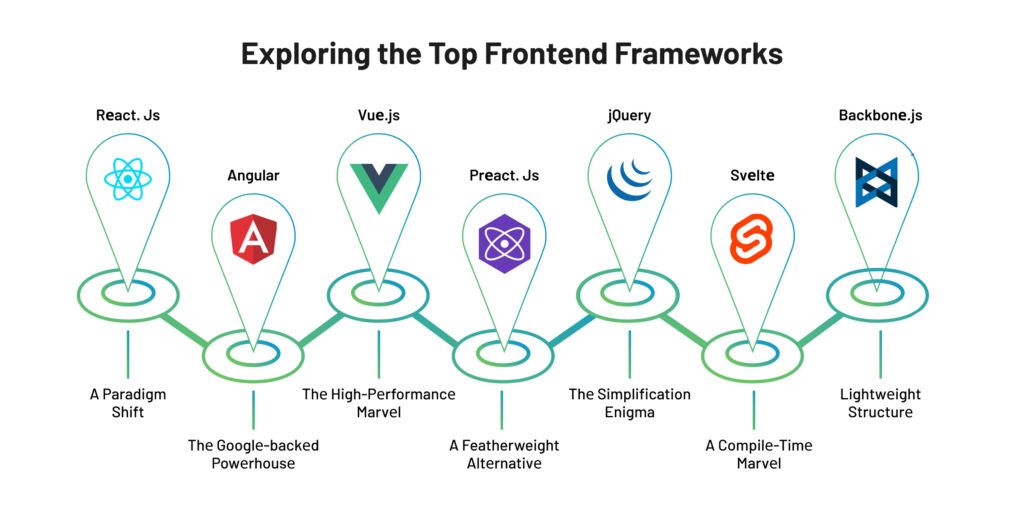\n\n### React.js\n\nReact.js continues to dominate the frontend landscape in 2024. Developed by Facebook, React.js is renowned for its component-based architecture and efficient virtual DOM rendering. It offers a vast ecosystem of libraries and tools, making it ideal for building scalable and interactive user interfaces. With features like server-side rendering and React Native for mobile development, React.js remains a top choice for developers seeking flexibility and performance.\n\n**[Hire React Developers](https://codenomad.net/hire/hire-react-developer/)**\n\n### Vue.js\n\nVue.js has surged in popularity in recent years, offering a progressive framework approach that appeals to developers of all skill levels. Backed by a vibrant community and comprehensive documentation, Vue.js provides a simple yet powerful framework for building single-page applications and complex user interfaces. Its intuitive syntax and clear separation of concerns make it an attractive option for developers looking for a balance between simplicity and functionality.\n\n**[Hire Vue.js Developers](https://codenomad.net/hire/hire-vue-developer/)**\n\n### Angular\n\nAngular, developed and maintained by Google, remains a robust framework for building dynamic web applications. With its powerful features like two-way data binding, dependency injection, and TypeScript support, Angular is well-suited for enterprise-level projects requiring scalability and maintainability. Although its learning curve may be steep for some developers, Angular's comprehensive tooling and strong community support make it a popular choice in 2024.\n\n**[Hire Angular Developers](https://codenomad.net/hire/hire-angular-developer/)**\n\n### Svelte\n\nSvelte has emerged as an innovative frontend framework that challenges traditional approaches to web development. Unlike other frameworks that rely on virtual DOM manipulation, Svelte shifts the work to compile time, resulting in highly optimized and efficie
10nt JavaScript code. This approach leads to smaller bundle sizes and faster runtime performance, making Svelte ideal for building high-performance web applications. Its simplicity and focus on developer experience have contributed to its growing adoption in 2024.\n\n### Next.js\n\nNext.js, built on top of React.js, is a powerful framework for building server-rendered and statically generated React applications. With features like automatic code splitting, hot module replacement, and built-in CSS support, Next.js simplifies the development process and enhances the performance of React applications. Its support for server-side rendering enables better **SEO** and improved initial load times, making it a preferred choice for projects prioritizing performance and scalability.\n\n### Ember.js\n\nEmber.js continues to be a stalwart in the frontend ecosystem, providing developers with a comprehensive framework for building ambitious web applications. Known for its convention-over-configuration approach, Ember.js offers a structured and opinionated framework that reduces boilerplate code and promotes developer productivity. With features like Ember Data for managing data models and Ember CLI for command-line tooling, Ember.js remains a viable choice for large-scale and complex projects.\n\n### Bootstrap\n\nBootstrap remains a popular choice for frontend development, offering a sleek and responsive CSS framework for building mobile-first websites and web applications. With a rich set of pre-designed components and utility classes, Bootstrap enables developers to create polished and visually appealing interfaces with minimal effort. Its grid system, typography, and customizability make it a go-to choice for developers looking to quickly prototype and launch their projects.\n\n## Conclusion\n\nIn conclusion, these top frontend frameworks offer a diverse range of options for developers in 2024, catering to different preferences, project requirements, and development workflows. Whether you prioritize flexibility, performance, simplicity, or productivity, there's a frontend framework suited to your needs, empowering you to create exceptional web experiences in the ever-evolving landscape of **[web development](https://codenomad.net/services/web-development/)**.\n\n\n\n","tab":null,"url":"top-frontend-frameworks-for-web-development-in-2024","metaTitle":"The Top Frontend Frameworks for Web Development in 2024","metaDescription":"As we venture into the heart of 2024, the landscape of web development continues to evolve, propelled by innovations and advancements in frontend frameworks.","name":null,"Date":"April 16, 2024","nameDropdown":"Pankaj Kumar","blogsCategory":["Web Development","Web Designing"],"blogsCategorybackgroundColor":["#D4F0B3","#B2F9FF"],"blogsCategoryColor":[" #315307","#0A5559"],"video":{"data":null},"image2":{"data":{"id":539,"attributes":{"name":"pankajsir.svg","alternativeText":null,"caption":null,"width":54,"height":54,"formats":null,"hash":"pankajsir_9346d153d8","ext":".svg","mime":"image/svg+xml","size":266.41,"url":"/uploads/pankajsir_9346d153d8.svg","previewUrl":null,"provider":"local","provider_metadata":null,"createdAt":"2024-01-22T05:50:52.844Z","updatedAt":"2024-01-22T05:50:52.844Z"}}},"image":{"data":{"id":1144,"attributes":{"name":"Untitled design (68).png","alternativeText":null,"caption":null,"width":700,"height":400,"formats":{"small":{"ext":".png","url":"/uploads/small_Untitled_design_68_cdd7ef78a9.png","hash":"small_Untitled_design_68_cdd7ef78a9","mime":"image/png","name":"small_Untitled design (68).png","path":null,"size":63.67,"width":500,"height":286},"thumbnail":{"ext":".png","url":"/uploads/thumbnail_Untitled_design_68_cdd7ef78a9.png","hash":"thumbnail_Untitled_design_68_cdd7ef78a9","mime":"image/png","name":"thumbnail_Untitled design (68).png","path":null,"size":23.44,"width":245,"height":140}},"hash":"Untitled_design_68_cdd7ef78a9","ext":".png","mime":"image/png","size":26.19,"url":"/uploads/Untitled_design_68_cdd7ef78a9.png","previewUrl":null,"provider":"local","provider_metadata":null,"createdAt":"2024-04-16T07:10:25.315Z","updatedAt":"2024-04-16T07:47:51.373Z"}}}},{"id":1740,"category":null,"title":"Top 7 Mind-Blowing JavaScript Features for 2024","description":null,"background_color":null,"button":null,"accords":null,"detail_description":"In the ever-evolving realm of web development, JavaScript continues to stand as a cornerstone language, driving innovation and pushing boundaries. As we stride into 2024, the landscape of JavaScript development has undergone significant transformations, introducing a plethora of new features and advancements that are set to redefine how we approach coding, interact with applications, and shape the digital experiences of tomorrow.\n\nIn this blog post, we embark on an exploration of the top 7 mind-blowing JavaScript features that have emerged as game-changers in 2024. From cutting-edge syntax enhancements to revolutionary libraries and frameworks, these features are poised to revolutionize the way developers craft applications, streamline workflows, and unlock unprecedented levels of creativity and efficie
10ncy.\n\n## 1. Promise.withResolvers\n\nHypothetically, Promise.withResolvers could be a theoretical enhancement to the native Promise API that allows for more explicit handling of resolver functions in a Promise. This enhancement might provide a cleaner and more readable way to define resolver functions directly within the Promise constructor.\n\n**Here's a conceptual example of how Promise.withResolvers could work:**\n\n\n\nIn this hypothetical example, Promise.withResolvers accepts a function as an argument. This function takes resolve and reject as parameters, just like the traditional Promise constructor. Within this function, you can perform asynchronous operations and then resolve or reject the Promise based on the outcome.\n\n## 2. Object.groupBy()\n\nThe Object.groupBy() hypothetical method facilitates the grouping of an array of objects based on a specific key within each object. This functionality is particularly useful when dealing with datasets where you need to categorize or organize items based on certain criteria.\n\n\n\nIn the provided example, Object.groupBy() is added to the Object prototype, allowing it to be called directly on an array of objects. It takes a key parameter, specifying the property of the objects by which the grouping should occur. The method then iterates over the array, creating a new object where keys correspond to unique values of the specified property. Objects with the same value for the specified property are grouped together under the corresponding key.\n\n## 3. Temporal:\n\nTemporal is a proposed standard for handling dates and times in JavaScript, aiming to provide a modern, comprehensive, and easy-to-use API. It addresses several shortcomings of the existing Date object, such as the lack of timezone support and cumbersome syntax for common operations.\n\n\n\nIn the hypothetical example, we envision importing the Temporal module and utilizing its now.date() method to obtain the current date. The resulting Temporal object offers various methods for date manipulation and formatting, ensuring consistency and simplifying date-related tasks across different environments.\n\n## 4. Pipe Operator:\n\nThe pipe operator, denoted by |\u003e, is a proposed addition to JavaScript that enhances code readability by allowing function composition in a more intuitive manner. It enables the chaining of functions, with the output of one function becoming the input of the next, similar to how pipes work in Unix shell commands.\n\n\n\nIn the provided example, we demonstrate the pipe operator's usage by sequentially applying several functions to a numeric value. Each function modifies the value in some way, and the pipe operator seamlessly passes the result from one function to the next, resulting in concise and readable code.\n\n## 5. Records and Tuples\n \nRecords and Tuples are proposed data structures in JavaScript that aim to provide more precise and predictable alternatives to objects and arrays, respectively.\n\nRecords are akin to objects but with a fixed set of keys, ensuring that all instances of a record have the same structure. This can help prevent accidental typos or inconsistencies when accessing properties.\n\nTuples, on the other hand, are fixed-length arrays where each element has a specific type. They offer more semantic meaning compared to plain arrays, especially in situations where the order and type of elements are significant.\n\n\n\nIn the hypothetical usage examples, we define instances of both records and tuples, showcasing their syntax and potential benefits in terms of code clarity and type safety.\n\n## 6. RegExp /v Flag\n \nThe /v flag is a proposed addition to regular expressions in JavaScript that enables matching of astral Unicode symbols, which are characters outside the Basic Multilingual Plane (BMP). These symbols require special handling due to their representation as surrogate pairs in JavaScript strings.\n\n\n\nWith the /v flag, regular expressions become more powerful and capable of accurately working with astral symbols, allowing for more robust text processing and manipulation.\n\n## 7. Decorators\n\nDecorators are a proposed feature in JavaScript that allows you to attach metadata to classes, methods, or properties in a more declarative way. They provide a cleaner syntax for implementing cross-cutting concerns such as logging, caching, or validation.\n\n
10In the provided example, we define a log decorator function that adds logging functionality to a class method. By applying the @log decorator to the add method of the Calculator class, we automatically augment its behavior without modifying its original implementation, showcasing the power and flexibility of decorators in JavaScript.\n\n\n\n## Conclusion:\n\nIn the dynamic world of JavaScript development, the introduction of innovative features promises to revolutionize coding practices and enhance the capabilities of web applications. From streamlined syntax enhancements like Object.groupBy() to proposed standards such as Temporal and Records/Tuples, these advancements offer exciting opportunities for developers to create more efficient and robust software solutions.\n\nAs JavaScript continues to evolve, [**Codenomad**](https://codenomad.net/) remains at the forefront, leveraging these cutting-edge technologies to deliver tailored solutions for our clients. With our expertise and passion for innovation, we empower businesses to thrive in the digital age. **Trust Codenomad** as your partner in navigating the ever-changing landscape of JavaScript development.\n\n","tab":null,"url":"top-7-mind-blowing-javascript-features-for-2024","metaTitle":"Top 7 Mind-Blowing JavaScript Features for 2024","metaDescription":"Explore 7 mind-blowing JavaScript features of 2024! Pipe operator, Decorators, Object.groupBy \u0026 more! Enhance efficiency \u0026 craft next-gen web apps.","name":null,"Date":"April 09, 2024","nameDropdown":"Pankaj Kumar","blogsCategory":["Web Development","Web Designing"],"blogsCategorybackgroundColor":["#D4F0B3","#B2F9FF"],"blogsCategoryColor":[" #315307","#0A5559"],"video":{"data":null},"image2":{"data":{"id":539,"attributes":{"name":"pankajsir.svg","alternativeText":null,"caption":null,"width":54,"height":54,"formats":null,"hash":"pankajsir_9346d153d8","ext":".svg","mime":"image/svg+xml","size":266.41,"url":"/uploads/pankajsir_9346d153d8.svg","previewUrl":null,"provider":"local","provider_metadata":null,"createdAt":"2024-01-22T05:50:52.844Z","updatedAt":"2024-01-22T05:50:52.844Z"}}},"image":{"data":{"id":1052,"attributes":{"name":"Untitled design (62).png","alternativeText":null,"caption":null,"width":700,"height":400,"formats":{"small":{"ext":".png","url":"/uploads/small_Untitled_design_62_f1e5693391.png","hash":"small_Untitled_design_62_f1e5693391","mime":"image/png","name":"small_Untitled design (62).png","path":null,"size":241.83,"width":500,"height":286},"thumbnail":{"ext":".png","url":"/uploads/thumbnail_Untitled_design_62_f1e5693391.png","hash":"thumbnail_Untitled_design_62_f1e5693391","mime":"image/png","name":"thumbnail_Untitled design (62).png","path":null,"size":67.14,"width":245,"height":140}},"hash":"Untitled_design_62_f1e5693391","ext":".png","mime":"image/png","size":121.79,"url":"/uploads/Untitled_design_62_f1e5693391.png","previewUrl":null,"provider":"local","provider_metadata":null,"createdAt":"2024-04-09T09:34:08.645Z","updatedAt":"2024-04-09T10:18:05.730Z"}}}},{"id":1738,"category":null,"title":"Monolithic vs Microservices Architecture: A Comparative Analysis","description":null,"background_color":null,"button":null,"accords":null,"detail_description":"In the world of software, how you design your architecture matters. Two popular approaches are Monolithic and Microservices architectures. Let's compare them.When building software, the way you structure it can make a big difference. Two common methods are Monolithic and Microservices architectures. \n\nIn this article, we'll break down the key differences between them, making it easier for you to decide which is right for your project. Let's get started!\n\n## What is Monolithic Architecture?\n\nSimply put, a Monolithic architecture is like a big, bundled-up package where all parts of the software are tightly stuck together. Imagine it as a giant Lego structure where every block is connected to each other, forming one big piece.\nIn this setup, everythingâthe user interface, the logic, and the databaseâsits together in one place. When you build and deploy a Monolithic application, you're essentially dealing with one giant codebase.\n\nThe beauty of Monolithic architecture lies in its simplicity. Since everything is in one place, it's easy to understand and work with. You don't have to worry about coordinating different parts or managing separate services. It's like having all your ingredients in one bowl when you're baking a cakeâit's convenient and straightforward.\n\nHowever, there are downsides to this approach too. As your application grows bigger and more complex, managing it becomes a challenge. It's like trying to navigate through a maze with only one pathâyou're bound to run into dead ends and bottlenecks. Plus, scaling a Monolithic application can be tricky. You have to scale the entire thing, even if only one part needs more resources.\n\nIn essence, Monolithic architecture is like a single, solid blockâit's sturdy and easy to handle at first, but it can become cumbersome as it grows bigger.\n\n## Advantages of using a Monolithic Architecture\n\n**Simplicity:** Monolithic architecture offers simplicity in development and maintenance since all components are contained within a single codebase. There's no need to manage multiple services or coordinate their interactions.\n\n**Development Speed:** With all parts of the application in one place, developers can work more efficiently. They can easily navigate the codebase, make changes, and add new features without worrying about integration issues.\n\n**Deployment:** Deploying a Monolithic application is relatively straightforward since it involves deploying one unified package. There's no need to manage deployments for multiple services separately.\n\n**Debugging:** Debugging is simplified in a Monolithic architecture as all components are interconnected. Developers can easily trace issues and debug them within the same codebase, without needing to navigate between different services.\n\n## Disadvantages of using a Monolithic Architecture\n\n**Complexity:** As the application grows in size and complexity, managing a monolithic codebase becomes increasingly challenging. It can become hard to maintain a clear and organized structure, leading to code bloat and technical debt.\n\n**Scalability:** Monolithic architectures can face scalability limitations. Scaling the entire application often requires deploying multiple instances of the entire stack, even if only certain components require additional resources.\n\n**Technology Stack:** Monolithic architectures limit flexibility in terms of technology choices. All components must adhere to the same technology stack, making it difficult to adopt new technologies or frameworks for specific parts of the application.\n\n**Deployment:** Deploying changes to a Monolithic application can be risky, especially if the changes affect multiple parts of the system. A single deployment error can potentially disrupt the entire application.\n\n**Fault Tolerance:** Monolithic architectures may lack fault tolerance since a failure in one part of the application can affect the entire system. There's no isolation between components to prevent failures from cascading throughout the system.\n\n## What is Microservices Architecture?\n\nMicroservices architecture is an approach to building software applications as a collection of small, independent services. Each service is focused on a specific business capability and can be developed, deployed, and scaled independently. These services communicate with each other through well-defined APIs, allowing for greater flexibility and resilience in the overall system.\n\n## Advantages of using a Microservices Architecture\n\n**Scalability:** Microservices architecture enables horizontal scaling, where individual services can be scaled independently based on demand. This allows for better resource utilization and cost efficiency.\n\n**Flexibility:** Each service in a microservices architecture can be developed using the most suitable technology stack for its specific requirements. This flexibility enables team
10s to choose the best tools and frameworks for each service, optimizing performance and development speed.\n\n**Resilience:** Failure in one service does not necessarily affect the entire system in a microservices architecture. Services are designed to be loosely coupled, allowing the system to gracefully handle failures and maintain overall functionality.\n\n**Agility:** Microservices architecture facilitates rapid development and deployment cycles. Services can be updated and deployed independently, enabling teams to release new features and updates more frequently, leading to faster time-to-market.\n\n**Easier Maintenance:** With smaller, more focused services, maintenance becomes more manageable. Teams can make changes to individual services without impacting the entire system, reducing the risk of unintended consequences.\n\n**Technology Diversity:** Microservices architecture allows for greater technology diversity within an application. Different services can use different programming languages, databases, and frameworks, enabling teams to leverage the best tools for each component.\n\n## Disadvantages of using a Microservices Architecture\n\n**Complexity:** Managing a distributed system composed of multiple services introduces complexity in terms of deployment, communication, and coordination. Teams must design robust architectures and implement effective communication protocols to handle this complexity.\n\n**Increased Overhead:** The overhead associated with managing multiple services, including network latency, service discovery, and data consistency, can impact performance and resource utilization.\n\n**Deployment Complexity:** Deploying and orchestrating multiple services can be more complex compared to deploying a monolithic application. Teams need to implement robust deployment pipelines and infrastructure automation to ensure smooth deployments.\n\n**Monitoring and Debugging:** Identifying and debugging issues in a microservices architecture can be challenging due to the distributed nature of the system. Teams must implement comprehensive monitoring and logging solutions to track service interactions and diagnose problems effectively.\n\n**Cost:** While microservices architecture offers scalability and flexibility, it can also incur higher operational costs. Managing and scaling multiple services requires additional infrastructure and resources, leading to increased overhead costs.\n\n**Testing:** Testing a microservices architecture requires comprehensive testing strategies to ensure the correctness and reliability of individual services as well as their interactions. Teams must implement automated testing frameworks and strategies to maintain the quality of the system.\n\n## Differences between Monolithic and Microservices Architecture\n\n\n\n## Best Scenarios for Monolithic and Microservices Architecture\n\n### Monolithic Architecture:\n\n**Small to Medium-sized Applications:** Monolithic architecture is well-suited for smaller applications with straightforward requirements and limited scalability needs. It simplifies development and deployment processes, making it ideal for projects with constrained resources.\n\n\n**Limited Resource Availability:** If you have a small team with limited expertise or infrastru
10cture, a monolithic approach can be more manageable. It requires less overhead in terms of management and coordination, allowing teams to focus on building the core functionality of the application.\n\n\n**Standardized Technology Stack:** Monolithic architecture is suitable for applications that require a standardized technology stack across all components. It ensures consistency in development and maintenance, making it easier to manage and support.\n\n### Microservices Architecture:\n\n**Large, Complex Applications:** Microservices architecture shines in scenarios where applications are large, complex, and have varying scalability requirements. It offers flexibility and scalability, allowing individual services to be scaled independently based on demand.\n\n\n**Abundant Resources and Expertise:** If you have a larger team with specialized skills and resources to manage distributed systems, microservices architecture can be a good fit. It requires robust infrastructure and tooling to handle the complexity of managing multiple services.\n\n\n**Flexibility in Technology Choices:** Microservices architecture is suitable for projects that require flexibility in technology choices. Different services can use different programming languages, databases, and frameworks, allowing teams to leverage the best tools for each component.\n\n## Conclusion\n\nChoosing between monolithic and microservices architectures depends on the specific needs and constraints of your project. Monolithic architecture offers simplicity and ease of development, making it suitable for smaller applications with limited scalability requirements and resources. On the other hand, microservices architecture provides scalability, flexibility, and resilience, making it ideal for large, complex applications with varying scalability needs and abundant resources. Understanding these differences and considering factors such as team size, resource availability, and technology requirements is essential in making the right architectural decision for your project.\n\n\n\n\n","tab":null,"url":"monolithic-vs-microservices-architecture","metaTitle":"Monolithic vs Microservices Architecture: A Comparative Analysis","metaDescription":"\nThis blog post compares Monolithic vs Microservices architectures. Monolithic is good for simple apps, Microservices is for complex scalable apps.","name":null,"Date":"April 05, 2024","nameDropdown":"Ankush Gumber","blogsCategory":["Web Development"],"blogsCategorybackgroundColor":["#D4F0B3"],"blogsCategoryColor":[" #315307"],"video":{"data":null},"image2":{"data":{"id":552,"attributes":{"name":"Group 1171275070.svg","alternativeText":null,"caption":null,"width":54,"height":54,"formats":{},"hash":"Group_1171275070_7aaad06b17","ext":".svg","mime":"image/svg+xml","size":6.84,"url":"/uploads/Group_1171275070_7aaad06b17.svg","previewUrl":null,"provider":"local","provider_metadata":null,"createdAt":"2024-01-22T10:37:40.954Z","updatedAt":"2026-09-29T05:53:43.122Z"}}},"image":{"data":{"id":1048,"attributes":{"name":"2.png","alternativeText":null,"caption":null,"width":700,"height":400,"formats":{"small":{"ext":".png","url":"/uploads/small_2_2c229c8b7f.png","hash":"small_2_2c229c8b7f","mime":"image/png","name":"small_2.png","path":null,"size":60.6,"width":500,"height":286},"thumbnail":{"ext":".png","url":"/uploads/thumbnail_2_2c229c8b7f.png","hash":"thumbnail_2_2c229c8b7f","mime":"image/png","name":"thumbnail_2.png","path":null,"size":22.57,"width":245,"height":140}},"hash":"2_2c229c8b7f","ext":".png","mime":"image/png","size":20.7,"url":"/uploads/2_2c229c8b7f.png","previewUrl":null,"provider":"local","provider_metadata":null,"createdAt":"2024-04-06T05:09:26.822Z","updatedAt":"2024-04-06T05:09:26.822Z"}}}},{"id":1737,"category":null,"title":"Choosing the Perfect Ecommerce CMS: Features, Benefits, and Best Practices","description":null,"background_color":null,"button":null,"accords":null,"detail_description":"In today's digital age, establishing a strong online presence is vital for businesses striving to thrive in the competitive e-commerce landscape. At the heart of this digital transformation lies the **e-commerce Content Management System (CMS)**, a powerful tool that empowers businesses to create, manage, and optimize their online stores with ease.\n\n## Definition of e-commerce CMS\n\nAn e-commerce CMS is a sophisticated software platform designed to facilitate the creation, organization, and maintenance of online storefronts and digital content. It provides businesses with a centralized hub where they can manage product listings, process transactions, and tailor their online presence to meet the needs of their target audience.\n\n### E-commerce CMS defined\n\nMore than just a virtual storefront, **e-commerce CMS platforms** offer a comprehensive suite of features and functionalities tailored to the specific demands of online retail. From intuitive content creation tools to robust inventory management systems, these platforms streamline the entire e-commerce process, enabling businesses to deliver seamless shopping experiences to their customers.\n\n### Benefits and importance of an e-commerce CMS\n\nThe adoption of an e-commerce CMS brings with it a multitude of benefits that are essential for businesses looking to succeed in the digital marketplace. Firstly, it facilitates easy content creation, allowing businesses to
10showcase their products and services in an engaging and visually appealing manner. \n\nAdditionally, it streamlines product management and inventory tracking, ensuring that businesses can efficiently manage their stock levels and fulfill customer orders in a timely manner.\n\nFurthermore, an e-commerce CMS enables businesses to offer a personalized shopping experience to their customers, enhancing brand loyalty and driving repeat purchases. Moreover, it plays a crucial role in maintaining brand consistency across all digital touchpoints, fostering trust and credibility among customers.\n\nIn essence, the importance of an e-commerce CMS cannot be overstated in today's e-commerce landscape. It serves as the foundation upon which successful online businesses are built, empowering them to adapt and thrive in an ever-evolving digital ecosystem.\n\n## Features of e-commerce CMS\n\n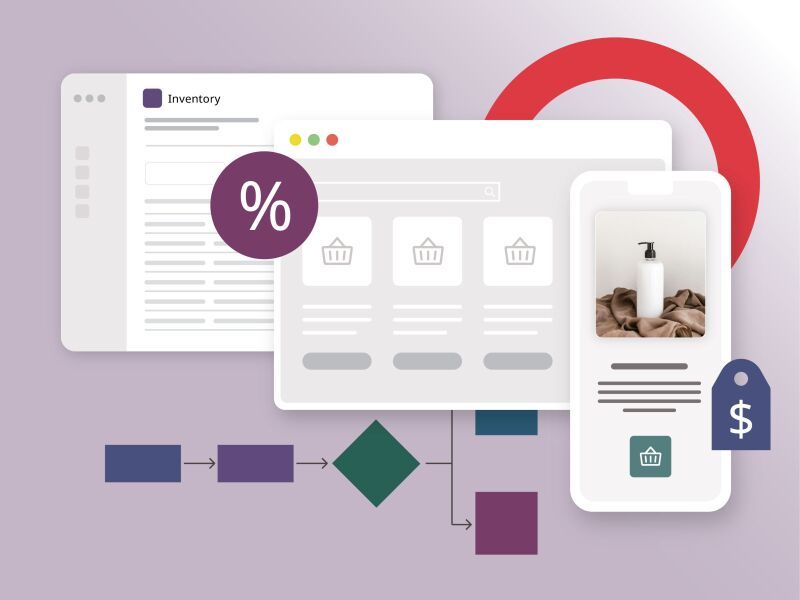\n\n### 1. Content management system (CMS) functionalities\n\nE-commerce CMS platforms offer robust content management capabilities, allowing businesses to create, edit, and publish various types of content seamlessly. Whether it's product descriptions, blog posts, or landing pages, these platforms provide intuitive tools for managing content effectively.\n\n### 2. User-friendly interface for easy content creation:\n\nOne of the key features of e-commerce CMS platforms is their user-friendly interface, which simplifies the content creation process. With drag-and-drop editors, WYSIWYG (What You See Is What You Get) interfaces, and customizable templates, businesses can create compelling content without any technical expertise.\n\n### 3. Content organization and categorization with tags and metadata\n\nE-commerce CMS platforms offer advanced content organization features, allowing businesses to categorize and tag their content for easy navigation. By using metadata and taxonomy structures, businesses can ensure that their content is organized logically and is easily discoverable by users.\n\n### 4. SEO optimization and tools for improved search engine visibility\n \nE-commerce CMS platforms come equipped with built-in SEO optimization tools that help businesses improve their search engine visibility. From customizable URLs and meta tags to automated sitemap generation and schema markup implementation, these platforms offer a range of features to enhance SEO performance.\n\n### 5. Website building tools to customize design and layout:\n\nAnother standout feature of e-commerce CMS platforms is their website building capabilities. With customizable templates, themes, and design elements, businesses can create visually stunning and unique online storefronts that reflect their brand identity and resonate with their target audience.\n\n### 6. E-commerce specific features\n\n- **Product management and catalog organization**\n\nE-commerce CMS platforms provide comprehensive product management tools, allowing businesses to easily add, edit, and organize their product catalog. From product variants and attributes to pricing and inventory levels, these platforms offer everything businesses need to showcase their products effectively.\n\n- **Inventory tracking and real-time stock updates**\n\nKeeping track of inventory levels is crucial for e-commerce businesses, and e-commerce CMS platforms make this task seamless. With real-time inventory tracking and automatic stock updates, businesses can ensure that they never run out of stock and can accurately manage their inventory levels.\n\n- **Payment processing integration with popular gateways**\n\nE-commerce CMS platforms offer seamless integration with popular payment gateways, allowing businesses to accept payments from customers securely and efficiently. Whether it's credit card payments, PayPal, or alternative payment methods, these platforms support a wide range of payment options to accommodate diverse customer preferences.\n\n- **Order fulfillment and shipping management**\n\nFinally, e-commerce CMS platforms streamline the order fulfillment and shipping process, making it easy for businesses to manage orders, track shipments, and provide shipping options to customers. With features such as order management systems and shipping rate calculators, businesses can ensure smooth and hassle-free order fulfillment.\n\n## Factors to Consider when Selecting a CMS E-commerce Platform\n\n### Scalability and Flexibility for Future Growth\nYour chosen e-commerce CMS platform should be capable of growing with your business. Look for scalability features such as the ability to handle increasing product listings, traffic volume, and transaction processing. Additionally, ensure the platform offers flexibility to adapt to changing business needs and market trends.\n\n### Customization Options to Match Your Brand and Design Preferences\n\nPer
10sonalization is key to creating a unique and memorable online shopping experience. Seek an e-commerce CMS platform that provides extensive customization options for branding, design, and layout. This includes customizable templates, themes, colors, fonts, and styles to reflect your brand identity and appeal to your target audience.\n\n### Integration Capabilities with Third-party Apps and Services\n\nE-commerce operations often rely on various third-party apps and services for functionalities such as payment processing, shipping, marketing, analytics, and customer support. Choose a CMS platform that offers seamless integration capabilities with popular third-party providers to enhance your store's functionality and streamline business operations.\n\n### SEO Features and Optimization Capabilities\n\n[Search engine optimization (SEO)](https://codenomad.net/services/digital-marketing/) is critical for driving organic traffic to your e-commerce store. Ensure the chosen CMS platform offers robust SEO features and optimization capabilities, including customizable URLs, meta tags, structured data markup, mobile responsiveness, and site speed optimization. This will help improve your store's visibility in search engine results and attract more potential customers.\n\n### Security Measures to Protect Customer Data\n\nProtecting customer data is paramount for building trust and credibility in e-commerce. Prioritize security when selecting an e-commerce CMS platform by choosing one that implements stringent security measures. Look for features such as SSL encryption, PCI compliance, secure payment gateways, regular security updates, and data backup options to safeguard sensitive customer information from cyber threats.\n\n## Popular CMS E-commerce Platforms\n\n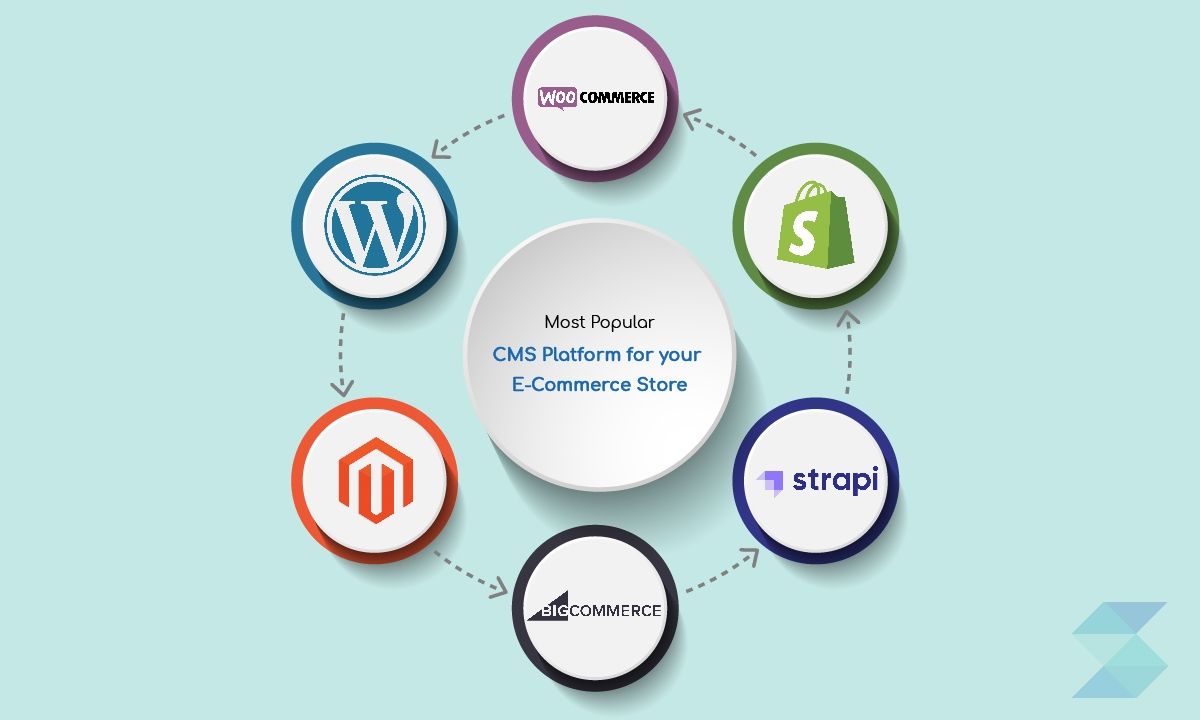\n\n### WooCommerce\n\nWooCommerce is a flexible and customizable e-commerce plugin for WordPress websites. It offers a wide range of features, including product management, payment processing, shipping options, and extensive customization capabilities. [**WooCommerce**](https://codenomad.net/hire/hire-woocommerce-developer/) is suitable for businesses of all sizes, particularly those already using WordPress as their content management system.\n\n### Shopify\n\nShopify is a hosted e-commerce platform that provides everything you need to set up and manage your online store. It offers user-friendly interface, customizable templates, secure payment processing, integrated marketing tools, and extensive app store with thousands of plugins and integrations. [**Shopify**](https://codenomad.net/hire/hire-shopify-developer/) is ideal for businesses seeking an all-in-one e-commerce solution with minimal technical requirements.\n\n### Adobe Commerce (formerly Magento)\n\nAdobe Commerce is a robust and scalable e-commerce platform known for its flexibility and customization options. It offers advanced features such as multi-store management, product personalization, powerful backend capabilities, and support for large-scale e-commerce operations. Adobe Commerce is suitable for businesses with complex e-commerce requirements and a need for highly customizable solutions.\n\n### Webflow\n\nWebflow is a design-focused e-commerce platform that empowers users to create custom websites with ease. It offers a visual drag-and-drop editor, responsive design capabilities, and seamless integration with e-commerce functionality. [**Webflow**](https://codenomad.net/hire/hire-webflow-developer/) is suitable for businesses looking to create visually stunning and highly customized online stores without the need for extensive coding knowledge.\n\n## Best Practices for Managing a CMS E-commerce Website\n\n### Creating Engaging and Conversion-focused Content\n\nProduce high-quality content that resonates with your target audience and encourages them to take action. Focus on addressing their pain points, showcasing product benefits, and highlighting unique selling propositions. Use persuasive language, clear calls-to-action, and compelling visuals to guide visitors towards making a purchase.\n\n### Writing Compelling Product Descriptions and Engaging Blog Posts\n\nCraft informative and persuasive product descriptions that accurately describe your products while also emp
10hasizing their value and benefits to customers. Additionally, regularly publish engaging blog posts that provide valuable insights, tips, and industry-related content. This not only helps establish your authority in your niche but also drives traffic to your website and keeps visitors engaged.\n\n### Utilizing Visual Content such as Images and Videos\n\nIncorporate high-quality images and videos into your e-commerce website to enhance the visual appeal of your products and effectively showcase their features. Utilize multiple angles, close-ups, and lifestyle shots to provide customers with a comprehensive view of your products. Additionally, consider creating product demonstration videos, tutorials, or user-generated content to engage and inform your audience.\n\n### Implementing User-generated Content for Social Proof\n\nLeverage user-generated content such as customer reviews, testimonials, and social media posts to build trust and credibility with potential customers. Display customer reviews prominently on product pages to provide social proof and reassure visitors about the quality and reliability of your products. Encourage satisfied customers to share their experiences on social media and incentivize them to create user-generated content through contests, giveaways, or loyalty programs.\n\n## Optimizing Your CMS E-commerce Website for Search Engines\n\n### Conducting Keyword Research for Effective SEO\n\nIdentify relevant keywords and phrases that your target audience is using to search for products or services similar to yours. Use keyword research tools to discover high-volume and low-competition keywords, and strategically integrate them into your website's content, including product descriptions, blog posts, and meta tags.\n\n### Optimizing Page Titles, Meta Descriptions, and URLs\n\nCraft descriptive and keyword-rich page titles, meta descriptions, and URLs for each page on your website. Optimize these elements to accurately reflect the content of the page and entice users to click through from search engine results pages (SERPs). Keep titles concise, meta descriptions informative, and URLs clean and readable.\n\n### Implementing Structured Data Markup for Enhanced Search Results\n\nImplement structured data markup, such as Schema.org markup, to provide search engines with additional context about your website's content. This can help improve the visibility of your website in search results and enhance the appearance of rich snippets, such as product reviews, ratings, and pricing information.\n\n### Monitoring and Analyzing Website Performance\n\nRegularly monitor and analyze your website's performance using web analytics tools such as Google Analytics. Track key metrics such as website traffic, user engagement, conversion rates, and bounce rates to gain insights into how users are interacting with your website and identify areas for improvement.\n\n### Utilizing Analytics Tools to Track Traffic, Conversions, and Bounce Rates\n\nUtilize analytics tools to track website traffic, conversions, and bounce rates. Analyze user behavior, traffic sources, and conversion paths to identify patterns and trends. Use this data to optimize your website's content, navigation, and user experience to improve conversion rates and drive revenue.\n\n### Conducting A/B Testing for Optimization and Improvement\n\nConduct A/B testing (or split testing) to compare different versions of your website's elements, such as page layouts, call-to-action buttons, and product descriptions. Test variations against each other to determine which ones perform better in terms of conversions and user engagement. Use the insights gained from A/B testing to make data-driven decisions and continuously optimize your website for better results.\n\n### Regularly Updating and Maintaining Your CMS E-commerce Platform\n\nRegularly update and maintain your CMS e-commerce platform to ensure it remains secure, functional, and optimized for search engines. Stay up-to-date with platform updates, security patches, and plugin or extension releases. Regularly audit your website for broken links, outdated content, and technical issues, and address them promptly to maintain optimal performance and user experience.\n\n## Troubleshooting Common Issues in CMS E-commerce\n\n### Website Performance and Speed Optimization\n\nSlow loading times can negatively impact user experience and search engine rankings. Conduct regular performance audits to identify bottlenecks and optimize website speed. Minimize server response times, optimize code and scripts, and leverage browser caching to improve load times.\n\n### Identifying and Resolving Slow Loading Times\n\nUse website performance monitoring tools to identify the root causes of slow loading times. Factors such as large image files, excessive HTTP requests, inefficient code, or server issues may contribute to slow performance. Address these issues by optimizing images, reducing unnecessary scripts, and upgrading hosting resources if needed.\n\n### Optimizing Images and Minimizing HTTP Requests\n\nOptimize images by compressing file sizes without sacrificing quality and using appropriate image formats (e.g., JPEG, PNG, SVG). Minimize HTTP requests by combining CSS and JavaScript files, utilizing CSS sprites, and lazy loading images to reduce server load and improve page load times.\n\n### Utilizing Caching and Content Delivery Networks (CDNs)\n\nImplement caching mechanisms such as browser caching, server-side caching, and content delivery networks (CDNs) to cache static content and deliver it efficiently to users. CDNs distribute content across multiple servers worldwide, reducing latency and improving website performance for users across different geographic locations.\n\n### Payment Processing and Checkout Problems\n\nMonitor payment processing and checkout processes regularly to identify and resolve any issues that may arise. Common problems include payment gateway errors, transaction failures, and checkout page glitches. Ensure seamless integration with payment gateways, test checkout functionality regularly, and provide clear instructions for users to troubleshoot common issues.\n\n### Troubleshooting Issues with Order Fulfillment and Shipping\n\nMonitor order fulfillment and shipping processes to identify and resolve any issues that may affect customer satisfaction. Common problems include inventory discrepancies, shipping delays, and order tracking errors. Implement robust inventory management systems, work closely with shipping carriers, and provide clear communication and support to customers throughout the fulfillment process.\n\n### Handling Customer Complaints and Providing Excellent Support\n\nAddress customer complaints promptly and professionally to maintain customer satisfaction and loyalty. Establish clear channels for customer support, such as email, live chat, or phone support, and respond to inquiries and issues in a timely manner. Listen to customer feedback, take ownership of problems, and strive to provide solutions that exceed expectations.\n\n## Conclusion\n\nIn today's competitive e-commerce world, choosing the right CMS platform and optimizing your website for performance, **SEO**, and customer experience are critical for success. By selecting platforms like WooCommerce, Shopify, Adobe Commerce, or Webflow and implementing best practices such as engaging content creation, SEO optimization, and efficie
10nt troubleshooting, businesses can thrive online.\n\nPartnering with experienced service providers like [**CodeNomad**](https://codenomad.net/) can further streamline the development and management process, ensuring that your e-commerce website meets the highest standards of performance and user satisfaction. With their expertise in [**e-commerce CMS development**](https://codenomad.net/services/ecommerce/), **CodeNomad** offers tailored solutions to help businesses succeed in the digital marketplace.","tab":null,"url":"choosing-the-perfect-ecommerce-cms","metaTitle":"Ecommerce CMS: Features, Benefits, and Best Practices","metaDescription":"Boost your e-commerce sales with best CMS platforms \u0026 practices. Learn SEO, content marketing, \u0026 troubleshooting for a high-performing website.","name":null,"Date":"April 02, 2024","nameDropdown":"Sumit Kohal","blogsCategory":["E-Commerce","Shopify"],"blogsCategorybackgroundColor":["#D9E8FF","#63FF7C"],"blogsCategoryColor":["#223C81","#02570F"],"video":{"data":null},"image2":{"data":{"id":540,"attributes":{"name":"sumitsir.png","alternativeText":null,"caption":null,"width":54,"height":54,"formats":null,"hash":"sumitsir_fe8ecd5742","ext":".png","mime":"image/png","size":1.81,"url":"/uploads/sumitsir_fe8ecd5742.png","previewUrl":null,"provider":"local","provider_metadata":null,"createdAt":"2024-01-22T05:52:00.402Z","updatedAt":"2024-01-30T09:44:07.697Z"}}},"image":{"data":{"id":1040,"attributes":{"name":"Untitled design (60).png","alternativeText":null,"caption":null,"width":700,"height":400,"formats":{"small":{"ext":".png","url":"/uploads/small_Untitled_design_60_7050d78671.png","hash":"small_Untitled_design_60_7050d78671","mime":"image/png","name":"small_Untitled design (60).png","path":null,"size":32.98,"width":500,"height":286},"thumbnail":{"ext":".png","url":"/uploads/thumbnail_Untitled_design_60_7050d78671.png","hash":"thumbnail_Untitled_design_60_7050d78671","mime":"image/png","name":"thumbnail_Untitled design (60).png","path":null,"size":14.51,"width":245,"height":140}},"hash":"Untitled_design_60_7050d78671","ext":".png","mime":"image/png","size":10.82,"url":"/uploads/Untitled_design_60_7050d78671.png","previewUrl":null,"provider":"local","provider_metadata":null,"createdAt":"2024-04-01T12:09:17.249Z","updatedAt":"2024-04-01T12:09:17.249Z"}}}},{"id":1735,"category":null,"title":"Choosing the Right User Research Method: A Comprehensive Guide","description":null,"background_color":null,"button":null,"accords":null,"detail_description":"Starting with user research can be overwhelming. Even experienced UX researchers can find the multitude of available methods daunting. With so many choices, how do you pick the right one to answer your research questions efficiently, within budget, and on time?\nIn the previous chapters, we covered different user research methods and the differences between qualitative and quantitative research. Now, let's refine your choices and introduce frameworks to help you select the best method for your project.\nThese frameworks, adaptable to your own practice and constraints, will make answering the question \"Which UX research method should I use?\" easier and more effective. Let's explore these tools to simplify your research process and generate actionable insights.\n## Start with clearly stated research questions and goals\n\nStarting with clearly stated research questions and goals is the foundational step in any user research initiative. These questions and goals serve as the guiding light throughout the research process, shaping the direction of your investigation and ensuring that you gather meaningful insights. **Here are some suggestions to help you craft clear research questions:**\n### Understanding User Needs:\n- What are the primary pain points or challenges that users encounter when interacting with our product?\n- How do users currently accomplish tasks related to our product, and what obstacles do they face in the process?\n- What are the key features or functionalities that users consider essential for addressing their needs?\n### Exploring User Behavior:\n- How do users navigate through our website or application, and what areas do they find most confusing or intuitive?\
10n- What factors influence users' decision-making processes when selecting products or services similar to ours?\n- Are there specific patterns or trends in user behavior that we can identify to improve the user experience?\n### Assessing Product Usability:\n- How easy is it for users to complete common tasks within our product, such as making a purchase or accessing support resources?\n- What aspects of our product's interface contribute to user satisfaction, and which areas could be improved to enhance usability?\n- Are there any usability issues or barriers that prevent users from fully engaging with our product?\n### Gathering Feedback for Improvement:\n- What feedback do users have regarding their overall experience with our product, and how can we address any areas of concern?\n- Are there any specific features or functionalities that users would like to see added or improved in future iterations of our product?\n- How satisfied are users with the level of support and assistance provided when using our product?\n## Pick the Right Method for Your Research Question\nWhen embarking on a user research journey, selecting the appropriate method is crucial to obtaining relevant and actionable insights. The decision-making process begins with understanding the nature of your research question and aligning it with the most suitable approach. **Here's how to navigate three key considerations when choosing a research method:**\n### Quantitative or Qualitative\n\nQuantitative research involves collecting data from a large sample size to quantify aspects of user behavior or preferences. It focuses on numerical analysis and statistical patterns to uncover trends and patterns. This method is ideal for answering questions that start with \"**how much,\" \"how many,\" or \"how often.\"**\n\n**Example:** Conducting surveys to measure customer satisfaction ratings or tracking website analytics to analyze user engagement metrics.\n\nQualitative research, on the other hand, delves into the underlying reasons, motivations, and attitudes behind user behaviors. It involves gathering in-depth insights through methods such as interviews, observations, or focus groups. Qualitative research helps answer questions that begin with \"why\" or \"how.\"\n\n**Example:** Conducting user interviews to understand the challenges users face when navigating a website or observing user interactions to identify pain points in a product's user interface.\n\n### Generative or Evaluative\nGenerative research, also known as exploratory research, focuses on generating new ideas, concepts, or solutions. It aims to uncover user needs, preferences, and pain points to inform the development of innovative products or features. Methods like ethnographic studies, brainstorming sessions, or design thinking workshops are commonly used in generative research.\n\n**Example:** Conducting ethnographic field studies to observe how users interact with a specific product category or hosting co-creation workshops to generate ideas for improving an existing service.\n\nEvaluative research, on the other hand, involves assessing and validating existing designs, prototypes, or products. It aims to gather feedback on usability, functionality, and user satisfaction to iterate and improve upon the current solution. Usability testing, A/B testing, and heuristic evaluations are common evaluative research methods.\n\n**Example:** Conducting usability testing sessions to evaluate the effectiveness of a new website design or running A/B tests to compare the performance of two different product variations.\n\n### Attitudinal or Behavioral\nAttitudinal research focuses on understanding users' beliefs, perceptions, and attitudes towards a product, service, or brand. It explores subjective opinions and preferences through methods such as surveys, interviews, or focus groups.\n\n**Example:** Administering surveys to assess customers' brand loyalty or conducting focus groups to gather feedback on a new advertising campaign.\n\nBehavioral research, on the other hand, examines actual user behaviors, actions, and interactions with a product or service. It involves observing user behavior in real-world or simulated environments to uncover insights into user interaction patterns and usability issues.\n\n**Example:** Tracking user interactions on a website using heatmaps or analyzing click-through rates to understand user navigation patterns.\n\n## User Research Frameworks\nUser research frameworks provide structured approaches for selecting and implementing research methods effectively. These frameworks serve as valuable guides for researchers to navigate the complexities of user research and make informed decisions. Here's a closer look at some popular user research frameworks:\n\n### Decision-Driven Research Framework:\nThe Decision-Driven Research Framework emp
10hasizes aligning research methods with the types of decisions they aim to inform. It categorizes decisions into four types:\n- **Vision decisions:** Establishing potential directions for company, product, or service development.\n- **Strategy decisions:** Determining how to achieve the established vision.\n- Definition decisions: Assessing whether to pursue specific design directions.\n- **Evaluation decisions:** Iterating and improving existing products or services based on user feedback.\n\nBy mapping research methods to these decision types, teams can ensure that their research efforts directly contribute to meaningful outcomes.\n\n### 3-Dimensional Framework by Nielsen Norman Group (NN/g):\n\nNN/g's framework categorizes user research methods along three axes:\n\n- **Attitudinal vs. Behavioral:** Distinguishes between methods focusing on user attitudes or beliefs (e.g., surveys, interviews) and those examining actual user behaviors (e.g., usability testing, eye tracking).\n- **Qualitative vs. Quantitative:** Differentiates between methods that produce qualitative data (e.g., interviews, observations) and those yielding quantitative data (e.g., surveys, analytics).\n- **Context of Use:** Considers whether the research involves natural or near-natural use of the product, scripted use, or non-use during the study.\nThis framework helps researchers select methods based on the specific research goals, user behavior, and context of use.\n\n### Lean User Research Framework:\nThe Lean User Research Framework emphasizes efficiency and practicality in research planning. It encourages researchers to prioritize essential questions and focus on gathering actionable insights using minimal resources. This framework aligns with agile and lean methodologies, advocating for iterative research and rapid experimentation to inform product development decisions.\n\n## The Right Methods for Each Stage of Product Development\nUser research plays a critical role at every stage of product development, helping teams understand user needs, validate design decisions, and iterate on prototypes. **Here are key discovery methods tailored to each stage:**\n\n### 1. Discovery Stage (Pre-Prototype):\nStakeholder Interviews: Engage with key stakeholders to understand business goals, product vision, and user needs. Stakeholder interviews provide insights into organizational priorities and help align research objectives with broader strategic objectives.\n- **Ethnography:** Conduct in-depth observations of users in their natural environments to gain insights into their behaviors, preferences, and pain points. Ethnographic studies offer contextual understanding and uncover unmet needs that may not surface through traditional research methods.\n- **Diary Studies:** Ask participants to document their experiences, activities, and thoughts over a period of time. Diary studies provide longitudinal insights into user behaviors, habits, and interactions with products or services.\n- **Focus Groups:** Facilitate group discussions with users to explore attitudes, perceptions, and preferences regarding a specific topic or product concept. Focus groups enable researchers to gather diverse perspectives and uncover common themes among participants.\n- **Generative User Interviews:** Conduct one-on-one interviews with users to explore their goals, challenges, and aspirations. Generative interviews stimulate ideation and uncover opportunities for innovation by delving into users' unmet needs and pain points.\n- **Task Analysis:** Break down user tasks and workflows to understand the steps users take to accomplish specific goals. Task analysis helps identify usability issues, streamline processes, and inform the design of intuitive user interfaces.\n\n## Concept Validation and Testing Stage (Prototype and Build)\nDuring the concept validation and testing stage, teams focus on evaluating proposed solutions and validating design decisions through targeted testing. **Here are key validation and testing methods tailored to this stage:**\n### 1. Qualitative Usability Testing:\nDescription: Qualitative usability testing involves observing participants as they interact with prototypes or early versions of the product, soliciting feedback on usability, functionality, and overall user experience.\n- **Purpose:** Qualitative usability testing helps identify usability issues, gather user feedback, and inform design improvements before finalizing the product.\n- **Method:** Researchers observe participants' interactions with the prototype, prompting them to think aloud and express their thoughts, feelings, and challenges encountered during the task.\n### 2. A/B Testing and Multivariate Testing:\nA/B testing and multivariate testing involve comparing different versions of a design or feature to determine which performs better in achieving specific goals, such as conversion rate or user engagement.\n- **Purpose:** A/B testing and multivariate testing provide quantitative insights into the effectiveness of design variations, allowing teams to make data-driven decisions and optimize user experiences.\n- **Method:** Participants are randomly assigned to different versions of the prototype, and their interactions are tracked to measure key metrics and determine the impact of design changes.\n### 3. First Click Testing:\nFirst click testing assesses the intuitiveness of website navigation by capturing participants' initial interactions and determining whether they successfully locate desired information or complete tasks.\n- **Purpose:** First click testing helps evaluate the effectiveness of navigation design and identify potential usability issues related to information architecture.\n- **Method:** Participants are presented with specific tasks and asked to click on the area of the interface where they expect to find the information needed to complete the task. Researchers anal
10yze participants' first clicks to assess navigation effectiveness.\n### 4. Card Sorting and Tree Testing:\nCard sorting involves participants organizing content into categories based on their mental models, while tree testing evaluates the findability of information within a website's navigation structure.\n- **Purpose:** Card sorting and tree testing help optimize information architecture, enhance navigation efficiency, and ensure content is organized in a way that aligns with users' mental models.\n- **Method:** Participants perform card sorting exercises or complete tasks within a simplified sitemap structure, allowing researchers to assess the clarity and usability of the navigation system.\n### 5. Accessibility Testing:\nAccessibility testing evaluates the usability of a product for users with disabilities, ensuring it complies with accessibility standards and provides an inclusive user experience.\n\n- **Purpose:** Accessibility testing helps identify barriers to access and usability for users with disabilities, enabling teams to address accessibility issues and design more inclusive products.\n- **Method:** Researchers conduct manual or automated tests to assess the product's compliance with accessibility guidelines, including keyboard navigation, screen reader compatibility, and color contrast ratios.\n\n## On-going Listening (Post-launch)\nAfter launching a product, continuous user research is crucial for maintaining and enhancing its usability, functionality, and relevance over time. Here are key ongoing listening methods tailored to the post-launch phase:\n### 1. Feedback Surveys:\nFeedback surveys gather user opinions, preferences, and suggestions through structured questionnaires or forms, allowing users to provide feedback on their experiences with the product.\n- **Purpose:** Feedback surveys help capture user sentiments, identify areas for improvement, and prioritize feature requests or enhancements based on user feedback.\n- **Method:** Surveys can be distributed via email, within the product interface, or through dedicated survey platforms, with questions designed to gather actionable insights into user satisfaction, usability issues, and feature preferences.\n### 2. Analytics:\nAnalytics tools track user interactions, behaviors, and performance metrics within the product, providing quantitative data on user engagement, retention, conversion rates, and other key performance indicators.\n- **Purpose:** Analytics enable teams to monitor product performance, identify usage patterns, and measure the impact of design changes or feature updates on user behavior and business objectives.\n- **Method:** Data collected through analytics platforms, such as Google Analytics or Mixpanel, is analyzed to uncover trends, anomalies, and opportunities for optimization, informing data-driven decision-making and iterative product improvements.\n### 3. Bug Reports and Support Tickets:\nBug reports and support tickets document technical issues, usability problems, or feature requests reported by users through dedicated support channels or customer service platforms.\n- **Purpose:** Bug reports and support tickets provide insights into user frustrations, pain points, and areas of concern, helping teams prioritize and address critical issues to enhance the overall user experience.\n- **Method:** Support teams triage incoming bug reports and support tickets, categorizing issues by severity and impact, and collaborating with product development teams to investigate, troubleshoot, and resolve reported issues in a timely manner.\n## Mapping UX Research Methods to Decisions\nIn the realm of user experience (UX) research, aligning research methods with specific decision-making needs is essential for driving effective product development strategies. **Here's a framework for decision-driven research, categorizing UX research methods according to the types of decisions they support:**\n### 1. Vision Decisions:\nVision decisions establish the overarching direction for a company, product, or service, shaping its long-term goals, values, and market positioning.\n#### Research Methods:\n- **Stakeholder Interviews:** Engage with key stakeholders to understand their perspectives, goals, and vision for the product or service.\n- **Ethnography:** Conduct observational studies to gain deep insights into user behaviors, needs, and experiences within their natural contexts.\n- **Generative User Interviews:** Explore user perspectives, pain points, and aspirations to inform visionary strategies and product roadmaps.\n### 2. Strategy Decisions:\nStrategy decisions determine how a company or product will achieve its vision, outlining the approach, priorities, and initiatives to fulfill strategic objectives.\n#### Research Methods:\n- **Stakeholder Interviews:** Gather input from stakeholders to align on strategic priorities, market opportunities, and competitive positioning.\n- **Generative User Interviews:** Identify user needs, preferences, and pain points to inform strategic product decisions and feature prioritization.\n- **Market Surveys:** Collect data on market trends, user preferences, and competitor offerings to inform strategic positioning and market differentiation.\n### 3. Definition Decisions:\nDefinition decisions involve defining the scope, features, and user requirements for a product or service, shaping its conceptual design and functionality.\n#### Research Methods:\n- **Generative User Interviews:** Elicit user feedback on proposed features, functionalities, and user interface designs to refine product definitions.\n- **Concept Testing:** Validate product concepts and prototypes with target users to assess their viability, usability, and appeal.\n- **Task Analysis:** Analyze user workflows and task sequences to identify user goals, pain points, and opportunities for improving task efficie
10ncy.\n### 4. Evaluation Decisions:\nEvaluation decisions focus on assessing the performance, usability, and effectiveness of a product or service, guiding iterative improvements and optimizations.\n#### Research Methods:\n- **Usability Testing:** Evaluate the usability of prototypes or existing products through user testing sessions, identifying usability issues and areas for improvement.\n- **A/B Testing and Multivariate Testing:** Compare different design variations to determine which performs best in achieving specific user and business goals.\n- **Feedback Surveys:** Collect user feedback and insights post-launch to assess user satisfaction, gather feature requests, and prioritize future enhancements.\n## A 3-Dimensional Framework for UX Research\nNavigating the vast landscape of user experience research (UXR) requires a comprehensive framework that considers the multidimensional nature of research methods. **Here's a 3-dimensional framework that helps categorize UXR methods based on key axes:**\n### 1. Attitudinal vs. Behavioral:\n- **Attitudinal Research:** Focuses on capturing user beliefs, perceptions, and preferences through self-reported data, such as surveys, interviews, and focus groups.\n_Example Method:_ Surveying users about their satisfaction with a website's interface.\n\n- **Behavioral Research:** Centers on observing and analyzing user actions, interactions, and behaviors within a product or service, often through usability testing, analytics, and eye tracking.\n_Example Method:_ Conducting a usability test to observe how users navigate a mobile app's onboarding process.\n### 2. Qualitative vs. Quantitative:\n- **Qualitative Research:** Involves collecting rich, descriptive insights from a smaller sample size, focusing on understanding user behaviors, motivations, and experiences in-depth.\n_Example Method:_ Conducting in-depth interviews to explore users' emotional responses to a new feature.\n\n- **Quantitative Research:** Focuses on gathering numerical data from a larger sample size, aiming to quantify user behaviors, preferences, and trends statistically.\n_Example Method:_ Analyzing website analytics to track user engagement metrics like page views and bounce rates.\n\n### 3. Context of Use:\n- **Natural or Near-Natural Use:** Observes users interacting with a product or service in their natural environment or under conditions closely resembling real-world usage scenarios.\n_Example Method:_ Conducting ethnographic field studies to observe how users incorporate a wearable fitness tracker into their daily routines.\n\n- **Scripted Use:** Involves guiding users through predefined tasks or scenarios within a controlled testing environment, allowing researchers to standardize testing conditions.\n_Example Method:_ Usability testing in a lab setting, where participants are instructed to complete specific tasks using a website prototype.\n- **Not Using the Product During the Study:** Focuses on gathering insights from users who are not currently using the product, such as through surveys or market research, to understand broader market trends and user needs.\n_Example Method:_ Administering a survey to gather feedback from non-users about their awareness and perceptions of a new mobile app.\n## Conclusion\nChoosing the right user research method is vital for informed decision-making in product development. By considering factors like research goals, qualitative versus quantitative approaches, and the context of user interactions, researchers can select methods effectively. With a diverse toolkit including interviews, usability testing, surveys, and analytics, teams can gather valuable insights. Aligning research methods with decision-making needs ensures efficie
10ncy and effectiveness, leading to user-centered products and experiences.\n","tab":null,"url":"choosing-the-right-user-research-method","metaTitle":"Choosing the Right User Research Method: A Comprehensive Guide","metaDescription":"Choosing the right user research method is vital for informed decision-making in product development.","name":null,"Date":"March 22, 2024","nameDropdown":"Pankaj Kumar","blogsCategory":["Web Designing"],"blogsCategorybackgroundColor":["#B2F9FF"],"blogsCategoryColor":["#0A5559"],"video":{"data":null},"image2":{"data":{"id":539,"attributes":{"name":"pankajsir.svg","alternativeText":null,"caption":null,"width":54,"height":54,"formats":null,"hash":"pankajsir_9346d153d8","ext":".svg","mime":"image/svg+xml","size":266.41,"url":"/uploads/pankajsir_9346d153d8.svg","previewUrl":null,"provider":"local","provider_metadata":null,"createdAt":"2024-01-22T05:50:52.844Z","updatedAt":"2024-01-22T05:50:52.844Z"}}},"image":{"data":{"id":1038,"attributes":{"name":"Untitled design (56).png","alternativeText":null,"caption":null,"width":1150,"height":450,"formats":{"large":{"ext":".png","url":"/uploads/large_Untitled_design_56_8b773f5df7.png","hash":"large_Untitled_design_56_8b773f5df7","mime":"image/png","name":"large_Untitled design (56).png","path":null,"size":299.68,"width":1000,"height":391},"small":{"ext":".png","url":"/uploads/small_Untitled_design_56_8b773f5df7.png","hash":"small_Untitled_design_56_8b773f5df7","mime":"image/png","name":"small_Untitled design (56).png","path":null,"size":88.65,"width":500,"height":196},"medium":{"ext":".png","url":"/uploads/medium_Untitled_design_56_8b773f5df7.png","hash":"medium_Untitled_design_56_8b773f5df7","mime":"image/png","name":"medium_Untitled design (56).png","path":null,"size":181.16,"width":750,"height":293},"thumbnail":{"ext":".png","url":"/uploads/thumbnail_Untitled_design_56_8b773f5df7.png","hash":"thumbnail_Untitled_design_56_8b773f5df7","mime":"image/png","name":"thumbnail_Untitled design (56).png","path":null,"size":25.77,"width":245,"height":96}},"hash":"Untitled_design_56_8b773f5df7","ext":".png","mime":"image/png","size":114.53,"url":"/uploads/Untitled_design_56_8b773f5df7.png","previewUrl":null,"provider":"local","provider_metadata":null,"createdAt":"2024-03-26T09:59:30.770Z","updatedAt":"2024-03-26T09:59:30.770Z"}}}},{"id":1705,"category":"Branding","title":"5 Branding Mistakes You Should Avoid","description":null,"background_color":null,"button":null,"accords":null,"detail_description":"Branding is the essence of how a company presents itself to the world. It's the art of shaping perceptions, emotions, and loyalty around a product, service, or organization. In today's fiercely competitive market, branding can make or break a business. However, despite its paramount importance, many companies fall prey to common branding mistakes that can prove to be not only detrimental but also costly.\n\nIn this blog, we'll delve into five of these costly branding mistakes that businesses often make, and explore how they can be avoided. From neglecting consistency to ignoring customer feedback, each mistake carries the potential to erode trust, damage reputation, and ultimately hinder growth. By understanding these pitfalls and implementing strategies to mitigate them, businesses can pave the way for a stronger, more resonant brand presence in the marketplace. Let's dive in.\n\n## Mistake #1: Neglecting Market Research\n\nMarket research is the North Star of branding. It illuminates your target audience, their pain points, and desires. Neglecting it is like setting sail without a map, yet many beginner captains throw it away.\n\n### Why this usually happens:\n\n- **Overconfidence:** Entrepreneurs often fall in love with their concepts. They believe so strongly in their vision that they assume itâs universally appealing. This belief makes you disregard market research because you feel you already know everything customers want.\n- **Budget constraints:** Small businesses often operate on shoestring budgets. Market research for startup branding can be perceived as an unnecessary expense, especially when compared to product development or marketing activities that seem more directly linked to revenue generation.\n- **Time pressure:** The urgency to bring a product to market leads to shortcuts. Youâre often tempted to skip or rush through the research phase, believing you can gather insights later on.\n- **Lack of research skills:** Conducting effective research requires specific skills and tools. You and your team may lack the knowledge or resources to execute it properly, leading to avoidance or superficial efforts.\n### How to avoid:\n- **Recognize the value:** Market research is an investment, not an expense. Itâs the cornerstone of informed decision-making and can save you from costly missteps down the road.\n- **Start early:** Begin the research process at the inception of your branding idea. This will help you shape your concept in a way that aligns with market demand from the start.\n- **Define your target audience:** Understand your clientâs pain points, desires, demographics, and behaviors. This information will guide you when branding a startup.\n- **Utilize available resources:** Even with a limited budget, you can gather some meaningful data. Online surveys, social media polls, and free or low-cost research tools can provide valuable insights.\n- **Seek expert help:** If you lack the necessary research skills, consider outsourcing or consulting with experts who can make it on your behalf. Itâs a worthwhile investment.\n- **Iterate and adapt:** Market research isnât a one-time task. Continuously gather and analyze data to stay informed about evolving market trends and customer preferences.\n\n## Mistake #2: Lack of Consistency\nConsistency is more than just using the same logo. Itâs about creating a cohesive experience across all touchpoints. Misconceptions, resource constraints, and the challenges of maintaining uniformity across various elements often lead to bad branding.\n### Why this usually happens:\n- **Misunderstanding:** Some people mistakenly view their brand as just a logo and a tagline. However, it encompasses every interaction, visual element, and communication associated with their business.\n- **Multiple contributors:** In larger teams with various contributors, creation becomes a mess â everyone hogs the covers. Different people have contrasting interpretations of the visual and messaging guidelines.\n- **No style guide:** Without a clear style guide that outlines the standards for typography, colors, imagery, and tone of voice, consistency is elusive.\n### How to avoid:\n- **Understand comprehensive nature:** Try learning more about branding a startup. Consistency usually goe
10s beyond visuals; it extends to every aspect, from messaging to customer interactions.\n- **Invest in a style guide:** Develop a comprehensive style guide that defines logo usage, color schemes, typography, voice and tone, and any other relevant elements. This document will serve as a reference.\n- **Regular communication:** Apart from style guides, itâs a good idea to create workshops to educate your team members on style consistency. Also, two heads are better than one: your colleagues and external partners can provide valuable feedback.\n- **Templates and tools:** Create templates and design tools that make it easy for team members to produce materials that adhere to the guidelines.\n\n## Mistake #3: Ignoring the Target Audience\nUnderstanding your audience is the cornerstone of effective strategy. Ignoring this aspect can lead to disastrous outcomes and branding gone wrong. You can fall into this trap due to wrong assumptions, a rush to market, and a lack of understanding of the audienceâs pivotal role.\n### Why this usually happens:\n- **Overconfidence:** Entrepreneurs sometimes assume they know their audience intimately because they have a vision for their product. However, this is a wrong assumption, and it can lead to the worst branding cases when people are absolutely confused with your product.\n- **The rush to market:** The never-ending business race makes you look for shortcuts, including minimal audience analysis.\n- **Misplaced focus:** Perfection is key but its overflow can lure you into a trap: perfecting your products and losing sight of your target audienceâs pains. In the end, your product fails to win peopleâs hearts.\n### How to avoid:\nAvoiding this costly branding mistake is paramount for startups looking to establish a solid and lasting brand. Hereâs how to steer clear of this pitfall:\nEmbrace audience-centric thinking: Shift your perspective from âWhat do I want to say about my product?â to âWhat does my audience need and want to hear?â Put your audience at the center of your concept.\n- **Define your ideal client:** Devote some time to create detailed customer personas that encompass demographics, psychographics, pain points, aspirations, and behavior. The more you understand your audience, the better you can tailor your branding to resonate with them.\n- **Map the customer journey:** Understand the different touchpoints your audience encounters during their journey with your brand. Each interaction should align with your audienceâs needs and expectations. Together with personas, it will show you a glimpse of the main issues your product should solve.\n- **Customer feedback loop:** Ongoing feedback from your customers is crucial. Listen to their concerns, suggestions, and criticisms to continually refine your approach.\n- **User testing:** Test your startup branding materials with users and clients to see their reactions and make necessary adjustments before major changes.\n\n## Mistake #4: Neglecting Brand Messaging\nIt isnât just about words; itâs about creating stories that resonate with your audience. Falling into this trap, youâre underestimating the power of words, a lack of strategic focus, and an assumption that a great product will speak for itself.\n### Why this usually happens:\n- **Product-centric focus:** You are understandably passionate about your offerings. Yet this passion can lead to a heavy emphasis on product features and benefits, overshadowing the importance of building a compelling brand.\n- **Lack of strategic plans:** In business, figuring everything out as you go along is a crucial mistake. To avoid the mess, you need to spend time and create a message you want to deliver to your audience.\n- **Underestimating the impact:** Customers are not crystal-gazers and they will not naturally understand your product without the need for refined messaging.\n### How to avoid:\n- **Embrace the power of storytelling:** Your brand messaging is the story you tell your audience. It is a powerful tool to connect emotionally with your customers. Try using various templates like the famous Joseph Campbellâs Heroâs Journey aka the Monomyth.\n- **Define your value proposition:** Clearly articulate what sets your product or service apart. What unique benefits do you offer, and why should your audience care? This should be the foundation of your messaging.\n- **Professional copywriting:** Consider enlisting the help of experts who specialize in startup branding. They will help you create impactful and cohesive messaging across all your communication channels.\n- **Tell customer stories:** Showcase real customer success stories and testimonials that embody the values and benefits your product has provided.\n\n## Mistake #5: Copying Competitors\nImitating your rivals might seem like a shortcut, but itâs a one-way ticket to mediocrity. What works for others might not work for you. Moreover, your clients will often confuse you with opponents.\n### Why this usually happens:\n- **Lack of originality:** Be confident in your own ideas and keep developing a unique brand identity. Donât resort to mimicking what you see working for your competitors.\n- **Fear of risk:** Branding carries inherent risks, and you often face high-pressure situations. Turning into a copycat can seem like a safe bet be
10cause you see a strategy that appears to have worked for others.\n- **Short-term focus:** Some startups prioritize short-term gains and quick market entry. Instead of investing in the long-term development of their own brand, they opt for imitating established players.\n- **Lack of strategic vision:** Again, due to the market race, itâs very tempting to skip the planning phase and just copy-paste the competitorâs solution.\n### How to avoid:\n- **Find your unique value proposition:** Take time to identify what truly sets your product or service apart. What unique value do you bring to the market?\n- **Competitive analysis:** Instead of copying your competitors, use them as sources of inspiration. Survey to identify gaps in the market and opportunities for differentiation.\n- **Focus on authenticity:** Authenticity is key to building trust with your audience. Be genuine in your brandâs messaging and values, and let your unique personality shine through.\n- **Long-term plans:** Stay committed to your unique brand identity. It wonât bring results right away, so keep working and developing your style.\n- **Seek inspiration beyond your industry:** Look for captivating ideas outside your immediate competitors. Fresh concepts often come from exploring unrelated fields.\n\n## Case Studies of Branding Gone Wrong\n\n### Colgate: Food Products\nColgate, renowned for dental care, made a bold move into the food industry by launching frozen dinners. However, this decision left consumers perplexed and tarnished the brand's reputation. The association between dental care and food didn't resonate well with customers, leading to confusion and skepticism. As a result, [Colgate's venture](https://en.wikipedia.org/wiki/Colgate-Palmolive) into the food sector failed to gain traction, highlighting the importance of staying aligned with a brand's core identity.\n\n### Victoriaâs Secret: Ad Slogan\n[Victoriaâs Secret](https://www.victoriassecret.in/) faced significant backlash for its \"The Perfect Body\" ad campaign, which was criticized for promoting unrealistic body standards. By featuring extremely slim supermodels as the epitome of perfection, the campaign perpetuated harmful beauty ideals that were unattainable for the majority of women. This misstep sparked outrage and damaged the brand's image, emphasizing the importance of promoting inclusivity and body positivity in advertising.\n\n### Burger King: Low-Calorie Foods\n[Burger King](https://www.bk.com/) attempted to cater to health-conscious consumers by introducing lower-calorie fries. However, the product failed to resonate with customers, as they struggled to understand the benefits of opting for these alternatives over traditional fries. Despite efforts to offer a healthier option, the lack of clarity and consumer awareness led to the discontinuation of the product within a year. This case underscores the significance of effective communication and consumer education in branding initiatives.\n\n### Twitter: Rebranding Misstep\nTwitter, a popular social network, underwent a failed rebranding attempt under the leadership of Elon Musk. The introduction of an \"X\" icon and a departure from the platform's iconic features left users confused and disconnected from the brand. Despite the attempted overhaul, users continued to refer to the platform as \"[Twitter](https://twitter.com/home)\" and its posts as \"tweets,\" highlighting the importance of maintaining brand consistency and relevance.\n\n### Additional Example: New Coke\nIn 1985, Coca-Cola made the monumental decision to reformulate its flagship product and launch \"[New Coke](https://en.wikipedia.org/wiki/New_Coke)\" in response to declining market share and competition from Pepsi. However, the move backfired spectacularly, sparking widespread consumer outrage and boycotts. Coca-Cola underestimated the emotional attachment consumers had to the original formula, leading to a rapid reversal and the reintroduction of Coca-Cola Classic just months later. This serves as a cautionary tale about the risks of tampering with beloved brand identities without fully understanding consumer sentiments.\n\n## Conclusion\nThese case studies illustrate the pitfalls that companies can encounter when navigating the complex landscape of branding. Effective branding isnât just a choice; itâs a necessity for startups and product owners. Avoiding common mistakes such as neglecting market research, lacking consistency, ignoring the target audience, copying competitors, and undergoing misguided rebranding efforts is crucial for ensuring a companyâs success. By learning from these missteps and implementing strategies that prioritize consumer understanding, authenticity, and engagement, businesses can create a memorable brand that resonates with their target audience and stands the test of time.","tab":null,"url":"5-costly-branding-mistakes","metaTitle":"5 Costly Branding Mistakes","metaDescription":"This blog post explores 5 costly branding mistakes businesses make and how to avoid them. Learn from real-world examples like Colgate \u0026 New Coke!","name":"Virender Singh","Date":"March 19, 2024","nameDropdown":"Virender Singh","blogsCategory":["Digital Marketing"],"blogsCategorybackgroundColor":["#FFEFCA"],"blogsCategoryColor":["#7B3400"],"video":{"data":null},"image2":{"data":{"id":538,"attributes":{"name":"virendarsir.png","alternativeText":null,"caption":null,"width":54,"height":55,"formats":null,"hash":"virendarsir_0b2105123a","ext":".png","mime":"image/png","size":1.69,"url":"/uploads/virendarsir_0b2105123a.png","previewUrl":null,"provider":"local","provider_metadata":null,"createdAt":"2024-01-22T05:49:57.677Z","updatedAt":"2024-01-22T05:49:57.677Z"}}},"image":{"data":{"id":1010,"attributes":{"name":"Untitled design (55).png","alternativeText":null,"caption":null,"width":1150,"height":450,"formats":{"large":{"ext":".png","url":"/uploads/large_Untitled_design_55_e068a024d5.png","hash":"large_Untitled_design_55_e068a024d5","mime":"image/png","name":"large_Untitled design (55).png","path":null,"size":914.16,"width":1000,"height":391},"small":{"ext":".png","url":"/uploads/small_Untitled_design_55_e068a024d5.png","hash":"small_Untitled_design_55_e068a024d5","mime":"image/png","name":"small_Untitled design (55).png","path":null,"size":246.87,"width":500,"height":196},"medium":{"ext":".png","url":"/uploads/medium_Untitled_design_55_e068a024d5.png","hash":"medium_Untitled_design_55_e068a024d5","mime":"image/png","name":"medium_Untitled design (55).png","path":null,"size":531.29,"width":750,"height":293},"thumbnail":{"ext":".png","url":"/uploads/thumbnail_Untitled_design_55_e068a024d5.png","hash":"thumbnail_Untitled_design_55_e068a024d5","mime":"image/png","name":"thumbnail_Untitled design (55).png","path":null,"size":63.67,"width":245,"height":96}},"hash":"Untitled_design_55_e068a024d5","ext":".png","mime":"image/png","size":279.32,"url":"/uploads/Untitled_design_55_e068a024d5.png","previewUrl":null,"provider":"local","provider_metadata":null,"createdAt":"2024-03-19T09:11:09.703Z","updatedAt":"2024-03-19T09:11:09.703Z"}}}},{"id":1646,"category":"Web Development","title":"Must-Have Productivity Tools for 2024: A Comprehensive Guide","description":null,"background_color":null,"button":null,"accords":null,"detail_description":"As the digital landscape continues to evolve, staying productive is essential for professionals across various domains. Whether you're a developer, designer, content creator, or simply someone looking to streamline your workflow, having the right tools can make all the difference. In this article, we'll explore some productivity tools for 2024 that are designed to boost efficiency, enhance collaboration, and simplify tasks across different areas of work and life.\n\n## HeptaBase:\n\nHeptaBase is a versatile note-taking app designed to streamline organization and productivity. With HeptaBase, users can easily gather and manage their notes, ideas, and documents in one convenient platform. Its user-friendly interface and intuitive organization system make it effortless to create, edit, and categorize notes according to different projects or topics.\n\n### Here are five key features of HeptaBase:\n\n- **Intuitive Note Management:** HeptaBase offers a user-friendly interface for effortless creation, editing, and organization of notes, ensuring users can easily capture and organize their thoughts and ideas.\n- **Flexible Organization:**
10Users can categorize their notes into folders or categories, enabling them to organize and structure their information in a way that makes sense to them, fostering better organization and retrieval.\n- **Efficient Tagging System:** HeptaBase provides a robust tagging system, allowing users to tag notes with keywords or labels for quick and easy identification and retrieval, streamlining the process of finding relevant information.\n- **Seamless Synchronization:** HeptaBase offers seamless synchronization across multiple devices, ensuring users can access their notes from anywhere and on any device, providing convenience and accessibility.\n- **Security and Privacy:** With built-in security features such as encryption and password protection, HeptaBase ensures the confidentiality and security of users' notes, providing peace of mind and protecting sensitive information from unauthorized access.\n\n## Arc Browser:\n\nArc Browser is a versatile web browser that offers users a customizable and efficient browsing experience. With its user-friendly interface and advanced features, Arc Browser is designed to enhance productivity and streamline online activities.\n\n### Key features of Arc Browser include:\n\n- **Frequent Updates:** Arc Browser is known for its regular updates, ensuring users have access to the latest features and security enhancements.\n- **Personalized CSS:** Users can personalize the browser's appearance and functionality by customizing CSS (Cascading Style Sheets), allowing for a tailored browsing experience.\n- **Account Switching:** Arc Browser supports seamless account switching, making it easy for users to switch between multiple accounts and profiles without the need for logging in and out repeatedly.\n- **Enhanced Privacy:** With built-in privacy features, Arc Browser offers users control over their online privacy, including options for managing cookies, tracking prevention, and private browsing modes.\n- **Efficient Performance:** Arc Browser is optimized for performance, providing fast and responsive browsing experiences even when handling multiple tabs or resource-intensive websites.\n\n## tldraw:\n\ntldraw is an innovative online whiteboard tool designed to provide users with a collaborative drawing experience while leveraging advanced AI capabilities. It simplifies the process of turning sketches into functional websites, making it an invaluable tool for designers, developers, and creatives alike.\n### Key features of tldraw include:\n- **Online Whiteboard:** tldraw offers a digital canvas where users can freely draw and visualize their ideas, making it easy to brainstorm, plan, and design various projects.\n- **Collaborative Experience:** With tldraw, multiple users can collaborate in real-time on the same canvas, allowing for seamless teamwork and idea-sharing regardless of geographical location.\n- **GPT-4V Support:** Leveraging the power of GPT-4V, tldraw can interpret user drawings and translate them into functional website elements, such as buttons, forms, and navigation menus, streamlining the process of turning sketches into fully realized websites.\n- **UI Layout Creation:** Users can sketch out the layout and design of a website or application directly on the canvas, allowing them to visualize the user interface and user experience before diving into the development process.\n- **AI-Powered Transformation:** tldraw's AI capabilities analyze user drawings and suggest or automatically generate code snippets, enabling users to quickly transform their sketches into HTML, CSS, and JavaScript code for implementation in web development projects.\n\n## devv.ai:\n\ndevv.ai is an AI-powered search engine meticulously crafted to cater specifically to developers' needs. It stands out as an invaluable resource for developers seeking instant and accurate solutions to their coding queries.\n\n### Key features of devv.ai include:\n\n- **Tailored Search Results:** devv.ai delivers highly relevant search results tailored to developers, ensuring that users receive precise answers to their coding questions.\n- **AI-Powered Algorithms:** With cutting-edge AI algorithms at its core, devv.ai effectively understands and interprets developers' queries, providing intelligent and contextually relevant search results.\n- **How-To Queries:** Developers can easily find step-by-step solutions to \"how to\" queries, simplifying complex coding tasks and accelerating the development process.\n- **Comprehe
10nsive Codebase:** devv.ai boasts an extensive codebase encompassing a wide range of programming languages, frameworks, and libraries, making it a comprehensive repository of coding knowledge.\n- **Developer-Friendly Interface:** The user interface of devv.ai is intuitively designed with developers in mind, ensuring a seamless and efficient search experience tailored to their workflow.\n\n\n## ActivePieces:\nActivePieces is an open-source automation platform designed to streamline workflow processes for users. It offers a range of features tailored to enhance productivity and efficiency in various tasks.\n### Key features of ActivePieces include:\n- **Task Automation:** Automate repetitive tasks such as sending emails, creating documents, and managing data.\n- **Integration Capabilities:** Seamlessly integrate with popular apps and services like Google Docs, Spotify, and more, enhancing workflow efficiency.\n- **Content Generation:** Utilize ChatGPT-powered content generation to create high-quality written content for emails, documents, and other purposes.\n- **Customization Options:** Access the source code for customization and collaboration, allowing users to tailor the platform to their specific needs.\n- **Open Source Community:** Benefit from a thriving open-source community, fostering collaboration and innovation among users.\n\n## Gummysearch:\nGummysearch is a customer research service specifically focused on leveraging Reddit communities. It serves as a valuable tool for validating ideas by exposing minimum viable products (MVPs) to relevant audiences on Reddit, thereby gathering crucial feedback for product development and refinement.\n\n### Key features of Gummysearch include:\n- **Audience Targeting:** Reach specific target audiences by tapping into relevant Reddit communities aligned with the product or idea being validated.\n- **Feedback Gathering:** Gather valuable insights and feedback from Reddit users, enabling users to gain a deeper understanding of their target market's preferences and needs.\n- **Validation of Ideas:** Validate product ideas and concepts by exposing MVPs to real users, helping to assess market viability and potential demand.\n- **Community Engagement:** Engage with Reddit communities to foster discussions, build relationships, and establish credibility within the target audience.\n- **Data-Driven Decisions:** Make informed decisions based on the feedback and insights collected from Reddit users, guiding product development and marketing strategies effectively.\n\n## EarlyBird:\nEarlyBird is a user-friendly landing page builder tailored to help users swiftly create professional-looking landing pages. It's particularly beneficial for entrepreneurs and marketers looking to gauge user interest and test product ideas effectively.\n### Key features of EarlyBird include:\n- **Quick Landing Page Creation:** Build polished landing pages in minutes, without the need for extensive design or coding skills.\n- **User Testing:** Test product ideas and hypotheses by quickly creating landing pages to gather user feedback and gauge interest.\n- **Customization Options:** Customize landing pages to align with branding and messaging, ensuring a consistent and compelling user experience.\n- **Rapid Prototyping:** Prototype new product features or concepts by creating landing pages to showcase ideas and gather feedback from potential users.\n- **Data Collection:** Collect valuable data and insights through landing page analytics, helping to inform decision-making and refine marketing strategies.\n\n## Civitai:\nCivitai provides users with downloadable AI models and checkpoints, offering access to cutting-edge artificial intelligence technology. It's a valuable resource for developers and researchers seeking to integrate advanced AI capabilities into their projects.\n### Key features of Civitai include:\n- **AI Models and Checkpoints:** Access a library of AI models and checkpoints for various tasks, including natural language processing (NLP), image recognition, and more.\n- **Cutting-Edge Technology:** Utilize advanced AI technology to enhance project performance and efficie
10ncy, from language understanding to computer vision tasks.\n- **Developer Resources:** Support developers and researchers with resources and tools to facilitate the integration of AI into their projects, including documentation and tutorials.\n- **Flexibility and Customization:** Tailor AI models and checkpoints to specific project requirements, allowing for customization and optimization based on individual needs.\n- **Community Collaboration:** Engage with a community of developers and researchers to share insights, collaborate on projects, and contribute to the advancement of AI technology.\n\n## LibLib:\nLibLib offers users access to a diverse library of AI models and checkpoints, similar to Civitai. It serves as a comprehensive platform for developers and researchers looking to leverage advanced AI capabilities in their projects.\n### Key features of LibLib include:\n- **AI Model Library:** Access a wide range of pre-trained AI models and checkpoints for various tasks, including language generation, content creation, and more.\n- **Flexible Integration:** Integrate AI into projects with ease, leveraging pre-trained models and checkpoints to enhance performance and efficiency across different applications.\n- **Enhanced Capabilities:** Empower projects with advanced AI functionalities, such as natural language understanding, image recognition, and text generation, to solve complex problems and achieve desired outcomes.\n- **Developer Resources:** Support developers and researchers with documentation, tutorials, and resources to facilitate the integration and utilization of AI models and checkpoints.\n- **Community Collaboration:** Engage with a community of AI enthusiasts, developers, and researchers to share knowledge, collaborate on projects, and contribute to the development and improvement of AI technology.\n\n## Moonvy Ops:\nMoonvy Ops is a platform that offers prompts and negative prompts for generative AI models, providing users with inspiration and guidance for creative content generation. It leverages ChatGPT technology to assist users in generating diverse and engaging content quickly and effortlessly.\n### Key features of Moonvy Ops include:\n- **Prompting Support:** Moonvy Ops provides prompts and negative prompts to guide users in generating content using generative AI models such as ChatGPT.\n- **Creative Content Generation:** Users can utilize Moonvy Ops to generate a wide variety of content, including articles, stories, product descriptions, and more, to meet their specific needs.\n- **ChatGPT Integration:** Moonvy Ops leverages the power of ChatGPT technology to provide users with accurate and contextually relevant content suggestions and ideas.\n- **Efficient Workflow:** With Moonvy Ops, users can streamline their content creation process by quickly generating high-quality content with minimal effort.\n- **Inspiration and Guidance:** Moonvy Ops offers users inspiration and guidance for their content generation efforts, helping them overcome writer's block and explore new creative ideas.\n\n## Ideogram:\nIdeogram is a simple yet powerful tool designed for generating content based on text input. It enables users to quickly and easily generate text-based content for various purposes, including social media posts, blog articles, and more.\n### Key features of Ideogram include:\n- **Text-Based Content Generation:** Ideogram allows users to input text prompts and receive generated content based on those prompts, making it easy to generate ideas and inspiration for writing.\n- **Quick and Simple:** With Ideogram, users can generate content quickly and effortlessly, saving time and effort in the content creation process.\n- **Versatility:** Ideogram can be used for generating content for a wide range of purposes, including social media, blogging, marketing, and more.\n- **Inspiration and Creativity:** Ideogram provides users with inspiration and creativity by generating content based on their input, helping to overcome writer's block and generate fresh ideas.\n- **User-Friendly Interface:** Ideogram features a user-friendly interface that makes it easy for users to input text prompts and receive generated content, even for those with little to no technical expertise.\n\n## LearnPrompt:\nLearnPrompt is a comprehensive platform designed to teach users how to effectively prompt AI tools such as ChatGPT, Midjourney, and StableDiffusion. It offers valuable techniques and insights for maximizing the potential of AI tools in various applications.\n### Key features of LearnPrompt include:\n- **AI Prompting Training:** LearnPrompt provides users with in-depth training on how to prompt AI tools effectively, covering techniques, strategies, and best practices for generating high-quality output.\n- **Tool-Specific Guidance:** LearnPrompt offers guidance tailored to specific AI tools, including ChatGPT, Midjourney, and StableDiffusion, ensuring users can optimize their use of each tool for their unique needs.\n- **Practical Examples:** LearnPrompt includes practical examples and case studies to illustrate effective prompting techniques in action, helping users understand how to apply these techniques in real-world scenarios.\n- **Continuous Learning:** LearnPrompt encourages continuous learning and improvement by providing regular updates and additional resources to keep users informed of the latest developments and best practices in AI prompting.\n- **Community Supp
10ort:** LearnPrompt fosters a supportive community where users can share insights, ask questions, and collaborate with others interested in maximizing the potential of AI tools through effective prompting techniques.\n\n\n## HandRefiner:\nHandRefiner is a valuable tool designed to assist users in refining AI-generated hand images effectively. It addresses the challenge of enhancing the quality of AI-generated hand images for various purposes, such as graphic design projects or animation tasks.\n\n### Key features of HandRefiner include:\n- **Image Enhancement:** HandRefiner offers tools and functionalities to refine and improve the quality of AI-generated hand images, ensuring they meet the desired standards for clarity and realism.\n- **AI-Generated Image Correction:** HandRefiner leverages AI technology to automatically identify and correct flaws or imperfections in hand images generated by AI algorithms, streamlining the refinement process.\n- **Customization Options:** HandRefiner provides users with customization options to fine-tune and adjust various aspects of hand images, such as color, texture, and shape, to achieve the desired results.\n- **Efficient Workflow:** HandRefiner enhances users' workflow efficiency by simplifying the process of refining AI-generated hand images, allowing them to focus on creative aspects rather than technical details.\n- **User-Friendly Interface:** HandRefiner features a user-friendly interface that makes it easy for users to navigate and utilize its tools and functionalities, even for those with limited experience in image editing or manipulation.\n\n## IconBuddy:\nIconBuddy is a versatile platform designed to facilitate the download, customization, editing, and personalization of open-source icons. With access to over 200,000 icons, IconBuddy empowers users to enhance their projects with high-quality iconography.\n### Key features of IconBuddy include:\n- **Extensive Icon Library:** IconBuddy offers a vast collection of over 200,000 open-source icons, covering a wide range of categories and styles to suit various project needs.\n- **Download and Customization:** Users can easily download icons from the library and customize them according to their preferences, including resizing, color adjustments, and style modifications.\n- **Editing Tools:** IconBuddy provides users with editing tools to modify and enhance icons, enabling them to create unique and personalized designs for their projects.\n- **Personalization Options:** Users can personalize icons by adding text, overlays, or other elements to create custom icon designs tailored to their specific requirements.\n- **User-Friendly Interface:** IconBuddy features a user-friendly interface that makes it easy for users to search, browse, and customize icons efficiently, enhancing workflow productivity and creativity.\n\n\n## LooseDrawing:\nLooseDrawing is a Japan-based website that provides customizable drawing templates with support for various file formats, including PNG, JPG, and SVG. It offers users a platform to create and download personalized drawings for use in their projects.\n### Key features of LooseDrawing include:\n- **Customizable Templates:** LooseDrawing offers a range of drawing templates that users can customize to suit their specific needs and preferences.\n- **File Format Support:** Users can download drawings in popular file formats such as PNG, JPG, and SVG, ensuring compatibility with a wide range of design and editing software.\n- **Personalization Options:** LooseDrawing provides options for users to personalize their drawings by adjusting colors, shapes, and other elements to create unique designs.\n- **Easy Download Process:** Users can easily download their customized drawings with just a few clicks, making it convenient to incorporate them into their projects.\n- **User-Friendly Interface:** LooseDrawing features a user-friendly interface that makes it easy for users to navigate the website, select templates, and customize drawings efficiently.\n## MetBrewer:\nMetBrewer is a platform that offers color palettes inspired by artworks from different eras. It provides users with creative inspiration for their design projects, allowing them to explore and utilize unique color schemes.\n### Key features of MetBrewer include:\n- **Art-Inspired Color Palettes:** MetBrewer curates color palettes based on artworks from various historical eras, offering users a diverse range of creative inspiration for their design projects.\n- **Wide Range of Themes:** Users can explore color palettes inspired by different art movements, styles, and periods, allowing for versatility and flexibility in design choices.\n- **High-Quality Color Selection:** MetBrewer selects colors from renowned artworks, ensuring that users have access to high-quality and harmonious color combinations for their projects.\n- **Creative Exploration:**
10Users can experiment with different color palettes and combinations to discover unique and visually appealing designs that suit their preferences and requirements.\n- **Easy Integration:** MetBrewer provides users with color codes and swatches for easy integration into design software and applications, streamlining the design process and workflow.\n\n\n## Relume Library:\nRelume Library is a platform that offers pre-built components for web design, providing users with a convenient way to enhance their web projects. It simplifies the web design process by offering a library of ready-to-use components that users can easily copy and paste into their projects.\n### Key features of Relume Library include:\n- **Pre-built Components:** Relume Library provides a wide range of pre-built components, including buttons, navigation menus, forms, and more, to help users quickly build and enhance their web projects.\n- **Copy and Paste Functionality:** Users can easily copy and paste pre-built components into their web projects, saving time and effort in the design and development process.\n- **Boosted Workflow:** Relume Library streamlines the web design workflow by offering ready-made components that users can integrate seamlessly into their projects, reducing the need for manual coding and customization.\n- **Enhanced User Experience:** By incorporating pre-built components from Relume Library, users can enhance the user experience of their websites with professionally designed elements that are optimized for usability and aesthetics.\n- **Customization Options:** While offering pre-built components, Relume Library also allows users to customize and modify components to match their branding and design preferences, ensuring flexibility and adaptability in web design projects.\n\n## Conclusion:\n\nIn conclusion, the productivity tools for 2024 offer a diverse range of features to help professionals in different fields. From note-taking apps like HeptaBase to creative platforms like tldraw and devv.ai, these tools are designed to make work easier.\n\nWhether you're a [developer](https://codenomad.net/hire/hire-dedicated-developer/), [designer](https://codenomad.net/services/ui-ux-research/), or content creator, there's something for everyone. By using these tools, you can save time, collaborate better, and achieve more in your work. So, don't hesitate to try them out and see how they can improve your productivity!","tab":null,"url":"must-have-productivity-tools-for-2024","metaTitle":"Must-Have Productivity Tools for 2024: A Comprehensive Guide","metaDescription":"2024's top productivity tools for devs, designers \u0026 creators! Boost efficiency, teamwork \u0026 workflow. Find your perfect fit! ","name":"Ankush Gumber","Date":"March 06, 2024","nameDropdown":"Ankush Gumber","blogsCategory":["Web Development"],"blogsCategorybackgroundColor":["#D4F0B3"],"blogsCategoryColor":[" #315307"],"video":{"data":null},"image2":{"data":{"id":552,"attributes":{"name":"Group 1171275070.svg","alternativeText":null,"caption":null,"width":54,"height":54,"formats":{},"hash":"Group_1171275070_7aaad06b17","ext":".svg","mime":"image/svg+xml","size":6.84,"url":"/uploads/Group_1171275070_7aaad06b17.svg","previewUrl":null,"provider":"local","provider_metadata":null,"createdAt":"2024-01-22T10:37:40.954Z","updatedAt":"2026-09-29T05:53:43.122Z"}}},"image":{"data":{"id":1003,"attributes":{"name":"Untitled design (50).png","alternativeText":null,"caption":null,"width":1150,"height":450,"formats":{"large":{"ext":".png","url":"/uploads/large_Untitled_design_50_2e0e21e0e6.png","hash":"large_Untitled_design_50_2e0e21e0e6","mime":"image/png","name":"large_Untitled design (50).png","path":null,"size":765.22,"width":1000,"height":391},"small":{"ext":".png","url":"/uploads/small_Untitled_design_50_2e0e21e0e6.png","hash":"small_Untitled_design_50_2e0e21e0e6","mime":"image/png","name":"small_Untitled design (50).png","path":null,"size":208.96,"width":500,"height":196},"medium":{"ext":".png","url":"/uploads/medium_Untitled_design_50_2e0e21e0e6.png","hash":"medium_Untitled_design_50_2e0e21e0e6","mime":"image/png","name":"medium_Untitled design (50).png","path":null,"size":444.79,"width":750,"height":293},"thumbnail":{"ext":".png","url":"/uploads/thumbnail_Untitled_design_50_2e0e21e0e6.png","hash":"thumbnail_Untitled_design_50_2e0e21e0e6","mime":"image/png","name":"thumbnail_Untitled design (50).png","path":null,"size":57.66,"width":245,"height":96}},"hash":"Untitled_design_50_2e0e21e0e6","ext":".png","mime":"image/png","size":193.63,"url":"/uploads/Untitled_design_50_2e0e21e0e6.png","previewUrl":null,"provider":"local","provider_metadata":null,"createdAt":"2024-03-13T10:54:08.426Z","updatedAt":"2024-03-13T10:54:08.426Z"}}}},{"id":1554,"category":"Startup","title":"How to Make a Side Project that Sells in 5 Months: From Idea to Sale ","description":null,"background_color":null,"button":null,"accords":null,"detail_description":"Starting a side project is like planting a seed. It's exciting but also uncertain. But with the right plan and help, you can turn your idea into something valuable. **In this blog post, we'll talk about how you can go from just an idea to selling your side project in five months. And we'll do it with the help of CodeNomad, a company that's great at making websites and apps.**\n\n\n\n## Starting Point: Where it All Begins\n\nEvery big adventure starts with a small idea. It could be something you noticed was missing in the world, like a better way to do something or a problem waiting to be solved. Or maybe it's something you're passionate about, something you've always wanted to explore. Whatever it is, that idea is like a spark that starts a fire.\n\nImagine you're sitting there, thinking about this idea. You might be excited, but you might also feel a bit unsure. That's normal! Starting something new can be scary, but it's also the first step towards something amazing. This is where your journey begins. You've got this idea, and now it's time to make it real. And that's where [CodeNomad](https://codenomad.net/) comes in. They're like your partners in this journey, ready to help you turn your idea into something incredible.\n\n## The Plan: Working Together\n\nNow that you have your idea, it's time to make a plan. But you don't have to do it alone. That's where CodeNomad comes in. They're like your teammates, ready to roll up their sleeves and work alongside you to bring your idea to life.\n\nThink of it like a team sport. You have your strengths and skills, but so do they. Together, you make a powerful combination. They're experts at making websites and apps, while you bring your vision and passion to the table.\n\nWith CodeNomad by your side, you can map out your journey step by step. They'll help you figure out the best way to turn your idea into a real product that people will love. And as you work together, you'll see your idea start to take shape, growing from a simple concept into something tangible and exciting.\n\n## Start Small, Move Fast\n\nIn the world of bringing ideas to life, speed matters. Instead of spending months or even years planning every little detail, the key is to start small and get moving quickly. This is where the concept of a minimum viable product (MVP) comes into play.\n\nAn MVP is like a basic version of your ideaâa stripped-down version that has just enough features to show to people and get their feedback. It's not perfect, but that's okay. The goal is to get something out there as soon as possible so you can start learning from real users.\n\nCodeNomad understands the importance of moving fast. They'll work with you to create an MVP that's simple but effective, giving you a solid foundation to build upon. And as you gather feedback and make improvements, you'll be able to iterate and evolve your product at a rapid pace, staying one step ahead of the competition.\n\n## Make it Look Nice\n\nWhile functionality is important, appearance matters too. People are drawn to things that look good, so it's crucial to make sure your project is visually appealing and user-friendly.\n\nThis is where design comes into play, and CodeNomad excels in this area. Their team of talented designers knows how to create interfaces that are not only easy to use but also aesthetically pleasing. They'll work with you to choose the right colors, fonts, and layouts to make your project stand out from the crowd.\n\nBut it's not just about making things look pretty. Good design also enhances the user experience, making it easier and more enjoyable for people to interact with your project. CodeNomad understands this, and they'll go the extra mile to ensure that every aspect of your project is designed with the user in mind.\n\nSo whether it's crafting a sleek website or designing an intuitive mobile app, you can trust CodeNomad to make your project look nice and work even better. With their help, you'll be able to create a product that not only meets the needs of your users but also delights them at every turn.\n\n## Tell Everyone About It\n\nBuilding a great side project is only half the battle; the other half is getting people to know about it. This is where marketing and promotion come into play, and CodeNomad is here to help you spread the word far and wide.\n\nThey understand the power of social media, content marketing, and other promotional channels, and they'll work with you to create a marketing strategy that's tailored to your project and your target audience. Whether it's crafting compelling social media posts, writing engaging blog articles, or reaching out to influencers in your niche, CodeNomad will help you get your project in front of the right people.\n\nBut it's not just about reaching as many people as possible; it's also about building a community around your project. CodeNomad will help you engage with your audience, listen to their feedback, and foster a sense of belonging that keeps them coming back for more.\nSo don't be shyâtell everyone about your project! With CodeNomad's help, you'll be able to reach more people than ever before and turn your side project into a success story.\n\n## Get Noticed Online\n\nGetting noticed online is essential for the success of your side project. With so much competition out there, it's important to stand out from the crowd and make sure people can find you when they're searching for what you have to offer. **Here's how CodeNomad can help you get noticed online:**\n\n**Search Engine Optimization (SEO):** CodeNomad understands the ins and outs of SEO and can help optimize your website or app to rank higher in search engine results. They'll conduct keyword research, optimize your content, and implement other strategies to improve your visibility online.\n\n**Content Marketing:** Content is king when it comes to attracting attention online. CodeNomad can help you create high-quality, engaging content that resonates with your target audience. Whether it's blog posts, videos, or social media updates, they'll help you develop a content strategy that drives traffic to your site and keeps people coming back for more.\n\n**Social Media Marketing:** Social media is a powerful tool for building brand awareness and connecting with your audience. CodeNomad can help you create and execute a social media marketing strategy that engages your followers, increases your reach, and drives traffic to your website or app.\n\n**Online Advertising:** Sometimes, you need a little boost to get noticed online. CodeNomad can help you create and manage online advertising campaigns that target your ideal audience and drive traffic to your site. Whether it's pay-per-click ads, display ads, or social media ads, they'll help you get the most bang for your buck.\n\n**Analytics and Tracking:** Finally, it's important to track y
10our progress and measure the effectiveness of your online marketing efforts. CodeNomad can help you set up analytics tools and tracking systems to monitor your website traffic, user engagement, and conversion rates. This data will help you make informed decisions and continually improve your online presence.\n\nWith CodeNomad's help, you can get noticed online and take your side project to the next level. Whether you're just starting out or looking to expand your reach, they have the expertise and experience to help you succeed in the digital world.\n\n## Make a Deal:\n\nMaking a deal is the culmination of all your hard work in building your side project. Whether it's through a sale, partnership, or acquisition, it's an exciting milestone that can take your project to the next level. **Here's how CodeNomad can help you make a deal:**\n\n**Valuation:** CodeNomad can help you determine the value of your side project based on factors like revenue, user base, and growth potential. They'll conduct a thorough analysis to ensure you get the best possible deal.\n\n**Negotiation:** Negotiating the terms of a deal can be complex and daunting, but CodeNomad has your back. They'll help you navigate the negotiation process, ensuring that your interests are protected and that you get the best possible outcome.\n\n**Due Diligence:** Before finalizing any deal, it's important to conduct due diligence to ensure that everything is above board. CodeNomad can help you gather and analyze the necessary information, making sure there are no surprises down the line.\n\n**Legal Assistance:** Legal matters can be tricky, but CodeNomad has legal experts on hand to help you navigate the legal aspects of making a deal. They'll review contracts, advise you on any potential risks, and make sure everything is done by the book.\n\n**Post-Deal Support:** Even after the deal is done, CodeNomad will continue to support you every step of the way. Whether it's integrating your project into a larger organization or helping you transition to a new phase of growth, they'll be there to ensure a smooth transition.\n\n## Conclusion:\n\nIn wrapping up our journey from idea to acquisition, it's clear that teamwork and determination have been key. [CodeNomad](https://codenomad.net/) has been with us every step of the way, offering valuable support and expertise.\n\nWe've seen the power of starting small and moving quickly, creating a simple yet effective product that resonates with users. Design and marketing have played crucial roles in making our project stand out, while [SEO](https://codenomad.net/services/digital-marketing/) and online promotion have helped us reach our audience.\n","tab":null,"url":"how-to-make-a-side-project-that-sells-in-5-months","metaTitle":"How to Make a Side Project that Sells in 5 Months: From Idea to Sale ","metaDescription":"Sell your side project in 5 months! Learn how to build an MVP, market it \u0026 get acquired. Codenomad helps with design, SEO \u0026 more!","name":"Ankush Gumber","Date":"March 01, 2024","nameDropdown":"Ankush Gumber","blogsCategory":["Web Development"],"blogsCategorybackgroundColor":["#D4F0B3"],"blogsCategoryColor":[" #315307"],"video":{"data":null},"image2":{"data":{"id":552,"attributes":{"name":"Group 1171275070.svg","alternativeText":null,"caption":null,"width":54,"height":54,"formats":{},"hash":"Group_1171275070_7aaad06b17","ext":".svg","mime":"image/svg+xml","size":6.84,"url":"/uploads/Group_1171275070_7aaad06b17.svg","previewUrl":null,"provider":"local","provider_metadata":null,"createdAt":"2024-01-22T10:37:40.954Z","updatedAt":"2026-09-29T05:53:43.122Z"}}},"image":{"data":{"id":997,"attributes":{"name":"Untitled design (49).png","alternativeText":null,"caption":null,"width":1150,"height":450,"formats":{"large":{"ext":".png","url":"/uploads/large_Untitled_design_49_06edac7895.png","hash":"large_Untitled_design_49_06edac7895","mime":"image/png","name":"large_Untitled design (49).png","path":null,"size":731.3,"width":1000,"height":391},"small":{"ext":".png","url":"/uploads/small_Untitled_design_49_06edac7895.png","hash":"small_Untitled_design_49_06edac7895","mime":"image/png","name":"small_Untitled design (49).png","path":null,"size":199.15,"width":500,"height":196},"medium":{"ext":".png","url":"/uploads/medium_Untitled_design_49_06edac7895.png","hash":"medium_Untitled_design_49_06edac7895","mime":"image/png","name":"medium_Untitled design (49).png","path":null,"size":425.79,"width":750,"height":293},"thumbnail":{"ext":".png","url":"/uploads/thumbnail_Untitled_design_49_06edac7895.png","hash":"thumbnail_Untitled_design_49_06edac7895","mime":"image/png","name":"thumbnail_Untitled design (49).png","path":null,"size":53.38,"width":245,"height":96}},"hash":"Untitled_design_49_06edac7895","ext":".png","mime":"image/png","size":216.2,"url":"/uploads/Untitled_design_49_06edac7895.png","previewUrl":null,"provider":"local","provider_metadata":null,"createdAt":"2024-03-02T05:42:44.286Z","updatedAt":"2024-03-02T05:42:44.286Z"}}}},{"id":1314,"category":"Startup","title":"Guide to Making $5000/Month Online as a Side Hustle in 2024","description":null,"background_color":null,"button":null,"accords":null,"detail_description":"Welcome to the world of online side hustles! Today, the internet isn't just for connecting with friendsâit's a huge marketplace full of opportunities. If you've been wanting to earn extra cash, improve your finances, or explore new ways to make money, you're in the right place.\n\nIn this blog, we're going to explore how you can make $5000 a month online. Whether you're working full-time, studying, or just busy, online work offers flexibility. We'll cover everything from freelancing and selling stuff online to making content and marketing digitally. There's something for everyone, no matter your skills or background.\n\nBut it's not just about money. It's about having control over your life, doing what you love, and getting closer to your dreams.\n\n**So, if you're ready to start this exciting journey toward financial freedom, grab a drink and let's dive in!**\n\n## Specific Website Ideas for Tools:\n\n**Let's continue exploring specific website ideas for tools:**\n\n### Online Course Platform\n\nWith the rise of e-learning, creating a platform where users can access courses on various subjects can be highly profitable. You can offer courses on anything from programming and digital marketing to cooking or photography. Platforms like Teachable or Thinkific allow you to create and sell your courses easily.\n\n**Example:** \"[SkillMastery.com](https://portal.vahvafitness.com/skill-master/) - A platform offering courses in coding, digital marketing, and graphic design taught by industry experts. Users can learn at their own pace and earn certificates upon completion.\n\n### Job Board Website\n\nJob boards catered to specific industries or niches are in demand. You can create a platform where employers post job listings and job seekers can search and apply for positions. Sites like Indeed or Glassdoor offer APIs that can be integrated to pull in job listings.\
10n\n**Example:** [https://indeed.com/](https://indeed.com/) - A job board catering specifically to tech professionals, featuring listings from top tech companies worldwide. Job seekers can find positions ranging from software engineering to cybersecurity.\n\n\n\n### Project Management Tool\n\nAs remote work becomes more prevalent, there's a growing need for efficient project management tools. You can develop a platform that helps teams collaborate, manage tasks, and track progress on projects. Tools like Trello or Asana can serve as inspiration for features and functionality.\n\n**Example:** \"[TaskFlow.io](https://taskflow.io/) - A project management tool designed for remote teams, offering features like Kanban boards, Gantt charts, and time tracking. Stay organized and productive, no matter where your team is located.\n\n\n\n### Language Learning App\n\nWith globalization, the demand for language learning apps is on the rise. You can create an app that offers interactive lessons, quizzes, and progress tracking for users looking to learn a new language. Duolingo and Babbel are excellent examples in this space.\n\n**Example:** \"[LingoLeap](https://lingoleap.ai/) - An interactive language learning app with lessons in Spanish, French, Mandarin, and more. Practice speaking with native speakers and track your progress as you become fluent in a new language.\n\n\n\n### Budgeting and Finance Tool\n\nMany people struggle with managing their finances. You can develop a tool that helps users track expenses, create budgets, and set financial goals. Integrating features like bill reminders and investment tracking can add value. Mint and YNAB (You Need A Budget) are popular choices for inspiration.\n\n**Example:** \"[FinancePal](https://www.financepal.com/) - A comprehensive finance tool that helps users create budgets, track expenses, and save money effortlessly. Get insights into your spending habits and take control of your finances today.\"\n\n\n\n### Health and Fitness App\n\nHealth and fitness are perennially hot topics. Developing an app that offers workout plans, nutrition tracking, and progress monitoring can attract health-conscious users. Features like personalized workout routines and integration with wearable devices can set your app apart. Apps like MyFitnessPal and Nike Training Club can provide inspiration.\n\n**Example:** \"[FitTrack](https://getfittrack.com/) - Your personal fitness companion, offering tailored workout plans, meal tracking, and progress analytics. Achieve your fitness goals and live a healthier life with FitTrack.\"\n\n\n\n### Event Planning Platform\n\nPlanning events can be daunting, whether it's a wedding, corporate conference, or birthday party. Creating a platform that helps users plan and organize events, from sending invitations to managing RSVPs and seating arrangements, can be invaluable. Eventbrite and Evite are good examples to draw inspiration from.\n\n**Example:** \"[EventPro](https://www.eventpro.net/) - The ultimate event planning platform for weddings, corporate events, and parties. From venue selection to guest management, EventPro streamlines the entire planning process, ensuring a seamless event every time.\"\n\n\n\n## Reliable and Easy Website Setup\n\nSetting up a website is the first step towards establishing your online presence, but it can often feel daunting, especially for beginners. Fortunately, there are several reliable and user-friendly platforms that streamline the website creation process, allowing you to bring your ideas to life with ease.\n\n### WordPress.org\n\n**Example:** \"[TechInsightsDaily.com](https://www.techinsightsdaily.com/) - **Te
10chInsightsDaily.com** is a hub for tech enthusiasts, offering in-depth analysis, reviews, and tutorials on the latest gadgets and innovations. Built on **WordPress.org**, its user-friendly interface and vast array of themes and plugins enable seamless navigation and content discovery. Whether exploring cutting-edge technologies or seeking practical advice, TechInsightsDaily.com harnesses the power of WordPress.org to deliver valuable insights to its audience.\"\n\n\n\n**WordPress.org** remains a powerhouse in the realm of website creation, providing unparalleled flexibility and customization options. With its intuitive interface and extensive library of themes and plugins, WordPress.org empowers bloggers, entrepreneurs, and businesses to establish a robust online presence. Whether crafting a personal blog, launching an e-commerce venture, or sharing industry insights, WordPress.org equips users with the tools and resources needed to bring their visions to life effortlessly.\n\n**[Hire Our Wordpress Developers](https://codenomad.net/hire/hire-wordpress-developer/)**\n\n### Wix:\n\n**Example:** \"[RoeeBy.com](https://www.roeeby.com/) - RoeeBy.com is an online platform showcasing the creative works of Roee, an accomplished artist and designer. Featuring a diverse range of artworks, including paintings, illustrations, and digital designs, RoeeBy.com offers visitors a visually engaging experience. Powered by Wix's intuitive platform, this website provides Roee with a seamless way to showcase his portfolio and connect with art enthusiasts worldwide.\"\n\n\n\nWix remains a popular choice for individuals and businesses seeking to establish a vibrant online presence without the complexities of coding. With its user-friendly drag-and-drop editor, customizable templates, and robust e-commerce functionality, Wix empowers users to create visually appealing websites that effectively showcase their products and services. Whether you're an established artisan looking to expand your reach or a newcomer to the craft scene, Wix offers the flexibility and functionality needed to bring your vision to life.\n\n[**Hire Our Wix Developers**](https://codenomad.net/hire/hire-wix-developer/)\n\n### Shopify:\n\n**Example:** \"[GoodFair.com](https://goodfair.com/) - GoodFair.com is an e-commerce platform dedicated to sustainable fashion, offering a wide range of ethically sourced and environmentally friendly clothing. With a commitment to transparency and fair trade practices, GoodFair.com provides customers with high-quality garments that align with their values. Powered by Shopify's robust e-commerce platform, this website offers a seamless shopping experience, allowing customers to browse, purchase, and track their orders with ease.\n\n\n\nShopify is a leading e-commerce platform that enables entrepreneurs to create, customize, and manage their online stores with ease. From product listings and inventory management to payment processing and order fulfillment, Shopify offers a comprehensive suite of tools and resources to streamline the e-commerce experience. Whether you're a budding entrepreneur or an established business owner, Shopify provides the flexibility and scalability to grow your online store and reach customers around the globe.\n\n[**Hire Our Shopify Developers**](https://codenomad.net/hire/hire-shopify-developer/)\n\n### Squarespace:\n\n**Example:** \"[FatChoyNYC.com](https://www.fatchoynyc.com/) - **FatChoyNYC.com** is a restaurant website built on Squarespace, showcasing the eclectic menu and vibrant atmosphere of Fat Choy, a popular dining spot in New York City. With its sleek design and user-friendly layout, FatChoyNYC.com offers visitors an immersive experience, complete with mouthwatering food photography and detailed descriptions of each dish. Powered by Squarespace's intuitive platform, this website provides Fat Choy
10with a seamless way to showcase its offerings, attract new customers, and drive reservations.\"\n\n\n\n**Squarespace** is a website builder known for its elegant design templates and user-friendly interface. Whether you're a blogger, artist, or small business owner, Squarespace offers the tools and features you need to create a professional-looking website with ease. From customizable layouts and responsive design to built-in analytics and SEO optimization, Squarespace empowers you to build and grow your online presence without any technical expertise.\n\n[**Hire Our Squarespace Developers**](https://codenomad.net/hire/hire-squarespace-developer/)\n\nThese website building platforms offer a seamless and hassle-free way to create and manage your website, allowing you to focus on what matters mostâbuilding your brand and connecting with your audience. Whether you're a blogger, entrepreneur, or small business owner, finding the right website builder can make all the difference in bringing your vision to life online. \n\n## Growth Strategies to Reach Your Audience\n\nOnce your website is up and running, the next crucial step is to reach your target audience and grow your online presence. Here are some effective growth strategies to help you expand your reach and attract more visitors to your website:\n\n### 1. Search Engine Optimization (SEO):\n\nOptimizing your website for search engines is essential for improving its visibility in search engine results pages (SERPs). Conduct keyword research to identify relevant search terms related to your niche, and optimize your website's meta tags, headings, and content accordingly. Building quality backlinks from reputable websites can also improve your website's authority and visibility in search results.\n\n### 2. Content Marketing:\n\nCreate and share valuable content that resonates with your target audience. Whether it's blog posts, videos, podcasts, or infographics, consistently producing high-quality content not only engages your audience but also positions you as an expert in your field. Share your content on social media, guest blog on relevant websites, and participate in online communities to expand your reach further.\n\n### 3. Social Media Marketing:\n\nLeverage popular social media platforms such as Facebook, Instagram, Twitter, and LinkedIn to connect with your audience and drive traffic to your website. Develop a social media strategy tailored to your target audience and industry, create engaging content, and interact with your followers regularly. Utilize paid advertising options to reach a broader audience and promote your website effectively.\n\n### 4. Email Marketing:\n\nBuild and nurture an email list by offering incentives such as lead magnets or exclusive content. Segment your subscribers based on their interests and preferences, and deliver personalized and relevant content that encourages them to visit your website regularly. Use email marketing to share updates, promotions, and valuable resources with your audience, driving traffic and engagement.\n\n### 5. Collaborations and Partnerships:\n\nCollaborate with like-minded brands, influencers, or bloggers to expand your reach and attract new visitors to your website. Look for opportunities to guest post on other websites, participate in joint promotional campaigns, or co-create content with influencers in your niche. Collaborations and partnerships can expose your website to a broader audience and drive traffic from their followers to yours.\n\n### 6. Analyze and Optimize:\n\nRegularly monitor and analyze your website's performance metrics to identify areas for improvement. Use tools like Google Analytics to track key metrics such as traffic sources, user engagement, and conversion rates. Use this data to make informed decisions and continually refine your growth strategies to maximize your website's effectiveness.\n\nImplementing these growth strategies will help you expand your online reach, attract more visitors to your website, and ultimately achieve your business goals. By combining various tactics and staying agile in your approach, you can establish a strong online presence and connect with your target audience effectively.\n\n## Monetization Methods to Generate Passive Income\n\nOnce you've established a steady flow of traffic to your website, it's time to explore monetization methods to turn your audience into revenue. Here are some effective strategies to generate passive income from your website:\n\n###
101. Affiliate Marketing\n\nAffiliate marketing involves promoting products or services from other companies and earning a commission for every sale or referral made through your unique affiliate link. Identify relevant products or services that align with your website's niche and audience, and join affiliate programs offered by reputable companies. Incorporate affiliate links into your content, such as product reviews, recommendations, or tutorials, and encourage your audience to make purchases using your affiliate links. As your audience grows and engages with your content, you can earn passive income from affiliate commissions.\n\n### 2. Display Advertising\n\nDisplay advertising involves placing ads on your website, typically in the form of banners, images, or text ads, and earning revenue based on the number of ad impressions or clicks generated by your audience. Join ad networks such as Google AdSense, Media.net, or AdThrive to monetize your website traffic through display advertising. Optimize your ad placements and formats to maximize visibility and engagement without compromising the user experience. As your website traffic grows, you can generate passive income from ad revenue without requiring active involvement.\n\n### 3. Sponsored Content\n\nSponsored content involves collaborating with brands or advertisers to create and publish promotional content on your website in exchange for a fee or compensation. Identify brands or companies that resonate with your audience and offer sponsored content opportunities that align with your website's niche and values. Create engaging and authentic sponsored content, such as sponsored posts, product reviews, or sponsored videos, that provides value to your audience while promoting the advertiser's products or services. Sponsored content can generate passive income while enhancing your website's credibility and authority within your niche.\n\n### 4. Digital Products\n\nCreate and sell digital products, such as e-books, online courses, templates, or digital downloads, to monetize your expertise and provide additional value to your audience. Identify topics or subjects that are relevant to your audience's interests and create high-quality digital products that address their needs or pain points. Promote your digital products through your website, email marketing, social media, and other channels to attract potential buyers. Once created, digital products can be sold repeatedly without requiring ongoing production or fulfillment, allowing you to generate passive income over time.\n\n### 5. Membership or Subscription\n\nOffer membership or subscription-based services on your website to provide exclusive content, resources, or perks to your most dedicated audience members in exchange for a recurring fee. Create a membership program or subscription service that offers premium content, community access, member-only discounts, or other benefits to incentivize sign-ups and retention. Use membership plugins or subscription platforms to manage user accounts, payments, and access levels, and continuously deliver value to your members to retain their loyalty and generate passive income through recurring subscriptions.\n\n### 6. Online Courses and Coaching\n\nDevelop and sell online courses or coaching services on topics or subjects that you're knowledgeable and passionate about, leveraging your expertise to provide valuable education and guidance to your audience. Create comprehensive online courses or coaching programs that address specific challenges, skills, or interests within your niche and offer them for sale on your website. Market your online courses or coaching services through your website, email marketing, social media, and other channels to attract potential students or clients. Once created, online courses and coaching services can generate passive income from enrollments or bookings while empowering your audience to achieve their goals.\n\nImplementing these monetization methods can help you generate passive income from your website while providing value to your audience and growing your online presence. Experiment with different strategies, optimize your approach based on audie
10nce feedback and analytics, and continually refine your monetization strategy to maximize your earnings potential over time.\n\n## Real Examples of Successful Tools Websites\n\nHere are some real examples of successful tools websites:\n\n### Canva:\n\n\n\nCanva is an online graphic design platform that offers a wide range of tools and templates for creating graphics, presentations, posters, and more. With its user-friendly interface and extensive library of design elements, **[Canva](https://www.canva.com/)** has become a go-to tool for individuals and businesses looking to create professional-quality designs quickly and easily.\n\n### Grammarly:\n\n\n\nGrammarly is a writing assistant tool that helps users improve their writing by identifying grammar, punctuation, and spelling errors, as well as offering suggestions for clarity and conciseness. With its browser extension, desktop app, and mobile keyboard, [**Grammarly**](https://www.grammarly.com/) has become an indispensable tool for writers, students, professionals, and anyone else looking to enhance their writing skills.\n\n### Trello:\n\n\n\nTrello is a project management tool that uses boards, lists, and cards to help users organize and prioritize tasks, collaborate with team members, and track project progress. With its intuitive interface and customizable features, [**Trello**](https://trello.com/) has gained popularity among individuals and teams across various industries for managing projects of all sizes.\n\n### Mailchimp:\n\n\n\nMailchimp is an email marketing platform that offers tools for creating, sending, and analyzing email campaigns, as well as managing subscriber lists and automating marketing workflows. With its user-friendly interface, customizable templates, and robust analytics, [**Mailchimp**](https://mailchimp.com/) has become a favorite tool for businesses, marketers, and entrepreneurs looking to engage with their audience and drive results through email marketing.\n\n### Hootsuite:\n\n\n\nHootsuite is a social media management platform that allows users to schedule posts, monitor social media activity, track performance metrics, and engage with their audience across multiple social media channels from one dashboard. With its comprehensive suite of features and integrations, [**Hootsuite**](https://www.hootsuite.com/) is trusted by businesses, agencies, and social media professionals to streamline their social media marketing efforts and drive growth.\n\n### Zoom:\n\n\n\nZoom is a video conferencing and communication platform that enables users to host virtual meetings, webinars, and online events with ease. With its high-quality video and audio, screen sharing, and collaboration features, [**Zoom**](https://zoom.us/) has become an essential tool for remote teams, educators, and individuals looking to connect and communicate effectively in today's digital world.\n\nThese examples demonstrate how successful tools websites have identified a need or pain point within their target audience and developed solutions that are user-friendly, reliable, and effective. By providing valuable tools and resources that address specific challenges or tasks, these websites have built loyal user bases and achieved success in their respective industries.\n\n## Conclusion\n\nIn conclusion, the success stories of these tools websites exemplify the power of innovation and user-centric design in addressing the evolving needs of online audiences. From graphic design and writing assistance to project management and social media marketing, these platforms have revolutionized how individuals and businesses approach various tasks and challenges.\
10n\nWhat sets these tools websites apart is their commitment to providing intuitive interfaces, robust features, and unparalleled value to their users. By prioritizing user experience and continuously refining their offerings based on feedback and market trends, these websites have cultivated loyal user bases and achieved widespread recognition as indispensable resources in their respective domains.\n\nAs the digital landscape continues to evolve, the demand for effective tools and solutions will only continue to grow. By studying the success stories of these tools websites and embracing principles of innovation, adaptability, and user-centricity, aspiring entrepreneurs and developers can unlock new opportunities to create impactful tools that resonate with audiences and drive meaningful results.\n\nIn the ever-changing world of technology and digital innovation, the potential for tools websites to make a significant impact is limitless. By staying ahead of the curve, embracing emerging trends, and remaining laser-focused on delivering value to users, the next generation of tools websites has the opportunity to shape the future of digital productivity and empowerment.","tab":null,"url":"guide-to-making-5000-month-online-as-a-side-hustle-in-2024","metaTitle":"Guide to Making $5000/Month Online as a Side Hustle in 2024","metaDescription":"Earn $5000/month online! This guide explores website ideas for tools, successful examples \u0026 strategies to grow \u0026 monetize them. Build your online empire!","name":"Ankush Gumber","Date":"February 26, 2024","nameDropdown":"Ankush Gumber","blogsCategory":["Web Development"],"blogsCategorybackgroundColor":["#D4F0B3"],"blogsCategoryColor":[" #315307"],"video":{"data":null},"image2":{"data":{"id":552,"attributes":{"name":"Group 1171275070.svg","alternativeText":null,"caption":null,"width":54,"height":54,"formats":{},"hash":"Group_1171275070_7aaad06b17","ext":".svg","mime":"image/svg+xml","size":6.84,"url":"/uploads/Group_1171275070_7aaad06b17.svg","previewUrl":null,"provider":"local","provider_metadata":null,"createdAt":"2024-01-22T10:37:40.954Z","updatedAt":"2026-09-29T05:53:43.122Z"}}},"image":{"data":{"id":977,"attributes":{"name":"Untitled design (48).png","alternativeText":null,"caption":null,"width":1150,"height":450,"formats":{"large":{"ext":".png","url":"/uploads/large_Untitled_design_48_864b50ea6e.png","hash":"large_Untitled_design_48_864b50ea6e","mime":"image/png","name":"large_Untitled design (48).png","path":null,"size":768.2,"width":1000,"height":391},"small":{"ext":".png","url":"/uploads/small_Untitled_design_48_864b50ea6e.png","hash":"small_Untitled_design_48_864b50ea6e","mime":"image/png","name":"small_Untitled design (48).png","path":null,"size":219.66,"width":500,"height":196},"medium":{"ext":".png","url":"/uploads/medium_Untitled_design_48_864b50ea6e.png","hash":"medium_Untitled_design_48_864b50ea6e","mime":"image/png","name":"medium_Untitled design (48).png","path":null,"size":459.08,"width":750,"height":293},"thumbnail":{"ext":".png","url":"/uploads/thumbnail_Untitled_design_48_864b50ea6e.png","hash":"thumbnail_Untitled_design_48_864b50ea6e","mime":"image/png","name":"thumbnail_Untitled design (48).png","path":null,"size":58.85,"width":245,"height":96}},"hash":"Untitled_design_48_864b50ea6e","ext":".png","mime":"image/png","size":244.82,"url":"/uploads/Untitled_design_48_864b50ea6e.png","previewUrl":null,"provider":"local","provider_metadata":null,"createdAt":"2024-02-26T12:46:45.398Z","updatedAt":"2024-02-26T12:46:45.398Z"}}}},{"id":1073,"category":"Web Design","title":"2024 Design Toolkit: Essential UI/UX Tools for Modern Designers","description":null,"background_color":null,"button":null,"accords":null,"detail_description":"Welcome to the future of design! As we step into 2024, the landscape of [UI/UX design](https://codenomad.net/services/ui-ux-research/) is rapidly evolving, driven by innovation and the ever-changing needs of users. In this dynamic era, having the right tools is crucial for staying ahead of the curve.\n\nIn this guide, we'll explore the essential UI/UX design tools that are set to shape the design landscape in 2024. From powerful prototyping platforms to collaborative workspaces and innovative design systems, we'll delve into a curated selection of tools that are redefining what's possible in digital design.\n\nWhether you're a seasoned designer or a newcomer eager to explore UI/UX design, this guide is your gateway to discovering the tools that will drive your creativity and productivity to new heights in 2024. **Let's embark on this journey together and equip ourselves with the tools we need to design for the future.**\n\n## AI Tools:\n\n\nAI tools have been revolutionizing the UI/UX design landscape, offering designers innovative solutions to enhance productivity, creativity, and user experiences. Here's an overview of AI tools that are essential for UI/UX designers in 2024:\n\n### Adobe Sensei\n\nAdobe Sensei is an AI and machine learning platform integrated into Adobe's creative tools, including Adobe XD and Adobe Photoshop. It offers features like auto-generated mockups, automated image cropping, and content-aware fill, streamlining various design tasks and boosting efficiency.\n\n[Visit Website](https://business.adobe.com/products/sensei/adobe-sensei.html)\n\n### Sketch2Code\n\nSketch2Code, developed by Microsoft, is an AI tool that c
10onverts hand-drawn sketches into HTML code. It utilizes computer vision and machine learning to interpret sketches accurately, enabling designers to quickly prototype their ideas without needing to code manually.\n\n[Visit Website](https://www.microsoft.com/en-us/ai/ai-lab-sketch2code)\n\n### RunwayML\n\nRunwayML is a platform that allows designers to harness the power of machine learning models in their creative projects. It offers a wide range of pre-trained models for tasks such as image generation, style transfer, and object detection, enabling designers to incorporate AI-generated content into their designs seamlessly.\n\n[Visit Website](https://runwayml.com/)\n\n### Supernova\n\nSupernova is an AI tool focused on automating the process of converting UI designs into production-ready code. It supports various design platforms like Sketch, Adobe XD, and Figma, and generates code for multiple platforms, including iOS, Android, and Flutter, saving designers time and effort in the development phase.\n\n[Visit Website](https://www.supernova.io/)\n\n### Deep Dream Generator\n\nDeep Dream Generator is an AI tool that generates surreal and abstract images based on neural network algorithms. While not directly a UI/UX design tool, it can serve as a source of inspiration for designers exploring unconventional visual styles and creative directions.\n\n[Visit Website](https://deepdreamgenerator.com/)\n\n### Google's AutoDraw\n\nAutoDraw is an AI experiment by Google that suggests drawings based on simple sketches input by users. While primarily aimed at doodling and casual drawing, it can be a useful tool for quickly generating visual concepts and rough sketches during the ideation phase of UI/UX design projects.\n\n[Visit Website](https://experiments.withgoogle.com/autodraw)\n\n### Builder\n\nBuilder.io is an AI-powered design and development platform that empowers users to create dynamic and interactive digital experiences without writing code. With its intuitive drag-and-drop interface and extensive library of pre-built components, Builder.io enables users to design and customize websites, landing pages, and web applications with ease. Leveraging machine learning and automation, Builder.io streamlines the design and development process, allowing users to iterate quickly and deliver engaging user experiences across devices and platforms. Whether you're a designer, developer, or marketer, Builder.io provides the tools and flexibility needed to bring your ideas to life and drive conversions effectively.\n\n[Visit Website](https://builder.io)\n\n### Framer\n\nFramer is an innovative AI-powered design tool that empowers designers and developers to create high-fidelity prototypes and interactive user interfaces with ease. With its intuitive interface and powerful design features, Framer allows users to quickly prototype complex interactions, animations, and transitions without writing code. Leveraging machine learning algorithms, Framer streamlines the design process, enabling designers to iterate rapidly and create pixel-perfect designs that are visually stunning and user-friendly. Whether you're designing for web, mobile, or desktop, Framer provides the flexibility and versatility needed to bring your ideas to life and create exceptional user experiences.\n\n[Visit Website](https://www.framer.com/)\n\n## Prototyping\nContinuing the exploration of AI tools for UI/UX design, let's delve into prototyping tools that leverage artificial intelligence to streamline the prototyping process and enhance collaboration:\n\n\n\n### Figma\nFigma is a versatile and powerful design tool tailored for modern UI/UX projects. With its cloud-based platform, designers can seamlessly collaborate in real-time from anywhere in the world. Figma's features include shared libraries for consistent design elements, Auto Layout for responsive designs, interactive prototyping for testing user interactions, and developer handoff tools for smooth design-to-development transitions. \
10n\n### Features\n\n- **Shared Libraries:** Figma allows you to create and share design libraries across projects, ensuring consistency and efficiency in your design process. Showcase how you can create a library of reusable components, styles, and assets that can be easily accessed and updated by team members.\n- **Auto Layout:** Highlight how Figma's Auto Layout feature simplifies the process of arranging and resizing elements within a layout. Demonstrate how designers can use Auto Layout to create responsive designs that adapt to different screen sizes and content changes.\n- **Interactive Prototyping:** Showcase Figma's prototyping capabilities, including the ability to create interactive prototypes with transitions and animations. Show how designers can use Figma to prototype user flows, test interactions, and validate design decisions.\n- **Collaborative Editing:** Emphasize Figma's real-time collaboration features, which allow multiple team members to work on the same project simultaneously. Illustrate how designers can collaborate in real-time, leave comments, and provide feedback within the design environment.\n- **Developer Handoff:** Highlight how Figma streamlines the handoff process between designers and developers by automatically generating design specifications and CSS code. Show how developers can inspect designs, export assets, and access code snippets directly from Figma.\n- **Version History:** Showcase Figma's version history feature, which allows designers to view and revert to previous versions of a design. Illustrate how designers can track changes, compare versions, and collaborate more effectively with team members.\n- **Plugins Ecosystem:** Highlight Figma's extensive plugins ecosystem, which allows designers to extend Figma's functionality and integrate with other tools and services. Showcase popular plugins and demonstrate how they can enhance the design workflow.\n- **Design Systems:** Illustrate how Figma supports the creation and maintenance of design systems, allowing designers to document and share UI components, styles, and guidelines across projects. Showcase how designers can create scalable and consistent designs using Figma's design system features.\n\n[Visit Website](https://www.figma.com/)\n\n## InVision\n\nInVision is a leading design collaboration platform tailored for modern UI/UX projects. It facilitates seamless collaboration among team members with its cloud-based platform, enabling real-time editing and commenting from anywhere. Key features of InVision include shared libraries for consistent design elements, interactive prototyping for testing user interactions, and developer handoff tools for smooth design-to-development transitions.\n\n### Features\n- **Interactive Prototyping:** InVision allows designers to create interactive prototypes with ease, enabling them to simulate user interactions and flows within their designs.\n- **Real-Time Collaboration:** With InVision, team members can collaborate in real-time on design projects, providing feedback, making edits, and sharing ideas seamlessly.\n- **Shared Design Libraries:** InVision enables the creation of shared design libraries, ensuring consistency across projects by allowing teams to reuse design elements and components.\n- **Design System Management:** InVision supports the management of design systems, allowing designers to document and maintain a centralized repository of design assets, styles, and guidelines.\n- **Feedback and Commenting:** InVision provides tools for gathering feedback and comments from stakeholders and team members, facilitating communication and collaboration throughout the design process.\n- **Version History:** InVision tracks version history, allowing designers to review changes made to a design over time and revert to previous versions if needed.\n- **Developer Handoff:** InVision streamlines the handoff process between designers and developers by providing tools for generating design specifications, assets, and code snippets.\n- **Mobile App Prototyping:** InVision supports the creation of prototypes for mobile apps, enabling designers to test and iterate on de
10signs for iOS and Android platforms.\n- **User Testing Integration:** InVision integrates with user testing platforms, allowing designers to gather feedback and insights from real users to inform design decisions.\n- **Project Management:** InVision offers project management features, such as task assignments, timelines, and status tracking, to help teams stay organized and on track.\n- **Security and Permissions:** InVision provides security features and permissions settings to control access to design files and ensure data privacy and confidentiality.\n\n[Visit Website](https://www.invisionapp.com/)\n\n## ProtoPie\n\nProtoPie is an intuitive and powerful prototyping tool that empowers designers to create interactive and realistic prototypes without writing code. With its no-code approach and intuitive interface, ProtoPie enables designers to bring their ideas to life quickly and efficiently. From high-fidelity interactions to sensor-based behaviors, ProtoPie offers a wide range of features that allow designers to create prototypes that accurately simulate the user experience.\n\n### Features\n- **High-Fidelity Prototyping:** ProtoPie allows designers to create high-fidelity prototypes with advanced interactions and animations, enabling them to simulate complex user interactions and flows.\n- **No-Code Prototyping:** With ProtoPie's intuitive interface and no-code approach, designers can create prototypes without the need for programming skills, speeding up the prototyping process and empowering designers to bring their ideas to life.\n- **Real-Device Testing:** ProtoPie supports real-device testing, allowing designers to preview and test their prototypes on actual devices, ensuring accurate representation of the user experience across different platforms and screen sizes.\n- **Sensor-Based Interactions:** ProtoPie enables designers to create prototypes with sensor-based interactions, such as tilt, shake, and proximity, providing a more immersive and realistic user experience.\n- **Conditional Logic:** ProtoPie offers conditional logic capabilities, allowing designers to define rules and conditions for interactions, animations, and transitions based on user inputs and states.\n- **Component Reusability:** ProtoPie supports component reusability, enabling designers to create reusable interaction components and libraries for consistent and efficient prototyping.\n- **Timeline-based Animation:** ProtoPie features a timeline-based animation editor, allowing designers to create custom animations and transitions with precise control over timing and easing functions.\n- **Variable Support:** ProtoPie supports variables, allowing designers to create dynamic prototypes with data-driven interactions and behaviors, such as changing states based on user inputs or external data sources.\n- **Integration with Design Tools:** ProtoPie integrates seamlessly with popular design tools like Sketch, Figma, and Adobe XD, allowing designers to import design assets and prototypes directly into ProtoPie for further interaction design.\n- **Collaboration and Sharing:** ProtoPie facilitates collaboration and sharing among team members by allowing designers to share prototypes via the ProtoPie Cloud or generate shareable links for feedback and review.\n- **Version Control:** ProtoPie offers version control features, allowing designers to track changes made to prototypes over time, compare versions, and revert to previous versions if needed.\n\n[Visit Website](https://www.protopie.io/)\n\n## Adobe XD:\nAdobe XD is a versatile design and prototyping tool that enables designers to create interactive and engaging user experiences for websites, mobile apps, and more. With its intuitive interface and robust feature set, Adobe XD streamlines the design process from concept to prototype. Designers can easily create wireframes, mockups, and prototypes, and seamlessly transition between design and prototyping modes. \n\n### Features\n- Artboards and Layout Grids: Adobe XD allows designers to create multiple artboards within a single document, making it easy to design for different screen sizes and devices. Layout grids help maintain consistency and alignment across designs.\n- **Vector Drawing Tools:** Adobe XD provides robust vector drawing tools for creating shapes, icons, and illustrations directly within the app, allowing designers to create custom assets tailored to their project needs.\n- **Component-Based Design:** With Adobe XD's component-based design approach, designers can create reusable UI elements and components that can be easily shared and updated across multiple artboards and projects, ensuring consistency and efficie
10ncy in the design process.\n- **Responsive Resize and Auto-Animate:** Adobe XD offers responsive resize and auto-animate features, allowing designers to create fluid and dynamic transitions between artboards, bringing their designs to life with realistic interactions and animations.\n- **Prototyping and Interaction Design:** Adobe XD includes powerful prototyping tools that enable designers to create interactive prototypes with clickable buttons, scrollable areas, and timed transitions, allowing stakeholders to experience the user flow and interactions firsthand.\n- **Collaboration and Coediting:** Adobe XD supports real-time collaboration and coediting, allowing multiple designers to work on the same document simultaneously. This fosters collaboration and streamlines the design process, as team members can provide feedback and iterate on designs in real-time.\n- **Plugin Ecosystem:** Adobe XD boasts a growing ecosystem of plugins that extend its functionality and integrate with other tools and services, allowing designers to customize their workflow and access additional features and resources as needed.\n- **Developer Handoff:** Adobe XD simplifies the handoff process between designers and developers by providing tools for generating design specifications, assets, and CSS code, ensuring accurate implementation of designs across different platforms and devices.\n\n[Visit Website](https://helpx.adobe.com/xd/get-started.html)\n\n### White Boarding\n\nWhiteboarding tools are essential for brainstorming, ideation, and collaborative sketching sessions in the UI/UX design process. Let's explore some whiteboarding tools that designers can leverage, along with their features and benefits:\n\n\n\n### Miro:\nMiro is a collaborative online whiteboarding platform designed to empower teams to ideate, brainstorm, and visualize ideas in real-time. With its intuitive interface and extensive range of tools, Miro facilitates collaboration and creativity, allowing teams to work together seamlessly from anywhere in the world.\n### Features\n- **Real-Time Collaboration:** Miro enables teams to collaborate in real-time on virtual whiteboards, fostering creativity and productivity.\n- **Versatile Templates:** Miro offers a wide range of pre-built templates for various design activities, including user journey mapping, wireframing, and brainstorming, helping teams get started quickly.\n- **Interactive Widgets:** Miro provides a library of interactive widgets and tools, such as sticky notes, shapes, and drawing tools, allowing teams to express ideas visually and engage in dynamic discussions.\n\n[Visit Website](https://miro.com/)\n### MURAL:\nMURAL is a digital workspace for visual collaboration, offering a range of tools and features to support design thinking, brainstorming, and collaboration. With its flexible canvas and powerful tools, MURAL empowers teams to collaborate effectively and turn ideas into action.\n### Features\n- **Flexible Canvas:** MURAL provides a flexible canvas that allows teams to organize and visualize ideas in a free-form manner, accommodating various design activities and workflows.\n- **Facilitated Workshops:** MURAL offers facilitation tools and templates for running workshops and design sprints, guiding teams through structured activities and fostering collaboration and innovation.\n- **Integration Capabilities:** MURAL integrates with other collaboration tools and services, such as Slack and Google Workspace, enabling seamless workflow integration and enhancing team productivity.\n\n[Visit Website](https://www.mural.co/)\n### Conceptboard:\nConceptboard is an online collaboration tool that combines whiteboarding, document sharing, and task management features, enabling teams to collaborate effectively on design projects. With its versatile tools and intuitive interface, Conceptboard streamlines collaboration and accelerates project delivery.\n### Features\n- **Document Sharing:** Conceptboard allows teams to upload and share documents, images, and design files, facilitating collaboration and feedback collection.\n- **Task Management:** Conceptboard offers task management features, such as task assignments and timelines, helping teams stay organized and on track throughout the design process.\n- **Real-Time Collaboration:** Conceptboard supports real-time collaboration, allowing team members to work together on shared boards, providing feedback, and making edits in real-time.\n\n[Visit Website](https://conceptboard.com/)\n### Stormboard:\nStormboard is a digital brainstorming and collaboration tool that enables team
10s to capture and organize ideas visually. With its versatile features and intuitive interface, Stormboard empowers teams to collaborate effectively and turn ideas into actionable plans.\n### Features\n- **Virtual Sticky Notes:** Stormboard offers virtual sticky notes that allow teams to capture and organize ideas, facilitating brainstorming sessions and ideation.\n- **Voting and Prioritization:** Stormboard provides voting and prioritization features, allowing teams to vote on ideas and prioritize them based on importance or relevance.\n- **Export and Sharing:** Stormboard allows teams to export boards and share them with stakeholders, ensuring transparency and alignment throughout the project lifecycle.\n\n[Visit Website](https://stormboard.com/home)\n### Lucidspark:\nLucidspark is an online whiteboarding platform that enables teams to collaborate and brainstorm ideas in real-time. With its interactive tools and features, Lucidspark fosters creativity and innovation, allowing teams to work together seamlessly and bring their ideas to life.\n### Features\n- **Interactive Whiteboard:** Lucidspark offers an interactive whiteboard that allows teams to draw, write, and brainstorm ideas collaboratively, fostering creativity and innovation.\n- **Integration with Lucidchart:** Lucidspark integrates with Lucidchart, allowing teams to seamlessly transition from brainstorming and ideation to diagramming and visualization.\n- **Real-Time Collaboration:** Lucidspark supports real-time collaboration, enabling teams to work together on shared boards, provide feedback, and make edits in real-time.\n\n[Visit Website](https://lucidspark.com/)\n\n### User Testing:\n\nUser testing is a crucial phase in the UI/UX design process aimed at evaluating a product or prototype by observing how real users interact with it. This feedback helps designers identify usability issues, gather insights into user preferences and behaviors, and iterate on design solutions to improve the overall user experience. Here are some user testing tools that can aid in conducting effective user testing:\n### Features\n- **Remote User Testing:** UserTesting allows designers to conduct remote user testing sessions, eliminating geographical constraints and enabling access to a diverse pool of participants.\n- **Screen Recording:** UserTesting captures screen recordings of user interactions, providing designers with a firsthand view of how users navigate their products.\n- **Task-Based Testing:** UserTesting allows designers to create tasks for participants to complete, providing structured feedback on specific user interactions and workflows.\n- **Demographic Targeting:** UserTesting offers demographic targeting options, allowing designers to recruit participants based on specific criteria such as age, gender, and location.\n\n[Visit Website](https://www.usertesting.com/)\n\n### Optimal Workshop:\nOptimal Workshop offers a suite of user research tools, including card sorting, tree testing, and first-click testing, to gather insights into information architecture and navigation design. With its intuitive interface and robust features, Optimal Workshop empowers designers to optimize the usability and effectiveness of their designs.\n### Features\n- **Card Sorting:** Optimal Workshop allows designers to conduct card sorting exercises, enabling participants to organize content into categories and hierarchies, providing insights into information architecture and content organization.\n- **Tree Testing:** Optimal Workshop enables designers to conduct tree testing studies, allowing participants to navigate through site structures and menus to complete tasks, uncovering navigation issues and usability challenges.\n- **First-Click Testing:** Optimal Workshop offers first-click testing tools, allowing designers to evaluate the effectiveness of navigation links and menu labels, identifying areas for improvement in user interface design.\n\n[Visit Website](https://www.optimalworkshop.com/)\n### Lyssna (UsabilityHub)\nUsabilityHub's Lyssna is a user testing platform that offers quick and lightweight feedback on design concepts and prototypes. With features such as preference testing, five-second tests, and click tests, Lyssna provides designers with valuable insights into user perceptions and preferences, helping them make informed design decisions.\n### Features\n- **Preference Testing:** Lyssna allows designers to conduct preference testing studies, presenting participants with multiple design variations and asking them to choose their preferred option, providing insights into visual design preferences.\n- **Five-Second Tests:** Lyssna enables designers to conduct five-second tests, exposing participants to a design for a brief peri
10od and then asking them questions about their first impressions and understanding of the design concept.\n- **Click Tests:** Lyssna offers click testing tools, allowing designers to evaluate the effectiveness of navigation elements and calls-to-action, identifying areas for improvement in user interface design and interaction.\n\n[Visit Website](https://lyssna.com/)\n### Lookback:\nLookback is a user research platform that facilitates remote moderated user testing sessions and unmoderated diary studies. With features such as screen sharing, video recording, and note-taking, Lookback provides designers with rich insights into user behavior and preferences, helping them optimize the user experience of their products.\n### Features\n- **Remote Moderated Testing:** Lookback allows designers to conduct remote moderated user testing sessions, facilitating one-on-one interviews and usability tests with participants from anywhere in the world.\n- **Screen Sharing:** Lookback enables designers to share their screens with participants, allowing them to observe how users interact with their products in real-time, providing valuable insights into user behavior and workflow.\n- **Video Recording:** Lookback records video of user interactions during testing sessions, allowing designers to review and analyze user behavior, uncovering usability issues and areas for improvement in product design.\n\n[Visit Website](https://www.lookback.com/)\n### UserZoom:\nUserZoom is an enterprise-grade user research platform that offers a wide range of usability testing methods, including remote usability testing, benchmarking studies, and survey tools. With its powerful features and robust analytics, UserZoom empowers designers to gather actionable insights into user behavior and preferences, helping them optimize the user experience of their products.\n### Features\n- **Remote Usability Testing:** UserZoom enables designers to conduct remote usability testing studies, allowing participants to complete tasks and provide feedback on prototypes and live products from their own devices and environments.\n- **Benchmarking Studies:** UserZoom offers benchmarking studies, allowing designers to compare the usability of their products against industry standards and competitors, identifying areas for improvement and best practices in user experience design.\n- **Survey Tools:** UserZoom provides survey tools for gathering qualitative and quantitative feedback from users, enabling designers to understand user needs and preferences, informing design decisions and prioritization of features.\n\n[Visit Website](https://go.userzoom.com/login)\n\n## Conclusion\nIn the ever-evolving world of design, [CodeNomad](https://codenomad.net/) stands as a transformative force. As we venture into 2024, [CodeNomad](https://codenomad.net/) leads the charge, harnessing innovation to reshape digital design. Through strategic utilization of AI tools like Adobe Sensei and Sketch2Code, CodeNomad simplifies complex tasks, empowering designers to realize their visions efficiently. Prototyping platforms such as Figma and Adobe XD are wielded skillfully by CodeNomad, facilitating the creation of dynamic and engaging user experiences. Collaborative whiteboarding tools like Miro and MURAL serve as the canvas for CodeNomad's creative ingenuity, fostering collaboration and ideation. With user testing platforms like UserTesting and Lookback, CodeNomad ensures designs resonate with users, delivering experiences that captivate and inspire. As CodeNomad continues to push the boundaries of design, it transforms the landscape, setting new standards and inspiring the industry to innovate and evolve.","tab":null,"url":"essential-uiux-tools-for-modern-designers","metaTitle":"2024 Design Toolkit: Essential UI/UX Tools for Modern Designers","metaDescription":"UI/UX Design in 2024: Top Tools \u0026 Trends! Explore AI prototyping, whiteboarding, user testing \u0026 how CodeNomad uses them to design the future!","name":null,"Date":"February 19, 2024","nameDropdown":"Pankaj Kumar","blogsCategory":["Web Designing"],"blogsCategorybackgroundColor":["#B2F9FF"],"blogsCategoryColor":["#0A5559"],"video":{"data":null},"image2":{"data":{"id":539,"attributes":{"name":"pankajsir.svg","alternativeText":null,"caption":null,"width":54,"height":54,"formats":null,"hash":"pankajsir_9346d153d8","ext":".svg","mime":"image/svg+xml","size":266.41,"url":"/uploads/pankajsir_9346d153d8.svg","previewUrl":null,"provider":"local","provider_metadata":null,"createdAt":"2024-01-22T05:50:52.844Z","updatedAt":"2024-01-22T05:50:52.844Z"}}},"image":{"data":{"id":959,"attributes":{"name":"Untitled design (47).png","alternativeText":null,"caption":null,"width":1150,"height":450,"formats":{"large":{"ext":".png","url":"/uploads/large_Untitled_design_47_6ab77bc717.png","hash":"large_Untitled_design_47_6ab77bc717","mime":"image/png","name":"large_Untitled design (47).png","path":null,"size":168.26,"width":1000,"height":391},"small":{"ext":".png","url":"/uploads/small_Untitled_design_47_6ab77bc717.png","hash":"small_Untitled_design_47_6ab77bc717","mime":"image/png","name":"small_Untitled design (47).png","path":null,"size":50.49,"width":500,"height":196},"medium":{"ext":".png","url":"/uploads/medium_Untitled_design_47_6ab77bc717.png","hash":"medium_Untitled_design_47_6ab77bc717","mime":"image/png","name":"medium_Untitled design (47).png","path":null,"size":101.1,"width":750,"height":293},"thumbnail":{"ext":".png","url":"/uploads/thumbnail_Untitled_design_47_6ab77bc717.png","hash":"thumbnail_Untitled_design_47_6ab77bc717","mime":"image/png","name":"thumbnail_Untitled design (47).png","path":null,"size":15.04,"width":245,"height":96}},"hash":"Untitled_design_47_6ab77bc717","ext":".png","mime":"image/png","size":71.38,"url":"/uploads/Untitled_design_47_6ab77bc717.png","previewUrl":null,"provider":"local","provider_metadata":null,"createdAt":"2024-02-21T06:44:44.883Z","updatedAt":"2024-02-21T06:44:44.883Z"}}}},{"id":853,"category":"Web Design","title":"Boost Your Internet Presence with UI/UX Design Art Website and App Development","description":null,"background_color":null,"button":null,"accords":null,"detail_description":"In the fast-paced digital world, where attention spans are short and competition is fierce, having a strong internet presence is essential for businesses of all sizes. Whether you're a startup looking to make a splash or an established brand aiming to stay ahead of the curve, investing in [top-notch UX/UI design](https://codenomad.net/services/ui-ux-research/) for your website and app can be a game-changer. In this comprehensive guide, we'll explore how UI/UX design can boost your internet presence and drive success in website and app development.\n\n## Understanding UI/UX Design: The Building Blocks of Digital Success\n\nBefore delving into the specifics of how UI/UX design can enhance your internet presence, let's first define what UI/UX design entails. UI (User Interface) design focuses on the look and feel of your website or app â the visual elements, layouts, and interactive components that users interact with. On the other hand, UX (User Experience) design is concerned with the overall user experience â how intuitive, seamless, and enjoyable it is to navigate and interact with your digital platform.\n\n## The Impact of UI/UX Design on Internet Presence\n\n\n\n**First Impressions Matter:** Your website or app is often the first point of contact between your brand and potential customers. A well-designed UI captures users' attention, communicates your brand identity effectively, and leaves a positive first impression. From eye-catching visuals to intuitive navigation, every aspect of UI design plays a crucial role in shaping users' perception of your brand.\n\n**Enhanced User Experience:** A seamless and intuitive UX de
10sign is essential for keeping users engaged and satisfied. By anticipating user needs, streamlining navigation, and optimizing usability, UX design ensures that users can find what they're looking for quickly and effortlessly. A positive user experience fosters trust, encourages repeat visits, and ultimately drives conversions.\n\n**Mobile Optimization:** With the majority of internet traffic now coming from mobile devices, optimizing your website and app for mobile is no longer optional â it's a necessity. Responsive design ensures that your digital platform looks and functions seamlessly across all devices and screen sizes, providing a consistent user experience regardless of how users access your content.\n\n**Branding and Differentiation:** In a crowded digital landscape, standing out from the competition is crucial. A well-crafted UI/UX design not only reflects your brand identity but also sets you apart from competitors. By incorporating unique visual elements, engaging interactions, and personalized experiences, you can create a memorable and distinctive internet presence that resonates with your target audience.\n\n## Best Practices for UI/UX Design in Website and App Development\n\n\n\nNow that we've established the importance of [UI/UX design](https://codenomad.net/services/ui-ux-research/) in boosting your internet presence, let's explore some best practices for implementing effective UI/UX design in [website and app development](https://codenomad.net/hire/hire-dedicated-developer/):\n\n**Know Your Audience:** Understanding your target audience's preferences, behaviors, and pain points is essential for designing a user-centric digital experience. Conduct user research, gather feedback, and create user personas to inform your design decisions and ensure that your website or app meets the needs of your target demographic.\n\n**Simplify Navigation:** Keep navigation menus clear, concise, and intuitive to help users find what they're looking for quickly and easily. Use familiar navigation patterns, such as top or side menus, and provide clear signposts and breadcrumbs to guide users through your digital platform.\n\n**Prioritize Accessibility:** Designing for accessibility ensures that your website or app is usable by everyone, regardless of their abilities or disabilities. Incorporate features such as alt text for images, keyboard navigation, and color contrast optimization to make your digital platform more inclusive and accessible to all users.\n\n**Optimize Performance:** Slow load times and sluggish performance can drive users away from your website or app. Optimize performance by minimizing code, optimizing images, and leveraging caching and content delivery networks (CDNs) to ensure fast and responsive user experiences.\n\n**Iterate and Test:** UI/UX design is an iterative process. Continuously gather user feedback, conduct usability testing, and iterate on your designs based on insights and observations. By testing early and often, you can identify and address usability issues before they impact the user experience.\n\n## Key Principles of Effective UI/UX Design\n\n\n\n**User
10-Centered Design:** Put your users' needs and preferences front and center. Conduct user research, gather feedback, and iterate on your designs to ensure they meet users' expectations and solve their pain points.\n\n**Simplicity and Clarity:** Keep your design clean and clutter-free, focusing on essential elements and minimizing distractions. Use clear, concise language and intuitive navigation to guide users through your site or app.\n\n**Consistency Across Platforms:** Maintain consistency in design elements, layout, and interactions across all devices and platforms. This ensures a seamless experience for users, regardless of how they access your digital content.\n\n**Accessibility and Inclusivity:** Design with accessibility in mind, ensuring that all users, including those with disabilities, can access and navigate your site or app easily. Take note of things like keyboard navigation, color contrast, and screen reader compatibility.\n\n**Feedback and Iteration:** Regularly gather feedback from users through surveys, usability testing, and analytics. Use this feedback to identify areas for improvement and iterate on your designs to continuously enhance the user experience.\n\n## Conclusion\n\nIn conclusion, UI/UX design plays a critical role in boosting your internet presence and driving success in today's digital landscape. Whether you're [building a website or an app](https://codenomad.net/hire/hire-dedicated-developer/), prioritizing user experience and incorporating principles of effective design can make all the difference in engaging users, driving conversions, and building a strong online brand. By understanding the importance of UI/UX design, following best practices in website and app development, and continuously iterating based on user feedback, you can elevate your internet presence and achieve your goals online.","tab":null,"url":"boost-your-internet-presence-with-uiux-design-art-website-and-app-development","metaTitle":"Boost Your Internet Presence with UI/UX Design Art ","metaDescription":"Learn how UI/UX design can boost your website \u0026 app's internet presence. Get best practices, principles \u0026 tips to design user-centric digital experiences.","name":"Pankaj Kumar","Date":"February 14, 2024","nameDropdown":"Pankaj Kumar","blogsCategory":["Web Designing"],"blogsCategorybackgroundColor":["#B2F9FF"],"blogsCategoryColor":["#0A5559"],"video":{"data":null},"image2":{"data":{"id":539,"attributes":{"name":"pankajsir.svg","alternativeText":null,"caption":null,"width":54,"height":54,"formats":null,"hash":"pankajsir_9346d153d8","ext":".svg","mime":"image/svg+xml","size":266.41,"url":"/uploads/pankajsir_9346d153d8.svg","previewUrl":null,"provider":"local","provider_metadata":null,"createdAt":"2024-01-22T05:50:52.844Z","updatedAt":"2024-01-22T05:50:52.844Z"}}},"image":{"data":{"id":944,"attributes":{"name":"Untitled design (43).png","alternativeText":null,"caption":null,"width":1150,"height":450,"formats":{"large":{"ext":".png","url":"/uploads/large_Untitled_design_43_d7684dbe1f.png","hash":"large_Untitled_design_43_d7684dbe1f","mime":"image/png","name":"large_Untitled design (43).png","path":null,"size":106.42,"width":1000,"height":391},"small":{"ext":".png","url":"/uploads/small_Untitled_design_43_d7684dbe1f.png","hash":"small_Untitled_design_43_d7684dbe1f","mime":"image/png","name":"small_Untitled design (43).png","path":null,"size":37.48,"width":500,"height":196},"medium":{"ext":".png","url":"/uploads/medium_Untitled_design_43_d7684dbe1f.png","hash":"medium_Untitled_design_43_d7684dbe1f","mime":"image/png","name":"medium_Untitled design (43).png","path":null,"size":68.59,"width":750,"height":293},"thumbnail":{"ext":".png","url":"/uploads/thumbnail_Untitled_design_43_d7684dbe1f.png","hash":"thumbnail_Untitled_design_43_d7684dbe1f","mime":"image/png","name":"thumbnail_Untitled design (43).png","path":null,"size":12.77,"width":245,"height":96}},"hash":"Untitled_design_43_d7684dbe1f","ext":".png","mime":"image/png","size":30.68,"url":"/uploads/Untitled_design_43_d7684dbe1f.png","previewUrl":null,"provider":"local","provider_metadata":null,"createdAt":"2024-02-15T10:49:40.691Z","updatedAt":"2024-02-15T10:49:40.691Z"}}}},{"id":598,"category":"Insurance","title":"The Magic of Personalized Insurance App Development At Your Fingertips ","description":null,"background_color":null,"button":null,"accords":[{"type":"heading","level":2,"children":[{"text":"","type":"text"}]}],"detail_description":"The insurance industry is undergoing a magical transformation, bringing the power of protection directly into the hands of policyholders. This metamorphosis is made possible through the wizardry of tailored insurance app development. Imagine a world where managing your insurance needs is as easy as a wave of a wandâwhere policies, claims, and information are just a tap away. Let's embark on a journey into this digital wonderland and explore the mesmerizing facets of insurance in the palm of your hand.\n\n\n## Why Does an Insurance Company Need a Mobile App? Unraveling the Benefits of Insurance Mobile App Development\n\n\n\nIn today's digital world, mobile apps have become an integral part of our daily lives. From ordering food to booking a ride, we rely on mobile apps for seamless and convenient experiences. Insurance companies are also capitalizing on this trend by developing mobile apps tailored to cater to the evolving needs of their customers. In this blog, we will unravel the [benefits of insurance mobile app development](https://codenomad.net/blog/deep-dive-into-business-mobile-app-development-in-2024/) and discuss why it has become a necessity for insurance companies in today's competitive landscape.\n\n## Key Features of Tailored Insurance Apps\n### 1. User-Centric Design\n\nThe magic begins with the user interfaceâa carefully crafted design that welcomes users with intuitive navigation and visually pleasing aesthetics. Tailored insurance apps prioritize the user experience, ensuring that every interaction is not just functional but delightful. Users find themselves navigating through a world of insurance with ease, enjoying the journey as much as the destination.\n\n### 2. Policy Management Wonderland\n\nThe insurance policy is akin to exploring an enchanted forest. Tailored apps provide policyholders with the ability to update personal information, add new coverage, and explore their policies effortlessly. This seamless journey through the realm of policy management empowers users, making them active participants in shaping their insurance coverage.\n\n### 3. Claims Sorcery in Real-Time\n\nFiling insurance claims can often be a daunting task, but tailored insurance apps turn this process into a magical experience. Users can file claims effortlessly, submit documentation with a simple gesture, and track claim statuses in real-time. This not only enhances transparency but fosters trust and a sense of empowerment among policyholders.\n\n### 4. Security Spells\n\nThe enchanted fortress of security is a crucial aspect of tailored insurance apps. Robust security measures, encrypted communication channels, and secure payment gateways create an impenetrable shield, ensuring that users' sensitive information remains protected against any potential threats or dark forces.\n\n### 5. Technological Alchemy\n\nThe magic of tailored insurance apps goes beyond aesthetics; it extends into the realm of cutting-edge technology. These apps integrate emerging technologies such as artificial intelligence (AI) and machine learning to offer personalized policy recommendations, conduct risk assessments, and implement dynamic pricing. The inclusion of Internet of Things (IoT) devices adds a touch of technological alchemy, providing real-time data for precise underwriting.\n\n## Benefits of Why You Need Insurance in Your Palm\n\n\n\n###
101. Anywhere, Anytime Access\n\nTailored insurance apps liberate policyholders from the shackles of geographical constraints. Users can access their insurance information from anywhere, at any time, providing a sense of freedom and security that transcends boundaries. Whether traveling or at home, the insurance coverage is at their fingertips.\n\n### 2. Cost-Efficient Magic\n\nWitness the cost-efficient magic as paperwork dissipates, claims process faster, and operations become streamlined. Tailored insurance apps contribute to a more economical and sustainable business model, benefiting both insurers and policyholders alike.\n\n### 3. Driven Decision Making\n\nPeering into the crystal ball of data-driven insights, tailored insurance apps generate a wealth of information about customer behavior, preferences, and market trends. This knowledge empowers insurers to make informed decisions and continuously refine their offerings to meet the evolving needs of policyholders.\n\n### 4. Competitive Enchantment\n\nIn a competitive landscape, possessing a well-crafted, tailored insurance app becomes a competitive advantage. It's not just about attracting the tech-savvy; it's about positioning insurers as pioneers in customer-centric innovation, setting them apart in the dynamic insurance landscape.\n\n## Exploring the Mobile App Landscape\n\n### 1. User-Friendly Interface\n\nDive into the importance of a user-friendly interface in insurance mobile apps. Explore how a well-designed app contributes to a positive user experience, making it easy for policyholders to navigate and engage.\n\n### 2. Claims Processing\n\nExplore the specific features of mobile apps that revolutionize the claims processing experience. From intuitive claim filing to real-time updates, understand how these features enhance user satisfaction and trust.\n\n### 3. Security Measures\n\nDelve into the critical aspect of security in insurance mobile apps. Discuss the measures taken to protect sensitive information, ensuring that policyholders can trust the app with their personal and financial data.\n\n### 4. Technological Integration\n\nExamine the role of technology in [mobile app development](https://codenomad.net/services/app-development/). Discuss how features like AI, machine learning, and IoT integration contribute to a more dynamic and personalized experience for users.\n\n## How to Develop an Insurance Mobile App for Your Business\n\nDeveloping an insurance mobile app for your business involves a meticulous four-stage process, tailored to create a user-centric InsureTech solution. To initiate this journey. \n\n### Discovery Phase\n\nThis phase delves into an extensive analysis of the InsureTech sector, establishing a blueprint for development activities, milestones, and major app features. Market, competitor, and cost analyses are conducted, ensuring a comprehensive project plan aligning with the brand's voice\n\n### Design Phase\n\nThe design phase of the insurance app is crucial for envisioning its final appearance and functionality. The recommended initial step is to commence with a design prototype, aiding in the refinement of user flows. Additionally, a product prototype serves a dual purpose by guiding the development process and acting as a compelling elevator pitch for potential investors.\nThe blueprint generated during the discovery phase becomes instrumental in providing designers with a clear understanding of technical requirements and the overarching business concept. Within the UI/UX design phase, you can expect to acquire the following elements.\n\n- A UX wireframe.\n- UI designs for various app screens.\n- A functional app design that is clickable.\n- A collaborative design file.\n\nThis phase serves as the visual foundation for the development process, ensuring alignment with both technical specifications and the overall business vision.\n\n### Development and Testing\n\nTransforms the approved design into a functional mobile app. Backend and frontend programmers collaborate, and a project manager oversees to adhere to strict guidelines and milestones. Quality assurance engineers conduct rigorous tests to identify potential vulnerabilities, ensuring overall security and stability.\n\n### App Deployment and Maintenance\n\nPhase involves launching the app on both Apple App Store and Google Play. Prioritizing user feedback post-launch is crucial for rapid improvements and updates. The aim is to increase user engagement, generating more feedback that ultimately enhances the platform's quality and insurance offerings. Continuous feedback is utilized to address concerns and implement suggestions, ensuring a dynamic and user-driven insurance app.\n\n## How Can Codenomad Help You With Insurance Mobile App Development?\n\nCodenomad can be your trusted ally in insurance [mobile app development](https://codenomad.net/services/app-development/) by offering a blend of expertise, innovation, and efficie
10ncy. Our skilled team is well-versed in crafting user-centric solutions tailored to the insurance industry's unique needs. From ideation to deployment, we navigate the entire development lifecycle, ensuring seamless integration of essential features, robust security measures, and a captivating user interface. With a commitment to staying abreast of emerging technologies, Codenomad transforms your vision into a cutting-edge mobile app, empowering your business to thrive in the dynamic landscape of insurance technology. \n\n","tab":null,"url":"the-magic-of-personalized-insurance-app-development-at-your-fingertips","metaTitle":"The Magic of Personalized Insurance App Development At Your Fingertips ","metaDescription":"The insurance industry is undergoing a magical transformation, bringing the power of protection directly into the hands of policyholders","name":null,"Date":"February 09, 2024","nameDropdown":"Ankush Gumber","blogsCategory":["Warranty","Web Development"],"blogsCategorybackgroundColor":["#FFD2A9","#D4F0B3"],"blogsCategoryColor":[" #B56B28 "," #315307"],"video":{"data":null},"image2":{"data":{"id":552,"attributes":{"name":"Group 1171275070.svg","alternativeText":null,"caption":null,"width":54,"height":54,"formats":{},"hash":"Group_1171275070_7aaad06b17","ext":".svg","mime":"image/svg+xml","size":6.84,"url":"/uploads/Group_1171275070_7aaad06b17.svg","previewUrl":null,"provider":"local","provider_metadata":null,"createdAt":"2024-01-22T10:37:40.954Z","updatedAt":"2026-09-29T05:53:43.122Z"}}},"image":{"data":{"id":940,"attributes":{"name":"Untitled design (42).png","alternativeText":null,"caption":null,"width":1150,"height":450,"formats":{"large":{"ext":".png","url":"/uploads/large_Untitled_design_42_23c56bab6c.png","hash":"large_Untitled_design_42_23c56bab6c","mime":"image/png","name":"large_Untitled design (42).png","path":null,"size":175.22,"width":1000,"height":391},"small":{"ext":".png","url":"/uploads/small_Untitled_design_42_23c56bab6c.png","hash":"small_Untitled_design_42_23c56bab6c","mime":"image/png","name":"small_Untitled design (42).png","path":null,"size":37.86,"width":500,"height":196},"medium":{"ext":".png","url":"/uploads/medium_Untitled_design_42_23c56bab6c.png","hash":"medium_Untitled_design_42_23c56bab6c","mime":"image/png","name":"medium_Untitled design (42).png","path":null,"size":91.56,"width":750,"height":293},"thumbnail":{"ext":".png","url":"/uploads/thumbnail_Untitled_design_42_23c56bab6c.png","hash":"thumbnail_Untitled_design_42_23c56bab6c","mime":"image/png","name":"thumbnail_Untitled design (42).png","path":null,"size":10.33,"width":245,"height":96}},"hash":"Untitled_design_42_23c56bab6c","ext":".png","mime":"image/png","size":38.29,"url":"/uploads/Untitled_design_42_23c56bab6c.png","previewUrl":null,"provider":"local","provider_metadata":null,"createdAt":"2024-02-09T11:21:50.666Z","updatedAt":"2024-02-09T11:21:50.666Z"}}}},{"id":540,"category":"Mobile App","title":"Mobilizing Growth: A Deep Dive into Business Mobile App Development in 2024","description":null,"background_color":null,"button":null,"accords":null,"detail_description":"In the rapidly evolving landscape of technology, [mobile app development](https://codenomad.net/services/app-development/) has become an indispensable aspect of business strategy. As we delve into the year 2024, the demand for innovative and user-centric mobile applications continues to soar. This comprehensive guide is designed to be a beacon for businesses looking to harness the power of mobile app development in a dynamic and competitive market.\n\n## The Compelling Reasons to Build a Mobile App\n\nBuilding a mobile app has become not just a technological trend but a strategic imperative for businesses. A mobile app serves as a direct conduit between businesses and their target audience, offering a personalized and convenient platform for interaction. The ubiquity of smartphones makes mobile apps an integral part of users' daily lives, providing businesses with unparalleled opportunities for engagement. Beyond the sheer market reach, a well-crafted mobile app enhances brand visibility, fosters customer loyalty, and streamlines various business processes. From facilitating seamless transactions to delivering personalized content, a mobile app becomes a dynamic tool for enhancing user experience. Modern Business, enabling organizations to stay competitive, connect with their audience in meaningful ways, and adapt to the evolving preferences of the digital era.\n\n## Understanding the Significance of Mobile Apps for Businesses\n\nMobile applications have emerged as powerful tools for businesses, offering a direct and personalized channel to connect with users. In the digital age, where smartphones are an extension of individuals, having a mobile app is not just a trend but a strategic necessity. **Here are some key reasons why businesses should invest in mobile app development**\n\n### Enhanced Customer Engagement\n\n- Mobile apps provide a direct and personalized way to engage with customers.\n- Push notifications enable real-time communication, keeping users informed about offers, updates, and promotions.\n\n### Brand Visibility and Recognition\n\n- A well-designed and functional mobile app enhances brand visibility.\n- Having a presence on users' smartphones ensures constant brand recall.\n\n### Streamlined User Experience\n\n- Mobile apps offer a seamless and intuitive user experience, leading to higher satisfaction.\n- Features like one-click purchases and personalized recommendations enhance user convenience.\n\n### Competitive Edge\n- In a competitive market, having a mobile app sets businesses apart from competitors.\n- It demonstrates technological prowess and a commitment to meeting customer needs.\n\n## Key Components of Mobile App Development for Businesses\n\n### Clear Objectives and Target Audience\n- Clearly define the objectives of the mobile app â whether it's for sales, customer support, or brand awareness.\n- Identify the target audience to tailor the app's features and design accordingly.\n\n### Platform Selection â iOS, Android, or Both\n- Choose the platforms based on the target audience and business goals.\n- Cross-platform development using frameworks like React Native or Flutter can maximize reach.\n\n### User-Centric Design â UI/UX\n- Prioritize a user-friendly interface with a visually appealing design.\n- Ensure smooth navigation and responsiveness for a positive user experience.\n\n### Integration of Essential Features\n- Implement features that align with business goals, such as e-commerce capabilities, booking systems, or real-time analytics.\n- Leverage APIs for seamless integration with external services.\n\n### Security Measures\n- Prioritize the security of user data with robust encryption and secure authentication methods.\n- Regularly update security protocols to address evolving threats.\n### Testing and Quality Assurance\n- Rigorous testing, including functional, performance, and security testing, is crucial.\n- Beta testing with a select group of users helps identify potential issues before the official lau
10nch.\n\n### Marketing and Launch Strategy\n- Plan a robust marketing strategy to create anticipation before the app's launch.\n- Utilize various channels, including social media, to generate awareness.\n\n## Trends Shaping Mobile App Development in 2024\n\n### 5G Technology\n- The advent of 5G technology facilitates faster data transfer and low latency, enabling more sophisticated applications.\n### Artificial Intelligence (AI) and Machine Learning (ML)\n- Integration of AI and ML algorithms enhances app functionalities, providing personalized experiences and predictive analytics.\n### Internet of Things (IoT) Integration\n- Mobile apps increasingly connect with IoT devices, offering users control over smart home devices and wearables.\n### Augmented Reality (AR) and Virtual Reality (VR)\n- AR and VR technologies create immersive experiences, influencing apps in gaming, education, and e-commerce.\n### Blockchain Integration\n- Blockchain technology gains traction for secure and transparent transactions, especially in finance and supply chain management apps.\n\n## Elevating Your Mobile App Development Journey with CodeNomad.\nAt CodeNomad, we are your strategic partners in the dynamic realm of [app development](https://codenomad.net/services/app-development/), committed to turning your visions into exceptional digital solutions. Our seasoned team of [mobile app developers](https://codenomad.net/hire/hire-dedicated-developer/), designers, and strategists collaborates closely with clients, ensuring a comprehensive understanding of project goals. Leveraging cutting-edge technologies and industry best practices, we craft innovative and scalable mobile applications tailored to your specific needs. From ideation to deployment, [CodeNomad](https://codenomad.net/) places a strong emphasis on user-centric design, robust functionality, and seamless user experiences. Our agile development approach ensures flexibility and adaptability to evolving project requirements. With a focus on transparent communication and timely updates, we aim to make your app development journey not just a process but a collaborative and rewarding experience. Partner with CodeNomad to embark on a transformative app development journey, where excellence meets innovation.\n\n## Conclusion:\nIn conclusion, [mobile app development](https://codenomad.net/services/app-development/) is a dynamic and integral aspect of modern business strategy. As businesses navigate the complexities of the digital landscape in 2024, a well-designed and strategically developed mobile app can be a catalyst for success. By understanding the significance of mobile apps, embracing key components, and staying abreast of emerging trends, businesses can leverage the power of mobile technology to enhance **customer engagement**, **streamline processes**, and gain a competitive edge in the market. **Mobile app development** is not just a technological investment; it's a strategic imperative for businesses aiming to thrive in the digital era.","tab":null,"url":"deep-dive-into-business-mobile-app-development-in-2024","metaTitle":"Deep Dive into Business Mobile App Development in 2024","metaDescription":"Dive into the world of mobile app development! Learn why businesses need a mobile app, key features, 2024 trends \u0026 how Codenomad can help you build yours.","name":"Sudheer Thakur","Date":"February 06, 2024","nameDropdown":"Sudheer Thakur","blogsCategory":["Mobile App Development"],"blogsCategorybackgroundColor":["#E4DAFB"],"blogsCategoryColor":["#4E299E"],"video":{"data":null},"image2":{"data":{"id":541,"attributes":{"name":"sudheersir.png","alternativeText":null,"caption":null,"width":54,"height":54,"formats":null,"hash":"sudheersir_ca43c5d723","ext":".png","mime":"image/png","size":1.55,"url":"/uploads/sudheersir_ca43c5d723.png","previewUrl":null,"provider":"local","provider_metadata":null,"createdAt":"2024-01-22T05:54:00.510Z","updatedAt":"2024-01-22T05:54:00.510Z"}}},"image":{"data":{"id":924,"attributes":{"name":"Untitled design (41).png","alternativeText":null,"caption":null,"width":1150,"height":450,"formats":{"large":{"ext":".png","url":"/uploads/large_Untitled_design_41_1bf034e697.png","hash":"large_Untitled_design_41_1bf034e697","mime":"image/png","name":"large_Untitled design (41).png","path":null,"size":722.22,"width":1000,"height":391},"small":{"ext":".png","url":"/uploads/small_Untitled_design_41_1bf034e697.png","hash":"small_Untitled_design_41_1bf034e697","mime":"image/png","name":"small_Untitled design (41).png","path":null,"size":193.23,"width":500,"height":196},"medium":{"ext":".png","url":"/uploads/medium_Untitled_design_41_1bf034e697.png","hash":"medium_Untitled_design_41_1bf034e697","mime":"image/png","name":"medium_Untitled design (41).png","path":null,"size":415.83,"width":750,"height":293},"thumbnail":{"ext":".png","url":"/uploads/thumbnail_Untitled_design_41_1bf034e697.png","hash":"thumbnail_Untitled_design_41_1bf034e697","mime":"image/png","name":"thumbnail_Untitled design (41).png","path":null,"size":53.31,"width":245,"height":96}},"hash":"Untitled_design_41_1bf034e697","ext":".png","mime":"image/png","size":228.72,"url":"/uploads/Untitled_design_41_1bf034e697.png","previewUrl":null,"provider":"local","provider_metadata":null,"createdAt":"2024-02-08T05:44:09.382Z","updatedAt":"2024-02-08T05:44:09.382Z"}}}},{"id":403,"category":"Fintech","title":"A Guide to Sustainable Banking Trends in FinTech 2024","description":null,"background_color":null,"button":null,"accords":[{"type":"paragraph","children":[{"text":"","type":"text"}]}],"detail_description":"As we traverse the ever-evolving landscape of financial technology (FinTech) in 2024, sustainable banking emerges as a transformative force, reshaping the way
10we approach finance. This comprehensive guide unravels the key trends driving sustainable banking within the FinTech sector this year. From technological innovations to changing consumer preferences, we'll delve into the nuances of sustainable finance and its profound impact on the [financial industry](https://codenomad.net/industry/fintech/).\n\n## Sustainable Investments Steer Financial Portfolios\nA significant trend dominating FinTech in 2024 is the surge in sustainable investments. Investors, driven by a heightened environmental and social consciousness, are increasingly seeking portfolios aligned with environmental, social, and governance (ESG) principles. FinTech platforms are responding by providing sophisticated tools that empower users to make informed decisions about eco-conscious investments, marking a pivotal shift toward sustainable wealth management.\n\n## Technology as the Enabler of Green Innovation\nTechnology takes center stage in 2024, acting as a catalyst for sustainable banking innovation. Artificial Intelligence (AI) and machine learning algorithms are harnessed to develop advanced analytics tools that assess the environmental impact of financial decisions. The integration of blockchain technology ensures transparency and traceability in transactions, bolstering the overall integrity of sustainable banking practices.\n\n## The Ascendance of Green Bonds and Sustainable Financial Instruments\nThe financial world witnesses the ascendancy of green bonds as a prominent trend in 2024. These financial instruments, designed to fund environmentally friendly projects, are experiencing unprecedented popularity. FinTech platforms are facilitating the issuance and trading of green bonds, providing investors with avenues to contribute to sustainability while reaping financial returns.\n\n## Financial Inclusion with a Conscience\nSustainable banking in 2024 is not merely confined to environmental considerations; it places a strong emphasis on financial inclusion. FinTech platforms are adopting responsible lending practices, incorporating social responsibility criteria into credit assessments. This trend aims to expand access to financial services, particularly for underserved populations, fostering an inclusive and socially responsible financial ecosystem.\n\n## Transparency and Global Reporting Standards\nA cornerstone of sustainable banking is transparency, and in 2024, there is an increased emphasis on global reporting standards. FinTech platforms are adopting frameworks like the Global Reporting Initiative (GRI) and the Task Force on Climate-related Financial Disclosures (TCFD) to provide clear and standardized information on their ESG practices. This commitment to transparency enhances trust among stakeholders and contributes to a more accountable financial sector.\n\n## The Rise of Sustainable FinTech Startups\nThe FinTech landscape witnesses a notable rise in startups dedicated to sustainable finance. These startups leverage technology to create innovative solutions that address both financial and environmental challenges. From sustainable investment platforms to eco-friendly payment solutions, these startups contribute to the diversification of sustainable banking offerings, injecting new energy into the FinTech ecosystem.\n\n## Collaborative Ecosystems for Green Finance\n2024 marks the formation of collaborative ecosystems to promote green finance. FinTech platforms, traditional financial institutions, environmental organizations, and regulatory bodies are coming together to create a shared space for sustainable banking initiatives. This collaborative approach aims to amplify the impact of sustainable finance on a global scale, fostering a sense of collective responsibility.\n\n## Customer-Driven Demand for Sustainable Finance\nOne of the most significant trends in sustainable banking is the increasing demand from customers. In 2024, consumers are more conscious of the environmental and social impact of their financial choices. FinTech platforms respond by offering user-friendly interfaces that provide insights into the ESG performance of investments, empowering users to align their values with their financial decisions.\n\n## Regulatory
10Support for Sustainable Finance\nRegulatory bodies worldwide recognize the importance of sustainable finance. In 2024, there is a growing trend of regulatory support for sustainable banking practices. Frameworks, incentives, and guidelines are being developed to encourage financial institutions, including FinTech platforms, to integrate sustainability into their operations. This regulatory backing further legitimizes and propels the sustainable finance movement.\n\n## Educational Initiatives Promoting Sustainable Finance Literacy\nAs awareness of sustainable finance grows, there is an increasing emphasis on educational initiatives. FinTech platforms are incorporating educational features within their interfaces to inform users about the principles of sustainable banking. These initiatives aim to bridge the knowledge gap and empower users to make environmentally conscious financial decisions.\n## Future Trends for Sustainable Banking Apps: Revolutionizing Green Finance\n\n\n\nThe future of sustainable banking apps is poised to empower environmentally conscious users and drive positive change. In this exploration of technological innovations shaping the evolving FinTech landscape, we delve into the key trends that will redefine sustainable banking apps in the coming years.\n\n## Blockchain for Enhanced Transparency\nSustainable [FinTech apps](https://codenomad.net/blog/a-comprehensive-guide-to-efficient-fintech-software-development-for-your-trading-app/) are set to harness the power of blockchain technology, ensuring transparent tracking of financial transactions and supply chains. By adopting blockchain solutions, businesses can provide verifiable and traceable information, fostering trust and facilitating responsible green investments.\n\n## AI-Powered Personalized Sustainability Insights\nThe future of sustainable banking will witness a revolution driven by AI-powered apps. Artificial Intelligence will offer users tailored suggestions for eco-friendly choices. Businesses incorporating AI-driven analytics into their apps will provide personalized insights on reducing carbon footprints, identifying green investment opportunities, and promoting sustainable lifestyle practices.\n\n## Carbon Offsetting Integration\nAnticipated in the future is the integration of carbon offsetting options within sustainable banking apps. This functionality empowers users to compensate for their carbon footprint while managing their finances, aligning their monetary activities with environmental responsibility.\n\n## Collaborative Green Finance Ecosystems\nReports suggest the emergence of collaboration platforms connecting users, businesses, and environmental organizations within the sustainable finance ecosystem. By fostering partnerships and collaborations, businesses can create platforms that encourage collective impact, user engagement, and sustainable financial practices.\n\n## Green Investment Robo-Advisors\nGreen and ethical investments are slated to gain prominence with the rise of robo-advisors specializing in sustainable finance. Businesses can integrate features of green investment robo-advisors into their apps, providing users with automated guidance for making sustainable investment decisions.\n\n## Enhanced Data Security Measures\nIn the future landscape of sustainable banking apps, robust data security will be paramount. Businesses can ensure the security of sensitive financial and personal data by adopting advanced encryption technologies and incorporating biometric authentication features into their apps, building and maintaining user trust.\n\n## Gamification for Behavioral Change\nGamification techniques will be strategically employed to incentivize sustainable financial behaviors. Integrating gamified elements into apps, businesses can motivate users to make eco-conscious choices through rewards and challenges, promoting a positive shift in financial behavior.\n\n## Impact Measurement and Reporting\nThe future holds the development of sophisticated impact measurement and reporting tools within sustainable banking apps. By enhancing their apps with these tools, businesses can provide users with detailed insights into the environmental and social impact of their financial decisions, fostering increased transparency and accountability.\n\n## Why is CodeNomad Your Trusted Partner for Sustainable Banking App Development?\n\n\n\nCodeNomad stands out as your trusted partner for sustainable [banking app development](https://codenomad.net/services/app-development/), combining cutting-edge technology with a steadfast commitment to environmental and social responsibility. With a proven track record in delivering innovative and sustainable solutions, CodeNomad understands the intricacies of sustainable finance. The team excels in integrating blockchain for enhanced transparency, leveraging AI to provide personalized sustainability insights, and adopting the latest trends in green finance. CodeNomad's expertise extends beyond technology; they actively contribute to the creation of a collaborative green finance ecosystem, ensuring your app aligns seamlessly with future trends. By choosing [CodeNomad](https://codenomad.net/), you are not just investing in a development partner but embracing a commitment to a greener, more sustainable financial future.\n\n## Conclusion: Navigating the Green Financial Landscape of 2024\n\nIn conclusion, the landscape of sustainable banking within the FinTech sector is dynamic and evolving in 2024. From the integration of technology to the rise of startups and collaborative ecosystems, the trends outlined in this guide signify a shift towards a more responsible and inclusive financial ecosystem. As consumers, investors, and regulators increasingly prioritize sustainability, FinTech platforms find themselves at the forefront of shaping a green future for the [financial industry](https://codenomad.net/industry/fintech/). By navigating these trends, stakeholders can contribute to a more sustainable and resilient global economy, marking a new era in the intersection of finance and environmental responsibility.","tab":null,"url":"guide-to-sustainable-banking-trends-in-fintech-2024","metaTitle":"A Guide to Sustainable Banking Trends in FinTech 2024","metaDescription":"Sustainable FinTech trends 2024: AI, blockchain, green finance \u0026 how CodeNomad helps build eco-friendly banking apps. ","name":"Ankush Gumber","Date":"February 02, 2024","nameDropdown":"Ankush Gumber","blogsCategory":["Fintech","Web Development"],"blogsCategorybackgroundColor":["#E067FF","#D4F0B3"],"blogsCategoryColor":["#750D99 "," #315307"],"video":{"data":null},"image2":{"data":{"id":552,"attributes":{"name":"Group 1171275070.svg","alternativeText":null,"caption":null,"width":54,"height":54,"formats":{},"hash":"Group_1171275070_7aaad06b17","ext":".svg","mime":"image/svg+xml","size":6.84,"url":"/uploads/Group_1171275070_7aaad06b17.svg","previewUrl":null,"provider":"local","provider_metadata":null,"createdAt":"2024-01-22T10:37:40.954Z","updatedAt":"2026-09-29T05:53:43.122Z"}}},"image":{"data":{"id":841,"attributes":{"name":"Untitled design (34).png","alternativeText":null,"caption":null,"width":1150,"height":450,"formats":{"large":{"ext":".png","url":"/uploads/large_Untitled_design_34_41837f079d.png","hash":"large_Untitled_design_34_41837f079d","mime":"image/png","name":"large_Untitled design (34).png","path":null,"size":756.14,"width":1000,"height":391},"small":{"ext":".png","url":"/uploads/small_Untitled_design_34_41837f079d.png","hash":"small_Untitled_design_34_41837f079d","mime":"image/png","name":"small_Untitled design (34).png","path":null,"size":198.99,"width":500,"height":196},"medium":{"ext":".png","url":"/uploads/medium_Untitled_design_34_41837f079d.png","hash":"medium_Untitled_design_34_41837f079d","mime":"image/png","name":"medium_Untitled design (34).png","path":null,"size":430.21,"width":750,"height":293},"thumbnail":{"ext":".png","url":"/uploads/thumbnail_Untitled_design_34_41837f079d.png","hash":"thumbnail_Untitled_design_34_41837f079d","mime":"image/png","name":"thumbnail_Untitled design (34).png","path":null,"size":54.7,"width":245,"height":96}},"hash":"Untitled_design_34_41837f079d","ext":".png","mime":"image/png","size":294.14,"url":"/uploads/Untitled_design_34_41837f079d.png","previewUrl":null,"provider":"local","provider_metadata":null,"createdAt":"2024-02-05T05:08
10:11.055Z","updatedAt":"2024-02-05T05:08:11.055Z"}}}},{"id":328,"category":"E-commerce","title":"Crafting a Seamless Shopping Experience: The Art of E-commerce Web \u0026 App Designs and Development","description":null,"background_color":null,"button":null,"accords":null,"detail_description":"In the dynamic world of digital commerce, where convenience meets innovation, a well-designed and efficiently developed e-commerce platform can make all the difference. Whether you're a small business owner or an enterprise-level company, the journey of creating a successful [e-commerce website and app](https://codenomad.net/services/ecommerce/) involves a careful blend of creativity, user experience (UX), and robust development. Let's explore the key elements that contribute to a seamless and engaging online shopping experience.\n\n## User-Centric Design: Putting Customers First\n\nIn the realm of e-commerce, user experience reigns supreme. A well-thought-out user interface (UI) and user experience design ensures that visitors can effortlessly navigate through the platform. Intuitive product categorization, easy-to-use filters, and a frictionless checkout process are pivotal in keeping the customer engaged and satisfied.\n\n## Mobile Responsiveness: Meeting Customers Where They Are\n\nWith the majority of online shoppers using mobile devices, a responsive design is non-negotiable. Creating a consistent and enjoyable experience across various screen sizes ensures that potential buyers can access your products anytime, anywhere. [Mobile app development](https://codenomad.net/services/app-development/), complementing your web presence, can further enhance customer engagement.\n\n## Visual Appeal: From Browsing to Buying\n\nFirst impressions matter, and in the world of e-commerce, visual appeal plays a crucial role. High-quality images, visually appealing product displays, and a cohesive design theme contribute to creating a brand identity that resonates with your target audience.\n\n## Seamless Navigation: Simplifying the Buying Process\n \nComplex navigation can be a deal-breaker. Ensure that your e-commerce platform provides easy navigation, allowing users to find what they're looking for swiftly. Clear calls-to-action, well-organized product categories, and efficient search functionality enhance the overall shopping experience.\n\n## Personalization: Tailoring the Shopping Journey\n\nPersonalized experiences are becoming increasingly important. Implementing features like personalized product recommendations based on user behavior, wishlist functionality, and targeted promotions can significantly increase customer satisfaction and loyalty.\n\n## Secure and Streamlined Checkout: Closing the Deal\n \nAn optimized and secure checkout process is the culmination of a successful e-commerce journey. Minimize the steps required to complete a purchase, offer multiple payment options, and reassure customers with secure transaction protocols to instill trust.\n\n## Integration with Analytics: Informed Decision-Making\n\nIntegrate robust analytics tools to gain insights into user behavior, popular products, and conversion rates. Data-driven decisions can guide you in refining your e-commerce strategy, improving the user experience, and ultimately boosting sales.\n\n## Scalability: Growing with Your Business\n\nAs your business expands, your e-commerce platform should be able to scale seamlessly. Building a flexible and scalable infrastructure ensures that your website and app can handle increased traffic and evolving business needs without compromising performance.\n\n## Conclusion\n\nIn the ever-evolving landscape of e-commerce, a successful [web and app design](https://codenomad.net/services/ui-ux-research/) is a blend of aesthetics, functionality, and a deep understanding of user behavior. By focusing on user-centric design, mobile responsiveness, visual appeal, seamless navigation, personalization, a streamlined checkout process, analytics integration, and scalability, you can create a digital storefront that not only attracts customers but keeps them coming back for more. Stay ahead of the curve, embrace innovation, and watch your e-commerce venture thrive in the online marketplace.\n","tab":null,"url":"the-art-of-e-commerce-web-and-app-designs-and-development","metaTitle":"The Art of Ecommerce Web \u0026 App Designs and Development","metaDescription":"This blog outlines key elements for building a successful e-commerce website \u0026 app. It covers user experience, mobile responsiveness, design \u0026 security.","name":"Sumit Kohal","Date":"January 30, 2024","nameDropdown":"Sumit Kohal","blogsCategory":["E-Commerce"],"blogsCategorybackgroundColor":["#D9E8FF"],"blogsCategoryColor":["#223C81"],"video":{"data":null},"image2":{"data":{"id":540,"attributes":{"name":"sumitsir.png","alternativeText":null,"caption":null,"width":54,"height":54,"formats":null,"hash":"sumitsir_fe8ecd5742","ext":".png","mime":"image/png","size":1.81,"url":"/uploads/sumitsir_fe8ecd5742.png","previewUrl":null,"provider":"local","provider_metadata":null,"createdAt":"2024-01-22T05:52:00.402Z","updatedAt":"2024-01-30T09:44:07.697Z"}}},"image":{"data":{"id":738,"attributes":{"name":"New Project (1).png","alternativeText":null,"caption":null,"width":1100,"height":450,"formats":{"large":{"ext":".png","url":"/uploads/large_New_Project_1_1fc755044b.png","hash":"large_New_Project_1_1fc755044b","mime":"image/png","name":"large_New Project (1).png","path":null,"size":329.28,"width":1000,"height":409},"small":{"ext":".png","url":"/uploads/small_New_Project_1_1fc755044b.png","hash":"small_New_Project_1_1fc755044b","mime":"image/png","name":"small_New Project (1).png","path":null,"size":97.39,"width":500,"height":205},"medium":{"ext":".png","url":"/uploads/medium_New_Project_1_1fc755044b.png","hash":"medium_New_Project_1_1fc755044b","mime":"image/png","name":"medium_New Project (1).png","path":null,"size":198.41,"width":750,"height":307},"thumbnail":{"ext":".png","url":"/uploads/thumbnail_New_Project_1_1fc755044b.png","hash":"thumbnail_New_Project_1_1fc755044b","mime":"image/png","name":"thumbnail_New Project (1).png","path":null,"size":28.87,"width":245,"height":100}},"hash":"New_Project_1_1fc755044b","ext":".png","mime":"image/png","size":86.42,"url":"/uploads/New_Project_1_1fc755044b.png","previewUrl":null,"provider":"local","provider_metadata":null,"createdAt":"2024-01-30T09:59:08.457Z","updatedAt":"2024-01-30T09:59:08.457Z"}}}},{"id":126,"category":"Customer Reach","title":"Unveiling the Impact: How Customer Research Shapes Business Success","description":null,"background_color":null,"button":null,"accords":null,"detail_description":"\nIn the dynamic landscape of product development, the failure to understand and meet customer needs can be detrimental. This is why customer research stands as a pivotal process, guiding project teams towards success. In this comprehensive exploration, we delve into the intricacies of customer research, its types, methods, and real-life success stories from industry giants like Lego, Apple, Google, and Uber.\n## Understanding Customer Research:\nCustomer research is not just a data-gathering process; it's a nuanced exploration of preferences, wishes, and pains. Whether in custom healthcare software development or enterprise system creation, understanding customers is indispensable. This blog elucidates the importance of customer research in enhancing client satisfaction, identifying growth opportunities, and making informed decisions.\n## What Does Customer Research Solve?\nThe significance of customer research becomes apparent as it unravels potential new customers, informs target-setting, and identifies upsell opportunities. It plays a pivotal role in decision-making related to pricing, distribution channels, and marketing strategies. Real-life examples from renowned companies underscore the tangible benefits of customer research.\n## Main Types of Customer Research:\nDiving deeper, we explore primary and secondary research methods, considering qualitative and quantitative data. For instance, in healthcare software development, primary research might involve face-to-face interviews, while secondary research taps into online databases and industry reports.\n## Different Methods for Consumer Research:\nSurveying, analytics, focus groups, interviews, and competitive analysis emerge as effective methods. For instance, surveys in healthcare software development can unveil user pain points, while analytics offer insights into user behavior. Real-world examples from various industries showcase the versatility of these methods.\n## Real-Life Experiences:\nThe blog narrates compelling stories of customer research from Uber, Lego, Apple, and Google Nest. Uber's experience in India and Brazil highlights the importance of direct communication with customers, leading to unexpected but customer-centric decisions. Lego's four-year study, Apple's online survey platform, and Google Nest's use of consumer surveys exemplify how customer research shapes product modifications.\n## Why Customer Research Is Important for Project Team Members?\nThe involvement of all team members in the customer research process fosters empathy and understanding. Effective research enhances internal team communication, aligns content marketing strategies with customer needs, and creates a solid foundation for product development.\n## What Does Customer Research Affect?\nCustomer research, when done well, positively impacts satisfaction measurement, market research, and expectation management. It facilitates collaborative work, ensuring a cohesive user experience and the development of high-quality, customer-centered products that genuinely address people's problems.\n## Conclusion:\nIn conclusion, customer research is not a one-size-fits-all approach; it's a personalized journey for each project. This blog encapsulates the varied methods, real-life experiences, and the profound impact of customer research on project success. As a company experienced in customer research, we emphasize the uniqueness of each attempt and invite you to explore the transformative power of understanding your customers. Contact us to embark on a customer research journey tailored to your project's needs.\n\n","tab":null,"url":"unveiling-the-impact-how-cu
10stomer-research-shapes-business-success","metaTitle":"Unveiling the Impact: How Customer Research Shapes Business Success","metaDescription":"\nIn the dynamic landscape of product development, the failure to understand and meet customer needs can be detrimental. ","name":"Virender Singh","Date":"January 18, 2024","nameDropdown":"Virender Singh","blogsCategory":["Digital Marketing"],"blogsCategorybackgroundColor":["#FFEFCA"],"blogsCategoryColor":["#7B3400"],"video":{"data":null},"image2":{"data":{"id":538,"attributes":{"name":"virendarsir.png","alternativeText":null,"caption":null,"width":54,"height":55,"formats":null,"hash":"virendarsir_0b2105123a","ext":".png","mime":"image/png","size":1.69,"url":"/uploads/virendarsir_0b2105123a.png","previewUrl":null,"provider":"local","provider_metadata":null,"createdAt":"2024-01-22T05:49:57.677Z","updatedAt":"2024-01-22T05:49:57.677Z"}}},"image":{"data":{"id":708,"attributes":{"name":"Rectangle_38_12_1bc16e6791.webp","alternativeText":null,"caption":null,"width":554,"height":227,"formats":{"small":{"ext":".webp","url":"/uploads/small_Rectangle_38_12_1bc16e6791_16b36407a1.webp","hash":"small_Rectangle_38_12_1bc16e6791_16b36407a1","mime":"image/webp","name":"small_Rectangle_38_12_1bc16e6791.webp","path":null,"size":5.03,"width":500,"height":205},"thumbnail":{"ext":".webp","url":"/uploads/thumbnail_Rectangle_38_12_1bc16e6791_16b36407a1.webp","hash":"thumbnail_Rectangle_38_12_1bc16e6791_16b36407a1","mime":"image/webp","name":"thumbnail_Rectangle_38_12_1bc16e6791.webp","path":null,"size":2.47,"width":245,"height":100}},"hash":"Rectangle_38_12_1bc16e6791_16b36407a1","ext":".webp","mime":"image/webp","size":5.63,"url":"/uploads/Rectangle_38_12_1bc16e6791_16b36407a1.webp","previewUrl":null,"provider":"local","provider_metadata":null,"createdAt":"2024-01-30T07:06:23.170Z","updatedAt":"2024-01-30T07:06:23.170Z"}}}},{"id":175,"category":"IOS","title":"A Comprehensive Guide to Managing the iOS App Development","description":null,"background_color":null,"button":null,"accords":null,"detail_description":"\niOS app development is a tribute to creativity and user-centered design in the rapidly changing field of mobile technology. Because Apple products are used by millions of people worldwide, developers can profit greatly from the iOS ecosystem. This thorough guide will cover all the essential information you need to construct engaging and profitable iOS applications, whether you're just starting out in the industry or are looking for insights.\n\n\n## IOS App Development Services\nDeveloping iOS applications is regarded as the greatest option for creating scalable, safe digital solutions. Our [iOS software developers](https://codenomad.net/hire/hire-ios-developer/) make sure your apps are designed to catapult your company into the future.\n## Boosting Your Business with Customized iOS Application Development\n\nOur full-stack iPhone app development company has released hundreds of native iOS apps, many of which had incredible success rates and were the top-performing apps on the App Store. Our core tech stack for developing iOS applications is Objective-C and Swift, and we have a highly qualified staff of seasoned iPhone mobile app developers.\n\nOur team of committed iPhone app developers works as a [mobile app development company](https://codenomad.net/services/app-development/) for iOS, and we create custom applications for iPhones, iPads, Apple TVs, and Apple Watches while adhering to the unique design and development guidelines of each platform. Across numerous industries, our iOS app developers have created applications for a variety of use cases, including geotagging, route matching, real-time analytics, video streaming, and more.\n\n## Benefits Of iOS App Development\niOS app development not only broadens businesses' customer outreach globally, given the extensive prevalence of iOS devices, but it also harnesses numerous advantages such as.\n### Boosted App Revenue\nApps created for the iOS platform bring in more money than those created for other platforms.\n### Enterprise Data Security\nBusinesses can transmit and store their data safely thanks to the enhanced
10security that the iOS development services offer for enterprise data.\n\n### Facilitation of Growth\nIt is now more practical for businesses to contract with seasoned app development companies to handle the development of iOS apps, as the process is far simpler.\n\n### Improved User Interface\nWith smoother navigation and better graphics, apps created for the iOS platform offer a far better user experience.\n\n### Higher Quality Criteria\nUsers generally have positive things to say about iOS apps, which are renowned for their high standards of quality.\n\n### Well-established Customer Base\nThe second most popular mobile platform worldwide, iOS boasts a sizable and well-established user base.\n### Technologies and Trends Affecting the Development of iOS Apps\nThe newest developments in technology and trends influencing iOS app development are:\n\n### SwiftUI:\nSwiftUI is a contemporary UI framework that Apple debuted and provides a declarative method for creating user interfaces for iOS applications. It encourages code reuse, makes development simpler, and allows real-time previews.\n\n### Kit for Augmented Reality (AR):\nARKit is a robust framework that lets developers integrate augmented reality into iOS apps to produce engaging user experiences. It makes it possible to incorporate virtual content into the physical world, creating new opportunities for shopping, gaming, education, and other activities.\n\n### Machine Learning (ML) and Core ML:\nDevelopers can incorporate machine learning models straight into iOS apps by using Core ML. Features like image recognition, natural language processing, and predictive analytics are made possible by this technology, which improves the functionality and customization of the app.\n\n### Swift Package Manager: \nWhen developing iOS apps, Swift Package Manager makes sharing and managing dependencies easier. It makes it simple for developers to add and update external frameworks, libraries, and resources into their projects.\n\n### App Clips:\nWithout requiring a full app installation, App Clips offer a condensed version of an application that users can access quickly. App Clips increase user engagement by offering a smooth way to highlight app features or offer particular functionality when needed.\n\n### Improvements in Privacy and Security: \nApple is still committed to putting user privacy and security first. New updates mandate that developers obtain authorization before tracking and offer more open methods for gathering data. Developers of iOS apps are required to follow these rules and guarantee the security of user data.\n\n### Swift
10UI 2.0: \nThis version of the software expands on the features, performance, and compatibility of the first release. It offers developers even more versatility and productivity when creating iOS apps.\n\n### Connectivity with Apple Watch and AirPods:\niOS applications can now be easily connected with Apple Watch and AirPods, providing greater functionality and improved cross-platform user experiences.\n\n### CloudKit:\nBy utilizing cloud storage and syncing capabilities, developers can take advantage of Apple's CloudKit framework, which facilitates the easier storage and retrieval of app data across various platforms and devices.\n\n### Improved Accessibility Features:\nApple is always improving its accessibility features, which enables developers to make iOS apps that are more inclusive. With the help of features like VoiceOver, AssistiveTouch, and Switch Control, people with disabilities can access and use apps more efficiently.\nFor [iOS app developers](https://codenomad.net/hire/hire-ios-developer/) to provide innovative and memorable user experiences, they need to keep up with these trends and technological advancements.\n### Cross-platform Development vs. Native iOS App Development\nNative iOS app development is the process of creating apps exclusively for the iOS platform by utilizing Apple's native programming languages and tools. Using frameworks and APIs from Apple, like UIKit or Core Data, this method entails writing code in languages like Swift or Objective-C. Optimized for speed, native iOS apps integrate seamlessly with iOS features and give users access to the most recent platform features and advancements.\n\nOn the other hand, cross-platform development entails using a single codebase to create apps that can run on several platforms, such as iOS, Android, and others. React Native, Flutter, and Xamarin are examples of cross-platform frameworks that let developers write code once and deploy it to multiple platforms. The ability to target multiple platforms with a single development effort makes this approach cost-effective, faster to develop on, and allows for code reuse.\n\nThere are a number of considerations when deciding between cross-platform and native iOS app development. When a smooth user experience, platform-specific features, and performance optimization are your top priorities, native development is the best option. For complicated or resource-intensive applications, it is also recommended. When there are budgetary restrictions, time-to-market considerations, or the need to simultaneously target multiple platforms, cross-platform development is advantageous.\n\n## In Conclusion:\nEmbarking on the iOS app development journey offers a world of possibilities, from creating user-centric applications to contributing to the thriving Apple ecosystem. Armed with the knowledge and insights gained from this comprehensive guide, you're ready to dive into the exciting realm of iOS app development. Whether you're a seasoned developer or just starting, the iOS landscape invites you to unleash your creativity and build applications that resonate with users worldwide. Get ready to navigate the iOS app development horizon and turn your ideas into successful, impactful digital experiences.","tab":null,"url":"ios-application-development","metaTitle":"A Comprehensive Guide to Managing the iOS App Development","metaDescription":"iOS app development is a tribute to creativity and user-centered design in the rapidly changing field of mobile technology.","name":"Sudheer Thakur","Date":"January 16, 2024","nameDropdown":"Sudheer Thakur","blogsCategory":["Mobile App Development"],"blogsCategorybackgroundColor":["#E4DAFB"],"blogsCategoryColor":["#4E299E"],"video":{"data":null},"image2":{"data":{"id":541,"attributes":{"name":"sudheersir.png","alternativeText":null,"caption":null,"width":54,"height":54,"formats":null,"hash":"sudheersir_ca43c5d723","ext":".png","mime":"image/png","size":1.55,"url":"/uploads/sudheersir_ca43c5d723.png","previewUrl":null,"provider":"local","provider_metadata":null,"createdAt":"2024-01-22T05:54:00.510Z","updatedAt":"2024-01-22T05:54:00.510Z"}}},"image":{"data":{"id":712,"attributes":{"name":"Rectangle_38_16_b0bce529cf.webp","alternativeText":null,"caption":null,"width":554,"height":227,"formats":{"small":{"ext":".webp","url":"/uploads/small_Rectangle_38_16_b0bce529cf_3b95b181c3.webp","hash":"small_Rectangle_38_16_b0bce529cf_3b95b181c3","mime":"image/webp","name":"small_Rectangle_38_16_b0bce529cf.webp","path":null,"size":14.62,"width":500,"height":205},"thumbnail":{"ext":".webp","url":"/uploads/thumbnail_Rectangle_38_16_b0bce529cf_3b95b181c3.webp","hash":"thumbnail_Rectangle_38_16_b0bce529cf_3b95b181c3","mime":"image/webp","name":"thumbnail_Rectangle_38_16_b0bce529cf.webp","path":null,"size":5.89,"width":245,"height":100}},"hash":"Rectangle_38_16_b0bce529cf_3b95b181c3","ext":".webp","mime":"image/webp","size":16.46,"url":"/uploads/Rectangle_38_16_b0bce529cf_3b95b181c3.webp","previewUrl":null,"provider":"local","provider_metadata":null,"createdAt":"2024-01-30T07:07:44.046Z","updatedAt":"2024-01-30T07:07:44.046Z"}}}},{"id":123,"category":"E-commerce","title":"Navigating the E-commerce Landscape: Exploring Diverse Business Models and Platforms","de
10scription":null,"background_color":null,"button":null,"accords":null,"detail_description":"\nIn the digital realm of online transactions, where individuals engage in electronic exchanges to procure goods and services, the diversity of business transactions corresponds to the variety of eCommerce business models. Each online store or digital trading platform operates within a specific business model tailored to its needs, facilitating targeted customer engagement and optimized commercial activity.\n\nChoosing the right business model and adopting a strategic approach to e-commerce web development are pivotal. They contribute to achieving a stable and continually growing profit, allocating resources wisely, and ensuring success in a competitive environment. In this article, we delve into the main eCommerce business models, explore the e-commerce website development process, its key stages, components, and highlight a successful example of an approach leading to triumph.\n\n\n## What Is E-Commerce Platform Development?\nE-commerce platform development encompasses the creation of the design, architecture, and infrastructure of online platforms facilitating the buying and selling of goods/services. It involves the incorporation of functionalities crucial for trading, such as payment gateway integrations, management systems, and other third-party tools. The primary objective is to craft a seamless and effective web product, simplifying online transactions for businesses and ensuring a quick and secure purchasing experience for consumers.\n## Main Challenges in E-Commerce Web Development\nE-commerce web development presents several challenges, reflecting the intricacies of handling financial transactions, online payments, taxes, and invoicing. Key challenges include scalability, security, and integration with other systems. The ability to scale the product to meet increasing demands, ensuring robust security measures for confidential data, and addressing the complexities of integrating with various systems are critical aspects that development teams tackle.\n## Steps to the E-Commerce Website Development Process\n### The process of e-commerce website development unfolds through distinct stages:\n#### Planning and Research: \nDelving into market analysis, competitor evaluation, defining the target audience, specifying project scope, and creating detailed specifications.\n#### Design: \nCrafting a visual representation of the website's structure, including color schemes, typography, graphics, interface, and user journey planning.\n#### Development: \nCoding the infrastructure and architecture of the e-commerce website, incorporating databases and third-party integrations.\n#### Testing: \nThoroughly checking and testing the website to identify and rectify bugs or shortcomings, ensuring seamless functionality.\n#### Launch and Maintenance:\nDeploying the website for public access, addressing post-launch issues, and providing continuous support, improvements, and technical maintenance.\n\n## E-Commerce Website Development Best Practices\n### Implementing best practices in e-commerce web development is crucial for success:\n#### UI/UX Design:\nPrioritizing user interface and experience design, ensuring adaptivity, and optimizing for mobile devices to enable convenient and accessible use.\n#### Search and Navigation:\nEmphasizing the importance of efficient search and navigation functionalities, vital for simplifying and expediting the shopping process.\n#### Payment Options:\nOffering users multiple reliable and secure payment options, safeguarding confidential customer information from fraudulent activities.\n#### Advanced Analytics:\nUtilizing advanced analytics tools to gain insights, stay ahead of competitors, adjust sales strategies, and implement timely solutions.\n## Ecommerce Business Classifications\n### E-commerce businesses fall into six basic types based on their functions:\n- B2B (Business-to-Business)\n- B2C (Business-to-Consumer)\n- C2C (Consumer-to-Consumer)\n- C2B (Consumer-to-Business)\n- B2A (Business-to-Administration)\n- C2A (Consumer-to-Administration)\nEach type represents a unique purchasing dynamic, catering to diverse market needs.\n## Revenue Models for Different Types of eCommerce Businesses\n### Diverse revenue models underpin e-commerce businesses, including:\n- D2C (Direct to Consumer)\n- White Label and Private Label\n- Wholesaling\n- Dropshipping\n- Subscription Service\nUnderstanding and choosing the appropriate revenue model is essential for navigating the opportunities and challenges inherent in each.\n\n## The Secret Key to E-Commerce Success: Custom Website Design\nOpting for a custom-built website is a strategic move for success in the e-commerce business. A custom website design enhances brand recognition, search engine friendliness, and allows for tailored incorporation of company branding. While custom-built websites may take longer, the investment in time pays off with a product that aligns precisely with business needs, is search engine optimized, and stands out in a competitive online landscape.\n## Top E-Commerce Platforms\nWhen it comes to establishing an online presence for your business, choosing the right e-commerce platform is pivotal. Several platforms cater to diverse business needs, offering a range of features and functionalities.### Let's explore some of the top contenders in the e-commerce platform arena:\n- ### Shopify:\nA powerhouse in the e-commerce realm, Shopify empowers businesses of all sizes to set up online stores quickly and efficie
10ntly. Known for its user-friendly interface, Shopify offers a plethora of customizable templates, making it easy for businesses to create a visually appealing and functional online storefront. With integrated payment options, a secure checkout process, and extensive app support, Shopify stands out as a comprehensive solution for e-commerce success.\n- ### WooCommerce: \n Ideal for businesses already leveraging the power of WordPress, WooCommerce seamlessly integrates with this popular content management system. This combination allows businesses to transform their WordPress websites into fully functional e-commerce stores. With a vast array of plugins and extensions, WooCommerce provides flexibility and scalability, making it a preferred choice for those seeking a customizable e-commerce solution.\n- ### Ecwid: \n If you're looking for a versatile and hassle-free e-commerce platform, Ecwid might be the answer. This free shopping cart solution enables businesses to create online stores effortlessly and sell products across various platforms, including Facebook and mobile devices. With a user-friendly setup process and the ability to integrate with existing websites, Ecwid caters to both beginners and experienced e-commerce enthusiasts.\n- ### 3dcart: \n Positioned as a reliable option for over 22,000 online businesses, 3dcart offers practical features such as unlimited storage, no transaction fees, and support for multi-channel selling. Whether you're a small business or an enterprise-level operation, 3dcart provides a robust e-commerce platform with customizable templates and a range of tools to enhance your online presence.\n\nSelecting the right e-commerce platform depends on various factors, including the nature of your business, your technical requirements, and scalability needs. Whether you opt for the seamless experience of Shopify, the WordPress integration of WooCommerce, the versatility of Ecwid, or the feature-rich environment of 3dcart, each platform brings its unique strengths to the table. Take the time to evaluate your business goals and preferences to make an informed decision that aligns with your e-commerce aspirations.\n\n## E-Commerce Web Development by Codenomad\nAt Codenomad, our extensive experience in website and application development extends to e-commerce. Our unique approach expedites the development process, ensuring exceptional and high-quality solutions. Our successful project, Woglue, exemplifies our expertise in creating an advertising network, facilitating profitable interactions between owners of public digital displays and advertisers. The platform employs a cost-per-view payment model, enhancing user experience and providing a valuable tool for advertisers.\n## Conclusion\nWith an in-depth understanding of eCommerce business models, platforms, and value delivery methods, businesses are equipped to seize opportunities in the dynamic global market. The choice of revenue models, coupled with a strategic approach to website design and platform selection, lays the foundation for a successful e-commerce venture. Codenomad stands ready to assist businesses in achieving their goals through custom website design and development.\nContinue exploring valuable insights and tips for your business on the Codenomad blog, and feel free to reach out for consultation. Let us be your partner in driving your business growth!\"\n\n\n\n\n","tab":null,"url":"navigating-the-e-commerce-landscape-exploring-diverse-business-models-and-platforms","metaTitle":"Ecommerce: Exploring Diverse Business Models and Platforms","metaDescription":" This blog explores E-commerce business models, development process \u0026 best practices. It also details top E-commerce platforms \u0026 Codenomad's expertise.","name":"Sumit Kohal","Date":"January 15, 2024","nameDropdown":"Sumit Kohal","blogsCategory":["E-Commerce"],"blogsCategorybackgroundColor":["#D9E8FF"],"blogsCategoryColor":["#223C81"],"video":{"data":null},"image2":{"data":{"id":540,"attributes":{"name":"sumitsir.png","alternativeText":null,"caption":null,"width":54,"height":54,"formats":null,"hash":"sumitsir_fe8ecd5742","ext":".png","mime":"image/png","size":1.81,"url":"/uploads/sumitsir_fe8ecd5742.png","previewUrl":null,"provider":"local","provider_metadata":null,"createdAt":"2024-01-22T05:52:00.402Z","updatedAt":"2024-01-30T09:44:07.697Z"}}},"image":{"data":{"id":705,"attributes":{"name":"ecomm_981cec9995.webp","alternativeText":null,"caption":null,"width":1104,"height":450,"formats":{"large":{"ext":".webp","url":"/uploads/large_ecomm_981cec9995_fe32550de7.webp","hash":"large_ecomm_981cec9995_fe32550de7","mime":"image/webp","name":"large_ecomm_981cec9995.webp","path":null,"size":16.27,"width":1000,"height":408},"small":{"ext":".webp","url":"/uploads/small_ecomm_981cec9995_fe32550de7.webp","hash":"small_ecomm_981cec9995_fe32550de7","mime":"image/webp","name":"small_ecomm_981cec9995.webp","path":null,"size":7.68,"
10width":500,"height":204},"medium":{"ext":".webp","url":"/uploads/medium_ecomm_981cec9995_fe32550de7.webp","hash":"medium_ecomm_981cec9995_fe32550de7","mime":"image/webp","name":"medium_ecomm_981cec9995.webp","path":null,"size":12.12,"width":750,"height":306},"thumbnail":{"ext":".webp","url":"/uploads/thumbnail_ecomm_981cec9995_fe32550de7.webp","hash":"thumbnail_ecomm_981cec9995_fe32550de7","mime":"image/webp","name":"thumbnail_ecomm_981cec9995.webp","path":null,"size":3.18,"width":245,"height":100}},"hash":"ecomm_981cec9995_fe32550de7","ext":".webp","mime":"image/webp","size":17.34,"url":"/uploads/ecomm_981cec9995_fe32550de7.webp","previewUrl":null,"provider":"local","provider_metadata":null,"createdAt":"2024-01-30T07:04:30.030Z","updatedAt":"2024-01-30T07:04:30.030Z"}}}},{"id":174,"category":"Android","title":"All You Need to Know About Android App Development","description":null,"background_color":null,"button":null,"accords":null,"detail_description":"\n\nAndroid app development continues to be a source of innovation and financial success in the tech sector as the digital landscape changes. Android is the best option for companies looking to make a significant profit because it allows them to easily connect with millions of users worldwide at a low cost. This article will reveal the secrets of this thriving industry and is your go-to resource for all things related to Android app development.\n\n## What Is Android App Development?\nDeveloping apps for Android devices is known as [Android app development](https://codenomad.net/services/app-development/). It's a business process that requires constant attention in addition to several technical and artistic components.\n\nAn engineer uses a technical process to build a mobile application from an existing program (or code). The engineer develops the user interface (UI) and other features that set your app apart from competing products in the market in collaboration with graphic designers and marketing departments. Before beginning work on your project, it's best if your engineers or programmers have developed applications before; if not, they may need to learn how things operate first!\n\n## Discovering the Features of Android OS\nThe Google-developed Android operating system is immensely popular due to its abundance of features. Android OS creates the foundation for a wide variety of dynamic app experiences with features like open-source flexibility, customizable user interfaces, a sizable app store, and multitasking capabilities.\n\n## Different Kinds of Applications for Android\n\nThere are three primary types of Android apps: Native, Hybrid, and Web. Recognize each distinct qualities:\n\n### Native applications:\nFully functional programs that run on the device itself.\n\n### Hybrid Apps: \nCombine web and native development components to provide a flexible user interface.\n\n### Web Applications :\nBrowser-based programs that can be accessed over the internet and have interfaces that can be customized with HTML and JavaScript code.\n\n## Magic Key Benefits of Android App Development\nDiscover the benefits of creating Android apps, such as expanding your audience, breaking into untapped markets, and accelerating your business through push alerts, email marketing, and social media engagement.\n\n## Top Android App Development Tools for Crafting Exceptional Apps\nIn the ever-expanding realm of Android app development, the choice of tools can make all the difference in creating top-notch applications. As Android remains the most widely used operating system globally, businesses striving for mobile app success must employ the finest tools available. Explore our curated selection of the best Android app development tools that pave the way for innovation and efficiency:\n\n### Android Studio:\nThe Cornerstone of Android Development Android Studio stands as the indispensable foundation for crafting Android apps. Developed by Google in 2013, it has become the go-to Integrated Development Environment (IDE) for [Android developers](https://codenomad.net/services/app-development/). Supported by Google and a robust development community, Android Studio simplifies the development process, making it the simplest and most effective tool for Android app creation. \n\n### IntelliJ:\nElevating [Android App Development](https://codenomad.net/services/app-development/) Efficiency As a powerful alternative IDE, IntelliJ complements Android Studio seamlessly. Serving as the bedrock upon which Android Studio is built, IntelliJ offers a close second in terms of IDE excellence. With features ranging from boilerplate code creation to context-aware code completion and analysis, IntelliJ automates tasks and enhances efficie
10ncy, providing developers with a compelling environment for creating Android apps.\n\n### Eclipse:\nA Versatile Legacy Tool for Android Development Eclipse, once the primary tool for Android development, continues to hold its ground. While no longer officially supported by Google, some developers find Eclipse handy for creating both Android and cross-platform apps. With support for various programming languages, Eclipse remains a reasonably useful tool, particularly for those engaged in developing cross-platform applications.\n\n### Visual Studio with Xamarin:\nCross-Platform Brilliance Microsoft's Visual Studio, a classic and well-known development environment, shines when paired with Xamarin. This dynamic duo empowers developers to create native Android, iOS, and Windows apps using various programming languages. Offering versatility and compatibility, Visual Studio with Xamarin remains a compelling choice for cross-platform app development.\n\n### Postman:\nStreamlining API Development For those diving into the intricacies of creating APIs, Postman emerges as a standout tool. With a focus on expediting the creation, modification, and testing of APIs, Postman provides a platform for swift and collaborative development. Trusted by over 20 million developers worldwide, Postman has proven its effectiveness as a go-to tool for API-related tasks.\n## The Path of Android App Development\nStart with ideation and strategy formulation, move through MVP development, UI/UX design, thorough testing, and end with a successful app launch. This is the developmental journey you should follow.\n## Evaluating the Cost of Innovation: What Is the App Development Expense for Android?\n\nThe complexity, features, and duration of development all affect how much it costs to develop an Android app. With the help of an extensive cost table, learn more about the typical expenses related to various app categories.\n## Guidance for a Successful Android App Development Project:\nDiscover some great success strategies, like working with a trustworthy Android app development company, taking user input into account, employing modular code, conducting extensive testing, releasing updates on a regular basis, and utilizing analytics tools for ongoing development.\nPicking the Ideal Companion: Choosing the Top Android App Development Firm:\n## In Conclusion\nAll of these tools work together to enable developers to realize their creative visions in the ever-changing virtual workspace that is Android app development. Every tool helps create amazing Android applications, whether you go for the ease of use of Android Studio, the productivity of IntelliJ, the versatility of Eclipse, the cross-platform capabilities of Visual Studio with Xamarin, or the API-centric approach of Postman. Make intelligent choices about your toolkit and set out on a successful app development journey. At[ CodeNomad](https://codenomad.net/), we also offer the expertise of our skilled [Android developers](https://codenomad.net/services/app-development/) to bring your vision to life. With our dedicated team, you can harness the power of these tools and create exceptional Android applications that stand out in the market","tab":null,"url":"android-application-development","metaTitle":"All You Need to Know About Android App Development","metaDescription":"Android app development continues to be a source of innovation and financial success in the tech sector as the digital landscape changes","name":"Sudheer Thakur","Date":"January 12, 2024","nameDropdown":"Sudheer Thakur","blogsCategory":["Mobile App Development"],"blogsCategorybackgroundColor":["#E4DAFB"],"blogsCategoryColor":["#4E299E"],"video":{"data":null},"image2":{"data":{"id":541,"attributes":{"name":"sudheersir.png","alternativeText":null,"caption":null,"width":54,"height":54,"formats":null,"hash":"sudheersir_ca43c5d723","ext":".png","mime":"image/png","size":1.55,"url":"/uploads/sudheersir_ca43c5d723.png","previewUrl":null,"provider":"local","provider_metadata":null,"createdAt":"2024-01-22T05:54:00.510Z","updatedAt":"2024-01-22T05:54:00.510Z"}}},"image":{"data":{"id":711,"attributes":{"name":"Rectangle_38_15_af3479c91f.webp","alternativeText":null,"caption":null,"width":554,"height":227,"formats":{"small":{"ext":".webp","url":"/uploads/small_Rectangle_38_15_af3479c91f_8886159423.webp","hash":"small_Rectangle_38_15_af3479c91f_8886159423","mime":"image/webp","name":"small_Rectangle_38_15_af3479c91f.webp","path":null,"size":8.67,"width":500,"height":205},"thumbnail":{"ext":".webp","url":"/uploads/thumbnail_Rectangle_38_15_af3479c91f_8886159423.webp","hash":"thumbnail_Rectangle_38_15_af3479c91f_8886159423","mime":"image/webp","name":"thumbnail_Rectangle_38_15_af3479c91f.webp","path":null,"size":3.82,"width":245,"height":100}},"hash":"Rectangle_38_15_af3479c91f_8886159423","ext":".webp","mime":"image/webp","size":9.4,"url":"/uploads/Rectangle_38_15_af3479c91f_8886159423.webp","previewUrl":null,"provider":"local","provider_metadata":null,"createdAt":"2024-01-30T07:07:23.885Z","updatedAt":"2024-01-30T07:07:23.885Z"}}}},{"id":122,"category":"Fintech","title":"Navigating the Digital Frontier: An In-Depth Exploration of Authorize","description":null,"background_color":null,"button":null,"accords":null,"detail_description":"\nIn the dynamic landscape of e-commerce, choosing the right payment gateway is paramount for success. In this comprehensive exploration, we unravel the intricacies of Authorize.Net, a stalwart in facilitating seamless online transactions.\n## Unveiling Authorize.Net: A Gateway to E-Commerce Success\nAuthorize.Net stands tall as a stalwart in the realm of online payment gateways, providing businesses with a robust platform to manage transactions efficie
10ntly. As we embark on this journey, let's uncover the pivotal role it plays in shaping e-commerce success.\n## User Chronicles: What Reviews Say About Authorize.Net\nThe authentic experiences of businesses using Authorize.Net unfold in the words of users. Delve into real testimonials to grasp the practical nuances and benefits that this platform offers.\n## Decoding Authorize.Net Features: Powering Seamless Transactions\n## Streamlining Payment Processing: A User-Centric Approach\nAt the core of Authorize.Net is a commitment to simplifying payment processing. Explore how its user-centric approach caters to businesses of all sizes, making online transactions smoother than ever.\n## Fortifying Security: Authorize.Net's Commitment to Protecting Transactions\nSecurity is non-negotiable in the world of online transactions. Discover the advanced security measures embedded in Authorize.Net, including encryption, tokenization, and cutting-edge fraud prevention tools.\n## Tailored Flexibility: Seamless Integration and Customization Options\nEvery business is unique, and Authorize.Net acknowledges this diversity. Uncover how this platform seamlessly integrates with various systems while offering customization options that align with diverse brand identities.\n\n## Advanced Fraud Detection Tools\nAs online transactions burgeon, so do potential threats. Authorize.Net's arsenal includes state-of-the-art fraud detection tools. Explore how these tools mitigate risks and ensure secure transactions for businesses and consumers alike.\n## Recurring Billing and Subscription Management\nFor businesses with subscription models, Authorize.Net provides a comprehensive solution. Delve into the features that make recurring billing and subscription management hassle-free.\n## Multiple Payment Options\nIn a world where payment preferences vary, providing multiple options is key. Understand how Authorize.Net facilitates a spectrum of payment choices, catering to the diverse needs of a global consumer base.\n\n## Authorize.Net Implementation: Pitfalls and Considerations\nWhile the merits of Authorize.Net are substantial, successful implementation requires careful consideration. Navigate potential pitfalls and gain insights into crucial considerations for a seamless integration process.\n## Codenomad Studio: Your Trusted Partner for Seamlessly Integrating Authorize.Net\nEmbarking on the Authorize.Net journey is made smoother with a reliable partner. Discover why Codenomad Studio emerges as a trusted ally, ensuring seamless integration and optimal utilization of Authorize.Net's capabilities.\n## Wrapping Up\nAs we conclude this exploration, Authorize.Net stands tall as not just a payment gateway but a strategic ally in the pursuit of e-commerce success. With Codenomad Studio by your side, unlock the full potential of Authorize.Net and chart a course for unparalleled growth in the digital realm.\n","tab":null,"url":"navigating-the-digital-frontier-an-in-depth-exploration-of-authorize","metaTitle":"Navigating the Digital Frontier: An In-Depth Exploration of Authorize","metaDescription":"\nThis blog explores Authorize.Net, a payment gateway for businesses to accept online payments. It covers features, security, integration \u0026 more.","name":"Ankush Gumber","Date":"January 11, 2024","nameDropdown":"Ankush Gumber","blogsCategory":["Web Development"],"blogsCategorybackgroundColor":["#D4F0B3"],"blogsCategoryColor":[" #315307"],"video":{"data":null},"image2":{"data":{"id":552,"attributes":{"name":"Group 1171275070.svg","alternativeText":null,"caption":null,"width":54,"height":54,"formats":{},"hash":"Group_1171275070_7aaad06b17","ext":".svg","mime":"image/svg+xml","size":6.84,"url":"/uploads/Group_1171275070_7aaad06b17.svg","previewUrl":null,"provider":"local","provider_metadata":null,"createdAt":"2024-01-22T10:37:40.954Z","updatedAt":"2026-09-29T05:53:43.122Z"}}},"image":{"data":{"id":704,"attributes":{"name":"fintechblog1_8c265165f5.webp","alternativeText":null,"caption":null,"width":1103,"height":450,"formats":{"large":{"ext":".webp","url":"/uploads/large_fintechblog1_8c265165f5_c07b4954c5.webp","hash":"large_fintechblog1_8c265165f5_c07b4954c5","mime":"image/webp","name":"large_fintechblog1_8c265165f5.webp","path":null,"size":14.12,"width":1000,"height":408},"small":{"ext":".webp","url":"/uploads/small_fintechblog1_8c265165f5_c07b4954c5.webp","hash":"small_fintechblog1_8c265165f5_c07b4954c5","mime":"image/webp","name":"small_fintechblog1_8c265165f5.webp","path":null,"size":5.97,"width":500,"height":204},"medium":{"ext":".webp","url":"/uploads/medium_fintechblog1_8c265165f5_c07b4954c5.webp","hash":"medium_fintechblog1_8c265165f5_c07b4954c5","mime":"image/webp","name":"medium_fintechblog1_8c265165f5.webp","path":null,"size":10.18,"width":750,"height":306},"thumbnail":{"ext":".webp","url":"/uploads/thumbnail_fintechblog1_8c265165f5_c07b4954c5.webp","hash":"thumbnail_fintechblog1_8c265165f5_c07b4954c5","mime":"image/webp","name":"thumbnail_fintechblog1_8c265165f5.webp","path":null,"size":2.32,"width":245,"height":100}},"hash":"fintechblog1_8c265165f5_c07b4954c5","ext":".webp","mime":"image/webp","size":15.04,"url":"/uploads/fintechblog1_8c265165f5_c07b4954c5.webp","previewUrl":null,"provider":"local","provider_metadata":null,"createdAt":"2024-01-30T07:04:05.205Z","updatedAt":"2024-01-30T07:04:05.205Z"}}}},{"id":121,"category":"Fintech","title":"The Future in Your Pocket: Navigating Financial Seas with Digital Wallet UX","description":null,"background_color":null,"button":null,"accords":null,"detail_description":"\nIn the ever-evolving landscape of financial technology, the emergence of digital wallets has redefined the way
10we interact with our finances. Gone are the days of fumbling through physical wallets or waiting in line to complete transactions. Instead, the advent of digital wallets brings forth a new era of convenience, speed, and security. This article delves into the transformative realm of digital wallet user experience (UX), exploring how these innovative applications streamline financial transactions and enhance the overall user journey. Join us on a journey through the intricacies of digital wallets, from understanding their fundamental nature to unraveling the secrets of their seamless design and the pivotal role they play in shaping the future of financial transactions.\n\n## What Is a Digital Wallet?\n\nA digital wallet, often referred to as an e-wallet, is a software-based system designed to securely store users' payment information and passwords for various payment methods, offering a convenient and secure solution for electronic transactions. Acting as a virtual container, digital wallets enable users to make seamless and efficient electronic transactions, eliminating the need for traditional payment methods.\n## There are several main types of digital wallets, each catering to different user preferences and needs:\n### Mobile Wallets: \nThese digital wallets are accessed through mobile devices, providing users with the flexibility to make transactions on the go. Examples include popular applications like Apple Pay, Google Pay, and Samsung Pay. Mobile wallets store payment details, digital currencies, and loyalty cards, allowing users to make quick and contactless payments.\n### Online Wallets:\nWeb-based wallets can be accessed through web browsers from any internet-connected device. These wallets often have cloud-based functionality, making them accessible from various platforms. Users can manage their digital transactions and payment methods through these online wallets.\n### Desktop Wallets: \nSoftware applications installed on personal computers or laptops, desktop wallets provide users with a secure environment for managing digital assets, particularly cryptocurrencies. Private keys are stored locally, offering an added layer of protection for transaction data and digital assets.\n### Hardware Wallets: \nThese are physical devices specifically designed for digital purposes, such as storing cryptocurrency offline. By keeping the user's private keys offline, hardware wallets minimize the risk of cyber threats and provide an extra layer of security for digital assets.\nEach type of digital wallet caters to specific user preferences and use cases. Mobile wallets prioritize convenience and accessibility for on-the-go transactions, online wallets offer versatility through web-based access, desktop wallets provide a secure local environment for digital asset management, and hardware wallets focus on enhanced security, especially for cryptocurrency storage. The diverse range of digital wallets ensures that users can choose the option that best suits their needs and preferences.\n## The Benefits of Proper Digital Wallet Design:\nThe design of a digital wallet plays a crucial role in shaping user experiences and influencing the widespread adoption of these financial solutions. When digital wallets are designed with precision and user-centric principles, they offer a myriad of benefits that contribute to their popularity and effectiveness in modern financial transactions.\n### Convenience and Accessibility:\nProfessional designers focus on the primary goal of digital wallets â empowering users to make payments, access loyalty rewards, and manage finances effortlessly with a few taps on their smartphones, regardless of their physical location. A well-designed digital wallet ensures accessibility and an intuitive user interface, making financial interactions seamless.\n### Cost Savings through Efficiency:\nImplementing an e-wallet system streamlines payment processes, significantly reducing the time and effort required for transactions. This efficiency leads to cost savings for both businesses and users by minimizing reliance on physical infrastru
10cture and reducing the need for extensive human interaction. Digital wallets like Google Pay or Apple Pay enable users to make payments swiftly from anywhere in the world, simplifying the overall financial landscape.\n### Faster and Seamless Transactions:\nProper digital wallet design accelerates the payment process by providing an intuitive and user-friendly interface. Applications like Google Pay allow users to manage multiple payment methods seamlessly, enhancing the overall speed and efficiency of transactions. Additionally, robust security features and fast authentication methods, such as fingerprint or face recognition, contribute to a hassle-free payment experience.\n### Enhanced Customer Engagement and Loyalty:\nA well-designed digital wallet goes beyond basic functionalities, offering personalized incentives, rewards, and tailored promotions. Users are more likely to remain loyal to a digital wallet that provides a reliable and convenient experience. Continuous improvements based on user data and spending patterns cultivate loyalty and encourage repeat usage, establishing a solid base of dedicated customers.\n### Wide Integration Possibilities and Versatility:\nToday's digital wallets need to go beyond simple payment solutions. A successful digital wallet design considers the integration of various payment methods, banking institutions, and loyalty programs. Ensuring that advanced functionalities are accessible and understandable to users transforms a digital wallet into an all-in-one financial management tool, meeting diverse user needs seamlessly.\n\n## Best Practices in Digital Wallet Design:\nDesigning an effective digital wallet involves navigating a dynamic field that constantly evolves to meet user needs and expectations. Successful digital wallet design goes beyond aesthetics; it requires a deep understanding of user behavior, preferences, and seamless integration of functionalities. Here are some best practices in digital wallet design to achieve the highest level of user satisfaction and usability:\n### Prioritize User Research and Feedback:\nUnderstanding the needs and preferences of users is paramount when designing a digital wallet. Comprehensive user research and continuous feedback throughout the development process provide designers with insights into user behavior, pain points, and expectations. This approach ensures a design that aligns with user needs and creates a positive experience.\n### Simplify Onboarding and KYC Verification:\nWhether for industry giants like Google Pay or custom digital wallets, minimizing registration conflicts and Know Your Customer (KYC) verification is crucial for user adoption. Clear instructions and step-by-step guides during the initial setup make it easier for users to understand the features of the digital wallet, facilitating a smooth onboarding process.\n### Provide Easy-to-Use Support:\nIntegrating a responsive customer support system into a digital wallet is essential. Well-designed support materials, including videos and guides, assist users when they encounter problems. Learning from the customer support models of successful digital wallets like PayPal, incorporating features like chatbots and 24/7 support can quickly address users' questions and concerns.\n### Implement Intuitive Navigation:\nIntuitive navigation forms the basis of any successful digital wallet. Users should have easy access to key features without unnecessary complexities. Organizing functions logically into user-friendly groups optimizes the overall user experience and distinguishes the digital wallet from competitors.\n### Seamless Integration of Services:\nCombining various services within digital wallets enhances convenience for users. An effective digital wallet becomes an integral part of users' daily lives, offering a one-stop solution for diverse financial needsâfrom using a debit card to managing spending. Integrating loyalty programs, as seen in Google Wallet, further enriches the user experience.\n\nThese best practices underscore the importance of collaboration between designers, developers, and analysts in creating high-quality mobile applications. At Cadabra Studio, we recognize the value of collective input in crafting top-tier digital experiences. If you're looking to create a mobile wallet, our experienced team is ready to assist you in delivering a solution that aligns with the best practices in digital wallet design. Contact us now for innovative and user-centric digital wallet development.\n\n### The Bottom Line:\nDeveloping a seamless and user-friendly digital wallet requires a blend of experience, intuitive understanding of user needs, and a commitment to delivering an optimal user experience. It's about translating data into stylish designs and anticipating user behavior to create a product that simplifies financial transactions.\n\nAt**Codenomad,** we stand at the forefront of crafting cutting-edge fintech applications and digital experiences. Our team of experts excels in developing digital wallets that prioritize user satisfaction, seamless functionality, and security. From prioritizing user research and simplifying onboarding to implementing intuitive navigation and seamless service integration, our approach aligns with the best practices in digital wallet design.\n\nWe understand the dynamic nature of application design, and our commitment extends to adapting to user needs and exceeding expectations. Whether you're a financial institution or a startup looking to revolutionize digital transactions, **Codenomad**is your trusted partner for innovative and user-centric digital wallet development.\n\nIn conclusion, the success of a digital wallet hinges on a design that prioritizes accessibility, usability, and security. With**Codenomad**you're not just getting a development partner; you're gaining a team dedicated to transforming financial experiences. Contact us today and let's embark on a journey to redefine financial transactions through impeccable digital wallet solutions.\n\n\n\n\n\n\n\n","tab":null,"url":"the-future-in-your-pocket-navigating-financial-seas-with-digital-wallet-ux","metaTitle":"Navigating Financial Seas with Digital Wallet UX","metaDescription":"This blog explores digital wallet design best practices for user experience (UX) to create user-friendly and secure financial transactions.","name":"Ankush Gumber","Date":"January 09, 2024","nameDropdown":"Ankush Gumber","blogsCategory":["Fintech","Web Development"],"blogsCategorybackgroundColor":["#E067FF","#D4F0B3"],"blogsCategoryColor":["#750D99 "," #315307"],"video":{"data":null},"image2":{"data":{"id":552,"attributes":{"name":"Group 1171275070.svg","alternativeText":null,"caption":null,"width":54,"height":54,"formats":{},"hash":"Group_1171275070_7aaad06b17","ext":".svg","mime":"image/svg+xml","size":6.84,"url":"/uploads/Group_1171275070_7aaad06b17.svg","previewUrl":null,"provider":"local","provider_metadata":null,"createdAt":"2024-01-22T10:37:40.954Z","updatedAt":"2026-09-29T05:53:43.122Z"}}},"image":{"data":{"id":703,"attributes":{"name":"fintech1_9c7b51359e.webp","alternativeText":null,"caption":null,"width":1103,"height":450,"formats":{"large":{"ext":".webp","url":"/uploads/large_fintech1_9c7b51359e_ab092cc74e.webp","hash":"large_fintech1_9c7b51359e_ab092cc74e","mime":"image/webp","name":"large_fintech1_9c7b51359e.webp","path":null,"size":13.75,"width":1000,"height":408},"small":{"ext":".webp","url":"/uploads/small_fintech1_9c7b51359e_ab092cc74e.webp","hash":"small_fintech1_9c7b51359e_ab092cc74e","mime":"image/webp","name":"small_fintech1_9c7b51359e.webp","path":null,"size":5.83,"width":500,"height":204},"medium":{"ext":".webp","url":"/uploads/medium_fintech1_9c7b51359e_ab092cc74e.webp","hash":"medium_fintech1_9c7b51359e_ab092cc74e","mime":"image/webp","name":"medium_fintech1_9c7b51359e.webp","path":null,"size":9.91,"width":750,"height":306},"thumbnail":{"ext":".webp","url":"/uploads/thumbnail_fintech1_9c7b51359e_ab092cc74e.webp","hash":"thumbnail_fintech1_9c7b51359e_ab092cc74e","mime":"image/webp","name":"thumbnail_fintech1_9c7b51359e.webp","path":null,"size":2.36,"width":245,"height":100}},"hash":"fintech1_9c7b51359e_ab092cc74e","ext":".webp","mime":"image/webp","size":15.09,"url":"/uploads/fintech1_9c7b51359e_ab092cc74e.webp","previewUrl":null,"provider":"local","provider_metadata":null,"createdAt":"2024-01-30T07:03:45.102Z","updatedAt":"2024-01-30T07:03:45.102Z"}}}},{"id":127,"category":"Fintech","title":"A Comprehensive Guide to Efficient Fintech Software Development for Your Trading App","description":null,"background_color":null,"button":null,"accords":null,"detail_description":"\nIn the ever-evolving landscape of financial technology (fintech), the demand for efficient and user-friendly trading applications is on the rise. Traders and investors seek platforms that provide a seamless experience, quick execution of trades, and robust features. Building a successful trading app requires a strategic approach to fintech software development. In this comprehensive guide, we will explore the best practices and tips to ensure the efficient development of a trading app that meets the needs of today's dynamic market.\n## Understanding the Fintech Landscape\nBefore delving into the intricacies of software development, it's crucial to have a solid understanding of the fintech landscape. Fintech encompasses a broad range of financial technologies that leverage software and digital platforms to enhance and automate financial services. In the context of trading apps, this involves creating a platform that allows users to buy and sell financial instruments seamlessly.\n## Defining the Objectives and Target Audience\nOne of the initial steps in efficie
10nt fintech software development is defining clear objectives and identifying the target audience. Understanding the specific needs of traders and investors will shape the features and functionalities of the trading app. Whether it's catering to day traders, long-term investors, or a combination of both, a tailored approach enhances user satisfaction and engagement.\n## Compliance and Security Considerations\nCompliance with regulatory standards and robust security measures are non-negotiable aspects of fintech software development. The financial industry is heavily regulated, and any trading app must adhere to local and international regulations. Implementing security protocols to safeguard user data and transactions is paramount. Encryption, secure authentication, and regular security audits are integral components of a trustworthy trading platform.\n## User-Friendly Interface and Experience\nThe success of a trading app largely depends on its user interface (UI) and overall user experience (UX). A cluttered or confusing interface can drive users away, while an intuitive and user-friendly design encourages engagement. Providing easy navigation, clear visualization of market data, and customization options for users contribute to a positive UX. Conducting usability testing during development helps identify and address potential usability issues.\n## Real-Time Data Integration\nTimely and accurate market data is the lifeblood of a trading app. Integration with reliable financial data sources and the ability to deliver real-time updates are critical. Traders rely on up-to-the-minute information to make informed decisions, and any latency or inaccuracies can have significant consequences. API integration with market data providers ensures the app remains competitive in delivering the latest financial insights.\n## Seamless Order Execution\nEfficient order execution is a key differentiator for trading apps. Traders expect their orders to be executed swiftly and accurately. Implementing technologies like algorithmic trading and smart order routing enhances the speed and accuracy of order execution. Ensuring a seamless trading experience includes minimizing latency, optimizing trade settlement processes, and providing users with transparent order tracking.\n## Scalability for Growing User Base\nAs a trading app gains popularity, it must be able to handle a growing user base and increased transaction volume. Scalability is a crucial aspect of fintech software development. Designing the architecture with scalability in mind allows the platform to expand seamlessly without compromising performance. Cloud-based solutions and microservices architecture are commonly employed to achieve scalability.\n## Mobile Responsiveness and Cross-Platform Compatibility\nThe ubiquity of smartphones has led to an increasing preference for mobile trading. Ensuring that the trading app is not only mobile-responsive but also compatible across different platforms is essential. Developing native mobile apps for iOS and Android, along with a responsive web application, provides users with flexibility in choosing their preferred device for trading.\n## Analytics and Reporting Features\nTraders often rely on analytics and reporting tools to evaluate their performance and make data-driven decisions. Integrating comprehensive analytics features into the trading app enhances its value. Providing users with in-depth insights into their trading activities, portfolio performance, and market trends contributes to a more informed and engaged user base.\n## Continuous Testing and Quality Assurance\nThe dynamic nature of financial markets requires continuous testing and quality assurance throughout the development process. Implementing automated testing procedures helps identify and address issues promptly, ensuring a stable and reliable trading platform. Regularly updating and refining the app based on user feedback and market changes is crucial for staying competitive.\n## Collaboration with Regulatory Authorities\nTo navigate the complex regulatory landscape, collaboration with regulatory authorities is beneficial. Building a relationship with relevant financial regulators can facilitate compliance and provide insights into industry best practices. Staying informed about regulatory changes and proactively adapting the trading app to meet evolving requirements is a proactive approach to long-term success.\n## Conclusion\nIn conclusion, the efficient development of a trading app in the fintech space requires a holistic approach that encompasses user experience, security, compliance, and scalability. By understanding the unique needs of traders and investors, incorporating real-time data, and prioritizing seamless order execution, developers can create a platform that stands out in the competitive landscape.\nEmbracing a continuous improvement mindset through analytics, testing, and collaboration with regulatory authorities ensures the trading app remains relevant and resilient in the face of market dynamics. As technology continues to shape the financial industry, fintech software development practices will play a pivotal role in delivering innovative and reliable trading experiences for users worldwide.\n\n","tab":null,"url":"a-comprehe
10nsive-guide-to-efficient-fintech-software-development-for-your-trading-app","metaTitle":"Guide to Efficient Fintech Software Development for Your Trading App","metaDescription":"This blog explores best practices for developing a successful trading app in the fintech space. It covers user needs, security, compliance \u0026 scalability.","name":"Ankush Gumber","Date":"January 08, 2024","nameDropdown":"Ankush Gumber","blogsCategory":["Fintech","Web Development"],"blogsCategorybackgroundColor":["#E067FF","#D4F0B3"],"blogsCategoryColor":["#750D99 "," #315307"],"video":{"data":null},"image2":{"data":{"id":552,"attributes":{"name":"Group 1171275070.svg","alternativeText":null,"caption":null,"width":54,"height":54,"formats":{},"hash":"Group_1171275070_7aaad06b17","ext":".svg","mime":"image/svg+xml","size":6.84,"url":"/uploads/Group_1171275070_7aaad06b17.svg","previewUrl":null,"provider":"local","provider_metadata":null,"createdAt":"2024-01-22T10:37:40.954Z","updatedAt":"2026-09-29T05:53:43.122Z"}}},"image":{"data":{"id":709,"attributes":{"name":"Fintechtrading_app_05ad6bcec6.webp","alternativeText":null,"caption":null,"width":554,"height":227,"formats":{"small":{"ext":".webp","url":"/uploads/small_Fintechtrading_app_05ad6bcec6_ae0727780c.webp","hash":"small_Fintechtrading_app_05ad6bcec6_ae0727780c","mime":"image/webp","name":"small_Fintechtrading_app_05ad6bcec6.webp","path":null,"size":7.68,"width":500,"height":205},"thumbnail":{"ext":".webp","url":"/uploads/thumbnail_Fintechtrading_app_05ad6bcec6_ae0727780c.webp","hash":"thumbnail_Fintechtrading_app_05ad6bcec6_ae0727780c","mime":"image/webp","name":"thumbnail_Fintechtrading_app_05ad6bcec6.webp","path":null,"size":3.58,"width":245,"height":100}},"hash":"Fintechtrading_app_05ad6bcec6_ae0727780c","ext":".webp","mime":"image/webp","size":7.9,"url":"/uploads/Fintechtrading_app_05ad6bcec6_ae0727780c.webp","previewUrl":null,"provider":"local","provider_metadata":null,"createdAt":"2024-01-30T07:06:44.364Z","updatedAt":"2024-01-30T07:06:44.364Z"}}}},{"id":125,"category":"Web design","title":"Navigating Creativity: Unveiling the Best Mind Mapping Tools of 2024","description":null,"background_color":null,"button":null,"accords":null,"detail_description":"\nIn the dynamic world of web development, harnessing the power of effective planning and collaboration is crucial for success. One indispensable tool that has proven its worth time and again is mind mapping. In this comprehensive guide, we will delve into the significance of mind maps in the realm of web development and explore the top tools available in 2024 to streamline your projects.\n\n## Why Mind Maps Matter in Web Development:\nMind maps serve as dynamic visual aids, connecting information around a central topic. In web development, they play a pivotal role in brainstorming, idea generation, and project planning. From UI/UX designers visualizing user experiences to developers coordinating with precision, mind maps offer a versatile approach to problem-solving and communication.\n## Impact on the Web Development Process:\nMind mapping significantly influences the entire web development process. It aids in understanding and documenting user requirements, creating suitable user interface designs, and planning and managing projects effectively. The technique promotes concise and clear documentation, ensuring correct code architecture, fostering collaboration, and facilitating seamless communication within development teams.\n## Top 5 Free Mind Mapping Tools:\n### 1. MindMup 2:\nSupported platforms: iOS, Web, Android\nKey features:\n- Flexibility and easy navigation.\n- Estimation of nodes for project management.\n- Synchronization with Google Drive.\nApplication:\nMindMup 2 is an excellent free online tool with an easy-to-use interface. It seamlessly integrates with Google Drive and Dropbox, making it benef
10icial for users. It is particularly useful for quick map creation, project collaboration, and presenting web development services. Users can access basic map creation functionality without registration and share maps with colleagues. The tool also supports the creation of slideshows, articles, or presentations related to web development services.\n### 2. Mindjet MindManager:\nSupported platforms: Windows, macOS, Android, iOS\nKey features:\n- Tracking priorities, deliverables, resources, dependencies, and due dates.\n- Integration of information on a unified dashboard.\nApplication:\nMindjet MindManager is a free mind-mapping software designed for project planning and team management. It excels in creating innovative programs using mind mapping and big data analytics. The tool is well-known for its exceptional functionality in brainstorming, business meetings, project planning, and product releases. It is a valuable asset for web development processes, allowing users to create presentations and share statistical data.\n### 3. Mindomo:\nSupported platforms: macOS, Linux, Windows, Android, iOS\nKey features:\n- Concept mapping and outlining.\n- Collaborative Gantt charts.\n- Tracking progress.\nApplication:\nMindomo is a collaborative concept of mind mapping and outlining software. Apart from traditional mind mapping, it supports the creation of custom concept maps, outlines, and Gantt charts for web development. It is often used for educational purposes, making it suitable for both web development management and human resources departments. The tool's functionality is excellent for tracking overall web development progress and monitoring individual team member performance.\n### 4. Coggle:\nSupported platforms: Web, iOS, Android\nKey features:\n- Ability to view and copy previous versions of the mind map.\n- Insert images, links, and checkboxes.\n- Different colors for new branches in the mind map.\n- Cards export in PNG, PDF, text, or MM format.\nApplication:\nCoggle is a useful mind-mapping tool for determining relationships in project ideas. With its user-friendly experience, it simplifies brainstorming and idea organization. Cross-platform compatibility ensures access from different devices. It is particularly suitable for collaboration and project communication within any development company, allowing easy discussion of insights and thoughts with teams or stakeholders.\n### 5. Ayoa:\nSupported platforms: Windows, macOS, iOS, Android\nKey features:\n- Quick onboarding.\n- Flexibility for teamwork in the Task Board.\n- Ability to update the progress percentage of tasks.\nApplication:\nAyoa is a cloud-based mind mapping tool for businesses, offering a range of features for individuals and teams. With unlimited mind maps, users can visually represent ideas and concepts with no limitations. It supports real-time collaboration, allowing team members to work together efficiently. Ayoa's neuro-inclusive design accommodates individuals with neurological differences, making it a comprehensive tool for all team members in any development company.\n\n## Tips for Effective Mind Mapping:\nTo maximize the benefits of mind mapping, it's essential to start with a clear central idea, use keywords and images, prioritize hierarchy, keep it simple, and employ color codes and grouping. Collaboration with team members, regular reviews, and refinement of mind maps ensure their accuracy and relevance.\n## Integration with Other Tools:\nModern mind mapping software's strength lies in its integration capabilities. These tools seamlessly integrate with project management software, note-taking apps, file storage solutions, presentation tools, and task/project tracking tools. This integration enhances productivity, allowing teams to convert mind map elements into actionable tasks, organize information, and extract valuable insights.\n## Top 5 Paid Mind Mapping Tools:\n### 1. Lucidchart:\nSupported platforms: Windows, macOS, iOS, Android, Linux\nKey features:\n- Custom text/shape styling.\n- Presentation mode.\n- Group chat for group communication.\nApplication:\nLucidchart is a versatile diagramming application enhancing teamwork and decision-making. With features like the ChatGPT plugin and AI Prompt Flow, it automates diagram creation and simplifies business process mapping. Ideal for user flow alignment, decision-making, and creating proper UX in web development. It provides templates for professional diagrams, cloud architecture visualization, and Scrum team organization.\n### 2. MindMeister:\nSupported platforms: iOS, Android, macOS, Windows\nKey features:\n- Teamviewer function.\n- 10 formats available for mind map export.\n- Ability to import mind maps from other apps.\nApplication:\nMindMeister is a web-based mind mapping tool that facilitates brainstorming progress tracking, idea capturing, and visualization. Suitable for creating collaborative applications and shared knowledge hubs, it excels in developing presentations and collaborative project work. Features like adding context to topics with links, notes, and attachments make it a valuable tool for project management and collaborative tasks.\n### 3. XMind:\nSupported platforms: Windows, macOS, Linux, Android, iOS\nKey features:\n- Gantt view for project management.\n- Themes for personalization.\n- New clip art library.\
10nApplication:\nXMind, especially its ZEN version, provides essential features for effective mind mapping. It offers a flexible and hierarchical structure, making it convenient for capturing complex ideas. With pre-designed templates and styles, users can create visually appealing mind maps. Ideal for task and project management, it supports collaborative features for real-time teamwork. Its export capabilities in various formats make it suitable for integration with other tools and software.\n### 4. SimpleMind:\nSupported platforms: Windows, macOS, iOS, Android\nKey features:\n- Capability to add various attachments and links to maps.\n- Users can create storyboards and mind maps on the go.\n- Real-time collaboration.\nApplication:\nSimpleMind is an online collection of limitless canvas and templates for organizing thoughts and ideas into diagrams and mind maps. User-friendly, it facilitates brainstorming sessions, group decision-making, and real-time collaboration. Ideal for strategic planning, project management, and process mapping. The pro version supports cloud integration, ensuring accessibility across multiple devices for efficient collaboration within web development projects.\n### 5. Miro:\nSupported platforms: macOS, iOS, Android\nKey features:\n- Robust collaborative features.\n- Keyboard shortcuts and auto-arrange.\n- Design information architecture.\n- Teamwork in project planning.\nApplication:\nMiro, an online collaborative whiteboard platform, is a robust design toolkit suitable for design, planning, and collaboration processes. Ideal for maintaining alignment with customer needs and creating a customer-centric mindset in web development. It offers advanced security integrations, robust data residency, and features like Miro Assist for task automation. Dynamic visual aids like Miro Cards, Kanbans, and Flow Charts enhance its utility in various aspects of project development.\n\n\n## How CodeNomad Utilizes Mind Mapping:\nCodeNomad leverages mind maps to design customer journeys, add scenarios, and provide a clear picture of the system before wireframing and prototyping. Each project receives a unique mind map tailored to its specific business, aiding clients in understanding customer behavior and generating project-specific ideas.\n## Conclusion:\nIn the ever-evolving landscape of web development, embracing the right tools is essential. Mind mapping proves to be a game-changer, enhancing creativity, collaboration, and structured thinking. With a plethora of free and paid tools available, choosing the one that aligns with your business goals and working style is paramount. Whether you're involved in fintech or mobile app design, integrating mind mapping into your workflow can lead to more successful and streamlined projects.\n\n","tab":null,"url":"navigating-creativity-unveiling-the-best-mind-mapping-tools-of-2024","metaTitle":"Navigating Creativity: Unveiling the Best Mind Mapping Tools of 2024","metaDescription":"In the dynamic world of web development, harnessing the power of effective planning and collaboration is crucial for success","name":null,"Date":"January 07, 2024","nameDropdown":"Pankaj Kumar","blogsCategory":["Web Designing"],"blogsCategorybackgroundColor":["#B2F9FF"],"blogsCategoryColor":["#0A5559"],"video":{"data":null},"image2":{"data":{"id":539,"attributes":{"name":"pankajsir.svg","alternativeText":null,"caption":null,"width":54,"height":54,"formats":null,"hash":"pankajsir_9346d153d8","ext":".svg","mime":"image/svg+xml","size":266.41,"url":"/uploads/pankajsir_9346d153d8.svg","previewUrl":null,"provider":"local","provider_metadata":null,"createdAt":"2024-01-22T05:50:52.844Z","updatedAt":"2024-01-22T05:50:52.844Z"}}},"image":{"data":{"id":707,"attributes":{"name":"web_fa2ec37d14.webp","alternativeText":null,"caption":null,"width":1103,"height":450,"formats":{"large":{"ext":".webp","url":"/uploads/large_web_fa2ec37d14_7bfdc08e30.webp","hash":"large_web_fa2ec37d14_7bfdc08e30","mime":"image/webp","name":"large_web_fa2ec37d14.webp","path":null,"size":10.95,"width":1000,"height":408},"small":{"ext":".webp","url":"/uploads/small_web_fa2ec37d14_7bfdc08e30.webp","hash":"small_web_fa2ec37d14_7bfdc08e30","mime":"image/webp","name":"small_web_fa2ec37d14.webp","path":null,"size":4.66,"width":500,"height":204},"medium":{"ext":".webp","url":"/uploads/medium_web_fa2ec37d14_7bfdc08e30.webp","hash":"medium_web_fa2ec37d14_7bfdc08e30","mime":"image/webp","name":"medium_web_fa2ec37d14.webp","path":null,"size":7.78,"width":750,"height":306},"thumbnail":{"ext":".webp","url":"/uploads/thumbnail_web_fa2ec37d14_7bfdc08e30.webp","hash":"thumbnail_web_fa2ec37d14_7bfdc08e30","mime":"image/webp","name":"thumbnail_web_fa2ec37d14.webp","path":null,"size":1.94,"width":245,"height":100}},"hash":"web_fa2ec37d14_7bfdc08e30","ext":".webp","mime":"image/webp","size":11.65,"url":"/uploads/web_fa2ec37d14_7bfdc08e30.webp","previewUrl":null,"provider":"local","provider_metadata":null,"createdAt":"2024-01-30T07:05:17.531Z","updatedAt":"2024-01-30T07:05:17.531Z"}}}},{"id":120,"category":"Insurance","title":"Insurance Software Development Services: Ways To Find Reliable Companies And Save Your Budget","description":null,"background_color":null,"button":null,"accords":null,"detail_description":"Welcome to the digital frontier of the insurance industry, where the convergence of technology and insurance services is reshaping the way businesses operate and interact with their clientele. In this era of heightened connectivity, having a robust online presence is not just an option but a necessity for insurance agencies looking to stay competitive.\n\n\nOur journey begins with an exploration of the realm of insurance softw
10are development services â a crucial component for modernizing insurance processes, enhancing customer experiences, and optimizing overall operations. In this blog, we will unravel the intricacies of finding reliable companies specializing in insurance software development, all while keeping a keen eye on budget considerations.\n\nSo, fasten your seatbelts as we navigate through the key aspects of insurance software, understanding its types, exploring why your insurance agency needs it, and uncovering the top trends shaping the landscape. We'll also provide insights into selecting the right business model for hiring insurance software developers and present a curated list of seven reputable companies to consider.\n\nWhether you're a seasoned player in the insurance industry or a newcomer looking to make a mark, join us on this enlightening journey to harness the power of technology, streamline your operations, and elevate your insurance services to new heights. Let's dive into the world of insurance software development services and discover ways to find reliable companies that align with your goals while being mindful of your budget constraints.\n\n## What Is Insurance Software?\n\nInsurance software stands as the digital cornerstone transforming the traditional landscape of the insurance industry. In essence, insurance software refers to web or mobile applications crafted to streamline operations for insurance agents and enhance the overall experience for their clientele. The primary goal of these applications is to simplify complex insurance procedures, provide comprehensive information, and empower specialists to manage their day-to-day tasks efficiently.\n\nThese software solutions cater to both insurance agencies and their customers, offering a range of functionalities. For insurance agencies, the software facilitates the processing of claims and policy data, manages employee performance, and aids in various business processes such as marketing campaigns through automation. On the customer front, these applications enable users to explore available insurance types, fill out forms, make payments, and submit claims.\n\nMoreover, insurance software often integrates seamlessly with existing Business Process Management (BPM) and Customer Relationship Management (CRM) systems, enhancing overall organizational efficiency. The diverse types of insurance software cater to specific needs within the industry, including policy management, automation, enterprise risk management, document management, and customer relationship management.\n\n\n## Main Types of Insurance Software\n\nInsurance software encompasses various types, each tailored to address specific needs within the insurance industry. Let's delve into the main types of insurance software:\n### Policy Management Software:\n- #### Functionality: \nInvolves the creation, administration, approval, and management of insurance policies.\n- #### Purpose: \nStreamlines the entire lifecycle of insurance policies, from creation to ongoing management.\n### Software for Automation:\n- #### Functionality:\n Assists in the organization, monitoring, control, and coordination of diverse business processes, including marketing campaigns.\n- #### Purpose:\n Enhances operational efficiency by automating routine tasks and ensuring smooth coordination across different business functions.\n### Enterprise Risk Management (ERM) Software:\n- #### Functionality: \n Focuses on analytics and risk assessment, often utilizing AI for predictive analysis and automated risk management.\n- #### Purpose:\n Enables insurance agencies to assess and manage risks effectively, making informed decisions based on predictive analytics.\n### Document Management Software:\n- #### Functionality:\n Deals with the safe storage, systematization, processing, sending, approval, and archiving of important documents (policies, agreements, customer proofs, etc.).\n- #### Purpose:\n Ensures secure and organized handling of critical documents, reducing manual efforts and potential errors.\n### CRM (Customer Relationship Management) Software:\n- #### Functionality: \nAn internal system for communication between teams and departments, managing products and customer base, and tracking performance.\n- #### Purpose: \nEnhances customer-company relations by providing a centralized platform for managing interactions, improving communication, and tracking performance metrics.\n### Specialized Insurance Software:\nExamples: Mobile applications for customers and agents, software for call centers, etc.\n- #### Functionality:\n Tailored functionalities based on specific requirements.\n- #### Purpose: \nAddresses unique needs within the insurance sector, providing specialized solutions for different user groups.\n\nCustom solutions can combine functionalities from these types to create comprehensive insurance softw
10are that meets the specific requirements of insurance agencies and their clients. The versatility of these software types ensures a tailored approach to diverse challenges within the insurance industry.\n\n## Why Does Your Insurance Agency Need A Software?\n\n\nThe adoption of insurance software offers numerous advantages to insurance agencies, contributing to enhanced operational efficiency, improved customer satisfaction, and strategic business growth. Here are compelling reasons why your insurance agency needs software:\n### Improved Customer-Company Relations:\n- #### Trust Building: \nHaving an online presence through a website or mobile app builds trust with customers. It enhances accessibility, allowing users to obtain information promptly.\n- #### Convenience: \nOnline platforms provide a convenient way for customers to interact with the agency, increasing satisfaction and loyalty.\n### Automation for Operational Efficiency:\n- #### Workflow Optimization: \nAutomation of organizational tasks eliminates manual efforts, optimizing workflow, and improving overall efficiency.\n- #### Resource Utilization: \nAutomation allows employees to focus on tasks that require human intervention, maximizing resource utilization.\n### Availability of E-forms for Remote Processes:\n- #### Convenience for Customers:\nCustomers can fill out necessary documents remotely through electronic forms, eliminating the need for in-person visits.\n- #### Streamlined Processes: \nAgents can easily process electronic forms, reducing paperwork and streamlining document management.\n### Improved Marketing Efforts:\n- #### Competitive Edge:\n Companies utilizing software with integrated sales tools gain a competitive edge, staying ahead of competitors.\n- #### Targeted Marketing: \nSoftware solutions provide tools for analyzing customer data, enabling targeted marketing efforts and personalized communication.\n### Attraction of New Customers:\n- #### Digital Appeal: \nOffering reliable software, whether for health, car, or business insurance, attracts tech-savvy customers seeking digital solutions.\n- #### Increased Visibility: \nHaving an online presence through software increases visibility, drawing in potential customers seeking convenient services.\n### Regulatory Compliance:\n- #### Automated Compliance: \nCustom insurance software may include tools for automatic verification and updating of compliance rules, ensuring adherence to changing regulations.\n- #### Efficient Documentation: \nSoftware streamlines compliance-related documentation, reducing the risk of errors and ensuring timely updates.\
10n### Cost Reduction and Revenue Growth:\n- #### Customer Acquisition: \nGrowth in the customer base, facilitated by user-friendly software, contributes to increased revenue.\n### Automated Accounting Processes:\n- #### Time Savings:\n Insurance applications can automate complex accounting processes, saving time and simplifying agents' work.\n- #### Precision in Financial Transactions:\n The system manages tasks such as tracking payments, invoicing, and recording financial history with precision.\nIn summary, insurance software is not just a technological upgrade; it's a strategic investment that can revolutionize the way insurance agencies operate. From customer satisfaction to operational efficiency, the benefits of adopting insurance software are vast and contribute to the overall success of the agency in a dynamic and competitive industry.\n\n## Top Trends For Insurance Software Development\n\nStaying abreast of the latest trends in insurance software development is crucial for companies looking to gain a competitive edge in the industry. Here are the top trends to consider when developing insurance software:\n### Chatbots for Enhanced Customer Interaction:\n- #### 24/7 Customer Support:\n AI-based chatbots provide round-the-clock customer support, assisting users in navigating through websites and answering queries.\n- #### Personalized Communication: \nMachine learning algorithms enable chatbots to engage in human-like interactions, offering a personalized experience for users.\n### Low Code Development for Enhanced Flexibility:\n- #### Intuitive Development:\n Low-code configuration tools provide an intuitive drag-and-drop interface, allowing users to modify UI and implement new features without extensive technical skills.\n- #### Rapid Deployment: \nLow-code development accelerates the development process, enabling quicker deployment and time-to-market.\n### Artificial Intelligence (AI) for Advanced Analytics:\n- #### Predictive Analytics: \nAI is utilized for predictive analytics to assess risks and analyze data, enabling the generation of risk scores for insured parties.\n- #### Automation Across Functions:\n AI finds applications in underwriting, customer service, fraud detection, claims processing, and various other functions, contributing to operational efficiency.\n### Predictive Analytics for Informed Decision-Making:\n- #### Risk Factor Assessment: \nPredictive analytics systems analyze data to identify and assess even the slightest risk factors, aiding insurance agents in making informed decisions about policies.\n- #### Enhanced Decision-Making:\n Agencies equipped with predictive analytics tools can make better-informed decisions, leading to more effective risk management.\n### Big Data Integration for Comprehensive Insights:\n- #### Data Processing Capabilities: \nBig Data technologies enable insurance agencies to store and process vast amounts of data quickly.\n- #### Predictive Analytics:\n Combining AI and Big Data facilitates predictive analytics, allowing agencies to analyze potential customer data and attract them with targeted services.\n### Blockchain for Security and Transparency:\n- #### Secure Data Handling: \nBlockchain's distributed ledger enhances data security, providing a transparent and secure environment for insurance-related processes.\n- #### Smart Contracts: \nThe use of smart contracts in blockchain ensures the mandatory fulfillment of obligations, making fraudulent operations nearly impossible.\n### Internet of Things (IoT) for Data Collection:\n- #### Connected Devices: \nIoT involves connecting smart devices for data collection from security systems, fire detectors, and other devices.\n- #### Fraud Detection:\n Collected data aids insurers in detecting fraudulent attempts and allows for faster, objective decisions regarding accidents and claims.\n### Telematics for Efficient Car Insurance Policies:\n- #### Monitoring Devices: \nTelematics involves the use of monitoring devices that measure indicators such as geolocation and speed, transferring data to the insurance application.\n- #### Objective Decision-Making:\n Insurance decisions related to accidents are made more quickly and objectively based on the information gathered through telematics.\n### Emphasis on Security Measures:\n- #### Data Protection: \nSecurity remains a fundamental principle, with developers implementing up-to-date measures to protect against unauthorized access, hacking attempts, and other potential threats.\n-#### Customer Confidence: \nEnsuring the security of personal data instills confidence in customers, crucial for the success of insurance softw
10are.\n\nAs technology continues to evolve, insurance software development companies must leverage these trends to create innovative solutions that enhance efficiency, security, and customer satisfaction. Adopting these trends ensures that insurance software remains at the forefront of technological advancements, meeting the ever-changing needs of the industry and its customers.\n\n## What Business Model To Choose When Hiring Insurance Software Developers\n\nSelecting the right business model is a critical decision when hiring insurance software developers. There are various options, each with its own set of advantages and challenges. Here are three common business models to consider:\n### Freelance Developers:\n#### Pros:\n- ##### Cost-Effective:\n Hiring freelancers can be more budget-friendly than other options, as you can negotiate prices directly with individual developers.\n- ##### Flexibility: \nFreelancers often offer flexibility and adaptability to your project's needs, making it easier to make changes.\n- ##### Direct Communication: \nDirect communication with the developer allows you to convey your requirements more effectively.\nCons:\n- ##### Dependency Risks: \nRelying on a single freelancer can be risky; if they face issues like illness or emergencies, project timelines may be affected.\n- ##### Quality Assurance Challenges:\n It might be challenging to assess a freelancer's skills, especially if you are not tech-savvy.\n- ##### Security Concerns:\n Intellectual property theft remains a concern, even with signed NDAs.\n### In-House Developers:\n#### Pros:\n- ##### Control: \nYou have complete control over the development team, project timelines, and quality.\n- ##### Direct Management:\nIn-house teams allow for direct management and supervision, ensuring alignment with organizational goals.\n- ##### Data Security: \nIn-house development offers a higher level of control over data security.\n#### Cons:\n- ##### High Costs: \nBuilding an in-house team involves significant costs, including salaries, benefits, training, office space, and equipment.\n- ##### Limited Expertise: \nIn-house teams may lack specific expertise, and hiring additional specialists could be time-consuming.\n- ##### Project Scaling Challenges: \nScaling the team or changing the tech stack may pose challenges.\n### Outsourcing Developers:\n#### Pros:\n- ##### Cost-Effective: \nOutsourcing to regions with lower development costs can result in significant savings without compromising quality.\n- ##### Access to Diverse Talent:\nOutsourcing companies often have a pool of skilled professionals with diverse expertise.\n- ##### Project Management:\nOutsourcing companies typically provide project management, ensuring timely updates and efficient processes.\n- ##### Flexibility: \nEasily scale the team up or down based on project requirements.\n#### Cons:\n- ##### Communication Challenges: \nTime zone differences and language barriers may pose communication challenges, but these can be mitigated with effective communication tools and practices.\n- ##### Dependency on External Factors: \nExternal factors like political instability or economic fluctuations in the outsourcing location may impact the project.\n## Choosing the Right Model:\n- ### Short-Term vs. Long-Term Project: \nFreelancers are suitable for short-term projects, while in-house or outsourcing models are better for long-term endeavors.\n- ### Budget Considerations: \nFreelancers may be cost-effective for small projects, while outsourcing often provides the best balance of cost and quality for more extensive development.\n- ### In-House Control: \nIf maintaining direct control over every aspect of the project is crucial, an in-house team may be the preferred option.\n- ### Diversity of Expertise: \nFor projects requiring a broad range of skills, outsourcing provides access to diverse expertise without the need for extensive hiring.\n\nUltimately, the choice depends on the specific needs, budget constraints, and long-term goals of the insurance software development project. Carefully evaluating these factors will guide you towards the most suitable business model for your requirements\n\n## Where Can You Find
10Software Development Companies?\n\nFinding reputable software development companies is crucial for the success of your insurance software project. Here are some platforms where you can discover reliable development partners:\n### Clutch:\n- #### Description: \nClutch is a trusted platform that features verified companies in various industries, including software development. It provides detailed company profiles, client reviews, and ratings.\n- #### How to Use: \nNarrow down your search based on location, rates, technology expertise, and client reviews.\n### Upwork:\n- #### Description: \nUpwork is a popular freelance marketplace that connects businesses with freelancers and software development companies. You can find a wide range of development services here.\n- #### How to Use: \nPost your project requirements and review proposals from freelancers or - development teams. Look for candidates with relevant skills and experience.\n### AppFutura:\n- #### Description: \nAppFutura is a platform that helps businesses find software development and marketing companies. It categorizes companies based on their field of activity and provides project showcases.\n- #### How to Use: \nSearch for companies based on your project requirements and read client testimonials and project summaries.\n### Toptal:\n- #### Description: \nToptal is a platform that connects businesses with top freelancers and software development teams. It is known for its rigorous screening process to ensure the quality of talent.\n- #### How to Use: \nDescribe your project needs, and Toptal will match you with suitable developers or teams from its network.\n## Tips for Choosing a Platform:\n- ### Read Reviews:\n Look for reviews and ratings on the platform to get insights into the experiences of other clients.\n- ### Check Portfolios:\n Examine the portfolios of companies to see if they have experience in insurance software development.\n- ### Consider Specializations:\n Some platforms allow you to filter companies based on their specialization, ensuring you find a team with expertise in insurance solutions.\n- ### Communication Channels: \nAssess the communication channels provided by the platform to ensure effective collaboration.\nNote: While these platforms are valuable resources, thorough research is essential. Visit the websites of the selected companies, review their portfolios, and schedule consultations to discu
10ss your project requirements in detail. A combination of platform reviews and direct interactions will help you make an informed decision.\n\n## Seven Insurance Software Development Companies To Hire\n### VelveTech:\nVelveTech, based in Chicago, USA, boasts over 15 years of experience in software development. Specializing in CRM, BPM, and healthcare software, the company aims to deliver scalable and high-quality products to its clients. With a strong reputation, VelveTech stands out for its commitment to providing innovative solutions in the insurance domain.\n### Coding Pixel:\nCoding Pixel, located in Los Angeles, USA, has been at the forefront of insurance software development since its establishment in 2006. The company distinguishes itself by focusing on various insurance types, including health, car, property, and life insurance. Embracing cutting-edge technologies like AI, blockchain, and Big Data, Coding Pixel aims to deliver robust and future-ready solutions.\n### Codenomad:\nCodenomad, headquartered in India, has positioned itself as a reliable and versatile development company since its inception in 2015. While proficient in various sectors, including FinTech, healthcare, and eCommerce, Codenomad exhibits a high level of expertise in insurance and healthcare. Clients praise the company for its commitment to understanding digitalization and implementing effective branding strategies.\n### Serokell:\nLocated in Tallinn, Estonia, Serokell has been successfully merging computer science principles with advanced programming skills since 2015. The company specializes in insurance app development, incorporating technologies like Big Data and blockchain to enhance the robustness and security of their products.\n### Quick Silver Systems:\nQuick Silver Systems, based in Bradenton, USA, has rapidly gained recognition in its three years of operation. Focused exclusively on web development, the company specializes in creating web-based insurance systems, portals, and applications for tasks such as automobile underwriting and claims processing.\n### Sapiens:\nEstablished in 1982 and headquartered in Cary, USA, Sapiens has become a significant player in the insurance sector. Offering off-the-shelf products, the company provides solutions that can be tailored to specific services. With decades of experience, Sapiens remains a stalwart choice for businesses seeking reliable and adaptable insurance software solutions.\n### Chetu:\nWith a global presence, Chetu has headquarters in the USA and offices in England, Netherlands, and India. Operating since 2000, the company specializes in developing insurance mobile and web applications of varying complexity levels. Clients appreciate Chetu's readiness to propel businesses forward through innovative software solutions.\nThese companies have garnered acclaim for their expertise, reliability, and diverse offerings in the field of insurance software development. Choosing the right partner depends on specific business needs and the desired level of specialization.\n\n## Essential Tips To Consider When You Build Insurance Software\n\nWhen embarking on the development of insurance software, several crucial tips should guide your approach. Firstly, determining the type of software, whether on-premise or cloud-based, requires careful consideration of customization needs and security concerns. Establishing a robust technical infrastructure is imperative to handle sensitive data efficiently. Integration and compatibility with existing systems should be prioritized for seamless operations. Prioritizing modern design principles, employing UI/UX specialists, and ensuring the software covers all insurance segments contribute to a comprehensive and user-centric solution. Keeping these tips in mind will facilitate the creation of efficient, secure, and user-friendly insurance software.\n\n\n\n\n\n\n\n\n\n\n\n\n\n\n\n\n\n\n\n\n\n","tab":null,"url":"insurance-software-development-services-ways-to-find-reliable-companies-and-save-your-budget","metaTitle":"Insurance Software Development: Find Reliable Companies","metaDescription":"This blog explores insurance softw
10are development - its benefits, types, trends \u0026 how to find reliable development companies.","name":null,"Date":"January 06, 2024","nameDropdown":"Ankush Gumber","blogsCategory":["Warranty","Web Development"],"blogsCategorybackgroundColor":["#FFD2A9","#D4F0B3"],"blogsCategoryColor":[" #B56B28 "," #315307"],"video":{"data":null},"image2":{"data":{"id":552,"attributes":{"name":"Group 1171275070.svg","alternativeText":null,"caption":null,"width":54,"height":54,"formats":{},"hash":"Group_1171275070_7aaad06b17","ext":".svg","mime":"image/svg+xml","size":6.84,"url":"/uploads/Group_1171275070_7aaad06b17.svg","previewUrl":null,"provider":"local","provider_metadata":null,"createdAt":"2024-01-22T10:37:40.954Z","updatedAt":"2026-09-29T05:53:43.122Z"}}},"image":{"data":{"id":702,"attributes":{"name":"insublog1_d84cc44845.webp","alternativeText":null,"caption":null,"width":1103,"height":450,"formats":{"large":{"ext":".webp","url":"/uploads/large_insublog1_d84cc44845_b3ef0edbd0.webp","hash":"large_insublog1_d84cc44845_b3ef0edbd0","mime":"image/webp","name":"large_insublog1_d84cc44845.webp","path":null,"size":12.44,"width":1000,"height":408},"small":{"ext":".webp","url":"/uploads/small_insublog1_d84cc44845_b3ef0edbd0.webp","hash":"small_insublog1_d84cc44845_b3ef0edbd0","mime":"image/webp","name":"small_insublog1_d84cc44845.webp","path":null,"size":5.62,"width":500,"height":204},"medium":{"ext":".webp","url":"/uploads/medium_insublog1_d84cc44845_b3ef0edbd0.webp","hash":"medium_insublog1_d84cc44845_b3ef0edbd0","mime":"image/webp","name":"medium_insublog1_d84cc44845.webp","path":null,"size":9.15,"width":750,"height":306},"thumbnail":{"ext":".webp","url":"/uploads/thumbnail_insublog1_d84cc44845_b3ef0edbd0.webp","hash":"thumbnail_insublog1_d84cc44845_b3ef0edbd0","mime":"image/webp","name":"thumbnail_insublog1_d84cc44845.webp","path":null,"size":2.36,"width":245,"height":100}},"hash":"insublog1_d84cc44845_b3ef0edbd0","ext":".webp","mime":"image/webp","size":12.78,"url":"/uploads/insublog1_d84cc44845_b3ef0edbd0.webp","previewUrl":null,"provider":"local","provider_metadata":null,"createdAt":"2024-01-30T07:03:18.095Z","updatedAt":"2024-01-30T07:03:18.095Z"}}}},{"id":119,"category":"Insurance","title":"InsurTech: Transforming the Insurance Landscape","description":null,"background_color":null,"button":null,"accords":null,"detail_description":"\nThe digitalization of the insurance sector, spurred by a relentless pursuit of improving customer experiences and expanding market reach, has given rise to InsurTech. This fusion of insurance and technology, a subset of FinTech, is revolutionizing the industry by automating and streamlining insurance procedures through innovative technological solutions. InsurTech companies play a pivotal role, creating services based on digitalization, innovation strategies, and the core principles of insurance.\n\nInsurers harness the potential of InsurTech in diverse ways, ranging from optimizing claims processing operations to leveraging predictive analytics with artificial intelligence and Big Data. The impact of InsurTech is far-reaching, transforming traditional insurance processes and fostering efficiency, customer loyalty, and satisfaction.\n\n## How InsurTech Works: A Complex Ecosystem\n### 1. Digitalizing Insurance Procedures:\nInsurTech aims to digitalize and automate various insurance processes, ranging from policy issuance to claims processing. This digital transformation eliminates manual interventions, reducing the likelihood of errors and enhancing operational efficiency.\n### 2. Integration of FinTech Principles:\nAs a subset of FinTech (Financial Technology), InsurTech incorporates principles from the broader financial services sector. This integration involves leveraging technological advancements to enhance financial processes, ensuring seamless interactions between insurers and customers.\n### 3. Development of Technological Solutions:\nInsurTech companies play a pivotal role in developing technological solutions tailored to the specific needs of the insurance industry. These solutions encompass a wide array of applications, from customer-facing interfaces to backend operations, all designed to optimize the insurance workflow.\n### 4. Automation of Backend Processes:\nCentral to the InsurTech ecosystem is the automation of backend processes. This includes claims processing, underwriting, and other essential operations. Automation not only accelerates these processes but also contributes to cost reduction and improved resource allocation.\n### 5. Enhancing Customer Interaction:\nCustomer engagement is a key focus of InsurTech. The ecosystem incorporates tools such as chatbots and AI-driven customer service platforms to facilitate seamless and 24/7 interactions. This not only ensures a responsive customer experience but also contributes to customer satisfaction and loyalty.\n### 6. Use of Advanced Analytics:\nInsurTech relies heavily on advanced analytics, including Big Data and predictive analytics. These analytical tools enable insurers to gain comprehensive insights into customer behavior, assess risks more accurately, and make data-driven decisions.\n### 7. Incorporating Artificial Intelligence (AI):\nAI is a cornerstone of the InsurTech ecosystem, driving innovations in fraud detection, customer service, and predictive analytics. Machine learning algorithms within AI frameworks enhance the efficiency of claims processing and contribute to intelligent underwriting.\n### 8. Implementation of Smart Contracts:\nSmart contracts, facilitated by blockchain technology, are integral to the InsurTech ecosystem. These
10contracts automatically execute predefined conditions, reducing the need for manual intervention and enhancing the transparency and trustworthiness of agreements.\n### 9. Utilizing Internet of Things (IoT):\nThe integration of IoT devices provides insurers with real-time data from connected devices. This data is invaluable for risk assessment and prevention, allowing insurers to proactively address potential issues, such as property damage or accidents.\n### 10. Improving Security Measures:\nInsurTech places a strong emphasis on data security. The ecosystem incorporates measures such as encryption, secure data storage, and identity verification to protect sensitive customer information and ensure compliance with regulations.\n### 11. Custom Software Development:\nInsurTech companies often engage in custom software development, creating tailored solutions that align with the unique requirements of insurers. This includes user-friendly interfaces, backend systems, and specialized applications.\n## Statistics: Growth and Investment Surge\nInsurTech's global market is experiencing substantial growth, with predictions indicating more than a doubling of the average annual growth rate from 2022 to 2030. This surge is attributed to the increasing number of insurance cases globally and the growing interest in unique offerings from insurance software development companies. Investment in digital technologies is particularly pronounced in areas like automobile, housing, and life insurance, with a focus on enhancing operational efficiency and customer satisfaction.\n## Why InsurTech is Essential: Advantages and Impact\nInsurTech brings several advantages to the insurance sector, reshaping conventional business approaches. Key highlights include:\n- ### Data Analytics:\n InsurTech leverages Big Data for comprehensive customer feedback, behavior analysis, risk assessment, and needs forecasting.\n- ### Blockchain Use: \nThe implementation of distributed networks and smart contracts enhances transparency and trust between customers and insurers.\n- ### P2P Insurance: \n Peer-to-peer insurance models foster convenient communication and cost-sharing, facilitated by relevant software.\n- ### New Data Gathering Methods:\n Internet of Things (IoT), smartphone apps, and wearables create efficient sources for gathering and processing customer information.\n- ### Predictive Analysis:\n Crucial for fraud prevention, predictive analytics enables thorough monitoring of claims, detecting suspicious details through smart algorithms.\n- ### Easy-to-Use Software:\n The availability of seamless and functional software for all insurance processes, ensuring reliability and convenience.\n## InsurTech's Positive Impact on the Industry\nInsurTech's positive influence extends across the industry, driven by advanced UI/UX design tools, enhancing both client and agent experiences. Innovations in data processing and analysis lead to more precise coverage based on historical data, catering to customer needs and improving pricing strategies.\n## Shaping the Future of InsurTech: Technological Advancements\nThe future trajectory of InsurTech envisions continued evolution with technology playing a pivotal role:\n- ### Internet of Things (IoT): \n Revolutionizing risk assessment through automated data sharing from connected IoT devices, impacting pricing policies.\n- ### Telematics:\n Advancing vehicle management systems to enhance road safety, improve driving behavior, and make the auto insurance sector more profitable.\n- ### P2P Insurance/On-Demand Insurance: \n Empowering groups of individuals to create mutually beneficial insurance platforms, allowing contributions and fund disbursement.\n- ### Machine Learning:\n Enabling automation through intelligent algorithms for efficient claims processing, risk assessment, and other routine processes.\n- ### Big Data: \n Enhancing data accessibility and analysis, providing valuable insights for personalized services and improved risk management.\n- ### Artificial Intelligence: \n Deployed for fraud detection, predictive analytics, intelligent underwriting, and adapting insurance plans to dynamic customer needs.\n- ### Usage-Based Insurance:\n Introducing dynamic premium changes based on real-time client behavior, calculated through factors like vehicle type, usage, and environmental conditions.\n- ### Insurance Management Platforms:\n Creating robust platforms to automate operations, reduce costs, and enhance customer service, exemplified by companies like Cadabra Studio.\n## Regulatory Compliance in InsurTech\nEnsuring compliance with existing laws and regulations is crucial for the success of InsurTech companies. Regulations like AML5, eIDAS, and GDPR play pivotal roles in governing electronic transactions, identification, and data protection, ensuring a secure and compliant environment.\n## Real Examples of InsurTech Transformations\nInsurTech's transformative potential is evident in real-world applications:\nImplementation of Smart Contracts: Automating agreements, reducing human error, and allocating resources efficie
10ntly.\nUser Verification: Enhancing security through advanced user identification tools, automatic document scanning, and fraud detection.\nAutomation and Improvement of Claims Management: Streamlining claims processes, automating patterns, and verifying claims efficiently, crucial for large companies with diverse customer bases.\n\n## Challenges of InsurTech\nDespite its numerous advantages, InsurTech faces challenges:\n- ### Fast-changing Economic Landscape:\n Adapting to the rapidly evolving economy and overcoming resistance to change from traditional insurance models.\n- ### Difficulty in Price Comparison: \n Lack of tools for comparing InsurTech rates in one place, leading to potential additional expenses for users.\n- ### Intelligent Customer Experience: \n Struggling to match the evolving user experience expectations set by major tech players, emphasizing the need for continuous adaptation.\n- ### Lack of Bankruptcy Policy: \n Absence of regulations concerning the bankruptcy of InsurTech companies, posing concerns for investors.\n- ### Online Customer Support: \n Balancing the integration of AI-based services with the need for human interaction, as some customers still prefer human support.\n\n## What to Expect from InsurTech: The Future Awaits\nInsurTech holds enormous potential, providing a spectrum of use cases that can redefine businesses. The future promises continuous automation, enhanced security, and personalized services. Despite challenges, engaging with trustworthy partners like Cadabra Studio can pave the way for successful InsurTech implementation, aligning with the demands of a dynamic market.\n\n\n\n\n\n\n\n\n\n\n","tab":null,"url":"insurtech-transforming-the-insurance-landscape","metaTitle":"InsurTech: Transforming the Insurance Landscape","metaDescription":"InsurTech is revolutionizing insurance with data analytics, AI \u0026 blockchain. Learn how it benefits insurers \u0026 customers and what the future holds.","name":"Ankush Gumber","Date":"January 05, 2024","nameDropdown":"Ankush Gumber","blogsCategory":["Warranty","Web Development"],"blogsCategorybackgroundColor":["#FFD2A9","#D4F0B3"],"blogsCategoryColor":[" #B56B28 "," #315307"],"video":{"data":null},"image2":{"data":{"id":552,"attributes":{"name":"Group 1171275070.svg","alternativeText":null,"caption":null,"width":54,"height":54,"formats":{},"hash":"Group_1171275070_7aaad06b17","ext":".svg","mime":"image/svg+xml","size":6.84,"url":"/uploads/Group_1171275070_7aaad06b17.svg","previewUrl":null,"provider":"local","provider_metadata":null,"createdAt":"2024-01-22T10:37:40.954Z","updatedAt":"2026-09-29T05:53:43.122Z"}}},"image":{"data":{"id":701,"attributes":{"name":"insumain_e228e71a5a (1).webp","alternativeText":null,"caption":null,"width":1104,"height":450,"formats":{"large":{"ext":".webp","url":"/uploads/large_insumain_e228e71a5a_1_e00876f7e1.webp","hash":"large_insumain_e228e71a5a_1_e00876f7e1","mime":"image/webp","name":"large_insumain_e228e71a5a (1).webp","path":null,"size":13.29,"width":1000,"height":408},"small":{"ext":".webp","url":"/uploads/small_insumain_e228e71a5a_1_e00876f7e1.webp","hash":"small_insumain_e228e71a5a_1_e00876f7e1","mime":"image/webp","name":"small_insumain_e228e71a5a (1).webp","path":null,"size":6.02,"width":500,"height":204},"medium":{"ext":".webp","url":"/uploads/medium_insumain_e228e71a5a_1_e00876f7e1.webp","hash":"medium_insumain_e228e71a5a_1_e00876f7e1","mime":"image/webp","name":"medium_insumain_e228e71a5a (1).webp","path":null,"size":9.79,"width":750,"height":306},"thumbnail":{"ext":".webp","url":"/uploads/thumbnail_insumain_e228e71a5a_1_e00876f7e1.webp","hash":"thumbnail_insumain_e228e71a5a_1_e00876f7e1","mime":"image/webp","name":"thumbnail_insumain_e228e71a5a (1).webp","path":null,"size":2.43,"width":245,"height":100}},"hash":"insumain_e228e71a5a_1_e00876f7e1","ext":".webp","mime":"image/webp","size":14.04,"url":"/uploads/insumain_e228e71a5a_1_e00876f7e1.webp","previewUrl":null,"provider":"local","provider_metadata":null,"createdAt":"2024-01-30T07:02:59.021Z","updatedAt":"2024-01-30T07:02:59.021Z"}}}},{"id":124,"category":"E-commerce","title":"Mastering E-Commerce: A Comprehensive Guide to Developing a Website Similar to Amazon","description":null,"background_color":null,"button":null,"accords":null,"detail_description":"\nIn a world where the global eCommerce market reached $3.5 billion in sales by the end of 2019, constituting 14% of total global retail sales, aspiring entrepreneurs are eager to join the race against giants like Amazon. If you're a newcomer to the eCommerce scene, the key is to defy self-imposed limits and strive for excellence. This comprehensive guide will walk
10you through the essential steps to learn how to build a website like Amazon, providing insights into strategic development and effective business planning.\n## Understanding eCommerce:\nECommerce, encompassing online trade and financial transactions, has become an integral part of the modern global economy. Beyond online stores, it includes services like hotel bookings, ticket purchases, and internet banking, collectively shaping an expansive industry.\n## Types of eCommerce:\n-### B2B (business-to-business):\nCompanies selling to other companies.\n-### B2C (business-to-consumer):\nCompanies selling products or services directly to consumers. (e.g., Amazon)\n- ### C2C (consumer-to-consumer):\n Individuals selling products to other individuals through platforms like eBay and AliExpress.\n## Decoding Amazon's Success:\nAmazon, with 750,000 employees worldwide and branches in multiple countries, dominates the eCommerce landscape. Its evolution from a book-selling platform in 1995 to a marketplace with 34 product categories showcases the potential for growth. The Amazon Web Services (AWS) platform, offering various solutions, contributes significantly to its profitability.\n\n## Amazon's Business Strategies:\n###To compete with Amazon, it's crucial to understand and adopt key business strategies:\n- #### Business Plan Development: \nCreate a detailed plan outlining business development steps, potential pitfalls, and budget estimates.\n-#### Niche and Target Audience Research: \nConduct comprehensive research to identify suitable niches and target audiences.\n- #### Segments Expansion: \nExplore business expansion into new niches over time.\n- #### Implementation of Marketing Approaches:\n Utilize diverse marketing strategies, including social media, SEO, email, and content marketing.\n- #### Focus on Customer Service:\nPrioritize customer-centric approaches to build trust and loyalty.\n## Monetization Strategies:\n### Explore various revenue models employed by Amazon:\n- ####Fees: \nMainly derived from product sales, shipping, and referral fees.\n- #### High-Volume Listing Fees:\nCharged for exceeding a specified number of published items.\n- #### Advertising: \nThematic advertising on the eCommerce website.\n- #### Subscription Fees: \nImplement premium subscription models for users.\n## Steps to Website Development:\n- ### Choose an eCommerce Platform:\nConsider platforms like Magento, Shopify, and Bigcommerce for your marketplace.\n- ### Buy Reliable Hosting and Choose a Name:\nInvest in stable hosting, preferably cloud hosting, and select a catchy and short domain name.\n- ### Architecture Building: \nPrioritize security, performance, and scalability in your website's architecture.\n- ### Create an Interactive Design: \nDevelop a user-centric design with a focus on UI/UX for an engaging user experience.\n- ### Development Process: \n Collaborate with skilled developers using a tech stack that includes JavaScript, HTML5, CSS, React, Vue, Angular, Java, Ruby, Perl, Python, MongoDB, MySQL, AWS, and more.\n- ### Testing: \nConduct rigorous testing, including beta and A/B testing, to ensure a seamless user experience.\n\n## MVP Features for an Amazon-Like Website:\nImplement essential features such as registration/sign-in, user profiles, search functionality, product pages, reviews/ratings, shopping cart, shipping methods, payment gateways, push notifications, and a content management system (CMS).\n## Conclusion:\nBuilding an eCommerce website like Amazon is a challenging endeavor, but with a strategic approach and the right development team, success is achievable. Choosing a reliable software development company like Codenomad ensures that your eCommerce venture stands out and thrives in the competitive digital marketplace. Your vision, our expertise â together, we create digital success!\n\n\n","tab":null,"url":"mastering-e-commerce-a-comprehensive-guide-to-developing-website-similar-amazon","metaTitle":"Comprehensive Guide to Develop Website Similar to Amazon","metaDescription":"This blog offers a guide to building an e-commerce website like Amazon. It covers e-commerce basics, Amazon's strategies, website development \u0026 MVP features.","name":"Sumit Kohal","Date":"January 04, 2024","nameDropdown":"Sumit Kohal","blogsCategory":["E-Commerce"],"blogsCategorybackgroundColor":["#D9E8FF"],"blogsCategoryColor":["#223C81"],"video":{"data":null},"image2":{"data":{"id":540,"attributes":{"name":"sumitsir.png","alternativeText":null,"caption":null,"width":54,"height":54,"formats":null,"hash":"sumitsir_fe8ecd5742","ext":".png","mime":"image/png","size":1.81,"url":"/uploads/sumitsir_fe8ecd5742.png","previewUrl":null,"provider":"local","provider_metadata":null,"createdAt":"2024-01-22T05:52:00.402Z","updatedAt":"2024-01-30T09:44:07.697Z"}}},"image":{"data":{"id":706,"attributes":{"name":"ecommblog1_a3367b4a70.webp","alternativeText":null,"caption":null,"width":1102,"height":450,"formats":{"large":{"ext":".webp","url":"/uploads/large_ecommblog1_a3367b4a70_d3da9bd3c8.webp","hash":"large_ecommblog1_a3367b4a70_d3da9bd3c8","mime":"image/webp","name":"large_ecommblog1_a3367b4a70.webp","path":null,"size":11.62,"width":1000,"height":408},"small":{"ext":".webp","url":"/uploads/small_ecommblog1_a3367b4a70_d3da9bd3c8.webp","hash":"small_ecommblog1_a3367b4a70_d3da9bd3c8","mime":"image/webp","name":"small_ecommblog1_a3367b4a70.webp","path":null,"size":5.45,"width":500,"height":204},"medium":{"ext":".webp","url":"/uploads/medium_ecommblog1_a3367b4a70_d3da9bd3c8.webp","hash":"medium_ecommblog1_a3367b4a70_d3da9bd3c8","mime":"image/webp","name":"medium_ecommblog1_a3367b4a70.webp","path":null,"size":8.91,"width":750,"height":306},"thumbnail":{"ext":".webp","url":"/uploads/thumbnail_ecommblog1_a3367b4a70_d3da9bd3c8.webp","hash":"thumbnail_ecommblog1_a3367b4a70_d3da9bd3c8","mime":"image/webp","name":"thumbnail_ecommblog1_a3367b4a70.webp","path":null,"size":2.19,"width":245,"height":100}},"hash":"ecommblog1_a3367b4a70_d3da9bd3c8","ext":".webp","mime":"image/webp","size":12.28,"url":"/uploads/ecommblog1_a3367b4a70_d3da9bd3c8.webp","previewUrl":null,"provider":"local","provider_metadata":null,"createdAt":"2024-01-30T07:04:54.888Z","updatedAt":"2024-01-30T07:04:54.888Z"}}}},{"id":118,"category":"educational","title":"Designing Exceptional Educational Websites: A Holistic Approach","description":null,"background_color":null,"button":null,"accords":null,"detail_description":"\n\nIn the digital landscape, educational websites serve as vital platforms for institutions such as Coursera, Udemy, and edX to not only disseminate information but also to captivate and engage prospective students. These websites transcend mere informational repositories, functioning as dynamic hubs for self-learning courses, syllabi details, and an array of educational resources. Crafting an educational website that stands out requires a strategic approach, considering the diverse needs of students, teachers, and parents.\n\n## **The Significance of Educational Websites**\nEducational websites are expansive and interactive platforms catering to a variety of audiences. Beyond offering information to prospective students, they play a crucial role in instilling trust and a sense of belonging, setting the stage for a well-prepared and hopeful educational journey. From prospective students seeking detailed information about institutions to teachers and staff looking for communication and skill development tools, these websites are integral to the educational ecosystem.\n\n### 1. Websites of Educational Establishments:\nWebsites dedicated to specific educational institutions, such as schools, colleges, lyceums, and universities, play a crucial role as digital ambassadors. These platforms serve as comprehensive repositories of information, offering insights into programs, faculty, campus facilities, and admission procedures. The primary goal is to attract prospective students, providing a valuable resource for parents researching educational options for their children.\n### 2. Online Course Marketplaces:\nOnline course marketplaces serve as central hubs where a diverse array of courses is made accessible to users. These platforms, exemplified by Coursera, Udemy, edX, Udacity, and Skillshare, simplify the process of discovering and enrolling in courses spanning a multitude of subjects. Users can explore and complete courses remotely, contributing to the widespread accessibility of education.\n### 3. E-Learning Platforms:\nE-learning platforms are dedicated websites designed to deliver a broad range of online courses and resources. These platforms cater to learners of all ages, providing flexibility and accessibility. Whether covering academic topics or professional development courses, platforms like Coursera and Khan Academy offer an interactive and adaptable learning environment, revolutionizing traditional educational approaches.\n### 4. Open Educational Resources (OER) Sites:\nOpen Educational Resources (OER) sites function as social platforms that democratize access to educational materials. These include textbooks, lecture notes, and educational videos, often created and shared by teachers. Platforms like OpenStax and MIT OpenCourseWare exemplify the spirit of collaboration and knowledge-sharing, making quality educational content freely available to all.\n### 5. Databases of Educational Resources:\nPlatforms categorized as databases of educational resources act as organized repositories, benefiting teachers, students, and parents. These platforms include lesson plans, worksheets, educational games, and more. With designs often reminiscent of real estate websites, they facilitate detailed information retrieval through specific search f
10ilters, offering a valuable resource for enhancing the teaching and learning experience.\nThe diverse landscape of educational websites encompasses these categories, each playing a distinct role in advancing education and learning in the digital age.\n\n\n## Must-Have Features for Education Website Design\nCreating an effective educational website requires incorporating essential features to ensure a seamless user experience. Let's explore the must-have features for education website design:\n### Clear and Intuitive Navigation:\nA user-friendly navigation system is crucial for helping visitors easily find information. Include a well-organized menu, clear calls-to-action, and intuitive pathways to different sections of the website.\n### Responsive Design:\nEnsure the website is responsive, providing an optimal viewing and interaction experience across various devices, including desktops, tablets, and smartphones.\n### Authentication and User Profiles:\nImplement a secure authentication process (email/phone number + password) and offer personalized user profiles. Students may need to track courses, certificates, and points, while teachers might require information on courses taught and performance metrics.\n### Dashboard for Tracking Progress:\nInclude a dashboard for both students and teachers to track course progress, receive feedback, and manage relevant information. Students can monitor enrolled courses and available hours, while teachers can manage courses, ratings, and performance metrics.\n### Content Management System (CMS):\nImplement a robust content management system for administrators and users to efficiently update and manage educational materials. This is vital for quick updates, search engine optimization, and platform performance.\n### Engaging Appearance\nPay attention to the layout, colors, images, and fonts used in the design. A visually appealing platform enhances user engagement and makes the educational experience more enjoyable.\n### Message Conveyance:\nEnsure that the design effectively conveys the right message to visitors. The website should reflect the institution's values and create a trustworthy image through design choices, color palettes, and overall branding.\n### Mobile Version:\nWith an increasing number of users accessing websites on mobile devices, it's essential to have a responsive design that allows easy navigation and access to educational content on smartphones and tablets.\n### Simple and Limited Main Menu:\nThe main menu should be simple, with a limited number of options. Clear calls-to-action, especially for crucial pages like application and program/course listings, contribute to an effective navigation experience.\n### Accessibility Considerations:\nAdhere to accessibility standards to ensure that the website is usable by individuals with diverse abilities. This includes considerations for users with disabilities, making the platform inclusive and compliant with regulatory requirements.\n### Global Access and Multilingual Support:\nIf applicable, provide multilingual support with versions in languages relevant to the audience. This broadens the reach of the website, attracting both local and international students and teachers.\n### Flexible Design for Future Updates:\nDesign the website to be flexible, allowing for future updates and optimizations. Educational trends and user preferences evolve, requiring continuous testing and improvements to keep the website relevant and engaging.\nIncorporating these must-have features into the design of an educational website ensures a comprehensive and user-centric platform that meets the needs of students, teachers, and administrators alike.\n## How to Make Your Educational Website Outstanding?\nDesigning an outstanding educational website involves a combination of aesthetics, functionality, and user experience. Here are key principles to make your educational website stand out:\n### Moderate Design:\nWhile educational websites need to convey substantial information, avoid overwhelming users with excessive content. Use easy-to-read fonts, well-organized layouts, and a moderate design that presents information in an unobtrusive manner. A clean interface enhances user experience and engagement.\n### Information Hierarchy:\nStructure the website's information hierarchically, ensuring that important sections are easily accessible from the homepage. An organized layout contributes to a structured and well-planned educational process, facilitating user navigation and understanding.\n### Relevant and Catchy Content:\nHost visually appealing and engaging content on your platform. Incorporate multimedia elements such as videos, tutorials, and interactive activities. Offer guides and forums for communication, creating a dynamic learning environment that goes beyond traditional text-based content.\n### Acce
10ssibility Requirements:\nPrioritize accessibility in design. Consider users with limitations and adhere to accessibility requirements. Ensure that your educational content is inclusive and accessible to a diverse audience.\n### Agile and Flexible Design:\nDesign your website to be agile and adaptable. Educational trends change rapidly, and continuous testing and optimization are necessary. Stay flexible to adjust layouts and features based on user feedback and evolving educational methodologies.\n### Global Access:\nIf your educational platform targets an international audience, design the website to accommodate different languages and cultural preferences. Provide versions for both local and international students, enhancing the website's competitive edge on the global stage.\n### Consistent Branding and Message:\nBuild your website's design around the message your educational institution or platform is promoting. Consistent branding, from color palettes to imagery, helps create a unified and memorable online presence. Align the design with the educational values and mission.\n### Mobile Responsiveness:\nOptimize your website for mobile devices. A responsive design ensures that students, parents, and teachers can access educational content conveniently from their smartphones and tablets, contributing to a seamless user experience.\n### Engaging Visuals:\nLeverage engaging visuals to captivate your audience. Use high-quality images, graphics, and infographics to convey information. Visual elements not only enhance the aesthetic appeal but also aid in information retention.\n### Social Media Integration:\nIntegrate social media elements to foster community engagement. Utilize social platforms for announcements, discussions, and sharing of educational resources. This integration enhances communication and extends the reach of your educational content.\n### Feedback Mechanism:\nImplement a feedback mechanism for users. Allow students and teachers to provide feedback on courses, website features, and overall user experience. Valuable feedback can guide improvements and enhance the effectiveness of your educational offerings.\n\nBy combining these principles, you can create an outstanding educational website that not only informs but also engages and inspires learners, fostering a positive and effective online learning environment.\n## Examples of Best-Designed Educational Websites\nHighlighting examples of well-designed educational websites can provide inspiration for creating an outstanding online learning platform. Here are notable examples:\n### Udemy:\n#### Design Highlights:\nUdemy boasts an interactive design with a user-friendly interface. The search function, powered by Elasticsearch technology, enables quick matching with user queries. The navigation bar features categorized drop-down lists for easy exploration.\n#### User Experience:\nThe website ensures a personalized experience for both learners and instructors. Teachers can effortlessly share learning materials, track progress, and communicate with students. The design emphasizes accessibility and usability across desktop and mobile versions.\n### Coursera:\n#### Design Highlights: \nCoursera stands out with a clean and simple user interface. The web and mobile interfaces prioritize legibility, utilizing a well-structured content hierarchy. The global reach of Coursera is reflected in its accessible and universal design, accommodating users with varying levels of digital comfort.\n#### User Experience: \nCoursera provides a personalized experience for users worldwide, allowing them to access a vast array of educational materials. The website's design is constantly updated and improved, ensuring a seamless experience for diverse users.\n### Lausanne Collegiate School:\n#### Design Highlights:\nThe Lausanne Collegiate School website features an organized navigation bar with dropdown lists. Call-to-action buttons like \"Inquire,\" \"Give,\" and \"Contact Us\" are highlighted, creating a visually appealing and functional header section.\n#### User Experience:\nThe full-screen video content on the homepage grabs visitors' attention, offering an immersive experience. The website is designed to be accessible on both desktop and mobile devices, providing a consistent and engaging experience.\n### Strathallan School:\n#### Design Highlights: \nStrathallan School's website focuses on presenting activities in a simple and clear manner. Visual content is strategically placed, adhering to user-friendly design principles. The website is accessible on various devices, supported by both Android and iOS platforms.\n#### User Experience:\nThe design effectively conveys the school's message, combining modern aesthetics with traditional values. Strathallan School's website exemplifies the successful fusion of design, functionality, and a concise appearance.\n### Middlebury College:\n#### Design Highlights:\nMiddlebury College's homepage features colorful bars that act as a navigation system. Each clickable bar leads visitors to video snapshots, community highlights, news stories, and more.\n#### User Experience: \nThe design invites users to delve into the institution's history, events, and community, creating a sense of involvement. The website's engaging content and user-friendly navigation contribute to a positive and immersive experience.\n### Bates College:\n#### Design Highlights:\nBates College's website incorporates user-friendly navigation elements, with content sections labeled for easy identification. The elements guiding visitors to relevant information are strategically placed above the fold.\n#### User Experience:\nThe website provides a user-friendly experience, offering productive content and effective navigation. The design reflects consistency, order, and comprehensibility, aligning with the institution's values and creating a dignified online presence.\n### Stanford University:\n#### Design Highlights:\nStanford University's website demonstrates a balanced approach to information hierarchy and design. The homepage provides comprehensive information with clear navigation, ensuring visitors can find answers to various queries.\n#### User Experience:\nVisitors to the website receive a well-organized and informative experience, reflecting the university's commitment to excellence. The design's clarity and accessibility contribute to a positive user journey.\nIn conclusion, the journey to designing an exceptional educational website involves a holistic approach. From understanding the diverse needs of the audience to incorporating design principles and drawing inspiration from successful examples, each element contributes to the overall success of the platform.\n\n\n\n\n\n\n\n\n\n\n","tab":null,"url":"designing-exceptional-educational-websites-a-holistic-approach","metaTitle":"Designing Exceptional Educational Websites: A Holistic Approach","metaDescription":"Education website design: Must-haves like navigation \u0026 mobile-friendly. Get tips \u0026 see how Udemy \u0026 Coursera succeed!","name":"Pankaj Kumar","Date":"January 03, 2024","nameDropdown":"Pankaj Kumar","blogsCategory":["Web Designing"],"blogsCategorybackgroundColor":["#B2F9FF"],"blogsCategoryColor":["#0A5559"],"video":{"data":null},"image2":{"data":{"id":539,"attributes":{"name":"pankajsir.svg","alternativeText":null,"caption":null,"width":54,"height":54,"formats":null,"hash":"pankajsir_9346d153d8","ext":".svg","mime":"image/svg+xml","size":266.41,"url":"/uploads/pankajsir_9346d153d8.svg","previewUrl":null,"provider":"local","provider_metadata":null,"createdAt":"2024-01-22T05:50:52.844Z","updatedAt":"2024-01-22T05:50:52.844Z"}}},"image":{"data":{"id":700,"attributes":{"name":"education1_e1572552b0 (3).webp","alternativeText":null,"caption":null,"width":1104,"height":450,"formats":{"large":{"ext":".webp","url":"/uploads/large_education1_e1572552b0_3_6759633eb6.webp","hash":"large_education1_e1572552b0_3_6759633eb6","mime":"image/webp","name":"large_education1_e1572552b0 (3).webp","path":null,"size":15.23,"width":1000,"height":408},"small":{"ext":".webp","url":"/uploads/small_education1_e1572552b0_3_6759633eb6.webp","hash":"small_education1_e1572552b0_3_6759633eb6","mime":"image/webp","name":"small_education1_e1572552b0 (3).webp","path":null,"size":6.4,"width":500,"height":204},"medium":{"ext":".webp","url":"/uploads/medium_education1_e1572552b0_3_6759633eb6.webp","hash":"medium_education1_e1572552b0_3_6759633eb6","mime":"image/webp","name":"medium_education1_e1572552b0 (3).webp","path":null,"size":10.76,"width":750,"height":306},"thumbnail":{"ext":".webp","url":"/uploads/thumbnail_education1_e1572552b0_3_6759633eb6.webp","hash":"thumbnail_education1_e1572552b0_3_6759633eb6","mime":"image/webp","name":"thumbnail_education1_e1572552b0 (3).webp","path":null,"size":2.32,"width":245,"height":100}},"hash":"education1_e1572552b0_3_6759633eb6","ext":".webp","mime":"image/webp","size":16.2,"url":"/uploads/education1_e1572552b0_3_6759633eb6.webp","previewUrl":null,"provider":"local","provider_metadata":null,"createdAt":"2024-01-30T07:02:33.420Z","updatedAt":"2024-01-30T07:02:33.420Z"}}}},{"id":128,"category":"Fintech","title":"Decoding Payment Gateways: Tips for Choosing the Best Provider for Your Website","description":null,"background_color":null,"button":null,"accords":null,"detail_description":"\nIn the rapidly evolving landscape of online commerce, the integration of a reliable payment gateway is paramount for the success of any website. A payment gateway serves as the bridge between the merchant's website and the financial institutions that handle the transaction. Choosing the right payment gateway provider involves a careful evaluation of various factors to ensure smooth and secure transactions for both the business and its customers. In this comprehensive guide, we will explore key considerations and provide tips for selecting the best payment gateway integration service for your website.\n## Understanding the Role of Payment Gateways\nBefore diving into the selection process, it's crucial to grasp the fundamental role of payment gateways. These gateways facilitate the secure transfer of sensitive payment information from the customer to the merchant and then to the payment processor. The entire process involves encryption, authorization, and communication with banks to complete the transaction. A reliable payment gateway is essential for ensuring a seamless and secure checkout experience.\n## Key Considerations When Choosing a Payment Gateway\n### 1. Security and Compliance\nSecurity is non-negotiable when it comes to online transactions. A reputable payment gateway provider should comply with industry standards and regulations such as PCI DSS (Payment Card Industry Data Security Standard). Encryption protocols and secure data transmission are essential components to protect sensitive customer information.\n### 2. Payment Methods Supported\nDifferent customers prefer different payment methods. The ideal payment gateway should support a variety of payment options, including credit cards, debit cards, digital wallets, and other alternative payment methods. A diverse range of supported payment methods ensures that you can cater to a broader audience.\n### 3. Integration Ease and Developer-Friendliness\nThe integration process should be seamless and well-documented. Consider the ease of integration with your website's existing infrastru
10cture and the availability of software development kits (SDKs) or APIs. A developer-friendly payment gateway reduces the time and effort required for implementation.\n### 4. Transaction Fees and Costs\nUnderstanding the fee structure is crucial for budgeting and determining the overall cost of using a payment gateway. Consider transaction fees, setup costs, monthly fees, and any additional charges that may apply. Some providers offer tiered pricing based on transaction volume, so it's essential to evaluate your projected transaction volume.\n### 5. Global Reach and Currency Support\nIf your business operates on an international scale, it's essential to choose a payment gateway that supports global transactions and multiple currencies. Ensure that the provider has a robust infrastructure to handle cross-border payments efficiently.\n### 6. Mobile Compatibility\nWith the increasing prevalence of mobile commerce, the selected payment gateway should be mobile-friendly. Whether customers are using smartphones or tablets, the payment process should be seamless and responsive across various devices.\n### 7. Reliability and Uptime\nDowntime can be detrimental to your business. Choose a payment gateway provider with a track record of reliability and minimal downtime. Look for providers that offer redundancy and backup systems to ensure uninterrupted service.\n### 8. Customer Support and Service Level Agreements (SLAs)\nIn the event of issues or queries, responsive customer support is invaluable. Review the provider's customer support channels, availability, and response times. Additionally, examine any Service Level Agreements (SLAs) offered by the provider to understand the commitment to service quality.\n### 9. Scalability\nAs your business grows, so will the volume of transactions. Choose a payment gateway that can scale with your business, accommodating increased transaction volumes without sacrificing performance.\n## Tips for a Successful Selection Process\n### Tip 1: Assess Your Business Needs\nStart by evaluating your business's unique requirements. Consider the types of products or services you offer, your target audience, and your geographical reach. Understanding your business needs will guide you in selecting a payment gateway that aligns with your goals.\n### Tip 2: Research and Compare Providers\nConduct thorough research on different payment gateway providers. Compare their features, security measures, transaction fees, and customer reviews. Look for providers with a proven track record and positive feedback from businesses similar to yours.\n### Tip 3: Consider User Experience\nA smooth and intuitive checkout process enhances the overall user experience. Choose a payment gateway that seamlessly integrates with your website's design and provides a user-friendly interface. A complicated or confusing payment process can lead to cart abandonment.\n### Tip 4: Prioritize Security and Compliance\nSecurity is paramount in online transactions. Prioritize payment gateway providers that adhere to stringent security standards. PCI DSS compliance is a baseline requirement to ensure the protection of sensitive payment data.\n### Tip 5: Evaluate Integration Options\nConsider the technical aspects of integration. Look for payment gateways that offer flexible integration options, whether through APIs, SDKs, or plugins. An easy integration process saves time and minimizes the potential for technical issues.\n### Tip 6: Understand Fee Structures\nTransparent and straightforward fee structures are essential. Be aware of all potential fees associated with the payment gateway, including transaction fees, setup costs, and any additional charges. Calculate the overall cost based on your expected transaction volume.\n### Tip 7: Check for Redundancy and Reliability\nEnsure that the payment gateway provider has redundancy measures in place to mitigate downtime risks. Check their historical uptime performance and inquire about their disaster recovery protocols.\n### Tip 8: Explore Customer Support Quality\nResponsive and knowledgeable customer support is invaluable. Reach out to the provider's support team with pre-sales inquiries to gauge their responsiveness and willingness to assist. Check for customer reviews regarding the provider's customer support.\n### Tip 9: Plan for Growth\nChoose a payment gateway with scalability in mind. Consider the provider's ability to handle increased transaction volumes as your business grows. Scalability ensures that the payment gateway remains a reliable partner throughout your business's expansion.\n### Case Studies: Learning from Successful Implementations\nConsider looking into case studies of businesses that have successfully implemented specific payment gateways. Understanding real-world examples can provide insights into the challenges faced, benef
10its gained, and overall satisfaction with the chosen payment gateway.\n### Conclusion\nIn the competitive world of online commerce, the selection of a payment gateway is a critical decision that directly impacts your business's success. By understanding the key considerations, following best practices, and considering tips for the selection process, you can make an informed decision that aligns with your business goals.\nRemember that the ideal payment gateway is not a one-size-fits-all solution. Each business has unique requirements, and a thorough evaluation based on these considerations will guide you toward choosing the best payment gateway integration service for your website. Taking the time to make an informed decision now can lead to a more efficient, secure, and successful online payment process in the long run.\n\n","tab":null,"url":"decoding-payment-gateways-tips-for-choosing-the-best-provider-for-your-website","metaTitle":"Payment Gateways: Choosing the Best Provider for Your Website","metaDescription":"This blog post is a guide to choosing the right payment gateway for your website. It covers key considerations, selection tips \u0026 best practices.","name":"Ankush Gumber","Date":"January 02, 2024","nameDropdown":"Ankush Gumber","blogsCategory":["Web Development"],"blogsCategorybackgroundColor":["#D4F0B3"],"blogsCategoryColor":[" #315307"],"video":{"data":null},"image2":{"data":{"id":552,"attributes":{"name":"Group 1171275070.svg","alternativeText":null,"caption":null,"width":54,"height":54,"formats":{},"hash":"Group_1171275070_7aaad06b17","ext":".svg","mime":"image/svg+xml","size":6.84,"url":"/uploads/Group_1171275070_7aaad06b17.svg","previewUrl":null,"provider":"local","provider_metadata":null,"createdAt":"2024-01-22T10:37:40.954Z","updatedAt":"2026-09-29T05:53:43.122Z"}}},"image":{"data":{"id":710,"attributes":{"name":"fintechdecoding_payment_getway_17ad49b836.webp","alternativeText":null,"caption":null,"width":554,"height":227,"formats":{"small":{"ext":".webp","url":"/uploads/small_fintechdecoding_payment_getway_17ad49b836_50ab0ebe9a.webp","hash":"small_fintechdecoding_payment_getway_17ad49b836_50ab0ebe9a","mime":"image/webp","name":"small_fintechdecoding_payment_getway_17ad49b836.webp","path":null,"size":7.08,"width":500,"height":205},"thumbnail":{"ext":".webp","url":"/uploads/thumbnail_fintechdecoding_payment_getway_17ad49b836_50ab0ebe9a.webp","hash":"thumbnail_fintechdecoding_payment_getway_17ad49b836_50ab0ebe9a","mime":"image/webp","name":"thumbnail_fintechdecoding_payment_getway_17ad49b836.webp","path":null,"size":3.37,"width":245,"height":100}},"hash":"fintechdecoding_payment_getway_17ad49b836_50ab0ebe9a","ext":".webp","mime":"image/webp","size":7.53,"url":"/uploads/fintechdecoding_payment_getway_17ad49b836_50ab0ebe9a.webp","previewUrl":null,"provider":"local","provider_metadata":null,"createdAt":"2024-01-30T07:07:04.979Z","updatedAt":"2024-01-30T07:07:04.979Z"}}}},{"id":117,"category":"Chat GPT , fintech, ios, startup","title":"Bloggers, Brace Yourselves: Navigating the Pitfalls of Chat GPT","description":null,"background_color":null,"button":null,"accords":[{"type":"paragraph","children":[{"text":"","type":"text"}]}],"detail_description":"\nIn the ever-evolving landscape of content creation, bloggers are continually seeking innovative tools to enhance their writing processes. One such tool that has gained immense popularity is Chat GPT, a powerful language model developed by OpenAI. While it offers unprecedented capabilities, there exists a key problematic aspect that bloggers must be aware of and navigate with caution. In this blog post, we'll delve into the potential pitfalls of relying on Chat GPT for blog content, explore the role of AI content detectors and content rephrasing tools, and how they all come into play.\n\n\n## The Allure of Chat GPT: A Brief Overview\nChat GPT, based on the GPT-3.5 architecture, has captivated bloggers with its ability to generate human-like text, making it a valuable asset for content creation. Its versatility in understanding and generating contextually relevant content has made it a go-to tool for bloggers looking to streamline their writing process.\n\n## The Pitfall: Lack of Contextual Understanding\nDespite its impressive capabilities, Chat GPT has a notable limitation â a lack of true contextual understanding. While it excels in generating coherent sentences, it might struggle to grasp the nuanced meaning of specific topics. This can result in content that, although grammatically correct, may lack accuracy or fail to capture the depth required for certain subjects.\n\n## Unintended Consequences: Misinformation and Inaccuracy\nBloggers relying solely on Chat GPT risk unintentionally propagating misinformation. The model might generate content that sounds convincing but lacks factual accuracy. This poses a considerable risk, especially for bloggers in niches where accuracy is paramount, such as health, finance, or technology.\n\n## The Role of AI Content Detectors: Navigating the Accuracy Landscape\nRecognizing the potential pitfalls of Chat GPT, bloggers are increasingly turning to AI content detectors to vet their content. These tools utilize advanced algorithms to analyze text, identifying inconsistencies, inaccuracies, and potential instances of misinformation.\n\n\n## Benefits of AI Content Detectors for Bloggers\nAI content detectors act as a safeguard, offering bloggers an additional layer of scrutiny to ensure the accuracy and reliability of their content. They can detect inconsistencies, flag potential errors, and provide valuable insights to enhance the overall quality of blog posts.\n\n## Content Rephrasing Tools: Crafting Unique Perspectives\nIn addition to content detectors, bloggers are exploring content rephrasing tools to add a unique touch to their writing. These tools can rephrase sentences, providing alternative ways to express ideas and avoiding content that might be flagged as duplicated.\n\n## Challenges in Integration: Striking the Right Balance\nWhile AI content detectors and rephrasing tools are invaluable, bloggers must strike the right balance in their integration. Overreliance on these tools may stifle creativity and hinder the natural flow of writing. It's crucial to use them as aids rather than crutches, allowing for a harmonious collaboration between human intuition and artificial intelligence.\n\n## The Need for Human Oversight: A Tripartite Approach\nBloggers should approach the use of Chat GPT, AI content detectors, and content rephrasing tools with a cautionary mindset. Incorporating a human touch by thoroughly reviewing and editing generated content is indispensable. Human oversight ensures that the essence, accuracy, and authenticity of the content are preserved.\n\n## Continuous Learning and Adaptation\nAs technology advances, both Chat GPT, AI content detectors, and content rephrasing tools will undergo refinements and improvements. Bloggers must stay informed about updates and advancements, continuously adapting their writing and editing processes to leverage the strengths of these tools effectively.\n\n## Conclusion: Navigating the Future of Blogging\nIn the dynamic realm of blogging, embracing technological advancements is inevitable. However, bloggers must be vigilant about the potential pitfalls associated with tools like Chat GPT. By understanding the limitations and incorporating AI content detectors and rephrasing tools responsibly, bloggers can navigate the future of content creation with confidence and integrity.\n","tab":null,"url":"bloggers-brace-yourselves-navigating-the-pitfalls-of-chat-gpt","metaTitle":"Bloggers, Brace Yourselves: Navigating the Pitfalls of Chat GPT","metaDescription":"In the ever-evolving landscape of content creation, bloggers are continually seeking innovative tools to enhance their writing processes. ","name":"Virender Singh","Date":"January 01, 2024","nameDropdown":"Virender Singh","blogsCategory":["Digital Marketing"],"blogsCategorybackgroundColor":["#FFEFCA"],"blogsCategoryColor":["#7B3400"],"video":{"data":null},"image2":{"data":{"id":538,"attributes":{"name":"virendarsir.png","alternativeText":null,"caption":null,"width":54,"height":55,"formats":null,"hash":"virendarsir_0b2105123a","ext":".png","mime":"image/png","size":1.69,"url":"/uploads/virendarsir_0b2105123a.png","previewUrl":null,"provider":"local","provider_metadata":null,"createdAt":"2024-01-22T05:49:57.677Z","updatedAt":"2024-01-22T05:49:57.677Z"}}},"image":{"data":{"id":699,"attributes":{"name":"chatgptmain_d1a9891f71 (3).webp","alternativeText":null,"caption":null,"width":1103,"height":450,"formats":{"large":{"ext":".webp","url":"/uploads/large_chatgptmain_d1a9891f71_3_119c58634a.webp","hash":"large_chatgptmain_d1a9891f71_3_119c58634a","mime":"image/webp","name":"large_chatgptmain_d1a9891f71 (3).webp","path":null,"size":12.1,"width":1000,"height":408},"small":{"ext":".webp","url":"/uploads/small_chatgptmain_d1a9891f71_3_119c58634a.webp","hash":"small_chatgptmain_d1a9891f71_3_119c58634a","mime":"image/webp","name":"small_chatgptmain_d1a9891f71 (3).webp","path":null,"size":5.02,"width":500,"height":204},"medium":{"ext":".webp","url":"/uploads/medium_chatgptmain_d1a9891f71_3_119c58634a.webp","hash":"medium_chatgptmain_d1a9891f71_3_119c58634a","mime":"image/webp","name":"medium_chatgptmain_d1a9891f71 (3).webp","path":null,"size":8.56,"width":750,"height":306},"thumbnail":{"ext":".webp","url":"/uploads/thumbnail_chatgptmain_d1a9891f71_3_119c58634a.webp","hash":"thumbnail_chatgptmain_d1a9891f71_3_119c58634a","mime":"image/webp","name":"thumbnail_chatgptmain_d1a9891f71 (3).webp","path":null,"size":1.98,"width":245,"height":100}},"hash":"chatgptmain_d1a9891f71_3_119c58634a","ext":".webp","mime":"image/webp","size":13.28,"url":"/uploads/chatgptmain_d1a9891f71_3_119c58634a.webp","previewUrl":null,"provider":"local","provider_metadata":null,"createdAt":"2024-01-30T07:01:03.341Z","updatedAt":"2024-01-30T07:01:03.341Z"}}}}]},"__N_SSG":true},"page":"/about-us","query":{},"buildId":"3CMS-P8XAoKV9BzQw8x7R","isFallback":false,"gsp":true,"scriptLoader":[]}</script>
10</body></html>
Line numbers count LF bytes from the start of the resource, as the search results do. Vendor segments are library code the classifier recognised; they are stored but not indexed. Bytes are shown as Latin1 characters, one per byte.